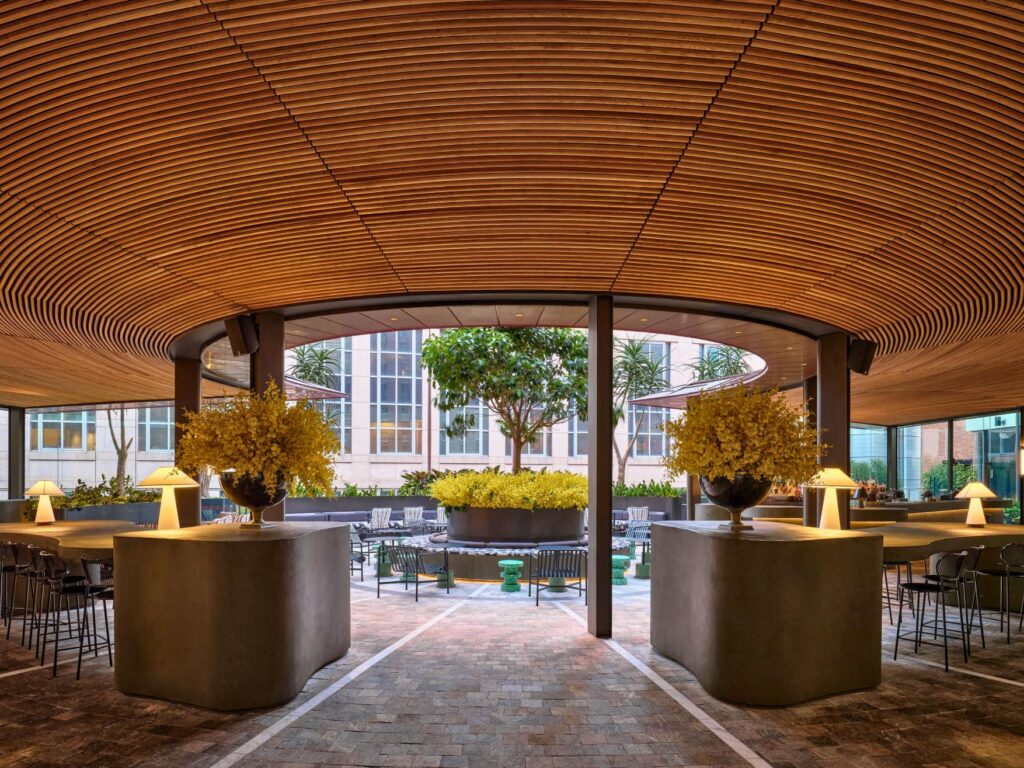

Every tile lining the floor of Wentworth Bar has been crossed by generations of Sydneysiders, from those who call it their local to well-known names who’ve graced the bar along the way. They’re an integral part of Sofitel Sydney Wentworth’s history. So much so, when the hotel was refurbished in 2024, every tile was numbered and lifted, then returned to its original position. The hotel’s heritage listing, officially ‘Wentworth Hotel Including Interiors’, protects details such as these, along with the building’s architecture.
It covers the column-free span of the Wentworth Ballroom, the chandeliers that have illuminated countless celebrations and events, other historic architectural elements, and the layout of key public spaces, including the lobby. These spaces have shaped the hotel’s life since it opened in 1966, when thousands of people turned up on opening weekend just to take a peek at Australia’s first international five-star luxury hotel.
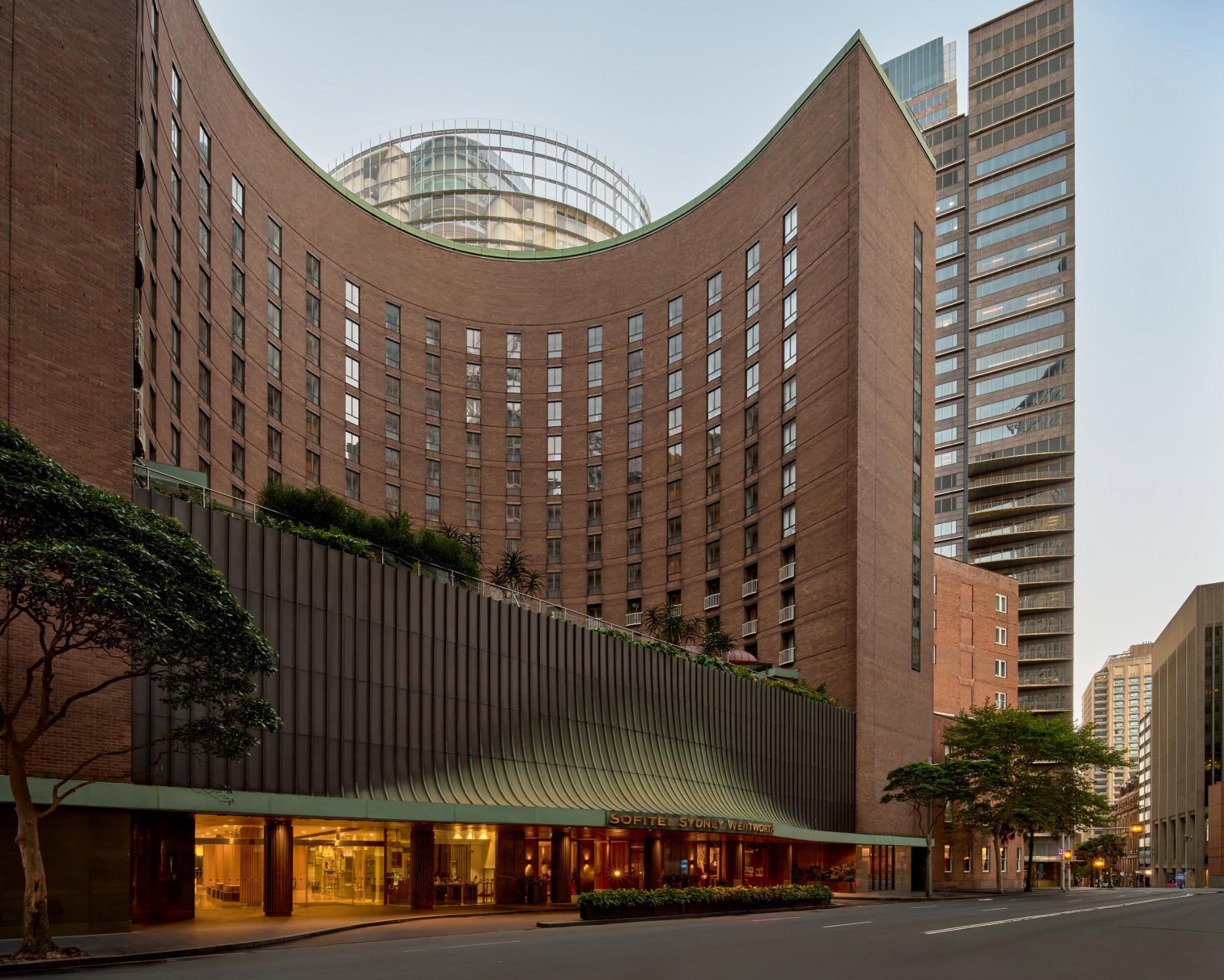
Designed by Skidmore, Owings & Merrill with Sydney firm Laurie & Heath, the twenty-storey tower was a statement of modernity. Its curved form and post-war international style set it apart, while the brief called for distinctly Australian materials, including local timber, marble, and stone. The building was also the largest brick building in the southern hemisphere at the time.
During the hotel’s $77 million refurbishment, Fender Katsalidis faced the challenge of updating the interiors without losing the character of the original building. Some elements were fixed by the heritage listing, while others offered room for a new interpretation. In the lobby, for instance, the layout remained, but the furniture, lighting, and finishes could change. This meant the design team could reshape the experience of the space without changing its underlying structure, where the finder details became the means of giving the lobby a new character while retaining the layout that has defined it for decades.
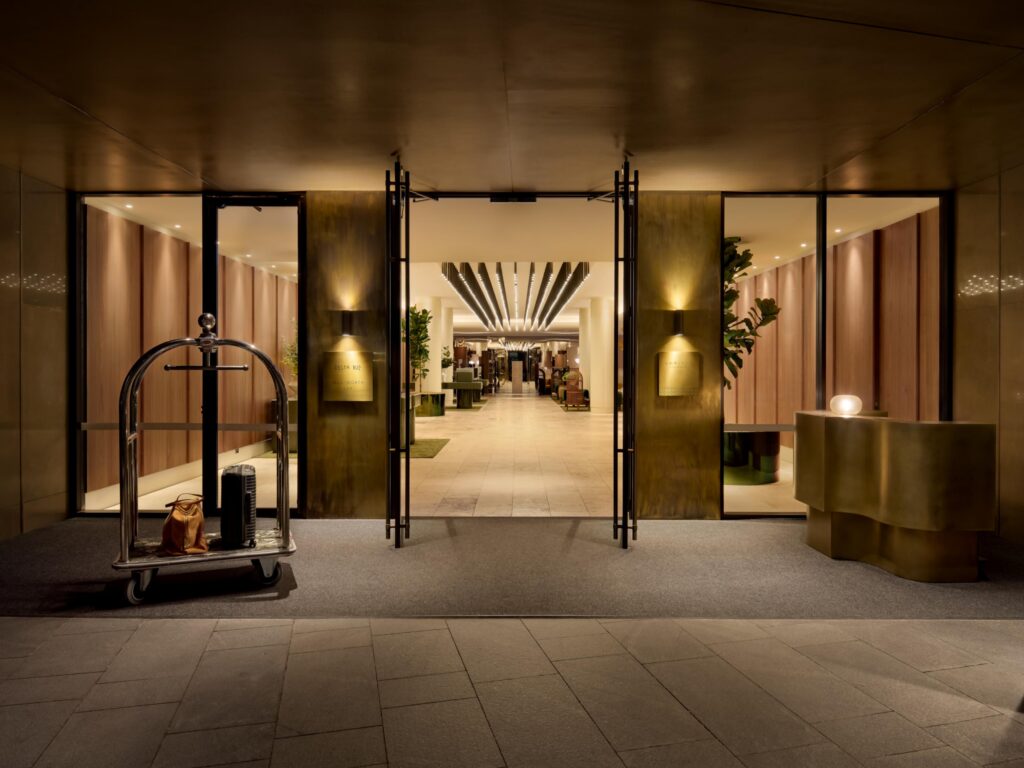
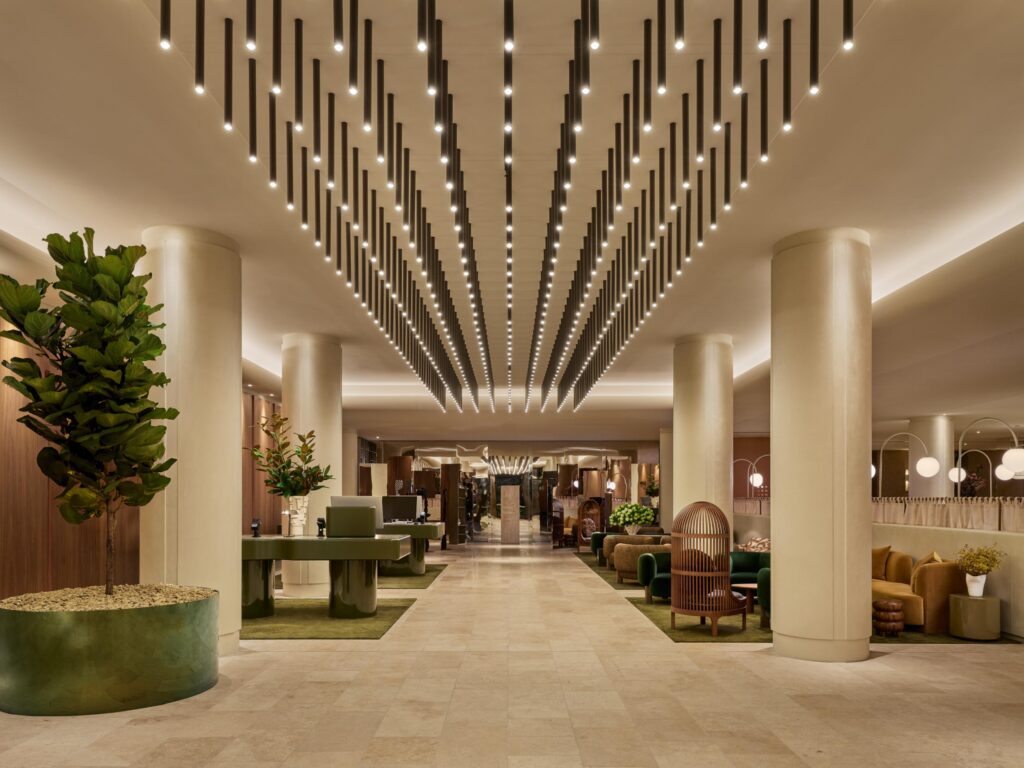
In developing the new interiors, the design team looked to the building itself for cues. The signature green of the Porte-cochère became the starting point for the new palette, joined by warm creams and soft bronze to bring a contemporary feel to the hotel’s 1960s glamour. Rather than compete with the original architecture, the colours sit alongside its curved forms and natural materials.
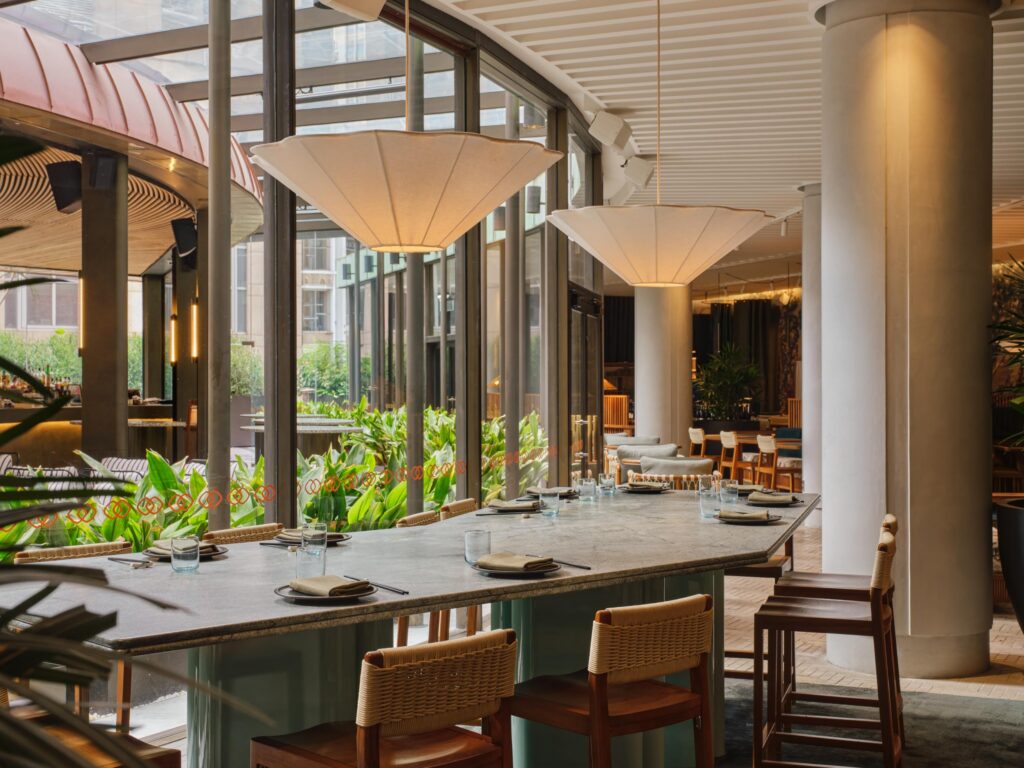
Those curves reappear in rounded furniture and joinery, while warm timber runs throughout the interiors. At Tilda, the hotel’s restaurant, brick-like travertine flooring references the building’s original brick construction, drawing a connection to its history without attempting to recreate its original interiors.
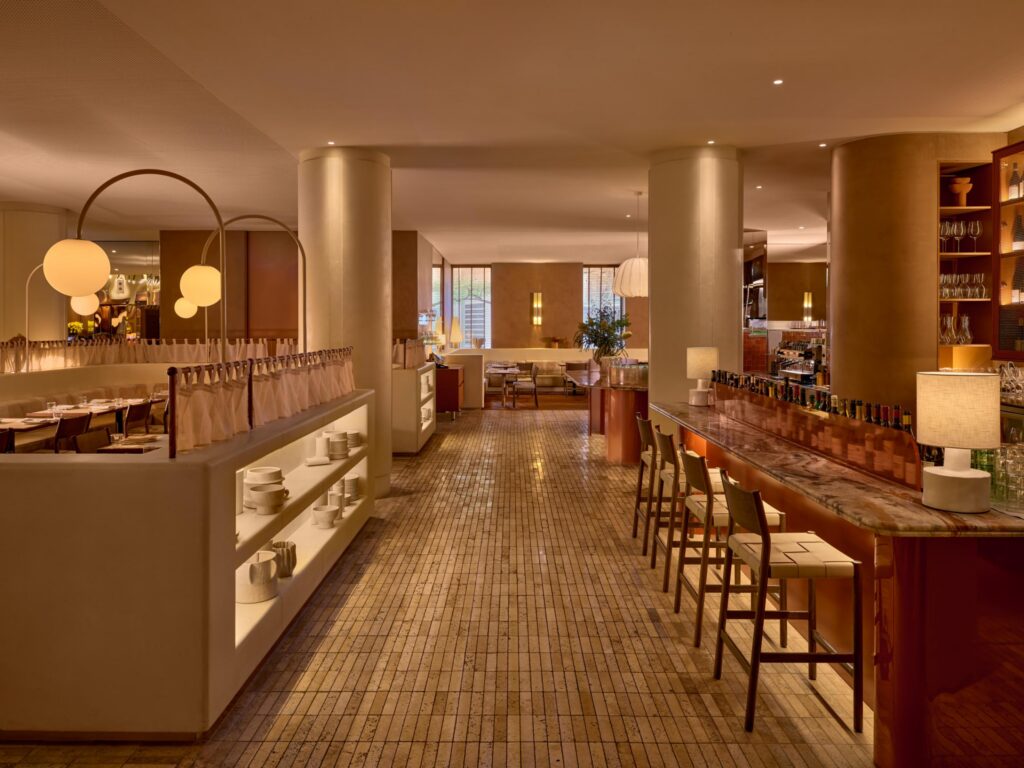
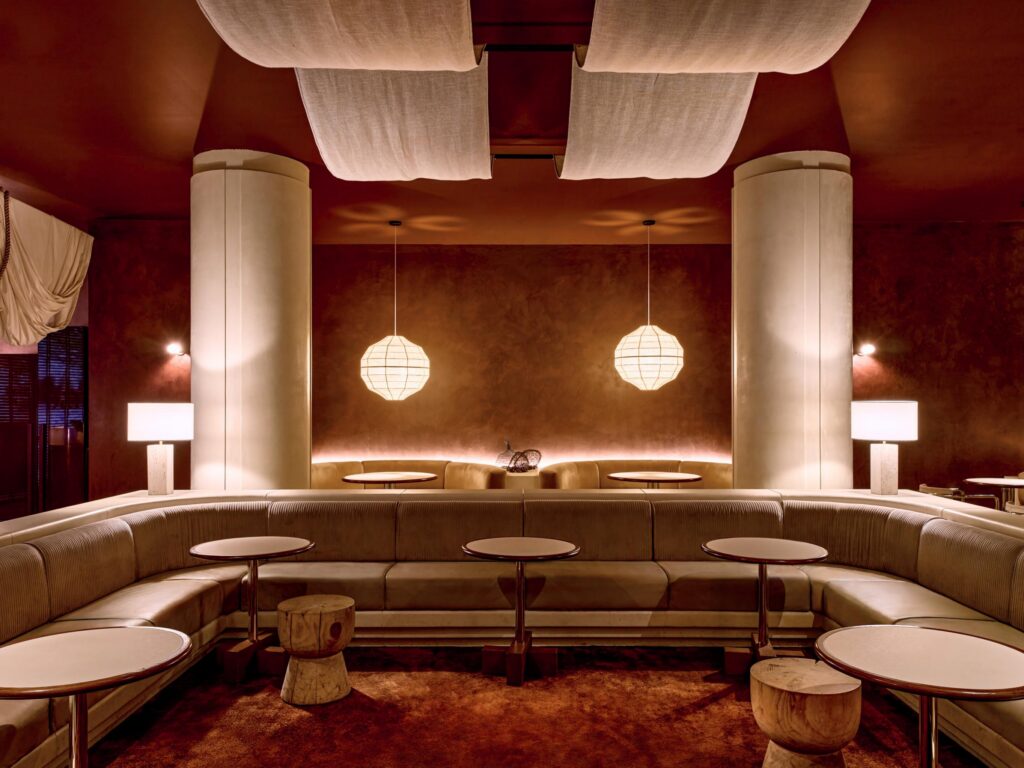
The same thinking carries through to the entrance, with bronze cladding now lining the underside of the porte-cochere, giving the arrival space a polished finish while drawing on the original green iron structure. Step inside and the lobby opens up, reworked from a traditional reception area into a space that invites guests to settle in rather than just check in.
Overhead, hundreds of individual lights stretch across the lobby, creating a spectacle that draws guests further inside. Inspired by the tradition of welcoming guests by candlelight, the installation provides a focal point as well as a way to orient visitors as they arrive. A defining feature, it brings atmosphere and function together.
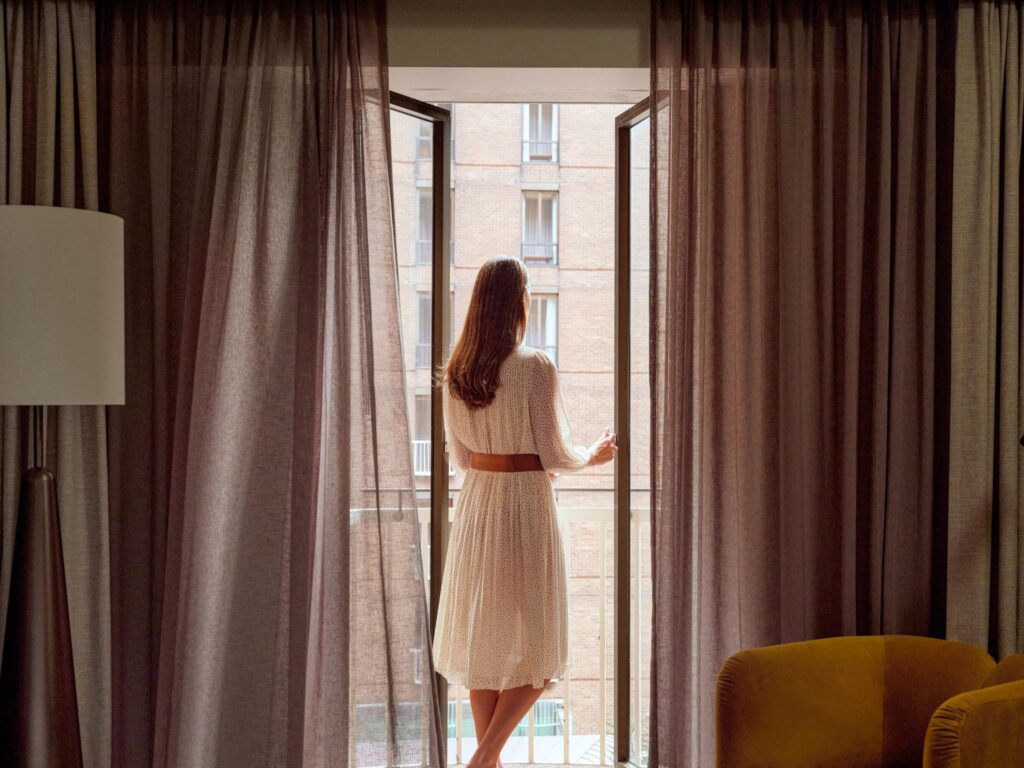
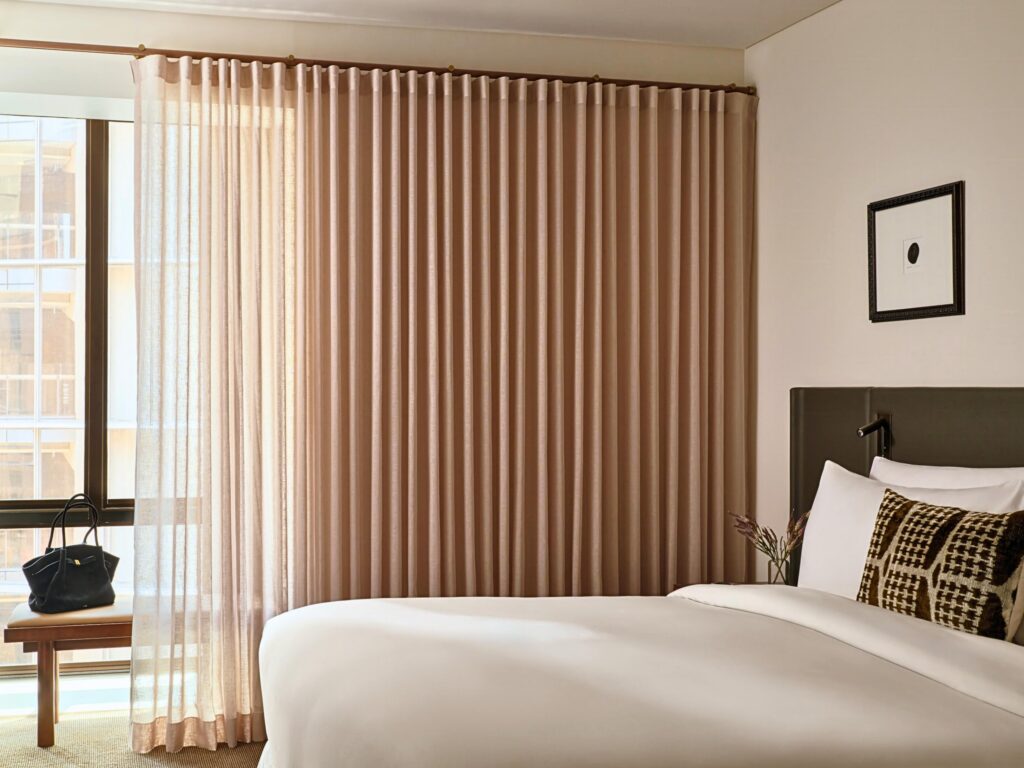
Across the hotel, bespoke works from Australian artists and designers bring further character to the interiors, adding texture and individuality to the spaces. Sarah Nedovic created sculptural ceramic lighting, while Kerrie Brown designed custom wallpaper for Delta Rue, the hotel’s Vietnamese-French restaurant. Shaun Dudley of Transmitt Lighting created additional lighting, including a chandelier for Tilda’s private dining room.
Back at Wentworth Bar, the defining art piece is the bar’s architecture itself. Overhead, a sweeping glass and copper canopy takes its cue from the hotel’s original copper awning, following the curve of the building to shelter the rooftop terrace. Beneath it, marble, American oak and the original floor tiles sit alongside the bar’s contemporary architectural features.