
In a world where our attention is constantly pulled in every direction, it is no surprise that design is increasingly turning inward, towards stillness and reflection. The rising popularity of biophilic design, natural materials and organic palettes speaks to a deeper need: the desire for ritual, renewal and restoration within our homes.
When I first visited the snow-covered villages of Japan’s Nagano Prefecture some years ago, I became consumed by an onsen tradition that felt at once ancient and entirely relevant. As steam rose from inside the hinoki clad rooms and silence settled between snowfall, I was reminded that bathing, at its best, is so much more than cleansing the body – it is spiritual. It is design in service of the soul.
In this world of distraction, we as designers must contemplate what we can learn from these enduring philosophies and cultures. We must consider how we can bring a sense of intention and presence into the spaces where we begin and end each day.
A return to warmth, texture and ageing gracefully
In many homes of the past, the bathroom – often separate from the WC – was simply another room where part of life was spent: comfortable and warmly decorated, frequently featuring wallpapered walls and perhaps a chair by the window.
But by the time I began designing bathrooms early in my career, things had changed considerably. The bathroom had become starkly utilitarian; a place where daily cleansing needs were met and little more. Even the window could disappear, since mechanical fans were able to satisfy minimum ventilation requirements. Timber as a material almost disappeared completely, along with other organic materials that were seen as too fragile and impractical. Western bathrooms evolved into tiled and heavily sanitised spaces engineered to be low-maintenance and sterile, instead of catering for a sensory human-centred experience.
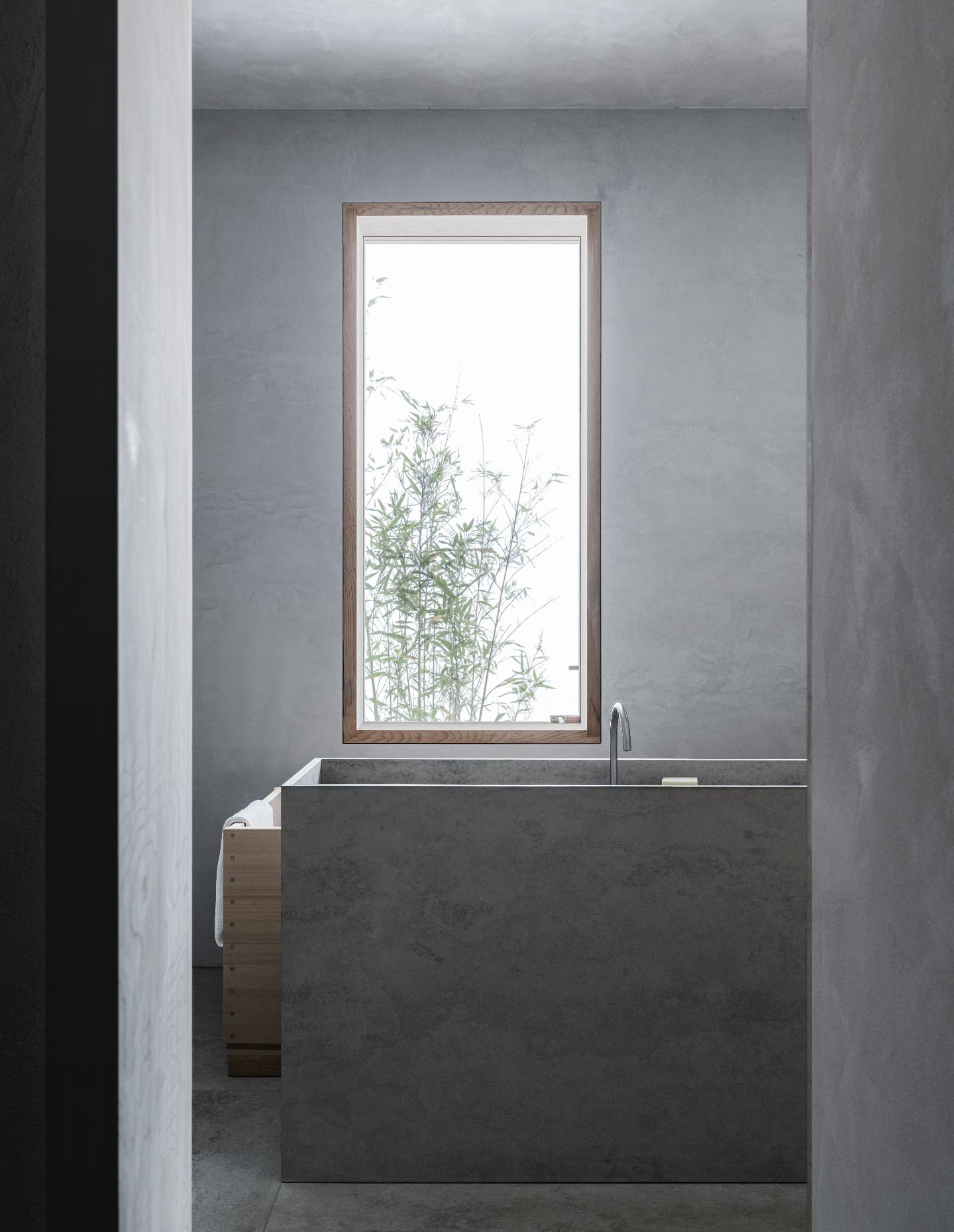
Today, there’s a resurgence of interest in natural materials and restrained palettes. But for the reintroduction of these materials to be more than a short-term trend, both designers and consumers need to understand their unique qualities and benefits. Wood and stone materials are not meant to stay looking perfectly new. Over time they will develop the patina of use, and of being loved.
We can look to the Japanese philosophical concept of wabi-sabi to encourage us to understand and welcome this earned imperfection. Wabi-sabi reminds us that these material changes are not a mark of failure, but of beauty. If we learn to take care of our spaces and appreciate the natural patina that organic materials develop over time, we can allow our homes and bathrooms to age gracefully alongside us, in an act of quiet resistance to the culture of disposability.
The sensory experience of wood
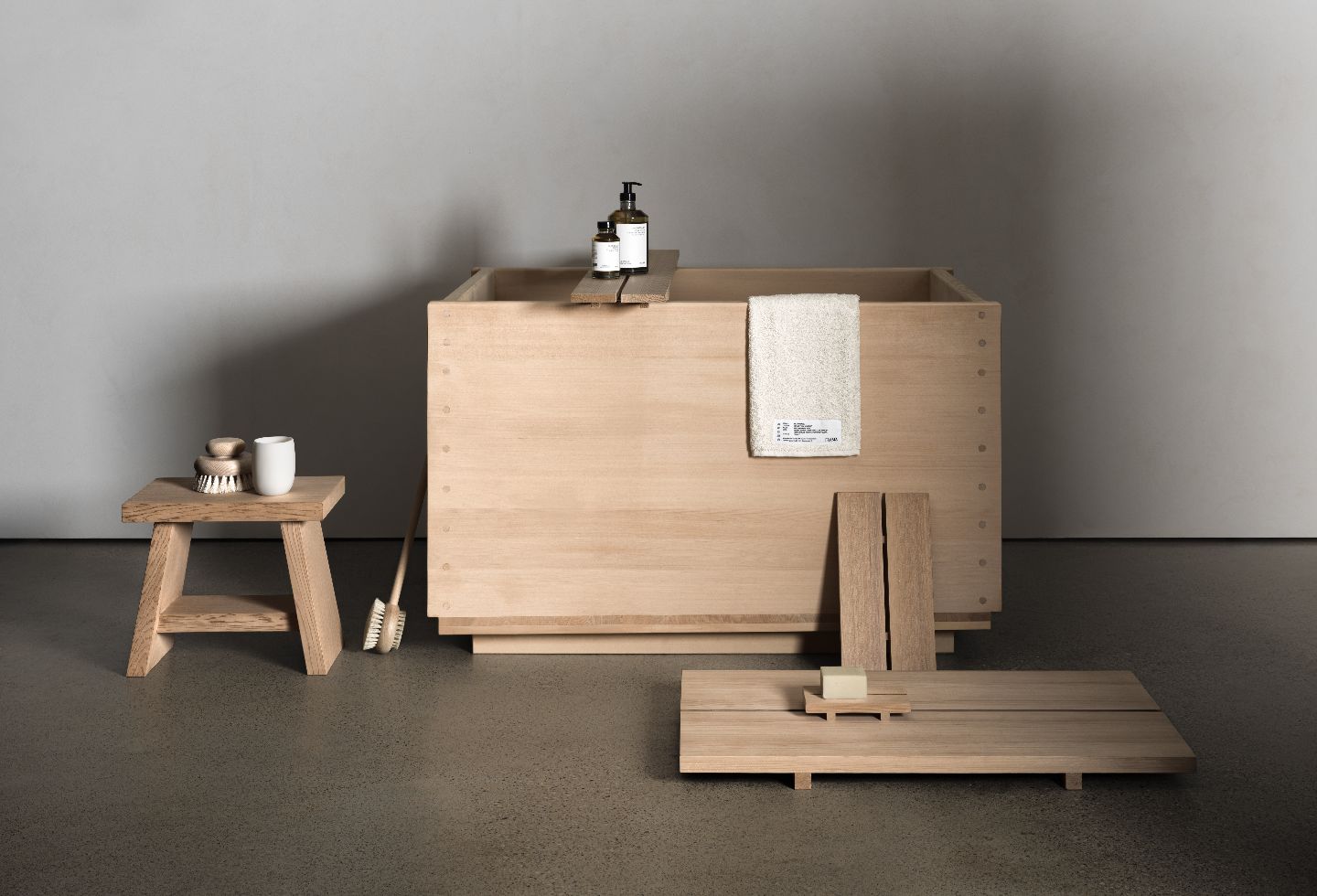
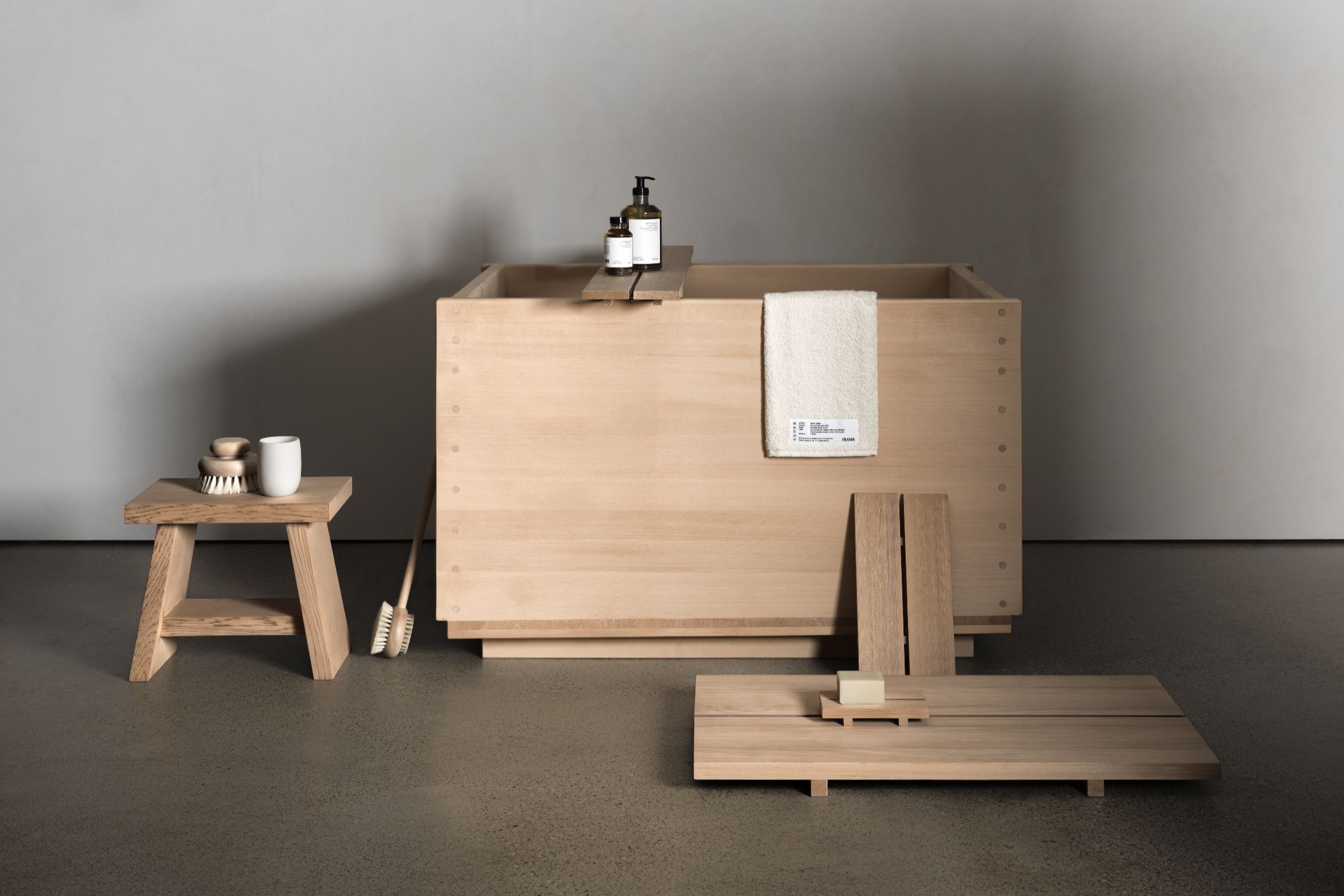
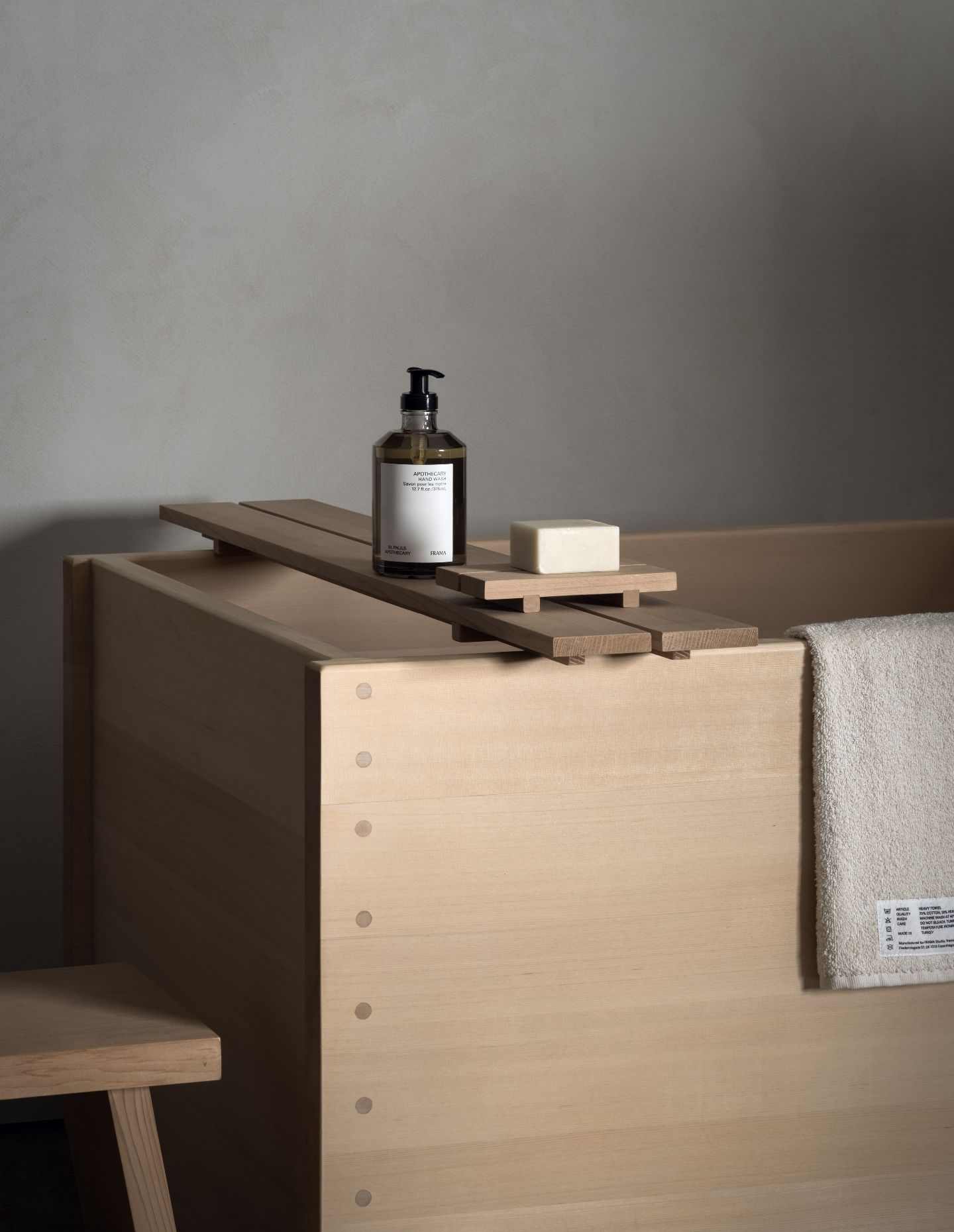
I’ve been helping our clients discover the benefit of living with ofuros – traditional Japanese soaking tubs – for some years now, and have seen first-hand how wood responds when treated with respect.
Japanese culture has embraced wood, especially cedar and hinoki, in its bathing environments for centuries. This design philosophy attempts not to preserve the material in its adolescent state, but to allow it to mature and thereby introduce a multi-layered sensory experience into wellness spaces as it ages and responds to its environment.
The properties of these timbers, which are both antimicrobial and highly tolerant of moisture, renders them perfectly suited to such environments. Furthermore when exposed to heat and humidity, natural oils are released, enriching the space with a grounding, aromatic warmth that is at once a smell and a feeling.
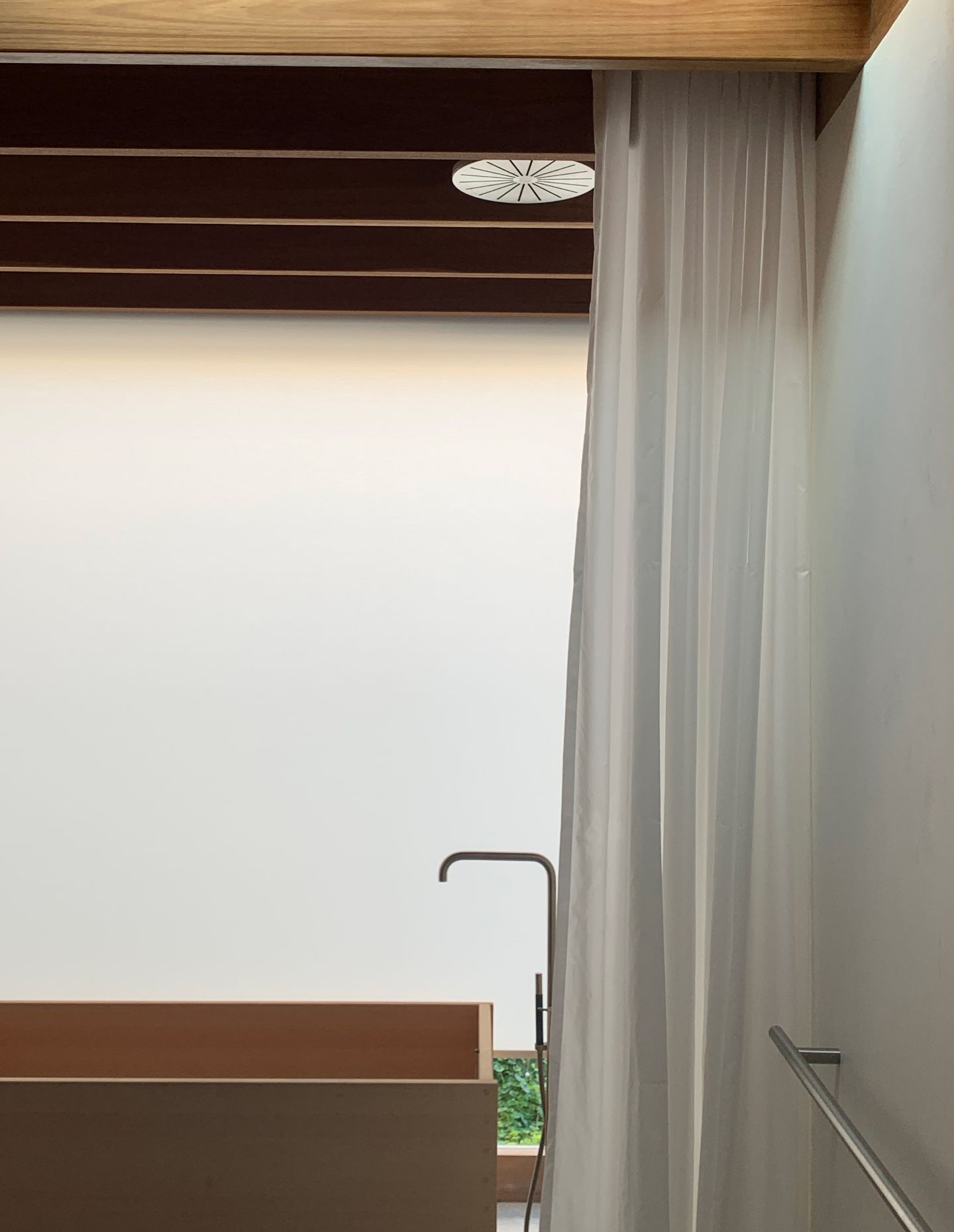
The bathroom does not need to be a departure from the rest of the home. Consistent use of warm materials like wood throughout a home reinforces its identity and helps connect us to nature, to our origins adding to a sense of contentment and belonging.
Related: Habitus House of the Year 2025 Winners
Reclaiming the ritual
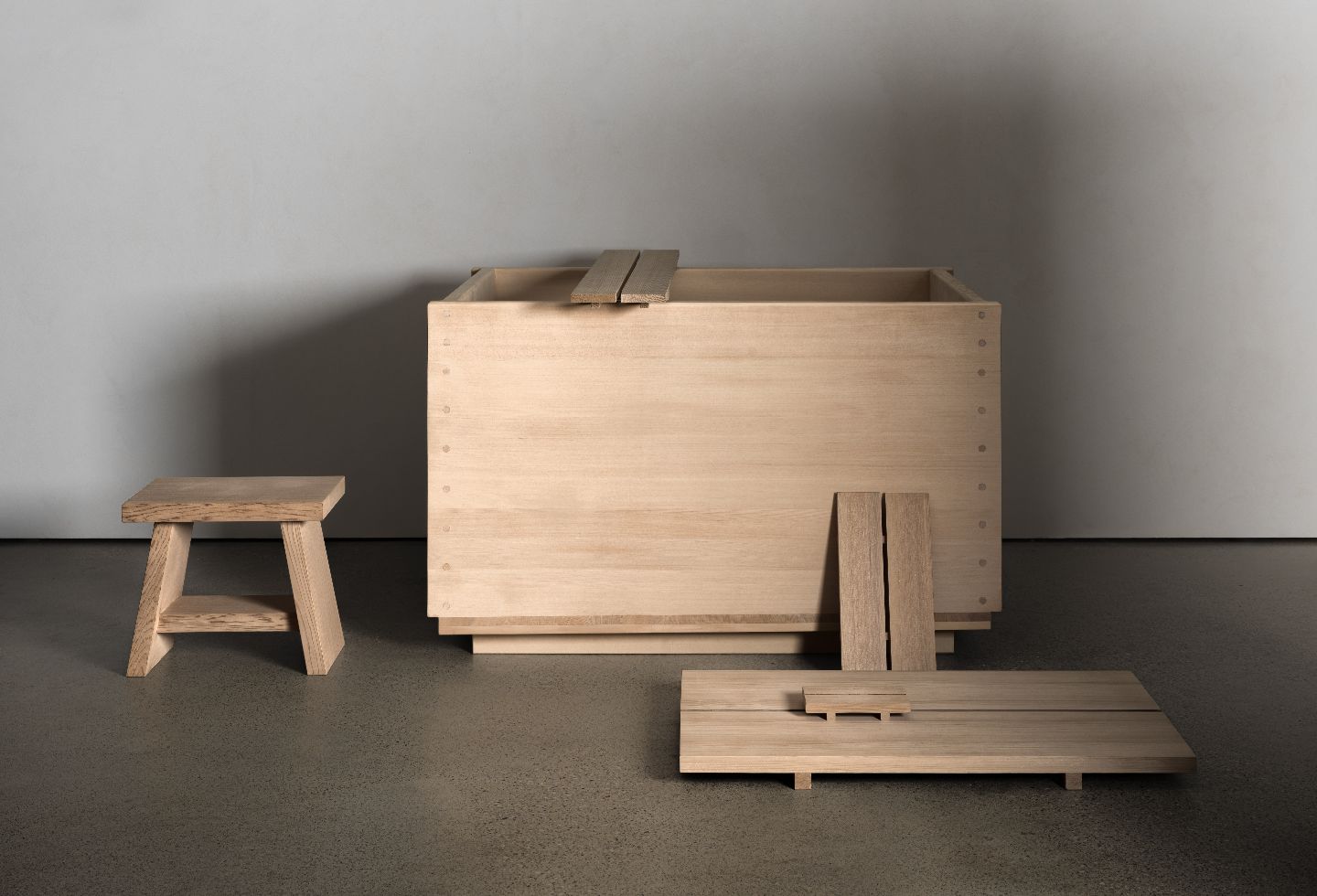
One of the most striking aspects of Japanese onsen culture is how the bath itself is protected and revered. You don’t cleanse in the bath, but before it. Perched on a low stool, grounded in posture and mindset, you pour water over yourself to prepare. Only then do you step in to soak. This ritual introduces the idea that the bath is not simply about cleansing, but creating a mindful experience that invites you to reconnect with the self.
Our new K Y O T O Wood range was born from these principles, to showcase how Japanese-inspired bathroom design can bring intention and stillness into our bathrooms. The centrepiece of the range is the fully custom cedar bathtubs, made to order in Japan following in the tradition of handcrafted ofuro. To create a cohesive and meditative experience of bathing, we designed a complementary series of furniture pieces, which are made locally using Australian cedar by Ian Monty – a long-time design partner and a craftsman whose respect for materiality matches my own.
The best design is design that guides behaviour, encouraging us to take stock of ourselves and the present moment. Japanese wellness rituals and design philosophies offer us important lessons that we can bring into the design of our homes: how to honour the everyday and the time-tested sensory elements of water, heat and materiality.