

This story originally appeared in Habitus Magazine – find out more and subscribe here.
Sri Lankan architecture has a long and complex history, with both India and China playing foundational roles, while the Dutch, English, and Portuguese brought change and in particular, the introduction of the verandah. Last century saw Geoffrey Bawa develop a style of architecture that posited a new era of Sri Lankan architecture, and with it a modernist approach that suited the climate.
This century, however, has seen the extraordinary Palinda Kannangara take centre stage with an architectural language that imagines a new national identity of contemporary, sustainable living for Sri Lanka. “I don’t want to fit into any -ism, whether it’s a modernism or minimalism or brutalism or any other -ism that defines your boundaries… There are no boundaries in good architecture,” says Kannangara.
“I’m controlling my architecture to make it more simplified, not to make it complicated. It doesn’t matter whether it’s in the vernacular of the brutalist or the minimalist, or whether I’m using concrete or brick. The simplicity comes with the discipline in architecture – how I control it, where I stop the detail and how I refine that space.”
Approaching each site and project from an open perspective, Kannangara starts the relationship with a conversation about needs. “It is very important to understand their way of living,” says Kannangara. “It is my belief that, as architects, we have a huge responsibility in what we are introducing to the existing environment. I’m trying to minimise my impact on nature as an architect. But I love to enjoy it. I like to frame it.”
“If it’s a weekend home, I’ll try to minimise their requirement. If they come wanting three rooms, four rooms, I really question them asking, ‘Why?’ and ‘How many members in your family?’ – and whether they can use one room for the whole family and make a very small impact,” he says.
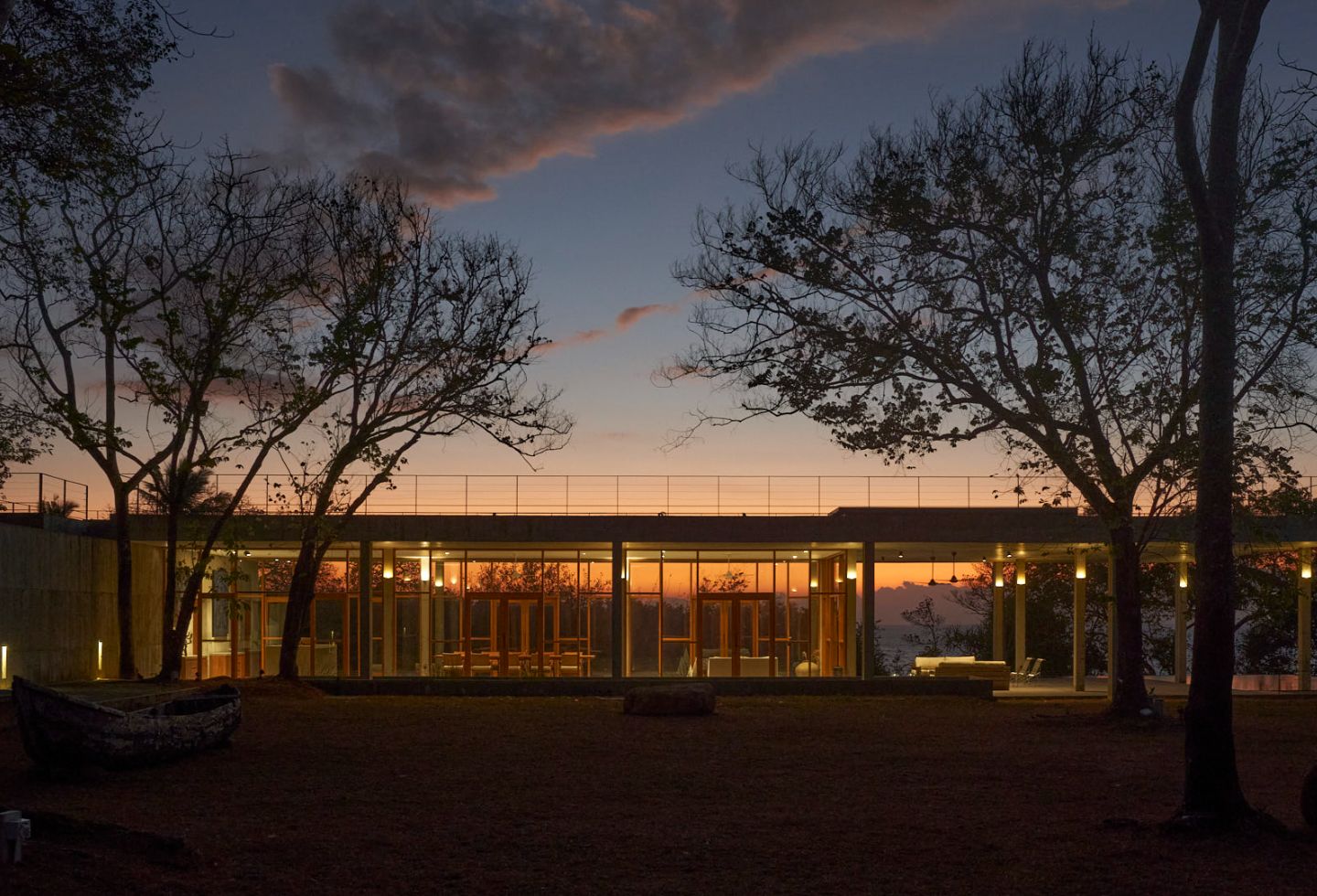
Designing to modest budgets while minimising impact and creating sustainable economic inroads is achieved through a layered approach that starts with a simplification of the structure: “The best thing to control the building is to minimise the footprint, minimise their requirement if they are willing to, and educate them.”
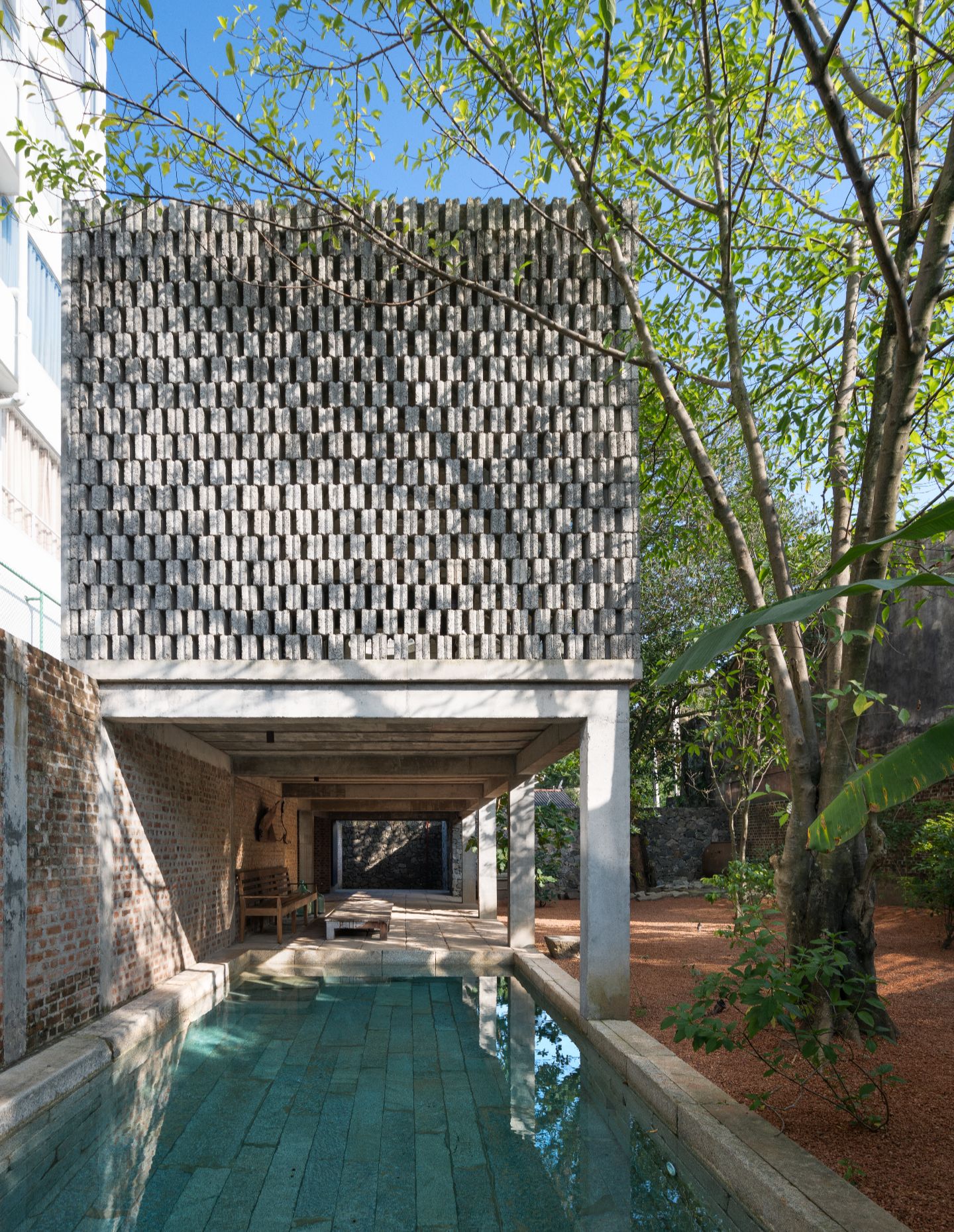
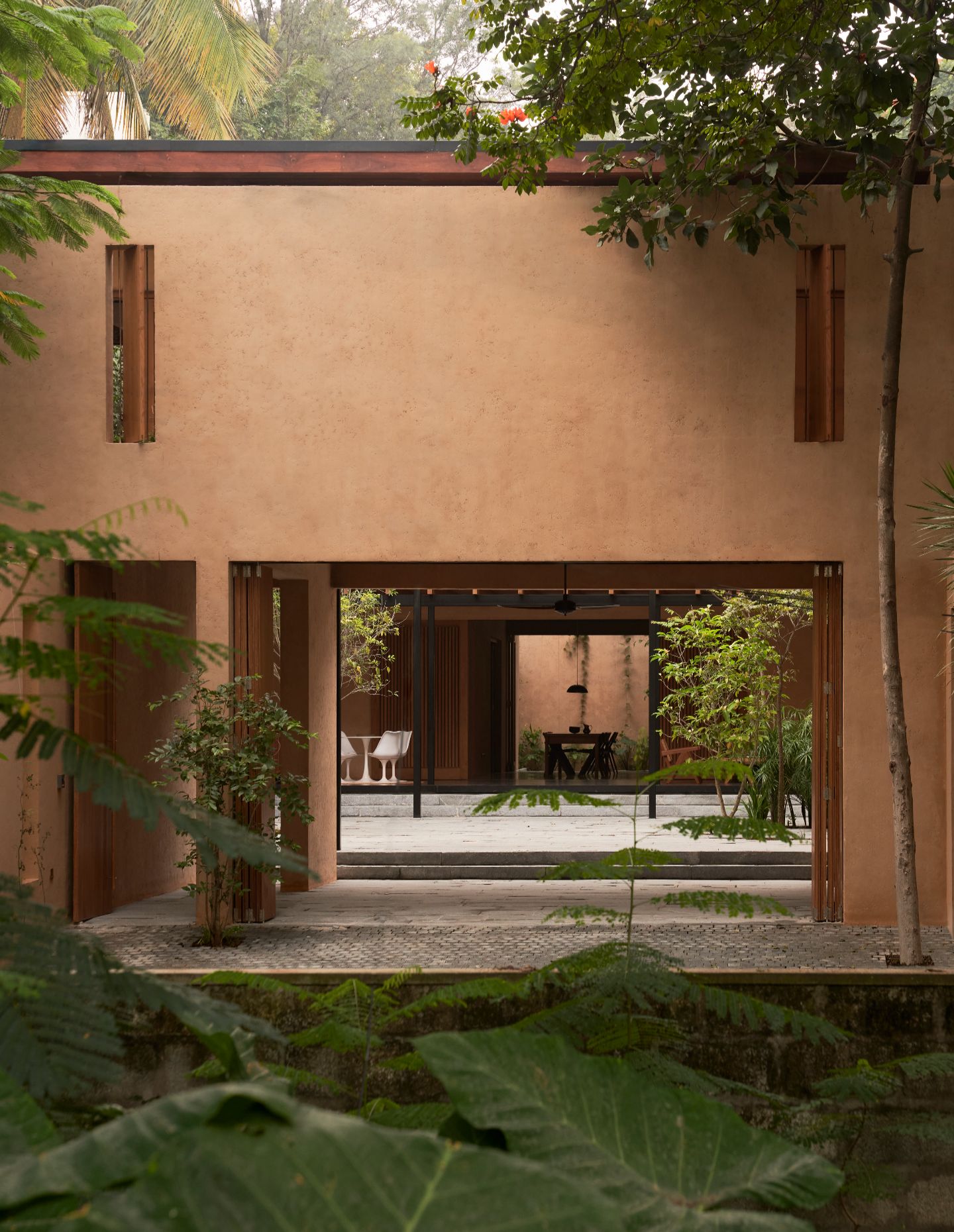
Interestingly, while Kannangara’s projects have an aesthetic language of natural materiality, the materials themselves are selected solely on the basis of suitability to the task at hand. “Recently, I used a cement block that is evidently in use for local housing, but I design it in a way that I can detail it to make it more luxurious. I’m like a blackbird; I am open to any material that is available.
“When it comes to India, although it is a playground for material, I still always select local materials. For example, for Bengaluru I didn’t want to bring stone from Rajasthan. That is not sustainable for me. It lacks a sense of connection to the place.
“If they want to bring furniture from Sri Lanka, I might say, ‘Perhaps for a house in India, it would be better to use Indian products.’ I want to maximise the usage in context to place and for the local people. I always try to support the local craft people, even small vendors, to create something of beauty.”
These collected attributes are all considered prior to visiting the site. “I know the programme, the site conditions and the climate,” he adds. “This leaves me free to think about how the visual impact to the site will be affected by the building shape, with the surrounding as a whole.”
Related: Studio Doherty also from Habitus magazine
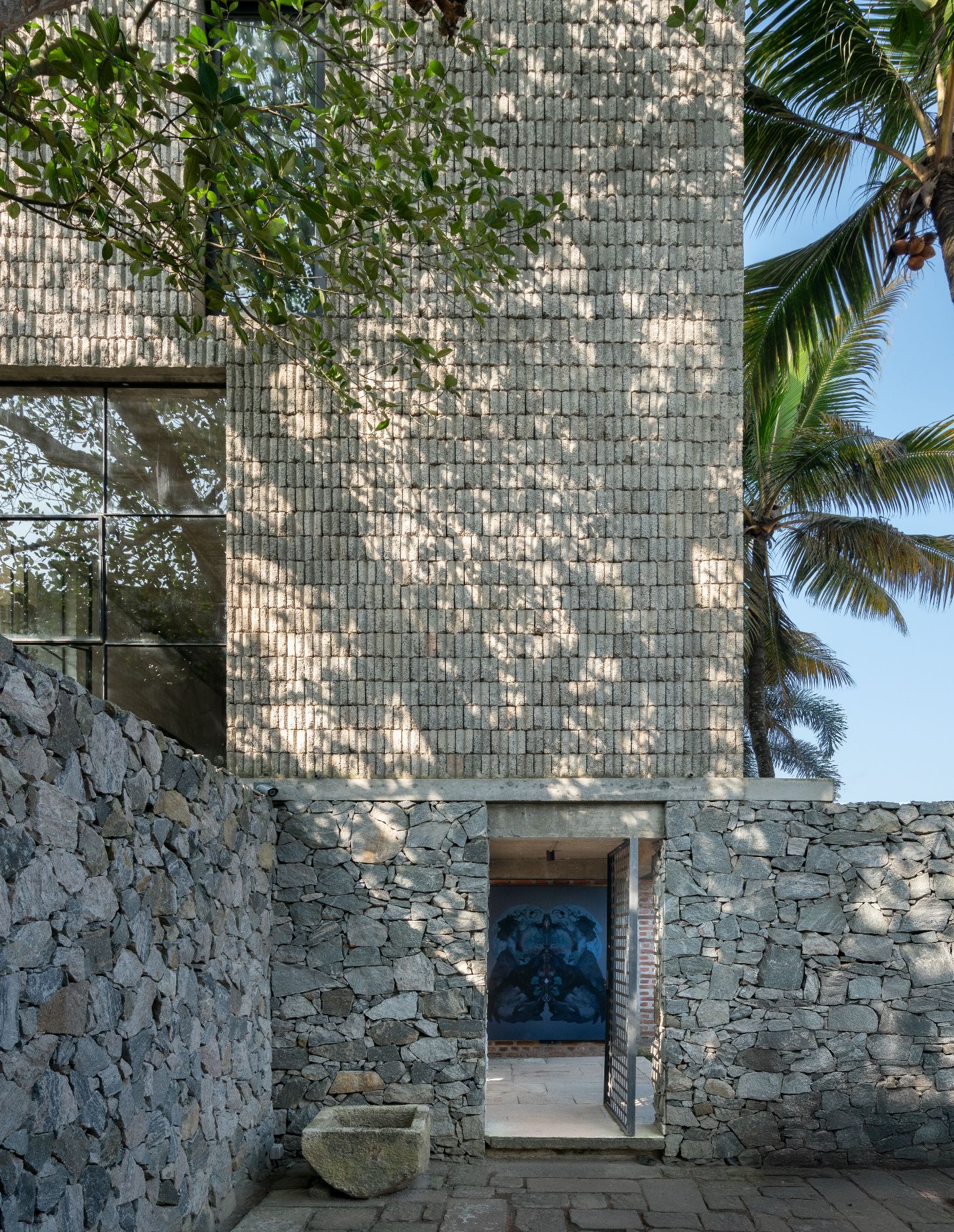
Effectively, Kannangara is ensuring the building does not become a dropped object, but instead, has a relationship with the environment. “I’m always considering the visual damage that we are making out of architecture. I believe the architect has a real responsibility to control the architectural aesthetic with the environment.”
Indeed, it is the next generation of architects that Kannangara is looking to inform. “We learn from the past and I always respect the architects who have contributed to the world of the next generation,” he says. “I started architecture quite a bit later in life. I think it may be a good thing, because I’ve seen that there is a maturity to understanding that architecture is for the public, for people.”
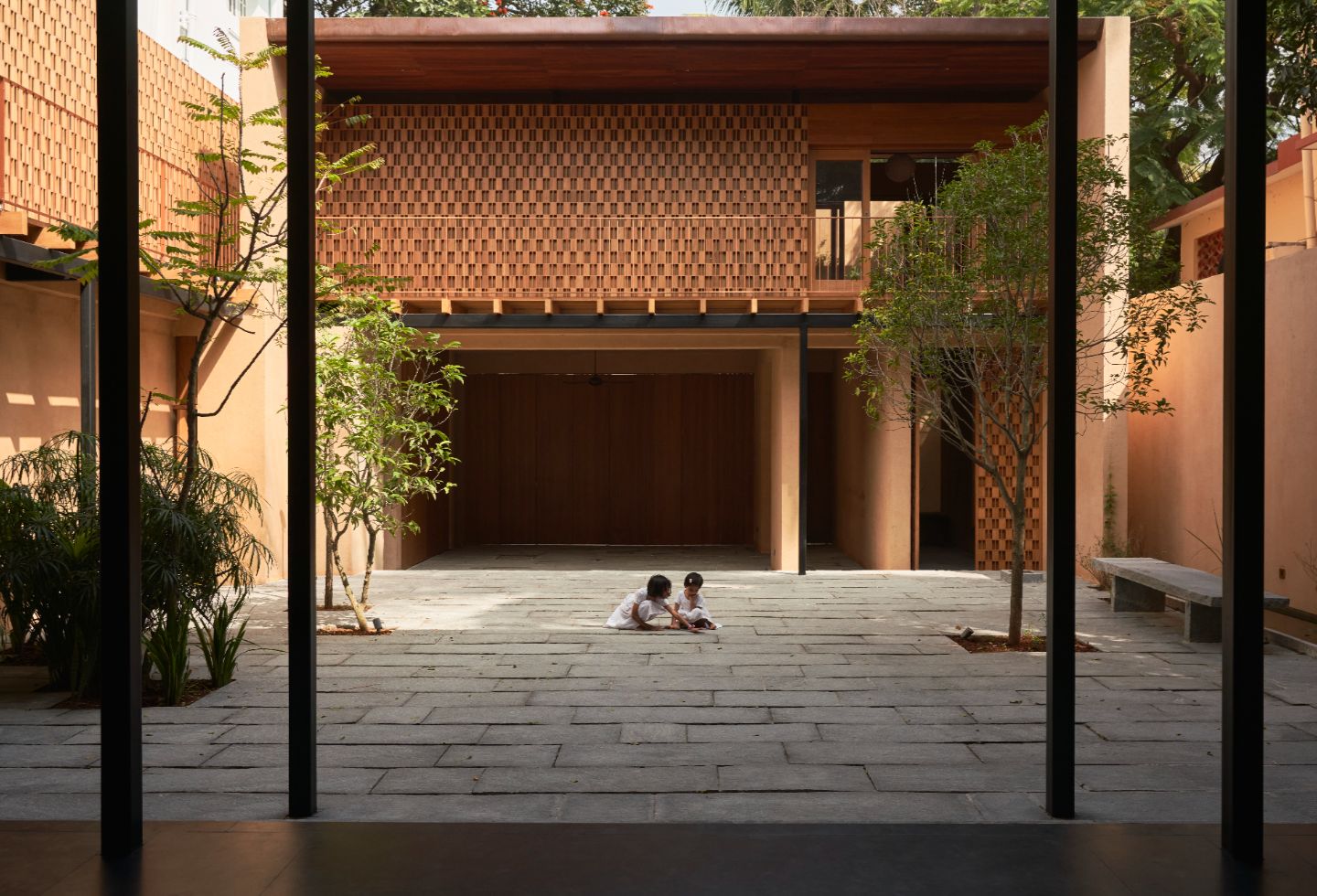
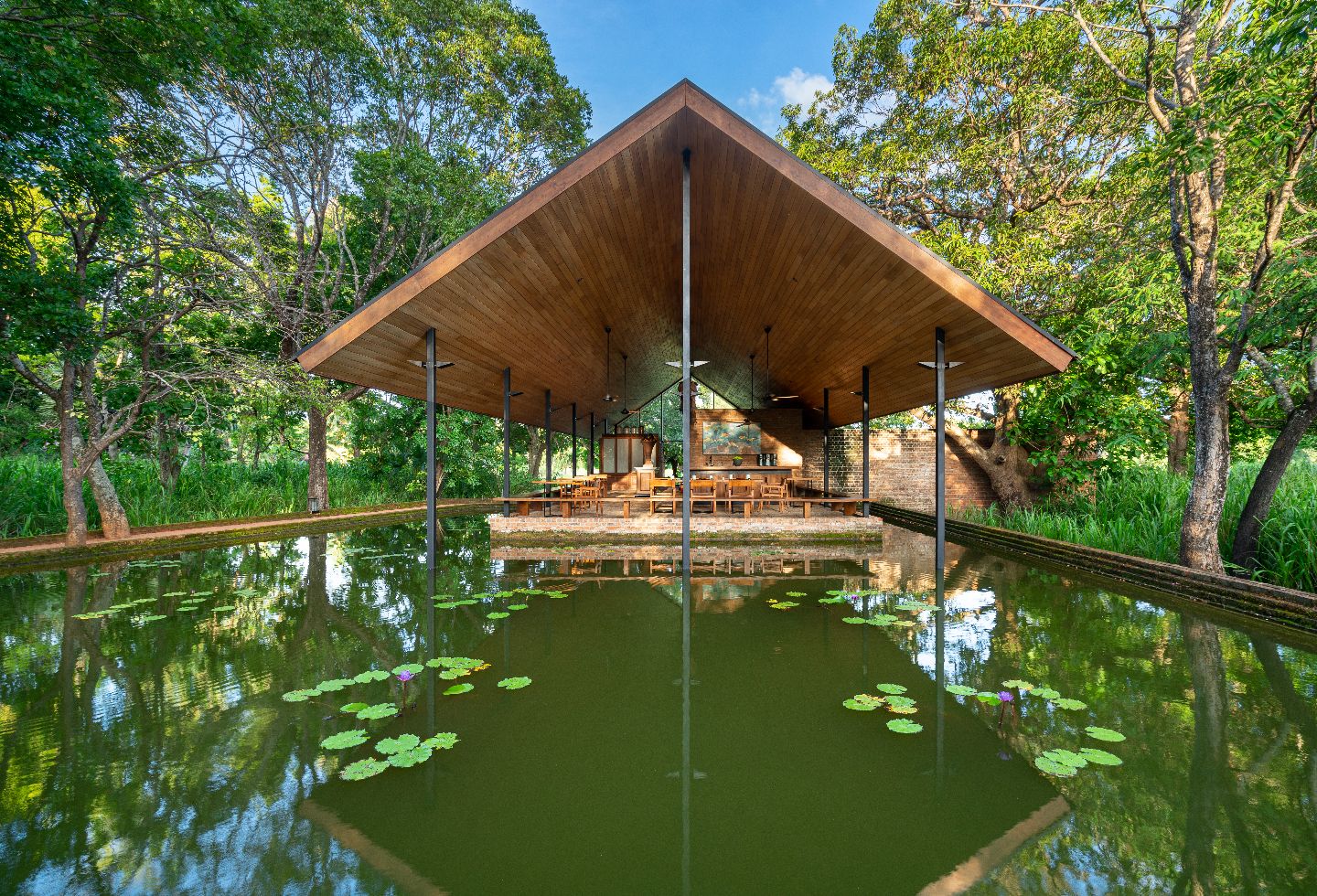
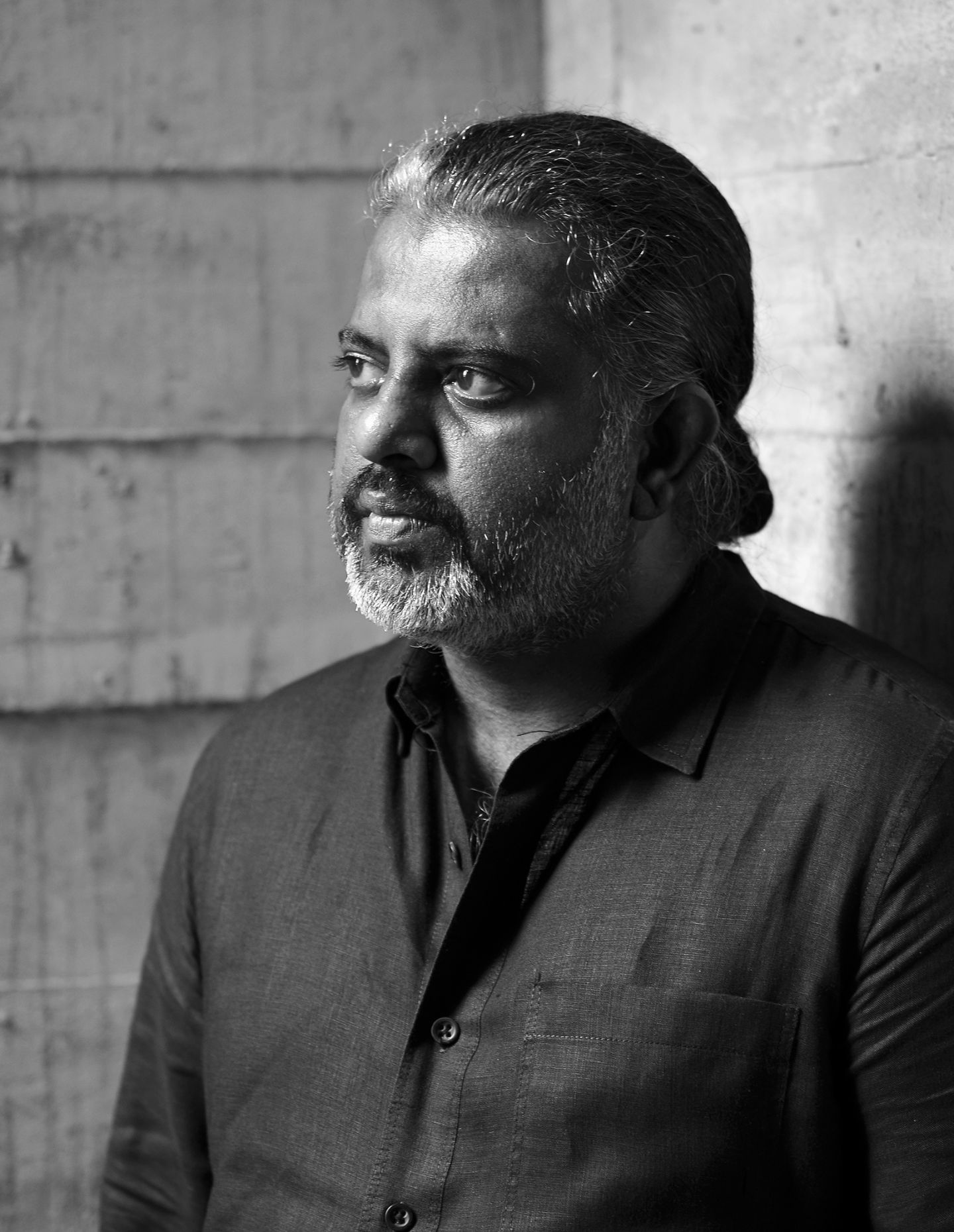
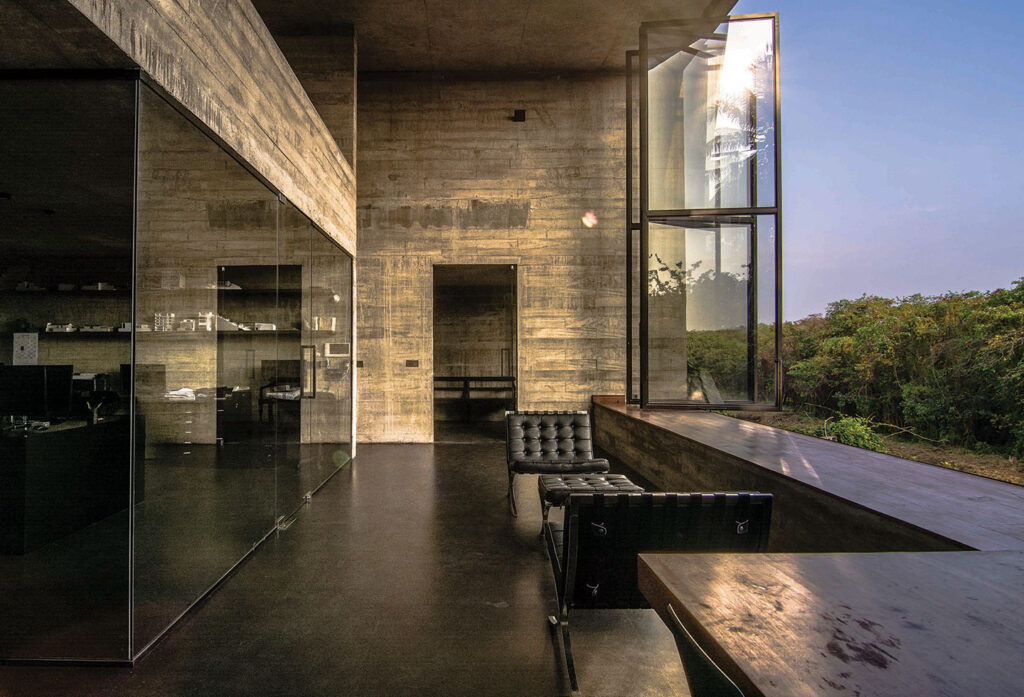
His controlled simplification is evident across his oeuvre, with no dominant signature style. There are, however, commonalities such as the indoor-outdoor relationship. For Courtyard House in Bengaluru, for example, the design places paired pavilions to either side of an enclosed courtyard with trees planted to visually meld with the distant landscape and skyline. Conversely, River Pavilion in Kitulgala, Sri Lanka, is fully immersed in the environment, but it too has a buffer of architecture, with the interior floor stretching outwards to create a visual link with nature.
Kannangara likens this to traditional Sri Lankan architecture where a house is surrounded by a border of sand, a principle he applied to the Wellness Retreat at Habarana in Sri Lanka. “We still understand the values and the beauty of how you can connect to the outside if, for example, you live in a jungle, you clear around the house a five-metre perimeter and then they can see the reptiles or any snakes coming. It’s how we live with the wilderness.”
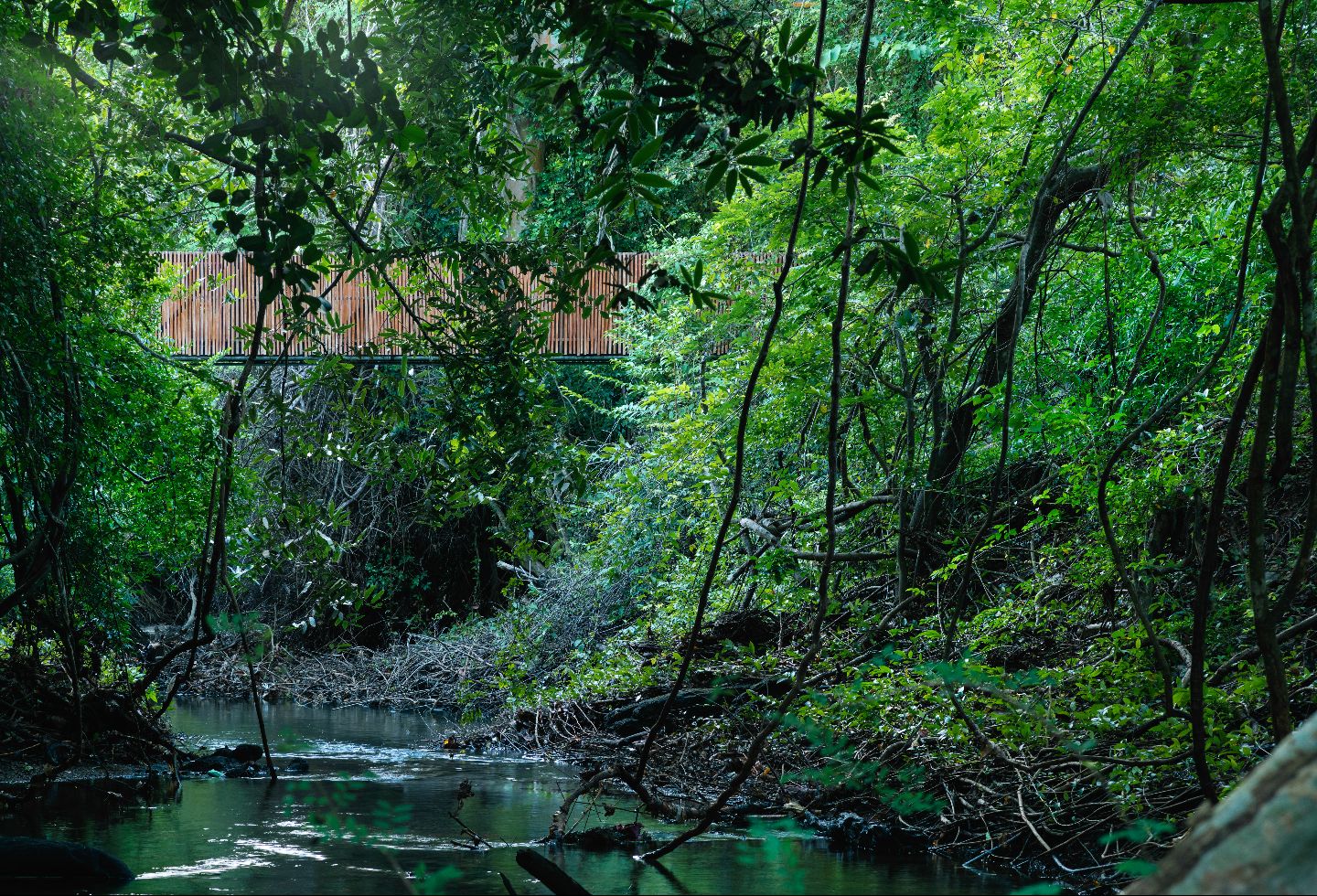
Following this tradition for the Wellness Retreat at Habarana, the walkways are raised above the grasslands in what seems like a meditative gesture but is in fact a way of allowing humans and the wilderness to safely co-exist. With this project Kannangara pushes his principles of sustainability and material simplicity to a high level of luxury. Effectively, he proves that working in a way that is harmonious with the environment, that uses local materials, and supports artisans has a significant role in contemporary destination architecture.
Coming late to architecture has been no impediment to Kannangara. Rather, as he points out, his maturity has allowed him to approach his work with a long view perspective that has been very well received. Being commended in 2008 in the Geoffrey Bawa Award for Excellence in Architecture gave him his confidence to push his direction further. He has since won this coveted award in both the 2016/17 and 2019/21 cycles, along with many other prestigious awards including the RIBA International Award for Excellence, which he received in both 2018 and 2021. The reward for Kannangara, however, lies in the very act of creating architecture that makes a difference.