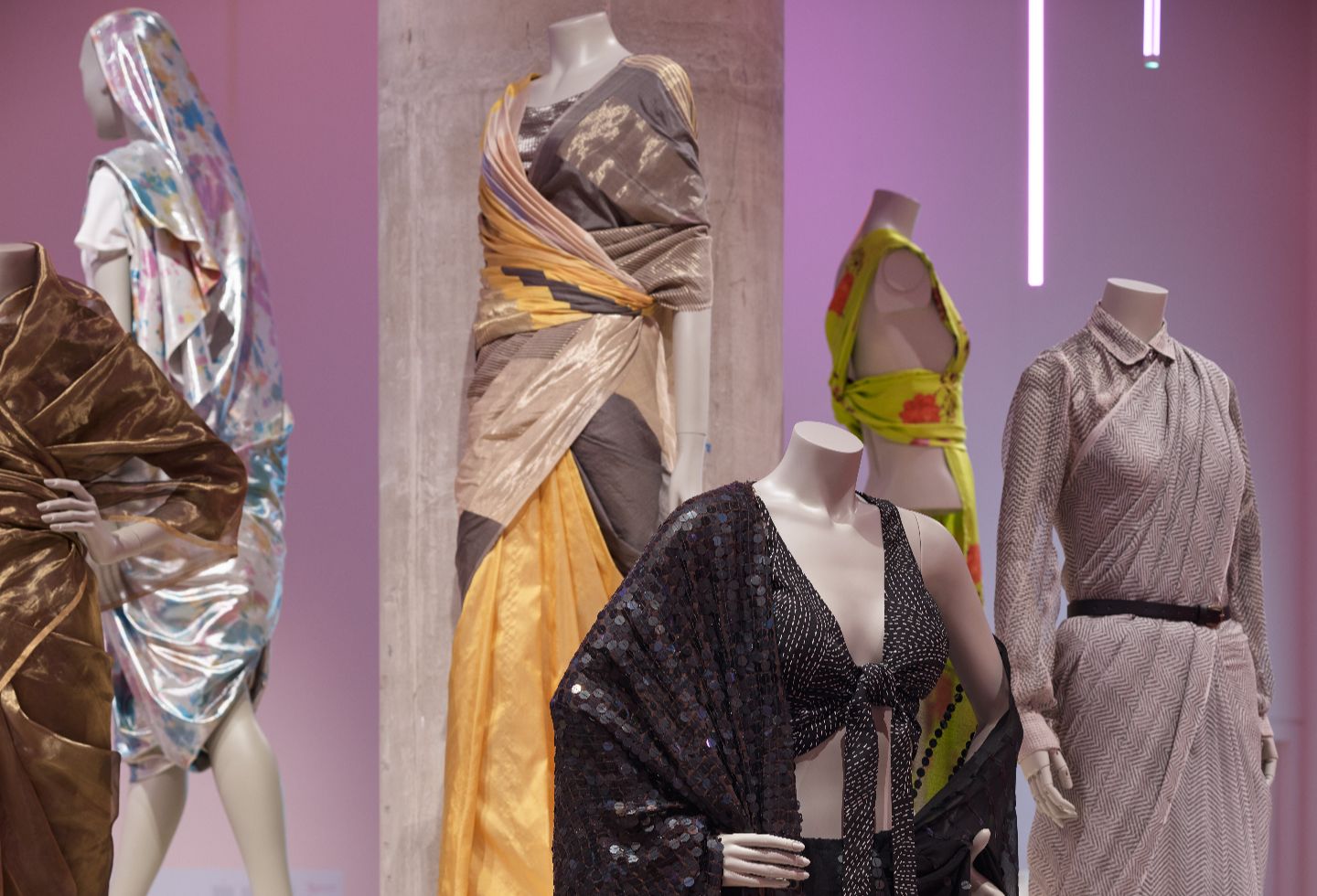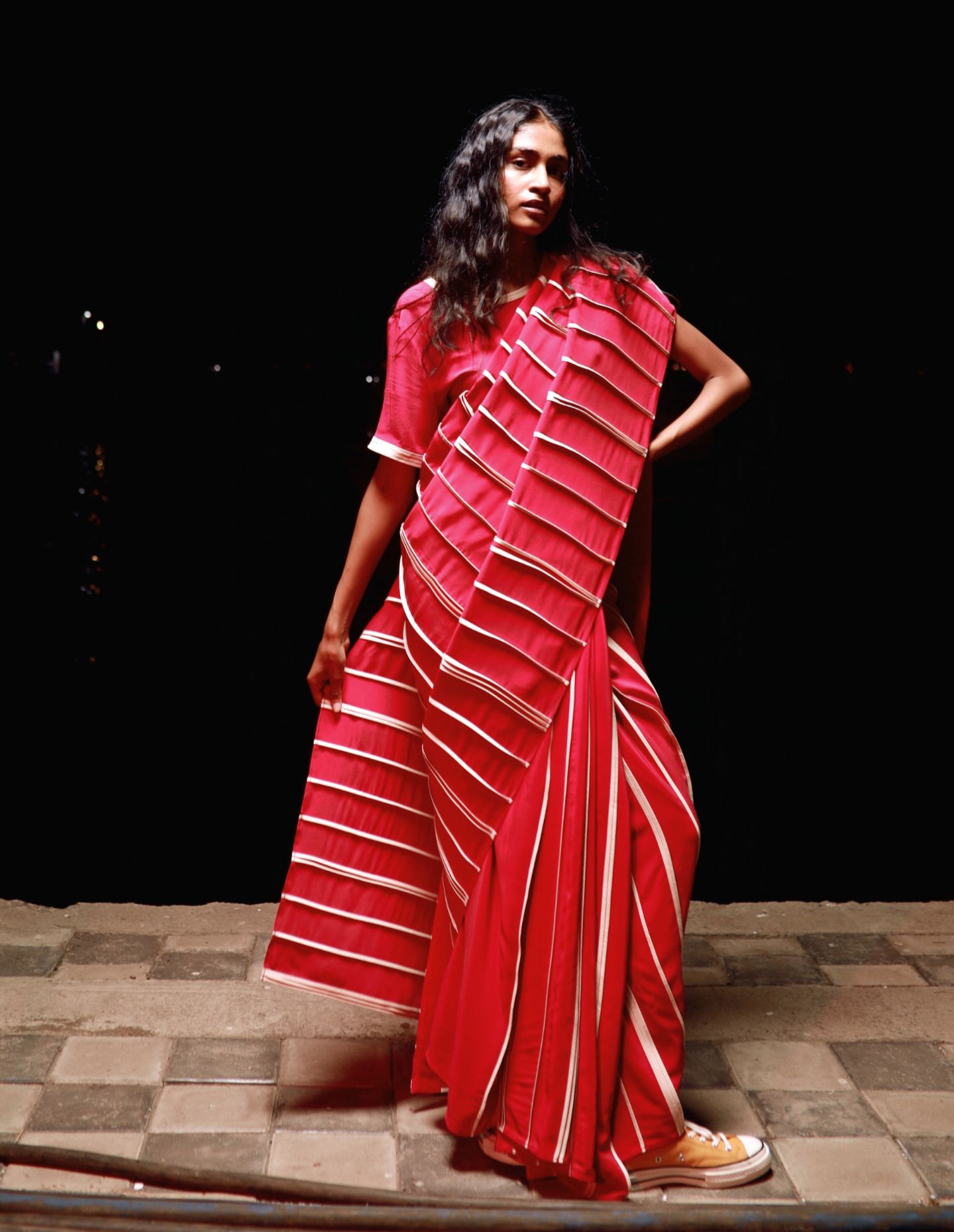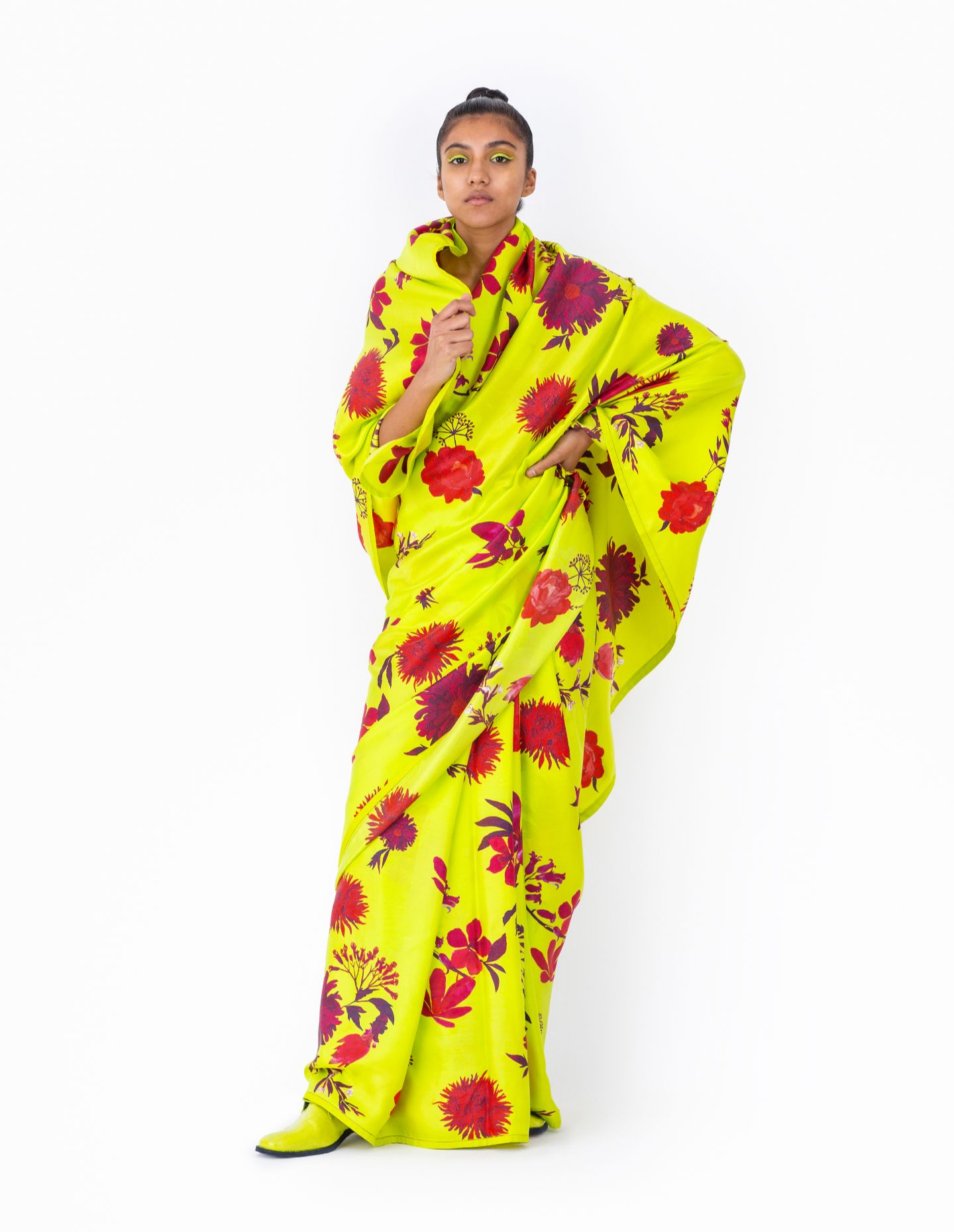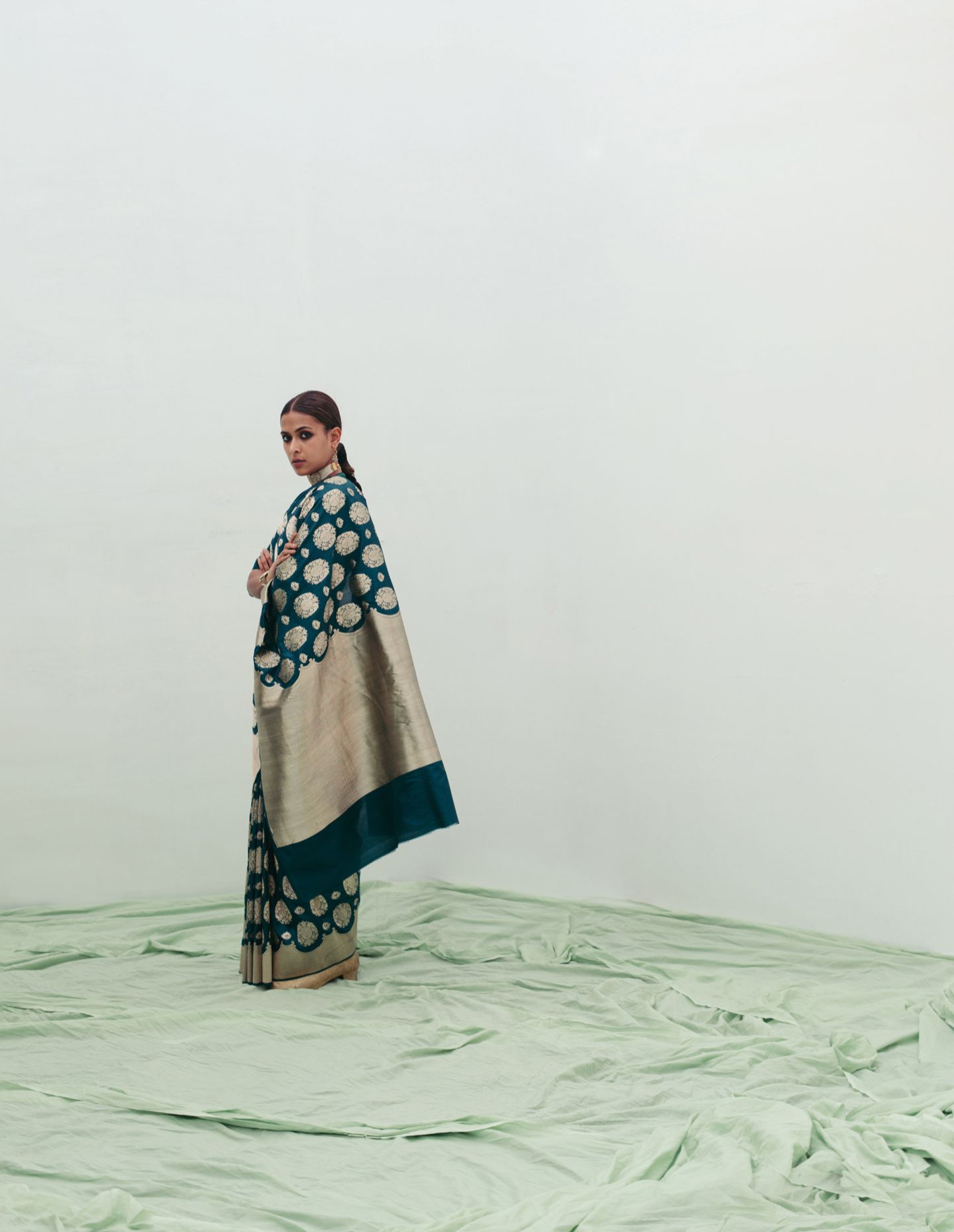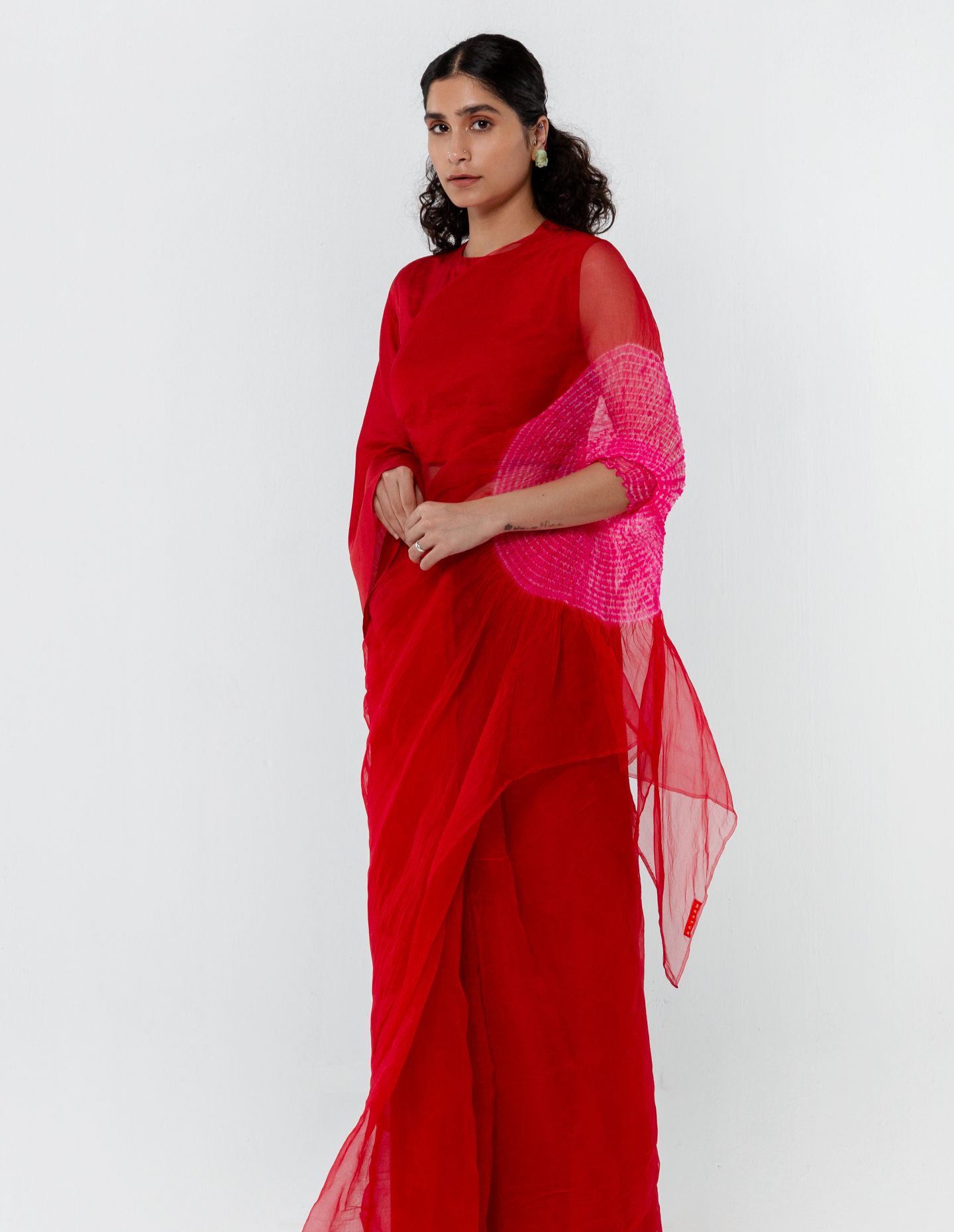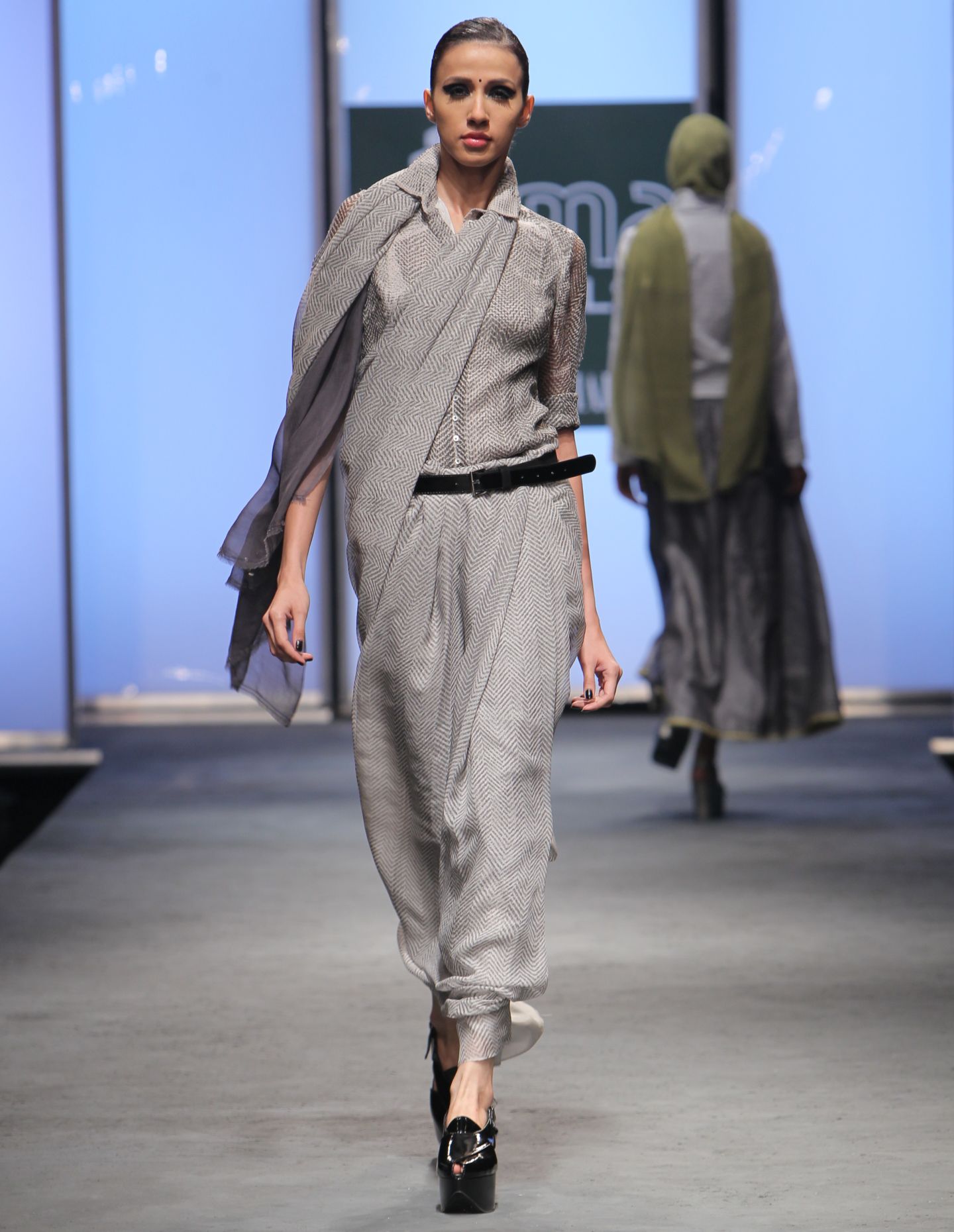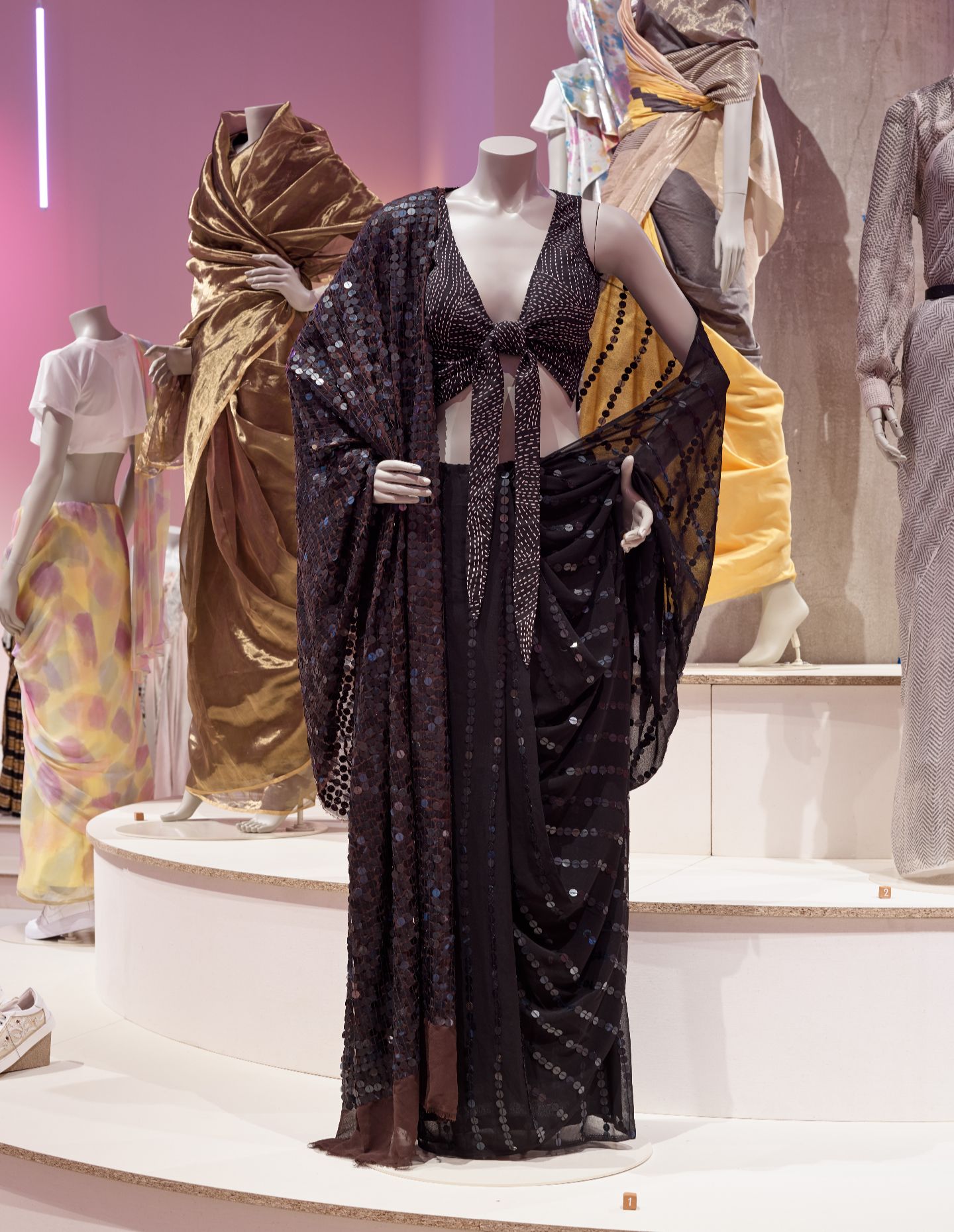

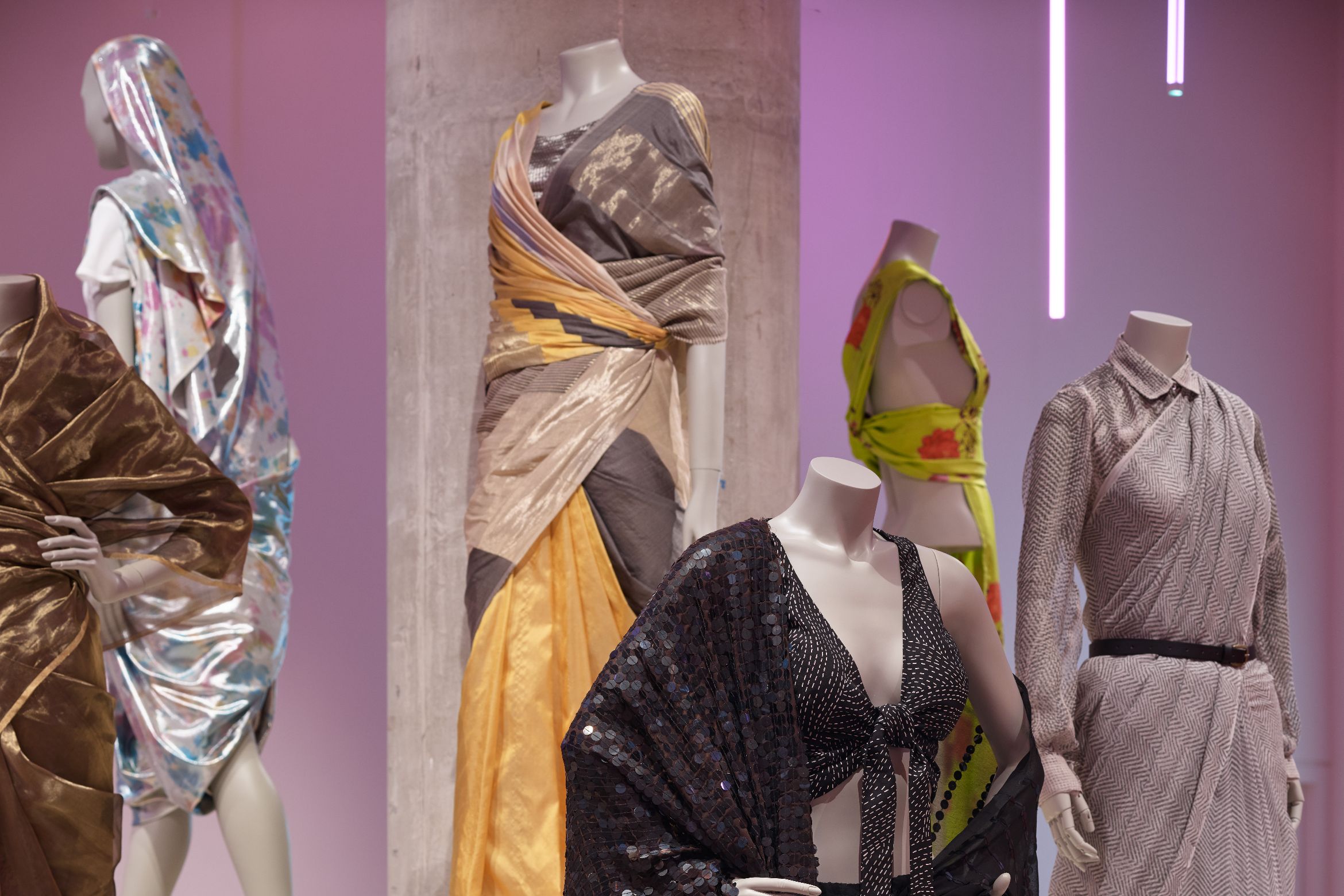
Open from the 21st March at Bunjil Place Gallery, The Offbeat Sari brings together more than 50 contemporary works exploring the evolution of the sari as a living design object. Developed by the Design Museum London and curated by Priya Khanchandani, the exhibition spans couture, culture and experimental practice. Here, Khanchandani speaks to the exhibition’s focus, themes and design approach.
Why focus on the sari’s contemporary reinvention rather than its history?
South Asia has an immensely rich landscape of contemporary design and I felt the story of the sari’s bold reinvention needed to be shared. When I lived in India, I saw a new generation of designers and wearers experimenting with it in radically new ways. At the same time, there was limited awareness internationally of the sari as anything beyond tradition. This exhibition brings those new perspectives forward.
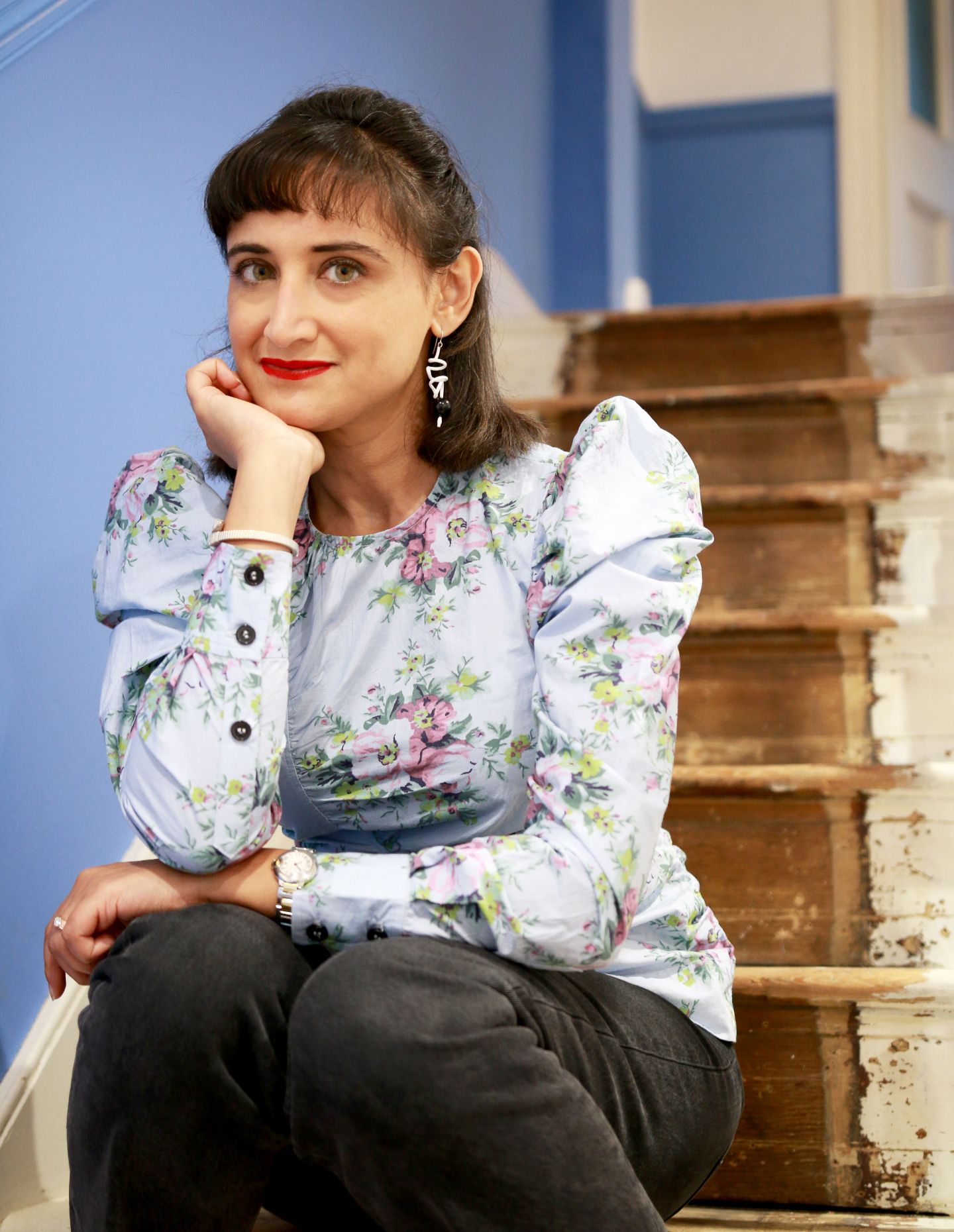
How are designers using the sari to respond to cultural or social change?
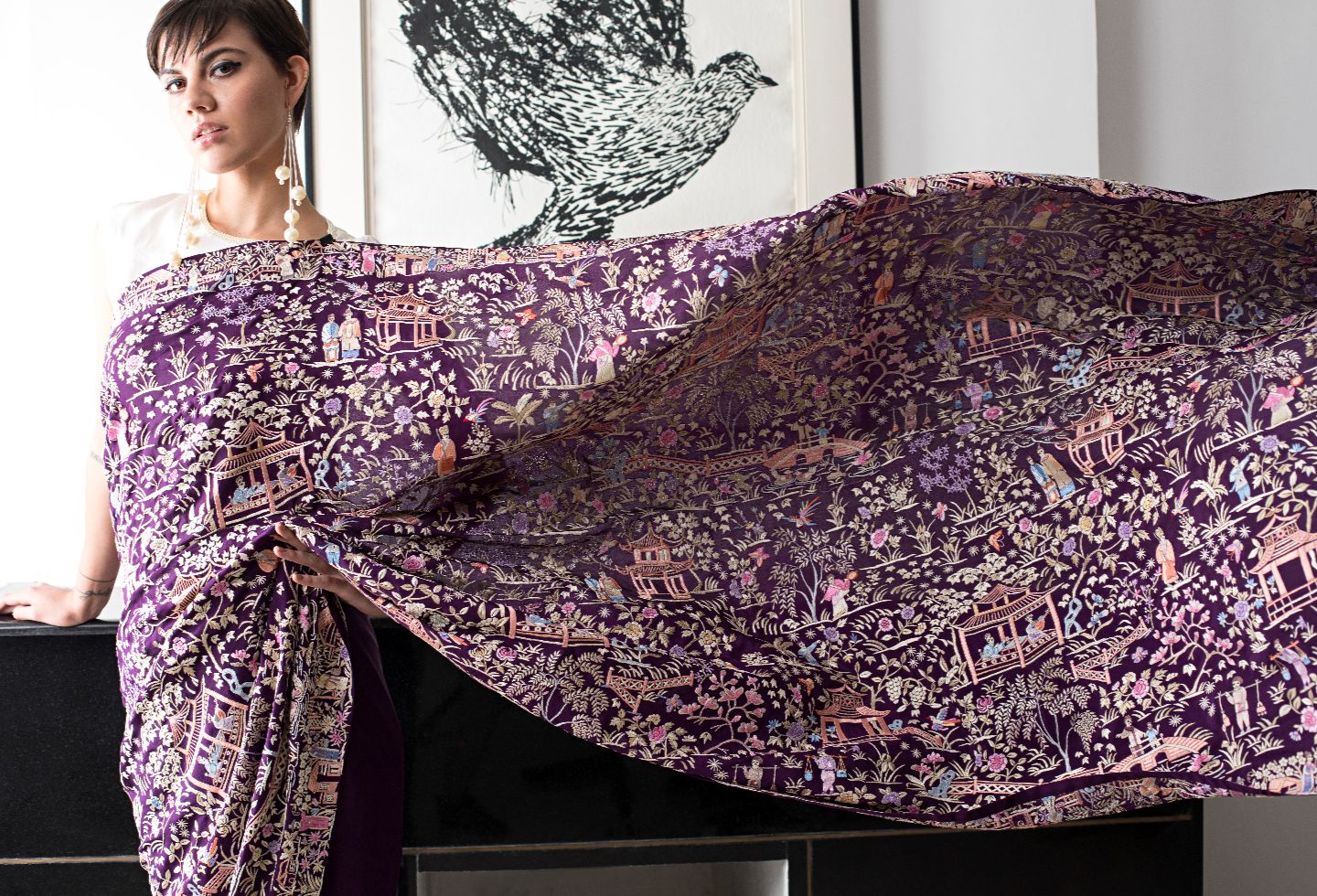
Some designers are working closely with craft communities, supporting traditional knowledge while adapting it for contemporary contexts. Others engage directly with political and social narratives. There are saris made from recycled plastic bottles or industrial waste and others tied to activist movements. The garment becomes a medium for expressing identity, resistance and environmental awareness.
The exhibition spans couture, experimentation and pop culture — how did you bring it together?
By focusing on a single object — the sari — as a conceptual framework. Every piece asks the same question: what happens when you push the possibilities of this form? Some answers come through material innovation, others through performance or craftsmanship. The exhibition unfolds across themes of transformation, identity and new materialities, allowing those ideas to build as a narrative.
How do you translate such a fluid, body-based garment into a gallery setting?
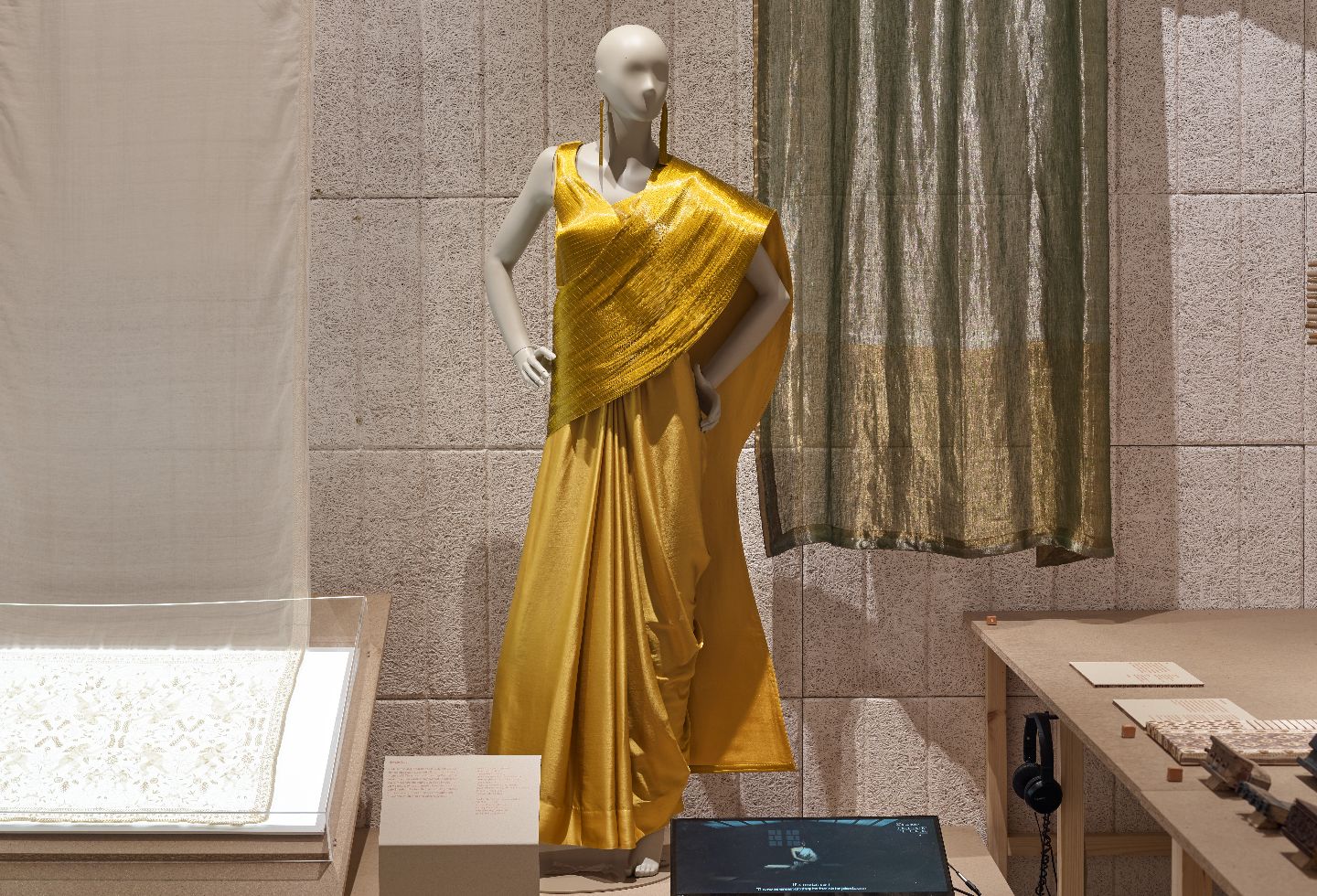
That was one of the most exciting challenges. The sari is fundamentally about drape and movement, so we worked carefully with mannequins and staging to give each piece space to flow. In some sections, the saris are presented as textiles rather than garments, allowing visitors to focus on the detail and craftsmanship. The aim was to create a space that captures both the dynamism of the sari and the individuality of each work.
Related: Who is Up To Something?
How important was sustainability in the exhibition design?
Very important. Many of the designers featured are deeply engaged with sustainability, so it was essential that the exhibition reflected those values. For the Melbourne presentation, led by Peter King, materials have been reused and adapted where possible, with new elements made from recycled and low-carbon materials. It’s an approach that will continue as the exhibition tours.
What do you hope Australian audiences take away from the exhibition?
I hope visitors see the sari not simply as a traditional garment, but as a dynamic and evolving form of design. It’s a platform for creativity, self-expression and cultural dialogue. More broadly, I hope it challenges assumptions about South Asian design as something fixed in the past — it is constantly changing, shaped by contemporary life, politics and imagination.
The Offbeat Sari is on view from 21st March at Bunjil Place Gallery.