
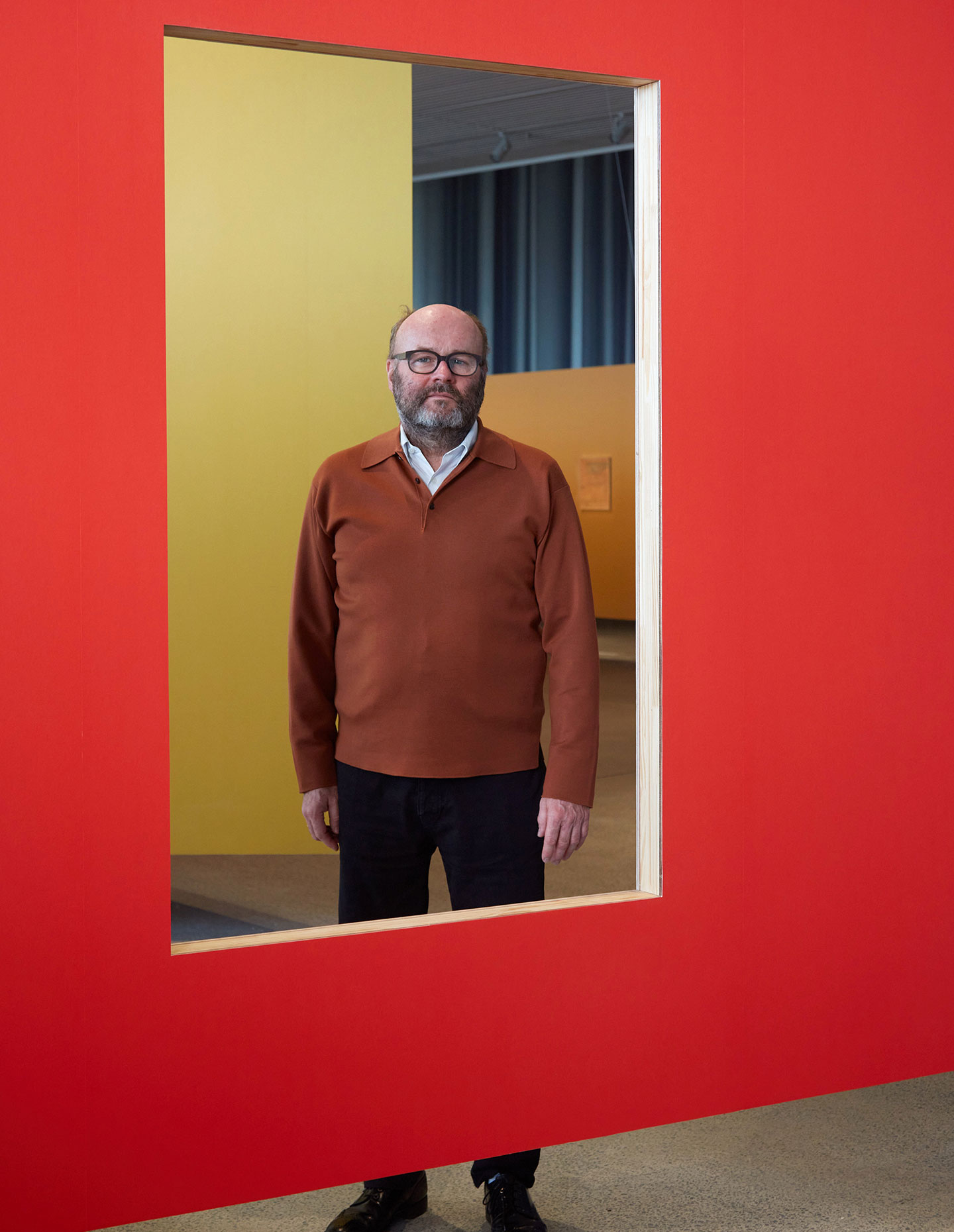
The Object Lesson represents a distinctive convergence of artistic vision and collecting passion. Based between Berlin and Los Angeles, Thomas Demand is known for his photographic works that examine how images become embedded in collective memory. Previously collaborations with the Art Gallery’s architects, the Pritzker Prize-winning architecture firm SANAA in 2013 and 2014, resulted in Demand making several visits to their Tokyo studio, culminating not only in a body of work depicting the firm’s architectural models, but an in-depth understanding of Naala Badu.
Reflecting on his curatorial role, Demand states: “I am an artist, I am not a curator, I don’t want to be one either. First and foremost, I am an artist and I recognise in other people’s artworks problems that I may have had as well, and how to solve them. We all stand on the shoulders of someone else.”
For more than five decades, Kaldor Public Art Projects has transformed Australia’s art landscape through groundbreaking collaborations with contemporary artists. From Christo and Jeanne-Claude’s Wrapped Coast in 1969 to projects by Gilbert & George, Sol LeWitt, and Richard Long in the 1970s; and to more recent exhibitions with Jeff Koons, Bill Viola, Urs Fischer, and Marina Abramovic. In 2012, Demand himself presented The Dailies where he occupied the entire fourth floor of the Harry Seidler-designed Commercial Travellers’ Association in Sydney’s Martin Place. And, in 2016, Jonathan Jones’ barrangal dyara (skin and bones) comprising 15,000 white shields echoing the footprint of the 19th Century Garden Palace spanned the Royal Botanic Gardens, Sydney. These cutting-edge projects have challenged perceptions of art in unexpected locations.
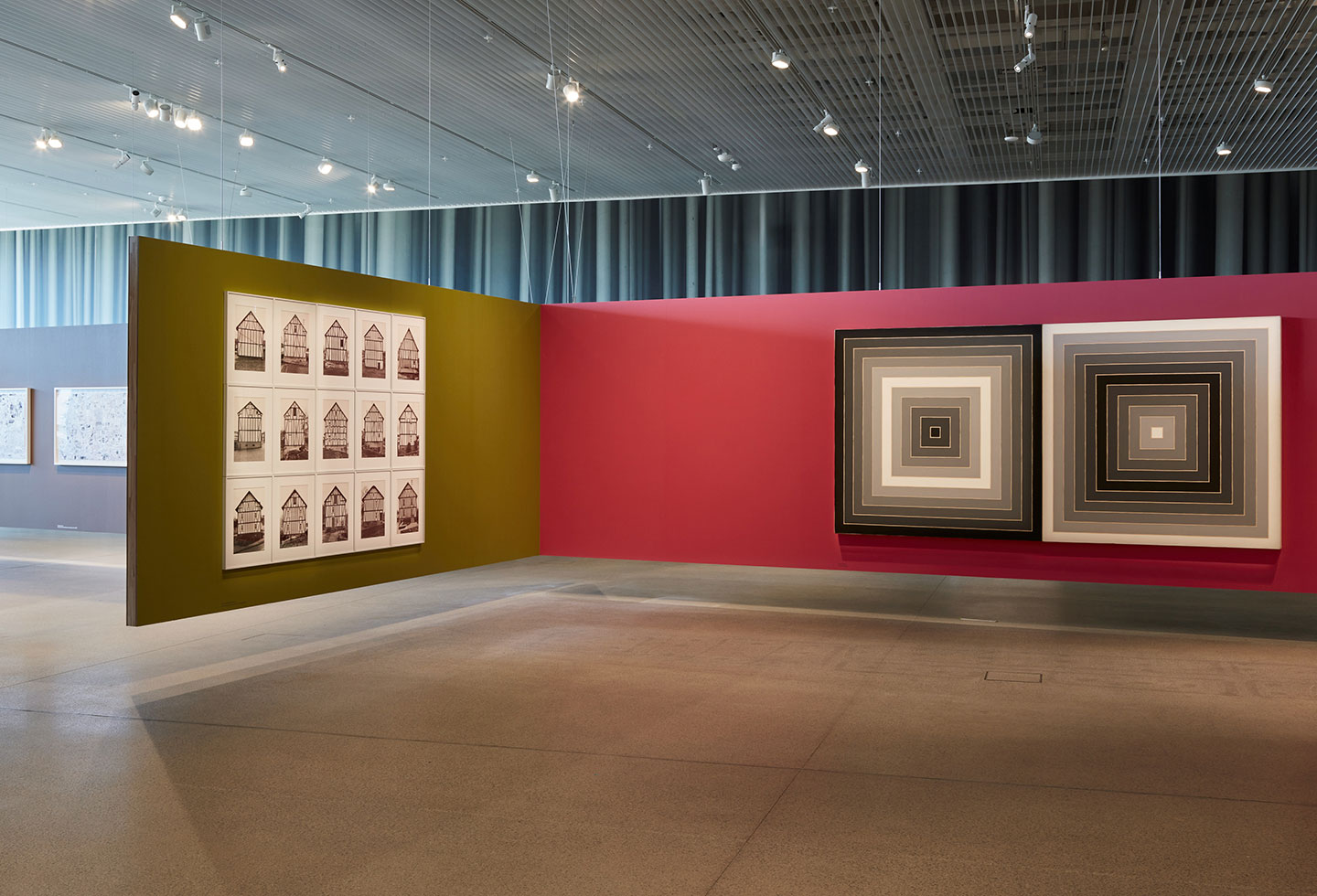
The 38th project marks a distinct evolution in the program’s trajectory. Rather than commissioning a new public work, Demand’s architectural sensibilities and interest in exhibition design were recognised and he was invited to reimagine the John Kaldor Family Collection.
“The Object Lesson brings together my two passions – collecting art and creating groundbreaking projects with leading contemporary artists,” Kaldor explains. Posing the fundamental question of how objects can teach us through their presentation and context, Demand’s response has been to reimagine almost 60 works, creating a “kaleidoscopic labyrinth” within the vast, expansive gallery space.
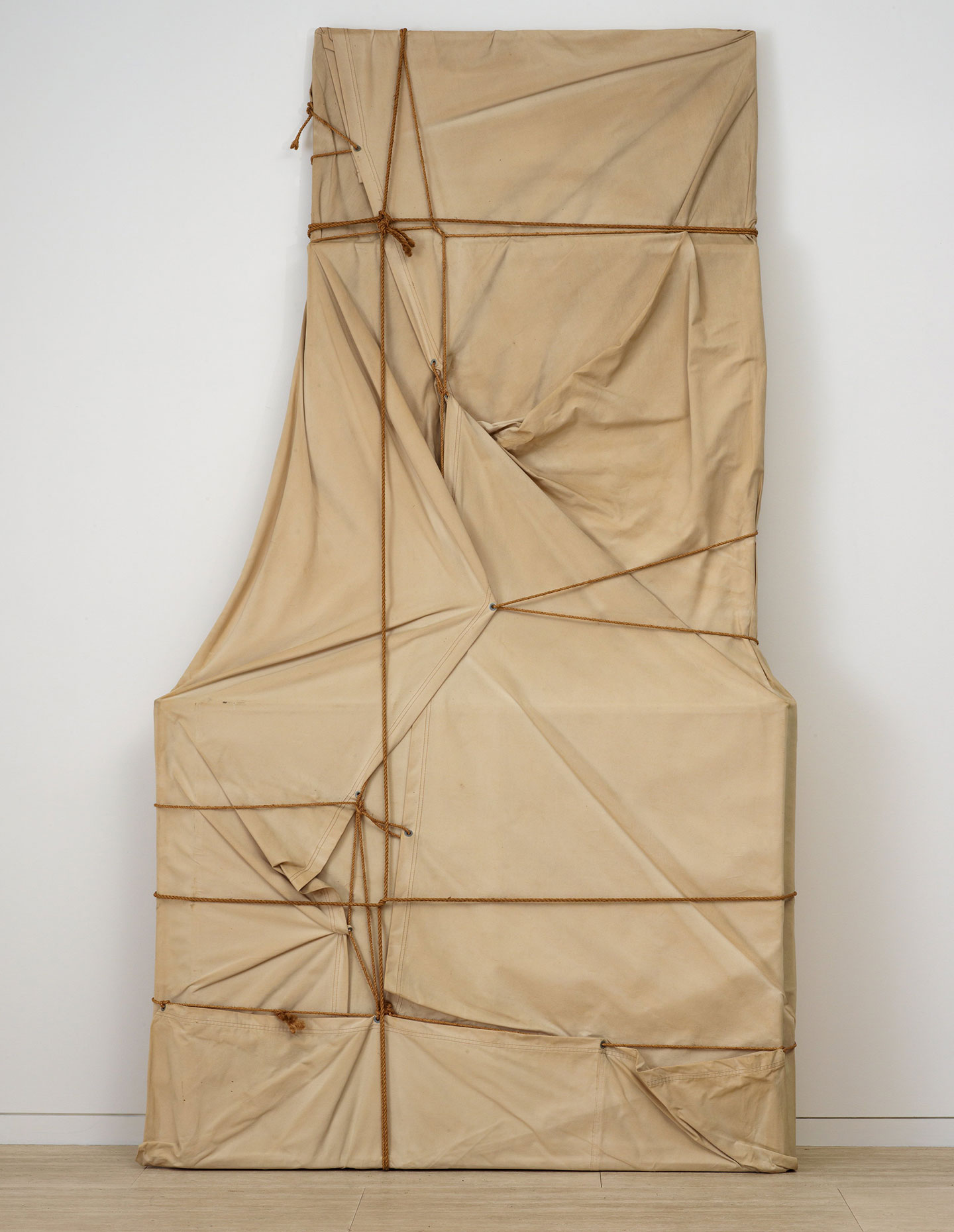
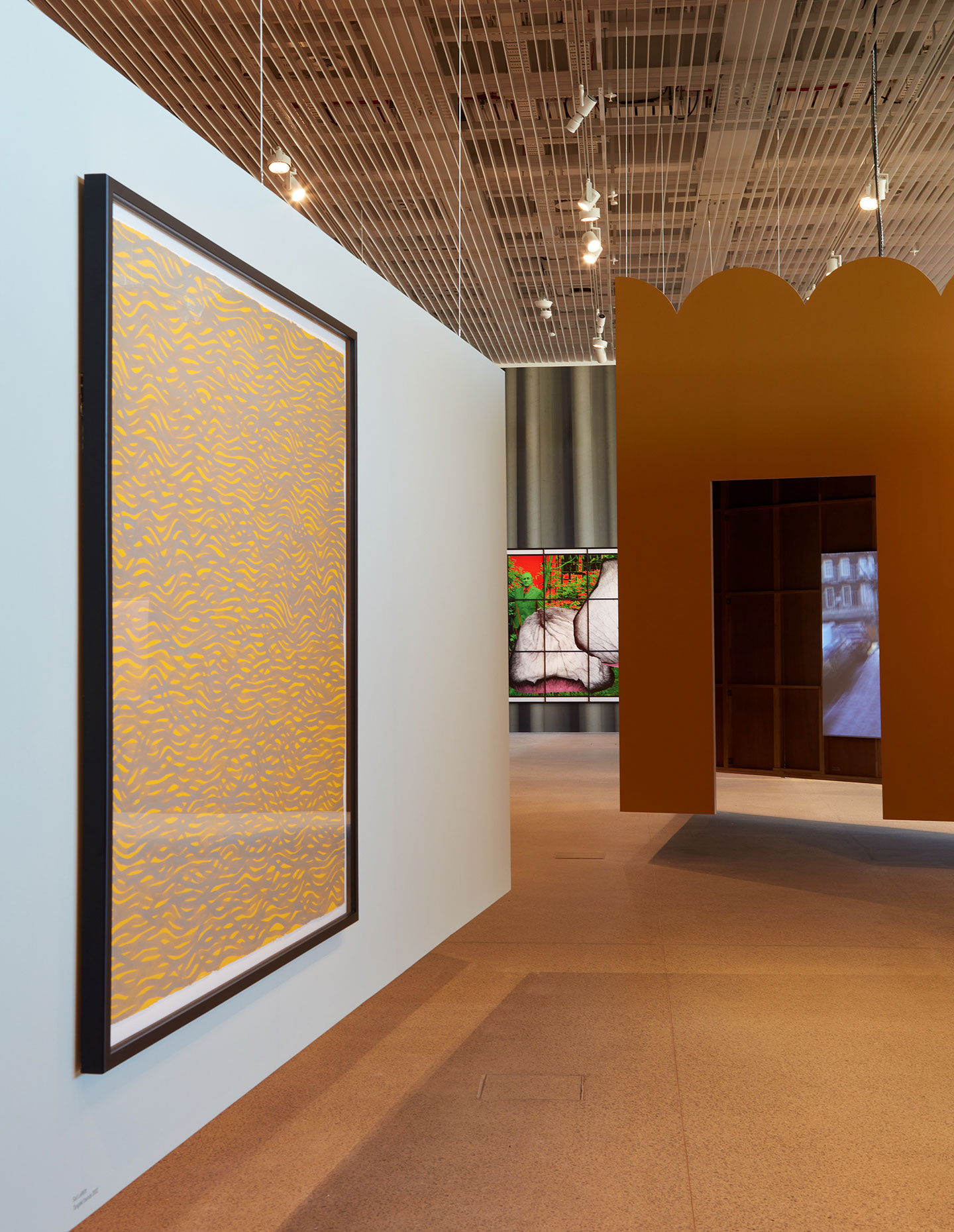
The exhibition‘s architecture emerged from an unexpected source – Sol LeWitt’s The location of twenty-one lines with lines from midpoints mostly, 1974, a drawing Demand discovered. Demand reflects: “It is almost the same square shape as the exhibition space. I thought to myself, it could be quite funny if you could walk through the drawing. It was not intended to be a floorplan; however, I didn’t want the walls to be hung in a grid, or to see everything at once, or impose my own plan. It had to be inherent to the project itself.”
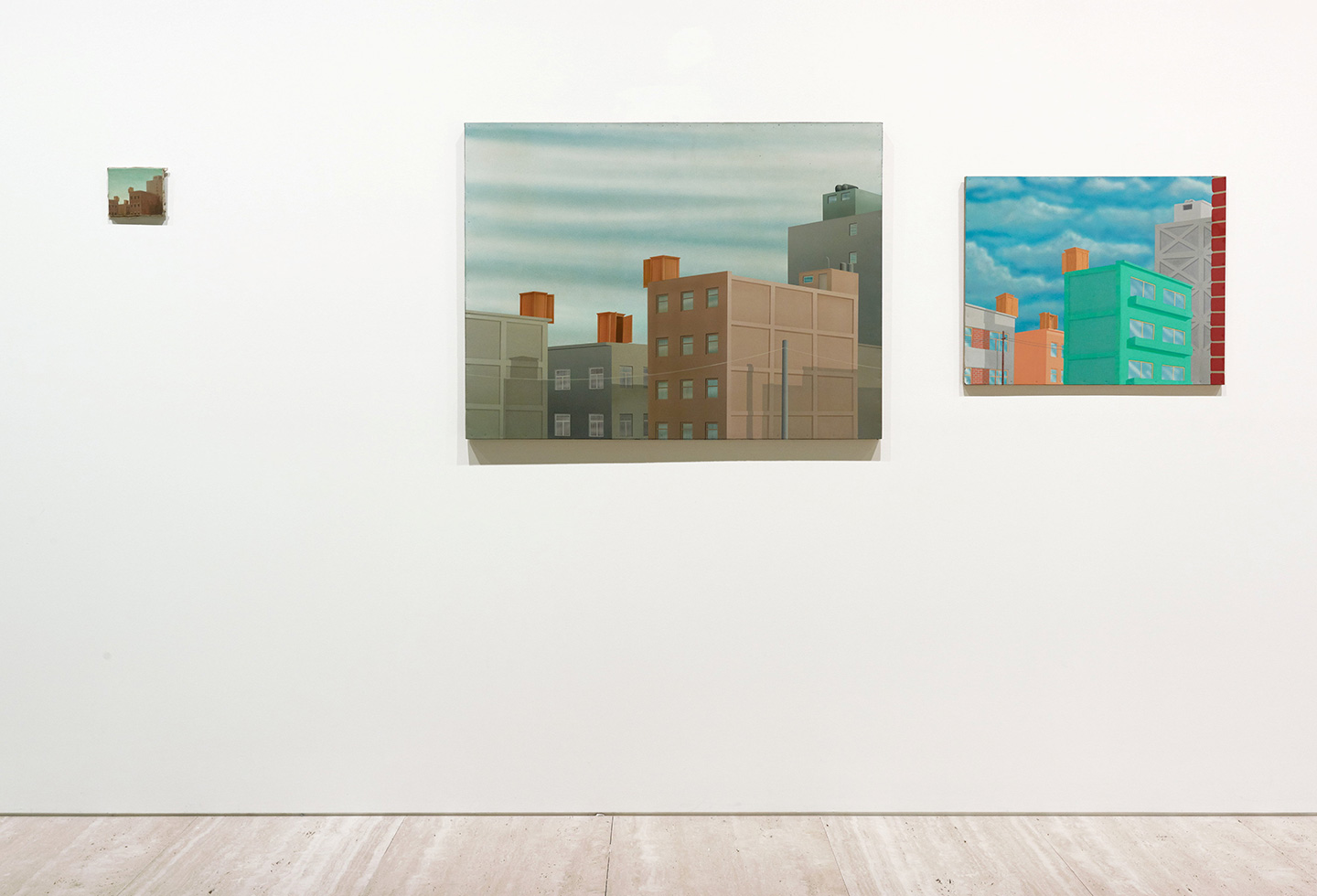
The result is a blueprint arrangement of suspended, coloured walls that hover above the ground, allowing light from the harbour-facing windows to permeate the space, maintaining the building’s inherent transparency. Additionally, the exterior walls are covered in Demand’s custom wallpaper, creating an elegant envelope that connects the interior space with the outside landscape.
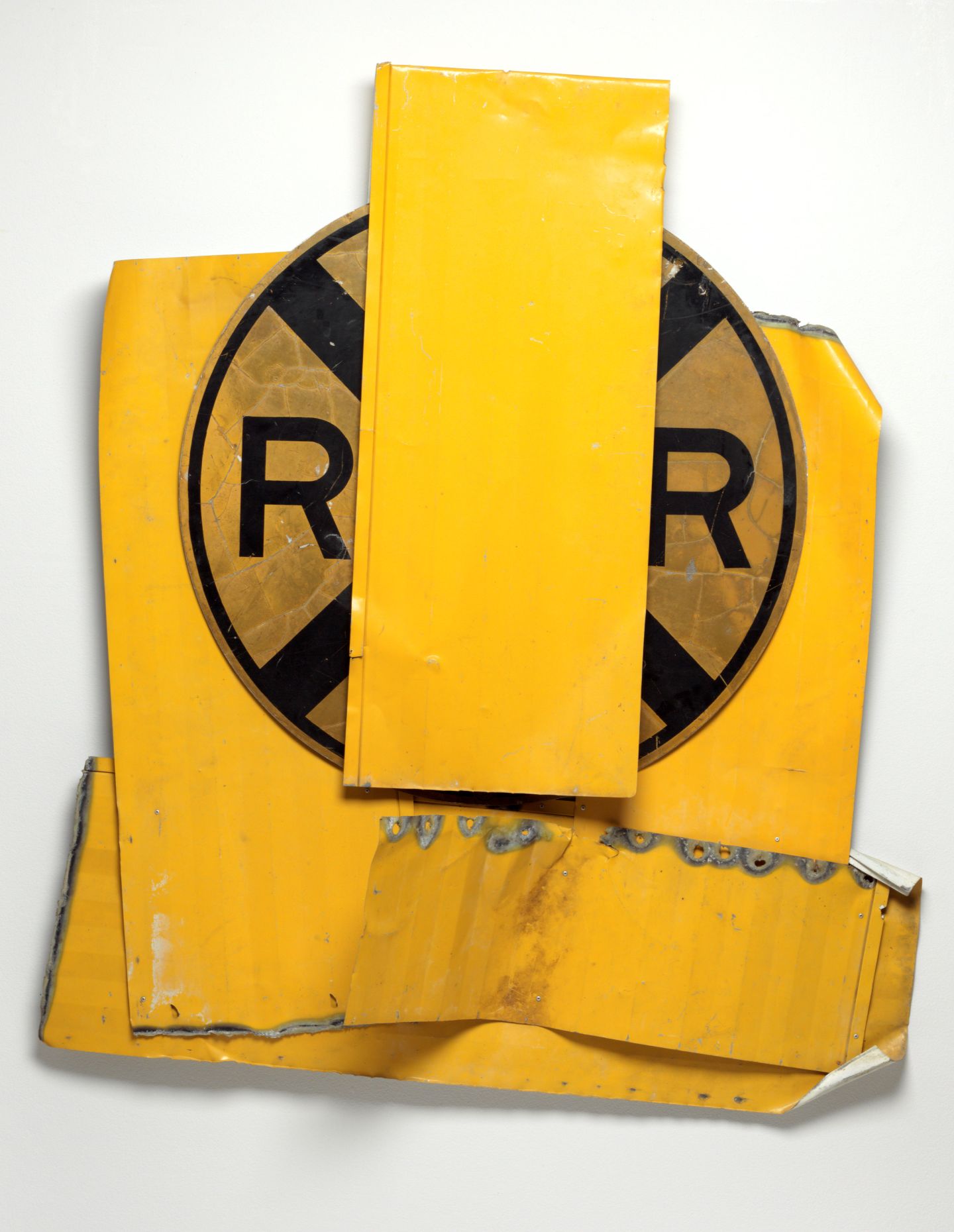
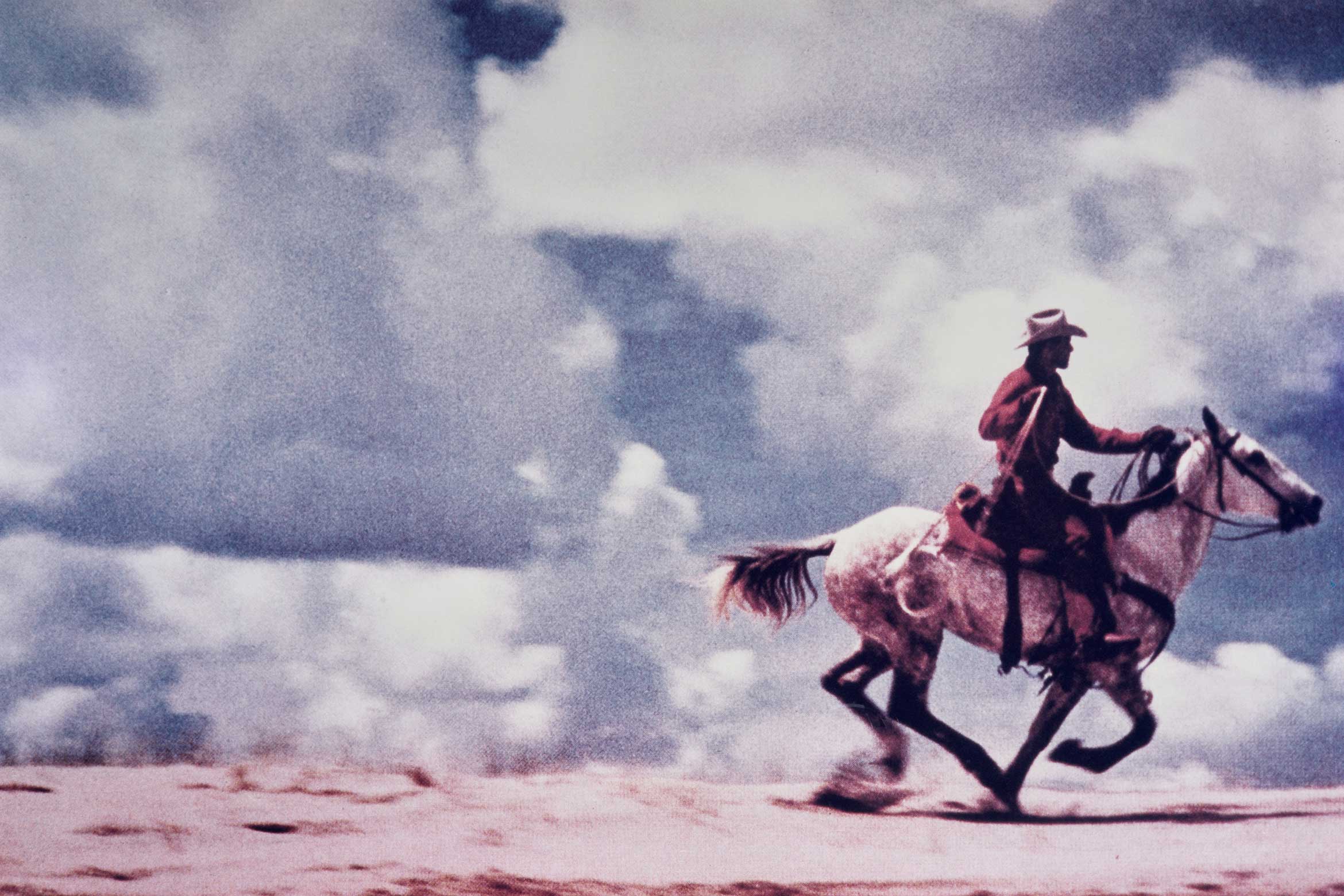
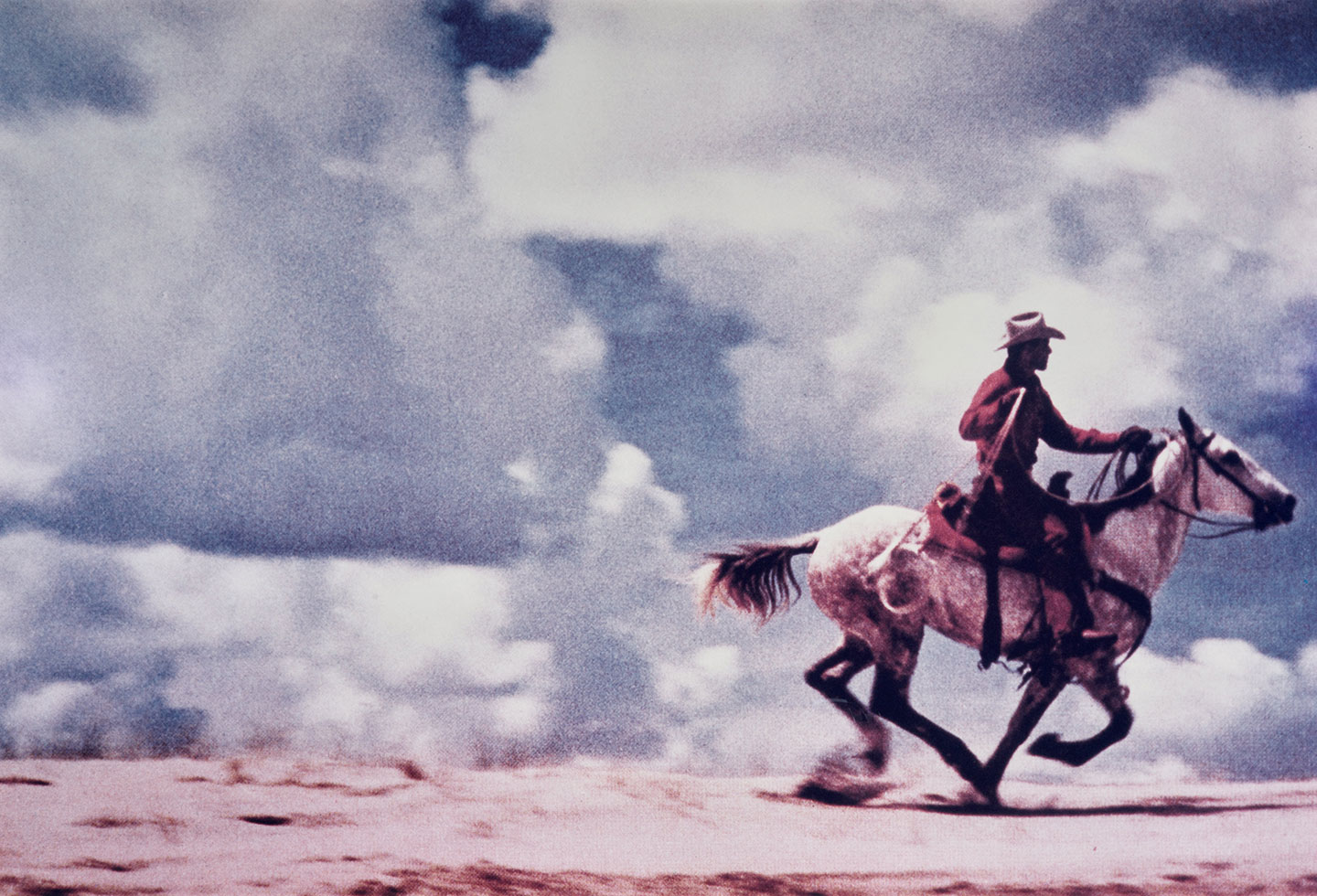
Similarly, the exhibition’s colour palette emerged from the artworks rather than imposed aesthetic choices. “As a starting point, I took the green of the Gursky background with the brown of the frame and that is the wall colour,” Demand describes, allowing each work to influence its immediate environment. This approach transforms familiar pieces: Andreas Gursky’s Düsseldorf, Flughafen II, 1994 gains new resonance, Richard Prince’s iconic depiction of the Marlboro-man archetype Untitled (cowboy), 1980-1989 has softened in front of its rose hued ground; and Robert Rauschenberg’s Yellow visor glut, 1989 is ever striking against a black backdrop.
However, Demand admits that “there is a risk… how would every work be on a screaming background colour?” Frank Stella’s black and white Untitled, 1965 for example, is now placed on a vibrant hot pink wall. “It looks spatial,” he enthuses. “We know this minimalism, we know what we have to see, but now it is different.”
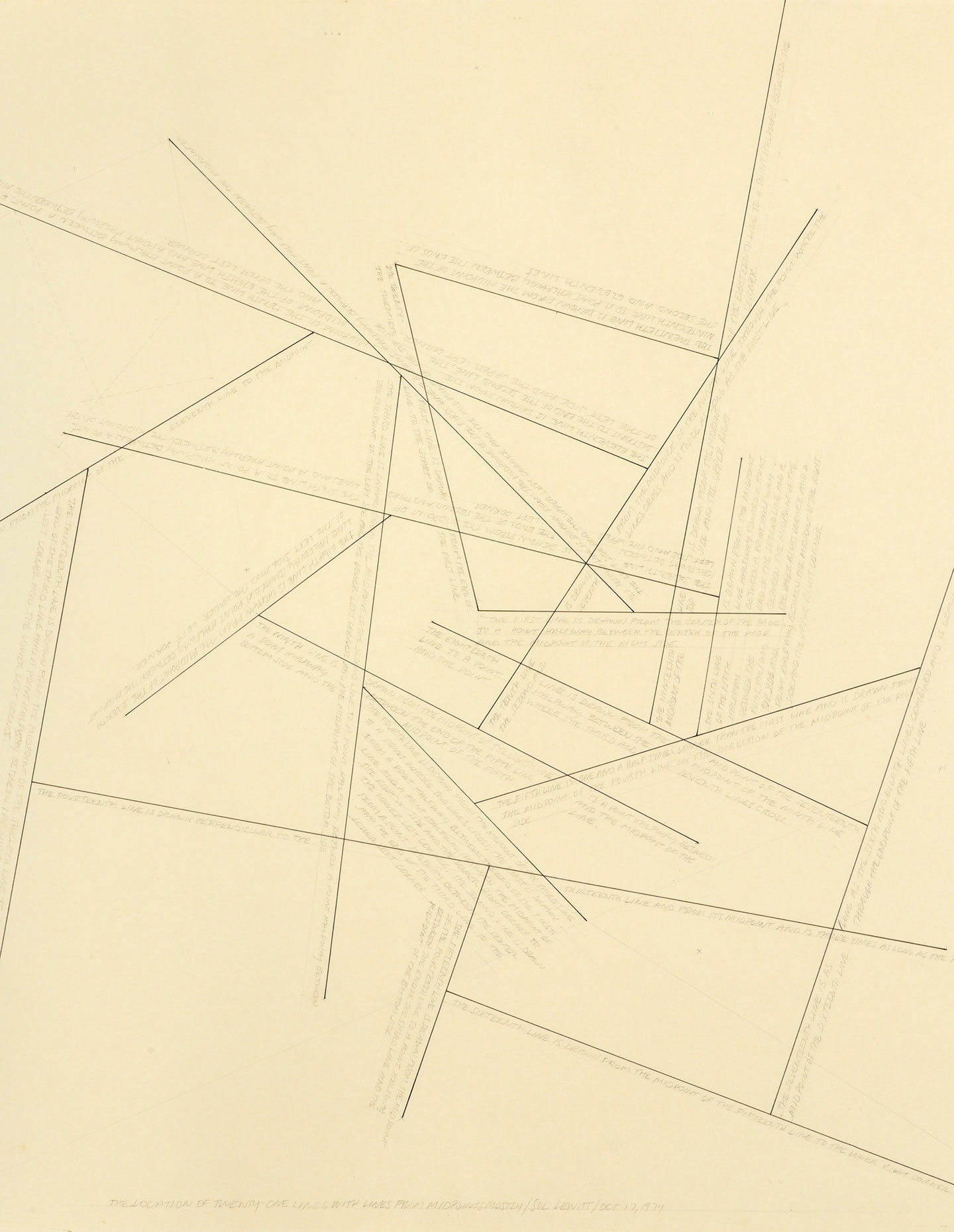
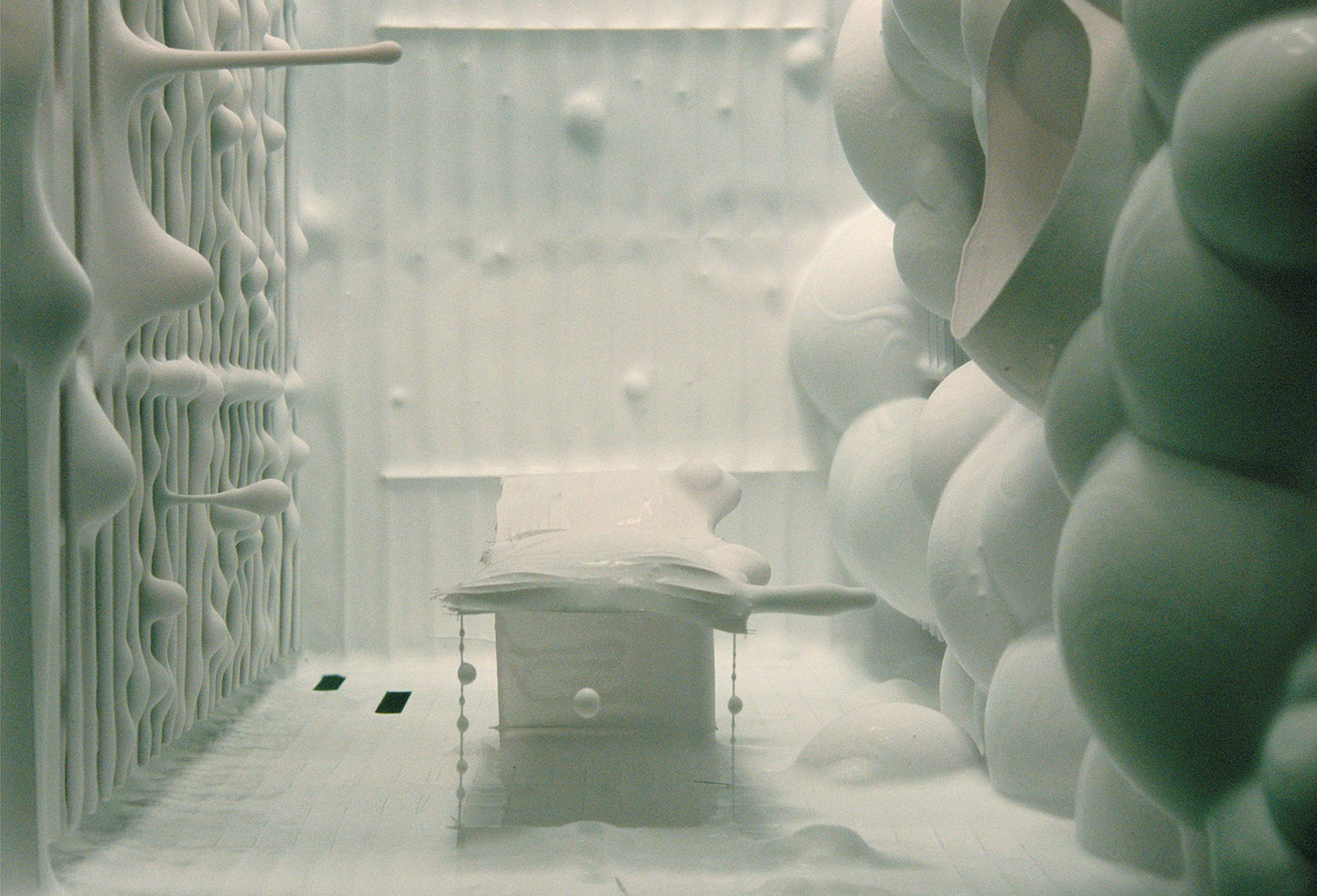
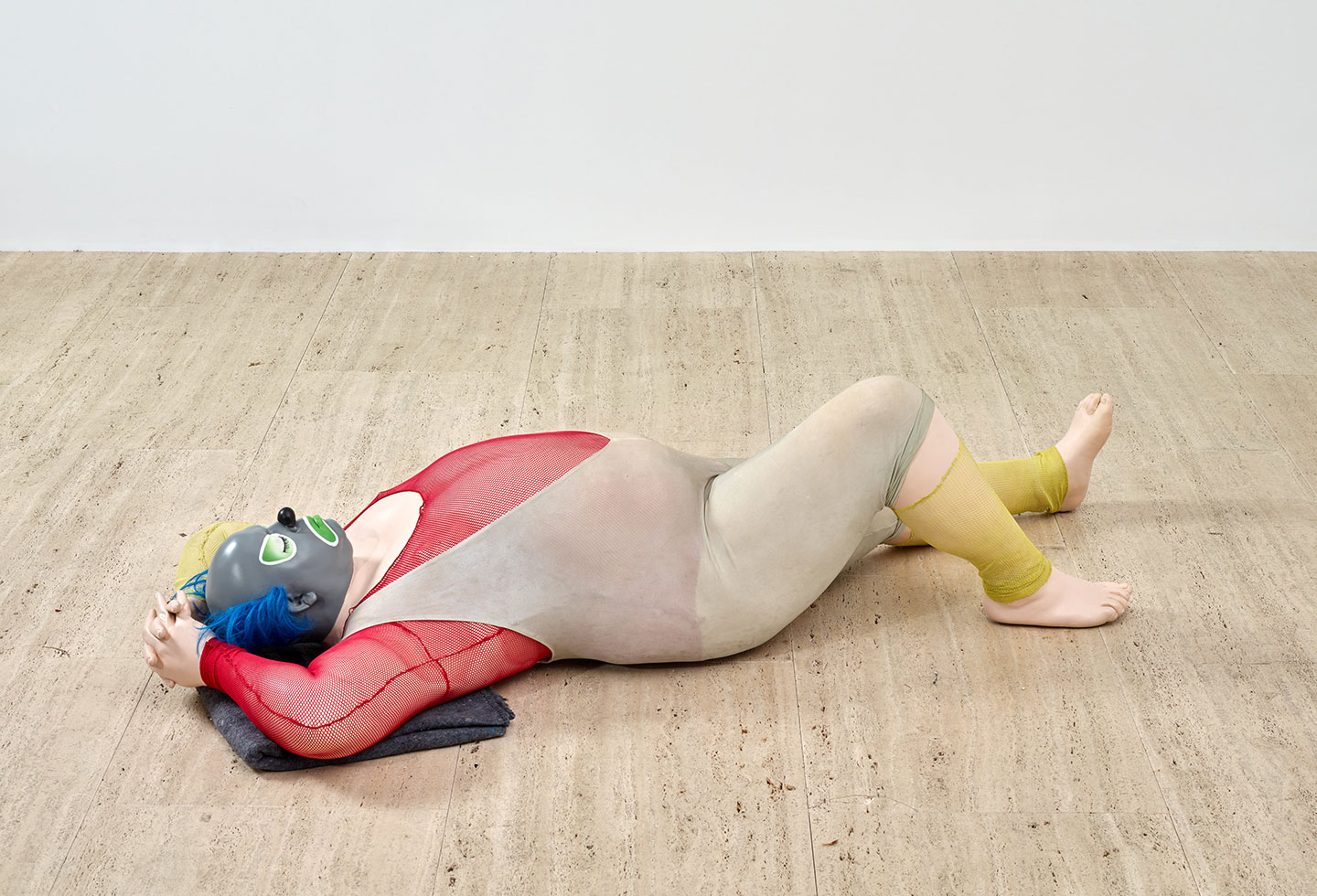
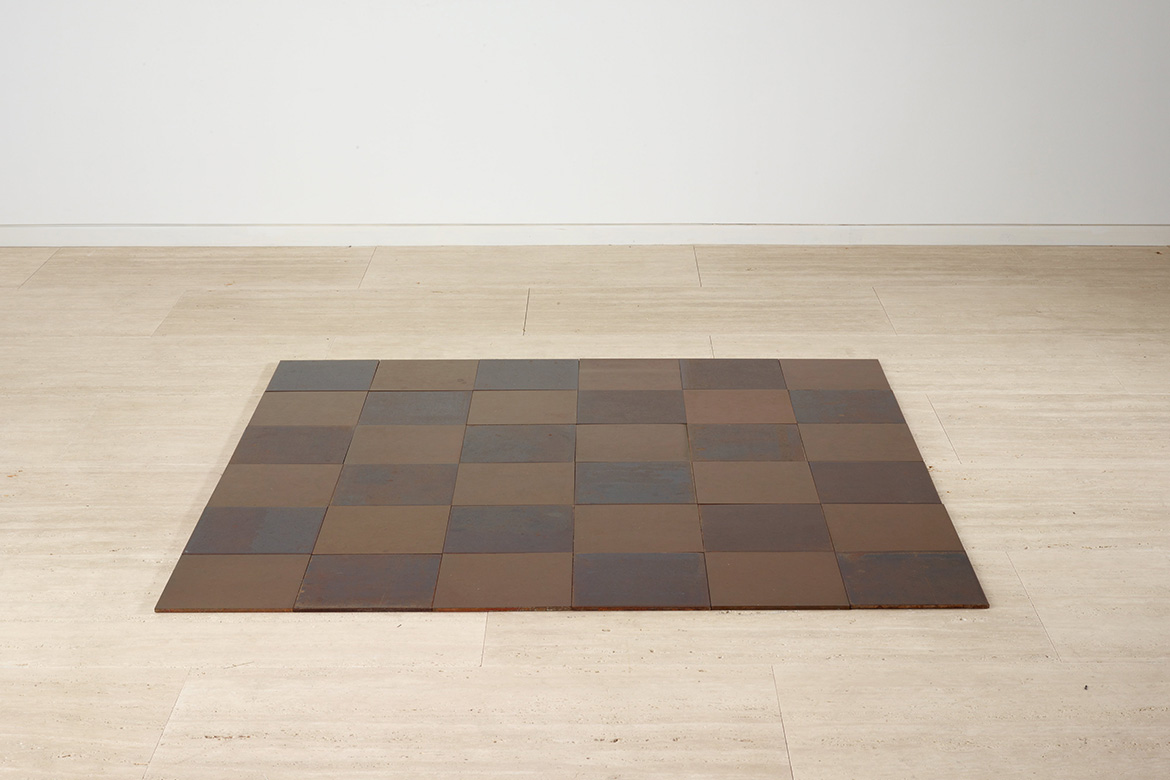
The suspended architecture also enables surprising spatial relationships and genuine discoveries. Placed on the floor, Carl Andre’s Steel-copper plain, 1969 serves as foundation for Ugo Rondinone’s if there were anywhere but desert. wednesday, 2000, creating an unlikely but compelling dialogue between the austerity of Minimalism and the candy-coloured melancholy of the contemporary human condition. Two semi-enclosed, darkened chambers, integrate seamlessly providing spaces for the inclusion of seminal video works by Francis Alys and Saskia Olde Wolbers. Other highlights include works by Nam June Paik, Thomas Struth, Donald Judd, Christo and Demand himself.
Related: Cerith Wyn Evans exhibition
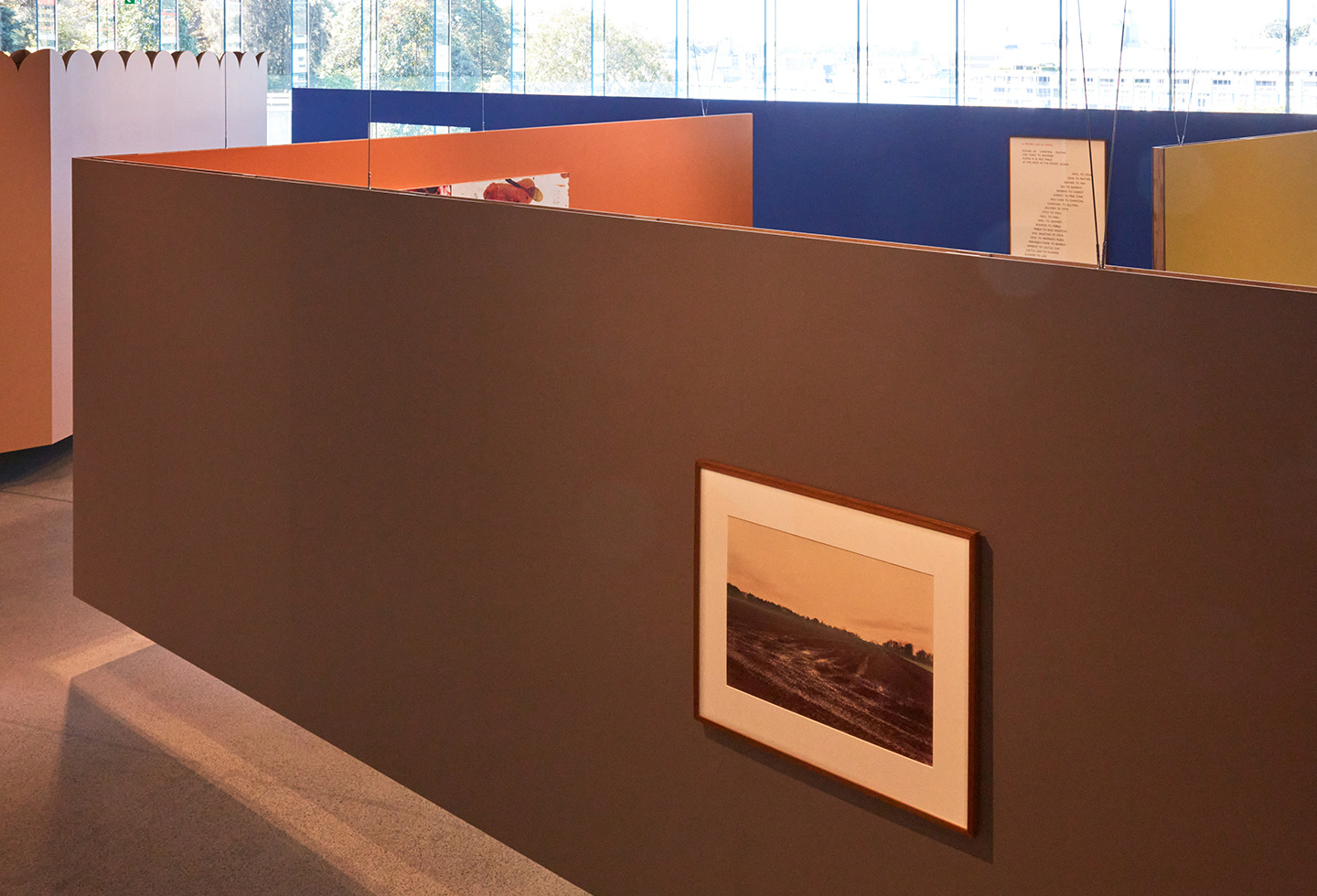
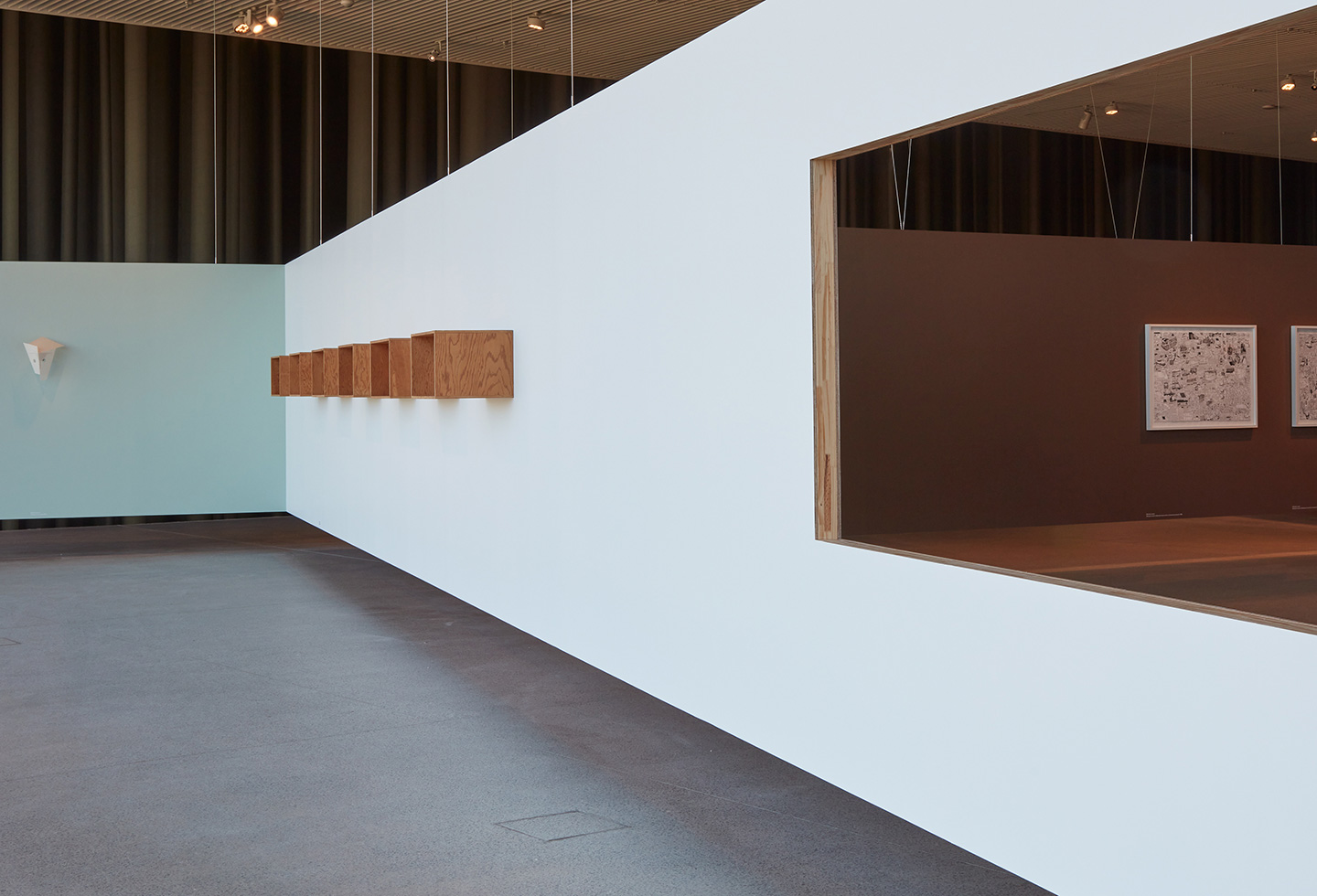
The Object Lesson succeeds as both exhibition and architectural project, where Demand’s throughtful design and spatial interventions transform seemingly familiar artworks into sites of genuine discovery. Unexpected sightlines and dynamic colour combinations draw surprising connections, creating moments of revelation and renewed insight. Demand has achieved that rarest of curatorial feats: creating a exhibition space that elevates the collection without overshadowing it, proving that sometimes the most profound insights emerge from the most playful interventions.