

As the manufacturing industry starts getting really serious about sustainability, all those scopes and targets are creating a mountain of data for A&D professionals to decipher, adding a further layer of work to an already hectic remit. So it’s reassuring to see that V-ZUG has applied its ‘simplexity’ principle to its own mountain of sustainability data, with the release of the Product Sustainability Reports (PSRs).
The PSRs distil the key points of a Life Cycle Assessment (LCA) into an accessible format that designers and their clients can easily digest, and are the latest offering in the Swiss company’s long line of sector-leading sustainability initiatives, whether it’s carbon neutral production since 2020, offsetting with integrity via its V-Forest, or collaborating with local government and industry on the ground-breaking Multi Energy Hub Initiative in its home town of Zug.

As Head of Sustainability for the past 4 and half years, Marcel Niederberger has been particularly focused on delivering the company‘s sustainability targets, including the goal set in 2021 to have LCAs completed for all 12 product categories by 2023.
Various data points for each product are fed into an ISO-standard LCA methodology to produce three measures: CO2, financial and eco-points – the being latter a Swiss Government metric looking at ecological scarcity. All three are timestamped at the moment of cradle-to-gate (when it leaves the factory) and again at cradle-to-grave.
“We wanted to really understand the environmental footprint of our products, to then set ourselves targets to reduce these,” says Niederberger. “We hired new people, because that knowledge did not exist in the company. We didn’t want to just go to a consulting company, because you want to have this kind knowledge in-house and develop this way of thinking in-house. Our people need to know all these kind of aspects.”
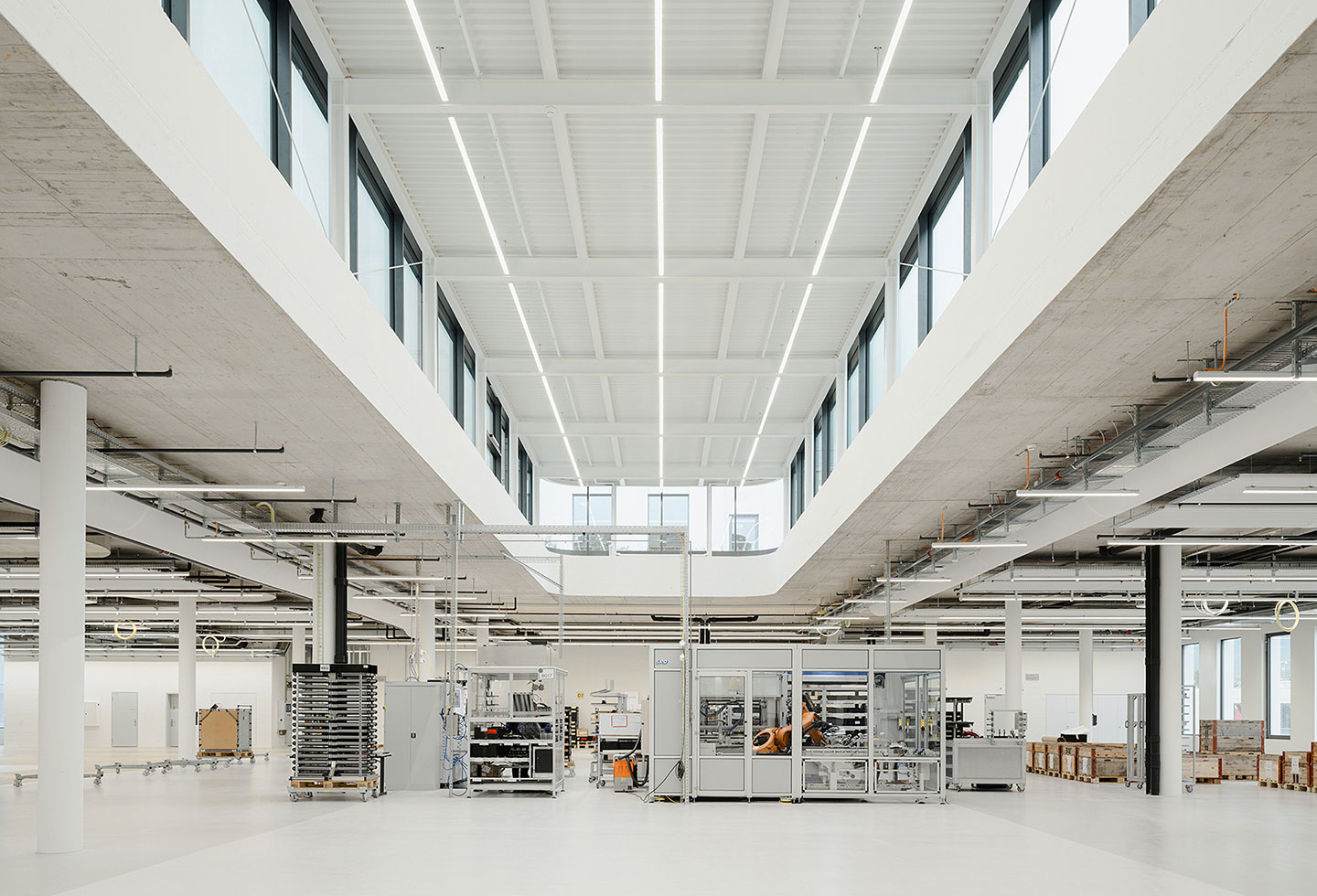
One of those hires was Marc Vetterli, who with his PhD in Materials Science and Engineering is now leading V-ZUG’s ‘Materials for a Circular Economy’ project, which has taken the baseline produced by the initial LCAs and then explored how to recircle the materials back into production and hence improve recycling rates of V-Zug’s appliances. With respect to plastics, that means looking at the various polymer types and their additives, like polypropylenes with calcium carbonate or glass fibres, and how their properties change after years of use and what impacts that has on their recyclability.
“The idea is to have the optimal properties in the virgin state, and then investigate how the properties are after 15 years, like mechanical, thermal, chemical and rheological properties,” says Vetterli. “We do this as deeply as possible, in order to build a material model that we then put into a simulation data package. That means when our developers and engineers come up with a new part, we can do simulations with those material properties to make sure that the parts we design can be processed with up to 100% recycled material when our quality specifications are ensured.”
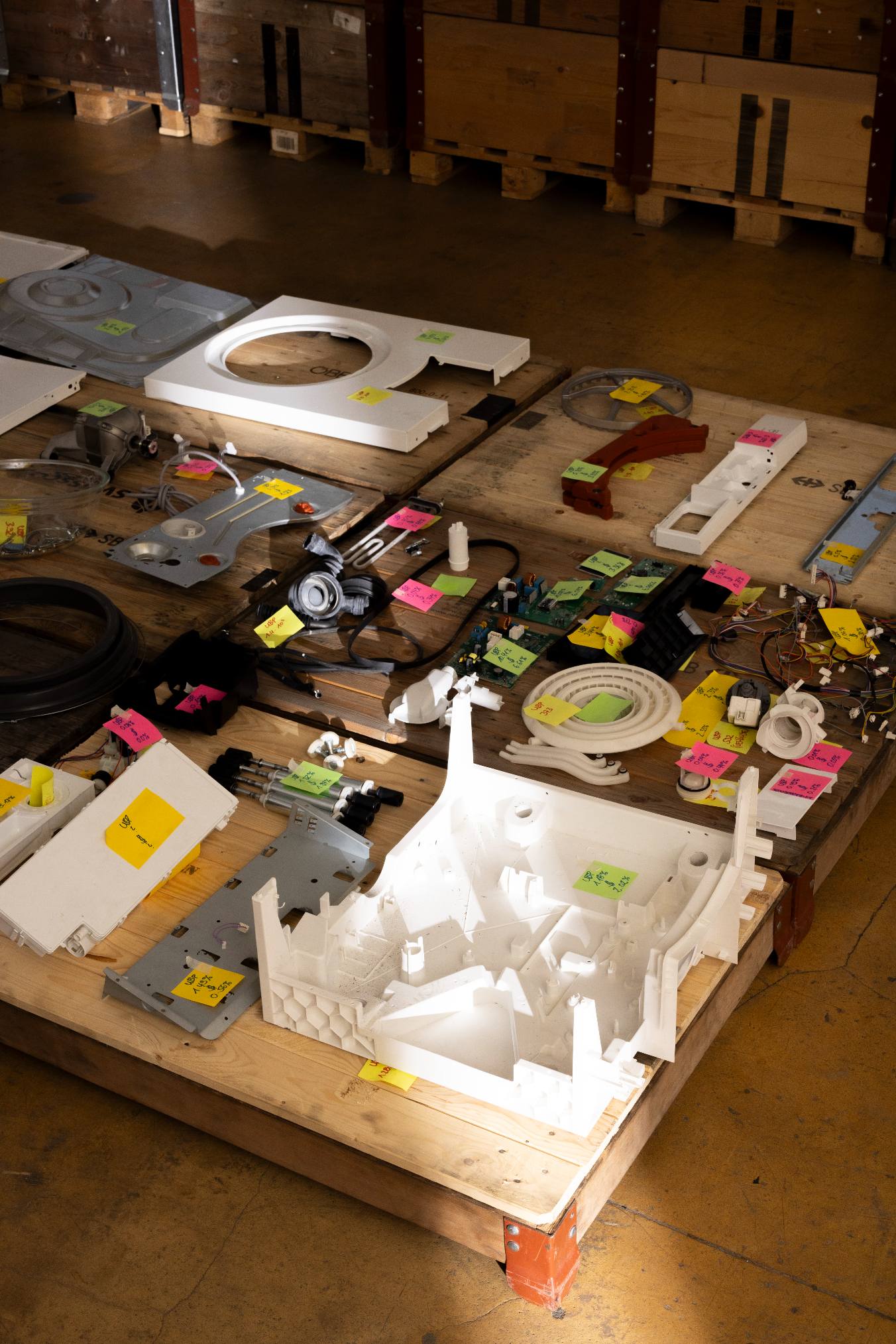
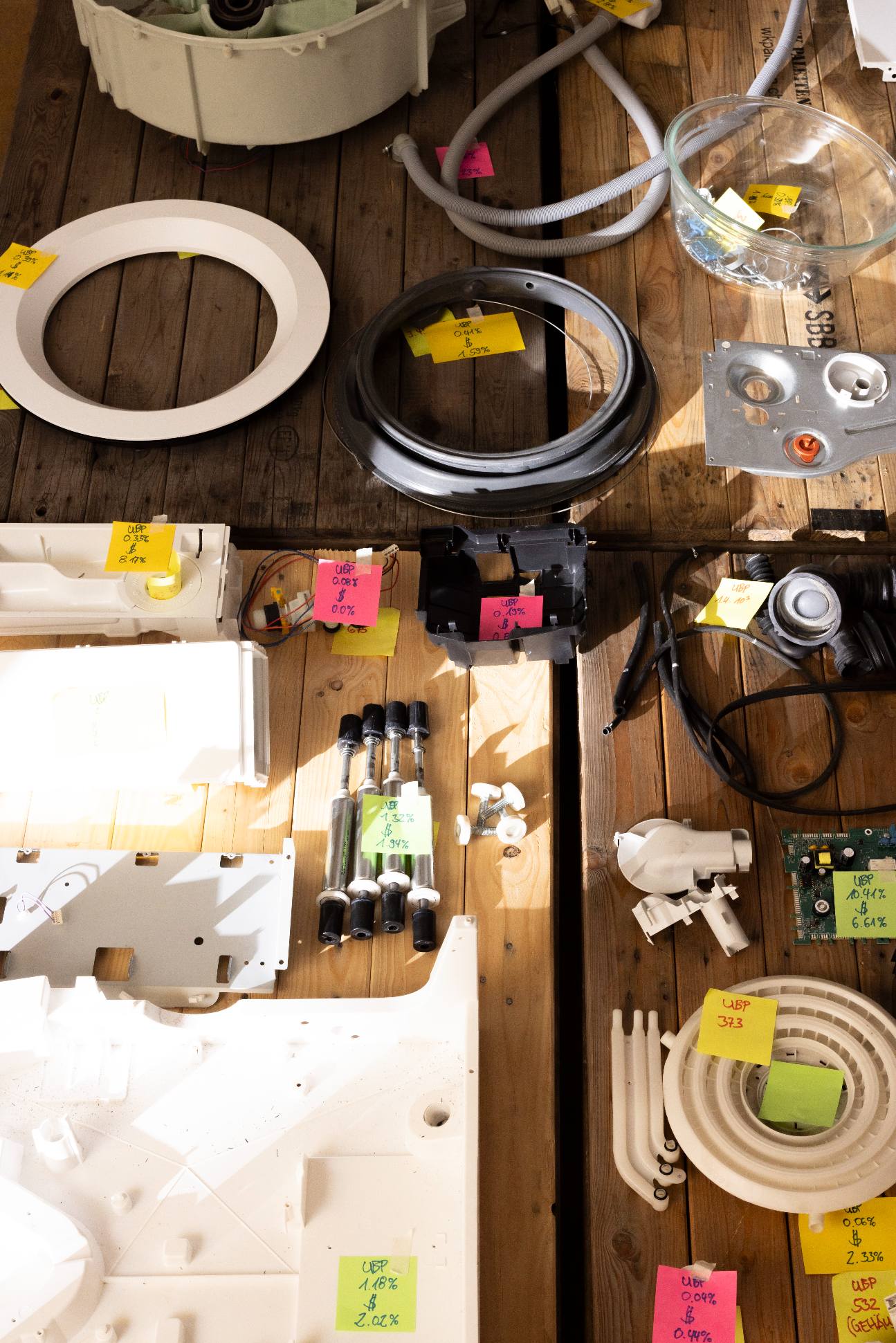
In addition to supporting the company to systematically reduce each product’s environmental footprint, Vetterli is also responsible for working with the development teams to incorporate V-Zug’s design-to-circularity guidelines to move from linear component design towards a circular thinking perspective for components and devices. Bridging concept and reality has been helped by the physical establishment at V-ZUG HQ of a pilot ‘circular factory’ where components and materials are tested to guide how to scale a second-life process for thousands of machines in the future.
The circular factory is where you’re most likely to find the company’s Circular Economy Intrapreneur, Daniel Frost, who on any given day can be found pulling apart a used appliance, working on a business case, or calling on the expertise of any of the subject matter experts across the business to help solve that day’s problem. Frost’s role is integral to the strategy to see appliances return to V-ZUG in future so that appliances can be given a second life and the components and materials can be put back in production to keep high-quality resources in circulation for as long as possible.
“So far we’ve been collecting washing machines, because they are a simple example, and our goal is to extend their lives through repair and refurbishment, etc,” he says. “So with this, we can use the resources longer, decouple growth from resource consumption and reduce our environmental footprint. If we can’t refurbish, then the next step on the value hill is that we dismantle them and get out unmixed materials. This is in contrast to the well-established recycling economy in Switzerland, where normally appliances are shredded and then you have all the materials together. But we want to go a step further and have pure material streams and parts to bring it back into production or to recircle them with our suppliers.”
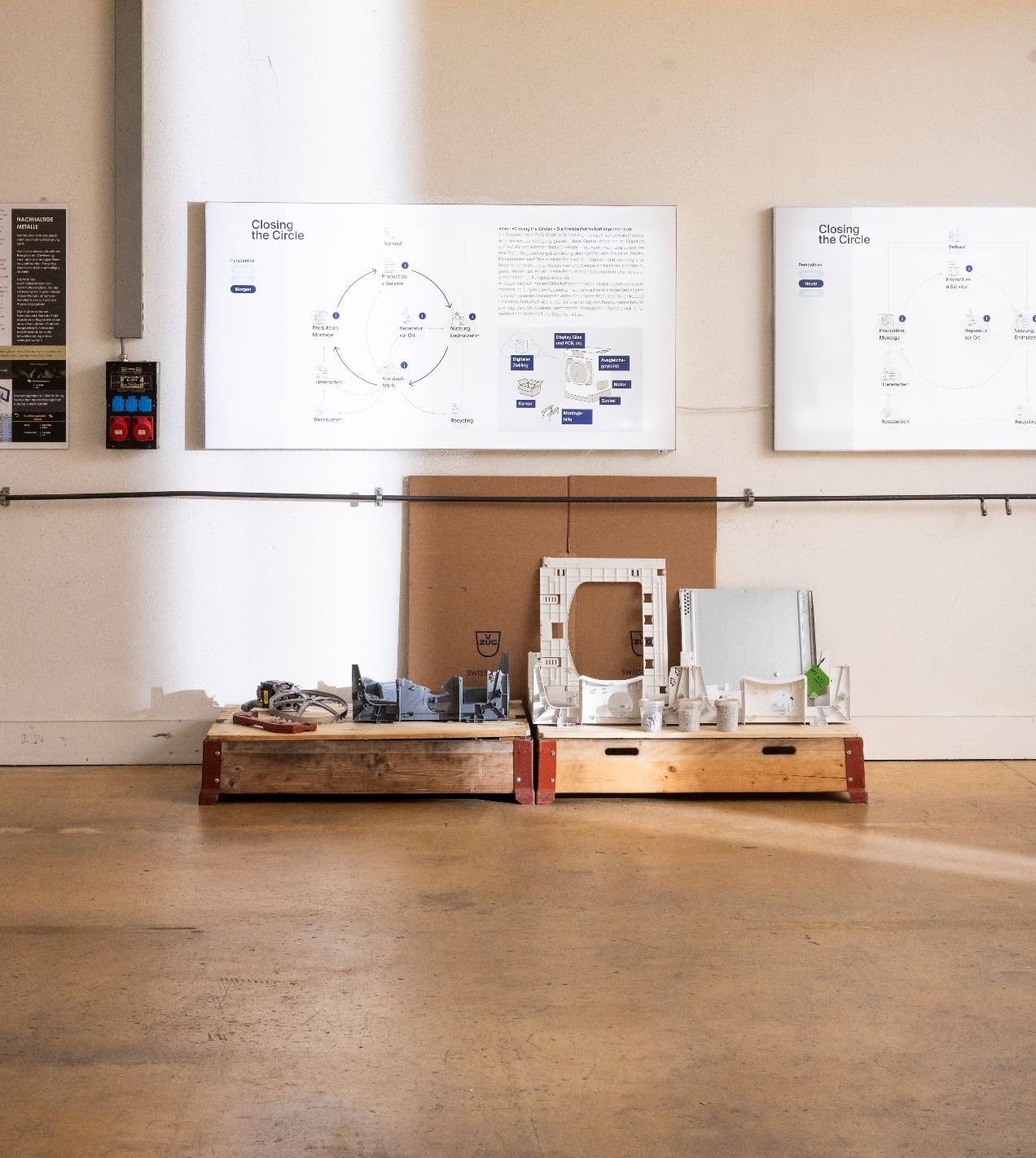
Collaboration is essential to the circular factory’s ethos. In addition to working with their suppliers on optimising materiality, and theoretical simulation studies with Zurich’s University of Applied Sciences in Zurich, Frost and his team work with a local social program that provides employment pathways for refugees and unemployed people returning to work. So far they are tracking well to meet their 2025 targets of 800 machines dismantled and 180 refurbished appliances sold.
The body of sustainability evidence that these various efforts is producing can be explored in more depth in the company’s latest annual Sustainability Report. But if statistics aren’t your thing, the PSRs provide an at-a-glance summary and Niederberger says their format directly reflect the types of information requests they were getting from architects and designers on behalf of customers. There’s even a section with fun facts about service repairs (the oldest washing machine repaired was 44 years old; the customer still wanted to repair and V-ZUG was able to do so as the spare part and expertise were still available). The PSRs also come with tips for more efficient use.

“One finding of developing the LCAs was that the use phase is very, very important, and that’s not in our hands,” says Niederberger. “V-ZUG is very much responsible for the material that we put into an appliance, and how we manufacture it: these kind of things we can directly influence. But after 10, 15, 20 years at your home, using our washing machine, you have a big part in the environmental footprint. And that’s why we decided, okay, we’ll use this format [and include the tips] because you, dear customer, you have something to do with sustainable use as well.”