
March Studio and Aesop go way back. As neighbours in Melbourne, Rodney Eggleston’s studio has been working with the brand from the beginning — and, in this most prestigious setting of Milan Design Week, it was to these roots that the designer reached back when crafting the ‘Factory of Light.’
“It was very much about going back to first principles,” says Eggleston. “I think what Jean-Philippe [Bonnefoi, Aesop’s Head of Retail Design for Europe] wanted to do at Salone was go right back to those first ideas: How do you create something that can be completely taken away and leave no trace? How can you use product to celebrate and, in this instance, launch a new product?”
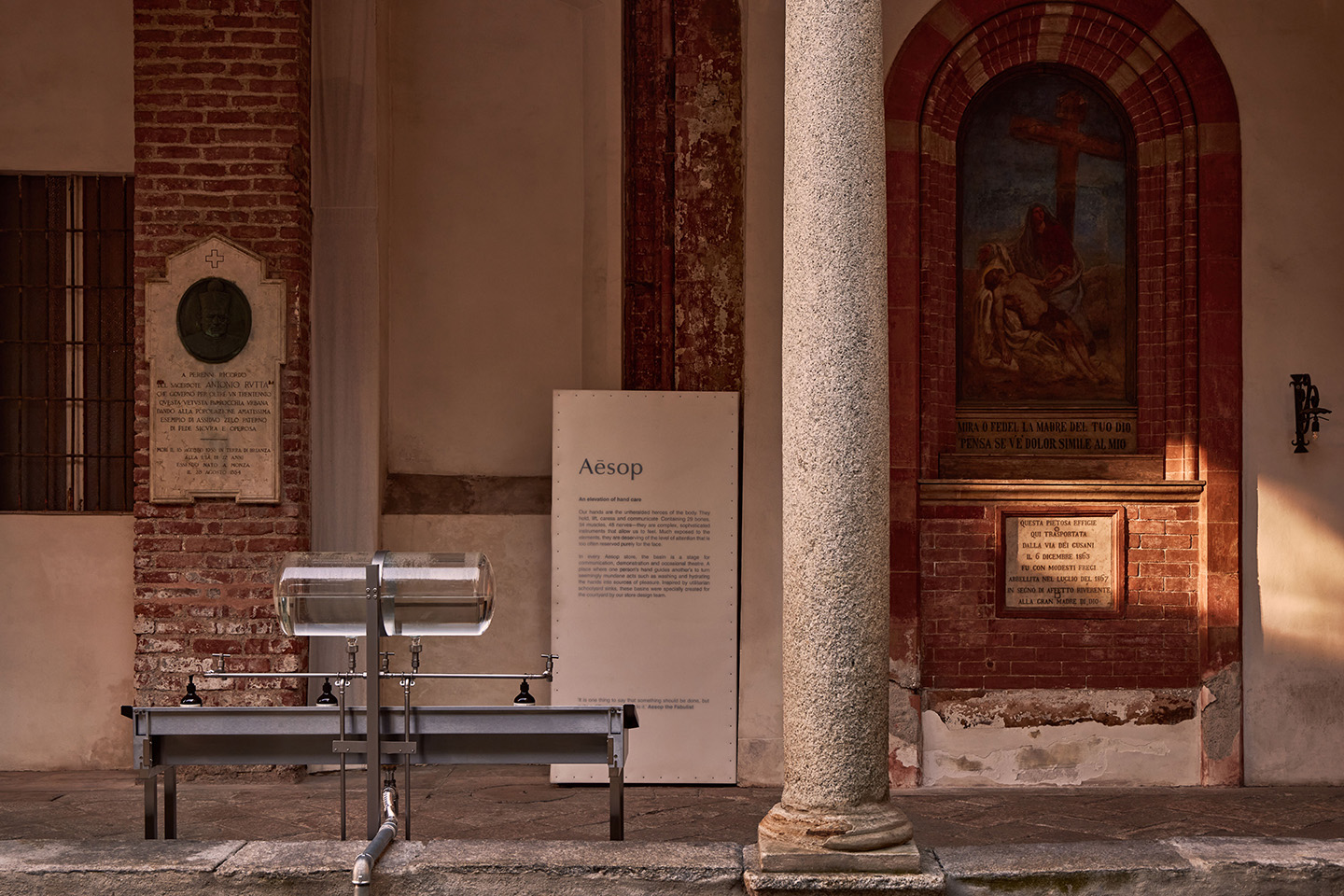
The installation as a whole comprised three distinct spaces or experiences. First, the welcoming gesture of the basin where guests were greeted upon entry. For Eggleston, it represents and heightens the signature Aesop moment of transition from street to store, as well as the general sense of generosity.
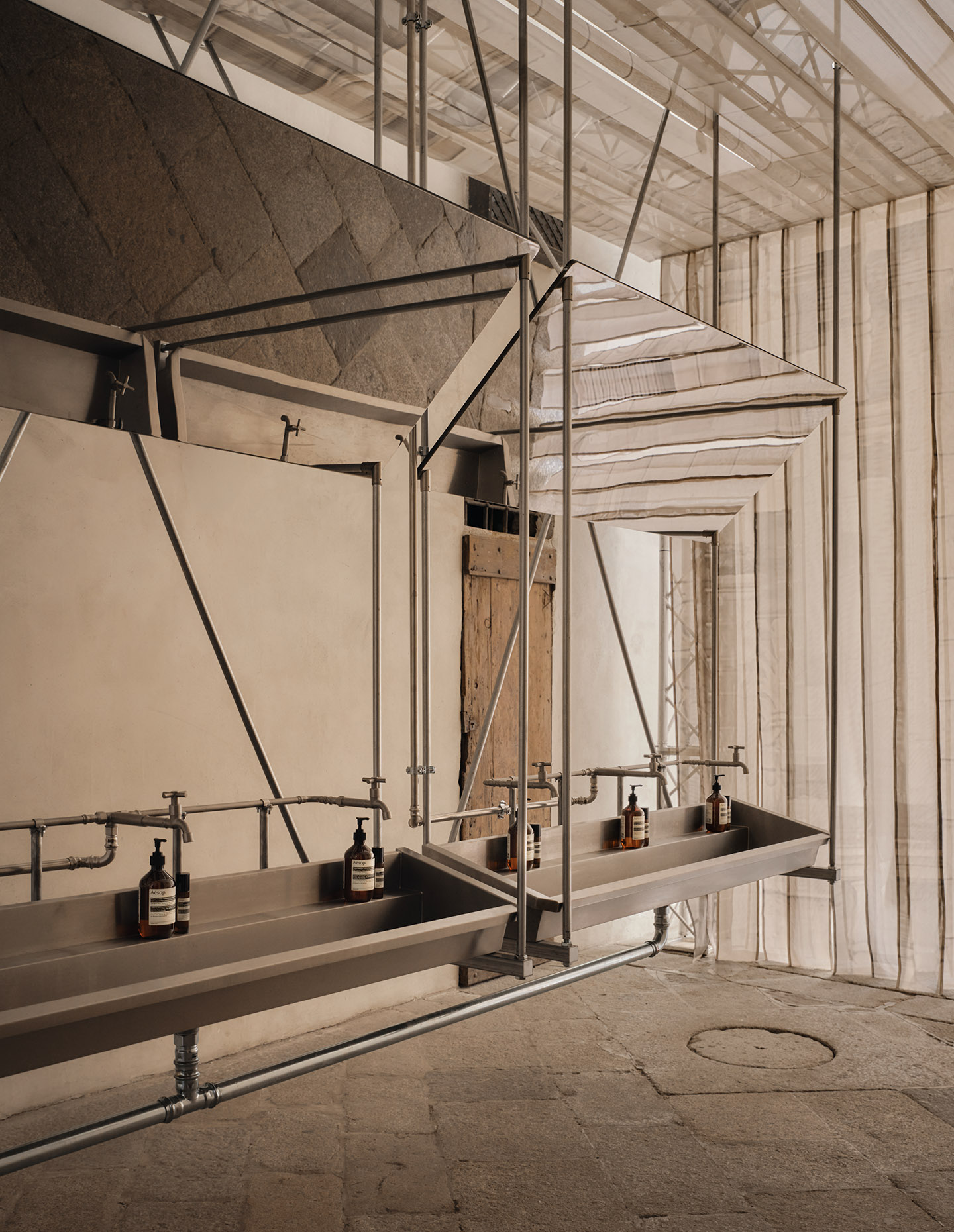
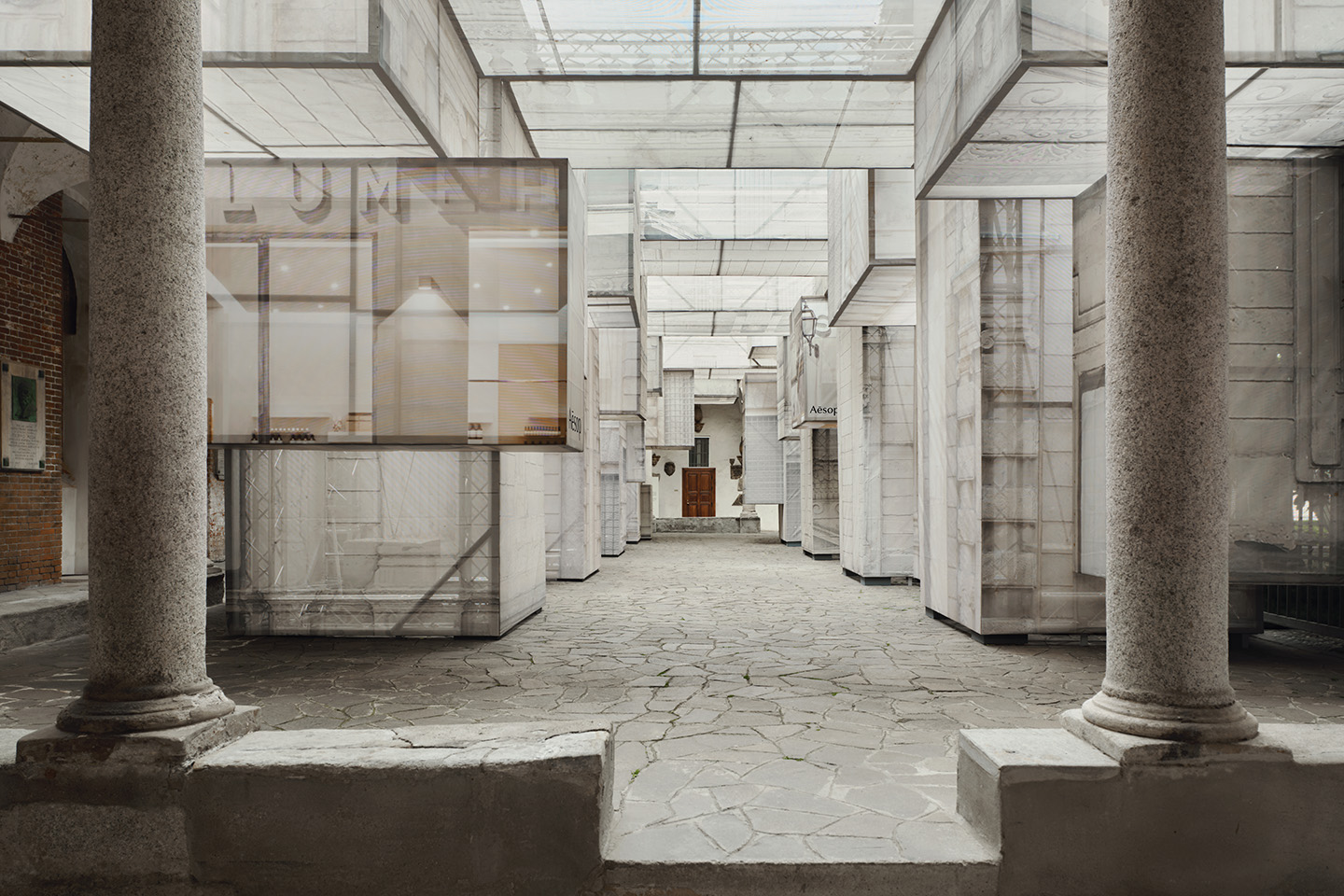
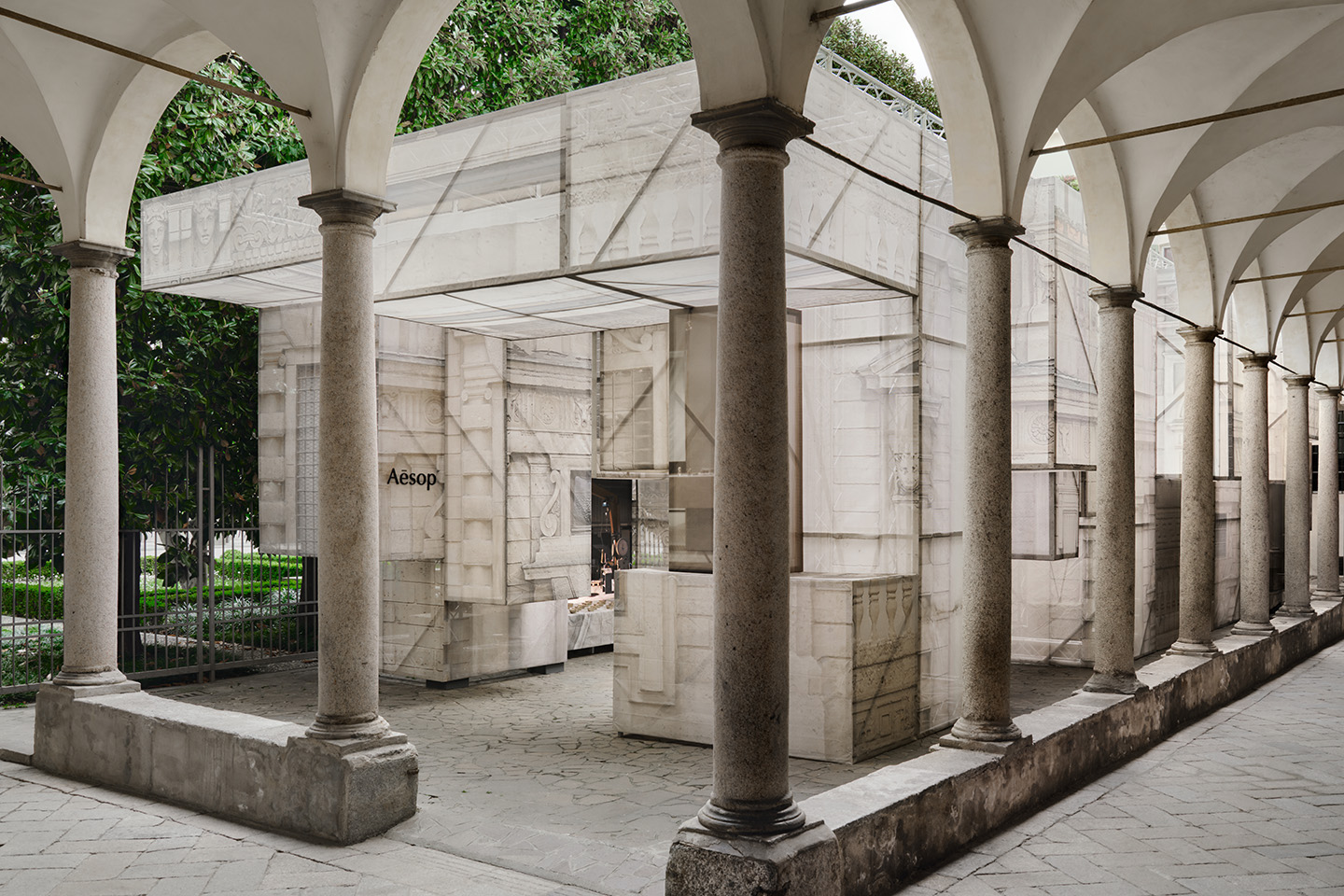
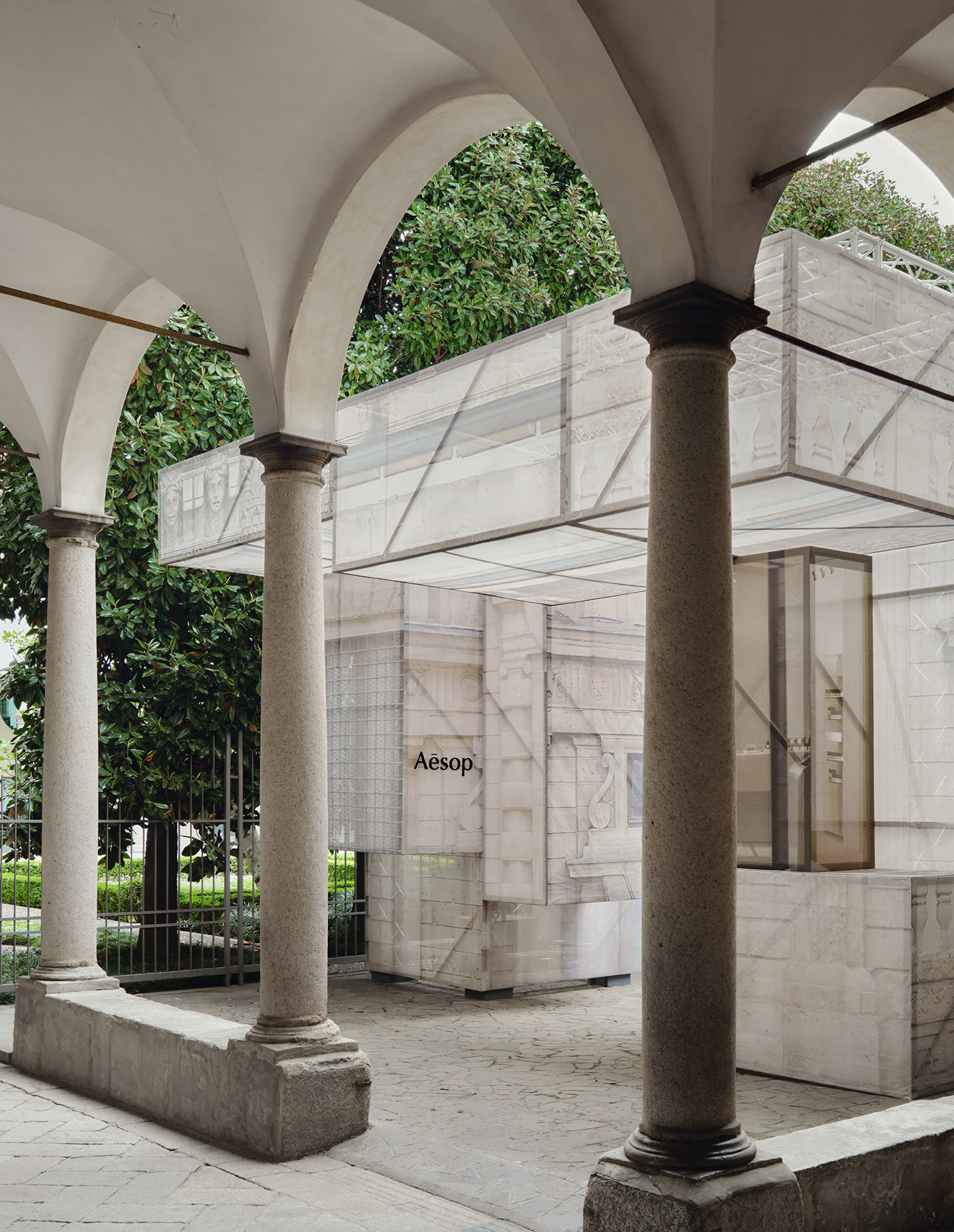
Part two brought visitors through the cloister of Santa Maria del Carmine — more on the historic setting later — where a structure of scaffolding and salvaged tarpaulin created a conjecture of light and craft. “We often try to hunt down materials, processes or systems that would otherwise not be used in an architectural setting,” says Eggleston.
Related: Stephen Burks in Milan
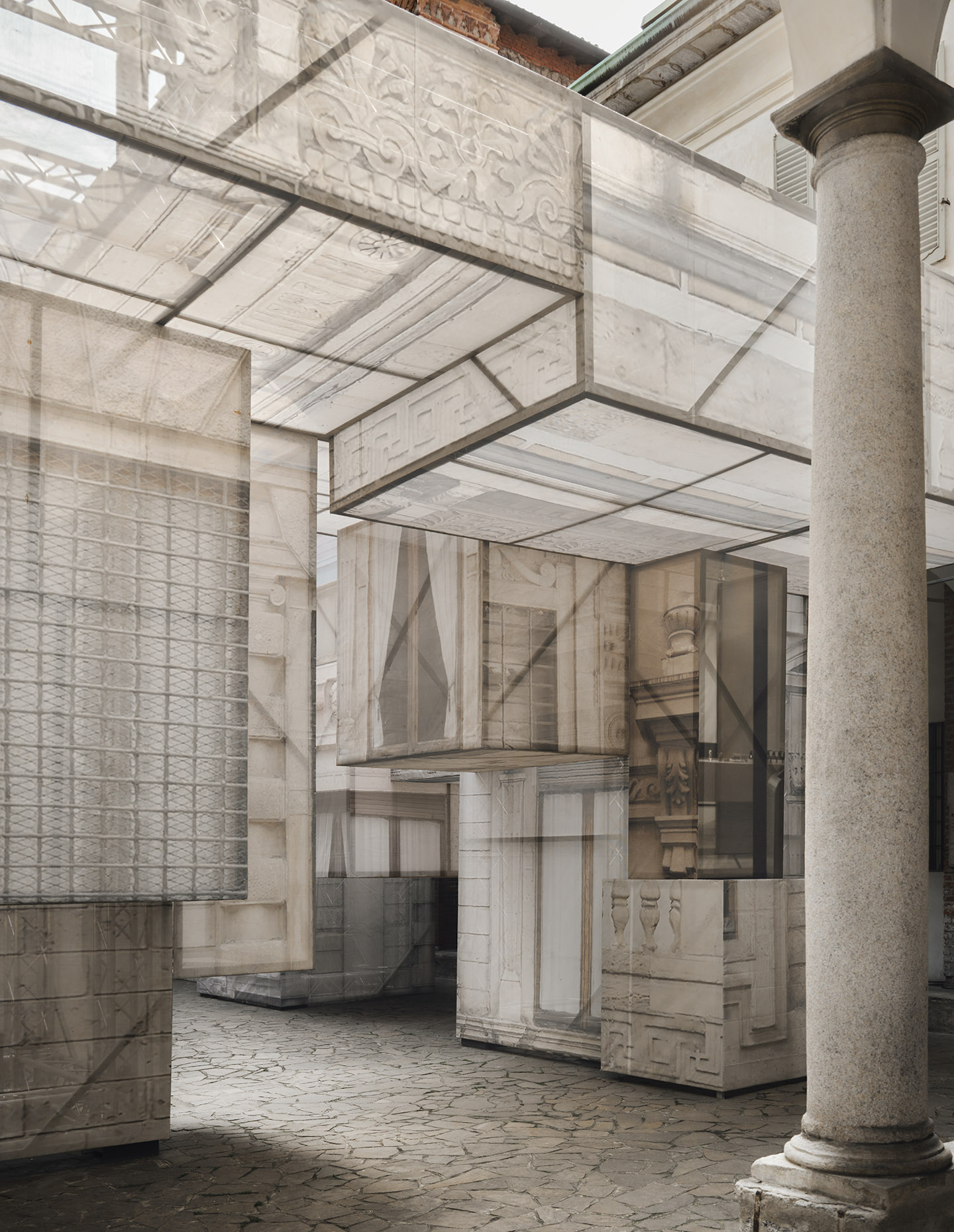
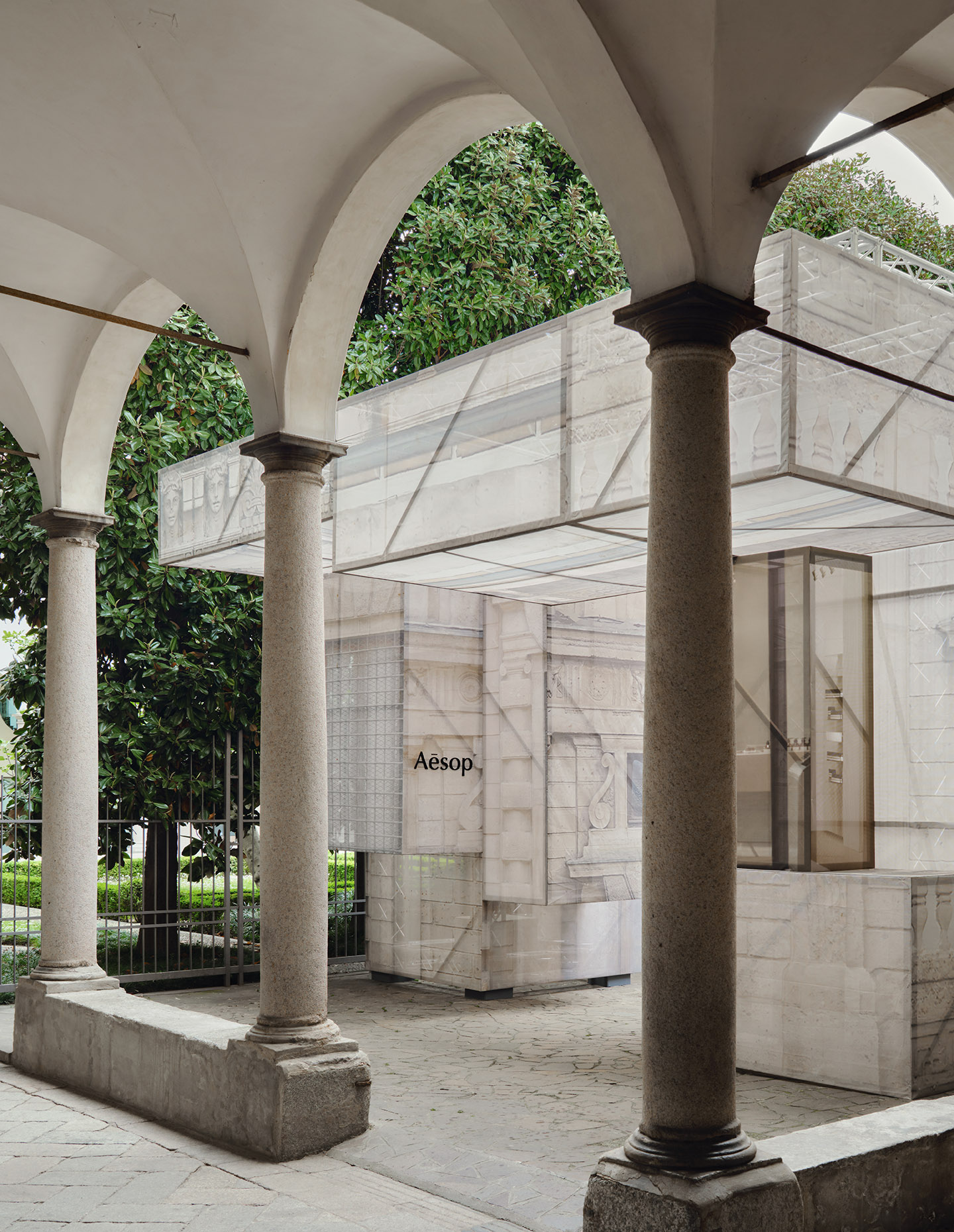
“Looking around the streets of Milan, I was struck by the construction fabrics that [cover] the restoration process of buildings there. There was something nice about this whole symbiotic relationship with keeping a historic city intact.”
Here, stories of making were on show: the making of Aposē, the limited edition lamp revealed at Milan Design Week.
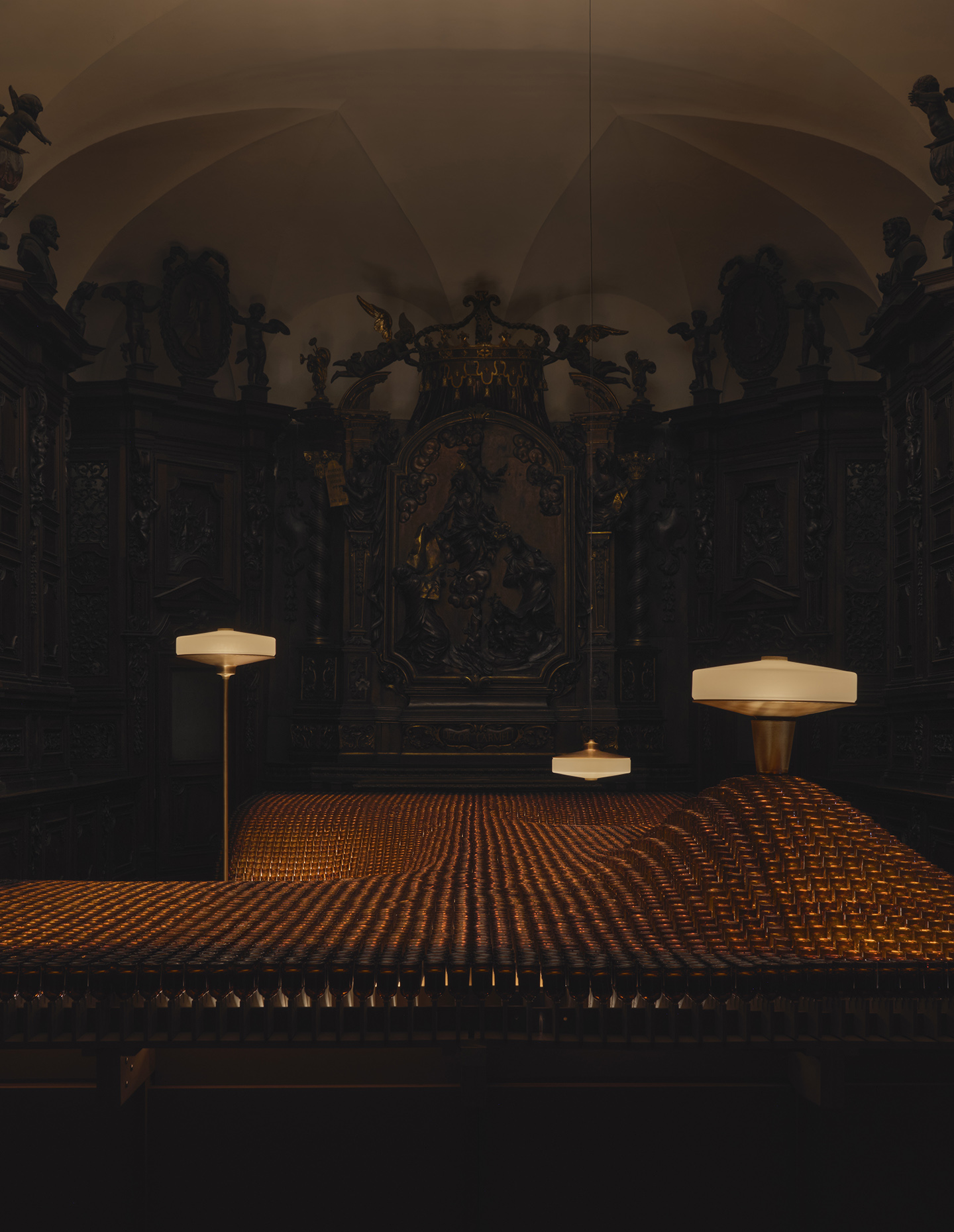
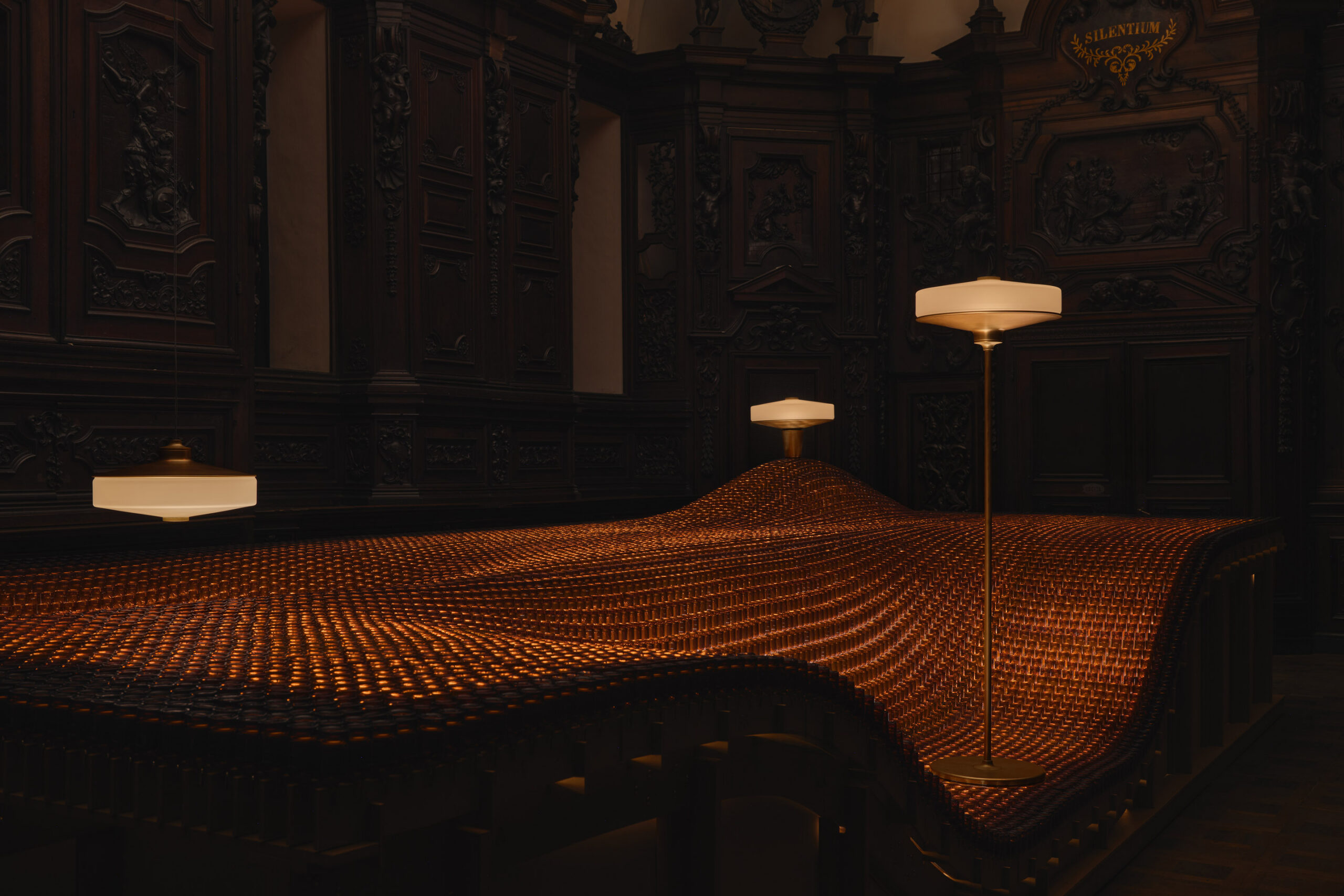
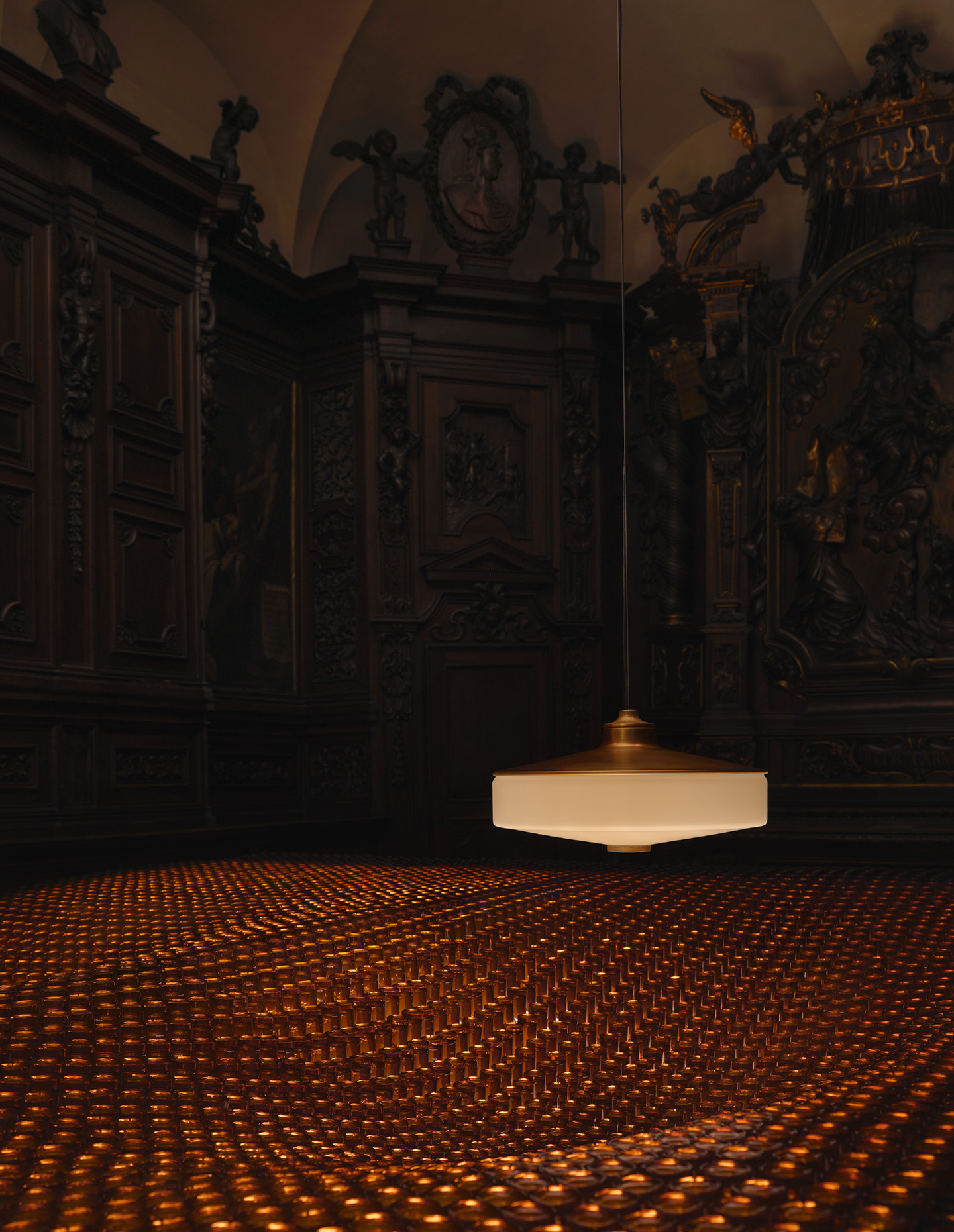
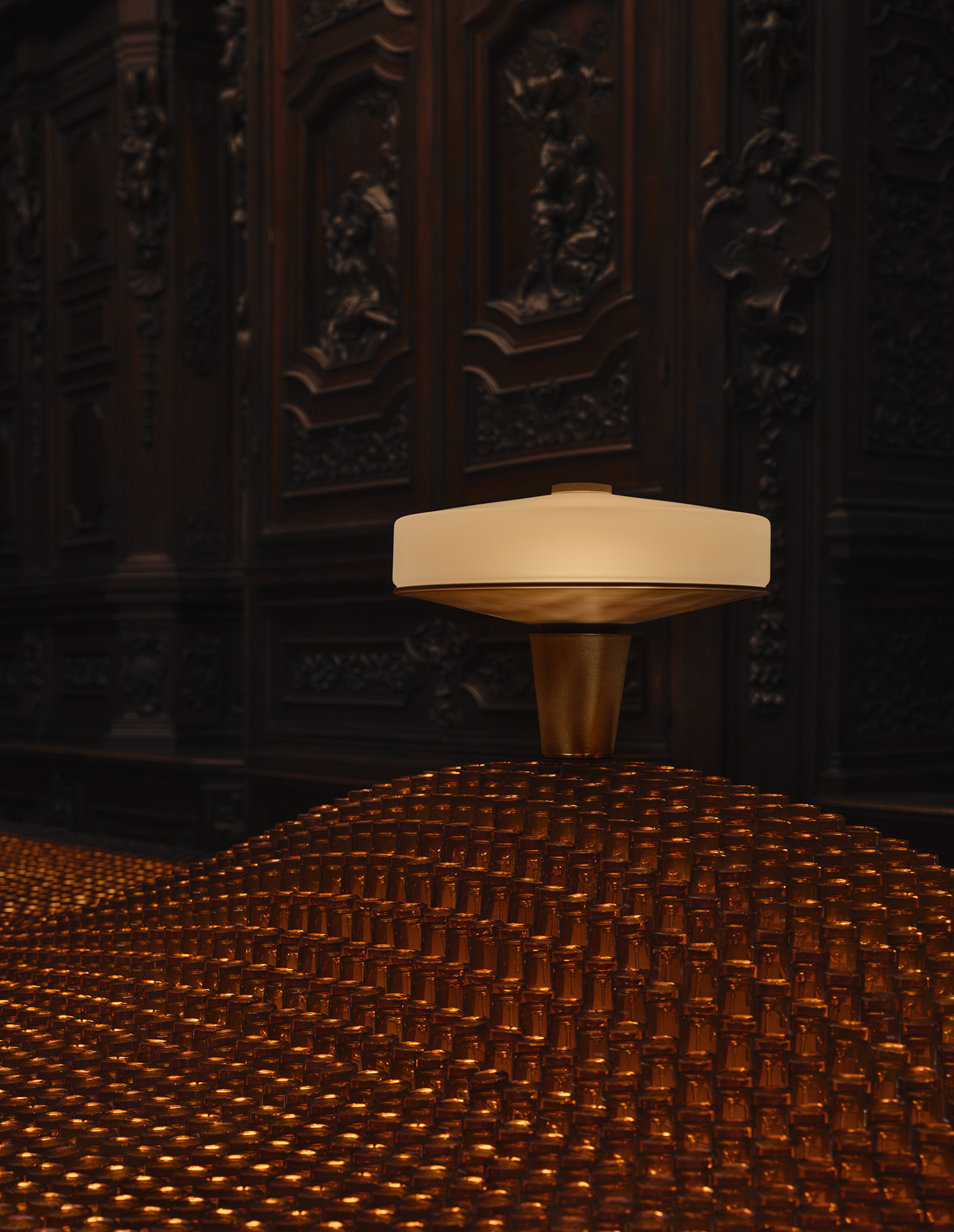
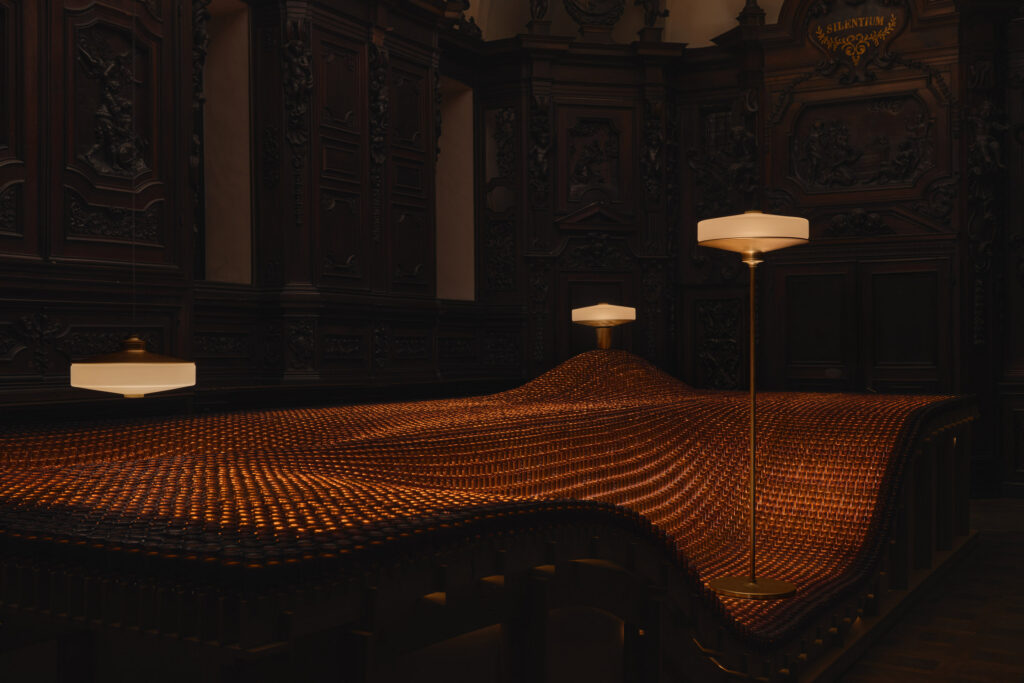
In sharp juxtaposition with the light, open and porous spaces of the cloister, the installation culminated in the mysteriously darkened sacristy. Formal intrigue, material reuse and multisensory experience all converged in this space to create one of the most memorable scenes in the whole of Milan this year: 10,826 reused fragrance bottles forming an undulating surface amid serene scents, smoke, shadow and sounds.
“The sacristy is already an incredible room,” he notes, framing the core design question here as: “How do you then mediate between the lights and that incredible space as this mediating object? It became about creating a new altar or kind of table that you could walk or stand around, and that would be affected by the presence of the three lamps — almost like they’ve got a magnetic field around them.”
Aesop chose the site of Santa Maria del Carmine in central Milan this year, close to their Brera store. Inside, observes Eggleston modestly, “they’re pretty powerful spaces to begin with, and we didn’t have to do a lot to make it an amazing experience. It was a privilege to work in such an incredible environment.”
The design process then involved 3D-scanning the spaces in order to build up an intimate knowledge of detail, proportion, rhythm and the wider logic of the building. Eggleston explains that this made it “easier to produce a response that was sensitive, and working within a religious setting gave us agency to do something that was a bit more powerful, somehow, or a bit more considered.” Indeed, one of the effects of the chiaroscuro light and shadow of the sacristy was the merely gradual perception of the sacred decorations on the room’s inner walls.
“We just embraced the whole experience,” concludes Eggleston. “It is rare to get such an opportunity… being a part of it, for us, was a culmination of the last 18 years of working with Aesop. So, we tried to go a little bit above and beyond, to represent an Australian company and show how far it’s come — and then also to showcase Australian design in an environment where we’re talking about sustainability and reuse, and how we can actually do that in an impactful manner.”