
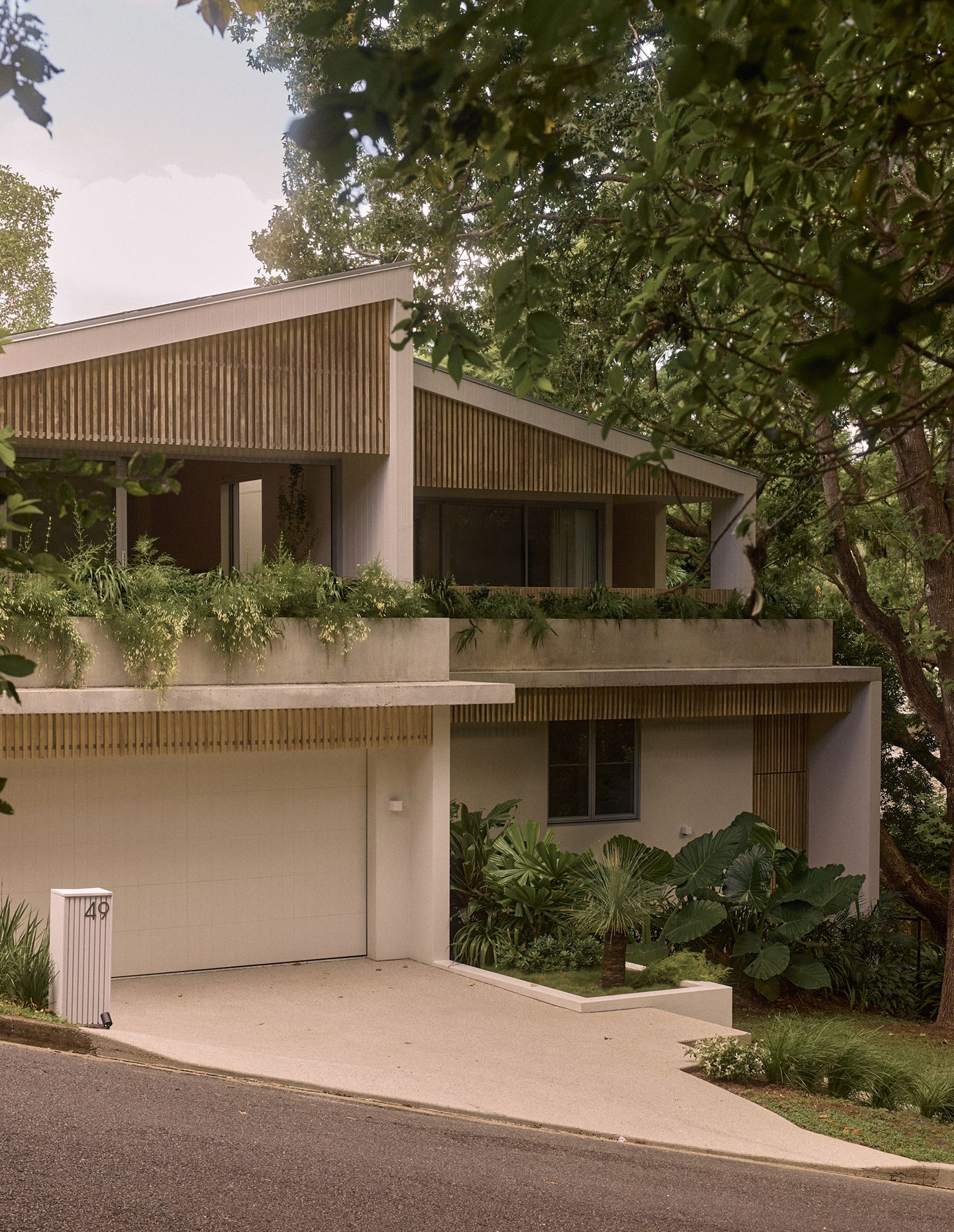
In leaving behind the hectic pace of New York, Alexandra Buchanan Architecture’s clients were looking for something a little more low-key. They soon found their quiet sanctuary in Brisbane’s leafy Bardon, with a site surrounded by vegetation and bordered by an overland flow path that often runs like a creek. Their stunning new home is nestled amongst the trees and feels, in their own words, like a treehouse for grown-ups.
Architect and director of the practice’s Melbourne studio, Shane Willmett, knew that in order to meet the brief he needed to give the clients something their compact Brooklyn apartment never could. “There was a strong focus on openness and clarity and so our intent was to create a calm, minimal environment with longevity and a strong connection to its setting,” he says.
“This relationship was fundamental to the project, informing decisions at every scale. The house was not conceived as an isolated object, but as something embedded within and shaped by its landscape.”
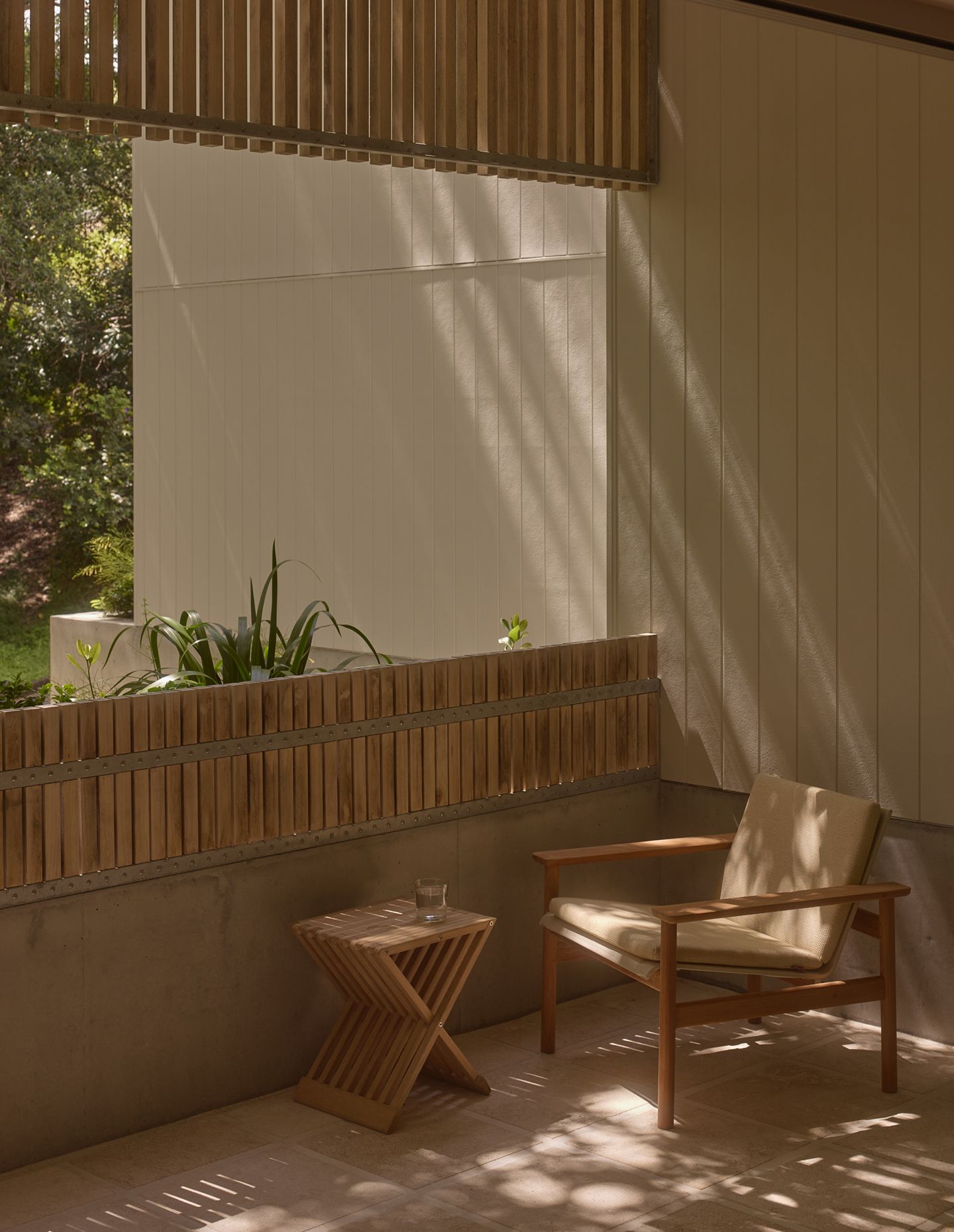
Willmett and the team referenced the traditional Queenslander by elevating the home. This move allows water movement and preservation of the existing landscape as well as incorporating deep eaves. When it came to the typology’s characteristic verandah, they cleverly ‘inverted’ this feature so the L-shaped plan envelopes it, repositioning the verandah as the central organising element of the house.
Coupled with the facade’s opposing pitched roofs and a series of thresholds and outdoor rooms, this lends the scheme an overall sense of dynamism. There’s a feeling of lightness between interior and exterior, from one space to the next, yet all is grounded in a logical sequence and clear circulation.
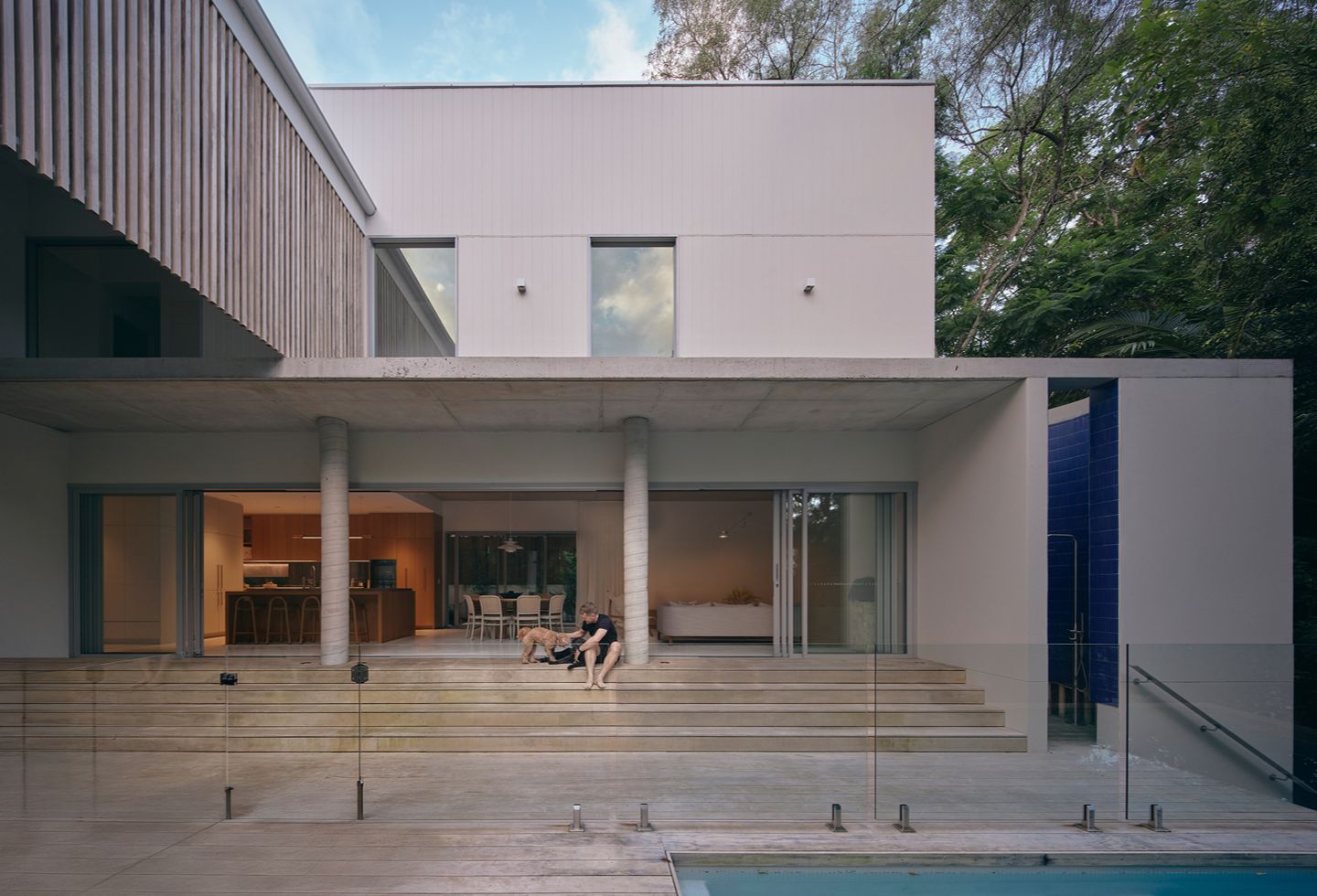
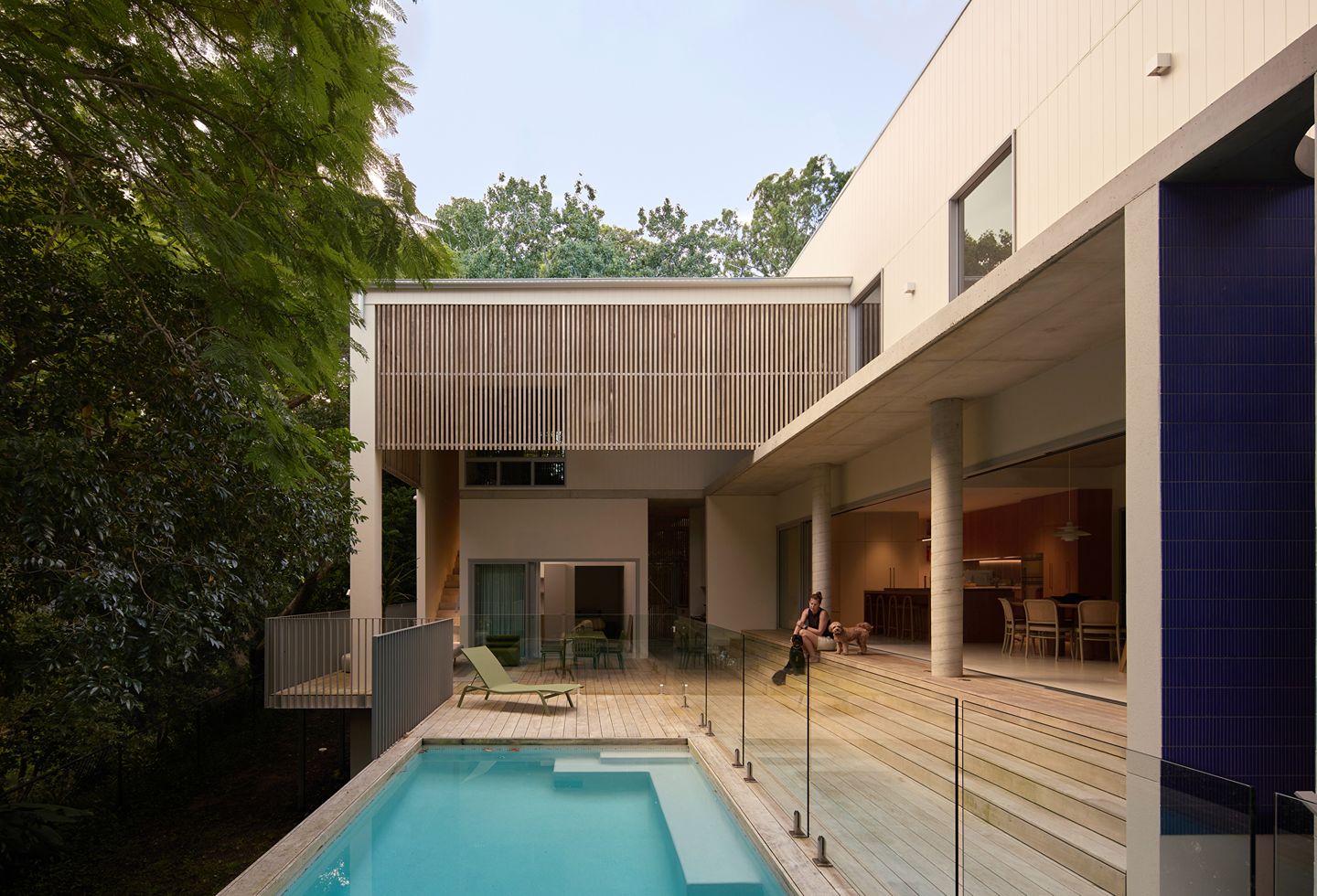
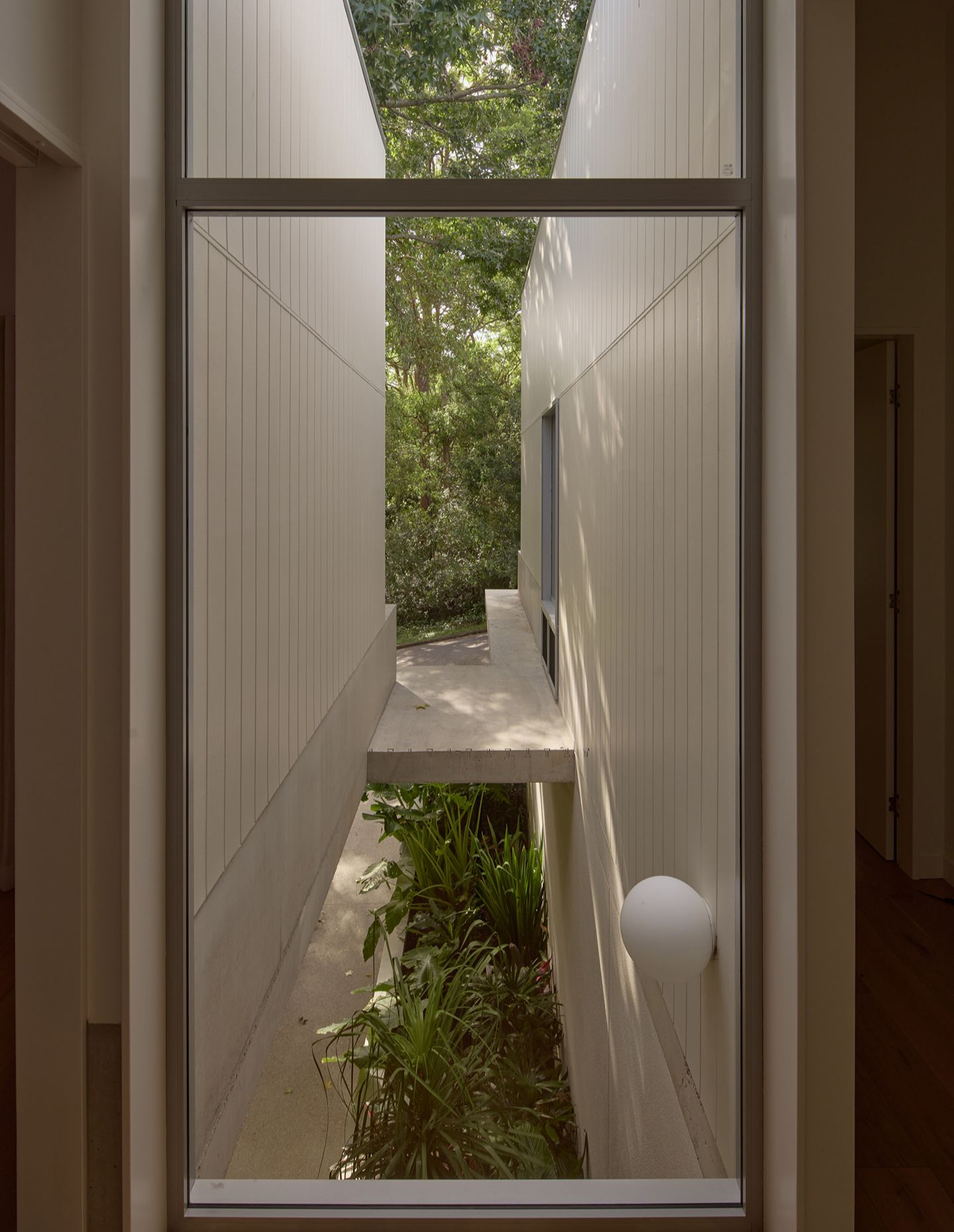
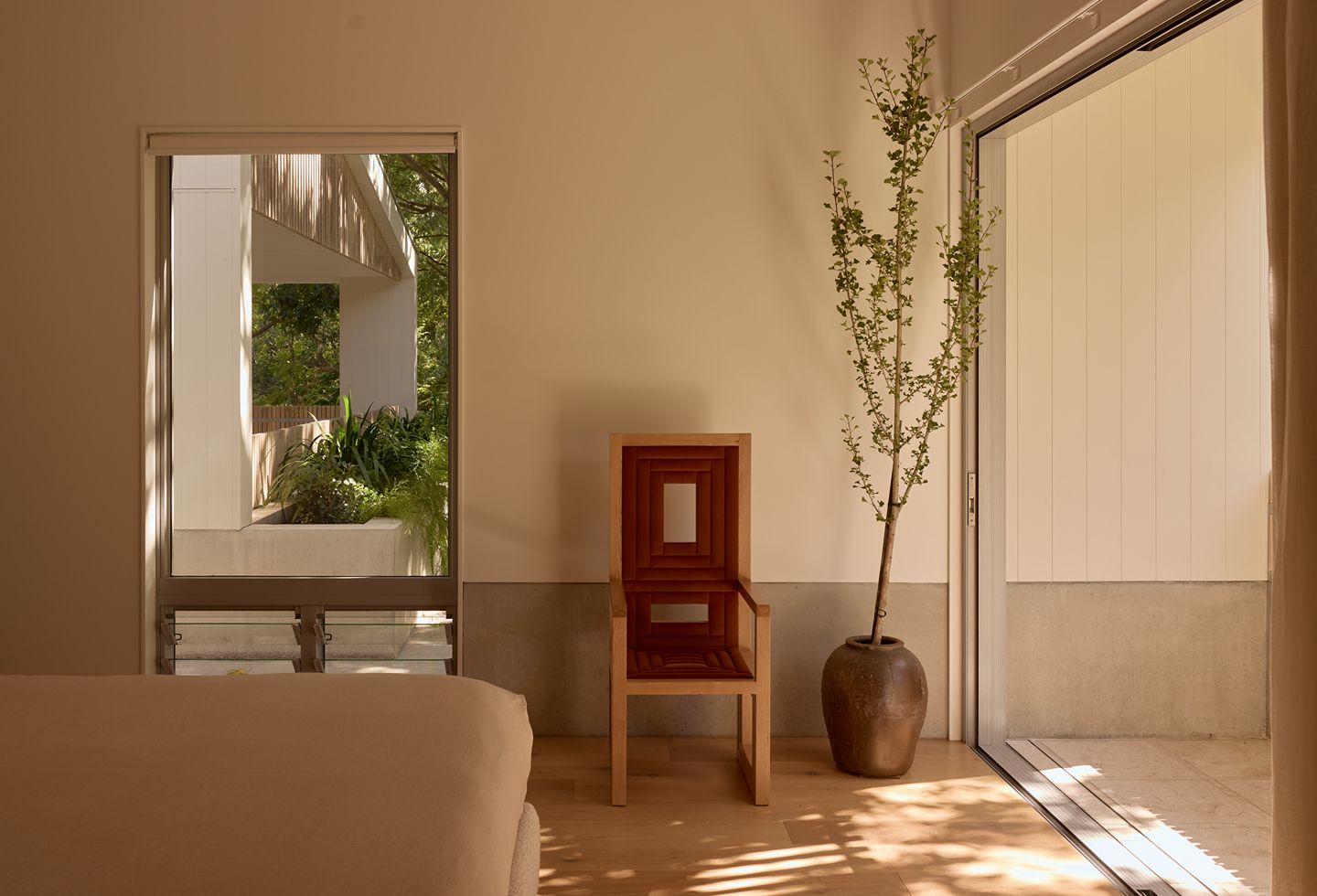
Internally, the double-storey plan allows for a spatial arrangement that separates private spaces from public, with the verandah and deck maintaining a feeling of connection throughout. Openings are framed to capture views and draw the landscape deep into the interior.
Meanwhile, the home deepens the dialogue between design and setting by sitting at ground level on the west. There, its ample tree shading makes for an intimate courtyard and garden.
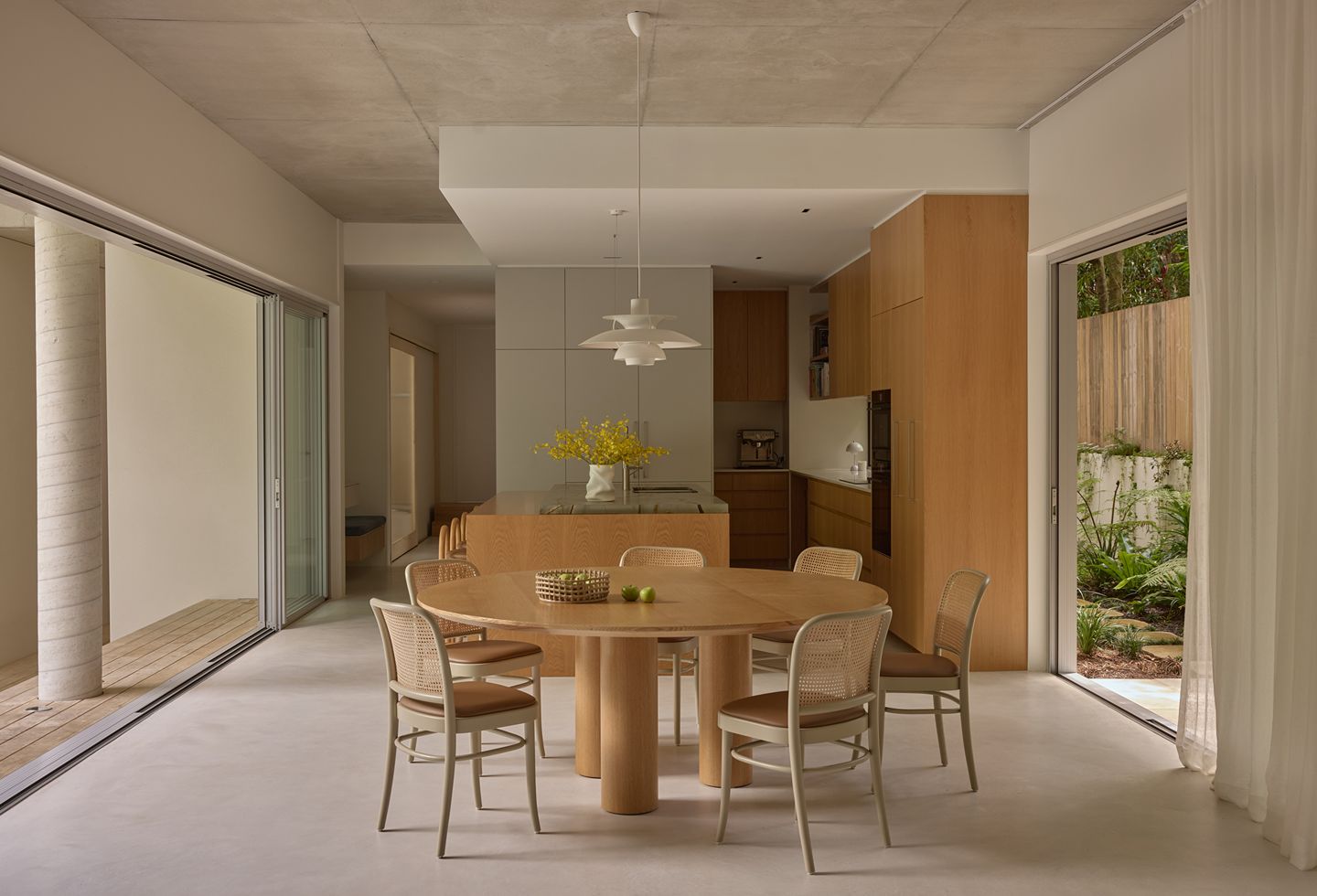
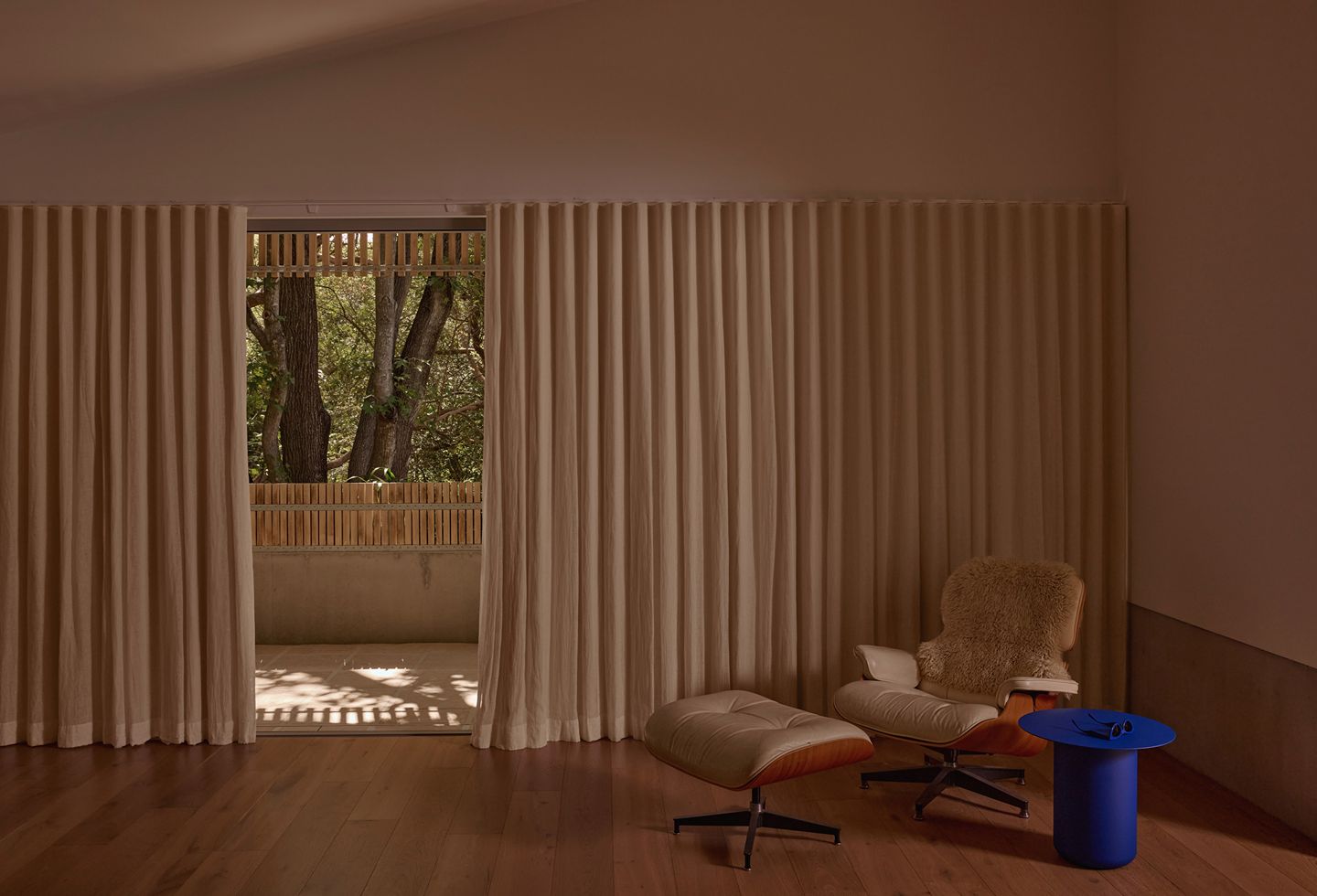
“The result is a quiet reciprocity, where architecture and landscape are in constant exchange, shaping a lived experience defined by connection, outlook and retreat – something unique to Brisbane,” explains Willmett.
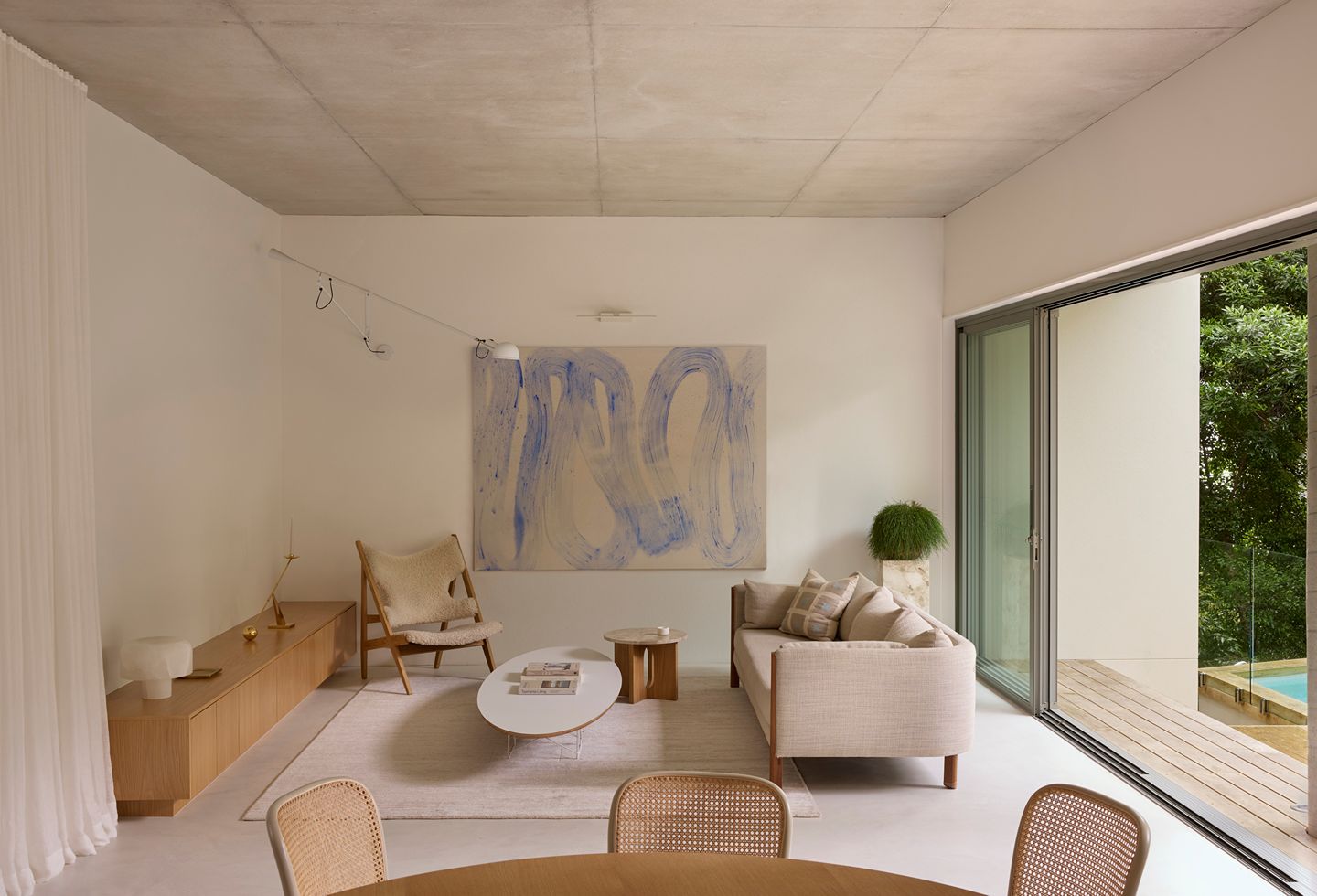
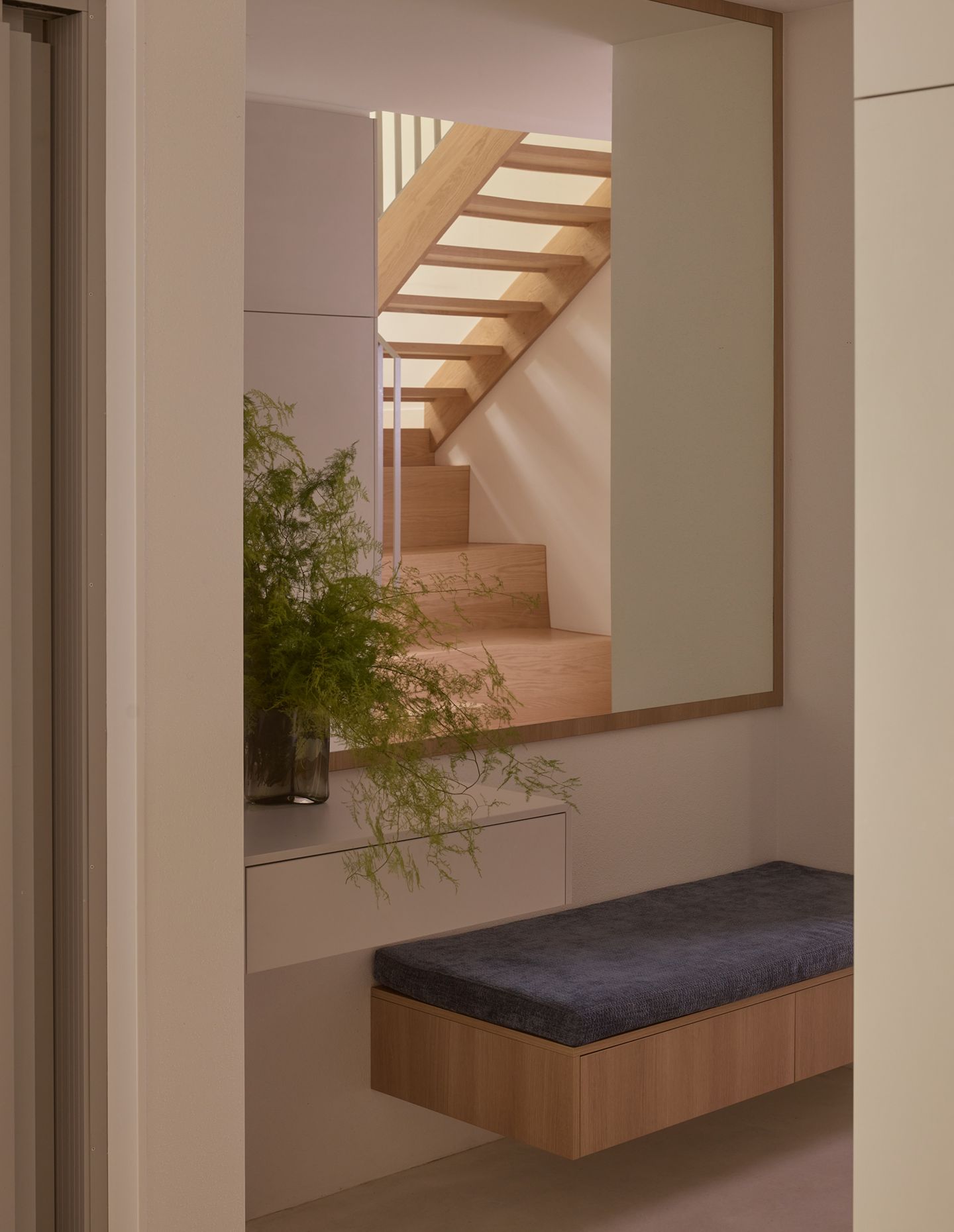
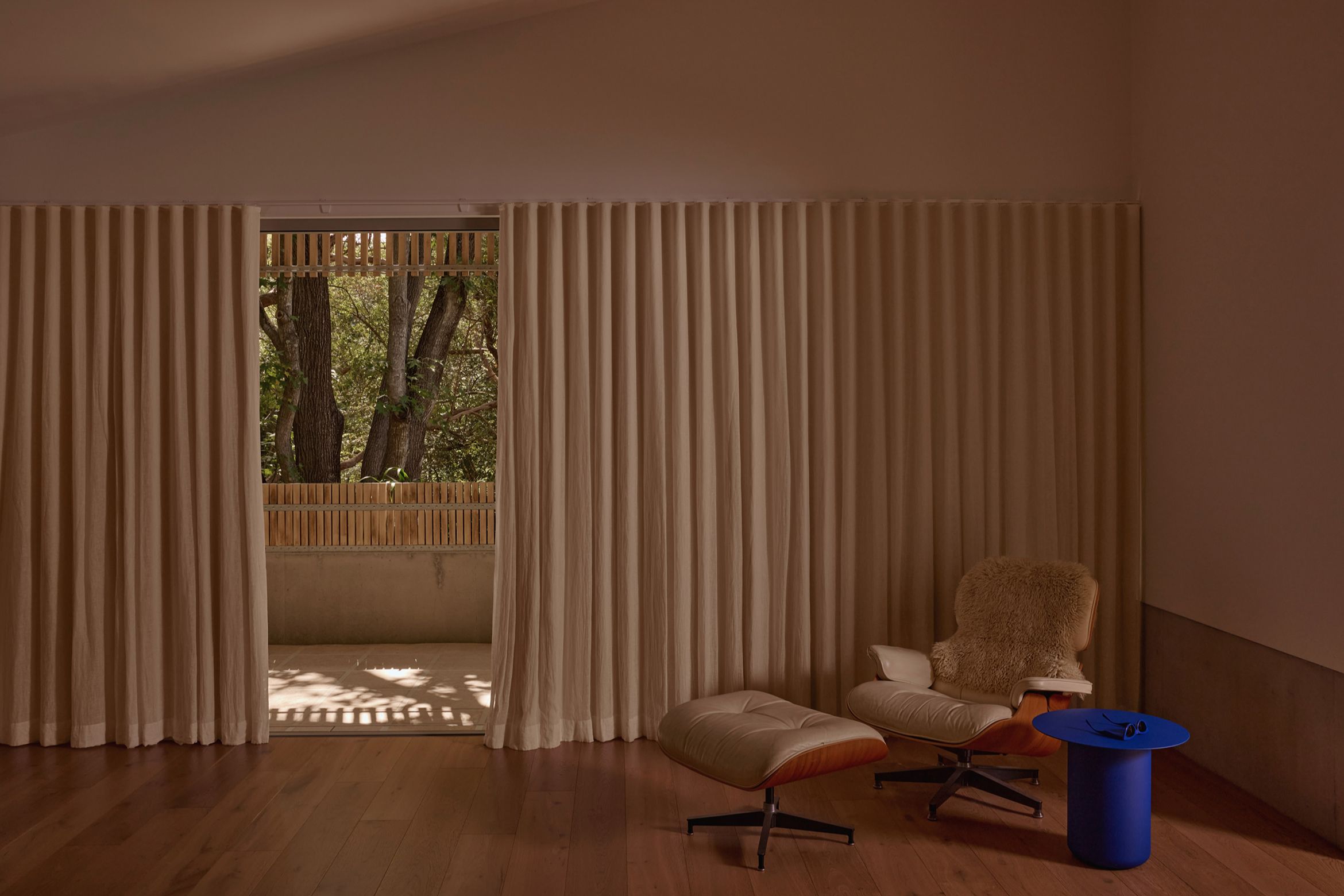
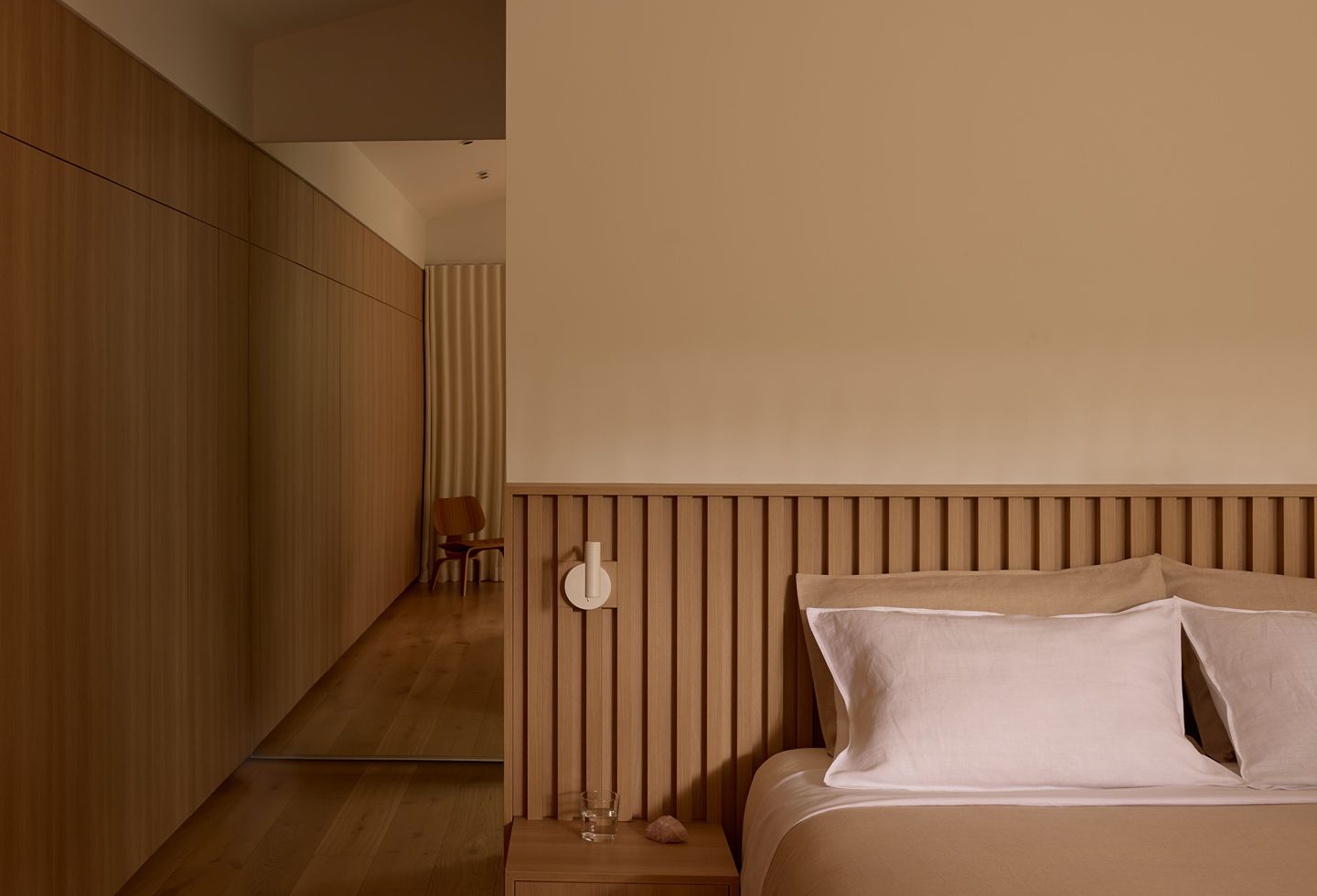
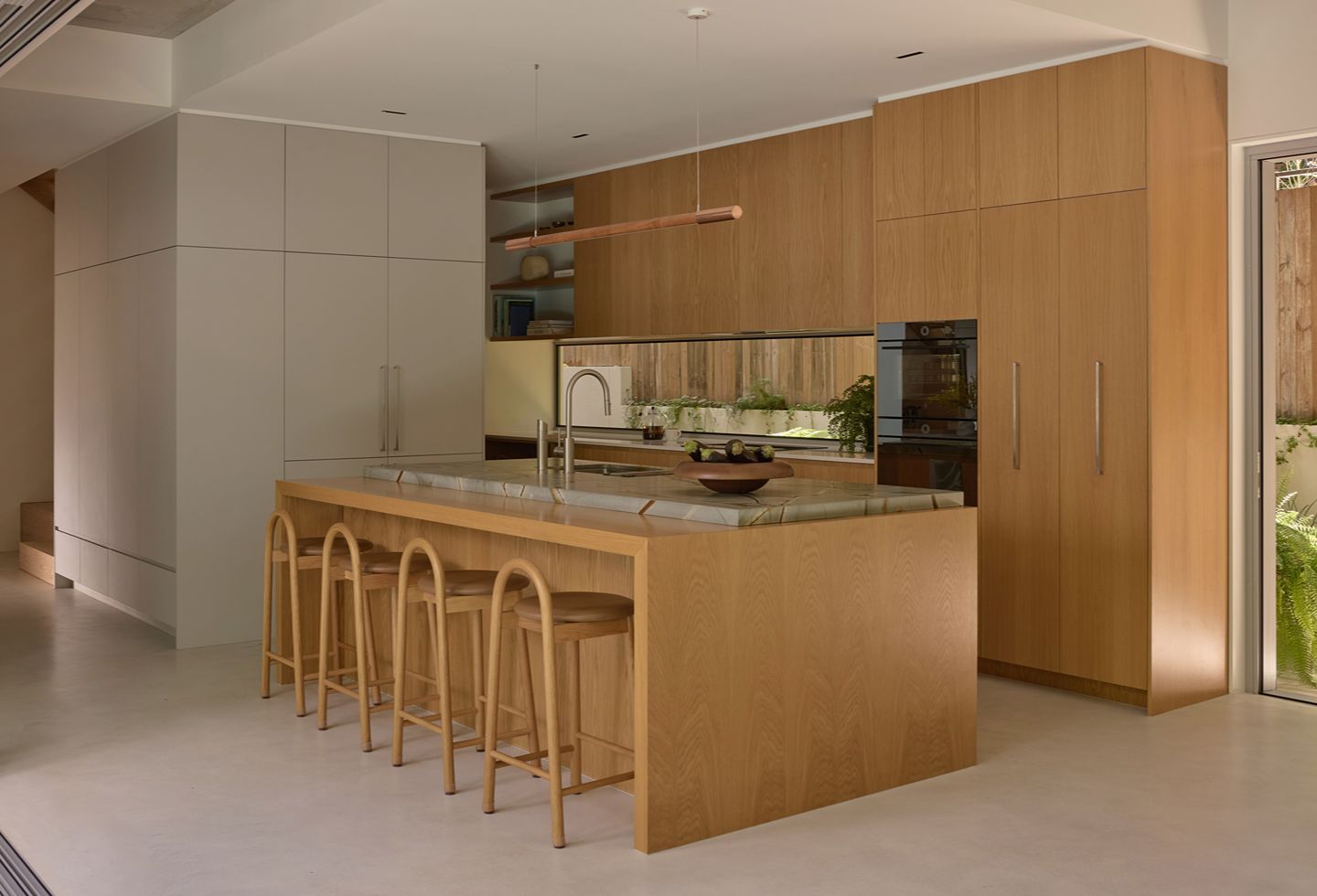
Willmett’s Japanese and Scandinavian influences are evident in the modesty of the material palette and pared-back aesthetic. Concrete gives the home its most distinct expression, softened by timber batten detailing on the exterior and joinery inside. In the open plan living areas, for example, the timber adds warmth and the simplicity of the joinery entrenches the home’s minimalist look. The clients wanted to de-clutter and there is no superfluous decoration on show, just elegantly clean lines and key modern furnishings.
Related: Heritage home in North Fremantle
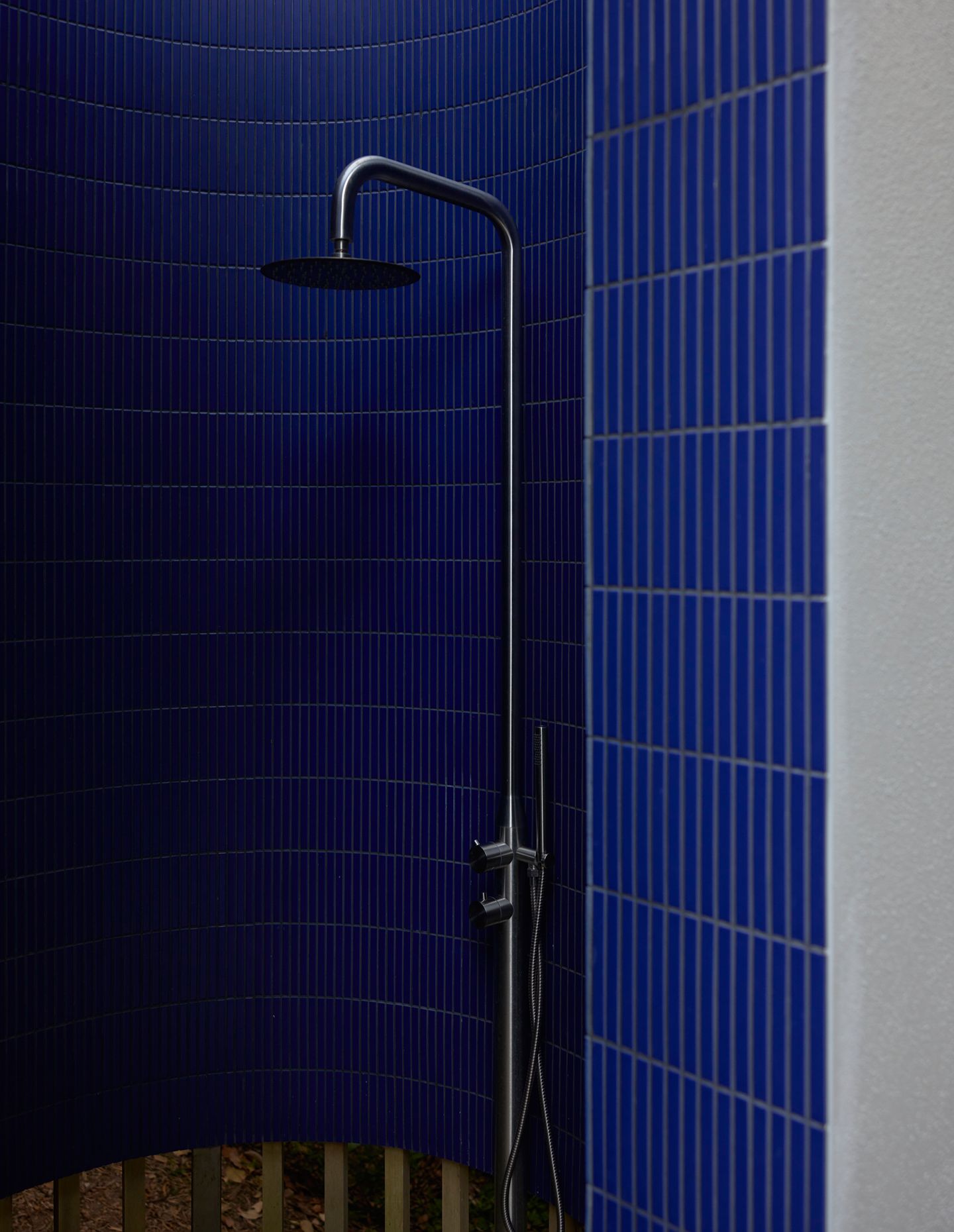
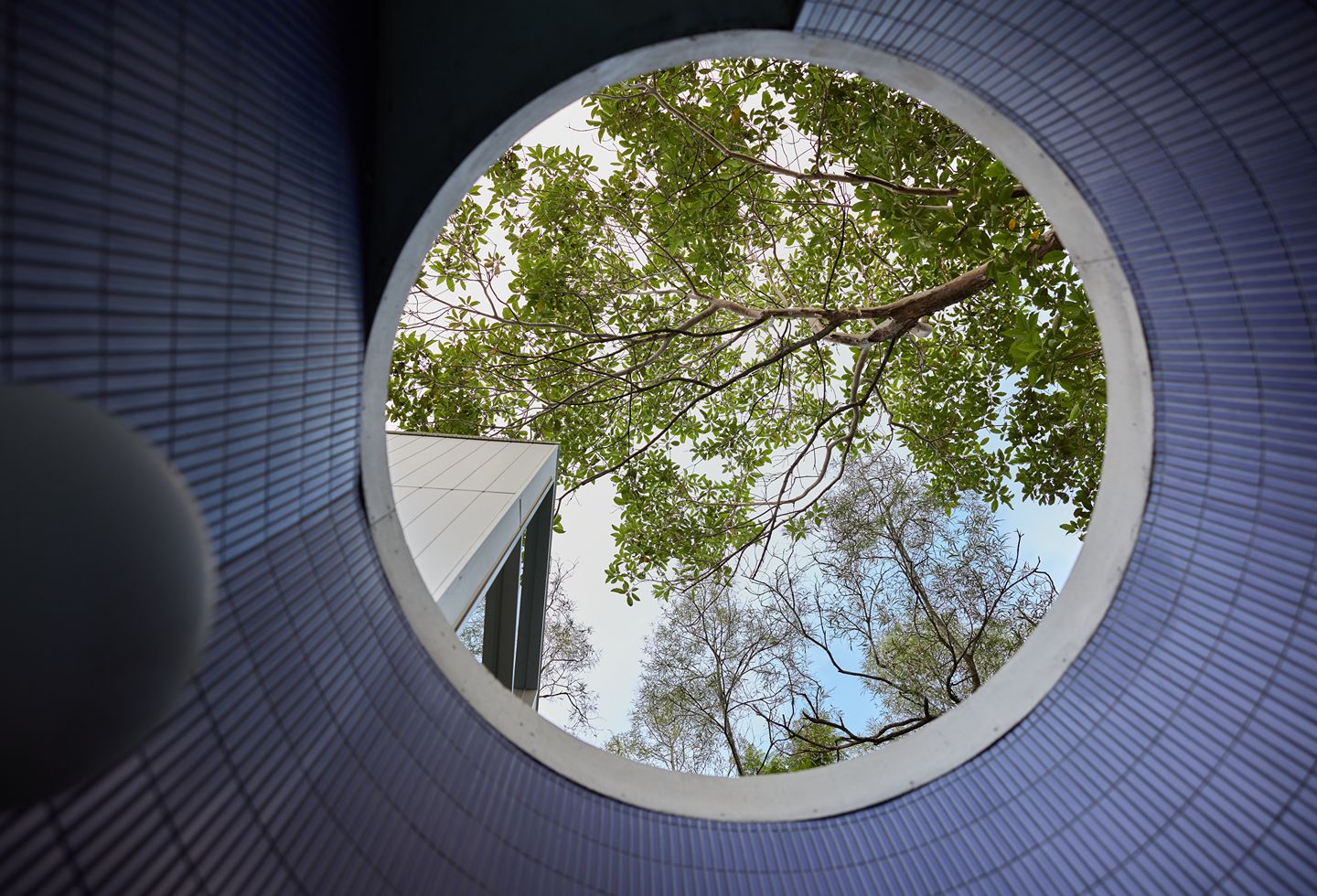
Flourishes, however, remain — in the form of a bathroom’s peppermint green patterned tiles, the lounge area’s striking yet understated abstract painting and the bright blue tiling in the outdoor shower. The home is both calm and calming. As Willmett reflects, it “also demonstrates how restraint can heighten engagement with context, allowing the landscape and natural light to become the primary architectural elements.”