
Set high above Rose Bay on a rocky escarpment, Casa Dos is not immediately visible from the street. Accessed by a steep sequence of steps — either ascending from a cul-de-sac below or descending from above — the house exists in a condition of deliberate separation. What might typically be framed as a constraint becomes, in the hands of Ed Lippmann, an architectural prelude: a gradual transition from city to retreat.
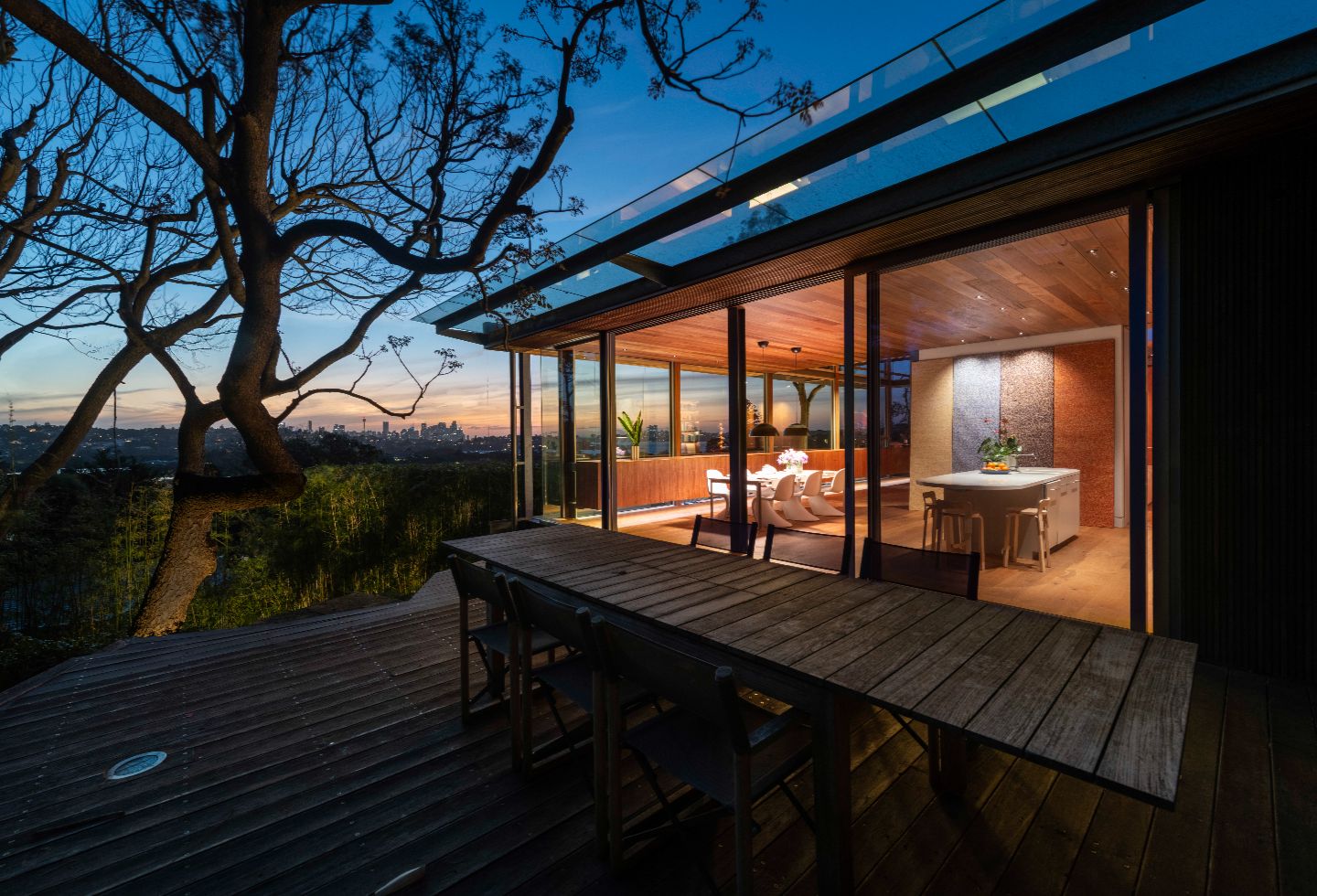
From its elevated position, the house looks west across the valley to Sydney Harbour and the skyline of Sydney. Yet Casa Dos resists the familiar impulse to prioritise view above all else. Instead, it constructs a more nuanced relationship between outlook and occupation — one where landscape, memory and architecture are interwoven.
The site comes with a layered history. A brick bungalow was first built here in the 1920s, later purchased and renovated by Lippmann’s parents in the early 1960s. Decades on, following his father’s passing, Lippmann returned — not simply as owner, but as what he describes as a custodian of the site.
What followed was not a singular act of demolition and rebuild, but a gradual, piecemeal transformation unfolding over nearly a decade. “It started organically, in bits and pieces,” Lippmann says. “You work with what’s there — you build on the good things.”
By the time the project coalesced into a defined brief, its intent had sharpened. Designed for Lippmann and his partner Sonia as empty nesters, the house would be a place to live indefinitely — a “forever home” embedded within the landscape, yet connected to the energy of a global city.
That long-term thinking is evident in one of the project’s most decisive moves: the choice to remain single storey. While initial approvals allowed for an additional level, Lippmann ultimately rejected expansion in favour of restraint.
“There’s always this idea that bigger is better,” he reflects. “But we didn’t need it. There’s a lot of landscape here, and not so much building — and that’s more sustainable.”
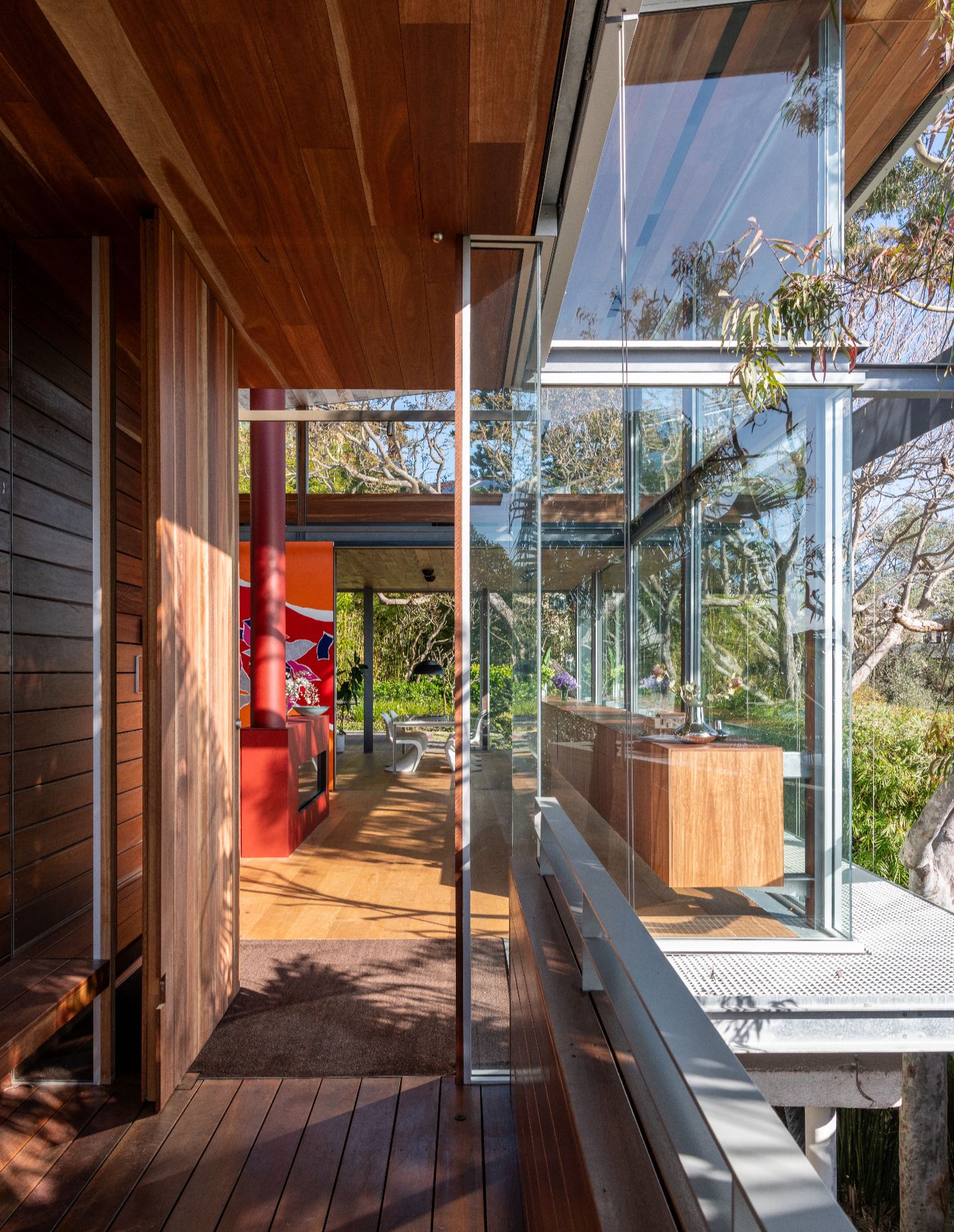
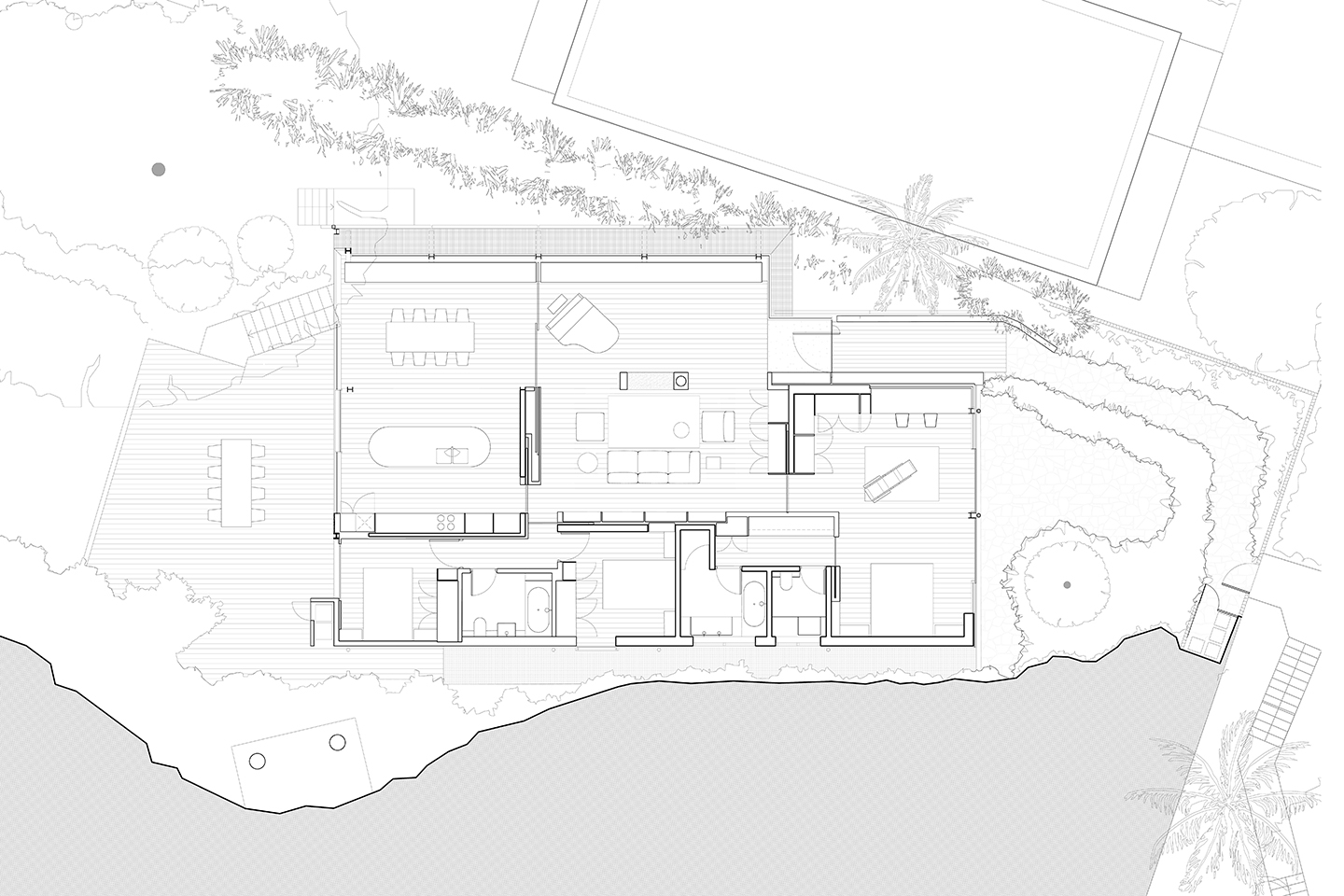
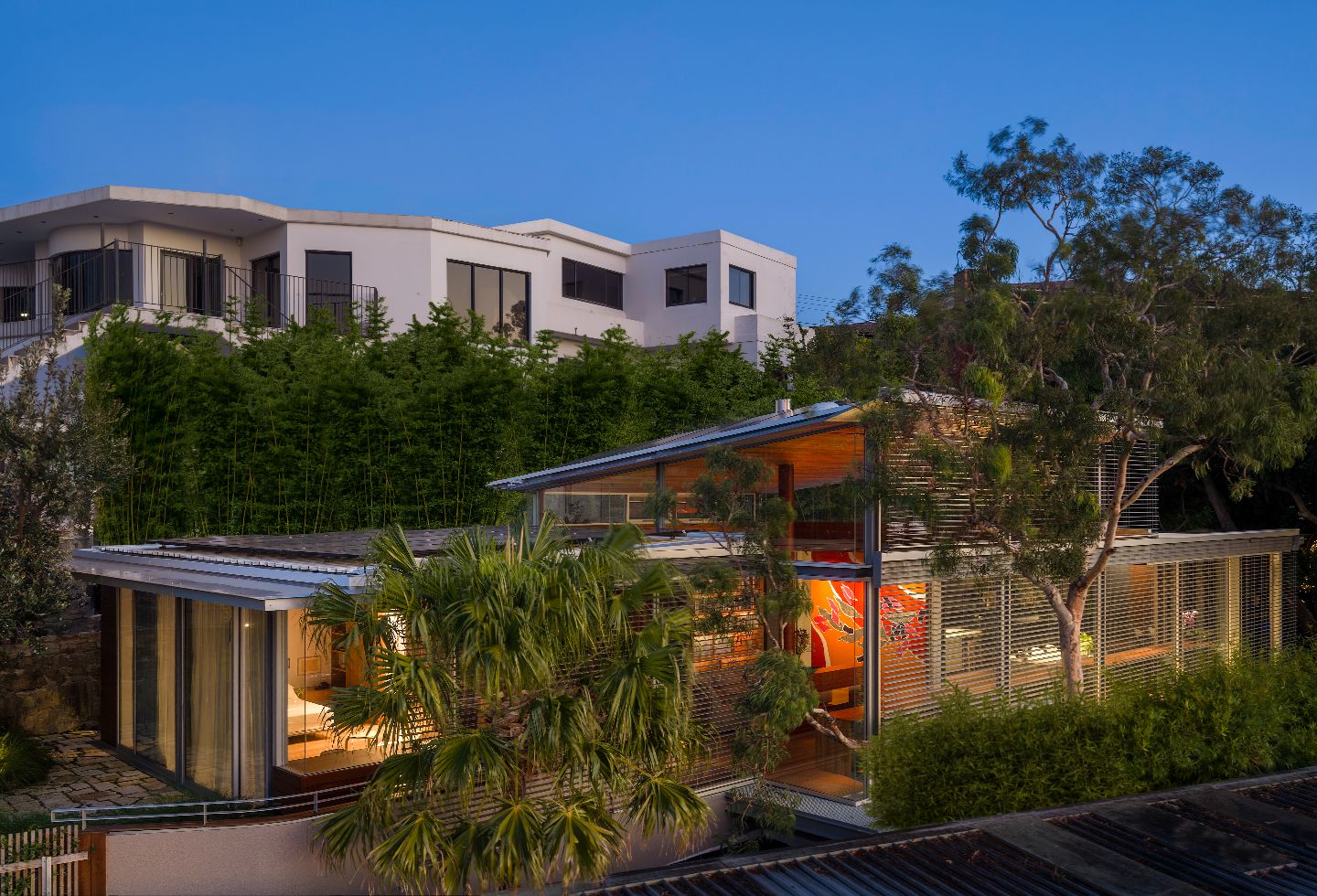
The resulting house sits lightly between front and rear gardens, its rectangular plan organising a clear duality. To the west, living, dining and working spaces open toward the harbour and city beyond. To the east, bedrooms are embedded into the escarpment, forming more intimate zones that engage closely with rock, planting and filtered light.
“The house has two aspects,” Lippmann explains. “One is outward-looking, quite gregarious. The other is more introverted — quieter, more contemplative.”
Related: Sydney’s borrowed landscape
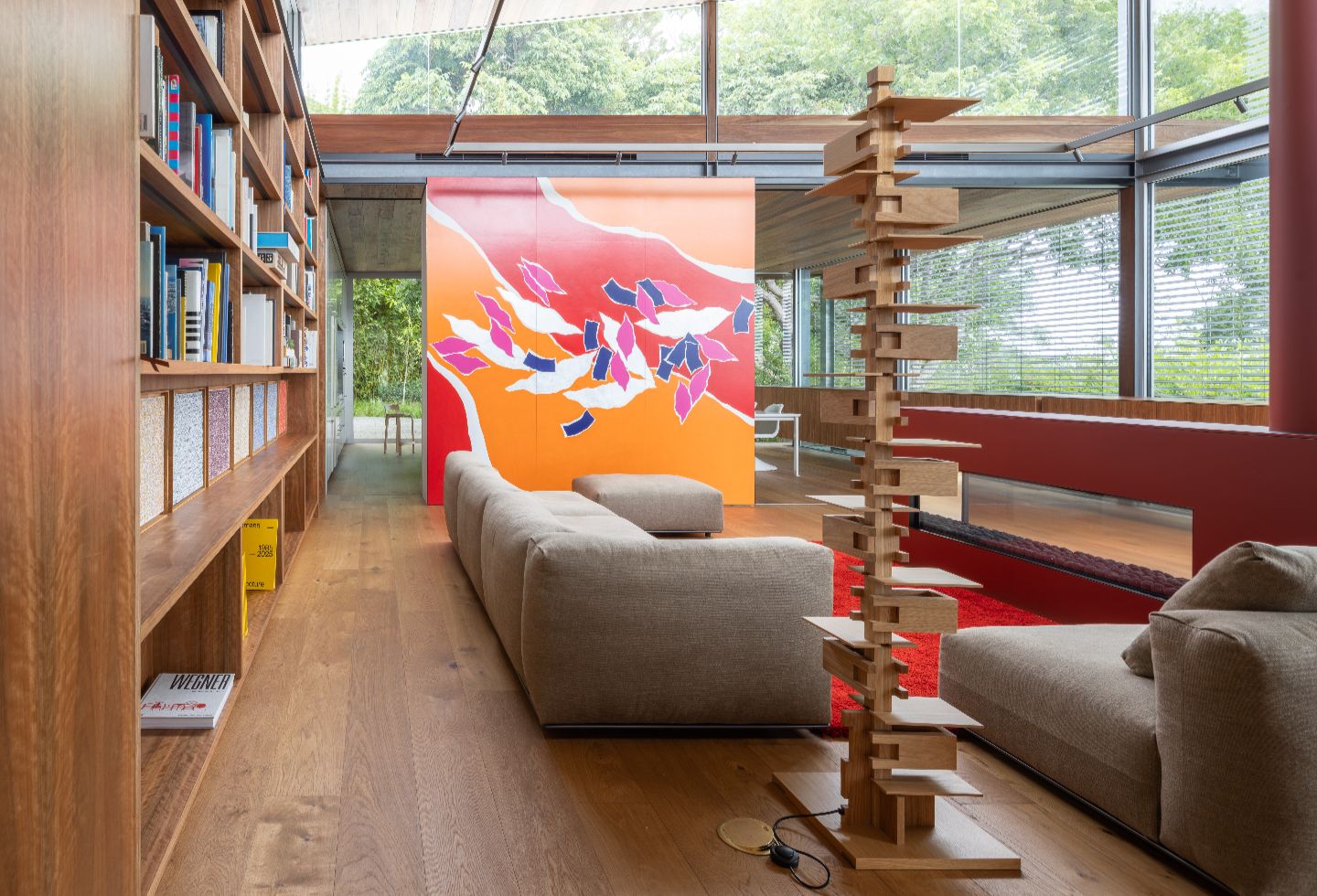
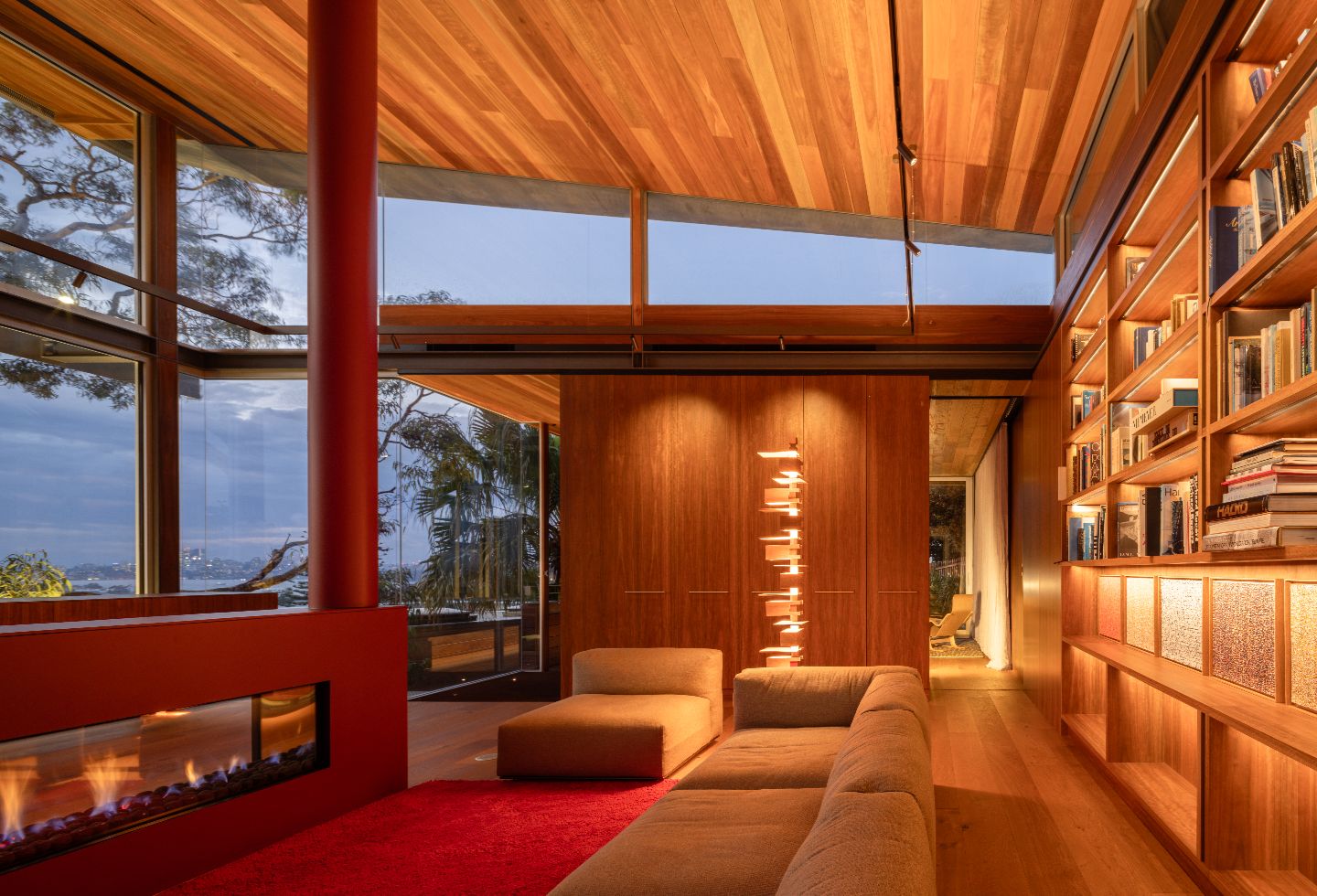
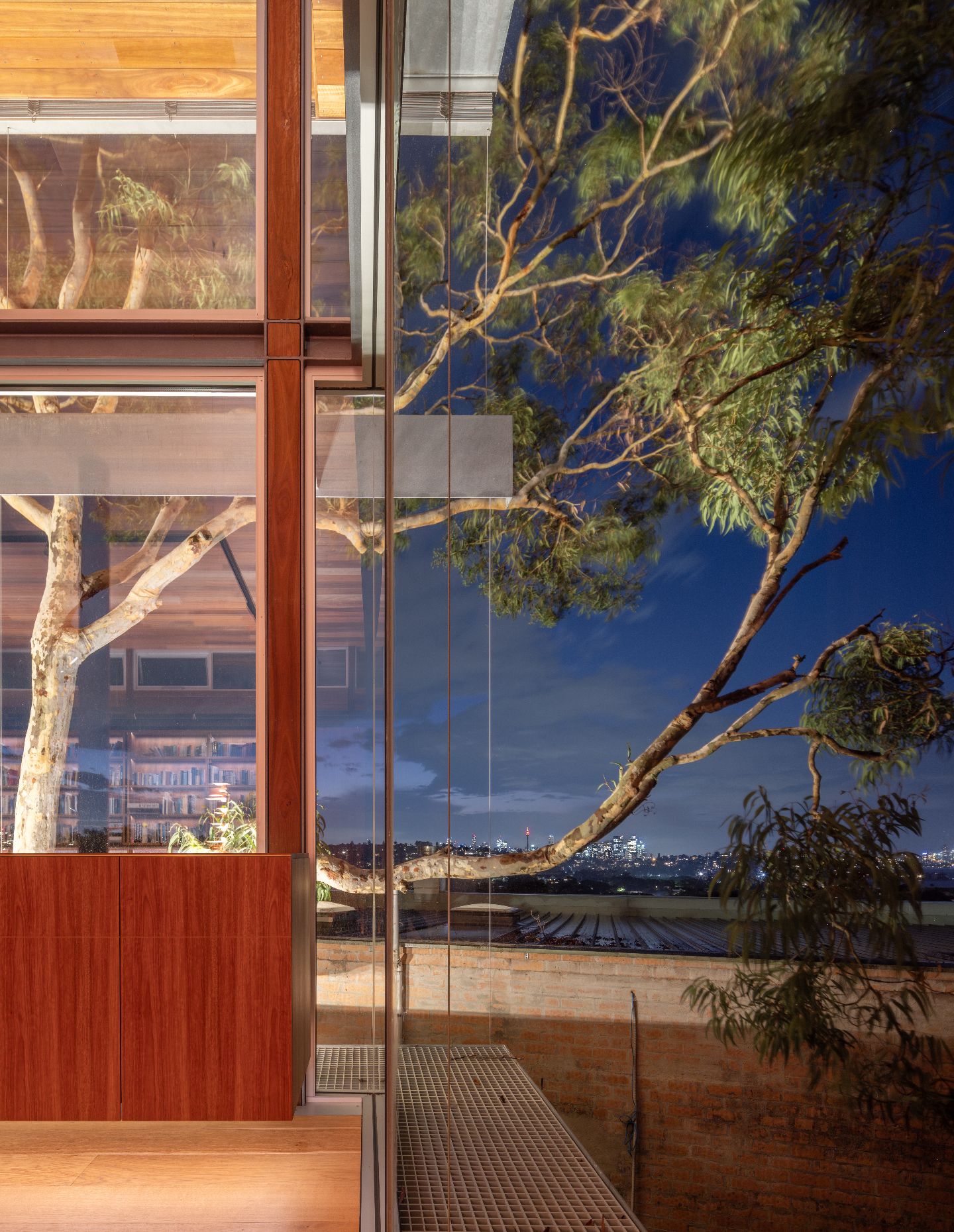
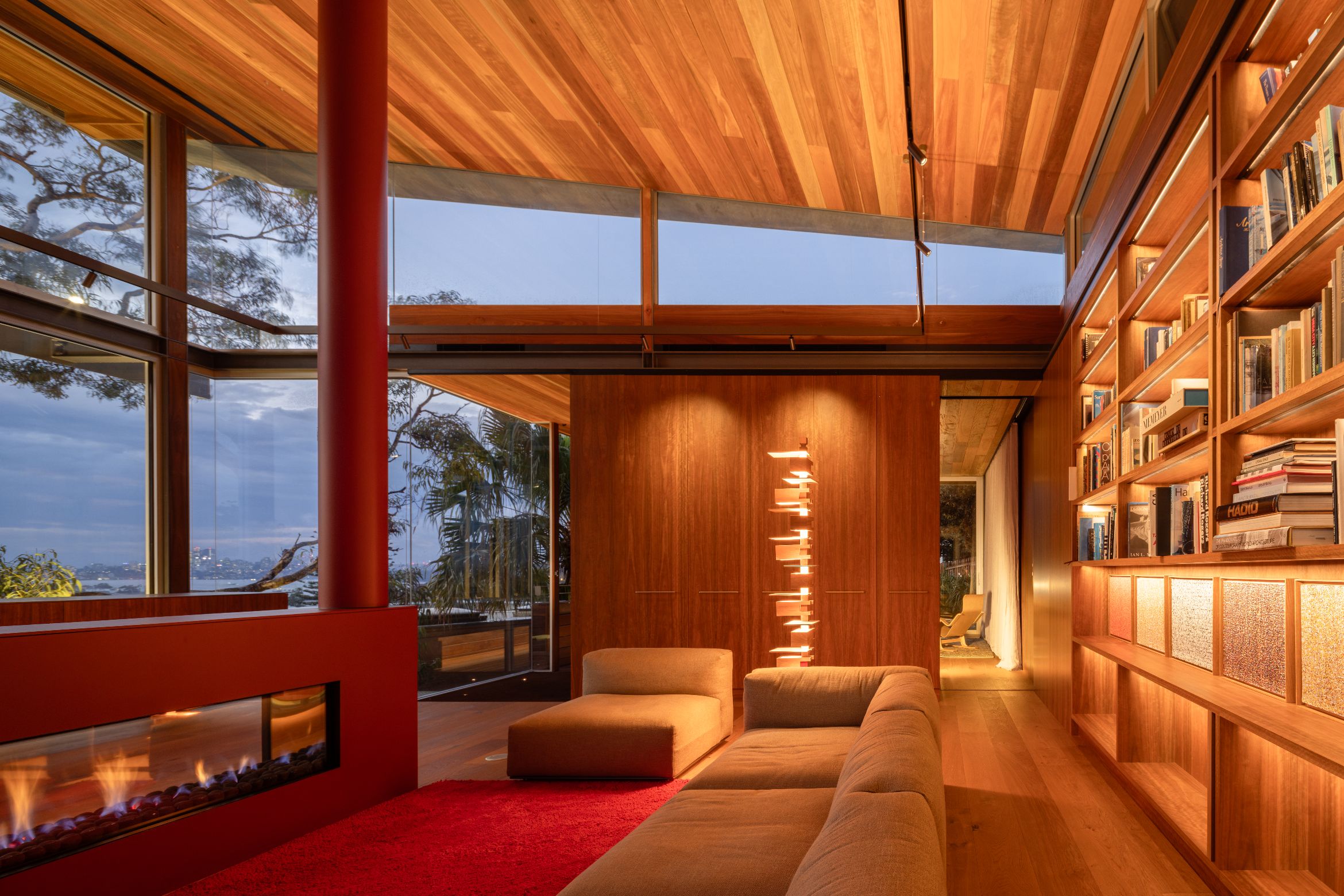
This duality finds its fullest expression in the living room, conceived as a single, expansive volume stretching from the solidity of the escarpment to a fully glazed western façade. Rising five metres in height, the space dissolves the boundary between interior and exterior, drawing the city skyline into the room.
“The view is right there — you feel like you’re in the skyline,” Lippmann says. “But there are also trees, there’s landscape in the foreground. That’s what grounds it.”
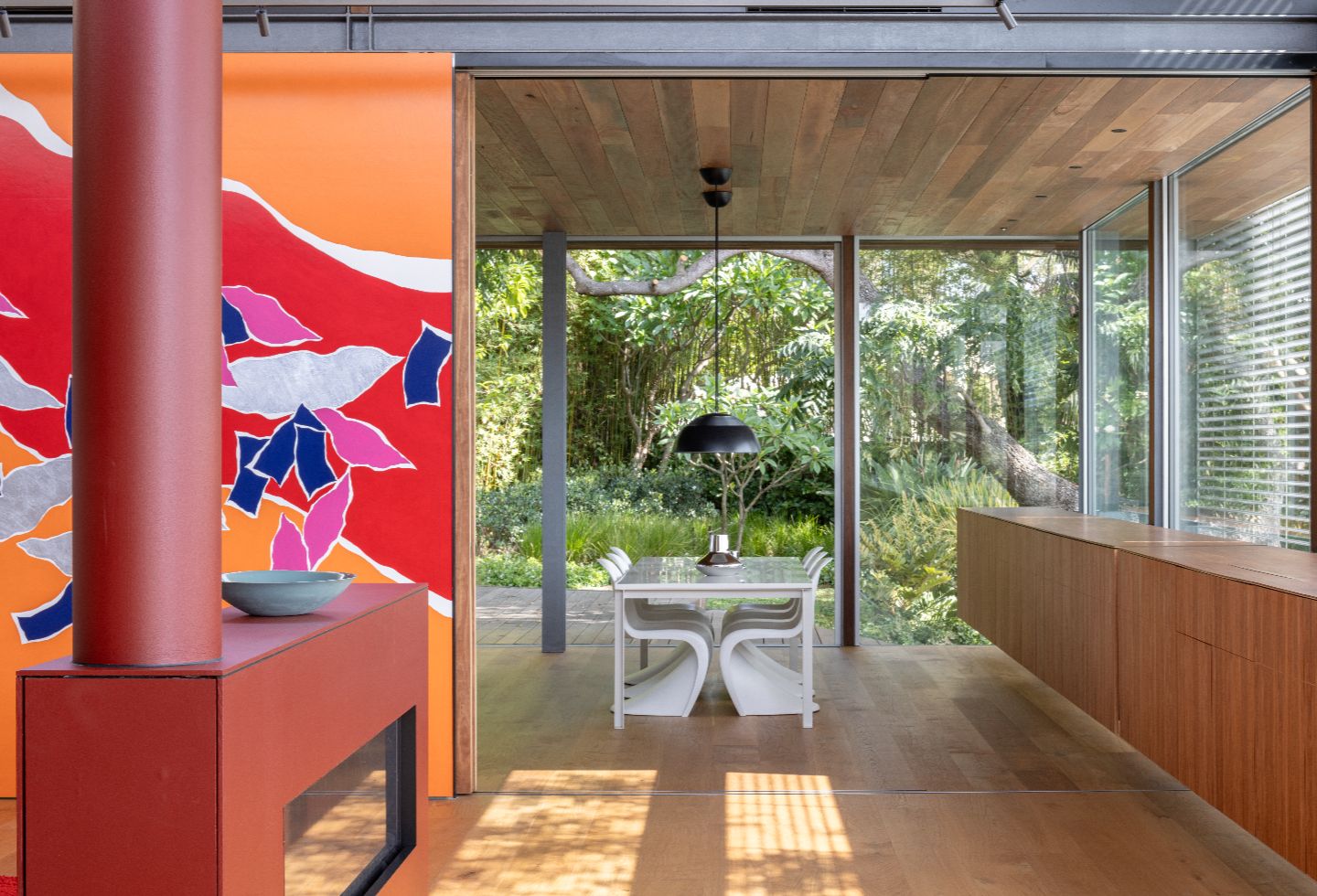
Rather than clearing the site to maximise visibility, Lippmann deliberately preserves and cultivates planting that mediates the view. A tree rising from the lower boundary now appears almost within the living space itself, lit at night and integrated into daily life.
“It’s not necessary to have a completely unobstructed view,” he notes. “That can become quite boring. The foreground gives it depth.”
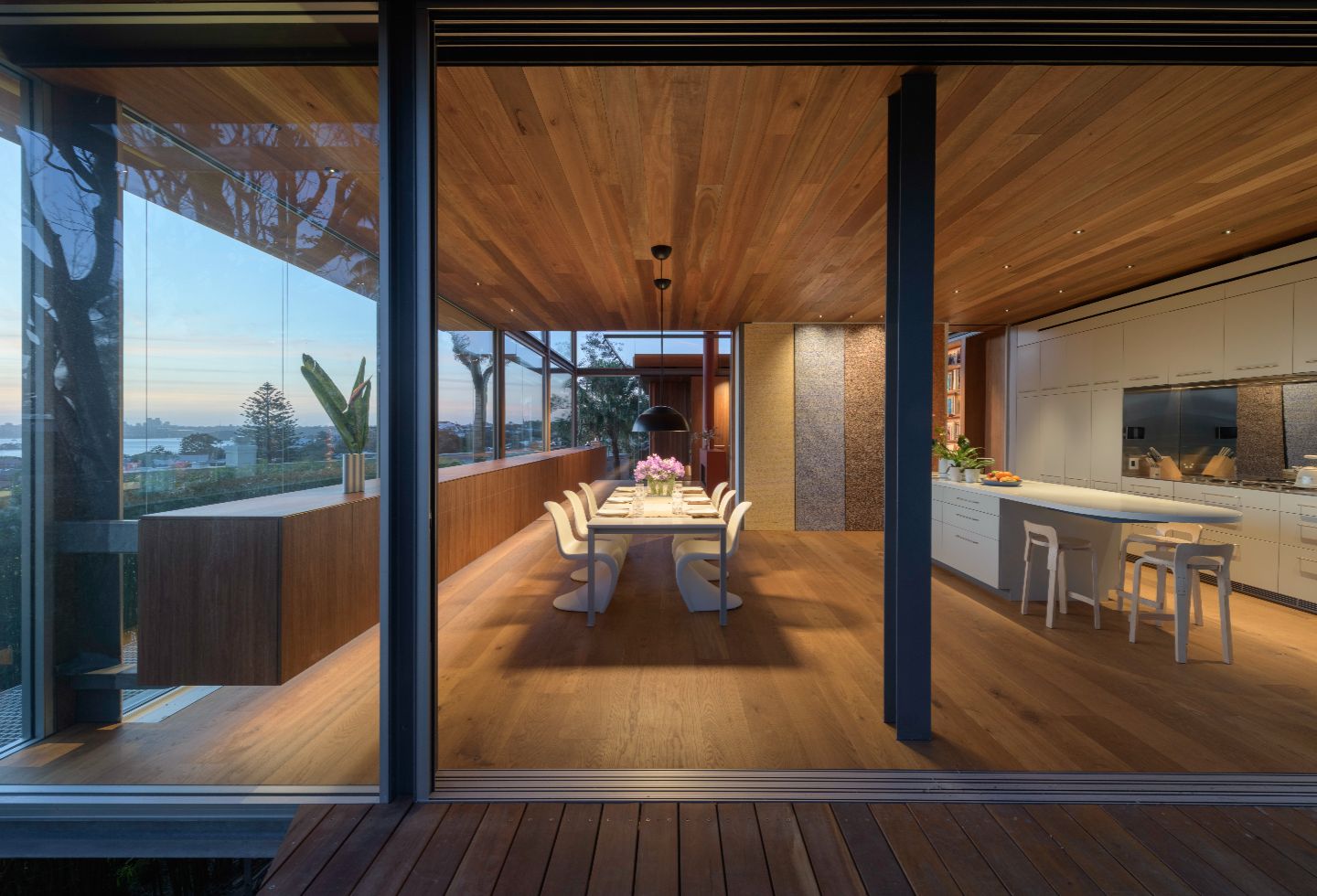
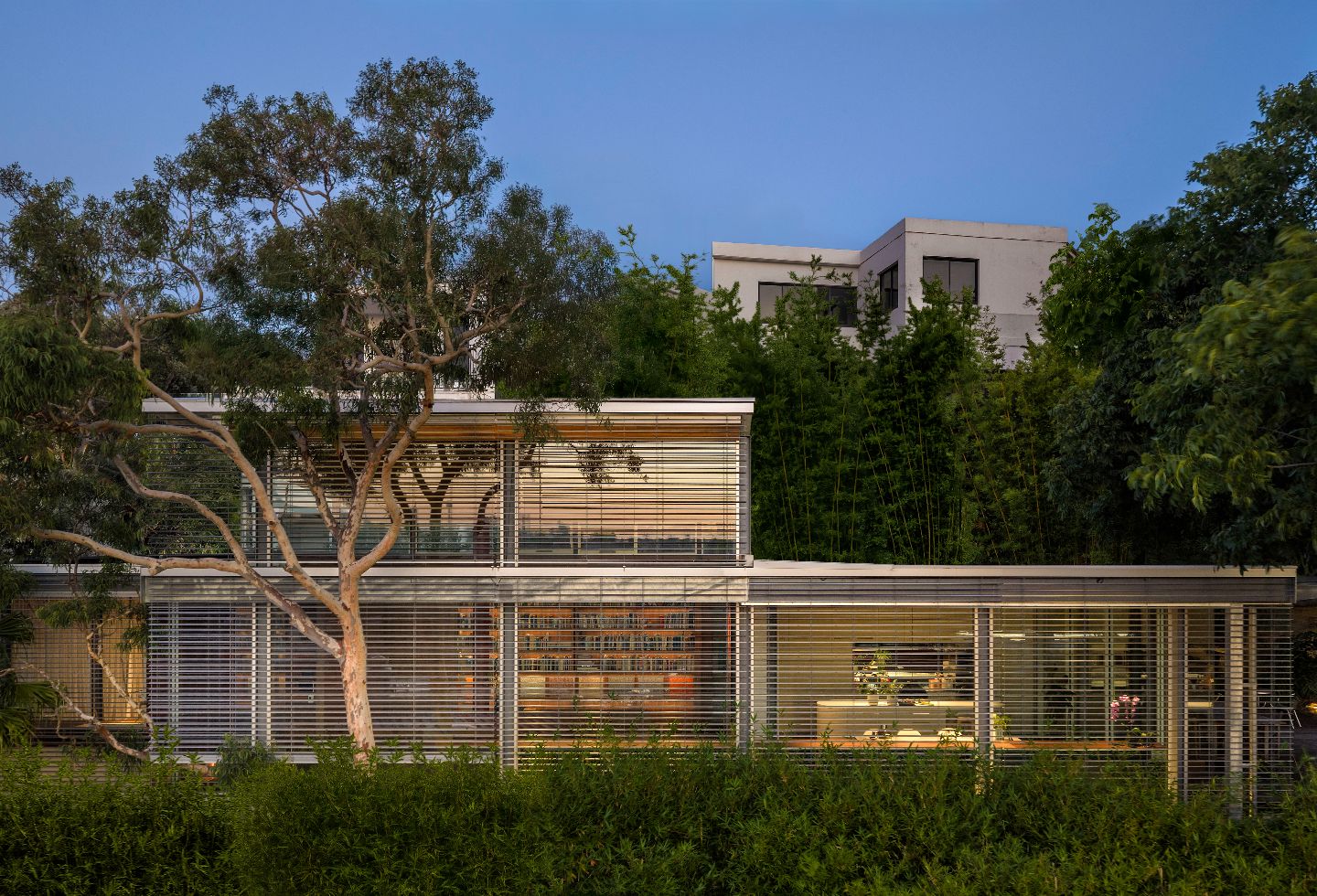
The façade itself reflects a careful negotiation between transparency and climate. While influenced by the filtered light of Maison de Verre by Pierre Chareau, Casa Dos adopts a more open expression suited to Sydney’s expansive outlook. A high-performance double-glazed curtain wall is paired with operable external blinds, forming a layered veil that tempers heat and glare while maintaining visual connection.
This approach extends to the environmental performance of the house more broadly. Passive strategies — cross ventilation, shading and orientation — are complemented by active systems powered in part by solar energy. Prefabricated steel and glass elements were craned into place, reflecting Lippmann’s long-standing interest in efficient construction.
Yet materially, while steel and glass remain central to Lippmann’s architectural language, timber increasingly complements the project. Spotted gum cladding, ceilings and joinery introduce warmth and tactility, reinforcing the connection between house and landscape.
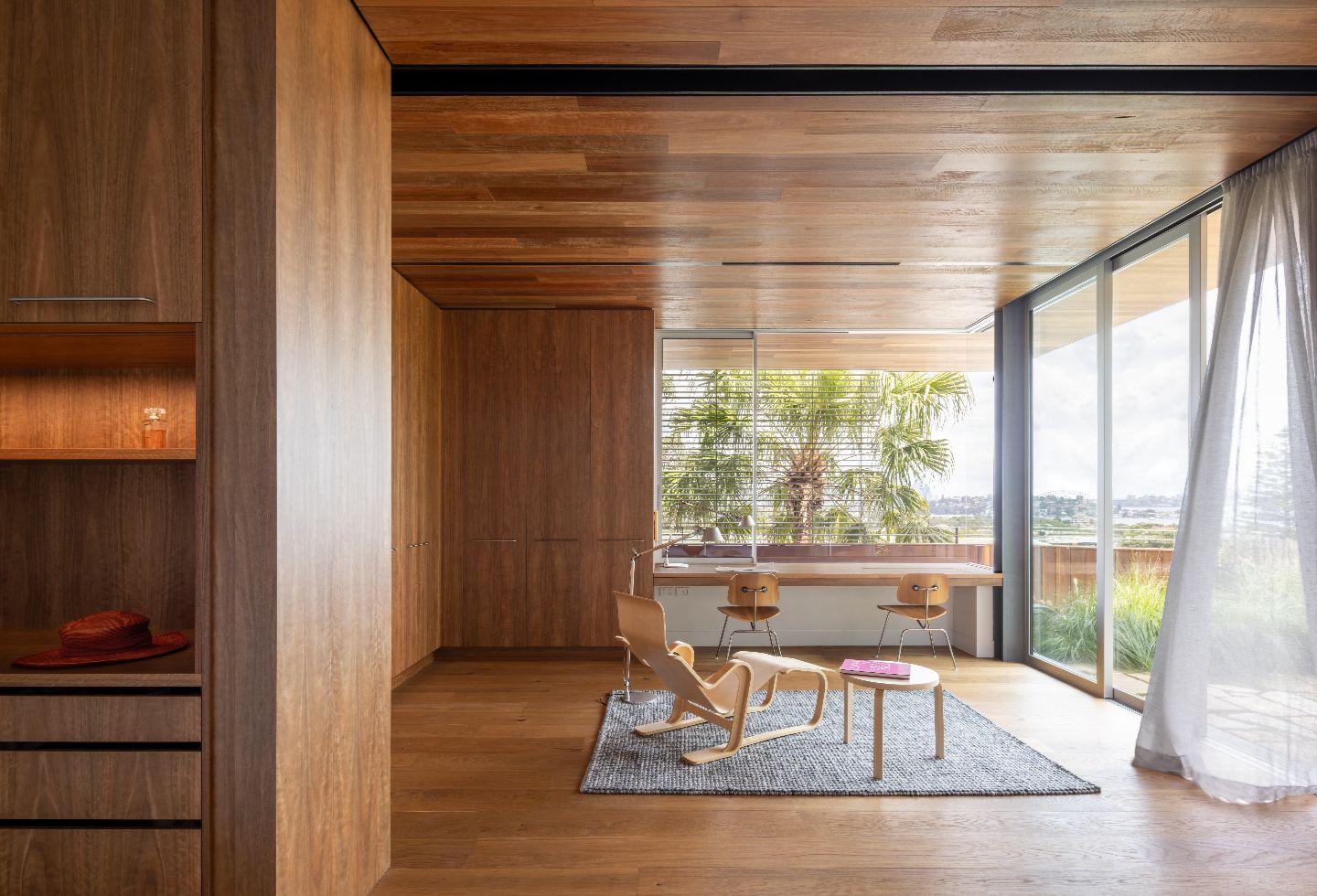
“I’ve worked with steel and glass for 40 years,” Lippmann says. “But now timber is becoming more important — it connects the building to its environment.”
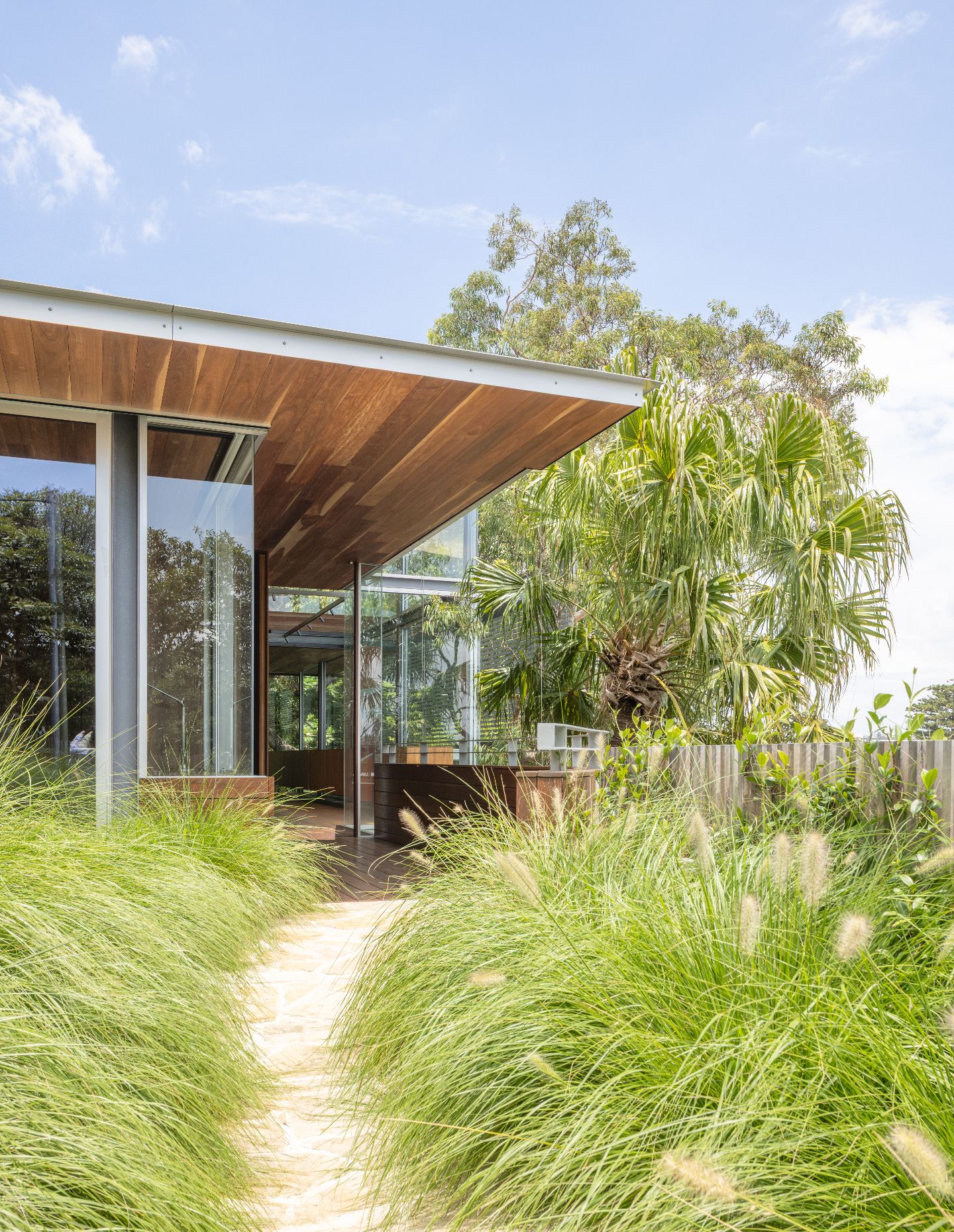
The landscape itself is equally deliberate. Regenerated with native planting — grasses, ferns and trees — the garden is intentionally informal, resisting the manicured conventions of suburban design. A bamboo screen wraps the perimeter, providing privacy while maintaining a sense of enclosure within a broader ecological setting.
Even within suburbia, the effect is immersive. “You feel like you’re in a natural environment,” Lippmann says.
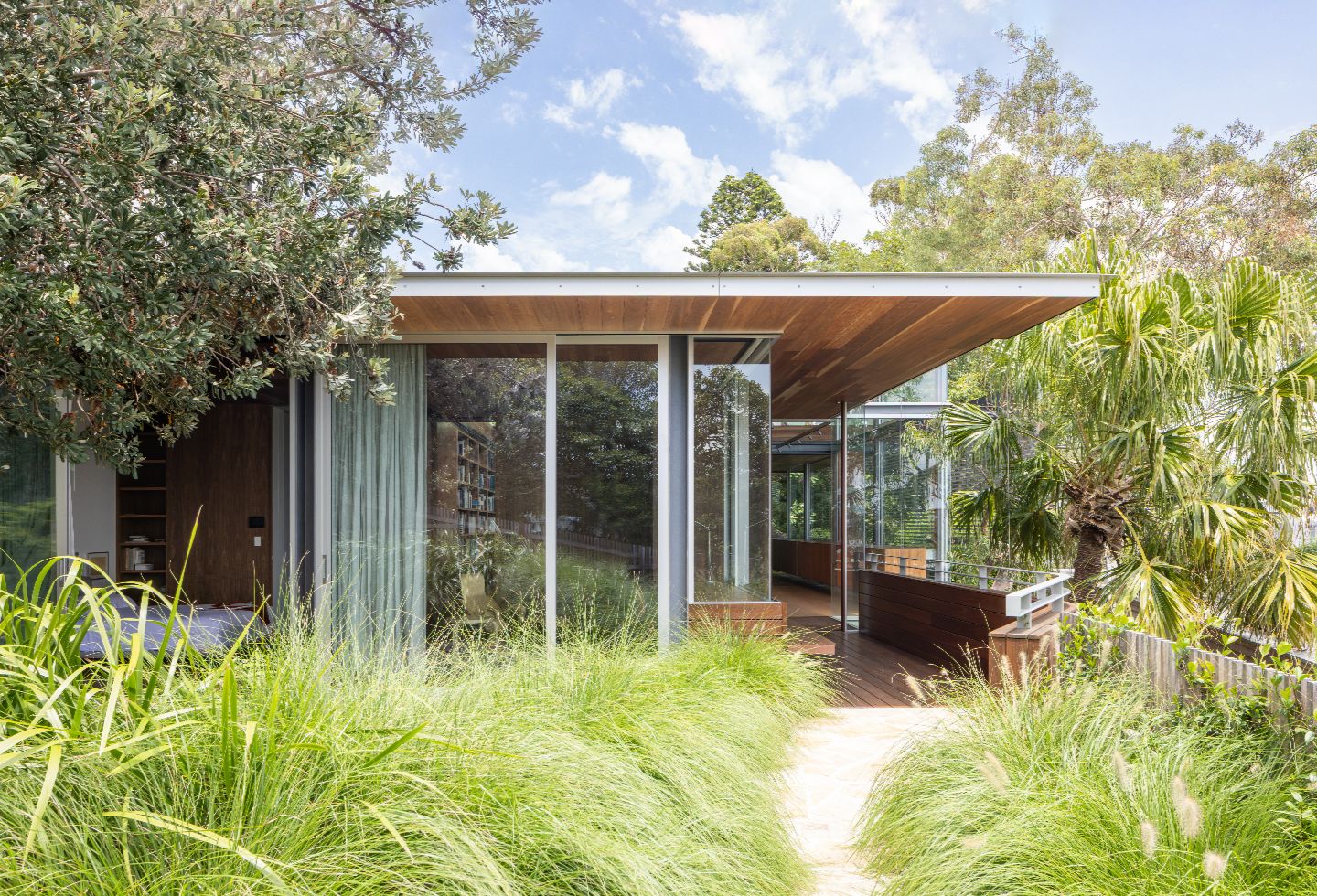
This sense of immersion is heightened by the house’s unusual access sequence. The absence of direct street connection — no driveway, no garage — becomes an experiential asset rather than a limitation.
“In architecture, a problem can become an opportunity,” he reflects. “The walk up, the arrival — it’s a transition into another world.”
Inside, moments of occupation remain understated. Lippmann points not to grand gestures but to quieter rituals — sitting at his desk late at night, working within the open western zone as the city glows beyond.
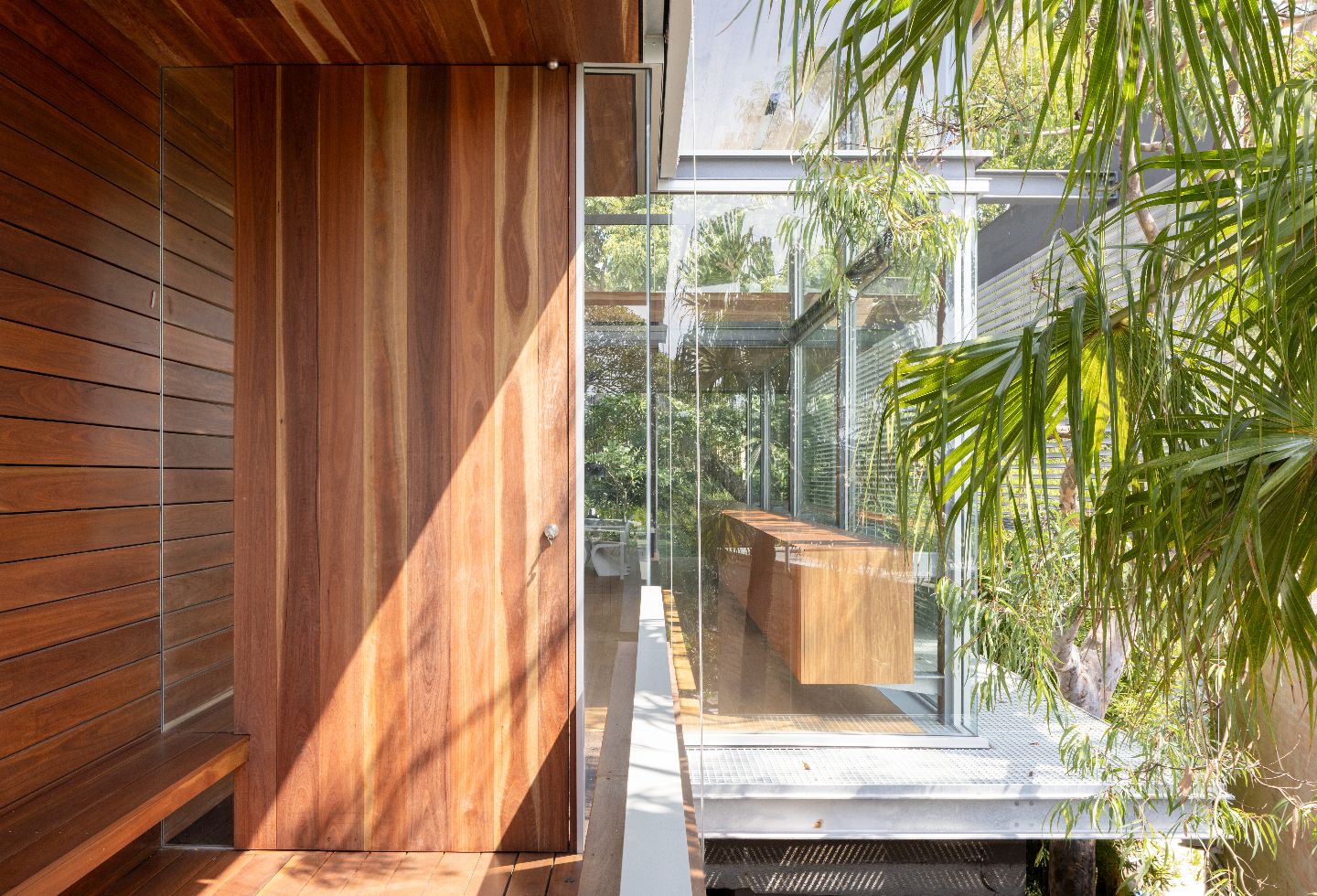
The project’s incremental evolution also allows traces of its past to remain. Rather than erasing the original house entirely, elements have been adapted and transformed, creating a layered continuity between past and present.
Artworks are integrated throughout, most notably a mural by Lin Utzon, commissioned specifically for the living space and realised across continents before being assembled on site.
Ultimately, Casa Dos is less an architectural object than an ongoing relationship between inhabitant and place. It is shaped by memory, refined through time and grounded in a deep familiarity with site — a house that, for Lippmann, has moved from childhood setting to lifelong anchor.