
What is significant about the site context?
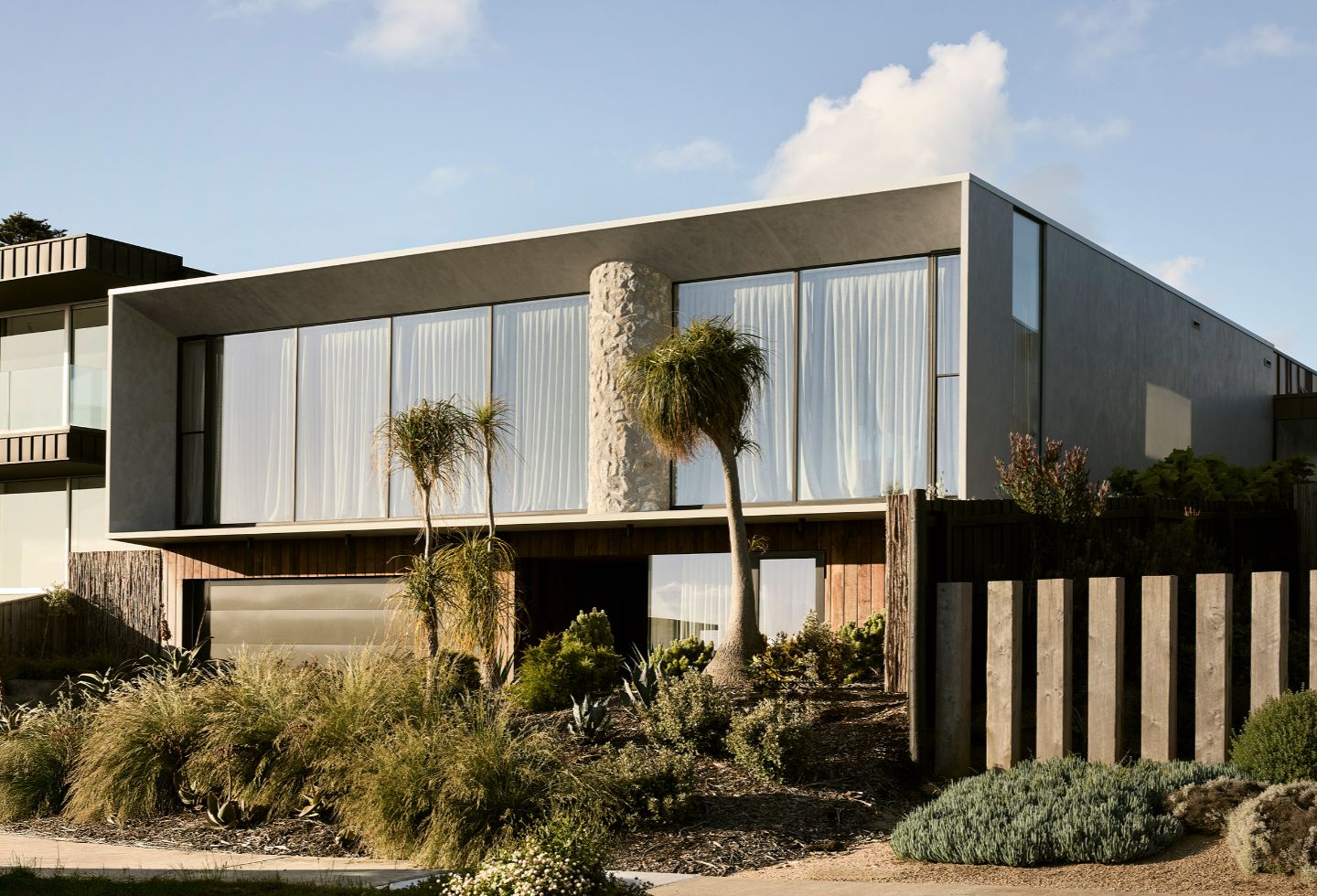
Chris Stanley: The site is located in the coastal town of Ocean Grove, positioned within close proximity to the ocean and exposed to the conditions typical of a coastal environment. The house is carefully embedded within its landscape, with the ground level nestled into native planting to create a sense of shelter and connection to the site. Above, the upper level cantilevers outward to capture elevated coastal views.
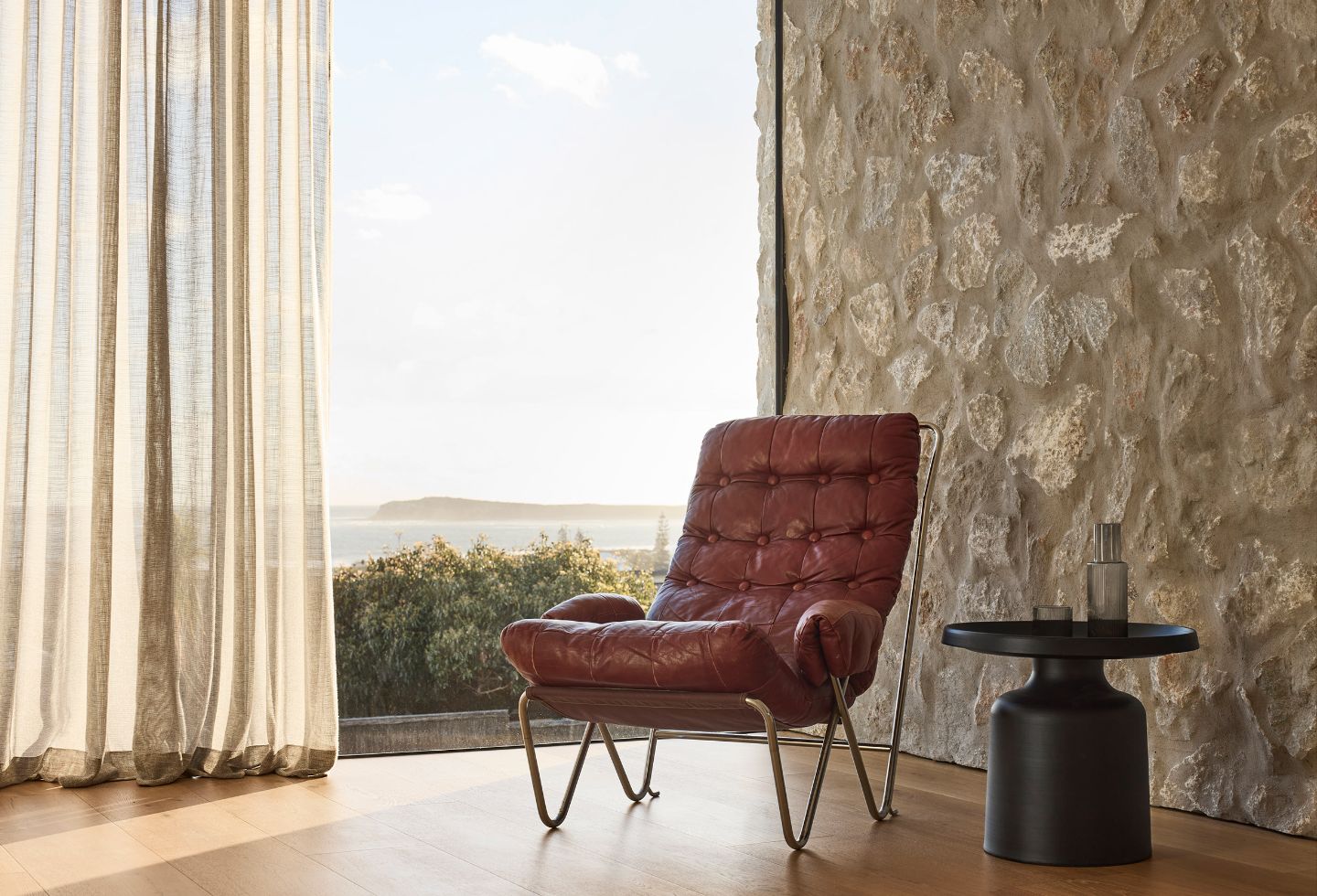
With an emphasis on relaxation and calm, the design draws on the character of the coastal setting. Limestone is used throughout the project, referencing the tones and textures of the surrounding landscape and reinforcing a natural material palette.
Another key consideration was the use of natural materials suited to the harsh coastal environment. These materials were selected for their durability and their ability to weather gracefully over time, allowing the building to age naturally within its setting.
What can you tell us about the client and their brief?
The client for the house was a bespoke builder with a strong interest in high-quality recycled materials, which aligned closely with Splinter Society’s approach to materiality and sustainability. This shared focus informed many of the design decisions throughout the project.
The brief was to create a bespoke residential home targeting the upper end of the resale market. The ambition was to design a house that felt distinctive and carefully crafted, while still maintaining broad appeal for future occupants. The intention was that the home would function comfortably as a long-term family residence, balancing architectural character with highly liveable spaces.
The program includes a number of considered features intended to elevate the home within the market. A separate pool pavilion is positioned to provide shelter from the often harsh coastal weather, creating a protected outdoor retreat. Internally, the house is organised with expansive living spaces and additional bedrooms and bathrooms, ensuring flexibility for family living while reinforcing the sense of generosity expected at the premium end of the residential market.
Related: Pepo Botanic Design in Sydney
What are the key material and structural choices?
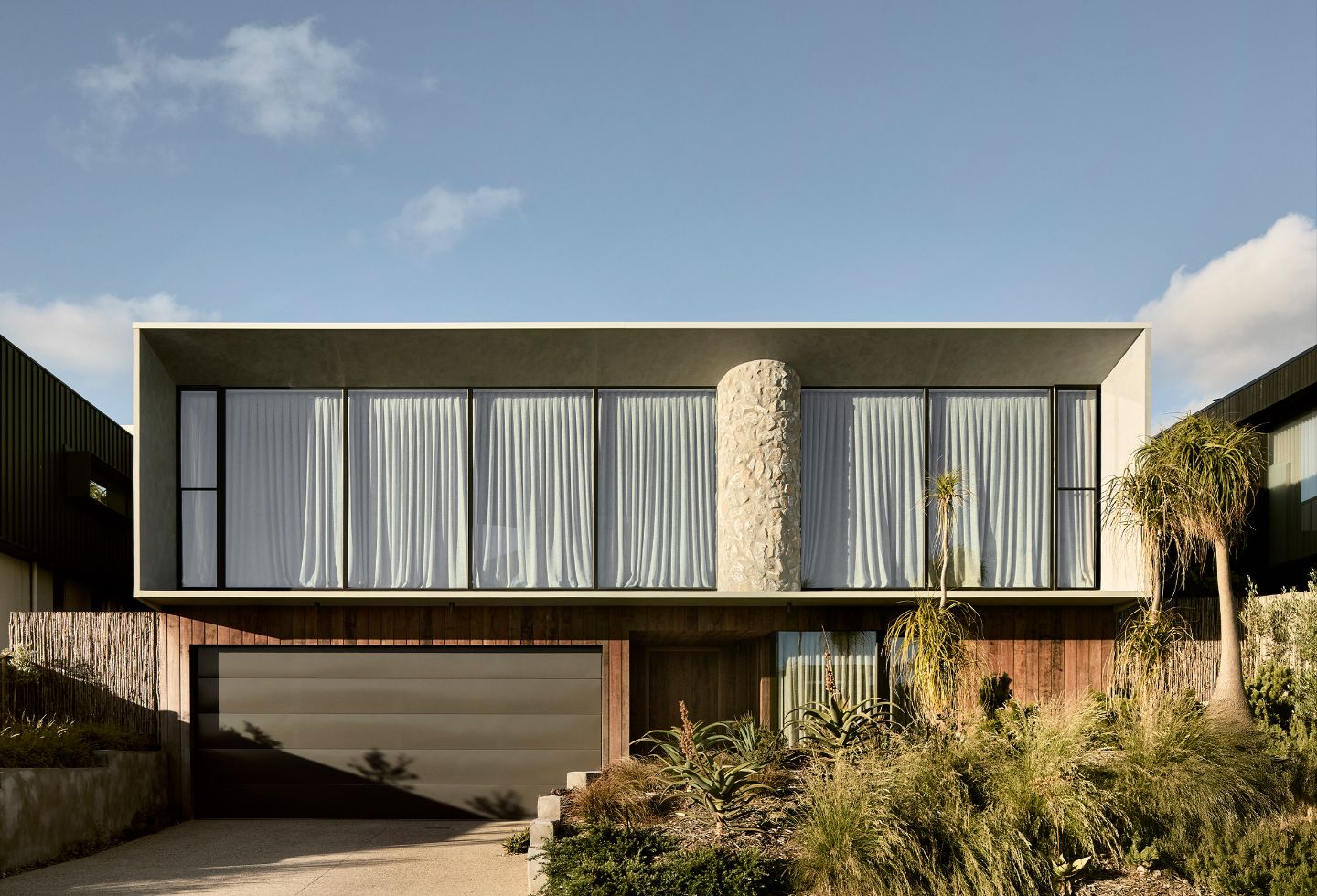
The structure is defined by a rectilinear concrete volume that cantilevers over the lower level, extending toward the coastal outlook while creating shelter to the entry and outdoor spaces below. Chamfered edges refine the mass of the concrete, lending precision to its otherwise solid, monolithic expression.
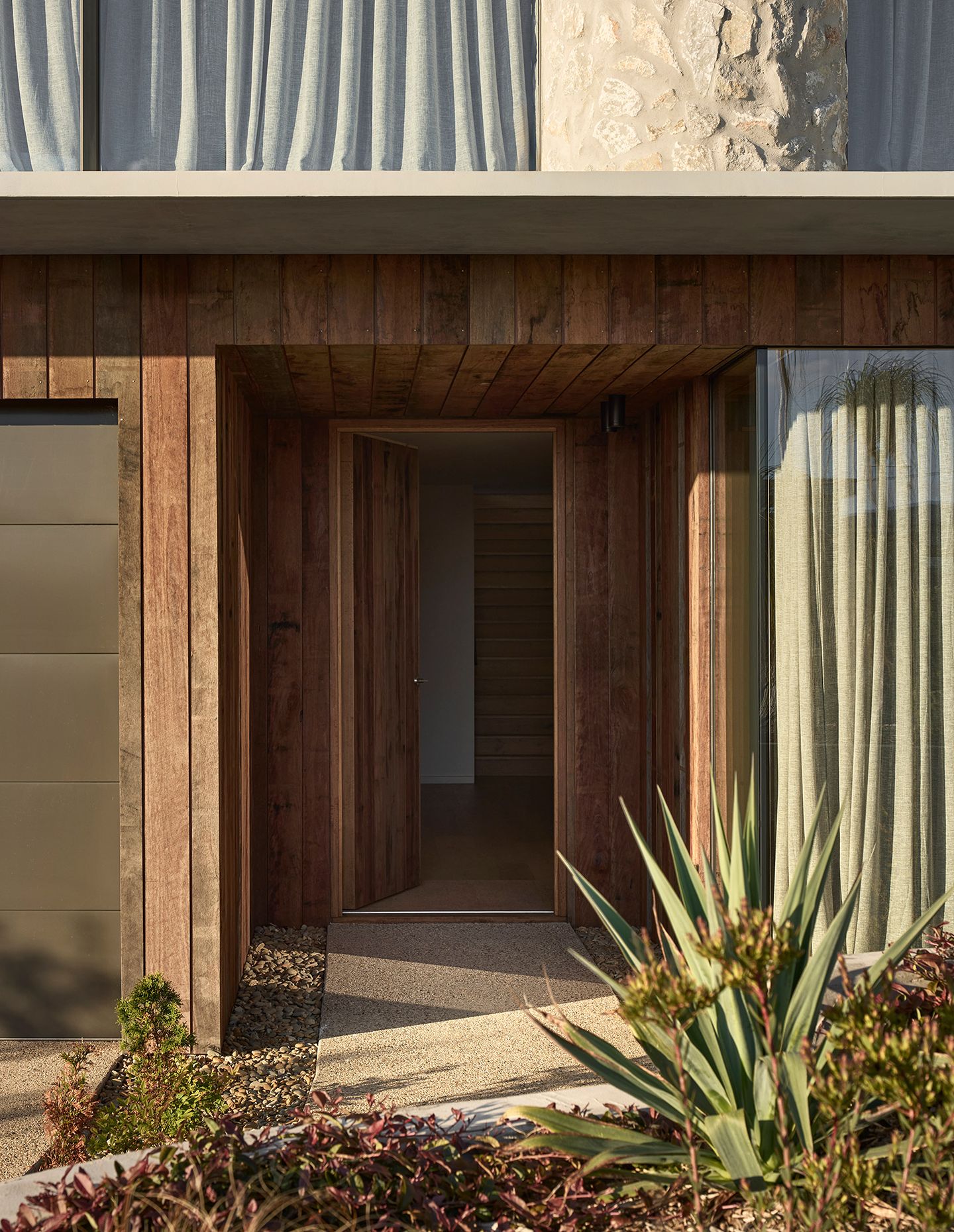
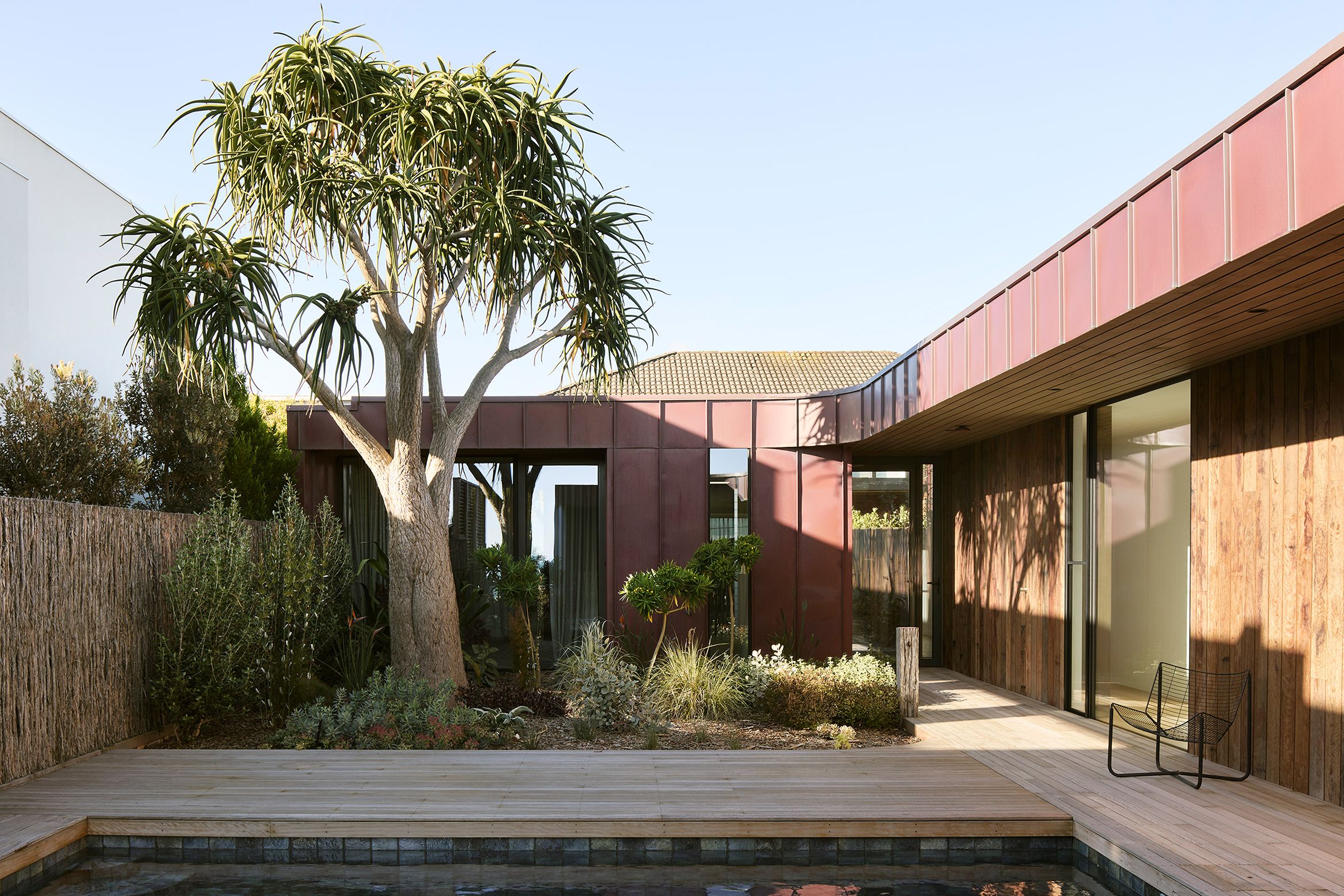
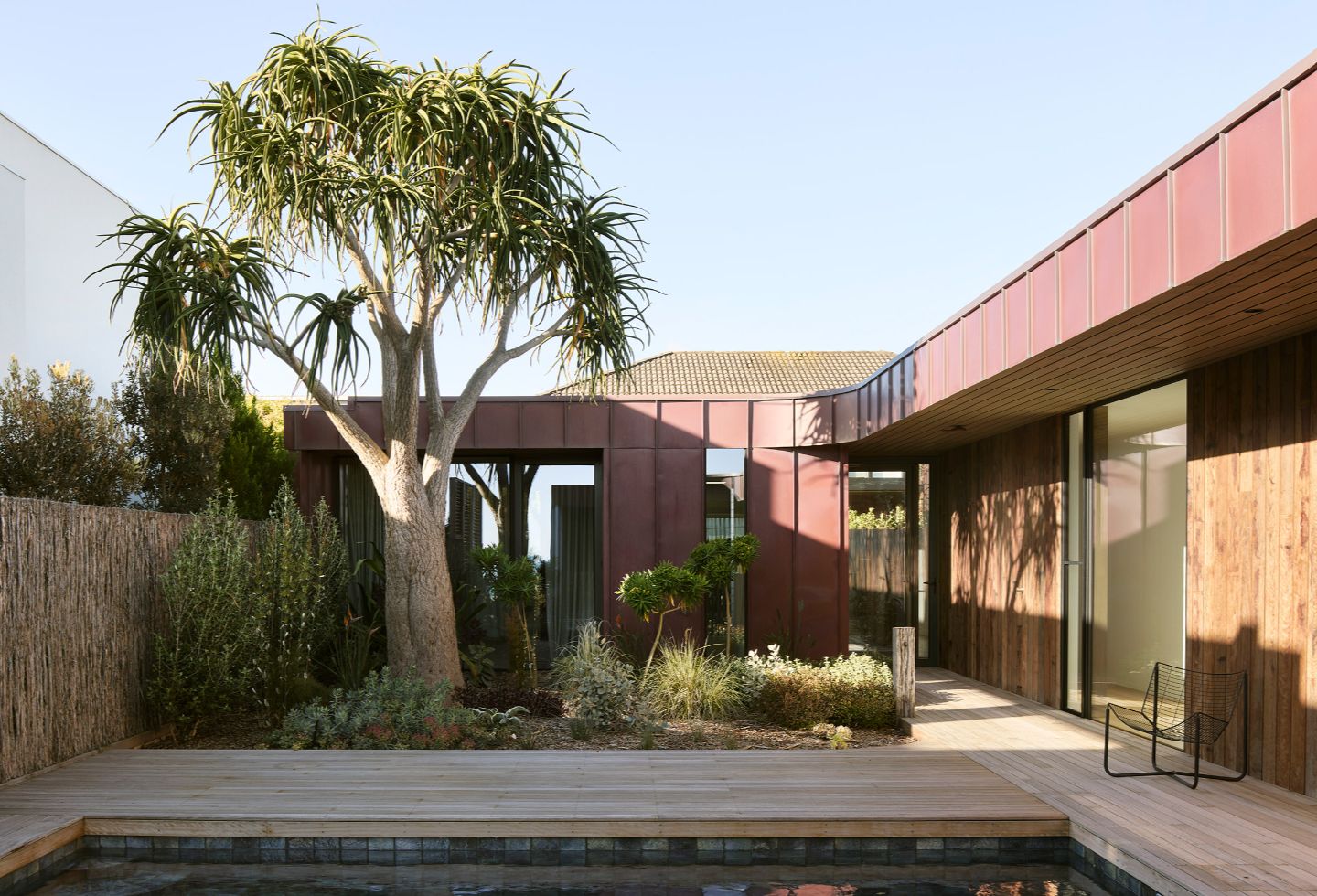
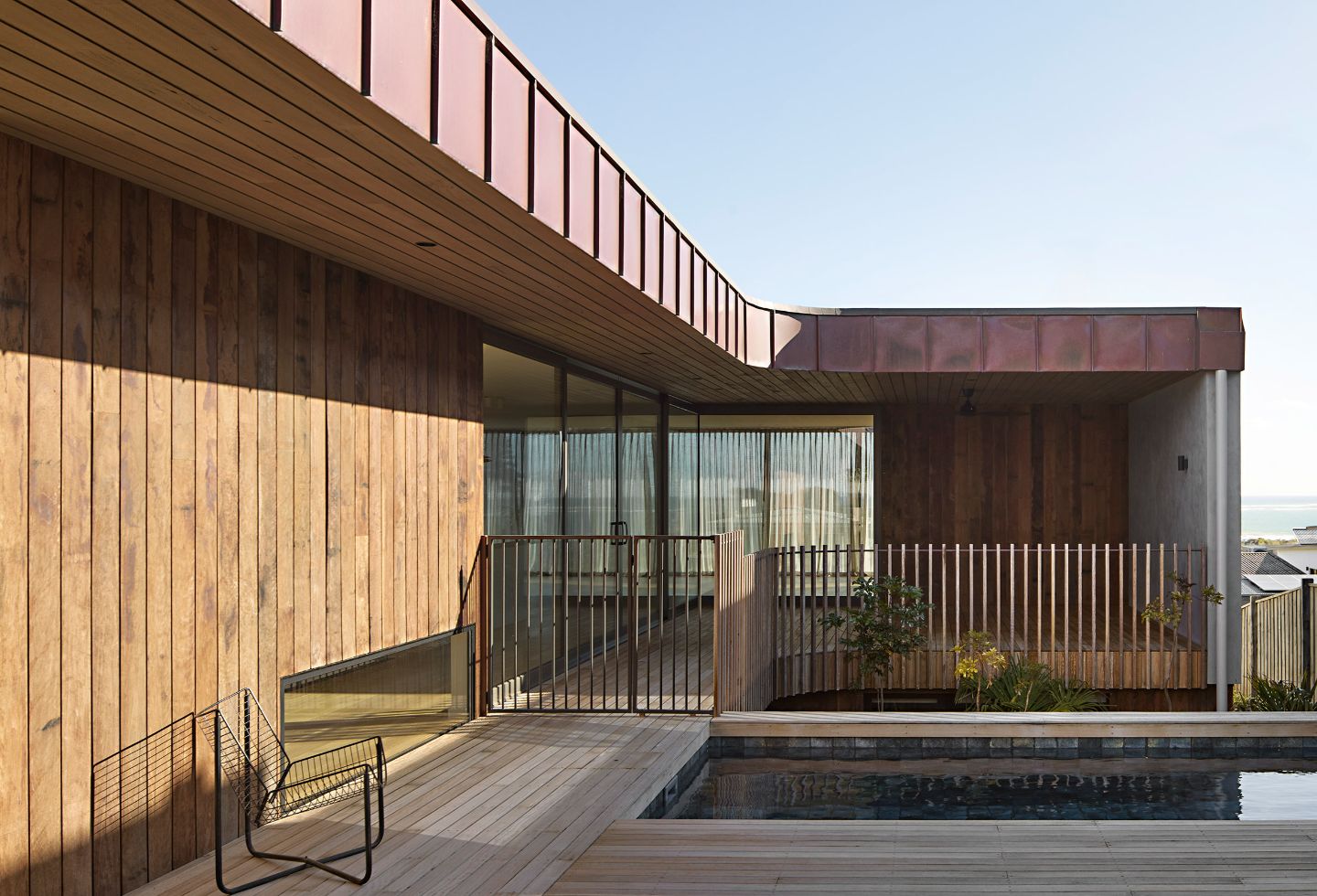
Below, recycled natural timber cladding recedes into the landscape, offering a sustainable and textural counterpoint to the concrete volume above. Rough and refined limestone elements are introduced throughout as a durable material that references the coastal aesthetic, while weathered copper is also incorporated and will continue to develop a patina over time.
What key functional requirements does the design address?
The design responds to key functional requirements by positioning the pool pavilion within a sheltered central courtyard, with the house itself providing protection from coastal winds. Living spaces open onto this courtyard, enhancing connection to the outdoors while remaining protected from the elements. The surrounding native landscape extends this sense of place and integration.
Bedrooms are oriented to maximise internal garden views while maintaining privacy from the shared living areas, balancing openness, amenity and seclusion throughout the home.
What are your favourite parts or moments in the design?
One of my favourite moments of the house is the entry sequence, as the pivoting timber door and limestone flooring immediately connect the interior to the surrounding landscape.