
Tell us about the site context.
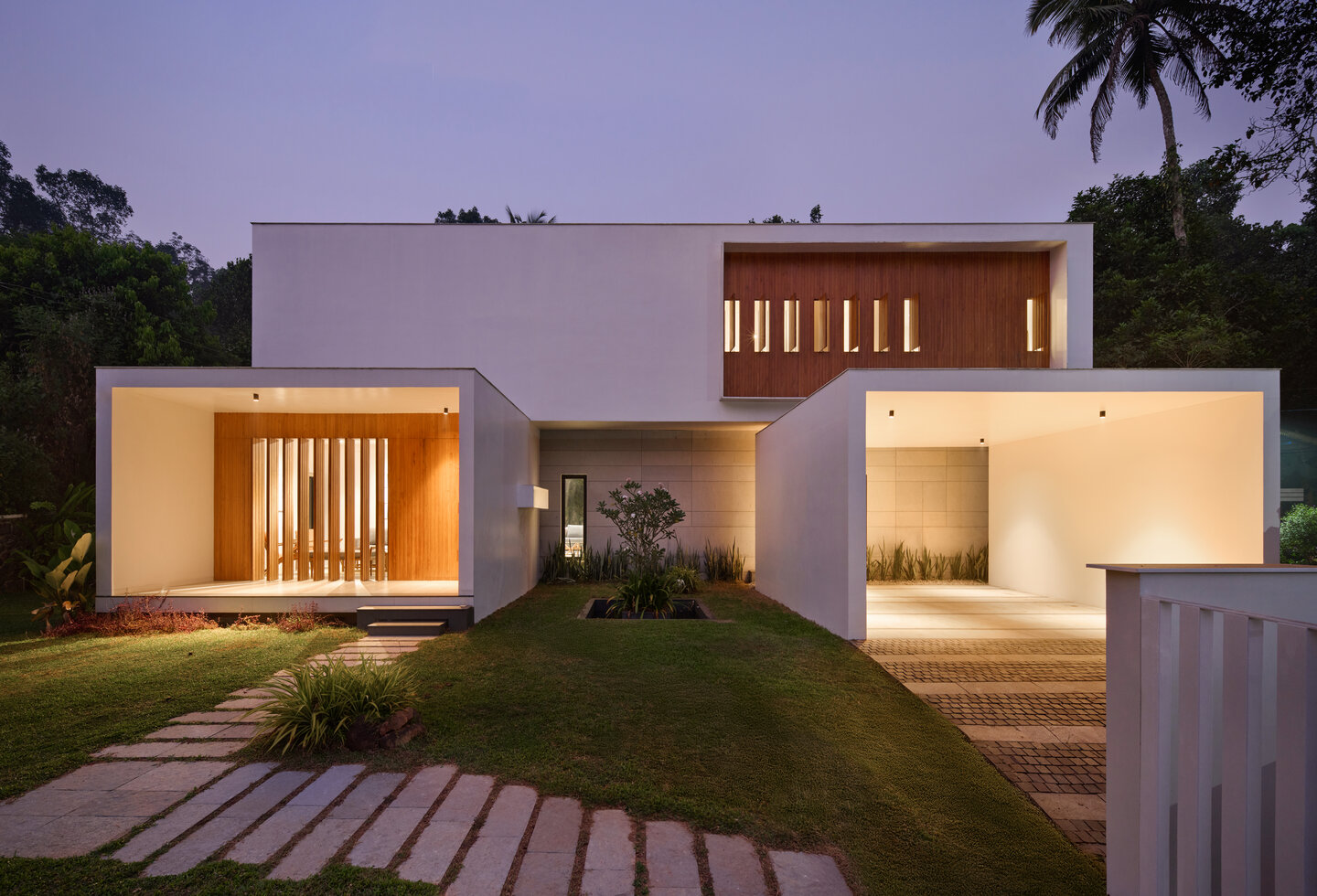
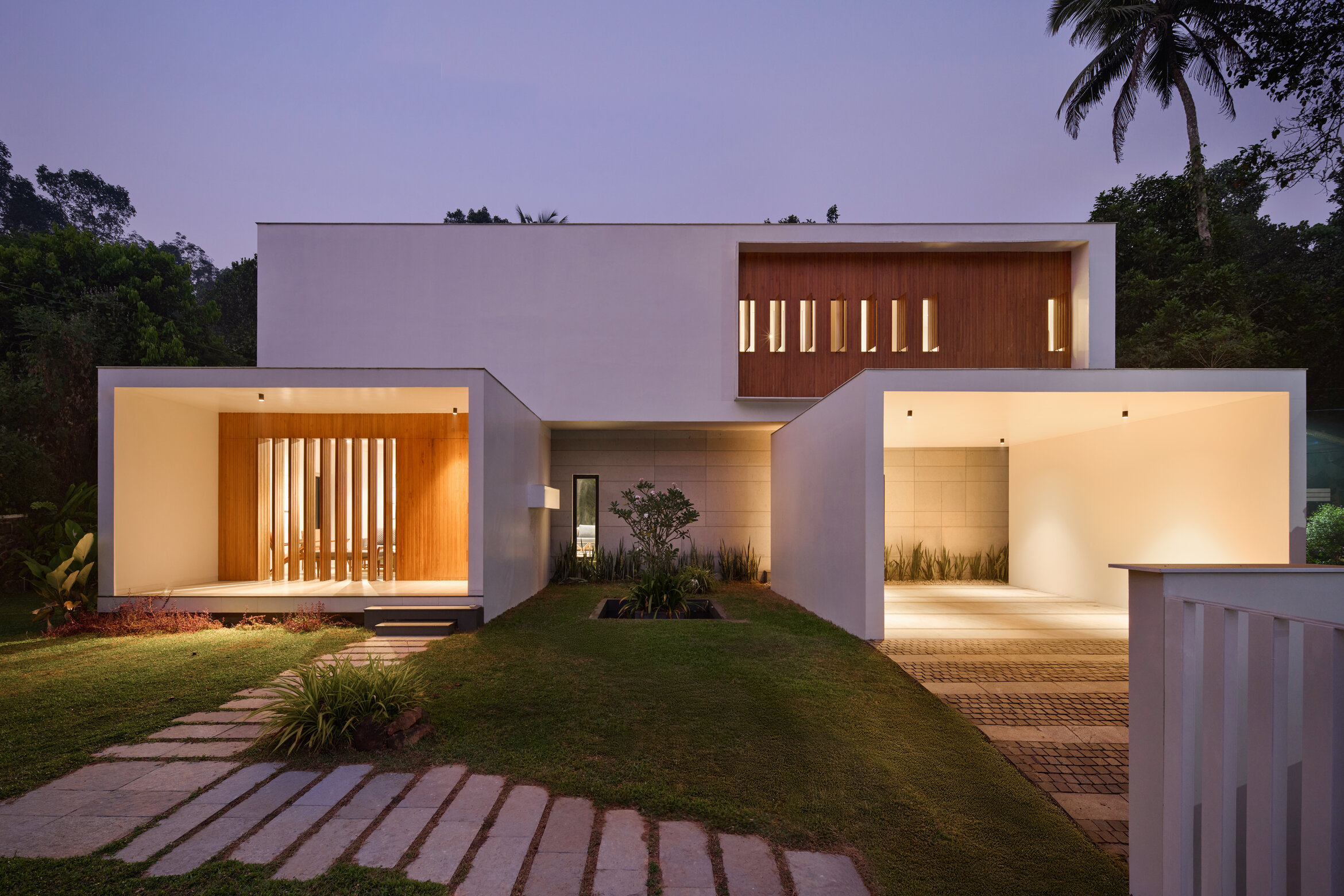
The project is located in Karukachal, Kerala, within a low-density residential neighbourhood characterised by abundant greenery and a calm, open environment. The irregular shape of the 20-cent plot, combined with harsh solar exposure from the south-west and the front side, became a key driver of the design.
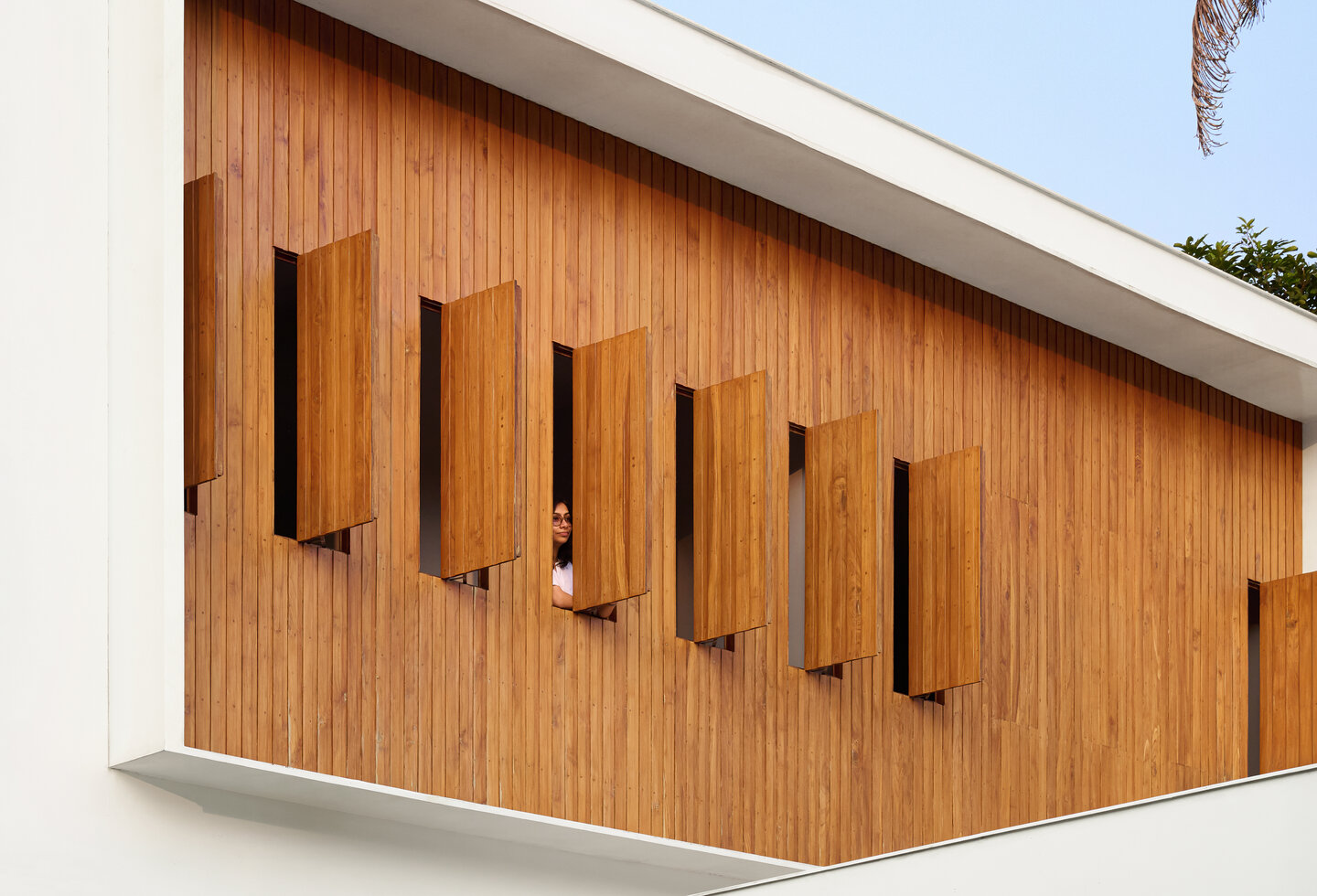
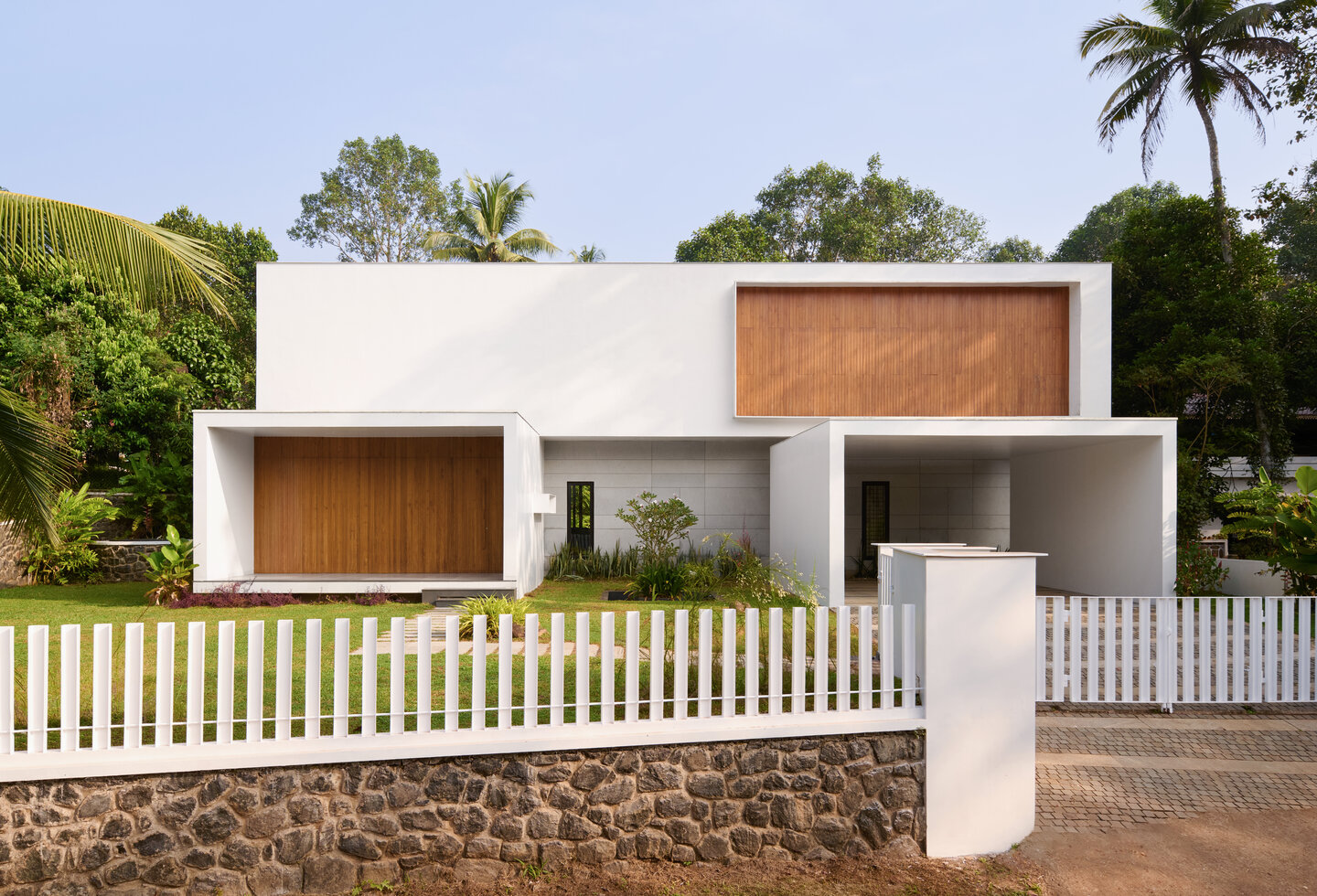
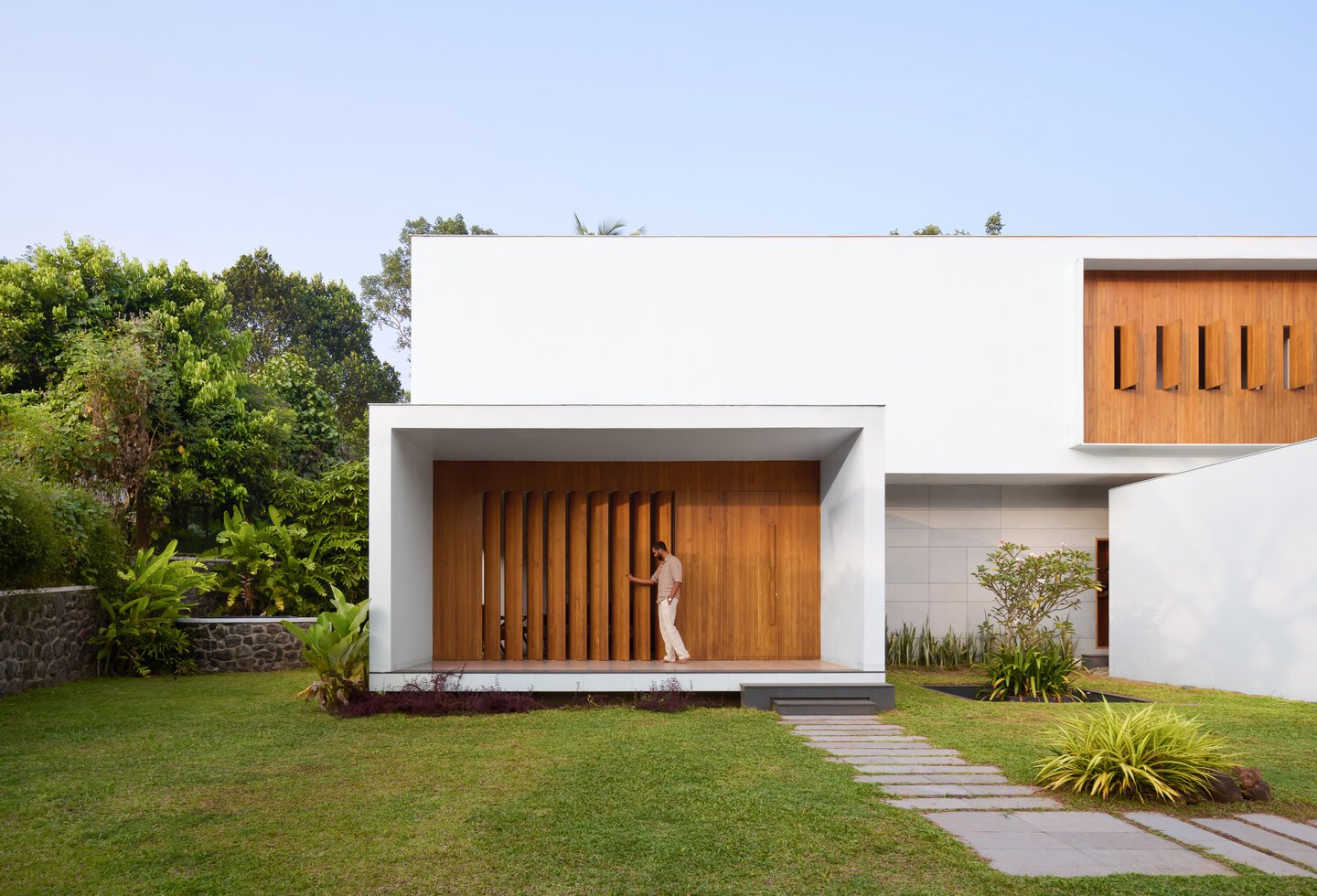
To respond to this, the house was conceptualised as multiple functional volumes converging at a central space. The front façade is treated largely as a solid surface to buffer heat and glare, articulated with wooden screening, hidden doors, concealed openings and vertical louvres. These elements act as a climatic filter, allowing selective openness while blocking intense sunlight. Adjustable louvres and openings enable ventilation, while the stack effect through the double-height space promotes passive cooling.
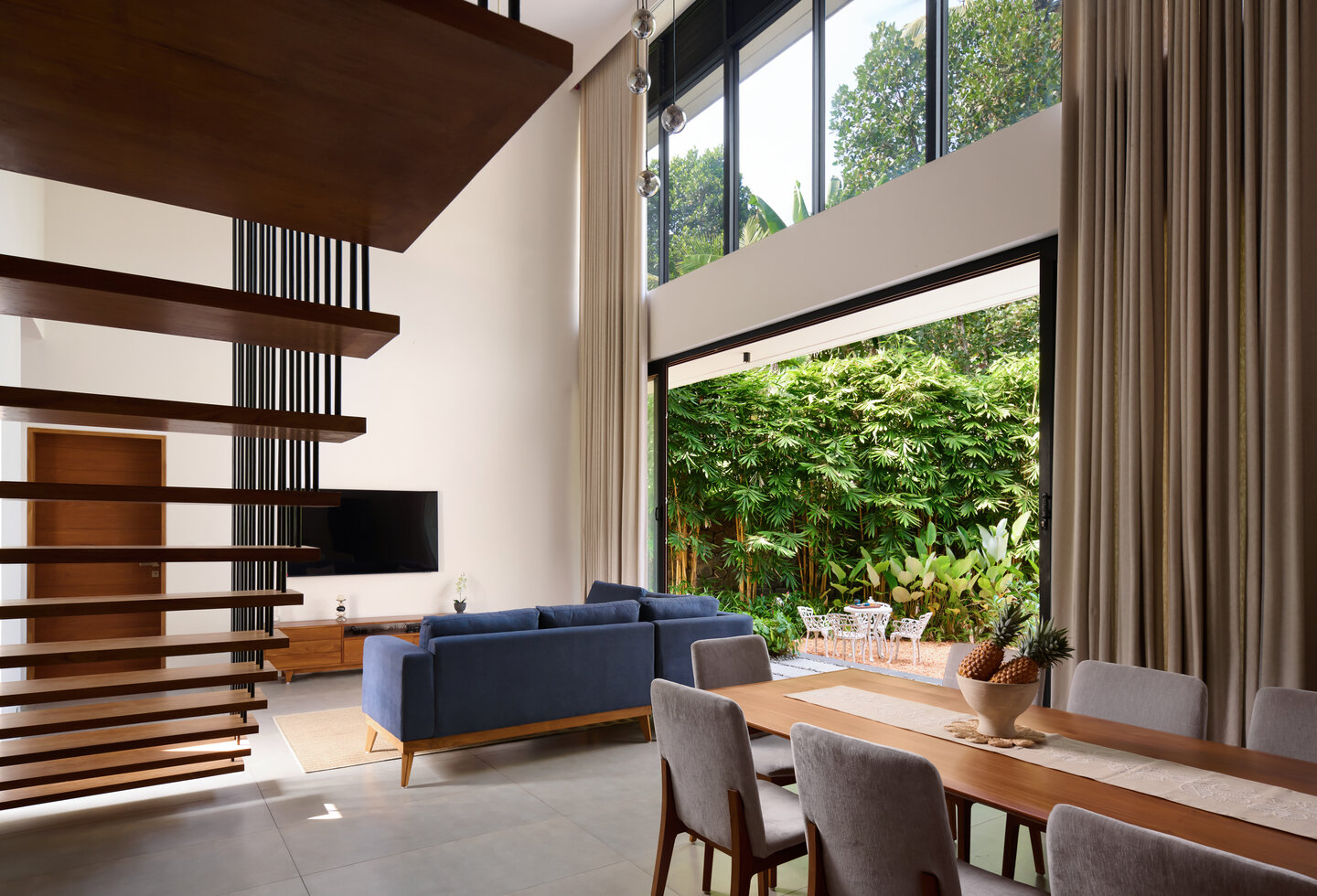
The backyard, oriented to the north-east, receives soft morning light and remains shaded for most of the day. It functions as an extension of the living spaces, with large sliding glass doors creating a seamless indoor–outdoor connection.
This setting allows the house to remain inwardly calm while still being visually and climatically connected to its green surroundings.
What can you tell me about the clients and their brief?
The House of Pause was designed for a family of four settled abroad, envisioned as a residence that offers calmness and relief from sensory overload. The home is envisioned as a place where the family can slow down during their visits, reconnect with each other and experience a sense of pause away from their otherwise fast-paced lives.
In response to this brief, the design centres around a strong spatial idea — a central core where all spaces converge. This core acts as the emotional and functional anchor of the house, ensuring that despite the division into multiple volumes, the home remains connected and cohesive.
What are the key material and structural choices?
We have never believed in ornamentation and superficial beautification. For us, “a box should look like a box itself for it to convey its purity and feeling.”
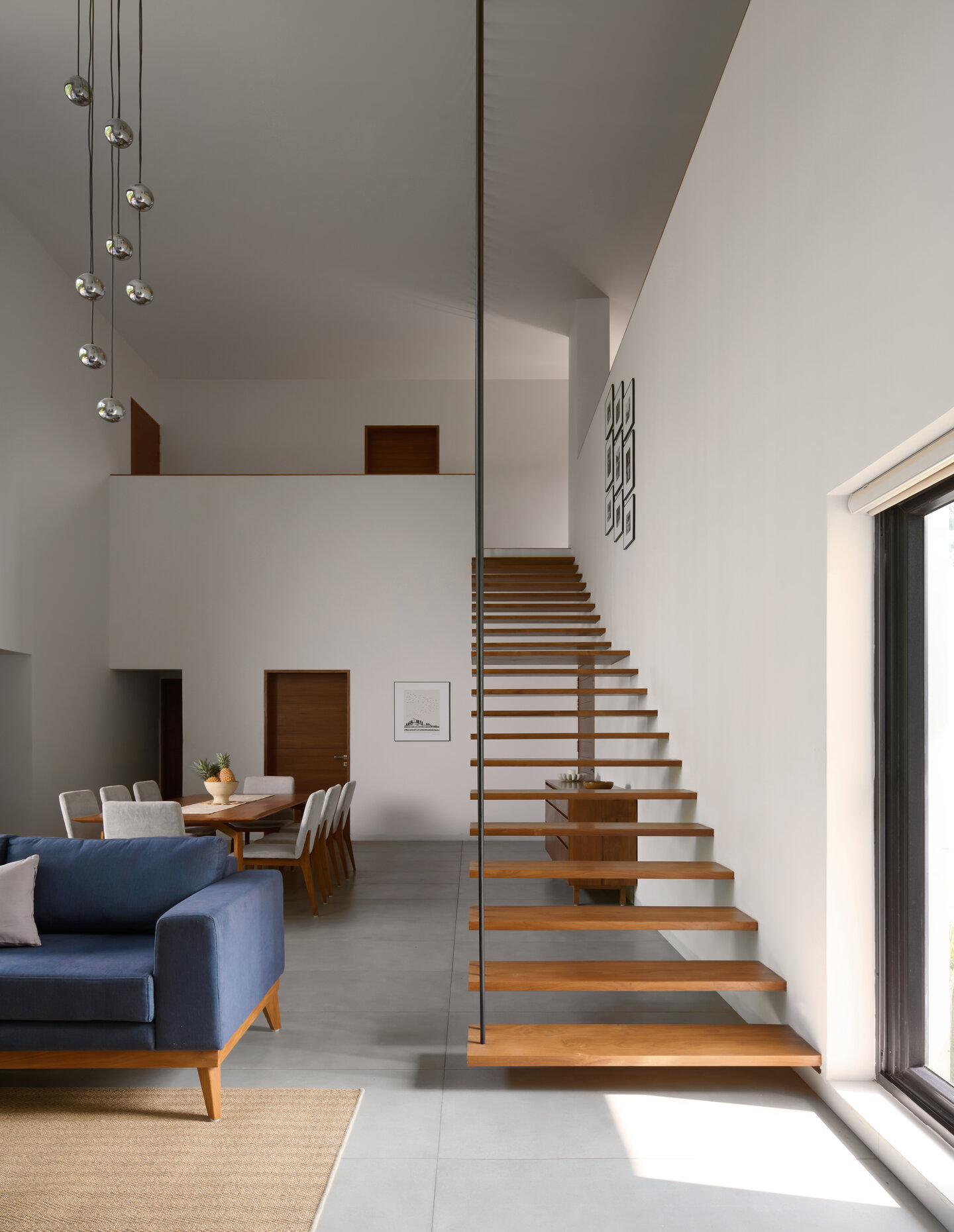
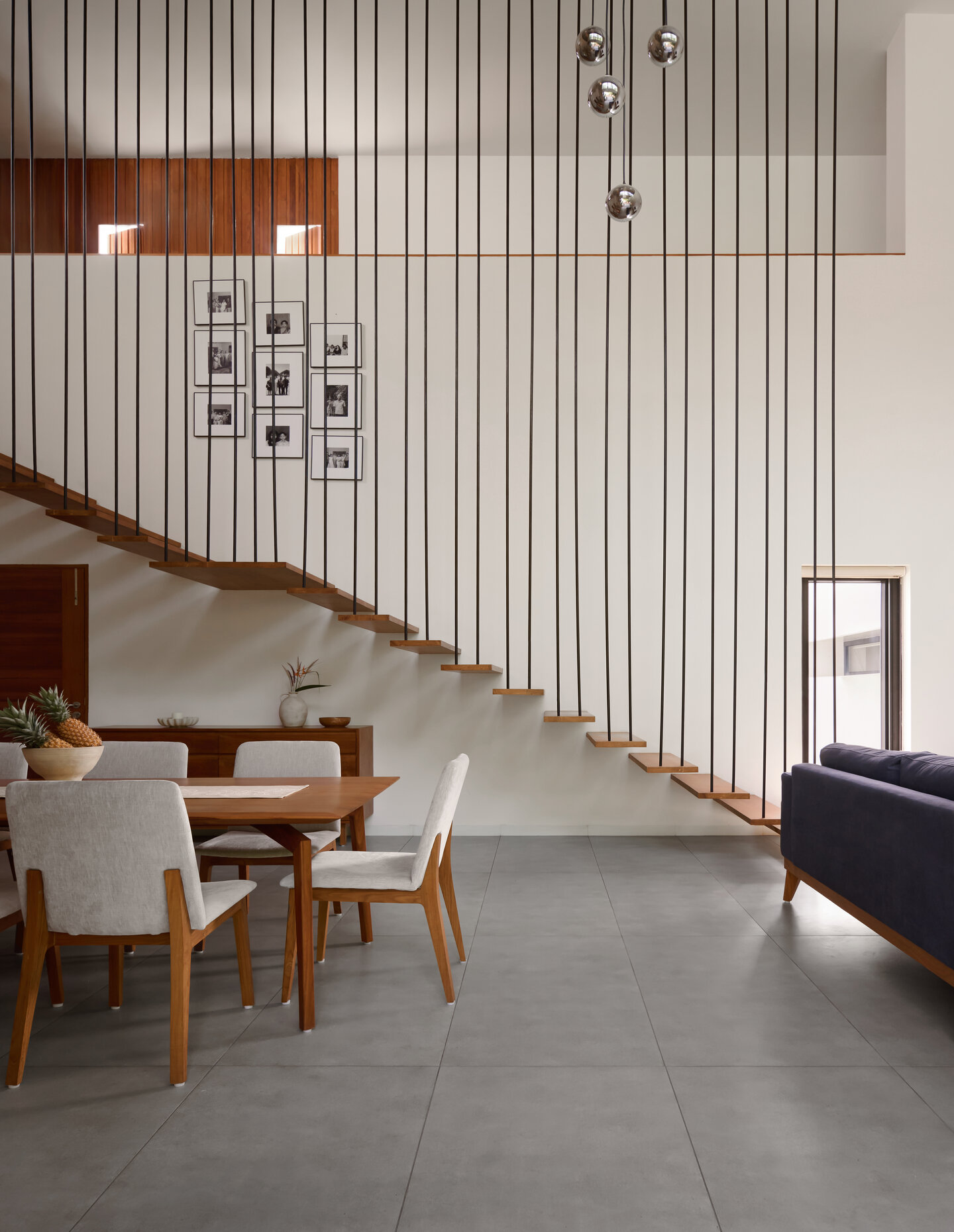
The house is composed of five cuboidal volumes arranged around a central double-height space, which forms the heart of the home. This approach avoids unnecessary ornamentation, allowing the form and proportions to express clarity and purity. A cantilevered volume on the first floor and a floating wooden staircase reinforce this spatial composition.
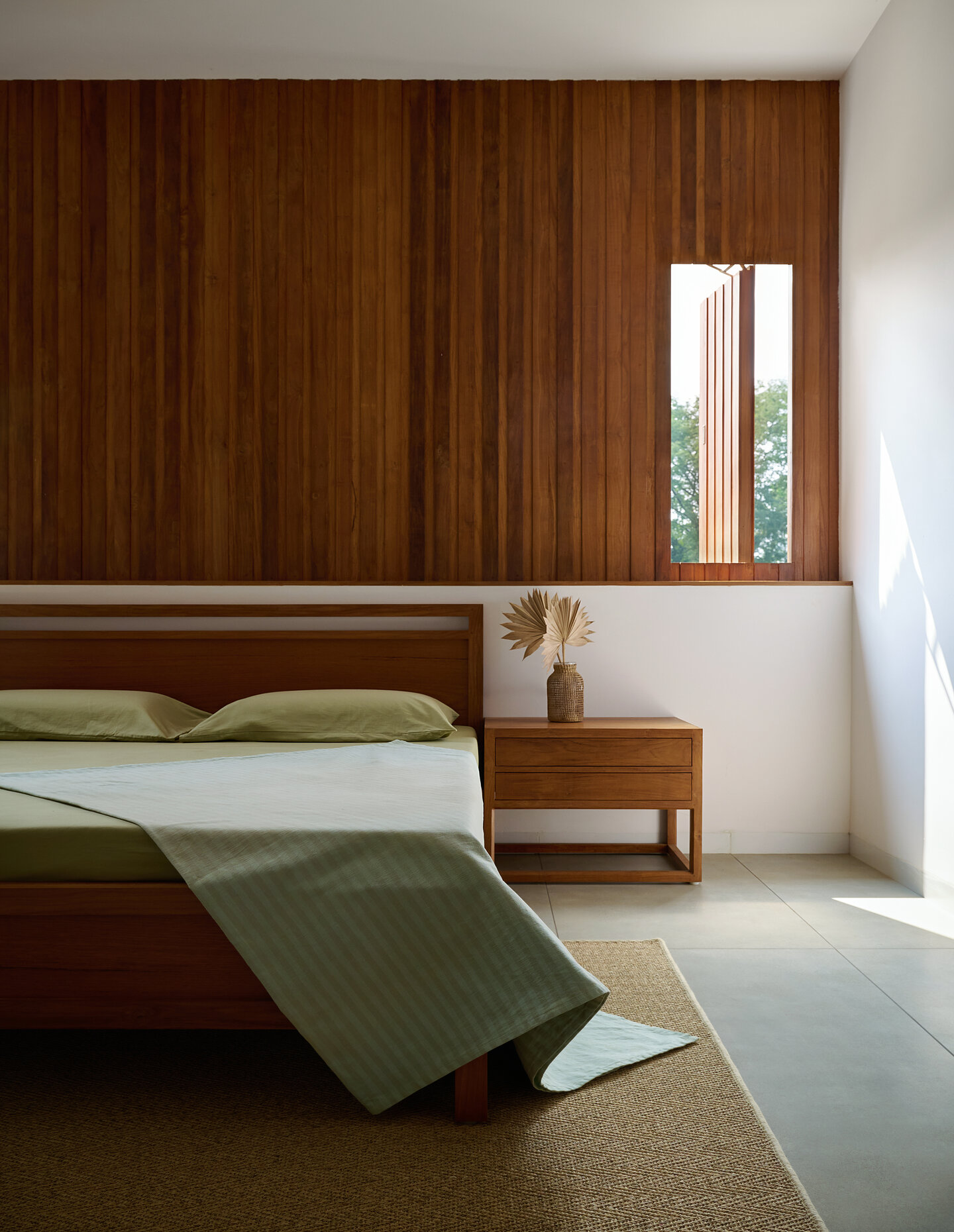
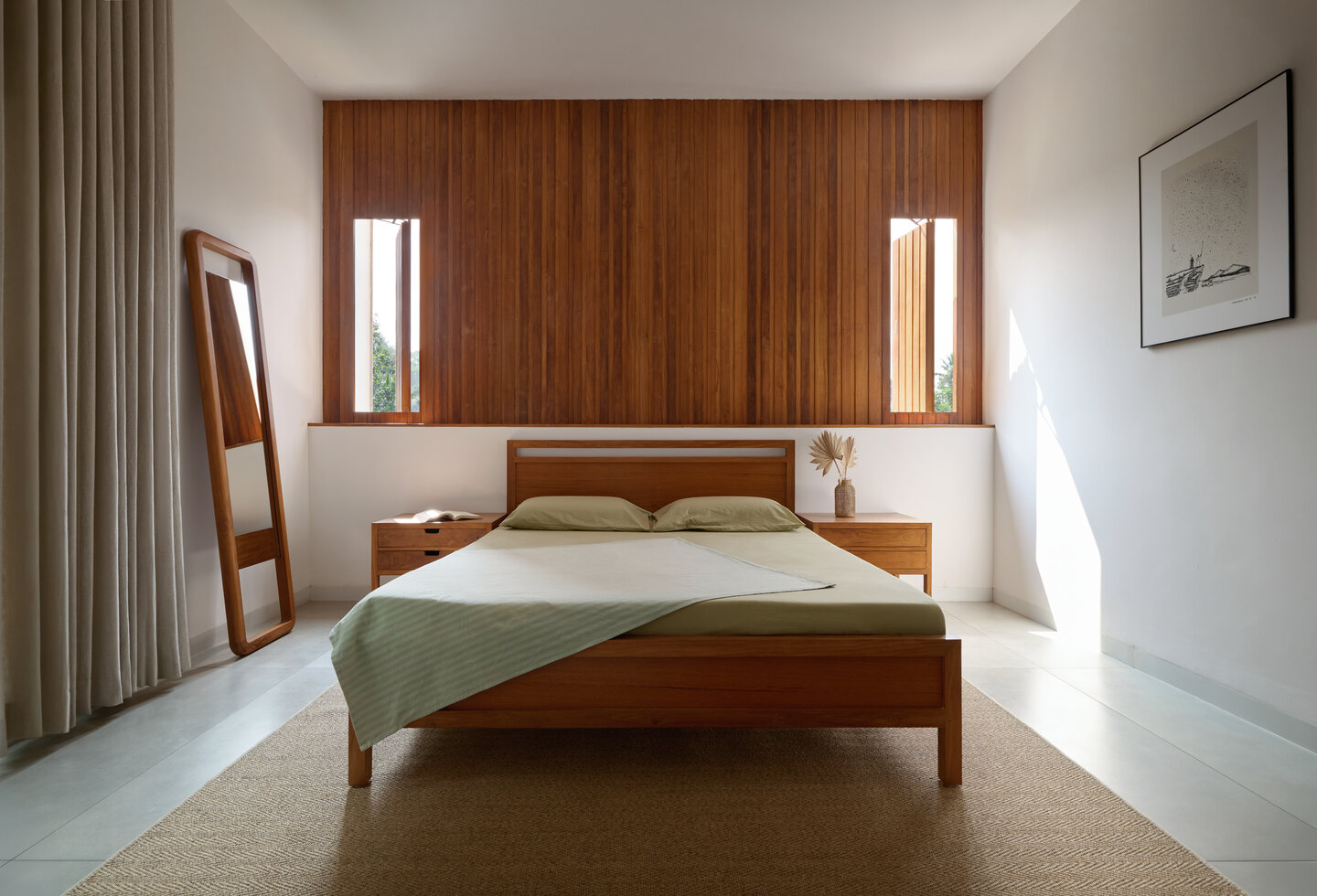
Materially, the façade is articulated with wooden screening, concealed openings and vertical louvres, creating a layered envelope that responds to climate. On the first floor, a teak wood screening system replaces a conventional solid wall, acting as a breathable thermal buffer while integrating controlled openings.
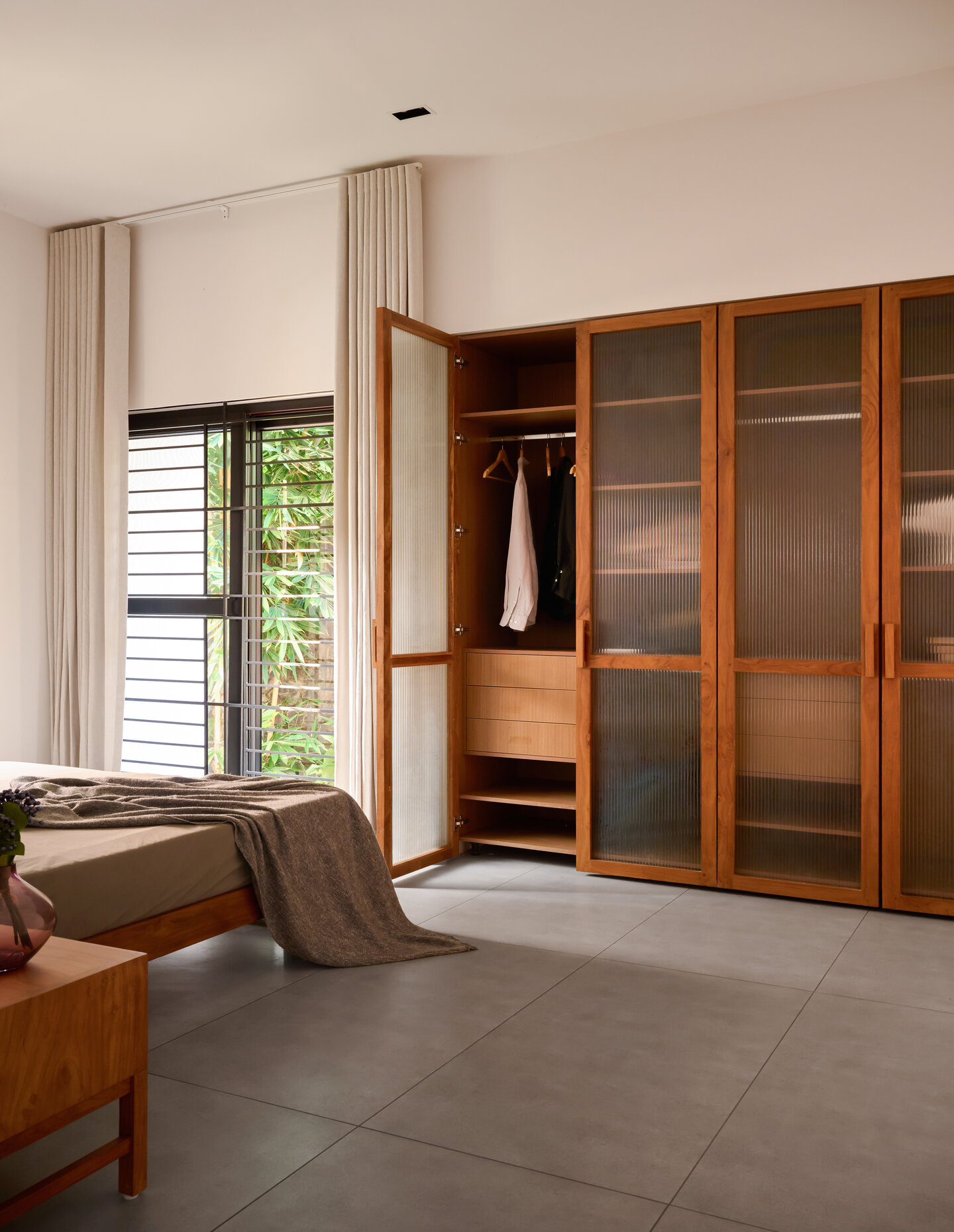
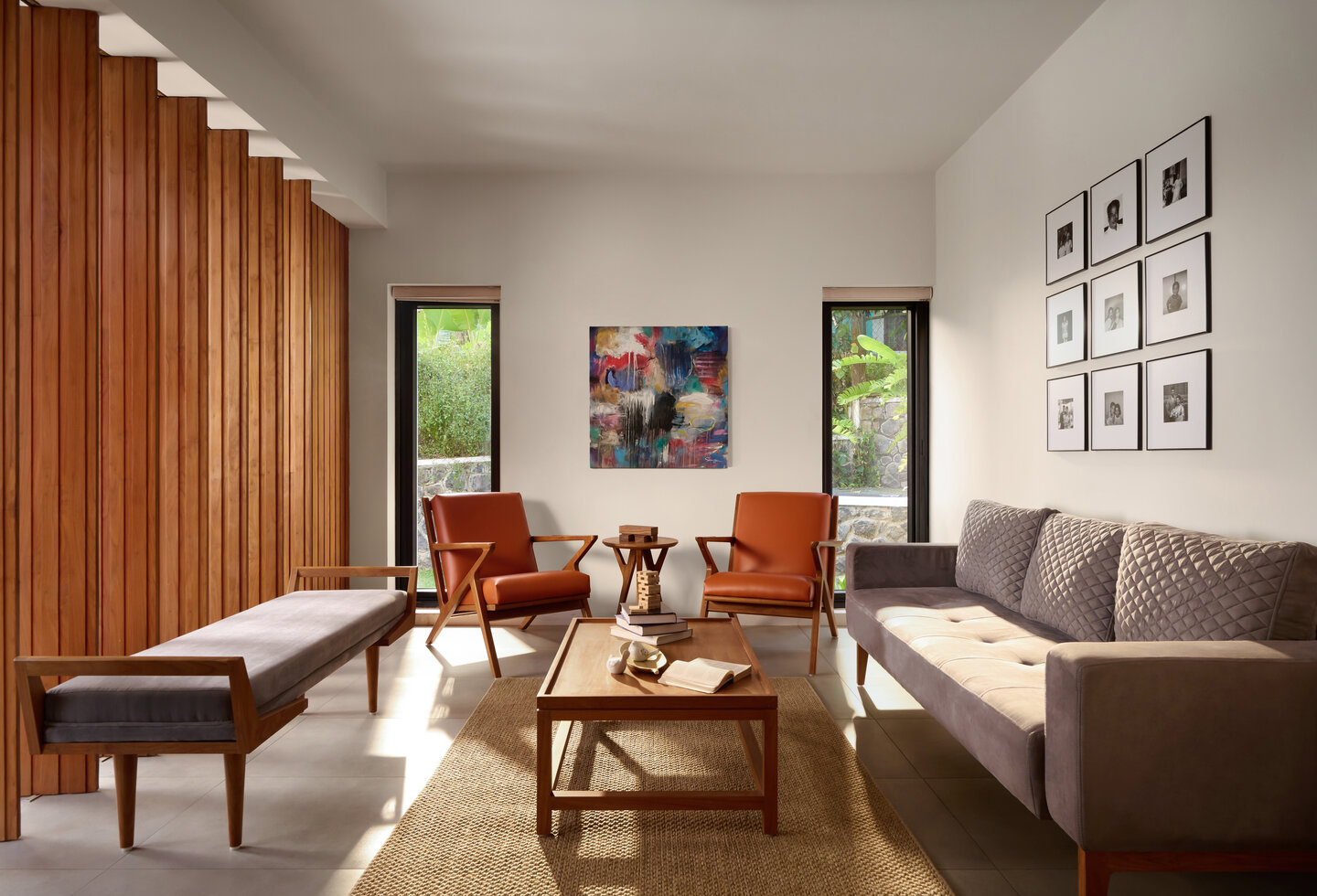
The ground plane is finished with pebbles, creating a tactile outdoor surface that softens the built form. Internally, a restrained palette of white, grey and natural wood reduces sensory stimulation and enhances visual calm, aligning with the overall intent of the project.
This restraint allows the occupants to engage with the space without distraction, making the architecture a quiet backdrop to everyday life.
Related: A new tide at Coogee
What key functional requirements does the design address?
The design organises the house into multiple volumes around a central core to address both climatic and spatial requirements arising from the site conditions.
Zoning is clearly articulated: a projected volume defines the formal living and sit-out as a public interface, while a separate volume accommodates the car porch with direct access to the family living area.
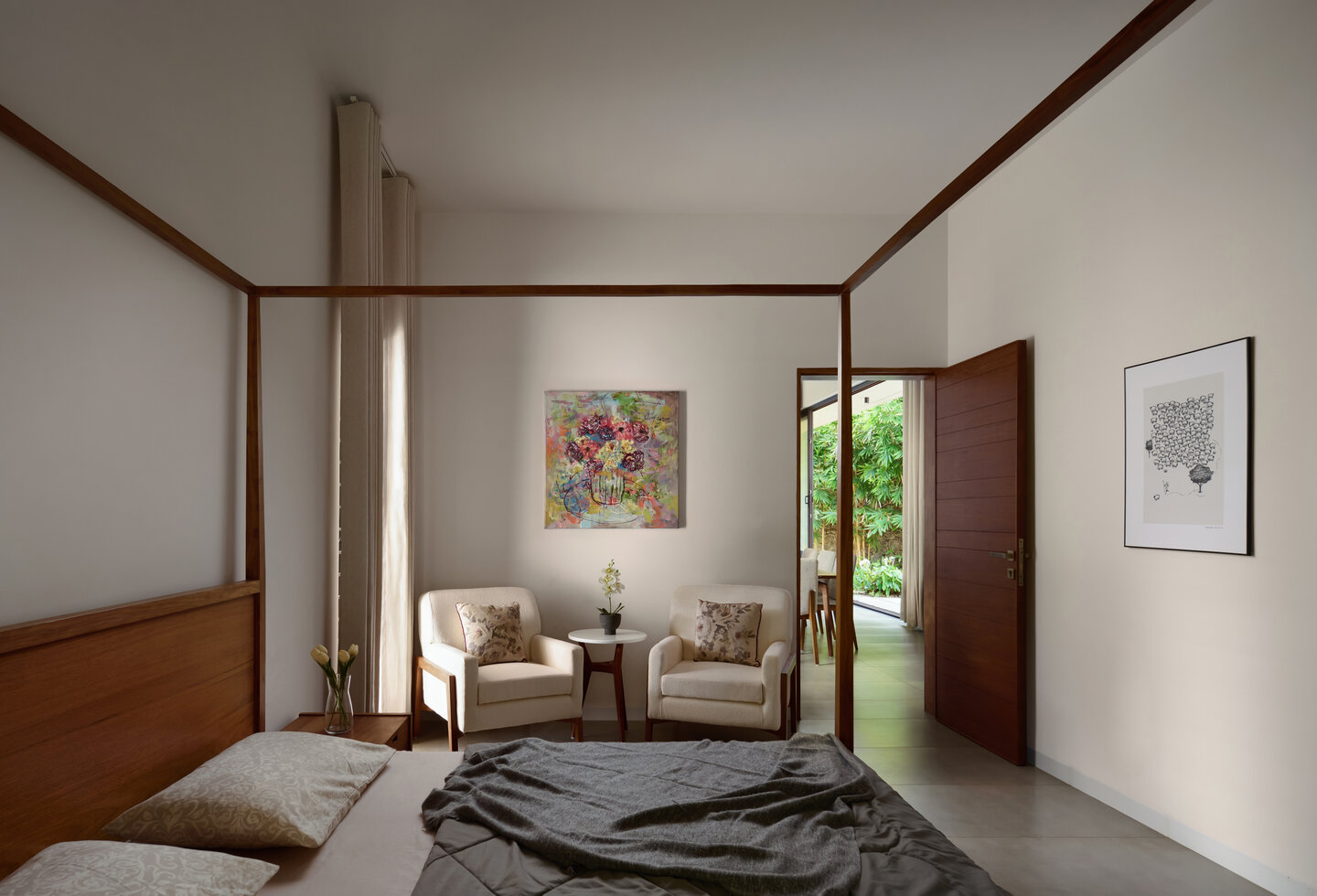
The house includes four bedrooms, positioned based on privacy and solar exposure. On the ground floor, the master bedroom is shielded from heat by the projecting front volume, while the guest bedroom remains connected to the central living spaces. On the upper floor, teak wood screening filters sunlight and allows ventilation, and additional buffer spaces such as dressing areas and bathrooms reduce heat gain before it reaches the bedrooms.
Environmental performance is further addressed through adjustable louvres, cross ventilation and stack effect cooling. The seamless connection to the backyard through sliding glass doors extends the usability of the living spaces while enhancing comfort.
These strategies ensure that the house remains comfortable and usable throughout the day, supporting everyday routines without reliance on mechanical systems.
What are your favourite parts or moments in the design?
The central double-height living space is the most defining moment of the house, where the five volumes come together to create a calm and cohesive core. The floating wooden staircase rising through this space reinforces a sense of continuity while maintaining visual lightness.
Upstairs, the cantilevered volume with two bedrooms connected by a skylit passage offers a quieter, more intimate experience, allowing one to feel connected to the home while still maintaining privacy.
The backyard forms another key moment — subtle, shaded and open — where everyday activities extend outdoors. The transition between inside and outside is seamless, allowing the house to be experienced as a continuous, breathable environment.
Across these moments, what stands out is not the building itself, but a series of quiet spatial experiences that support pause, movement and stillness within daily life.