
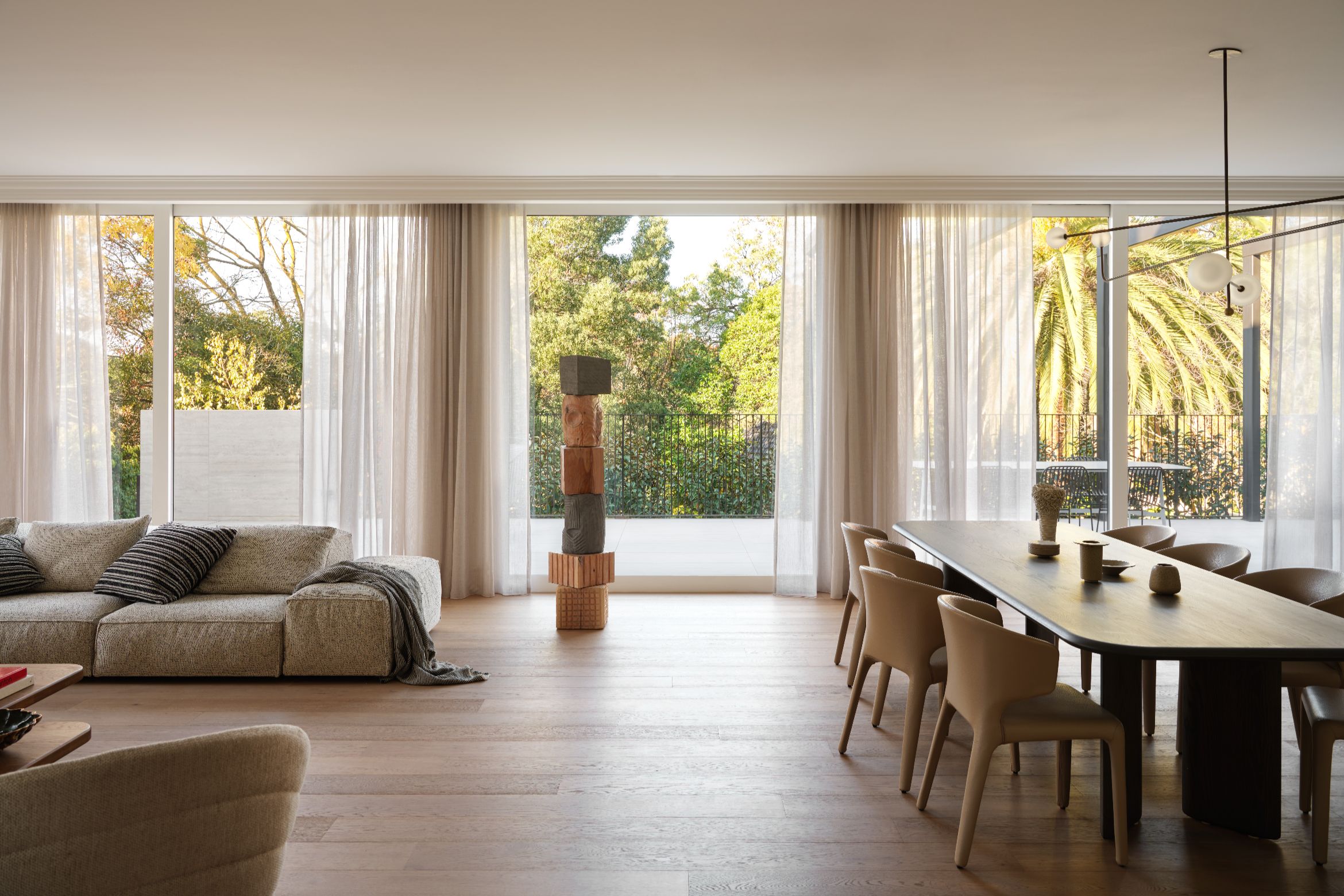
Set on a sloping site in Toorak, Kooyong Residence is a careful reworking of a 1940s Georgian revival home, designed by Travis Walton. Rather than seeking contrast for its own sake, the project is grounded in continuity — between old and new, interior and garden, domesticity and landscape.
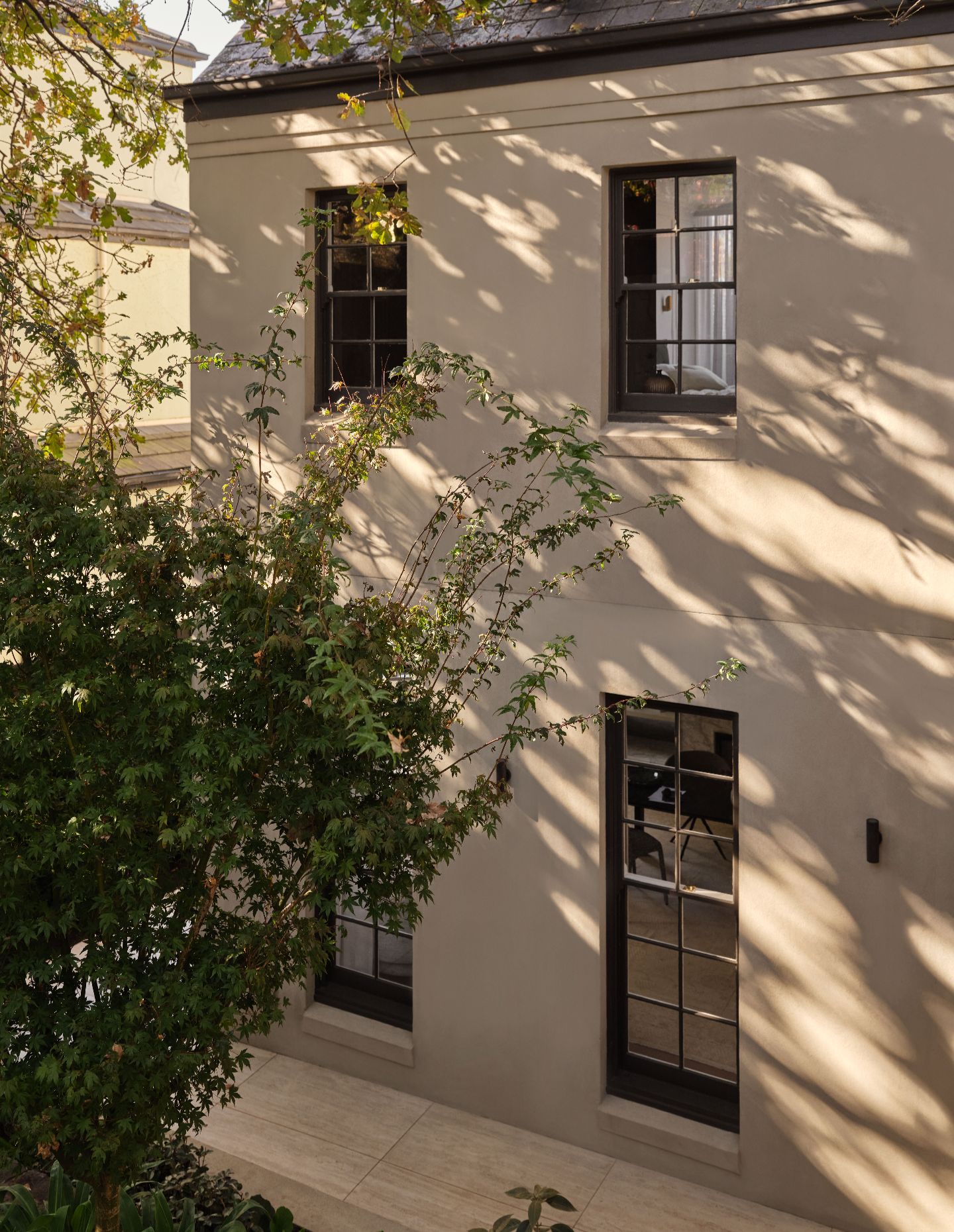
The original house, a solid brick structure with a slate roof, already possessed a strong formal presence. From the street, that character has been retained and restored, preserving the symmetry and restraint of the Georgian façade. The more substantial transformation occurs internally and at the rear, where the architecture opens itself to the site’s natural fall and established greenery.
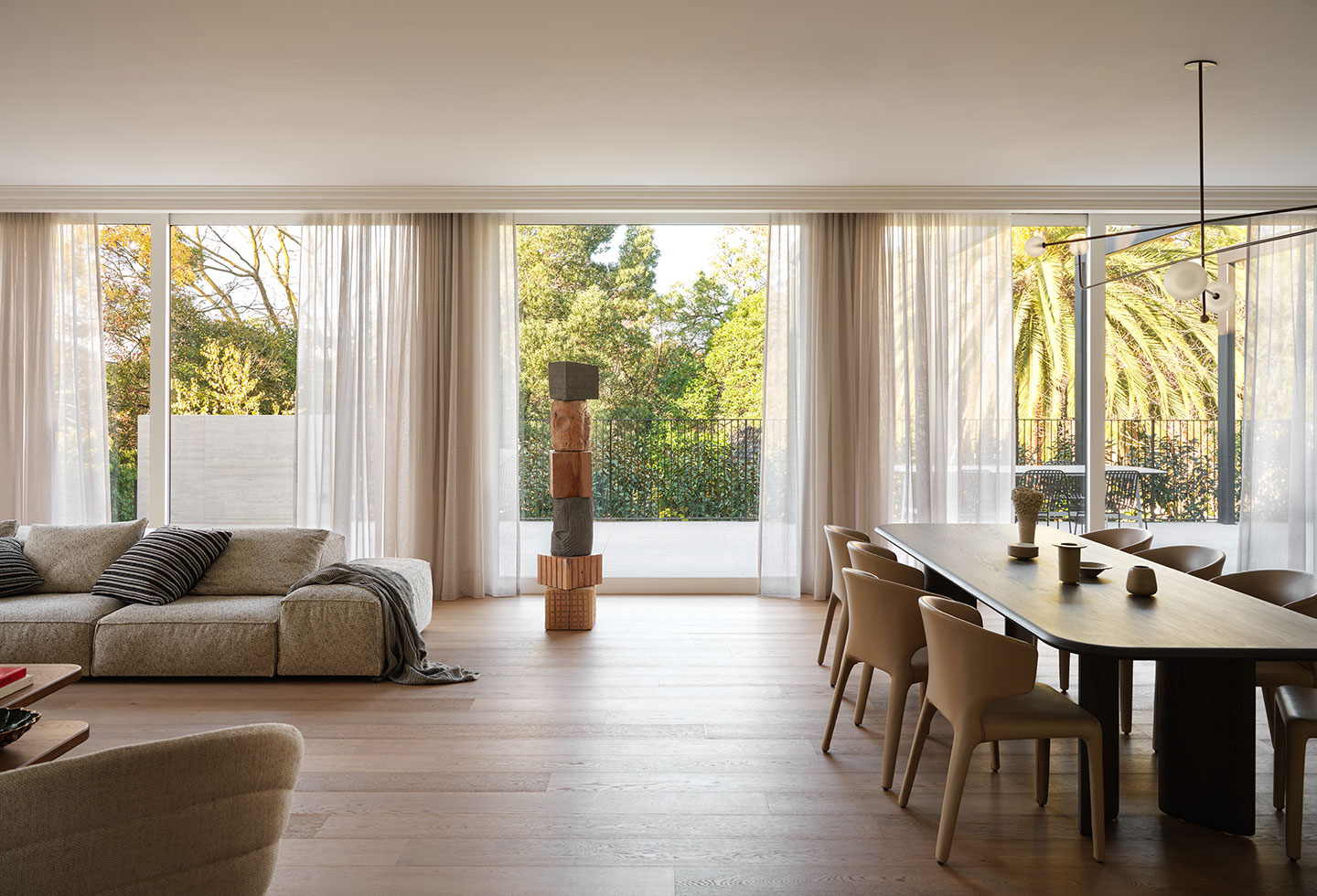
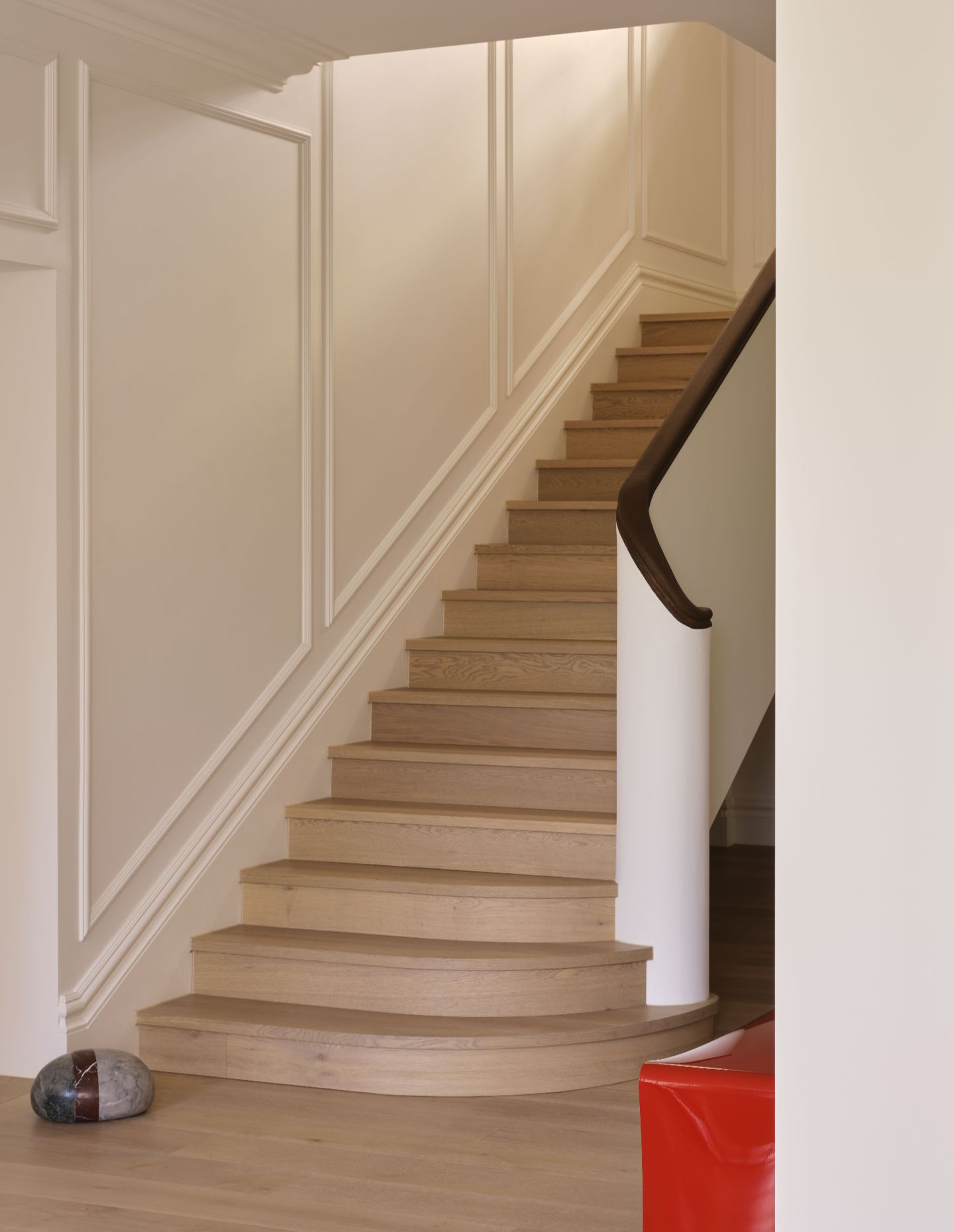
The plan is organised across levels that step gently down the hill. Bedrooms, including a generous main suite, occupy the upper level closer to the street. A new lift and sculpted stair provide vertical continuity, guiding movement toward the lower level where the home’s primary living spaces unfold. What was once a series of fragmented, uneven rooms has been reconfigured into a light-filled great room, oriented directly to the garden.
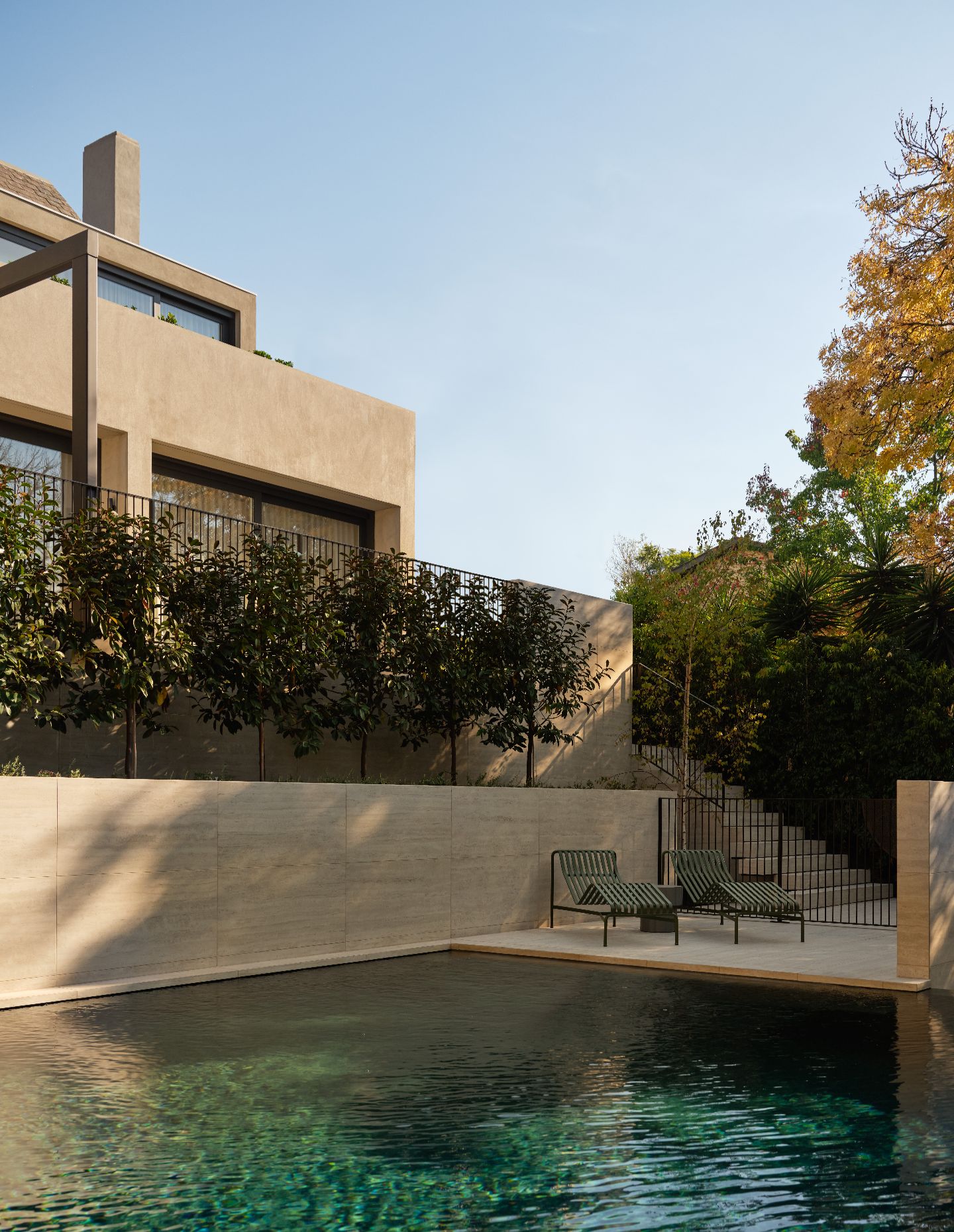
A contemporary wing extends these living areas, embracing the slope rather than resisting it. Broad openings frame the landscape, establishing visual and physical connection while maintaining a sense of enclosure and comfort. The house no longer turns inward; instead, it engages the site as an extension of daily life.
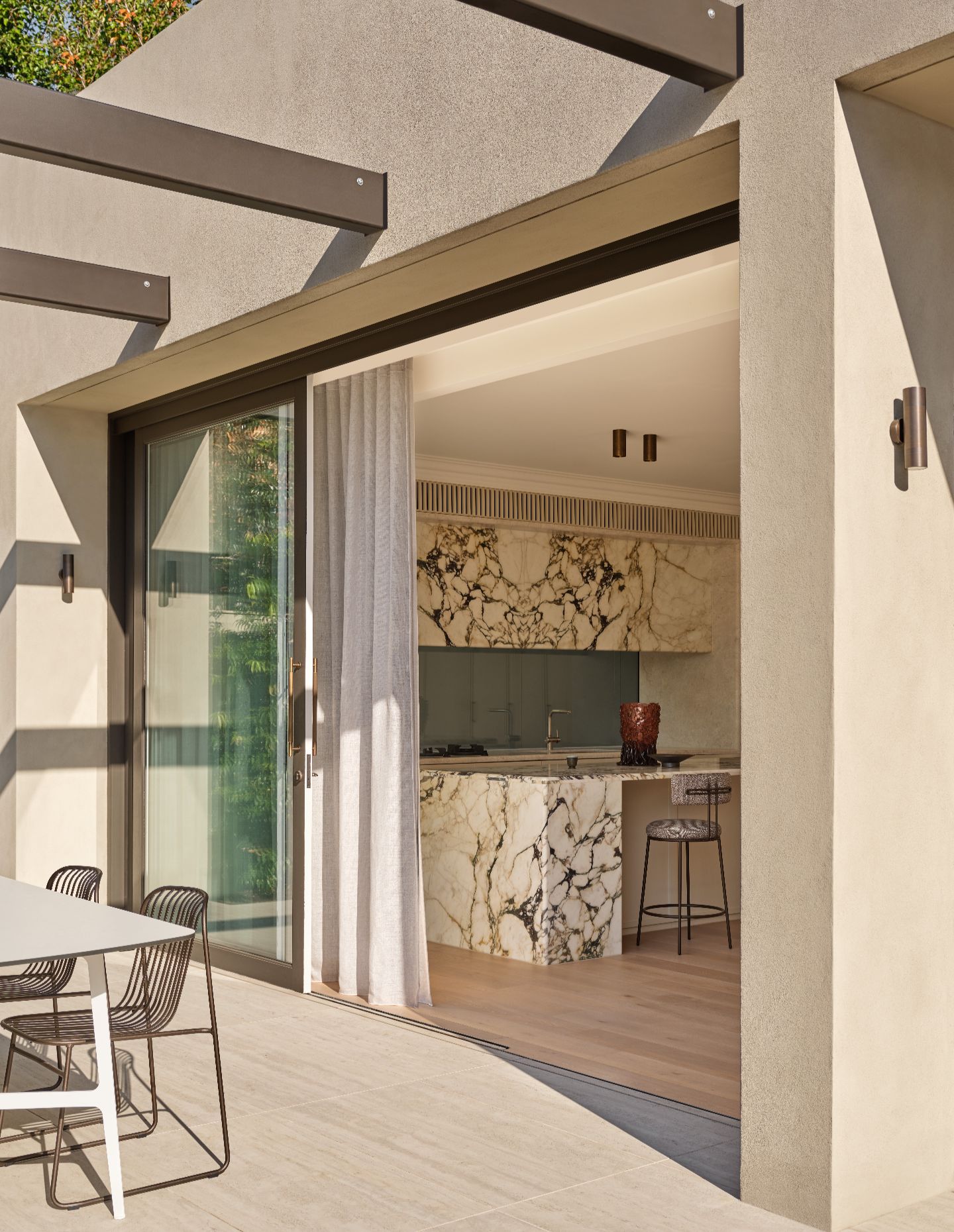
Landscape plays a central role in this transformation. Extensive site works link the previously stand-alone house to its rear grounds, dissolving boundaries between architecture and garden. A full-width terrace, finished in travertine, steps down to an infinity-edge pool, its waterline visually merging with the surrounding terrain. Beyond, a secondary stair leads to a lawn and layered planting scheme designed by Nathan Burkett Landscape Architecture, which weaves new interventions around mature trees and existing vegetation.
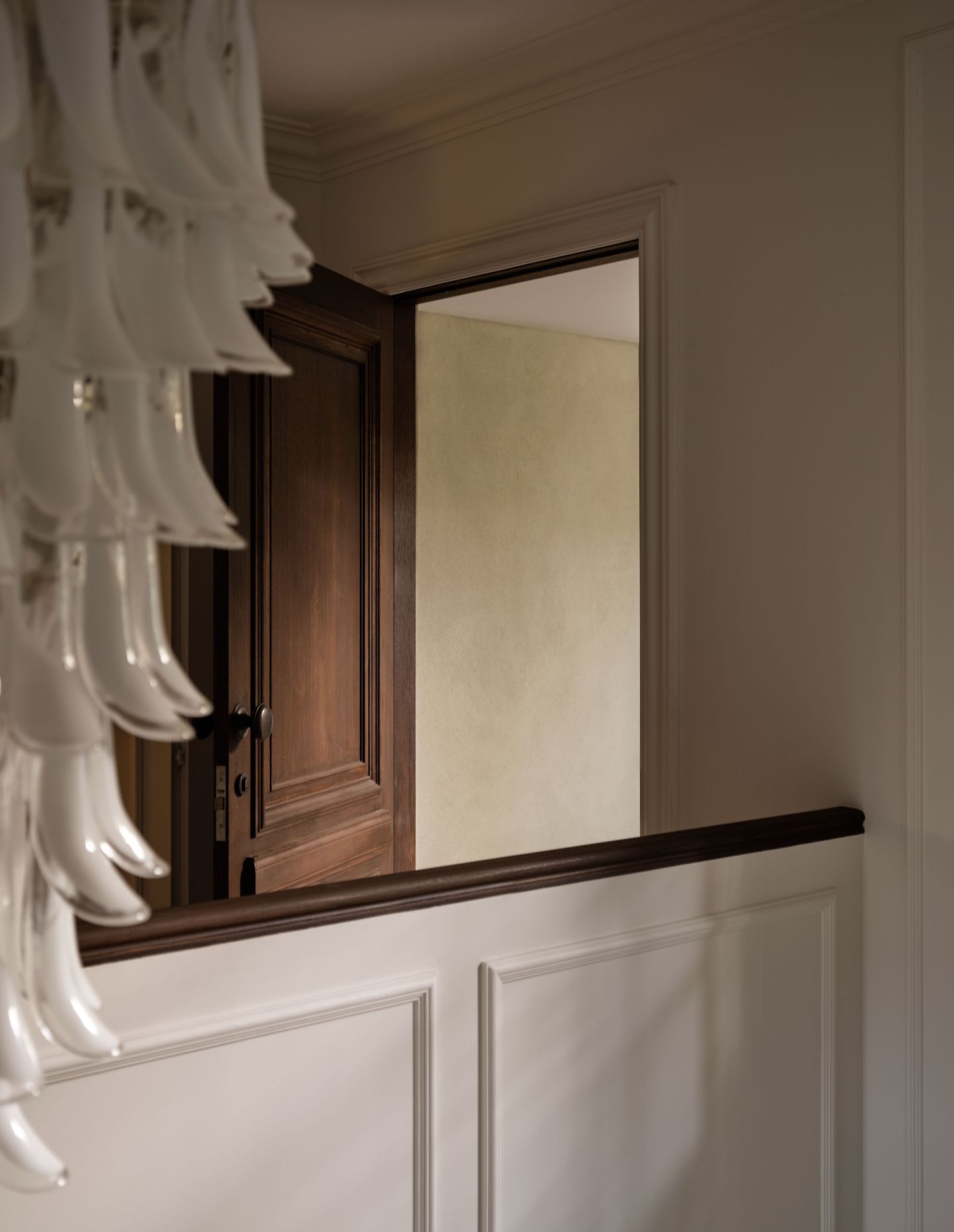
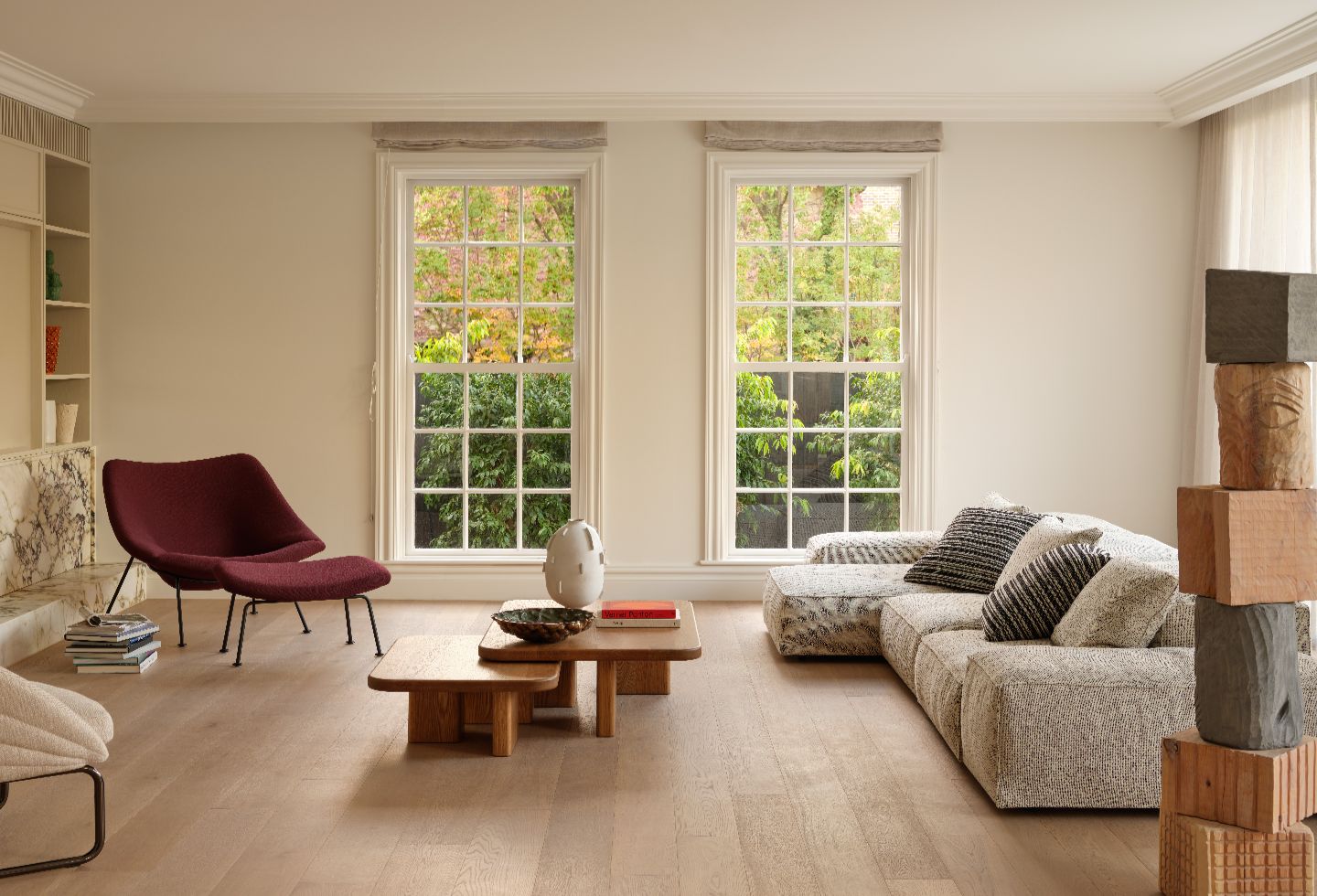
Inside, the interiors balance respect for period detail with a restrained contemporary sensibility. Original elements — wainscot panelling, ornate plasterwork and traditional stair detailing — are retained. These are paired with quieter, modern insertions that allow the historic fabric to remain legible without feeling nostalgic.
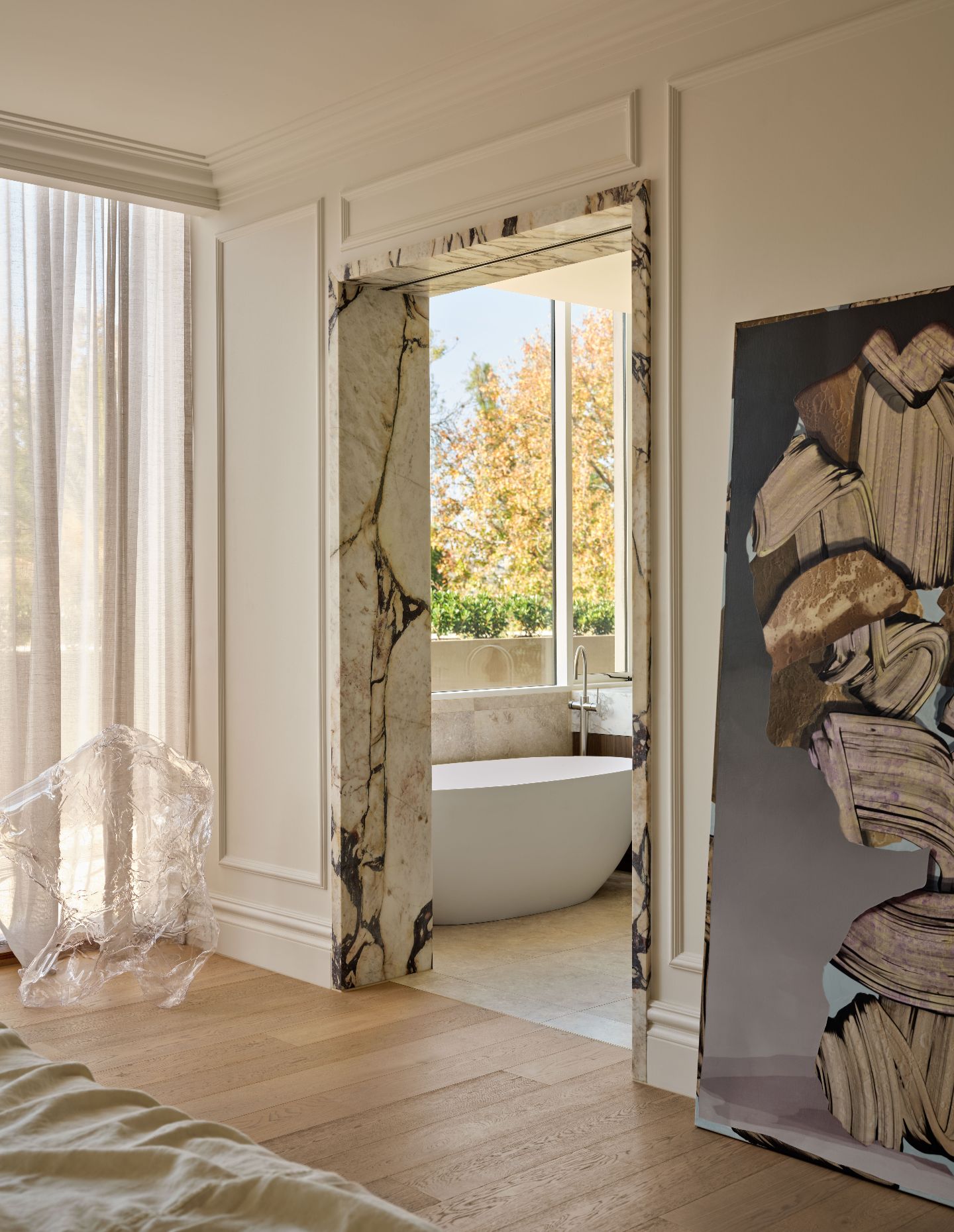
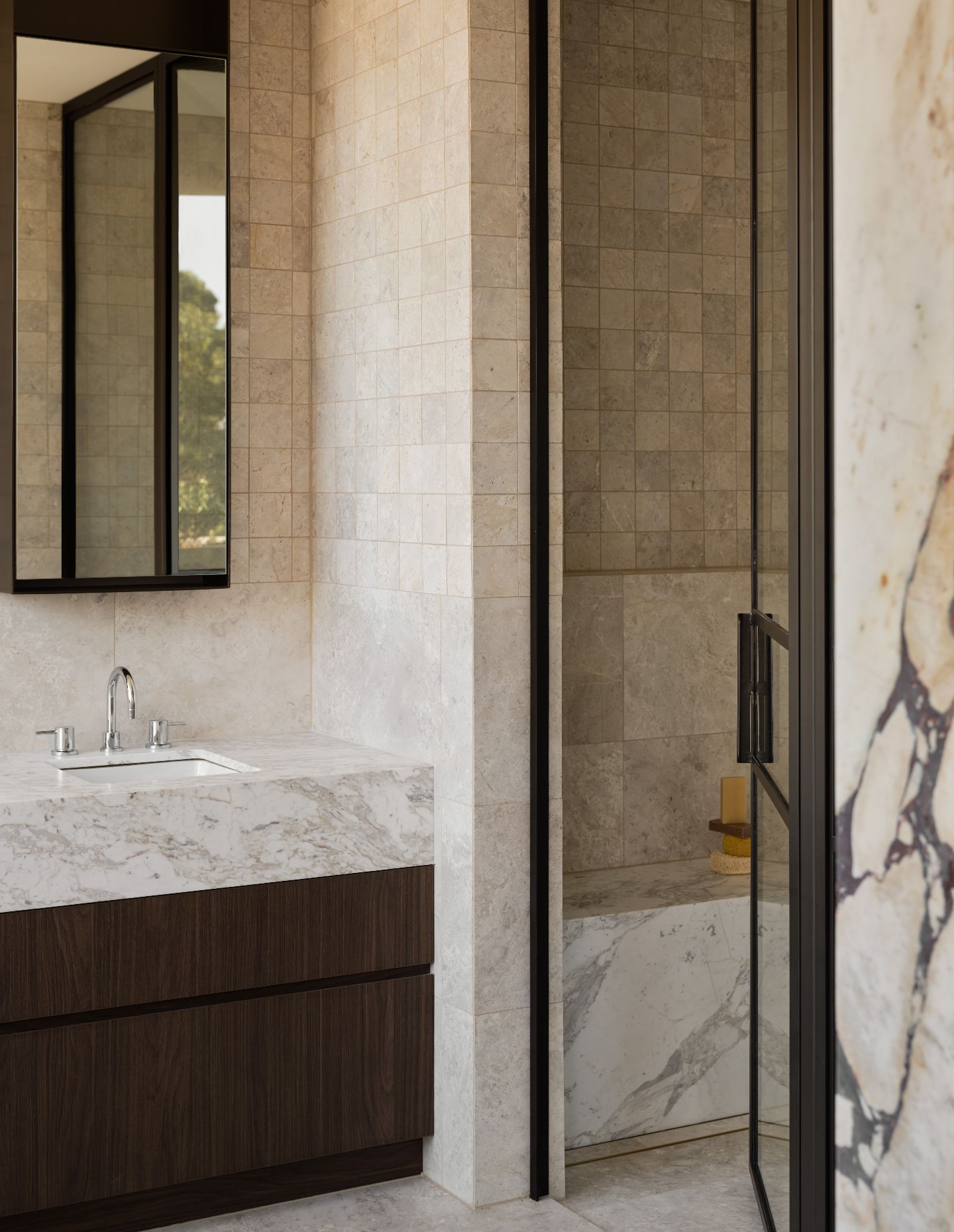
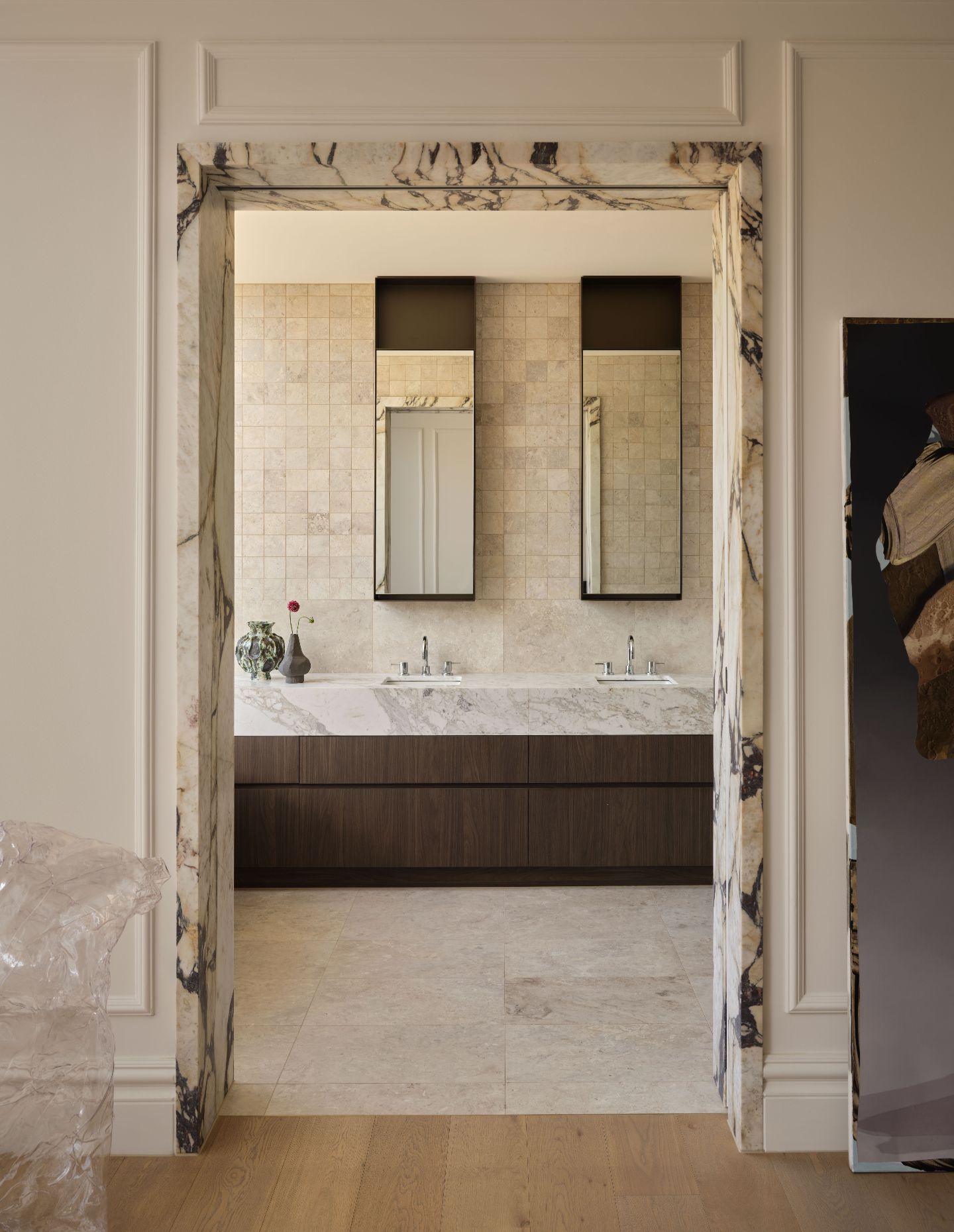
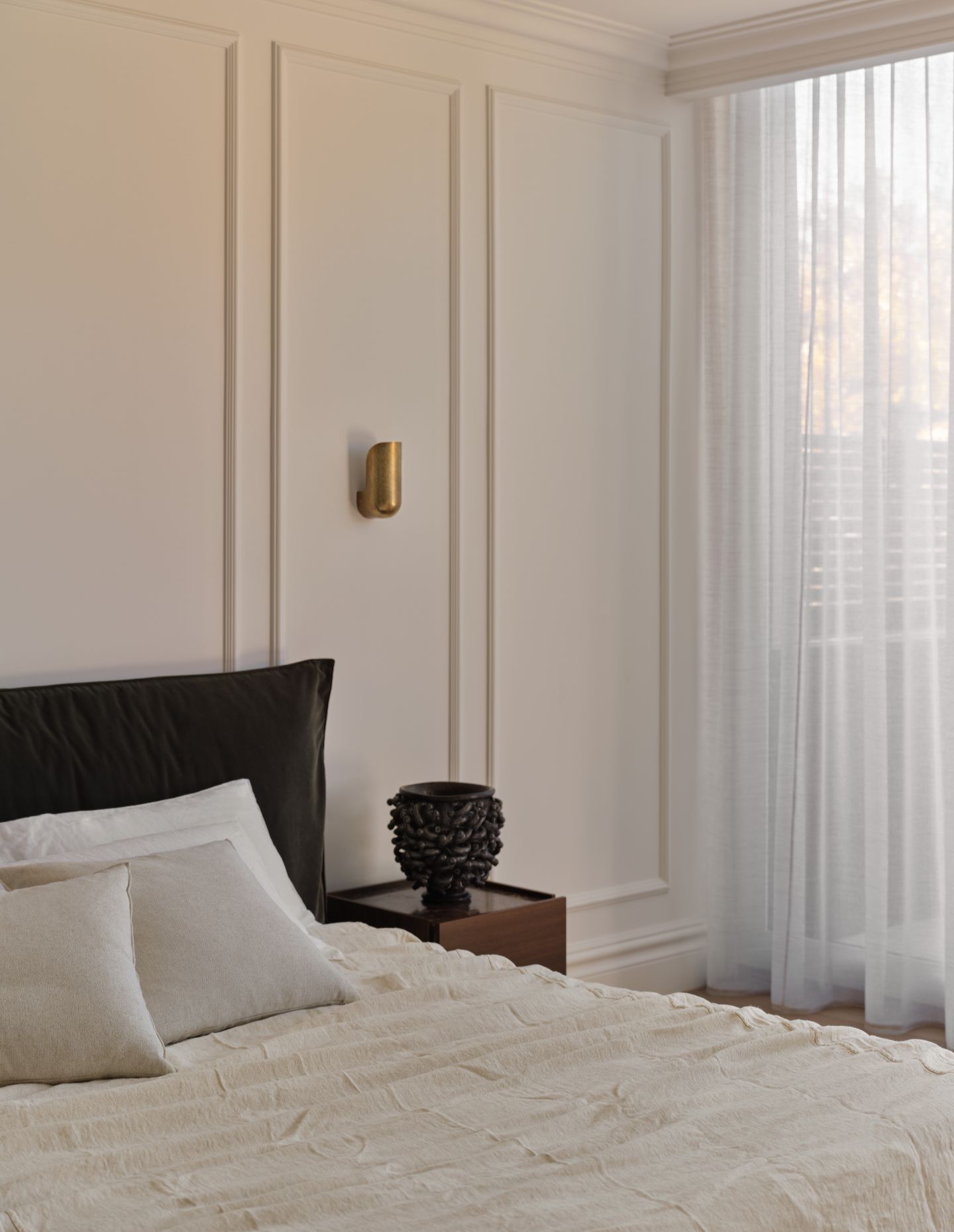
In the main bedroom suite, plaster-panelled walls form a calm backdrop for moments of detail: nested brass wall sconces by Henry Wilson, and a Calacatta Viola marble portal that frames the transition into the ensuite. There, Grigio Orsola limestone, bronze-trimmed mirrors and a freestanding bath create a sense of continuity through material rather than ornament.
Related: A growing family home
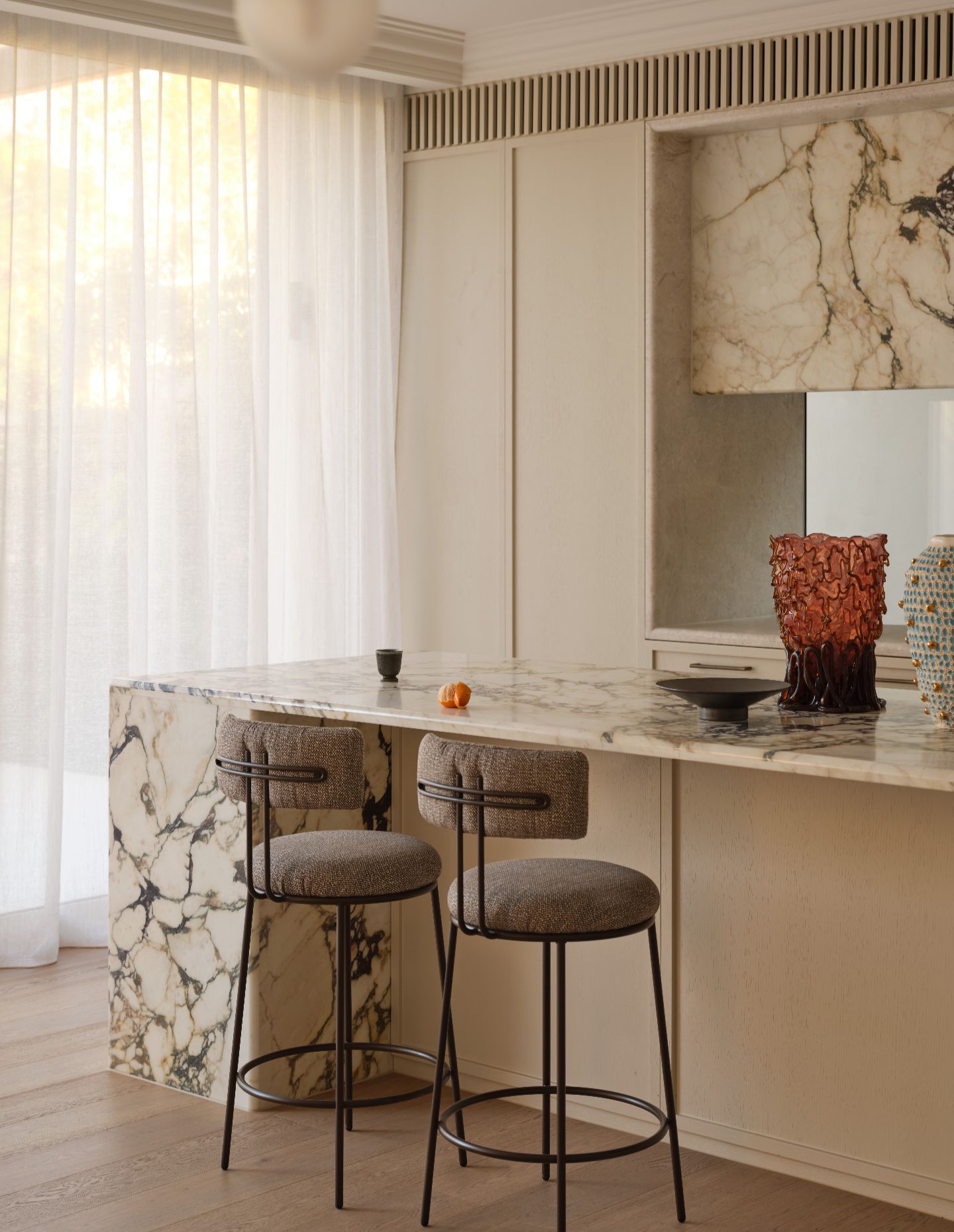
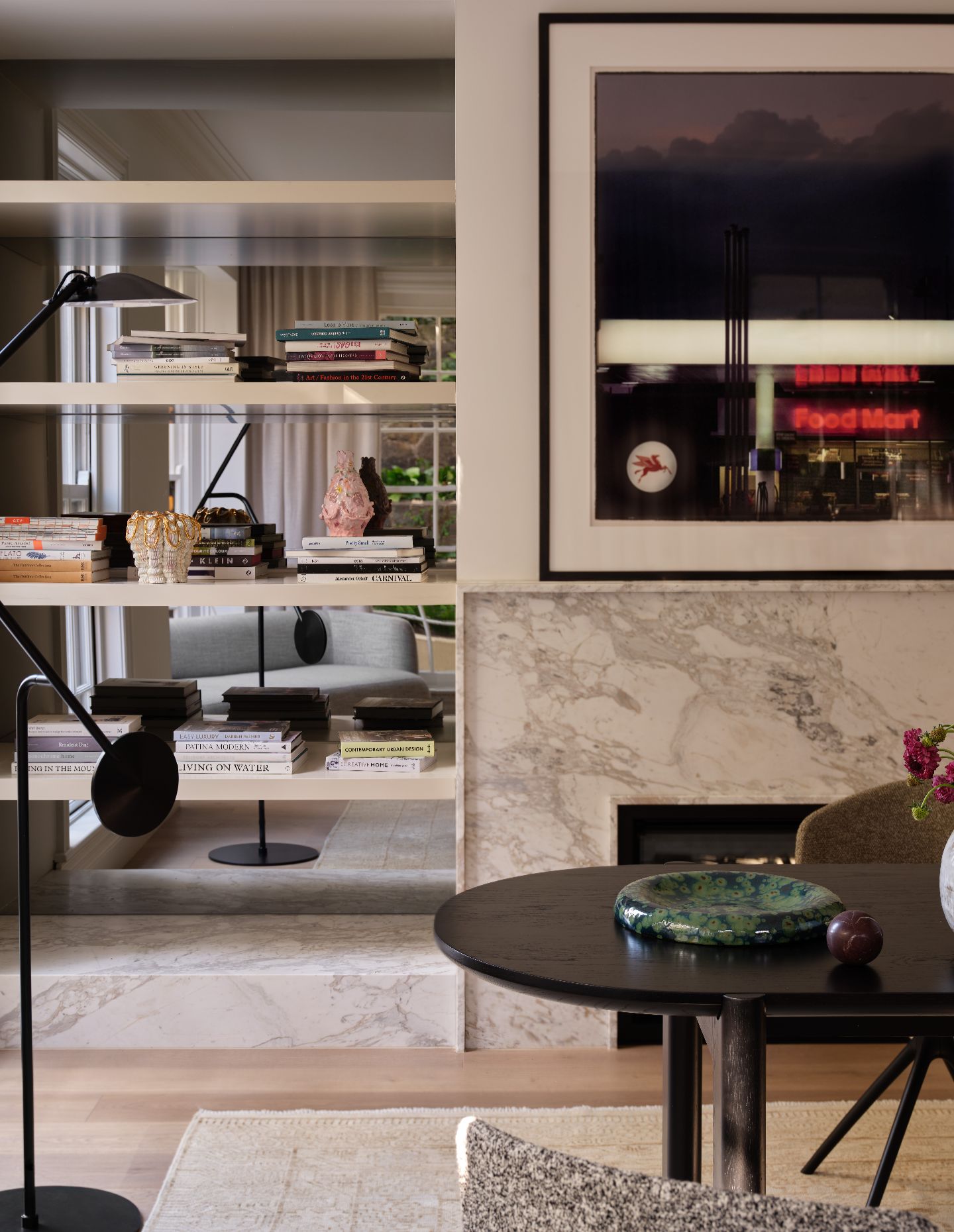
The kitchen continues this dialogue between eras. Figured marble, panelled cabinetry and burnished brass hardware sit comfortably within the broader architectural language, mediating between the home’s traditional origins and its contemporary life. Similar restraint is evident in the living areas and study, where stone-lined fireplaces echo this material conversation.
Throughout the house, finishes have been simplified and unified. Jarrah parquetry has been replaced with wide European oak boards, bringing warmth and tactility while allowing spaces to breathe. A mix of vintage and contemporary lighting, including a sculptural stairwell pendant by Giffin Design, adds moments of character without overwhelming the architecture.
Kooyong Residence is not defined by a single gesture, but by accumulation — of careful decisions, measured transitions and a consistent sensitivity to place. By working with the site’s slope and opening the rear of the house to the garden, the project introduces continuity where there was once fragmentation. The result is a home that feels settled, layered and attuned to both its heritage and its landscape.
As architect Travis Walton notes, the intention was always to respect the home’s Georgian roots while allowing it to function more fluidly for contemporary life. That ambition is realised not through overt statements, but through an architecture that feels quietly resolved — one that allows daily routines, light and landscape to take the lead.