
This article originally appeared in the magazine – find out more and subscribe here!
3D printing isn’t new. In fact, by millennial standards it is ancient, with a patent first appearing in 1981 when Hideo Kodama presented his layer-by-layer process using photosensitive resin. The process was mind-bogglingly futuristic but limited in application and certainly not suited to construction. In 1983, Chuck (Charles) Hull progressed Kodama’s idea forward to stereolithography (SLA), and is what we now refer to as 3D printing. SLA effectively answered needs such as speed, scalability, accuracy and, most importantly, material options. Advancements continued with optimised mortar mixes, parametric computer modelling, and robotic printing all coalescing as architectural tools of the future.
So then, what does a house of the future look like? Is it a Matti Suuronen Futuro house or, as Liu Cixin would have it, a branching tree? Probably not. Instead, Park + Associates (P+A) have designed a house that is wholly within the remit of P+A’s aesthetic of site-specific architecture. Rather than approach the project as a speculative experiment, the home is a living, breathing proof of concept for how 3D printing might reshape our cities. It is, moreover, a home, and the home of Park at that. So, while it demonstrates 3D printing as a practical, viable and transformative technology for the built environment sector, it also addresses the needs for living.
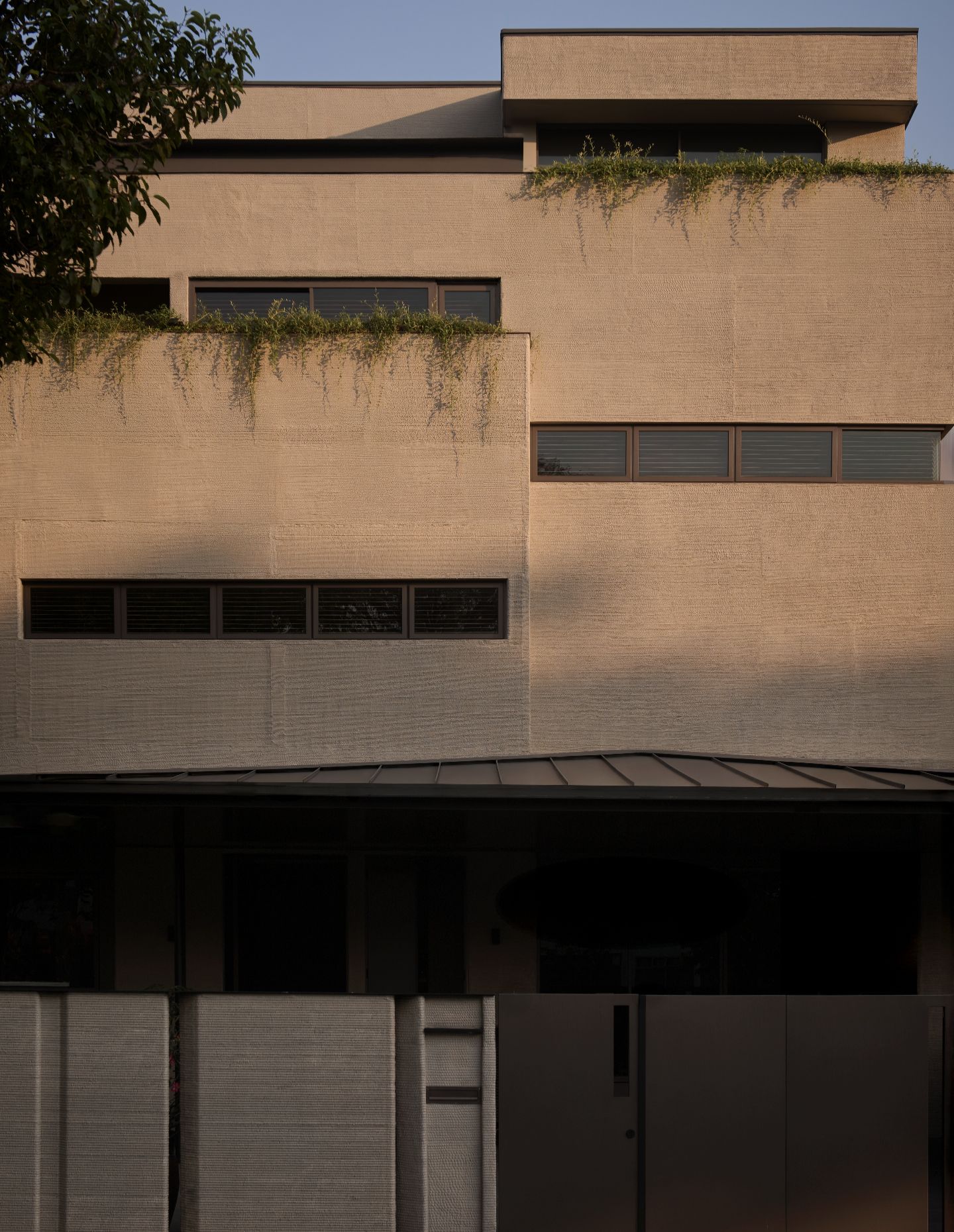
Identifying 3D printing’s potential for addressing challenges facing the industry, P+A worked in collaboration with construction innovators CES_InnovFab to research and develop a custom concrete mix. Comprising 90 per cent 3D-printed material, the house was created both onsite and offsite, to amply demonstrate 3D-printing’s practical viability. Under Park’s guidance, it also challenges the perception that digitally-driven architecture is without poetry.
“While we were excited by the novelty of 3D printing, our aim was always to create a family home that would be relevant and respected decades from now,” says Park. “We didn’t want the technology to overshadow the essence of the home.”
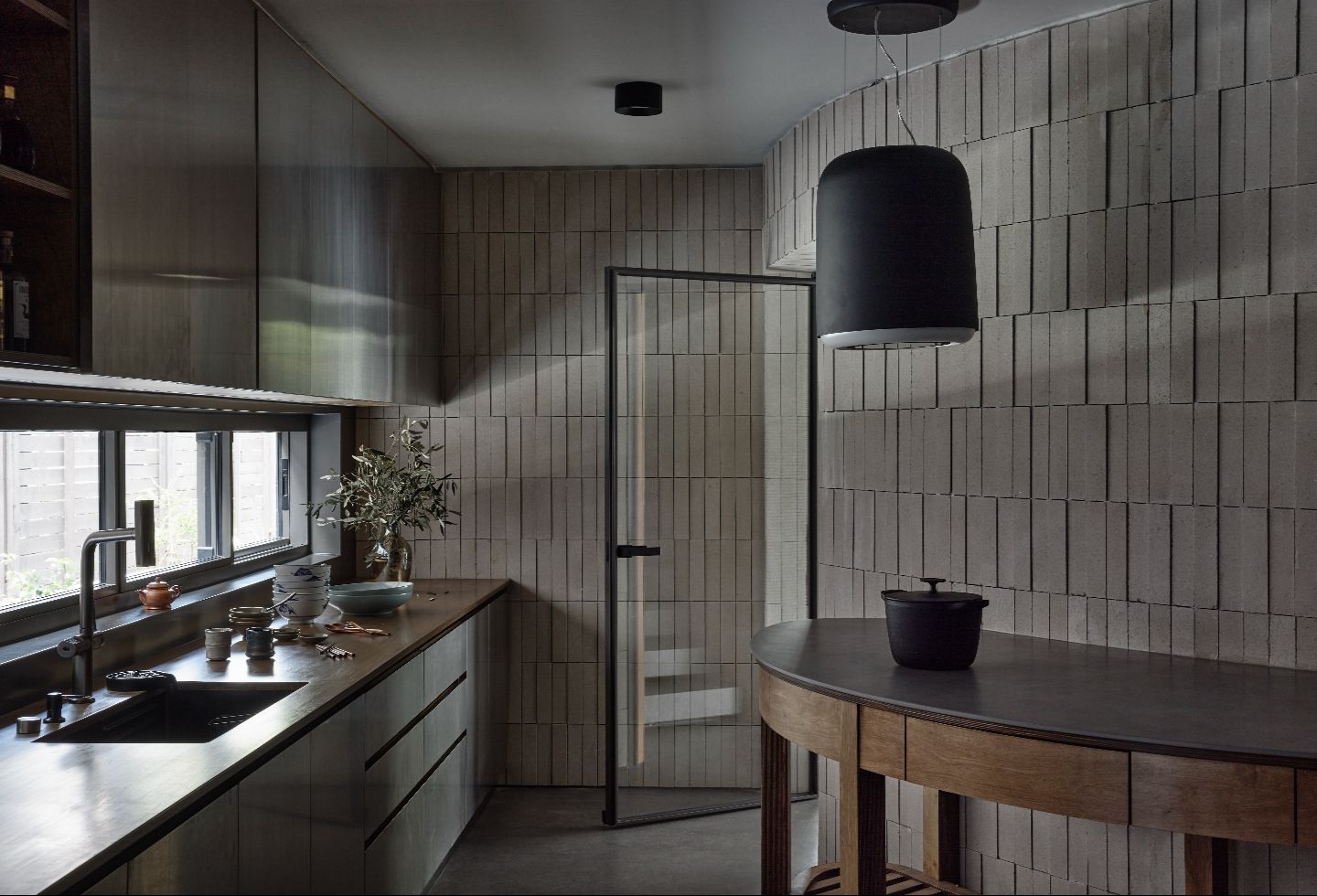
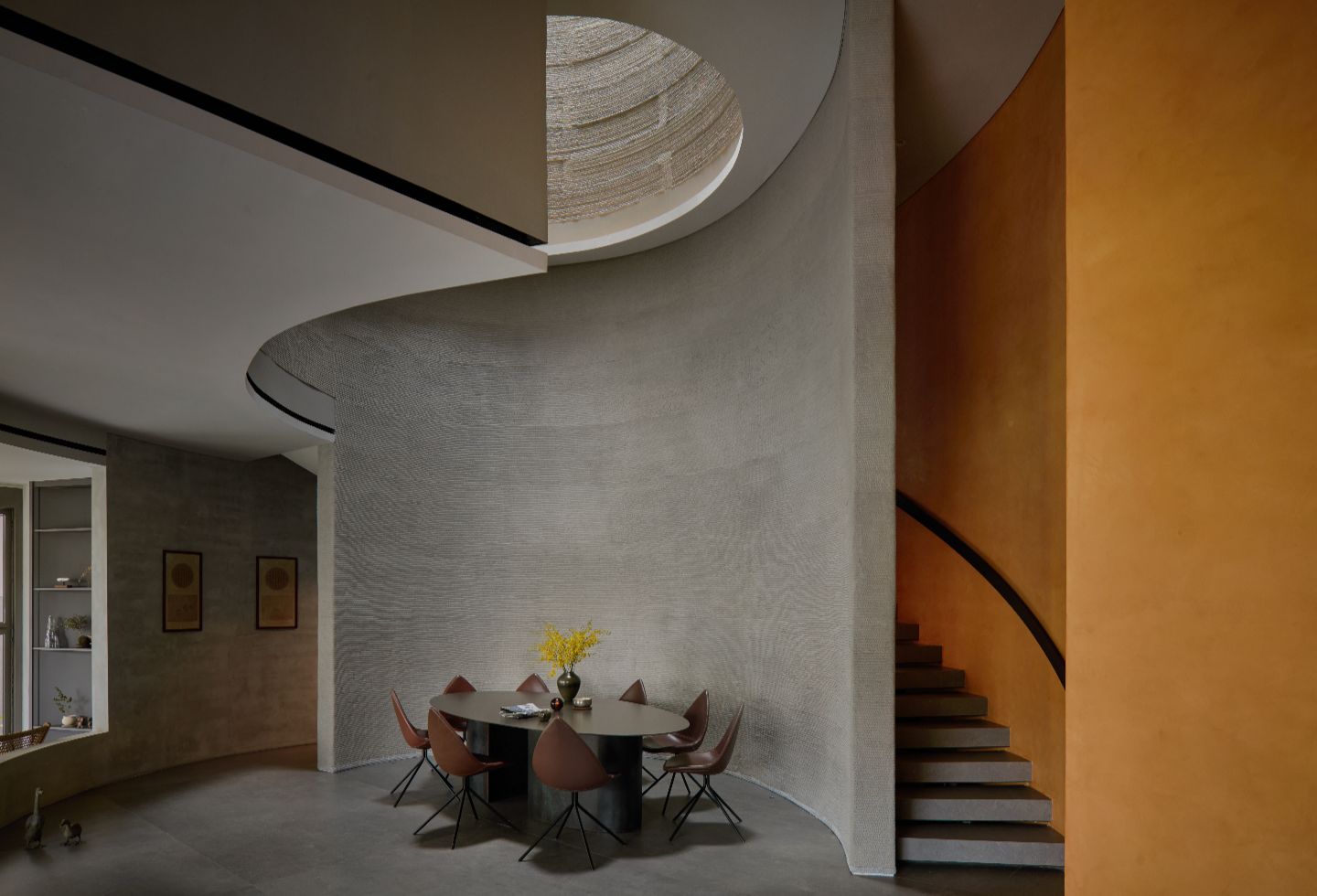
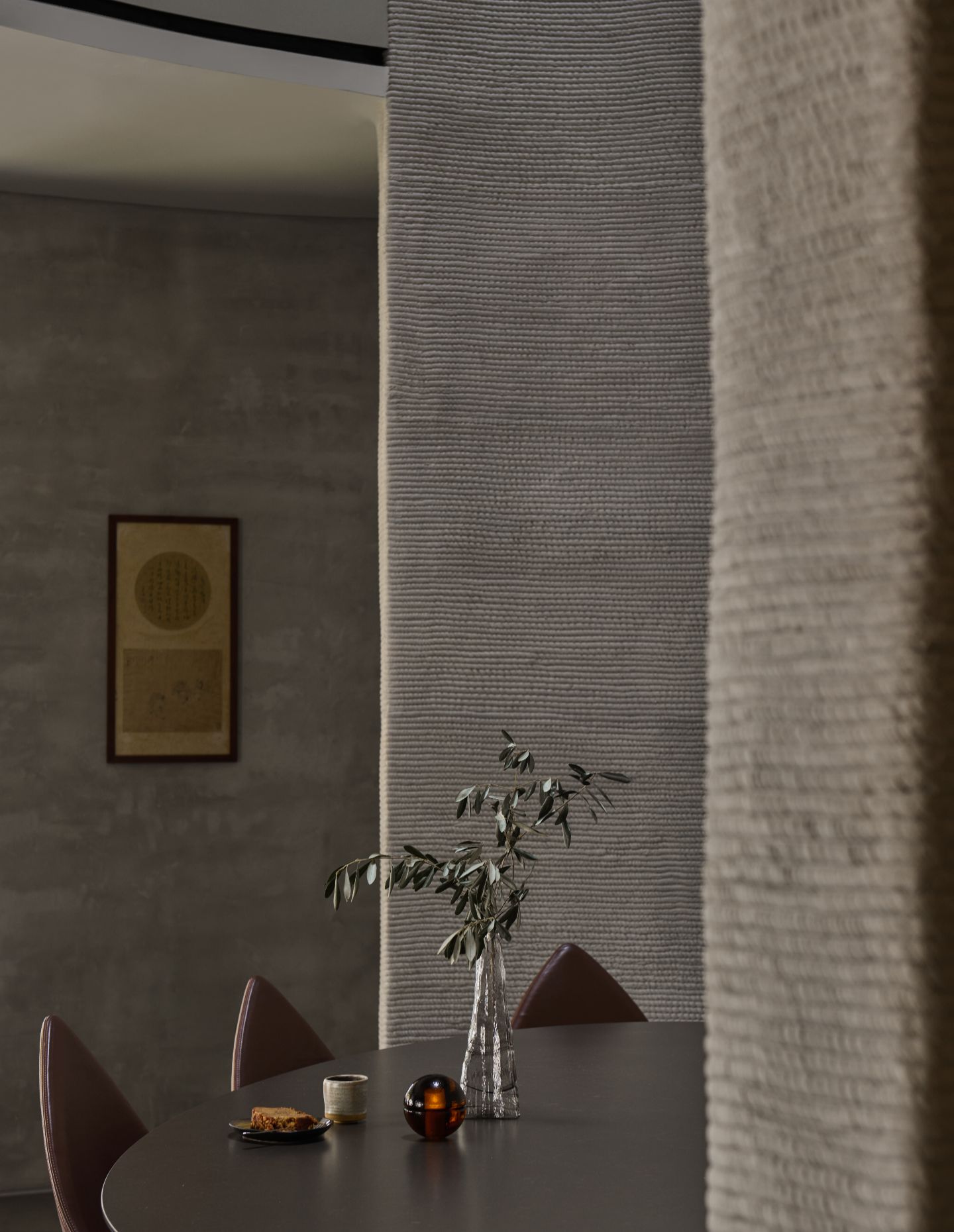
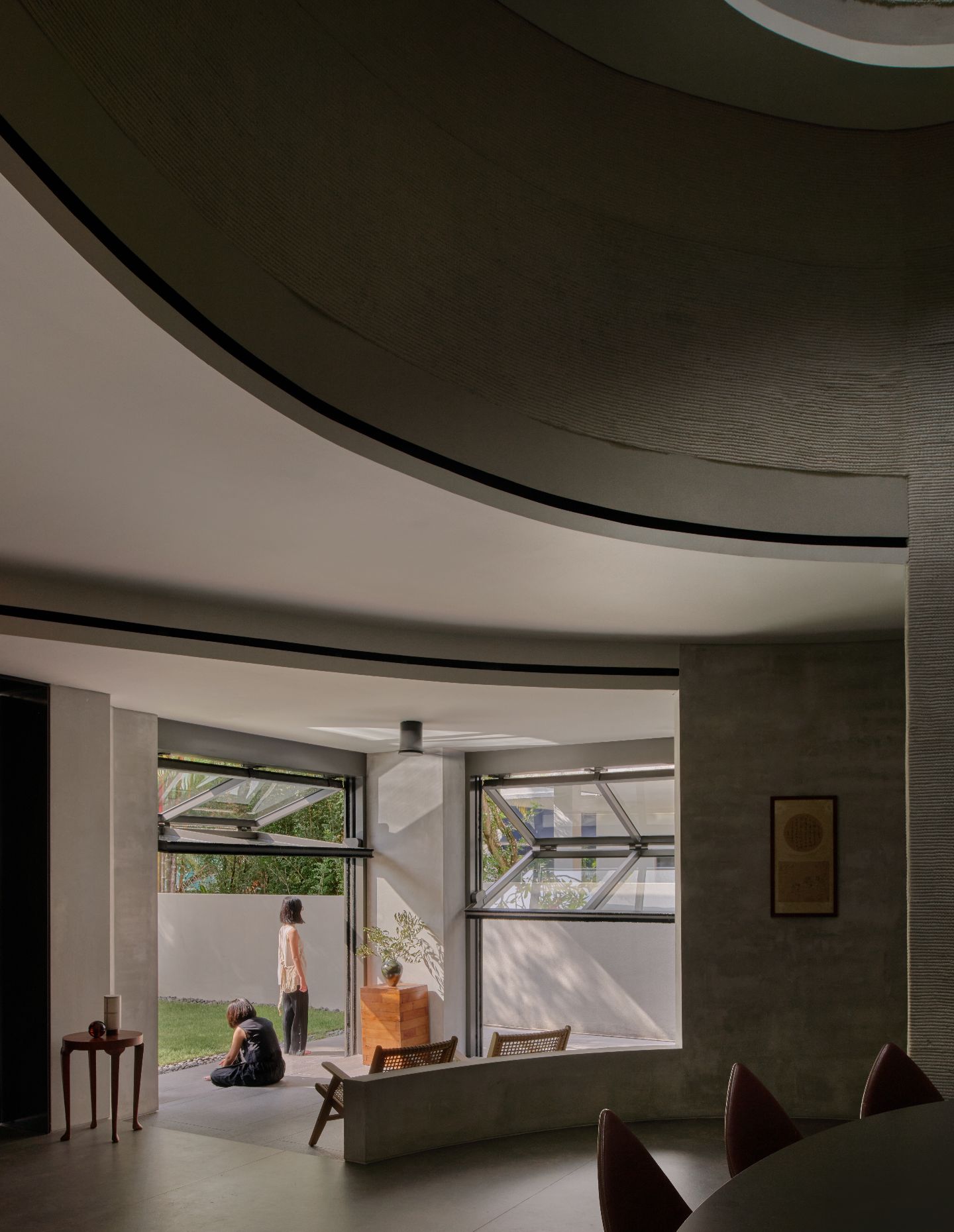
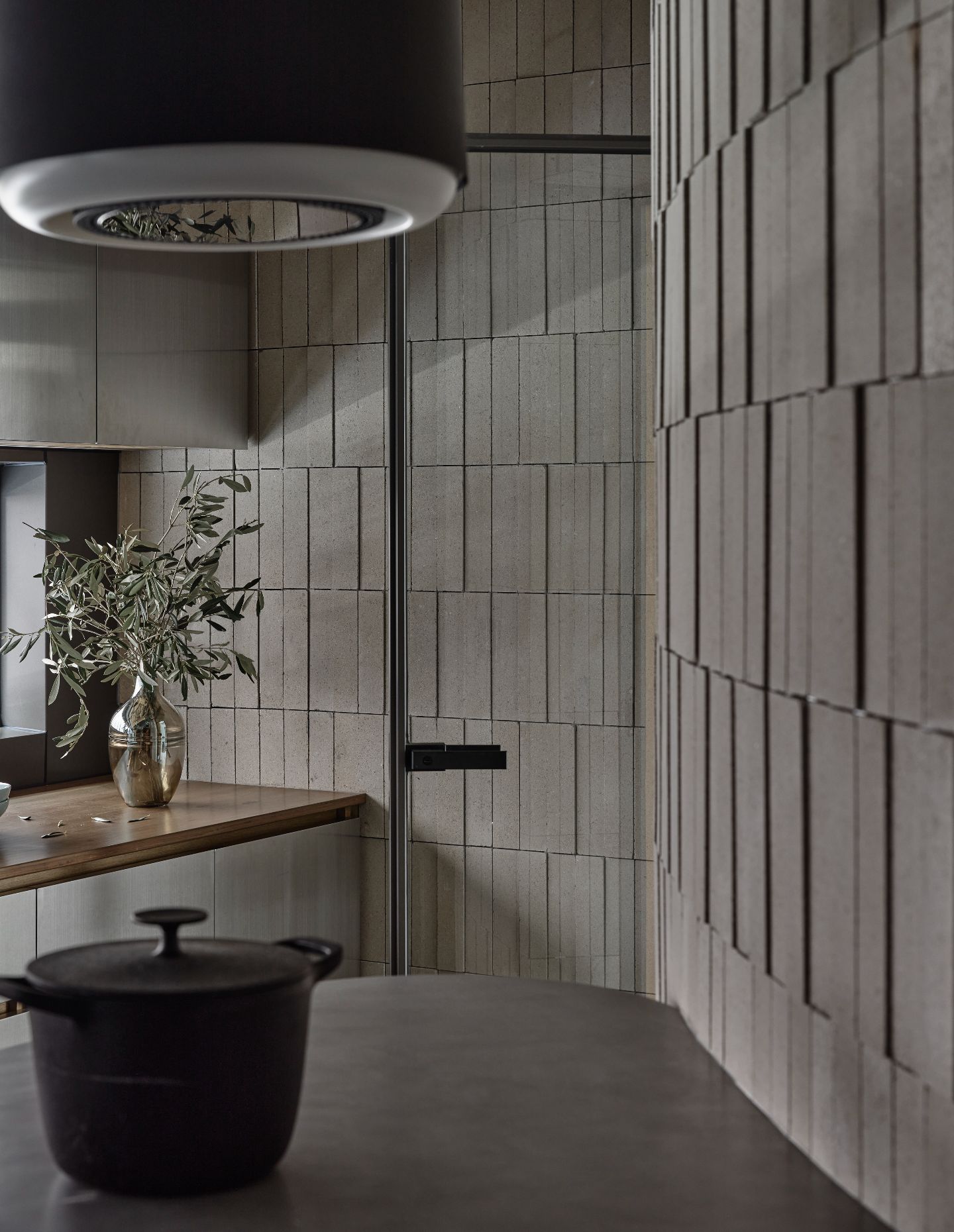
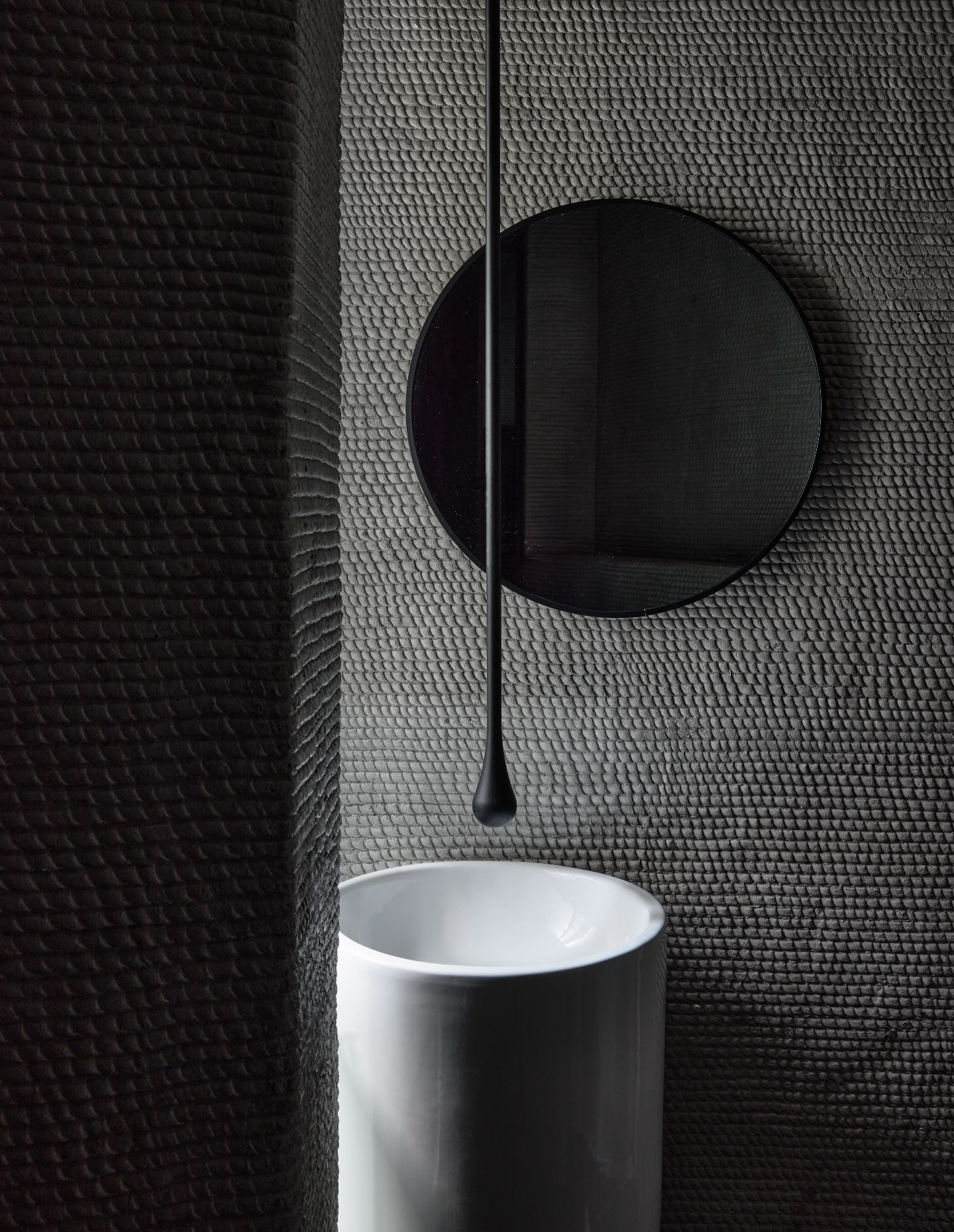
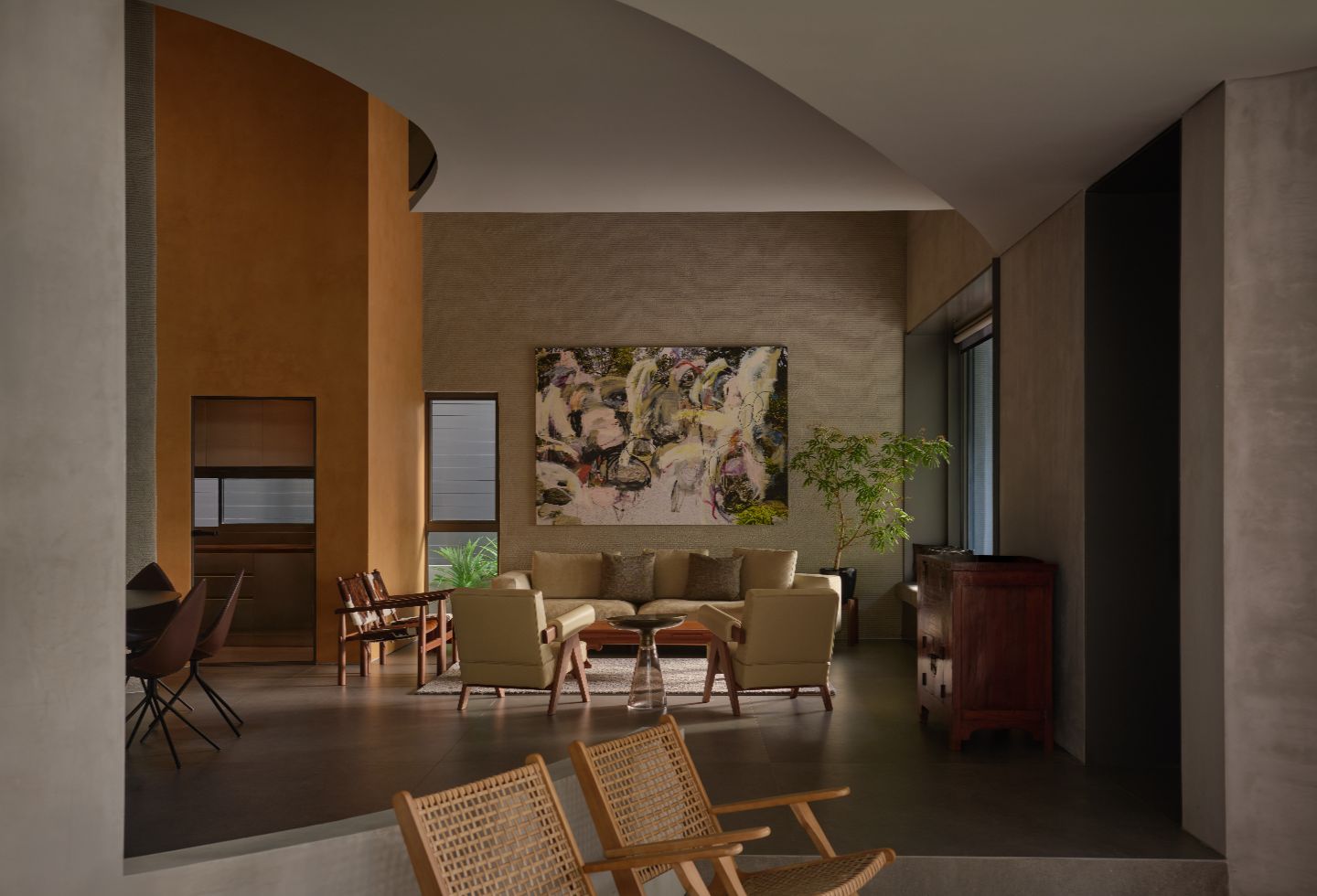
To this end, the layers of concrete striation and idiosyncrasies of the printing technique are embraced as part of the home’s aesthetics. In doing so, the raw and tactile interiors offer a contrasting backdrop to Park’s collection of vintage and contemporary furniture. Moreover, these elements of the construction process’ memory fit well with the sculptural restraint of the P+A aesthetic, where form and texture coexist.
Beyond materiality, the house is a prime example of Park’s work, where solid and void create spaces for living. “Given that this was our first venture in 3D-printed architecture, and excited as we were, we definitely felt some weight on our shoulders. Though a novel technology with a unique aesthetic and through all the excitement, it was still first principles for us – that is, to create a comfortable family home that can remain relevant and respected in decades to come,” says Park.
Related: The latest from Alexis Dornier
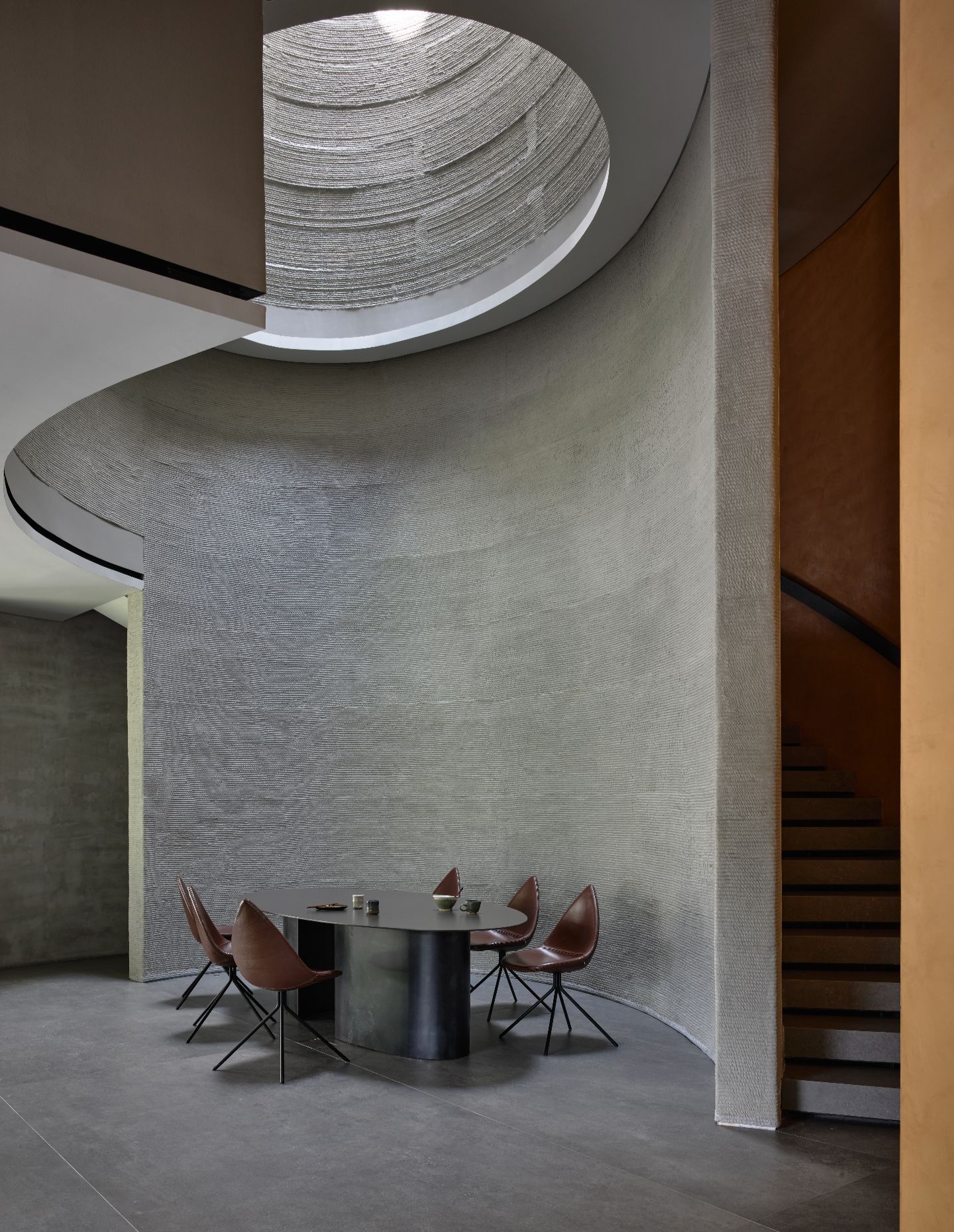
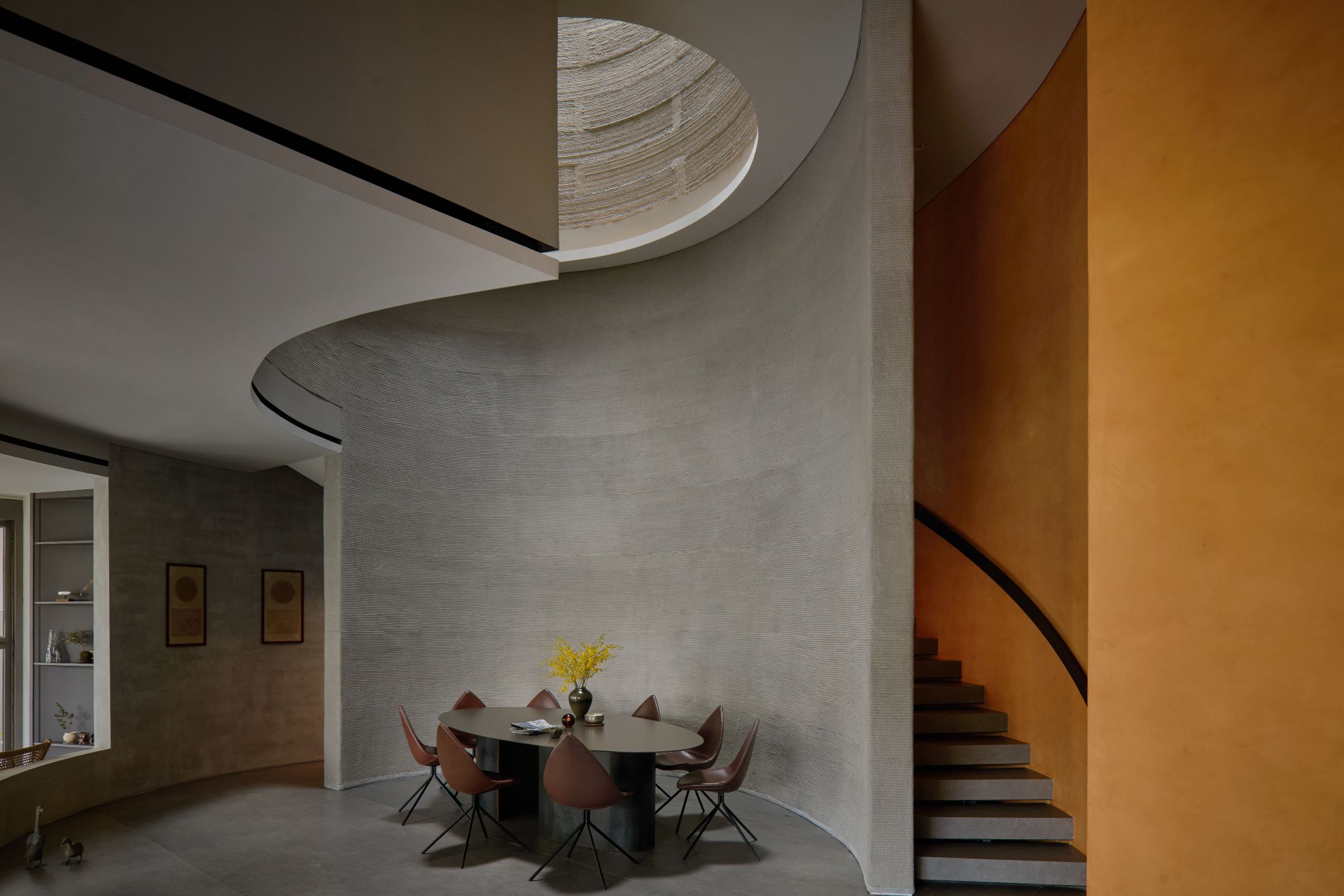
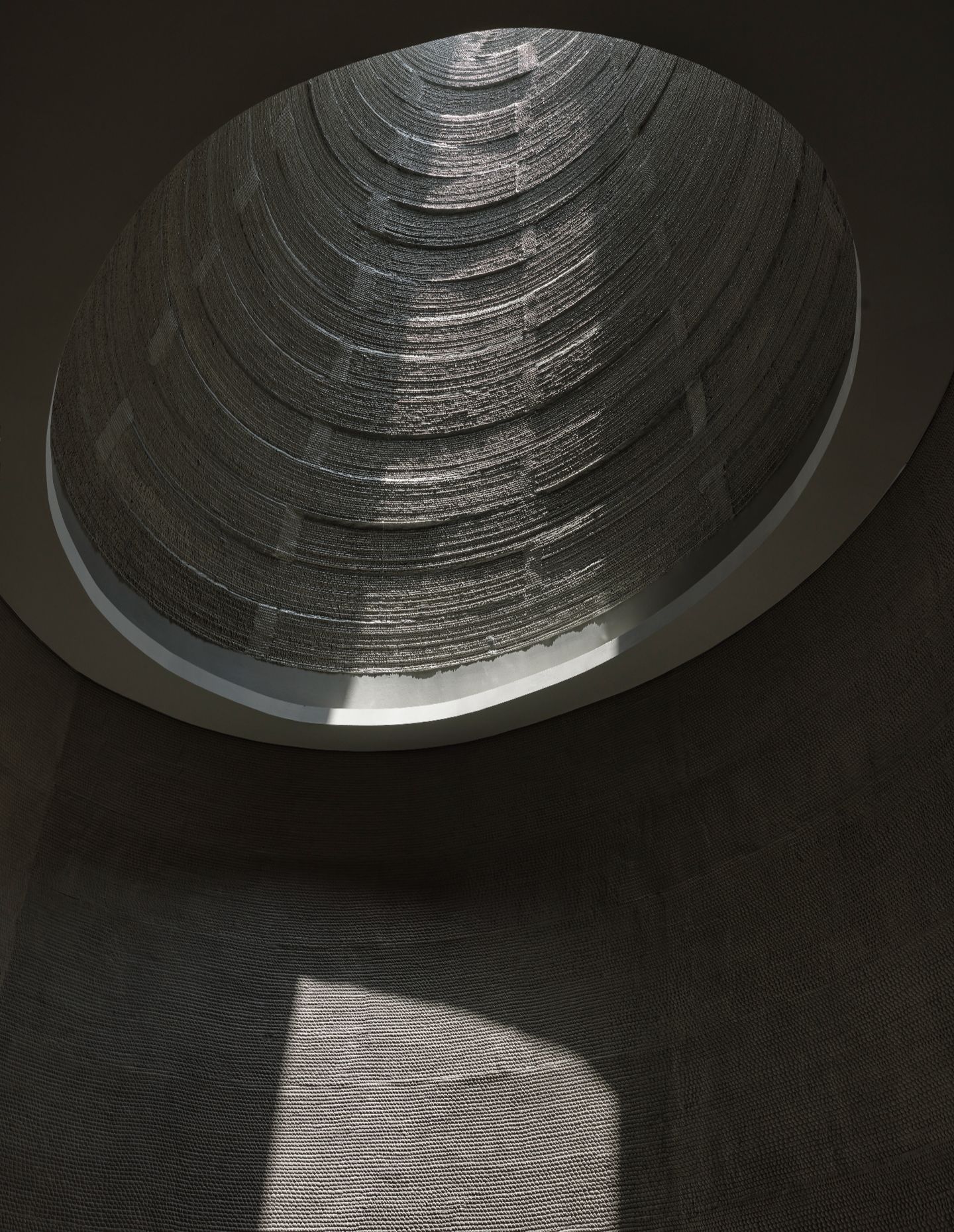
To this end, the central focal point is a cone-shaped oculus that extends from the ground floor up to the attic skylight on the fourth floor. Diurnal and seasonal shifts are clearly legible as light and shadow drift across the internal walls of the cone before spilling across the floor as a slowly moving, slanted spotlight.
It is pure magic and a phenomenal space to place the dining table, which is somewhat dwarfed by the grandeur of the cone. It is also, however, a direct reference to the formal grandeur of the neoclassical house that this house replaces. Moreover, the cone acts as a passive cooling system that channels hot air up and out through a hidden extractor fan.
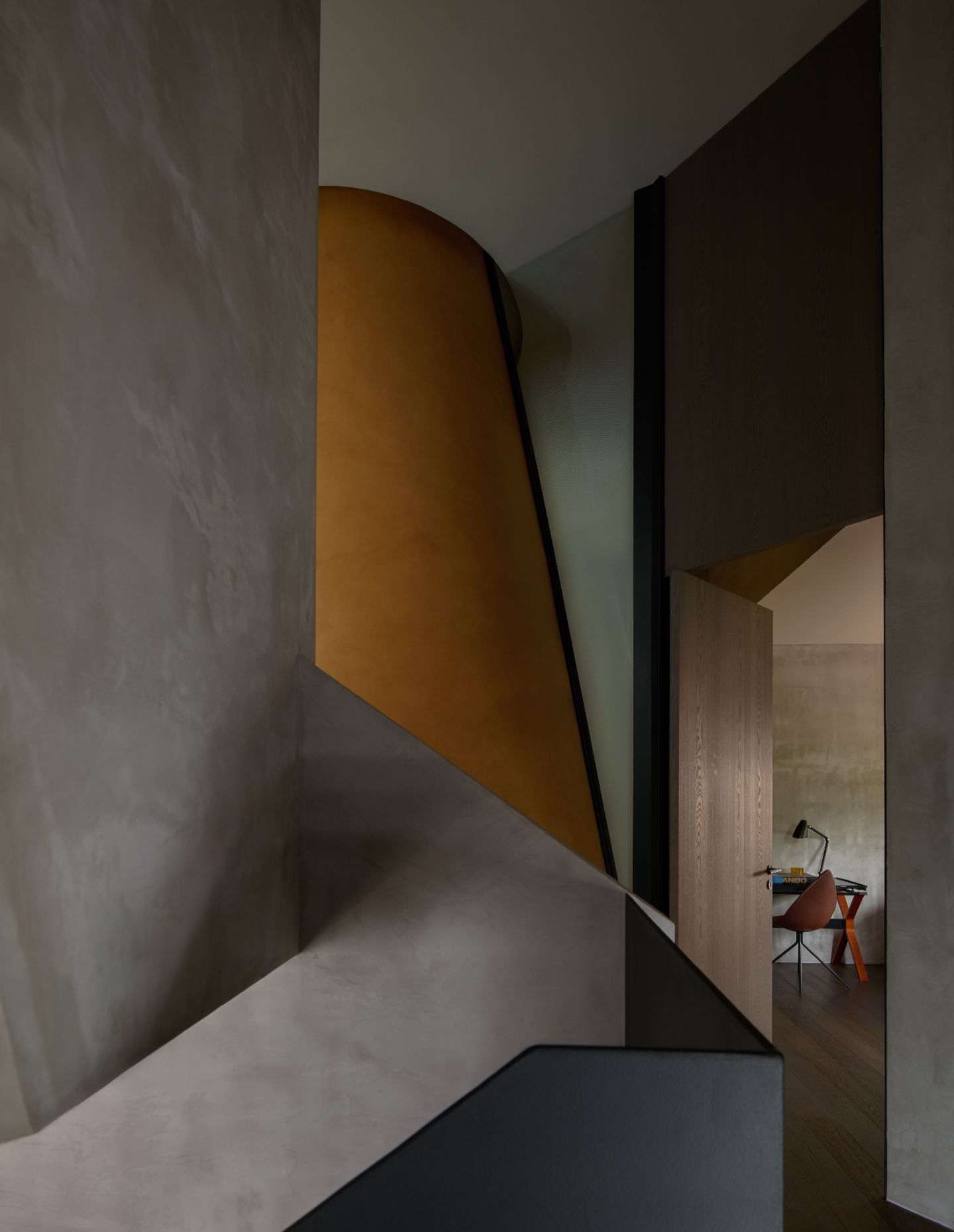
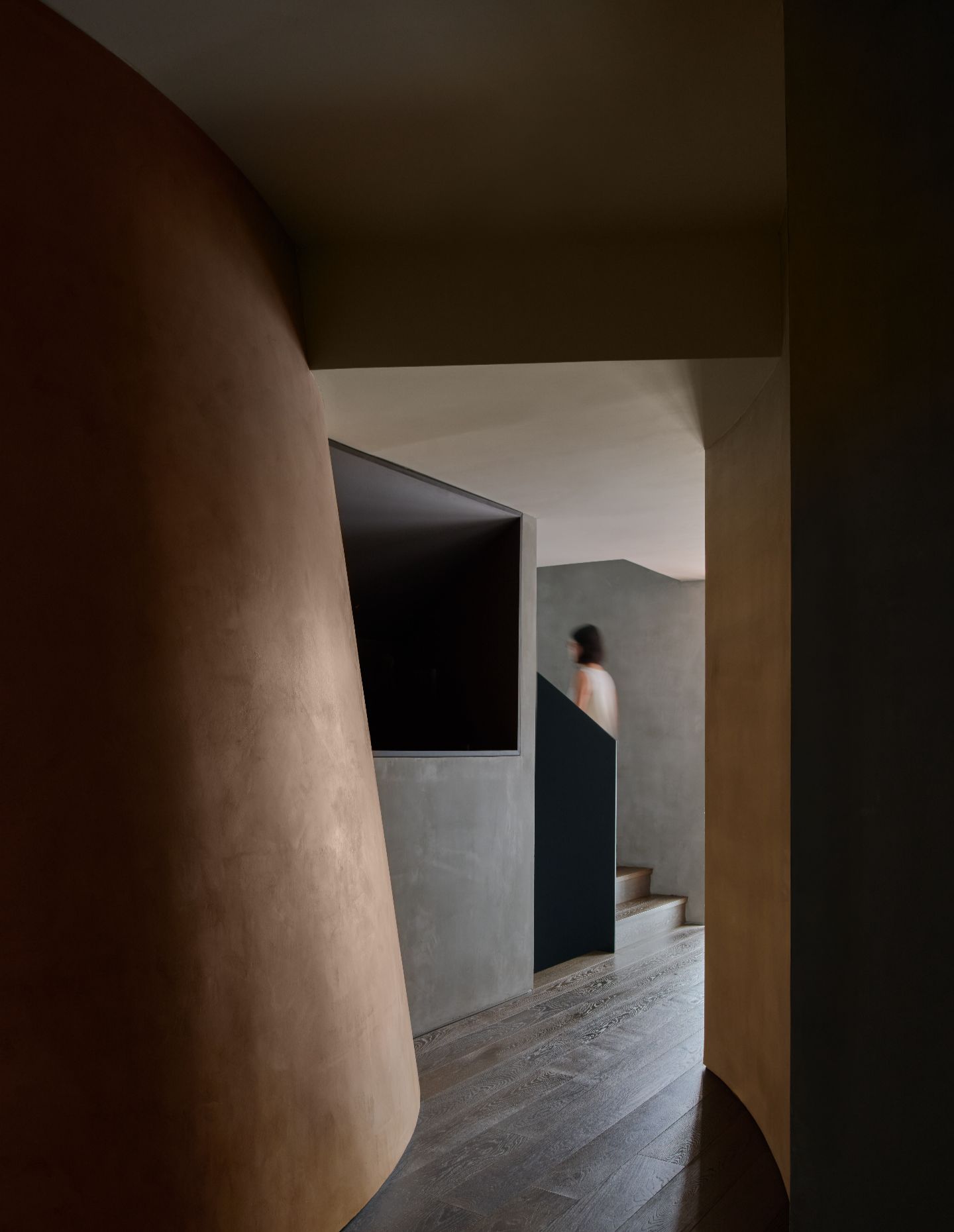
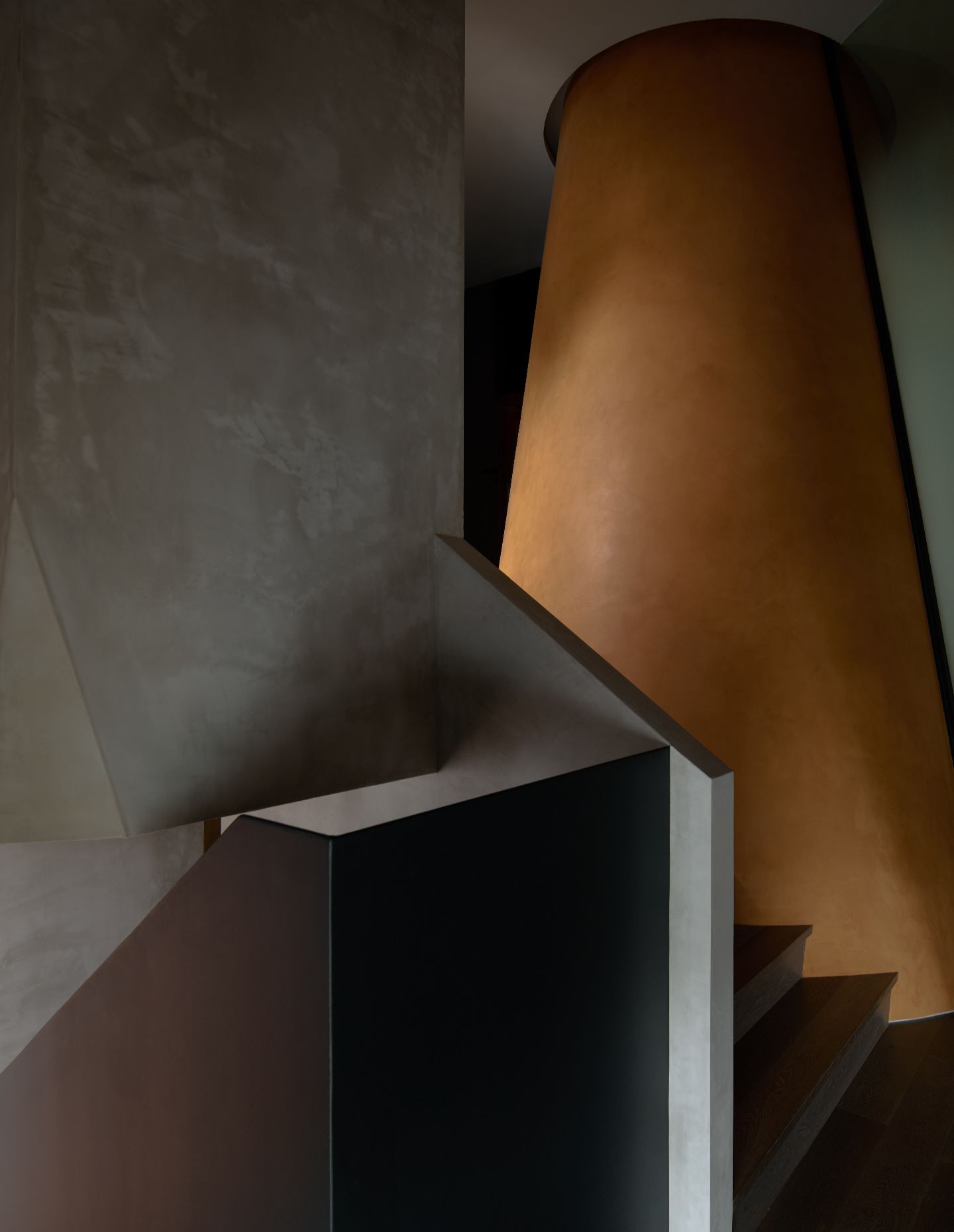
By encircling the cone with a staircase, the outer wall is broadened at the base, thereby exaggerating the inwards lean of the conical form as a feature. This becomes more pronounced as the curved wall recedes through the void created by the mezzanine. Meanwhile, a curved parallel wall pushes this idea just that bit further by creating more contrasts, as both sides of the curve inform positive and negative spaces.
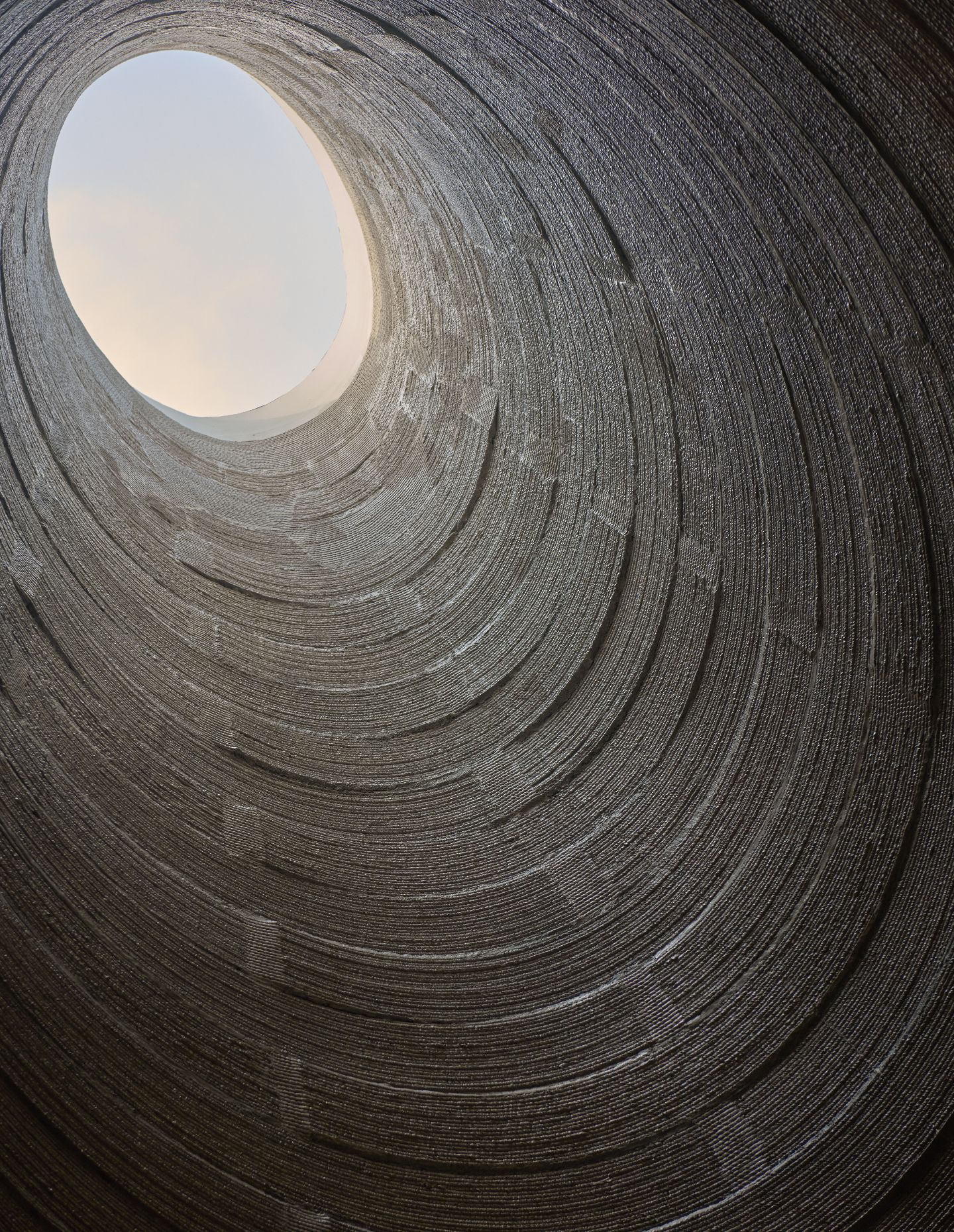
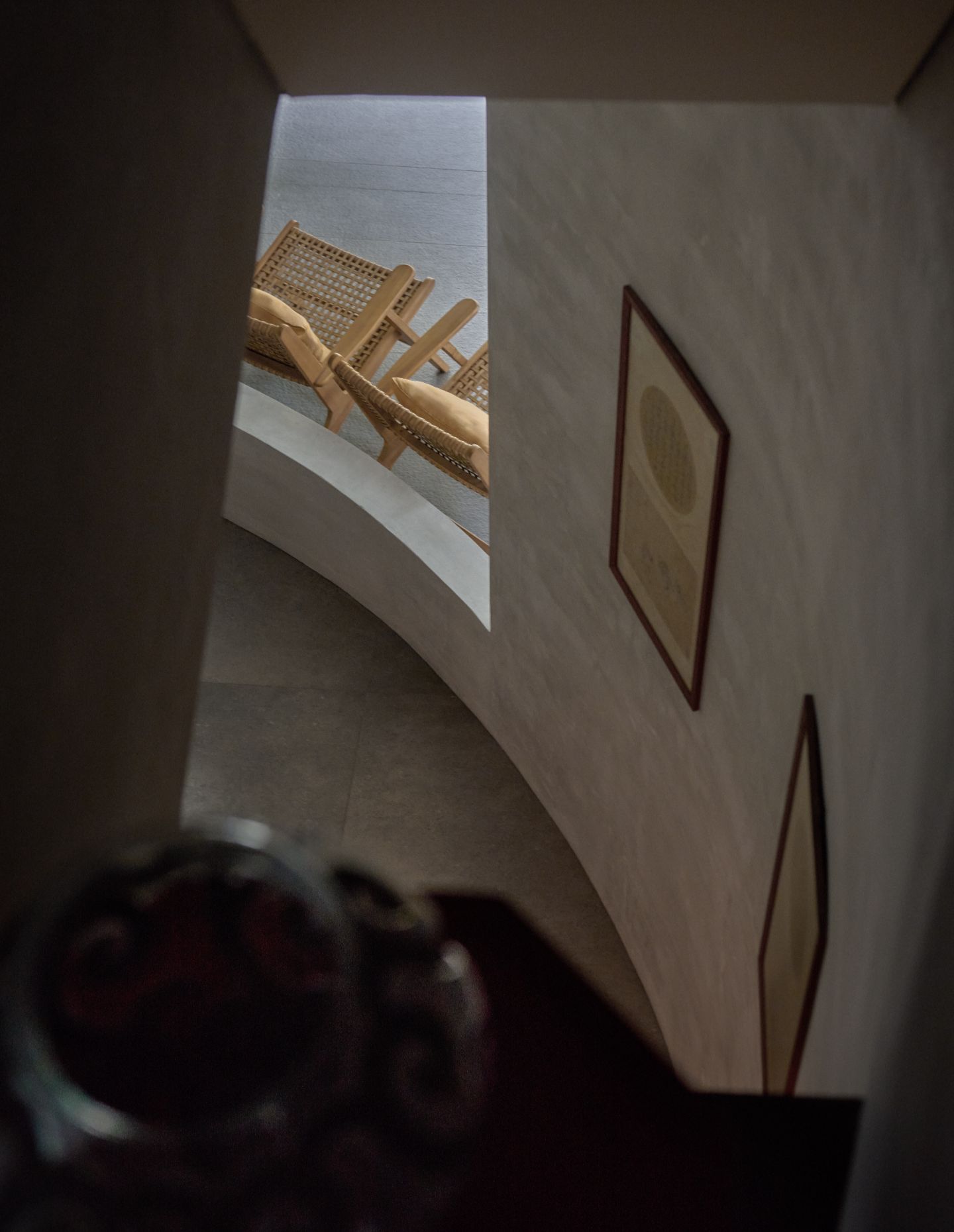
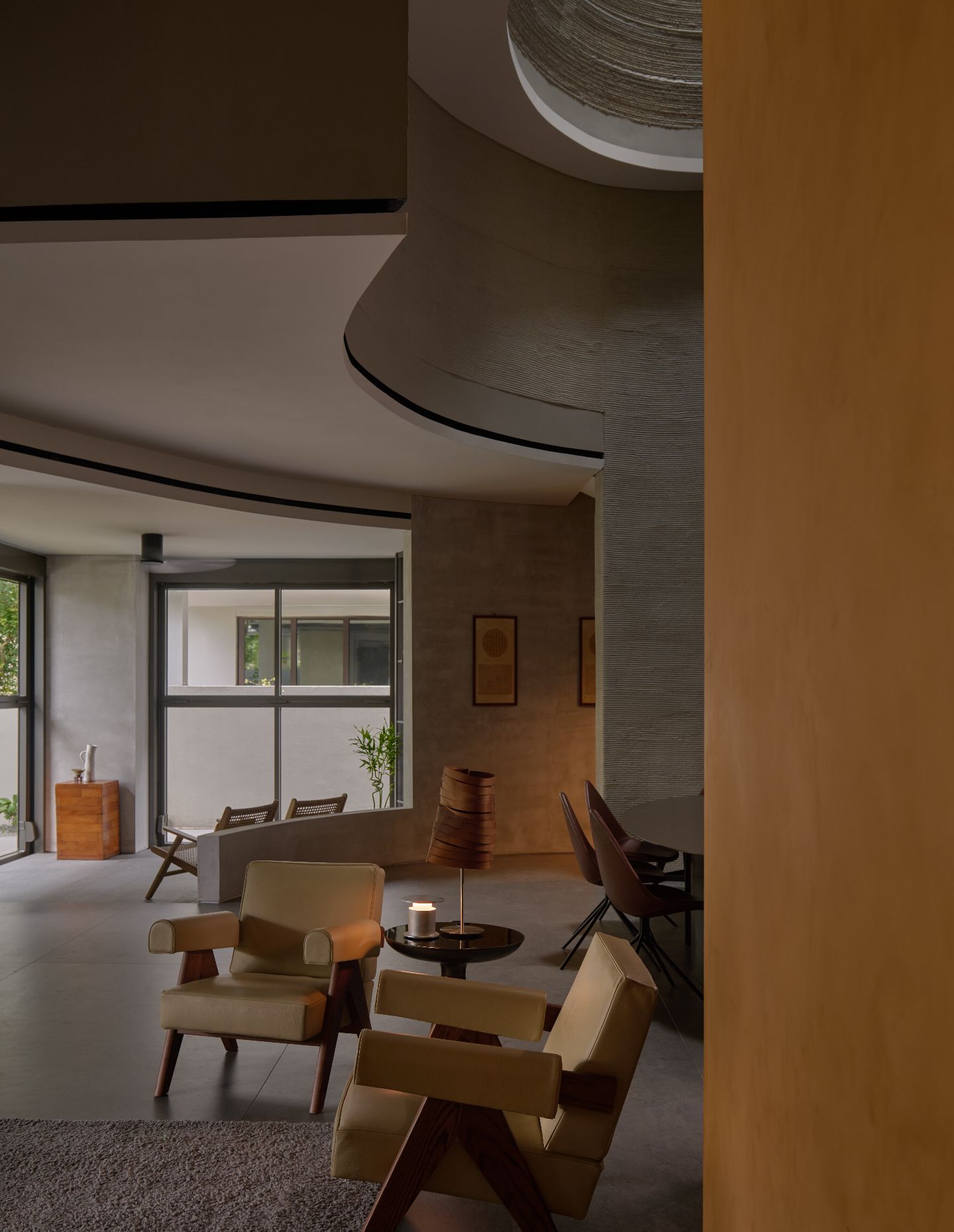
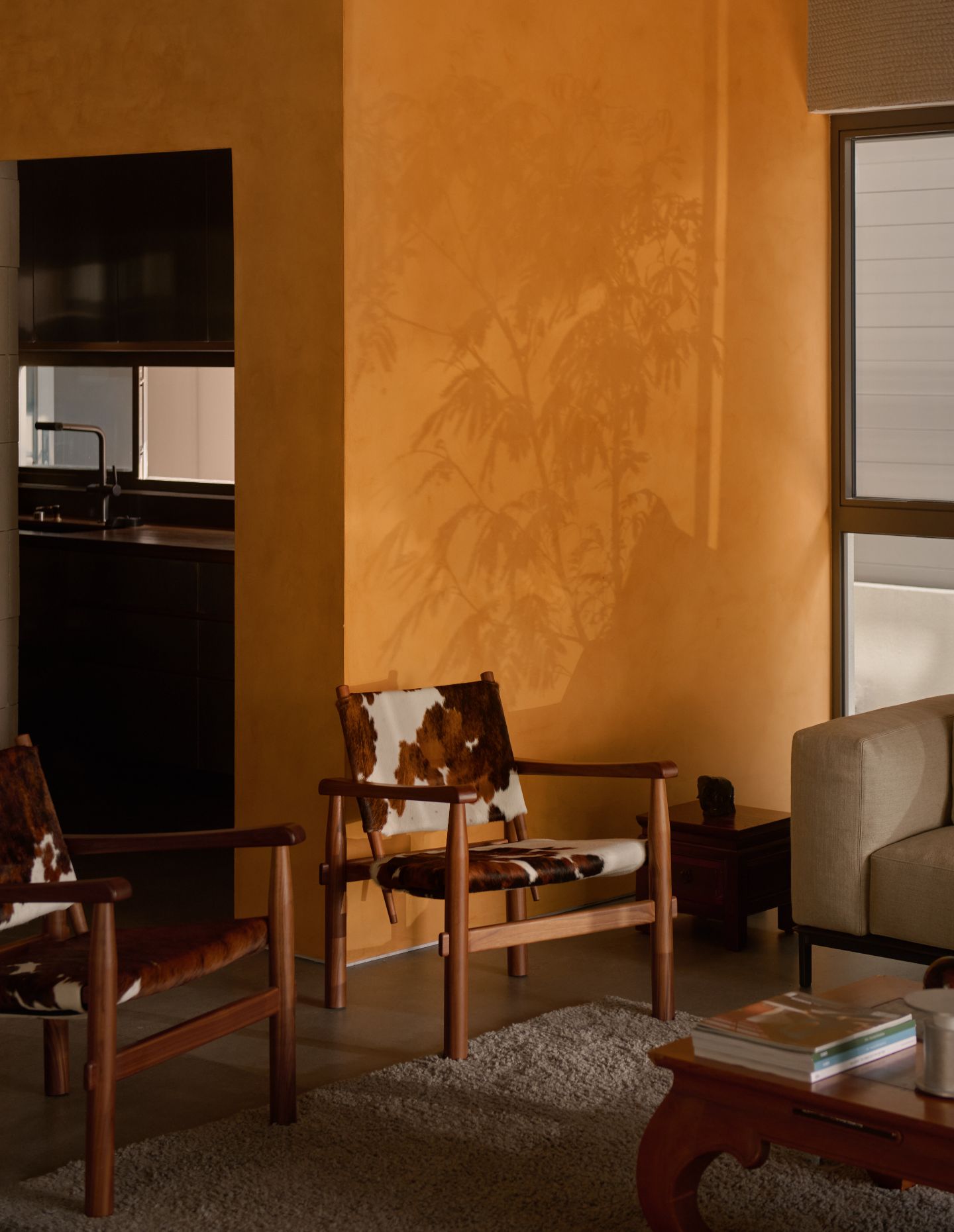
Park’s use of the oculus and its curving walls plays on light and form to give each of the rooms a new dynamism and elegantly assuages the overall square-on-square format of the house’s footprint. Pushing the visual geometry further, the outer wall of the cone is rendered in a golden ochre. This same tone is picked up in the bathroom tiles, while timber floors and doors add a deeper shade, as does the blackened steel balustrade, but the remainder is unabashedly concrete.
Playing across the century, from Charlotte Perriand and Pierre Jeanneret to Nathan Yong and Tulczinsky, the furniture is an eclectic assembly of beloved pieces. Richly patinated and cared for, each is a declaration of self and adds to the poetry of what a home is supposed to be, no matter how it is constructed.