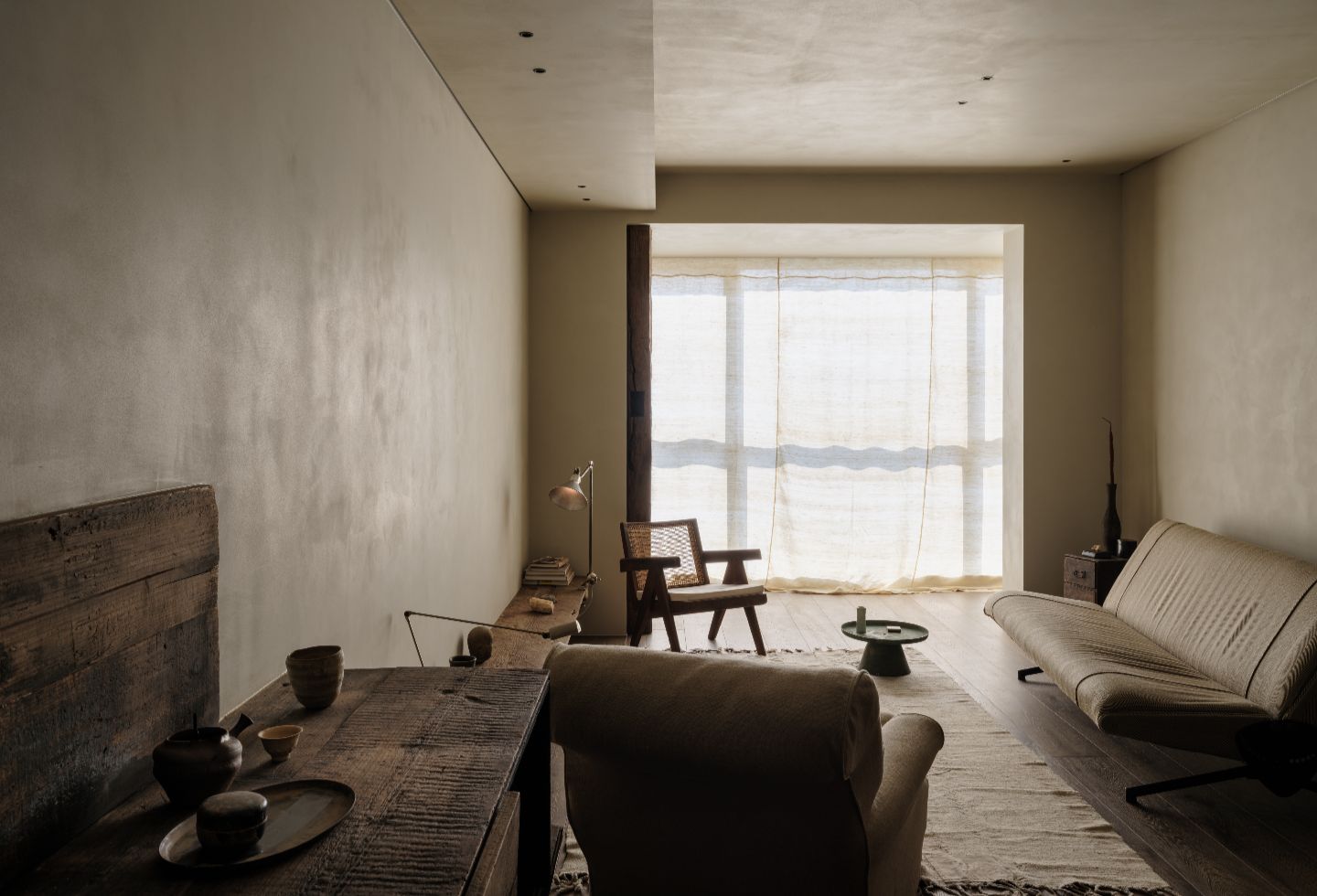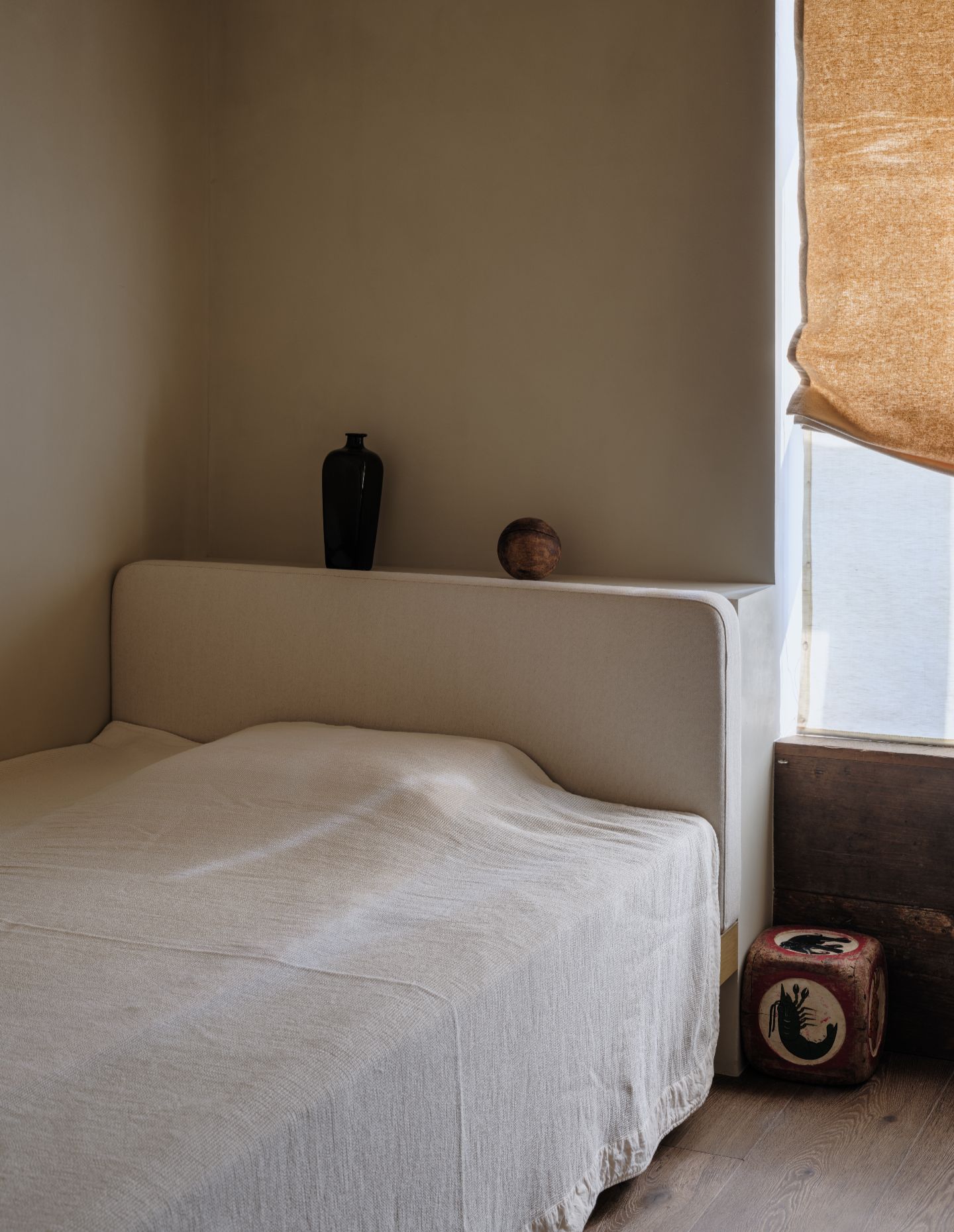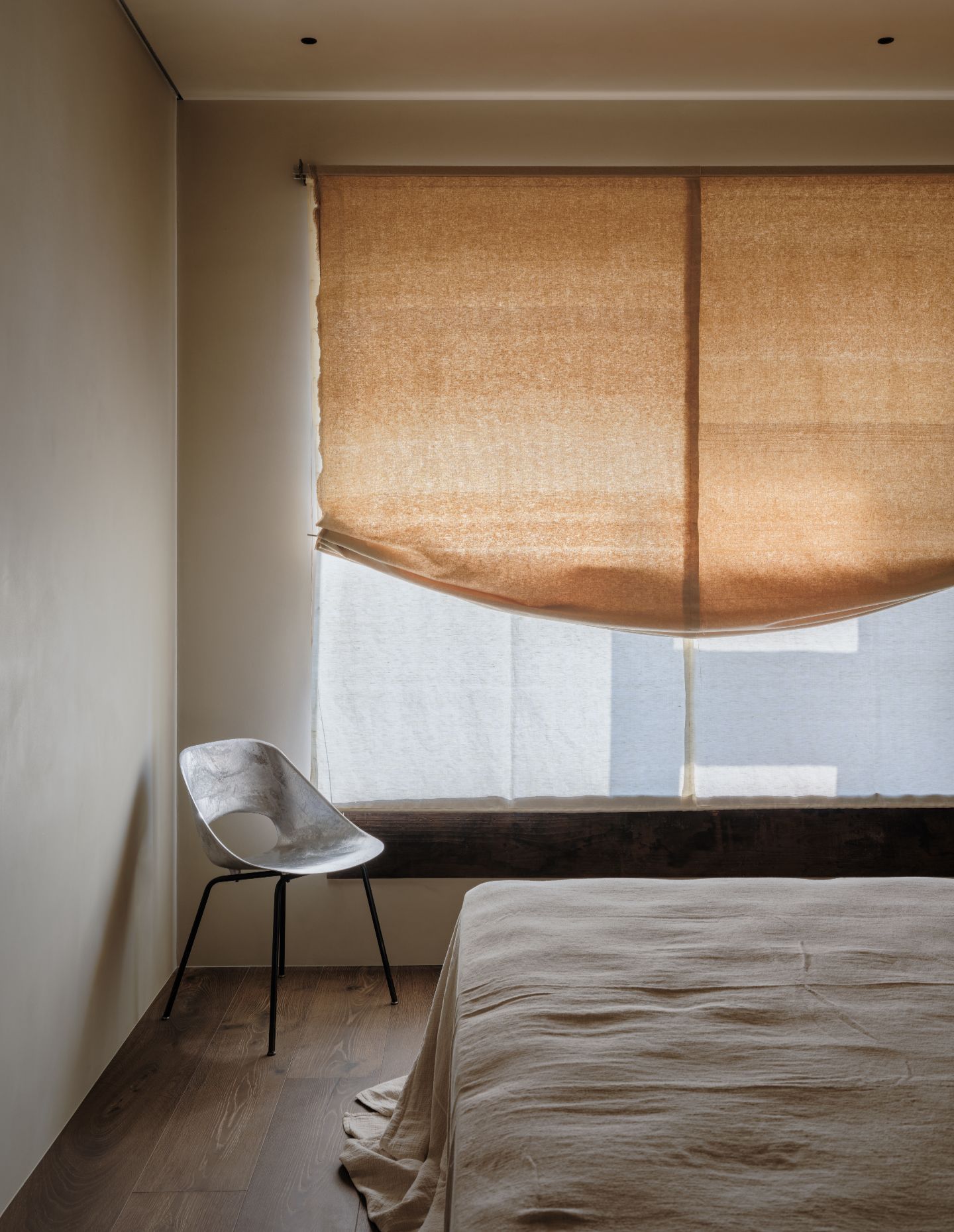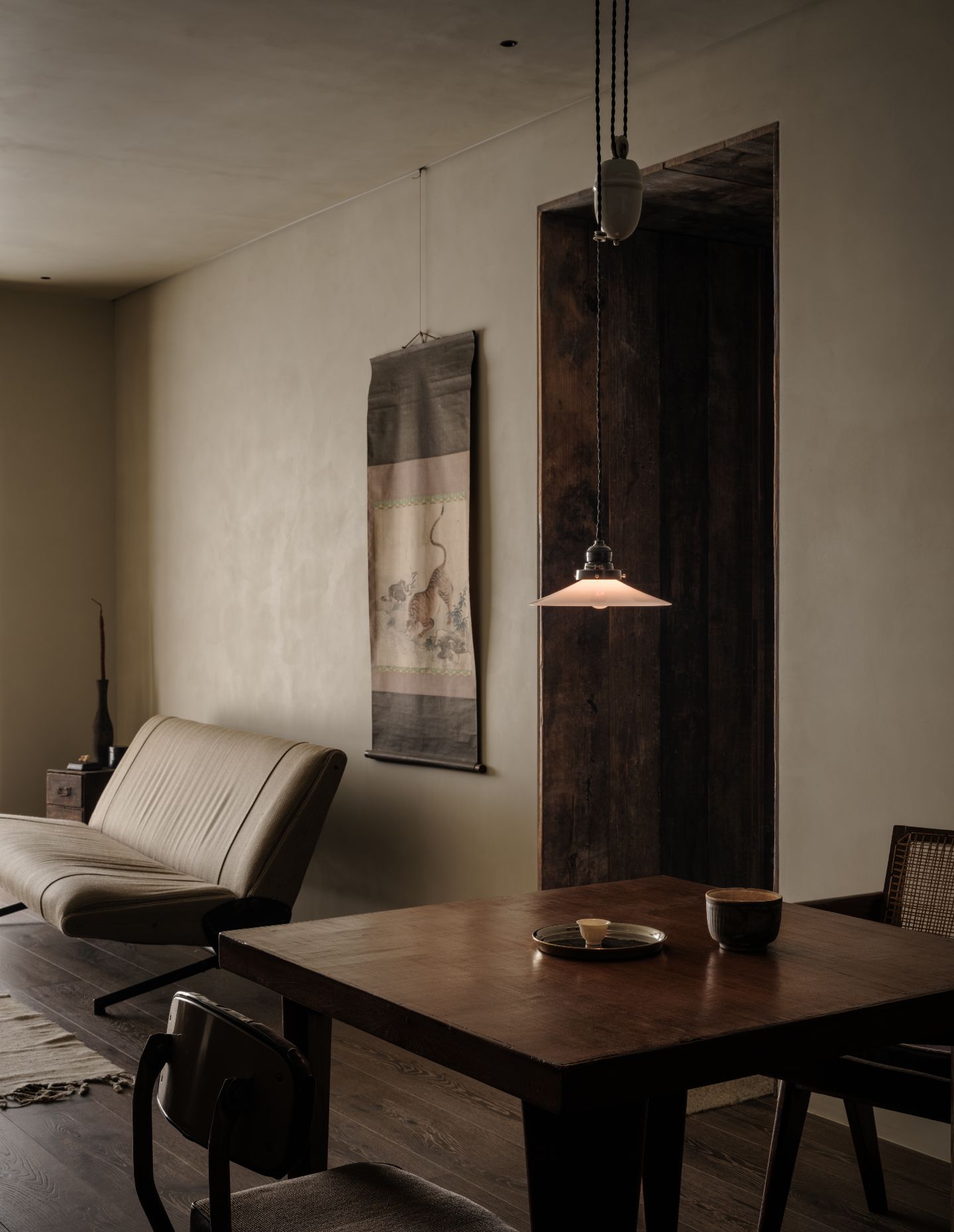

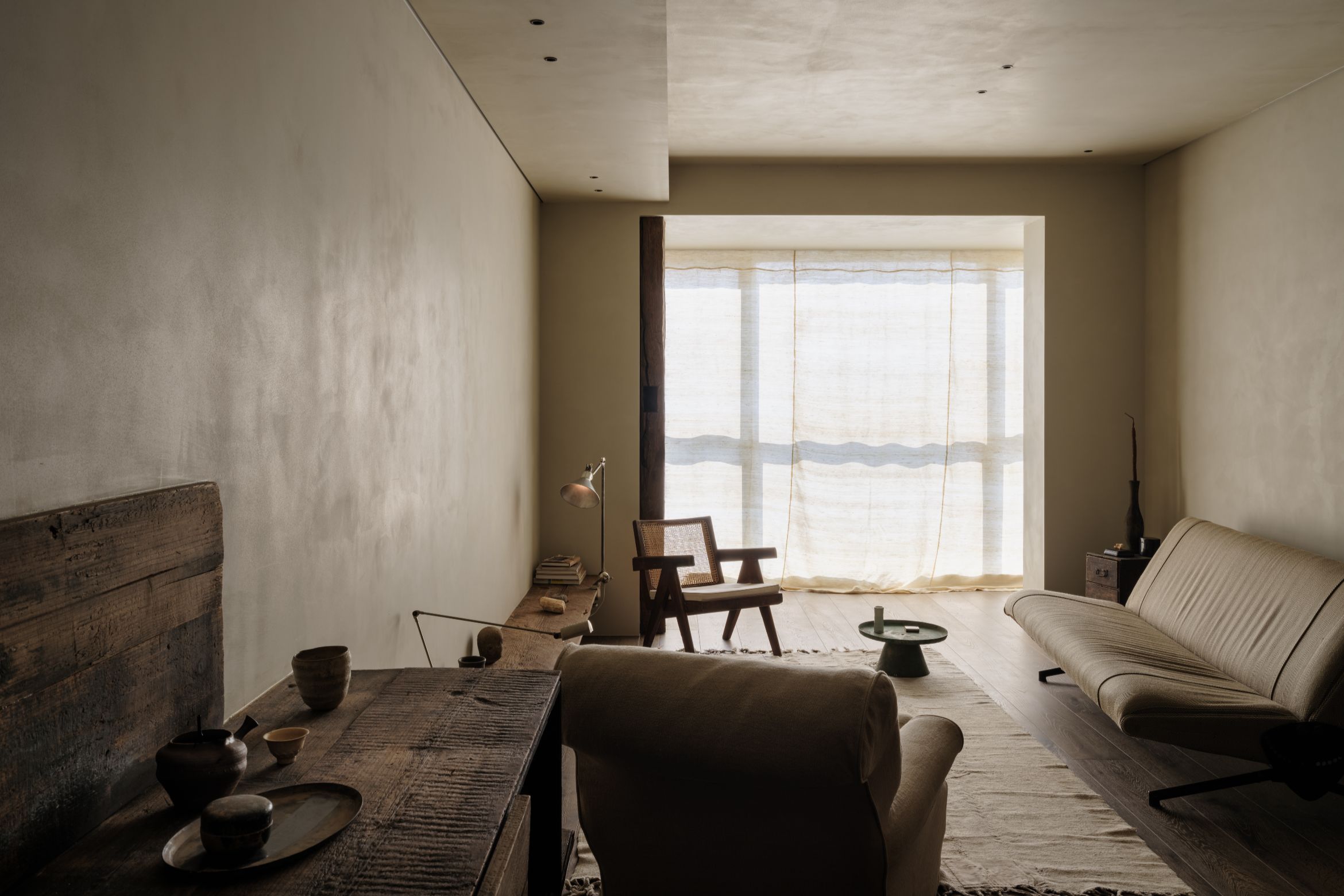
Urban apartments are often shaped by efficiency rather than experience. Standardised layouts, clean finishes and clear separations between rooms reflect a way of living organised around routine. Residence F, a 105-square-metre apartment in Shanghai’s Jiading District, takes a quieter and more personal approach. Designed by Mountain Soil Interior Design for a young artist, the home resists the idea of a fixed interior and instead allows everyday life, memory and making to shape the space over time.
From the beginning, the project was guided by the client’s desire to preserve the existing texture of the apartment rather than overwrite it. The aim was not to introduce a dominant design language, but to create a setting that could hold a growing personal collection of furniture, artworks and objects. Many of these pieces had already been gathered over years and stored with the intention that they would eventually find a place in a future home. The design process became less about sourcing new elements and more about creating the conditions for these objects to belong.
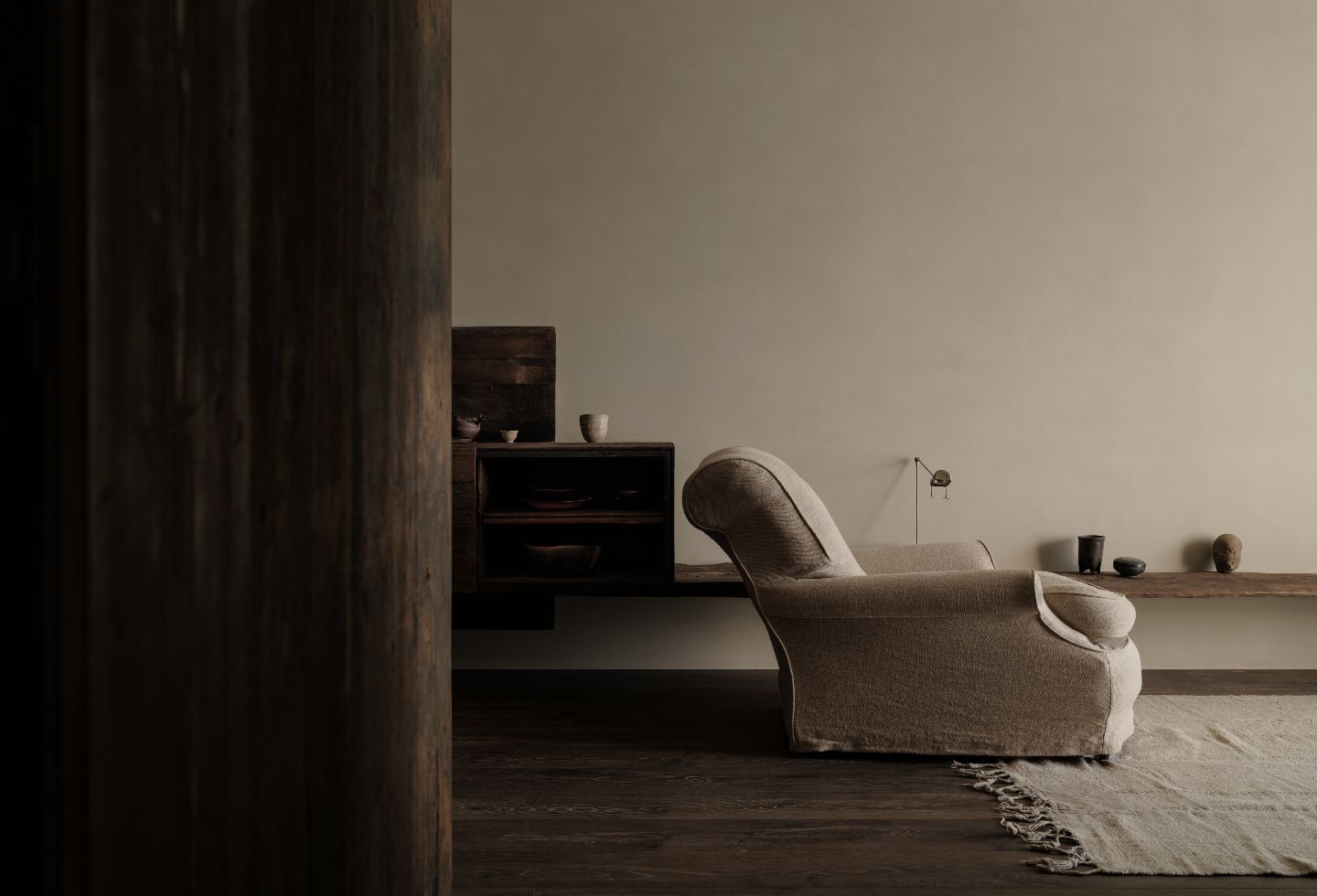
The original apartment followed a familiar urban template, with three bedrooms arranged around a compact living area. This configuration was reworked to better reflect the client’s day-to-day needs. By reducing the number of bedrooms from three to two, the designers were able to introduce more storage and improve circulation, allowing the interior to feel open without becoming undefined. The kitchen was opened to the dining and living areas, removing unnecessary partitions and creating a space that supports both everyday routines and informal gatherings.
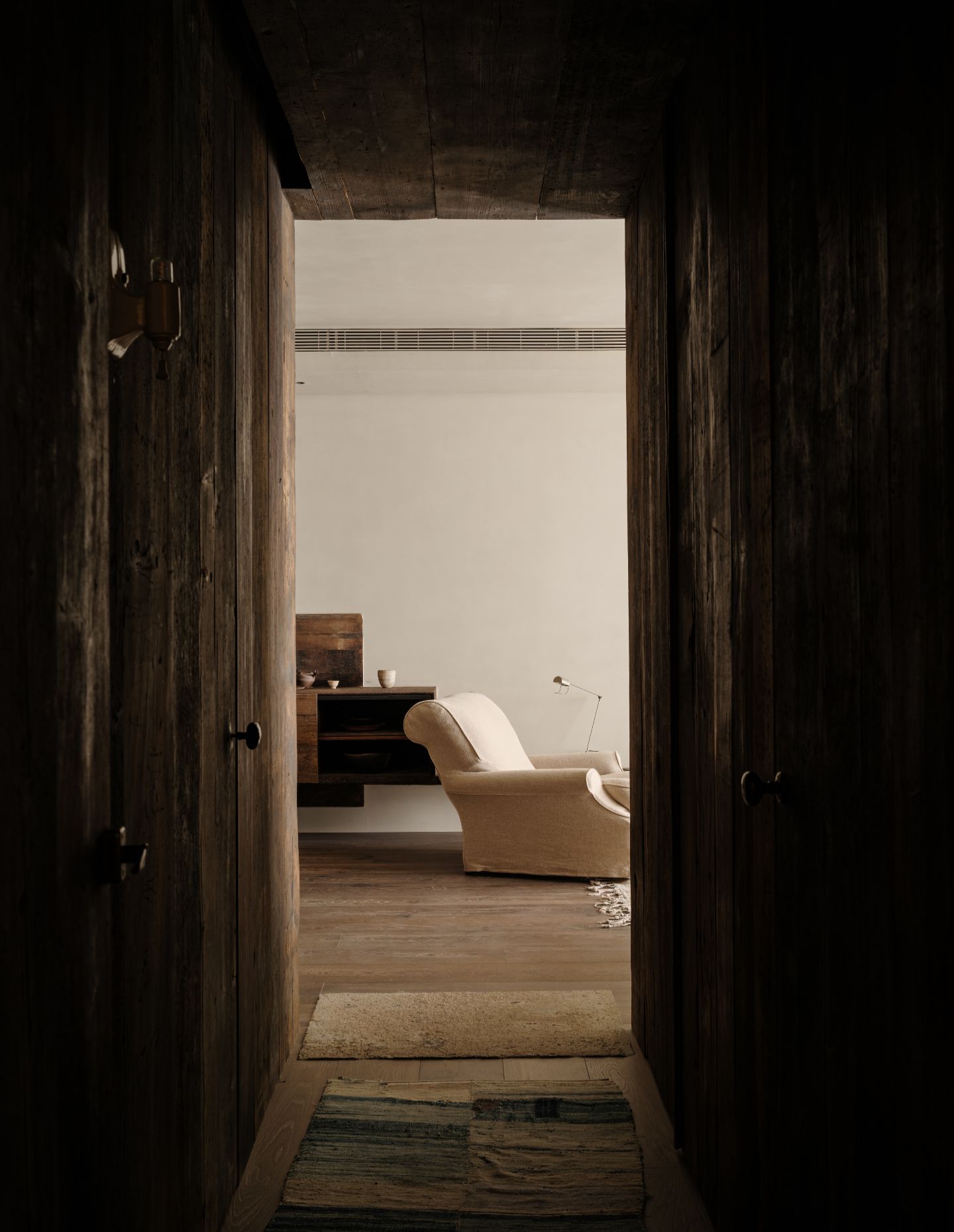
Careful attention was given to the practical realities of living. Large appliances, including the refrigerator, were concealed at the front of the hallway so they would not dominate the interior visually. This allowed the main living areas to remain calm and uninterrupted, with storage and utility absorbed into the background rather than treated as features.
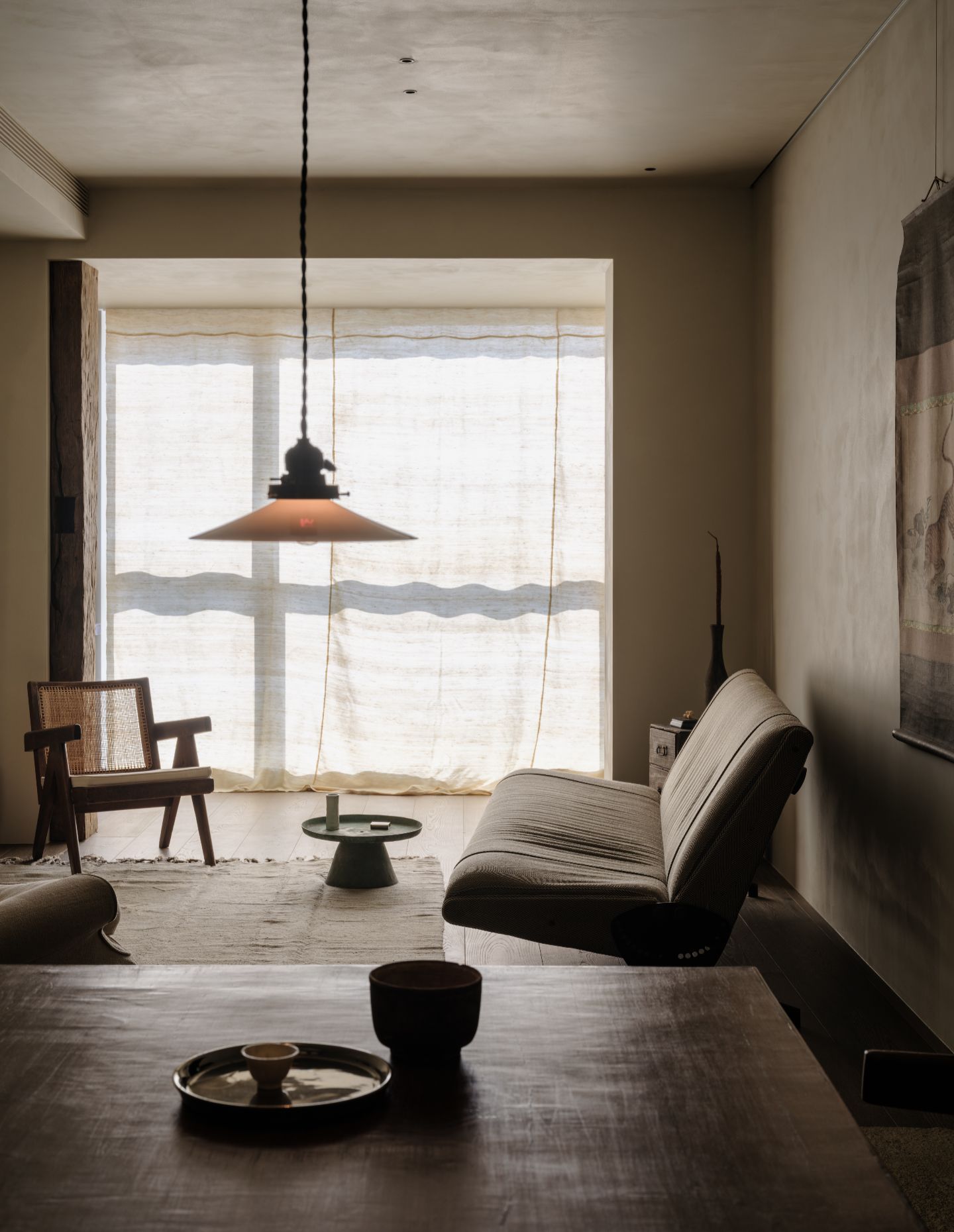
The corridor plays a central role in how the apartment is experienced. Rather than functioning as a purely transitional space, it was designed as a subtle threshold that marks movement through the home. A slight change in level at the entrance introduces a stone slab that signals arrival, while the corridor itself is wrapped in aged timber. This material shift echoes the layered transitions of the city beyond the apartment, where movement often involves passing through different surfaces and elevations before reaching a destination.
Material choices throughout the home reinforce a sense of continuity and reuse. Recycled and weathered stone appears in wall panels, door hardware and bathroom elements, its patina left visible rather than corrected. Vintage furniture brings a sense of familiarity and permanence, grounding the space in lived experience rather than novelty. These decisions support the project’s broader aim of reducing material waste while allowing the interior to feel settled rather than newly completed.
Related: Patchwork as philosophy
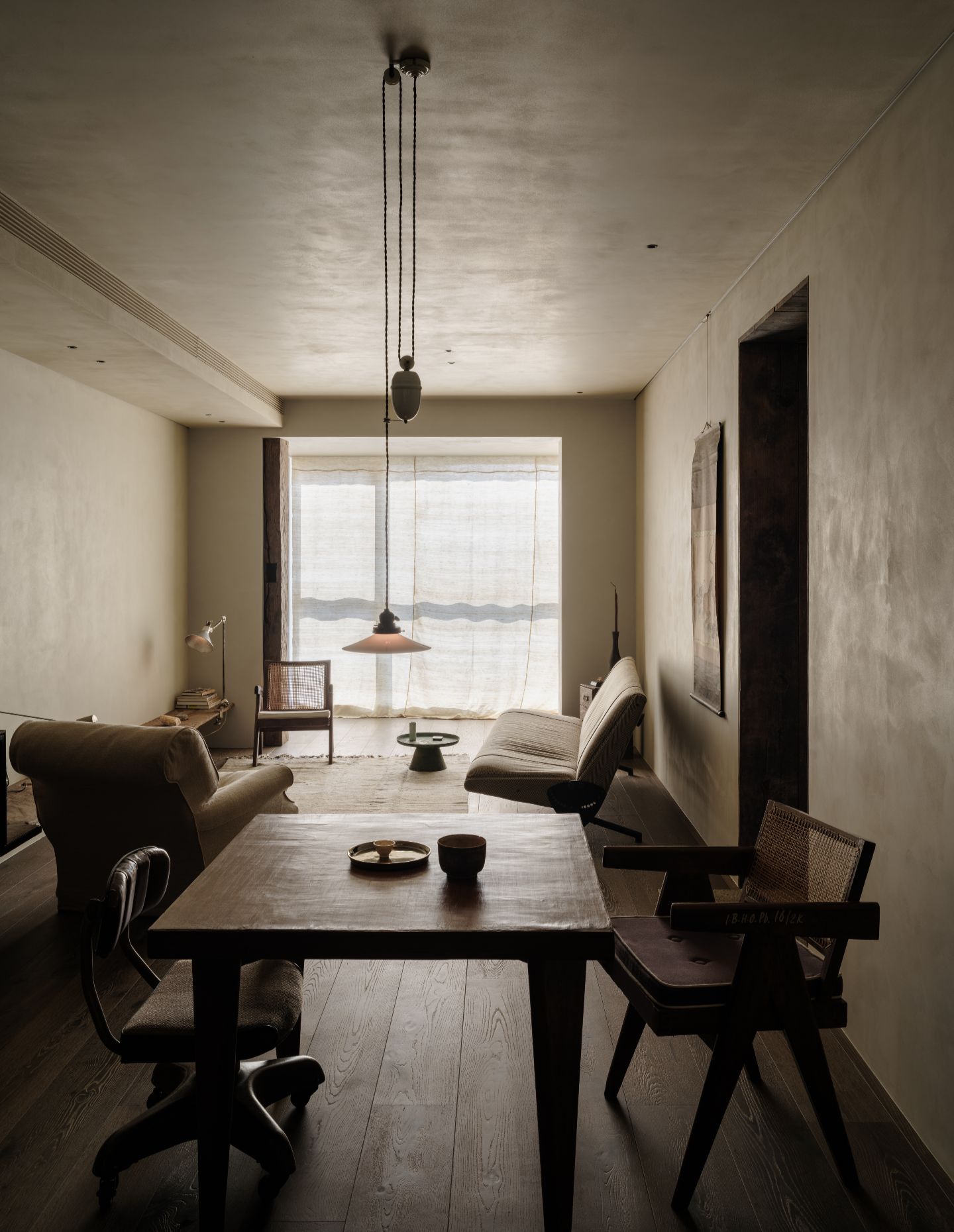
What distinguishes Residence F is the way it accommodates both domestic life and creative practice without forcing a separation between the two. The apartment supports daily routines while remaining open to change, allowing artworks and objects to be moved, replaced or reinterpreted as the client’s life evolves. Instead of presenting a finished interior, the project embraces the idea of the home as something that accumulates meaning gradually.
In a city where residential interiors are often designed for immediate visual impact, Residence F offers an alternative. It is a home shaped by use rather than image, one that privileges familiarity, material honesty and the quiet rhythms of living over time.