

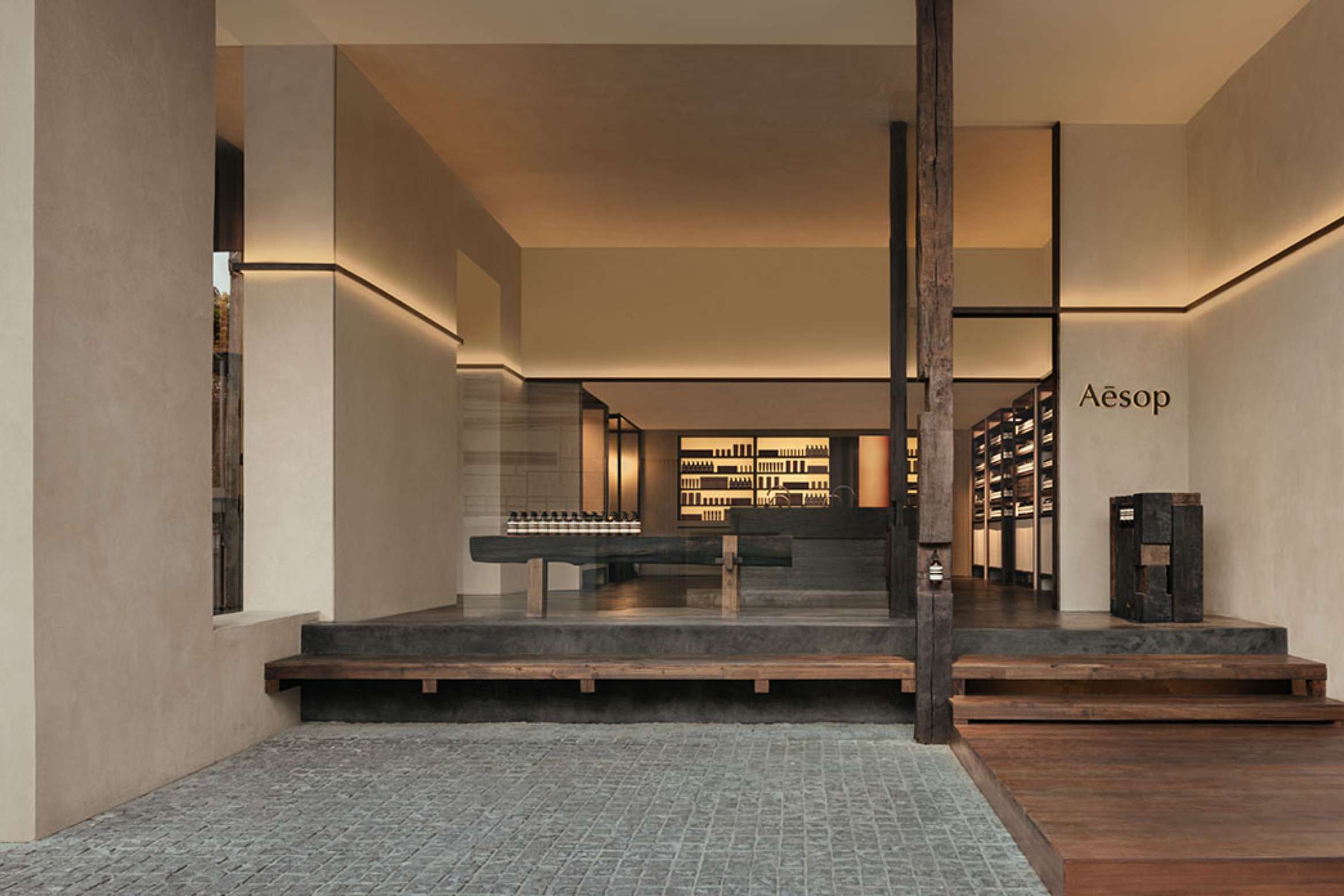
Bangkok now has its first standalone Aesop store that is filled with crafted elements by Chiang Mai-based architecture firm Sher Maker. In fact, it is the Australian-founded skincare brand’s only street-level retail space in Southeast Asia.
The tactile, considered spaces provide a calm welcome from the streets of the chic Thonglor district lined with galleries, bars, cafes, concept stores and community malls, supported by surrounding affluent residences. Many Japanese expatriates especially have chosen to live around Soi Thonglor 13 where the store is located.
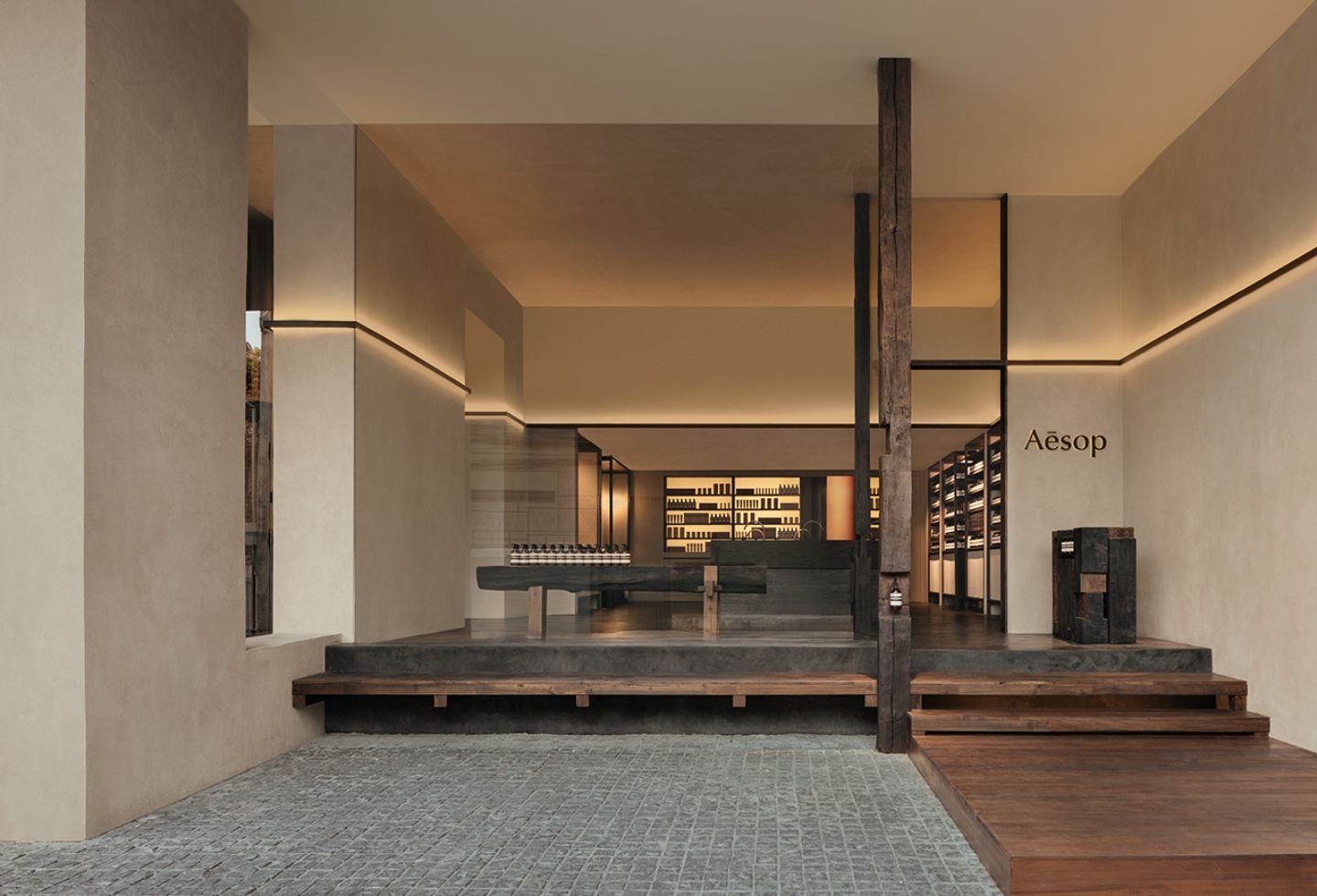
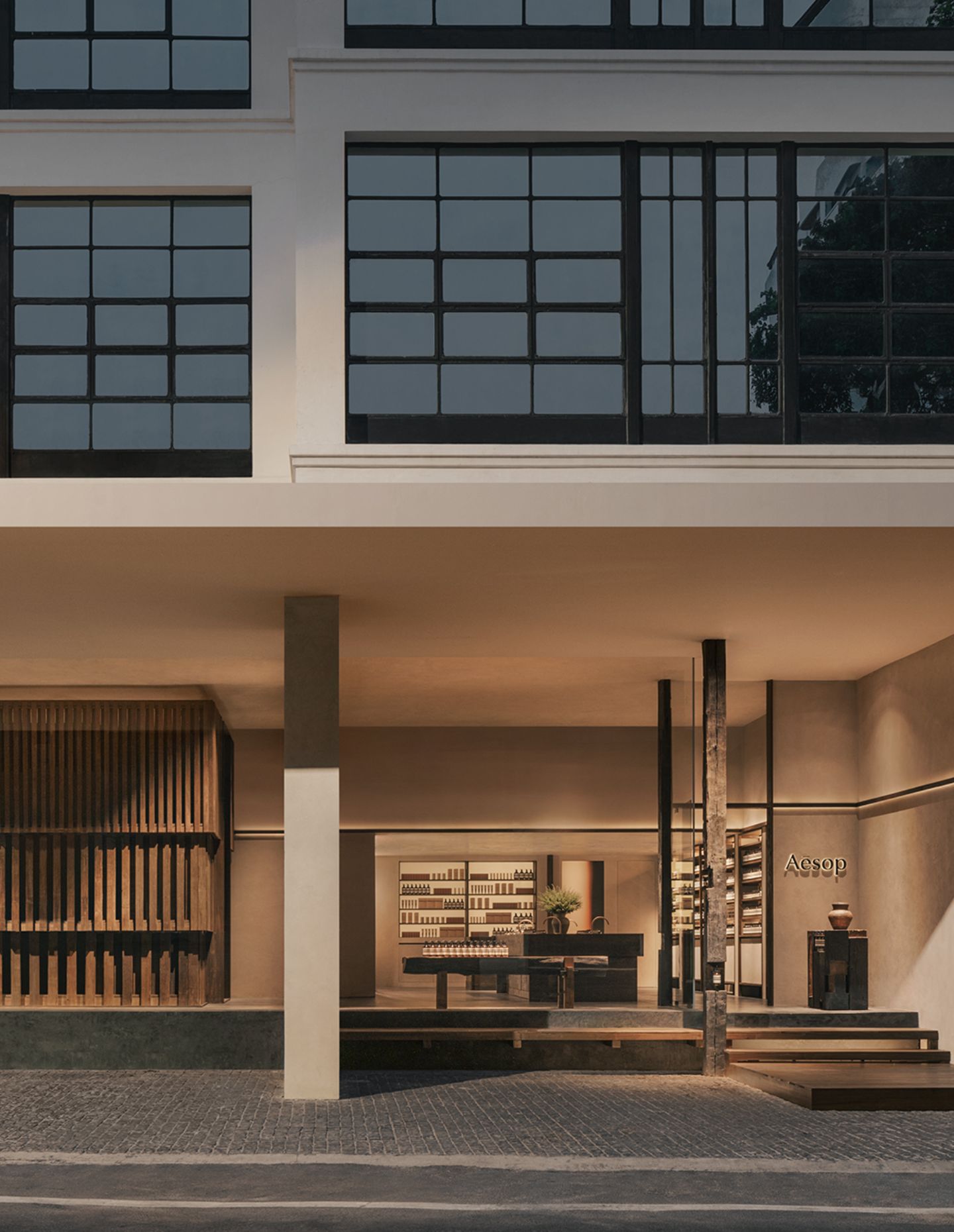
“The existing four-storey building is a fashion store owned by the landlord, with the first floor for retail, and offices and residences on the upper floors,” shares Patcharada Inplang, Sher Maker’s design director who co-founded the firm with Thong chai Chansamak. The 190-square-metre store is set back from the street to allow for car parking upfront. What this also does allow for a sense of procession into the store. A composition of lines comprising steps and a bench mitigate the level difference in a considered way.
“The sequence always starts from the main approach at the right side, where we put a [reclaimed timber] column to mark the entrance into the project,” says Inplang. This column, along with several others of the same kind, celebrates the passing of time with their knots and imperfection. They appear as sculptures within the serene, minimal backdrop.
Related: This holiday cabin in Thailand is all about connecting to the natural world
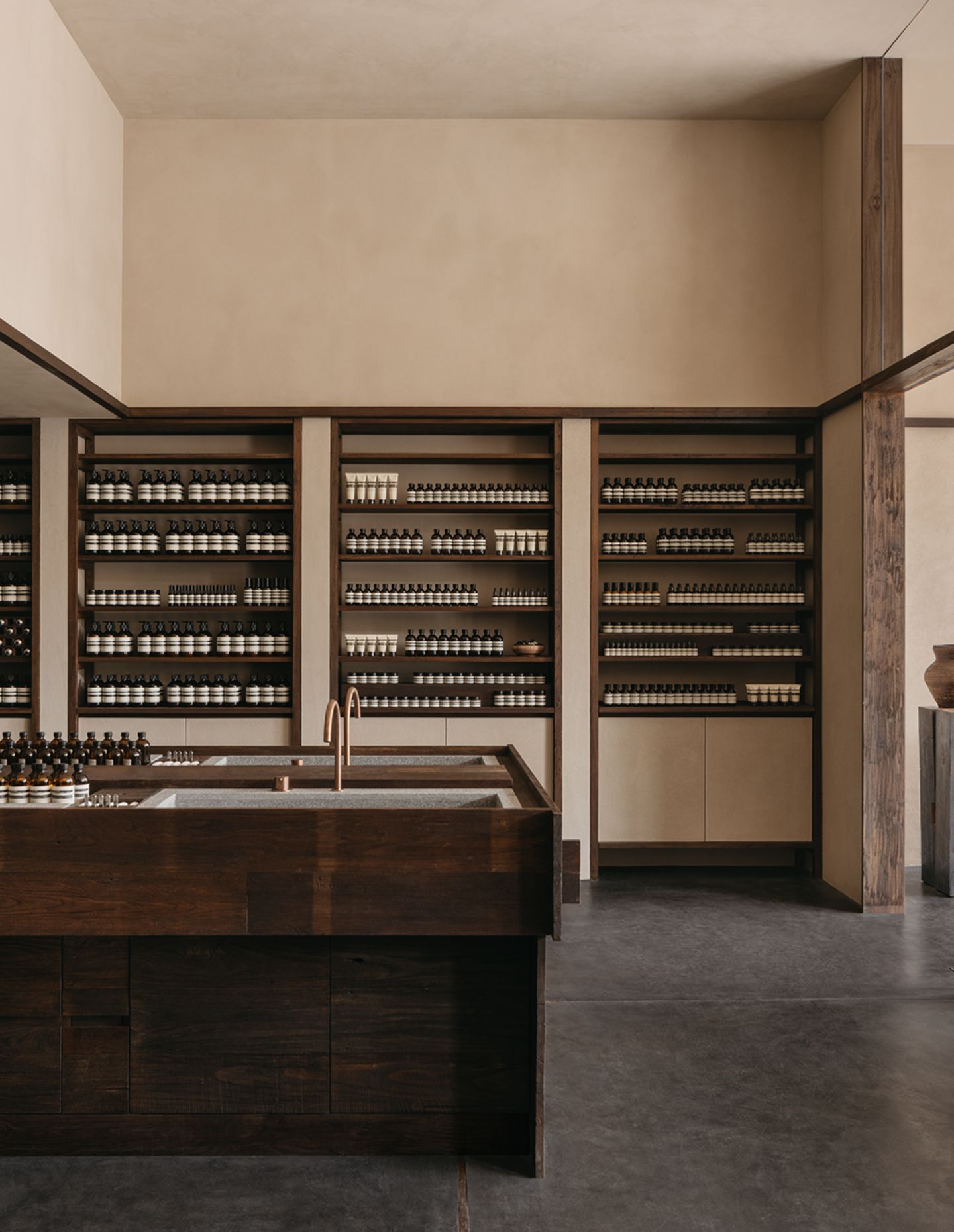
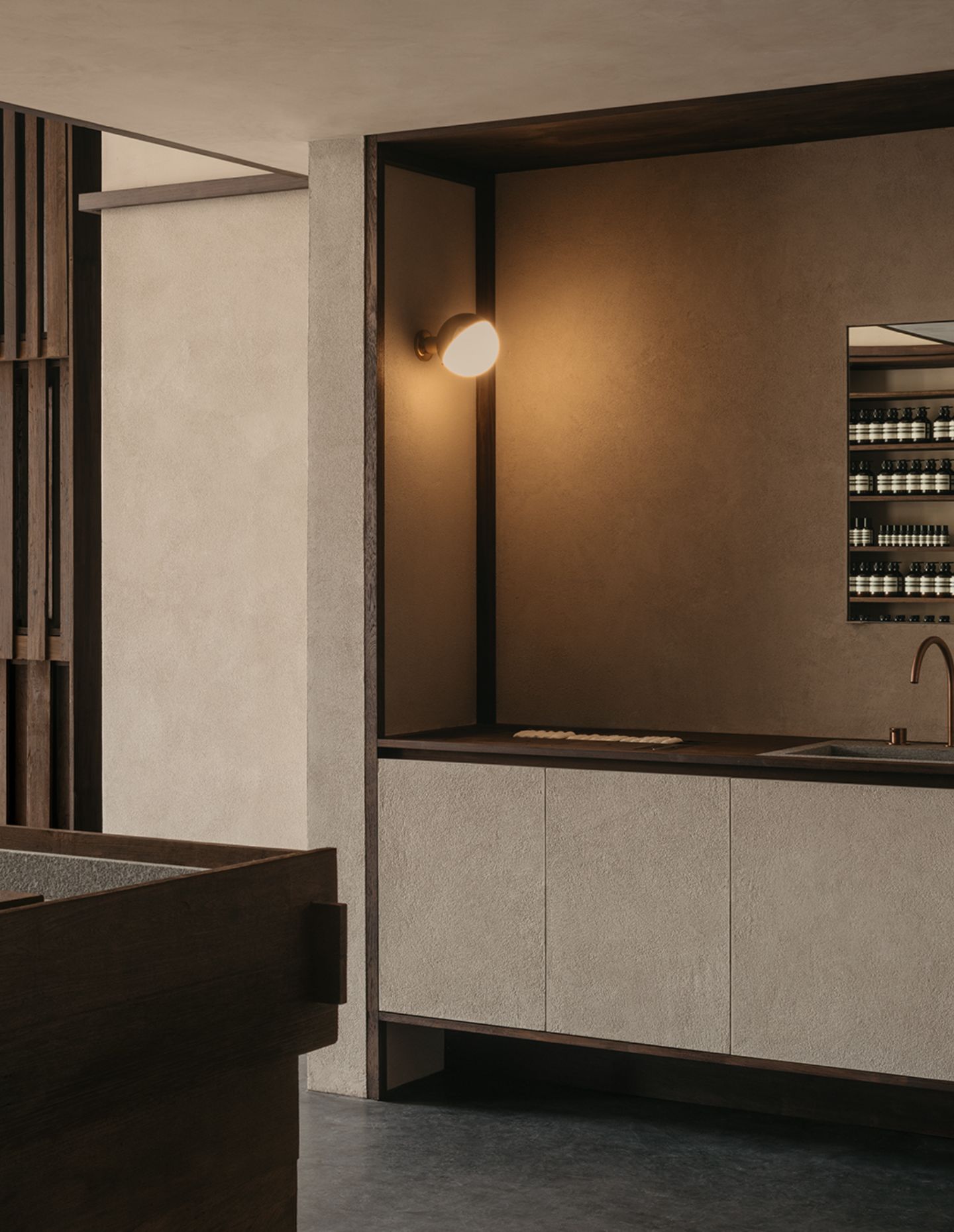
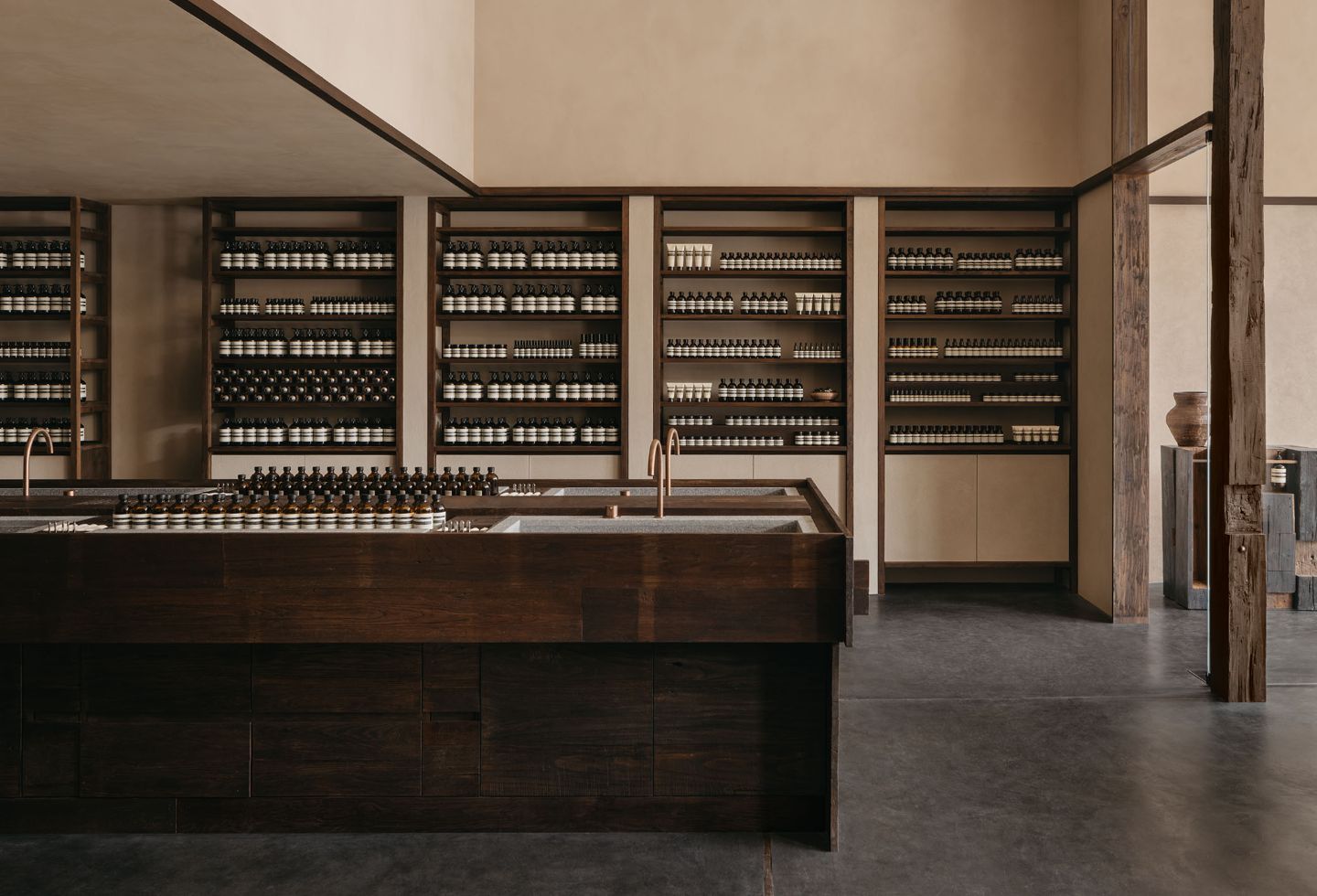
The materiality continues into the store, with reclaimed teak structured used to make shelves, framing eccents, partitions and to clad a capacious four-sink island at the centre of the main area. For each Aesop store, the sink is the heart of engagement and a symbol of cleansing in line with the brand’s offerings. Here, they are made with Thai granite, inspired by the kraba-din (traditional earthen fire pit used in local villages as functional and community elements). The ample reclaimed teak came either from the owner’s own collection or the Bang Ban district in Ayutthaya – a historic area an hour’s drive away.
“We have the same design direction as Aesop in their store design, to use domestic materials [as and when possible]. This not only mean we [minimise] imports, but users can deeply observe the [context] of the store,” Inplang comments. The existing reclaimed teak floor was also retained.
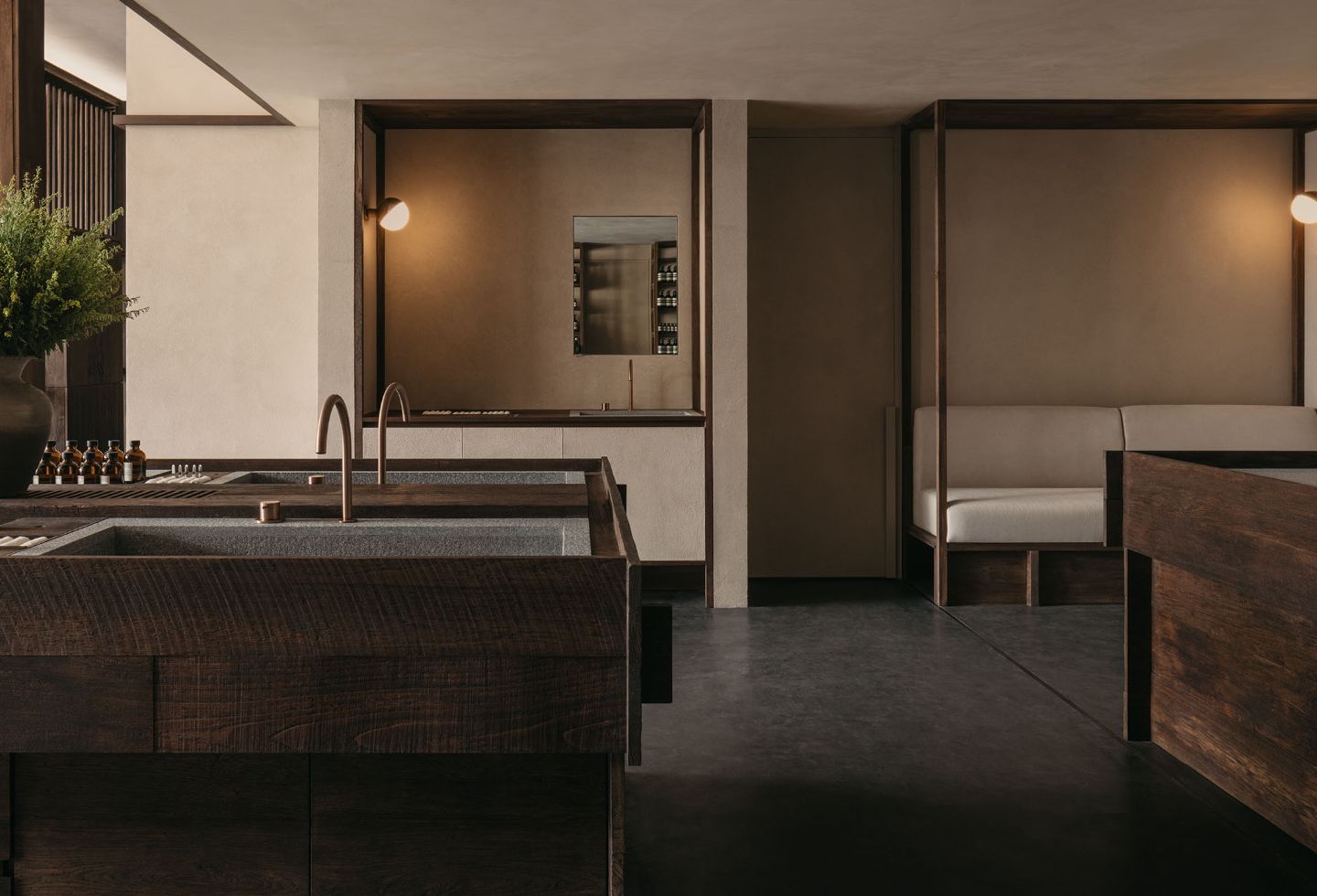
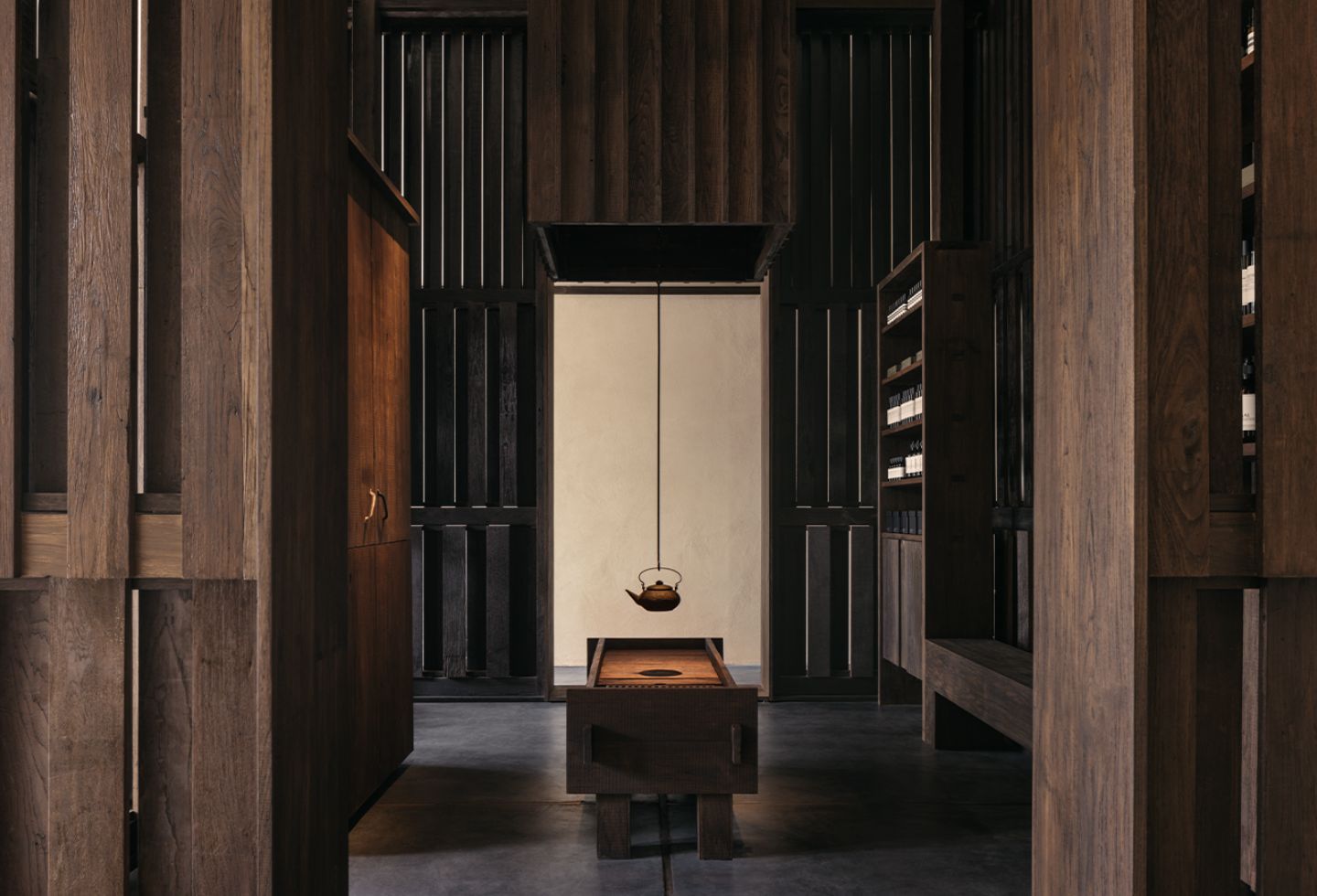
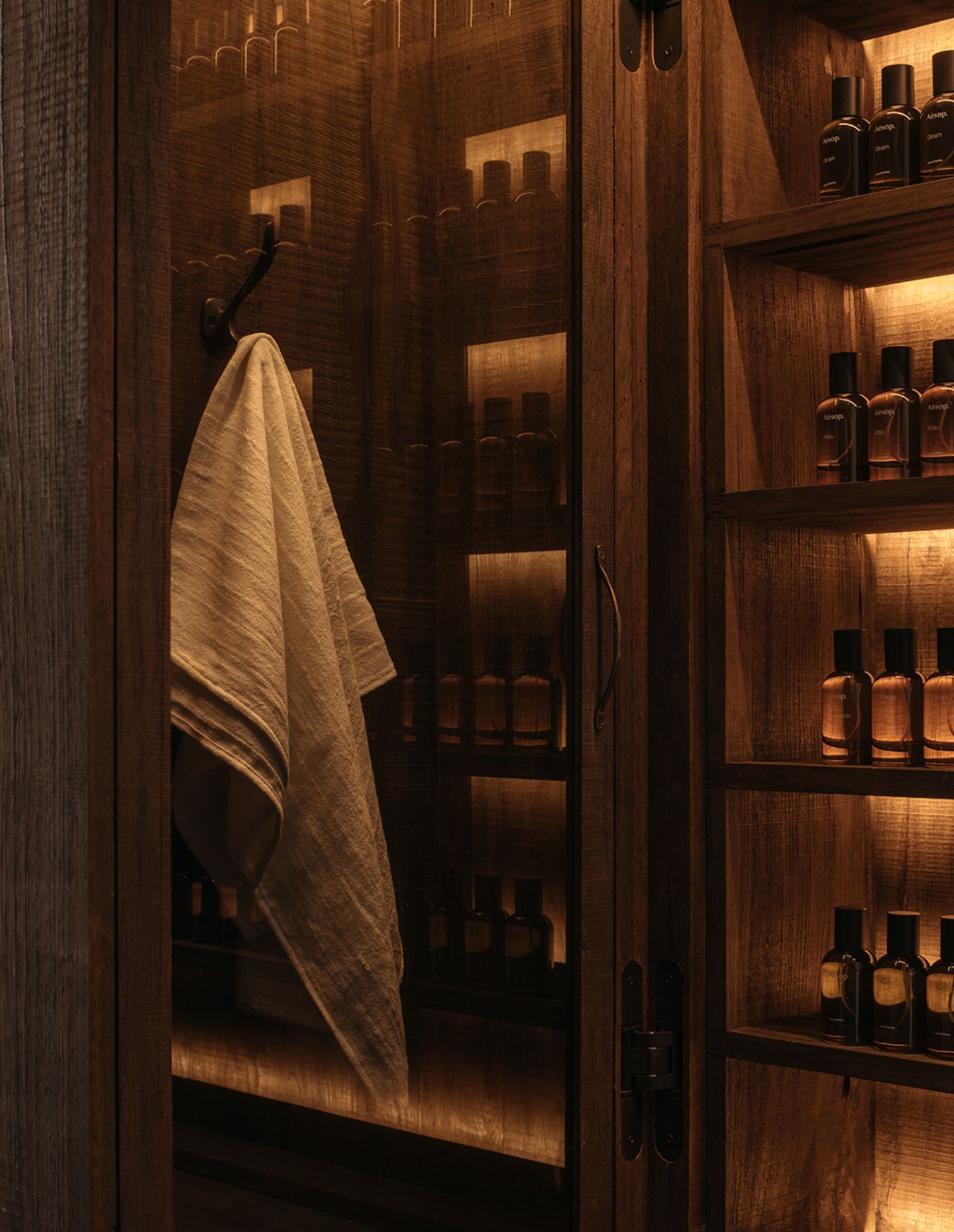
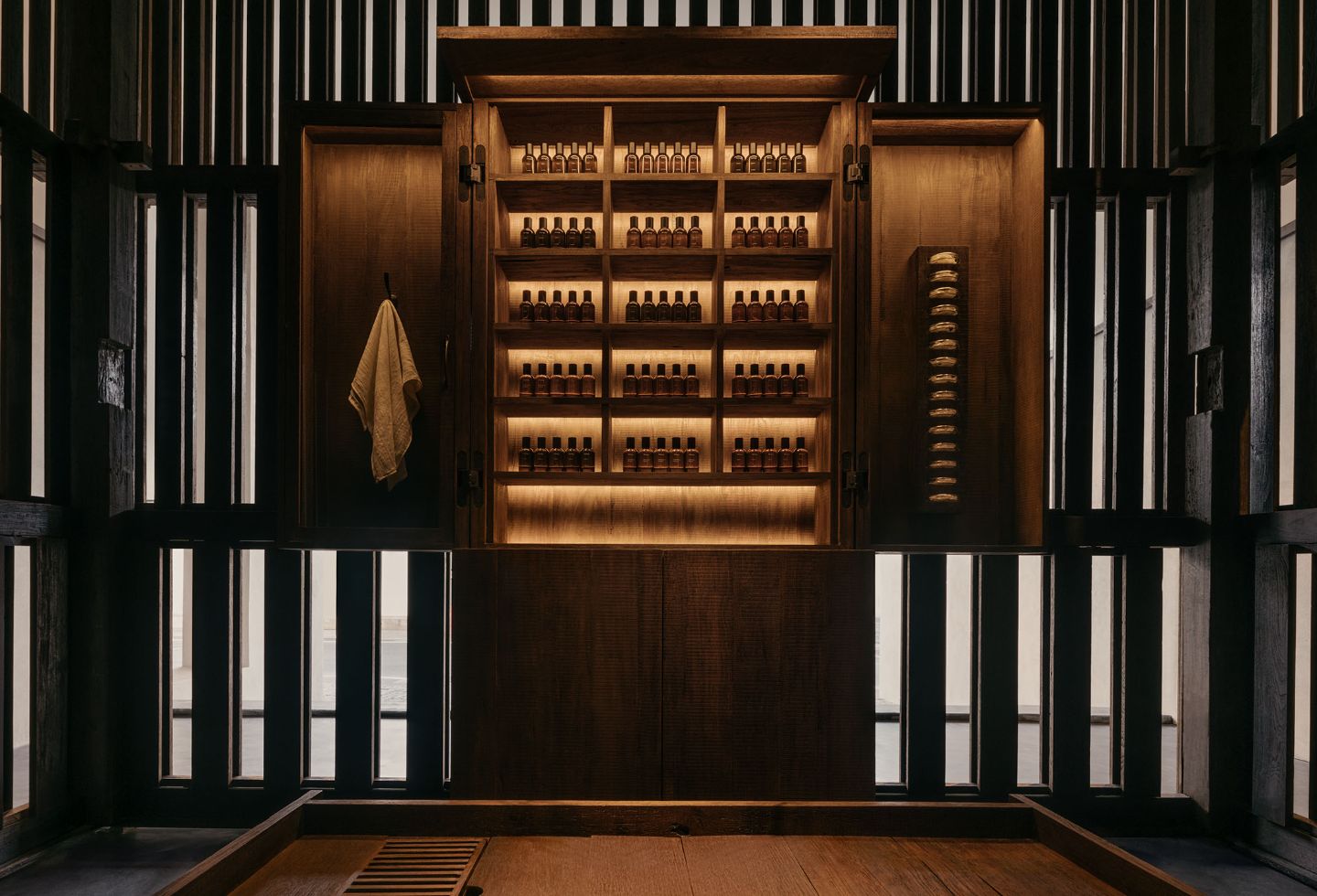
The training room and back-of-house facilities are tucked to the rear while at the left side of the store is a ‘sensorium’ for the appreciation of Aesop’s Eaux de Parfum fragrance collection. This is the Fa-Lhai Room, where teak slats form the walls, with gaps creates a shadowed setting. They allow sounds and smells but also but also privacy – much like the laundry rooms or kitchens in Northern Thai vernacular houses. Down to the mortise and tenon joints, the store’s design bring attention to the craft of vernacular architecture.
“The joinery is directly related to the structure. We do not aim for the detail to be only aesthetic, but to be [functional, such as] the wood column that braces the horizontal wall frame to support the Fa-Lhai wall,” says Inplang. In the centre of the Fa-Lhai Room, a tea-warming stove modelled after traditional earthen stoves in rural Thai kitchens symbolises the act of gathering and exchange, with the warmth of fire fostering connections. In the store, it also serves as a reminder to slow down and be more mindful about life and living.
Next up: Henne boutique is a bold canvas of colour and texture