
The joy of SJB founding director Michael Bialek’s affirmative response — and what has become an SJB signature — of “correct”, speaks volumes for a project that Bialek and SJB director Andrew Parr have been working on for the past 15 years.
To start at the beginning, the project first came to SJB in 2009, when the client was looking to renovate a pair of 1930s duplexes on separate titles into a single home to meet the needs of a growing family. At the time, the three children were young and each was given their own bedroom. This detail remains important, as these rooms are still the domain of each child today, even as a new entry point and garage now provide direct access into the home and support comfortable, multi-generational living.
By 2021, the family remained very happy in the location, but circumstances had changed. The children were now active teenagers, extended family gatherings were frequent, and more space was needed. With the opportunity to purchase the adjacent properties, the family approached SJB to explore what might be possible. As the primary architectural lead, Bialek was immediately intrigued by the potential of three adjoining houses and discouraged any idea of demolition. Instead, he advocated for retaining as much of the existing building fabric as possible, both for environmental reasons and for what he describes as the project’s ‘nostalgia factor.’
At that time, the existing home had its main living areas located on the south side of the property, limiting natural light and connection to outdoor space. There was also no substantial area for outdoor recreation. By acquiring the neighbouring two-storey townhouse and an additional property, boundary fencing could be removed, allowing both the primary home and townhouse to benefit from increased amenity.
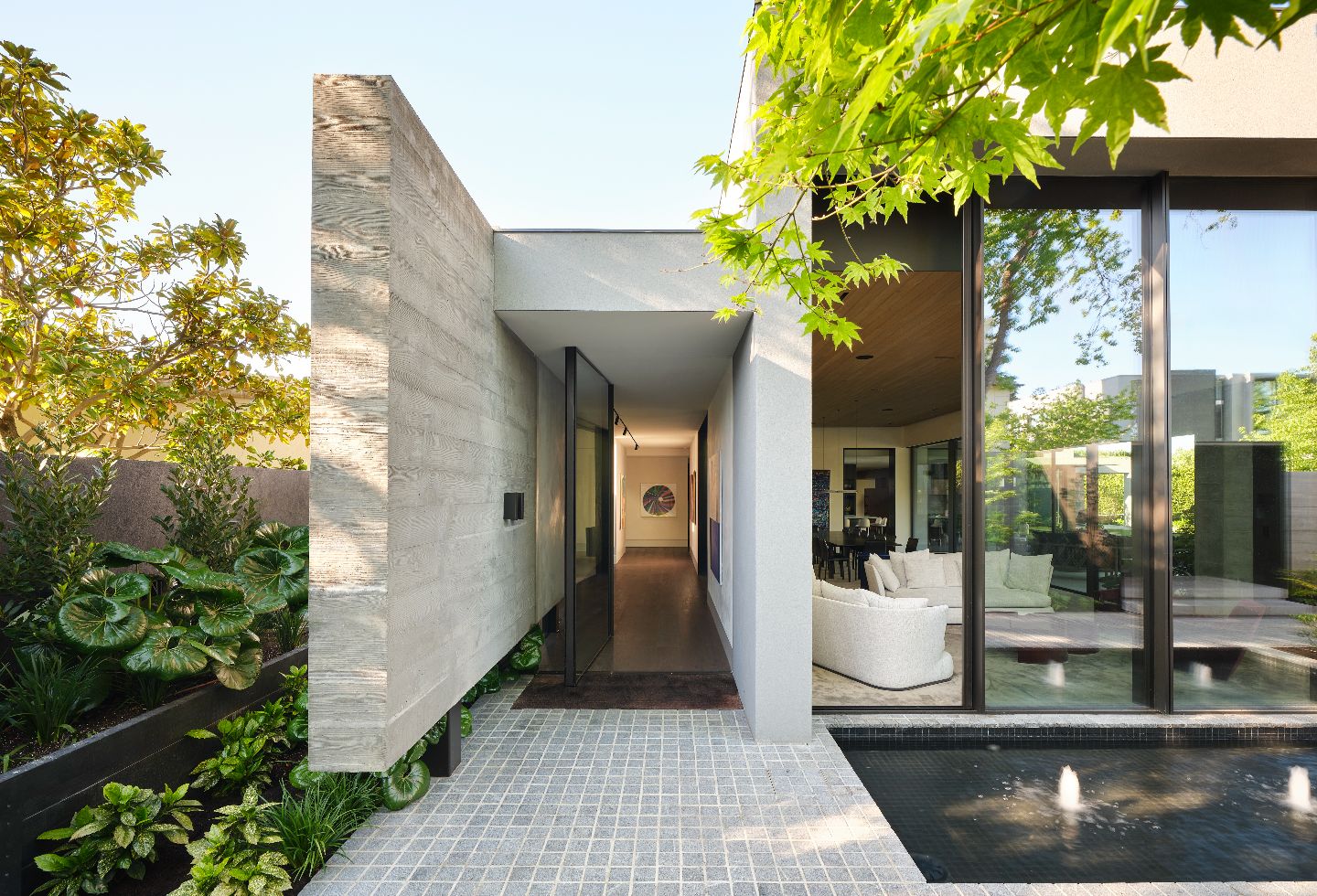
For the main house, the entire external fabric — including the roof — was retained, while the ground and first floors were reworked to enlarge the formal living areas, primary bedroom, ensuite and dressing room. “It’s one of those jobs where you stick your neck out and say, ‘Yes, you should buy this land,’” says Bialek. “There was also the memory of the children growing up in the family home and not changing that for them. In fact, all the children’s bedrooms and bathrooms have been kept as they were.”
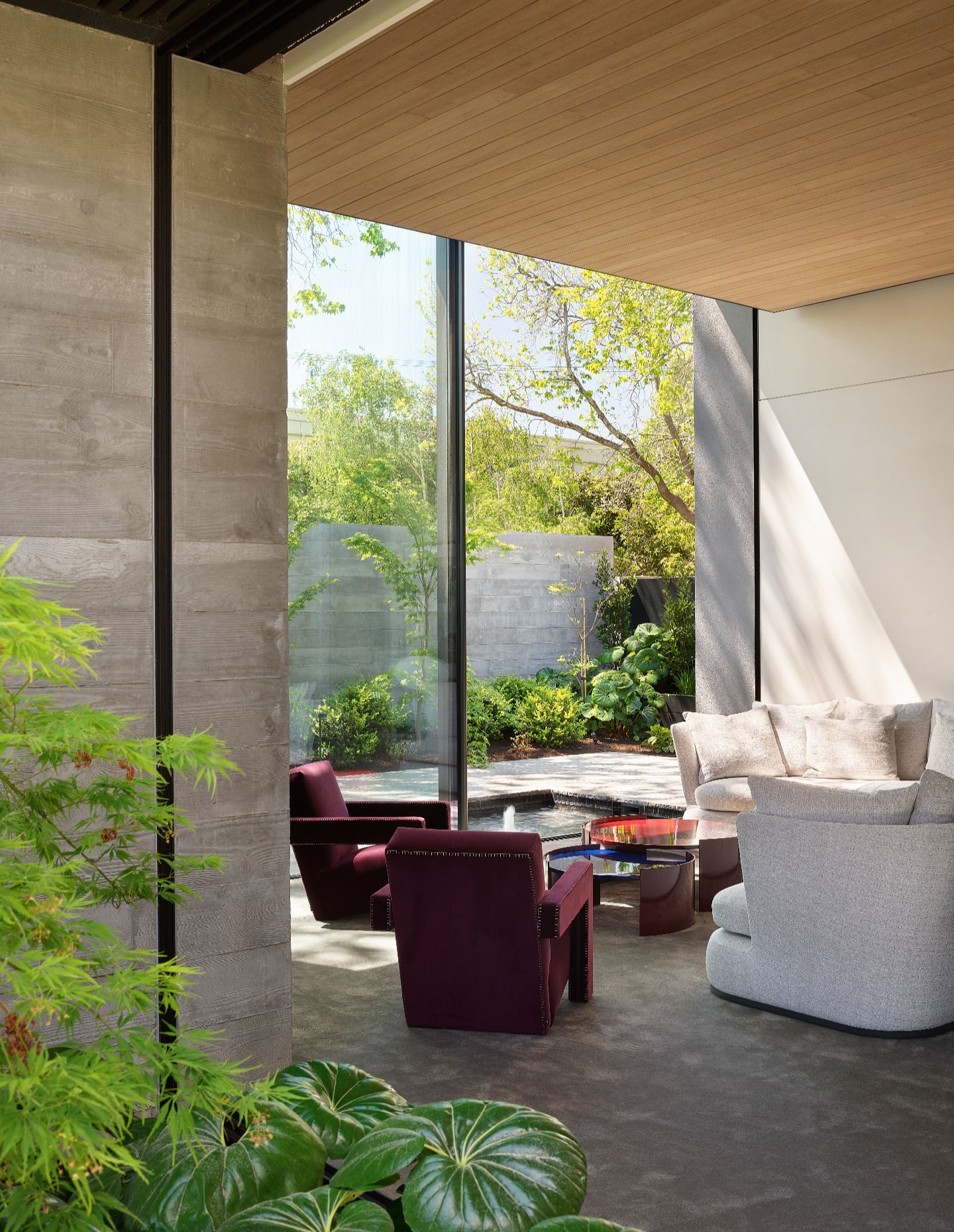
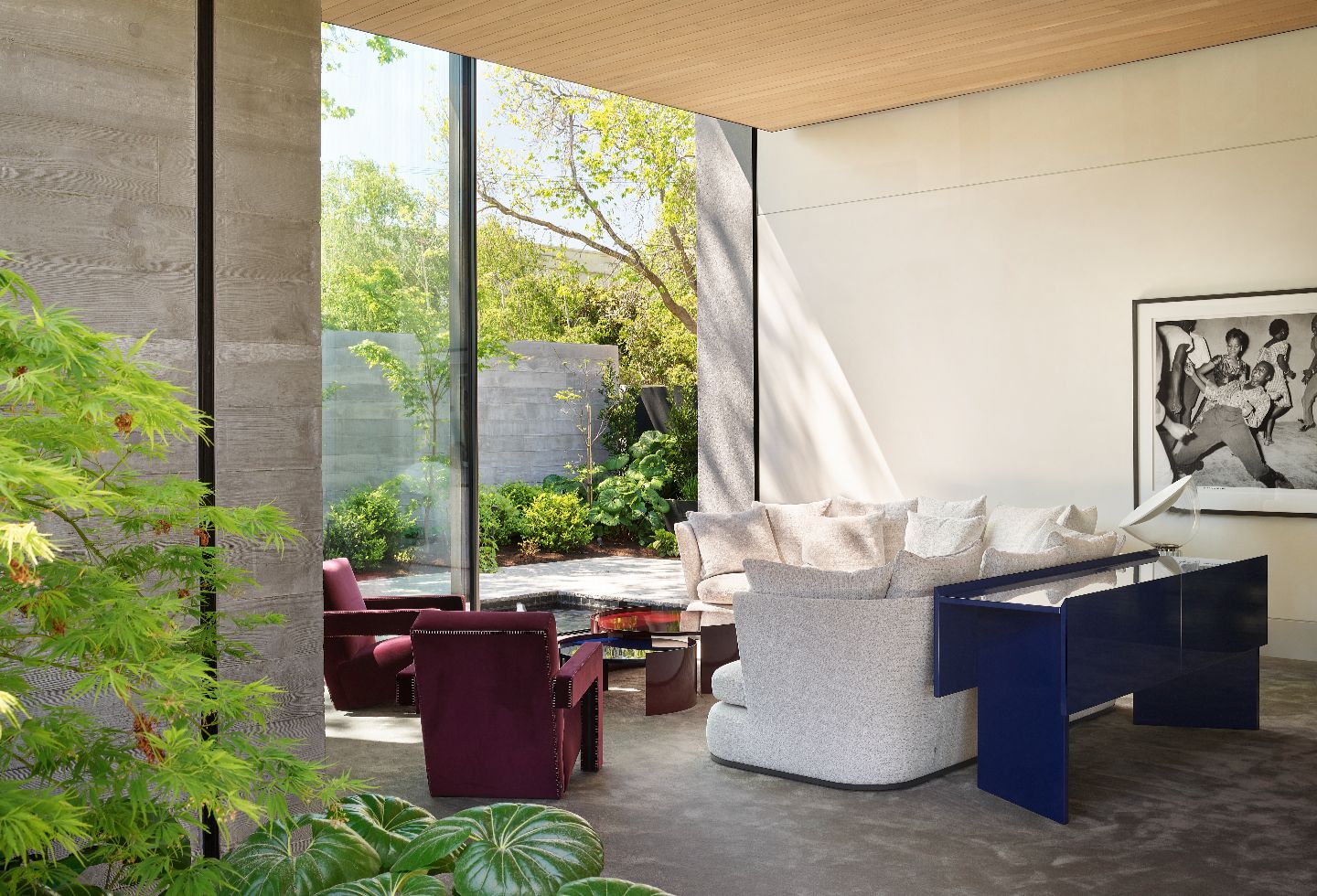
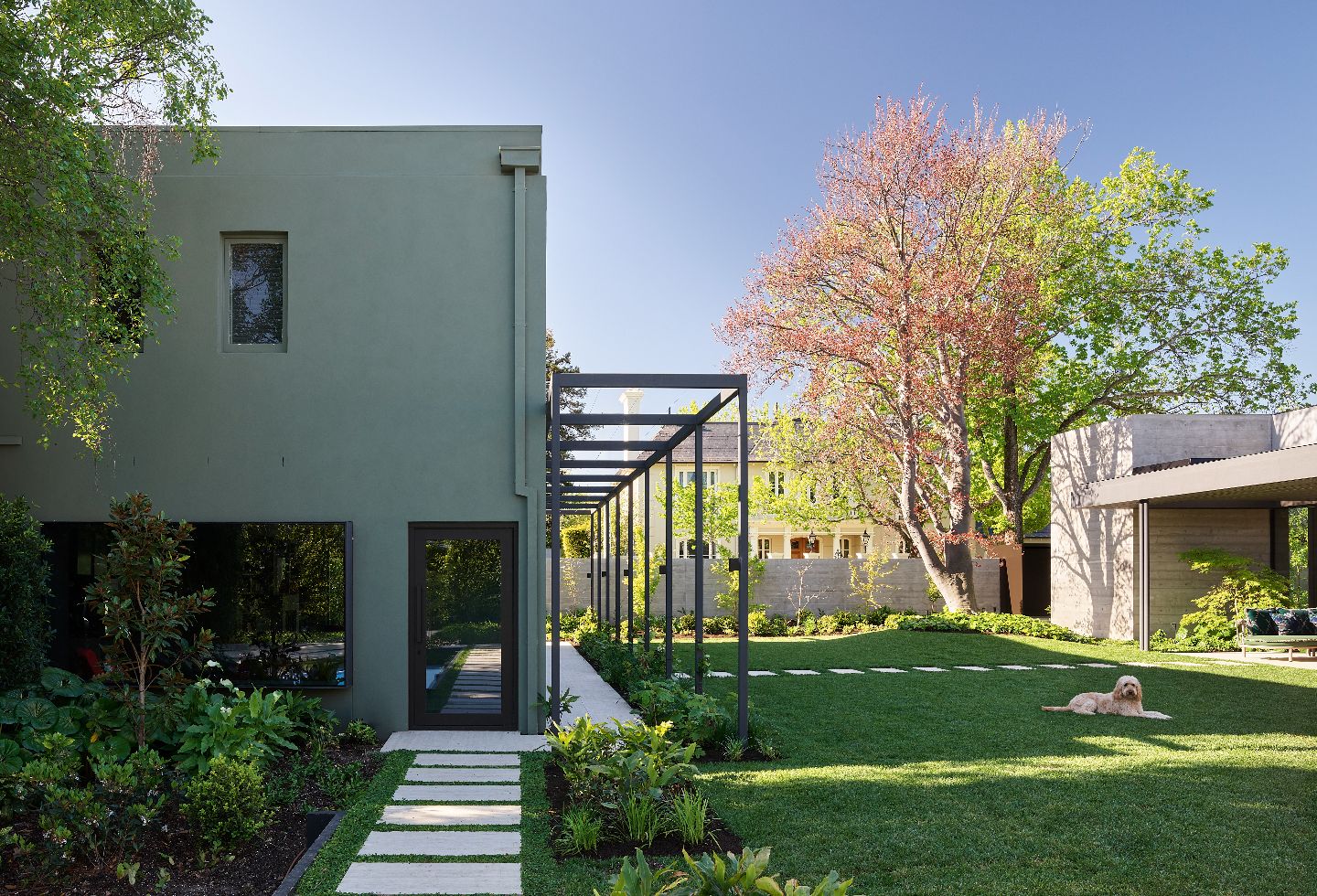
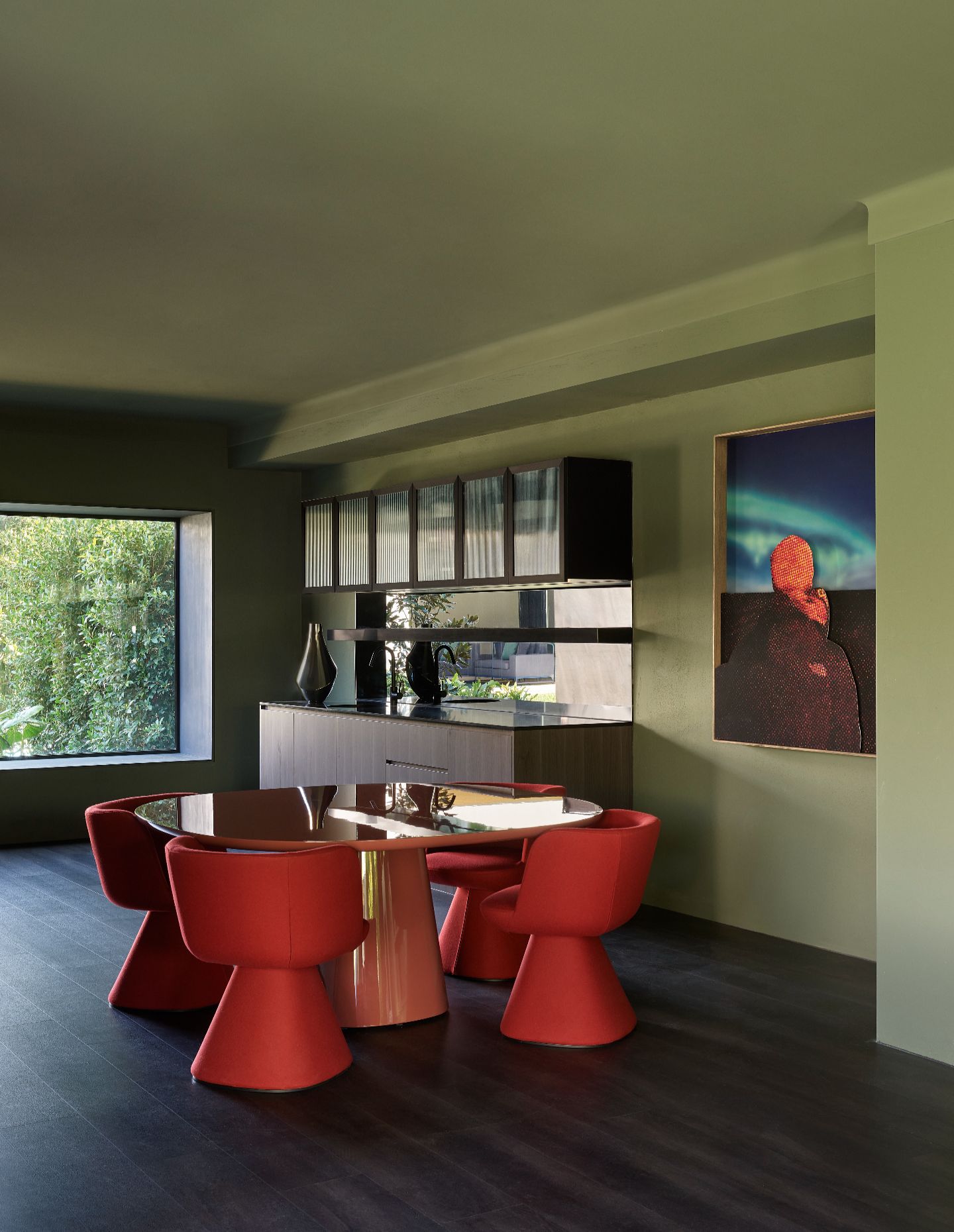
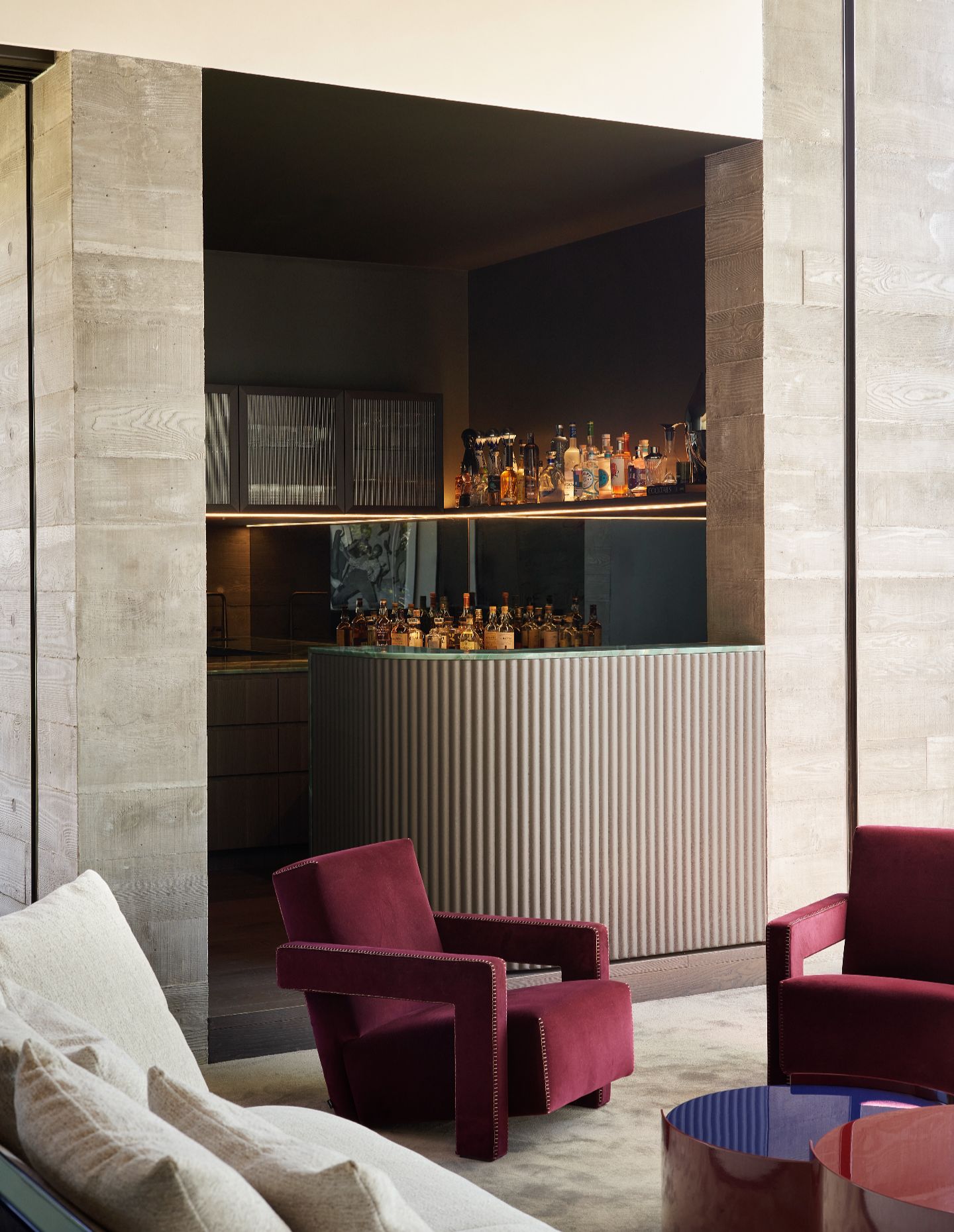
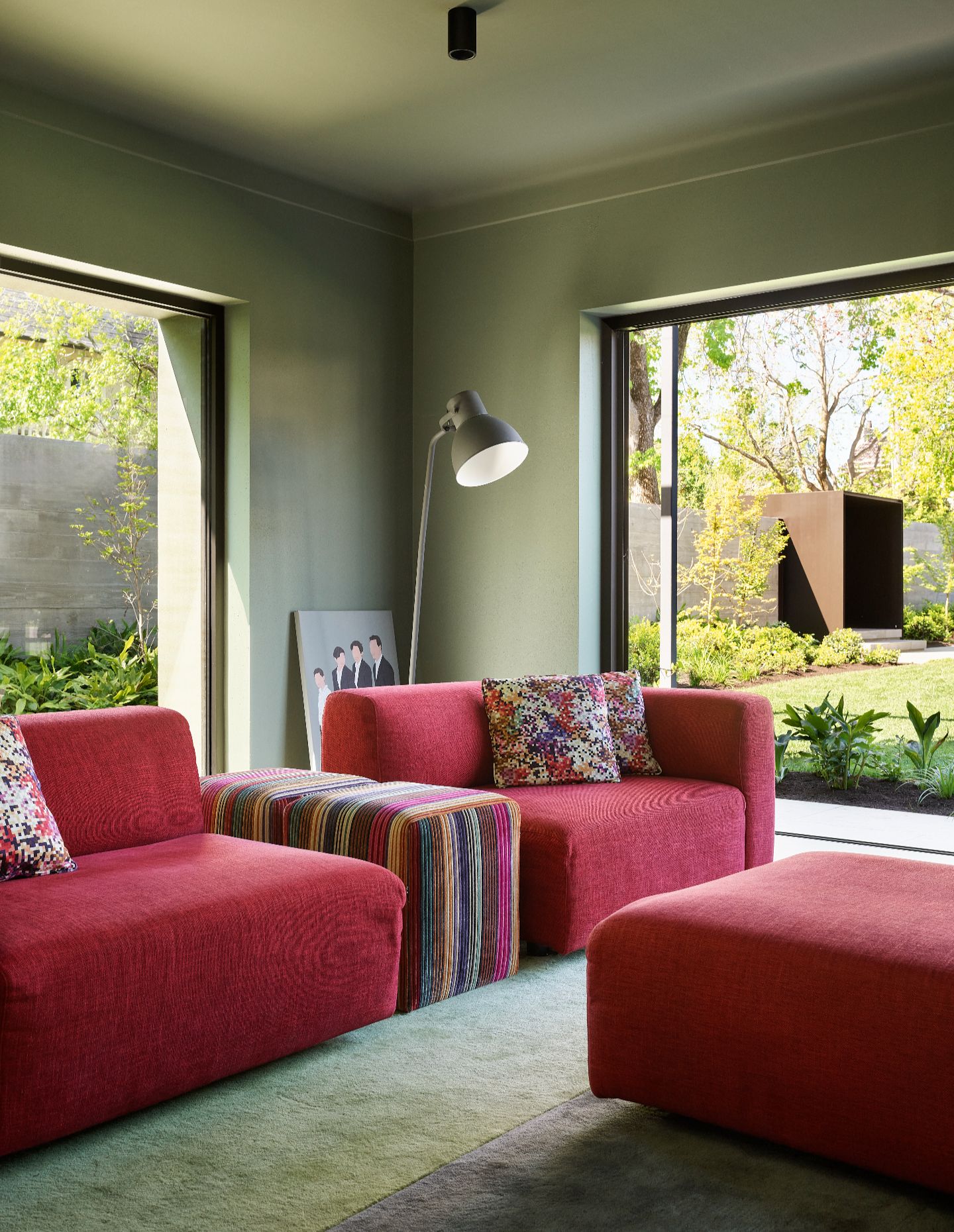
The townhouse, now painted green inside and out, was transformed into a pavilion housing a gym and kitchen facilities. Large windows flood the interior with light, while MDF Italia sofas, a B&B Italia Allure O’ dining table and Flair O’ swivel chairs establish a relaxed, grown-up atmosphere. The main lounge of the original house is more formal, though still deeply comfortable, with a leather-fronted bar discreetly tucked into a corner. “You don’t want the bar to be a grandstanding thing, but the clients do enjoy a cocktail experience,” says Parr, who conceived the lounge as an extension of that ritual. “The sofas are extremely comfortable, as are the Utrecht chairs, which I think of as functional pieces of sculpture.”
Related: A circular home shaped by geometry and craft
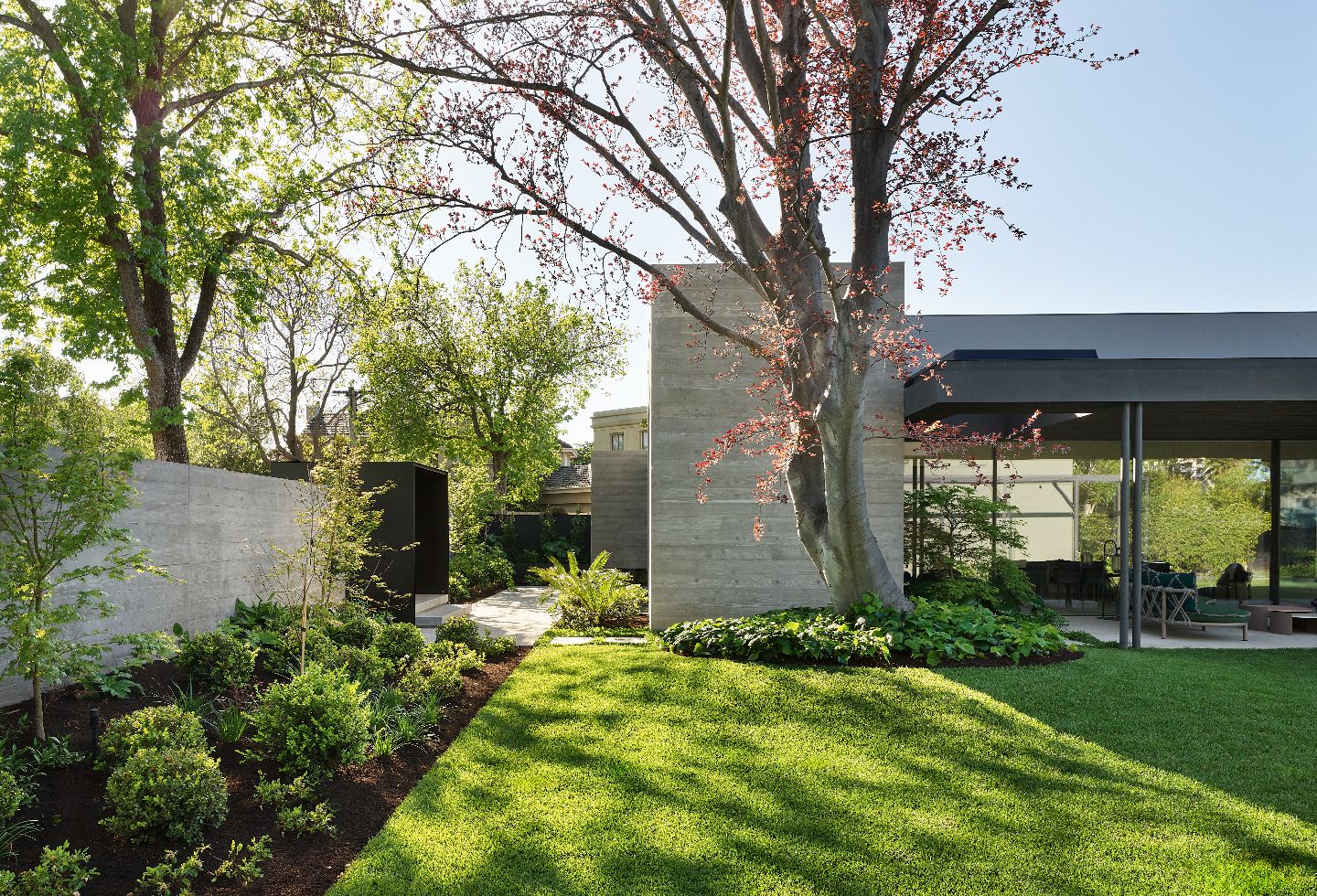
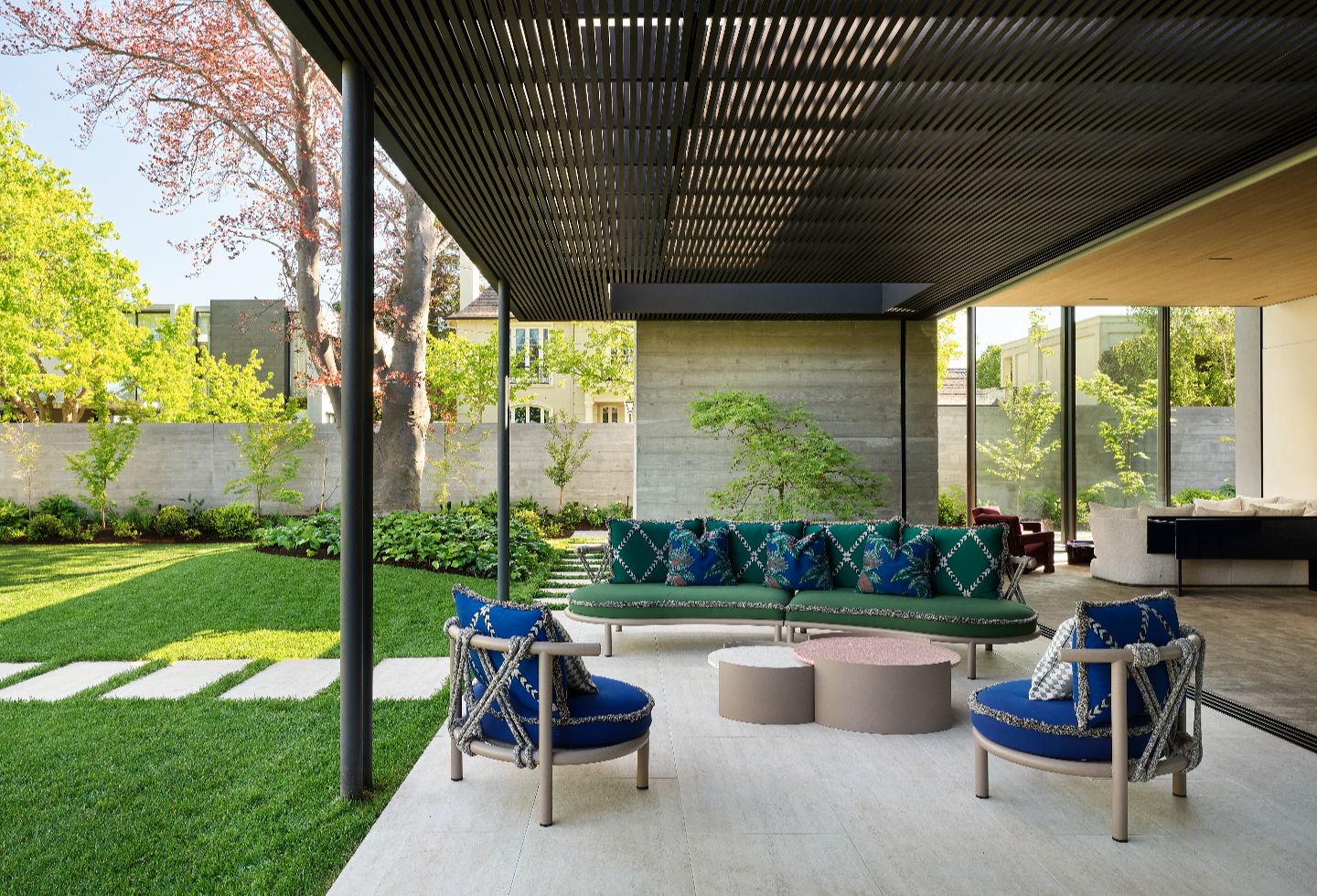
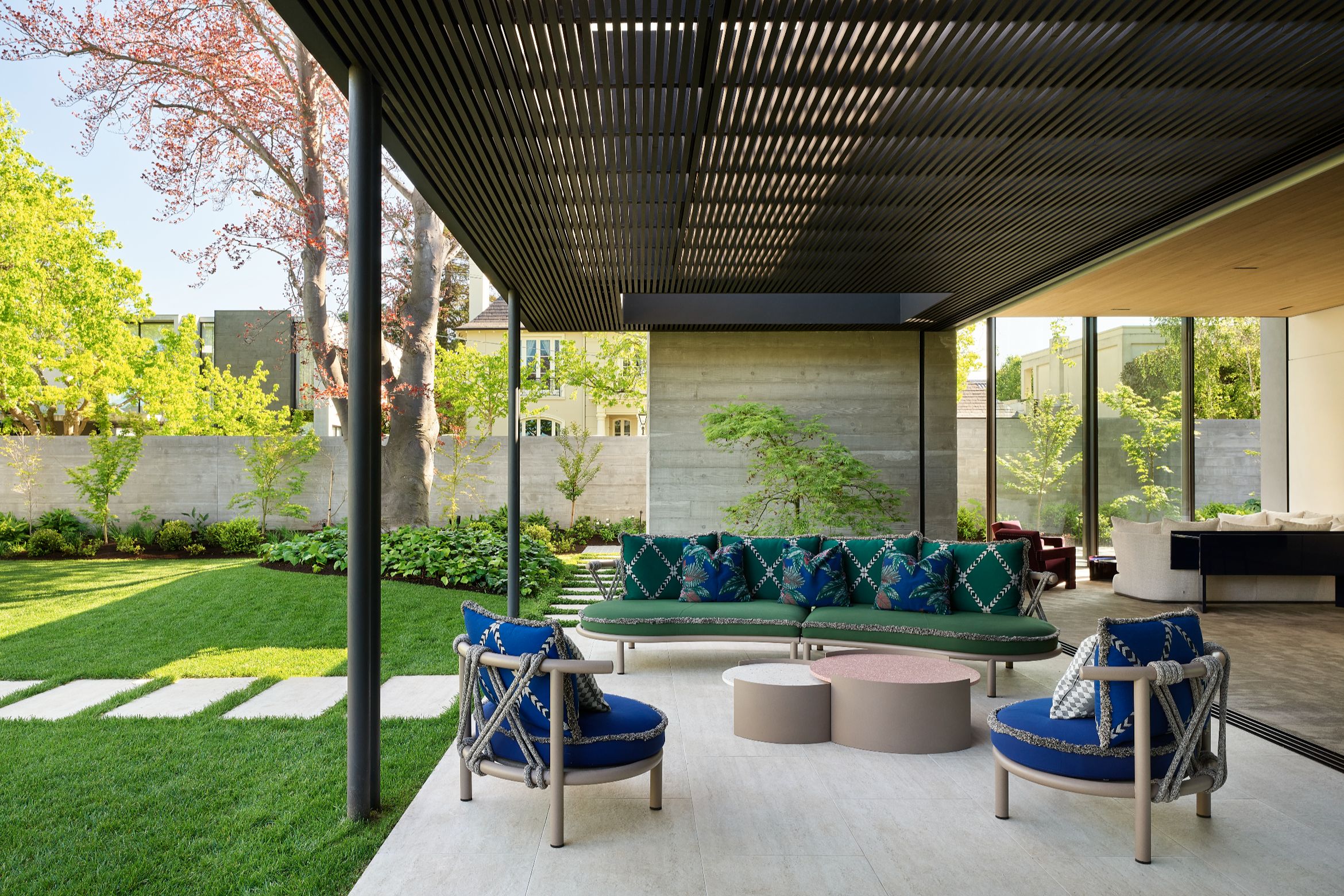
Effectively now facing each other, both the original home and townhouse look across the lawn and the vast, established tree which has been carefully preserved. “What joins all this together is this large, grass, outdoor landscape courtyard where all the living areas now look onto. So, the feeling of openness and lightness and connection between inside and outside has transformed the original house,” says Bialek.
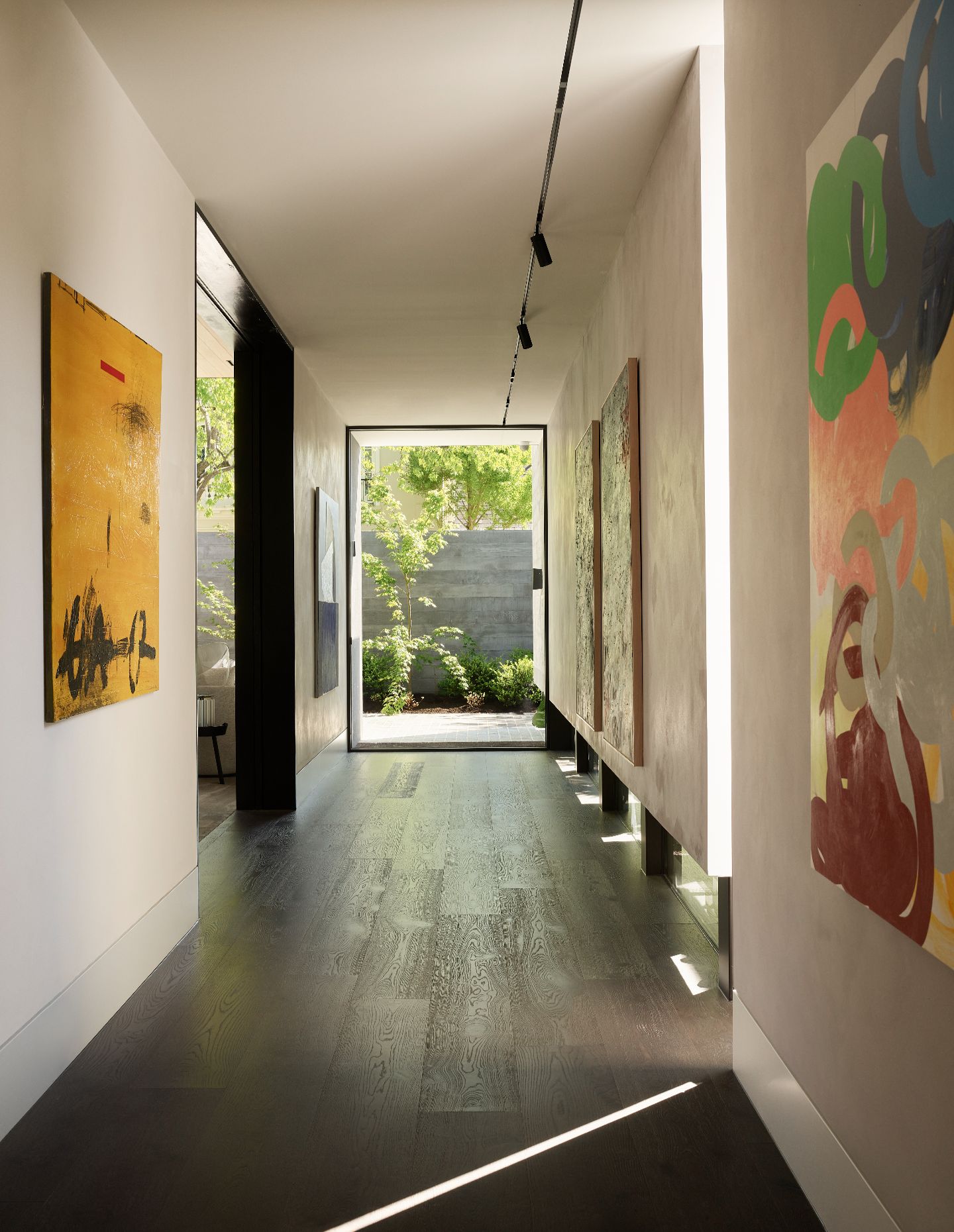
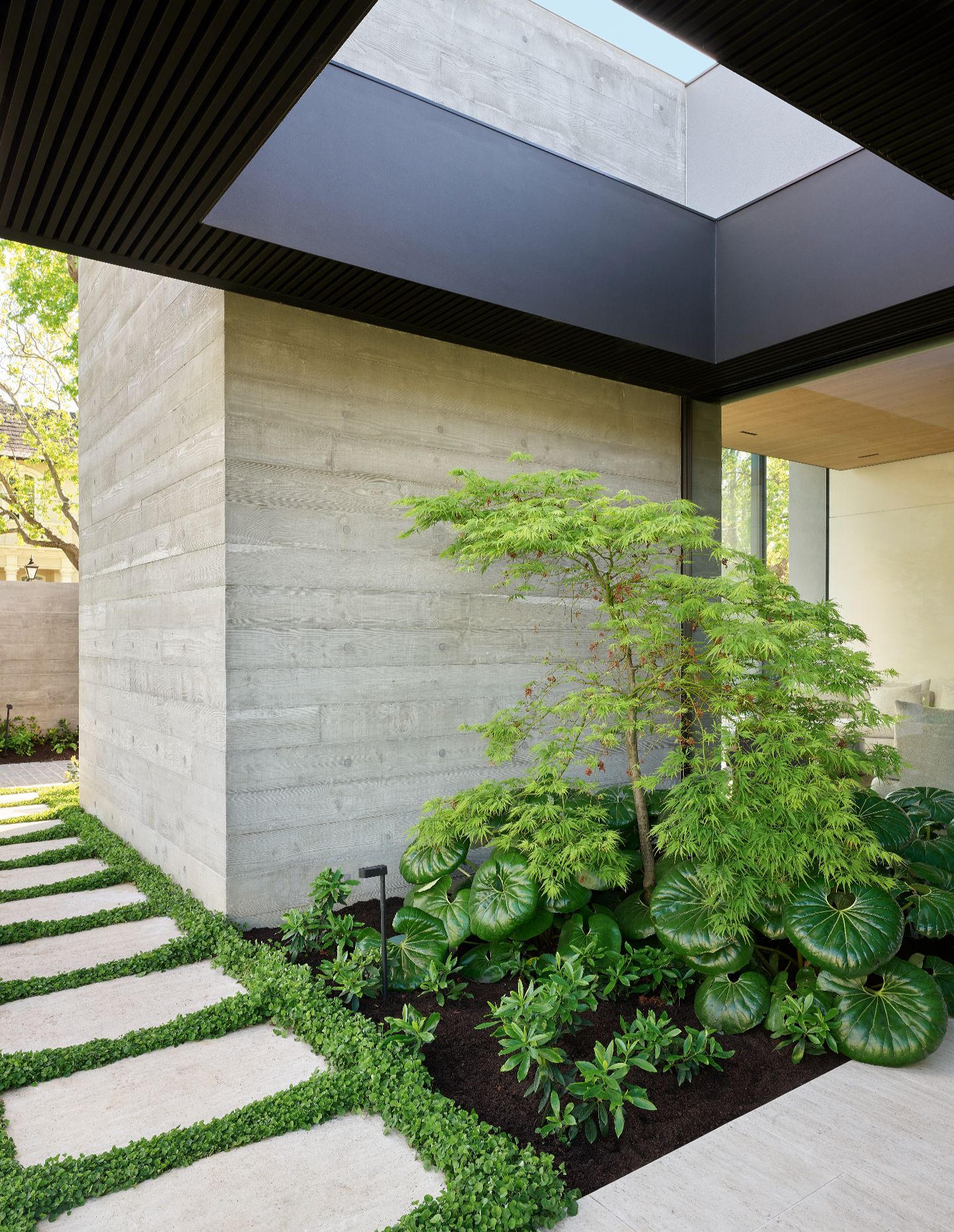
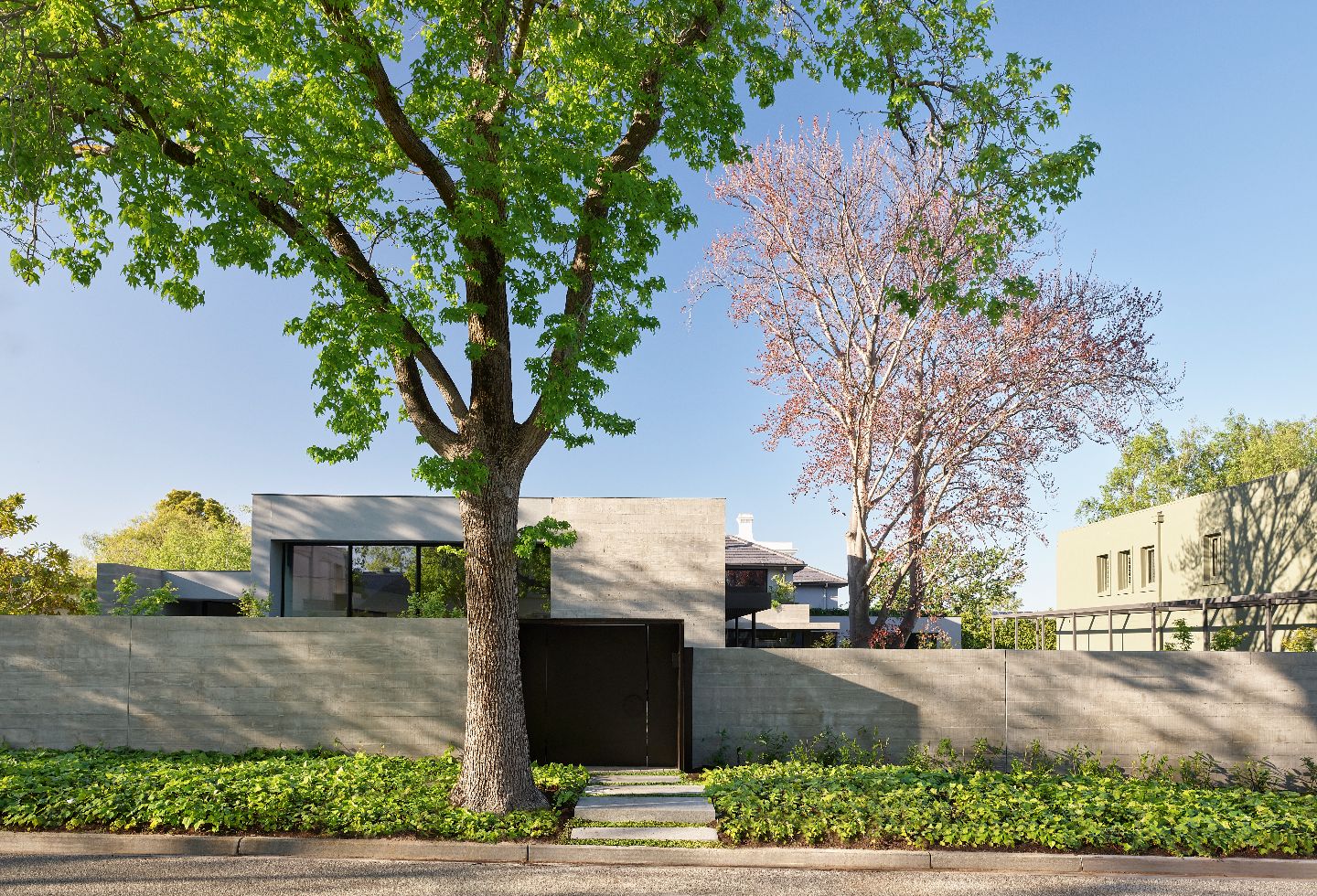
Without a covered corridor connecting the two buildings, this openness is heightened and contributes to the home’s modest street presence. This was an aspect Bialek was keen to explore, given the opportunity presented by two separate street addresses. “I’ve always disliked garages dominating the front of large homes,” he says. Instead, arrival is marked by an off-form, board-marked concrete wall, garden planting and entry pavilion gates — discreet and composed.

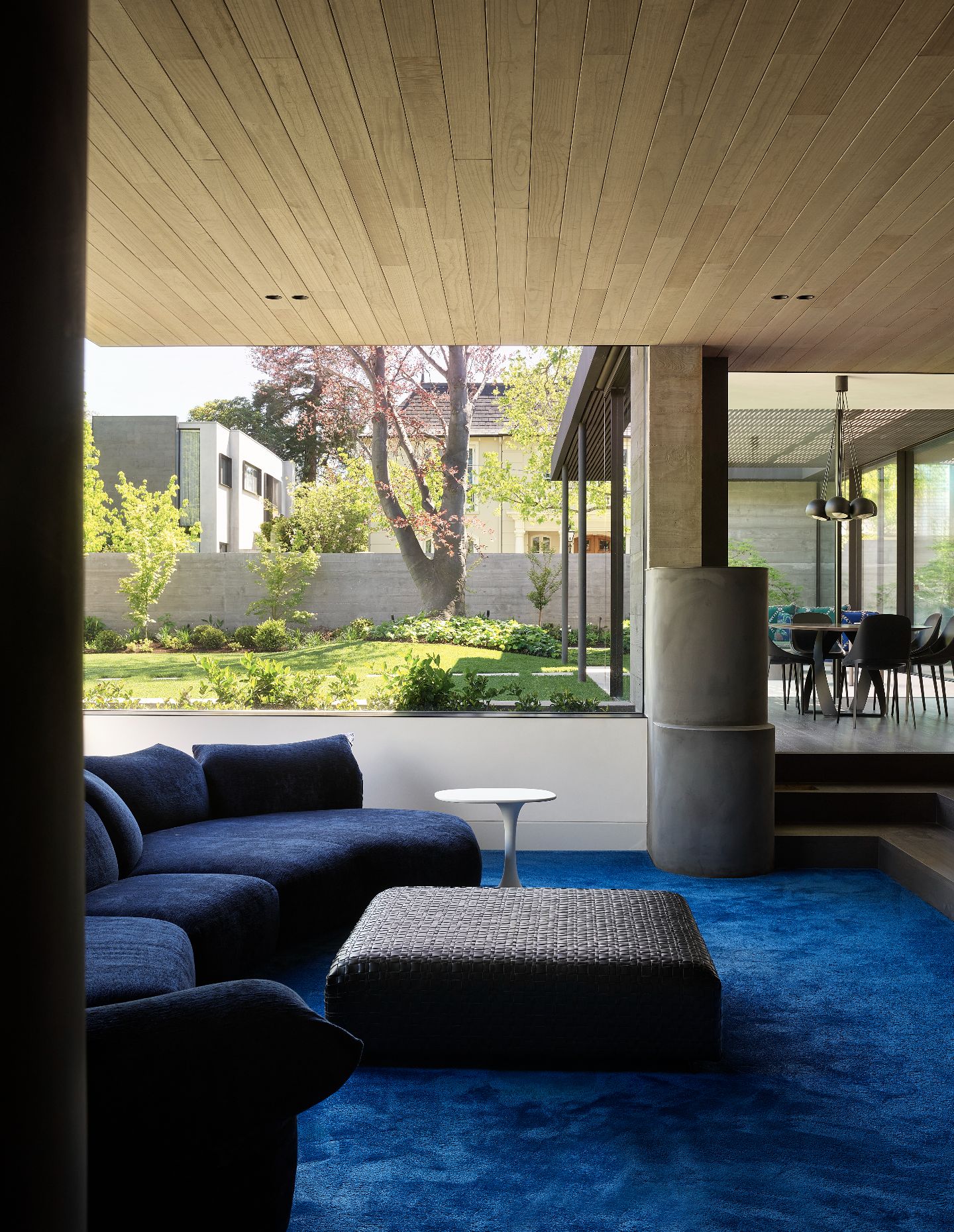
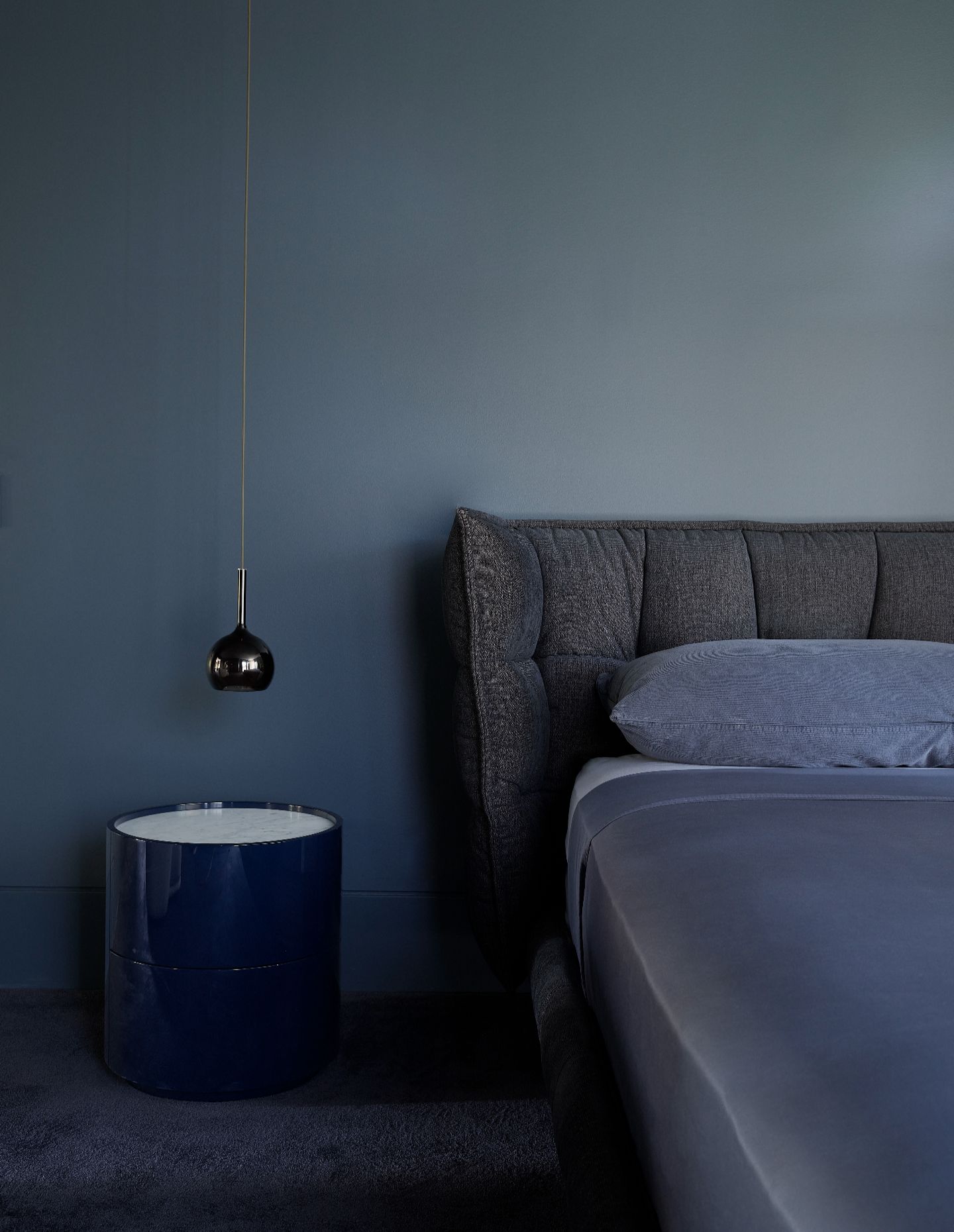
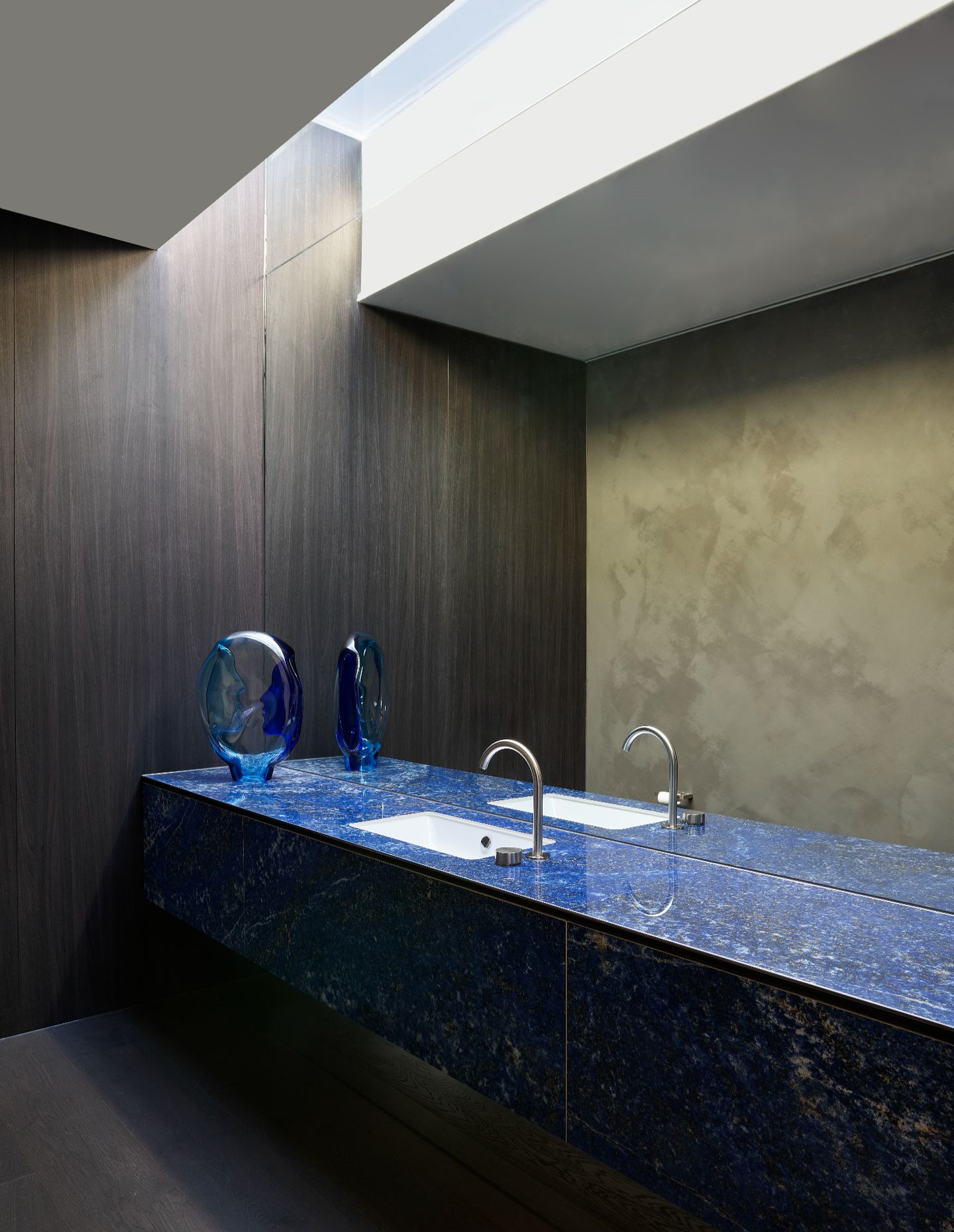
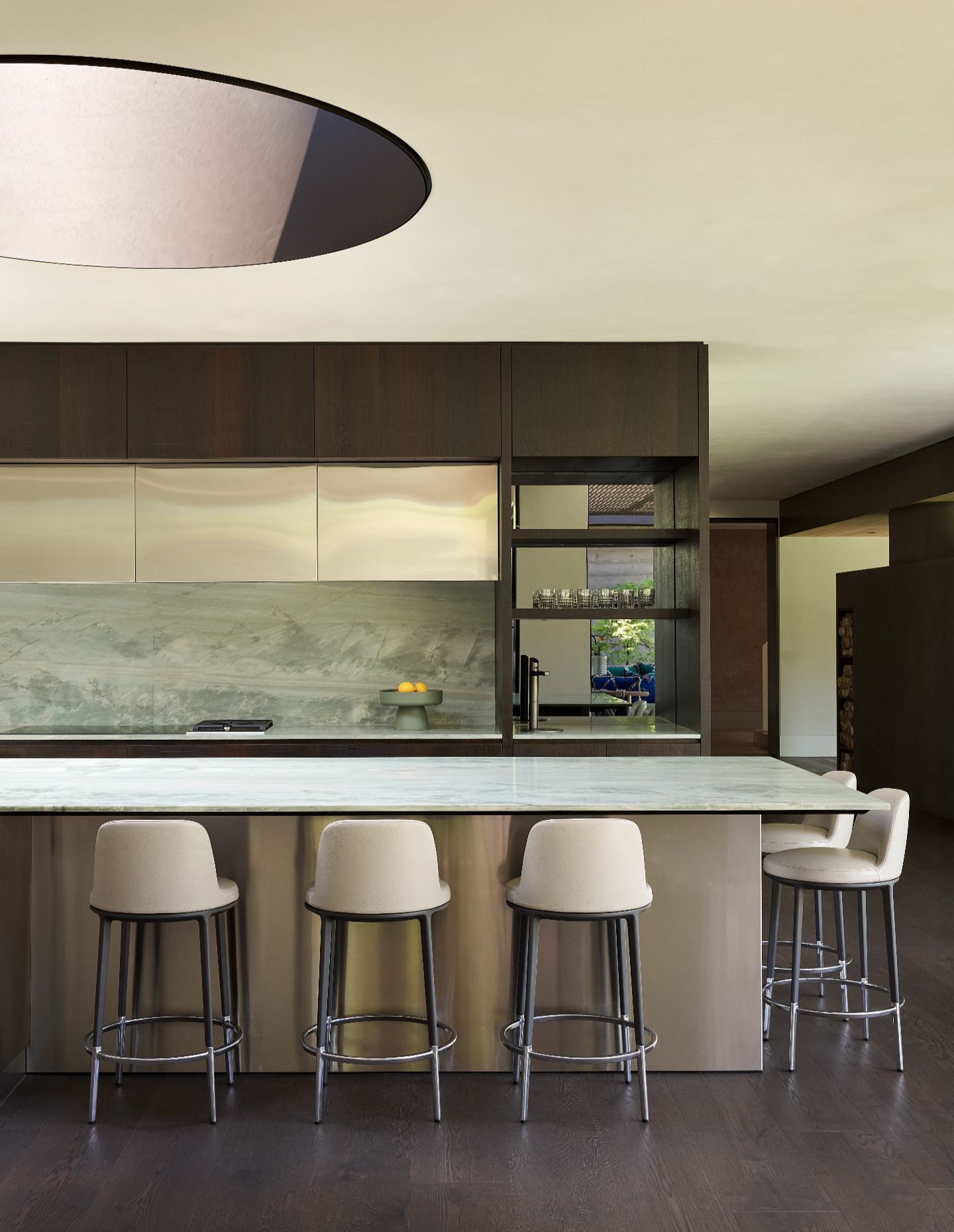
Inside, the interiors balance refreshed and new elements. The once rusty-orange carpet — particularly striking on the stair — has been replaced with a vivid pillar-box red. Colour continues in the sunken lounge with cobalt carpet and a deep-blue sofa. “The house is largely monochromatic, but the client embraces colour,” says Parr. “There are moments of strong colour, particularly in the sunken lounge and the powder room, where an electric cobalt blue stone is used.” Green also plays an important role, ranging from moody olive tones to pale green onyx in the kitchen.
The result is a home that accommodates large gatherings with ease, while still offering privacy and flexibility for individual needs. More than an expansion, the project demonstrates a careful, layered approach to adaptation — one that respects memory, place and longevity. As one of Bialek’s many residential works, it stands as a quietly confident example of how thoughtful architecture can evolve alongside family life.