
Tadao Ando once spoke of the delineation between inspiration and imitation, of the quiet necessity of bringing individuality to your work. The exact words escape me, but perhaps that is fitting – for the sentiment calls to mind the impulse to design from the heart rather than create a pastiche. The trite echoes of over-emulation have grown monotonous and there is a common proclivity to claim that a residence truly belongs to its surroundings, rather than simply residing within them. Arent&Pyke present a layered approach, modelling how salient design embraces divergence – both the transient and the terrain.
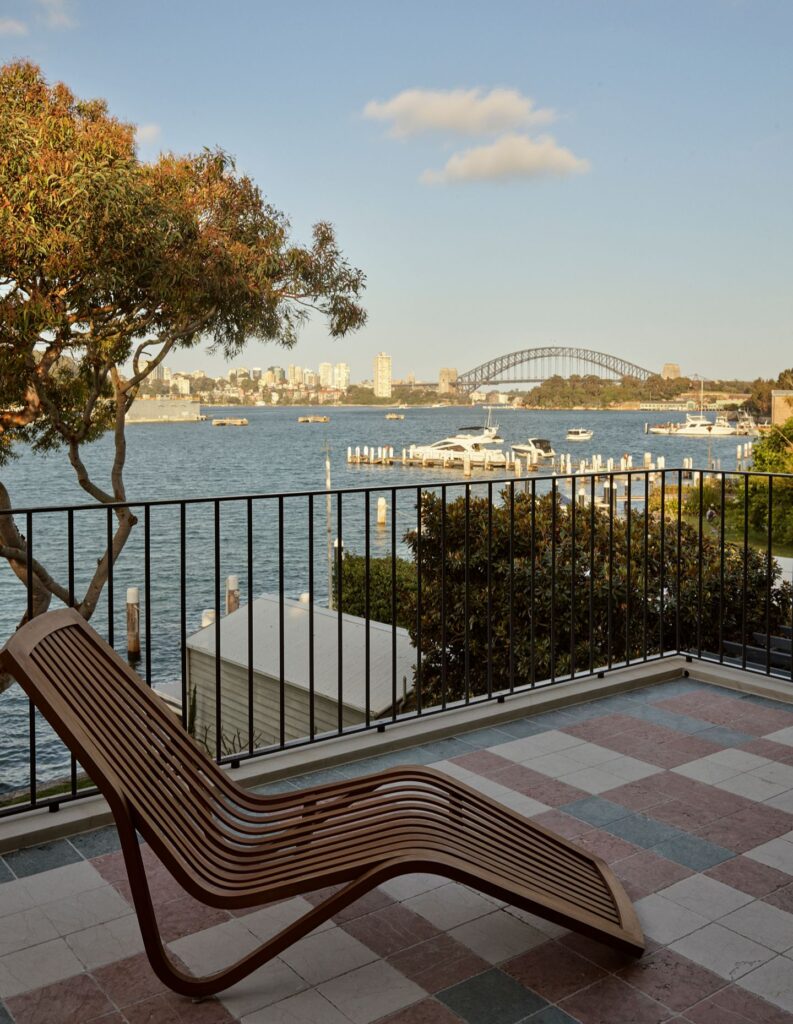
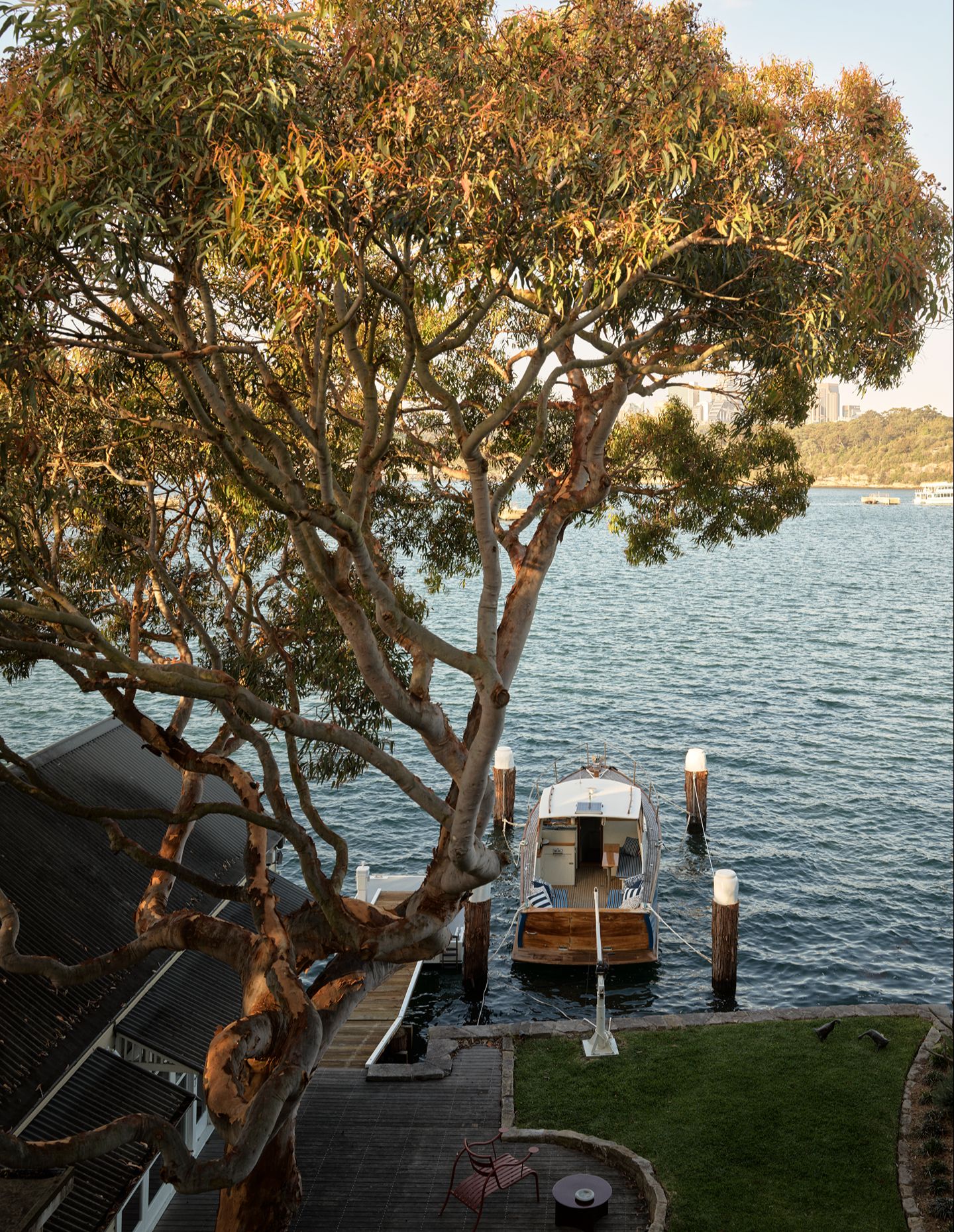
While the colour palette and orientation of Wharf House may strongly pertain to nature, its nonconformity is staunch. As its name would suggest, the residence shepherds the edge of Sydney’s iconic harbour. Here, the water views, though impressive, are equally matched by the verdant surrounds. “What struck us when we first visited the home, looking out from the windows, was the Angophora branches – a jungle-like sprouting of ferns from the semi-enclosed terrace. There is this lovely feeling of being enveloped in nature,” shares Sarah-Jane Pyke, Principal of Arent&Pyke. “The gentle sound of the wind rustling through the leaves surrounding the home instantly calms your mind of any unwanted noise. Who doesn’t want to come home to that?”
A paradisiacal dwelling for a married couple with children, the existing structure of the residence has been reconfigured to create rooms of generous proportions. Building the primary retreat within a sandstone cavity beneath the living area created much needed additional room, while new internal arrangements maximise fluidity as the existing circulation was spatially inefficient.
“It lacked connection to the harbour, with the middle rooms feeling dark and landlocked. Unlike contemporary renovations with open-plan living areas, we had to respect its heritage structural elements, reconfiguring the purpose of several rooms rather than demolishing walls to better suit the rituals of modern living,” notes Pyke. “We also intuitively switched the purposes of some of the rooms to better accommodate day-to-day living. Now, sunlight and fresh air flow throughout and, acoustically, the home feels solid and still.”
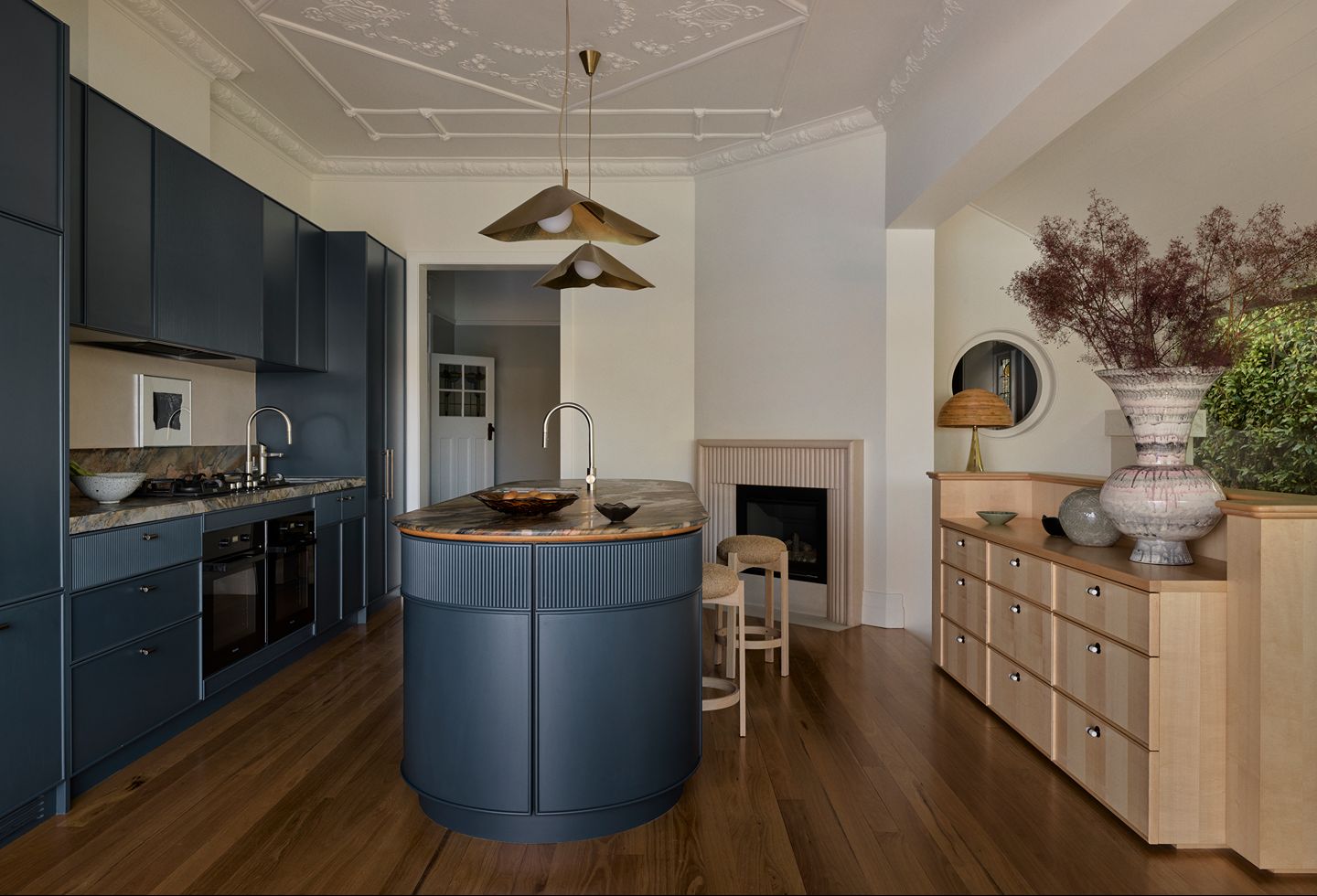
Cultivating a strong affinity for the landscape, generous windows provide sightlines to the garden and waterline beyond. Compounding this, the kitchen size has doubled to occupy the original dining room that it once meekly adjoined. “Now you can sit up at the island and soak in the harbour views,” Pyke adds.
Respectively, each room possesses a varied palette. In this approach, tonal saturation lacquers the walls and flooring through patterned rugs, tiles and stone. Harnessing a legion of materials, the grounding tones include, but are not limited to, toffee, copper, maroon and rich greens. A deep marine blue intentionally infuses the kitchen and furniture on the semi-enclosed terrace, tethering these spaces to the shoreline and the family’s boat. Concurrently, gold accents and rusty veins of Caravaggio quartzite characterise the countertop and stand against the singular colour, emulating the shadows of the harbour shoreline.
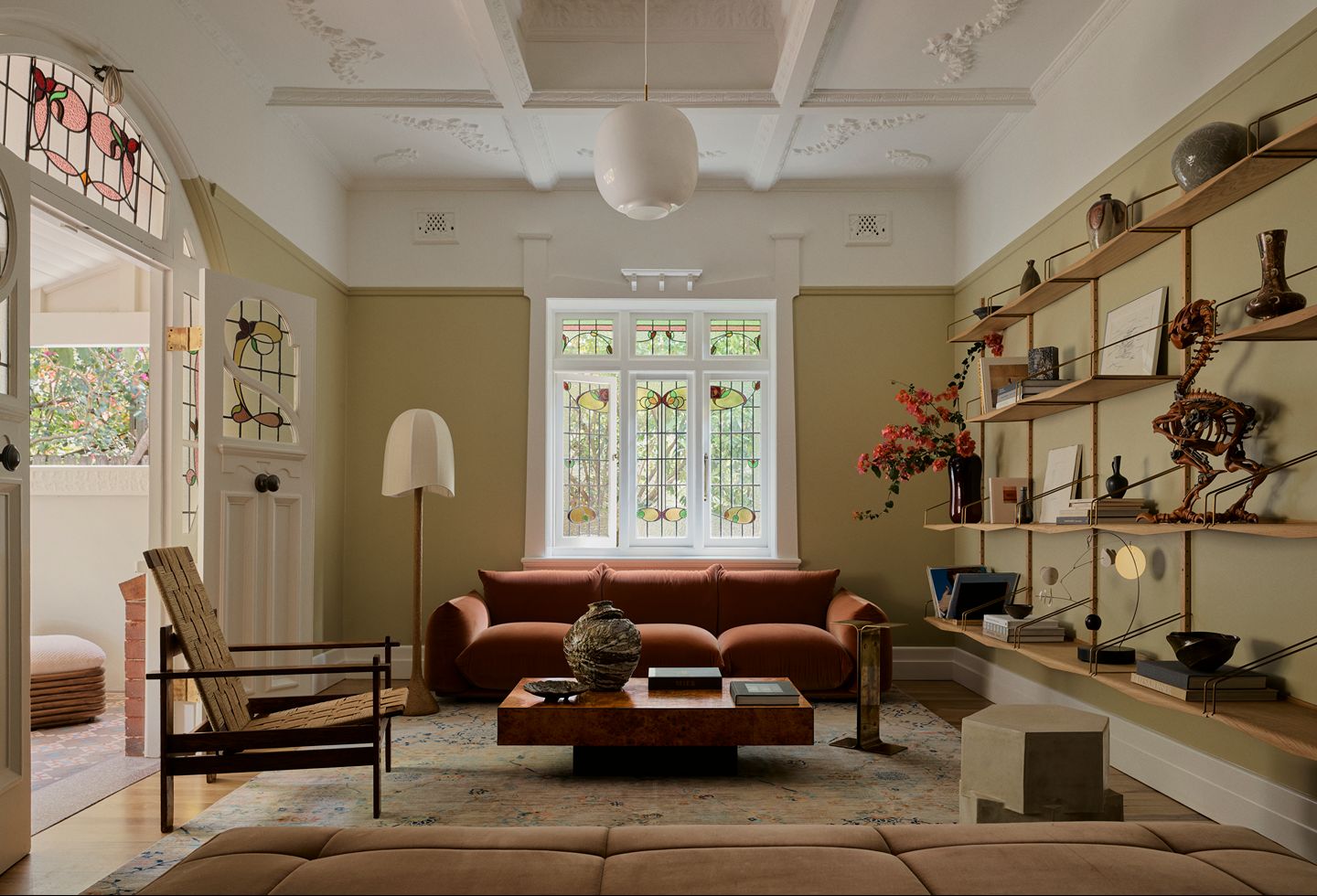
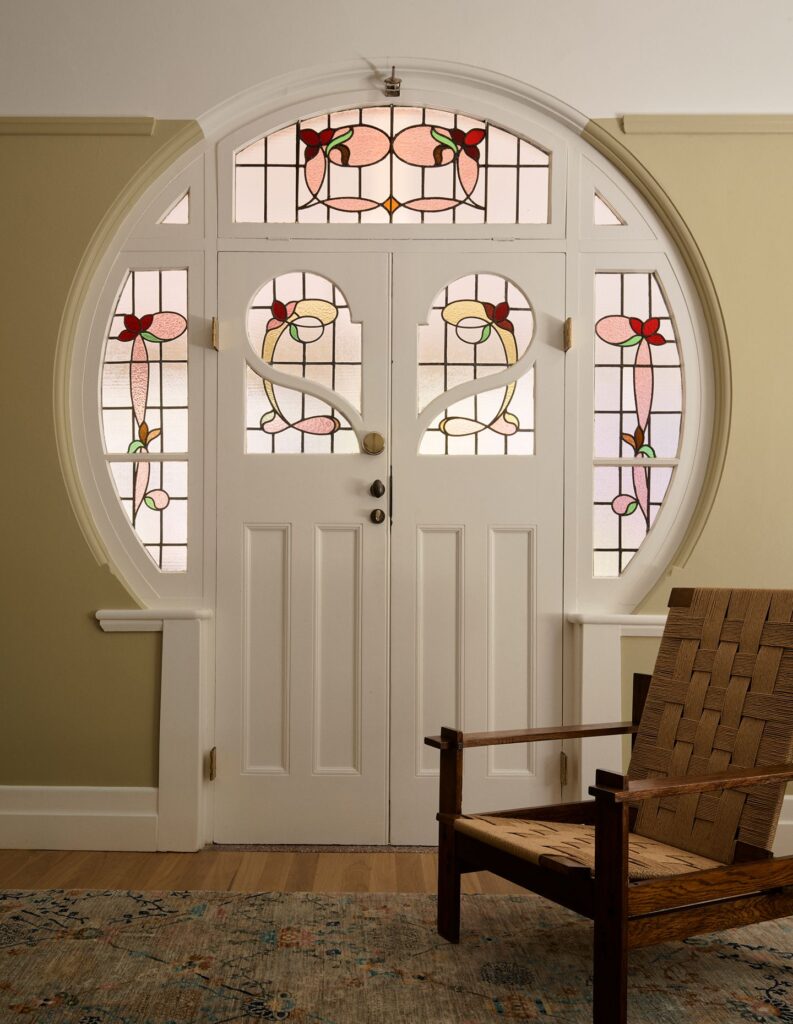
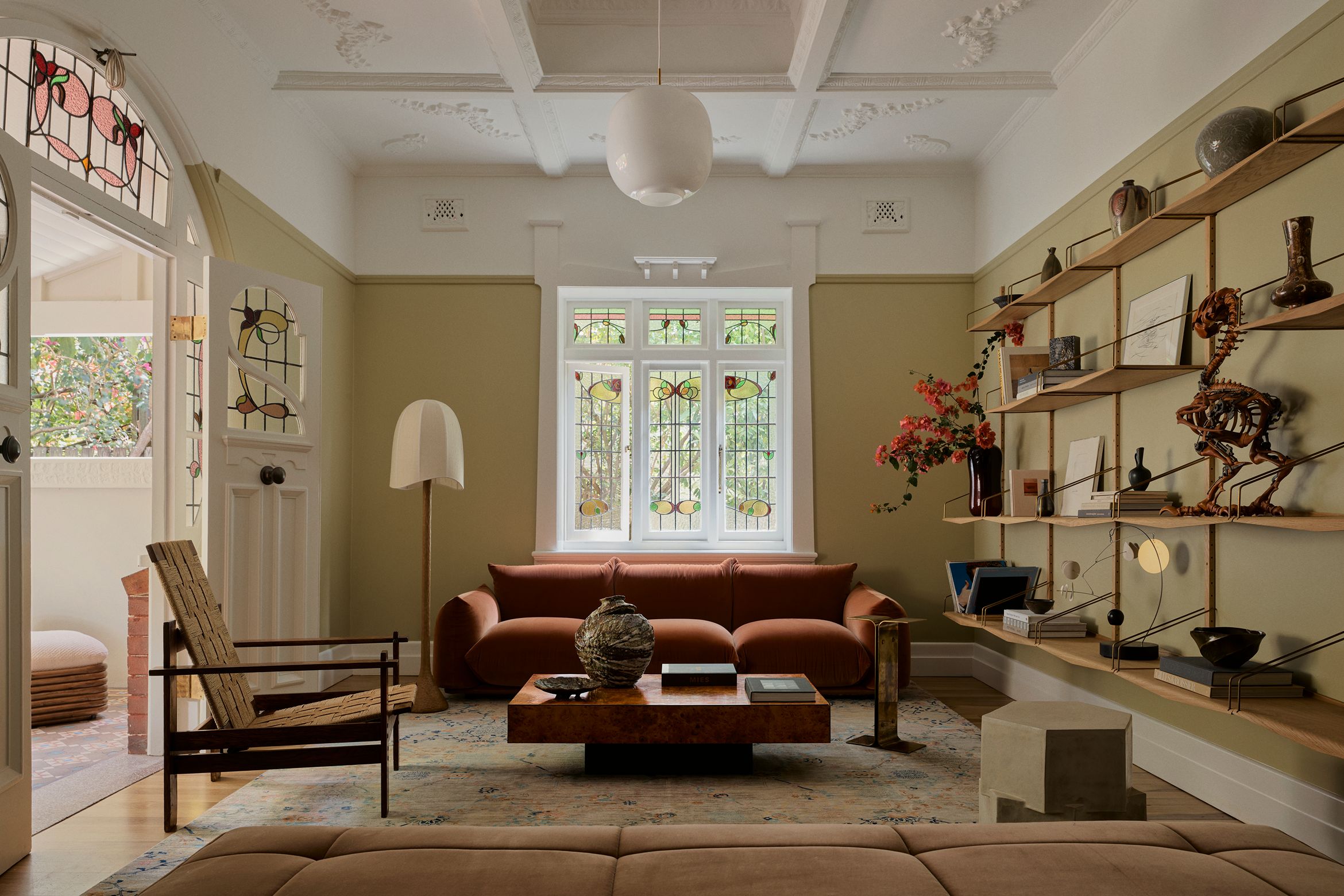
At the threshold, a library is energised by a pale olive green shade with yellow undertones that add ebullience upon arrival, drawing the eye to the vaulted ceiling and the celestial impact of the floral leadlight that encircles the entrance doors. Structurally, the awkward entry point from the verandah has been redirected into a small office that leads through to the hallway. “Now you arrive through stunning original double doors on the same verandah that are decorated with a horseshoe arch of incredible floral leadlight windows that fan out like a peacock’s tail,” notes Pyke.
The effect of the windows is to illuminate the space with jewel tones through the fine intricacies of the ornate fretwork, window trims and architraves. A cadre of tiles clad the semi-enclosed terrace, where the addition of a breakfast nook gives out to an open balustraded area. “We designed a chequered grid pattern crafted from hand-cut tumbled stone – rich terracotta red Rosso Verona, creamy Botticino and herbaceous Verde Guatemala – bush hammered to achieve a settled undulating surface that complements the foundational sandstone walls.”
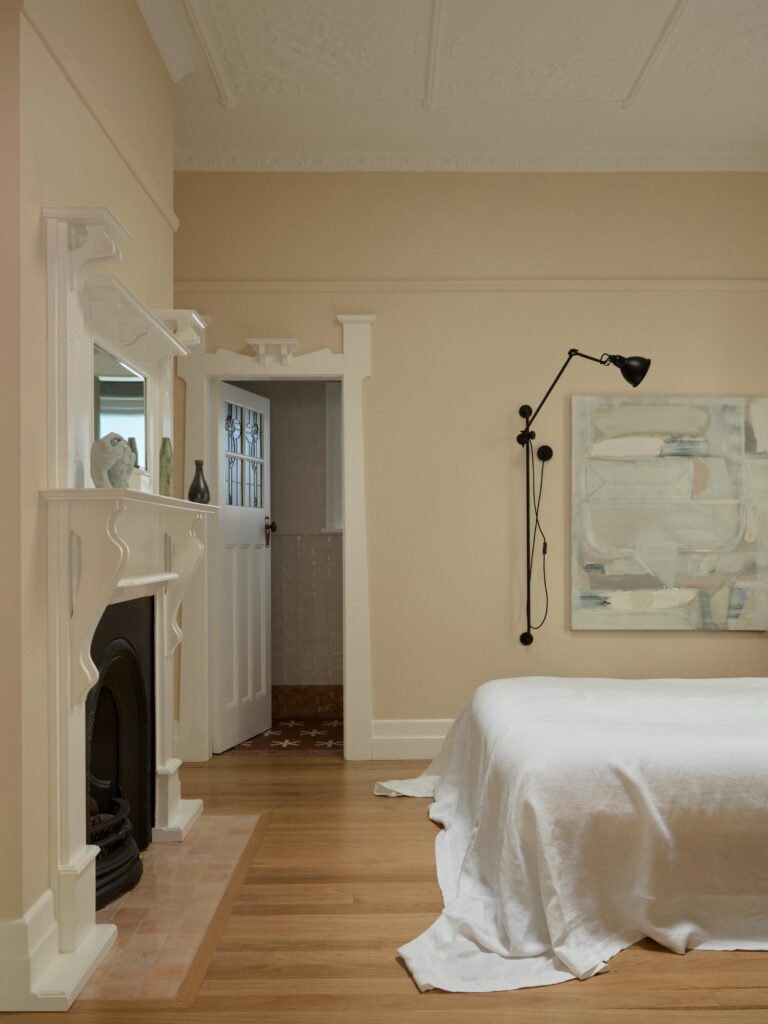
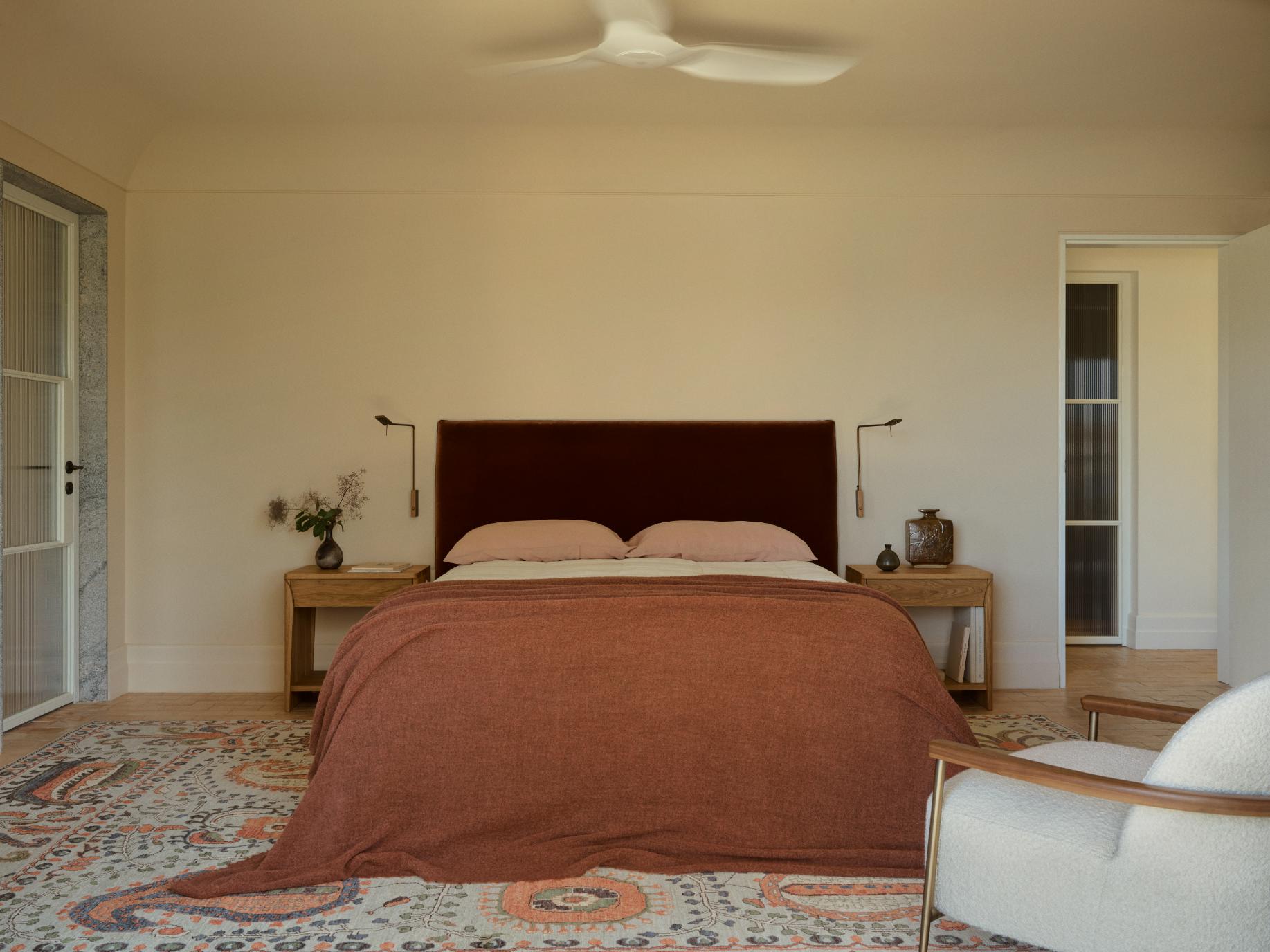
Another facet of the design brief was for additions to age respectfully with the architecture rather than compete. “We agreed that all the interior architecture detailing should be respectfully celebrated. The trick was to avoid creating a homage to the 1920s (when the house was built) when it came to new furnishings,” Pyke states. As such, the curation of furnishings is an eclectic amalgam of fluctuating eras, “from the Art Deco burl and rich bronze woodgrains of the library coffee table to the copper paisley prints in the primary suite’s rug through to contemporary abstract canvases on the walls that wield gentle movement”.
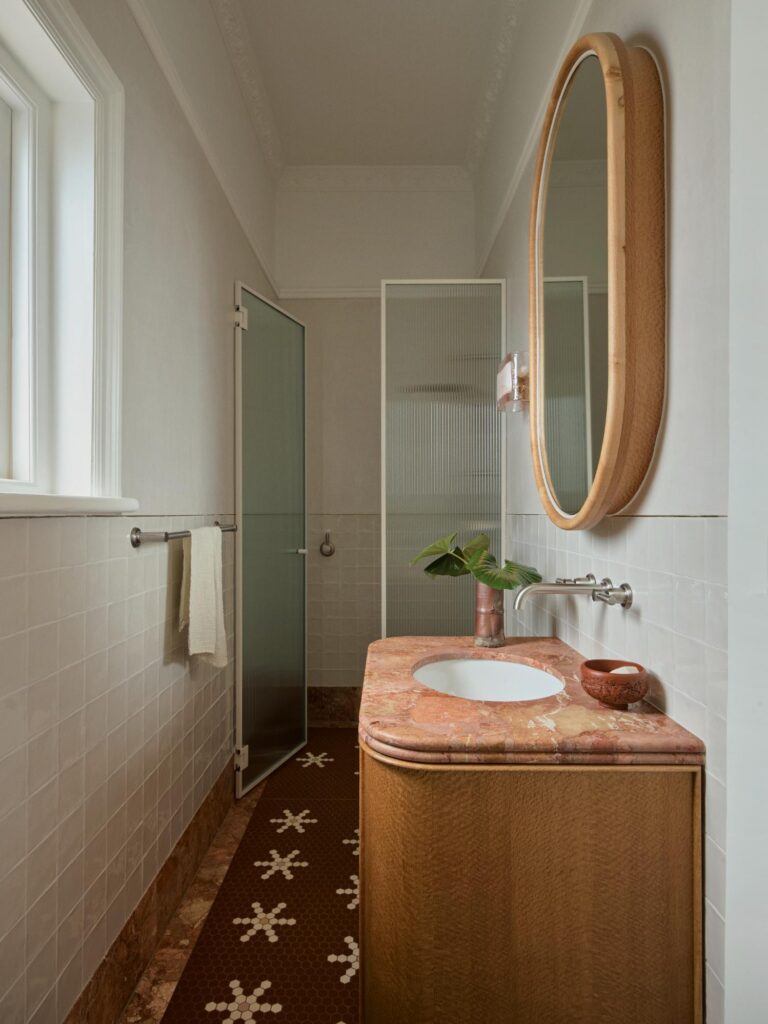
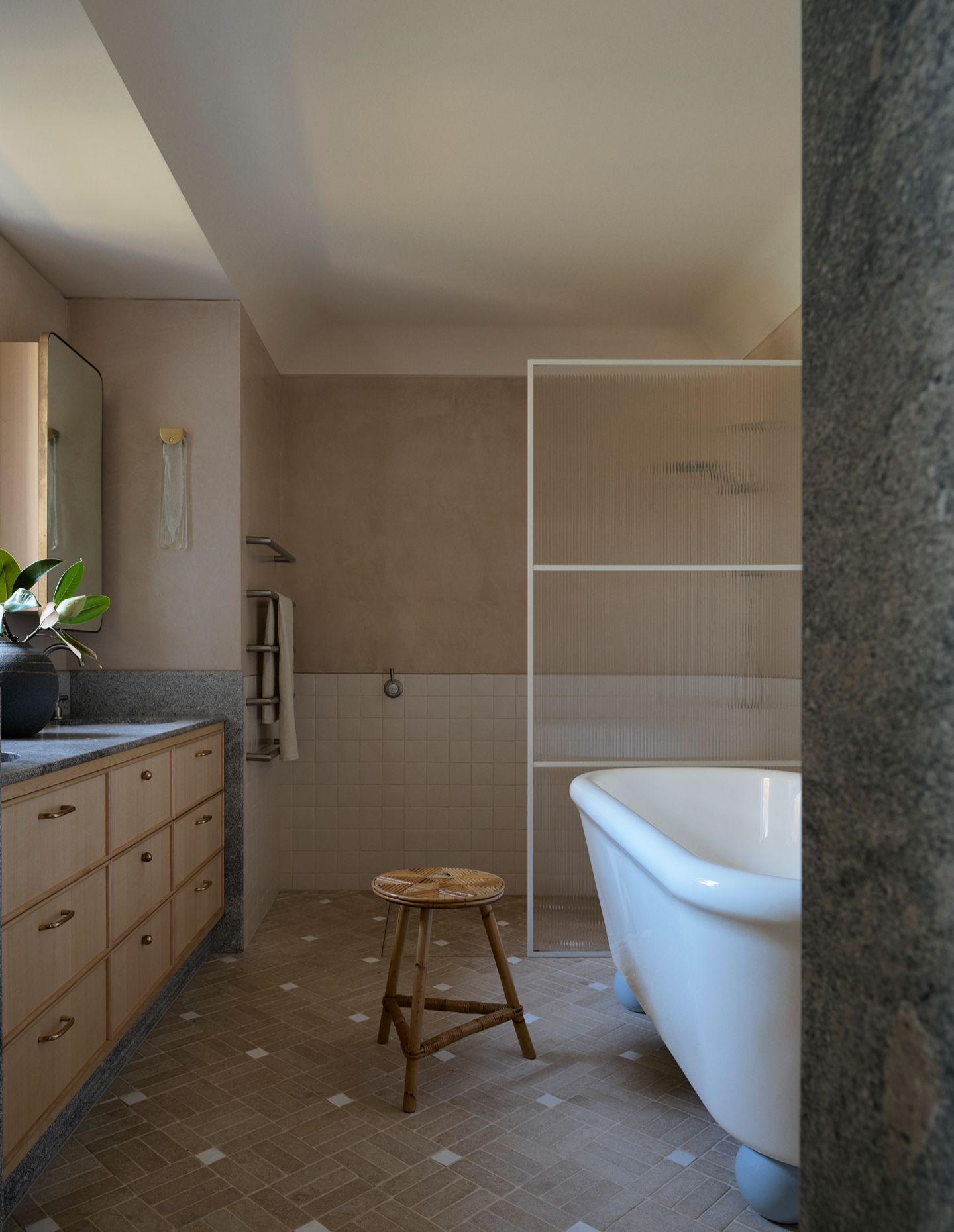
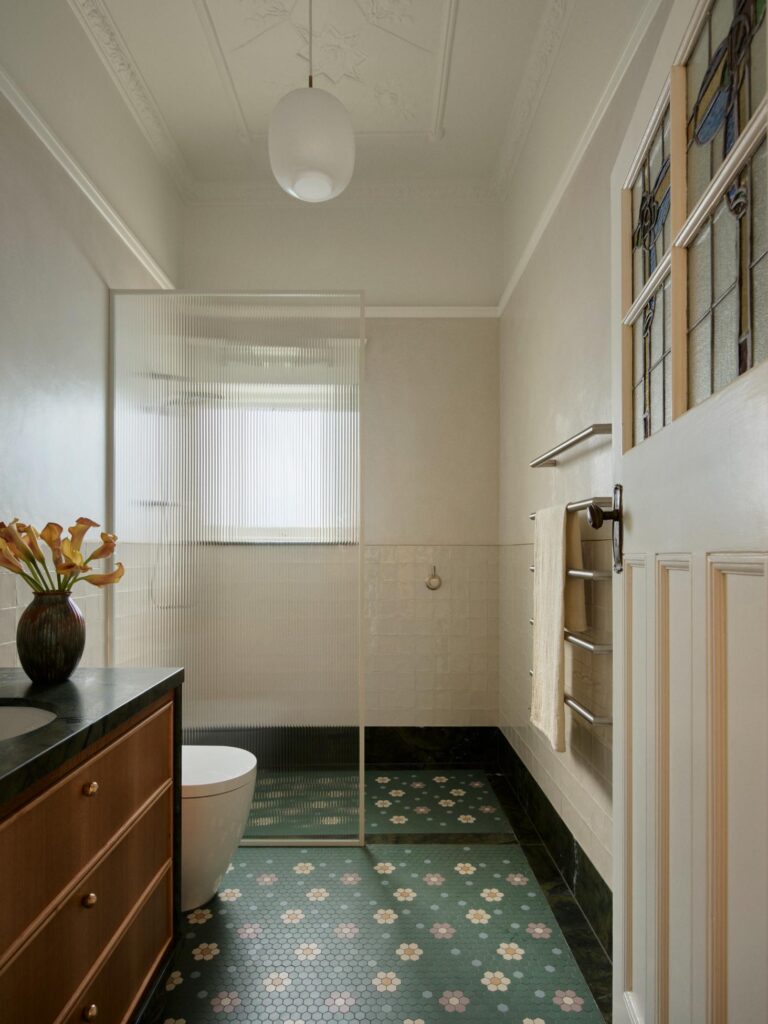
Contemporary takes on traditional mediums heighten the drama, notably in the two bathrooms, where motifs echo natural forms. “Tessellated porcelain tiles were popular in the 1920s when the house was built, so instantly complement it, yet we laid contemporary star and floral patterns,” says Pyke. Each bathroom comprises solid stone and timber vanities with intricate profiles that temper their mass, appearing to hover above the floors to preserve the continuity of the patterned surfaces. Notably, the vanity is supported by tubby legs of moss-green stone, while the ensuite bathtub rests upon chalcedony-blue spheres.
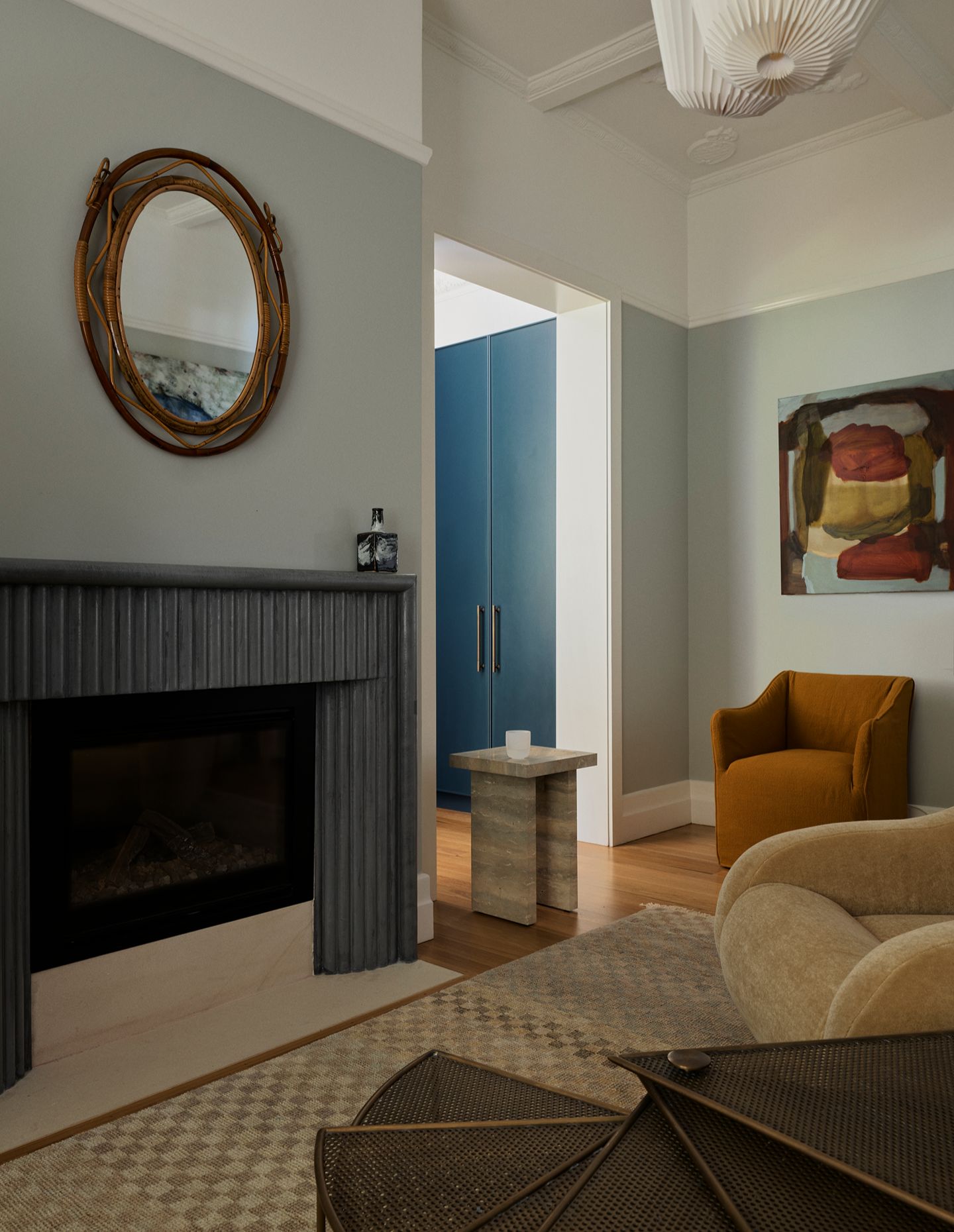
To align rooms, streamlined custom fluting provides contemporary ornamentation. This is especially so in the kitchen, where it offers a softening effect to the solid joinery and enhances the home’s handcrafted nature.
This umpteenth project in the Arent&Pyke oeuvre is a tribute to the lyricism with which the designers engage with their surroundings, letting the space inform their design decisions while complementing their distinctive style. Arent&Pyke can always be relied upon to create a design that avoids the fleeting, once again confirming that taking the road less travelled is, almost always, the best choice.