
The 25th Biennale of Sydney, titled Rememory, is now open and free to the public across five venues – White Bay Power Station, the Art Gallery of New South Wales, Chau Chak Wing Museum at the University of Sydney, Campbelltown Arts Centre and Lewers: Penrith Regional Gallery. Over 143 works by 83 artists and collectives from 37 countries and territories make this one of the most expansive editions in the Biennale’s recent history.
Established in Sydney in 1973, the Biennale has never been without controversy, and its 25th edition is no exception. What endures, however, is its fundamental proposition: to bring the world’s most ground-breaking contemporary art by cutting-edge artists who address urgent issues of our time to Australasian audiences.
Artistic Director Hoor Al Qasimi, President and Director of the Sharjah Art Foundation, is the first Arab woman to curate the Biennale, bringing a distinct cultural lens to her edition. Al Qasimi has drawn the title from Toni Morrison, using “rememory” as both concept and method: a way of revisiting, reconstructing and reclaiming histories that have been erased or suppressed. “This edition feels especially present, even insistent,” Al Qasimi reflects, “as Rememory turns to the written, visual and oral histories of culture, context, family, and country. Together, we illuminate the overlooked and forgotten histories upon which the world is built.”
A significant through-line which aids in connecting artists across the venues is the Biennale’s partnership with the Fondation Cartier pour l’art contemporain, which has commissioned 15 First Nations artists from around the world, including Ángel Poyón, Cannupa Hanska Luger, Carmen Glynn-Braun, Fernando Poyón, John Prince Siddon, Tania Willard and Warraba Weatherall. Working with highly respected First Nations Curatorial Fellow Bruce Johnson McLean of the Wierdi people, it is one of the more meaningful structural commitments in recent Biennale history.
Related: A powerhouse of creatives
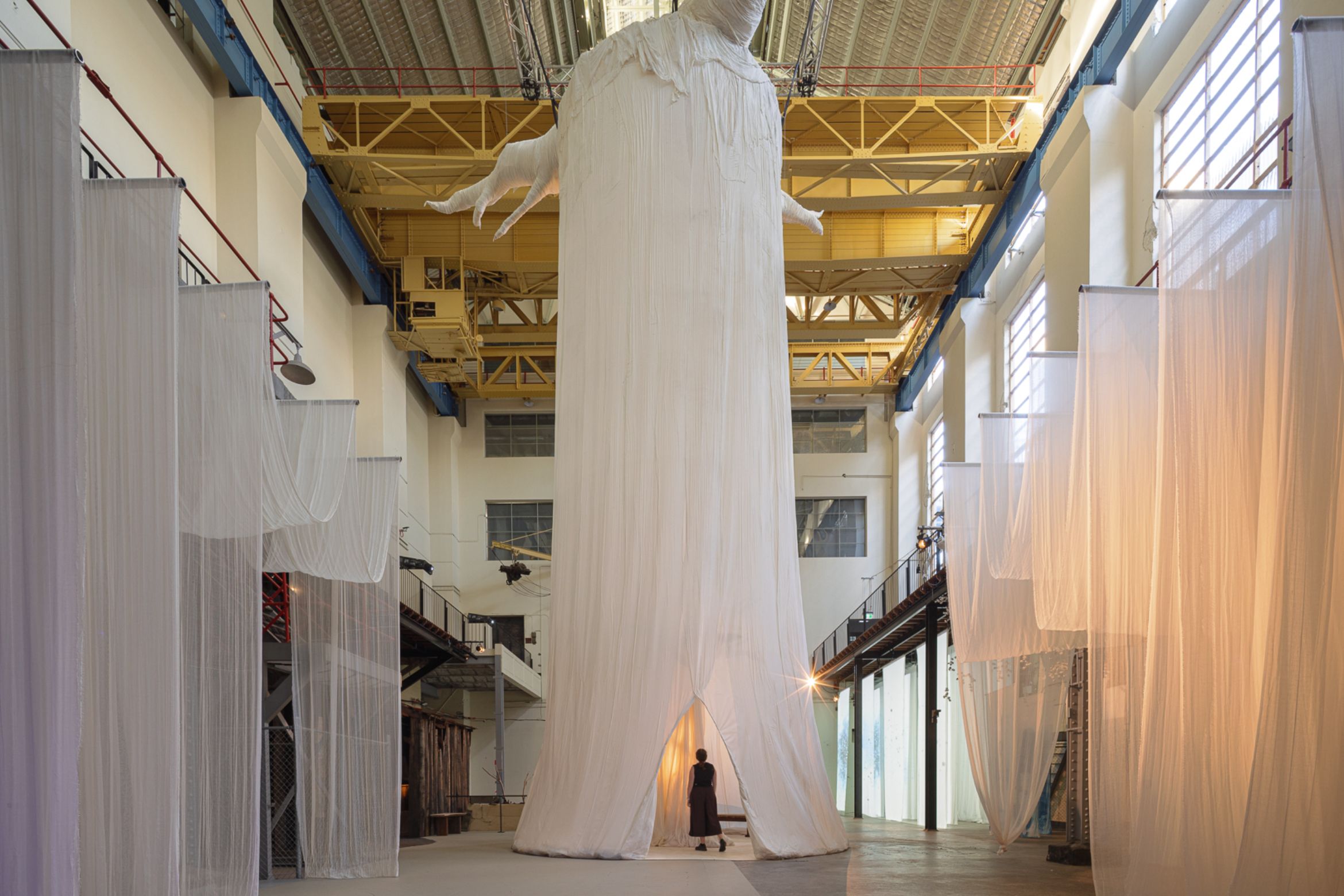
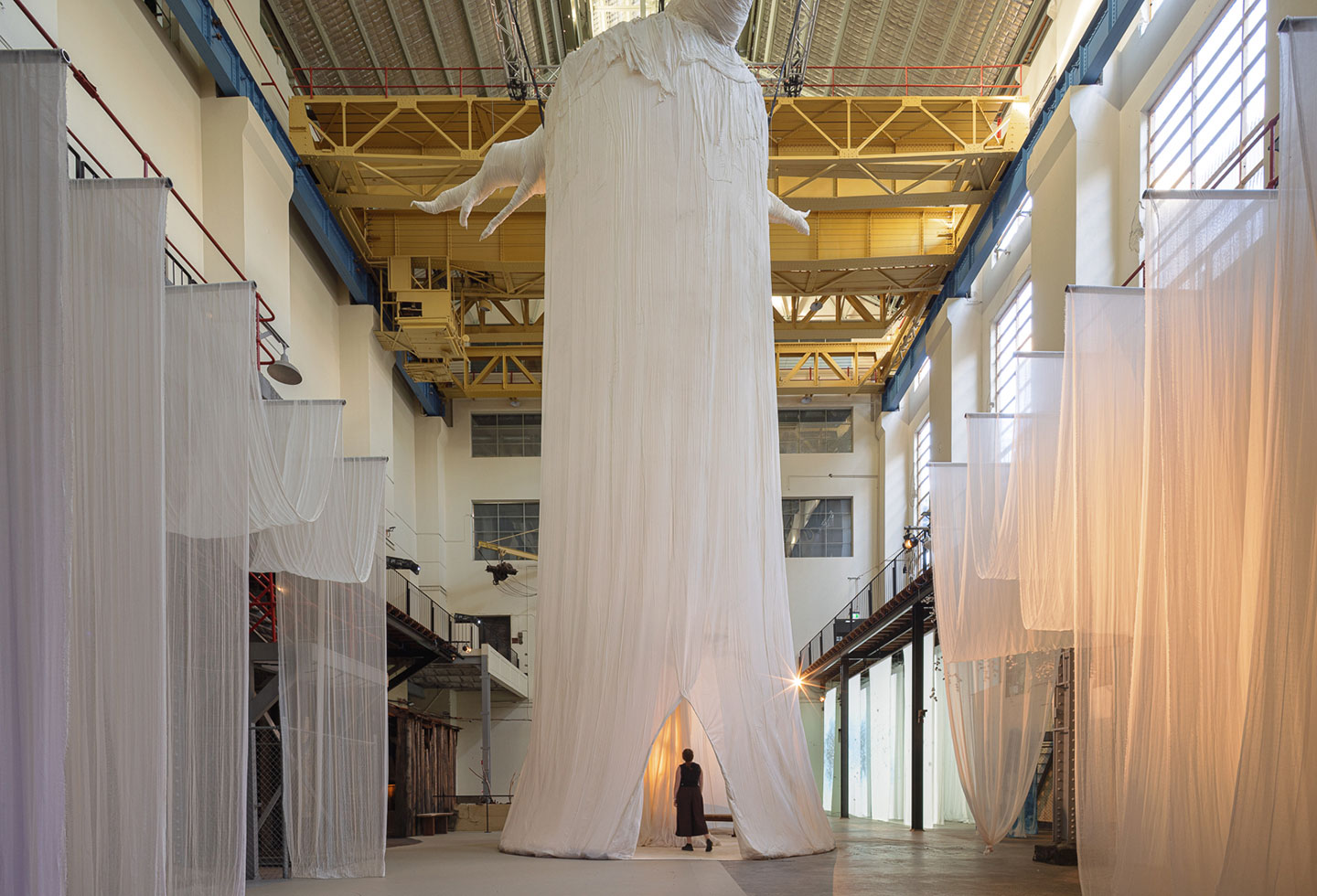
Among the impressive artist projects of note, Nikesha Breeze’s Living Histories, 2026 commands two full storeys at White Bay and depicts first-hand accounts of enslaved African-Americans in the Antebellum South. Breeze’s immersive installation comprises an African baobab tree draped with 2000 square metres of cotton gauze, imported cotton tree branches, a reconstructed 1860s wooden cabin with photographs, newspaper clippings and an evocative soundscape of archival voices drawn from state records, as well as cyanotype portraits of enslaved people and a stop-motion animation functions as both a monument, act of remembrance and living archive. Further activated by a durational performance, the work is deep with scholarly research, yet evocative and powerful.
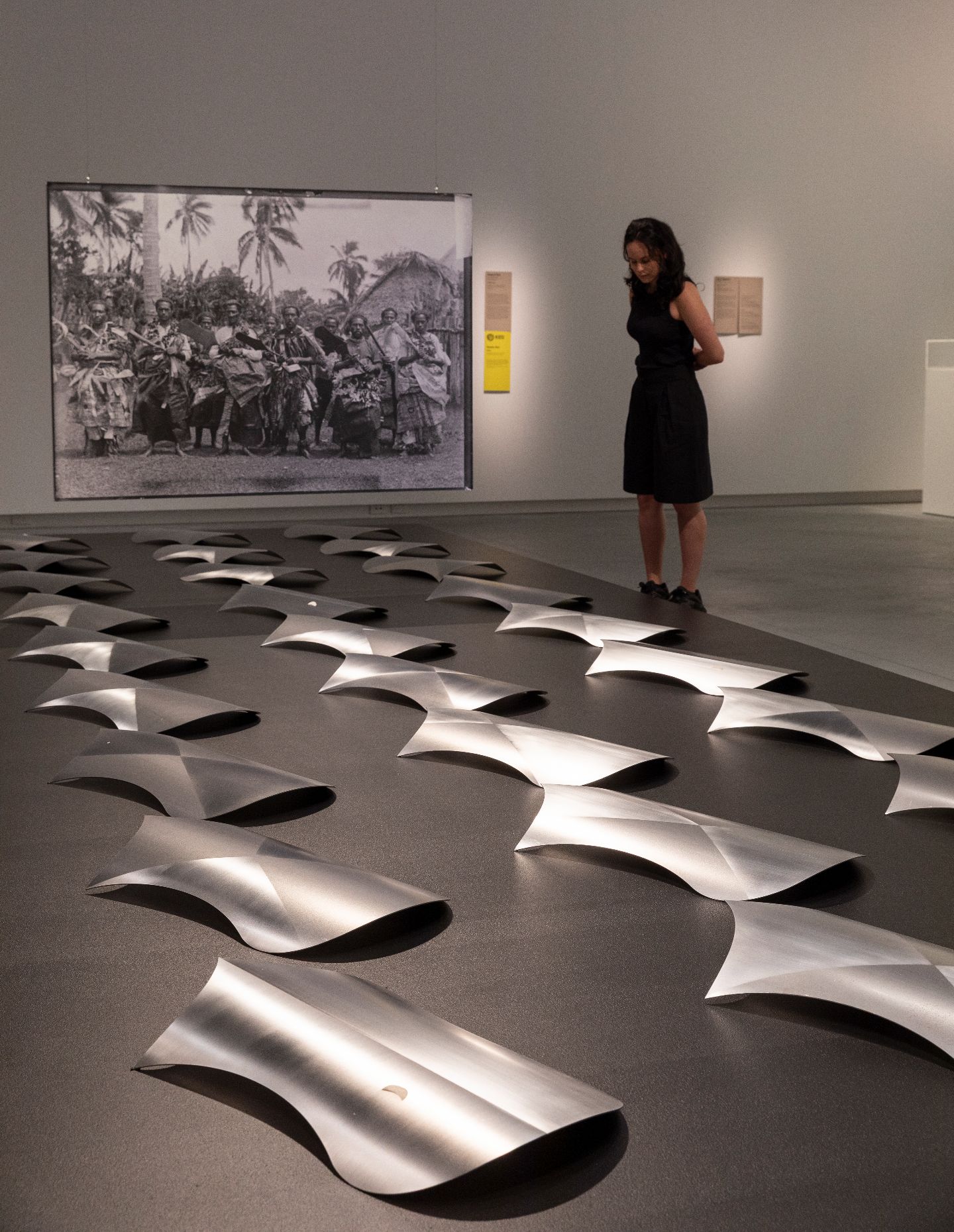
Moreover, at White Bay, Gunybi Ganambarr’s etched aluminium works from the Mundatjŋu series, 2024, are quietly powerful. The Yolŋu artist, based at Gängän near Yirrkala, reclaims remnants from mining and building sites, clearing Country of industrial detritus and transforms them into works that speak to how land is owned, shared and used.
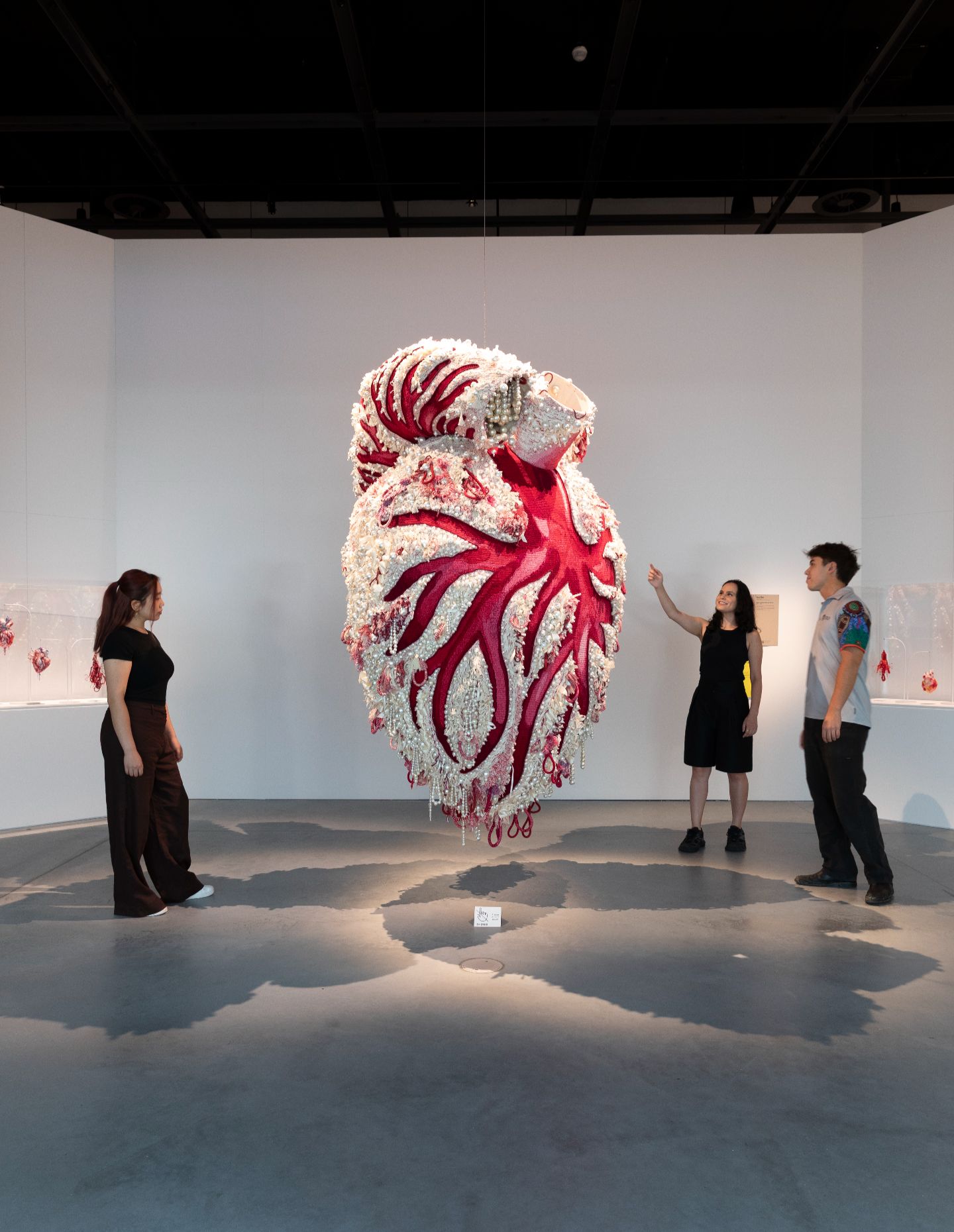
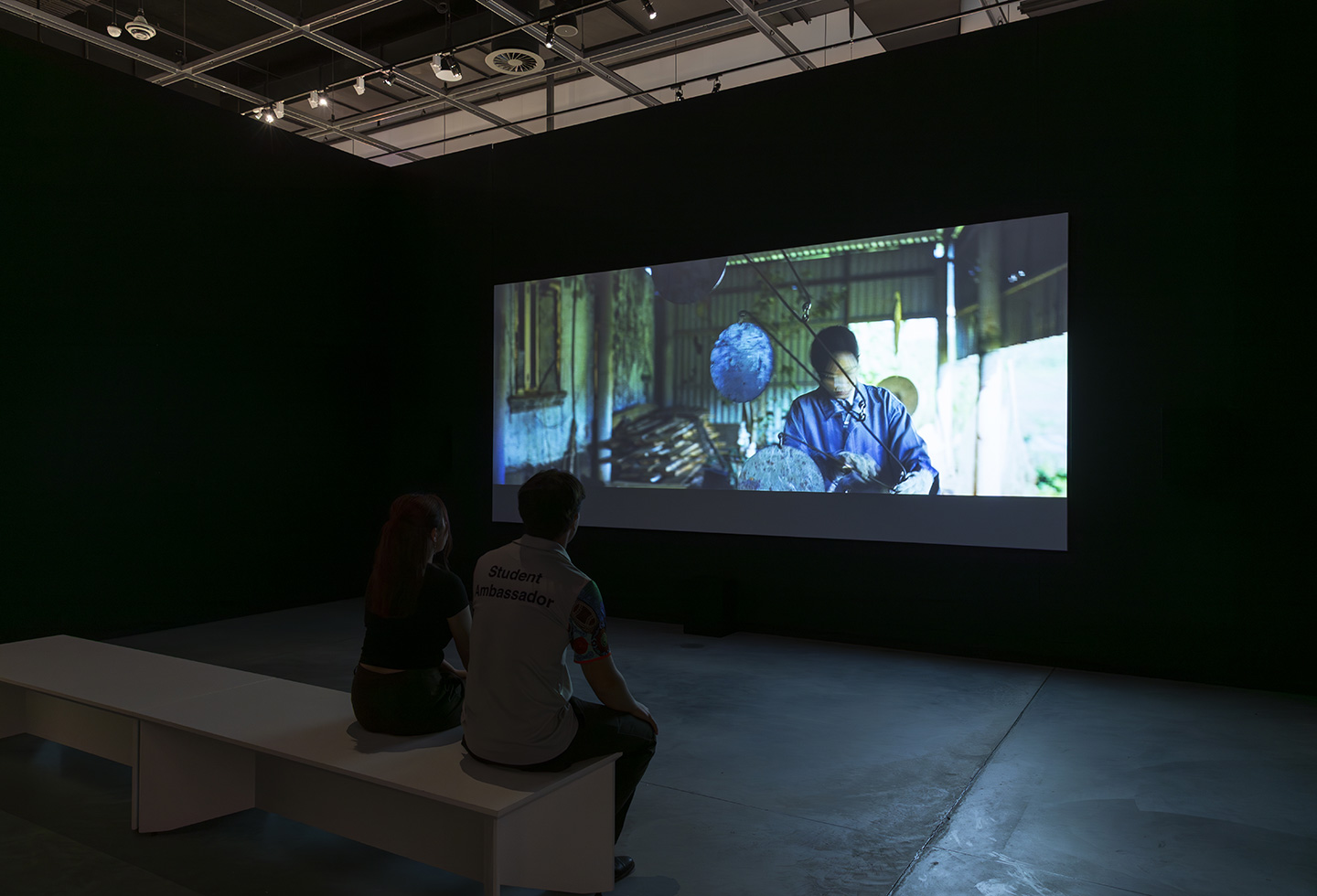
At Chau Chak Wing Museum, several works reward close attention. Aotearoa-based artist Benjamin Work’s PĀPAAKI, 2025 extends his research into how his ancestors of merged Western and materials with Tongan dress, acknowledging these developments to maintain autonomy under colonial pressure. Melbourne-based Ema Shin’s Hearts of Absent Women (Tree of Family), 2026 is a two-metre handwoven heart, painstakingly constructed in response to a 32-generation family tree that recorded only men and mothers of sons is a tender and precise act of tribute. Tuấn Andrew Nguyễn’s single-channel video The Unburied Sounds of a Troubled Horizon, 2022 ruminates on the five million tonnes of unexploded artillery left across Vietnam between 1954-1975, an inheritance of destruction, which is at times often light-hearted as people reclaim ordnance as sculpture.
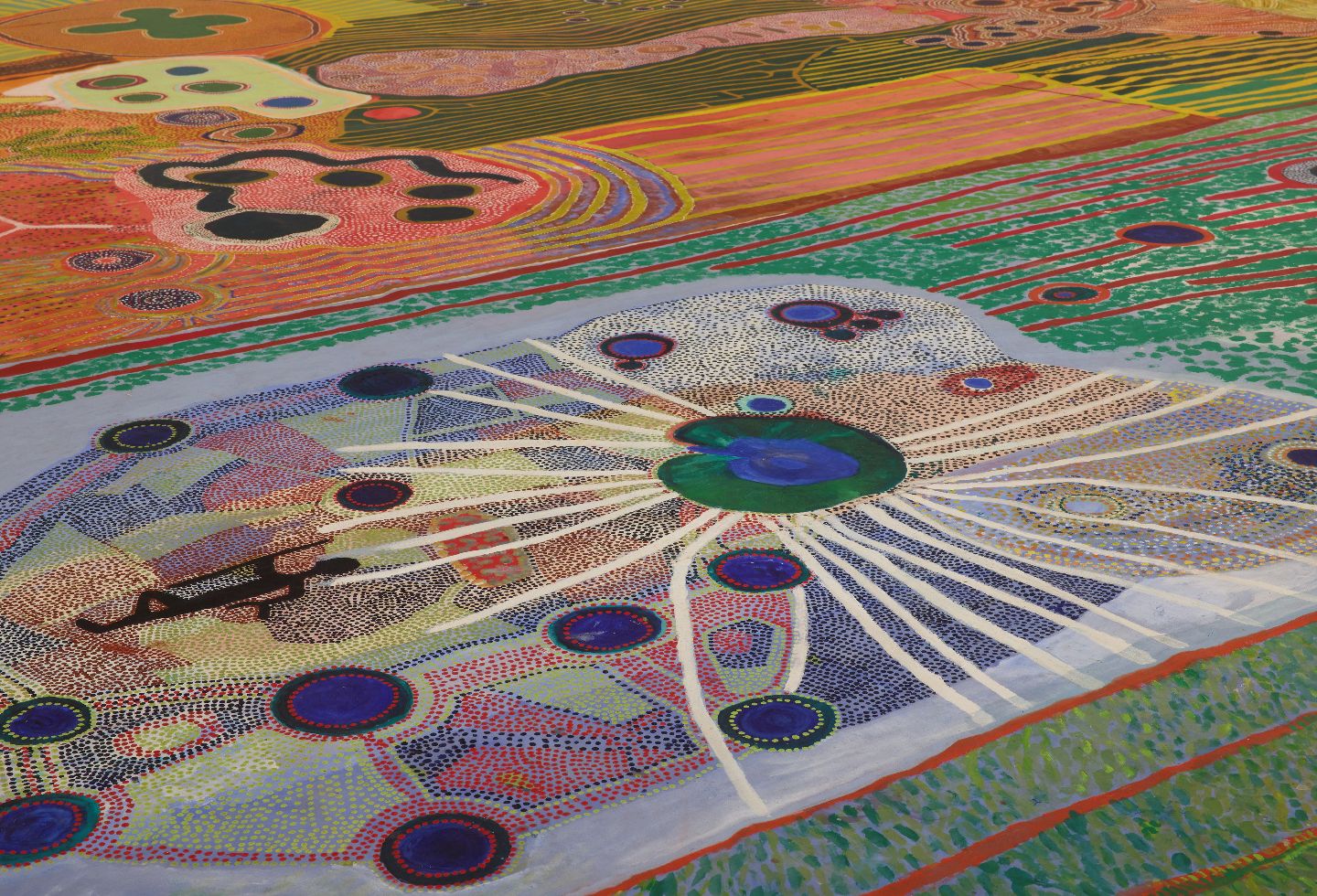
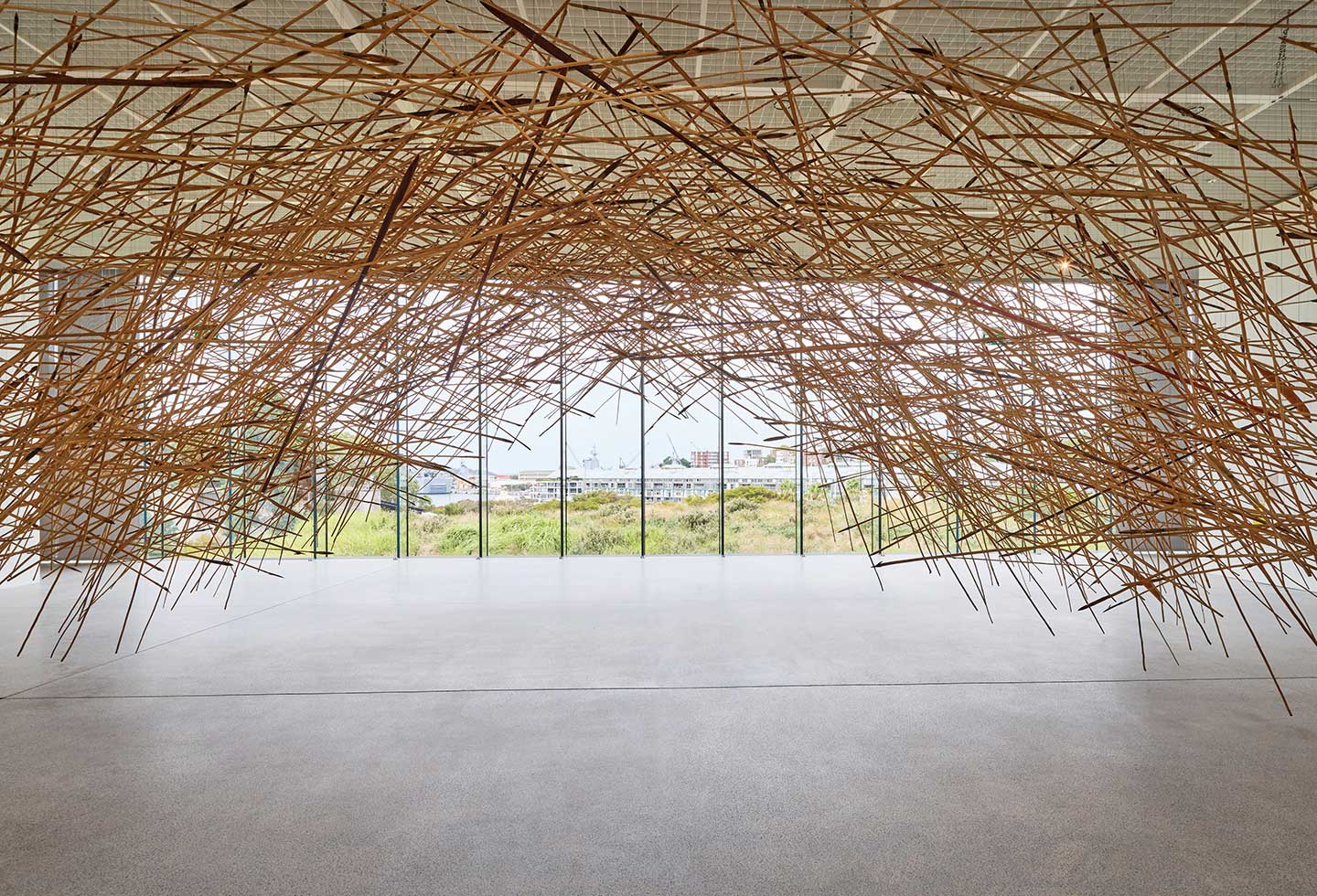
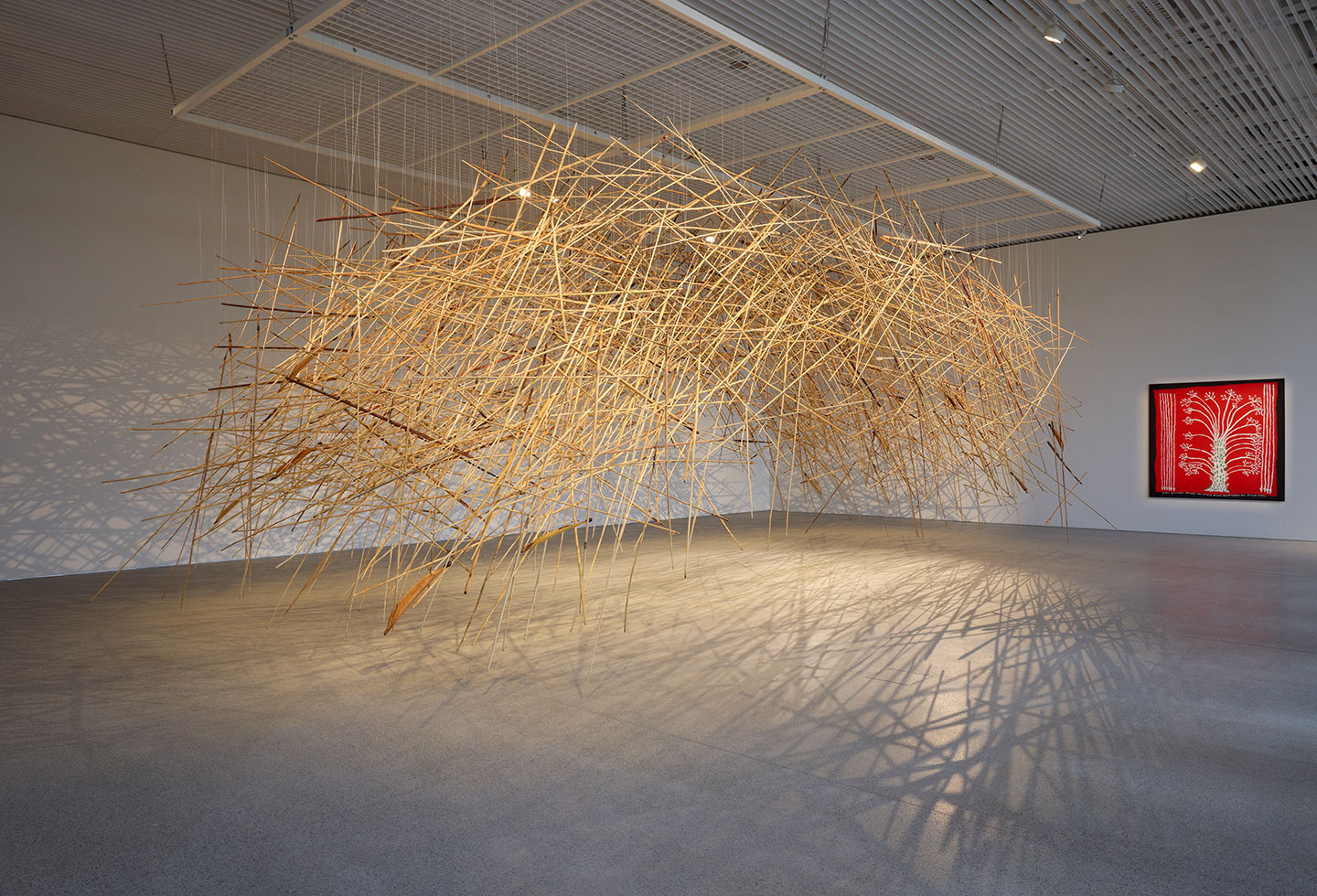
At the Art Gallery of NSW, the Ngurrara Canvas II is vast, humbling in its presence and holds a quiet authority. Made in 1997 by Ngurrara artists of the Great Sandy Desert and originally presented to the National Native Title Tribunal as evidence of connection to Country, the 80-square-metre floor canvas is among the most significant Aboriginal paintings in existence. Nearby, Frank Young and The Kulata Tjuta Project present a suspended arch of approximately 2000 hand-carved spears that document cultural maintenance and community engagement made monumental. Further, Angélica Serech’s large-scale textile works, produced through experimental looms and adaptations of Mayan Kaqchiquel weaving traditions inherited through matrilineal lines, assert that the act of making can itself be a form of reclamation, personal freedom and gratitude.
Rememory is nuanced; overall, there is less spectacle and more concern with bearing witness than with visual impact. At its best it does what the Biennale has always done; placing contemporary artists from around the world before audiences who might not otherwise encounter them. Art‘s capacity to hold difficult histories, to make them tangible and to unite audiences, has never felt more necessary.