

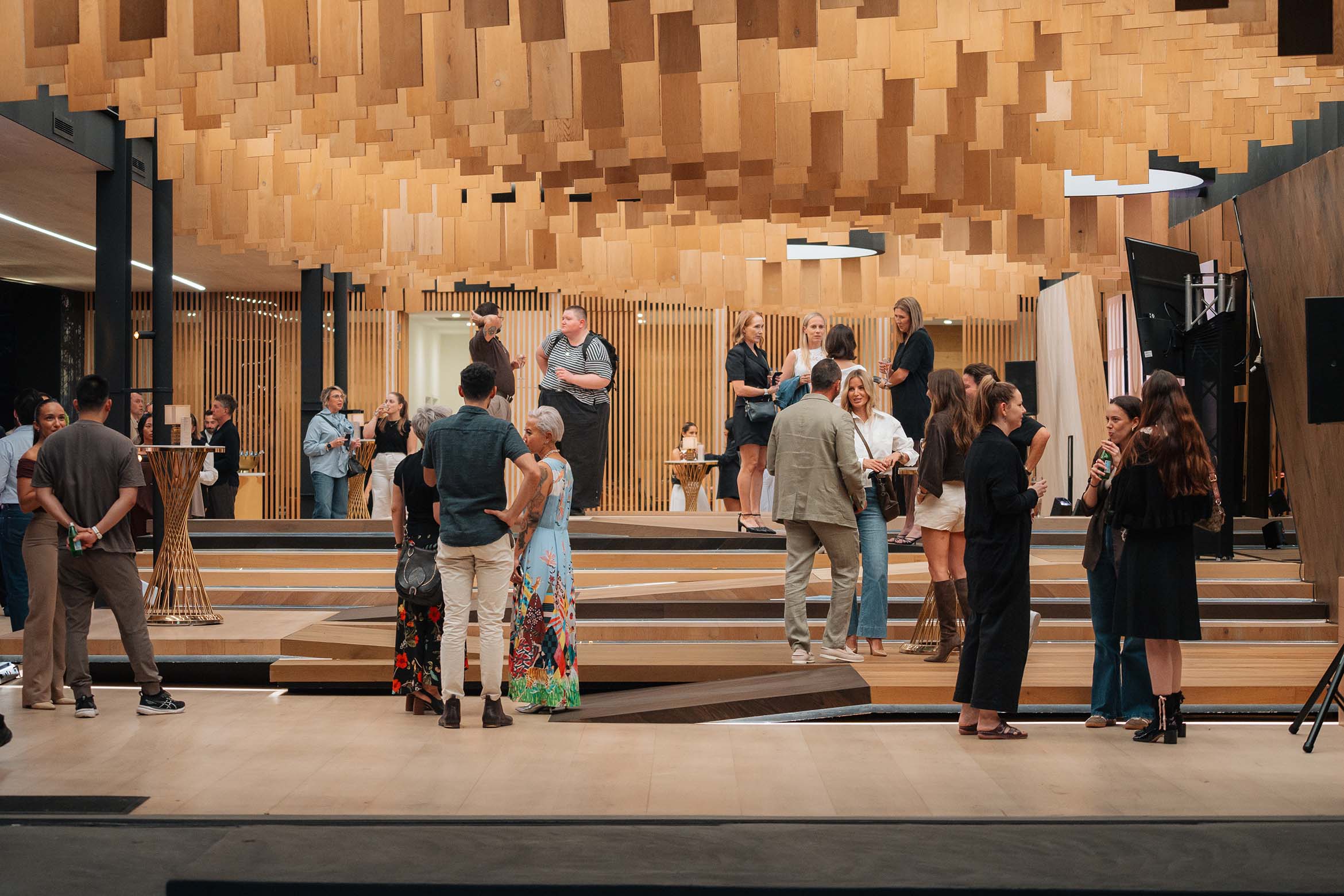
From the elaborate interiors of The Great Gatsby to the theatrical world of Moulin Rouge!, Catherine Martin has built a career around the expressive possibilities of pattern, colour and decoration. Now, the four-time Academy Award-winning designer has turned her attention to parquetry, collaborating with Australian timber flooring company Tongue & Groove on a new collection called Parterre.
Launched in October as part of Tongue & Groove‘s Co.Lab series, the collection comprises six modular designs that revisit traditional parquetry with a more playful approach to geometry. No single arrangement, the individual elements can be combined in different ways, allowing architects and interior designers to develop their own patterns and colour combinations.
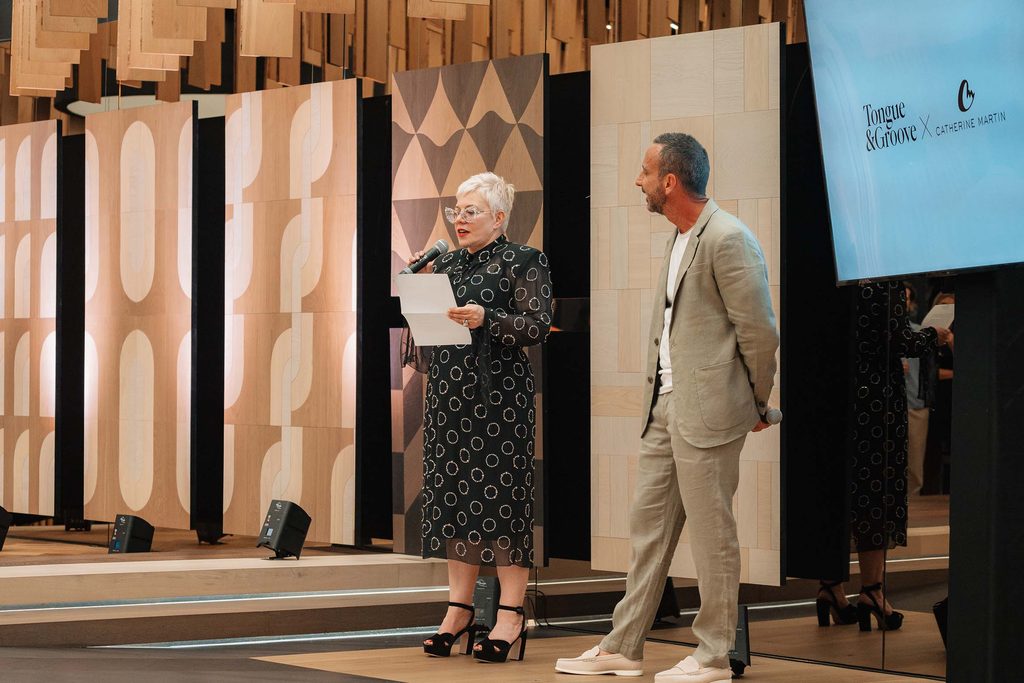
“I love parquet, and the idea of finding a way of making parquet interesting and accessible again was something that I was really interested in,” says Martin. “By changing the way that you combine tiles together, you can endlessly change the pattern, so that the pattern in itself becomes almost bespoke to the user.”
The six designs, School Room, Capsule, Cable, Arches, Birdie and Hopscotch, draw on a surprisingly varied collection of references, from architectural history and painting to the objects and patterns Martin remembers from childhood.
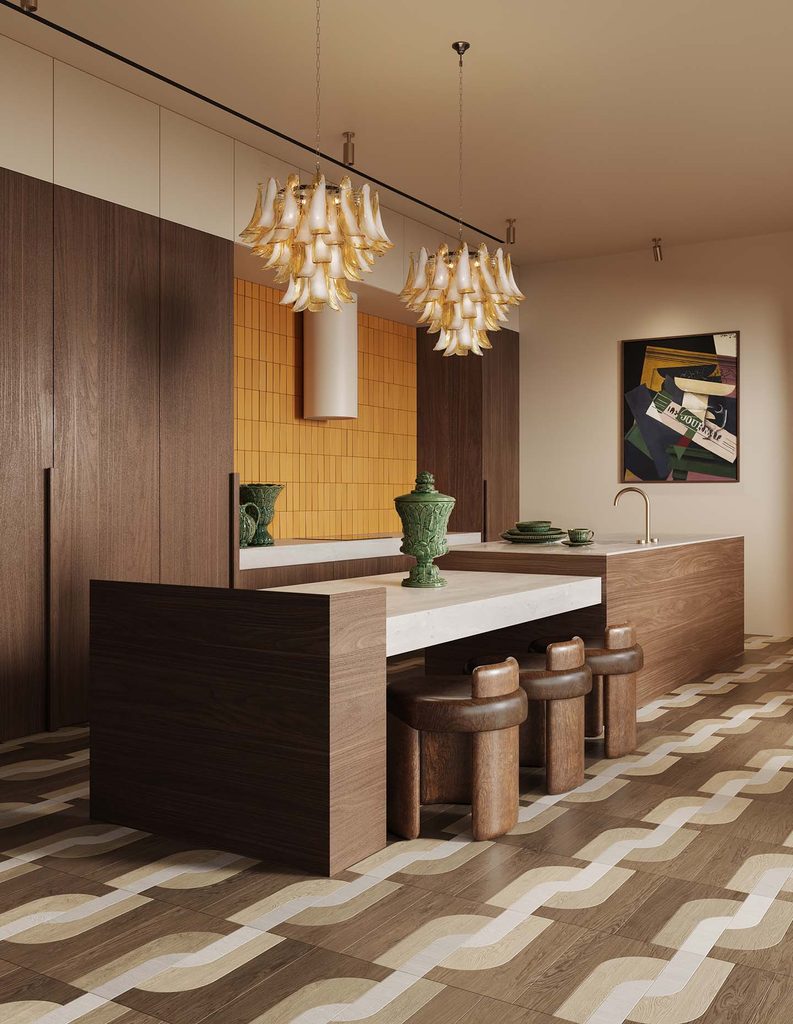
School Room revisits the linoleum tiles of her early school years, loosening the rigid geometry of conventional parquetry to allow for different configurations. Capsule takes its rounded forms from 1940s Art Deco, while Cable transforms the coiled cord of a rotary telephone into a repeating diagonal pattern.
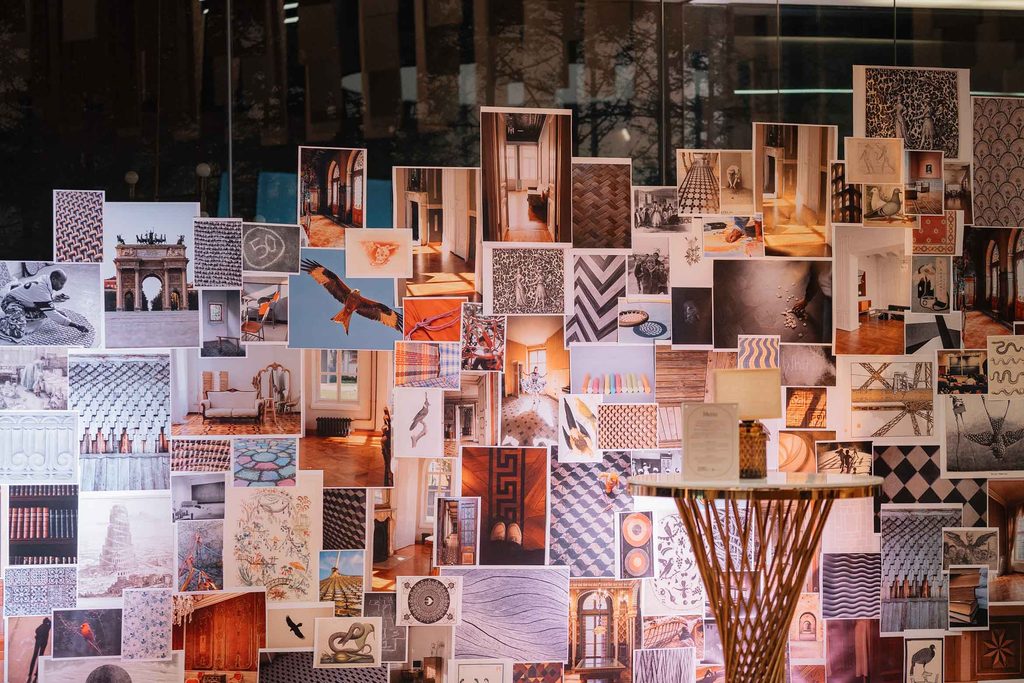
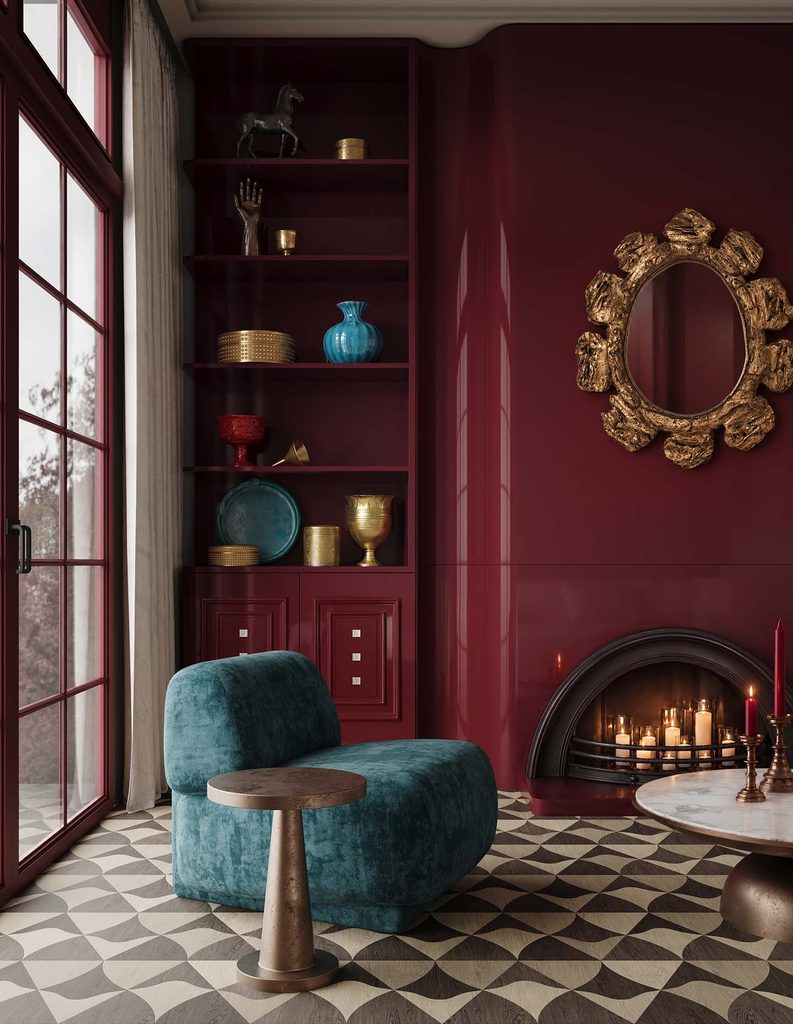
Arches looks to the paintings of Giorgio de Chirico, particularly their austere architecture and incomplete classical forms. Birdie translates the stylised birds Martin has previously used in textile and carpet designs into timber, while Hopscotch takes its cues from geometric paving and the familiar childhood game.
The references are personal, but the resulting patterns are intended to be adaptable. Specified in contrasting timber tones, they become graphic and pronounced. In a single colour, changes in the direction of the oak grain provide a subtler reading of the geometry.
Related: Every tile in its place
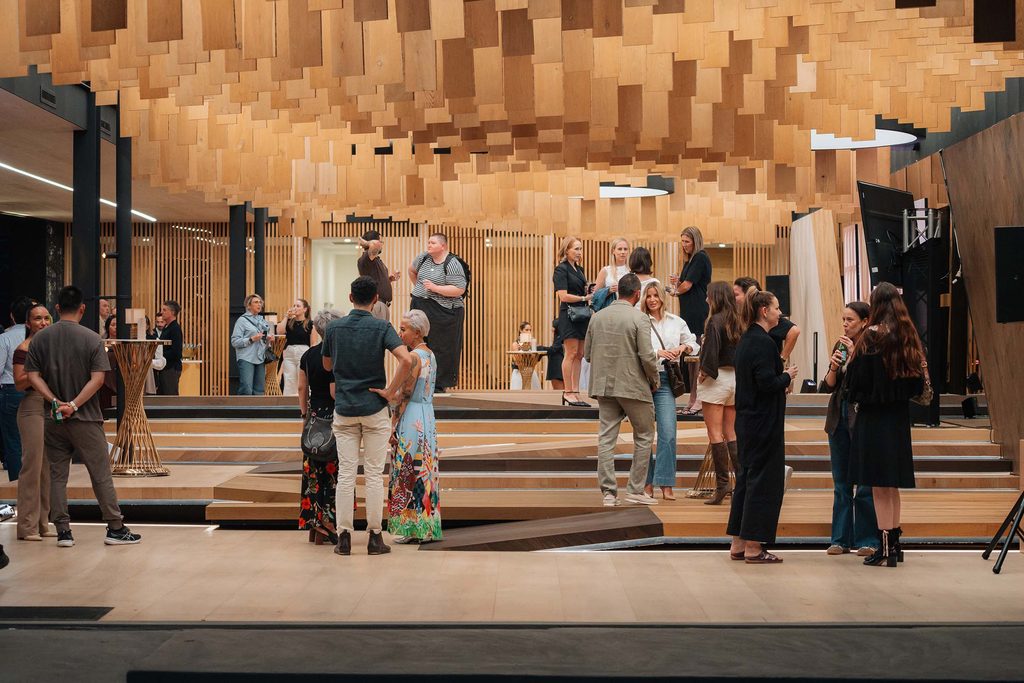
For Tongue & Groove, translating these ideas into a manufactured product presented its own challenges. The collection uses the company’s three-layer solid European oak construction, with intricate curves, points and tessellations requiring precise machining and extensive hand-finishing.
Unlike conventional parquetry, where repetition often depends on relatively simple geometric components, Parterre introduces more complicated shapes that must still fit together accurately. Each element is precision-cut, assembled and finished by hand, bringing a considerable degree of craftsmanship to the production process.
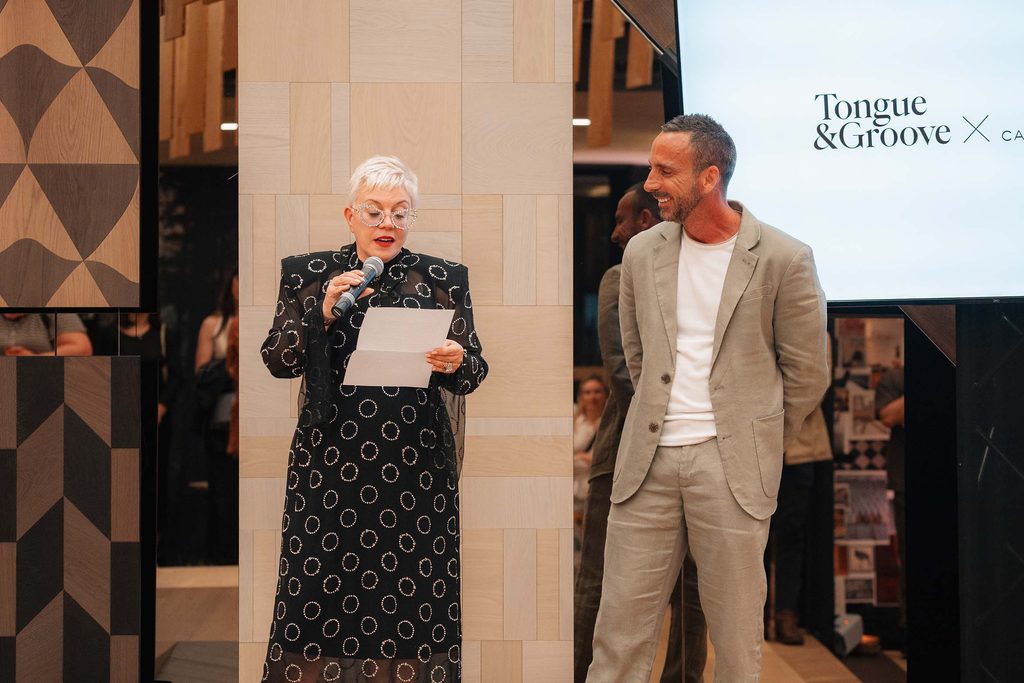
“What I loved about the product was that it had all the tech of an engineered floor, but all the beauty and variation of a product that’s natural,” says Martin. “No one tree is the same. I loved that combination, and also the fact that it has longevity.”
The collection also reflects a broader interest in extending the use of timber beyond flooring. Although Parterre was developed as a parquetry range, its modular patterns can be applied to walls and architectural panelling, allowing the same geometry to continue across different surfaces within an interior.
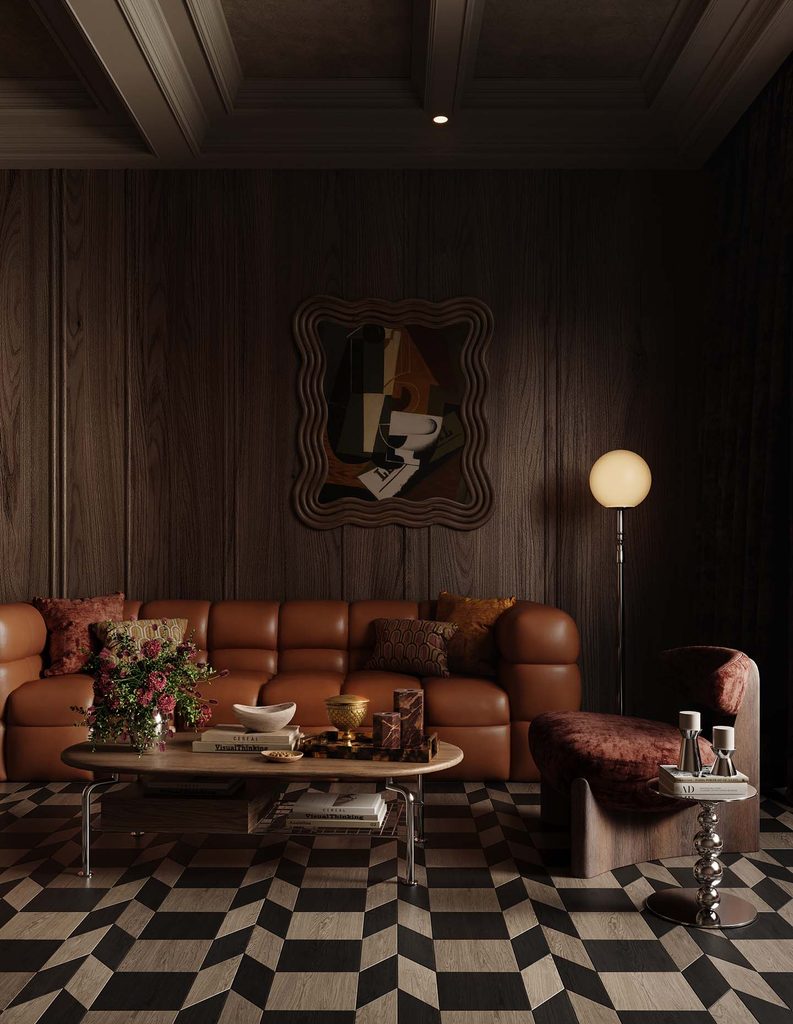
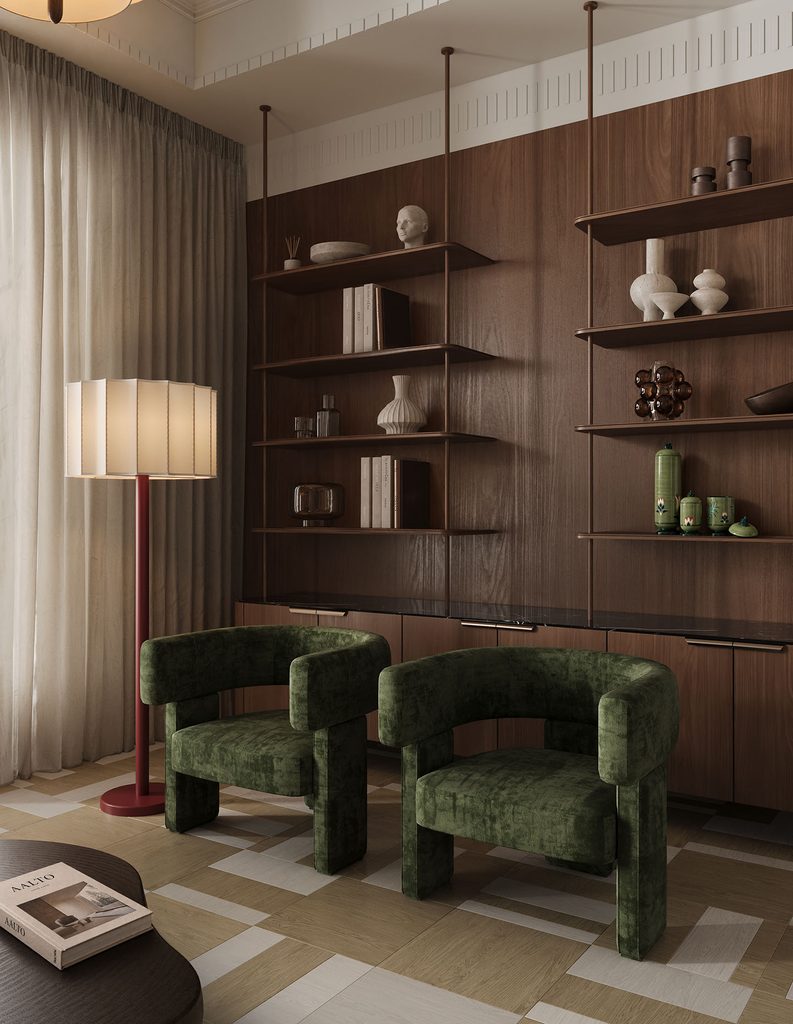
This flexibility is central to the Co.Lab concept, which brings external designers into Tongue & Groove’s manufacturing process to explore new applications for timber.
For Richard Karsay, founder and CEO of Tongue & Groove, the collaboration is part of an effort to reconsider the role of flooring within an interior, particularly its potential to contribute pattern and character rather than simply provide a neutral surface.
Martin is similarly interested in what other designers might do with the collection once it leaves her hands.
“I hope that other designers discover a collection that they can bend to their own needs,” she says. “Parterre is not imposing an aesthetic, but rather allowing people to make their own stories in their own homes.”
With its combination of personal references, modular geometry and traditional timber craftsmanship, Parterre offers a different approach to a familiar material. The patterns carry Martin’s unmistakable interest in decoration, but their final expression is left largely to the designer specifying them.