

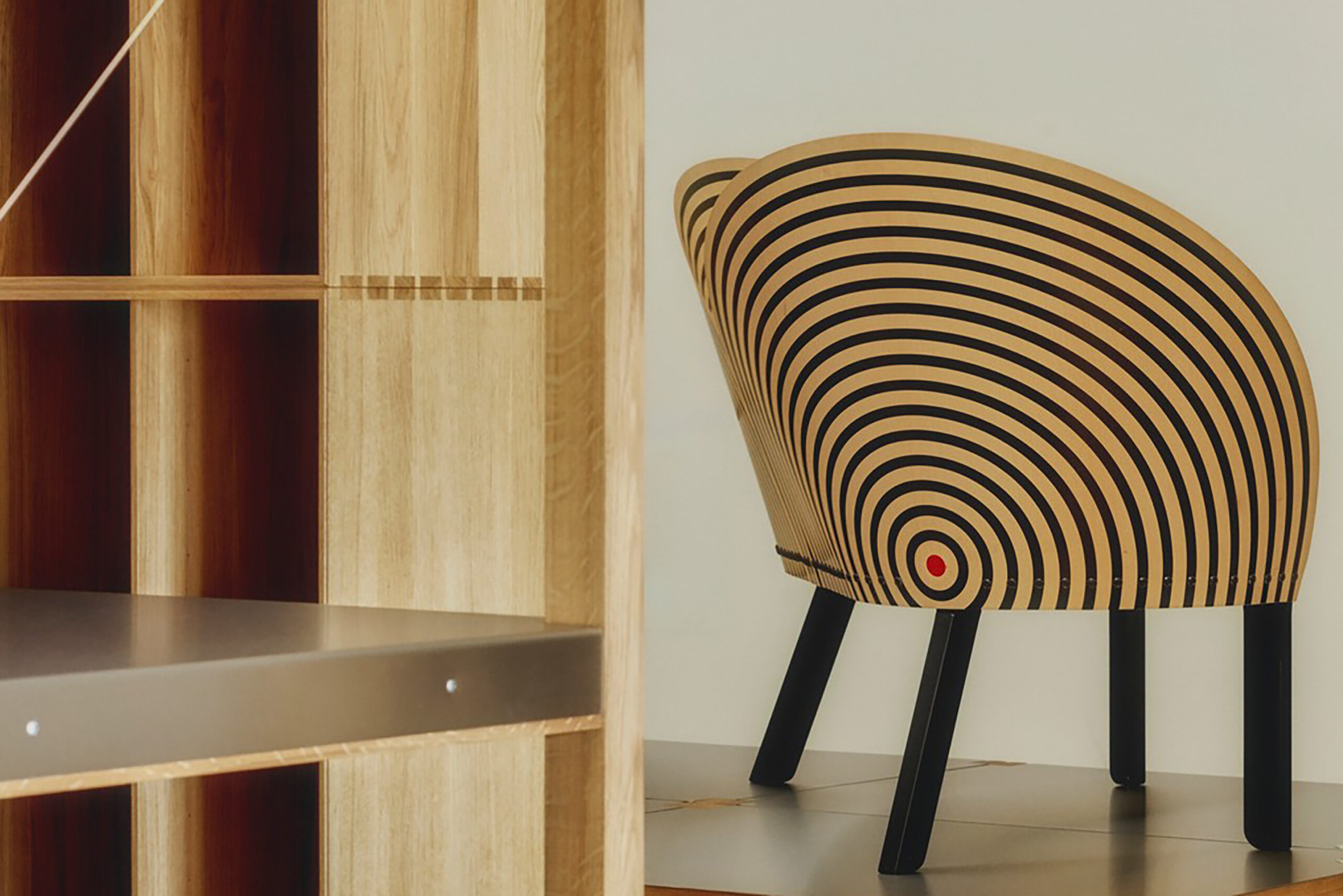
One of the quieter moments of Milan Design Week is the Triennale Milano, where exhibitions rather than exhibitors are the main game. Here, the history of Italian design is centre stage, but those invited to share the exhibition space are exceptional.
There are designers who leave an imprint on objects, and there are designers who leave an imprint on how we live with those objects. Nanna Ditzel belongs firmly to the latter. Her work — furniture, textiles, jewellery, interiors — reads less like a product portfolio and more like a decades-long exploration of how spaces might feel: softer, more humane, quietly imaginative.
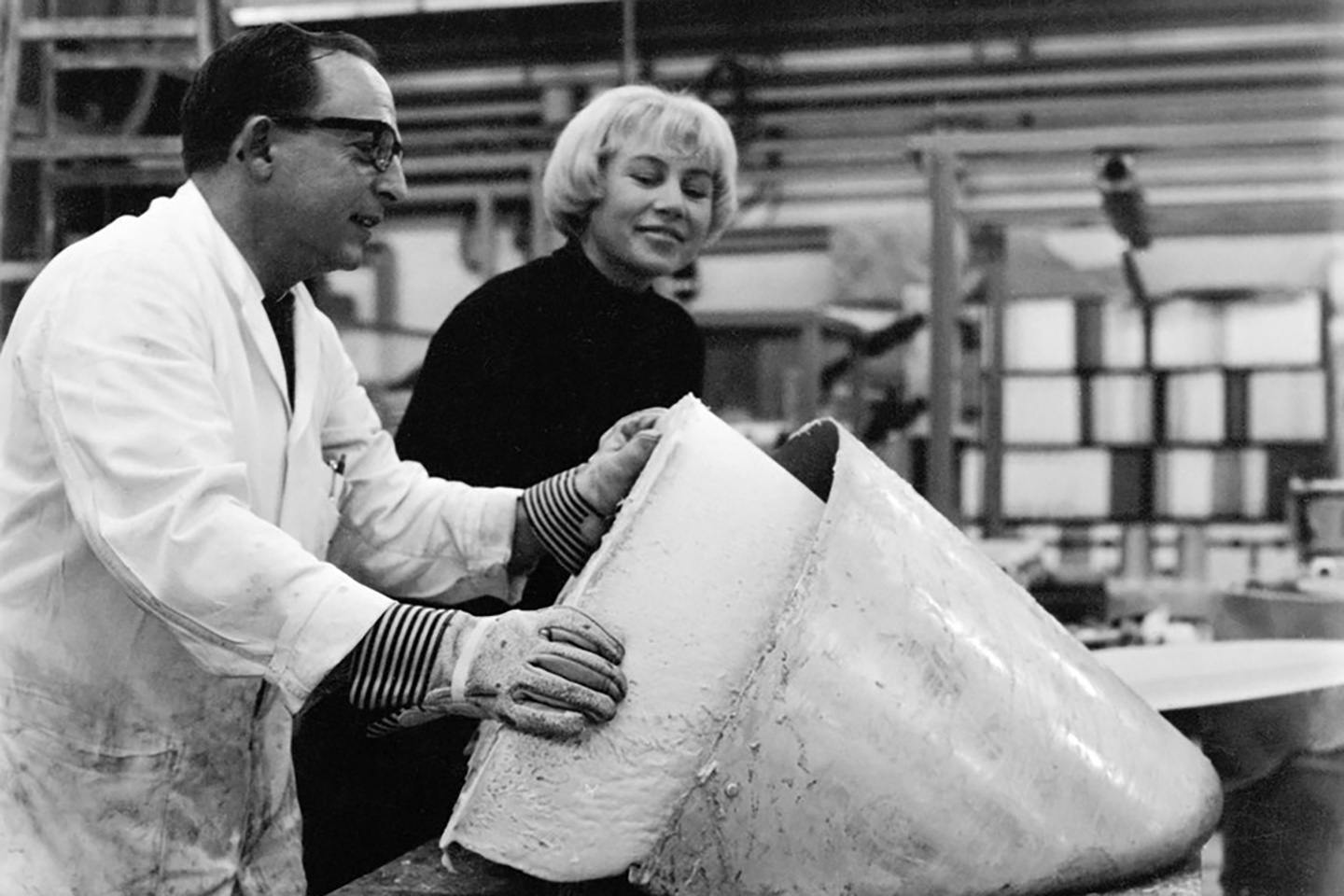
“There is certainly no need to work in the service of current good taste; it is big, broad and doing just fine. On the contrary, we must use our imagination, creativity and our visions of society to create the things and environments we believe in. You can do it based on your personal temperament. Some will choose strict and ascetic, but I do not mind if it is fun and festive, and I’m not opposed to pomp and circumstance,” said Ditzel in her 1997 lecture at the Royal Danish Academy of Fine Arts.
Trained as both a cabinetmaker and a furniture designer, Ditzel was grounded in the realities of timber, joints and tools. Yet from this rigorous foundation, a vocabulary of curves and gentle transitions emerged. Where many of her contemporaries emphasised taut geometries and rectilinear order, she gravitated towards arcs, shells and flowing lines that seemed to wrap around the sitter.
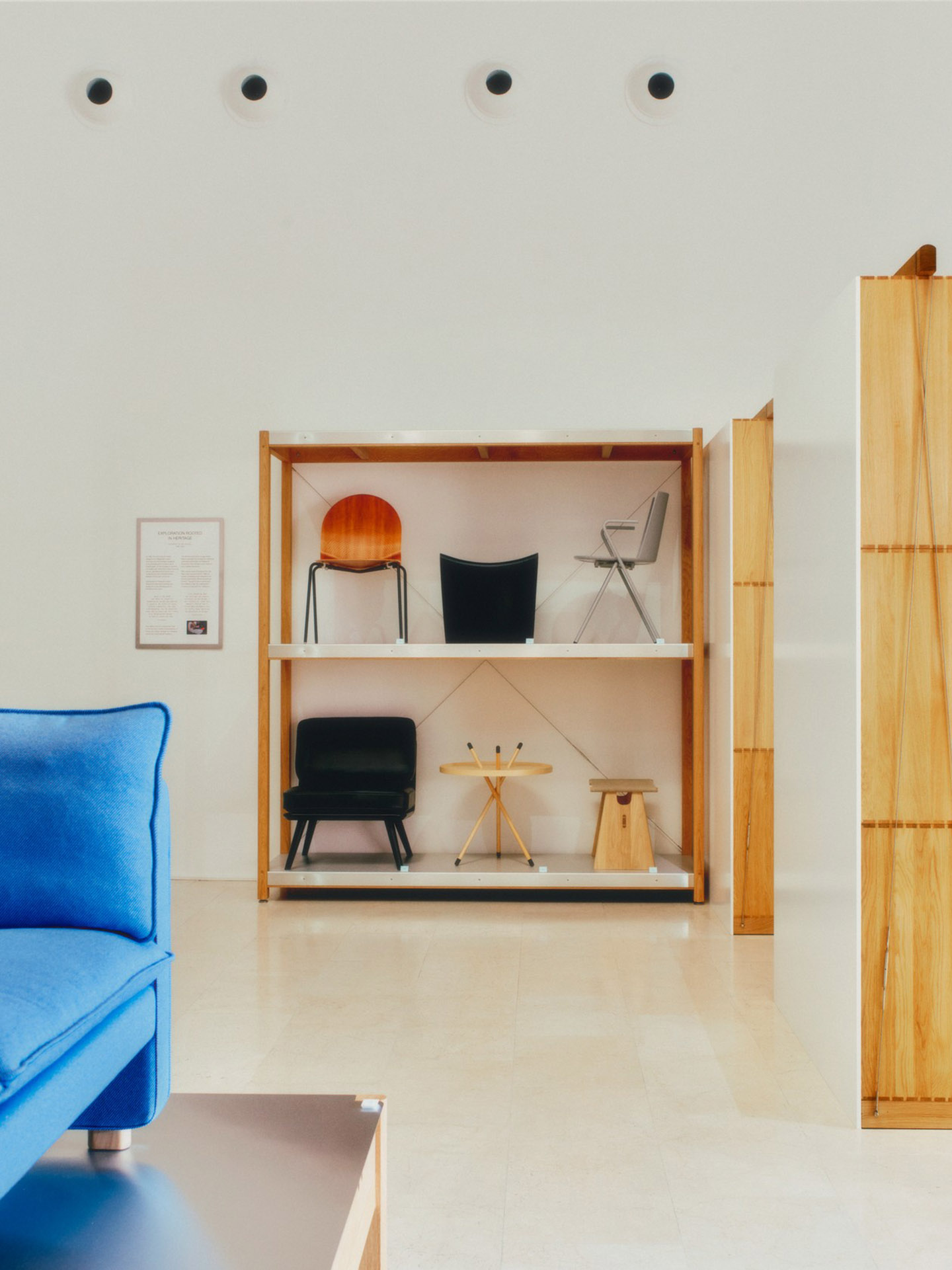
“Nanna had an open and relaxed relationship with new technology, which she consistently turned into inspiration for new creative directions. This approach made us more daring in product development at Fredericia, and that confidence led to a series of groundbreaking designs like Bench for Two, Butterfly Chair, Trinidad and Sonar,” says Thomas Graversen, second-generation owner of Frederica.
“Effectively, her work is architectural in attitude rather than scale.”
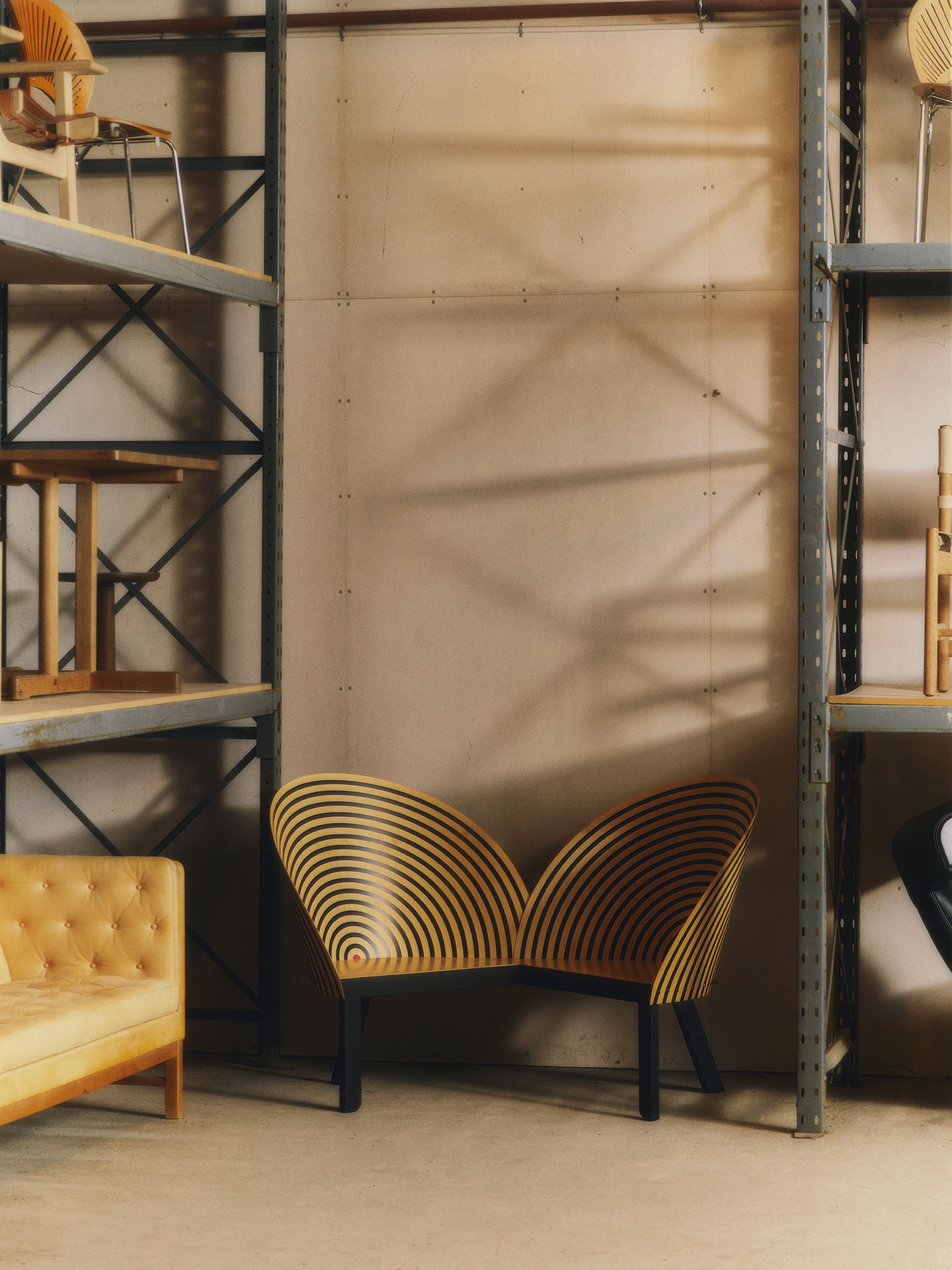
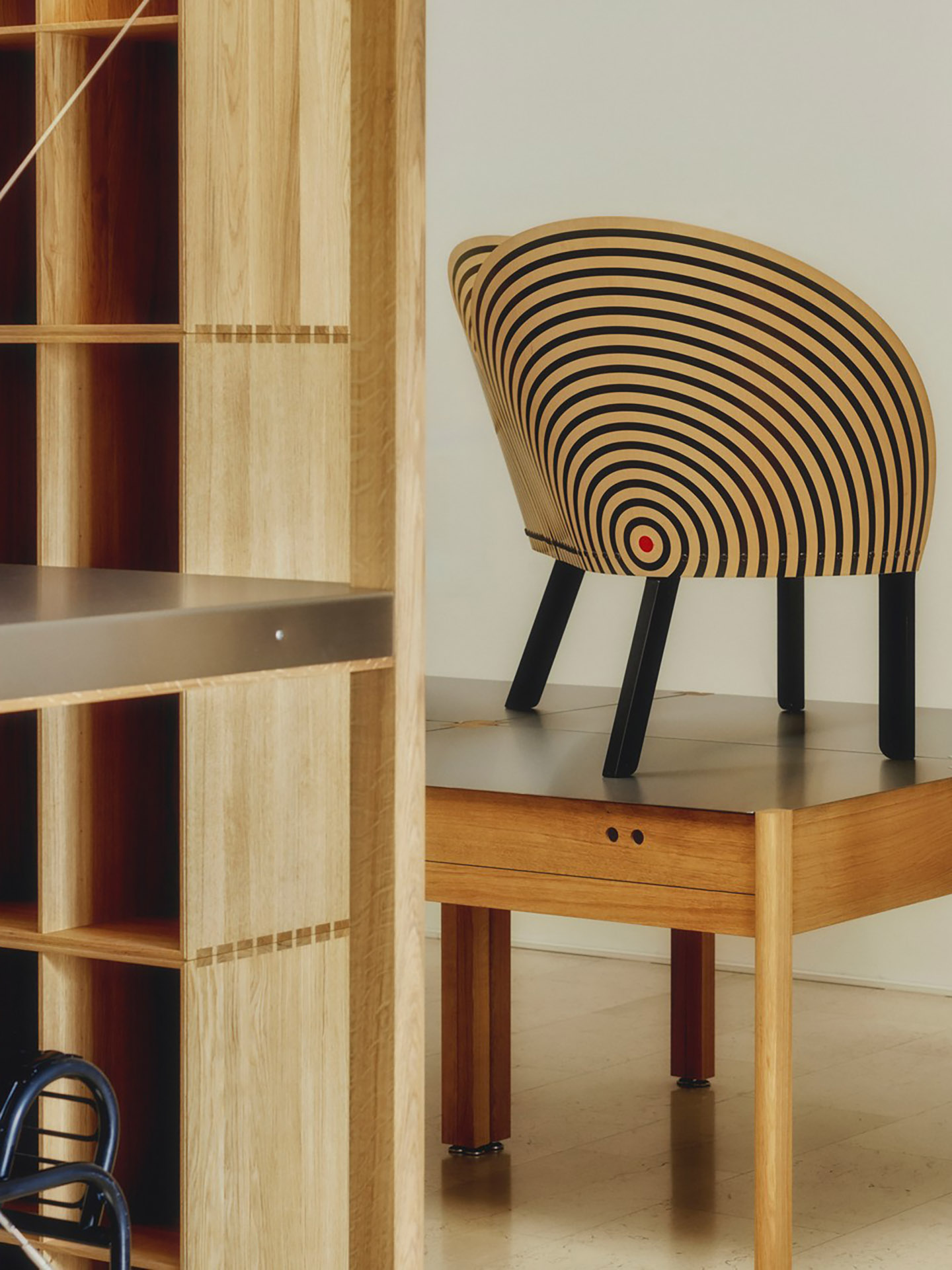
A Ditzel chair doesn’t simply offer a place to sit; it encloses a pocket of space, defines a personal interior. The arc of a seat becomes a horizon line, a backrest becomes a protective wall, a pattern of perforations becomes a screen for light. Instead of concrete and steel, she works with oak, wool, rattan and leather to frame the body’s experience of space.
“Nanna had a very unpretentious approach to design. She was never afraid to say ‘let’s start over’ if an idea didn’t work visually or technically. As a producer and partner, this was extremely liberating, because it created a working process where we felt free to think more openly and operate at a higher creative level than usual,” says Graversen.
Fredericia, founded in 1911, brought to this language a complementary discipline. The company built its reputation on craft and structural clarity: honest materials, legible construction, no unnecessary flourishes. Early collaborations with figures such as Børge Mogensen established a Danish modernism rooted in democratic, durable design — objects as reliable as good infrastructure.
Related: More on Milan’s installations in 2026
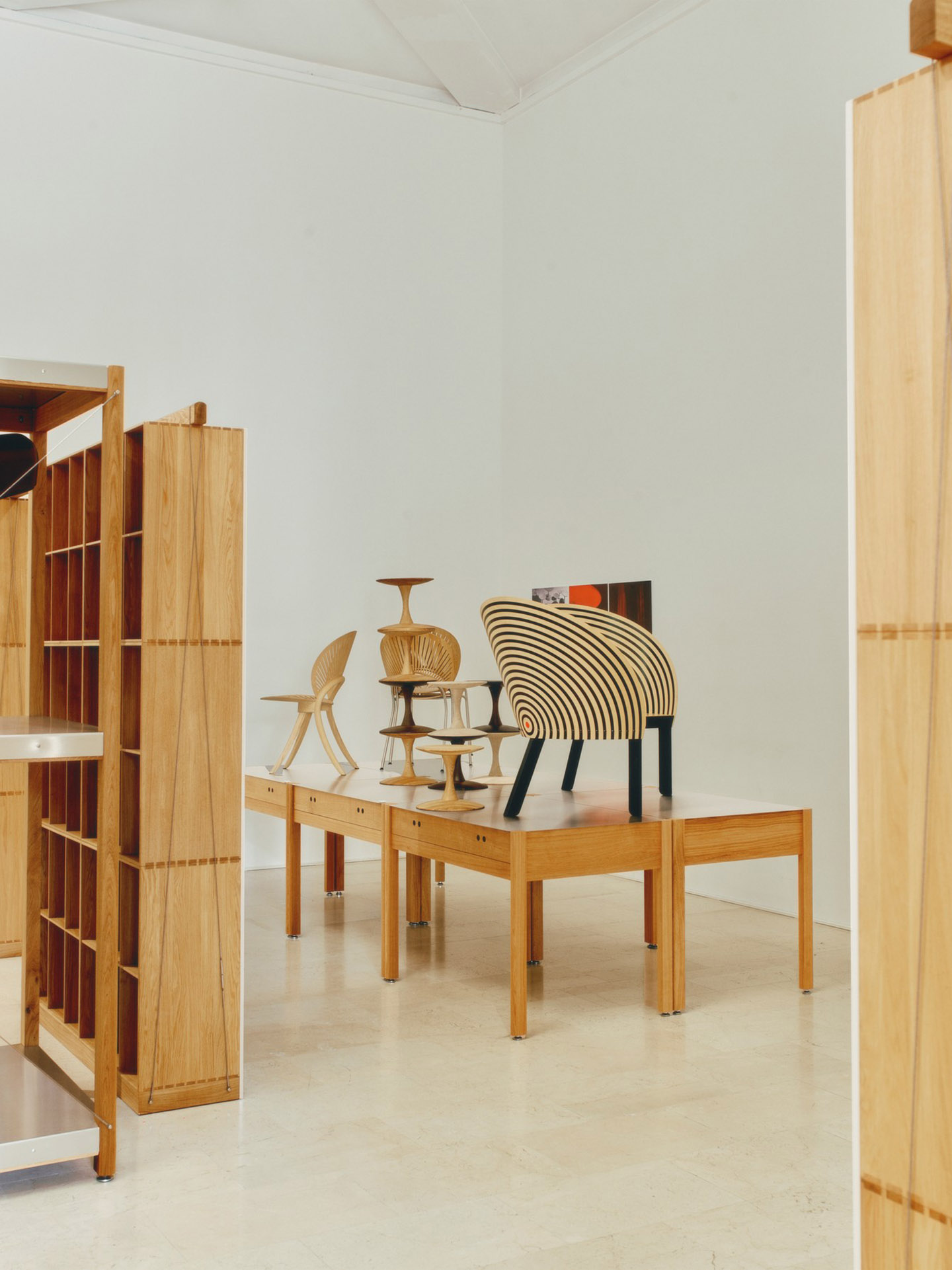
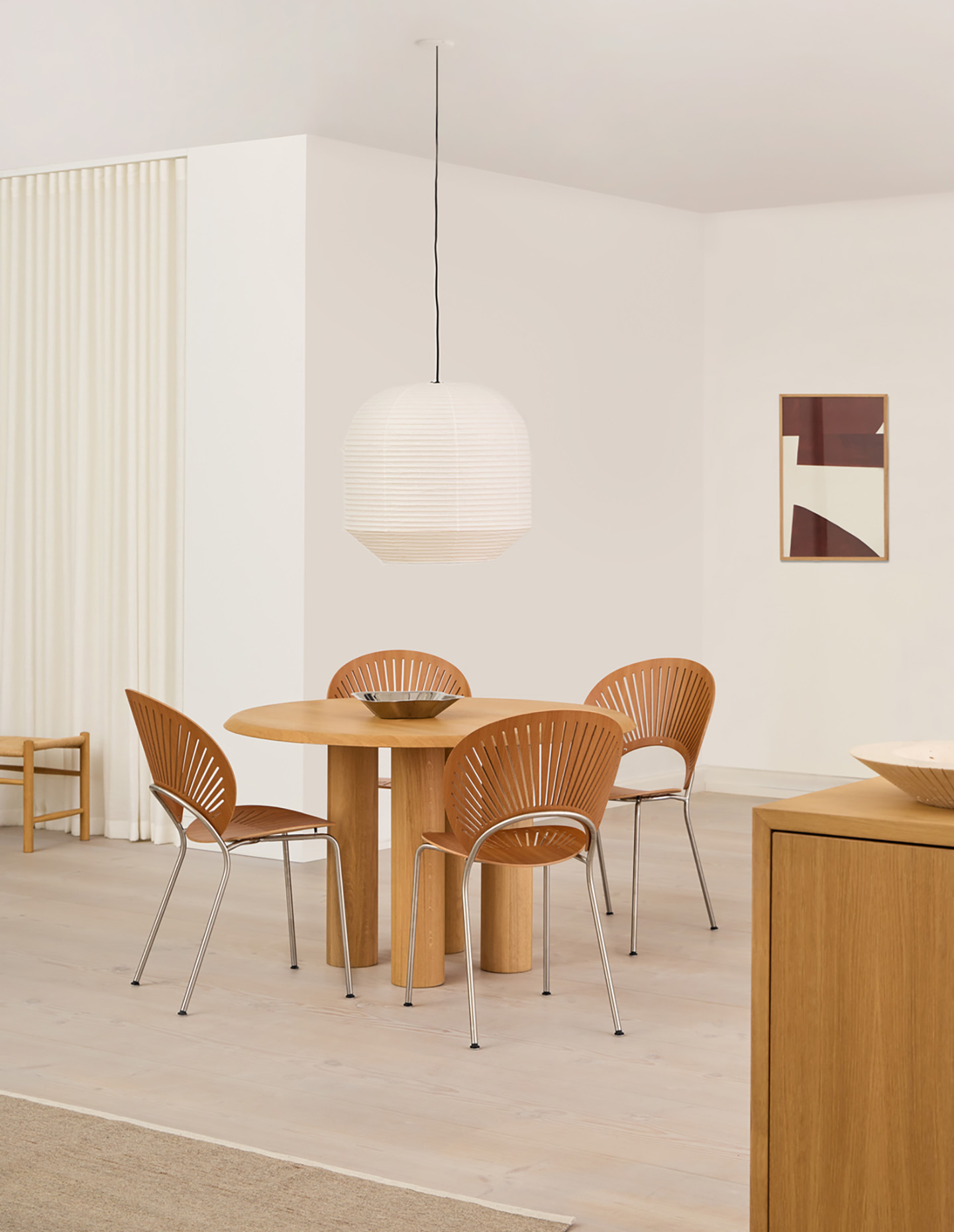
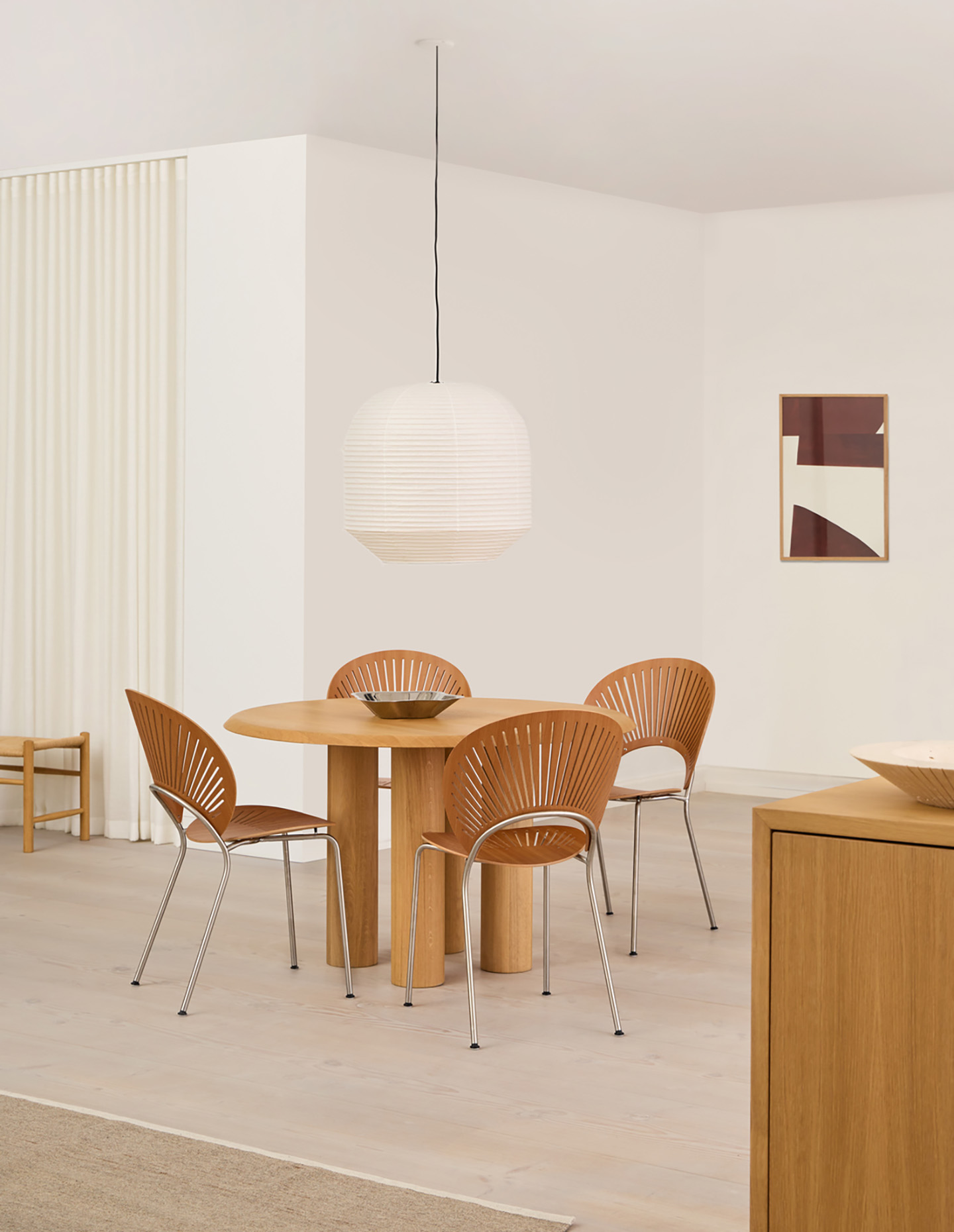
When Ditzel and Fredericia began working together, the result was not a simple fusion but a subtle expansion of both identities. Her sensuous, intuitive forms met their insistence on precision, yielding objects that feel at once rational and romantic. You see this most clearly in the Trinidad Chair.
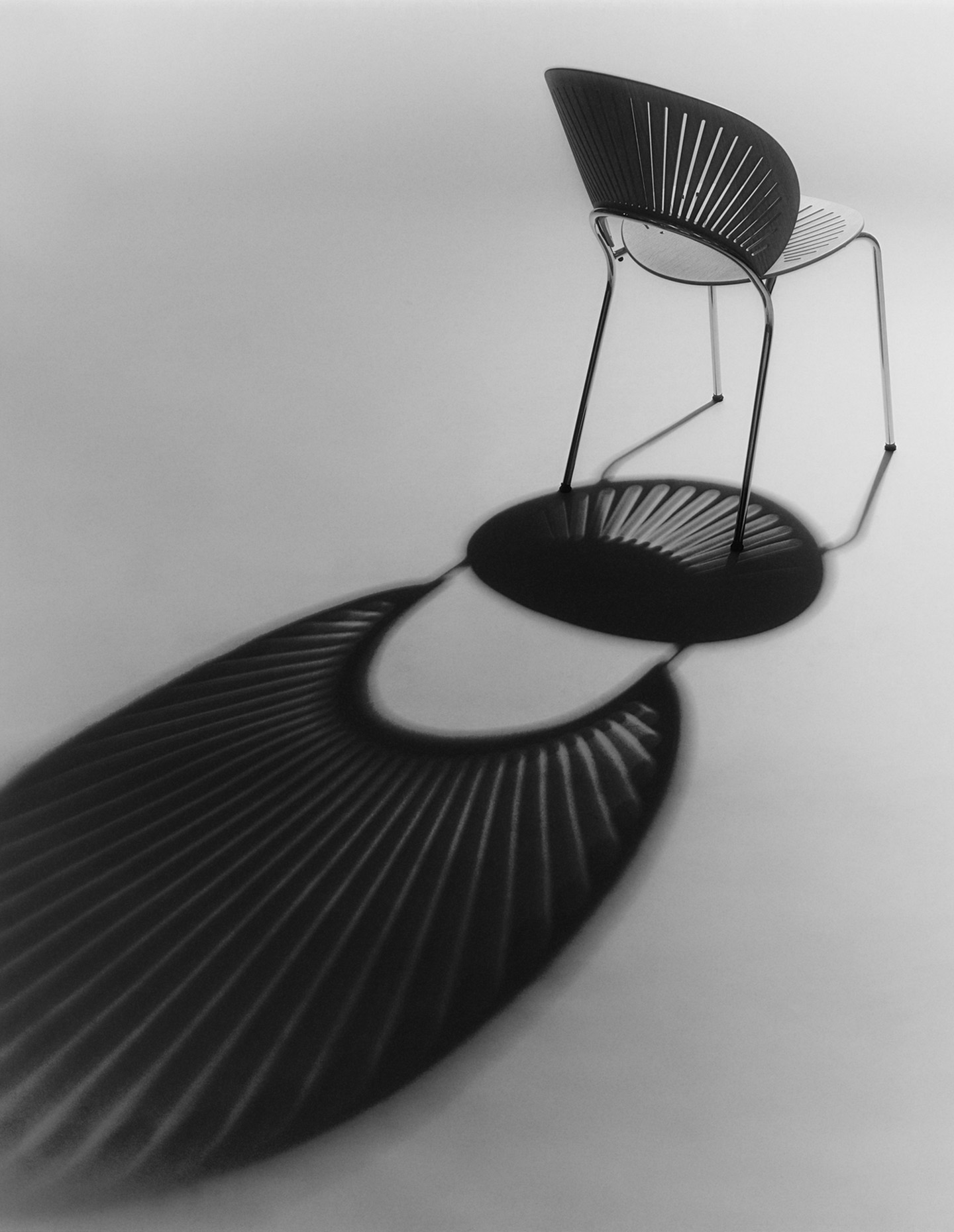
Selected by Jørn Utzon for the Utzon room in Sydney’s Opera House, Trinidad is, on paper, a dining chair. In reality, however, it behaves more like a façade. The moulded plywood shell is carved with a rhythmic pattern of cut-outs that, while decorative, act like a lattice or brise-soleil, recalling the perforated shutters and fretwork of Caribbean houses that inspired her. Light passes through the backrest, scattering delicate shadows across walls and floors. As such, the chair doesn’t just occupy a room; it participates in its atmosphere, filtering light and moderating temperature, much like a building skin.
Working with Ditzel, Fredericia’s role is akin to that of a structural engineer working with an architect. Beneath the inviting, tactile surfaces lies a disciplined framework — precise carpentry, calibrated foam densities, carefully tested proportions. Around this structure, Ditzel draws her soft lines, making pieces that support the body while also shaping the social geometry of a room.
“There is nothing wrong with wanting to create something extra elegant, even if it cannot immediately be realised in larger production. Once the experience is gained, you can always say: ‘Now it must be serious. Now it must be made.’ You take two steps forward and one back. In the end, you have still taken a step forward,” says Ditzel.
Viewed within the broader history of Danish design, the Ditzel–Fredericia relationship is also about voice and perspective. In a field dominated by male figures and a particular strain of rational modernism, Ditzel’s work introduced a quietly radical, often more sensorial approach.
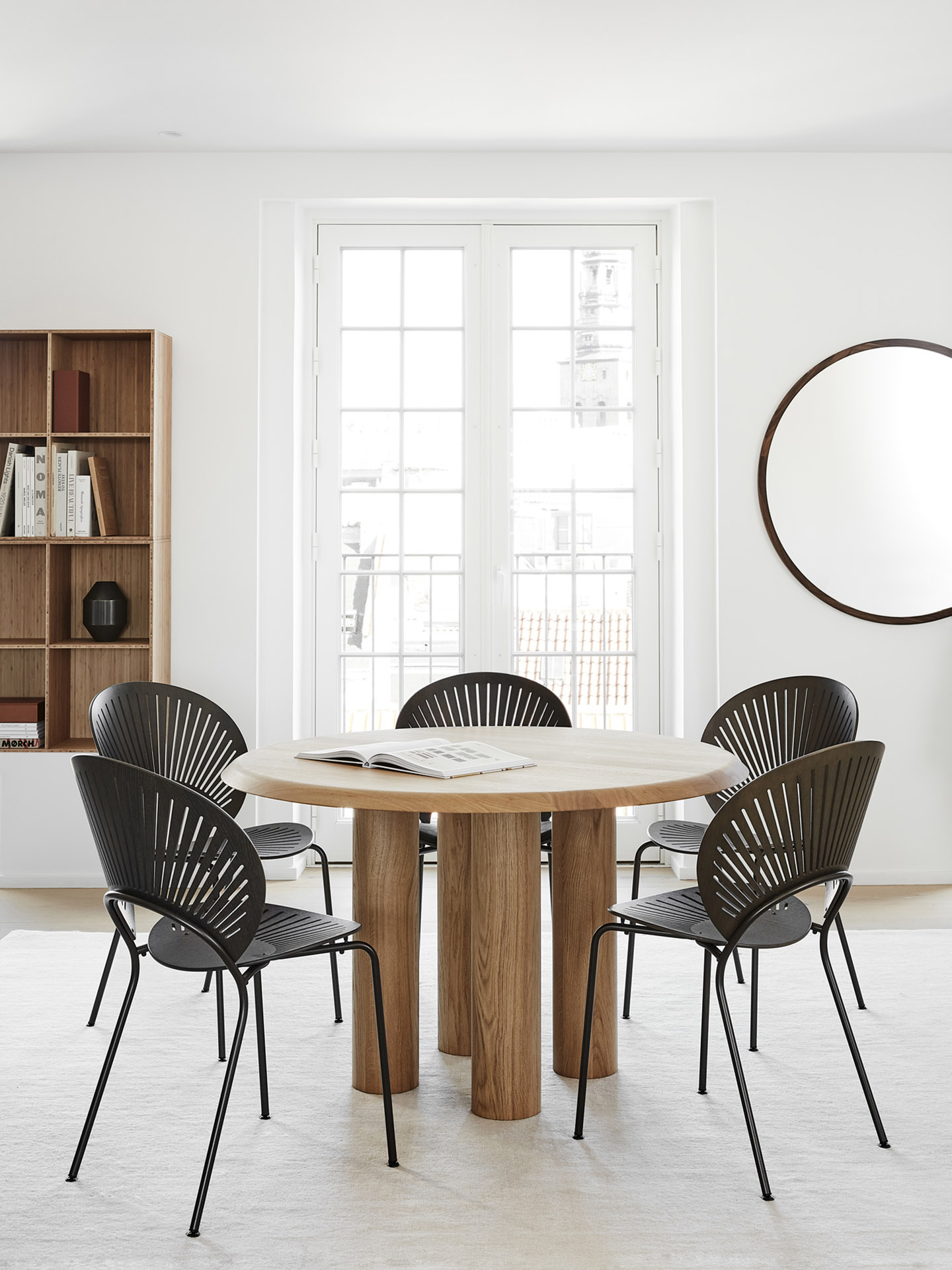
“Ditzel didn’t reject modernism; she bent it, softened its edges, opened it
up to emotion, tactility and a more intuitive understanding of domestic life.”
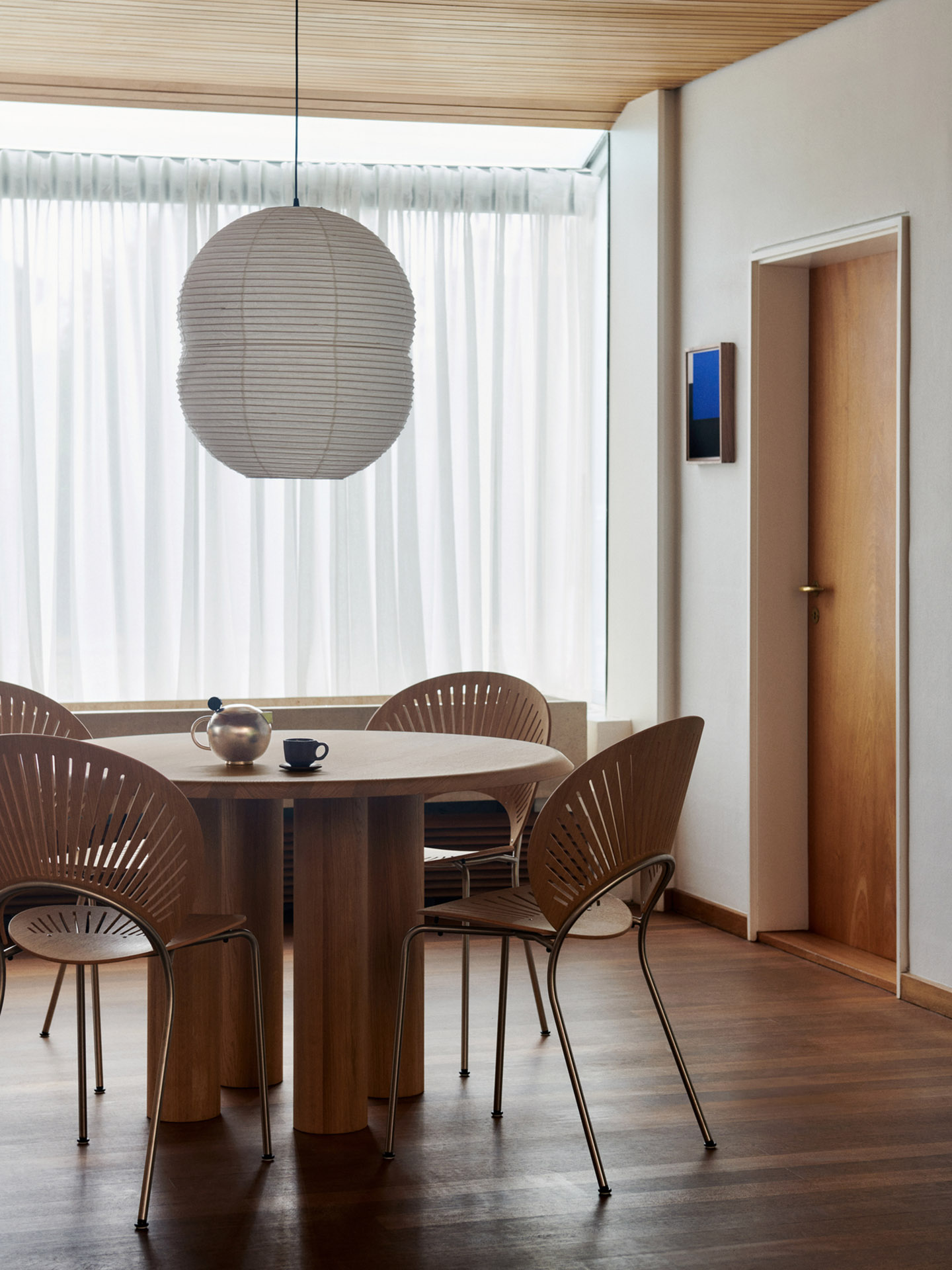
By championing this work, Frederica effectively broadened its own architectural language. The brand’s identity came to accommodate not only square lines and sturdy frames, but also perforated shells, gentle asymmetries and an interest in how furniture might choreograph light and movement.
Their partnership is ultimately a conversation between structural clarity and poetic intuition, between the measurable and the felt. Out of that dialogue emerged objects that do what the best buildings do: they hold us, they frame our days. They make the ordinary rituals of life feel a little more considered, a little more beautiful and — without clamour or spectacle — quietly profound.