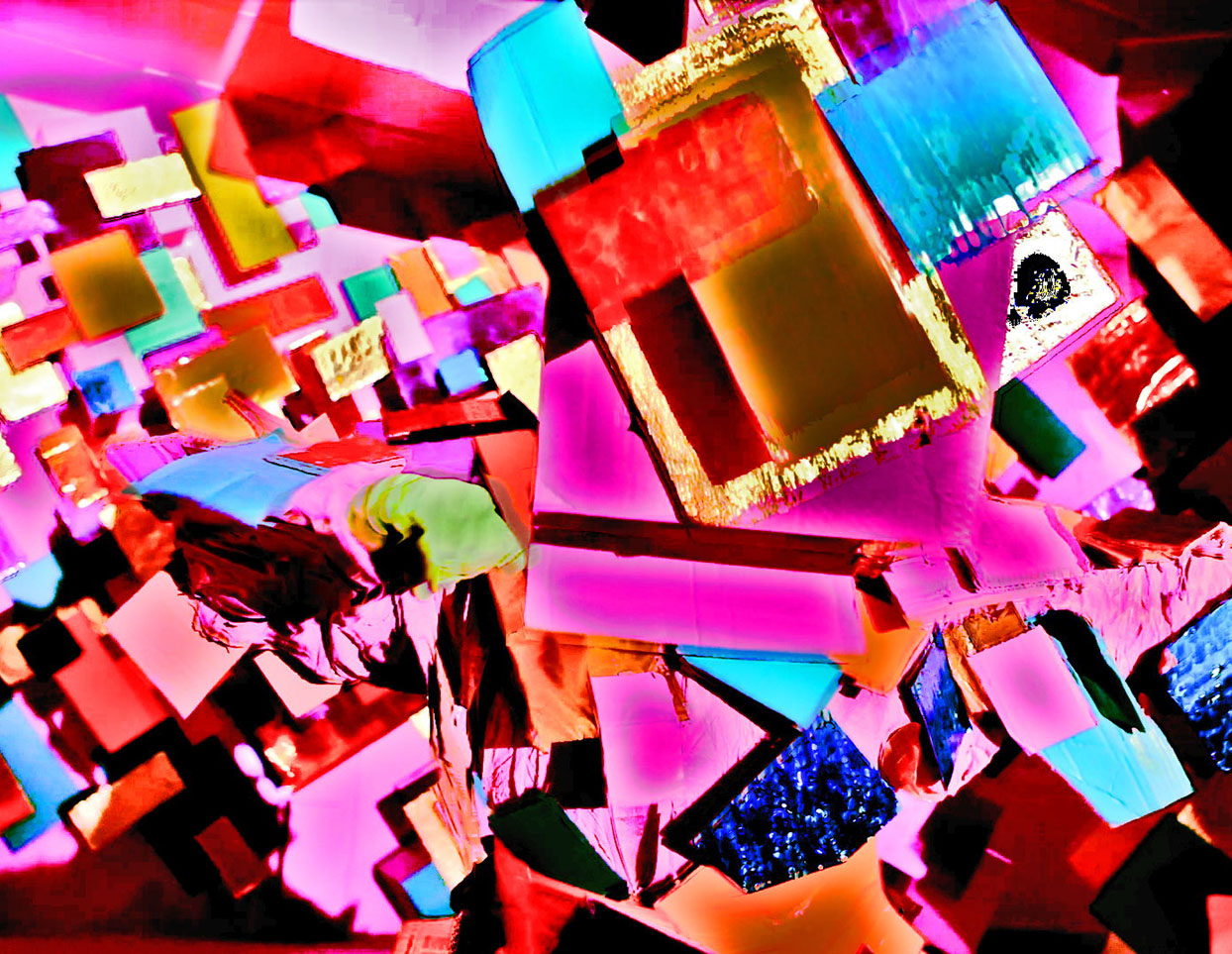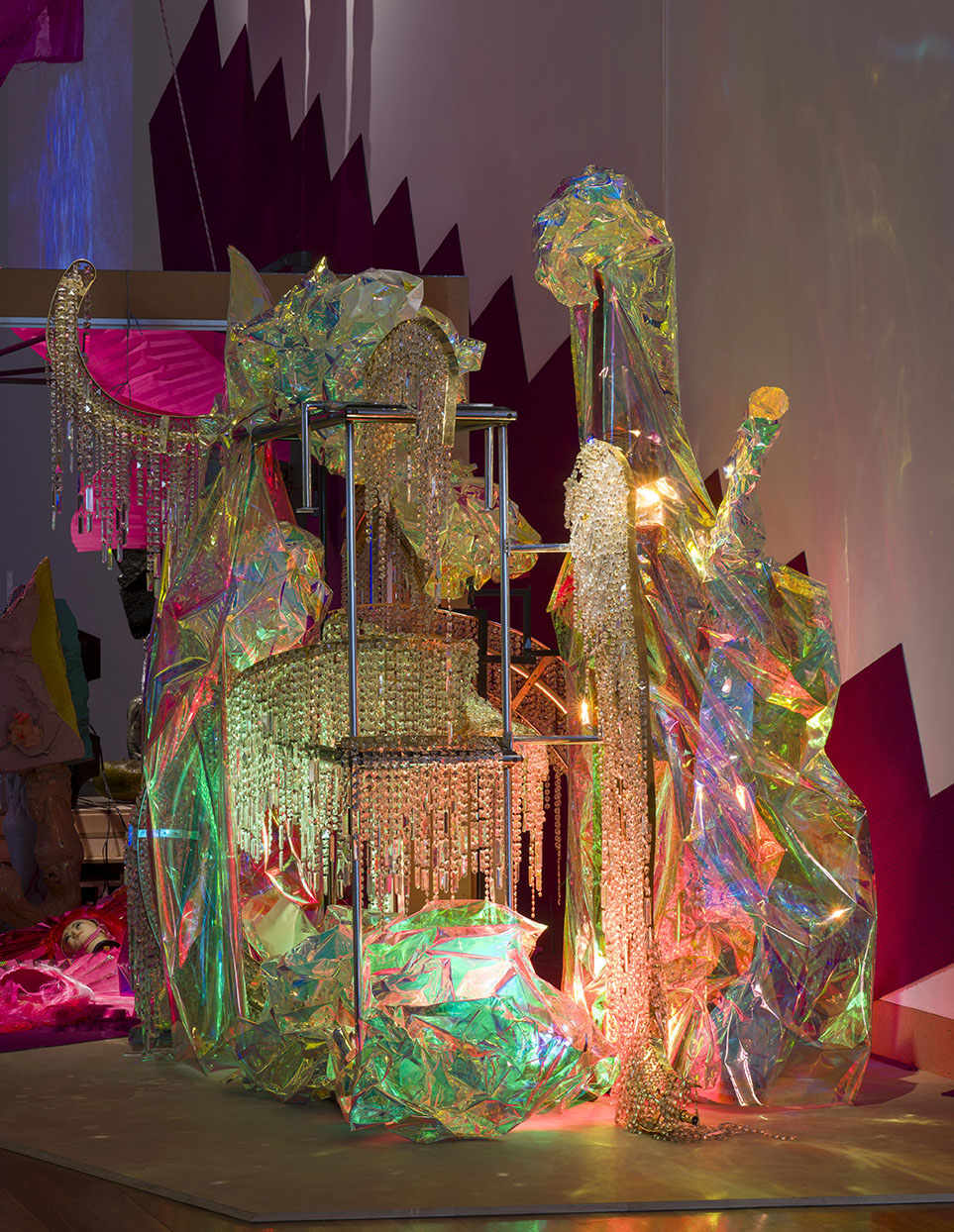


Justene Williams is a total maximalist – yet her maximalism is not by accident, but rather stems from deep consideration, intellectual rigour and propulsive energy. Once We Were Mudskippers, now on view at QAGOMA in Brisbane, is the Sydney-born, Brisbane-based artist’s largest survey to date. Curated by Ellie Buttrose (Curator, Contemporary Australian Art, QAGOMA), the insightful exhibition brings together performative video, sculpture, costume, sound and installation from the past two decades alongside ambitious new commissions. Audiences would be familiar with Williams’s extensive career to date, and more recently ‘Mirror Sheila’ in Flack Studio’s Hannah St Hotel, Melbourne, or major public art commissions including ‘Sheila’, 2024 at Queen’s Wharf, Brisbane.

The exhibition title refers to the mudskipper, a small amphibious fish that hauls itself from shallow water to skip across mudflats on fins shaped like legs. For Williams, as Buttrose explains, “the metaphor places us all in the primordial swamp together, looking for our own way out with daring adaptability.”
Born in 1970, Williams’s practice has been shaped from a young age by theatre, dance and cabaret, working in retail and her late father’s wrecking yard. Nonetheless, the artist draws on a profound knowledge of art history – Constructivism, the Russian Avant-Garde and the Ballets Russes, Dadaism, Bauhaus, Italian Futurism – all presented anew through female archetypes, with a nod to the spatial and psychological pull of consumerist retail displays and the socio-economic identity of Australian suburbia.

Often elevating the everyday or salvaged objects into materials for her sculptures, performances and installations, QAGOMA Director Chris Saines refers to Williams as “the ultimate bricoleur, finding fresh meaning and possibilities in the leftover and discarded.” The result is expansive worldbuilding, a feminist sensibility on the notion of the Gesamtkunstwerk (total work of art), and an ‘everythingness’ as noted by Dr Susan Best in the accompanying exhibition catalogue essay, in which performance, documentation, video and sculpture become entirely immersive environments. Yet Williams embraces the inherent humour, and absurdity, in her work with humility.
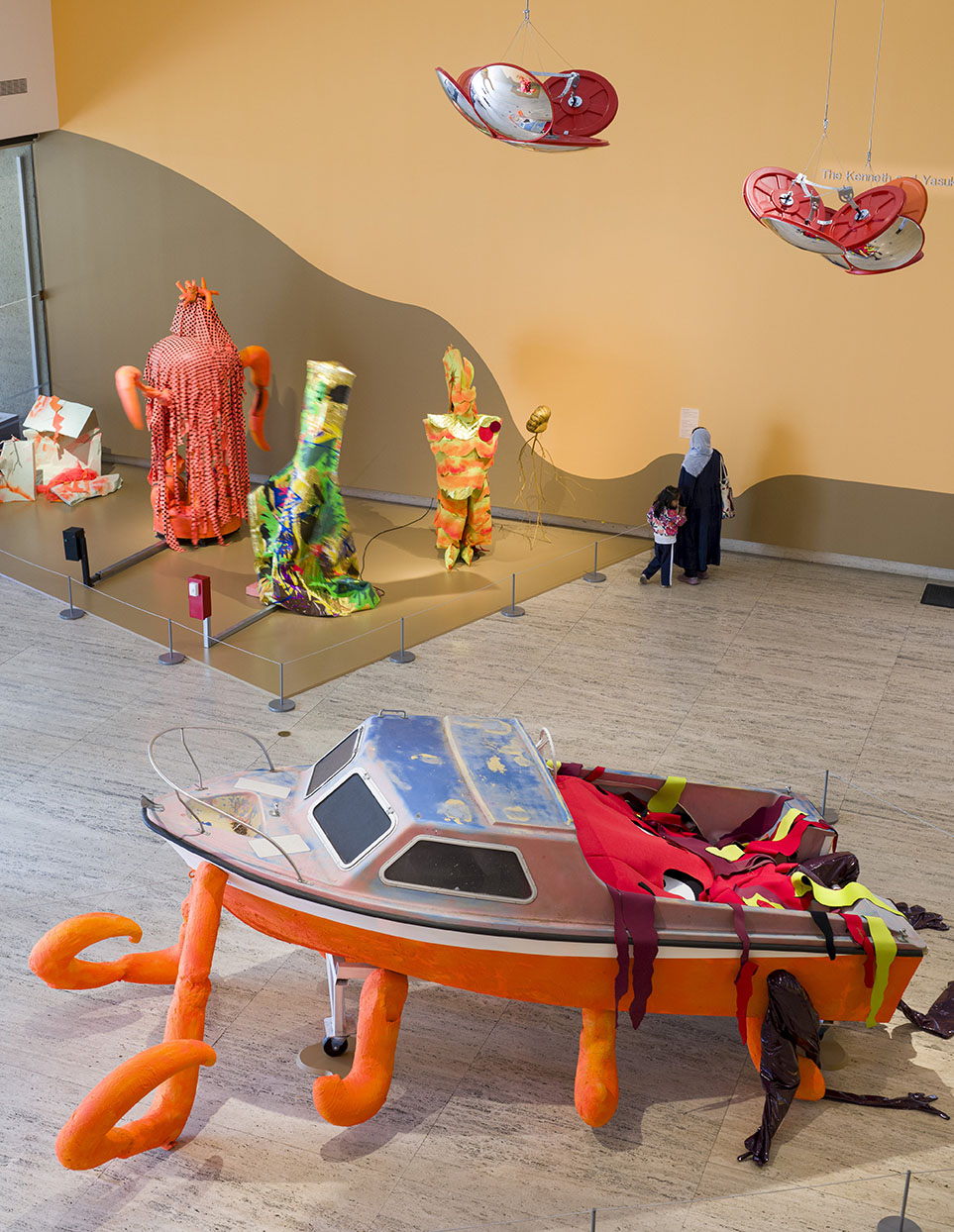
Fittingly, the curation of the survey is neither linear nor chronological. Williams notes: “Because of the way I work, I always want to renew, or change things up, or infuse things, or bring things back.” Upon entry, visitors pass through a golden-hued archway titled ‘She monster: the opening scene’, 2026. This towering monument functions as both sculptural headdress and gigantic sea creature and alludes to feminine excess. Beyond lies ‘Darwin and the jellyfish lady went to sea’, 2026; a small motorboat purchased from Facebook Marketplace, sprouting bright orange legs, a liquid squid spilling from its stern onto the museum floor. It speaks to the push and pull of ocean tides, myths at sea and the mudskipper itself. Are we rising up, or being pulled back into the soggy earth? Alongside sit clusters of Williams’s ‘characters’, a series of new sculptures or oversized human-like figures and a multi-screen video performance.
Related: What can interior designers learn from painting?


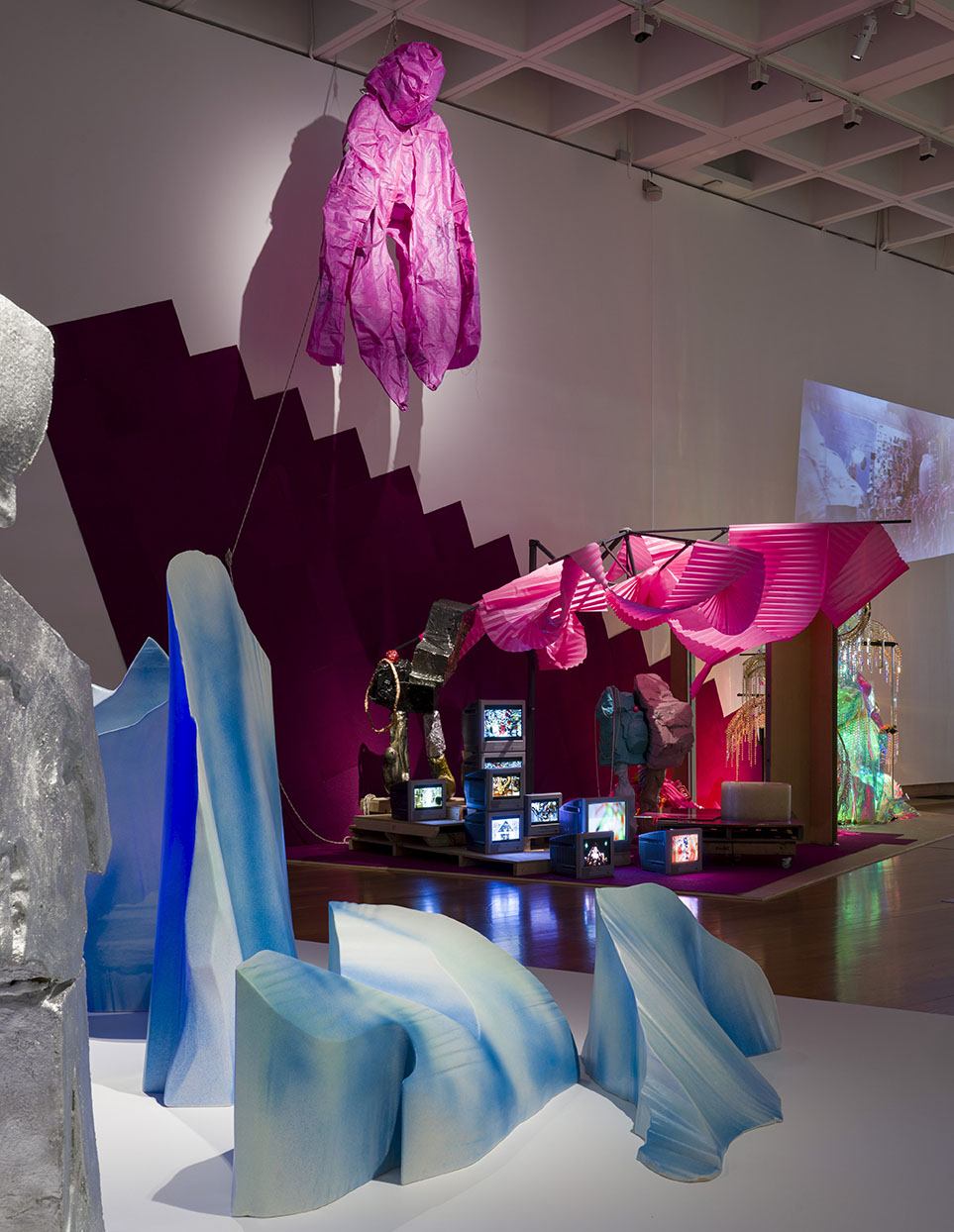
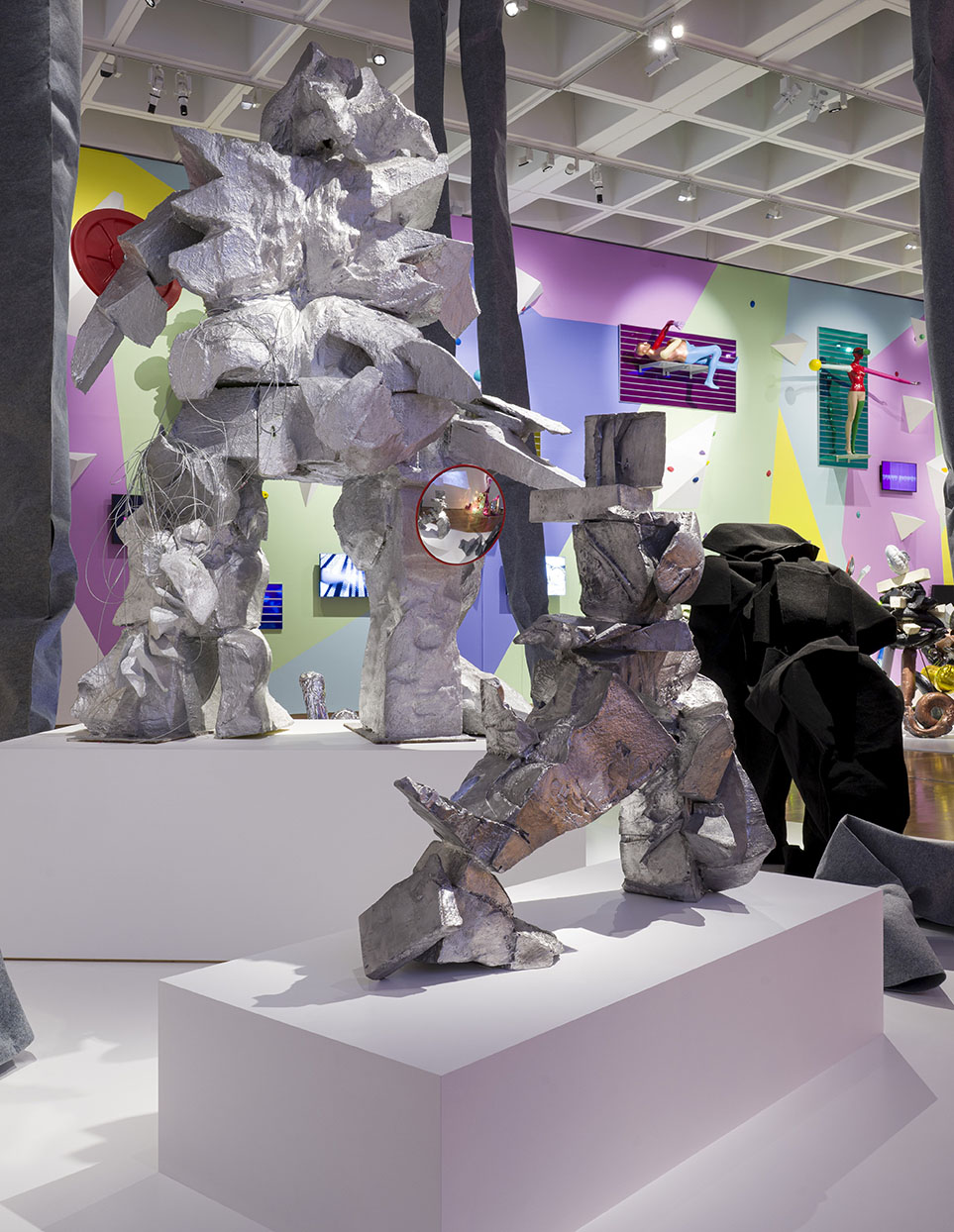
The entry space flows into the main gallery, where new and early works are arranged into large installations that sit atop asymmetrical low-lying plinths separated by a zig-zagging central aisle. Sculpture is positioned alongside performance documentation, video projections, theatrical costume displays and echoing soundscapes, while ‘Spirit box’, 2024/26, a Tower of Babel of collected radios, crackles with music, talkback and static. The presentation is deliberate, spacious and absorbing, as Williams notes. “There’s a lot going on in the work,” she says. “I wanted to resist works being read only from one side, you have to look at sculpture in the round.”
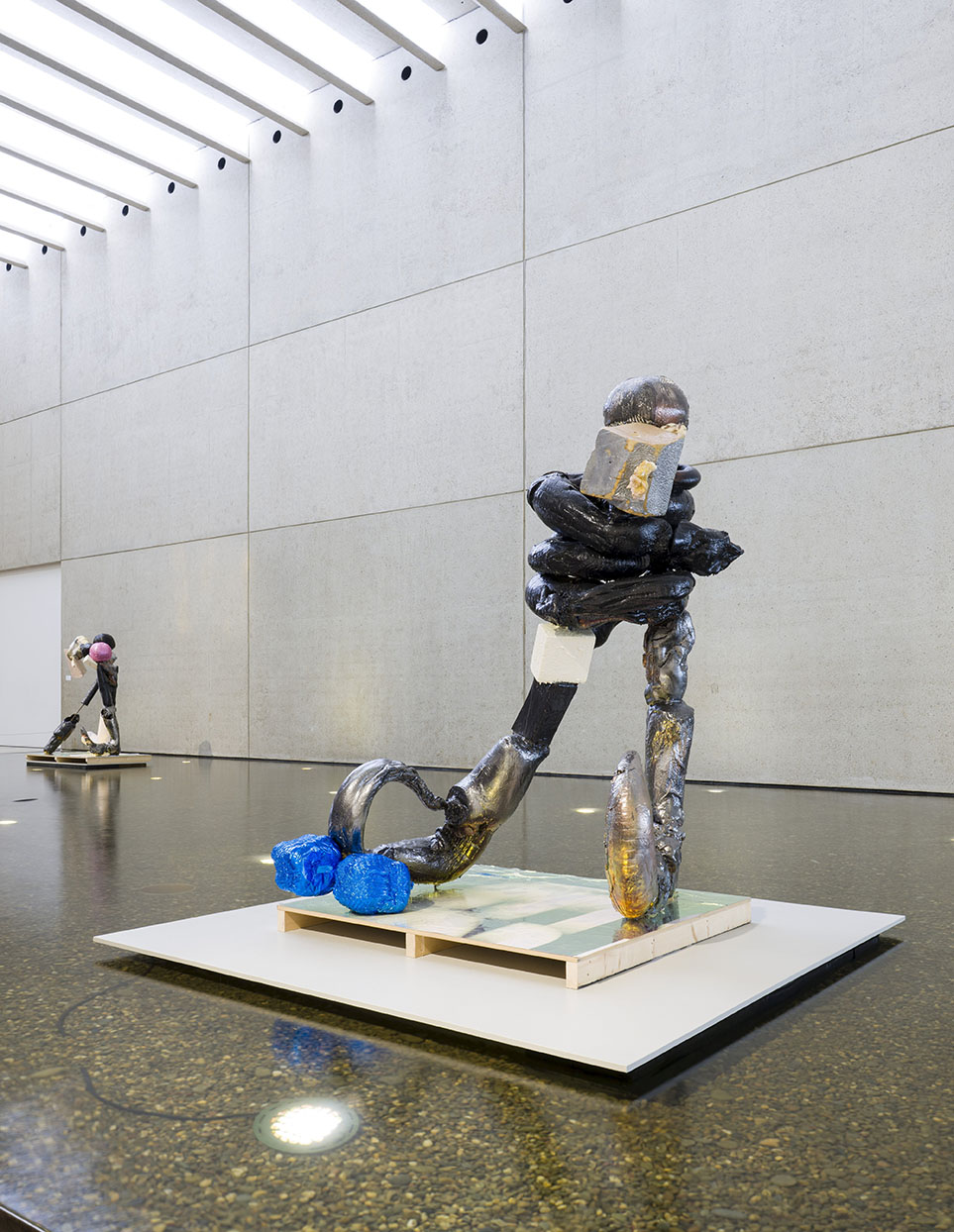
Overall, it invites exploration. Moreover, restaging becomes renewal. ‘The Vertigoats’, 2021, with its reassembled hyper-colour retail mannequins and screens displaying affirmation slogans affixed to a rock-climbing wall, returns in this iteration at QAGOMA in a more subdued palette. In the foreground, new sculptures including ‘Teddy’, 2026 plough across the space in dominant metallic silver, black and gold hues.
Adjacent, ‘The dynamism of Cecilia Forlani’, 2026 reworks Umberto Boccioni’s ‘Unique forms of continuity in space’, 1913, named for the Futurist’s mother. Williams elaborates: “I’ve changed the striding figure from a man to a woman”, which is a pointed feminist critique of the dominant male canon. Semi-hidden nearby is ‘(two ‘Julies’)’, 2026, silver women reclining on star-speckled lightboxes Williams salvaged, rewired and spray-painted.
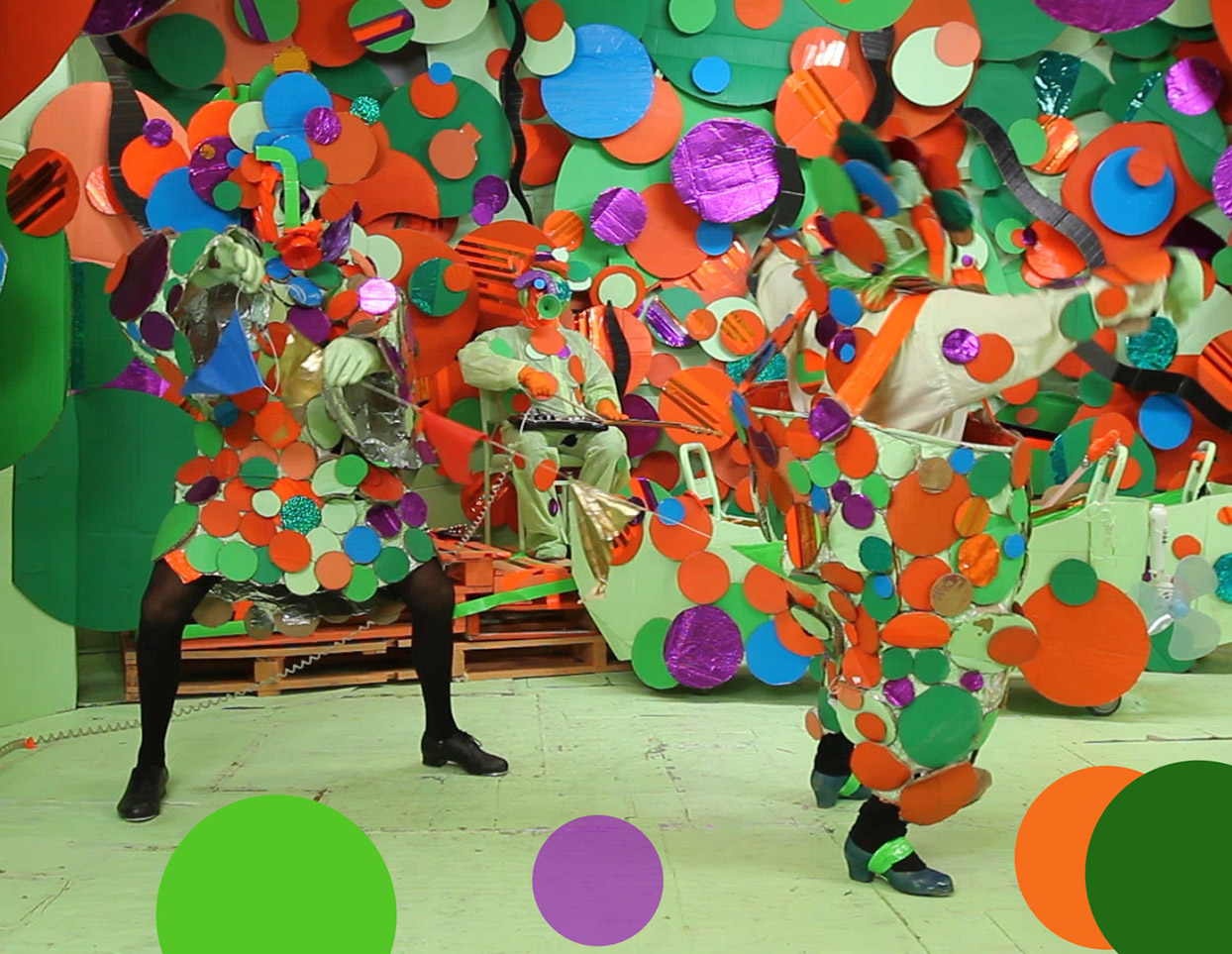
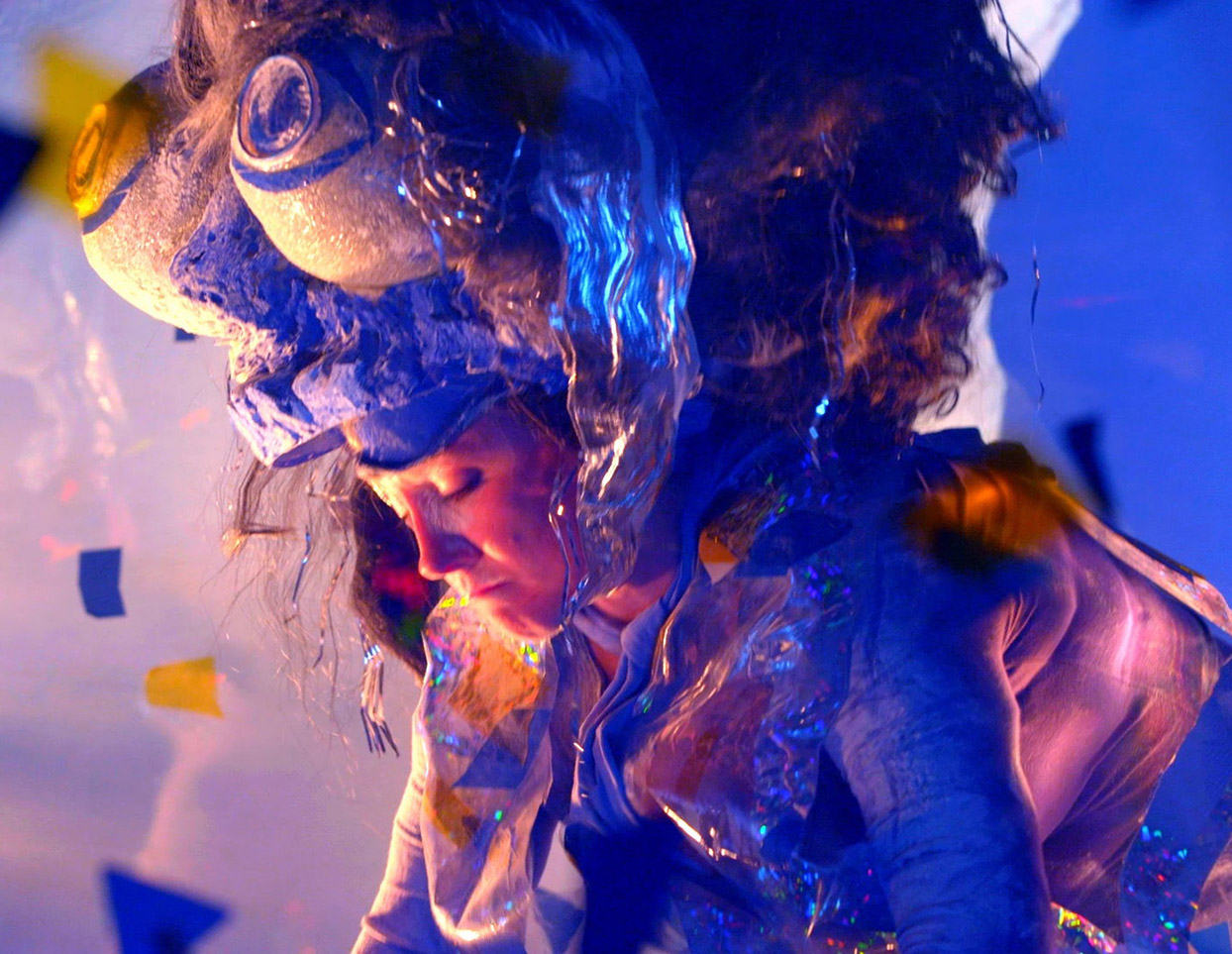
Williams’s performances are enthralling, whether intimate or expansive in scale, and live or as documentation. ‘Santa was a Psychopomp’, 2014 is mesmerising; Williams, dressed in semi-sheer attire, sings, dances with a Christmas tree and hacks apart sand-filled stockings, in a trance-like state after consulting a clairvoyant following the passing of her father, Ted. Whilst appearing as a form of catharsis, the work also references the late German artist, Joseph Beuys.
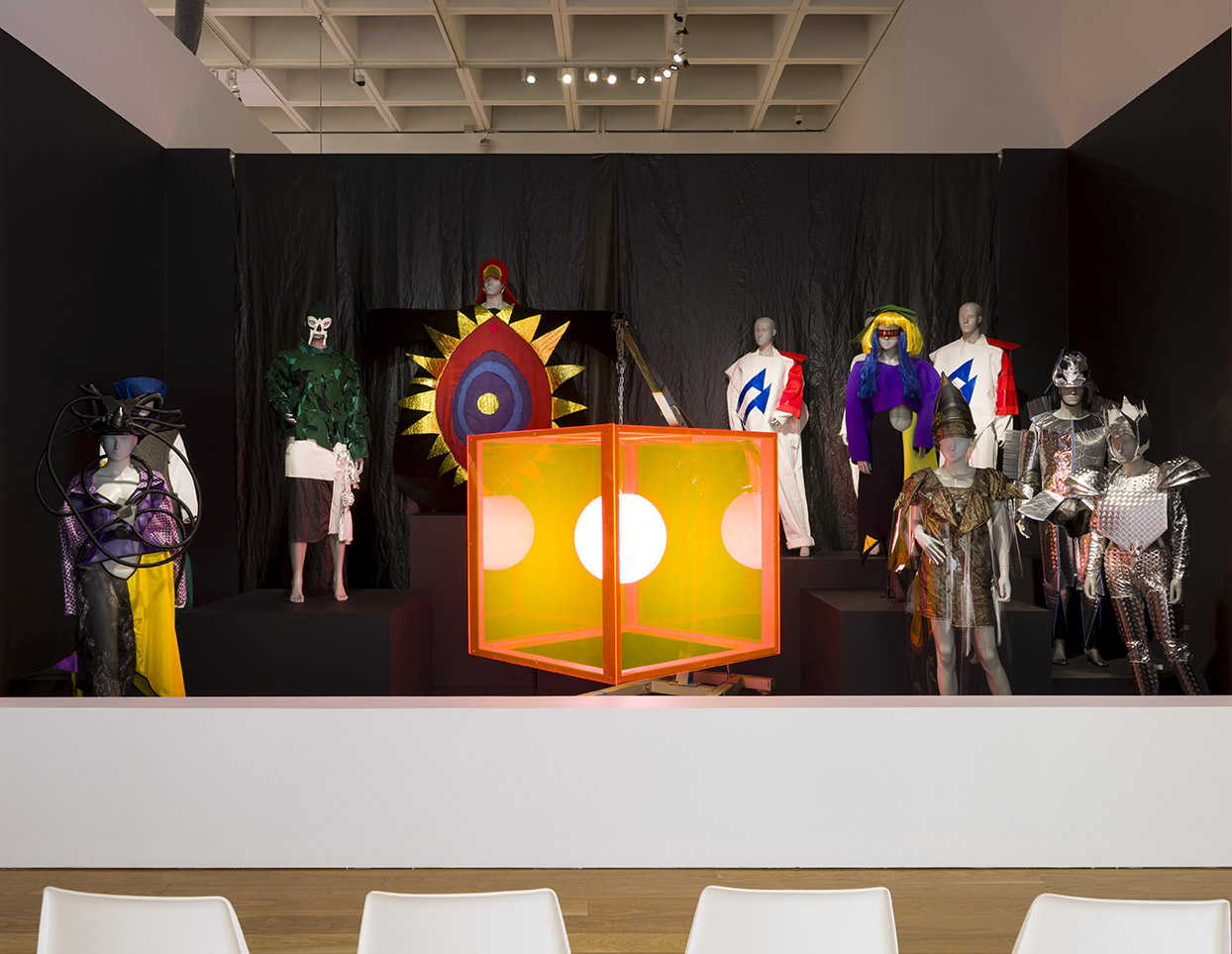
Nearby, projected high onto a double-height museum wall, ‘Radium Girl – Fan Fingernails’, 2013-14, explores the American female factory workers who were poisoned painting radium watch faces in the 1910-1920s resulting in fatal radiation. Here, Williams dances like a robot in a science-fiction setting – electric pulses splatter across the screen echoing radioactive paint exploding and the looming impending disaster. Further, the display of costumes from ‘Victory Over the Sun’ 2016, the Biennale of Sydney commission where Williams collaborated with the Sydney Chamber Opera to recreate the 1913 Russian Futurist opera reveal the intensity of her costume-making, choreographic skills and set design.

Bizarrely, after experiencing so much visual and visceral delight, you ultimately want more – to stay a little longer in the universe Williams has created. In an age of fleeting attention, Once We Were Mudskippers rewards deep engagement, and joyously pulls us all out of the sludge, and that is ultimately enriching.
Justene Williams: Once We Were Mudskippers runs QAGOMA from 3rd October 2026 to 7th March 2027.