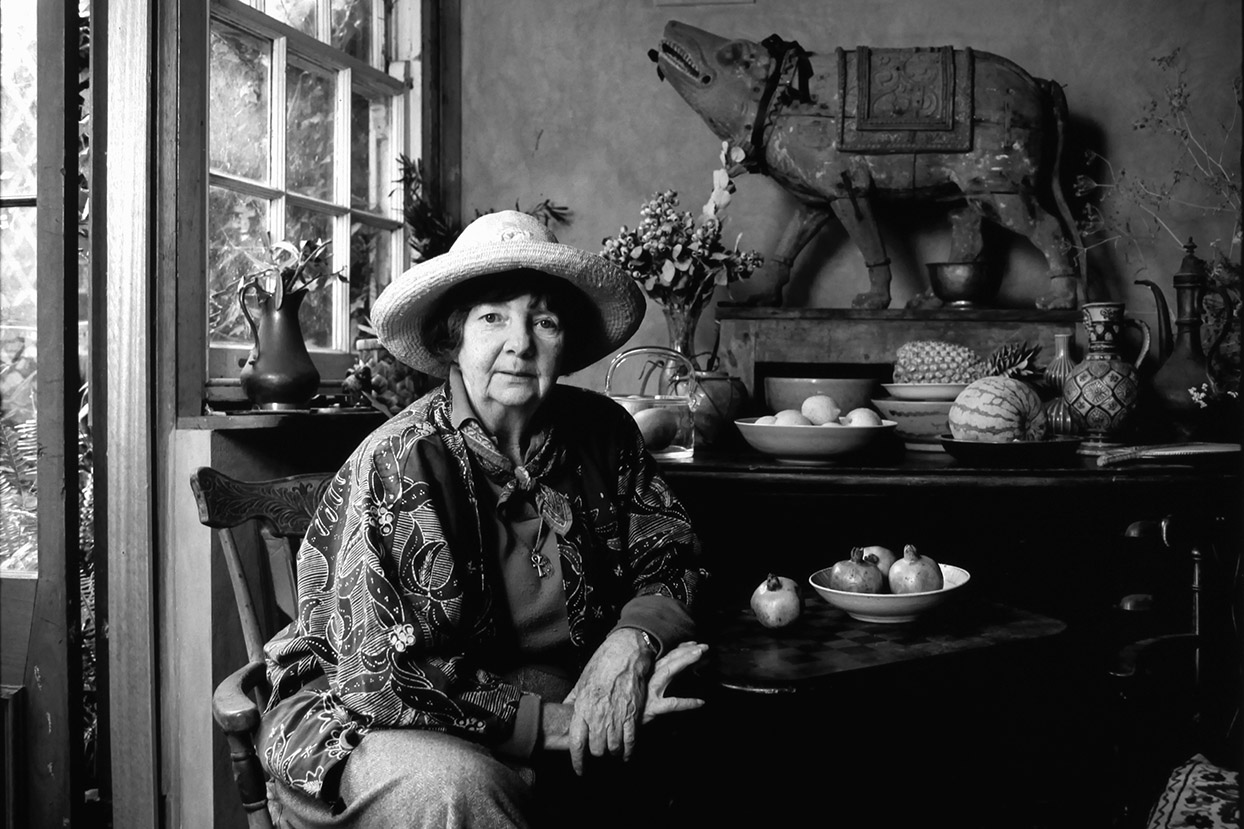

Margaret Olley AC (1923-2011) is one of Australia’s most well-known artists. She had over 80 solo shows in her lifetime, her works are held by almost every major national institution and she donated over $30 million in art to public collections. Given her prominence, curators at the National Art School (NAS) faced a dilemma when developing a new exhibition around their alumna: “What can we say about Olley that hasn’t already been said?” recounts Katrina Cashman, NAS’s Senior Curator and Gallery Manager.
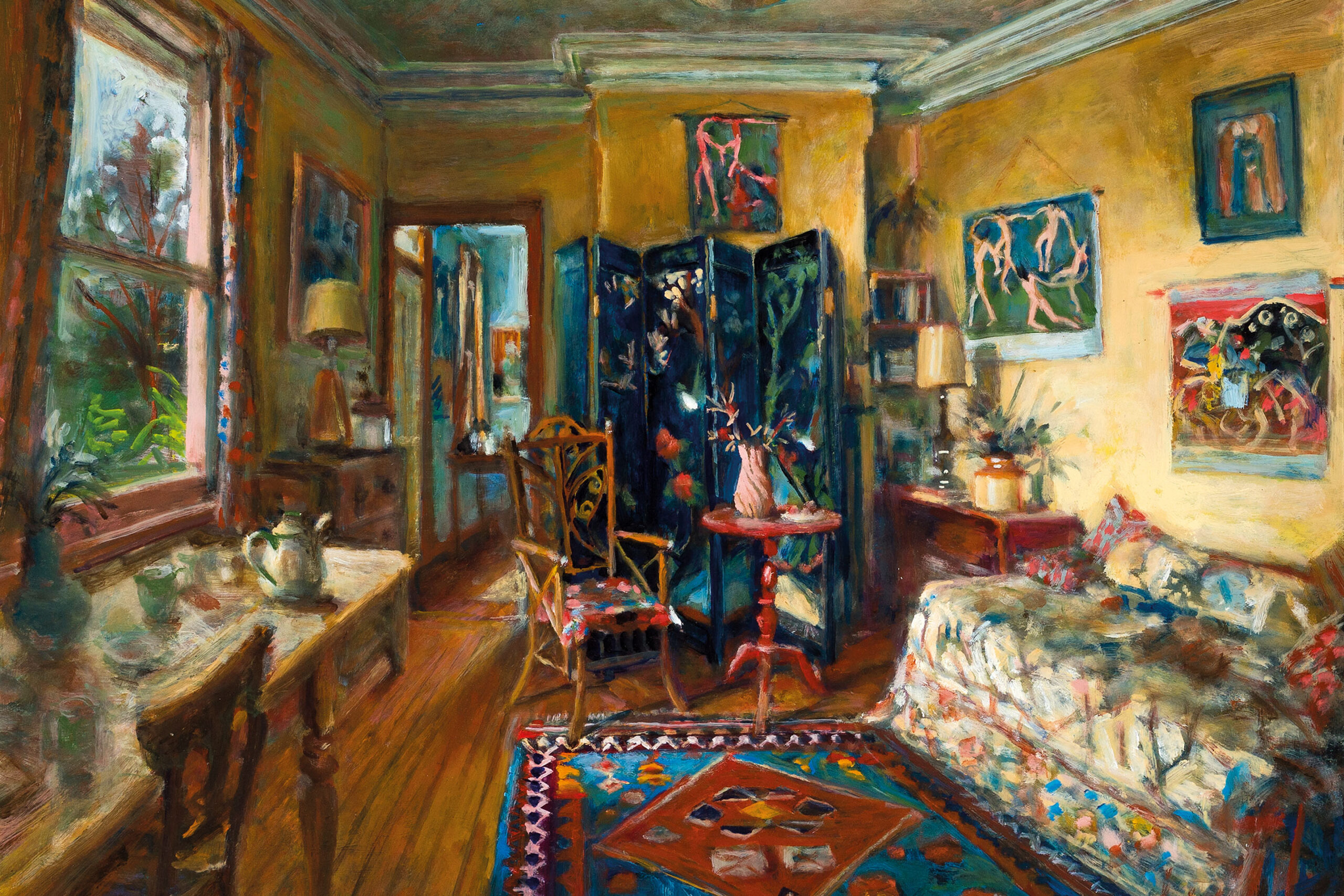
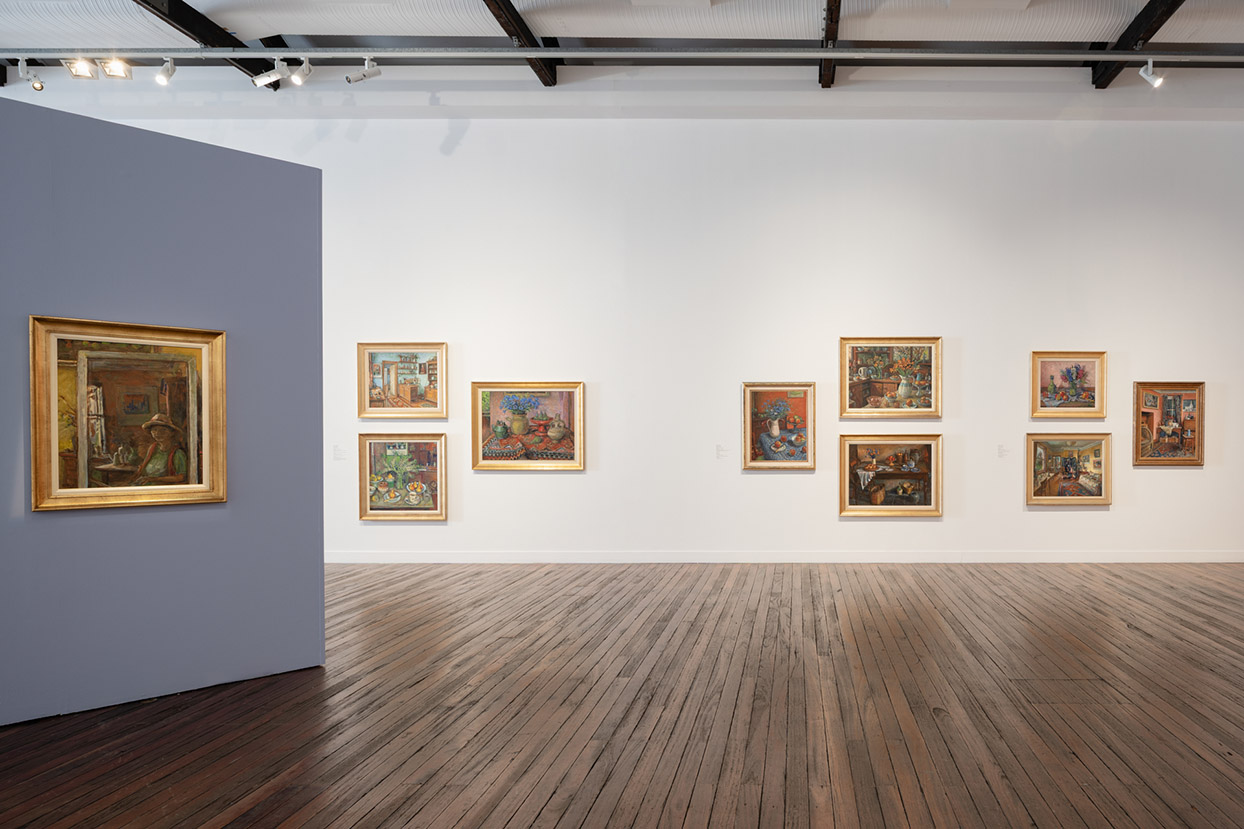
The solution emerged from Olley’s 1974 painting Interior, which depicts the ochre-orange and eucalyptus-green living room of Olley’s Mulubinba/Newcastle home. Jugs of flowers cover the surfaces. Two wooden chairs face each other, as if a couple has just stepped away.
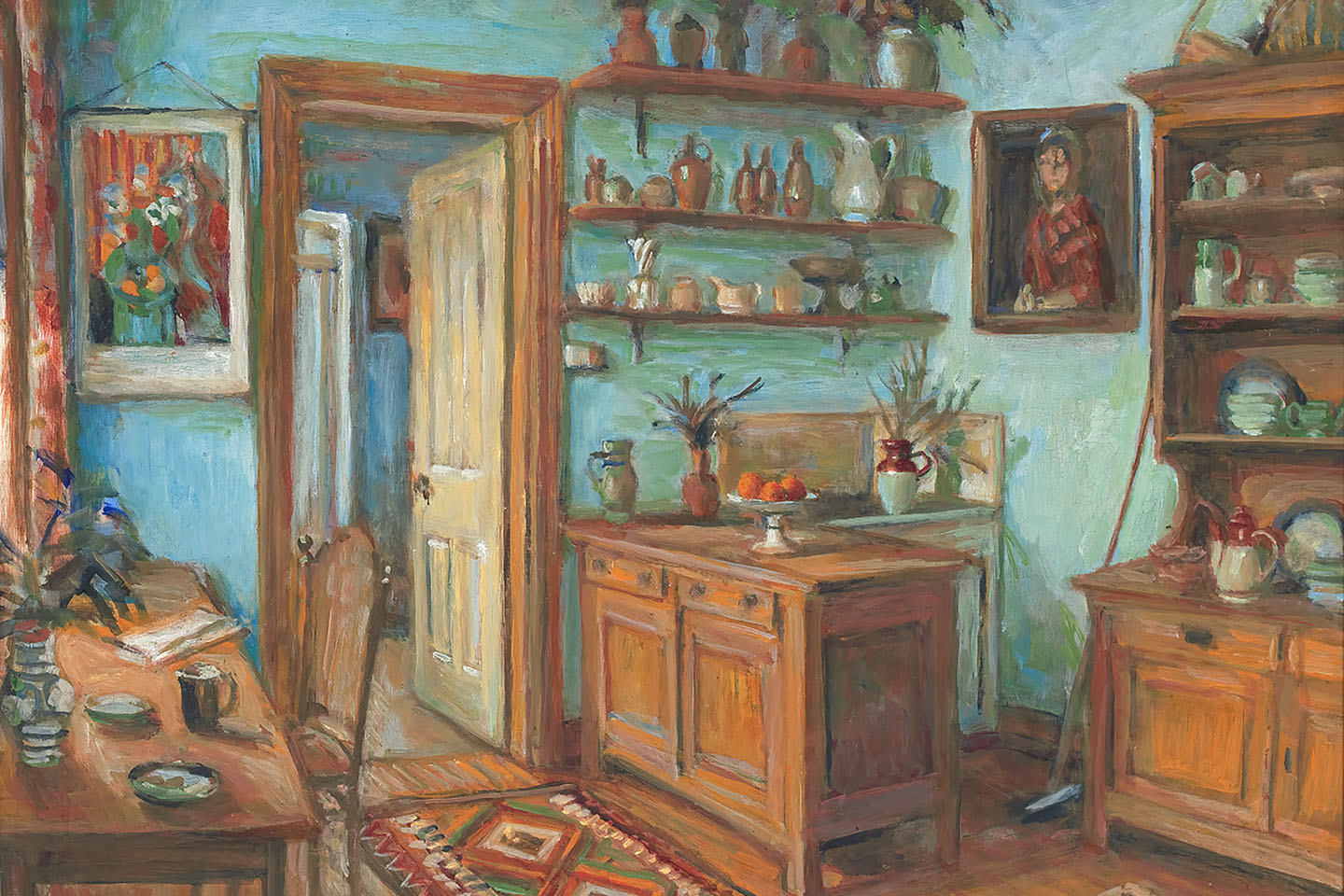
“Most people think of Margaret Olley as a still life painter,” Cashman explains, but her paintings of interiors, and the spaces themselves, were hugely significant to her practice, especially the former hat factory she bought in Paddington in 1964. “Her home was everything to her,” says Philip Bacon, her gallerist, friend and co-executor of her trust.
As such, Margaret Olley: Australian Intimiste explores how Olley fits into ‘Intimism’, a painting tradition that centres on the poetry of domestic life which emerged in France in the late nineteenth century. Curator Christine France OAM, one of Olley’s closest friends and co-executor of Olley’s trust, laughs that the unfamiliar Intimiste framing has proved tricky – “people tend to think we are doing a sexy show!”
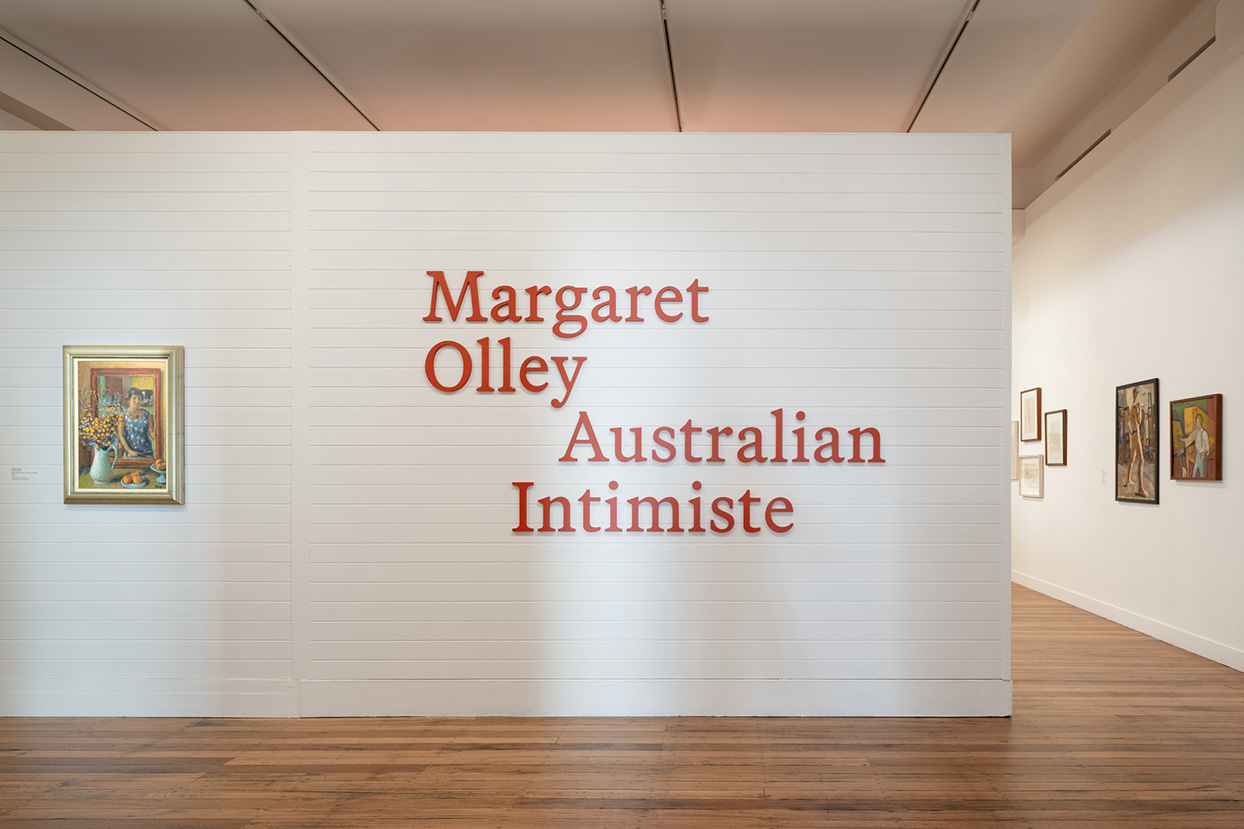
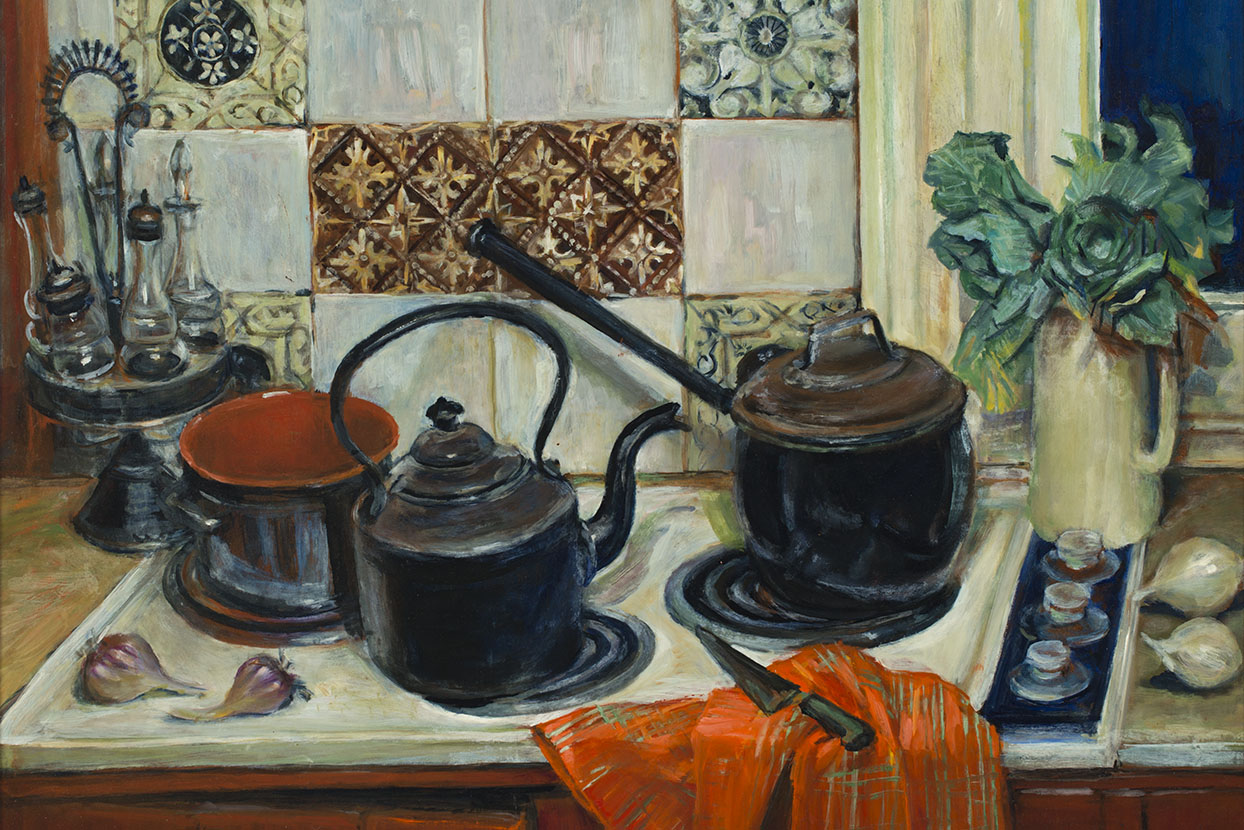
Misunderstandings aside, this exhibition offers visitors a chance to interrogate the intersection of interior design, objects and art. Olley could turn a kettle into a masterpiece, a rotten flower into something magical, a postcard into an emotional pull. So what can she teach us about decorating our own homes?
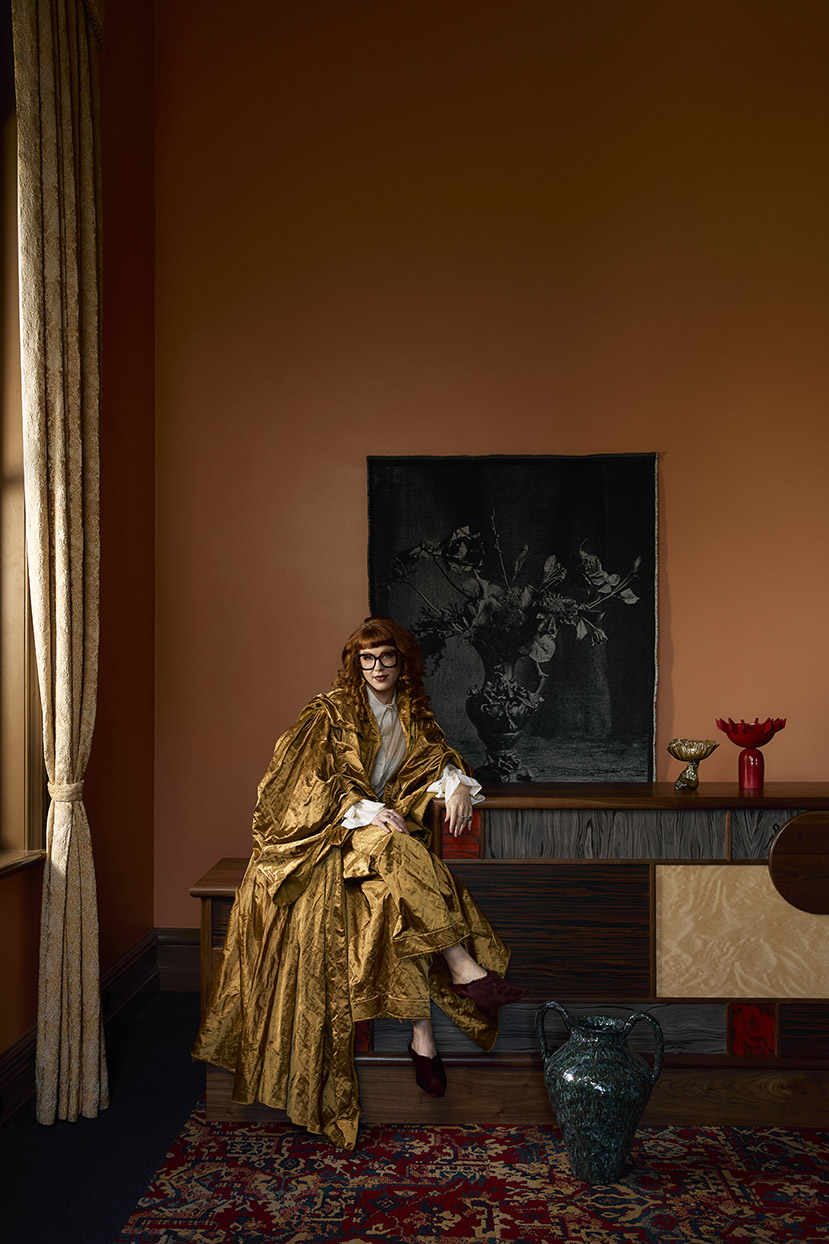
“Olley’s paintings remind us that our homes don’t need to be grand, fashionable or perfectly resolved to be worthy of attention,” says Ruby Shields, founder and creative director of the interior design practice Studio Shields. Here, the award-winning interior designer offers some other Olley-inspired design tips:
Don’t default to white
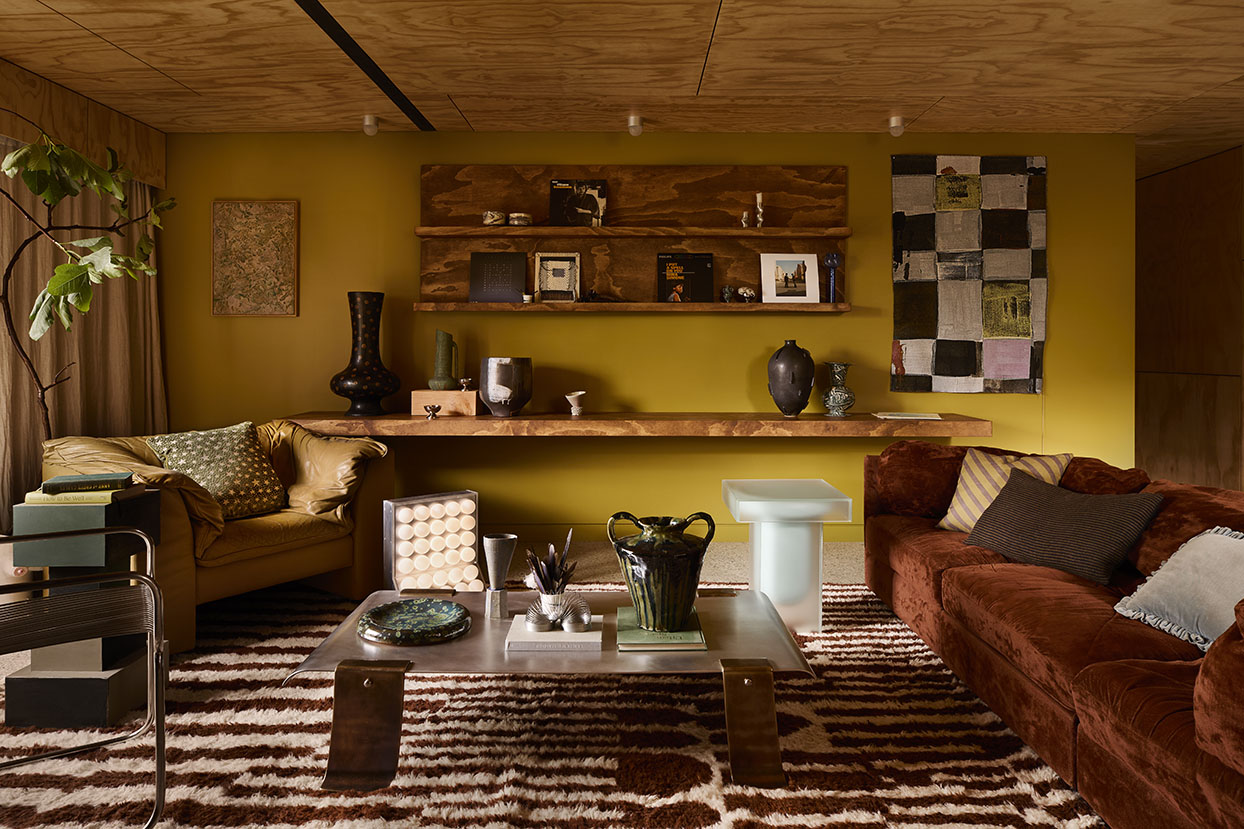
One of the most striking things about Olley’s interiors is the lack of white or beige. “She used to insist on colour everywhere,” Bacon explains, “She told me that white walls were the death of paintings.” Shields, who is known for colour-drenched interiors, similarly pushes back against our default to white: “I dislike that white is treated as the automatic answer, as though colour is a risk and white is neutral. White has a temperature and an emotional effect too and the wrong white can make a room feel cold or disconnected.”
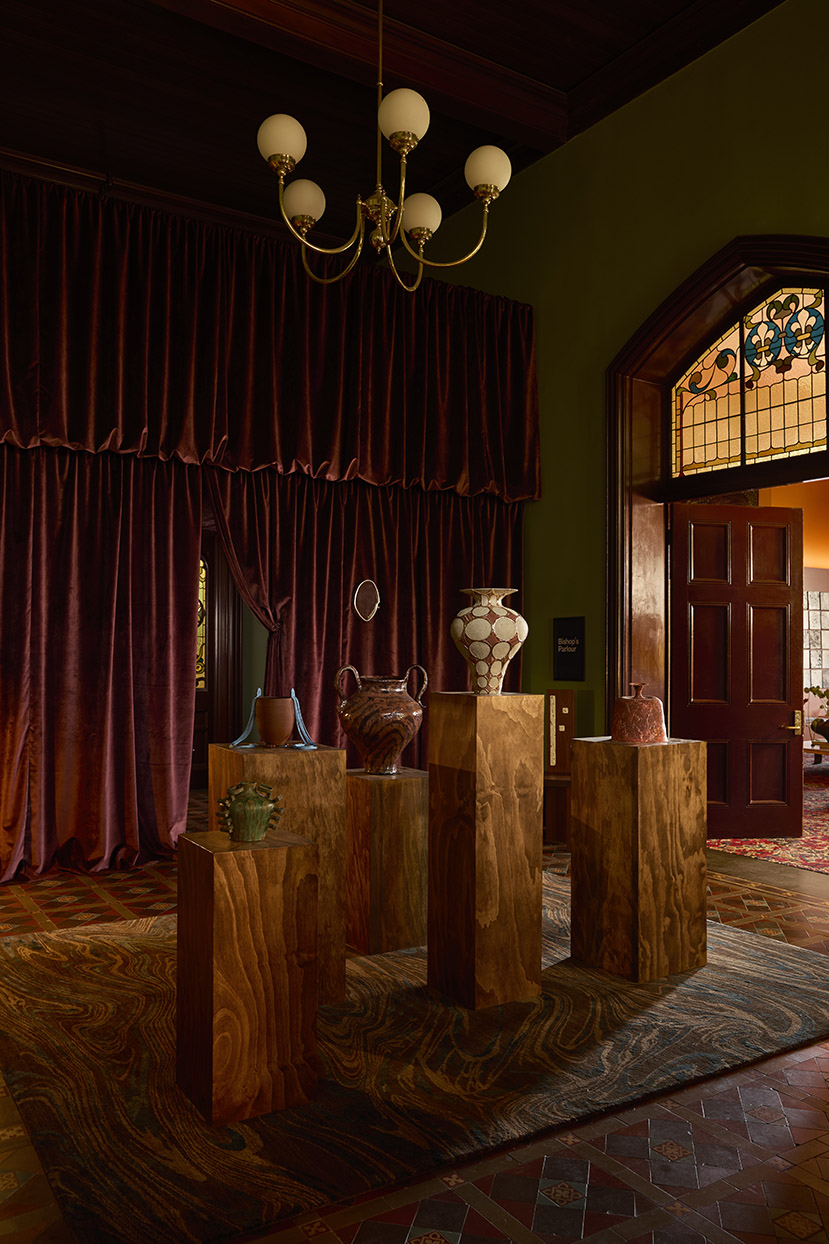
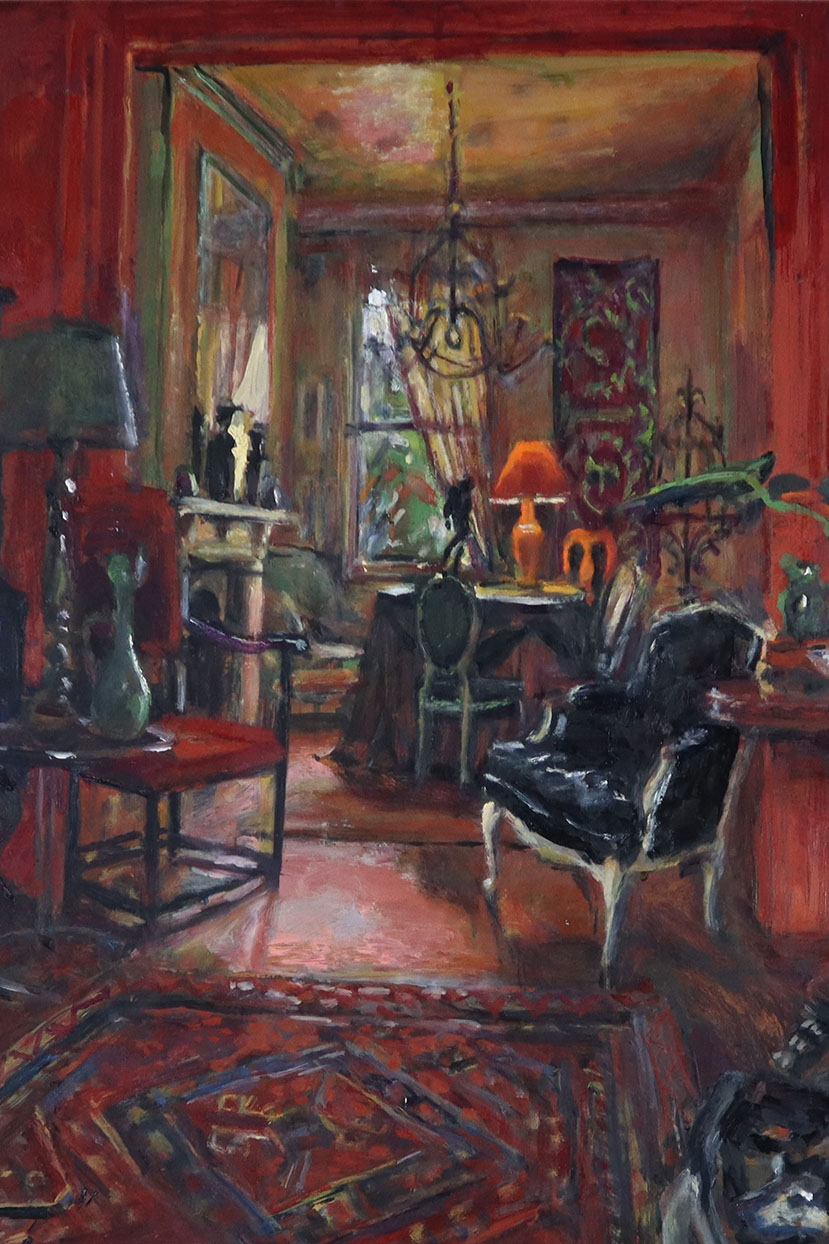
So, how to pick something else? Shields highlights that there’s no single universally flattering colour. She recommends drawing inspiration from your surroundings and belongings, especially artworks. “Art and interiors shape one another,” Shields explains. “An artwork changes when placed against a coloured wall, near a patterned textile or opposite a window. Equally, one piece of art can determine the colour, balance or emotional direction of an entire room.”
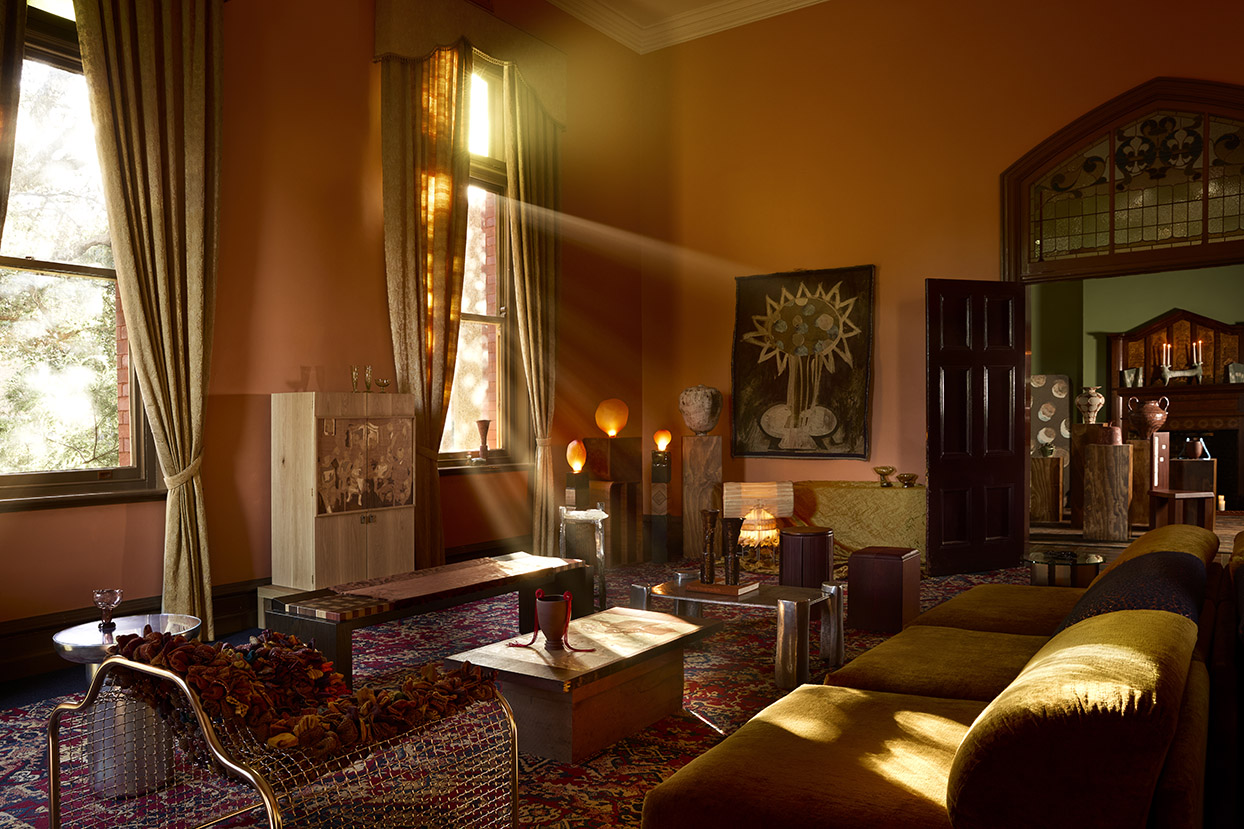
For her own home – The View, shorlisted in Habitus House of the Year 2026 – Shields drew the palette from the surrounding Yarra Ranges: oxidised earth, dry grasses, eucalyptus canopy, changing skies. “We used cumin greens and earthy browns, ice-blue ceilings, Moroccan clay-toned joinery, brass and reclaimed timber.” These colours aren’t limited to walls; they echo through rooms via objects, materials and finishes, tying one space to another.
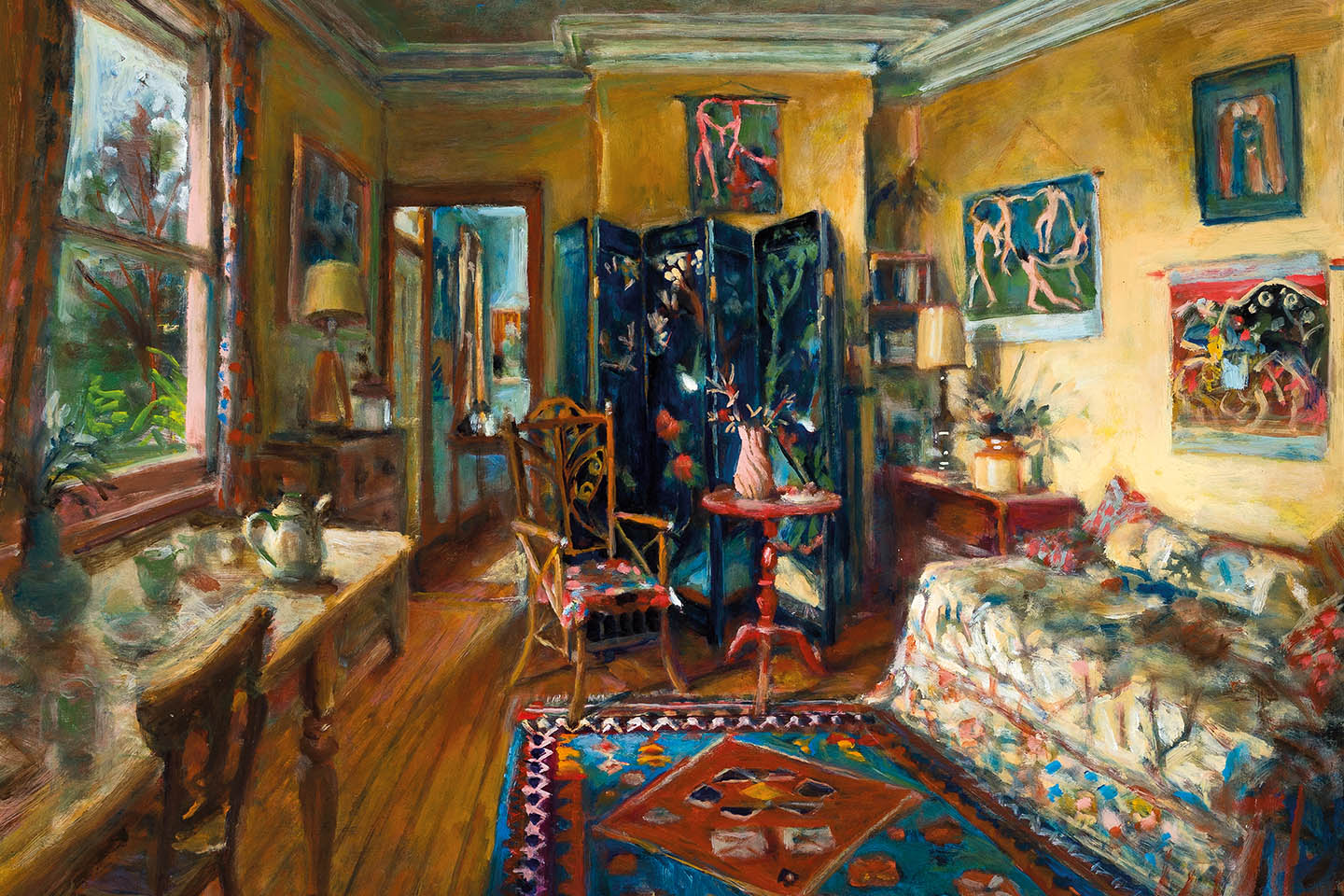
copyright Margaret Olley Art Trust.
In Olley’s paintings, we often see deep yellows, mustards and ochres, which Shields calls “generous colours”. They hold light beautifully without becoming sugary or overly cheerful. These tones relate to timber, brass, aged paper, ceramics, flowers and earth, so they connect many elements of a home.
Shields’ main advice? Go bold. “People are often frightened of going too dark or too saturated, so they choose a washed-out version of the colour they actually love, then wonder why the room feels unresolved. The braver colour is usually the one that gives the space its warmth and conviction.”
Related: What went down at Sydney Contemporary 2026
Collect ordinary things
Where minimalism dominates much of contemporary design, Olley offers us a joyful alternative. Despite being notoriously frugal, she was a “real Bowerbird”, says Cashman. She loved collecting. Her home and paintings were full of objects – rugs from wholesale traders, postcards of artists she admired, jugs and vases found in antique stores or while travelling, curious curb-side items and things borrowed (often permanently) from friends.
A blue and white jug that appears in many of Olley’s paintings belonged to her dear friend, artist David Strachan. After he died in a tragic car accident, Olley borrowed it. Some 30 years later, when his family asked for it back, she was heartbroken, recalls France, who searched high and low for a replacement.
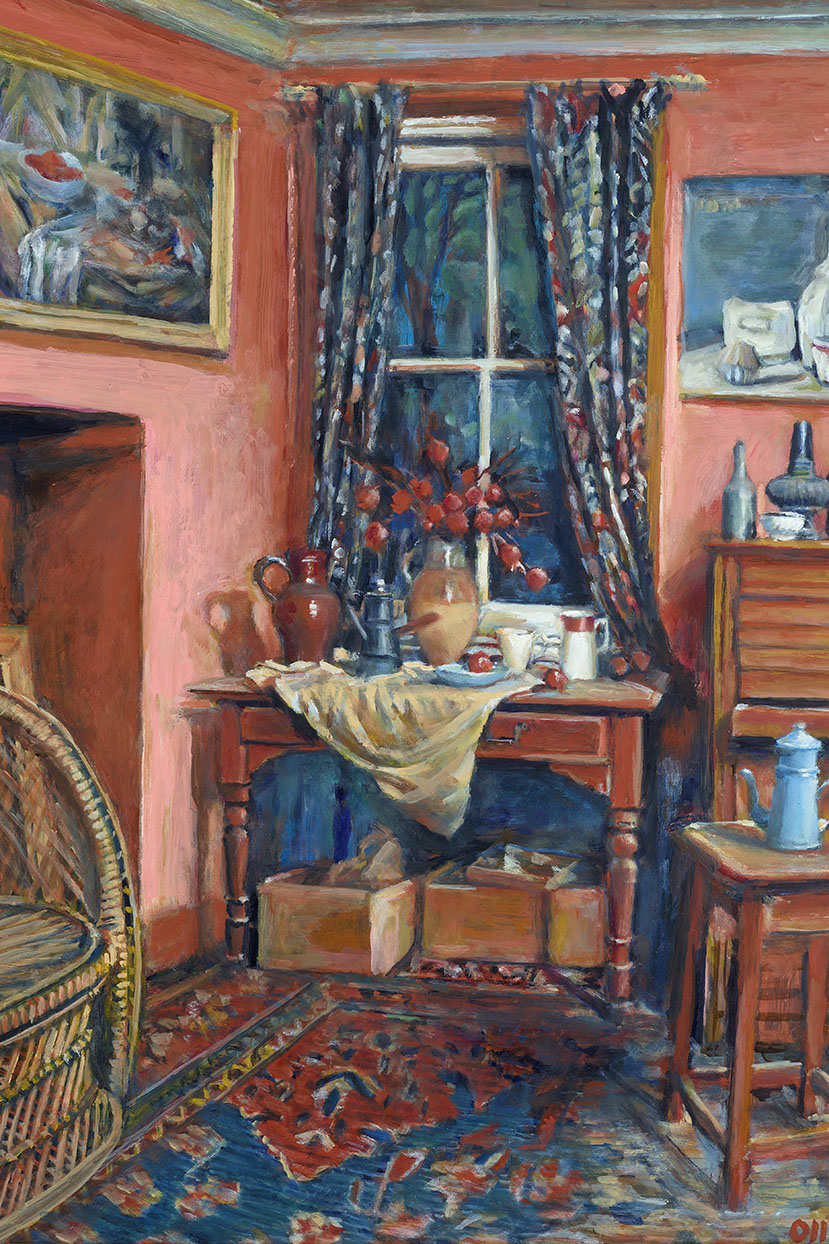
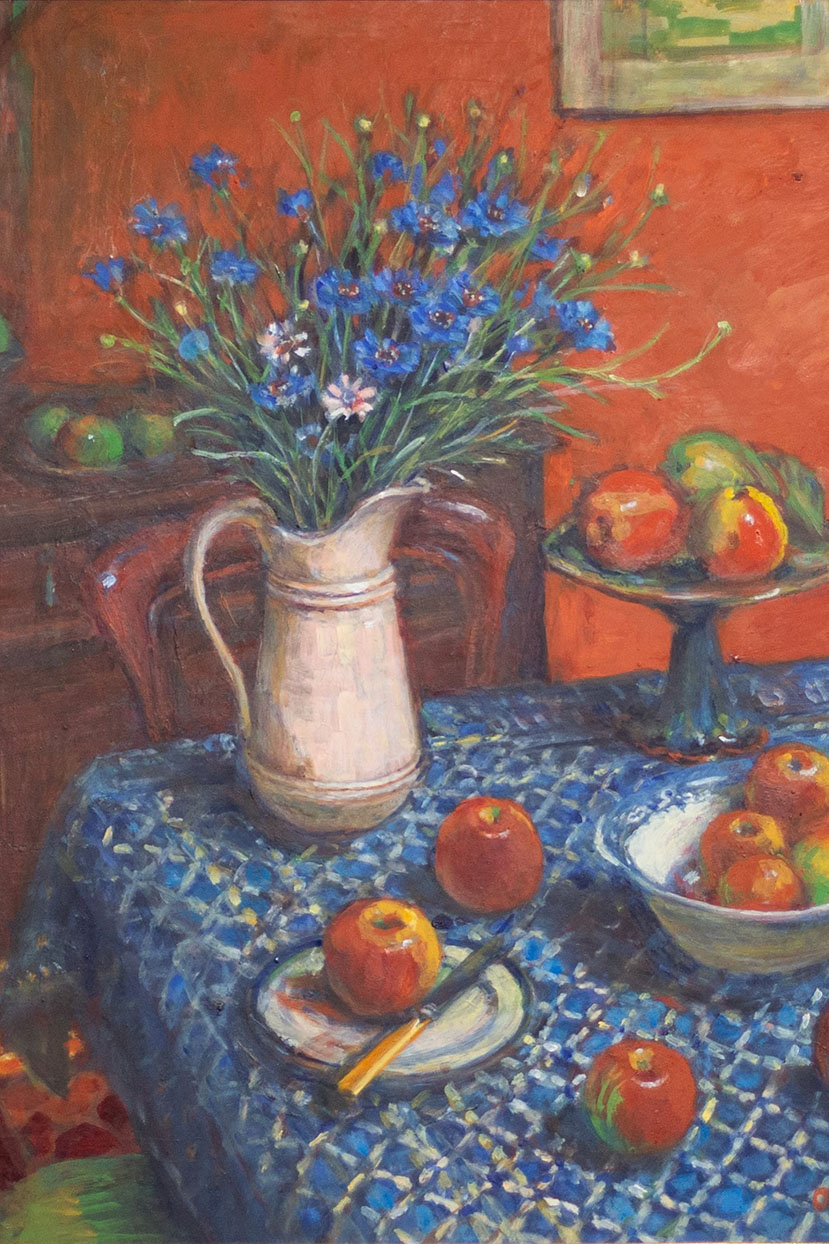
Shields is drawn to homes that act as autobiographies built from objects layered over time – homes that don’t look like everything was purchased at once, from the same place. Instead, our homes should be ”evidence of a life being lived,” says Shields, full of things that might not be financially valuable but are loved because they “belonged to someone, were found on a trip, or have simply been present for years.”
But in today’s abundant world, is it possible to accumulate too much? Can one ever have too many jugs? “Once you have enough jugs, it stops being an issue and becomes a collection,” Shields says, tounge-slightly-in-cheek. “That is simply good curation!” Shields collects ceramic goblets which, like jugs, are useful in holding other objects as well as bringing “shape, colour and character to a room.” The key is composition.
Rooms as living compositions
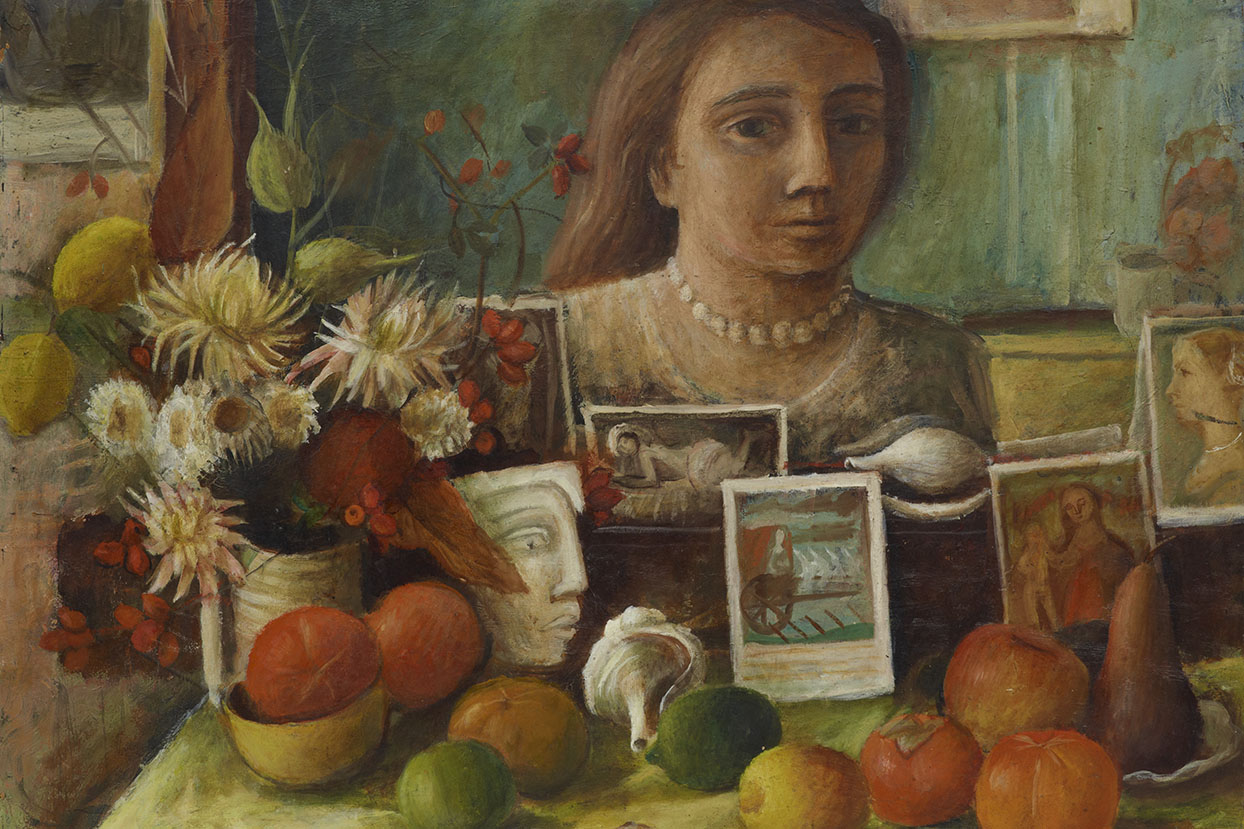
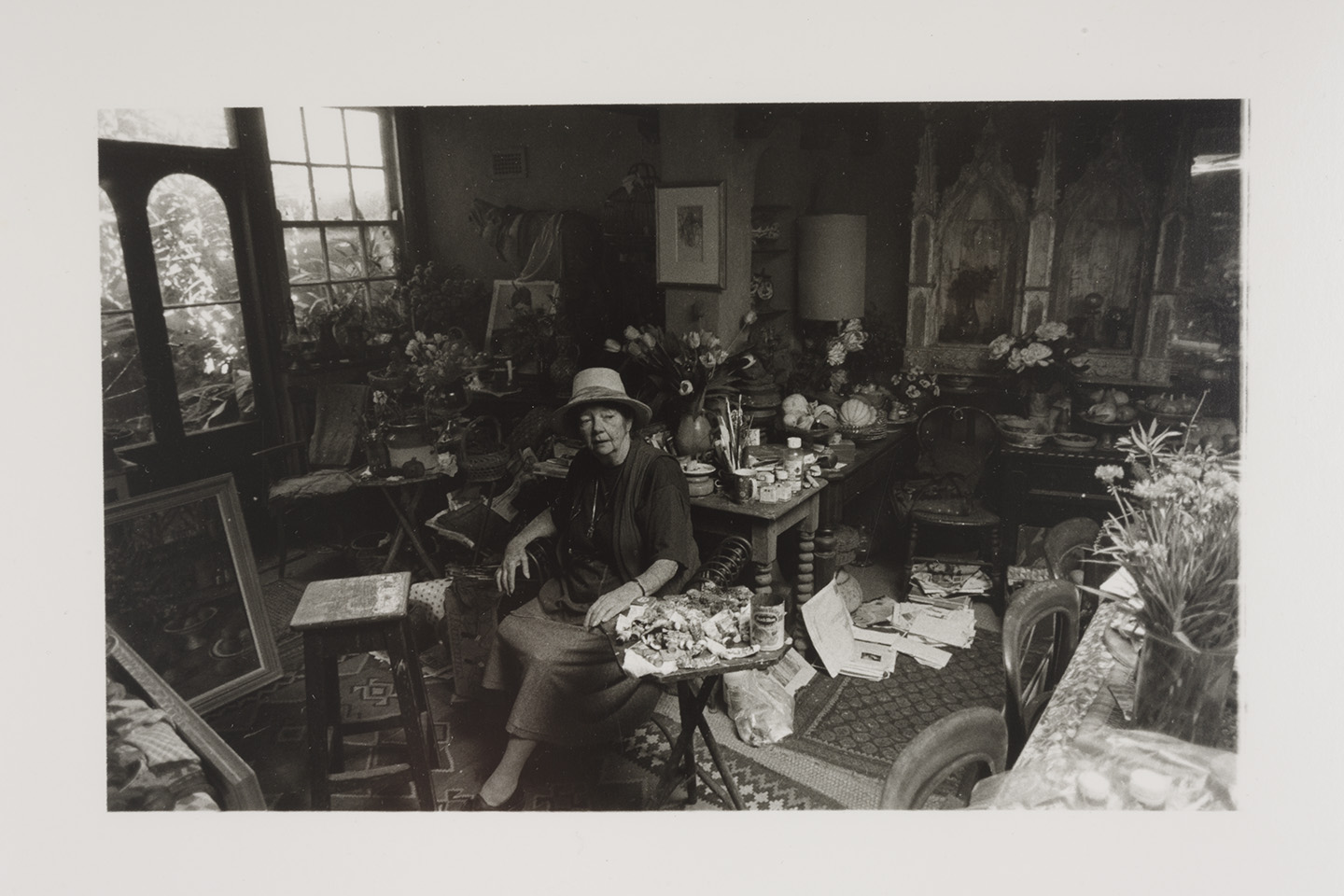
“Somebody once said that Olley and dustbins were strangers to each other,” Bacon tells me, laughing. She never threw anything away – even dead flowers – and could almost be called a hoarder, he reflects. Evidence of this survives in the archaeologically precise recreation of two rooms from her Duxford home at Tweed Regional Gallery, where over 20,000 objects were placed exactly as she left them. Despite this, Bacon says that “the stuff was all arranged in a way that made sense in a beautiful symphony of shapes and colours.” Or, as Shields puts it: “Olley’s rooms are abundant, but the abundance is controlled through composition; the scale, balance, rhythm, contrast, light and colour that decides what the viewer notices first and where their eyes move next.”
So, consider your rooms as functional three-dimensional compositions that change depending on where you stand or sit. To begin composing, create object clusters or families: “consider how objects fit together and their emotional hierarchy,” says Shields, as well as their colour, material, scale, shape or personal meaning. “Not every object needs to be displayed independently or given equal emphasis. Some pieces need space, while others become powerful when grouped.”
Keep things moving
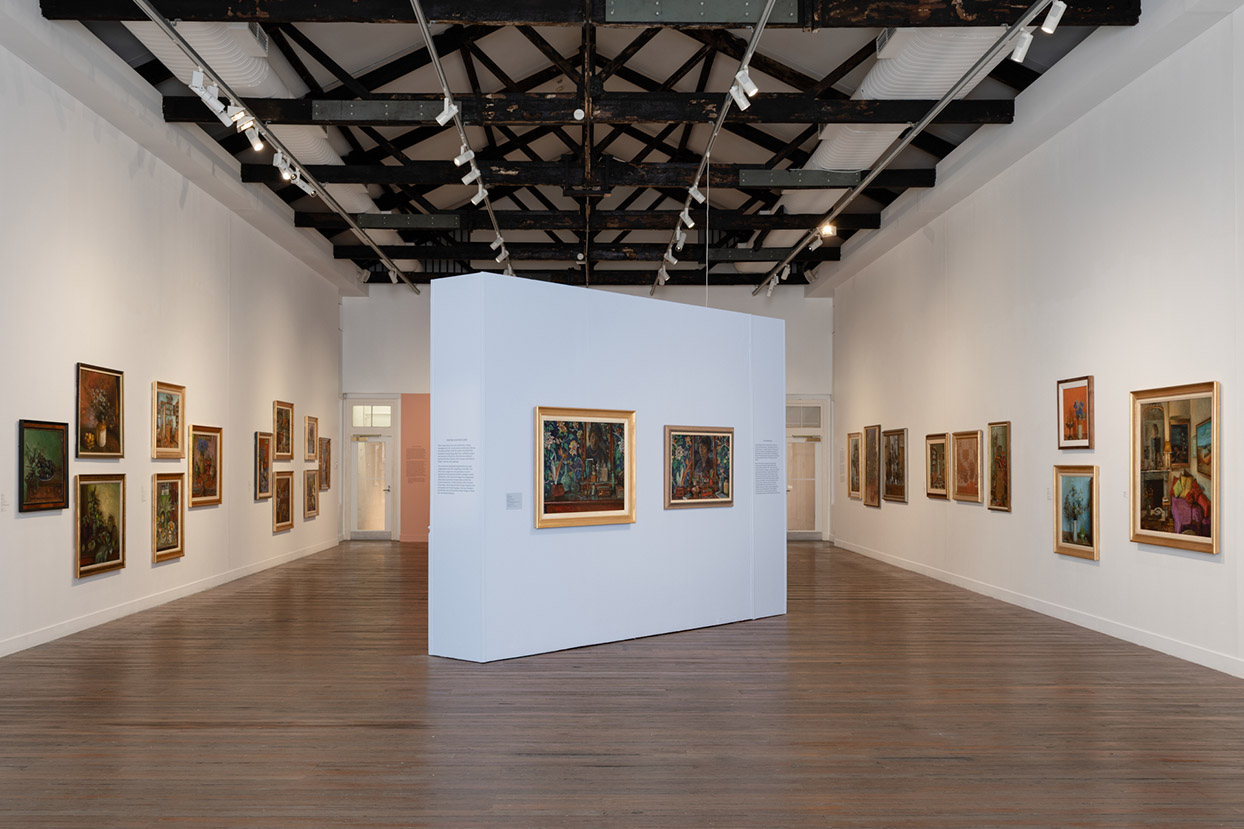
Once arranged, our spaces aren’t fixed. Olley’s yellow room paintings of Duxford St in 1972, 1998 and 2007 show things appearing and disappearing. “She always would change things around,” remembers Bacon, “and the most subtle change of item could suddenly change everything.”
This offers a helpful lesson: rotate things. “A home doesn’t have to display every possession at once. Bringing objects out and putting others away allows you to notice them again,” says Shields. This also creates opportunities to reconsider objects’ relationships to each other functionally and compositionally: “Books can become plinths, trays can contain smaller objects, a lamp or artwork can give a collection a stronger visual boundary.”
Understand your sanctuary
France and Bacon emphasise Duxford St as Olley’s absolute sanctuary. For many of us, it seems like a place of wonder. Others, however, may find it claustrophobic, preferring restrained spaces. “Sanctuary is personal,” Shields stresses. For herself, it’s about recognition: seeing the things she loves, which support her routines, lets her fully breathe.
To foster a sense of a safe, calm space, Shields advises thinking about “how the home needs to support you rather than what you think it should look like. Consider where you naturally sit, what you reach for, where the sunlight falls and which rooms make you feel good.” Take practical steps, such as adding lamps instead of relying on overhead lighting, to alter atmosphere. Ultimately, Shields concludes, “a sanctuary doesn’t need to be perfect. It needs to feel like somewhere you belong.”