
For seven years, designer Ruby Shields and carpenter Patrick Shields worked on their own home gradually, making, changing, salvaging and experimenting as time and money allowed. What began with thoughts of resale eventually became something far more personal: a testing ground for ideas and, ultimately, the project that helped establish the design philosophy of Studio Shields.
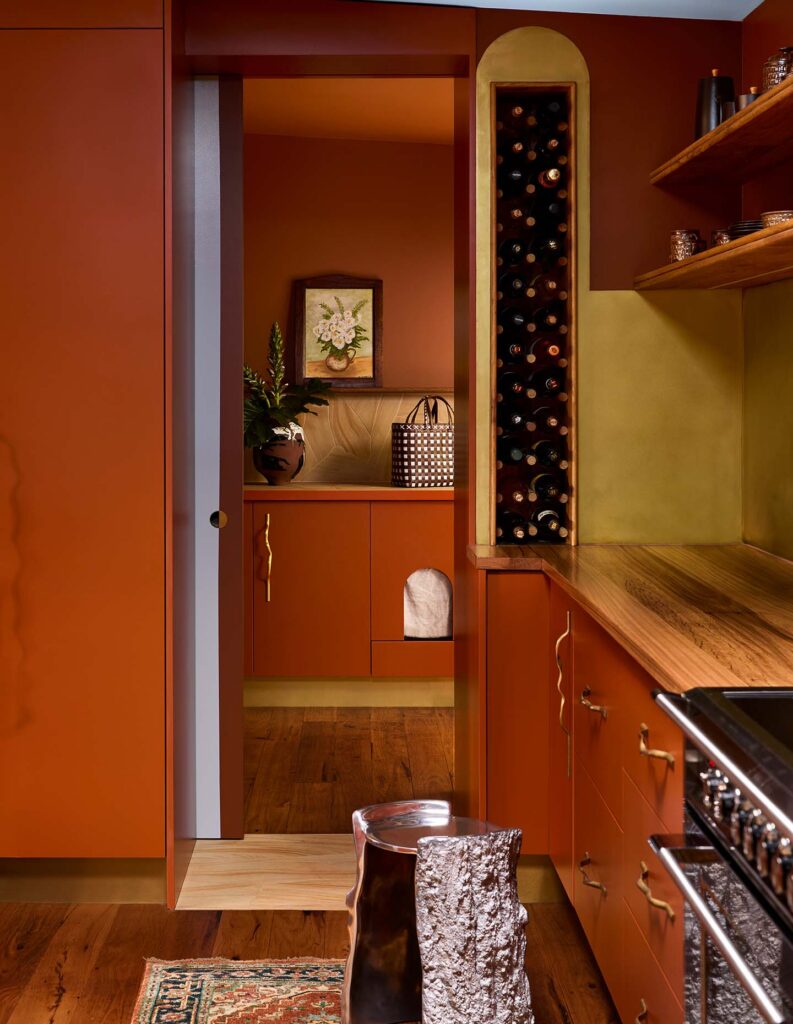
The budget – less than $200,000 excluding their own labour – inevitably shaped the process. But so did the fact that the couple could physically make many of the things they imagined. Waste brass pipe became door hardware, shed purlins became handrails and Patrick made furniture, lighting and bespoke details rather than treating a limited budget as a reason to settle for generic solutions.
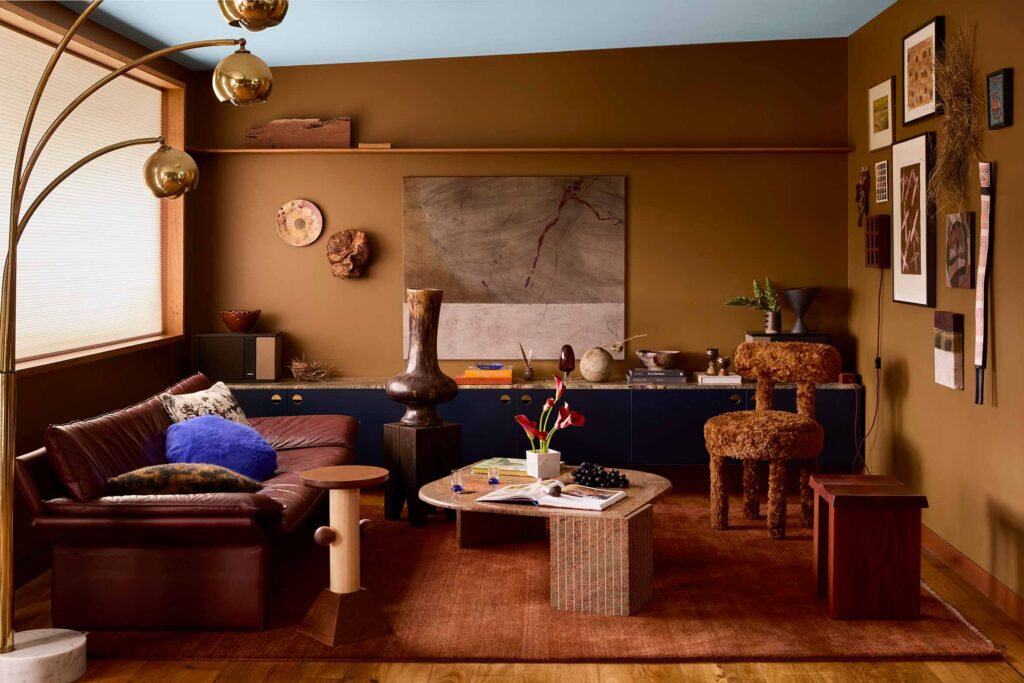
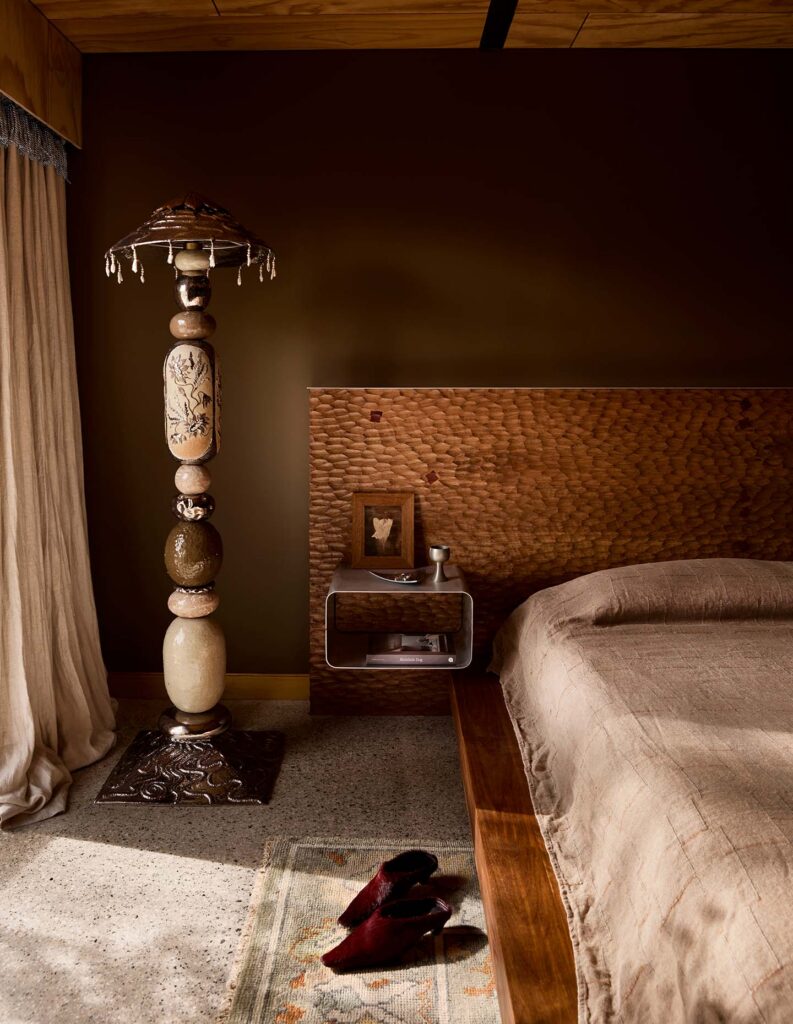
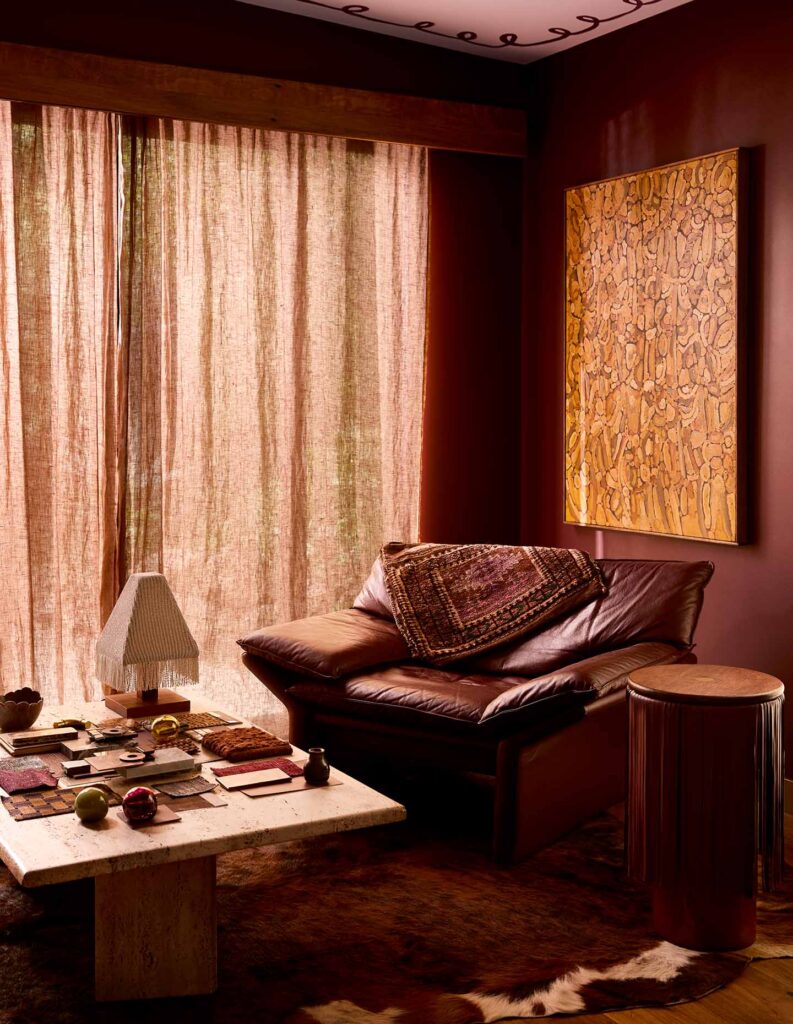
The result is less concerned with pristine newness than accumulation. Vintage pieces and reclaimed materials sit alongside the work of Australian artists and designers, while colour is used with an architectural intensity of its own. It is a house that records the seven years of its making – and the people its owners became along the way.
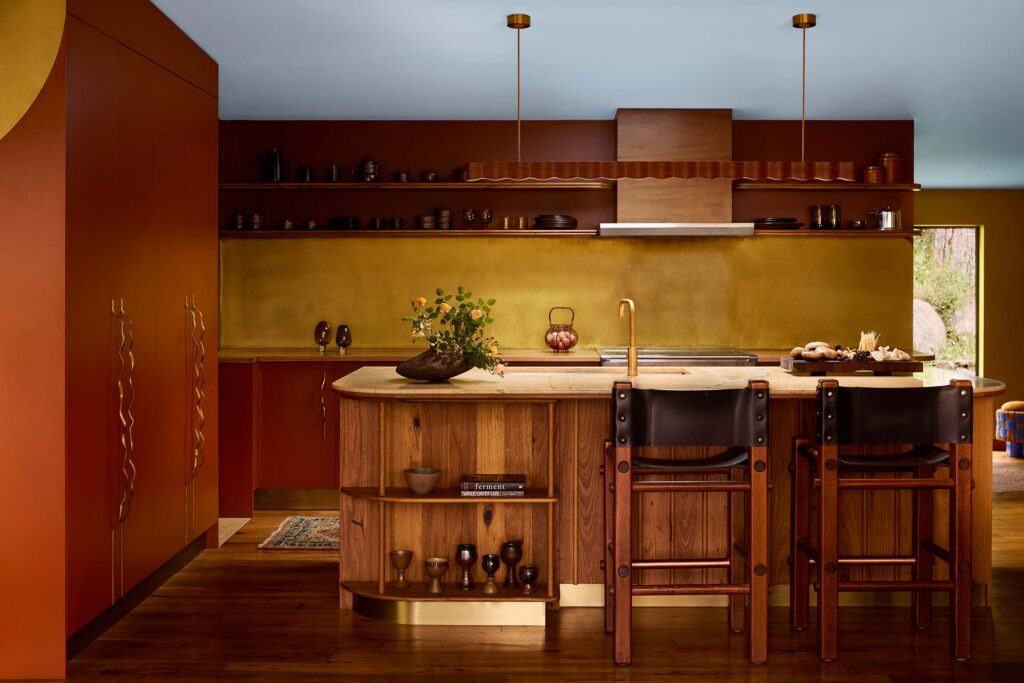
We spoke with Ruby and Patrick Shields of Studio Shields about making a home by hand, learning to trust instinct and why having less to spend ultimately made The View more interesting.
How did designing and physically making the house yourselves change the decisions you were willing to take?
At first, we were cautious. We were still thinking about whether other people would like the house. We had these big ambitions to finish it, sell it and move on, so there was always this imaginary future buyer sitting somewhere in the back of our minds.
By year three, around 2021, we realised that absolutely wasn’t happening. And strangely, that was incredibly freeing.
The house became our testing ground. The cautiousness left our bones and we fell deeply into “let’s give it a go.” We were physically making so much of it ourselves, so if something didn’t work, we could change it. That gave us permission to make decisions based on intuition rather than convention – what made us happy, what felt right in the space, what we were curious to try.
I think that freedom is a huge part of why the house feels the way it does. We weren’t approaching it with a rulebook. In many ways, we didn’t even know what the rules were, so we were very happy to break them.
Somewhere in that process we started forging our own identity. The house stopped being something we were trying to make acceptable to everybody else and became something deeply, unapologetically ours.
What did seven years allow you to understand that a more conventional project timeline might not?
Seven years gave us the luxury of changing our minds.
It actually began in a rush. We wanted everything finished, as everyone does. But eventually the house absorbed itself into our lives, and we stopped fighting the time it was taking. That completely changed the outcome.
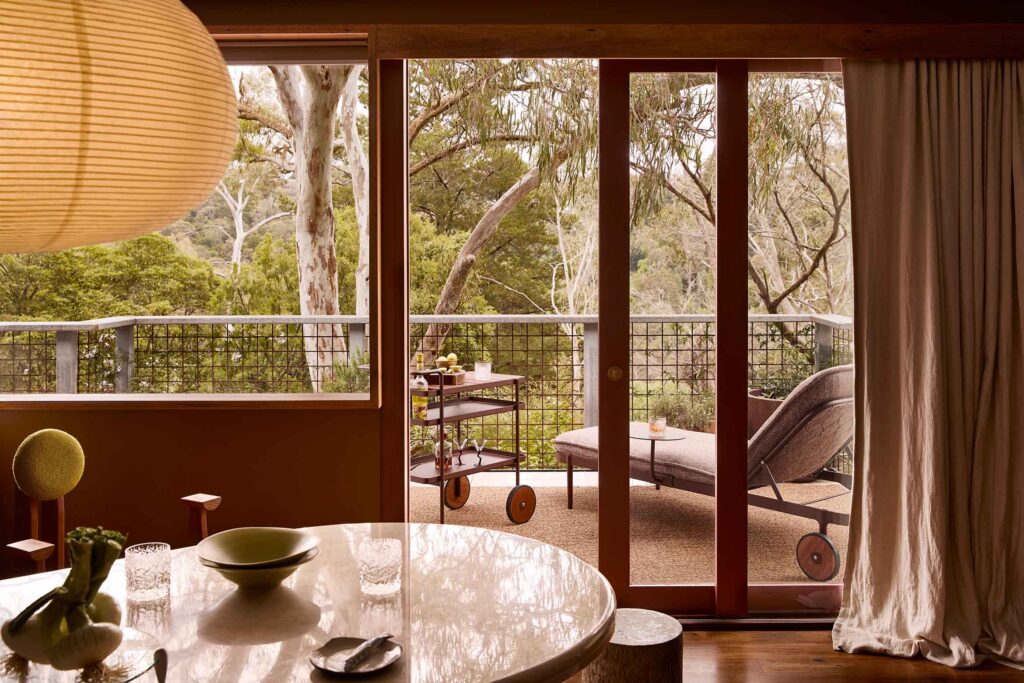
We could live with ideas before committing to them. We could test something, decide it wasn’t right and try another direction. We learnt how the light moved through the house, how we actually occupied the rooms, which colours felt good at different times of day and what objects and materials we wanted to live amongst rather than simply look at.
Our DNA became woven through every part of it because we had the time to understand what story we actually wanted the house to tell.
There is also something lovely about the fact that parts of the house were already ageing while other parts were still being made. Timber changed, brass patinated, things got knocked and worn, art moved around, collections grew. It never had that strange moment when everything arrived brand-new on Tuesday and was photographed on Friday. It grew up with us.
The funny thing is that, despite being made in fragments over seven years, the finished house feels like it came from one cohesive stroke. It absolutely did not. We stitched it together slowly, and perhaps that is the craft of it: finding the thread that could pull all those years, experiments and versions of ourselves into one home.
Related: A tasty Tasmanian vineyard pavilion
How did the budget push the project towards reuse, salvage and invention?
We had no choice!
This was our first home. We were in our early twenties, and we certainly didn’t have an enormous renovation budget. What we did have were skills, ideas, imagination and a willingness to work things out.
When we came up against something we couldn’t afford, the question became: how else can we do this? Can we make it? Can we reuse something? Can we take a material that was never intended for this purpose and turn it into something beautiful?
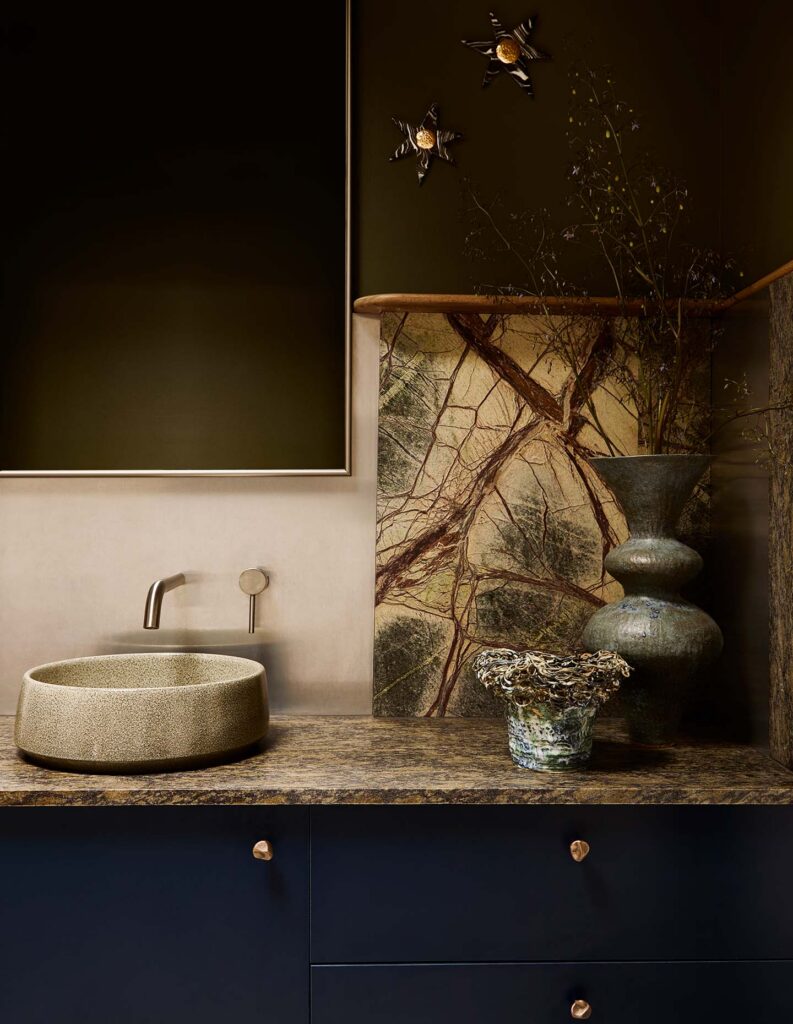
That mentality became embedded in the house. Waste brass pipe became door hardware; shed purlins became handrails. Materials were salvaged and reworked. Pat made furniture, lighting and details specifically for spaces rather than us buying our way out of a problem. The constraints forced us to invent.
Now, working as an interior designer, I realise how formative that was. I understand the reality of renovating because I have lived it. I know what it means when a budget suddenly shifts, when something you desperately want isn’t possible, or when you need to look at what is already there and find another way through. It made me incredibly nifty with materials.
I don’t really see the budget as a compromise anymore. I think it was a blessing. It gave the house its Arts and Crafts spirit – the evidence of hands, experimentation and resourcefulness. It taught me an enormous amount about who I am as a designer and what I find interesting. For Pat, it pushed an existing love of making into a much deeper practice of crafting bespoke pieces.
If we’d had the money to simply buy everything we wanted seven years ago, I genuinely don’t think the house would be half as interesting.
You describe colour as architecture. What does that mean at The View?
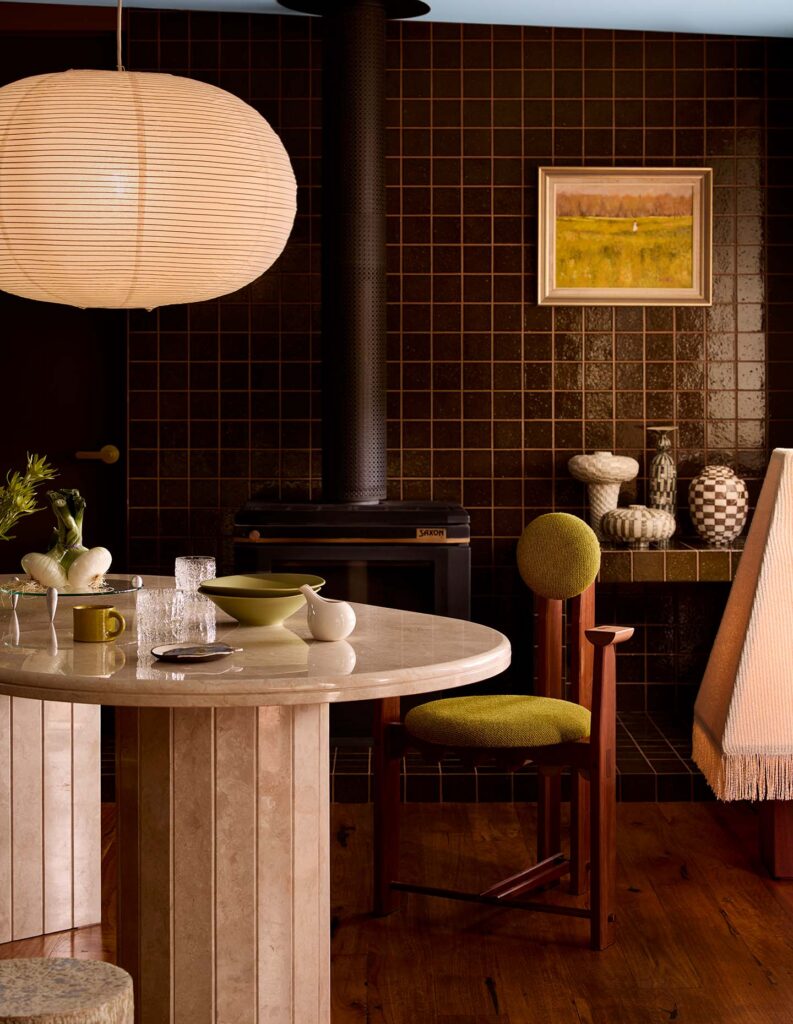
The house itself doesn’t have a huge amount of architectural bravado. It doesn’t have soaring concrete forms or enormous gestures doing the heavy lifting. So I had to find another way to give the interior rhythm, hierarchy and emotion.
For me, that became colour.
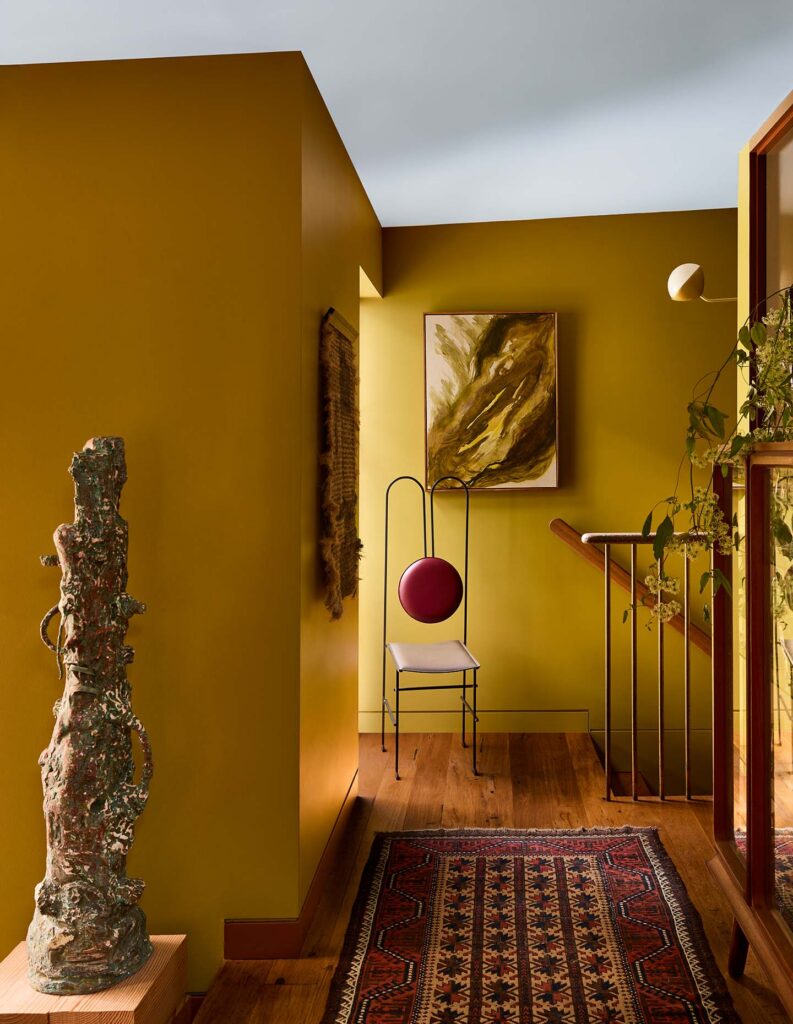
Colour can completely alter your understanding of a space without moving a single wall. It can compress a room, open it up, create a threshold, draw your eye somewhere, change the weight of a ceiling or tell you instinctively that you’ve entered somewhere different. In The View, colour became a wayfinding device, but also an emotional one.
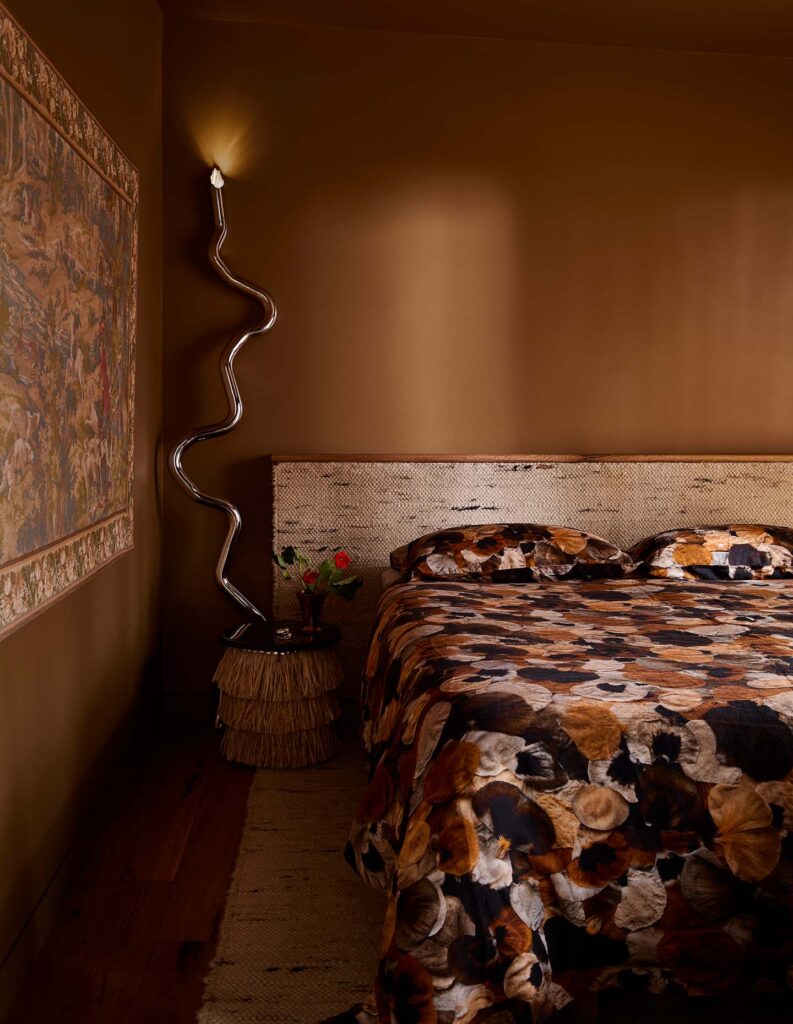
The guest bedroom is wrapped in a warm cumin tone that makes the room feel cocooning and deeply restful. My study has rich burgundy walls with hand-painted details across the ceiling; it feels imaginative and slightly theatrical, which is exactly what I need from a room where ideas are meant to happen.
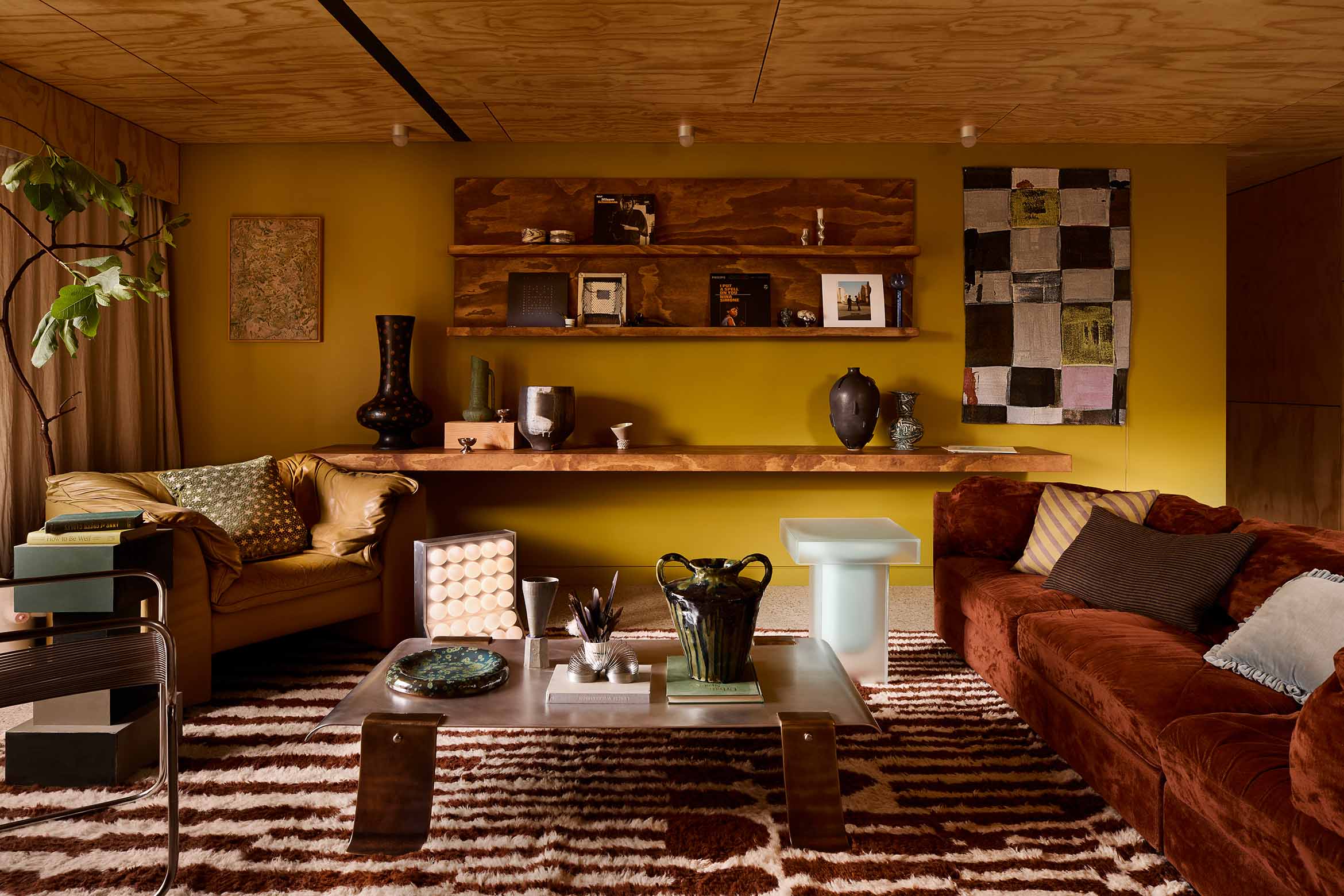
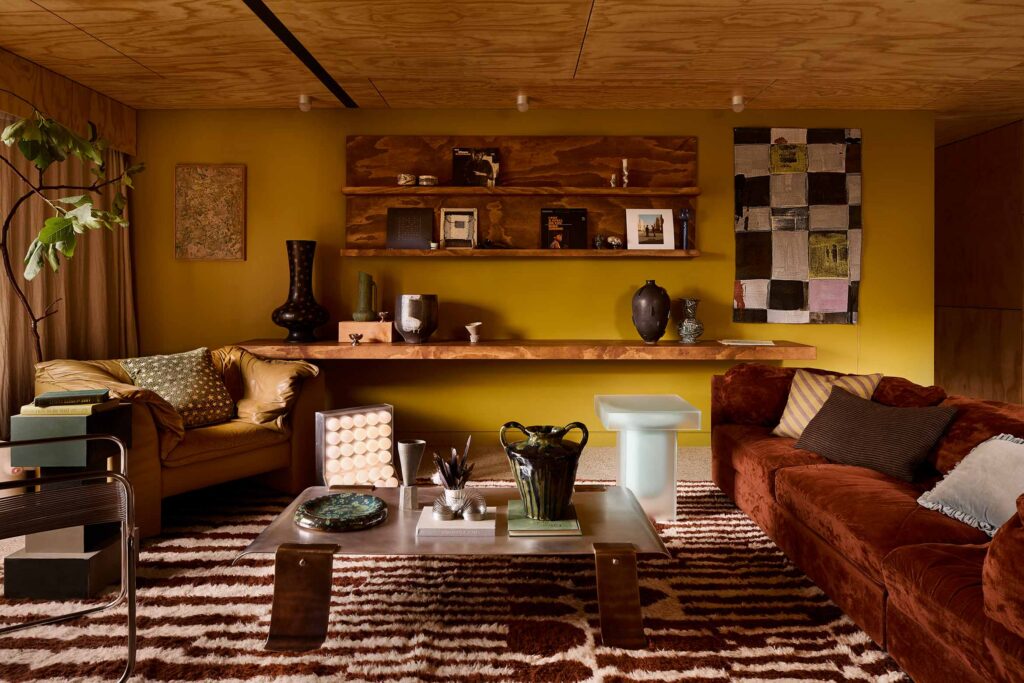
Elsewhere, greens connect the interior back to the landscape. Chartreuse brings this wonderful bolt of energy – playful, but at the same time surprisingly mature when it’s surrounded by timber, brass and art. Upstairs, the nuttier green has enough weight to hold all of our collections and artwork. It has a personality of its own, but it also knows when to step backwards and become the backdrop.
That’s what I love about colour. It isn’t decoration applied at the end. It changes proportion, atmosphere and behaviour. It tells you something about how a room wants to be inhabited.
If you stripped all the colour from The View, you wouldn’t just have the same house in white. You would have fundamentally changed its architecture.
What role do Australian artists, designers and makers play in the house?
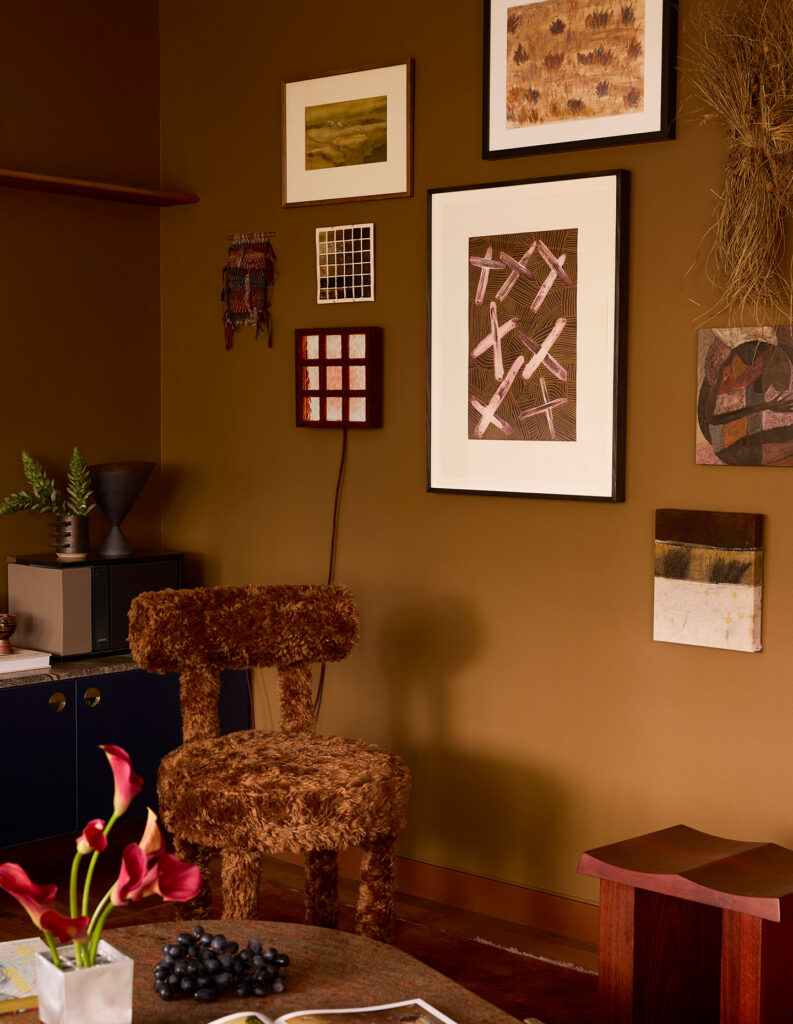
Australian artists, designers and makers are the backbone of our home.
If we didn’t make something ourselves, chances are it was collected from someone we know, discovered somewhere unexpected or has a story attached to it. I never wanted the house to feel as though it had been filled with expensive things. I wanted it to feel collected, nurtured and deeply personal, like every object had found its way here for a reason.
Over time, the people behind those objects became as important as the objects themselves.
Jordan Fleming was a designer I had admired for years. I remember finally getting the courage to introduce myself to her at an event, and now she’s a close friend. There is something incredibly special about looking around our home and seeing her work within it, knowing the relationship that now sits behind those pieces.
I met Martyn Thompson on the street with Eryca Green after an opening at Oigall. Martyn is outrageously talented, so bloody trendy and has about a million incredible stories. I now call him a friend, and it feels like an honour to live with one of his jacquard tapestries.
Then there is Hannah Nolan, who I met at her gallery opening and who is now a close friend, with many ideas cooking between us.
Those relationships are what make the collection meaningful to me and us. Our stories have become interwoven with the stories of the artists, makers and designers whose work lives here. They are our community, our friends and, in many ways, our extended family.
Their work sits alongside things Pat and I have made ourselves, and I love that there isn’t really a hierarchy between them. Together they form this strange little portrait of our lives: who we’ve met, what we’ve loved, what we’ve made and what we’ve chosen to carry with us.
When did The View become the project that defined Studio Shields?
I think it happened when we finally finished it and stood back far enough to understand what we had actually made.
For seven years, it was just our house. It was the place we came home to, the thing we spent every spare weekend working on and this enormous ongoing experiment that sometimes felt like it would never end.
When it was finally complete, I realised that almost everything I believe about design was sitting there in front of me.
I am always looking for the good in things. If something becomes difficult, I’ll pivot and find another way. I love being nifty. I’m a complete bowerbird. I love collecting things and finding beauty in materials or objects that someone else might overlook. I love that we took waste and turned it into something precious. Pat is a maker to his core, and his hand is everywhere in the house. None of those things were written down as a design philosophy when we began; we learnt them by making this home.
I don’t think we’ll ever make another house quite like The View. We will have more experience next time, more knowledge and hopefully more resources. But that’s exactly what makes this one so important. It caught us at a particular moment in our lives, when imagination had to fill the gaps that money and experience couldn’t.
More than anything, it taught me that good design begins with giving yourself permission to live authentically as yourself.
That has become the foundation of Studio Shields. I’m not interested in making homes that could belong to anybody. I want them to tell you something about the people who live there, what they love, where they’ve been, what makes them laugh, what they collect and how they want to feel when they walk through the door.
The View makes no apology for who we are. It is colourful, resourceful, imperfect, deeply personal and full of things we love.
And I think that’s probably the most honest design philosophy I could have.