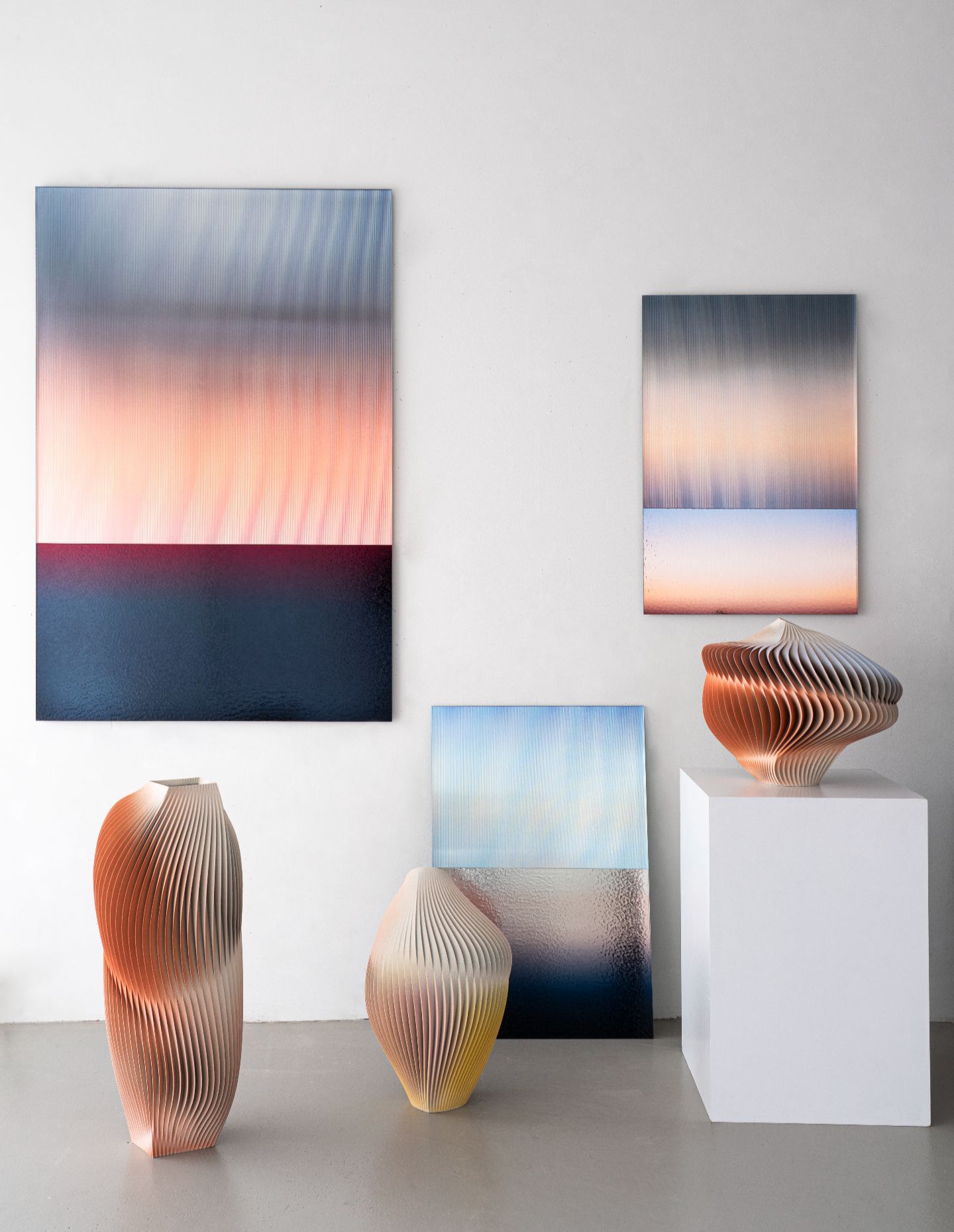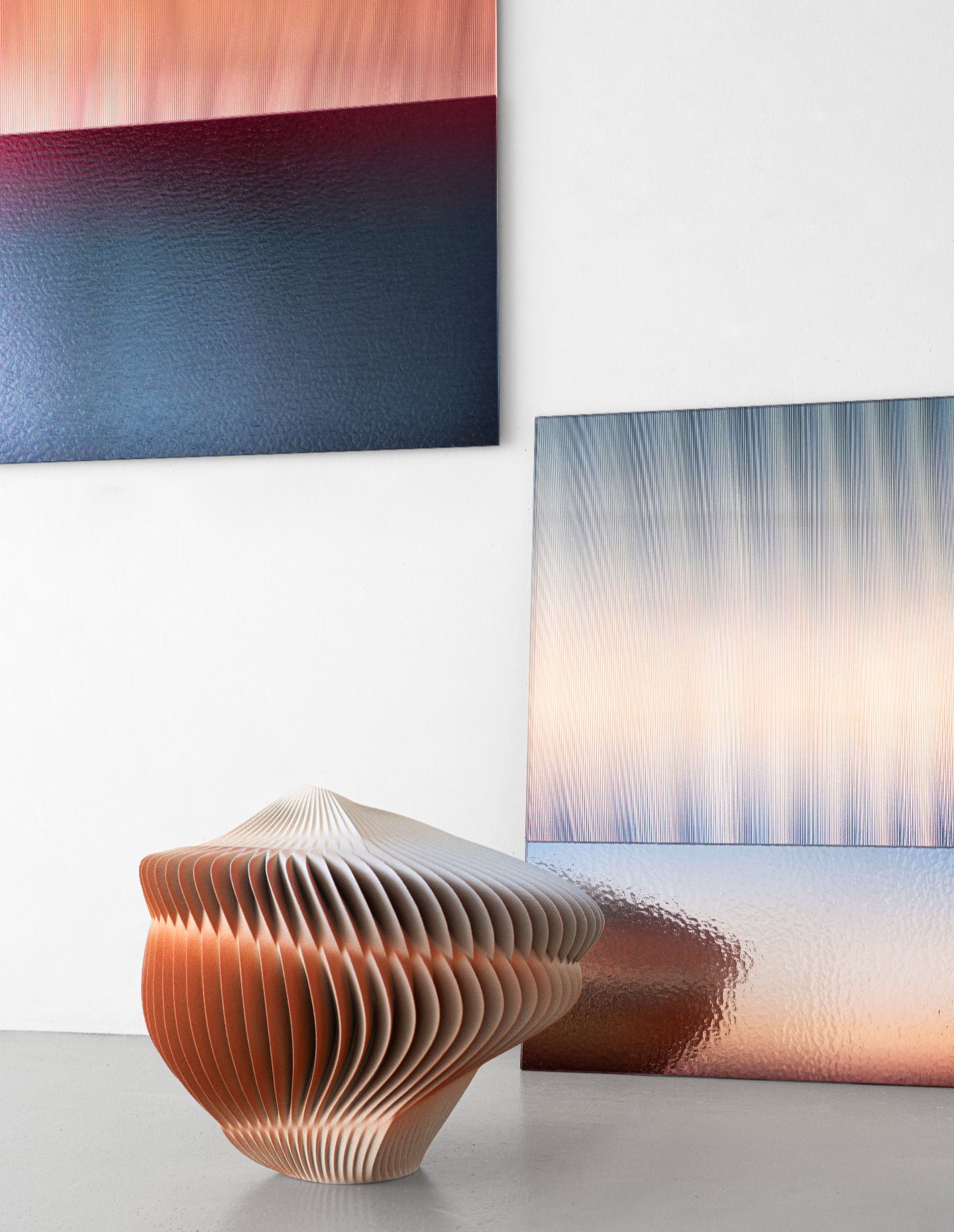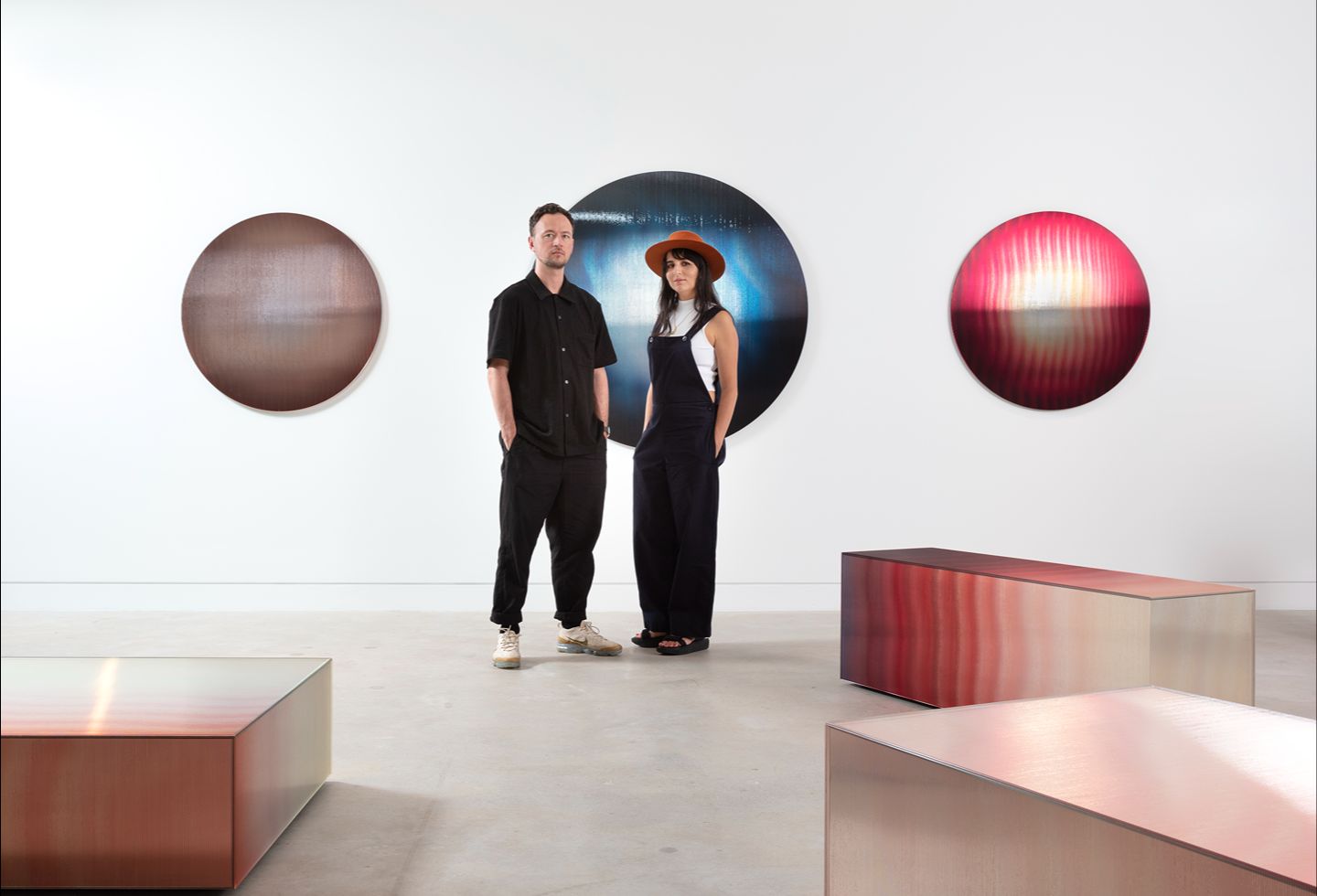

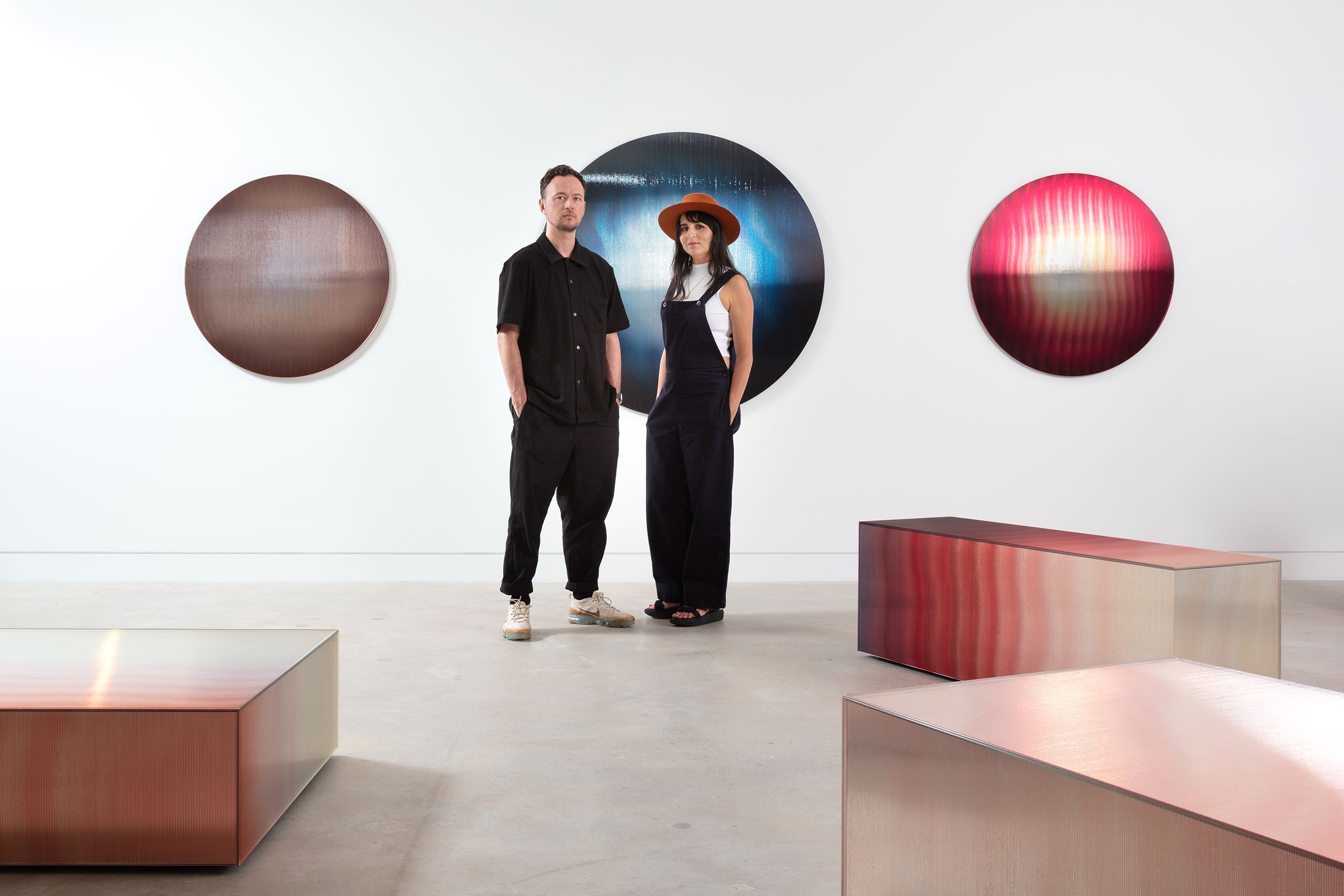
At Melbourne Art Fair 2026, Gallery Sally Dan-Cuthbert presents The Sky We Share, a solo installation by Amsterdam-based duo Rive Roshan. Debuting a new series of glass marquetry works titled Windows, alongside sculptural Voices vessels and Radiance tables, the presentation continues the artists’ exploration of light, reflection and what they call “ordinary miracles.” We spoke with Ruben de la Rive Box and Golnar Roshan about atmosphere, Impressionism and the horizon as a shared experience.
How does the glass marquetry technique allow you to capture something as intangible as sky and light?
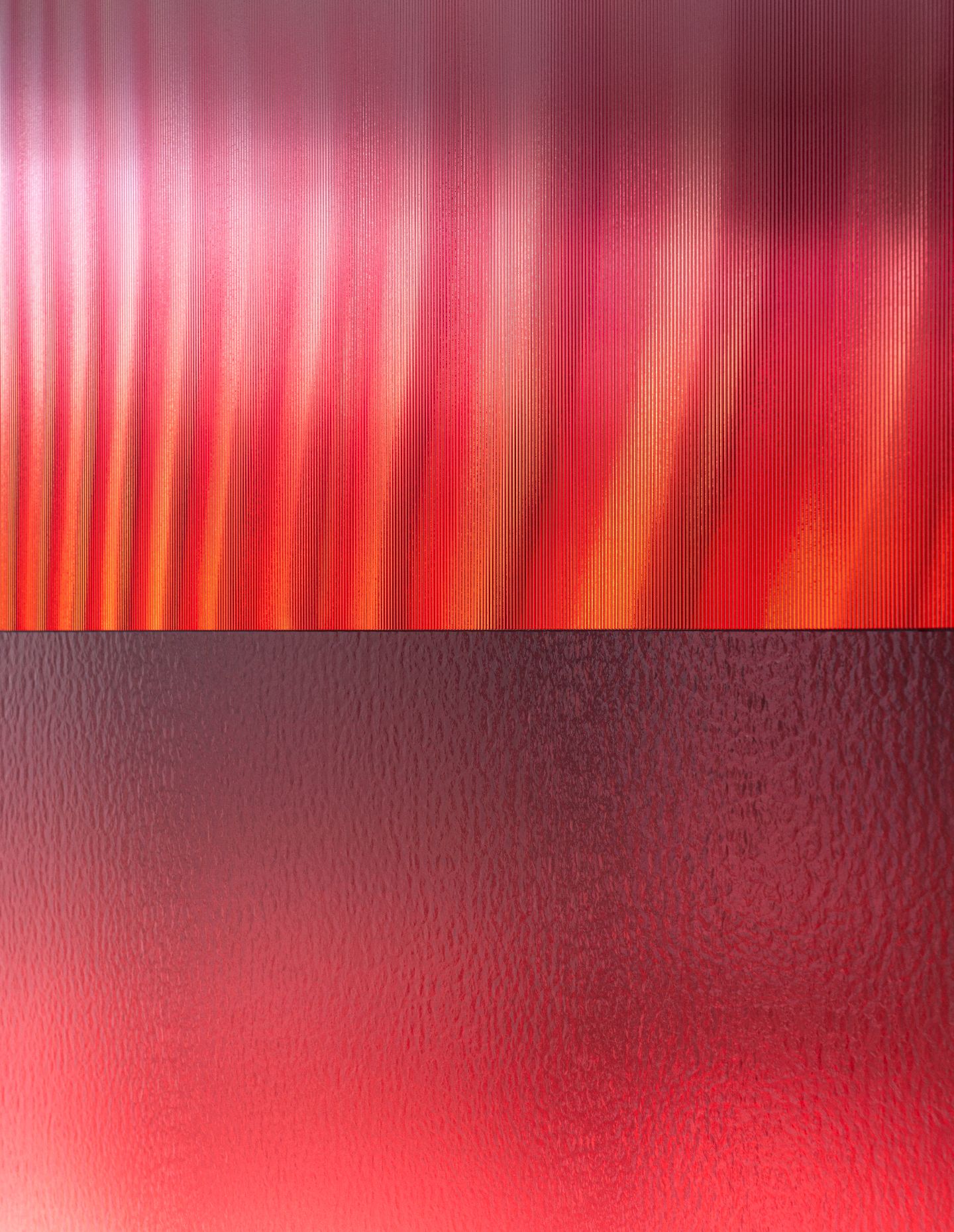
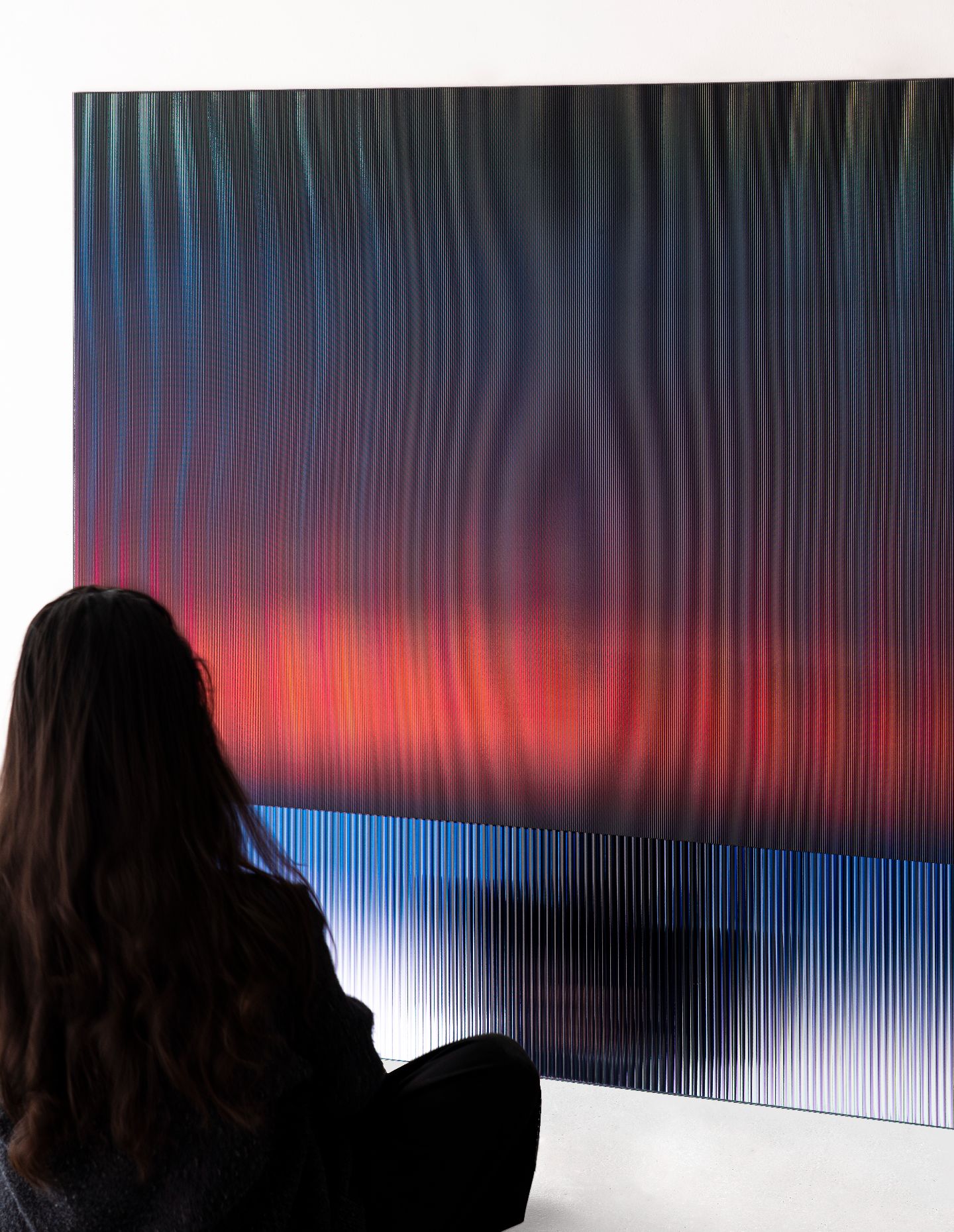
Our studio has been developing this technique to translate the mesmerising, fleeting patterns of the atmosphere into a permanent medium. Through glass marquetry, we create a surface that breathes. The interplay of reflection and refraction with light and colour ensures the work is always in dialogue with its surroundings, capturing a rare kinetic energy found where the sky meets the water. Each piece records a specific moment we observed and photographed, often from our home or studio in Amsterdam, yet it continues to transform as light shifts and the viewer moves around it.
What does the phrase The Sky We Share mean in the context of this body of work?
When we were invited by Gallery Sally Dan-Cuthbert to create this presentation, it felt meaningful to reflect on specific moments where we captured the meeting of sky and water in Amsterdam and bring them to Australia. Golnar is from Australia and Ruben is from the Netherlands, so this exchange felt personal. We live in a time marked by division, and this is a gesture towards what unites us. No matter where we are in the world, we all exist under the same shifting atmosphere of light and colour. Whether in Amsterdam or Melbourne, the sky is the one borderless landscape. It serves as a metaphor for connection. Our Windows open onto the sky that every human throughout history has witnessed, and the meeting of sky and earth and the play of light on water.
How do the Radiance tables and Voices vessels converse with the painterly Windows?
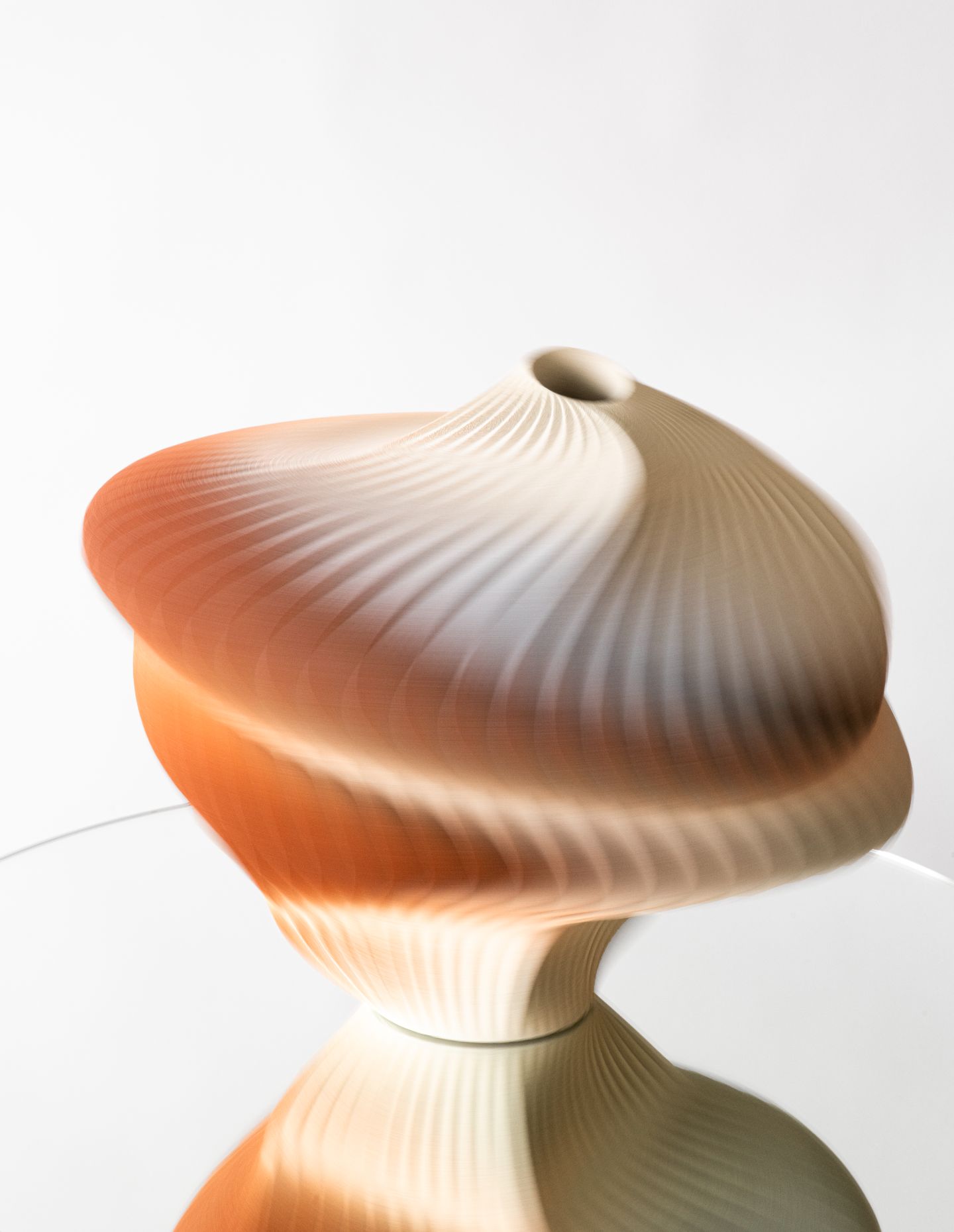
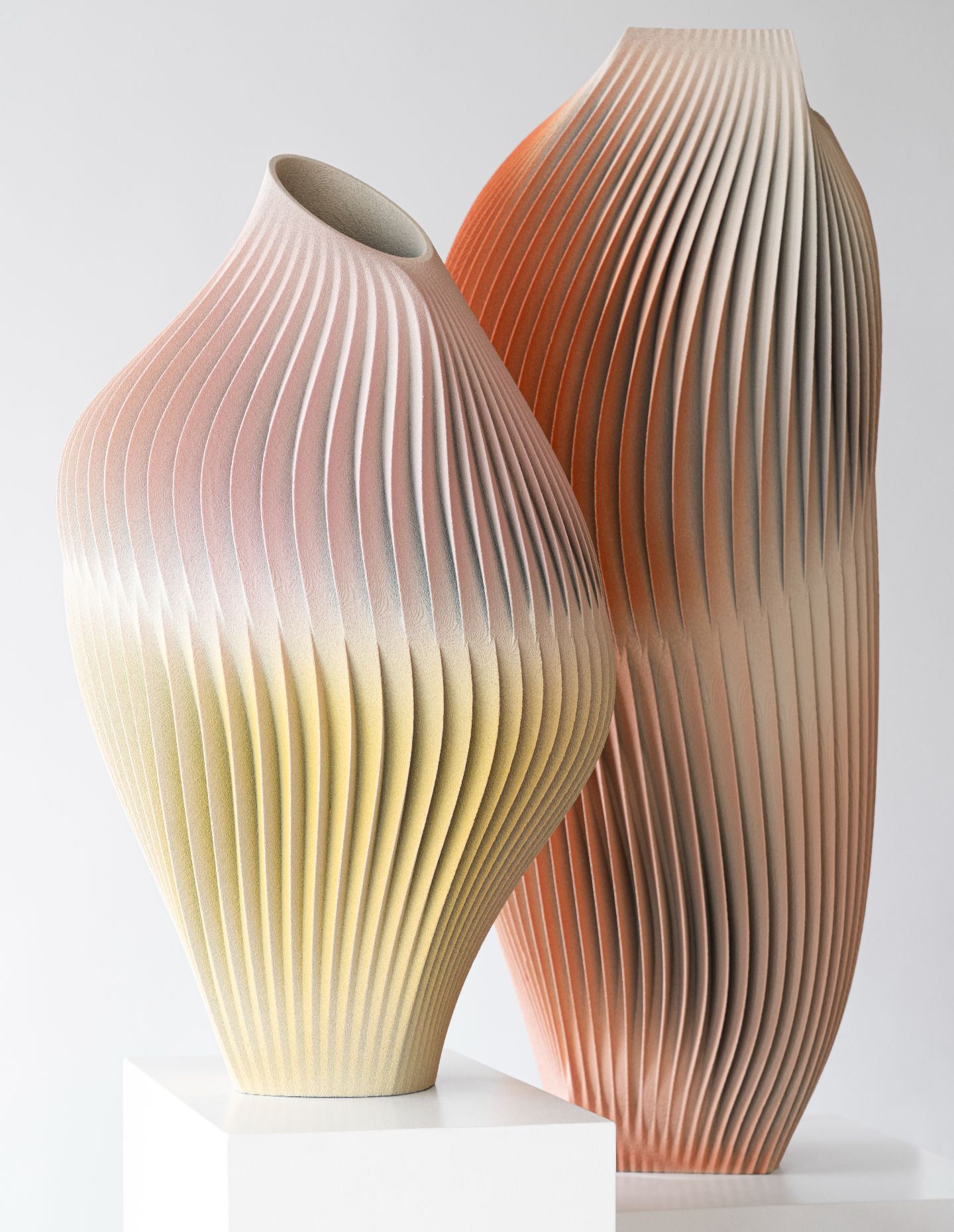
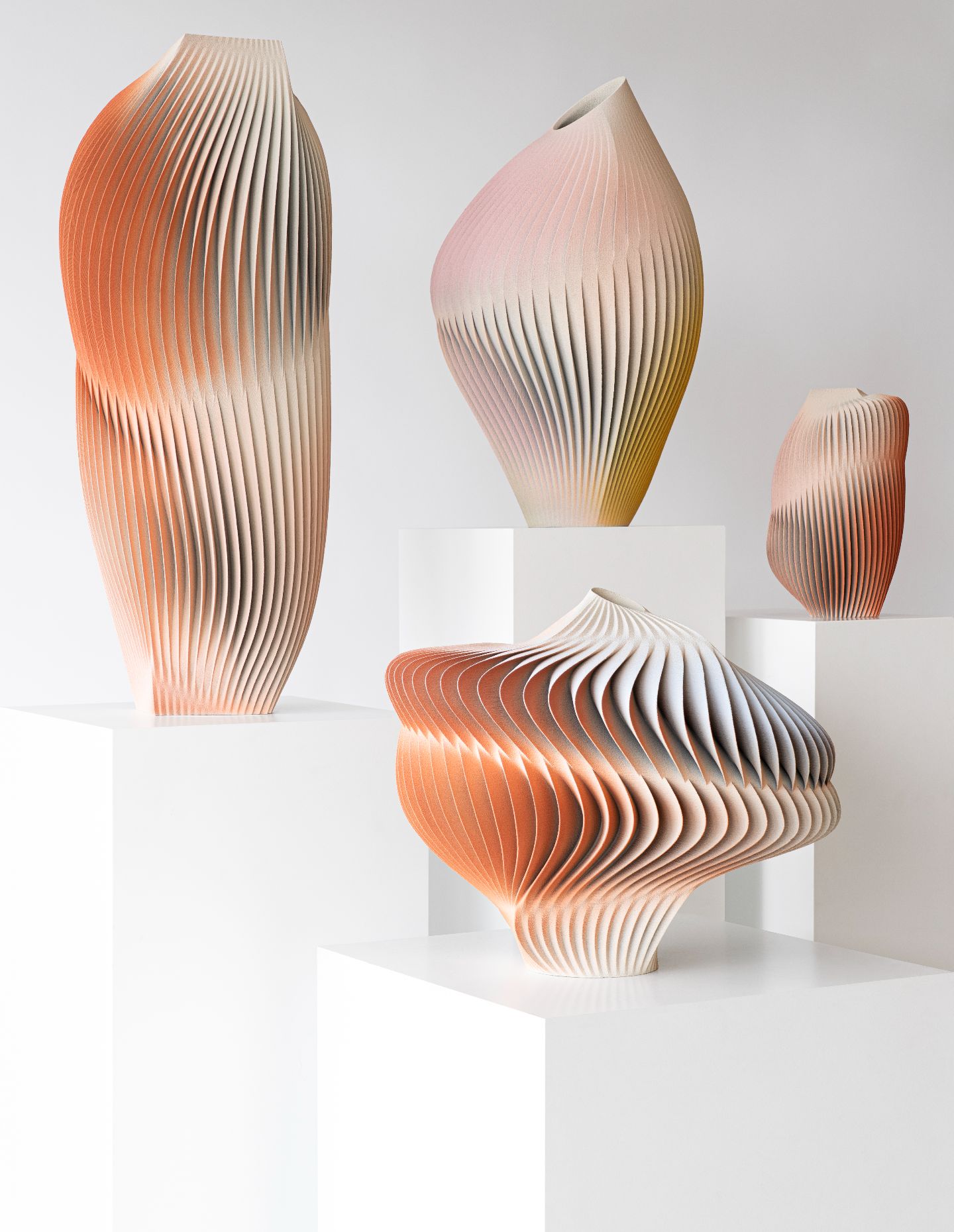
Our work represents a transition from the view to the object. The Voices vessels are sculptural studies in movement, 3D-printed in sand and meticulously hand-painted to evoke forms caught in motion. They sit in dialogue with the Windows, almost as if peering into their horizons. Similarly, the Radiance tables introduce a kinetic, undulating energy to otherwise solid forms. Together, these works create a space where the ephemeral light of the sky is grounded into functional, sculptural art objects.
You reference a dialogue with the 19th-century Impressionists. What draws you to that lineage now?
The Impressionists were obsessed with the fleeting moment, the way a second of sunlight could transform a cathedral or a haystack. In many ways, we are searching for the same outcome. While they captured the ephemera of nature through brushstrokes, we experiment with glass, reflection and material innovation to express that same shifting quality. When the NGV acquired our Colour Dial Table for the Triennial and displayed it alongside Impressionist works, it felt like a natural pairing. We are pursuing a similar fascination with light, but through contemporary means.
What do you hope viewers experience when encountering the works in person?
We aim to bring spaces to life and create experiences that give people moments of wonder and surprise. By allowing viewers to encounter these shifting surfaces and subtle transformations, we hope they begin to notice the ordinary miracles that surround them in daily life. These moments of stillness and attention can create a feeling of calm and joy. That is ultimately what The Sky We Share invites.
Related: Living with the heat