

For decades, the furniture and appliance industries have operated according to a familiar linear logic: extract resources, manufacture products, use them, and eventually discard them. Even when recycling enters the equation, valuable materials are often downcycled, incinerated or separated from the product in ways that destroy much of their original value.
V-ZUG is proposing a different proposition. What if the end of an appliance could instead become the beginning of another object?
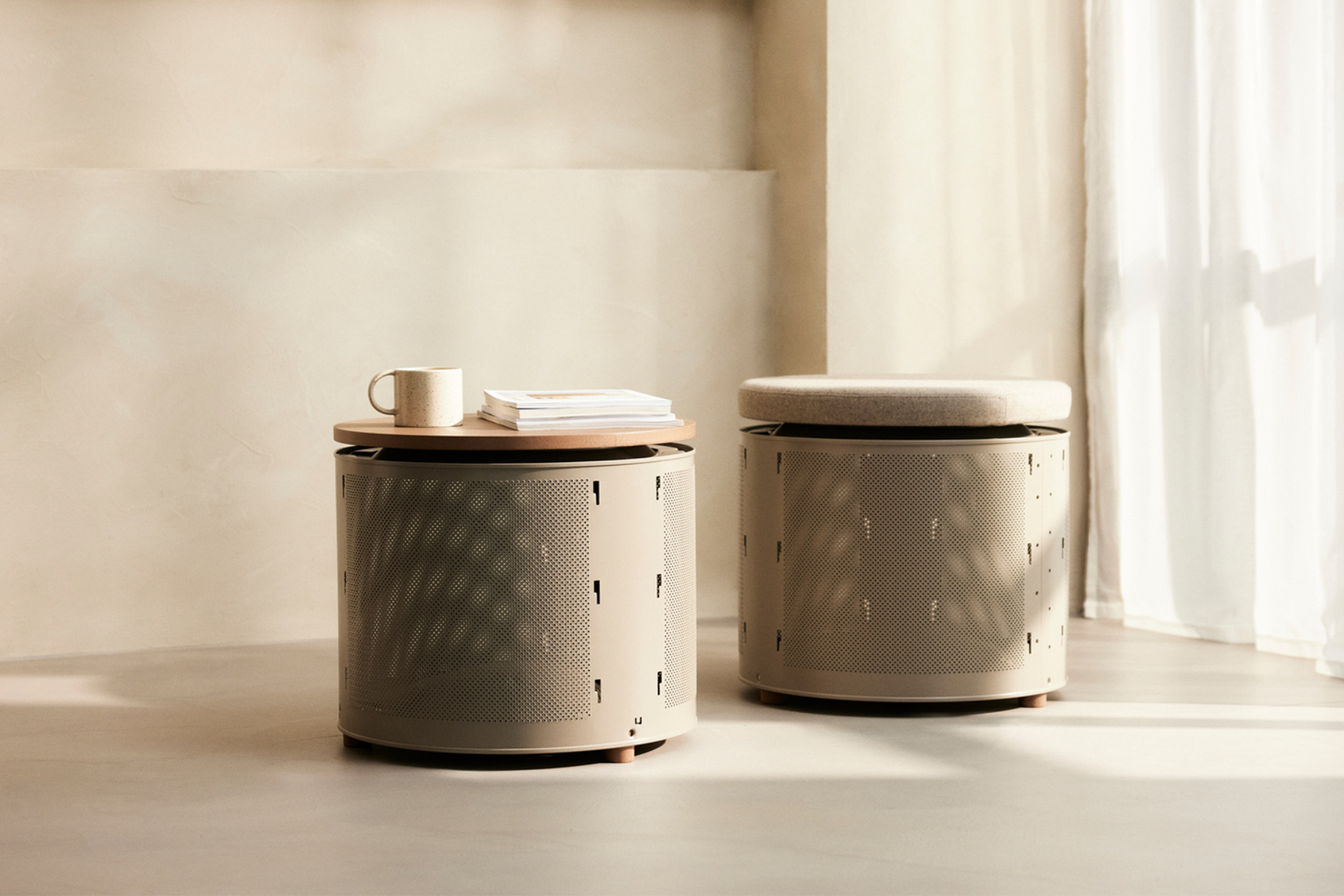
Its Repurpose programme offers a particularly compelling answer through furniture such as the Adora pouf and table, which transform components from decommissioned washing machines into Swiss made pieces for the home. “It’s really important that this furniture is telling the story about closing the circle, about the circular economy at V-ZUG,” says Daniel Frost, Sustainability Circular Expert at V-ZUG. At the centre of this proposition is recycling, but also a more ambitious idea: preserving the material, energy and craftsmanship already invested in an object for as long as possible.
That distinction matters. V-ZUG’s approach sits within its broader ambition to reduce Scope 3 value-chain emissions by 30 per cent by 2030, alongside its achievement of carbon-neutral production sites since 2020. The company has also established an internal carbon-pricing mechanism, introduced in 2018, charging CHF 120 per tonne of CO₂ on its own business emissions and directing the resulting funds towards climate-related projects.
In other words, circular design is not being treated as an isolated design experiment. It is part of a wider attempt to rethink what a product is — and what happens when its first life ends.
Furniture is often discussed in terms of aesthetics, comfort and durability. Upholstery, however, is also a materials question. Conventional upholstered furniture can rely heavily on virgin synthetic fibres, petroleum-derived foams, adhesives and complex material combinations that make separation and recycling difficult. The softness that makes a chair or pouf desirable can therefore come with a hidden environmental cost.
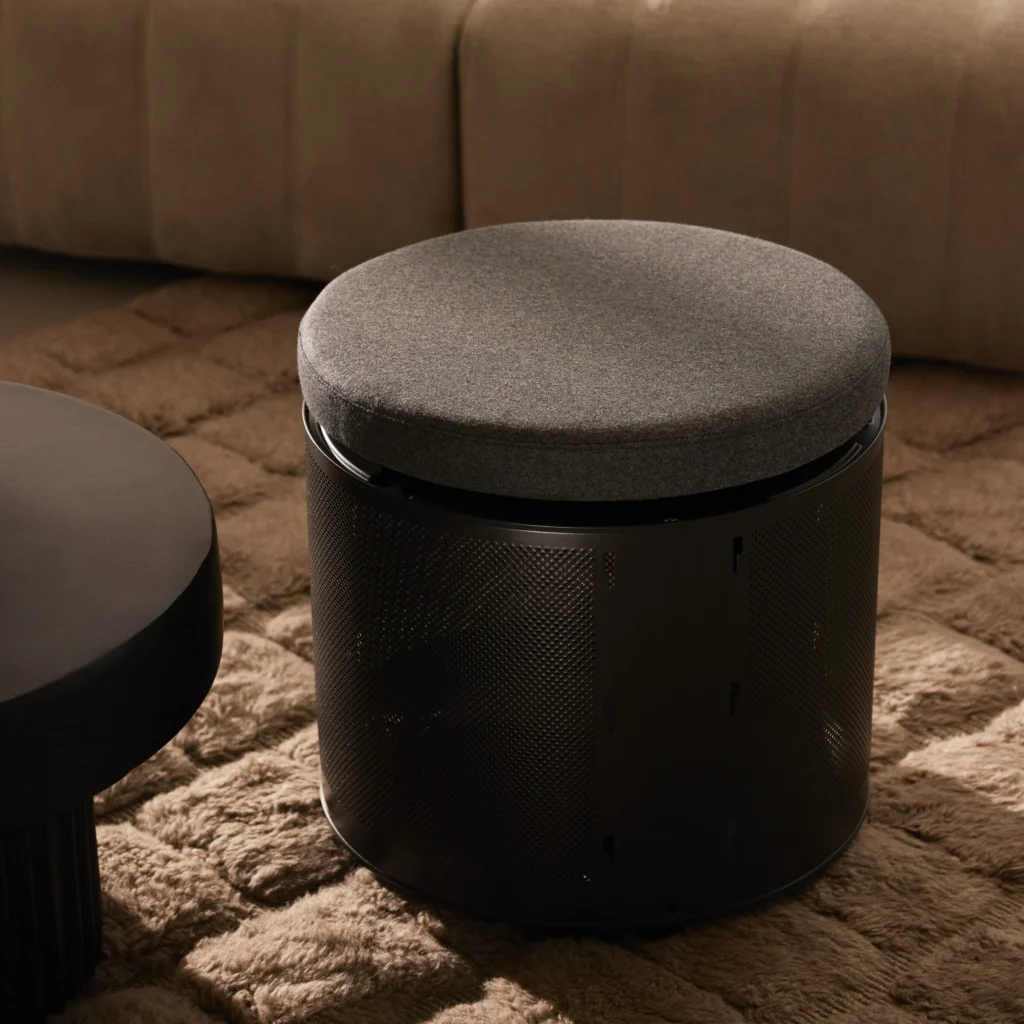
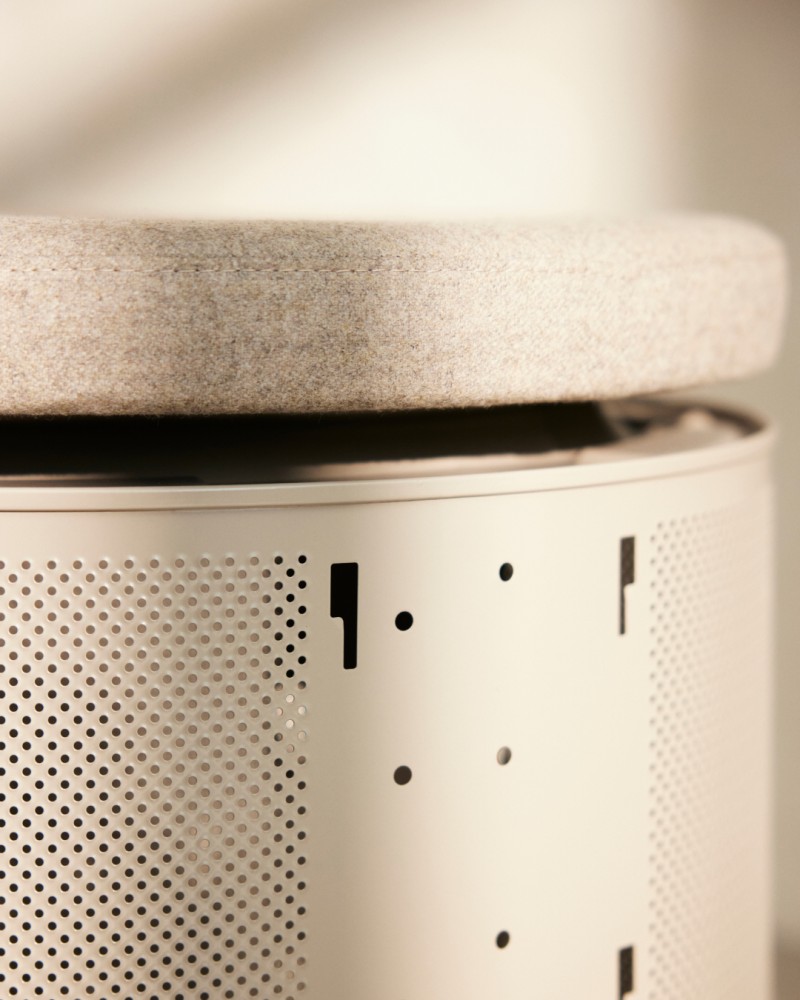
V-ZUG’s Adora pouf takes another route. Its removable upholstery is made from 100 per cent recycled wool yarns sourced from the fashion and textile sector. Rather than introducing another stream of virgin petrochemical-based material, the project gives existing textile resources another useful life. “The upholstery is very important to the overall footprint of the piece. In context of a circular economy it makes more sense if you do this in collaboration and with Der Sattler we found a company that was a perfect fit,” says Jona Stutzer, Strategy and Sustainability expert at V-ZUG, adding “at V-ZUG, sustainability starts at the design phase, focusing on long-term durability, reparability, and recyclability.”
This is where sustainable upholstery becomes more than a specification. The felt is part of a broader circular system in which materials are deliberately selected for their previous lives and their potential future ones. The principle is simple: a sustainable material is not only one with a lower impact at the point of manufacture. It is one that can remain useful, valuable and recoverable over time.
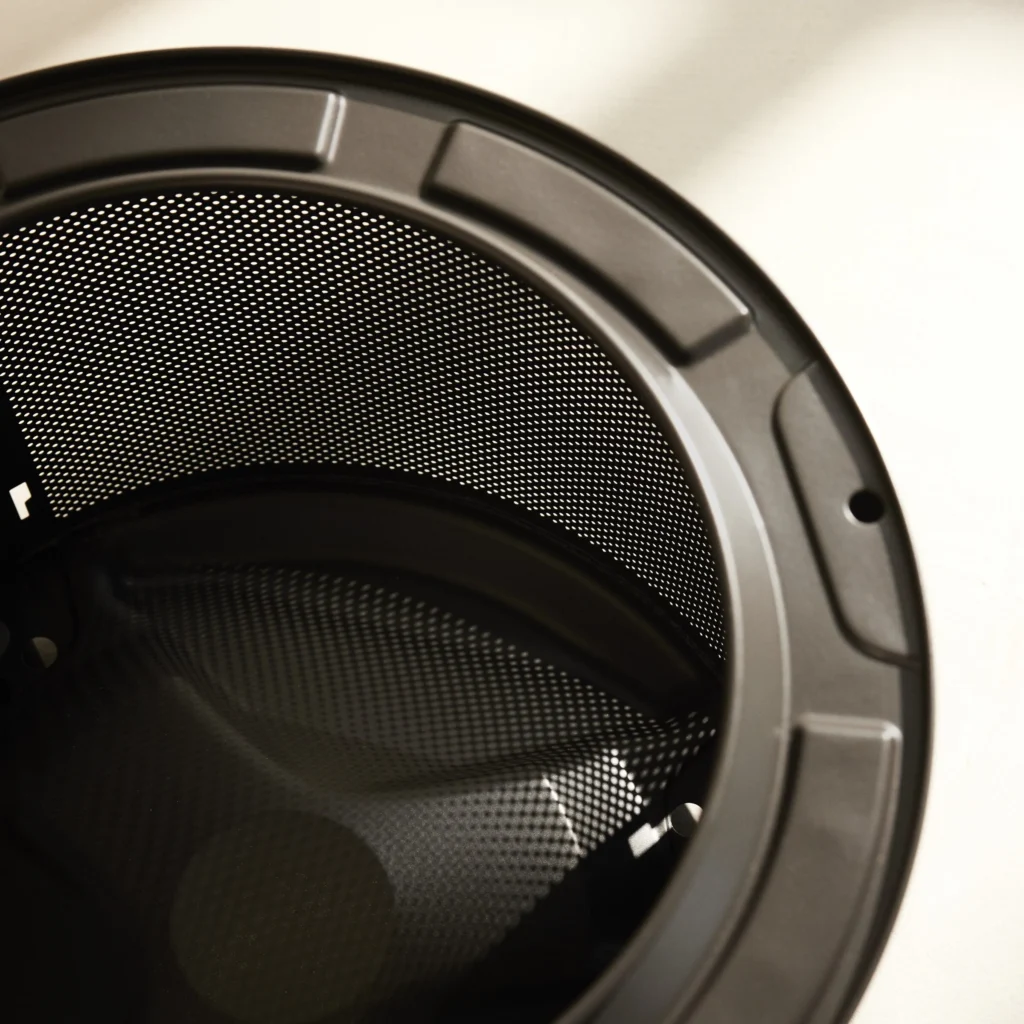
The most striking element of the Adora pouf is its structure. Its cylindrical base is made from the drum of a V-ZUG washing machine that has reached the end of its repairable life. “It’s really important that this furniture is telling us the story of the circular economy. Sometimes there are scratches, or it’s not as we think furniture should look when we buy it. So, it’s also the consumer who must change in their way of looking at a new product,” says Frost. “The drum is cleaned, refined and powder-coated at V-ZUG’s recycling facility in Zug. A support board is made from an old washing-machine lid, while the screws are recovered from disassembled V-ZUG appliances. Wooden components are then produced by regional craftspeople, while the upholstery is handled locally.
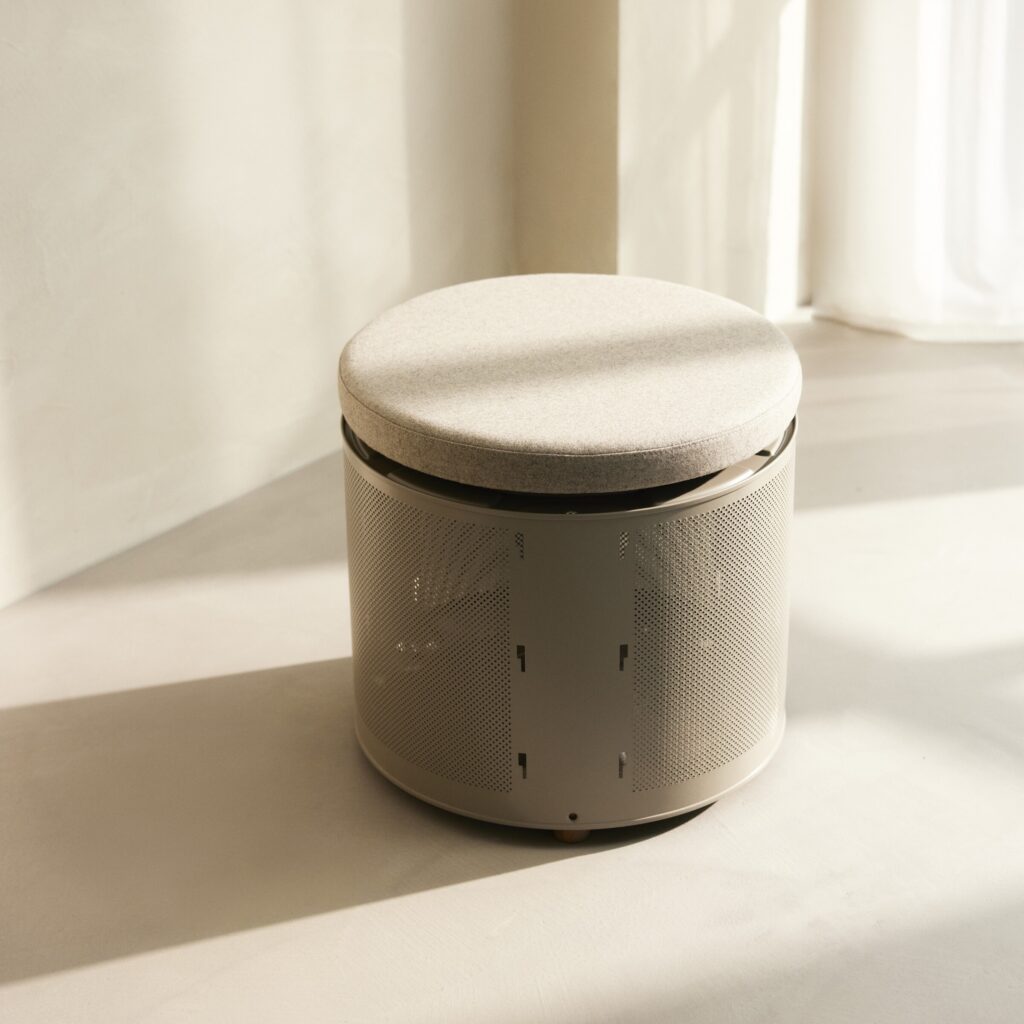
The result is an object whose material history remains visible. A washing-machine drum is no longer waste waiting to enter a recycling stream. Instead, it becomes the architectural foundation of a piece of furniture.
That is a significant shift in thinking. Recycling tends to ask: How can we process this material? Circular design asks a more interesting question: What else could this object become? “We learned a lot by dismantling a washing machine and seeing how many different parts we have, from which materials they are made of. The washing drum for example, is made of three different alloys, which from a circular economy point of view totally nonviable… Then we came to this idea around the drum looking very interesting… a few weeks later, our design team (the design was developed as a collaborative design project between regional craftspeople, internal designers, and recycling factory employees including long-time V-ZUG interior partner Benjamin) came up with this prototype of the repurpose table and poof,” shares Stutzer.
There is also an important geographical dimension to the project. The Adora pouf is developed and manufactured in Switzerland, with dismantling, cleaning, finishing, upholstery and wood processing involving local partners and craftspeople. “For us, the whole project is also a social project. It’s not only about profit, not only about planet, but also about people… that we keep and hopefully create jobs and support Swiss craftsmanship locally,” says Frost. Moreover, this regional approach reduces the need to move components through complex international supply chains while simultaneously preserving specialist manufacturing knowledge.
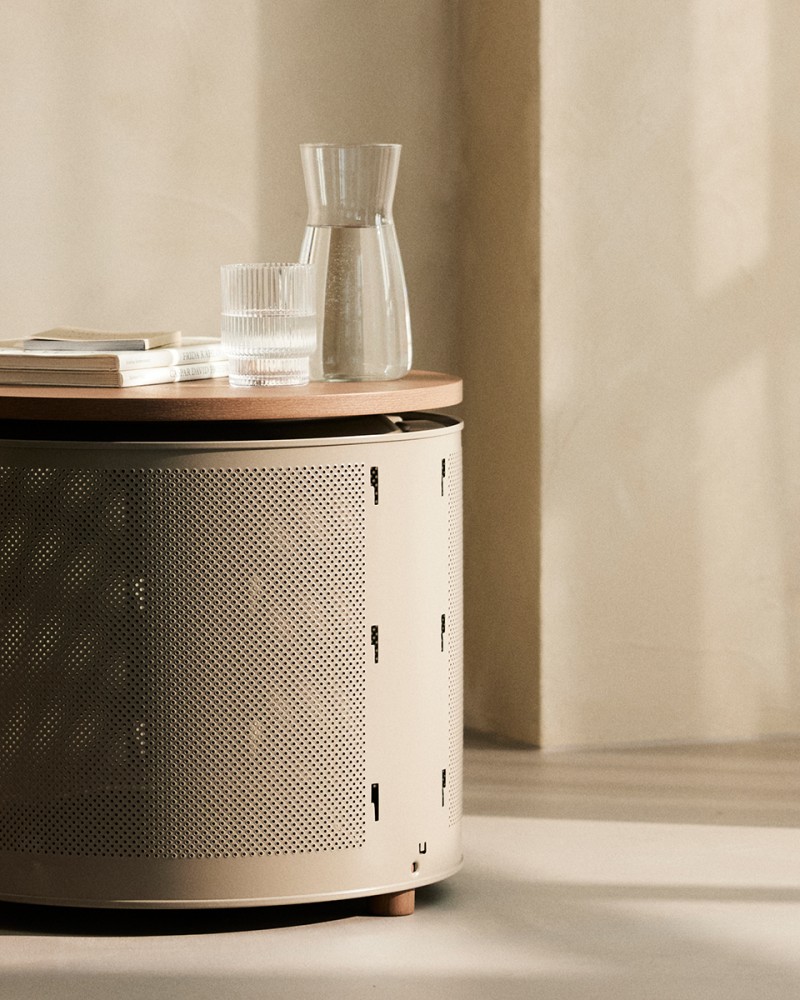
A circular product does not automatically become sustainable because its material has been recycled. Transport, processing, energy use, durability and end-of-life options all matter. By combining recovered appliance components with regional craftsmanship, V-ZUG is bringing these considerations together.
It also creates an unusual meeting point between industrial manufacturing and traditional craft. The washing machine represents precision engineering at scale; the furniture represents a slower, more tactile form of making. Their combination proves that circularity does not have to mean sacrificing design. Quite the opposite.
Perhaps the most important characteristic of the Adora pouf is what happens when its second life eventually comes to an end. The cushion can be removed. Components are mechanically assembled rather than permanently fused together. The use of disassembled machine screws reinforces the possibility of taking the object apart, repairing it or redirecting its materials again.
This is design for circularity in practice. It challenges the assumption that furniture should be considered finished once it leaves the showroom. Instead, its design anticipates multiple futures.
That thinking is central to V-ZUG’s longer-term “Closing the Circle 2040” vision. Under this model, most V-ZUG appliances across Switzerland would eventually be offered through Product-as-a-Service arrangements, with the company retaining ownership, maintaining products during their use and taking them back at the end of contracts.
This is a significant change in the relationship between manufacturer and object. If V-ZUG remains responsible for an appliance beyond its first customer, then durability, reparability, reuse and material recovery become business imperatives rather than optional environmental gestures. The washing machine is no longer sold and forgotten. It becomes part of an ongoing material relationship.
Product-as-a-Service also raises a larger question for the design industry: should manufacturers remain responsible for the materials they introduce into the world?
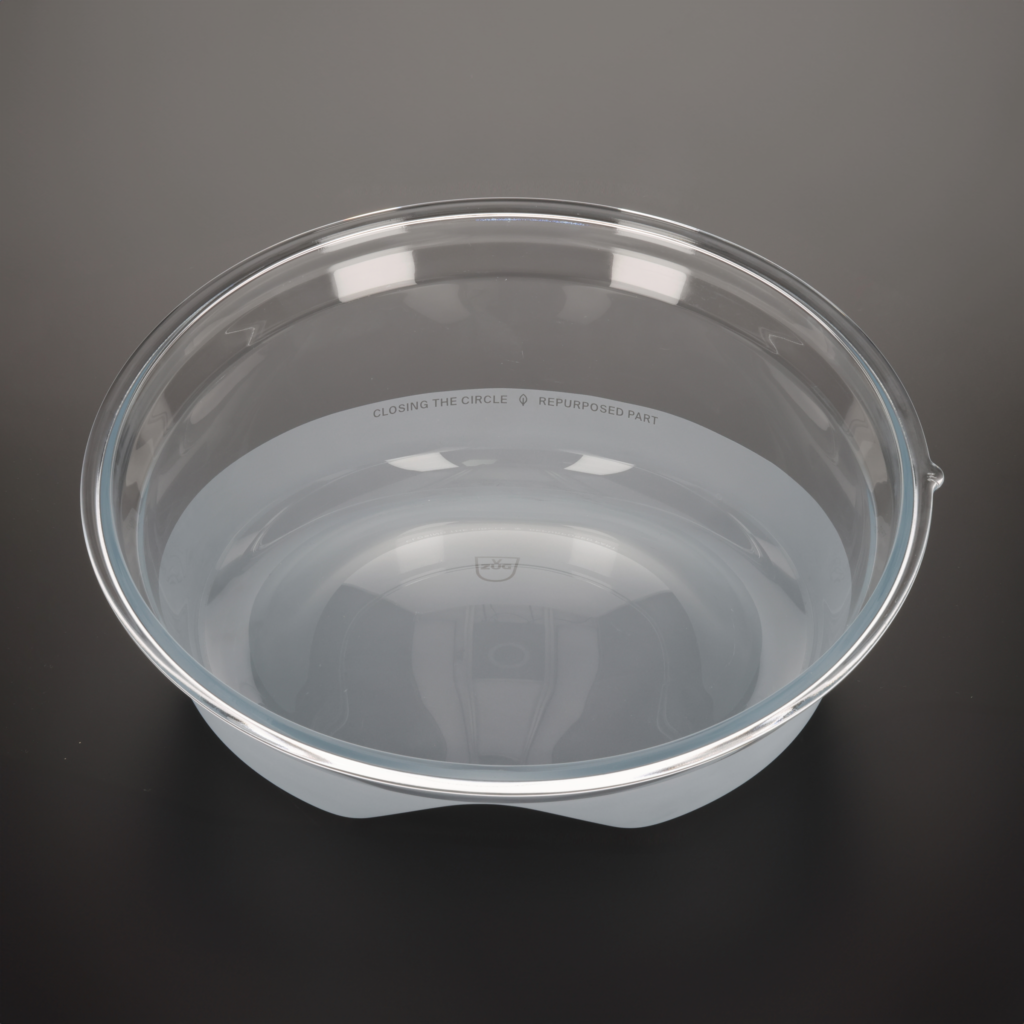
If the answer is yes, then the conventional boundary between product categories begins to dissolve. A washing machine can become furniture. Door glass can become a bowl. Components can move between industries rather than being reduced to waste.
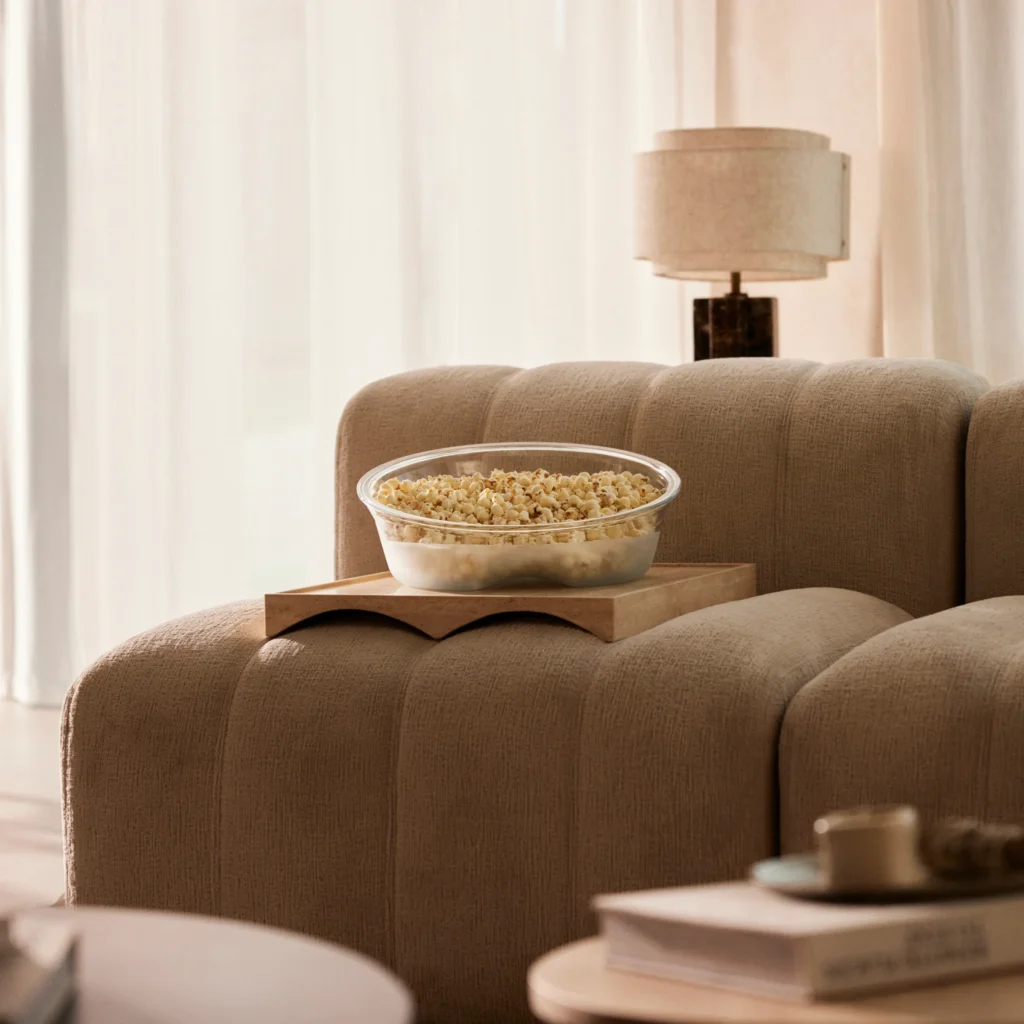
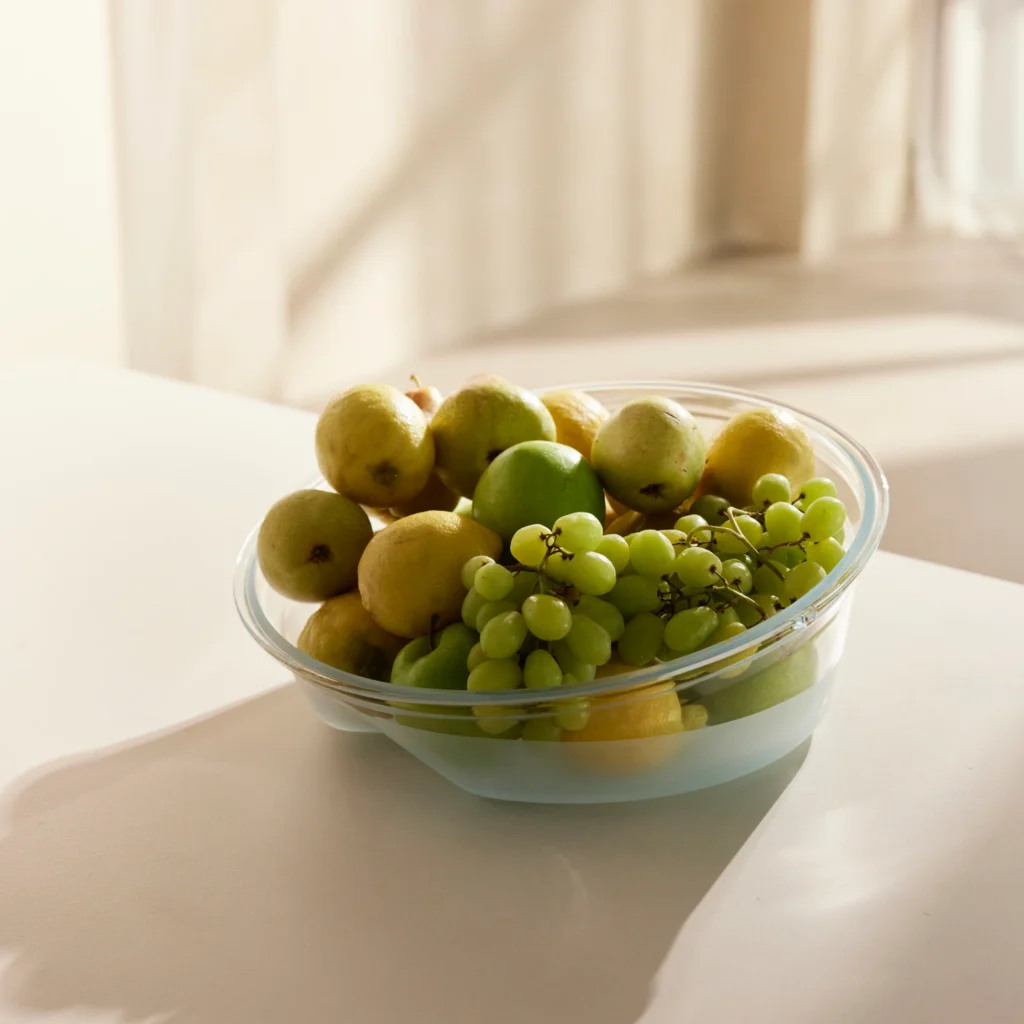
The Adora multi-purpose bowl, for example, repurposes borosilicate door glass from discontinued washing machines. Carefully dismantled in Zug, the glass is cleaned, sandblasted and transformed into a durable household object. The result is a prime example of material continuity — keeping a high-quality resource in use rather than allowing it to become waste.
These projects are modest in scale, but their significance is larger than their dimensions.
They demonstrate that circularity can be tangible. It can be touched, sat on, stored in and used at the dinner table. And perhaps that is precisely what sustainable design needs.
Rather than presenting environmental responsibility as an abstract system of emissions targets, recycling percentages and carbon accounting, designers can make circularity part of everyday life.
The Adora pouf is therefore more than a seat. It is a material biography: washing machine, component, recovered resource, piece of furniture. Its value lies partly in the fact that it has not erased its past.
For design, that may be one of the most important lessons of the circular economy.
The sustainable object does not necessarily need to look recycled. It needs to be designed so that its materials never have to become waste in the first place.
If yesterday’s economy was defined by extraction and disposal, tomorrow’s must be defined by stewardship. V-ZUG’s Repurpose furniture offers a small but persuasive glimpse of what that could look like: industrial products becoming domestic objects, recycled wool becoming upholstery, local craftsmanship completing the transformation, and design acting as the bridge between one life and the next.
The future of furniture may not be about making more things.
It may be about making sure the things we have already made are never truly finished.