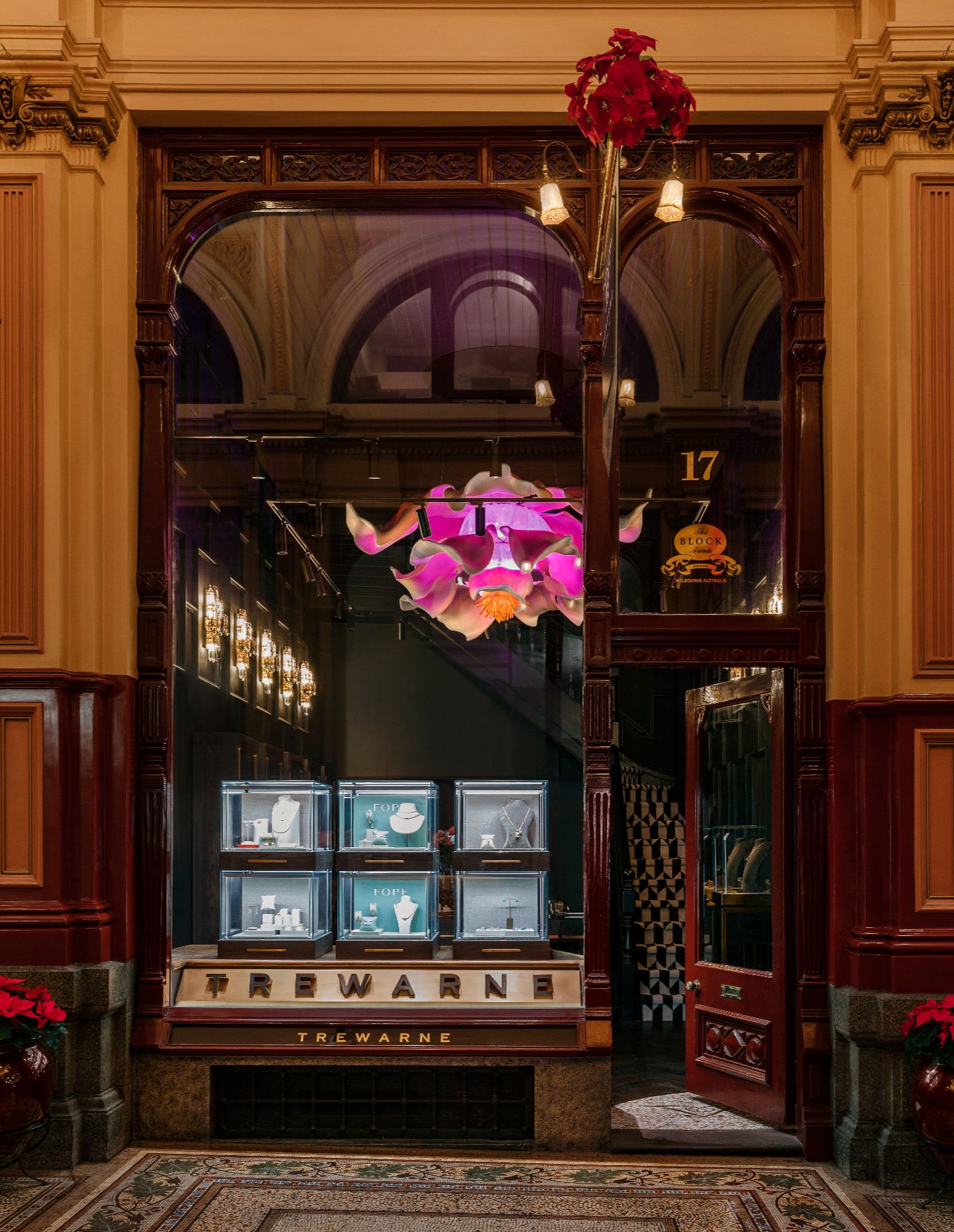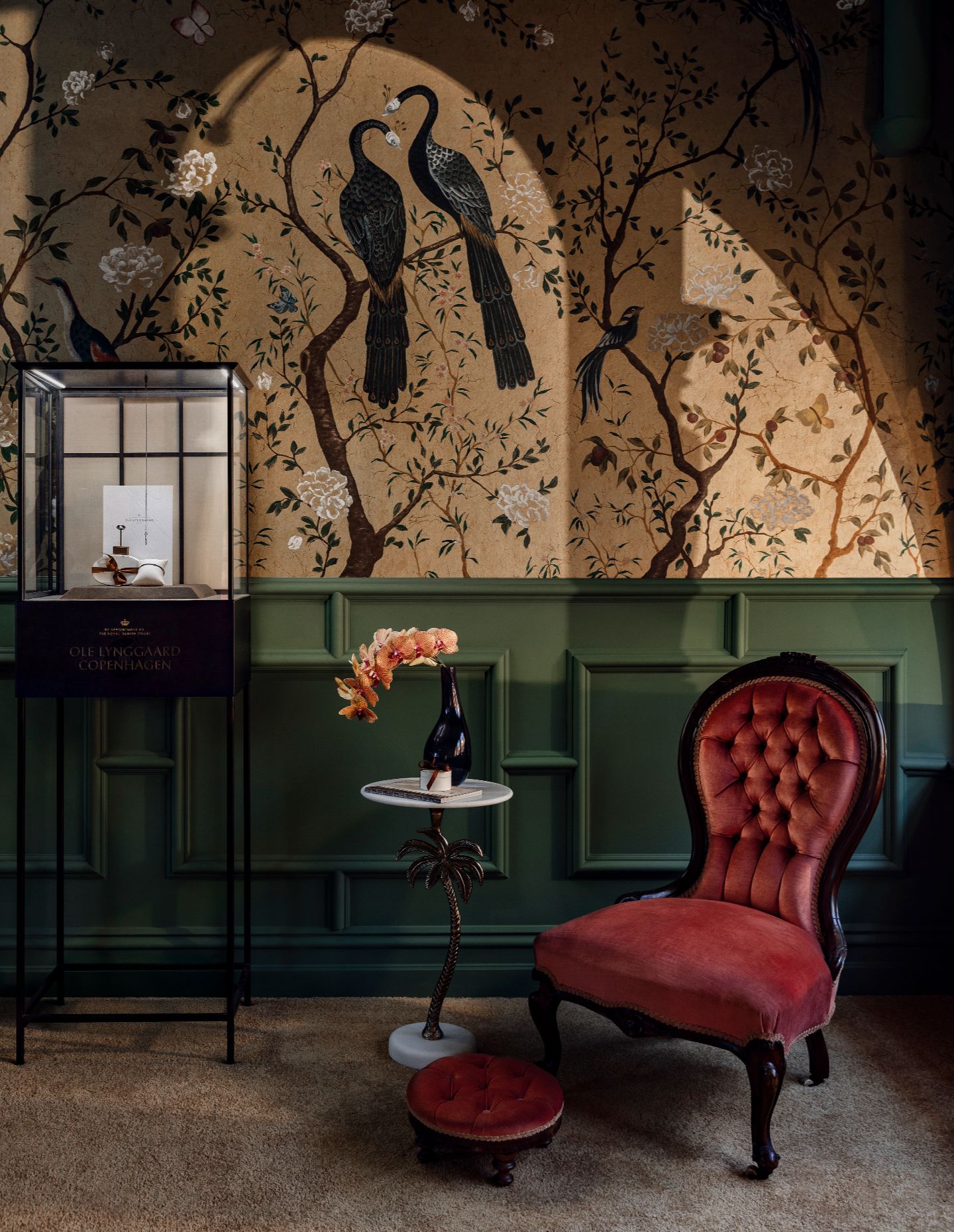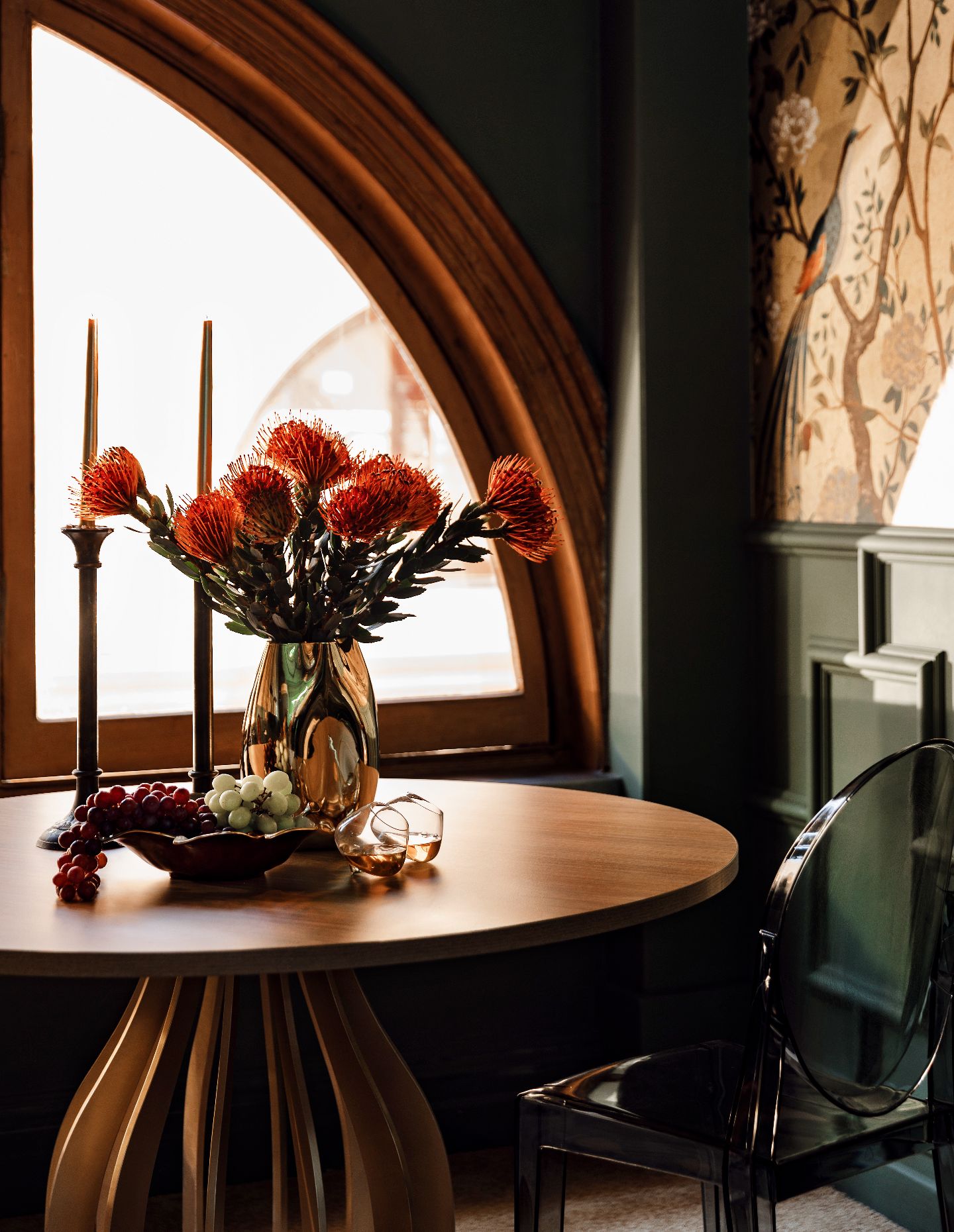

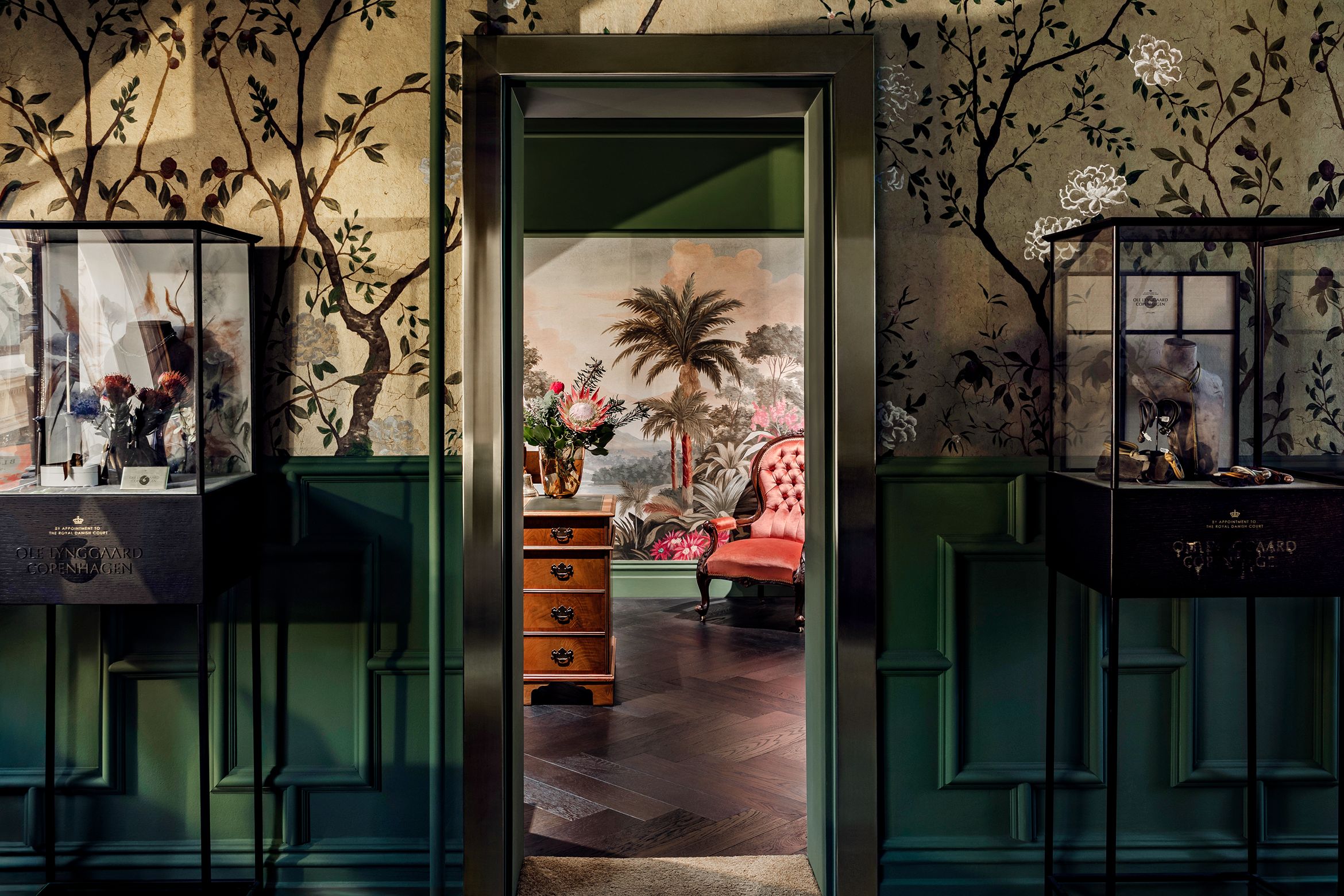
Set within the ornate interior of Block Arcade, the new showroom for Trewarne Diamonds presents a carefully calibrated dialogue between heritage and contemporary retail design. Designed by The Stylesmiths and completed in 2025, the project transforms a narrow arcade tenancy into a layered spatial experience that moves between theatrical display and intimate consultation.
For lead designer Nicole Rutherford, working within one of Melbourne’s most recognisable historic interiors meant negotiating a delicate balance: acknowledging the richly detailed Victorian context while introducing a contemporary identity for the jewellery house.
Please tell us about the site context.
The project is located within Melbourne’s historic Block Arcade, one of the city’s most celebrated late Victorian landmarks. The arcade is defined by its richly detailed heritage architecture, mosaic floors, ornate shopfronts and strong cultural identity.
Working within such a protected and recognisable environment required a careful balance between preservation and progression. The tenancy itself sits within a narrow footprint typical of heritage arcades, but it offered vertical potential across two levels. The design responds to this by respecting the architectural language of the building while introducing a contemporary, immersive layer that enhances — rather than competes with — its historic setting.
What can you tell us about the client and their brief?
Trewarne Diamonds is a long-established Melbourne jeweller with a reputation for craftsmanship, innovation and design authority. The client, Travis Trewarne, wanted to elevate the brand to an international level while remaining authentic to its heritage and loyal client base.
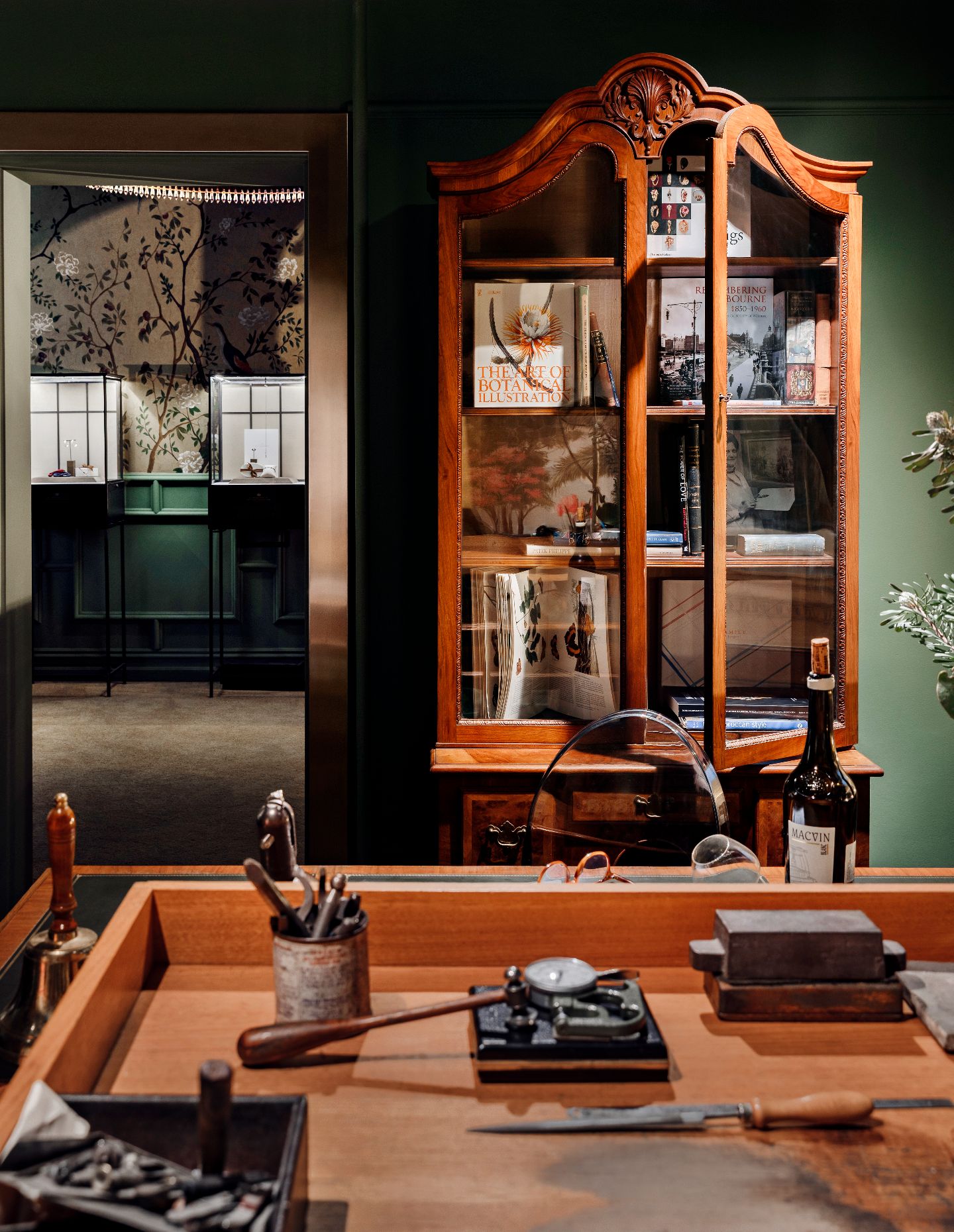
The brief called for a space that felt luxurious and emotionally engaging — somewhere that balanced theatre with refinement. A private client zone had long been part of the vision, alongside a visible workshop that would celebrate the craft behind each piece.
The project required boldness, but also restraint. Ultimately the jewellery itself needed to remain the hero.
What were the key material and structural decisions?
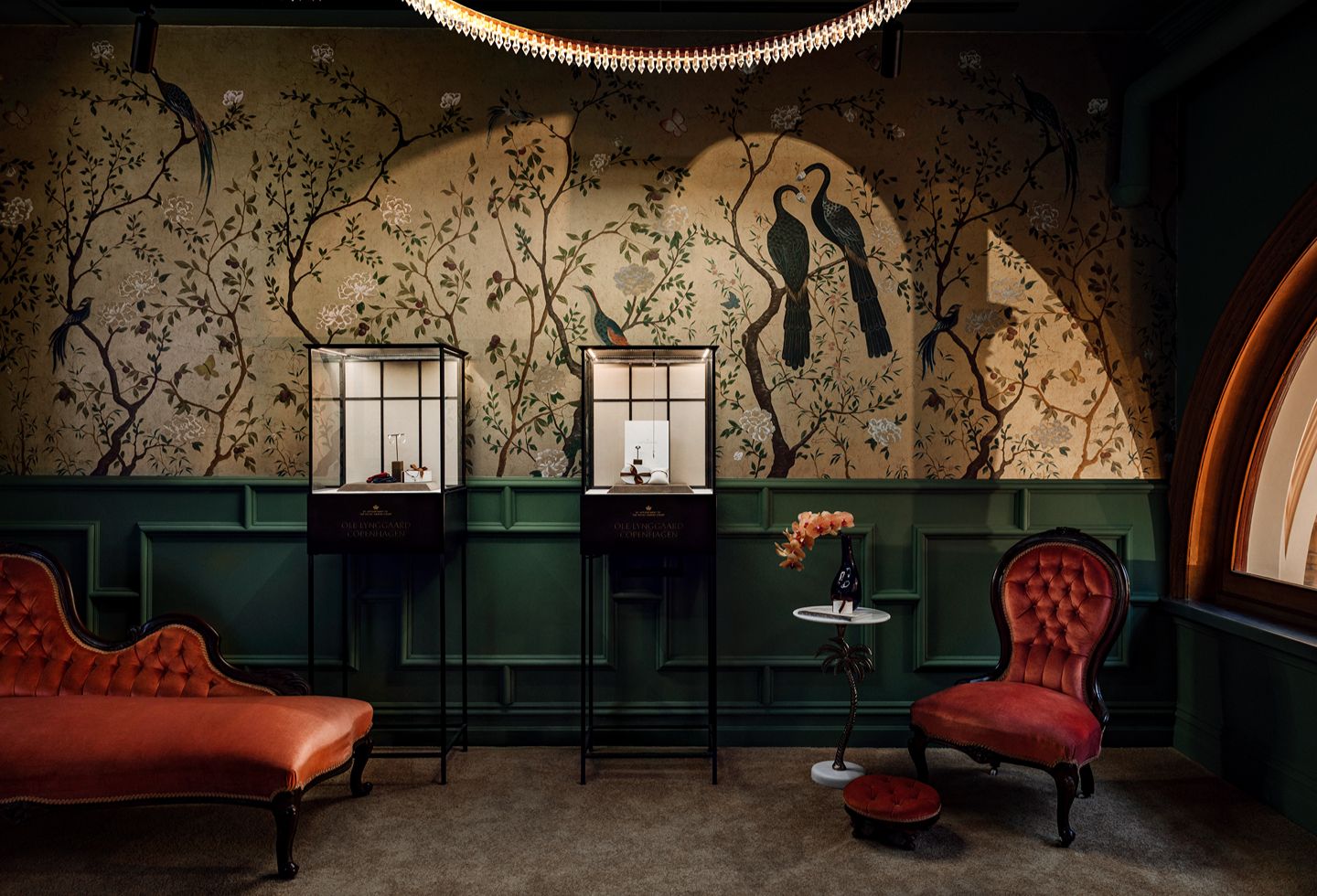
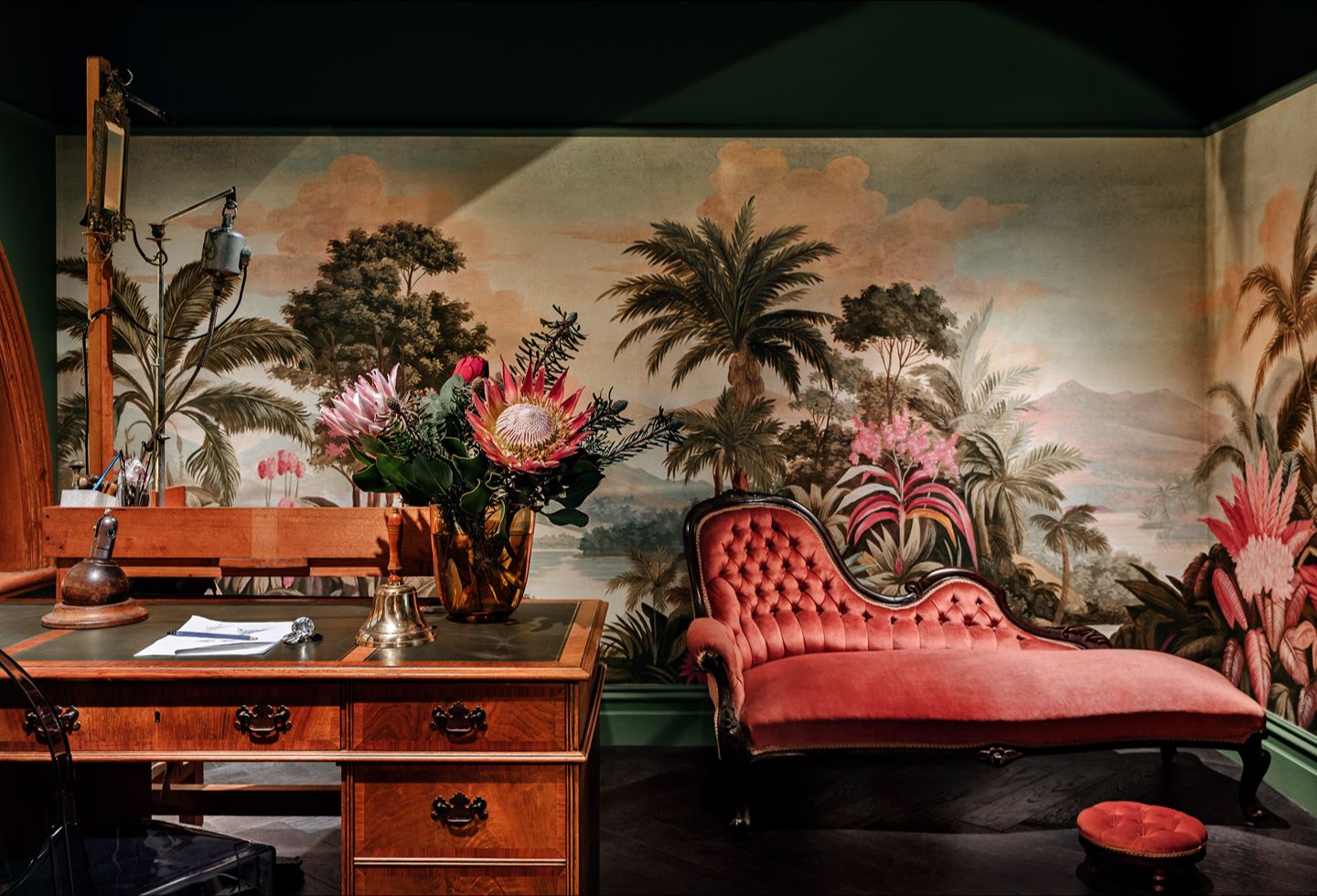
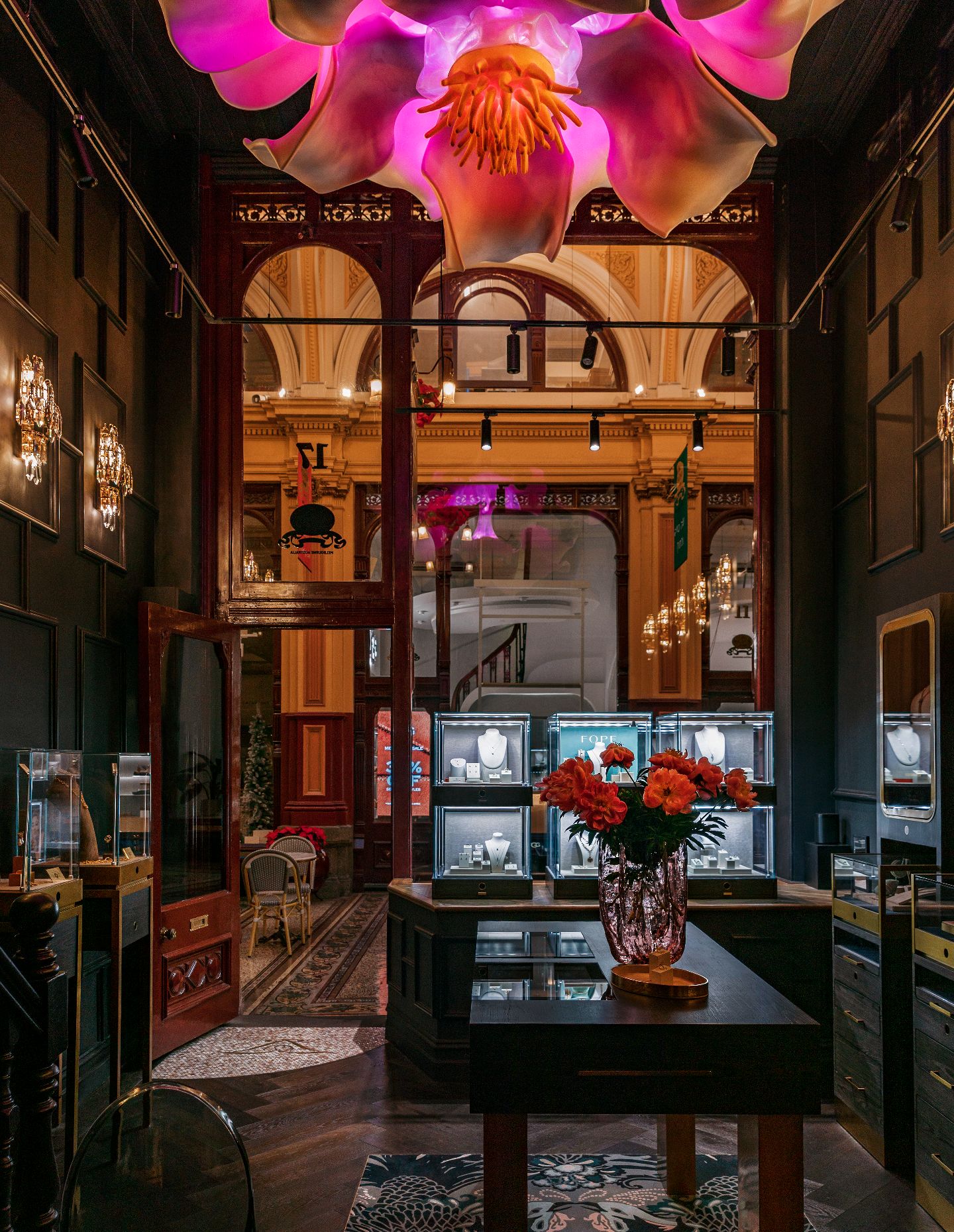
Materiality plays a central narrative role in the project. Dark, moody timbers and custom joinery establish depth and warmth across the retail floor, while brass detailing and precision-crafted display vitrines introduce a sense of refinement.
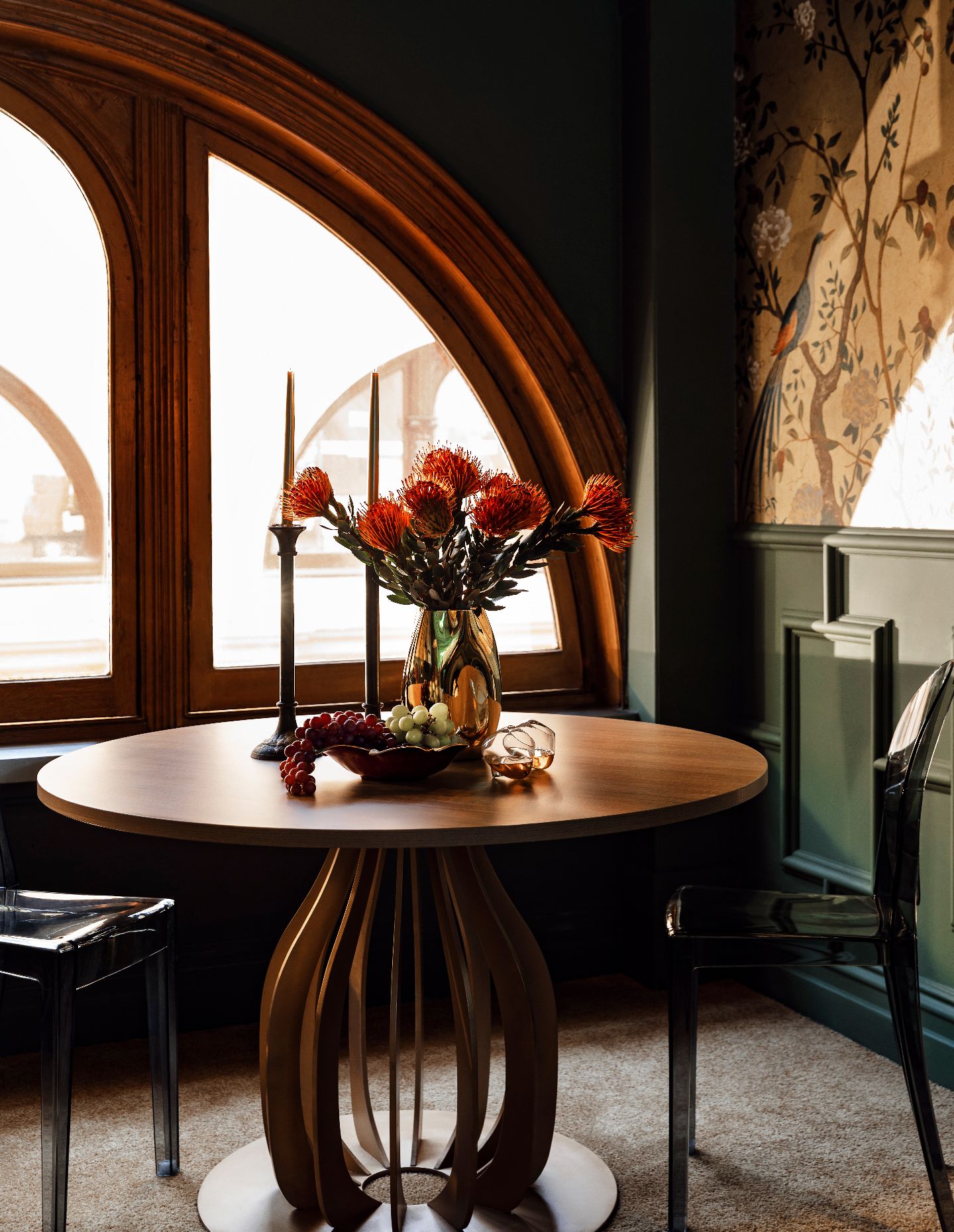
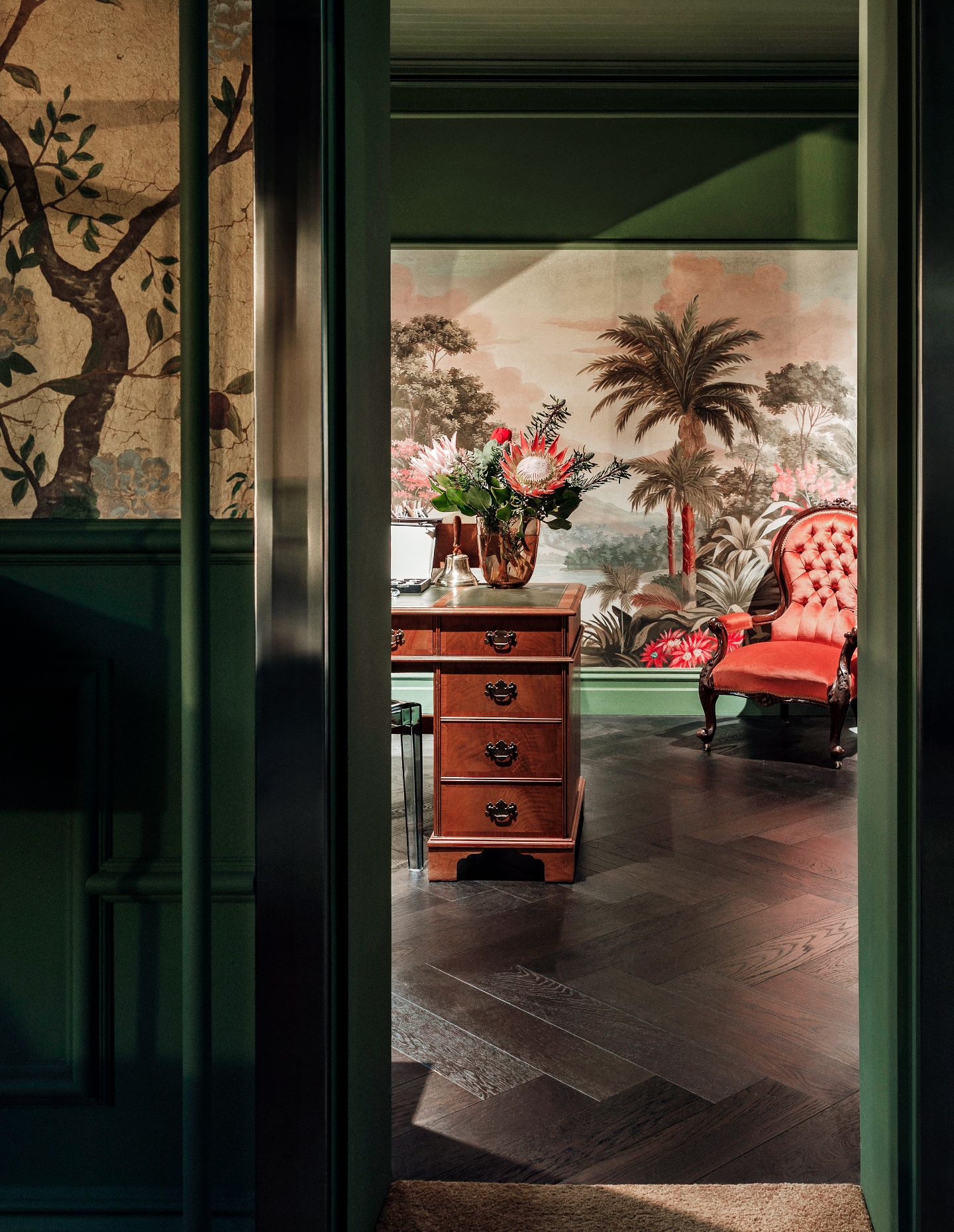
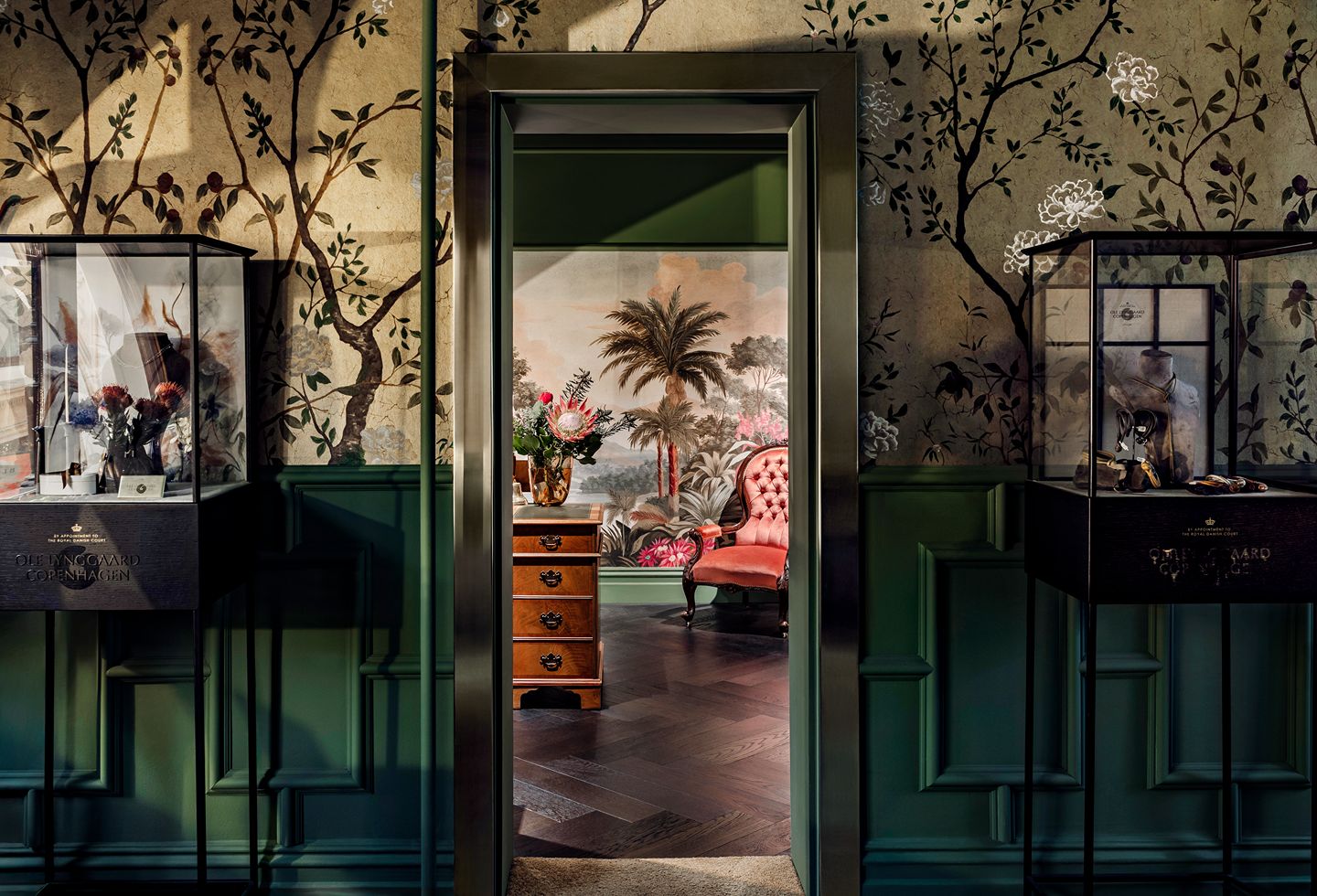
Rich wallpapers featuring botanical and Art Nouveau-inspired motifs bring a layer of romance and storytelling to the interior, complemented by bespoke inlay rugs that reinforce the project’s artisanal character. A custom-designed rug by Catherine Martin anchors the retail floor and helps define the spatial centre of the store.
Structurally, the design takes advantage of the tenancy’s vertical volume. The upper mezzanine is activated as an intimate private salon and workshop, creating a more domestic environment for client consultations.
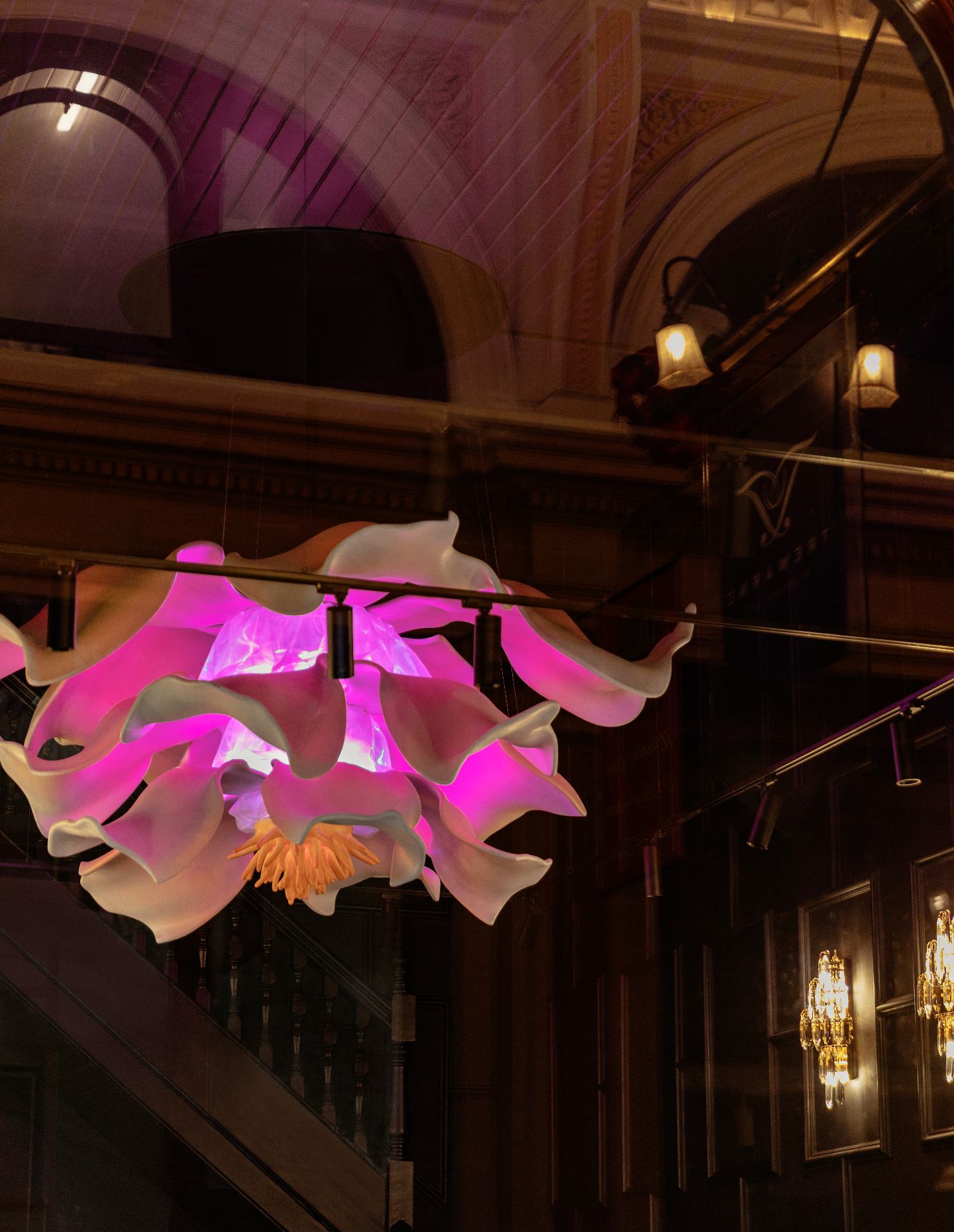
Lighting was approached as an architectural element rather than a purely functional one. Suspended above the main retail zone is a dramatic sculptural installation — a giant peony rose light fitting commissioned and fabricated locally in Melbourne. Its scale and glow define the atmosphere of the space while anchoring the room visually.
Related: Designing from the inside out
What key functional requirements did the design address?
Jewellery retail brings specific operational requirements. High-level security, carefully calibrated display lighting and durable finishes all needed to be integrated within the relatively compact footprint of the tenancy.
The layout establishes a clear customer journey. Visitors move through the immersive retail environment on the ground floor before ascending to a private consultation space upstairs. The workshop remains visible within the store, reinforcing transparency around the making process while remaining fully functional for daily production.
The design therefore balances theatrical impact with practical retail performance.
What are your favourite moments within the design?
The sculptural light fitting remains a defining moment. Its scale and soft glow immediately transform the space and establish a sense of theatre within the arcade setting.
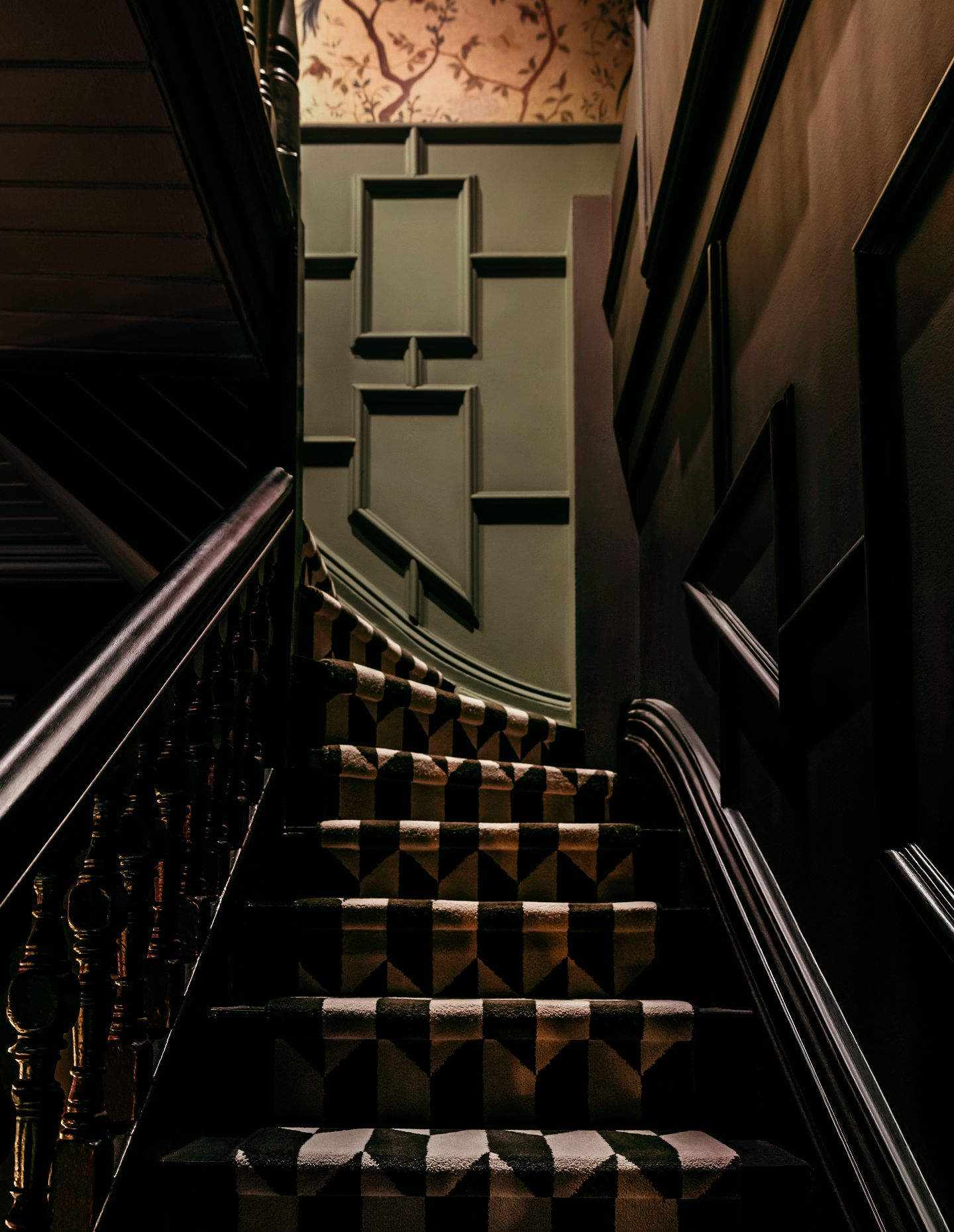
Another key moment is the staircase connecting the retail floor with the upper-level salon. The client has described it as an “Alice in Wonderland” transition — a moment where the experience shifts from the drama of the shop floor to the intimacy of a private apartment-like setting upstairs.
The central display table has also become an unexpected social anchor within the store. It encourages conversation, storytelling and interaction between staff and clients, creating a sense of connection that emerged quite organically from the design.