
In Brighton, where new houses often compete for attention through scale or surface, Windermere takes a more measured position. Designed, built and crafted entirely in-house by Stonnington Group, the 481-square-metre residence argues for something more enduring than spectacle: continuity of vision and the authority that comes from control — of light, material, proportion and performance.
For director Enzo Campus, the project was also personal. “Windermere was a unique project for us because it was actually a home for my family and I,” he explains. “Sitting on both sides of the brief gave me full creative control over the project and gave me space to explore new ideas that have been bubbling away in the background over the last couple of years.” That dual role — client and designer — allowed Campus to test the full capabilities of the practice. “Naturally, having the freedom to design and build a home that expressed my own ideas allowed us to show the evolution of the practice.”
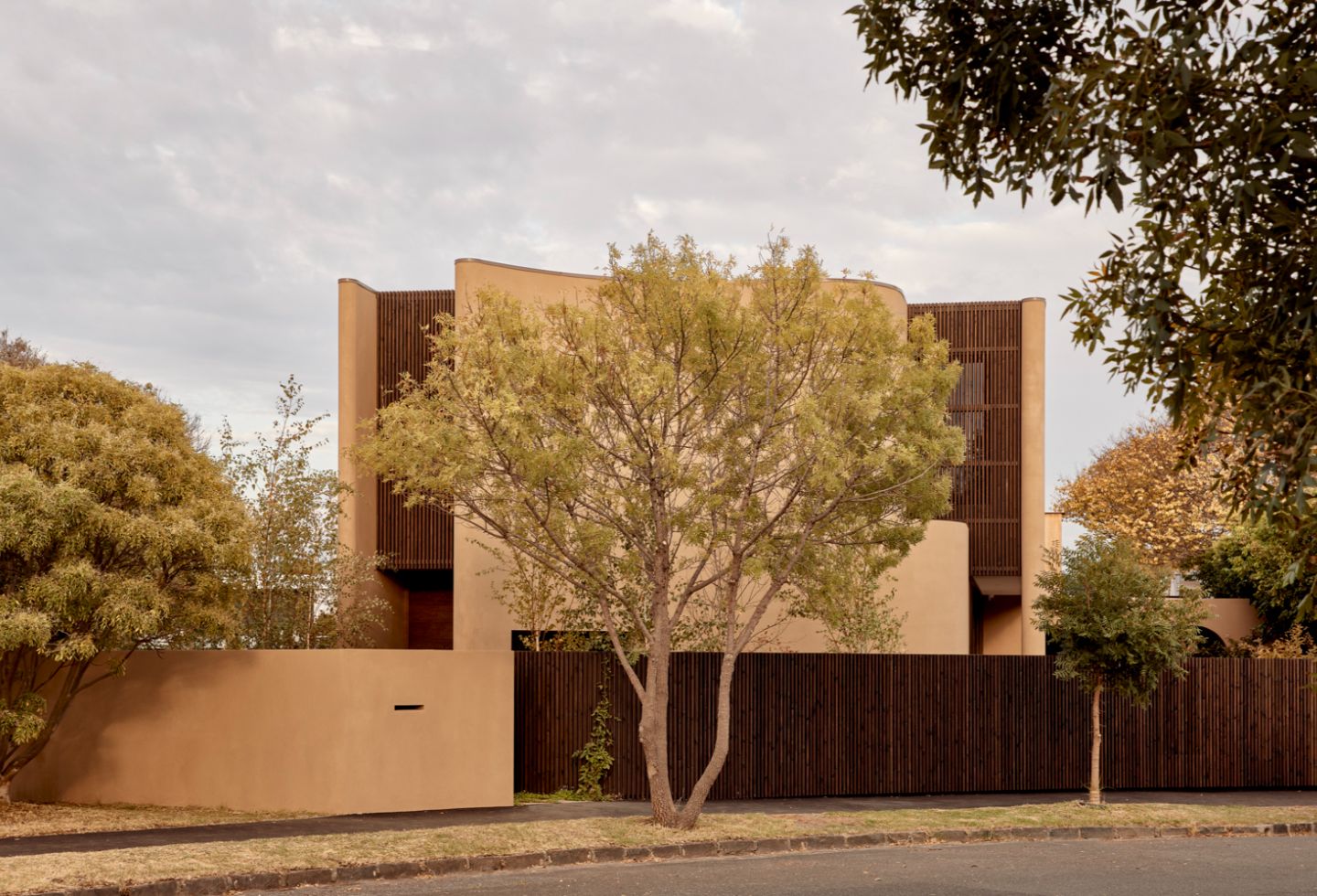
“Our practice philosophy has always revolved around designing from the inside out… we always begin with the floorplan because I believe you cannot create a home that feels like a nice place to live unless the spaces are resolved. Windermere is no different in this regard.” The aesthetics may appear quieter than some earlier work, but the underlying logic remains consistent: resolve the plan and the experience will follow.
That experience is sharpened by the decision to keep everything under one roof. Architecture, interiors, joinery, furniture and construction were delivered by a single team, with custom elements fabricated in the Stonnington Factory — the group’s dedicated manufacturing arm. “Our approach is something that most would consider ‘old school’,” Campus says, acknowledging an increasingly fragmented industry. “However, it allows us to have a level of ownership over the homes we craft that most others do not. There is an integrated alignment that comes from designing, building and fabricating each touch point of the home.”
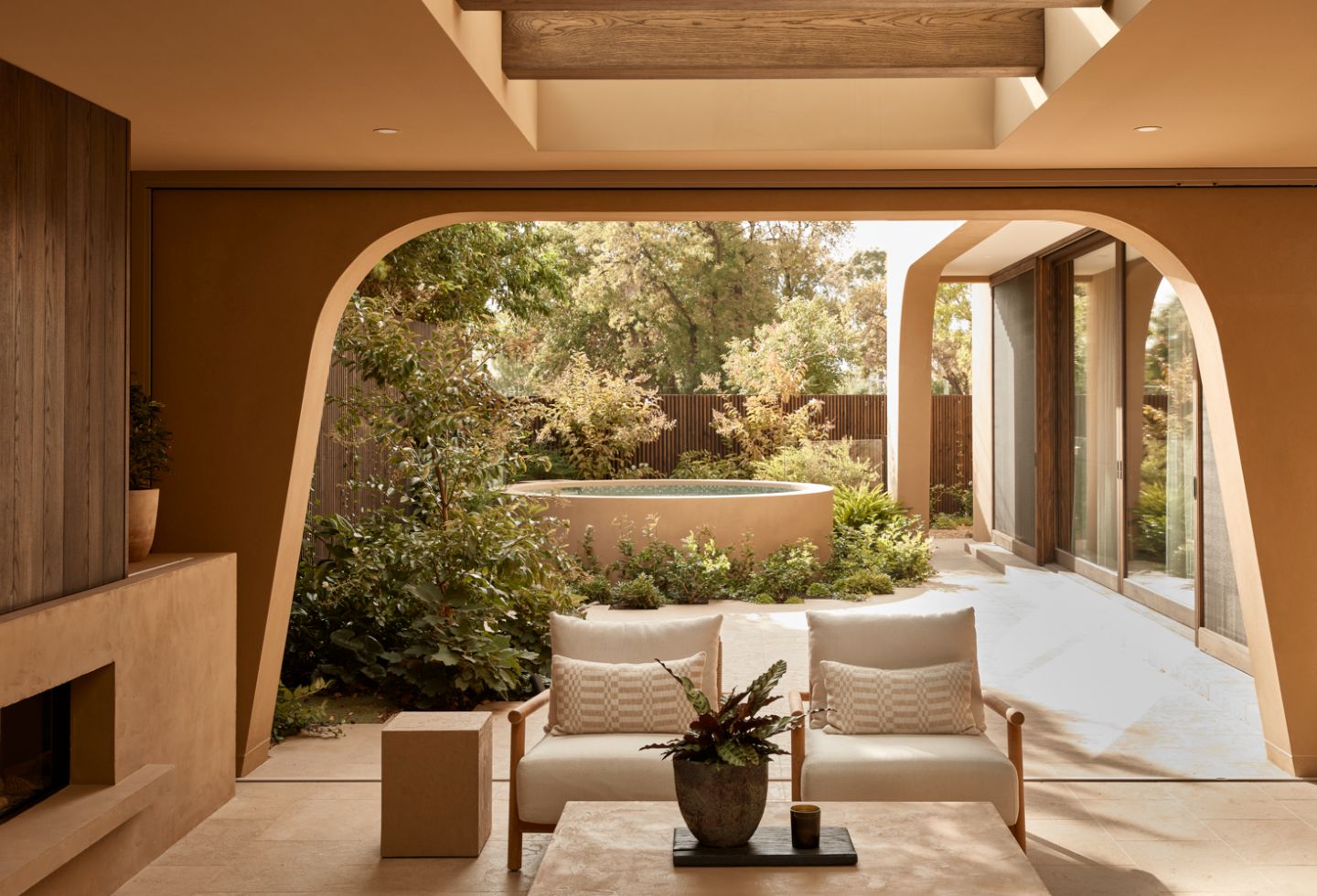
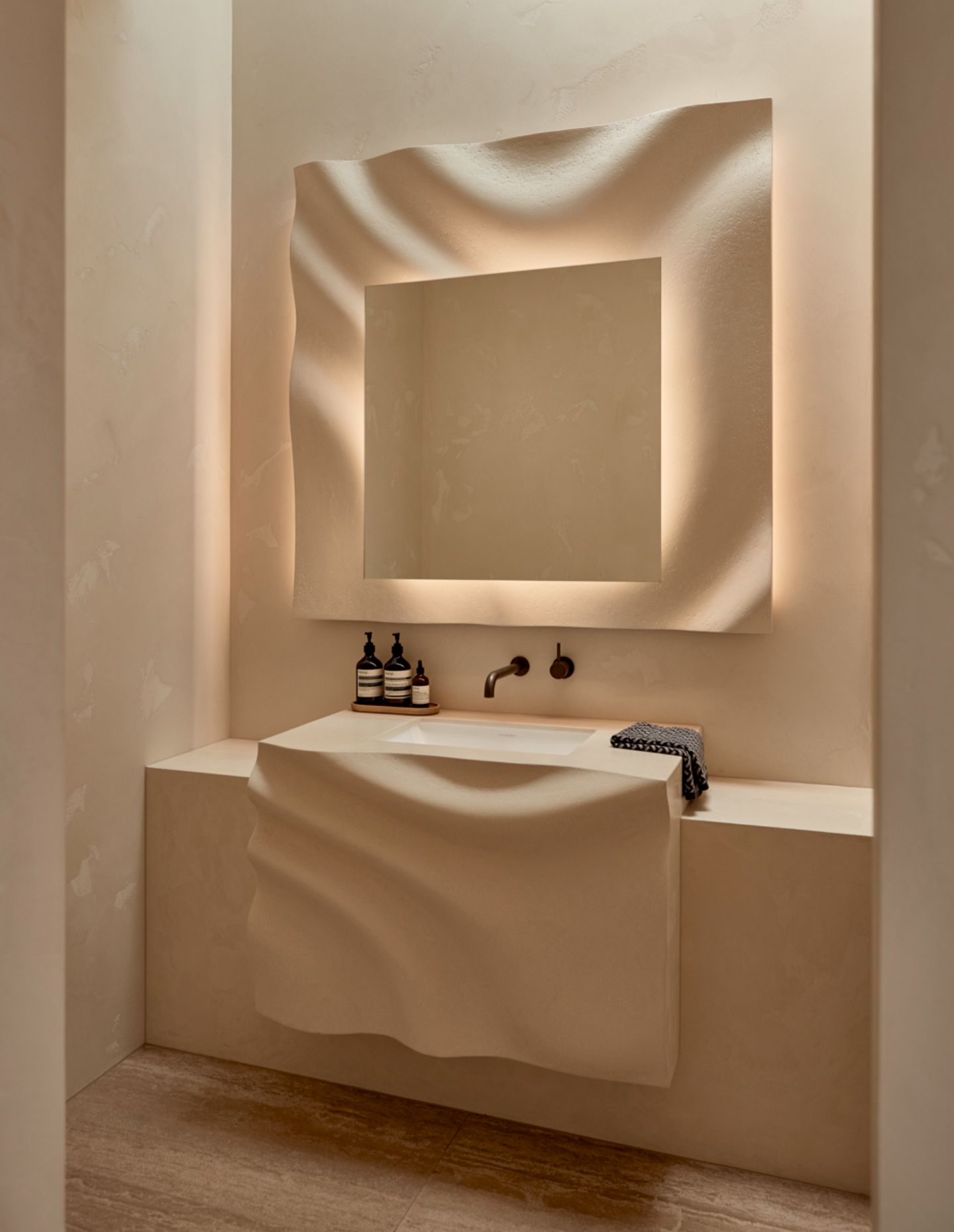
The benefits are not merely aesthetic. Custom items such as the powder room mirror frame, vanity and island bench were designed and crafted in-house, freeing the team from the compromises of outsourcing. Even the European timber window systems — also produced internally — play a critical role in how the house feels to inhabit. “They are the most thermally insulating system available,” Campus notes. “This is something that is hard to recognise the importance of until you inhabit a space. They allow our homes to stay warm during winter by eliminating cold drafts.” Comfort here is designed, not assumed.
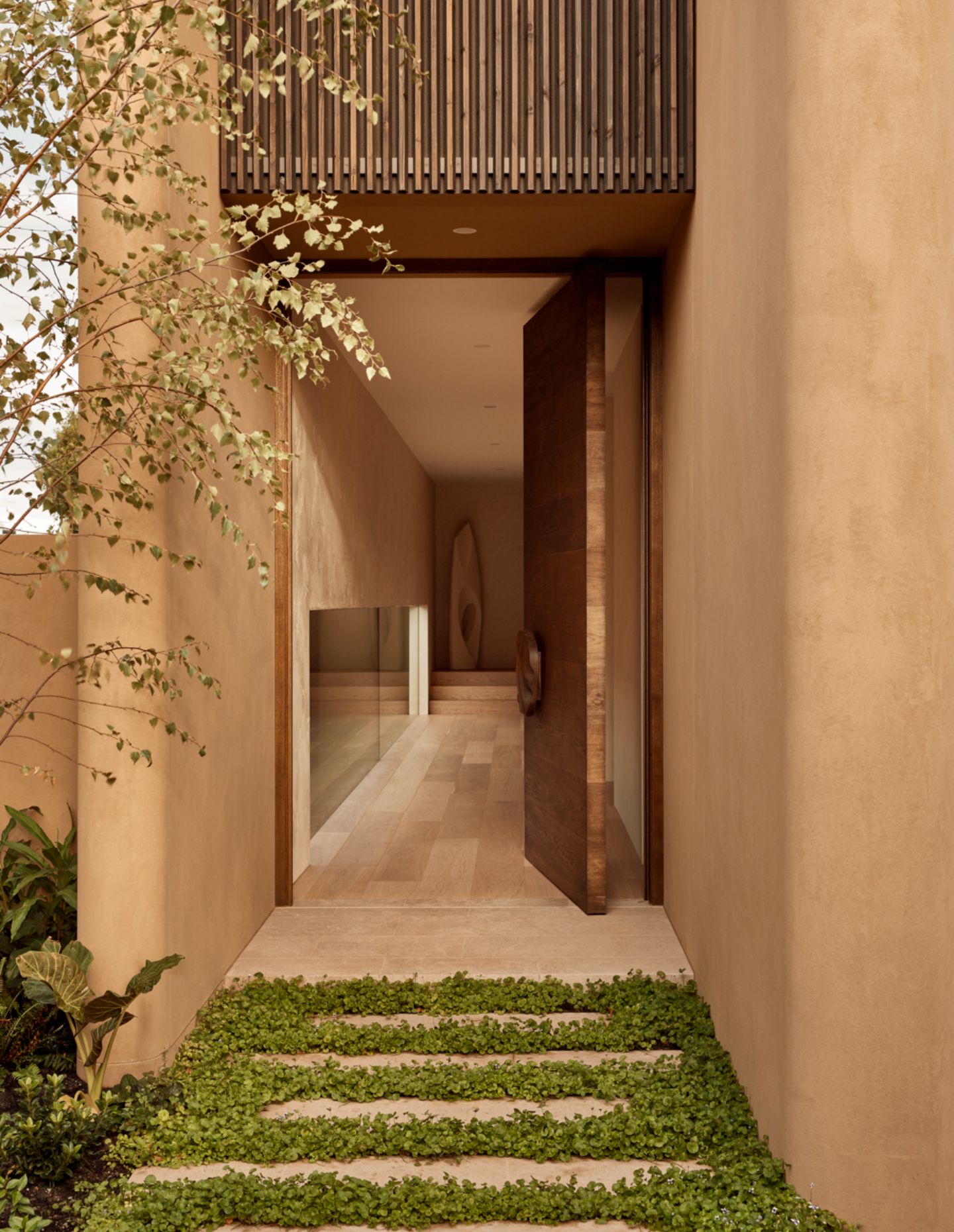
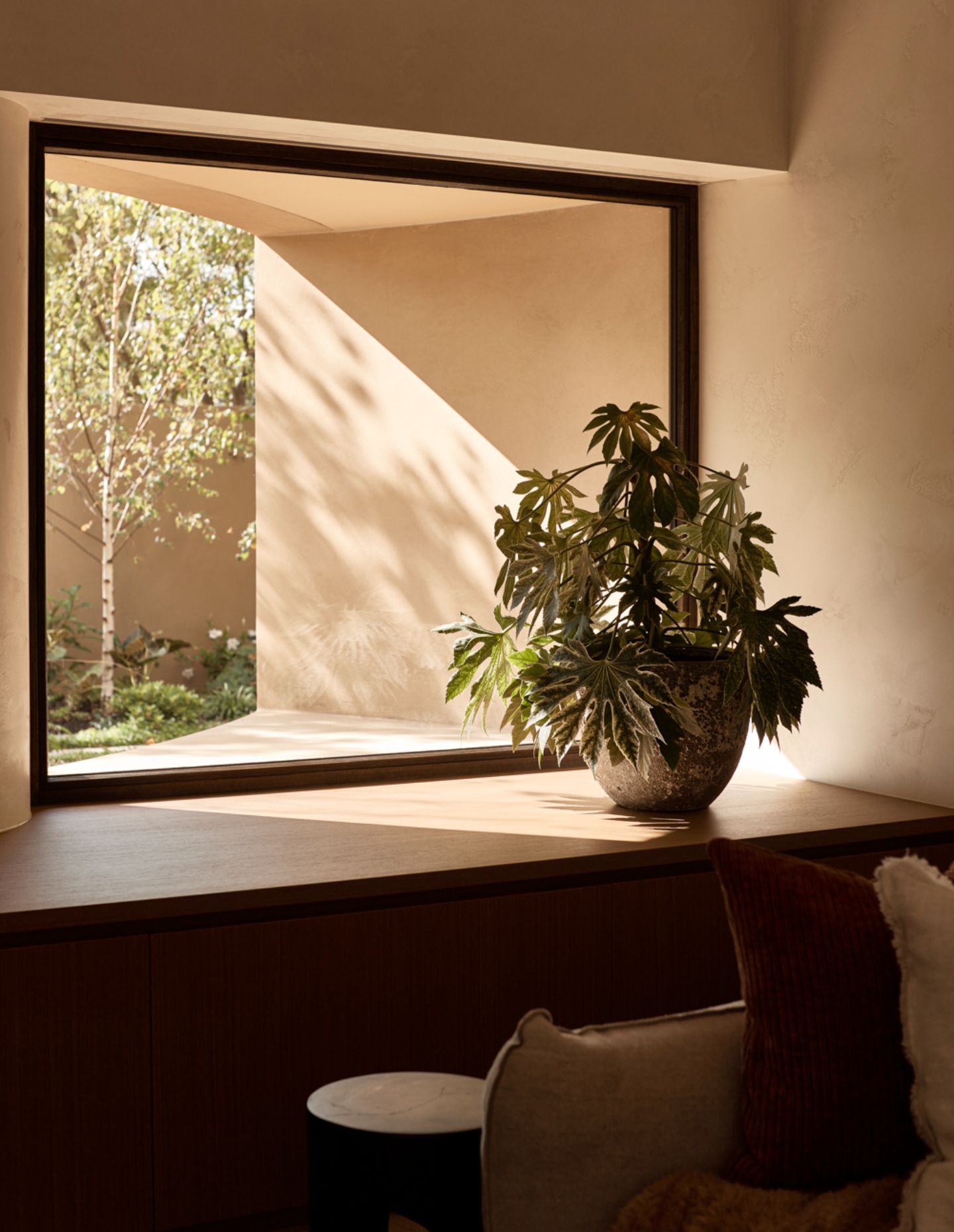
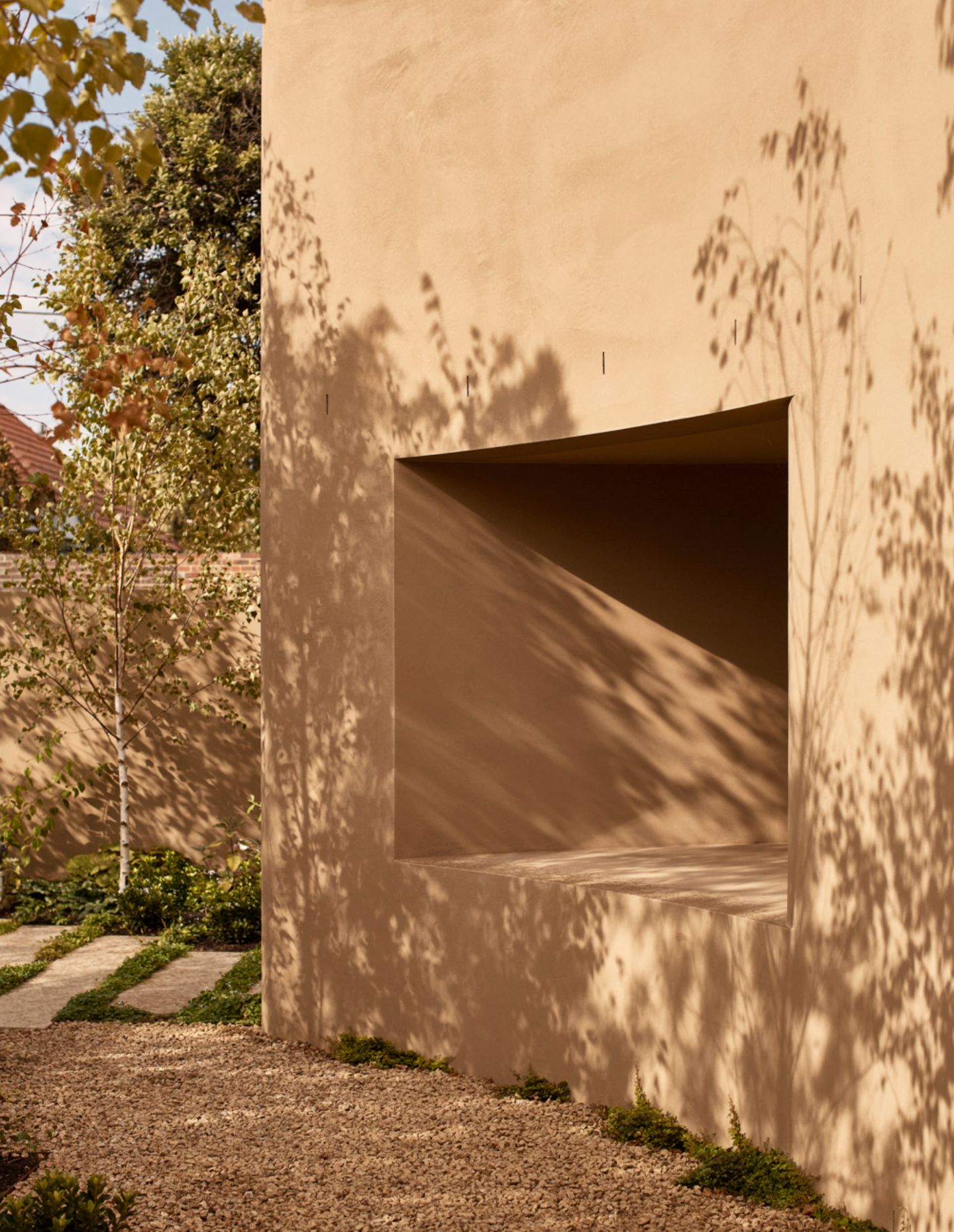
Campus describes the home’s quietness as a function of disciplined materiality. “We always aim to use natural materials and keep the palette to a minimum. Playing with texture allows us to add variation whilst maintaining the quietness that makes the home feel still and calm.” Travertine is the sole stone, running through kitchen, bathrooms and pavilion. “I have always loved the subtleness it provides and the way it wears beautifully over time.” Skip trowel plaster walls catch the light differently as the day progresses; “the textures change throughout the day as the sun catches it from different angles. There is a softness that comes with the hand finishing that gives calmness to the space.”
Related: A Paddington terrace reshaped for modern family life
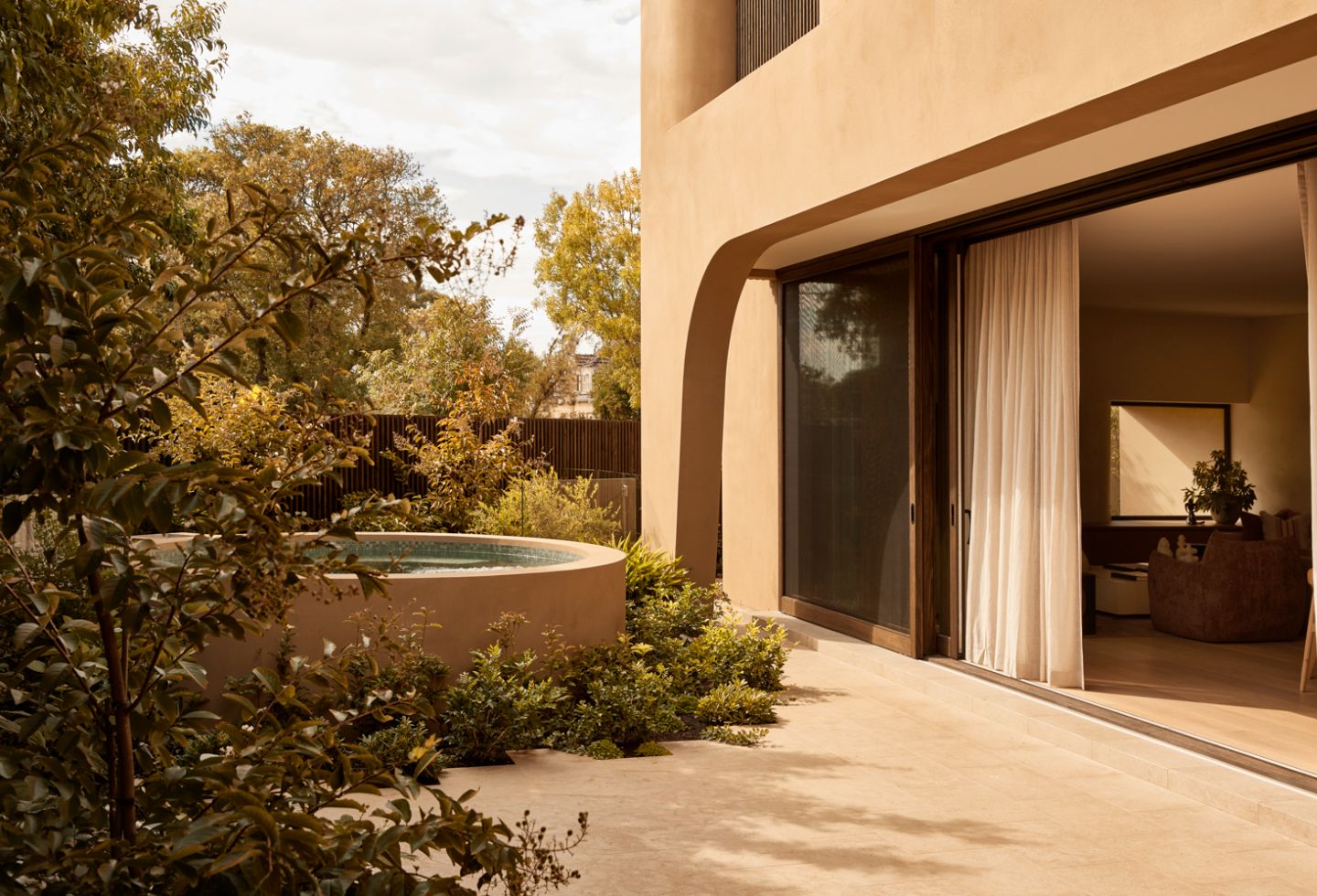
“We don’t select materials that scream and shout for attention or may be seen as trendy or of the moment. The enduring character of our homes is important to us. We want a space to feel as nice to be in 15 years down the track as they do at handover.” In a market often driven by immediacy, that long horizon feels both pragmatic and principled.
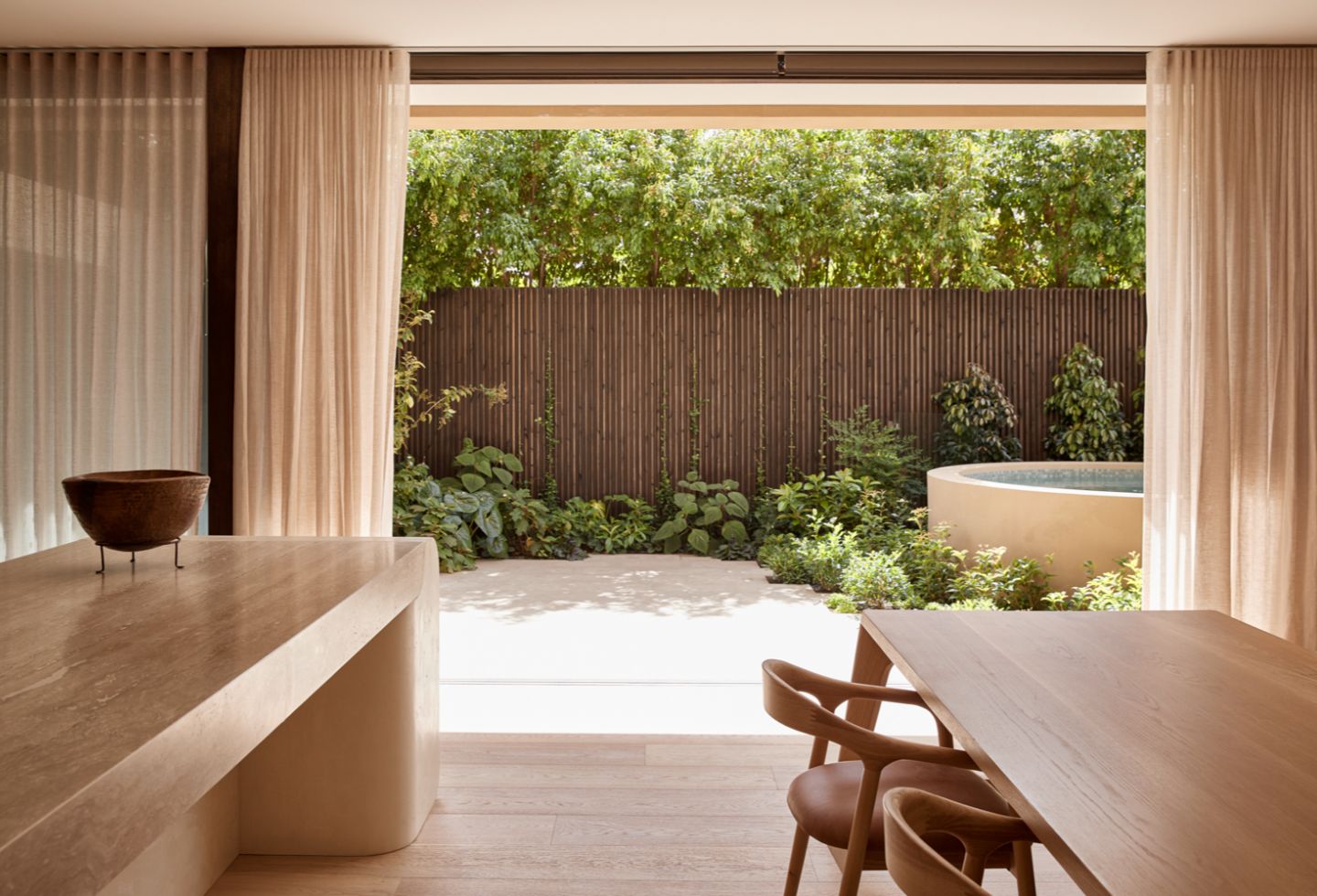
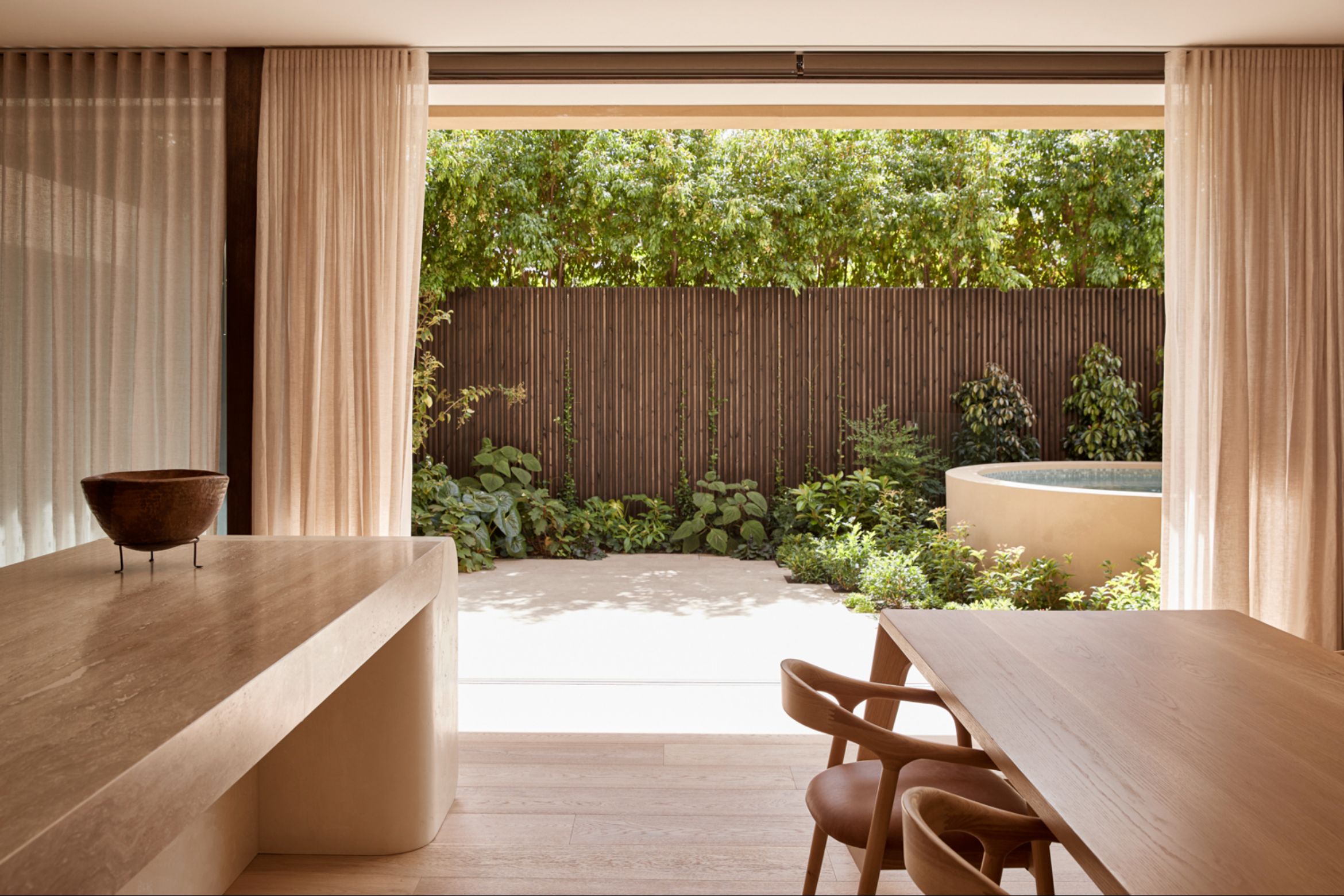
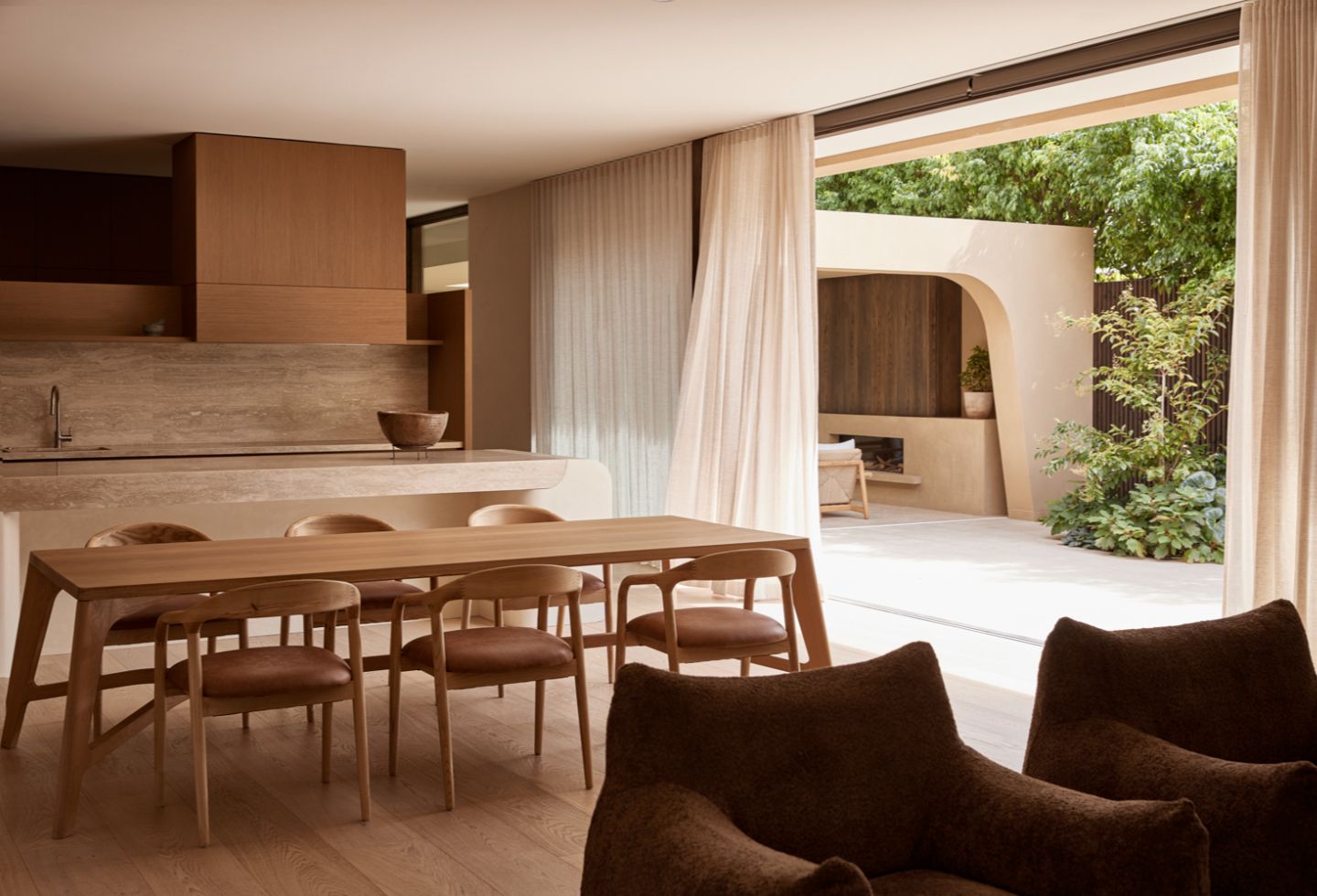
Nowhere is this restraint more apparent than in the kitchen. Rather than dominating the ground floor, it is conceived as an object within it. Two moves define the strategy: a sculptural island and a lowered wall separating kitchen from scullery. The island’s ends are finished in the same plaster as the surrounding walls, with the travertine top appearing to sit within them. “It was designed to appear as a freestanding piece of furniture,” Campus explains. Lowering the wall allows light to pass between zones, softening boundaries and shifting the perception of the room. “The design intent was for it to appear as though it floats within the space.” As a result, the kitchen “ends up sitting within the space instead of taking over and commanding a large portion of it,” even while concealing the expectations of a chef’s kitchen — twin ovens with warming tray, twin dishwashers, twin fridge and freezers, two sinks, Gaggenau appliances and extensive storage.
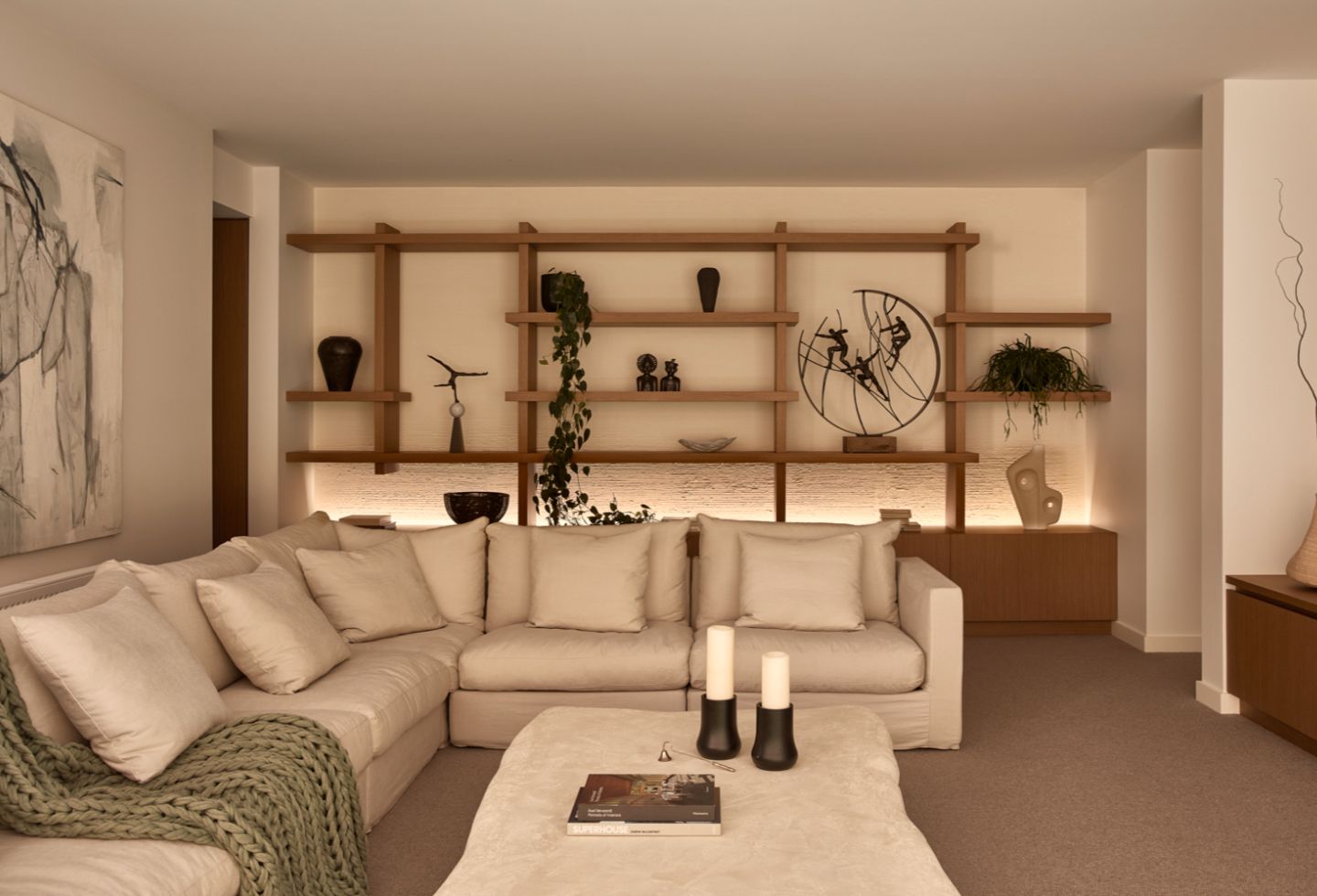
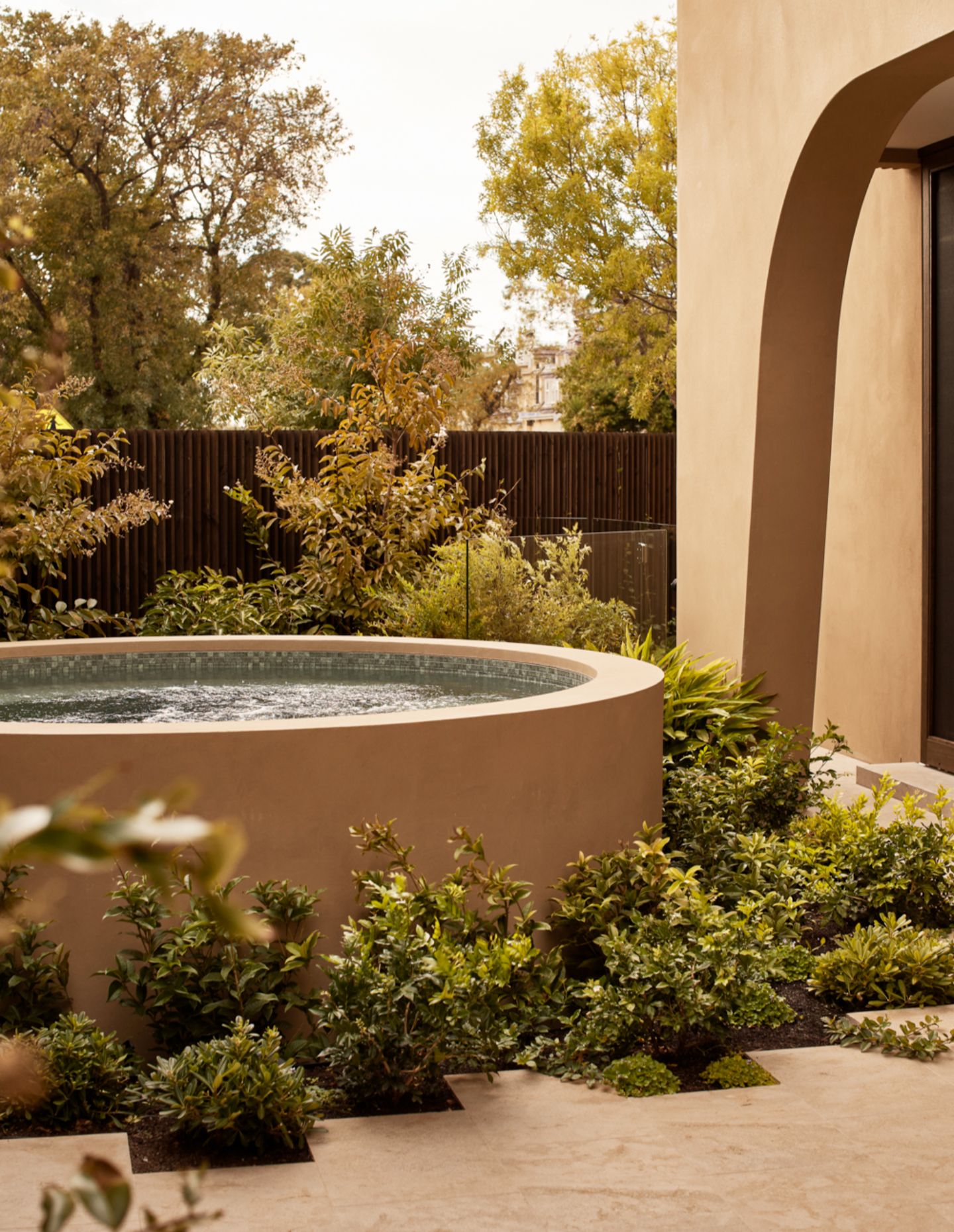
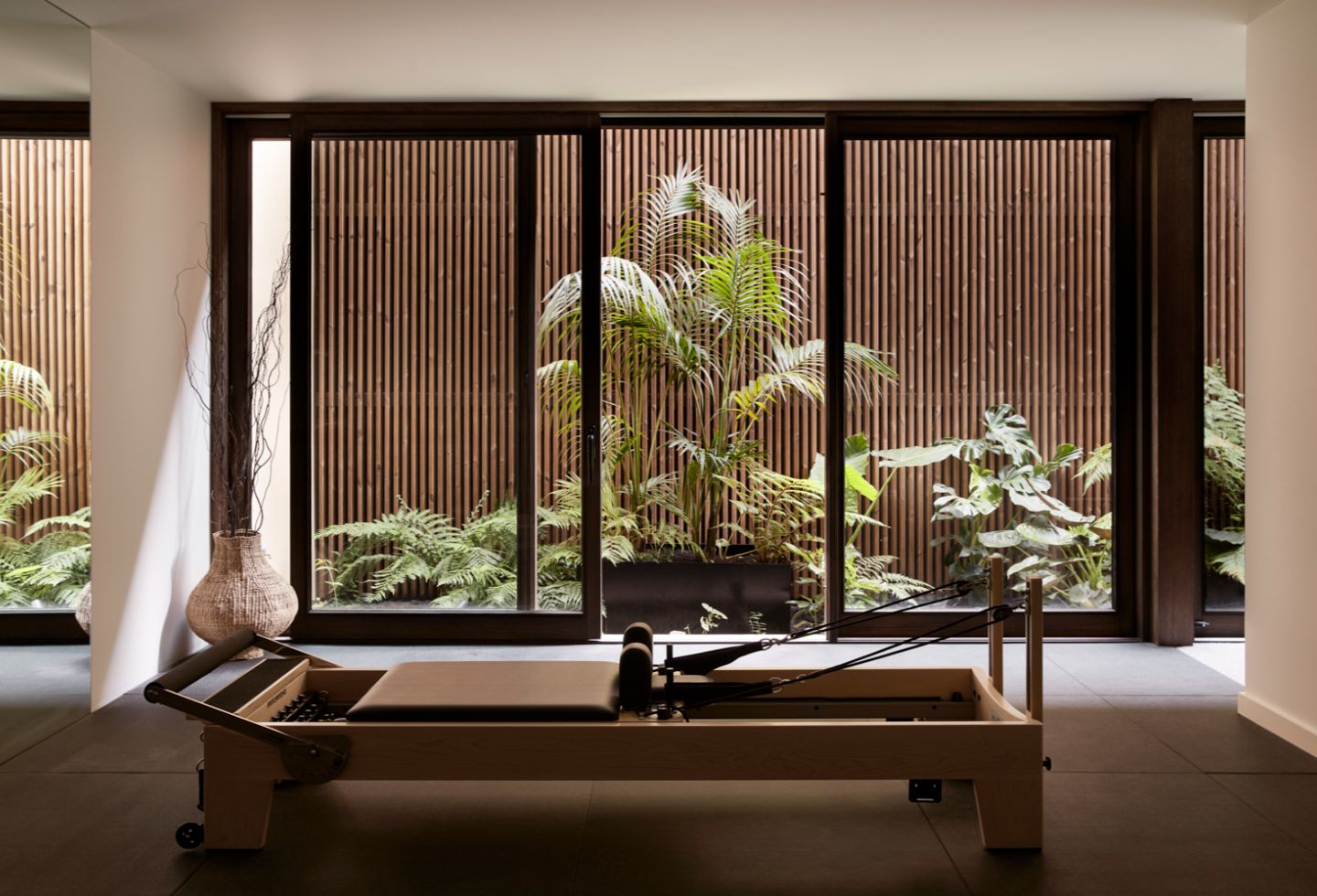
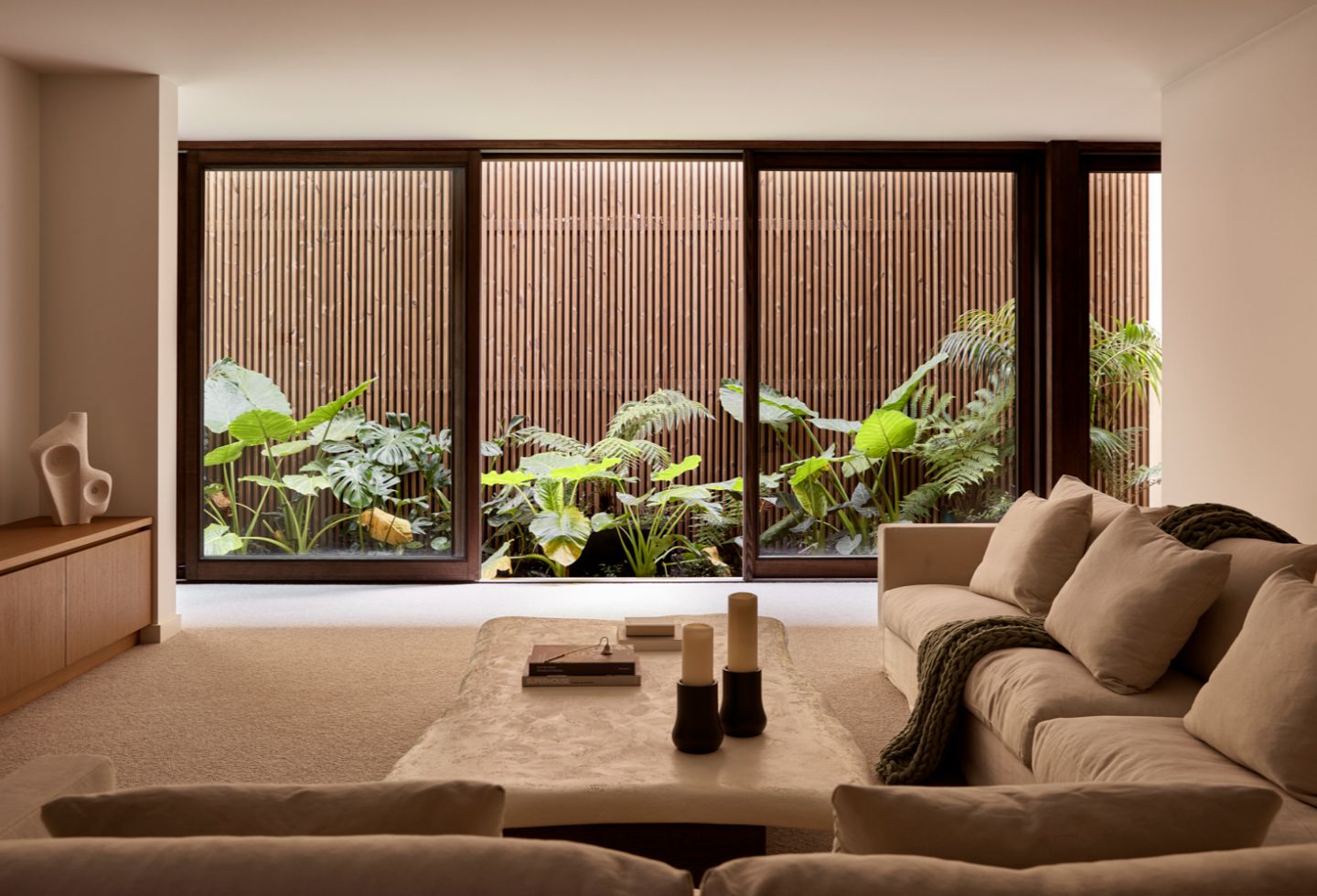
The basement level further tests the practice’s resolve. Rather than accepting the dim, secondary quality that often characterises subterranean spaces, Campus shaped the design around a full-length subterranean garden stretching along the southern boundary. This move draws natural light deep into the lower level and ensures that basement living, study and wellness spaces maintain a visual relationship with greenery. “Being able to open the glass sliding doors in the basement while working out in the gym or working from the home office completely changes your experience within the space,” he says.
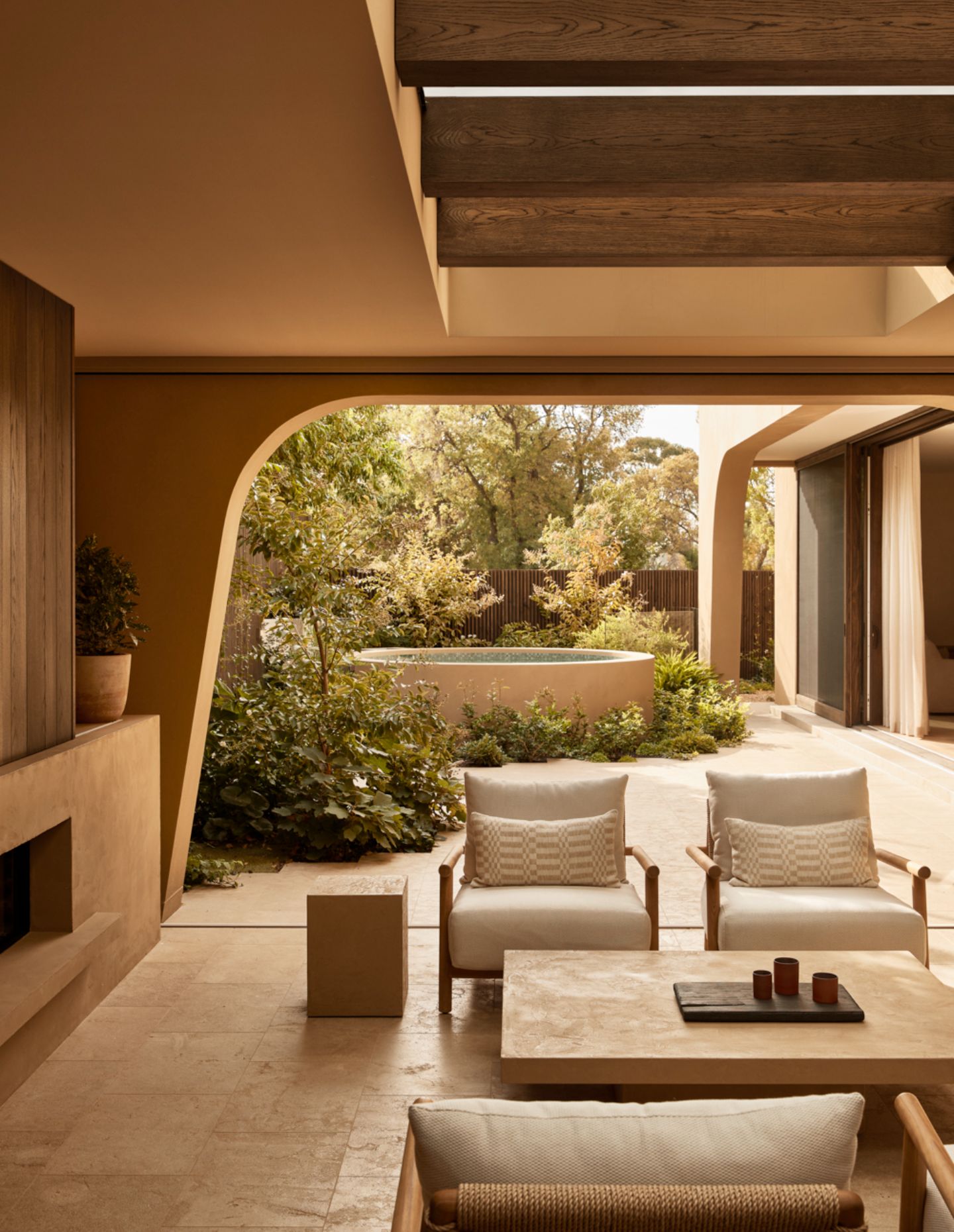
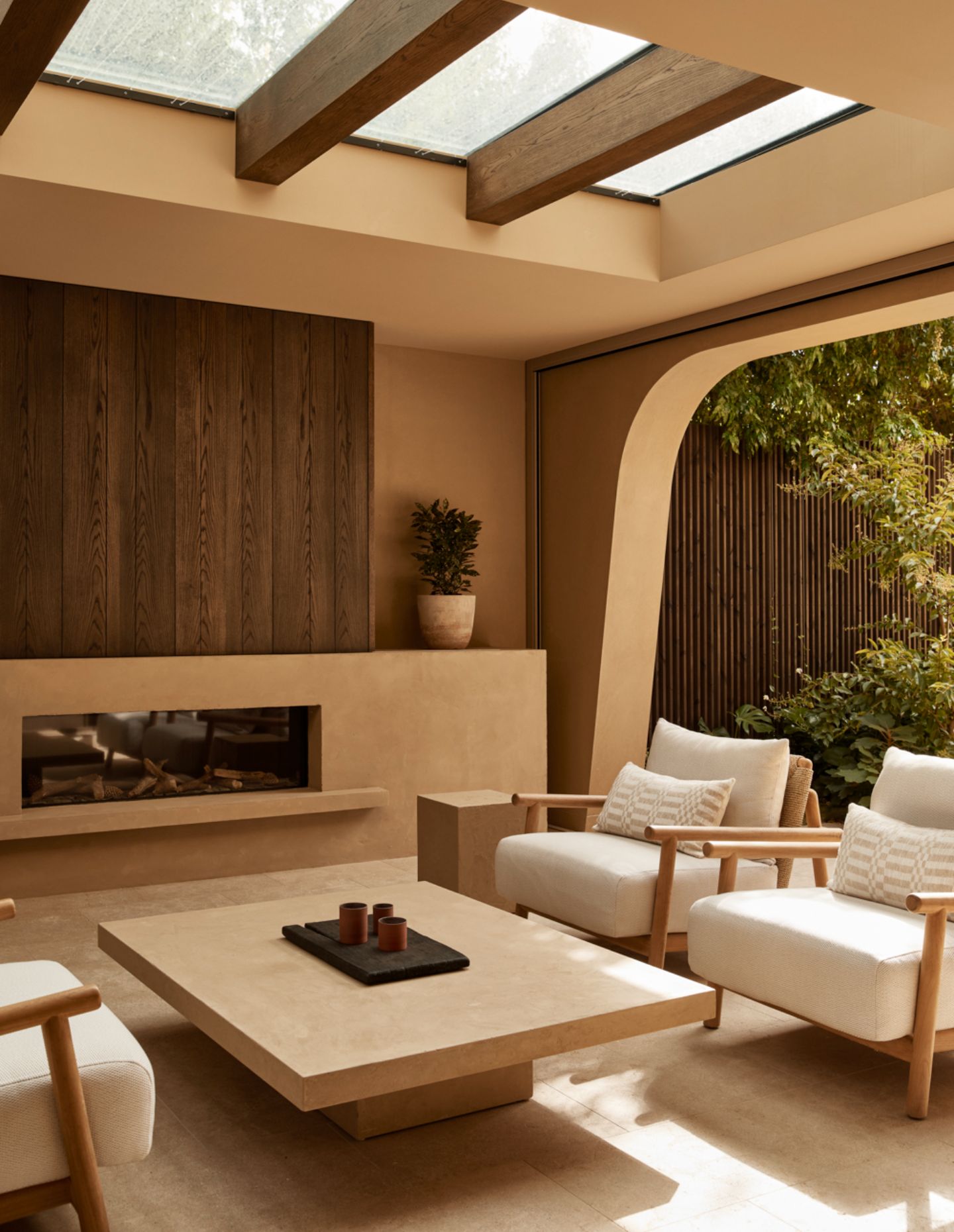
When asked which moments feel most resolved, Campus returns to the outdoor pavilion — a space he describes as the home’s third living room. In Melbourne’s mercurial climate, outdoor areas are often seasonal indulgences. Here, a seamless window system can be sealed in winter and opened in summer; retractable shades temper heat; a glass roof draws in light; an outdoor fireplace and cooking facilities support both family dinners and entertaining. “I didn’t want it to be a seasonal space,” he says. “It has become a space that is used daily, in comparison to the majority of outdoor spaces in Melbourne that [are] heavily affected by weather.”
Windermere ultimately makes a case for coherence. Every surface, junction and threshold speaks the same language because it was conceived by the same hand. In a landscape crowded with gestures, its confidence lies in refusal — to chase trend, to outsource authorship, to let the kitchen shout or the basement retreat. Instead, it is a home shaped not only to be seen, but to be lived in — and to feel as good in fifteen years as it does now.