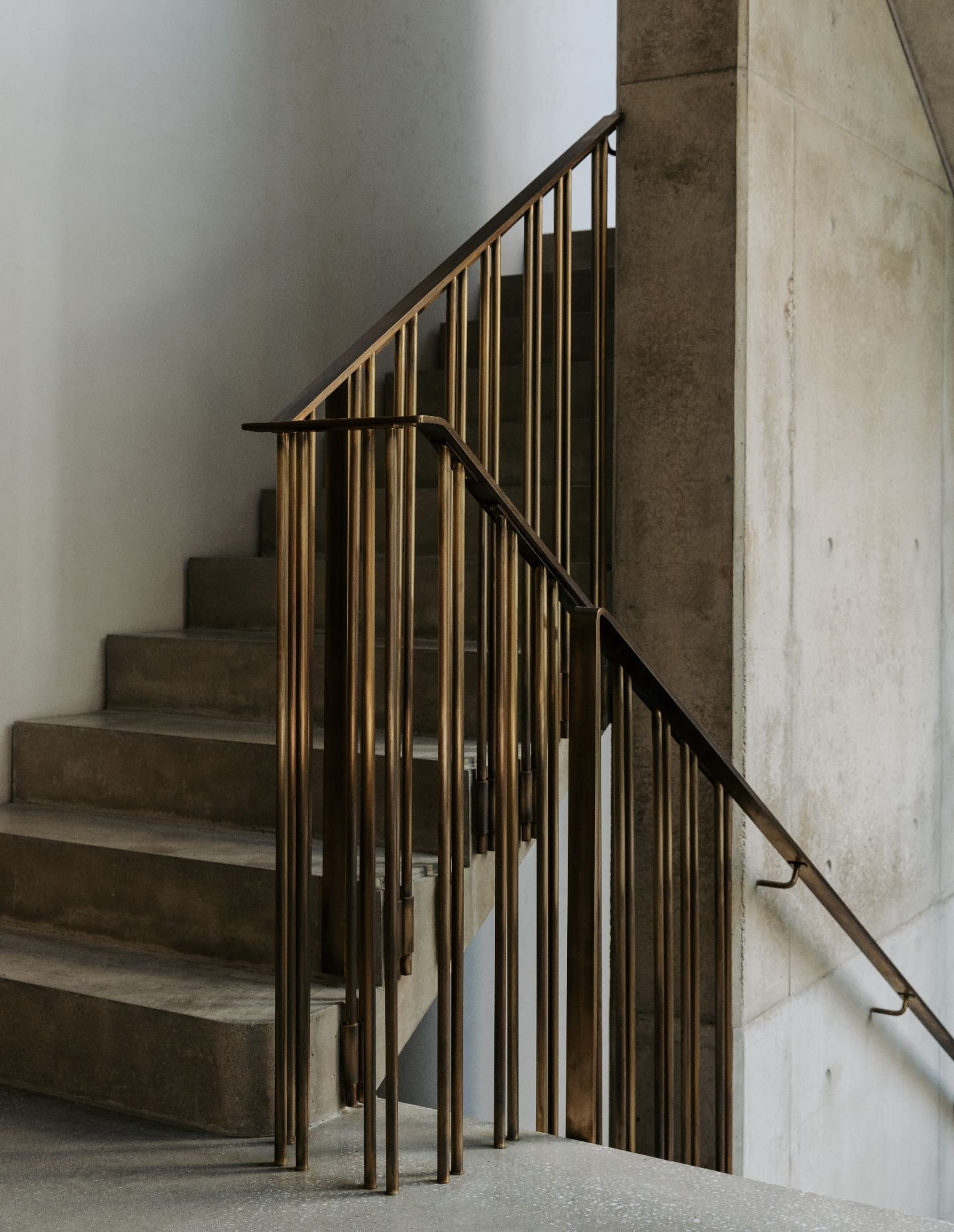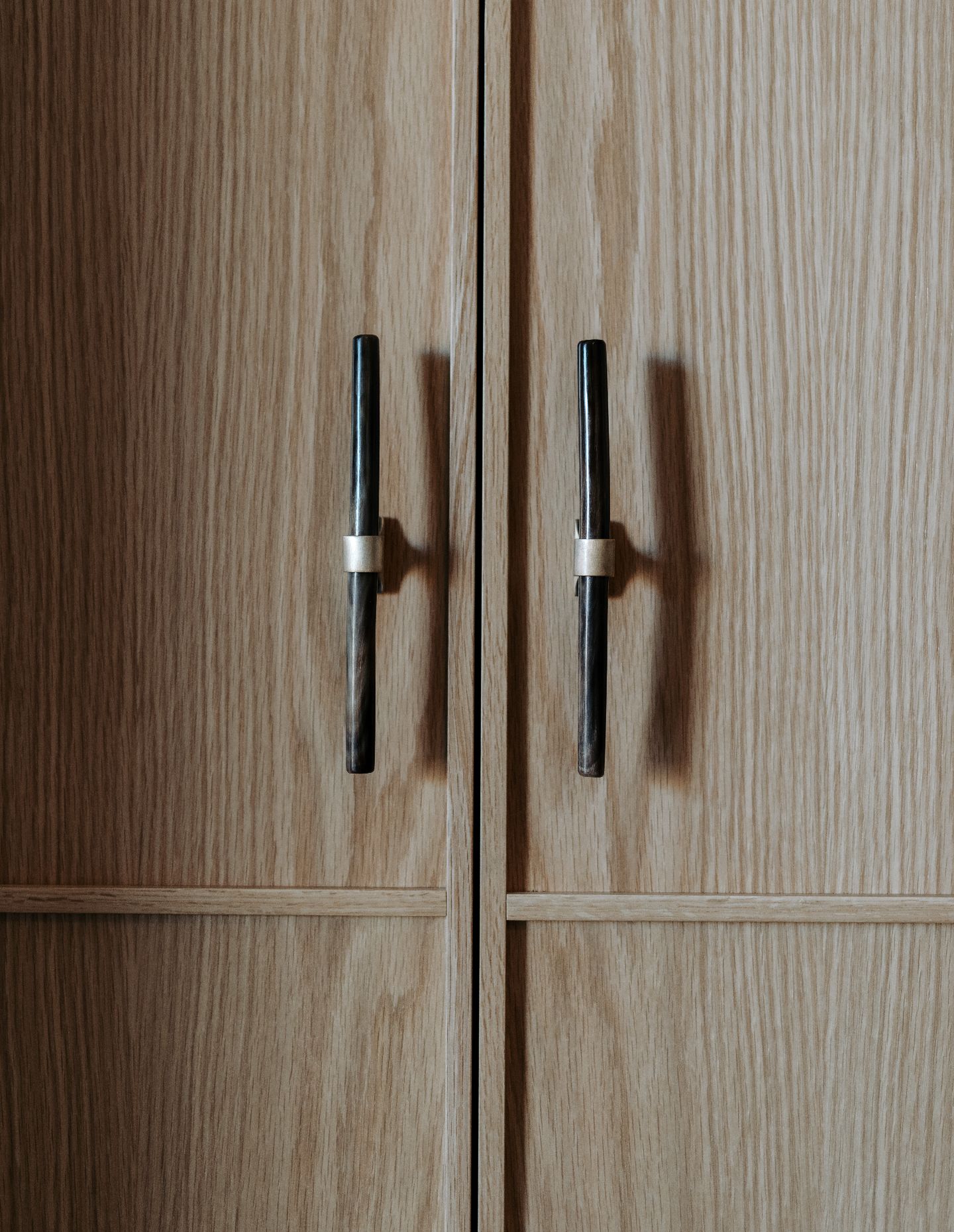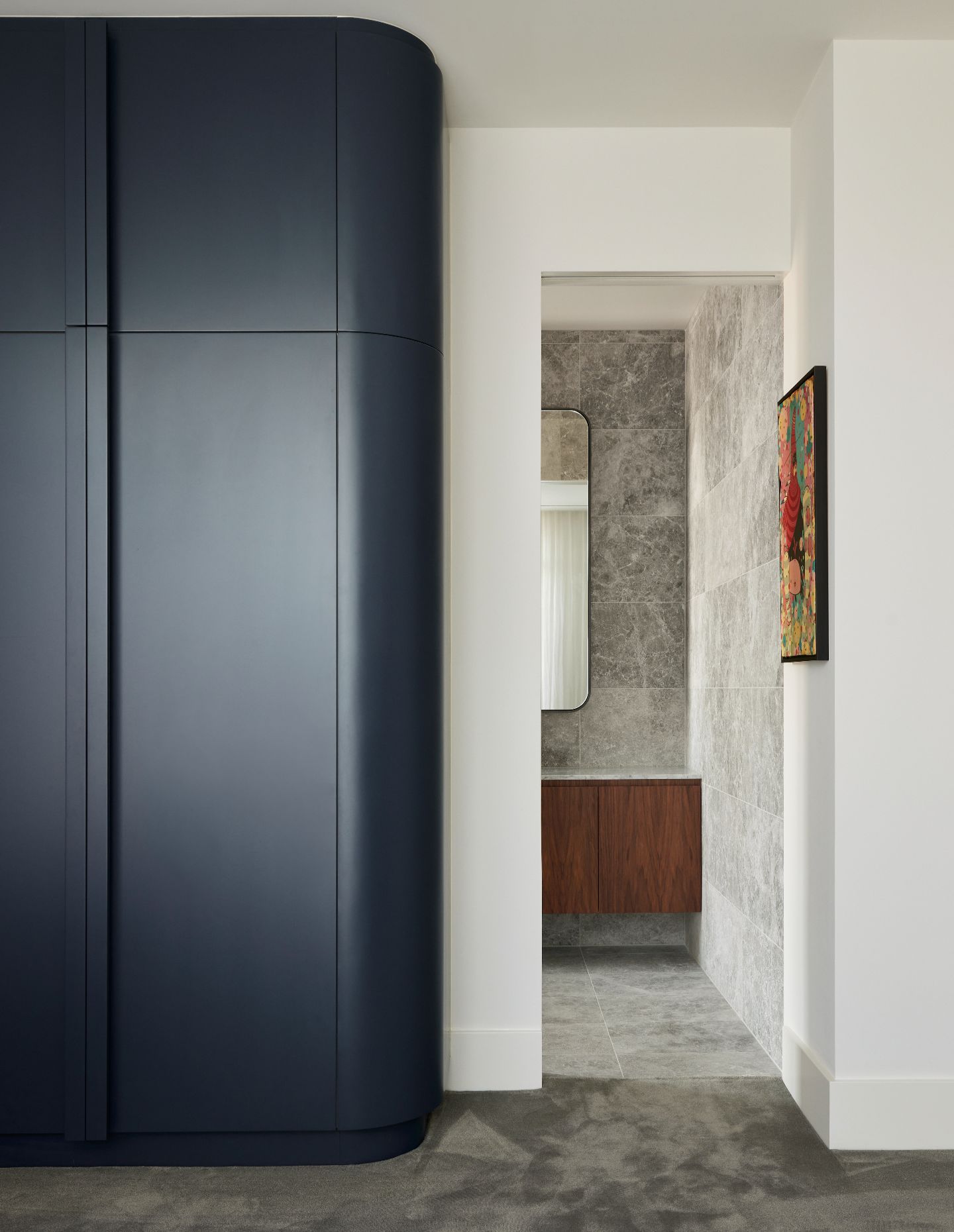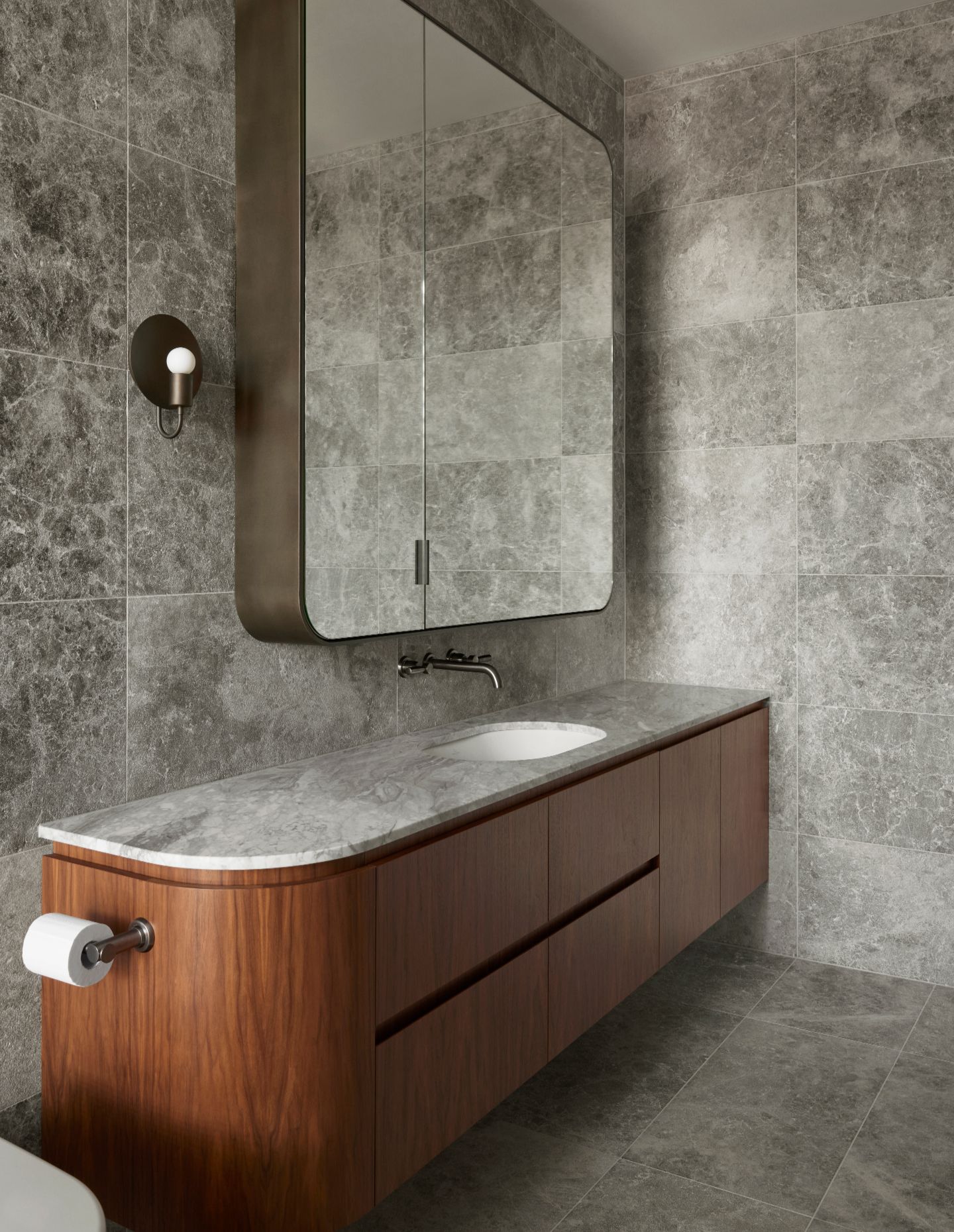

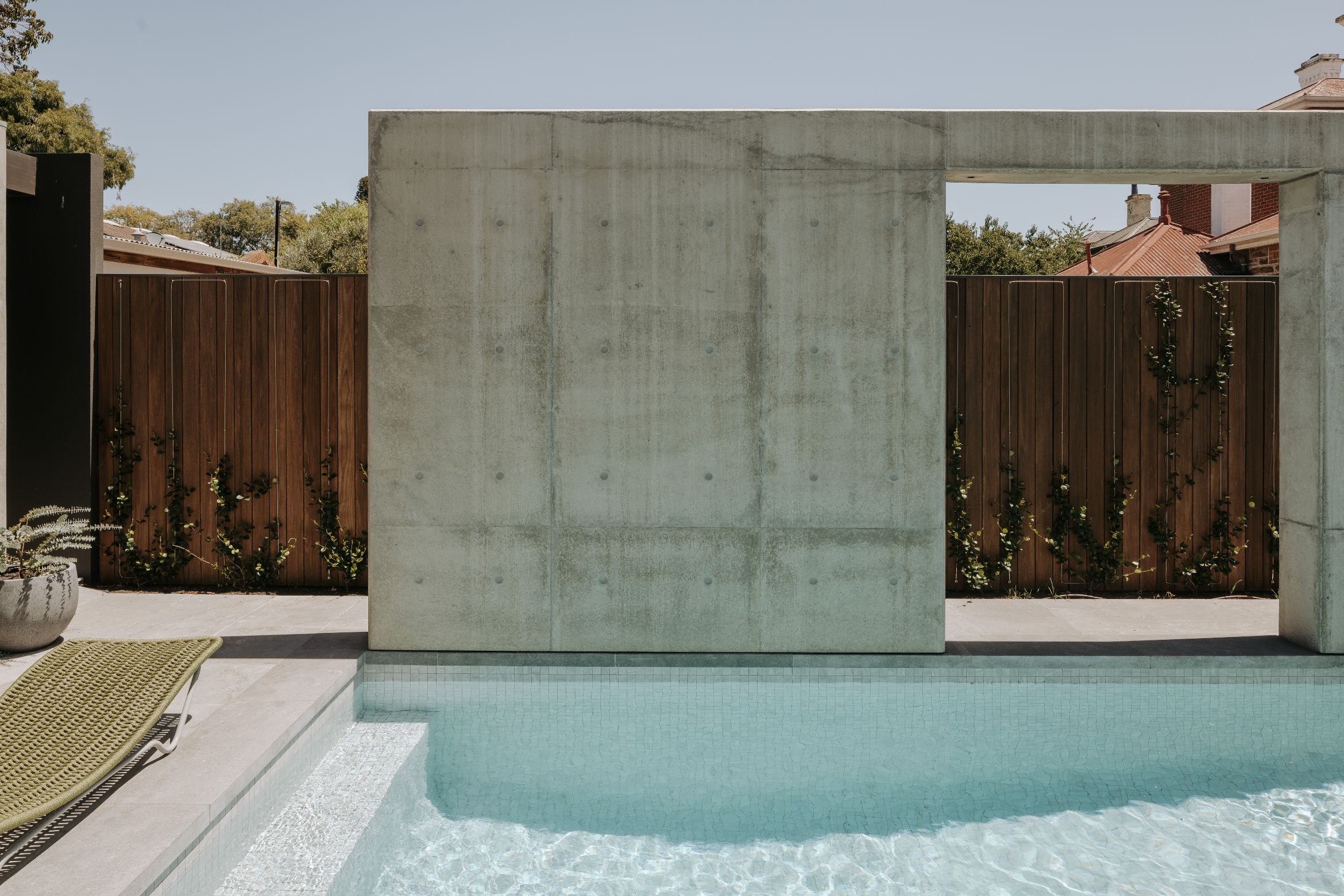
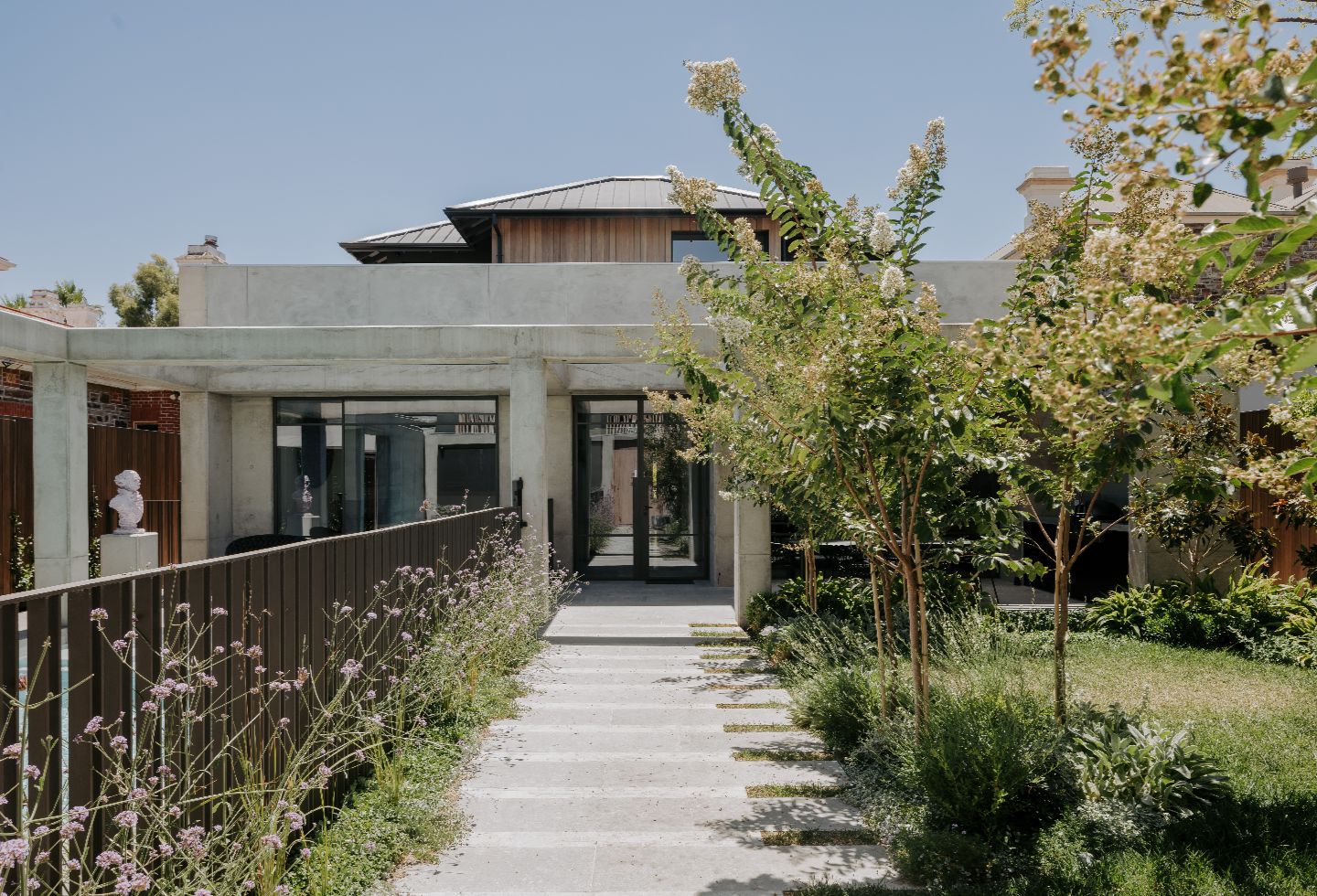
With interior design by Enoki and architecture by Urban Habitats, the generous scale of Art House is experienced as shaping navigation throughout an array of engagements as well as viewpoints that connect the landscape. Each of the selected and surrounding pieces (drawn on rotation from an extensive collection in storage) sits neatly within a contemporary, Japanese-inspired minimal outer shell.
“[The clients] wanted large expanses of vertical surfaces to allow them to showcase their extensive artwork and sculptures,” says Enoki director, Susanna Bilardo. “They weren’t wanting to create a museum, but instead a space that lived and moved around the collection.”
The initial ambition was to ensure an open lightness and the kind of civic generosity that allows prominent art pieces the gift of void space to also then be appreciated at various distances.
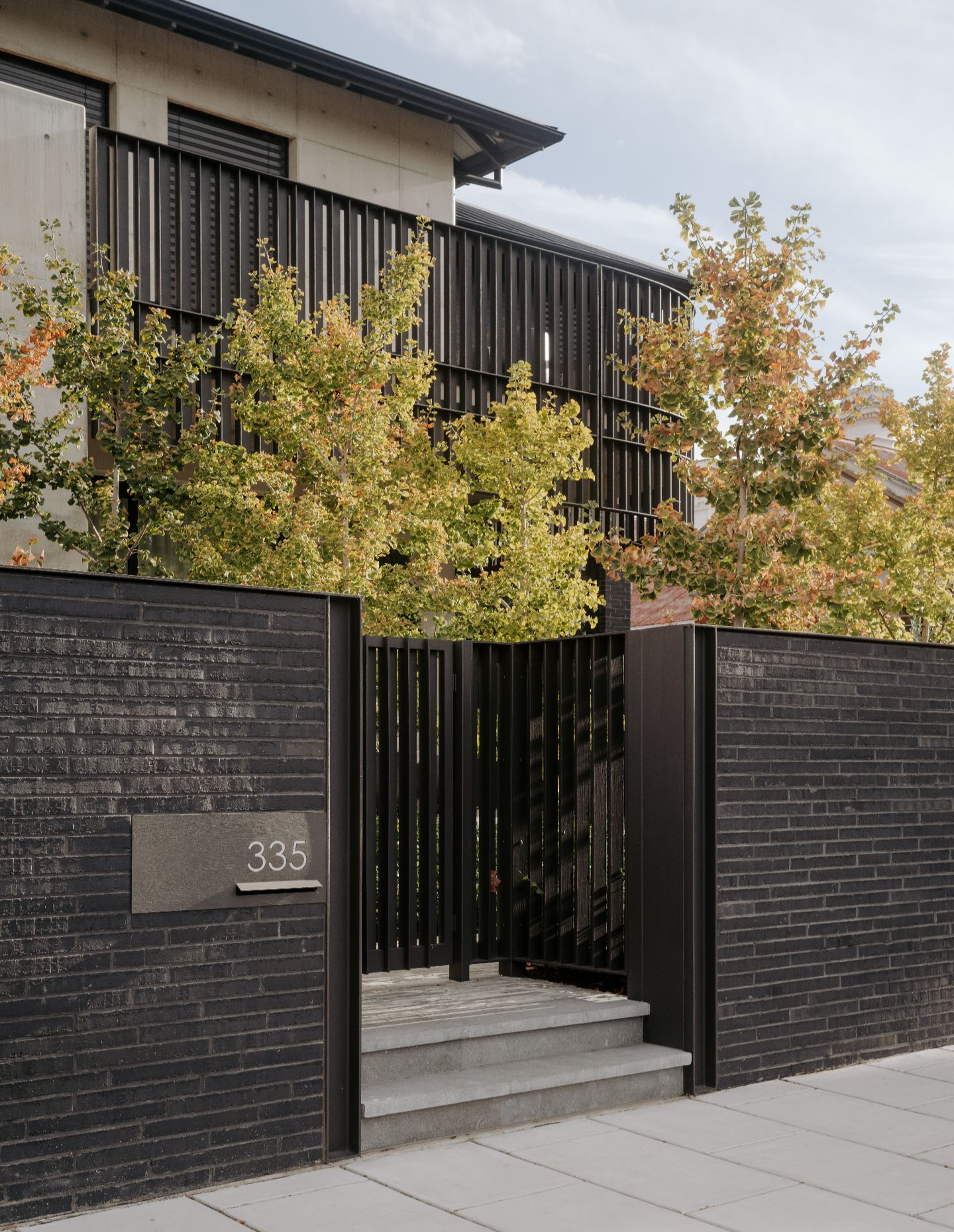
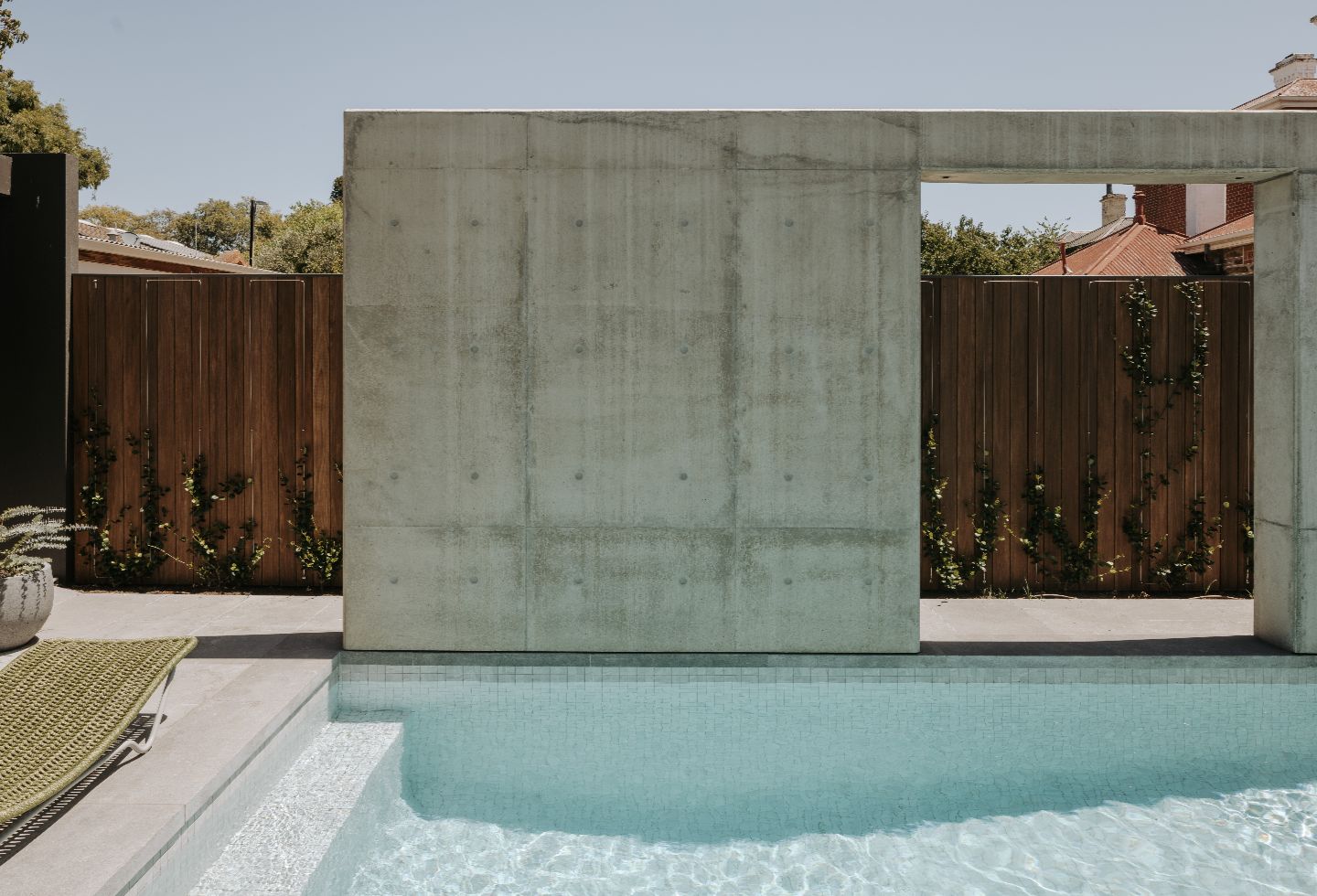
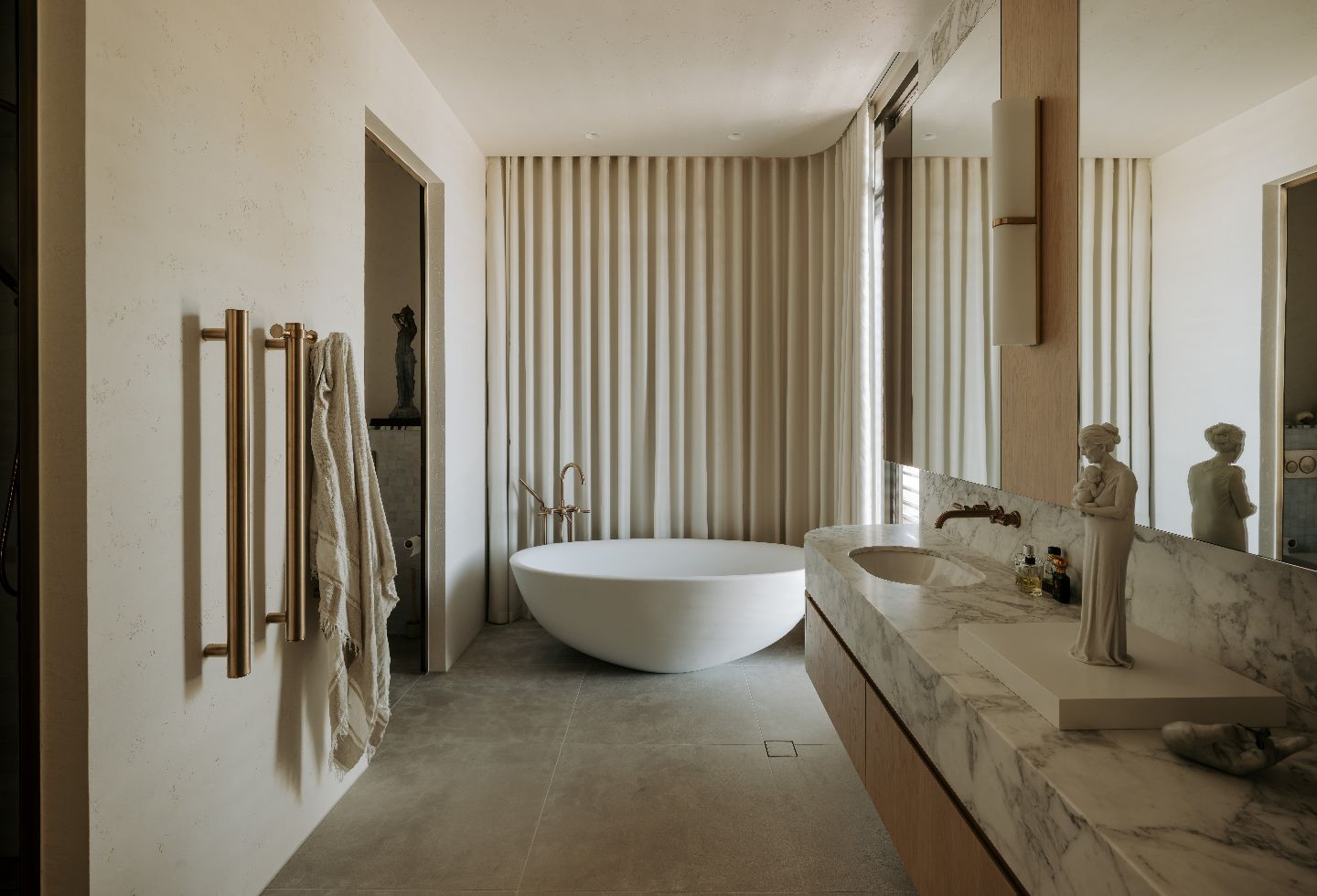
The client’s deep admiration for the minimalism and restraint of Japanese design shaped the material language from the exterior form and materiality. Concrete, stone and steel comprise the home, as surfaces that recede and honour what is placed before them. The robustness of the concrete alongside the craftsmanship of the build and each of the engaged makers – from joinery to steelworks – speak to one another. Together, they highlight a deliberate curation of materials, textures and tones to sit among the art without competing with it.
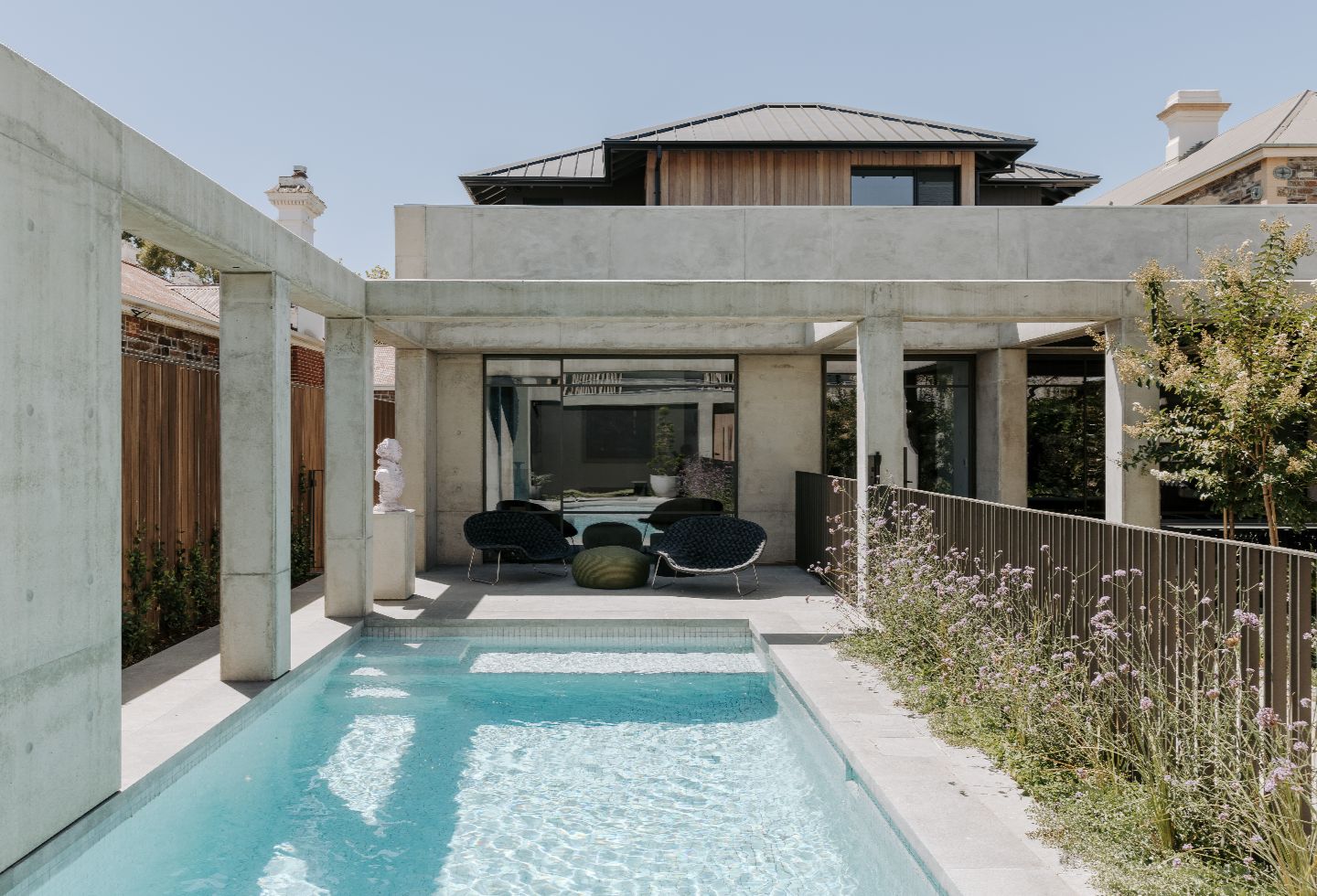
Set within inner-city Adelaide – an anomaly in itself, with almost all larger residences pushed to the beyond the parklands – Art House is a home that places the act of living with art at the centre of every spatial, material and atmospheric decision.
As long-established Adelaide art dealers with a collection of genuine depth, the clients were transitioning from a heritage building of interest where smaller windows, heavy drapery and equally furniture filled each room. In a grand departure from that immersion within a more traditional world, they wanted instead to create a home that would bridge their worlds – art and family.
Related: Sydney architect’s very own home
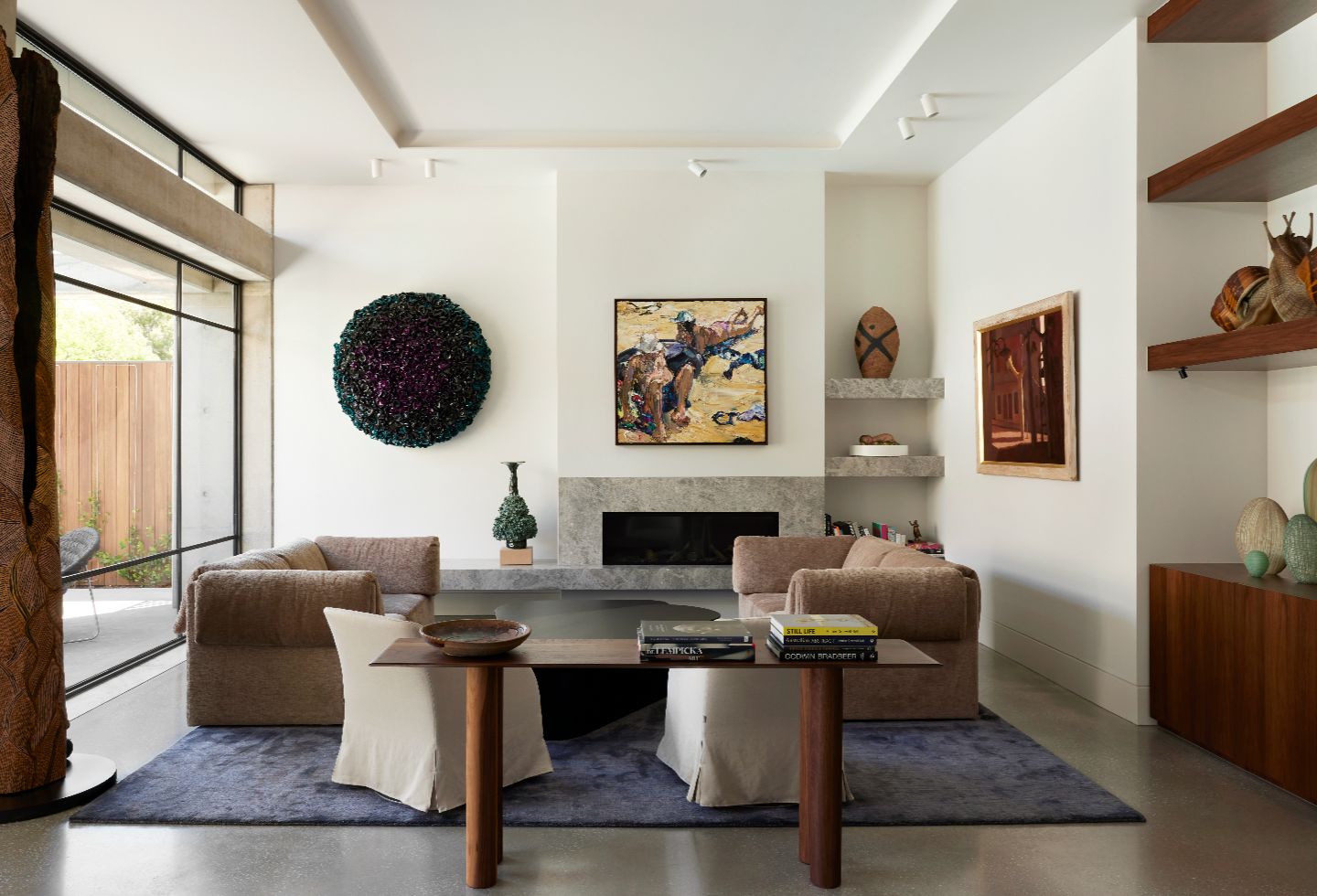
Enoki collaborated closely with each consultant and contractor, ensuring each was empowered to also bring their heightened appreciation for of crafted details throughout. Together with the build and architecture with Urban Habitats, the joiner, stonemasons and metalworkers were key to the considered elements throughout, each weaving their contributions amongst the fabric of the building, rather than applying it afterwards.
The integration of the landscape by TCL then completes the site. Ensuring a buffer to the exterior, this part of the design also draws the garden and sky into the interior while softening what might otherwise read as austere.
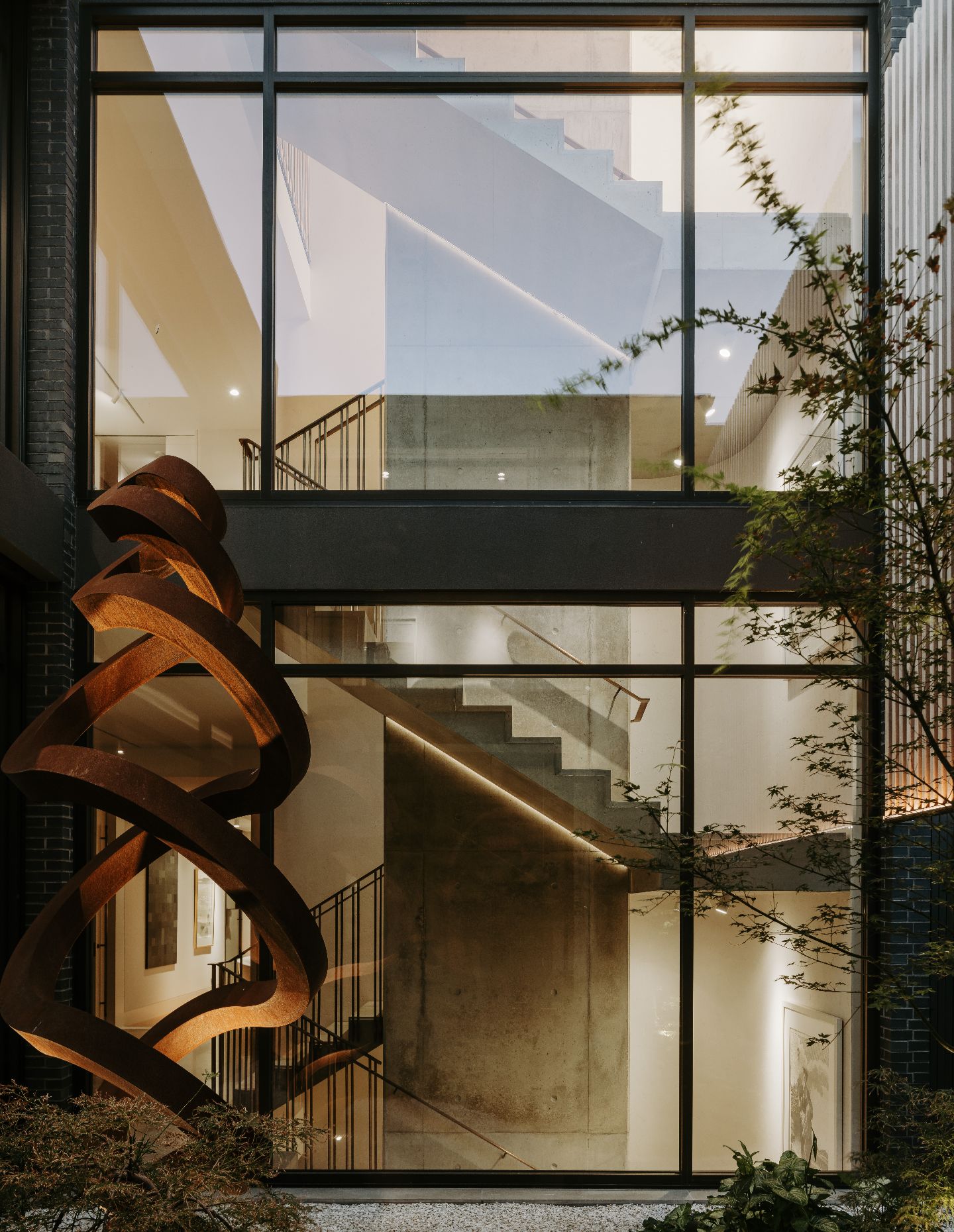
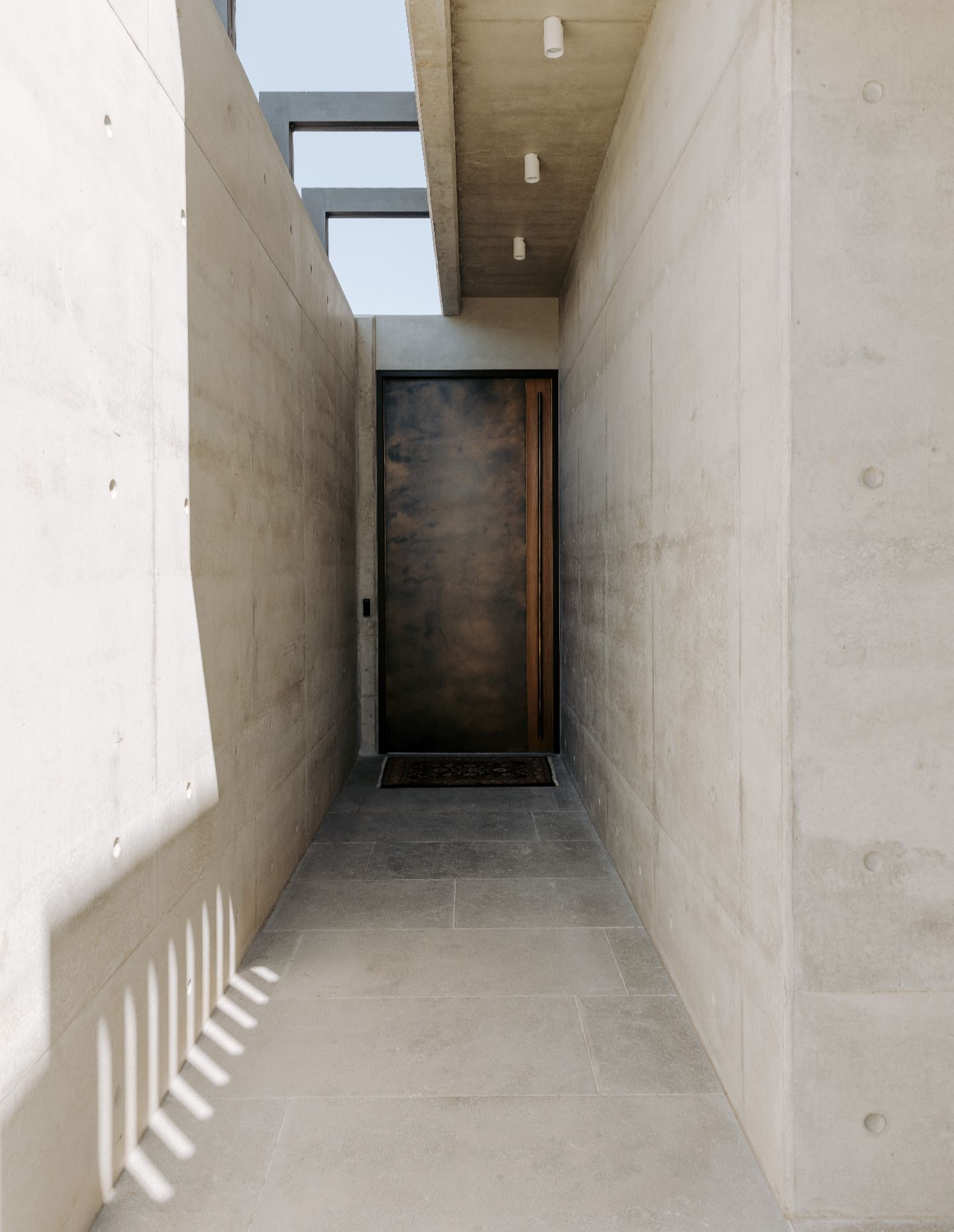
“Downstairs operates at the scale of a public building, with high ceilings, generous volumes,” says Bilardo.
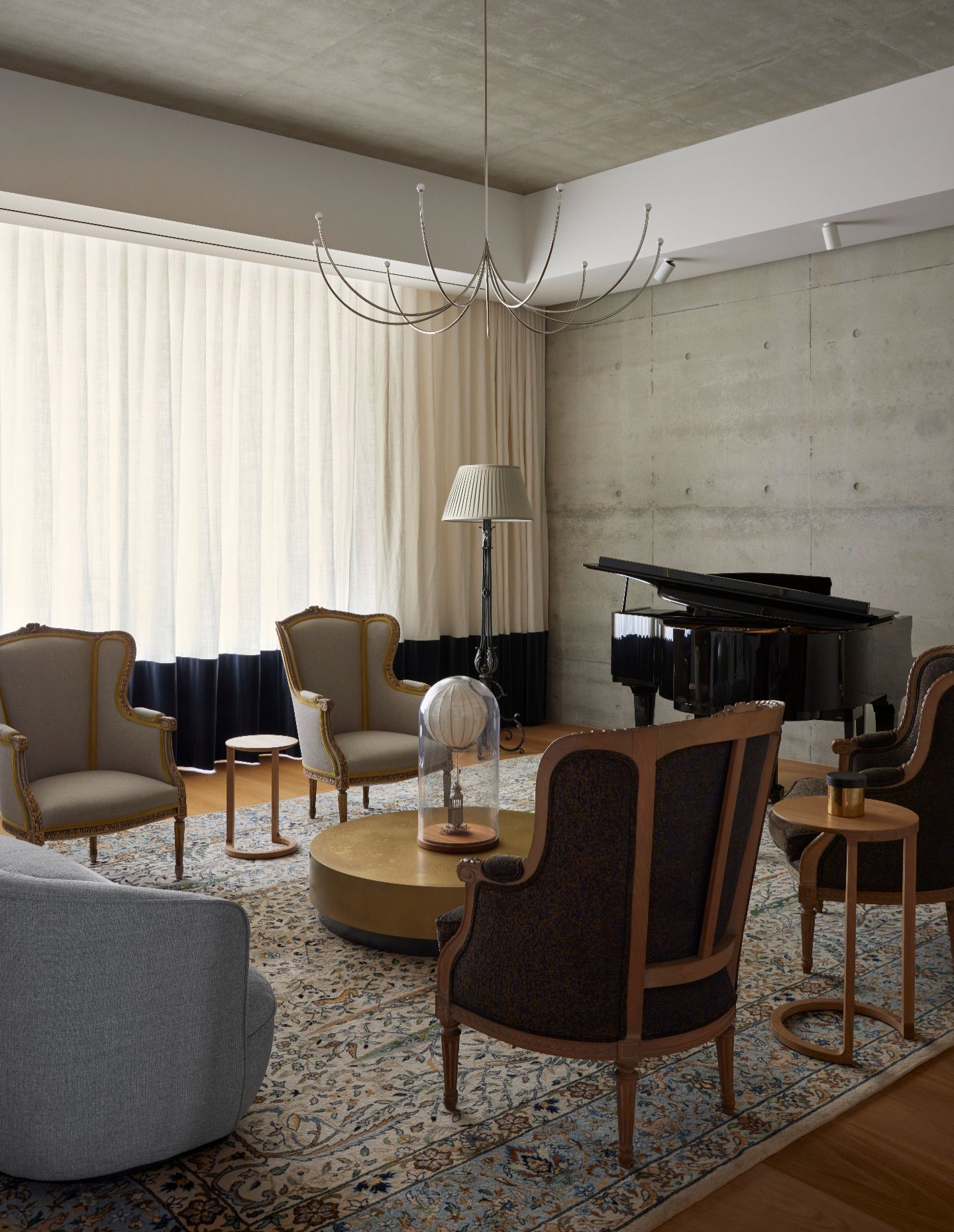
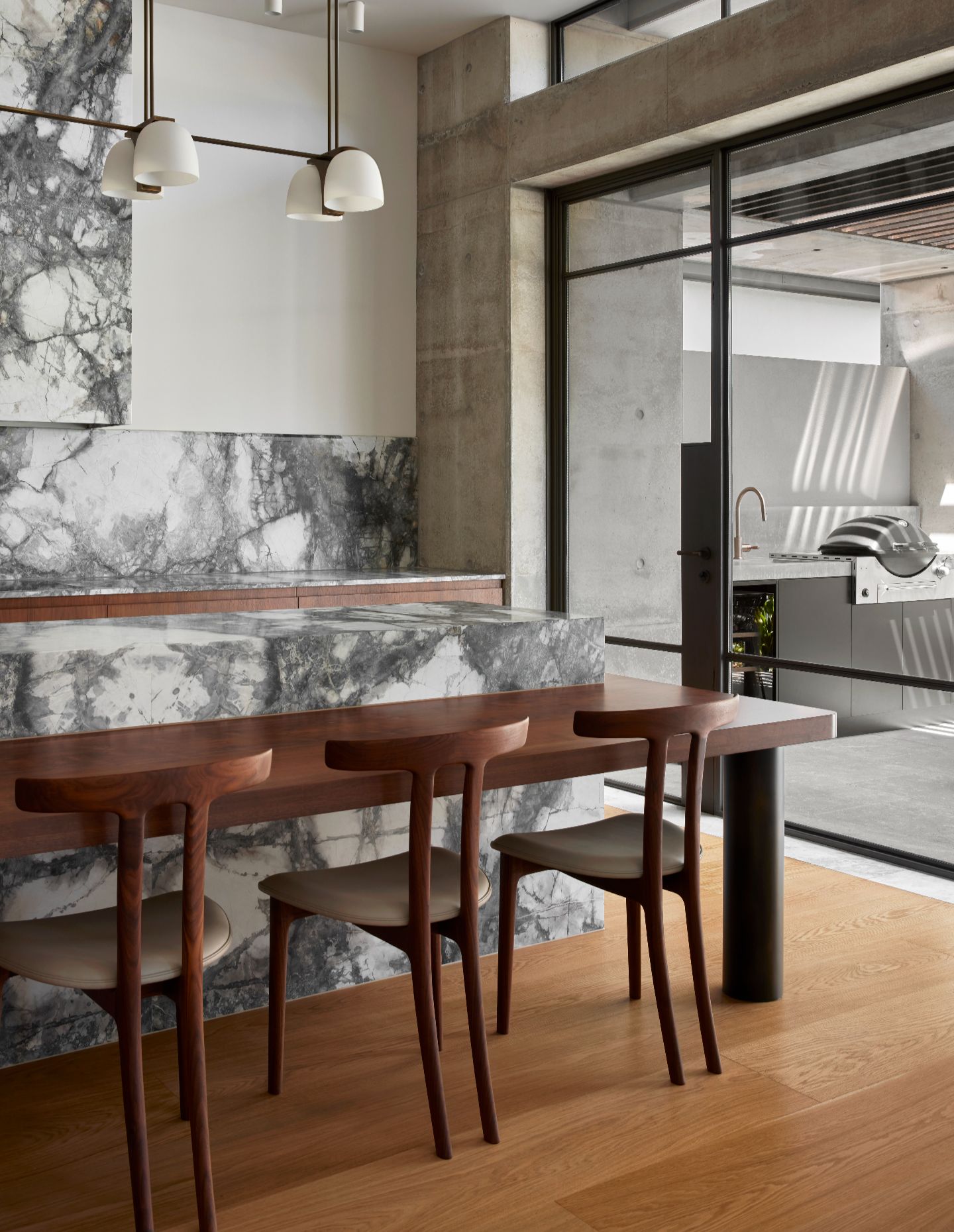
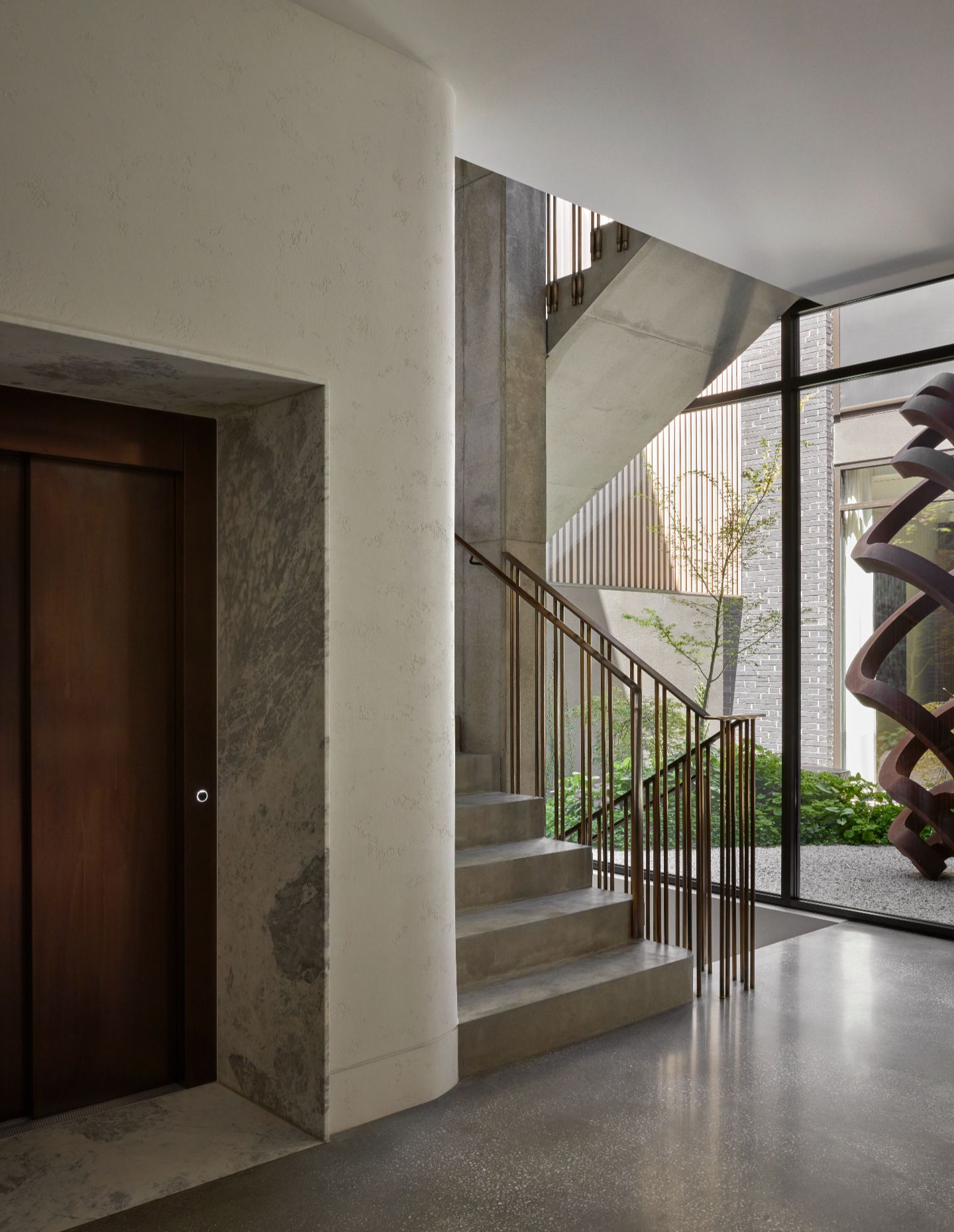
“As you move up, the ceiling drops, the layering increases. It becomes softer. More personal,” she adds.
The home unfolds across four levels: undercroft housing cellar, gym and garage; a ground floor conceived entirely for entertaining and display; private quarters above; a rooftop bar that lifts the whole into another register. The shift between floors is felt in the body before it is understood by the eye.
Every wall was rendered before a single artwork was hung, with proportions tested; placements decided with the same care brought to acquisition. Weekly site meetings kept the clients close throughout. A bespoke cable system, set into recessed ceiling trims, now holds the entire collection with complete flexibility. Lighting, specified entirely by Enoki, is decorative where it needs to be seen and invisible where it doesn’t.
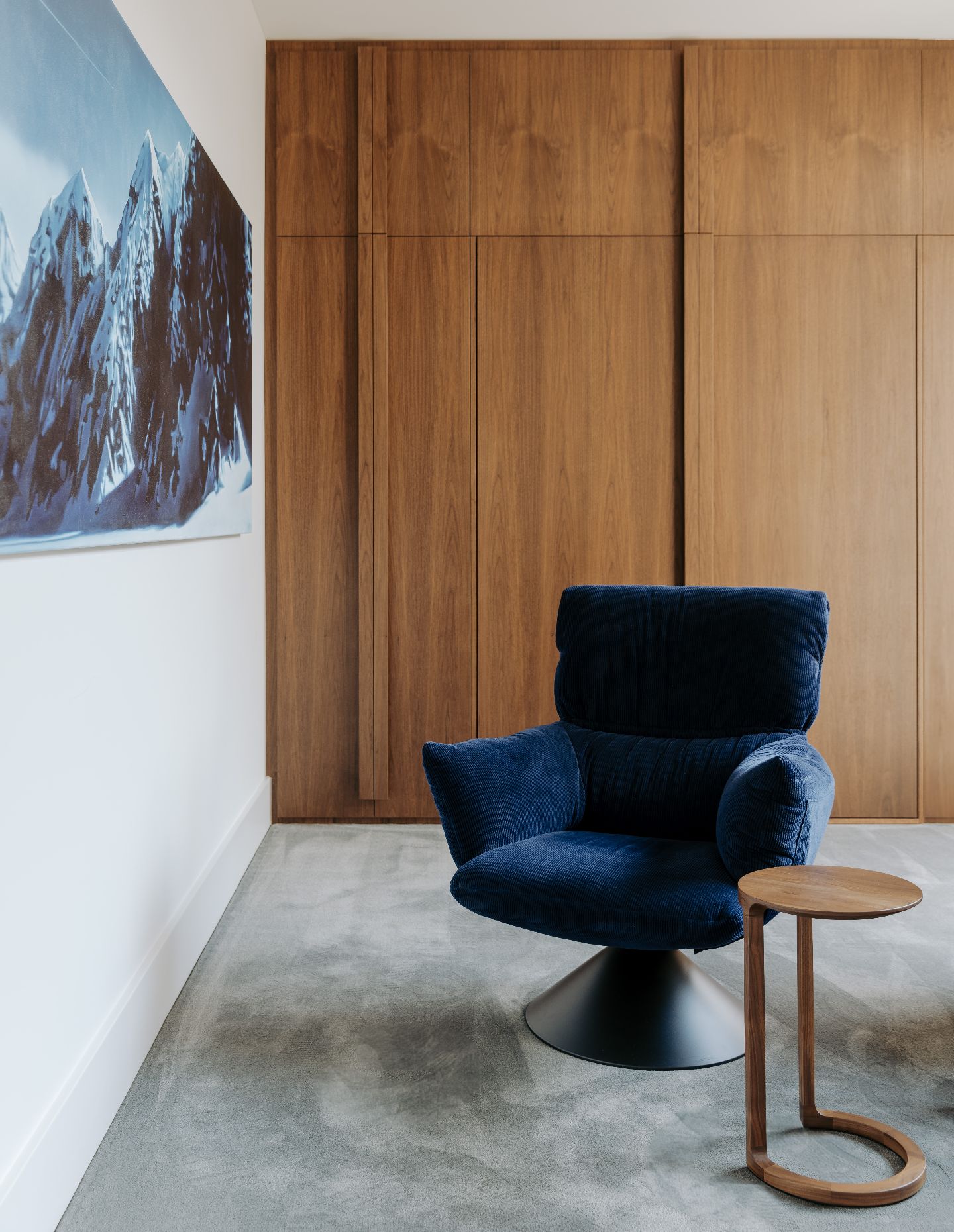
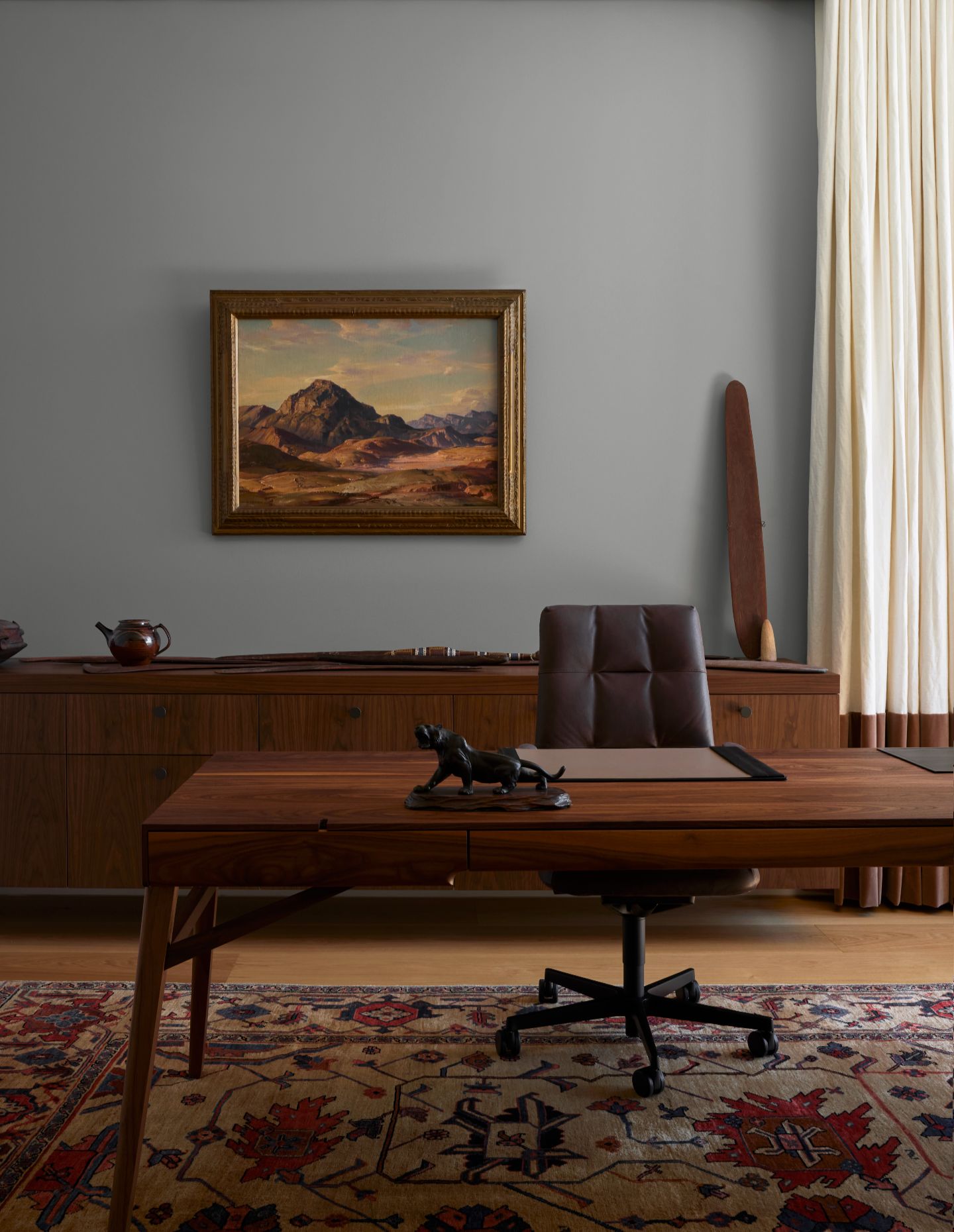
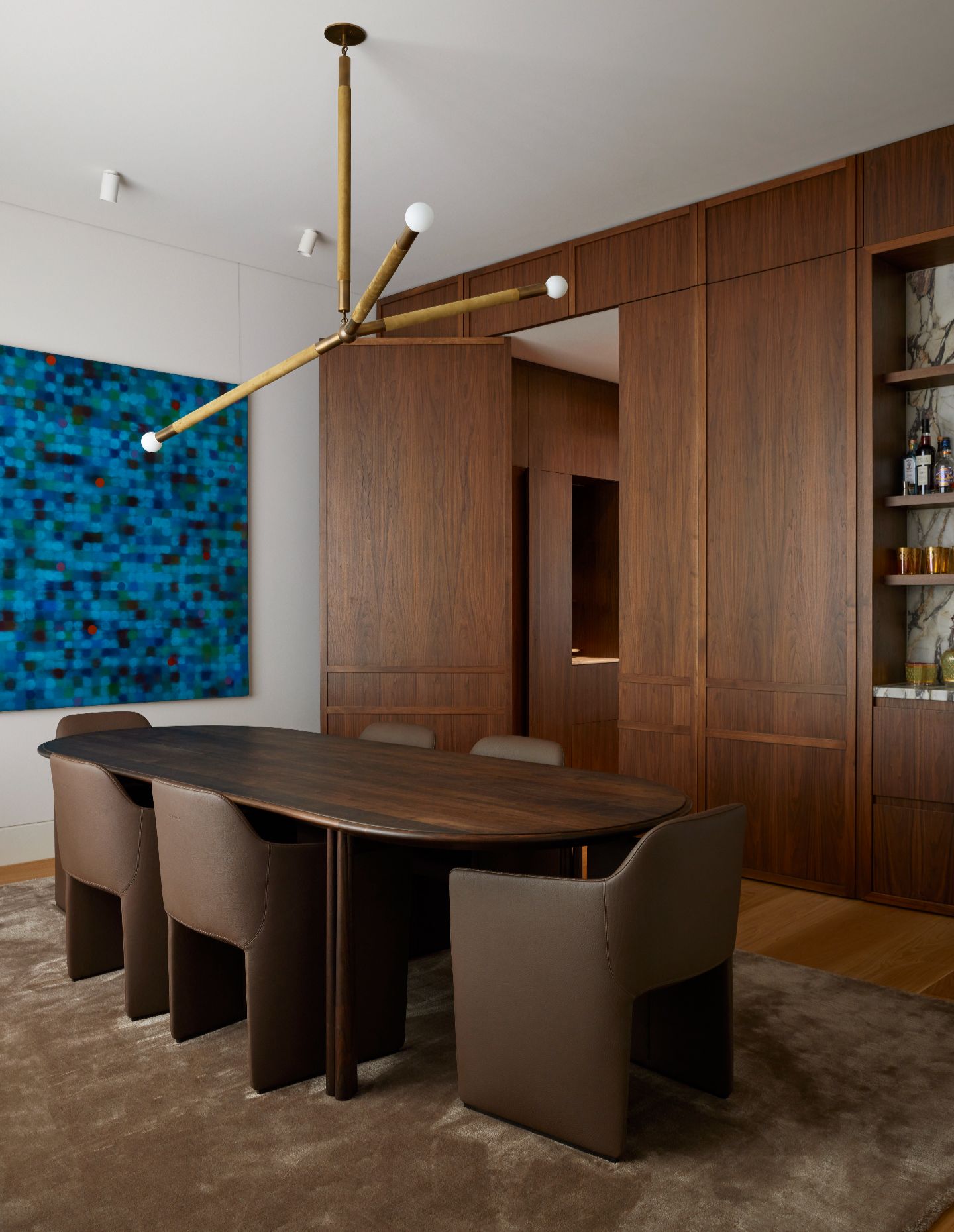
Furniture mixes heirloom with contemporary, custom with collected. A bespoke sofa table anchors the main living space, while all beds were made to measure. Triple-glazed windows and external blinds manage sun and city noise with the same precision applied to every other element. And yet, for all its discipline, the house yields warmth.
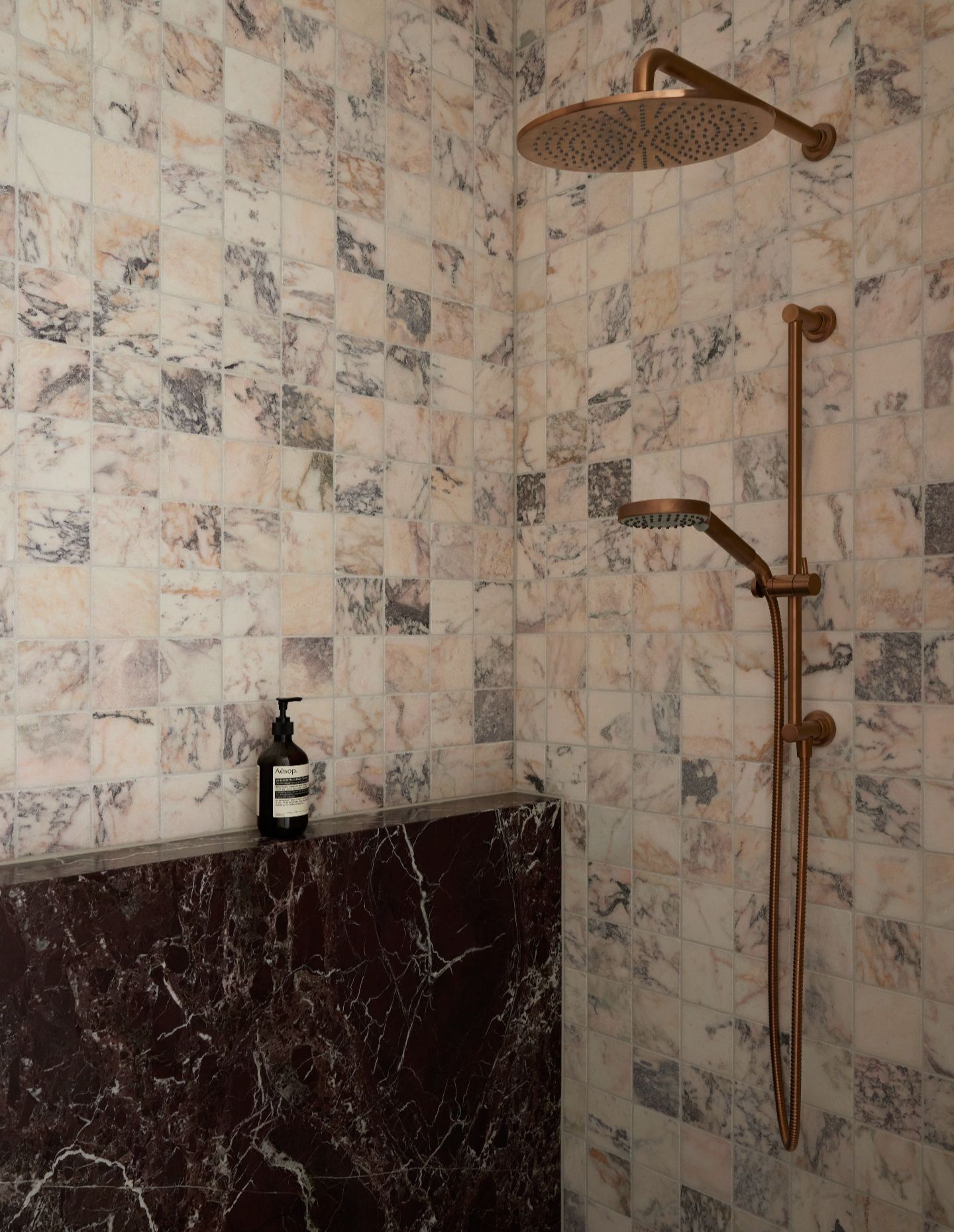
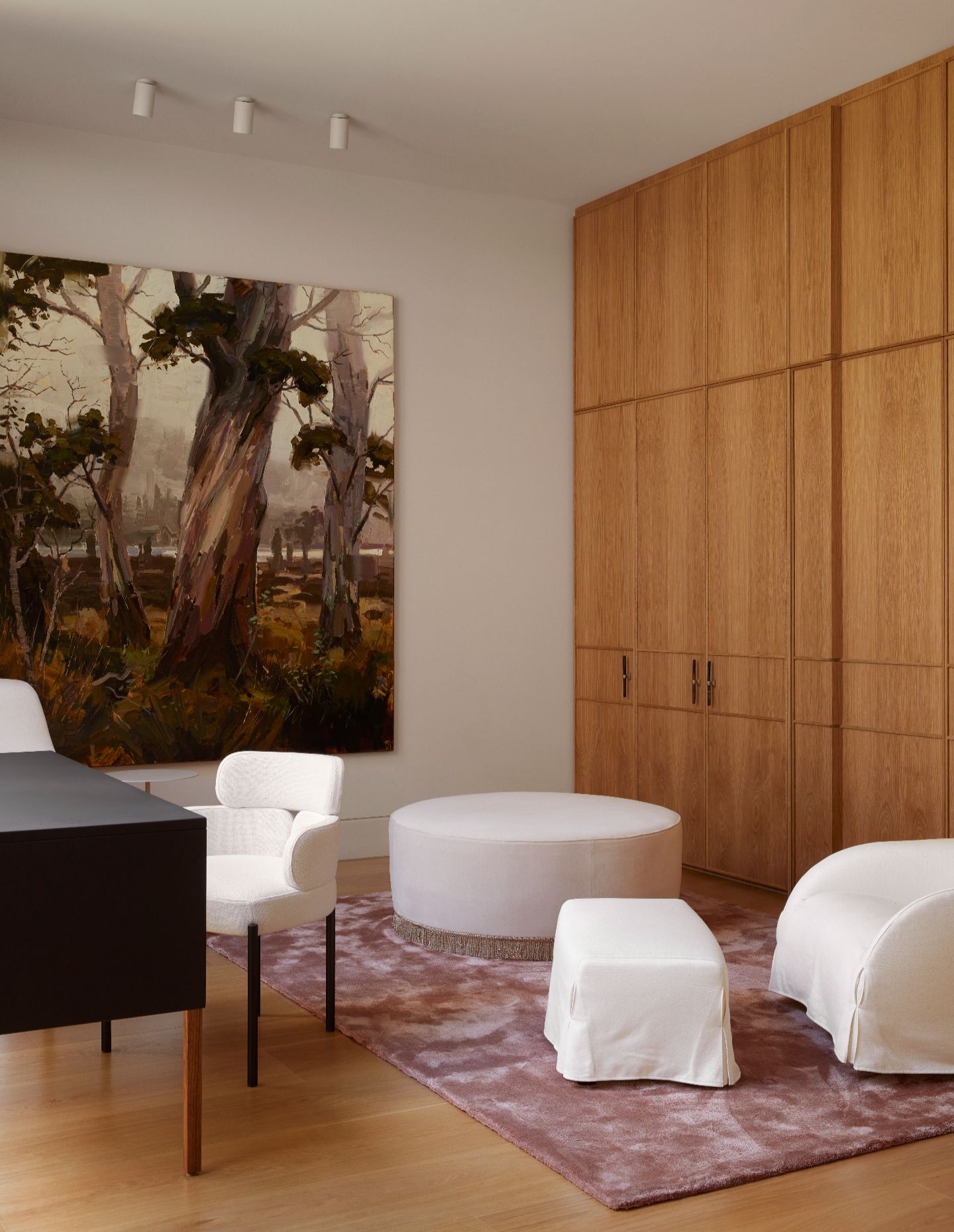
“The beauty of it is that it still feels predominantly like a home,” says Bilardo. “It is used as a home should be.”
Art House celebrates the collection as the animating force, instead of focusing primarily on the architecture or interiors. In doing so, the design makes its most quietly radical proposition: that a house of grander public scale and material rigour can be (and feel), in every sense, one that is also lived in.