
Tell us about the site context.
Located along Harrington Road in Chennai, India, the apartment sits within a tree-lined, historically layered neighbourhood that balances the city’s colonial past with its present-day urban rhythm. Within a multi-storey building, the project turns inward, creating a calmer, more contained environment that contrasts with the pace of its urban surroundings.
What can you tell us about the clients and their brief?
The home was designed for a young couple balancing demanding careers in sport and music, with a shared affinity for travel, particularly around water. The brief was to create a space that offers a counterpoint to this pace, supporting both social engagement and quieter, more intentional routines.
What are the key material and structural choices?
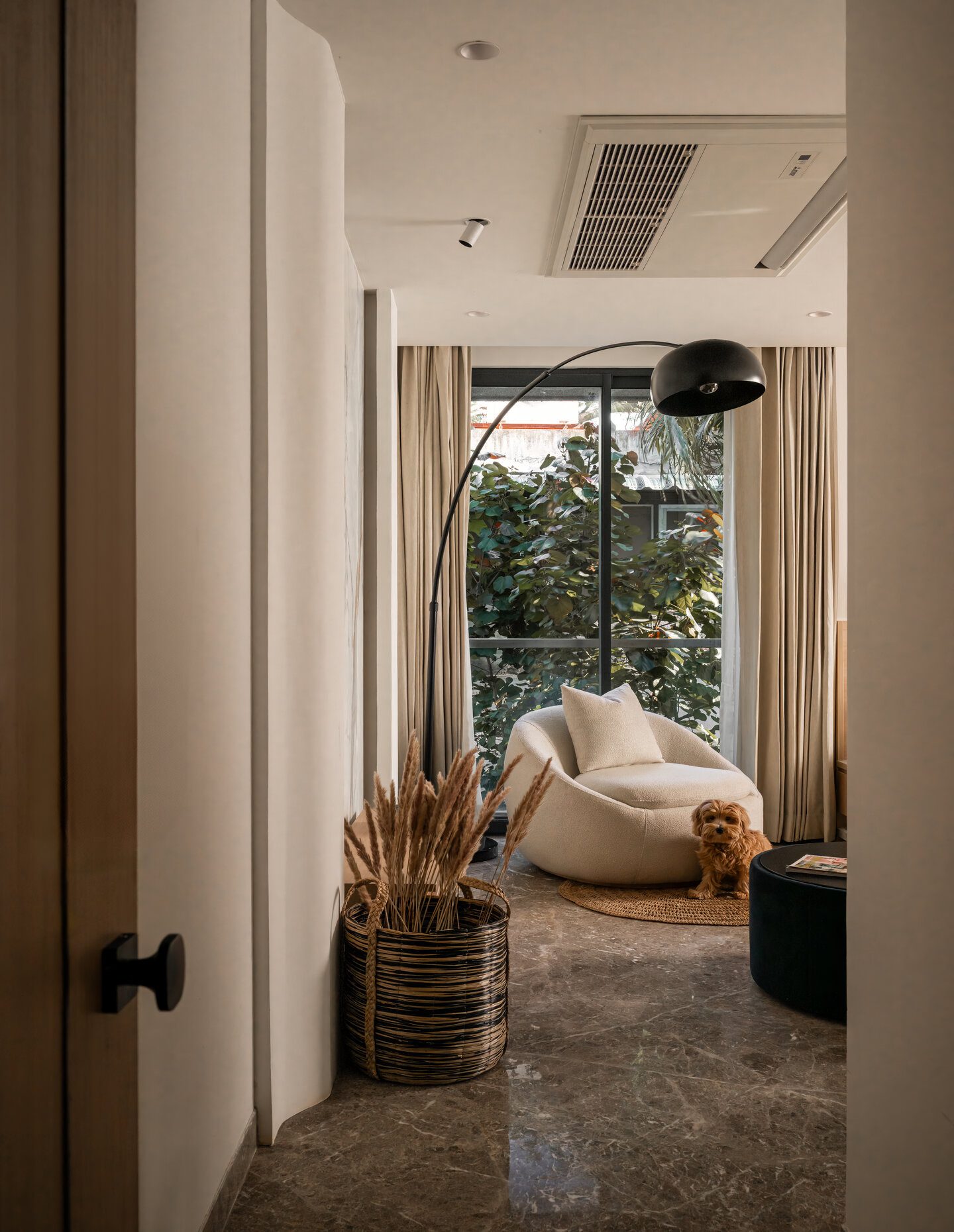
The plan is conceived as a spatial descent into ocean depths, moving from open, light-filled shared spaces to more grounded, tactile private zones. This is reinforced through shifts in tone, texture and level.
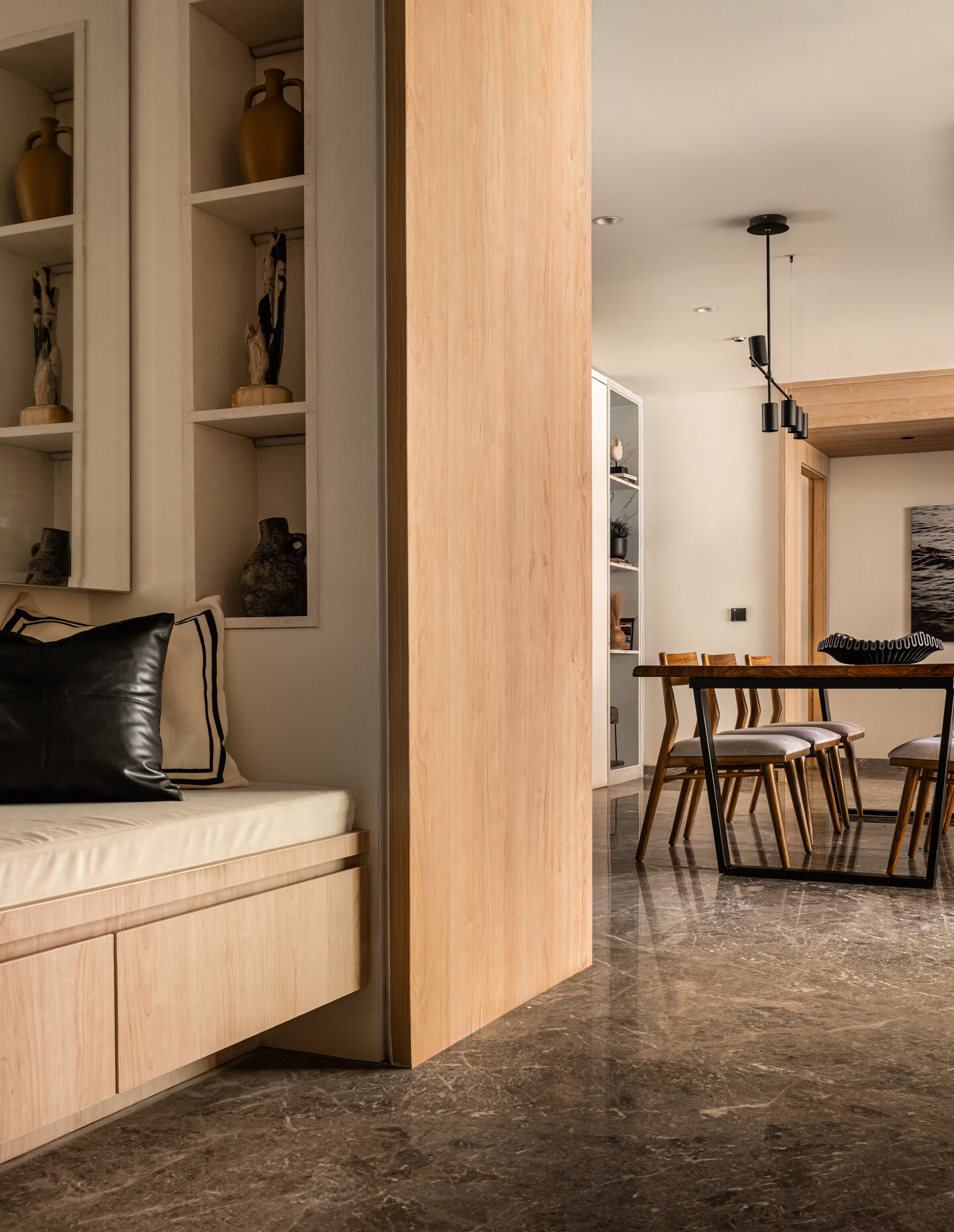
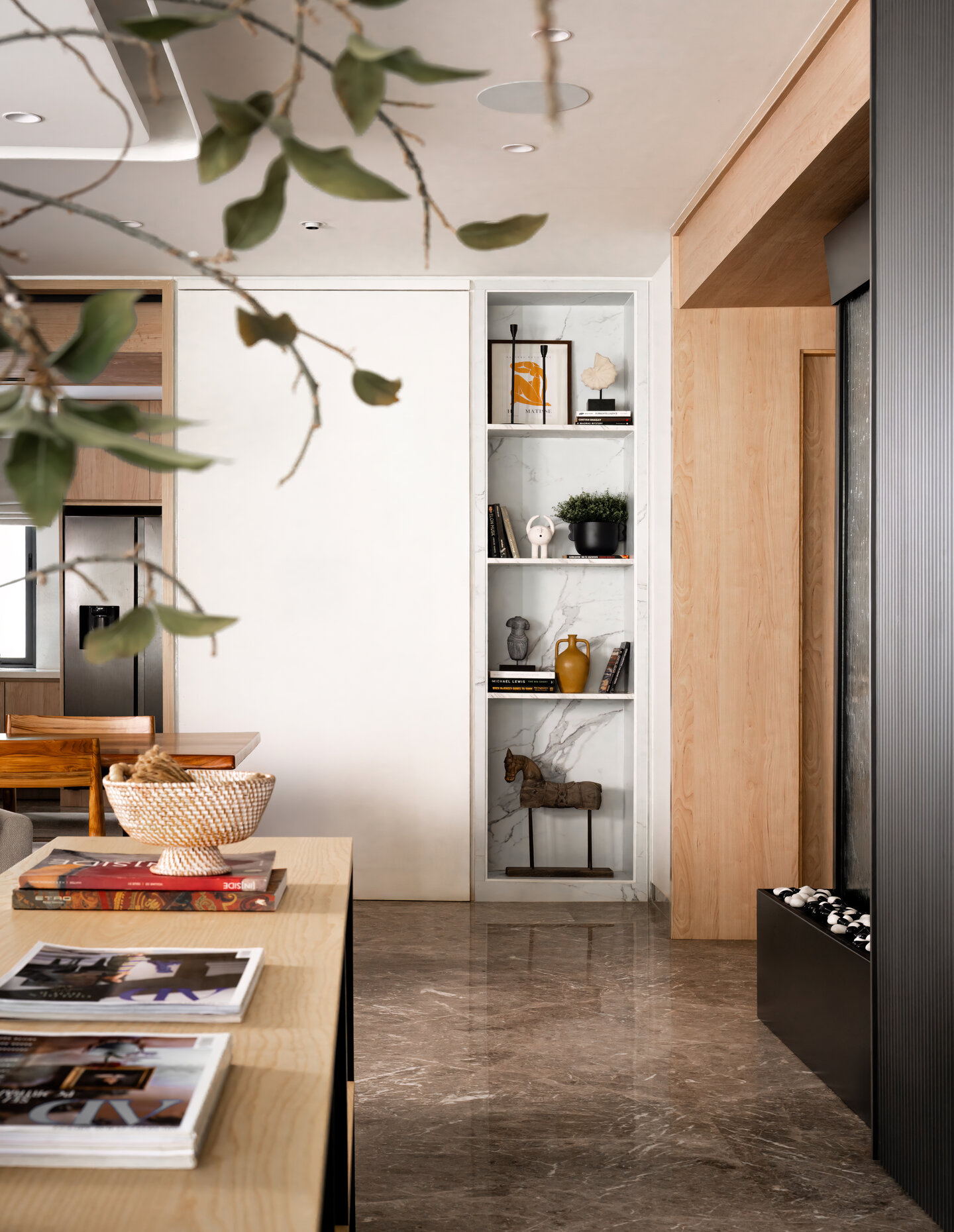
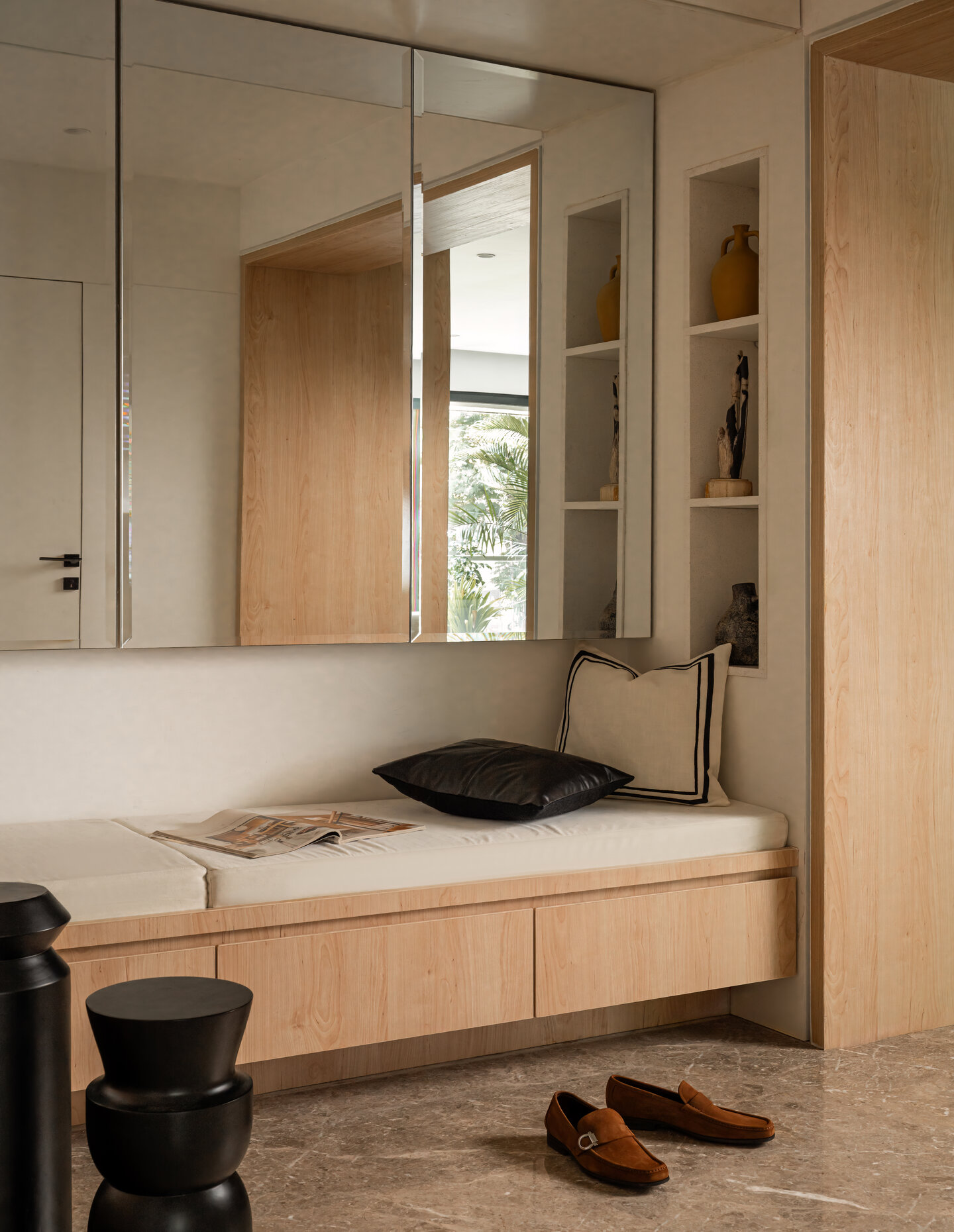
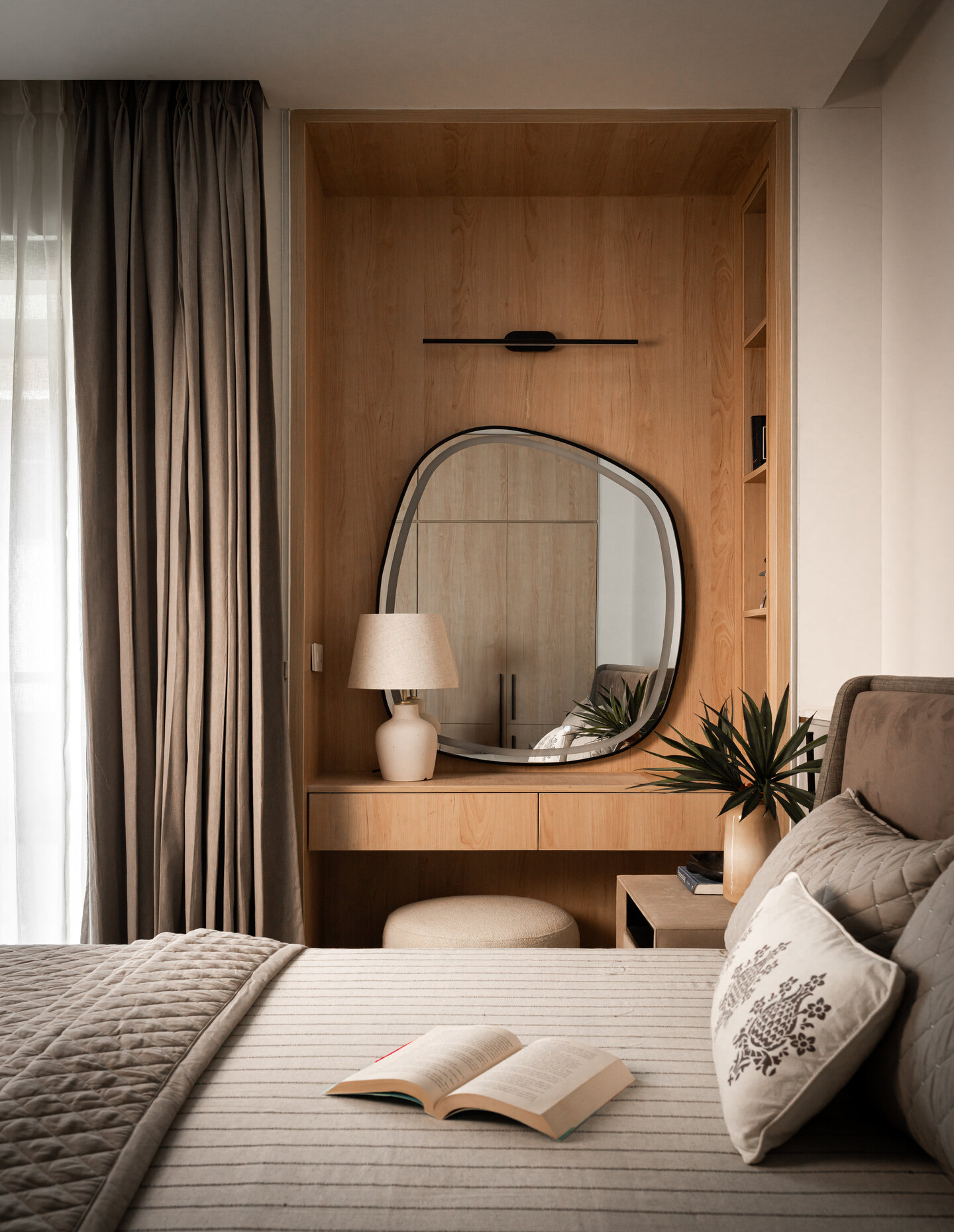
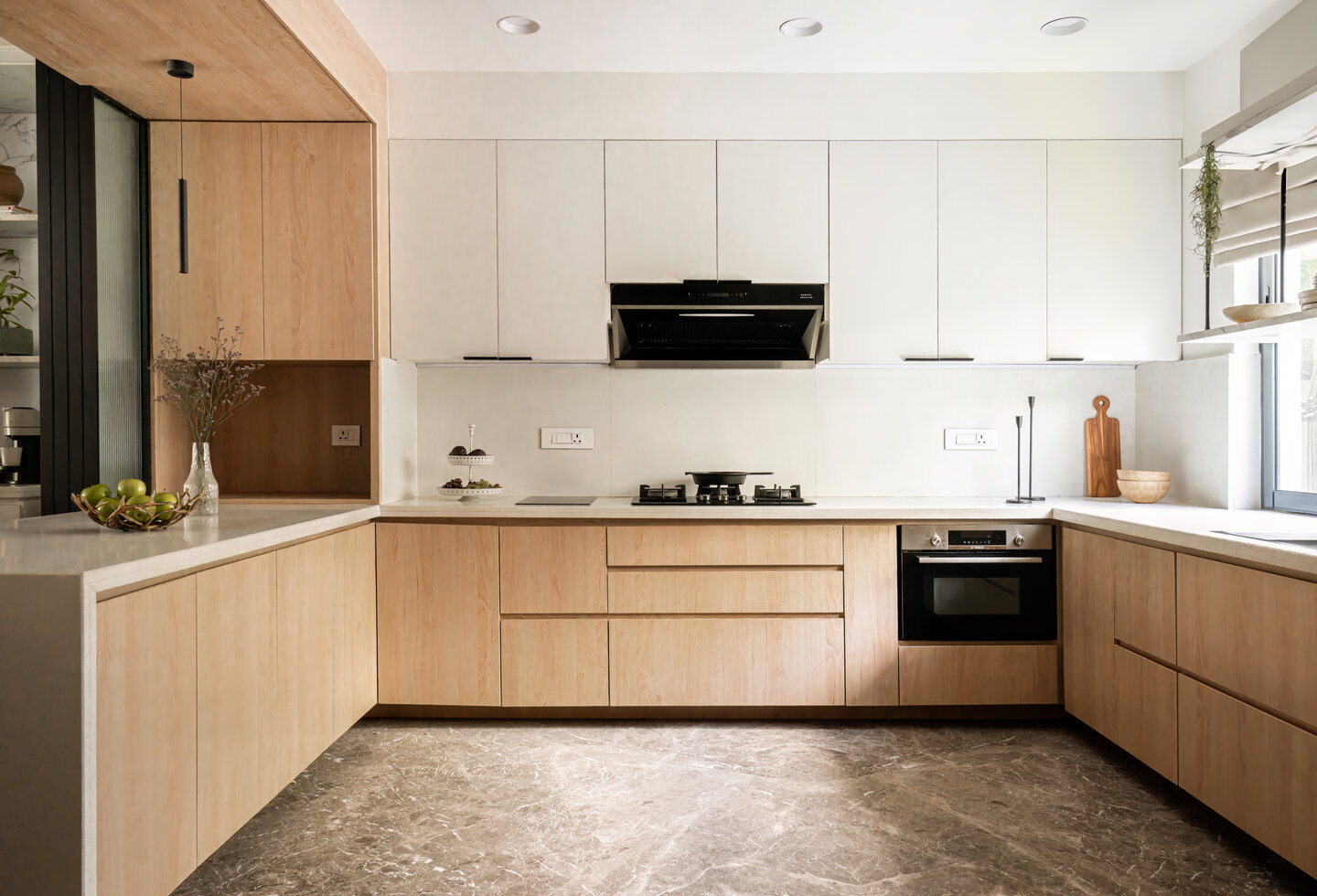
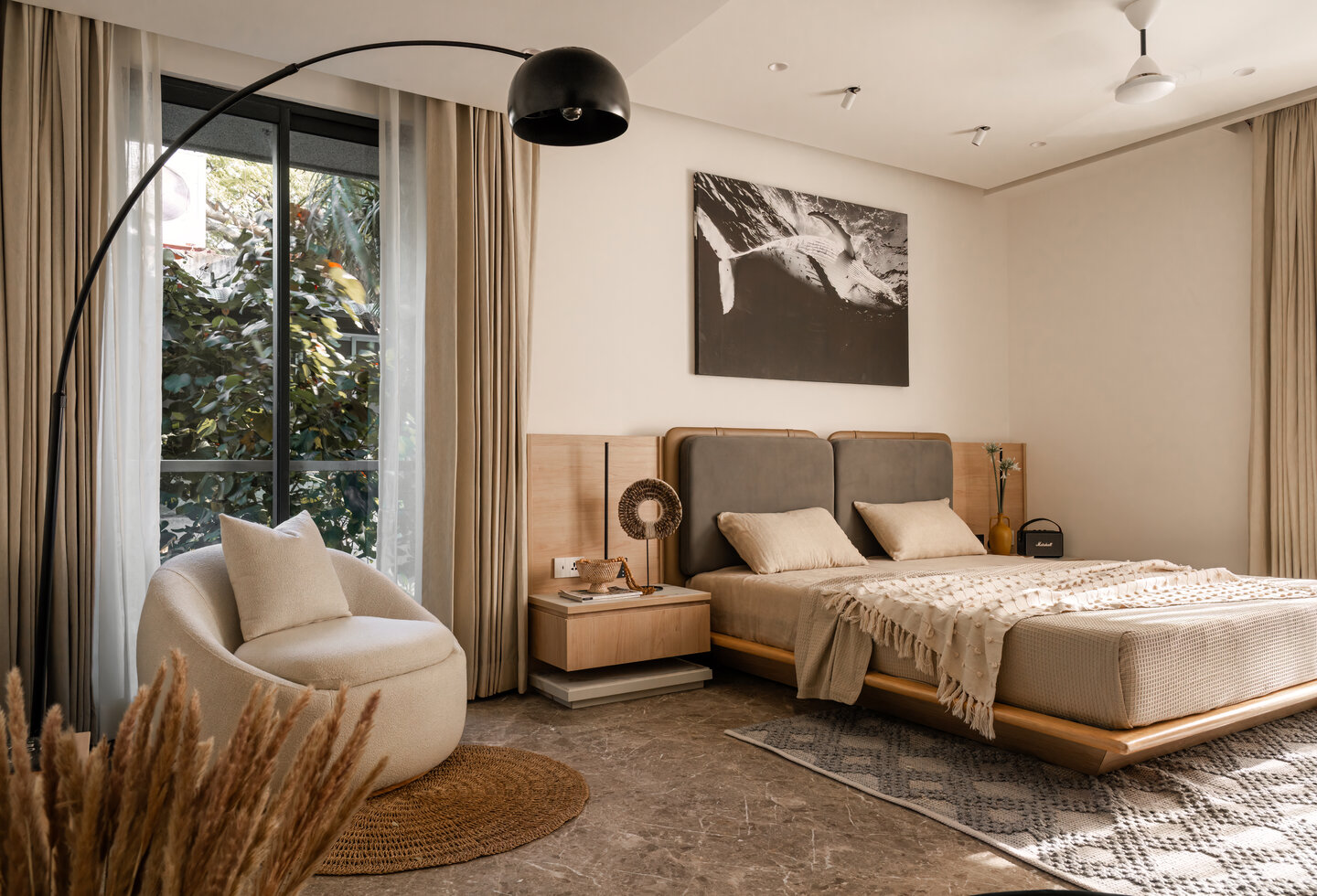
The material palette is restrained, centred on oak, marble and quartz to create continuity and depth. Veined stones such as Statuario and spider-grey marble reference water, while oak introduces warmth and grounding over time.
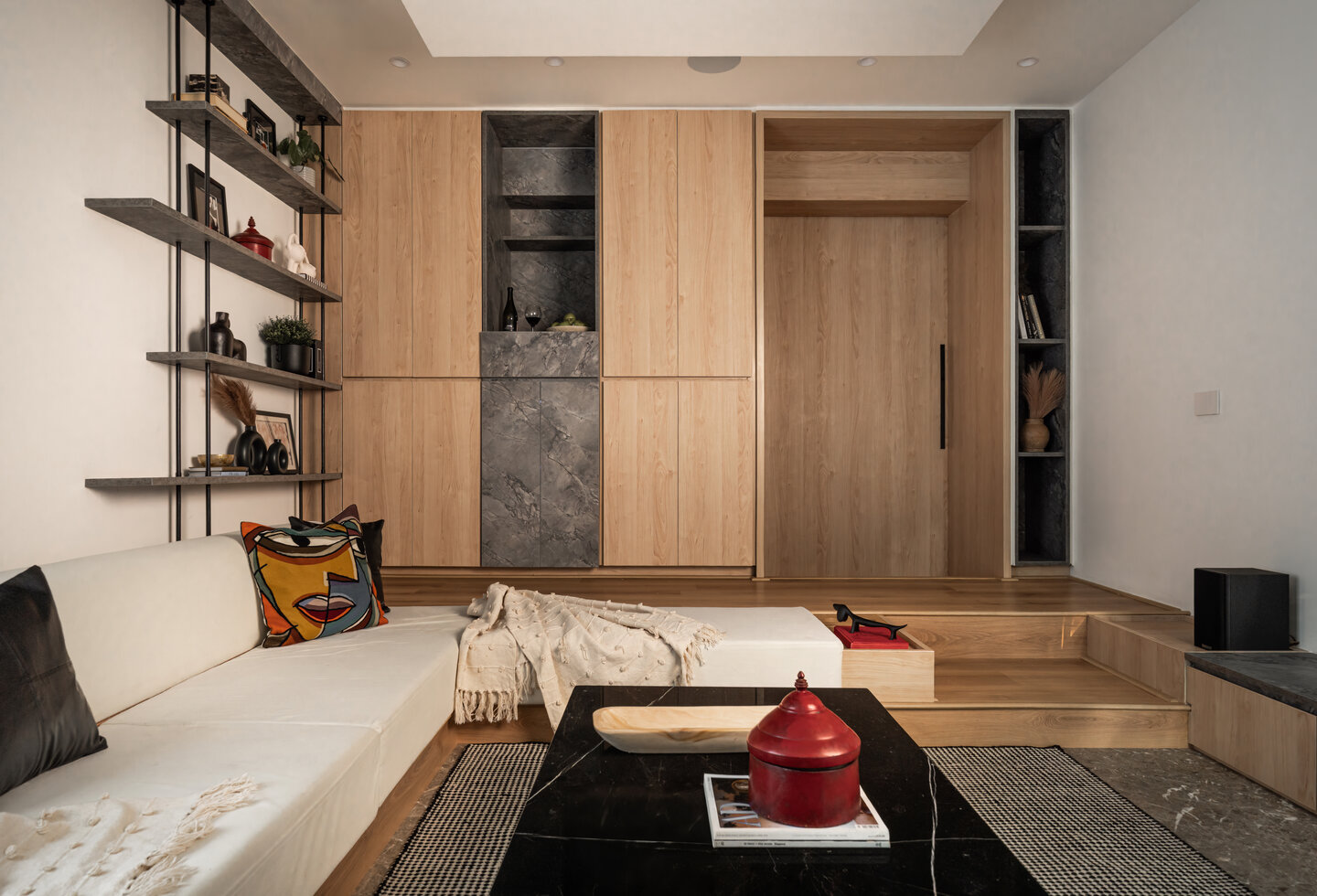
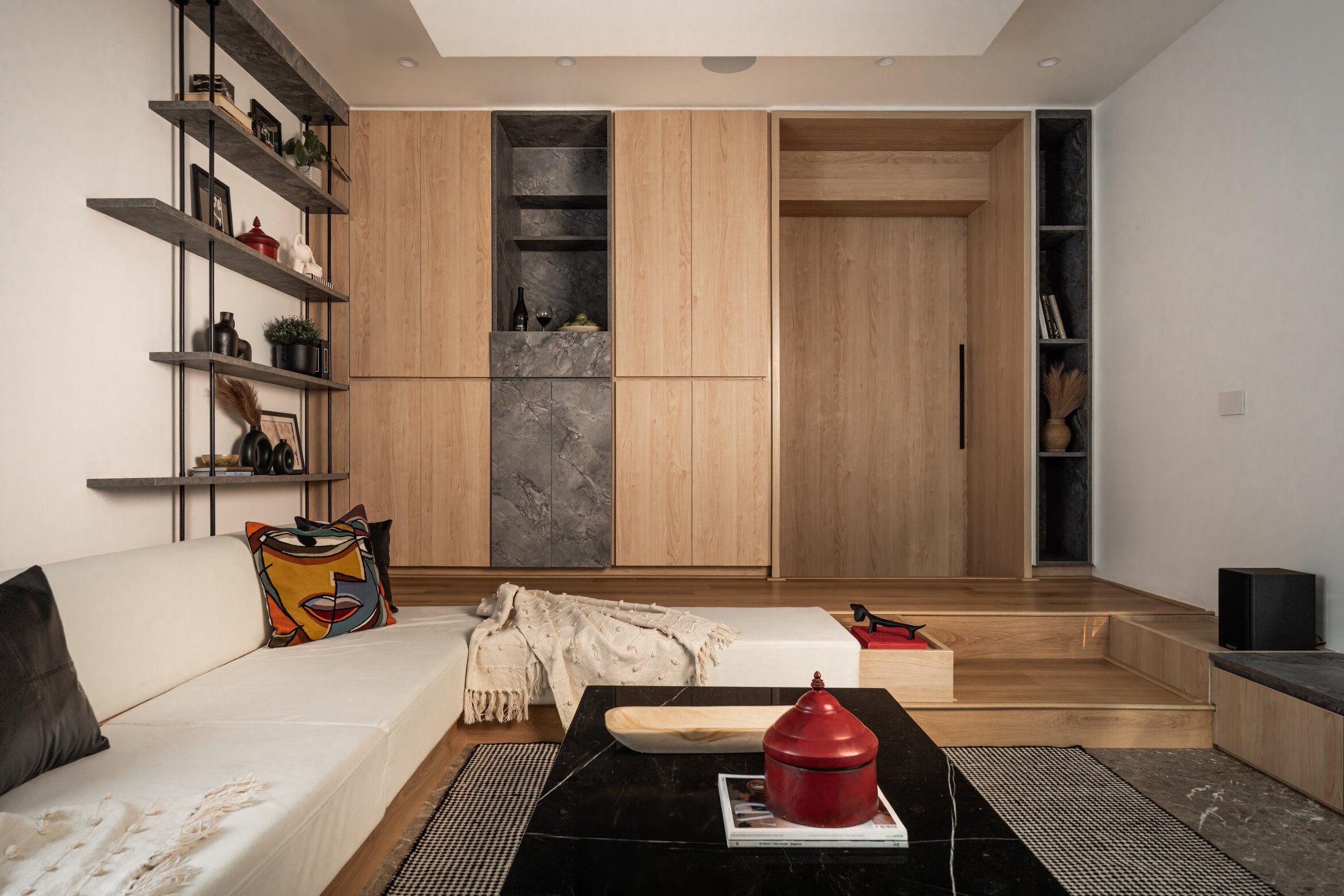
Monolithic detailing reduces visual noise, while built-in elements, including the sunken lounge and integrated storage, define zones without interrupting flow.
Related: Texture and memory in a Paddington terrace
What key functional requirements does the design address?
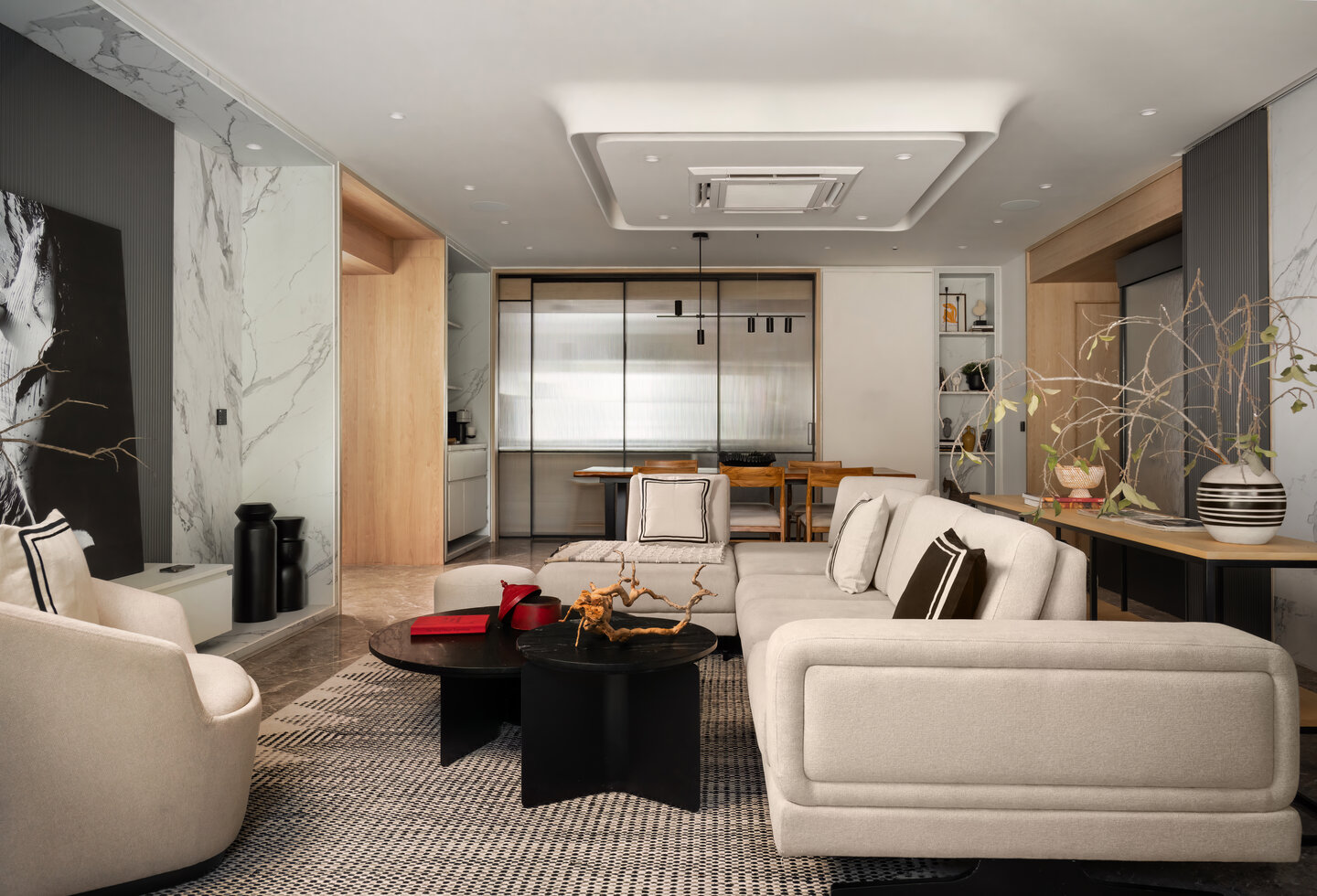
The home is designed to operate in two distinct modes, social and private. Sliding partitions allow spaces to expand for hosting or close down for retreat, enabling different levels of interaction and privacy.
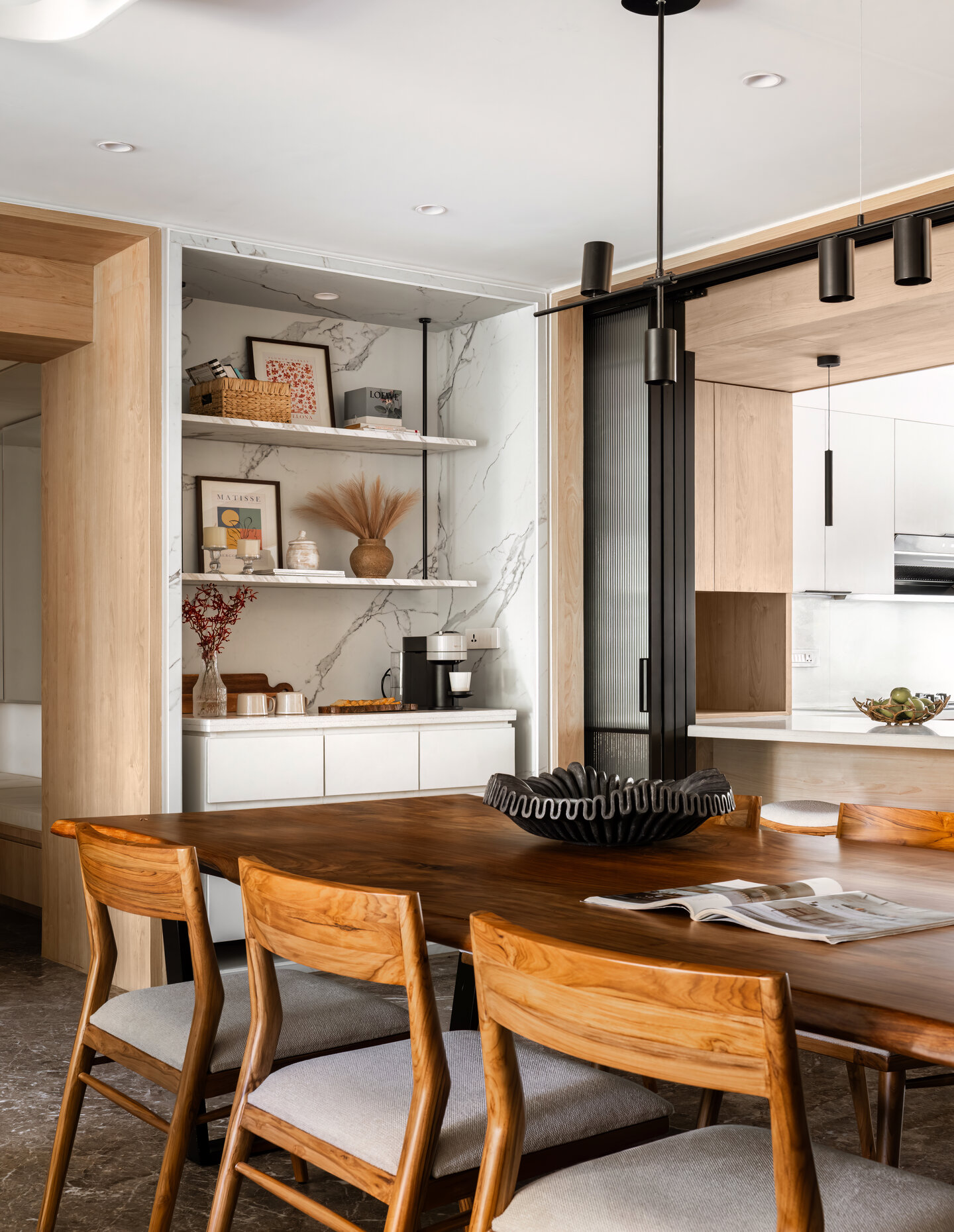
Dedicated zones support specific patterns of use. The sunken lounge accommodates both gathering and quieter activities such as meditation, with a built-in bar that can be concealed when not in use. The coffee bar near the kitchen anchors daily routines, doubling as a serving point when hosting.
What are your favourite parts or moments in the design?
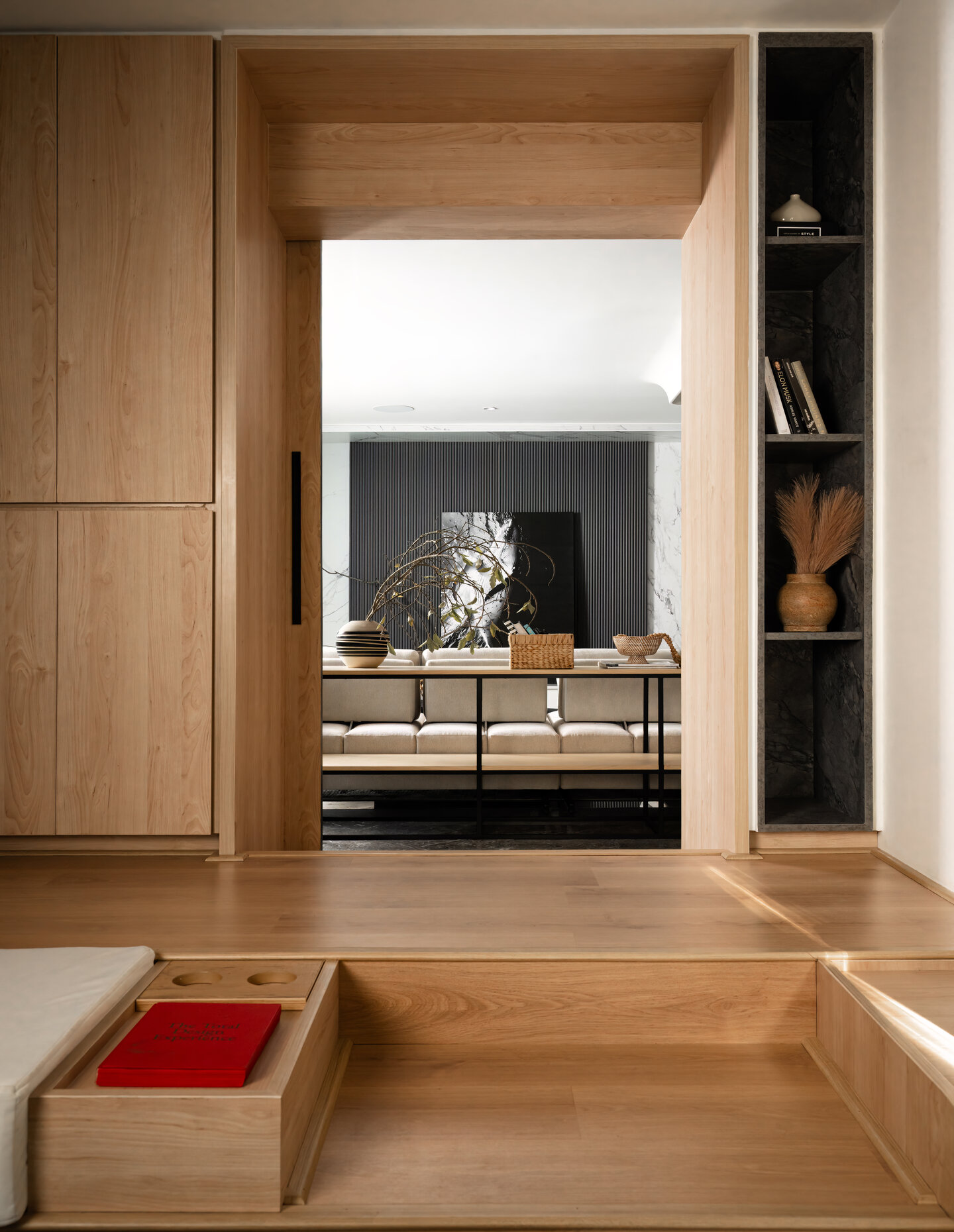
The transition into the concealed sunken lounge behind elephant grey door panels stands out as a defining moment, where a shift in level and enclosure creates a more intimate setting within the home.
Oak portals run through the plan as pared-down thresholds, creating pauses and framing movement between spaces. This is especially evident in the kitchen, where fluted glass sliding doors offer a softer boundary, allowing privacy to be adjusted without fully disconnecting it from the rest of the home.
A greyscale portrait of a whale above the headboard in the master bedroom introduces a quieter, more personal moment, tying back to the couple’s shared experiences of travel and water.
A coffee bar tucked into the dining area becomes an informal hub, used for slower mornings and doubling as a bar when hosting.
The cascading water feature in the dining area introduces a continuous, ambient presence within the shared spaces.