
“Our clients were incredibly design-focused,” director Ben Ellul reflects. For him, the outcomes were the result of a rare alignment between ambition, collaboration and an ingrained passion for detail by the owners.
“Invested in the outcome from the beginning, they [the clients] were driven to develop and resolve each detail, which then also pushed all of us within the team – architect, builder and fabricators – to refine every element of the project.”
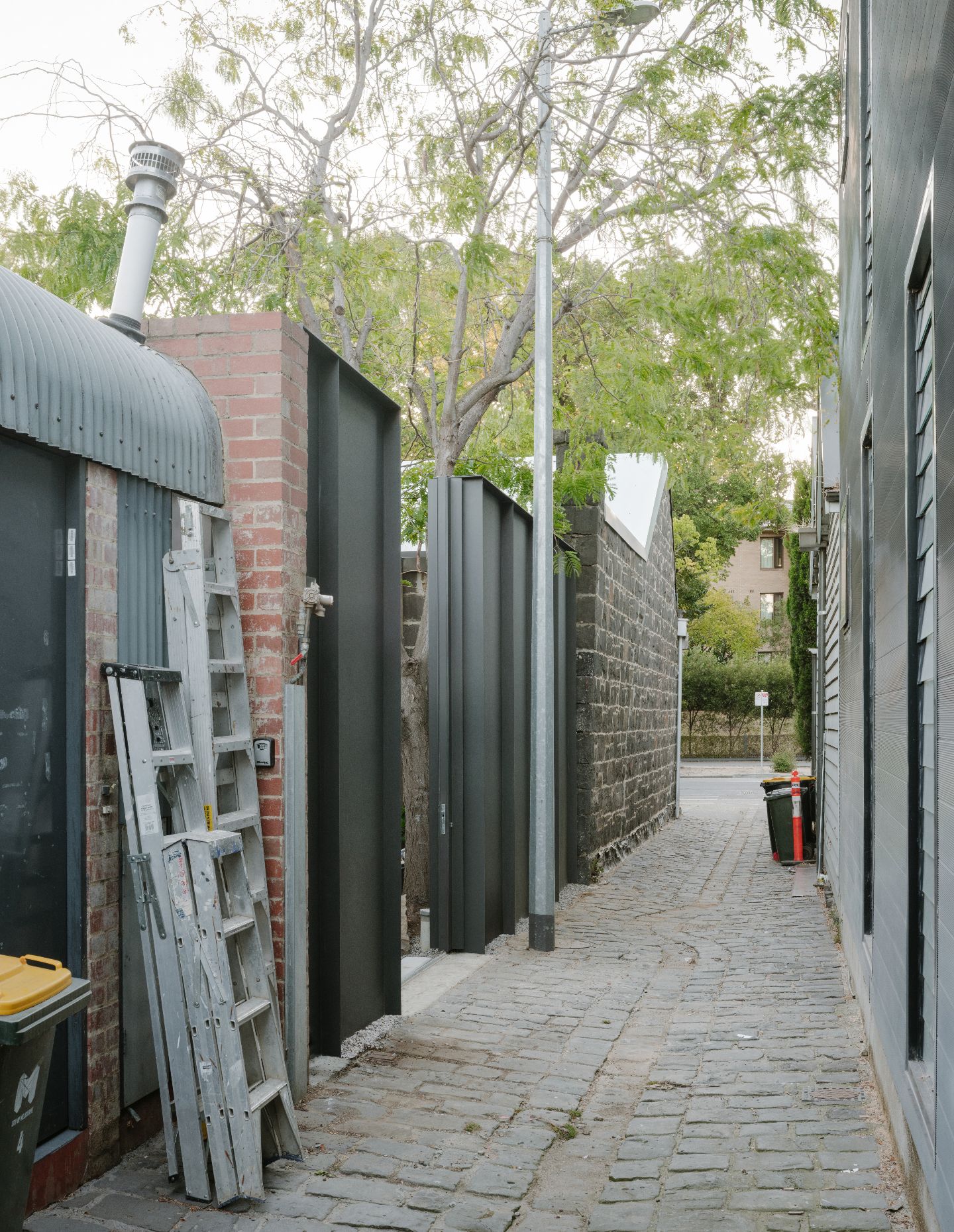
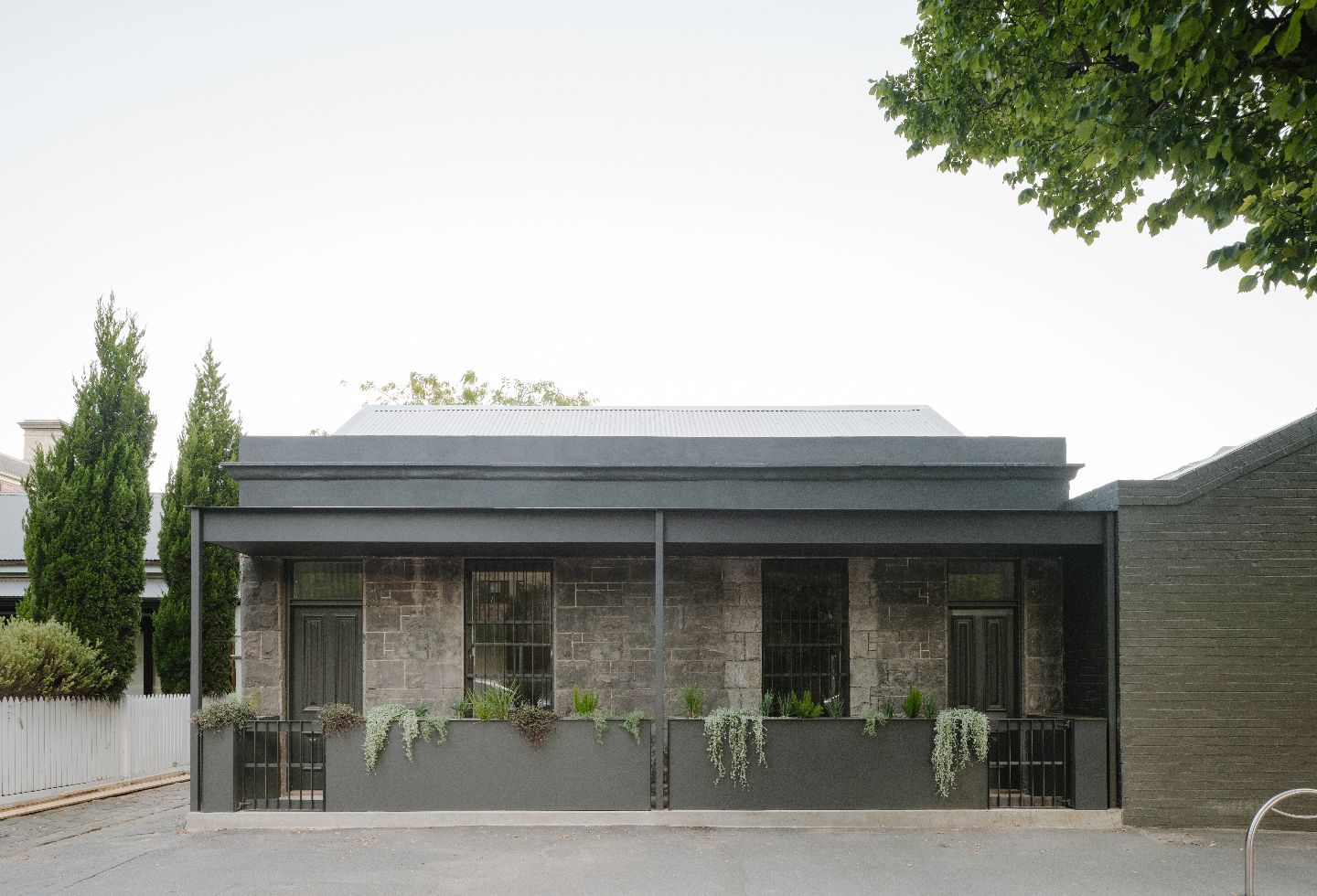
Located opposite Melbourne University within the CBD and bordered by a northern laneway, the cottage had long suffered from ad-hoc conversions over the years. The result was familiar, seeing a warren of disconnected rooms – allocated as student housing and each almost independent from the other. The heritage restrictions required the original bluestone envelope to remain intact, creating a framework to work around and creatively develop solutions within.
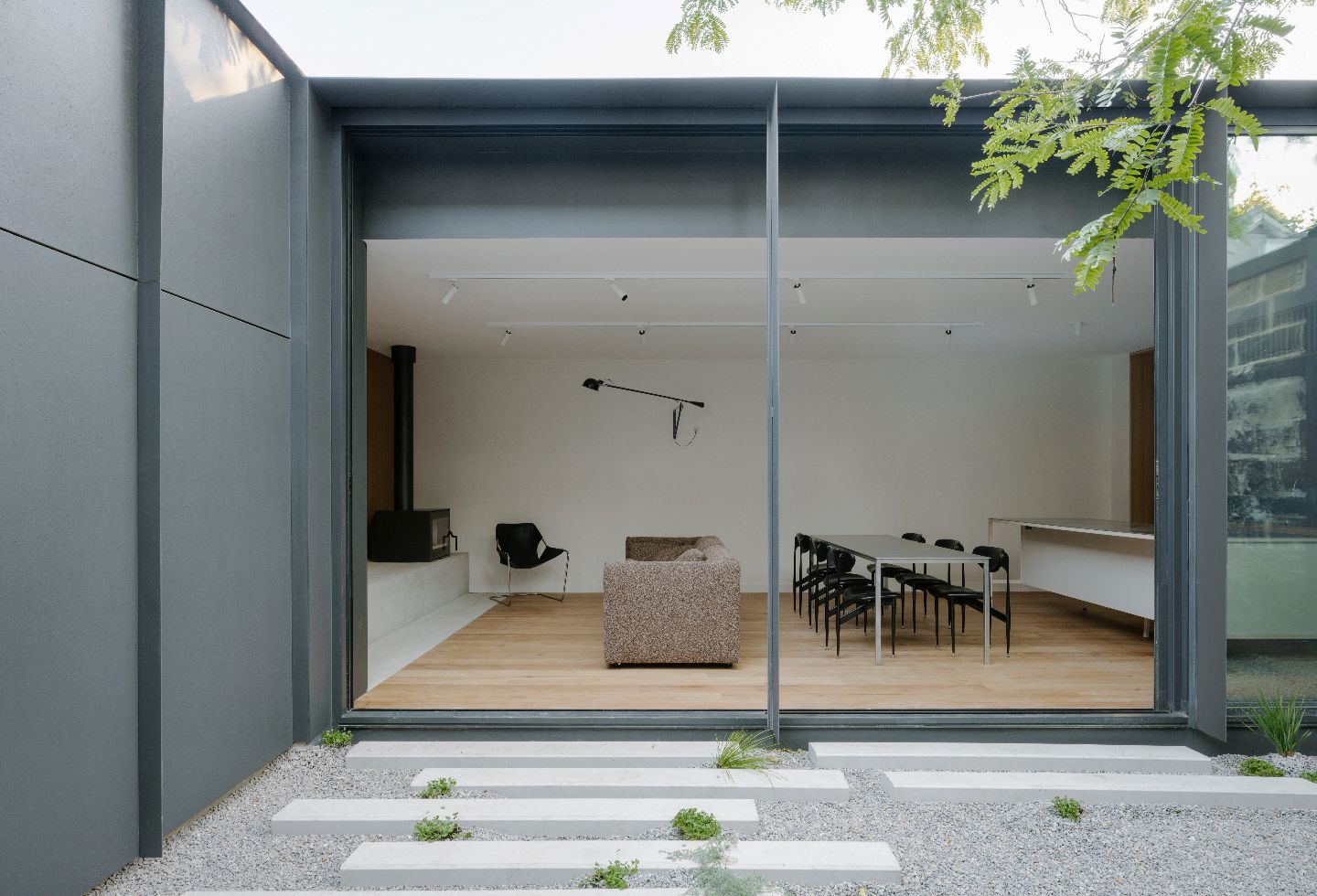
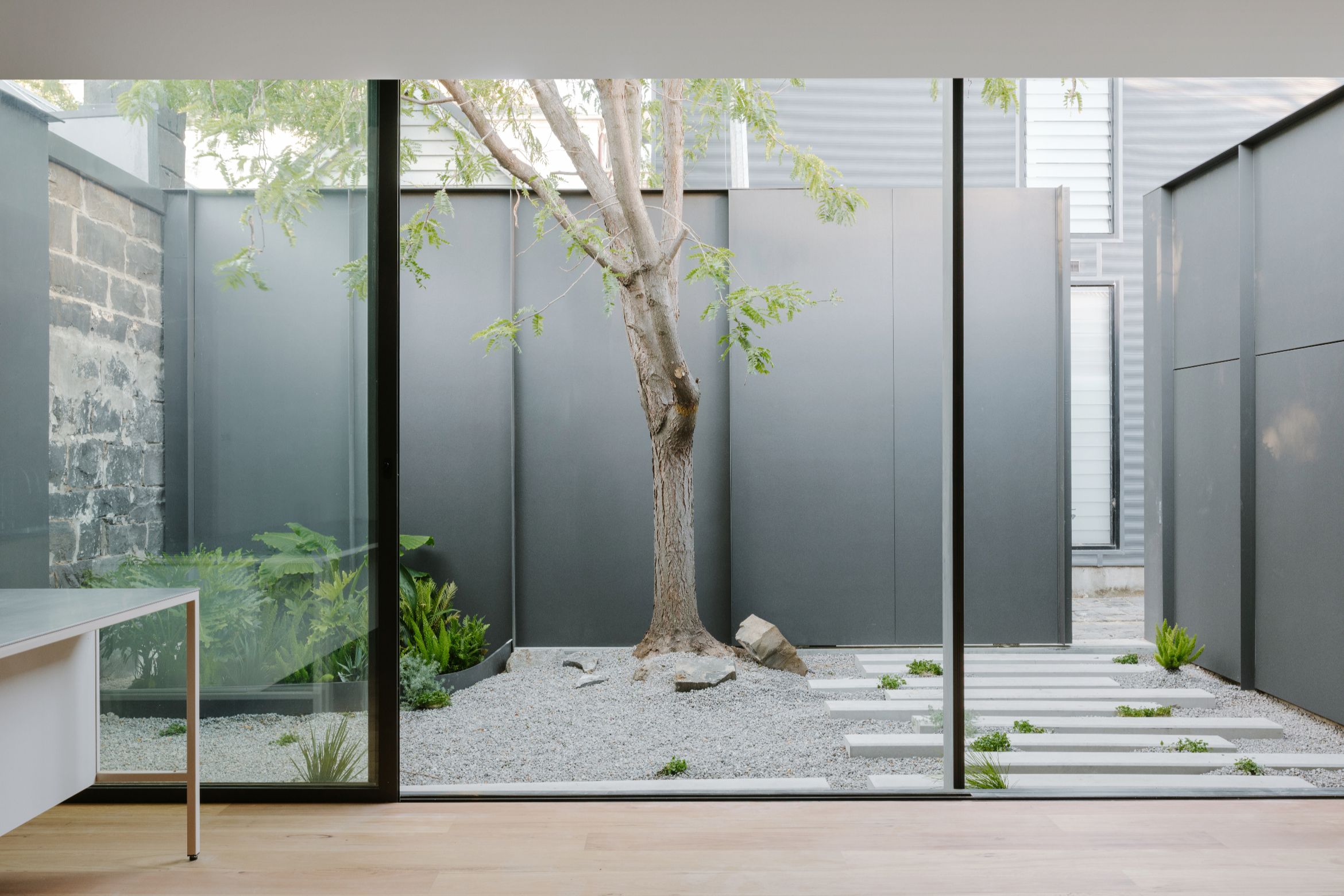
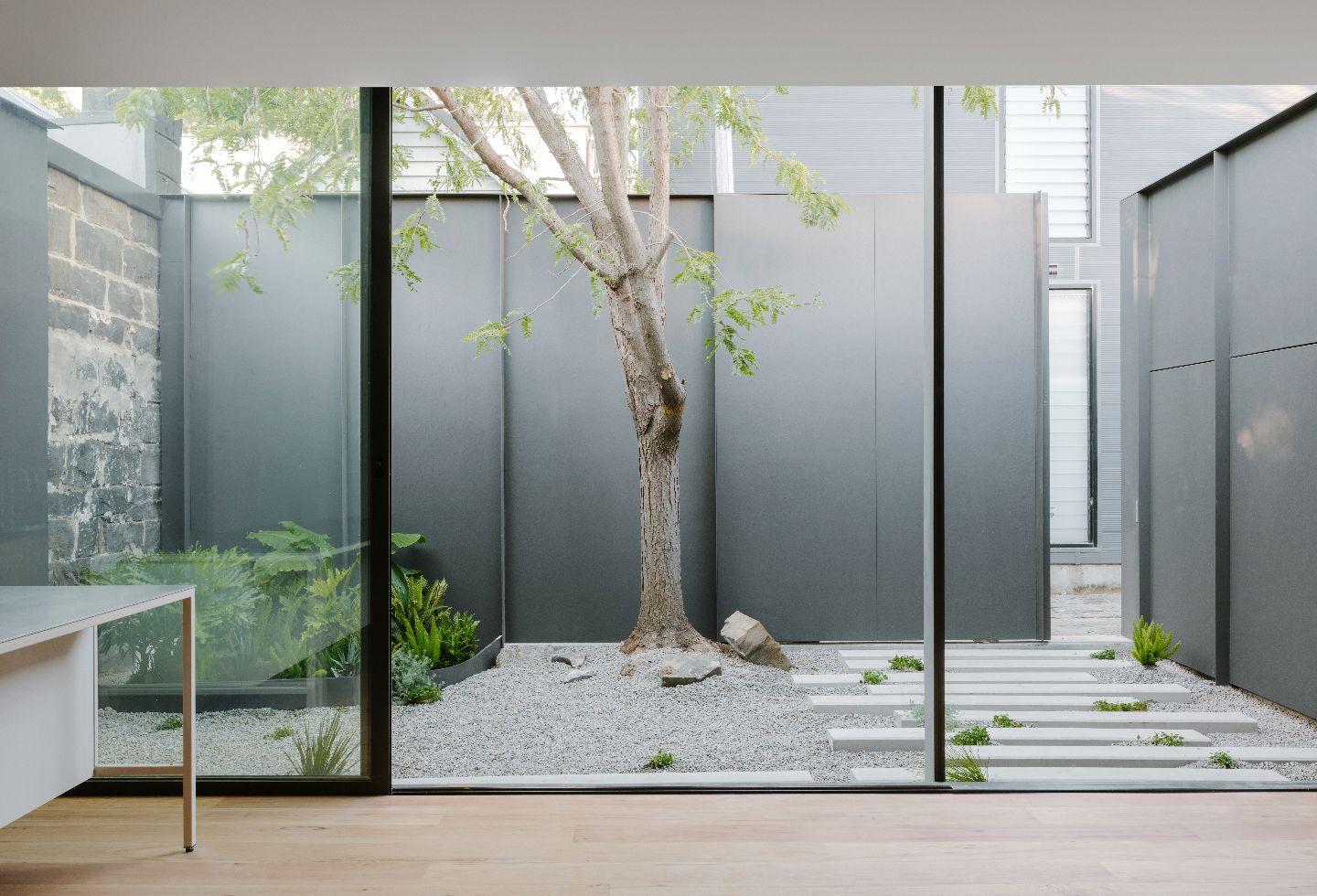
The interior was completely stripped back, making way for a more rigorous and rational floor plan within the restored shell to emerge. A key priority was to ensure both privacy and daylight were enhanced, with bedrooms, living spaces and amenities arranged to optimise access to the virtues of the site and its orientation. A new, recessive living pavilion sits quietly at the rear, as its own sanctuary that wraps around the existing Gleditsia tree.
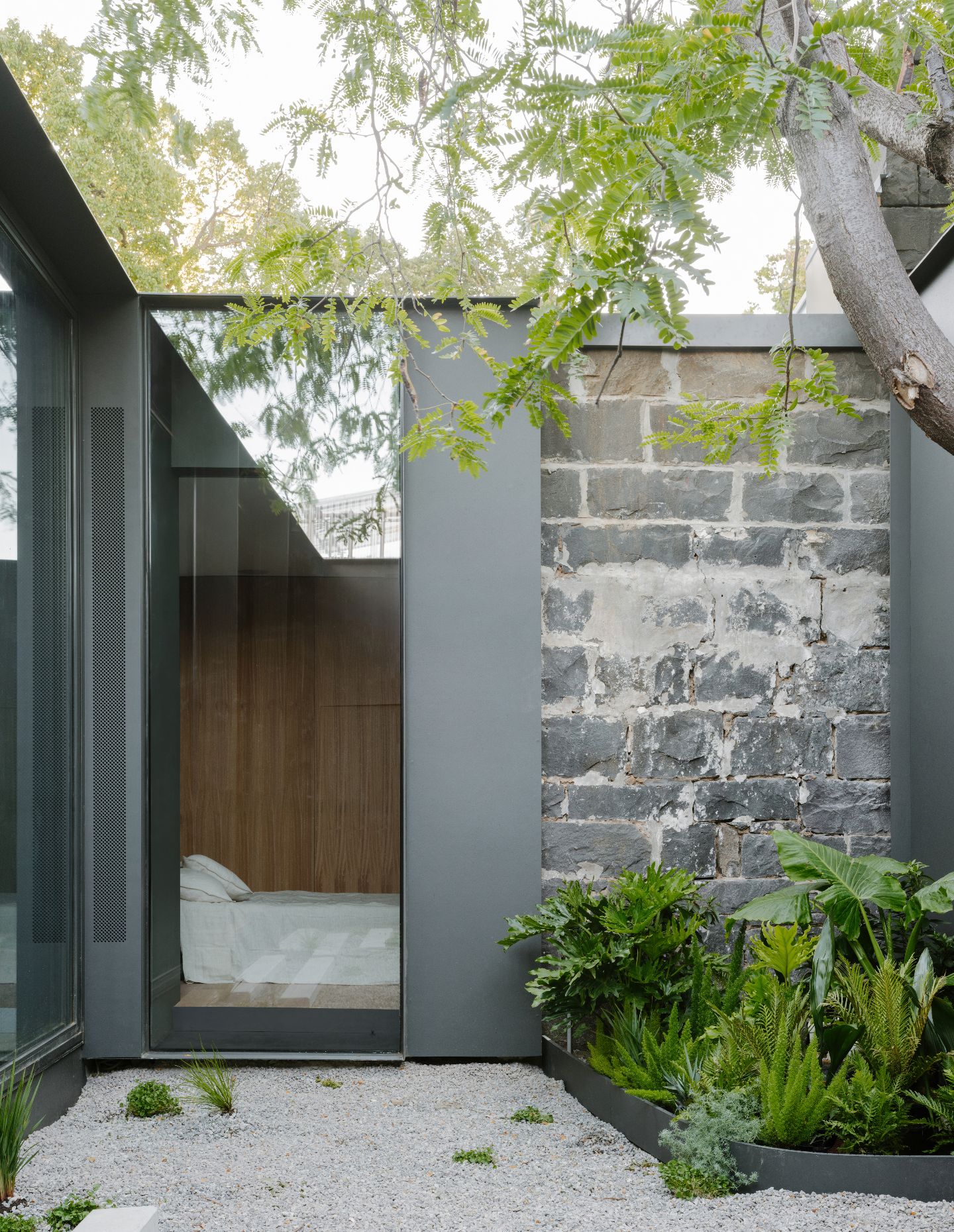
“From the beginning, we wanted to create an inner-city refuge – something that felt completely removed from the noise outside the front door,” says Ellul. “The material palette and detailing were essential to unlocking a genuine feeling of calm throughout.”
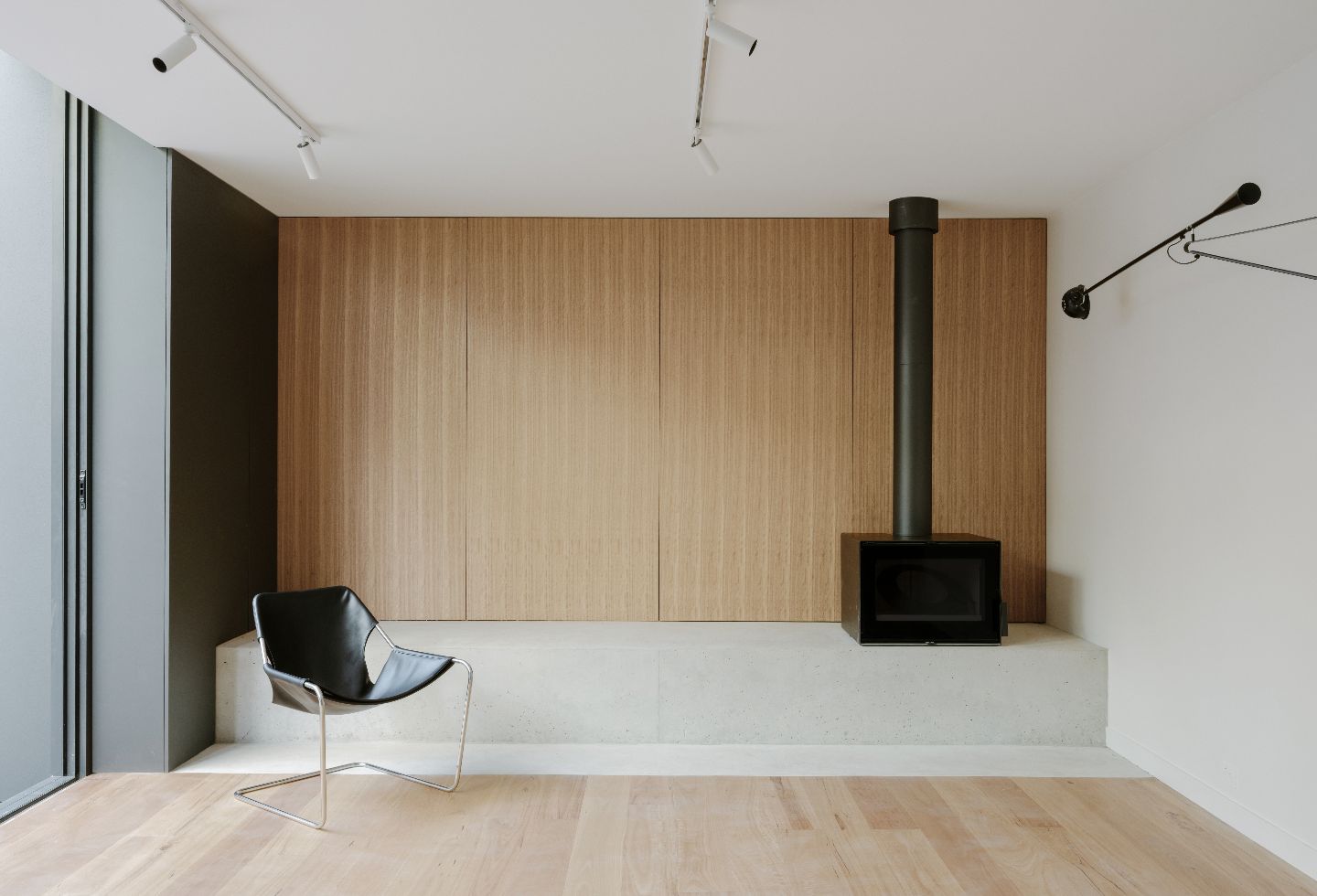
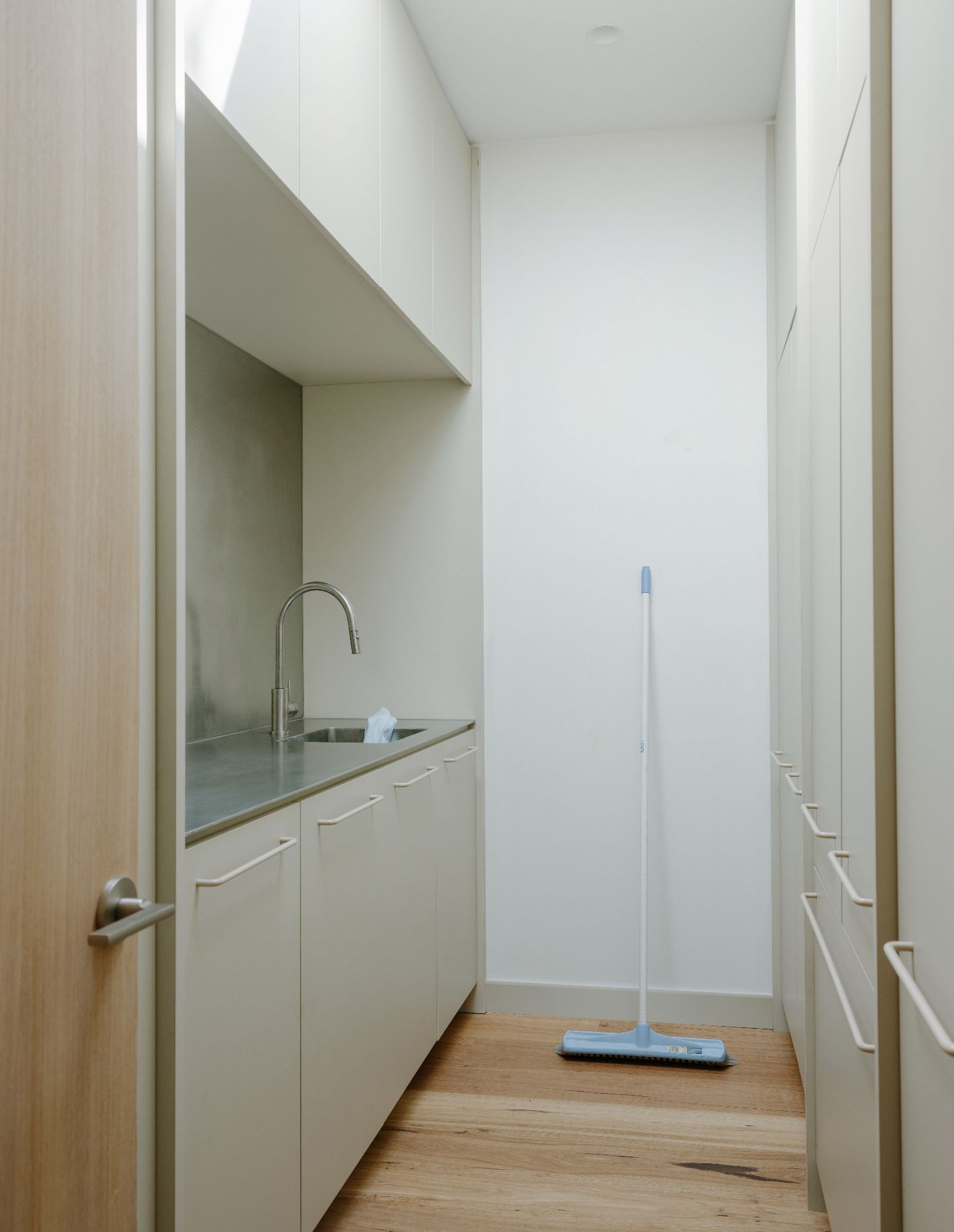
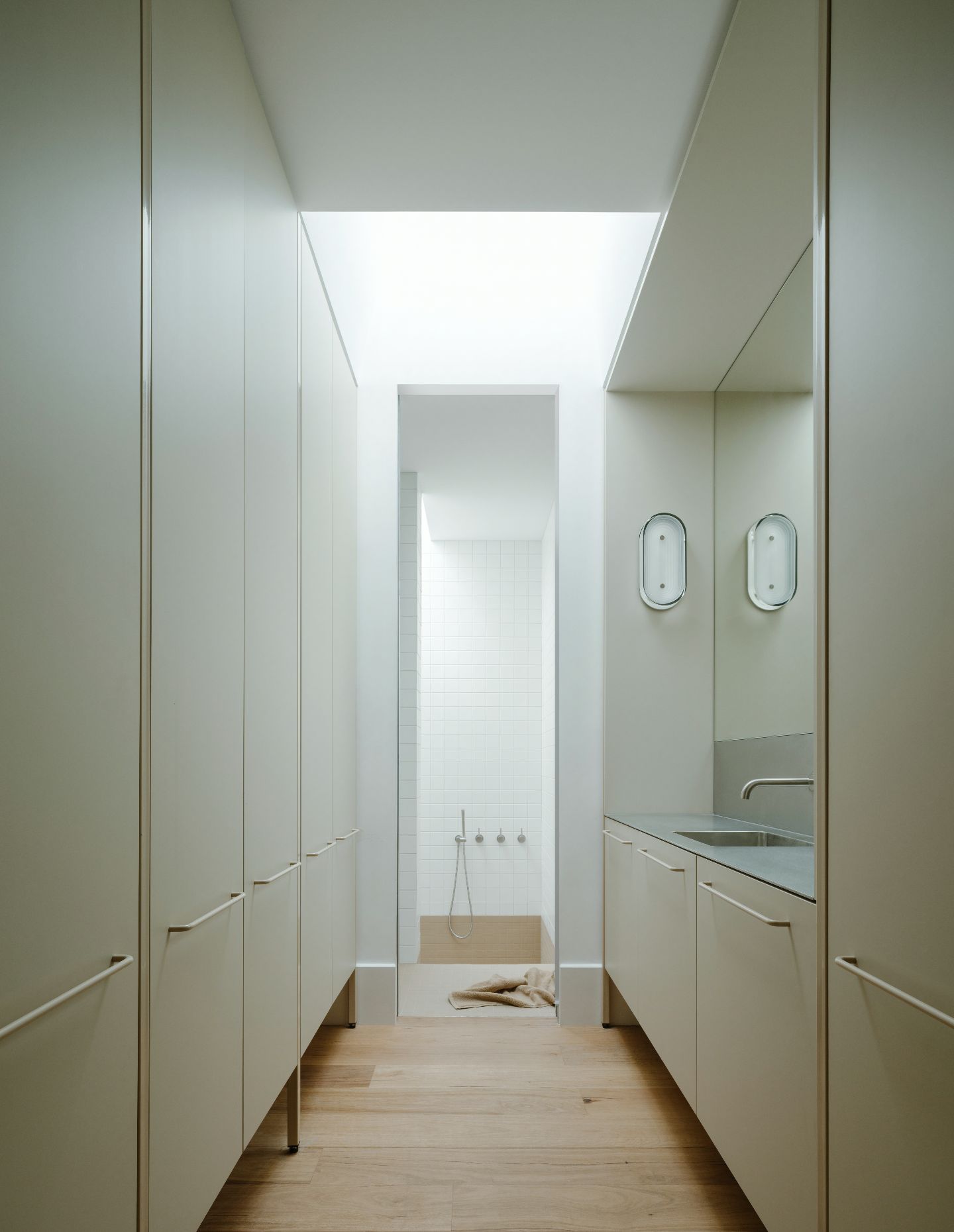
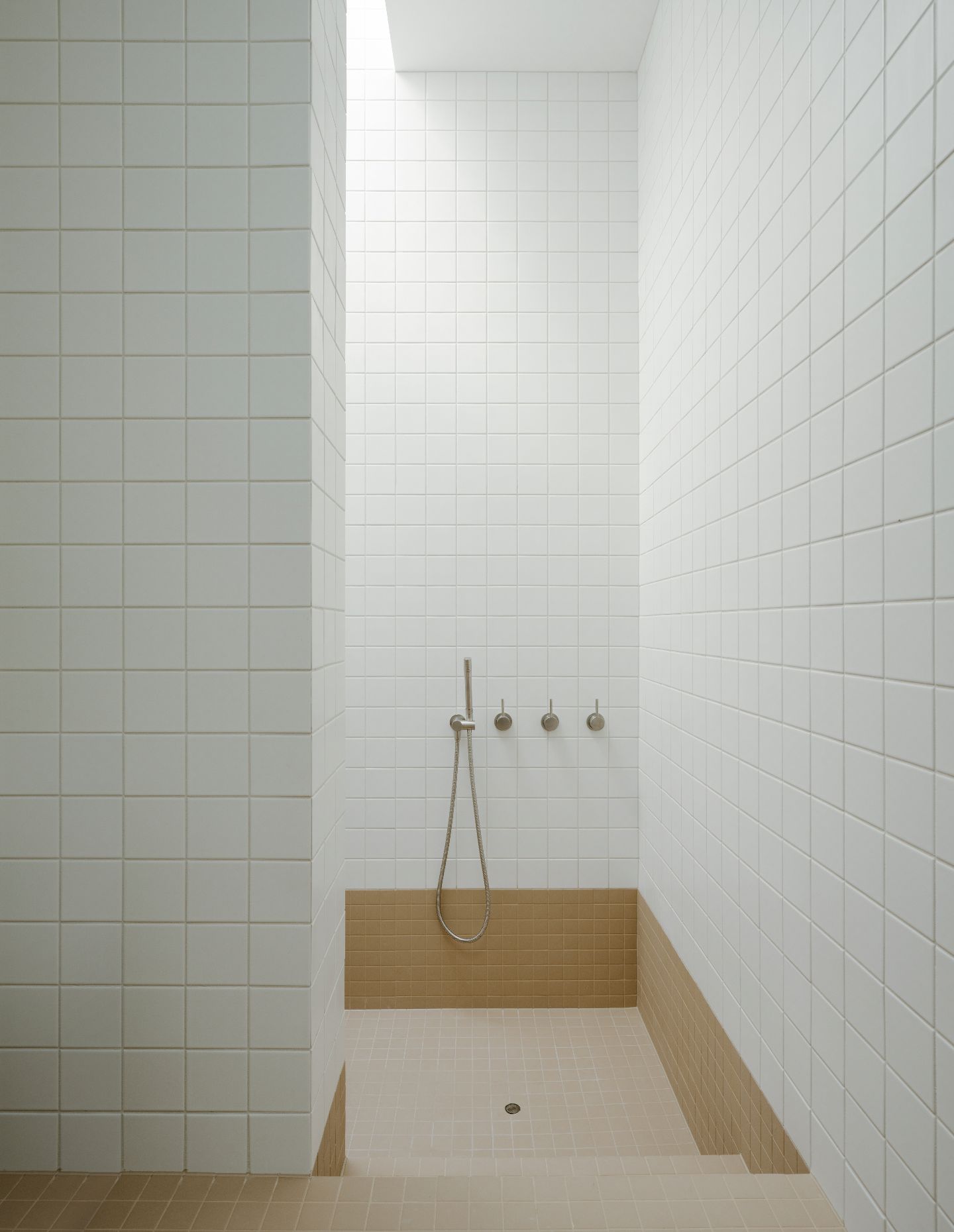
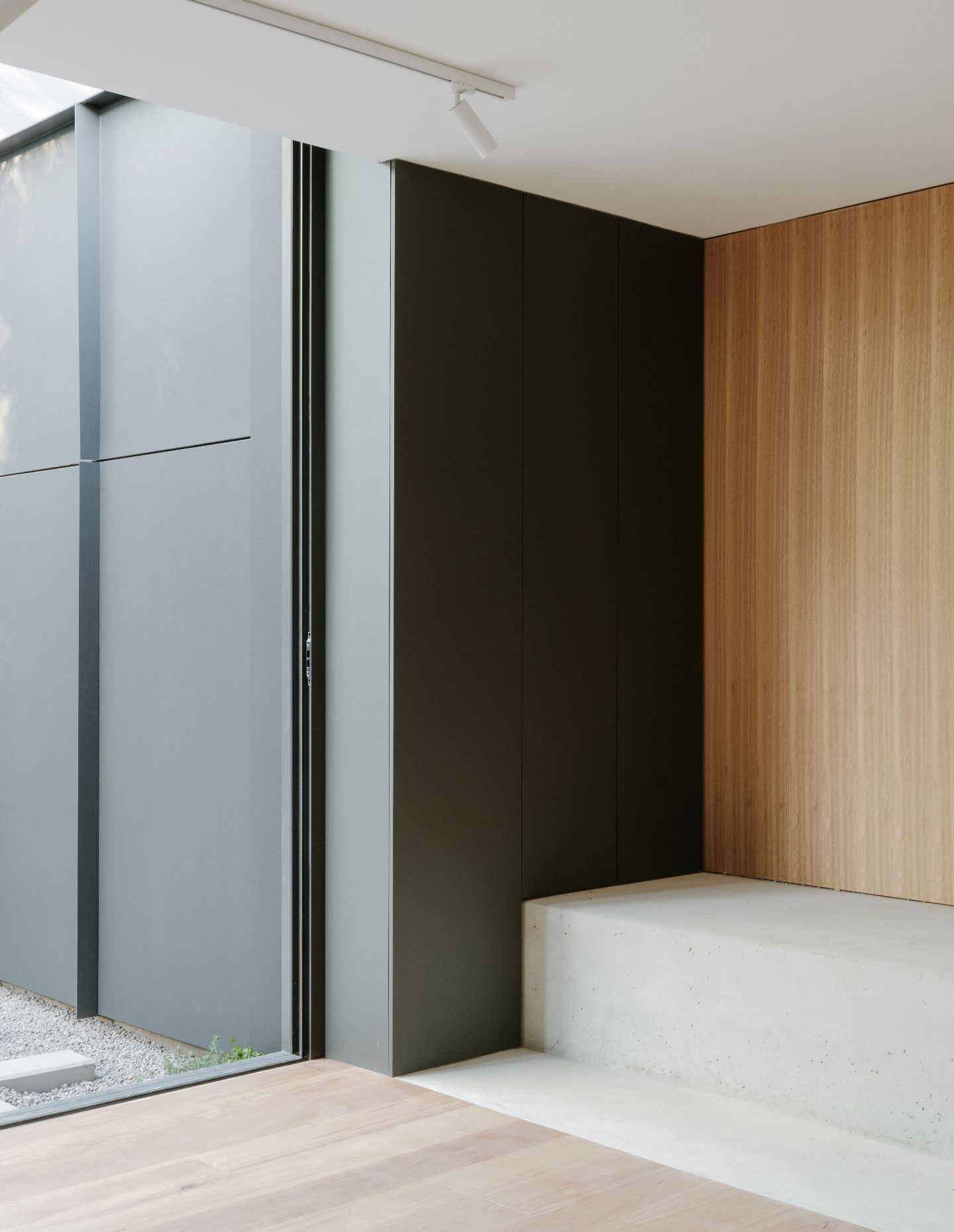
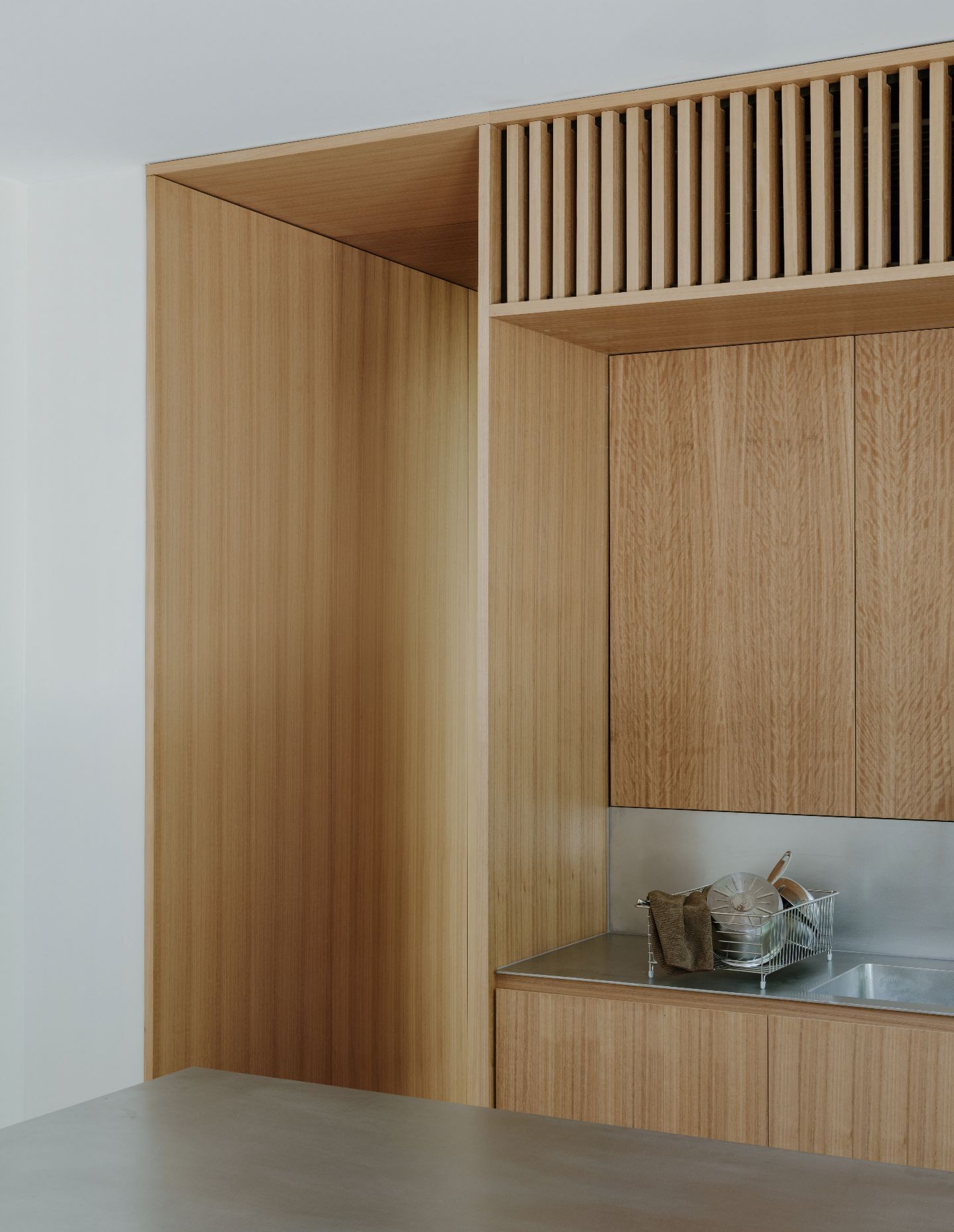
A palette comprising of blackbutt, muted metalwork, glazed ceramic tiles, cement sheet, steel plates and stainless steel is intentionally restrained. As such, it avoids competing with the existing heritage, instead acting as a considered counterbalance. As a core part of his practice, Ben ensures that minimal variations to details occur across projects, and in this case seeing only two or three key details utilised throughout. The repetition of discipline helps overlay a cohesion between eras, while also reducing costs. From the custom dining table – a cornerstone to each Ellul Architecture project – to the expressive steel baffle shading the pavilion, the clients’ desire for craft was a consistent undercurrent to the design.
“There was a beauty in the repetition,” Ellul notes. “By interrogating and purifying a small number of details, we could give the house a clarity and elegance that felt timeless, but also buildable.”
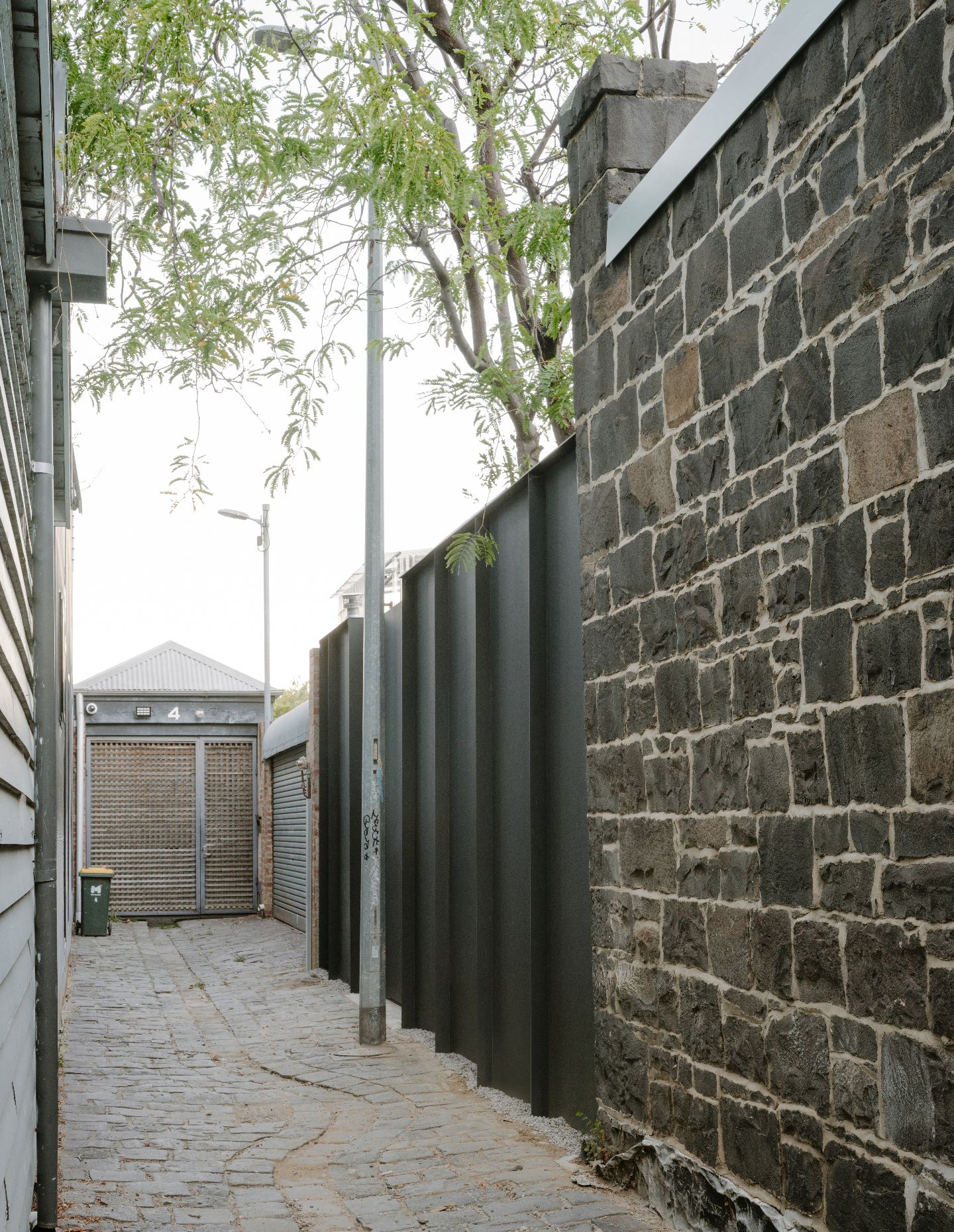
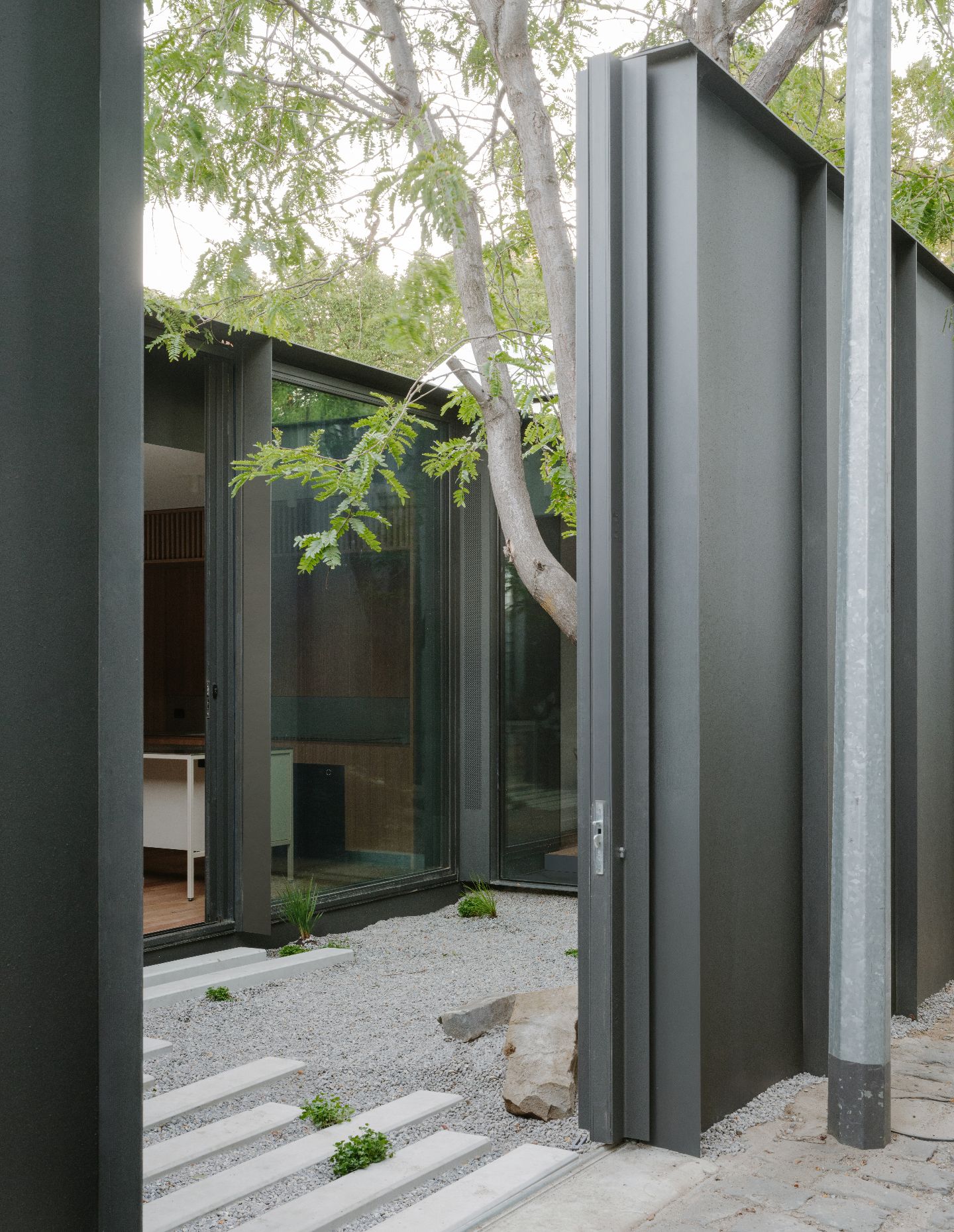
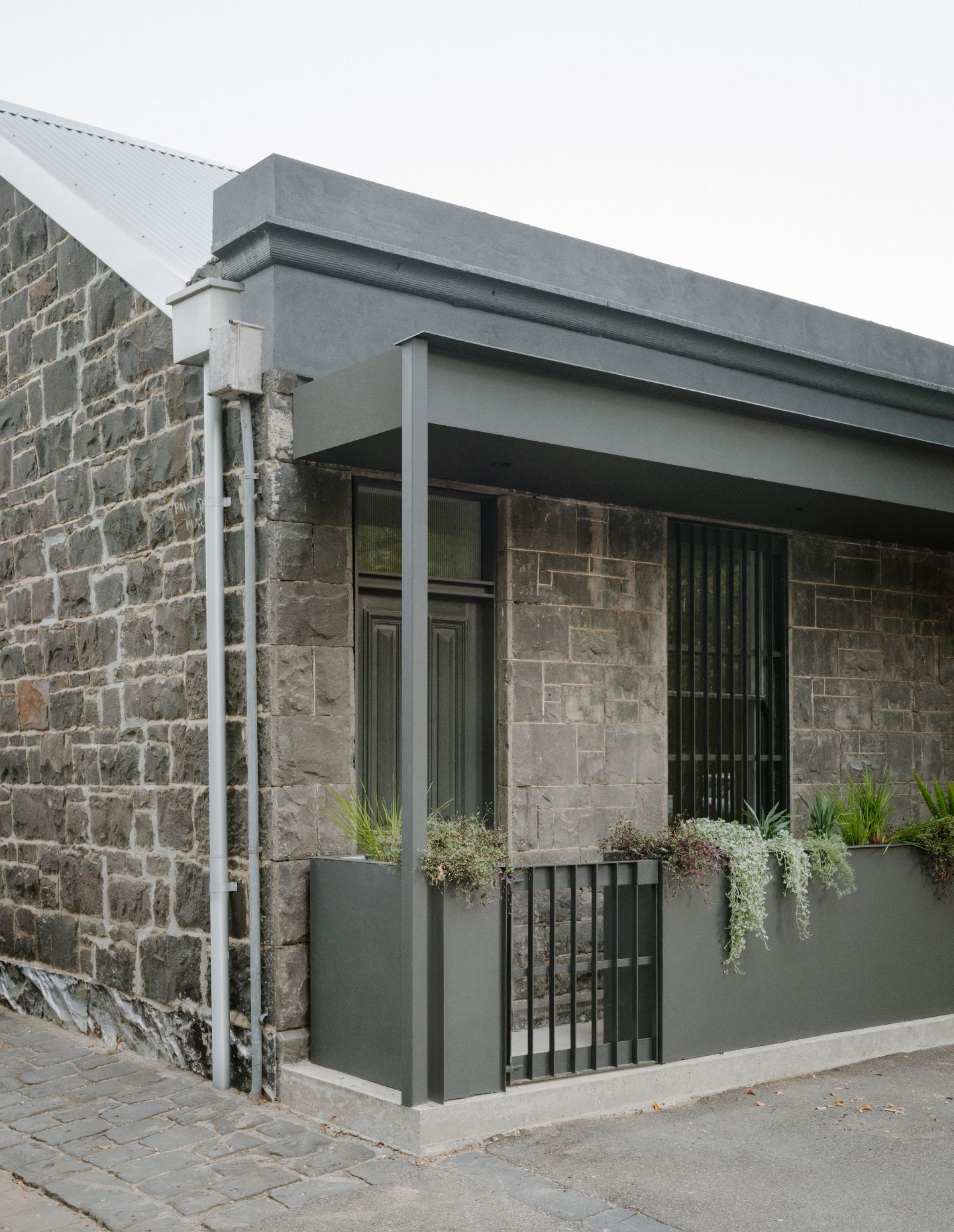
Early builder involvement proved crucial on the tight, complex site. Poor soil conditions led to an efficient suspended subfloor system, minimising excavation. Designing to standard material sizes reduced waste, while familiar details from previous projects provided cost certainty.
Related: Raintree Home
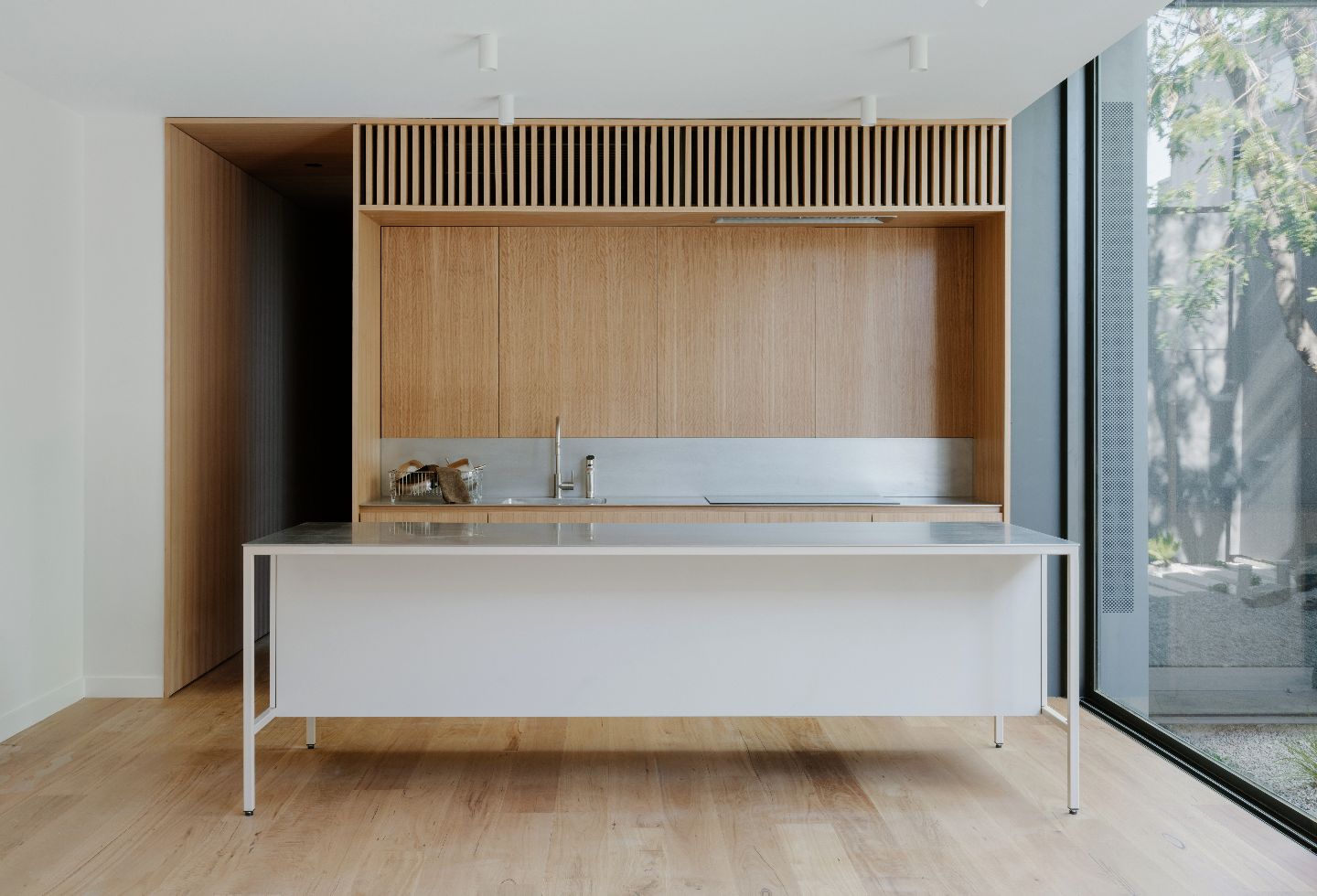
“We spent a lot of time workshopping the construction methodologies as part of the process of designing to ensure the refinement didn’t merely feel like an aesthetic priority, but an achievable and integral component of the project,” Ellul explains.
The result is a home that gives back as much as it shelters: combining a proud, restored heritage façade, a courtyard that enhances biodiversity, a streetscape enriched by new plantings and a family sanctuary connected to its neighbourhood through an operable rear façade.
Ellul concludes: “The project was about breathing new life into a neglected building – and making something beautiful, buildable, rigorous, enduring and deeply considered.”