
For Tom Robertson Architects, Coppin House became a study in restraint and renewal: how to preserve the gravitas of a heritage dwelling while allowing contemporary living to take shape around it.
“The majority of the heritage elements at the front [of the home] were preserved to maintain the original character,” director Tom Robertson describes. “While some of the detailing was simplified, it was the result of a considered balancing of moments that would allow for a softening of the typical contrasts that tend to exist between old and new.”
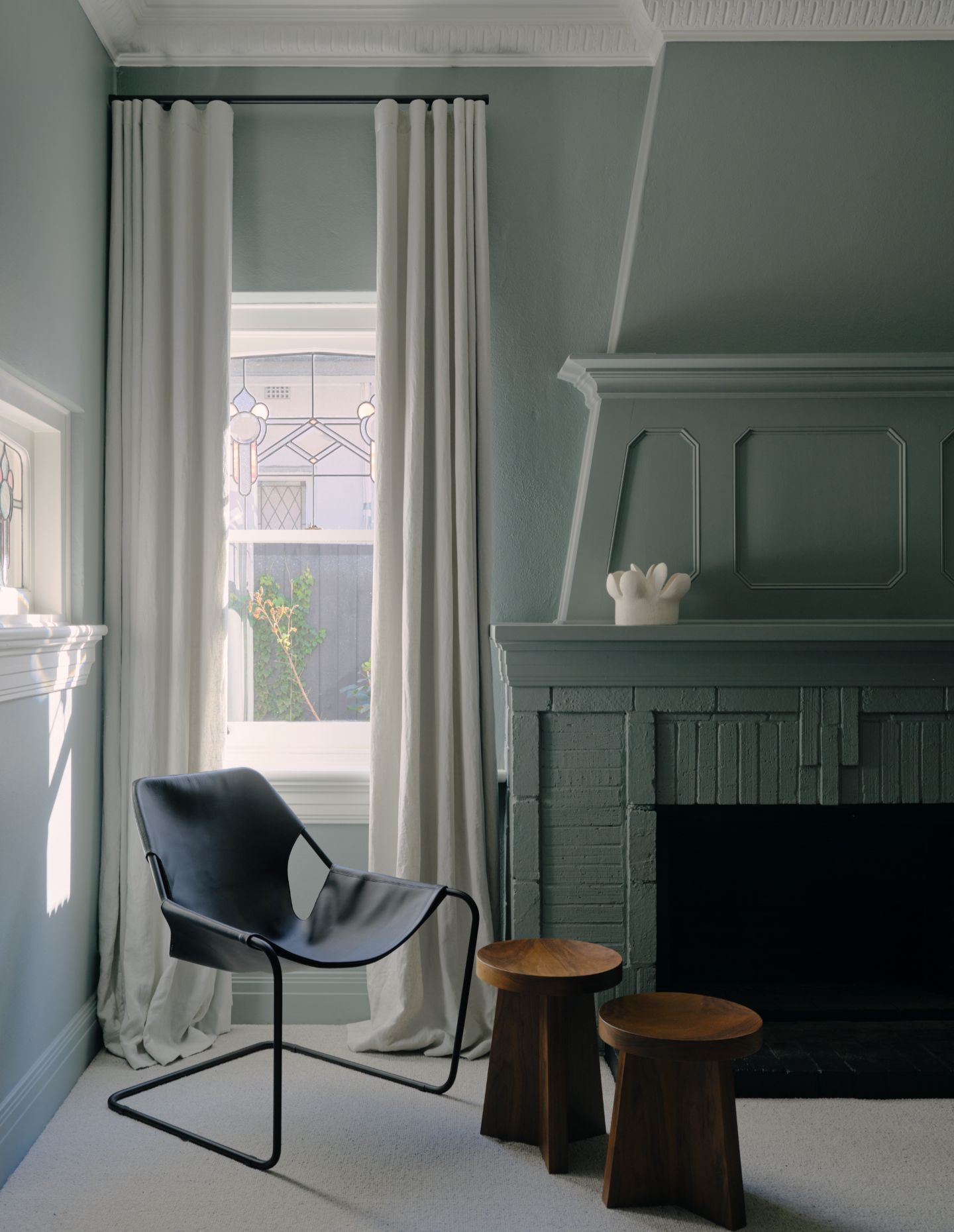
With decades of ad-hoc renovations peeled away, the house was able to be returned to a coherent baseline. Within that revived shell, certain spaces gently shift register – most notably the study, where a singular deep green palette wraps the fireplace, joinery and walls. They combine with a modern and more chromatic gesture, threading elements from the original home into the design language of the extension.

From the outset, it was the focus of lifestyle that was important to the owners. This set the tone for how spaces were arranged, connected and opened between one another, as well as between inside and out. “[The owners] are a large, social family who entertain regularly,” Robertson explains. “We needed places where everyone could come together, but also quieter pockets for retreat – especially as the children grew and privacy became more critical.”
The plan responds accordingly, through an approach that sees zoning rather than separation as being key, allowing connection to remain a constant, even as thresholds tighten or loosen across any given day.
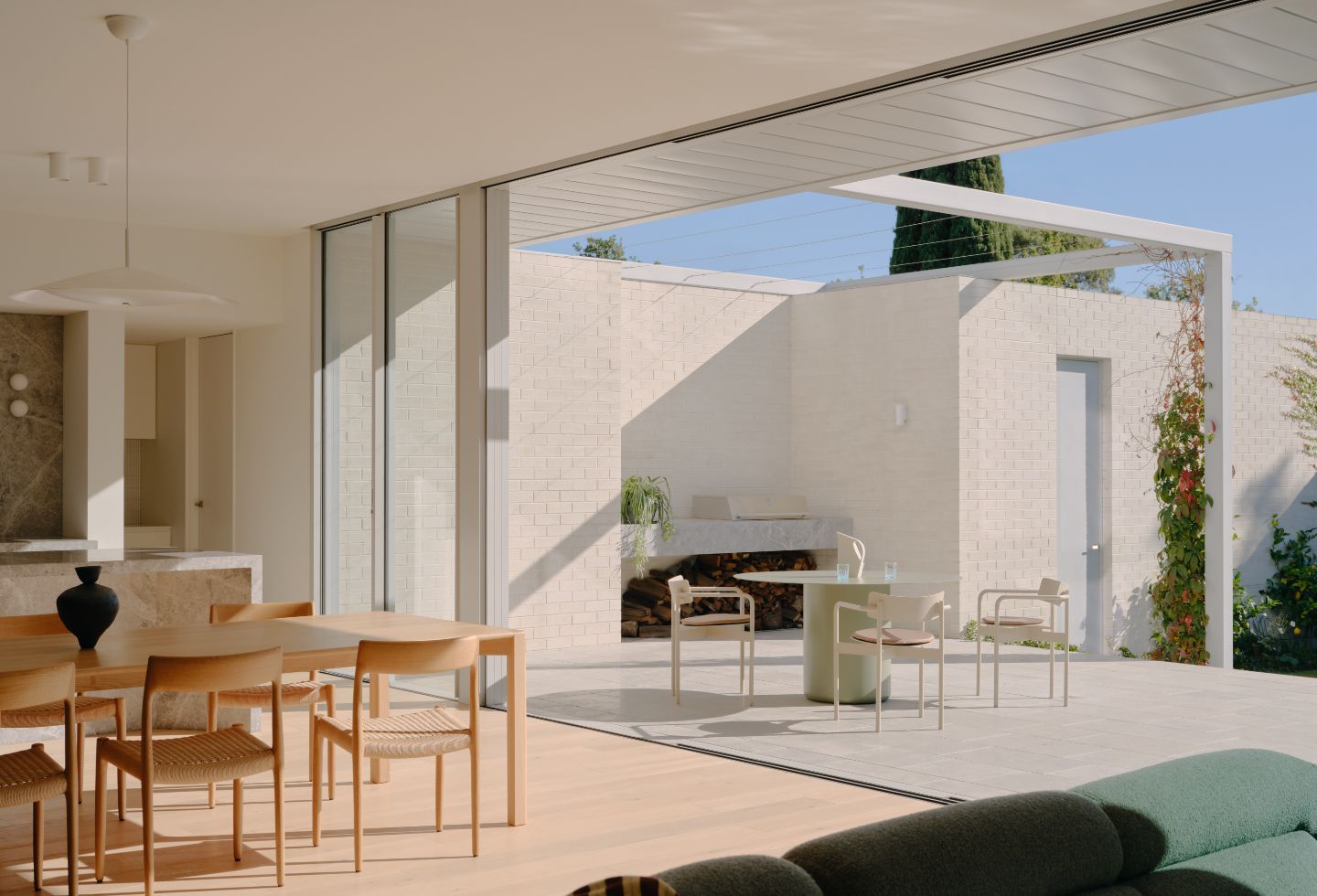
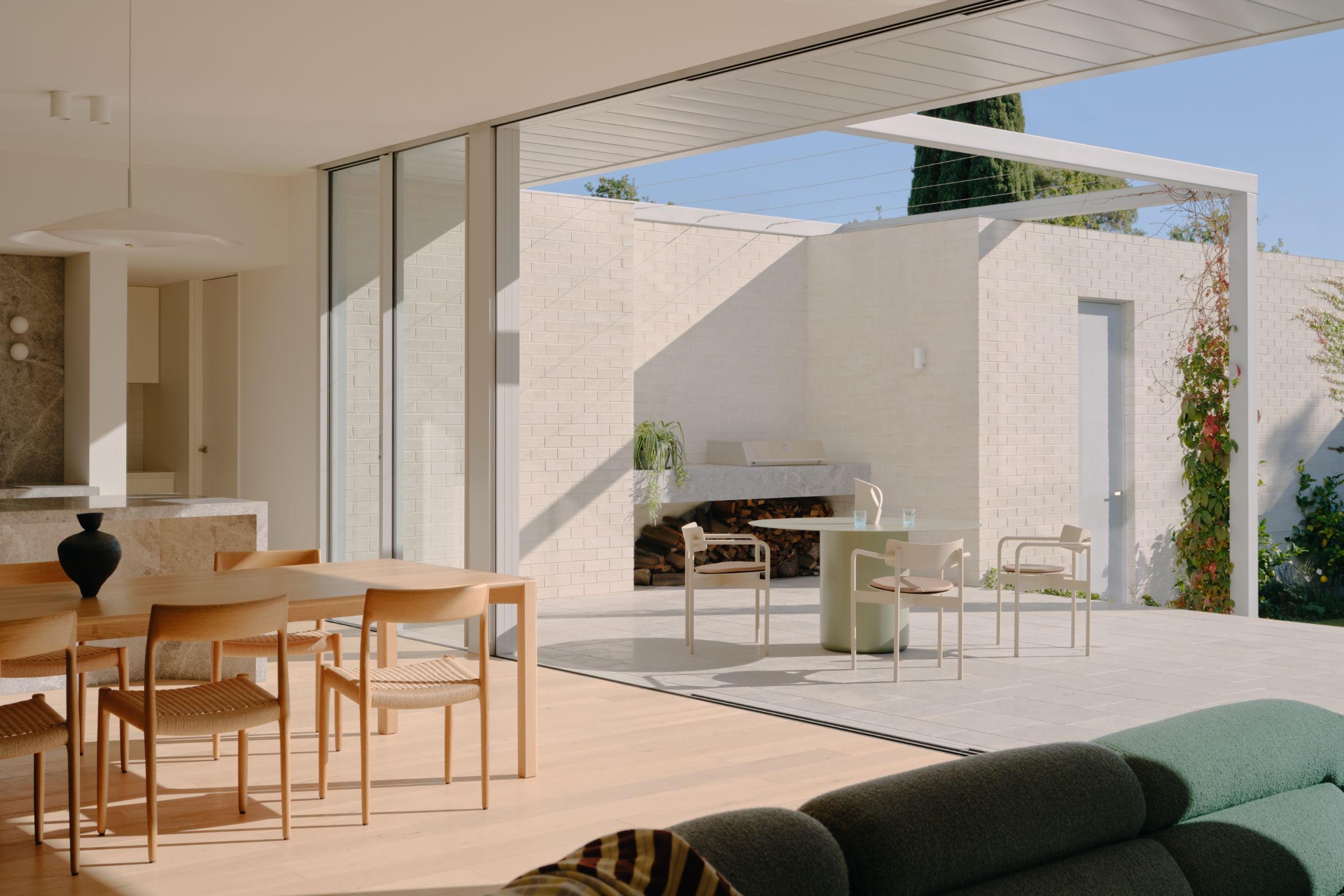
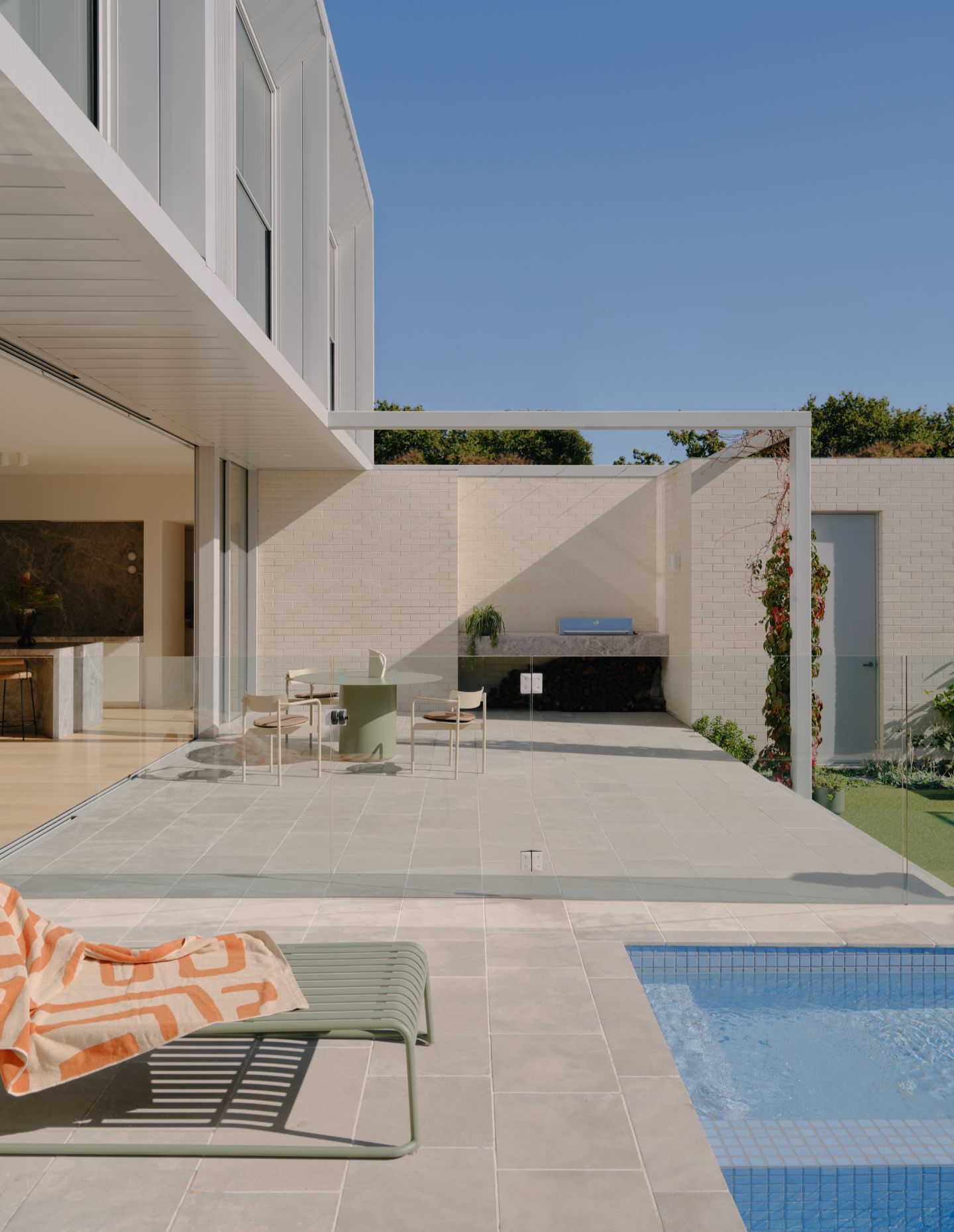
To the north, a double-height pavilion unlocks a need for space, light and a renewed connection to landscape to the rear. A central courtyard becomes the hinge between old and new, acting as a green lung to the home by allowing it to breathe. Coming together as a garden room that pulls greenery deep into the centre of the home while offering a moment of pause, it is also an architectural expression of the solidity of brick and the lightness of the contemporary volume.
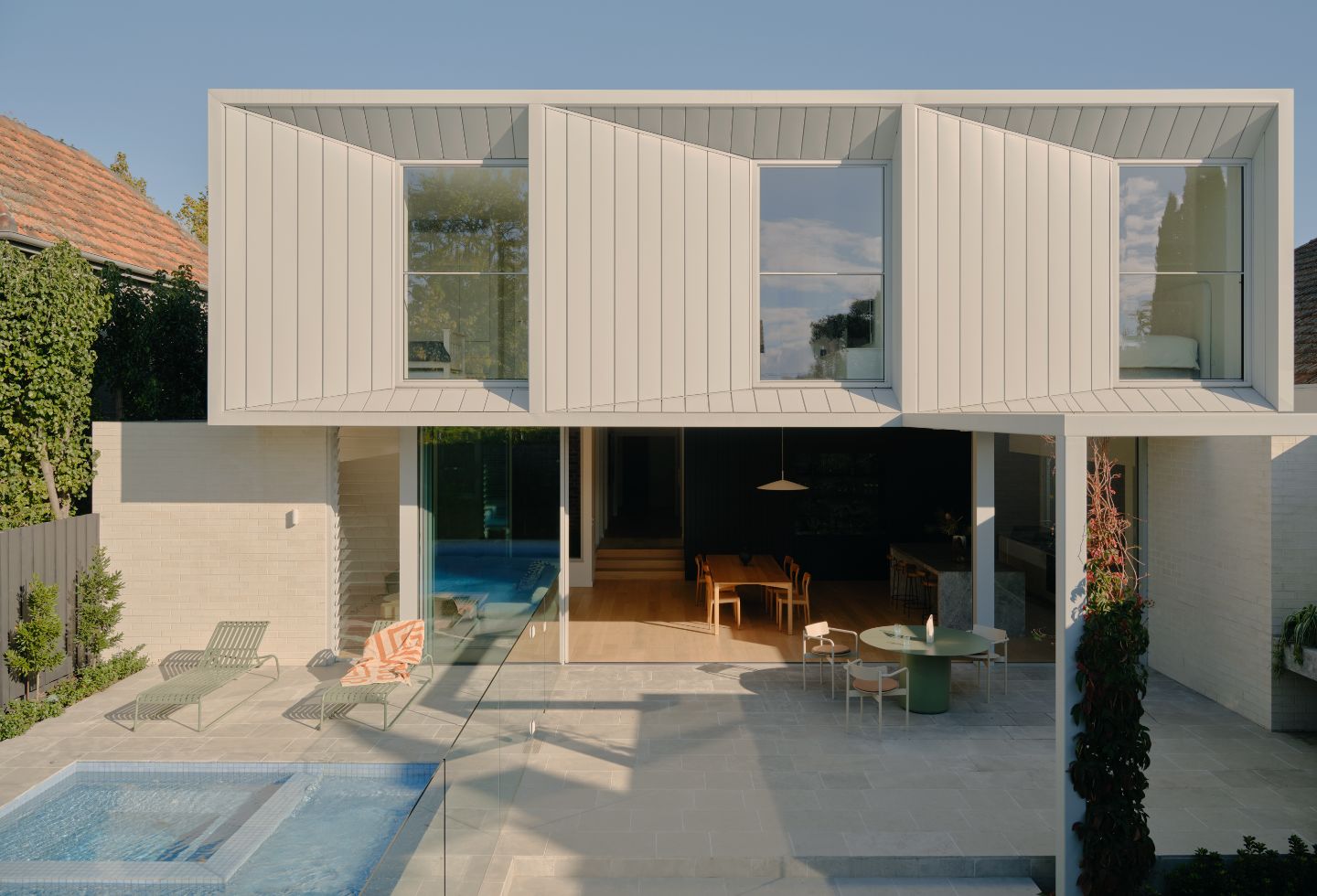
“The connection between living areas and the garden works particularly well,” Robertson says. “It’s not immediately visible, but the spatial logic – the zoning, the passive solar performance – sets the tone for resulting and overwhelming feeling of calm throughout.”
Related: A courtyard house in St Kilda


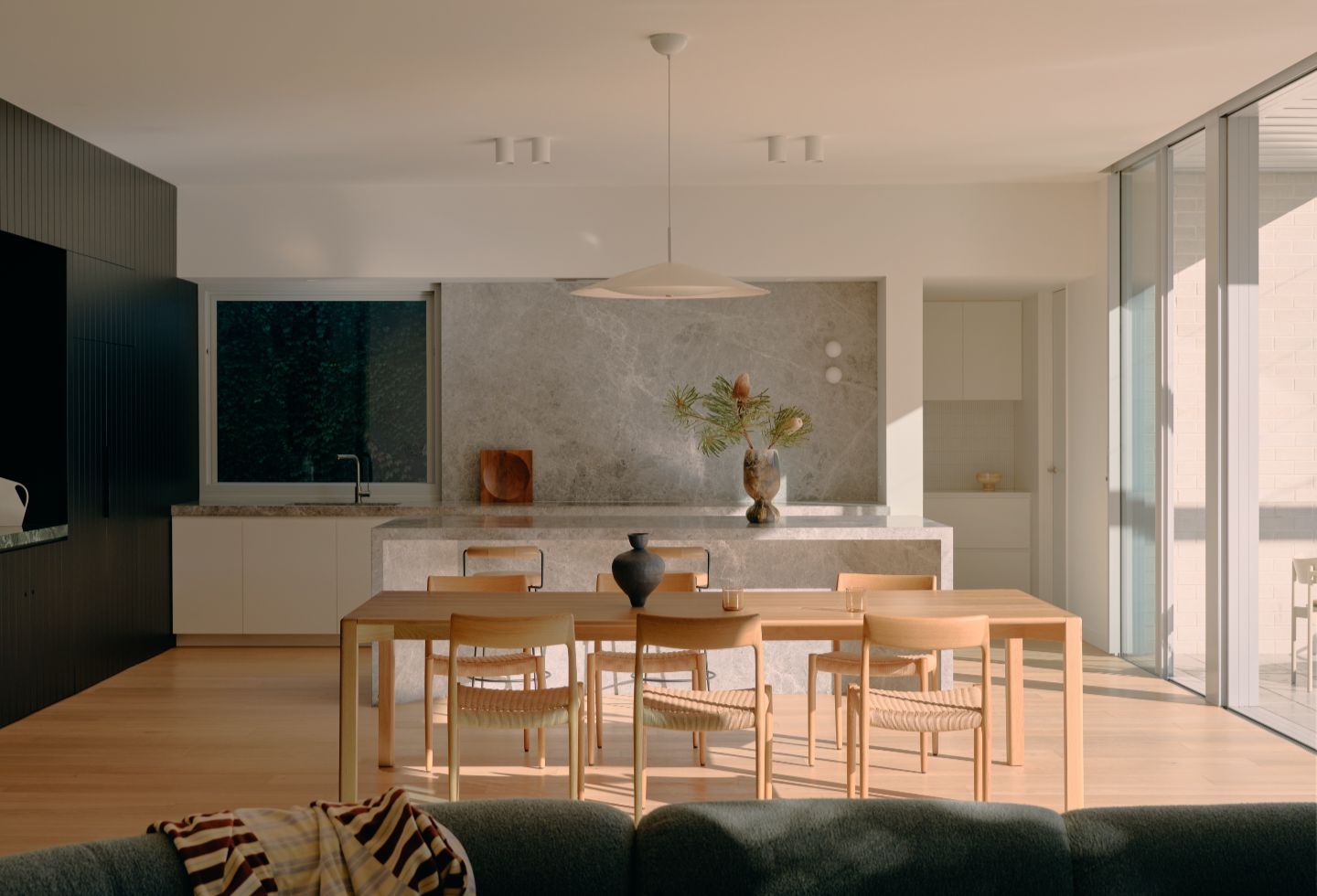
Further adding to the feeling of calm and disconnection from the outside, each material expression is kept deliberately quiet and restrained. A combination of soft-toned bricks meet pale-coloured metal cladding at the rear, with the upper level appearing to float above the timber-lined interior. Stone, timber and crisp whites all come together to create a palette that feels both durable and expressive, while bathrooms rely on blade walls – rather than glass – to privilege texture and longevity over boldness or ornate detailing. The combination of deep eaves, cross-ventilation, shaded courtyards and thermal mass ensure the home settles comfortably across seasons.
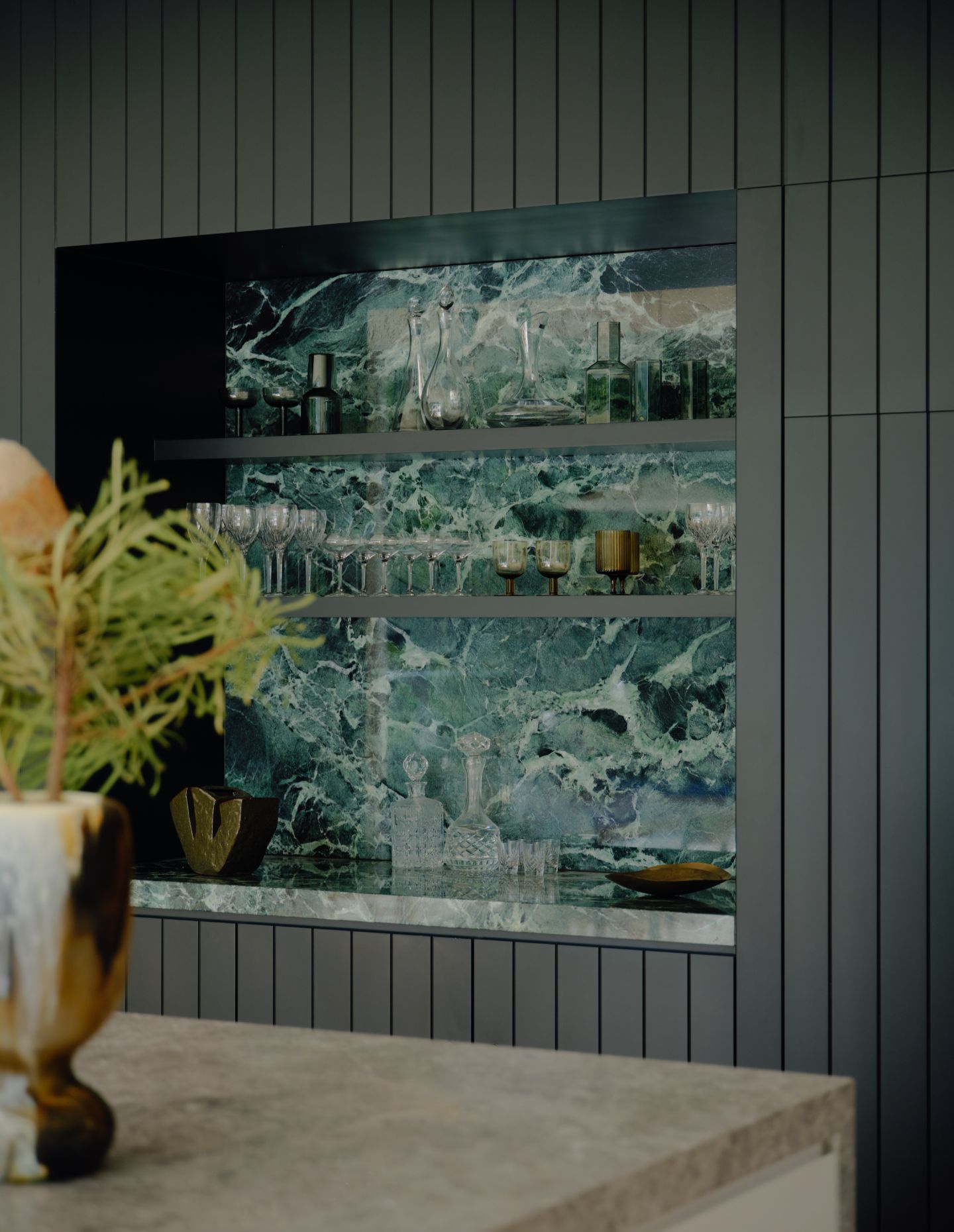

“The house performs incredibly well [thermally],” Robertson notes. “And as a result, mechanical cooling is only needed on rare occasions.”
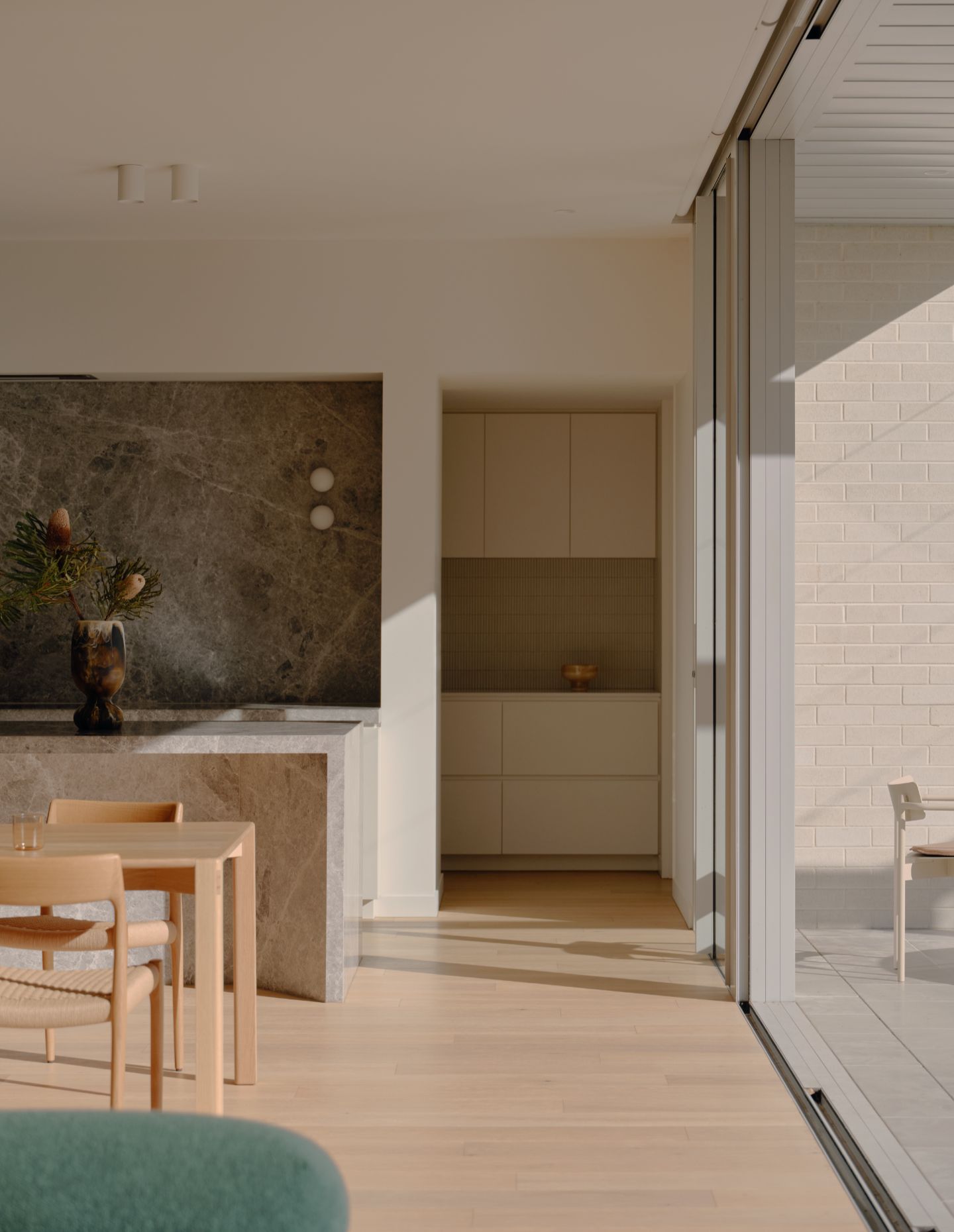
Coppin House ultimately reveals how a heritage home can be re-centred, not overwritten; its character held close while new rhythms of family life weave seamlessly through spaces made for both gathering and retreat.