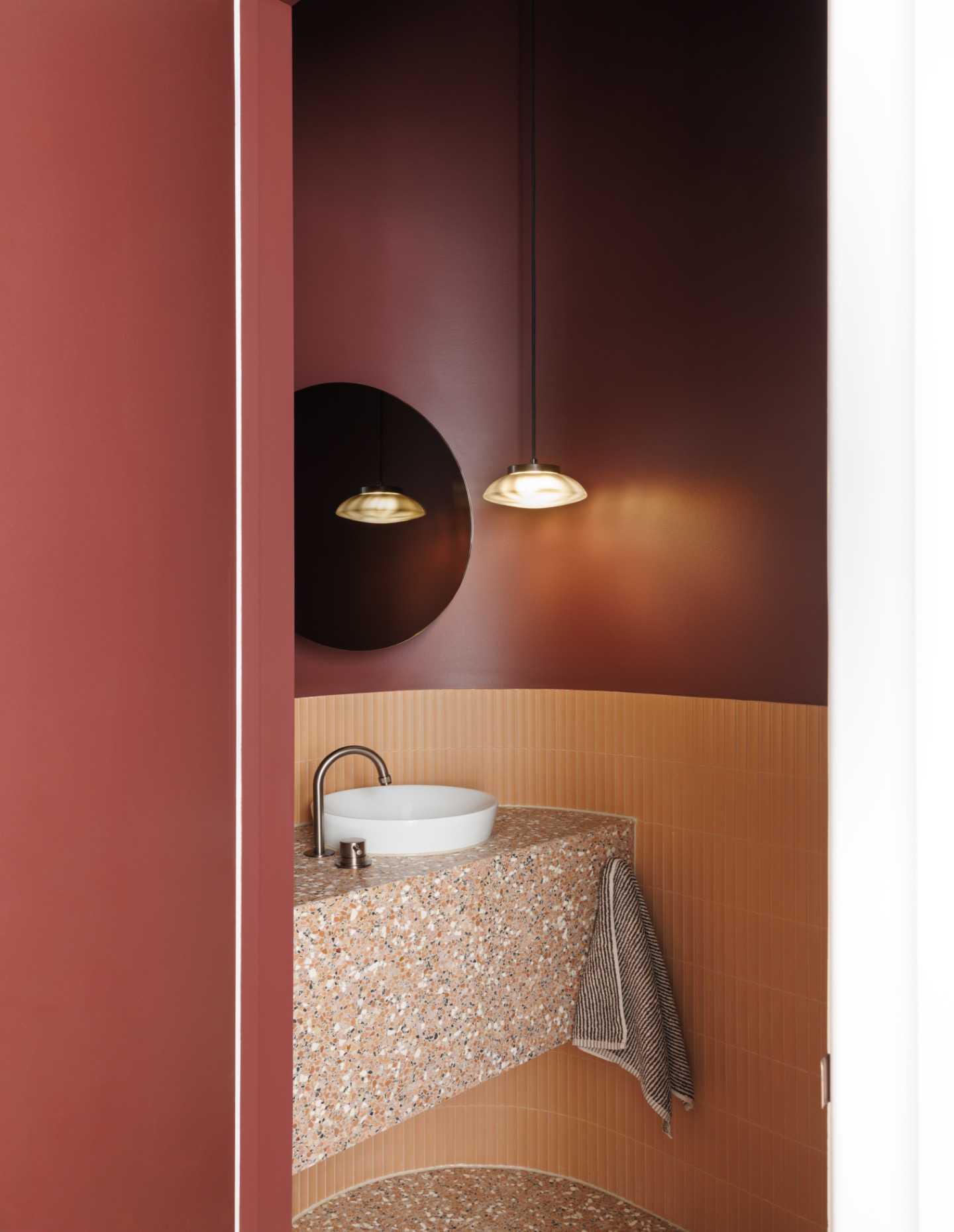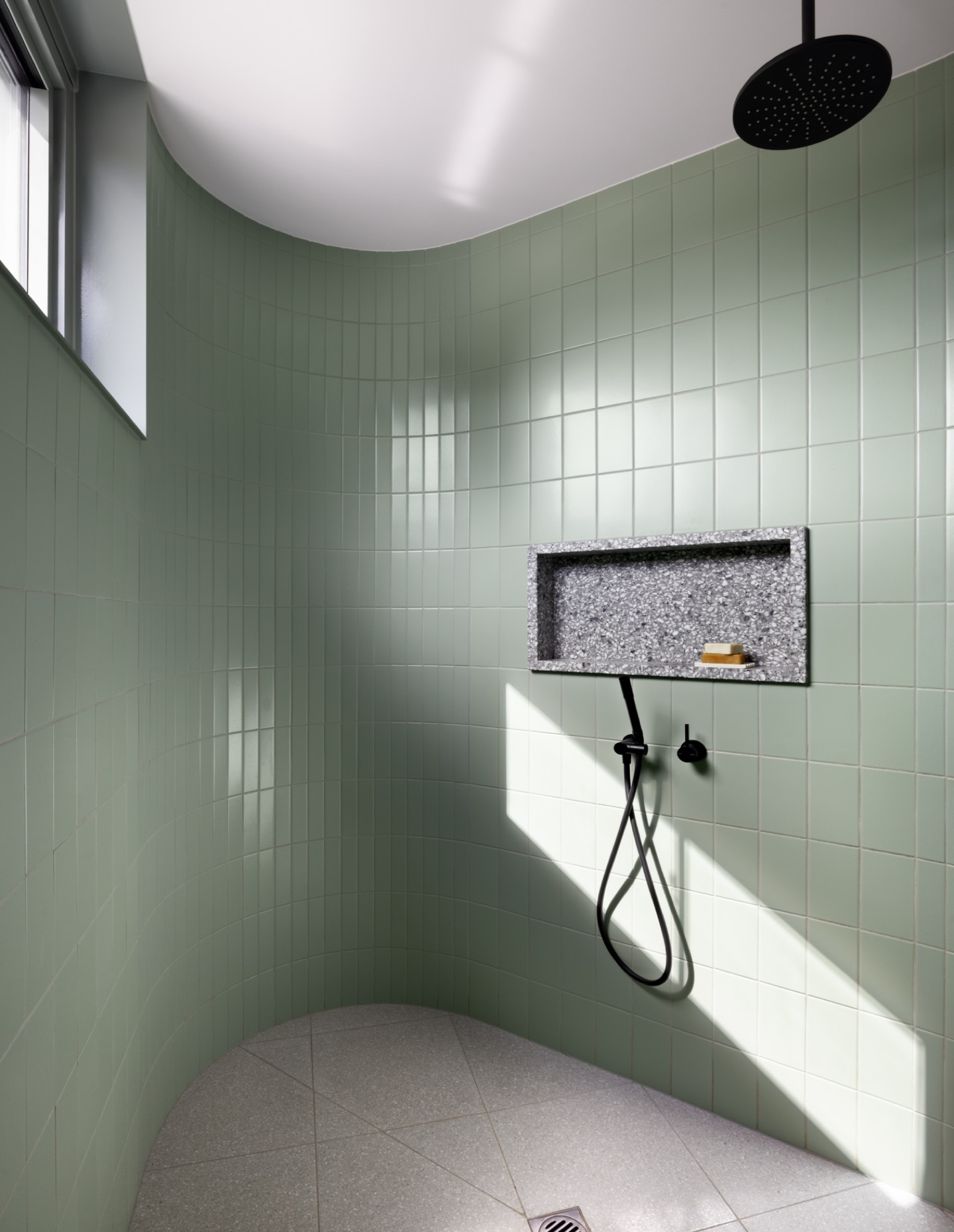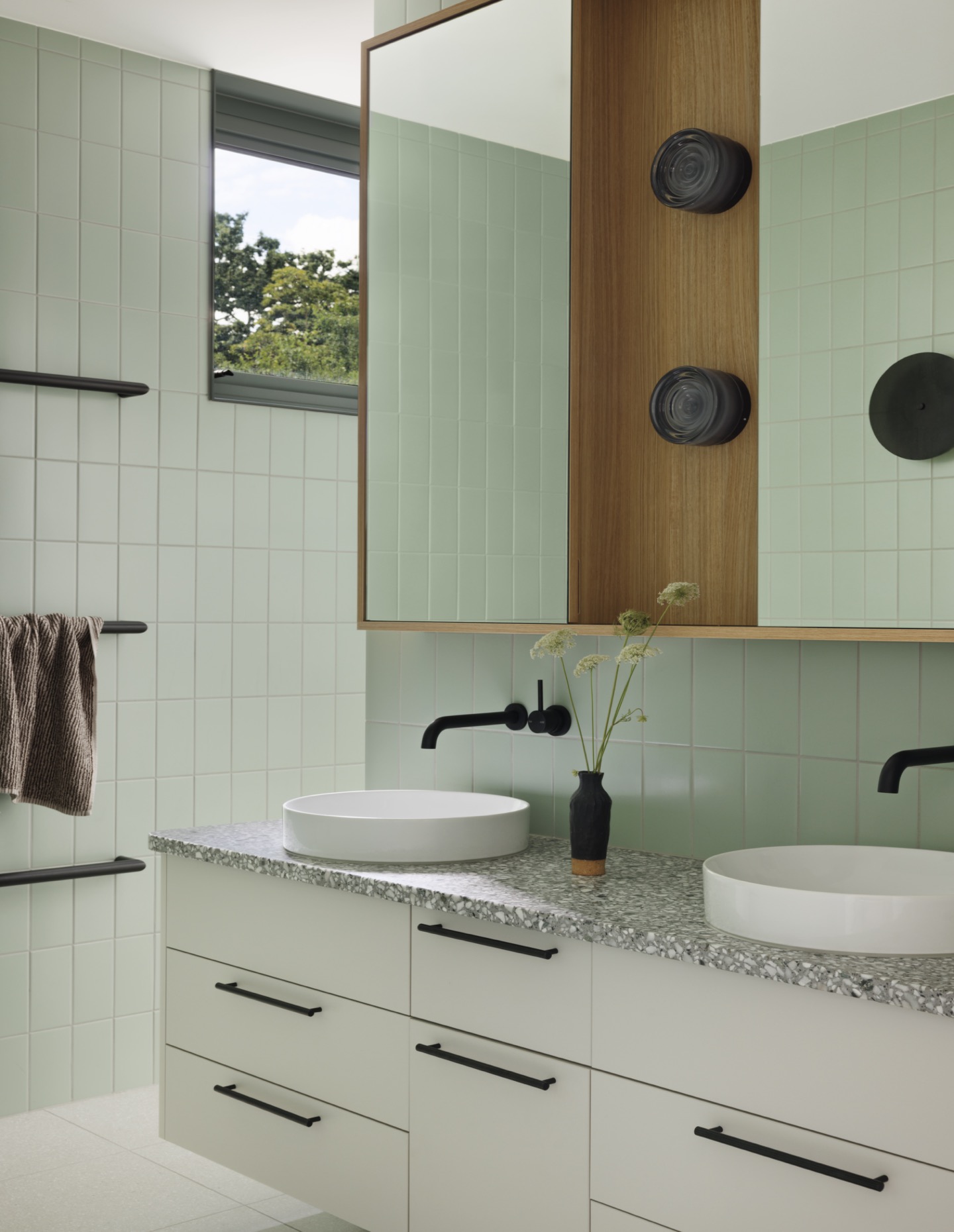

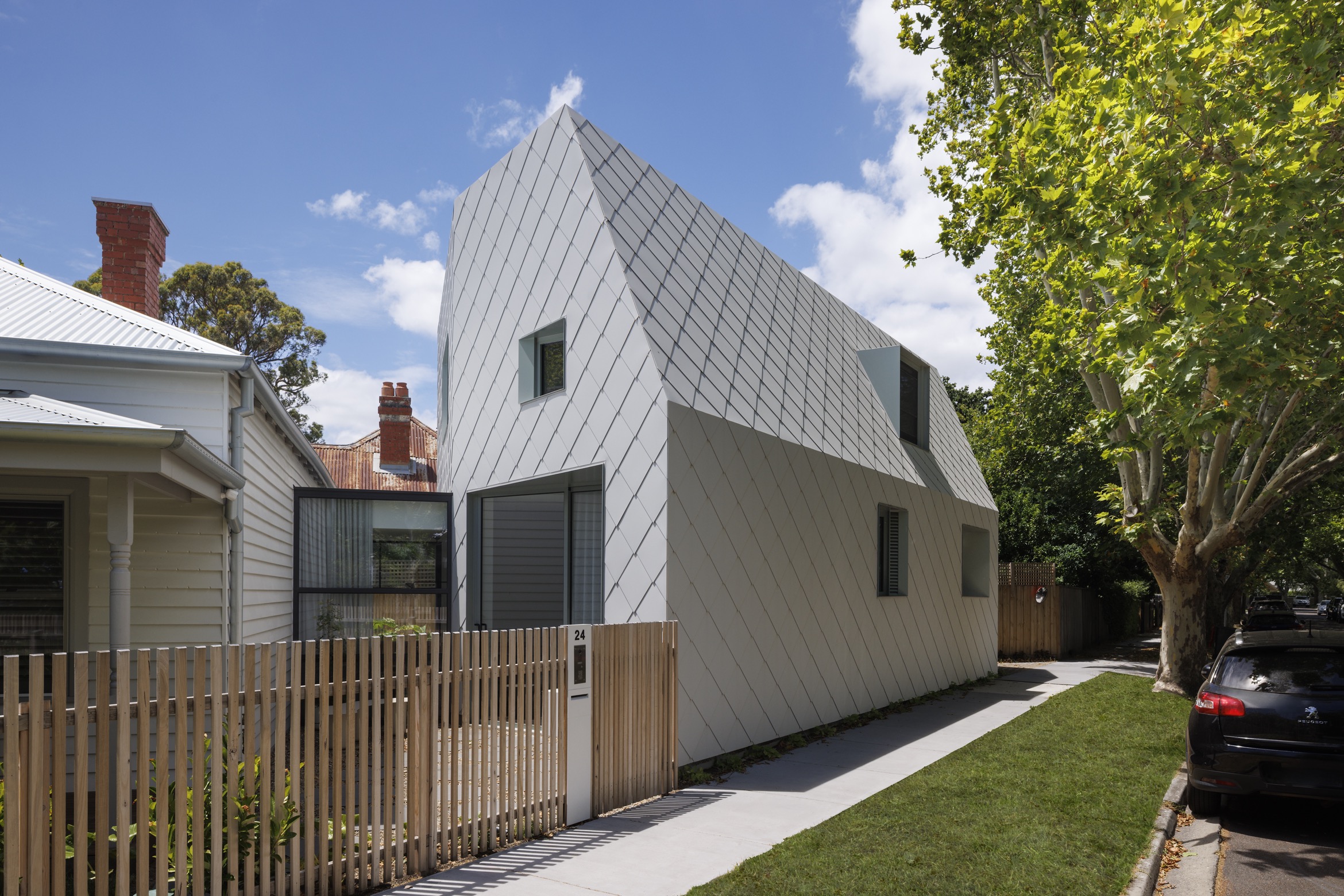
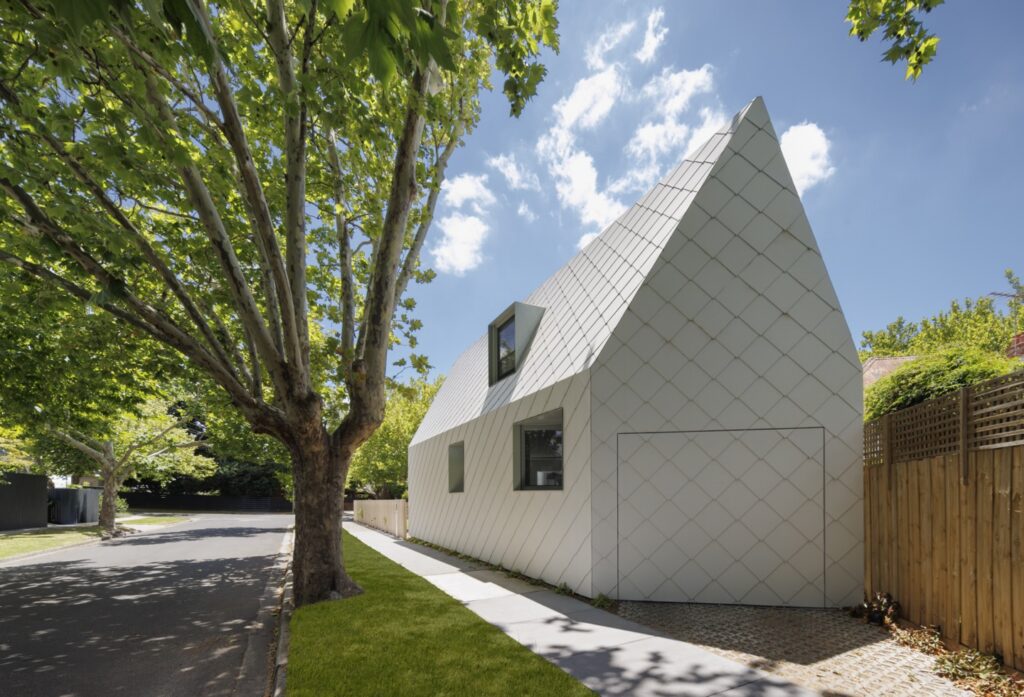
On a tight, triangular corner site in Malvern East, Diamond House by Molecule Studio takes constraint and turns it into a defining gesture. What might have been residual land — the narrow southern wedge of the block — instead becomes the generator of the project’s form, producing a faceted addition that both resolves the plan and gives the house its name.
“By pushing the new addition into the southern wedge, we created a north-facing family living space and second storey parents’ retreat,” explains director Anja de Spa. The result is a tapered upper volume — a “faceted ‘diamond’ form” — shaped not only by geometry but by its relationship to neighbours and a large street tree.
This interplay between constraint and clarity carries through the project. Diamond House is not interested in blending old and new into a seamless whole. Instead, it draws a firm line between them.
“It is important to us that each part of the project… is distinct and is legible as the best version of itself,” says de Spa.
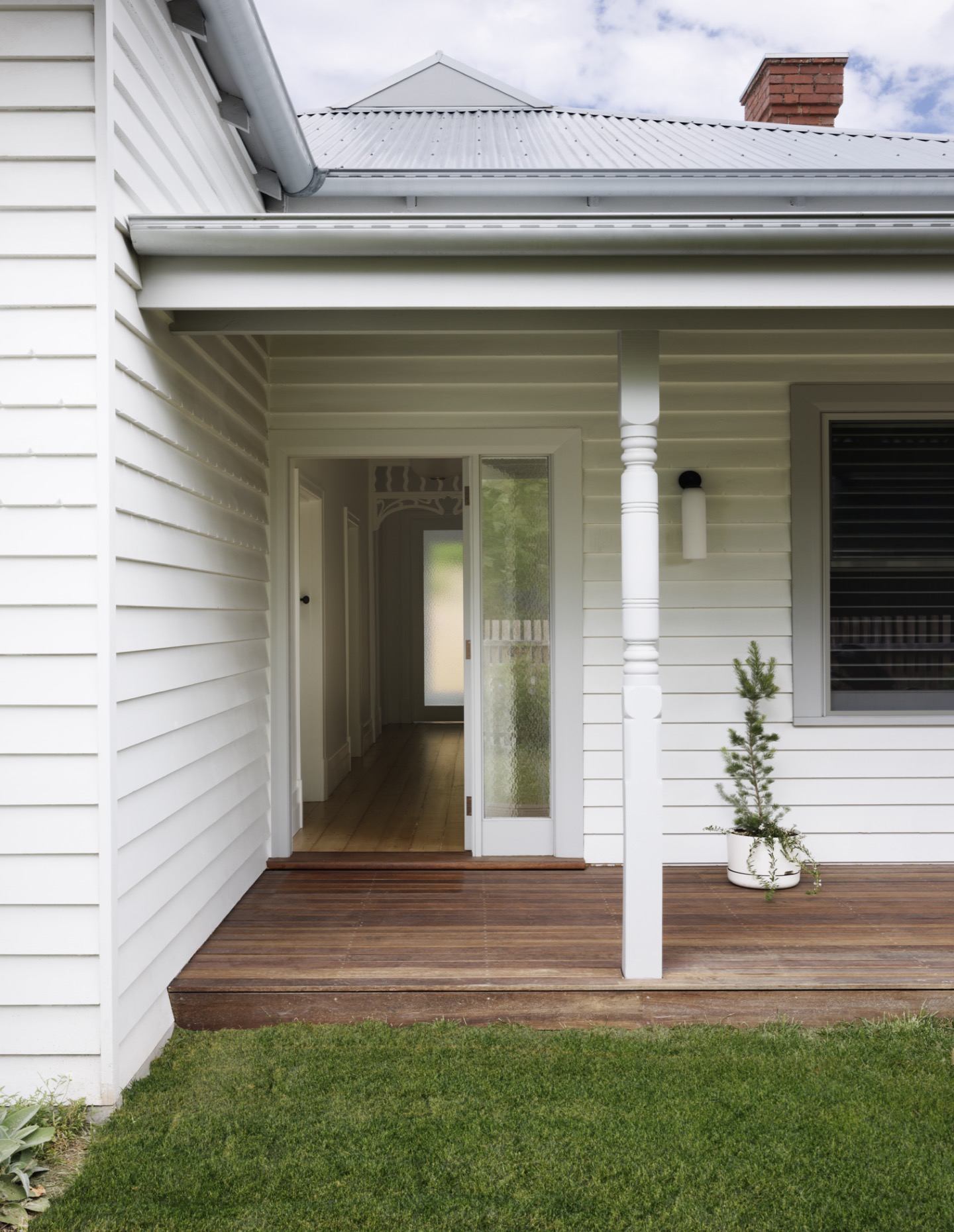
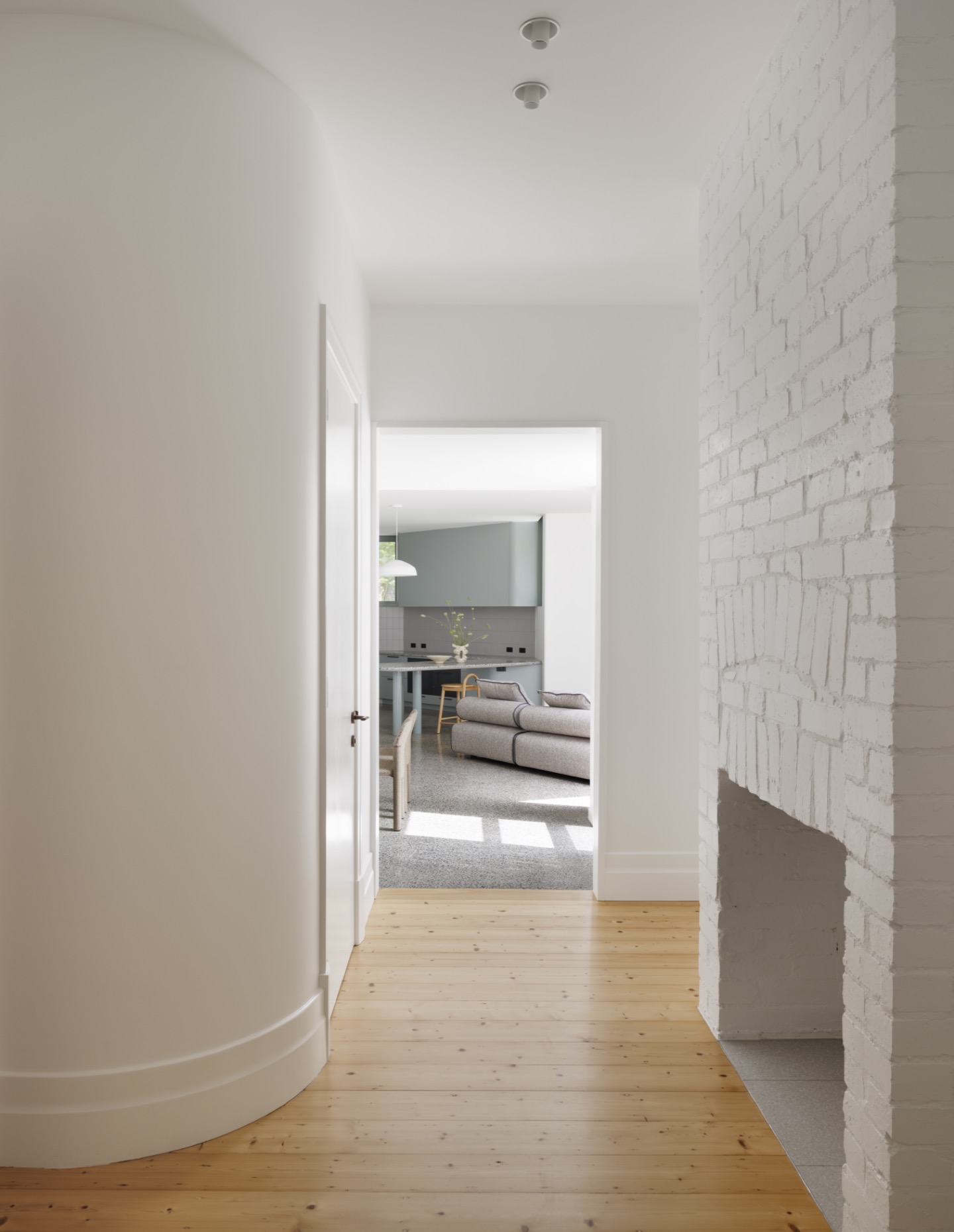
That position is particularly evident in the treatment of the original Edwardian dwelling. Rather than mimic or extend its language, Molecule Studio undertook a careful restoration, stripping away later accretions and reinstating lost detail.
“Mimicking heritage details in new additions… de-values the quality of heritage architecture,” de Spa notes. “We believe in careful restoration, rather than trying to re-create heritage details in new construction.”
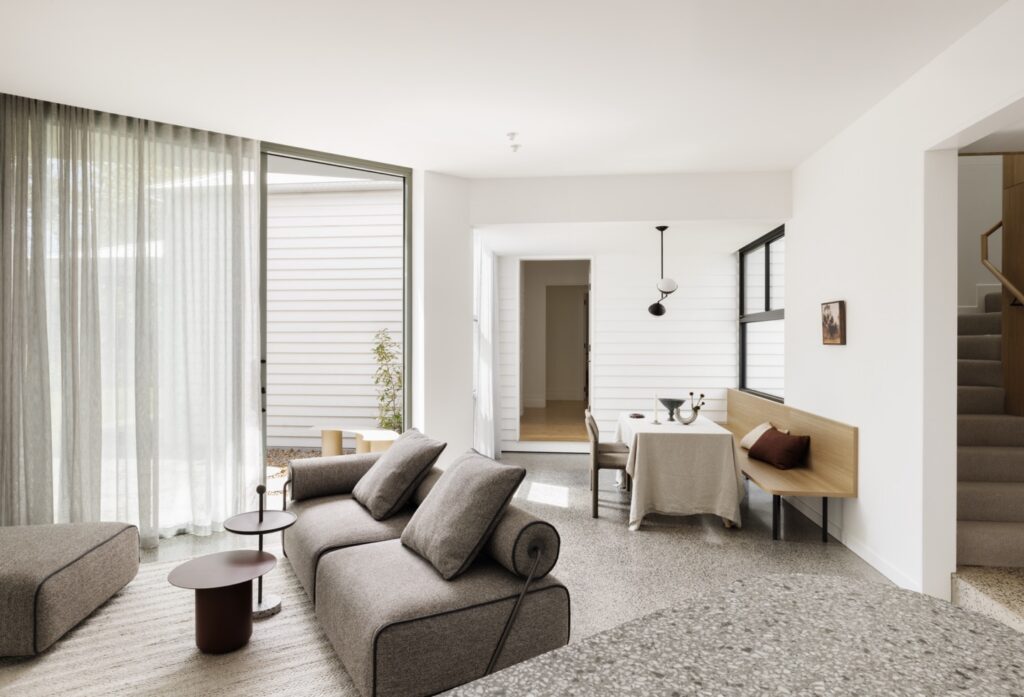
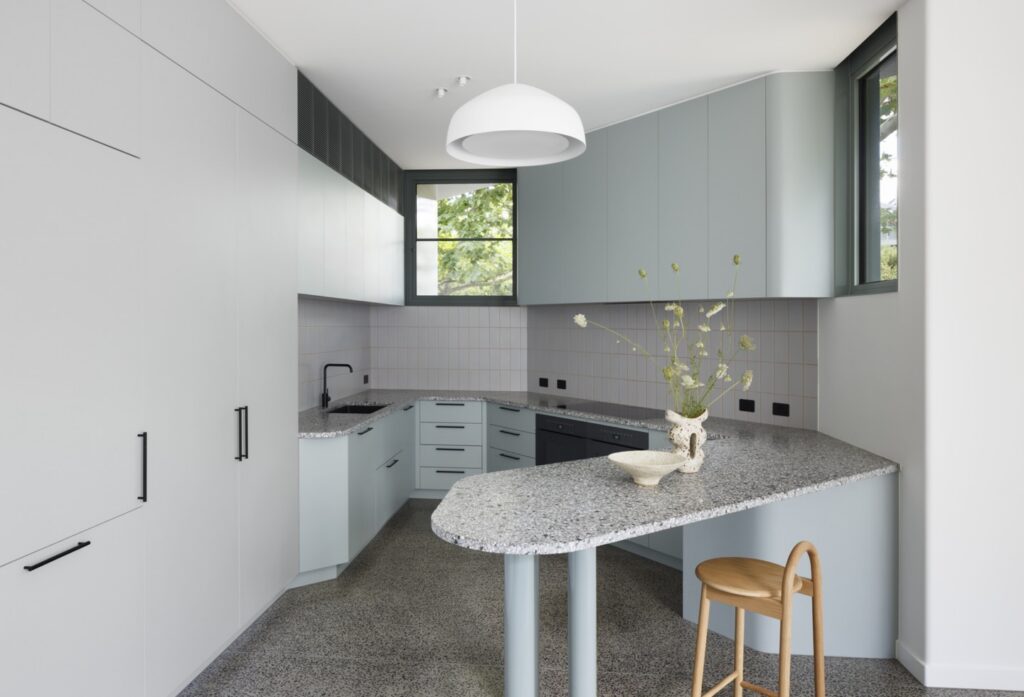
The clarity of this approach allows the project to operate as two distinct yet connected conditions. The restored heritage house accommodates the quieter functions of domestic life — bedrooms, study and retreat spaces — while the new addition takes on the more open and social aspects of living. This division is both practical and spatial.
“The house is zoned into public and private spaces,” says de Spa, with the addition providing “a contemporary open family living space with a north-facing aspect and connection to the garden.”
Light becomes the key mediator between these zones. The original house, once “dark and cellular,” is reworked to allow light to filter deeper into the plan, while the addition is oriented to maximise northern exposure.
“Family homes need spaces of different frequencies,” de Spa explains. “Quiet spaces for sleeping and retreat, and shared active spaces for dining and living.”
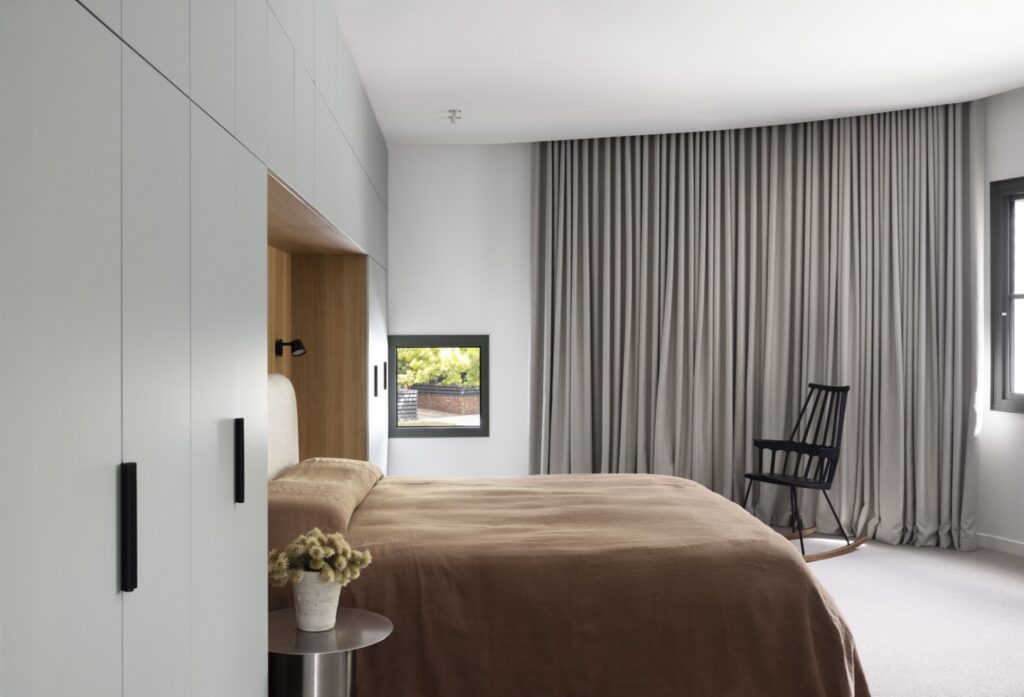
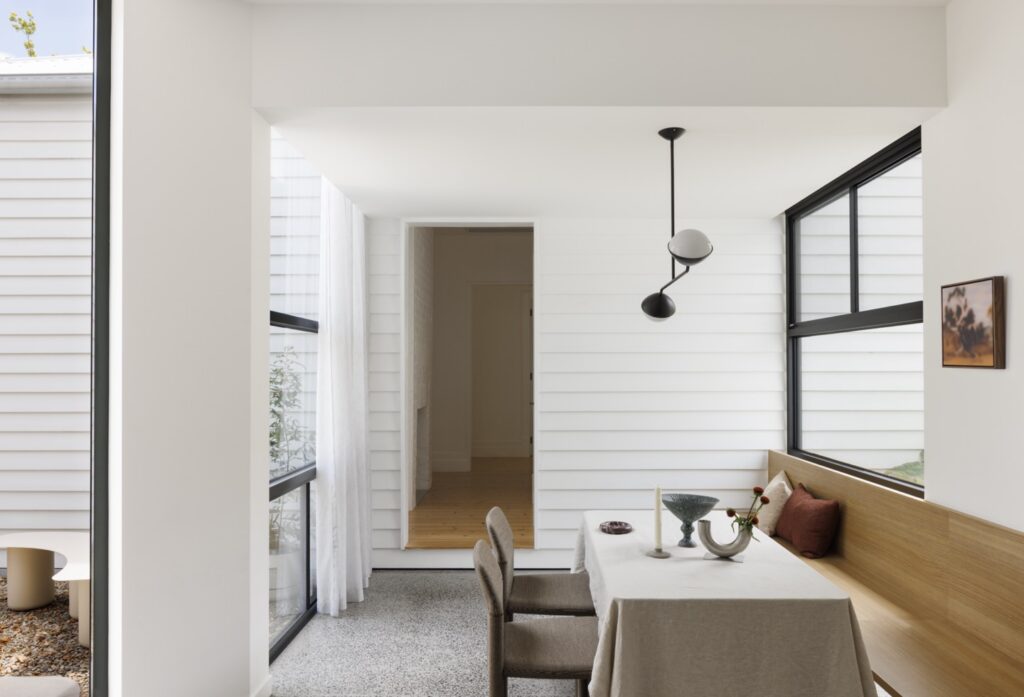
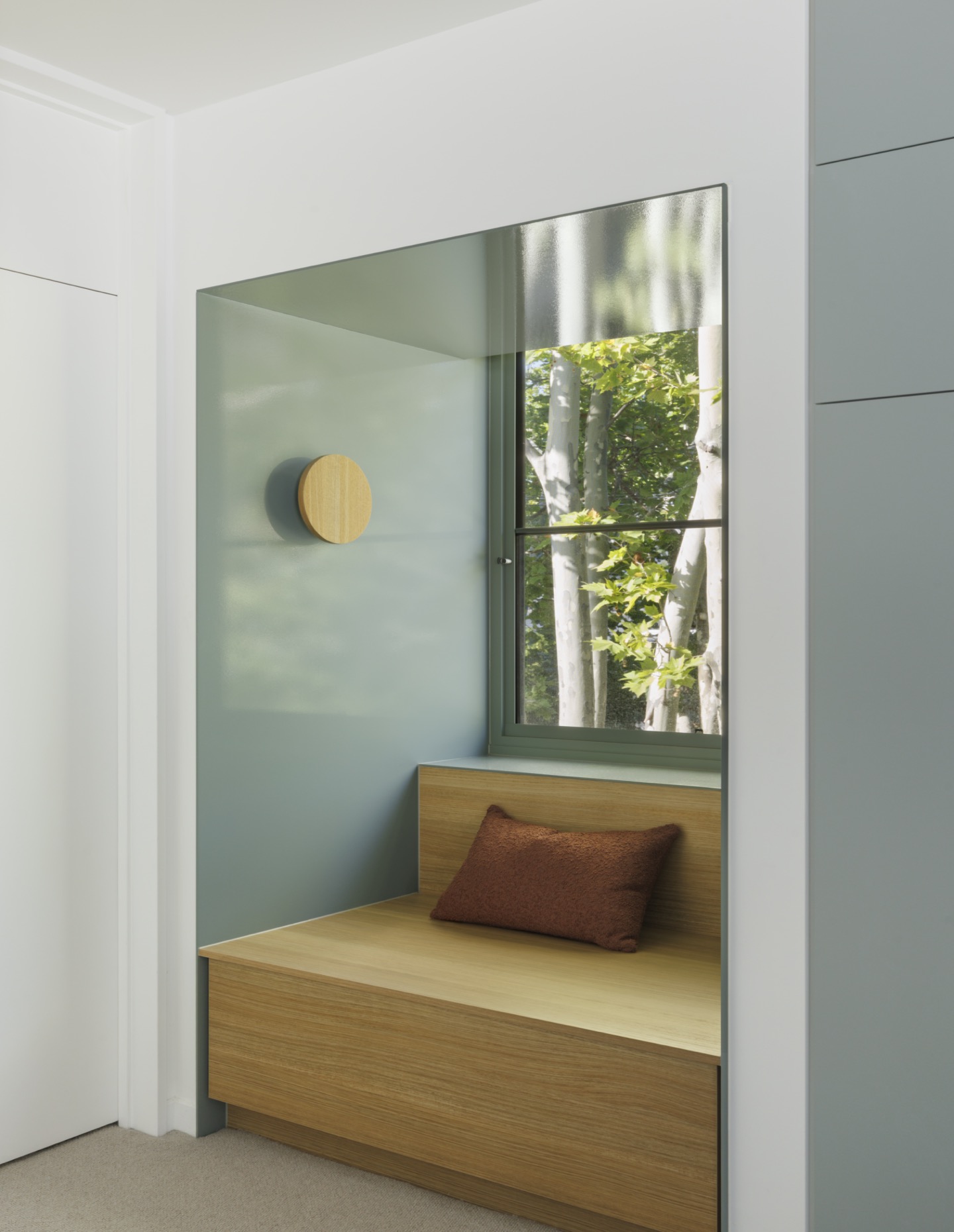
In the new volume, that distinction is resolved through openness and outlook. Windows are carefully positioned to frame the surrounding tree canopy, while maintaining privacy at street level. “Despite being on the footpath edge, there is a privacy from inward views,” de Spa says, achieved through high-level openings that allow light and views without direct exposure.
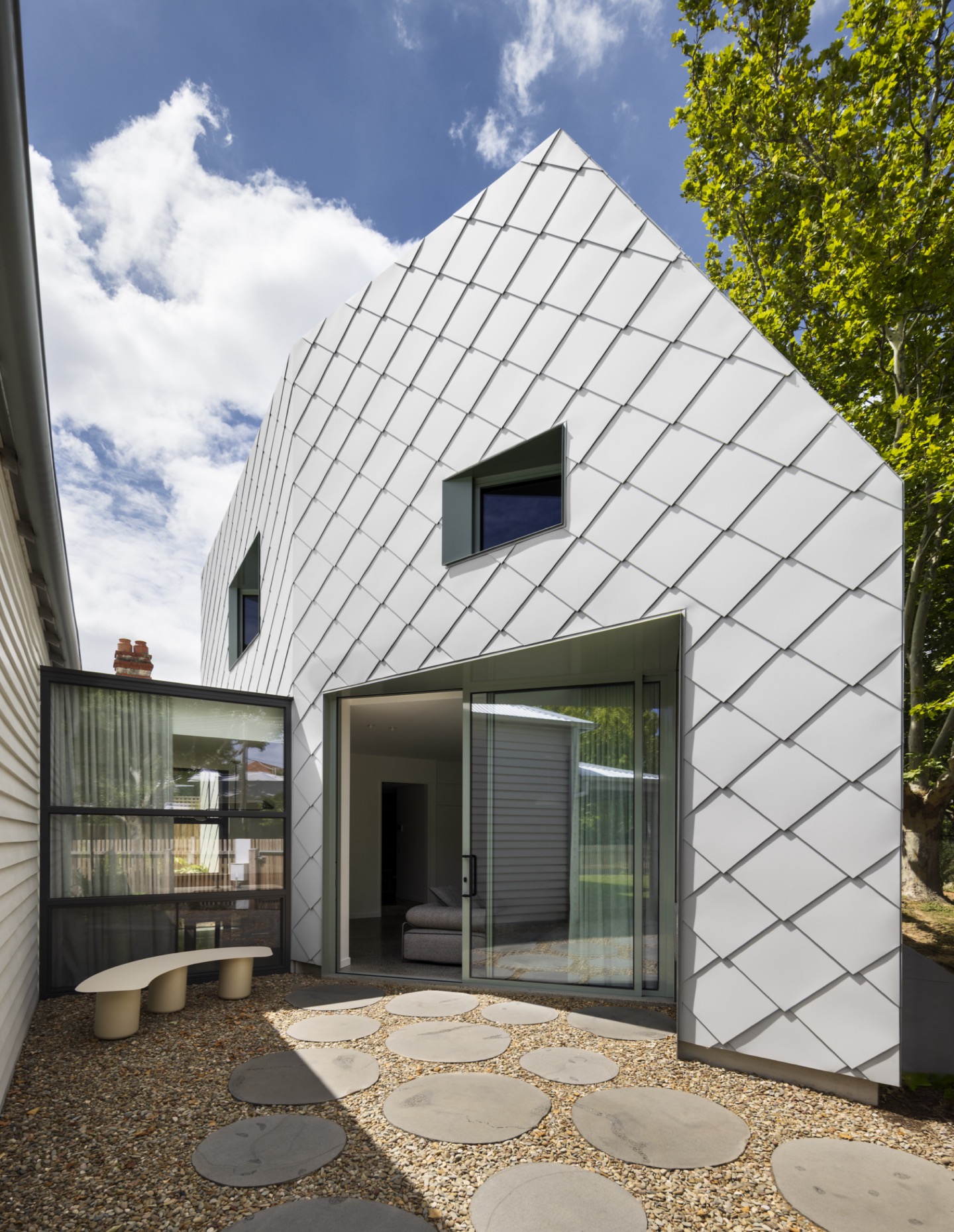
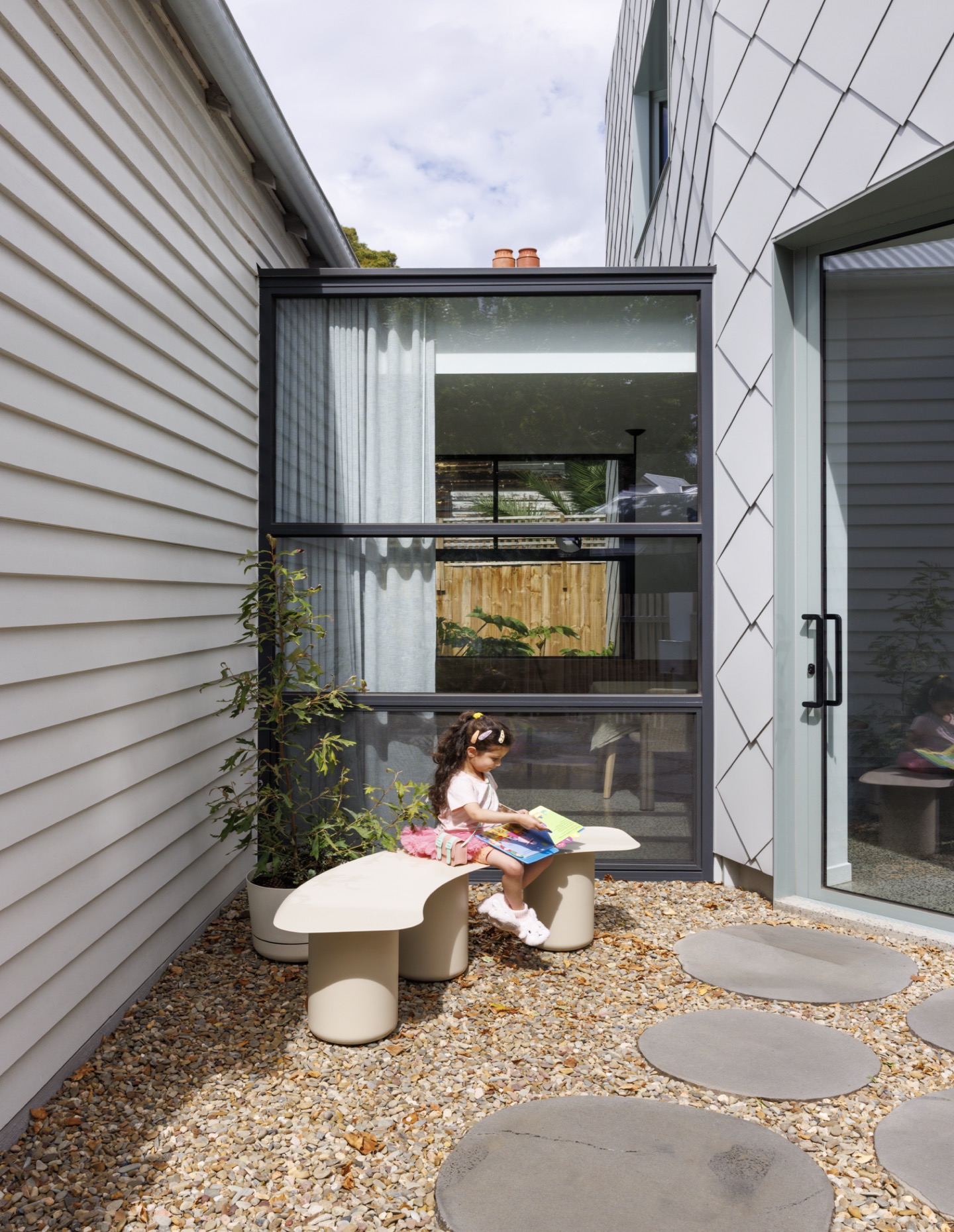
The project’s relationship to the street is similarly measured. Rather than retreat behind enclosure, Diamond House engages its context through subtle gestures. “By opening the family’s outdoor space and garden to the front, the house is in dialogue with the streetscape,” de Spa explains, “[placing] moments from the rhythm of daily life into view.”
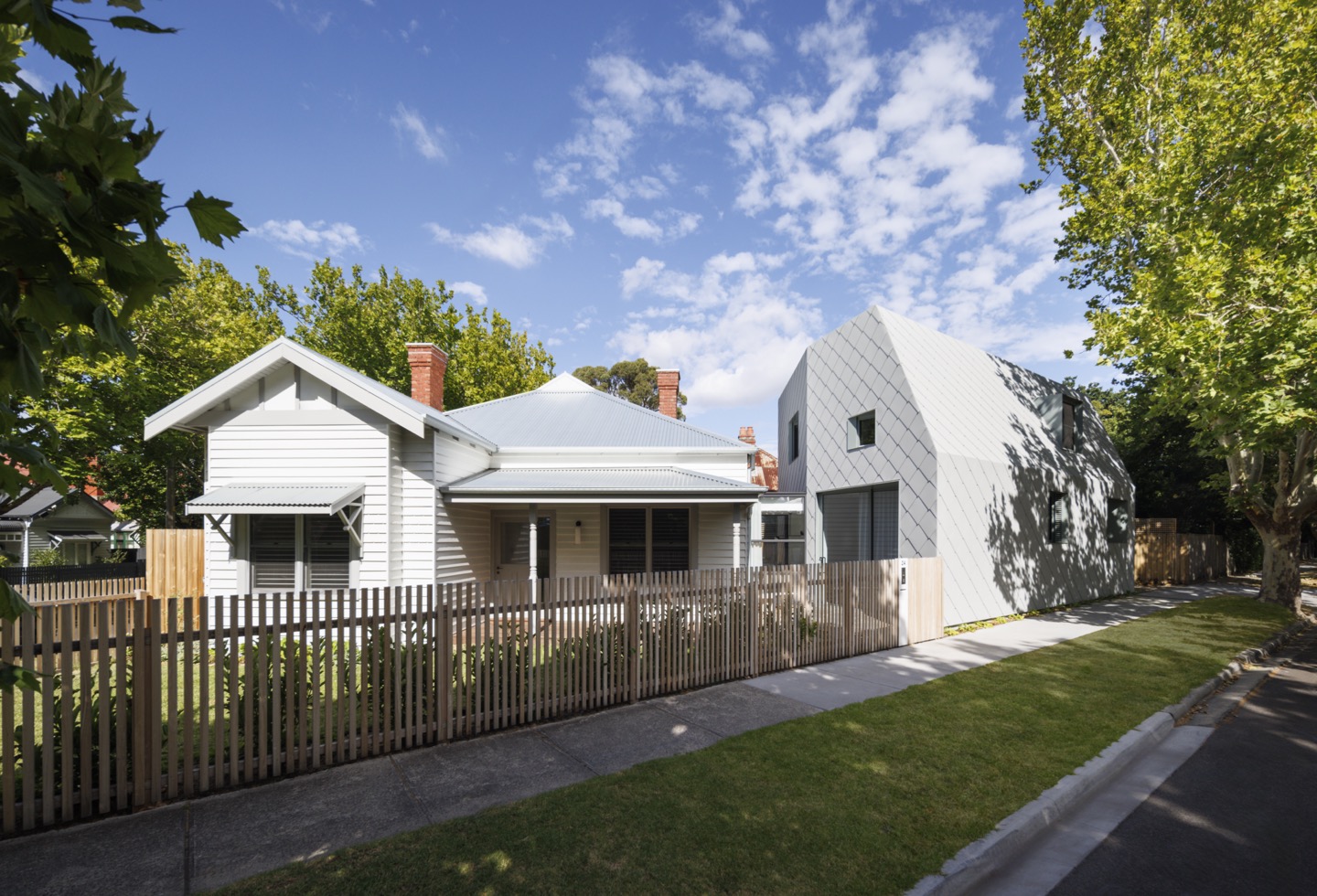
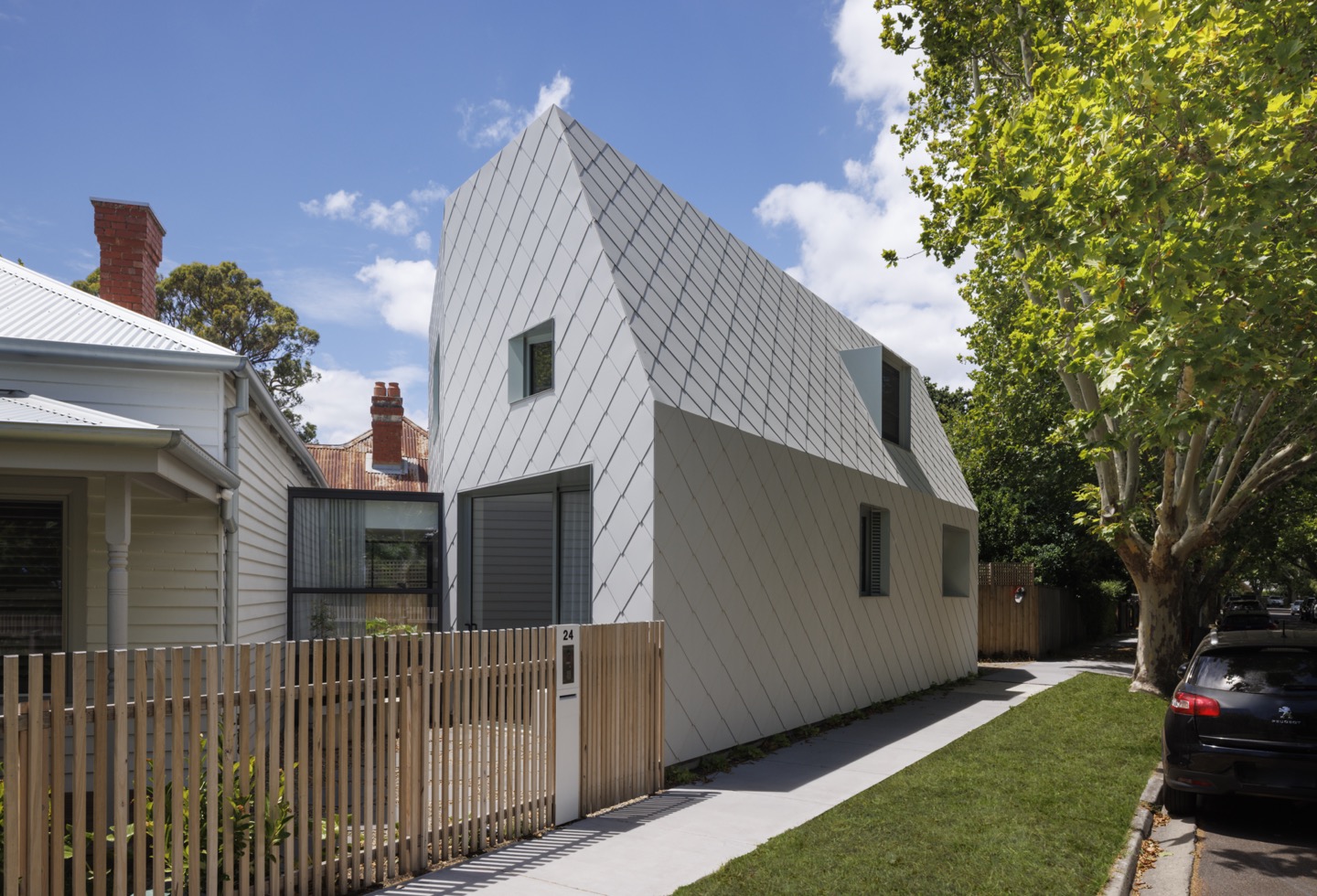
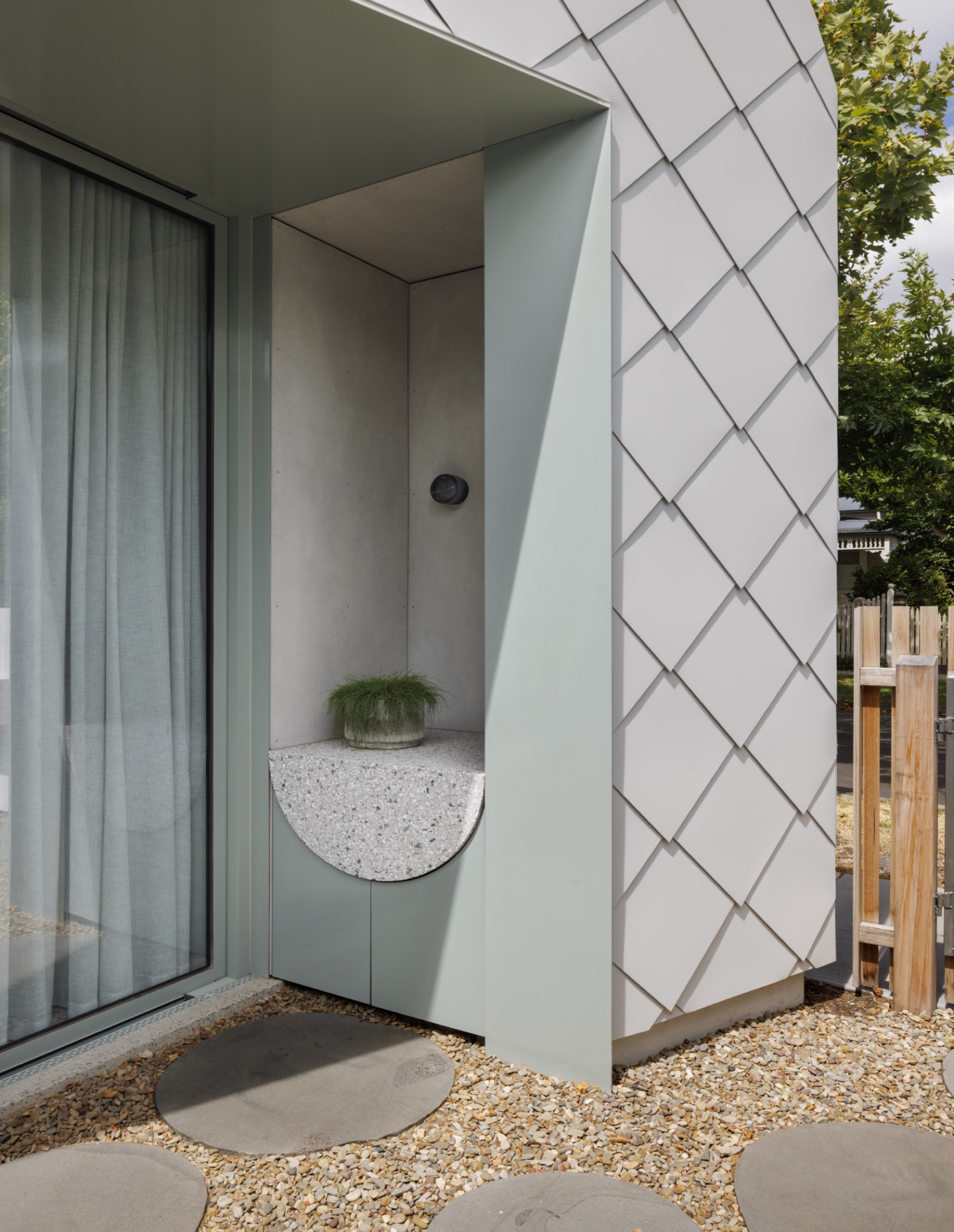
Materially, the addition reinforces its distinct identity. A continuous metal shingle cladding wraps both walls and roof, unifying the faceted form and giving it a crisp, contemporary expression. Punched openings with deep reveals offer controlled views out while maintaining the solidity of the volume. At the same time, subtle references — a pitched roof profile, the rhythm of openings — create a quiet resonance with the existing house without slipping into imitation.
Related: A courtyard home by Coy Yiontis Architects
What emerges is a project defined less by contrast than by precision. Old and new are not blended but aligned, each allowed to operate on its own terms. The triangular site is not overcome but leveraged, producing a geometry that feels both inevitable and resolved.
In this sense, Diamond House offers a clear position within the broader conversation around heritage and addition. It suggests that respect does not require replication, and that clarity — spatial, material and conceptual — can be a more powerful form of continuity than visual sameness.