
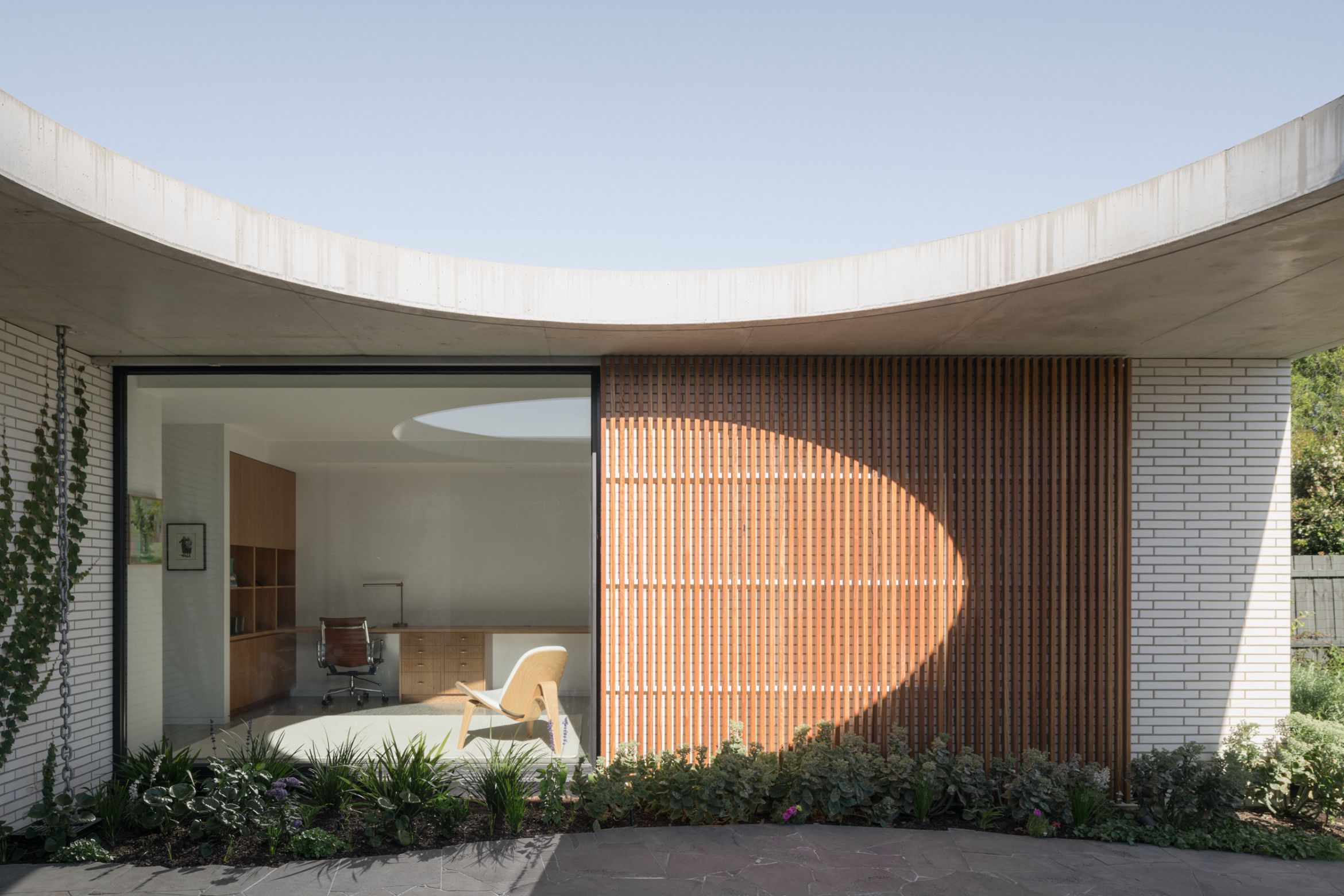
At Glenblaith, Coy Yiontis Architects have traded the usual signals of suburban domesticity for something more measured and self-possessed. The house in Manifold Heights presents itself to the street with restraint, but that restraint is strategic rather than deferential. Behind the discreet facade, a sequence of thresholds opens into a deeply considered courtyard residence shaped by concrete, blackbutt timber and landscape. The result is a home that feels less like an object placed on a block and more like an environment carefully composed from light, mass, planting and privacy.
For George Yiontis, the project began with a resistance to the assumptions embedded in suburban planning itself. Rather than accepting the familiar model of a house sitting within leftover garden space, Glenblaith continues the studio’s interest in the courtyard house as an alternative type – one that prioritises “internal experience, atmosphere, light, space and landscape” over frontage, visibility and repetition.
That shift is central to the project’s character. The house does not turn away from suburbia so much as it proposes another way of living within it: more contained, more immersive and less beholden to the street as the primary site of architectural expression.
Designed as a town residence for a professional couple whose children have left home, Glenblaith is calibrated around retreat as much as occasion. Yiontis describes the ambition as one of serenity, privacy and security, with views that are “curated and contained rather than bleeding off at the site edges.”
That inwardness gives the house its emotional register. It is composed rather than defensive; selective, not sealed off. The sense of refuge comes not from shutting everything out, but from carefully determining what is let in: garden, daylight, texture, proportion.
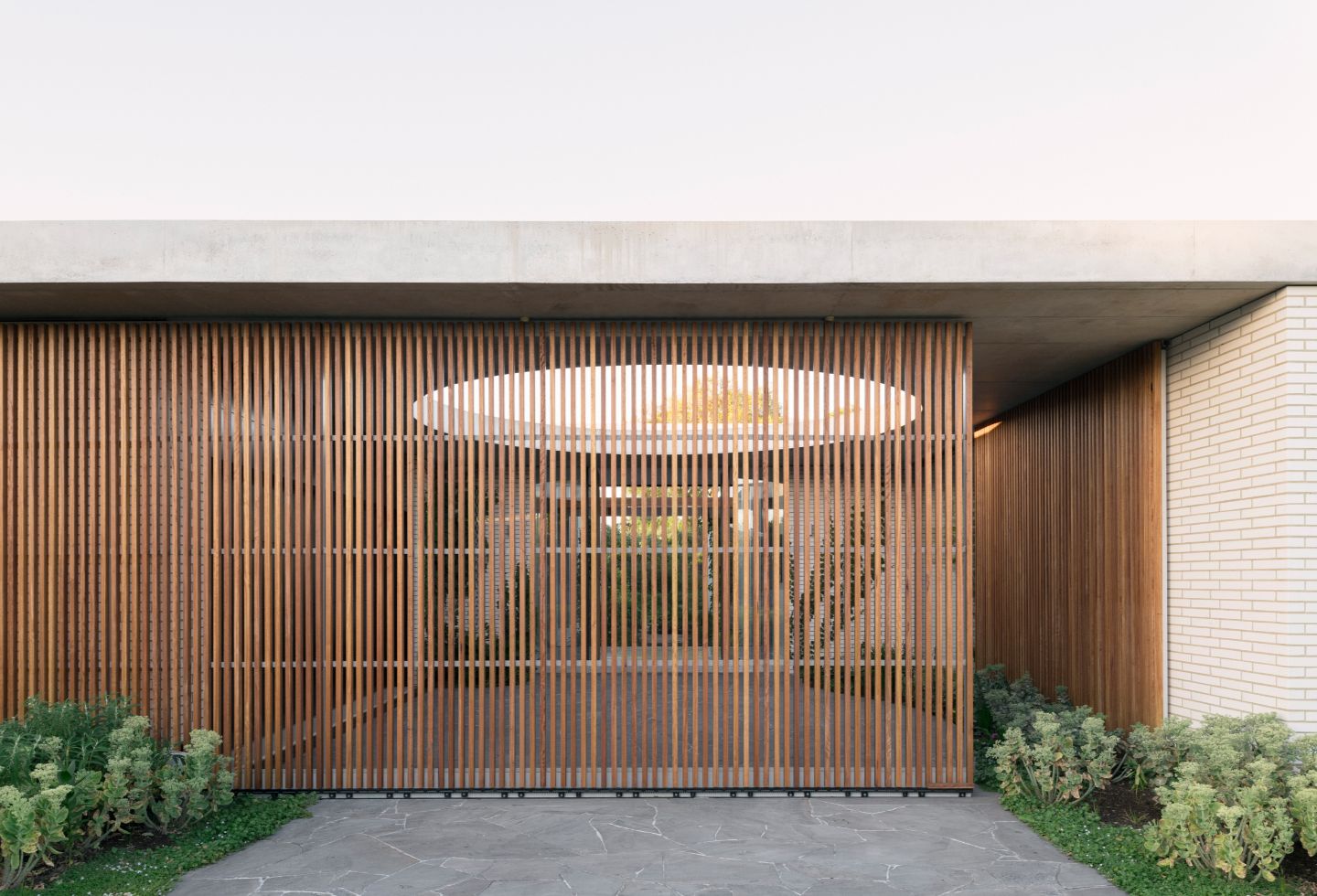
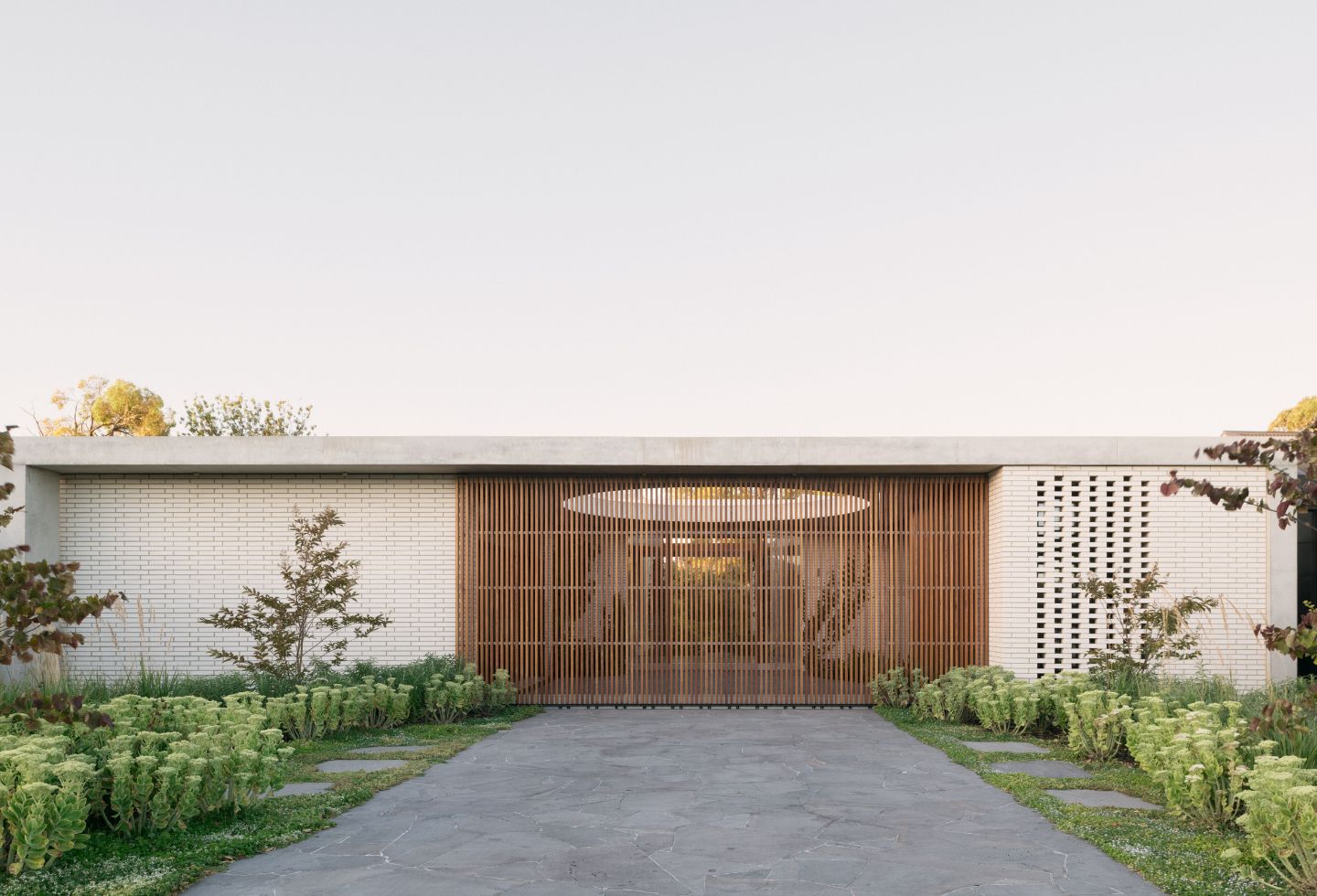
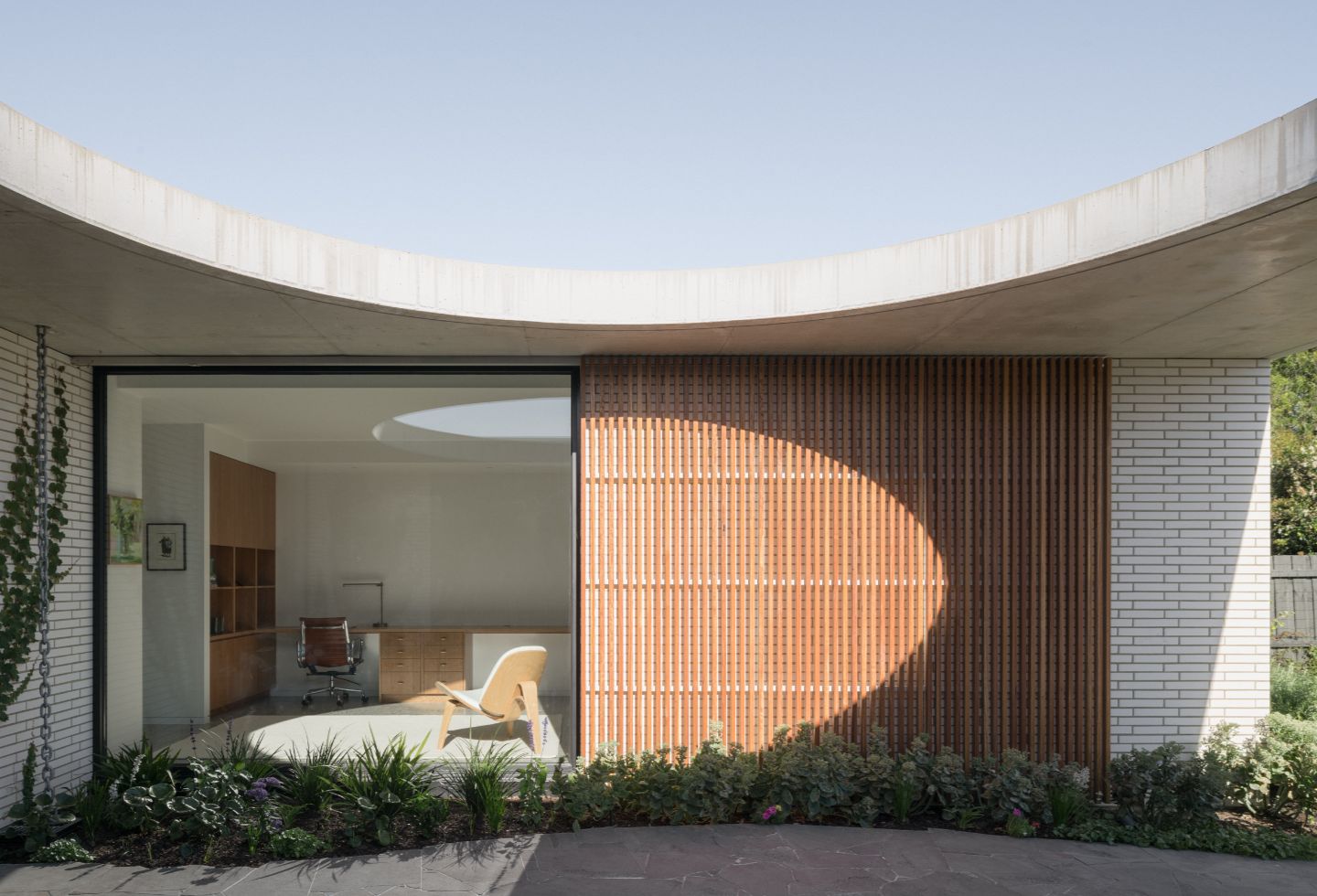
This controlled reveal begins at the entry, where a 4.8-metre oculus announces itself as both marker and device. Set within an otherwise simple facade, it lends the arrival sequence a certain gravity, while also connecting the house to a longer architectural lineage.
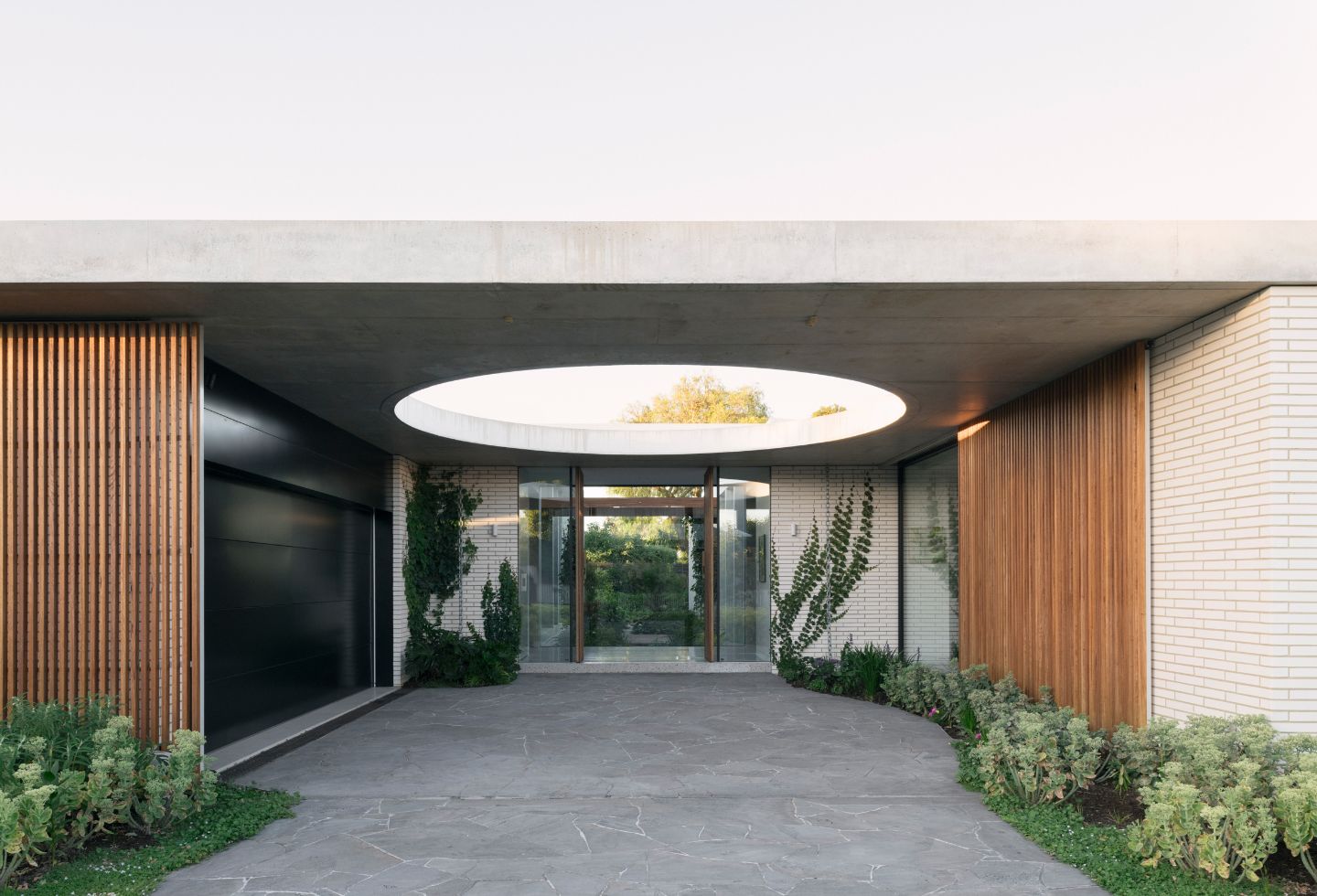
Yiontis says the oculus sits “somewhere in between” the functional and the symbolic: its scale is tied to the forecourt and the practical requirements of movement, but its effect is more expansive, opening the house to something more timeless. In a project defined by restraint, it is a singular gesture – strong, memorable and exact.
Landscape is what allows that introverted logic to fully take hold. Early in the design process, it became clear that an inward-looking house needed something meaningful to look into. From that point, garden and architecture were developed in parallel, until the distinction between house and landscape began to dissolve.
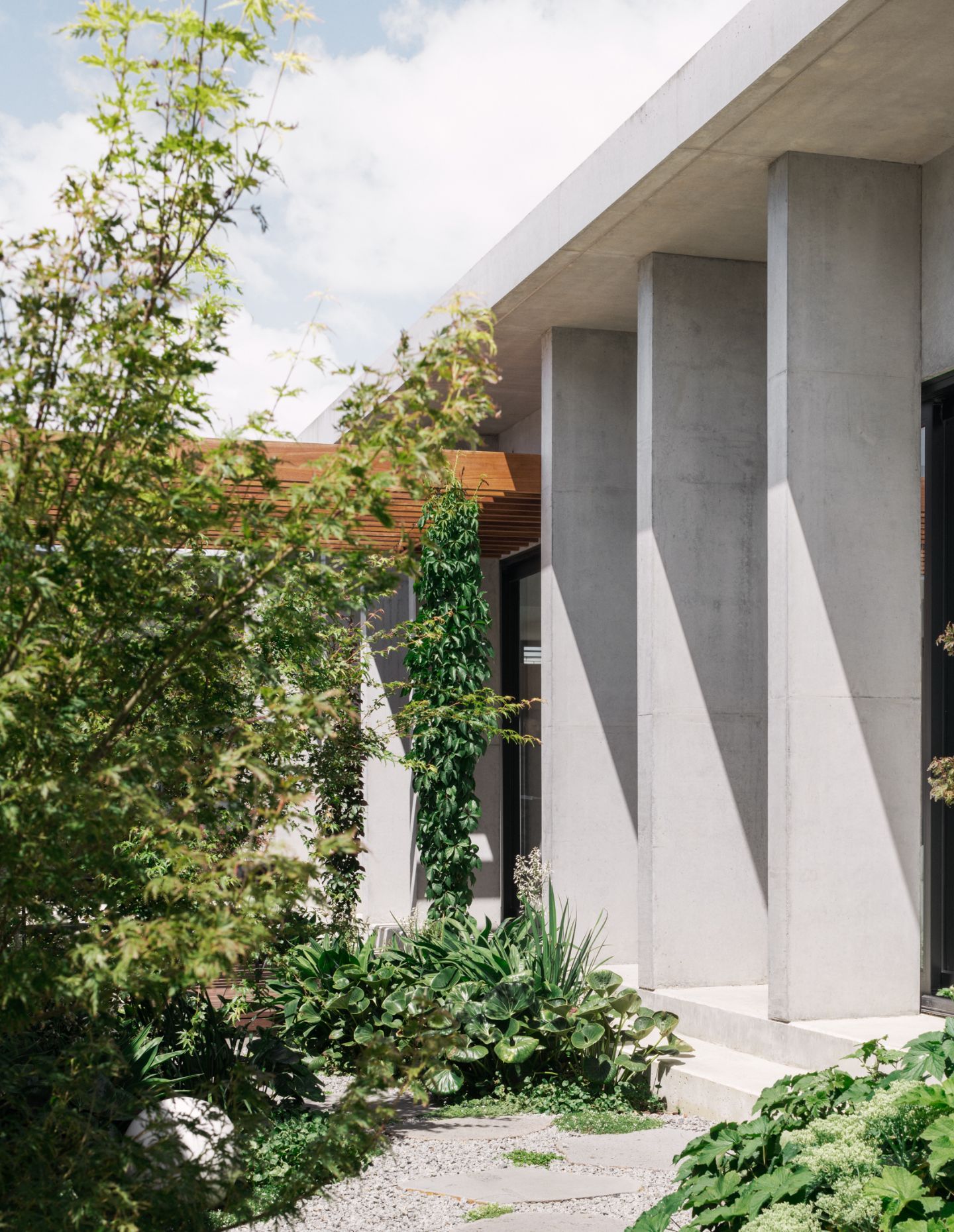
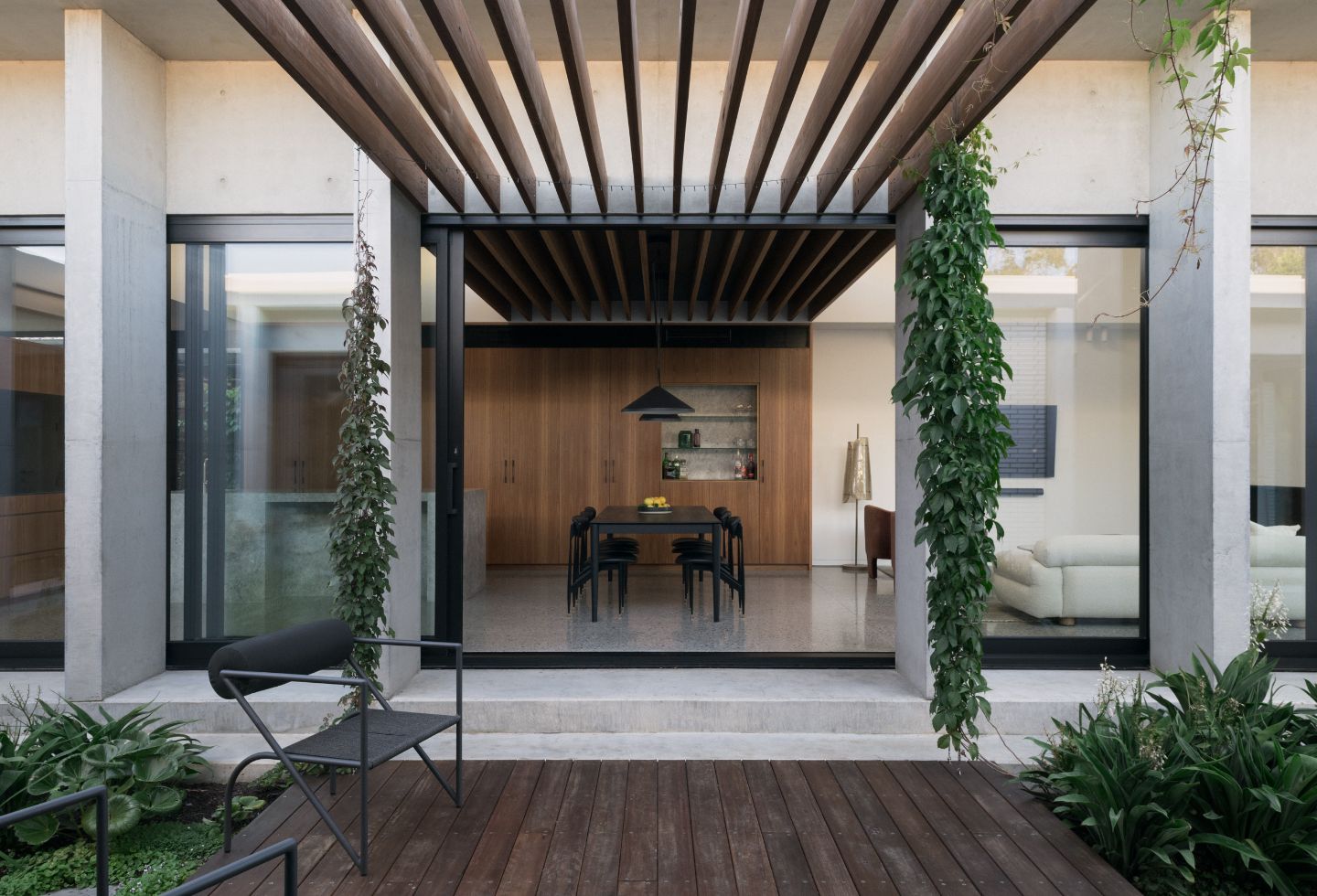
The courtyard is not incidental open space; it’s the spatial and experiential core of the project, a lush centre framed by monolithic concrete colonnades that visible from across the house and tied into daily life. The practice describes a “green oasis” accessible from all rooms, while Yiontis frames the outcome as a continuous environment in which built form and planting are interdependent.
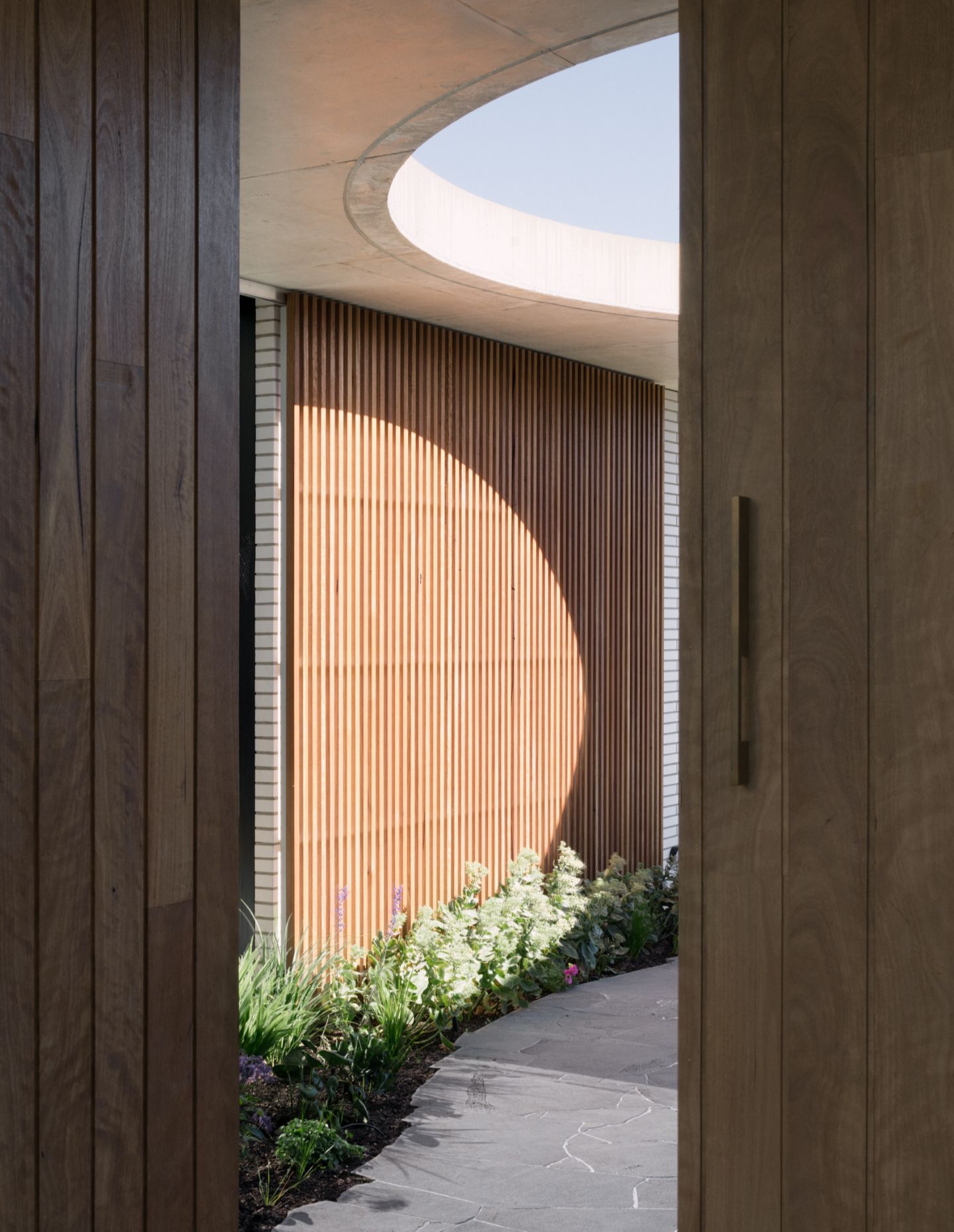
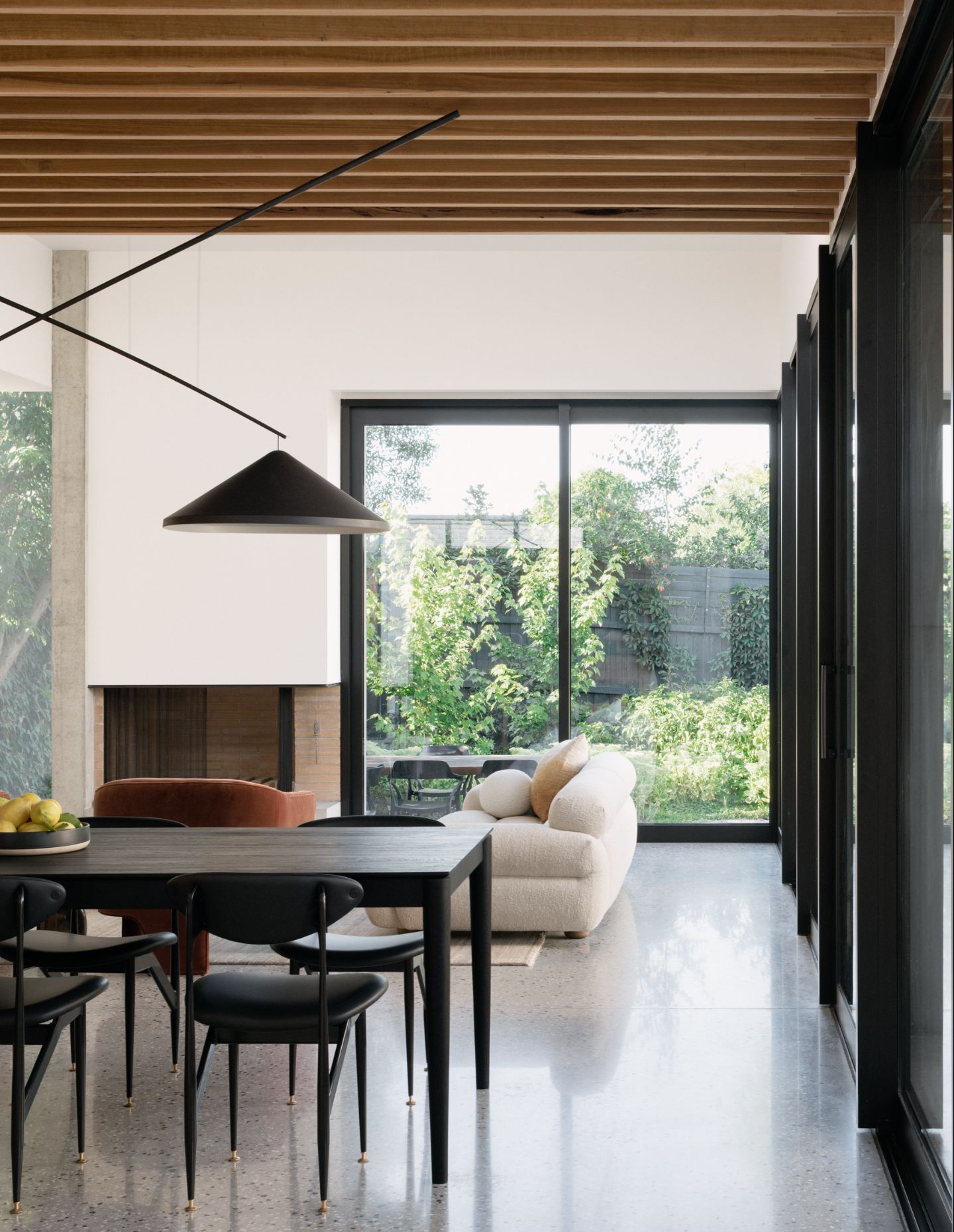
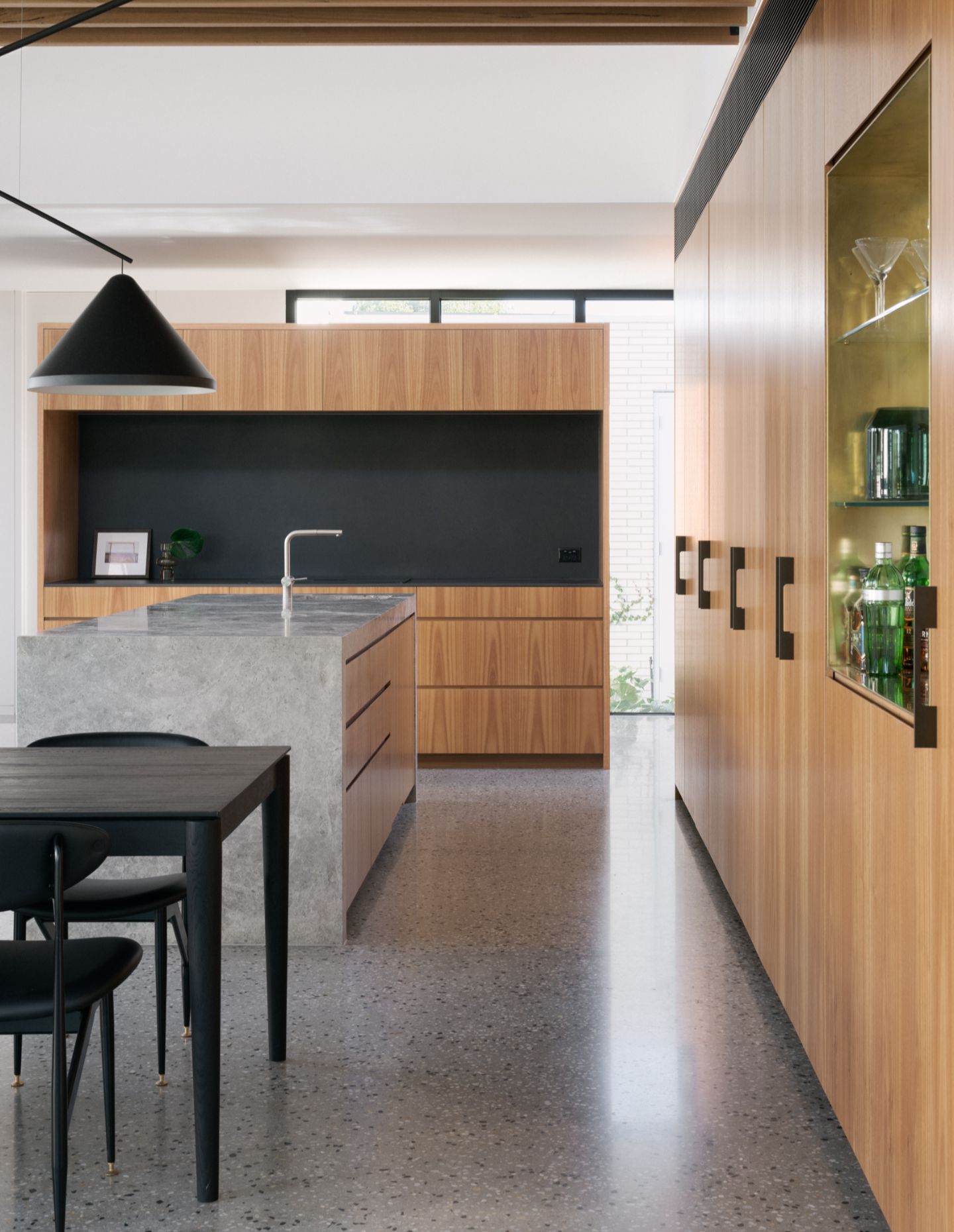
Concrete gives Glenblaith much of its presence, but it is handled with enough variation and contrast that the house never tips into severity. The off-form concrete structure and blades began as a response to orientation and solar control, protecting glazing in summer while allowing winter sun to enter. The material also then does more atmospheric work.
Yiontis describes the courtyard façades as taking on a figure-ground effect, as though the heavier concrete forms were the remnants of an older monumental structure overrun by nature, with a lighter architecture grafted alongside. It is an evocative reading, and one that helps explain why the house seems robust without feeling oppressive. The concrete is balanced by light, softness and the extensive use of blackbutt, with proportion doing as much work as palette.
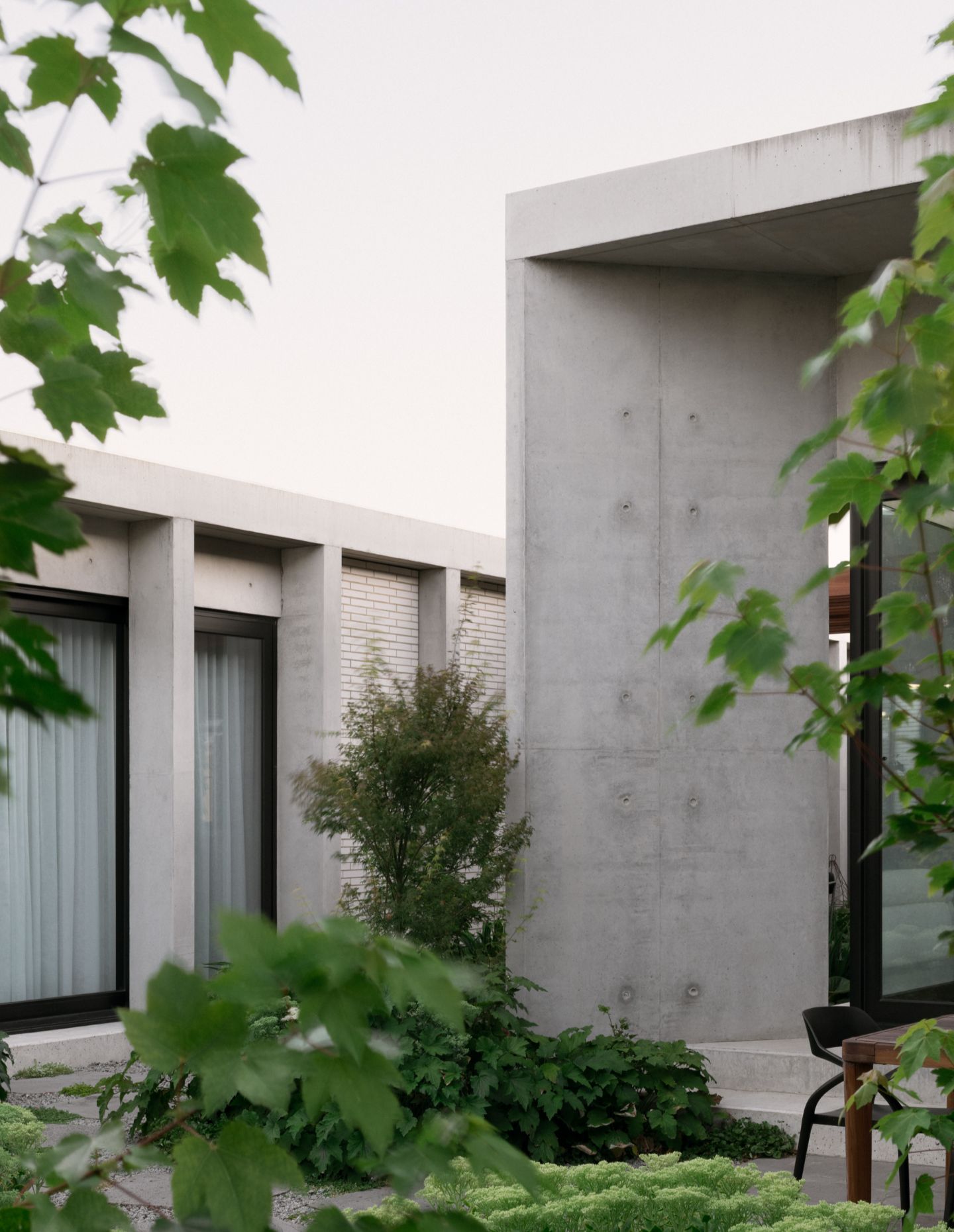
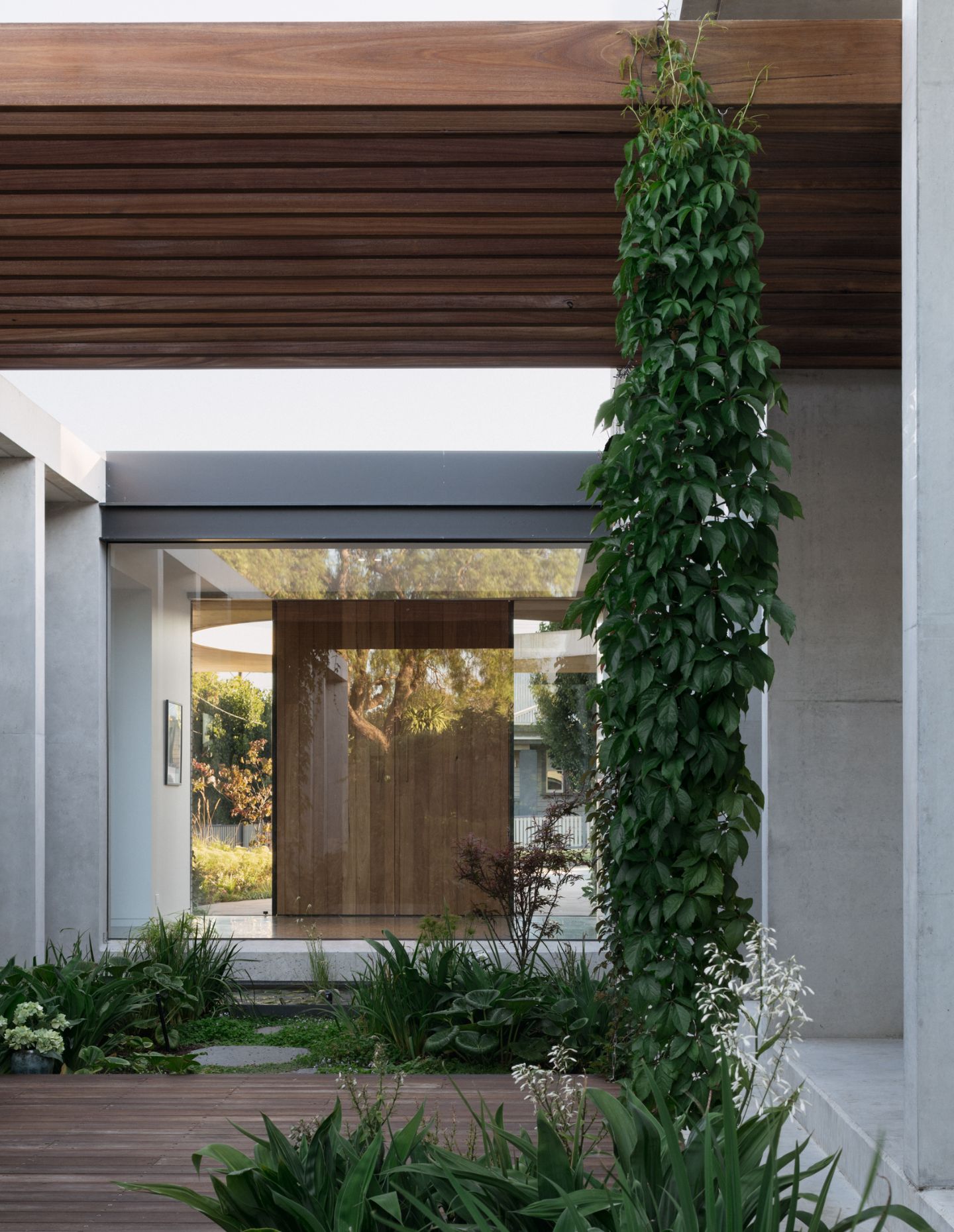
The plan is similarly direct. The house divides into two wings on either side of the landscaped court: one tending to the communal, the other quieter and more private. But the separation is never absolute. Visual links across the courtyard and multiple circulation paths give the core living spaces an indoor-outdoor openness that allows the house to expand and contract around different modes of inhabitation. It can support retreat, but also gatherings large and small. That flexibility seems crucial to Glenblaith’s success, especially for clients seeking a long-term home that can hold both the rituals of everyday life and the occasional intensity of shared celebration.
There is also a pragmatism underpinning the project’s calm assurance. The house is all-electric, with concrete flooring providing thermal mass for more stable internal temperatures and reclaimed brickwork from demolition being repurposed during construction. A close relationship between architect, builder, engineer and landscape architect was central to realising the project’s more demanding elements, particularly the in-situ concrete columns and oculus. These are not incidental details; they speak to the level of coordination required to make a house like this feel effortless.
What makes Glenblaith compelling is not simply its material discipline or sculptural confidence, but the clarity of its proposition. In a suburban context often shaped by exposure, compliance and visual sameness, this is a house that redirects attention inward – toward atmosphere, shelter, sequence and landscape. It suggests that domestic luxury need not be expansive or demonstrative to be deeply felt. Sometimes it is enough to make a garden the centre of the world, and let everything else gather around it.
Related: Sandy Anghie’s shou sugi ban