
Elsternwick House lies on the border of domestic and something else. Located in the inner south-east of Melbourne, the existing Federation-style home renovated by tote design studio clearly has charm in abundance; inside, its original features set a softer canvas for the otherwise commercial-feeling interventions that have been introduced.
The new sitting room feels almost like the National Gallery of Victoria’s members lounge. The kitchen is reminiscent of one in a high-end corporate office. What is interesting in the renovated home is the gallery-like presentation of art and furniture objects in each space, paired with the innate charm of a heritage residence.
“The story of Elsternwick House is one of connection, between old and new, and between quiet moments and more expressive ones,” shares Director of tote design studio, Sylvanna Mitri. The clients came to the designers with an extensive collection of art that they already owned.
“We spoke a lot about the clients’ travels and the significance of pieces that had been gifted between family members,” says Mitri, noting how “these stories informed many of [the] design decisions.”
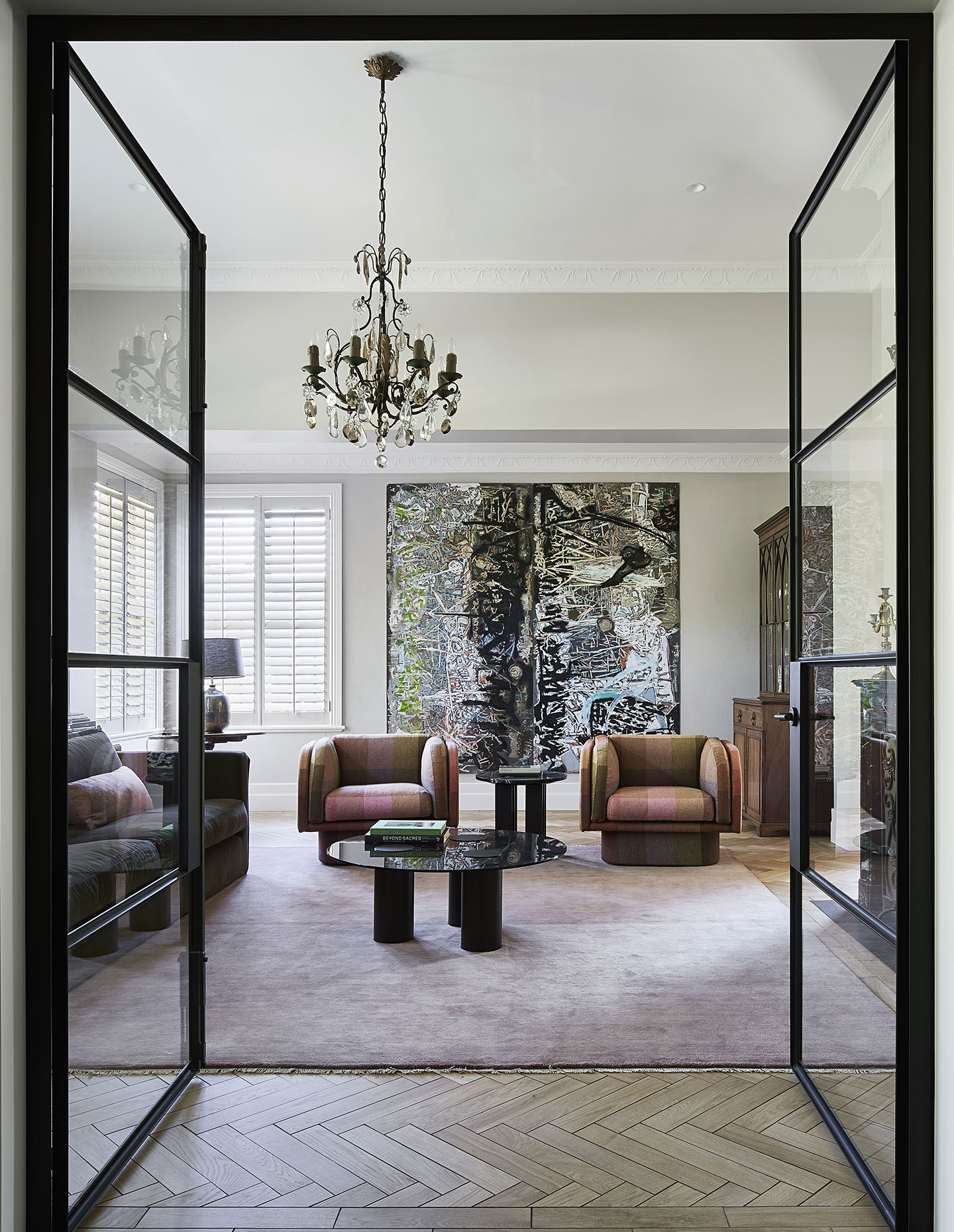
Many of the artworks were already mounted in particular positions around the home. tote design studio decided to retain majority of the original locations, leaning into curated joinery and furniture placements to help showcase the art further. Through the introduction of large steel-framed doors off the hallway, the Rupert Betheras artwork in the formal sitting room is now celebrated and framed by two chequered Grazia & Co Harvey Swivel armchairs. ‘Ghosting walls,’ as named by Mitri, were used throughout the home to “provide a quiet backdrop for the client’s art and furniture curation, allowing each piece to elevate the drama of the space.”
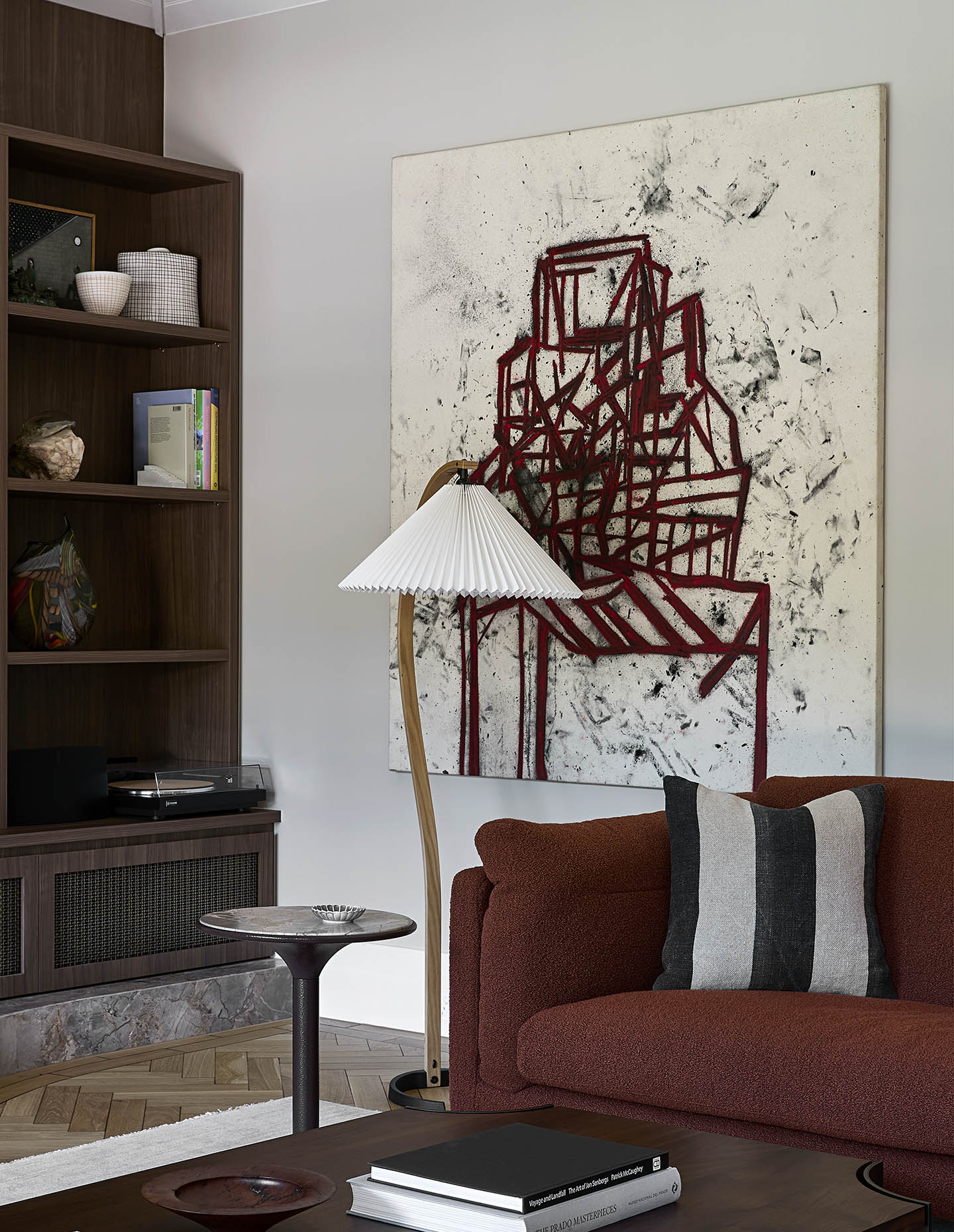
“The artworks also heavily influenced the interior palette, with many of the accent colours drawn directly from the collection itself,” explains Mitri.
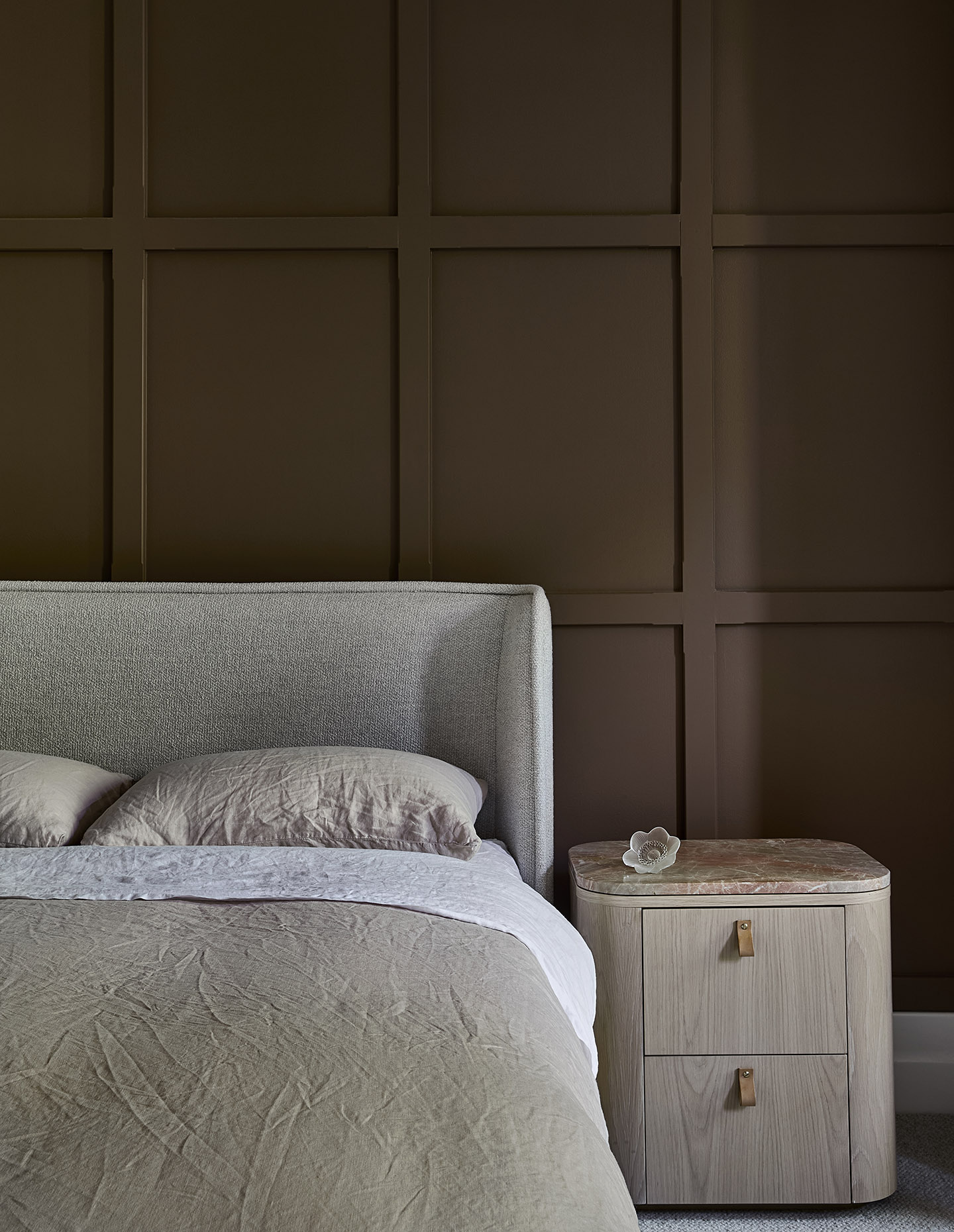
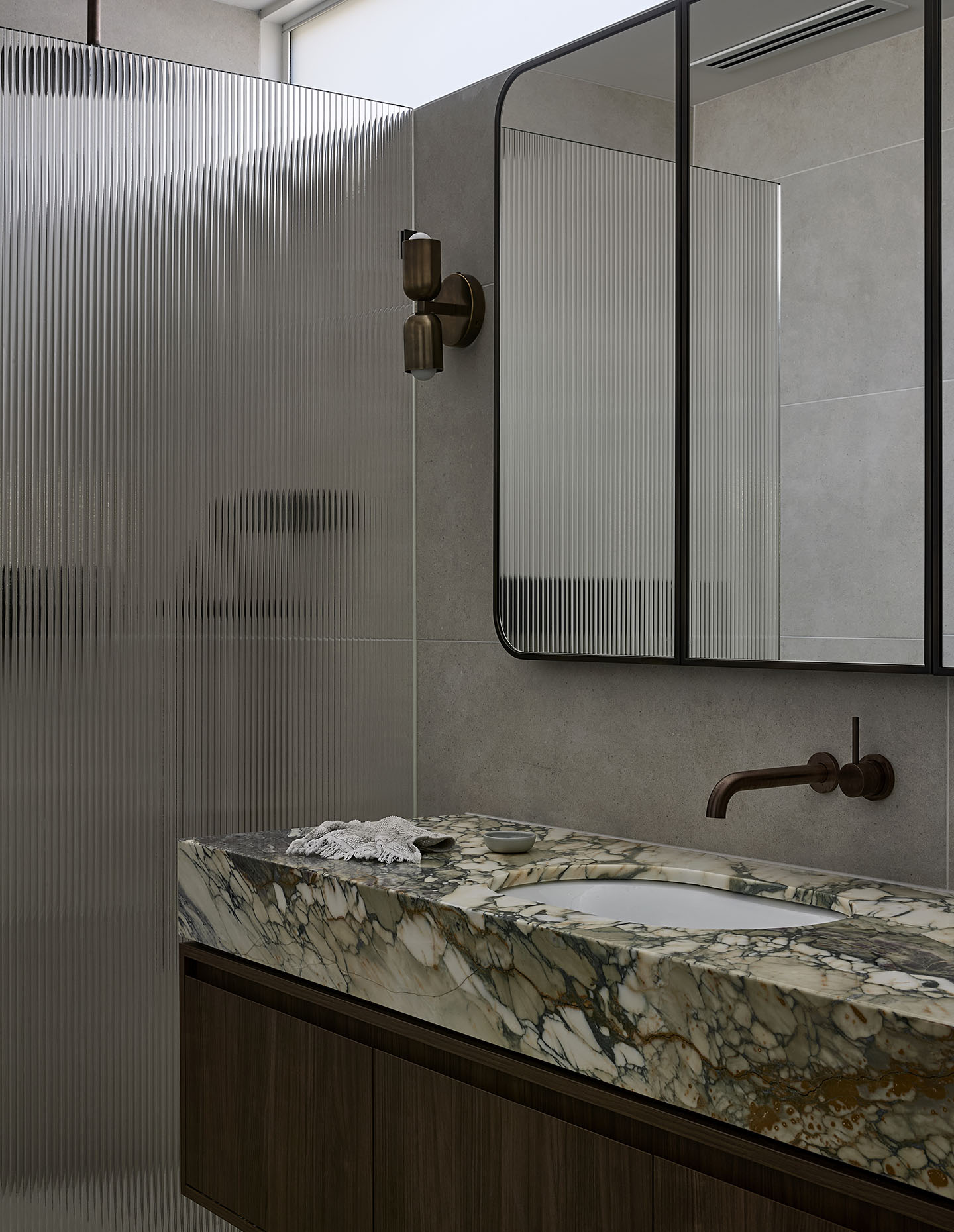
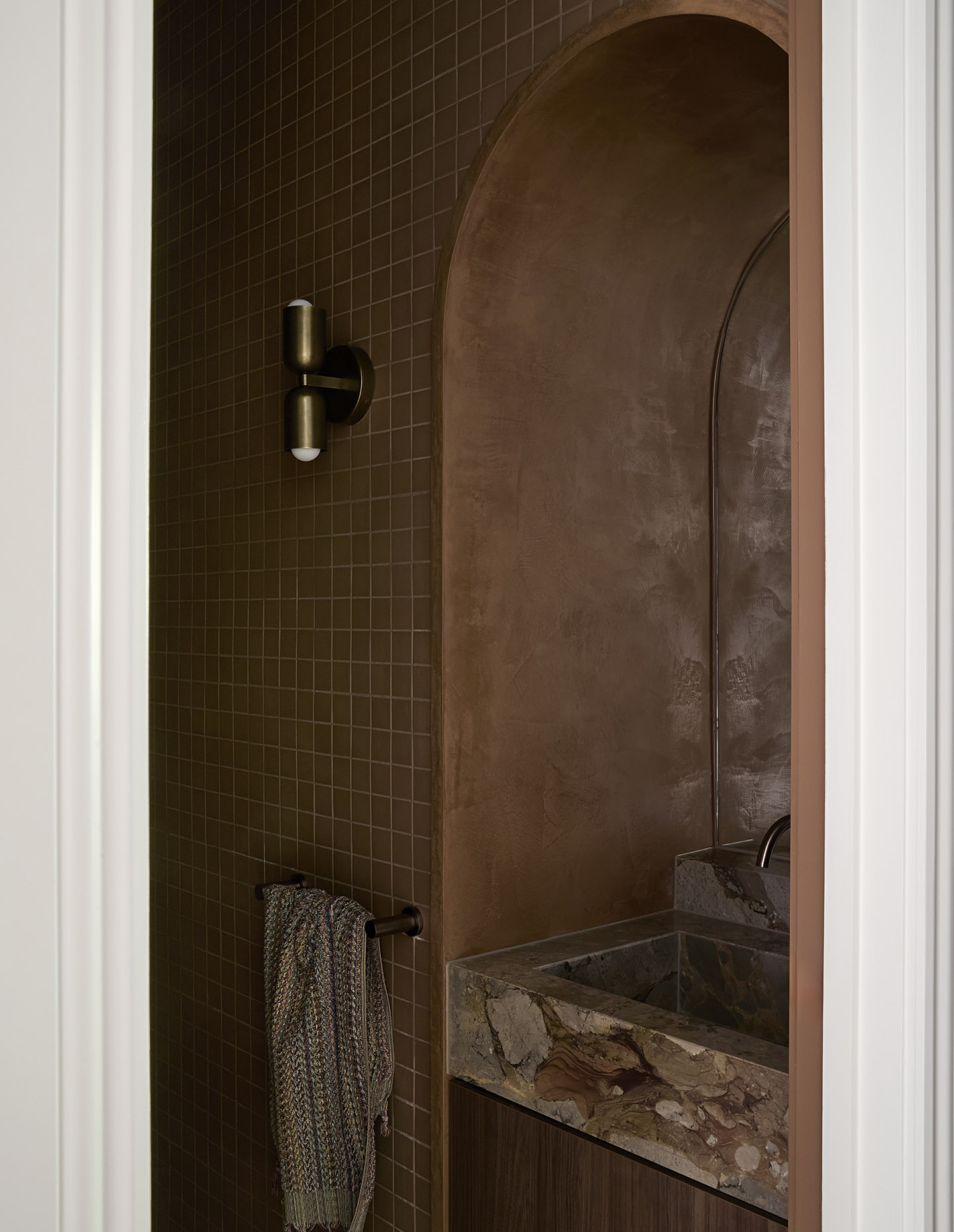
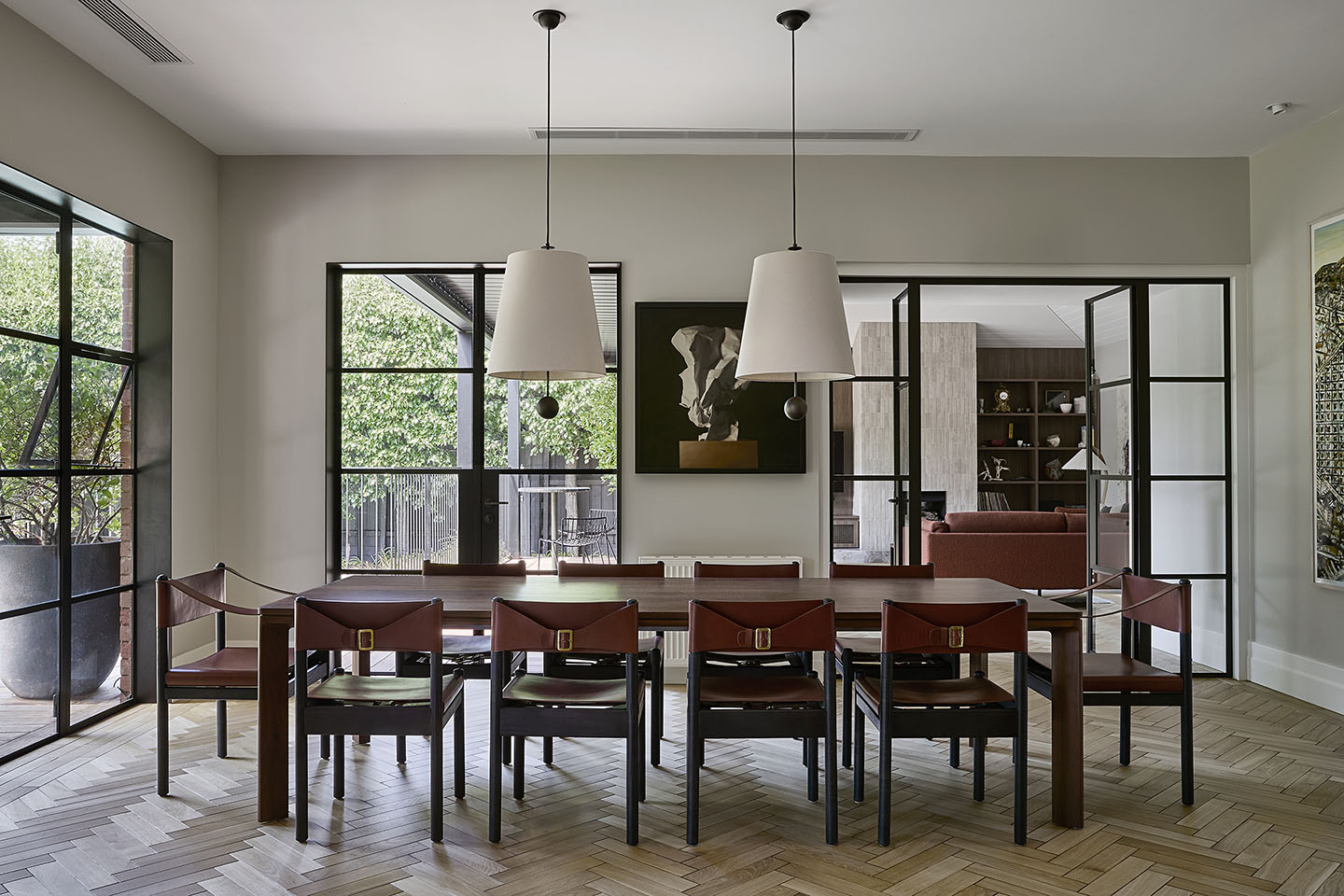
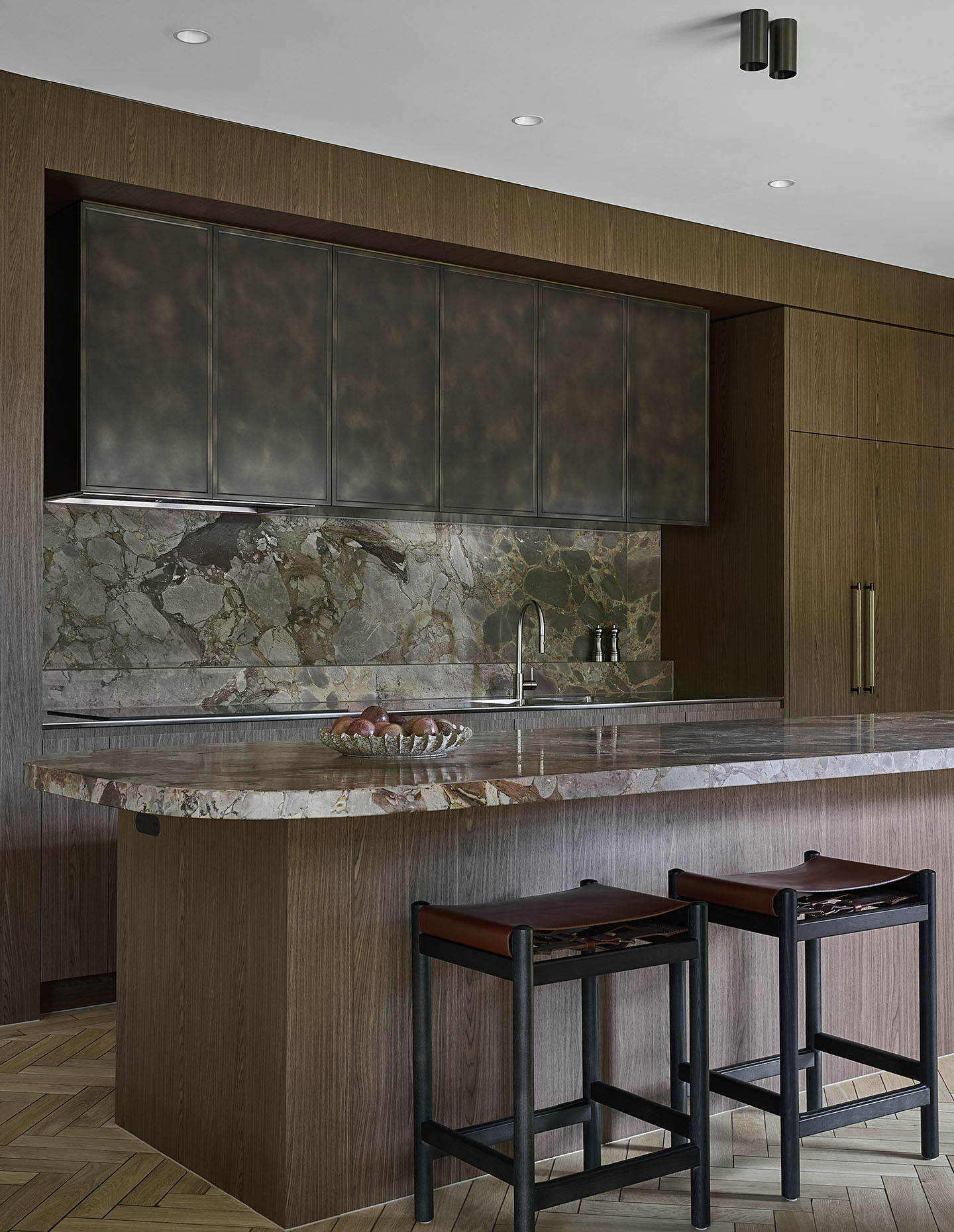
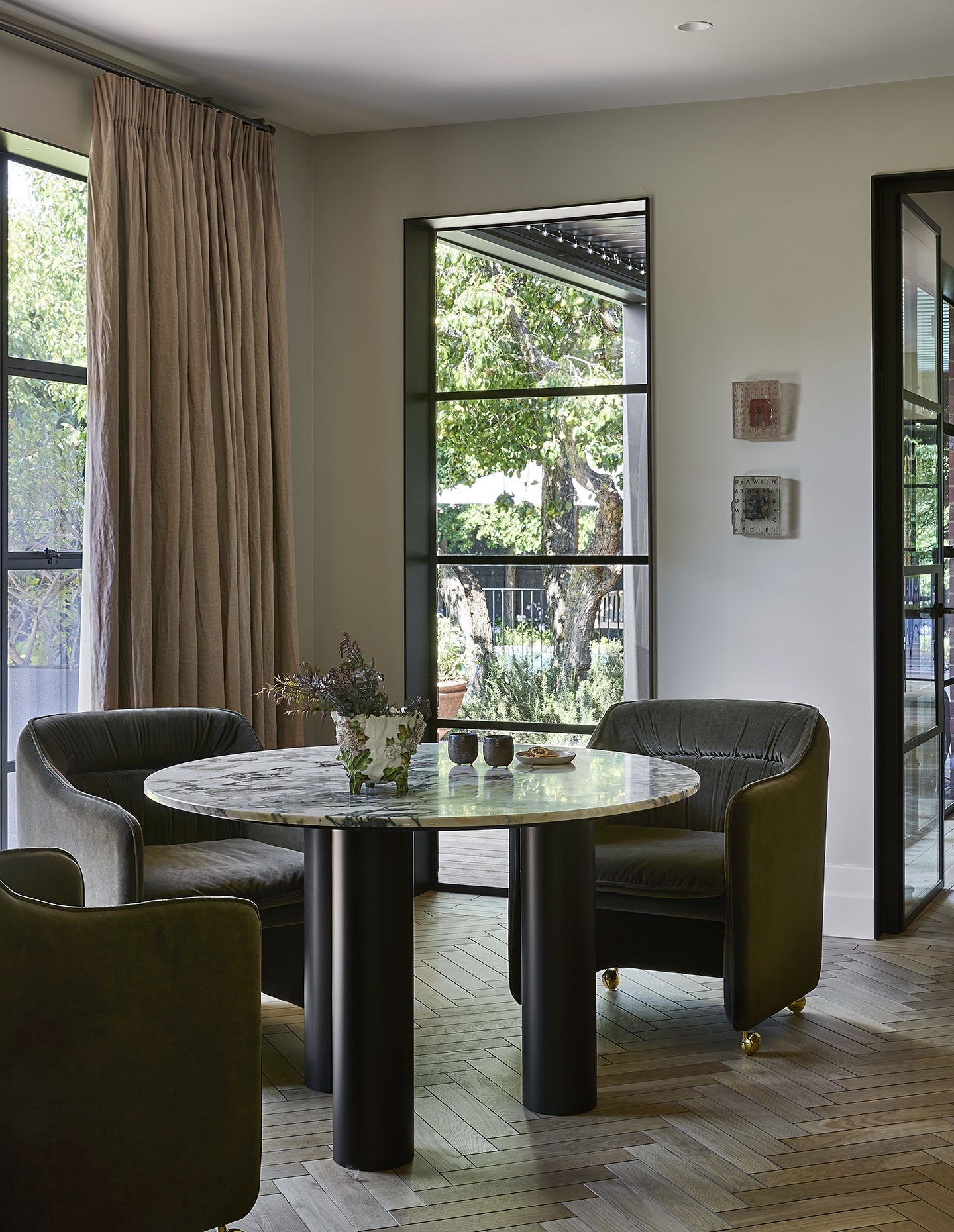
In the main bedroom, cinnamon-toned timber panelling and an upholstered bedhead “introduce a gentle femininity, while remaining coherent with the home’s overall language,” she says. Deep sandy pinks clad the bathrooms, while the study spaces and wardrobes embrace similar timbers. Downstairs, walnut coloured timbers from the kitchen joinery carry through to the matching Grazia & Co Audrey dining table and surrounding furniture, embedding a deeper warmth into the main living areas.
“Each space holds its own personality and purpose while connecting seamlessly, transforming the home into an immersive experience where comfort and visual drama coexist,” claims Mitri.
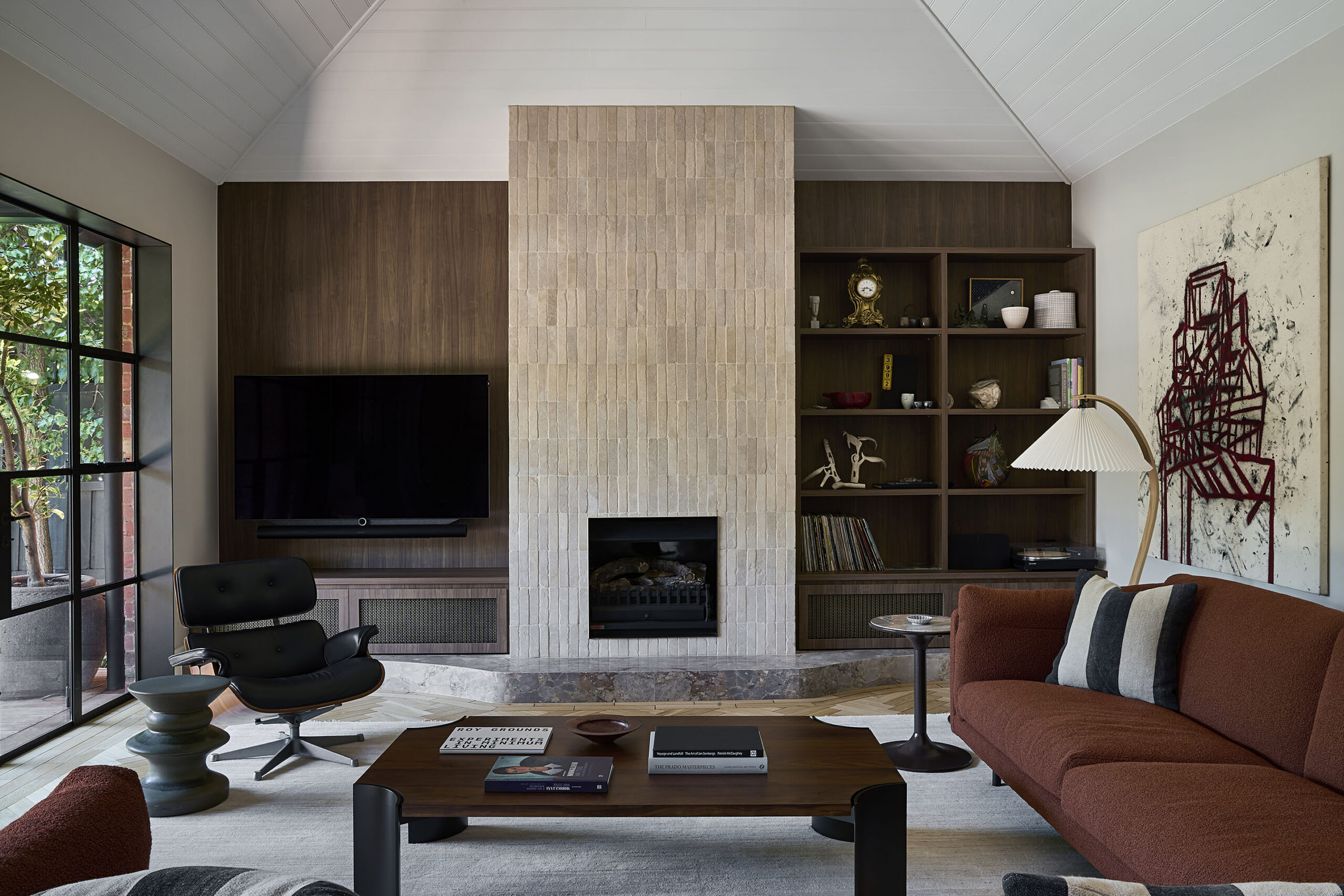
In the living room, retention of the heritage home’s pitched timber-lined ceiling immediately deletes any sense of ‘the box.’ Instead, it creates a vault-like space for thinking, dialogue and lounging in front of the tiled fireplace. Perhaps this gesture alone renders this room the most homely space in the residence. The domestic selection of furniture includes an Eames armchair and a custom coffee table from Grazia & Co.
Related: A Canberra house with brick surprises
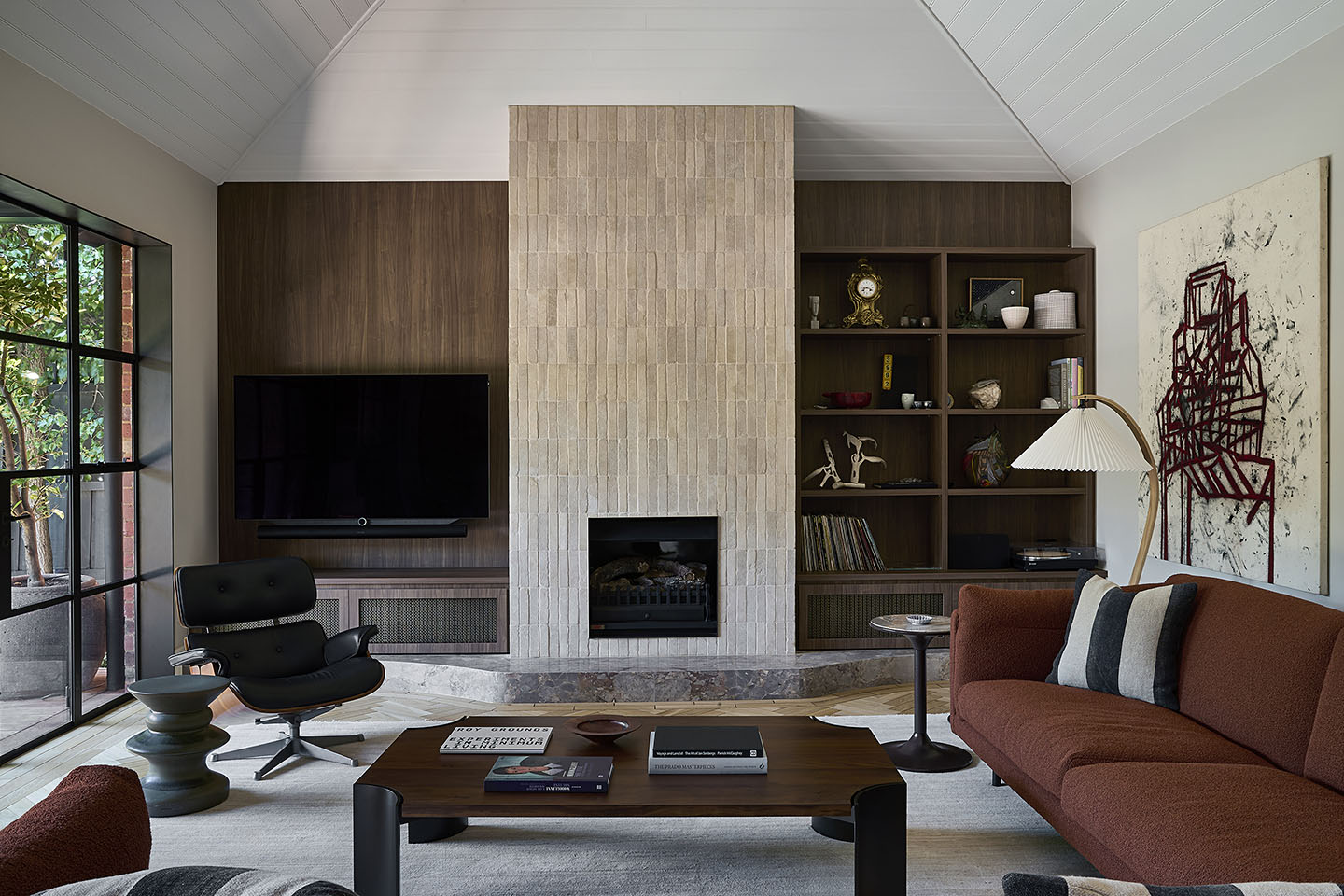
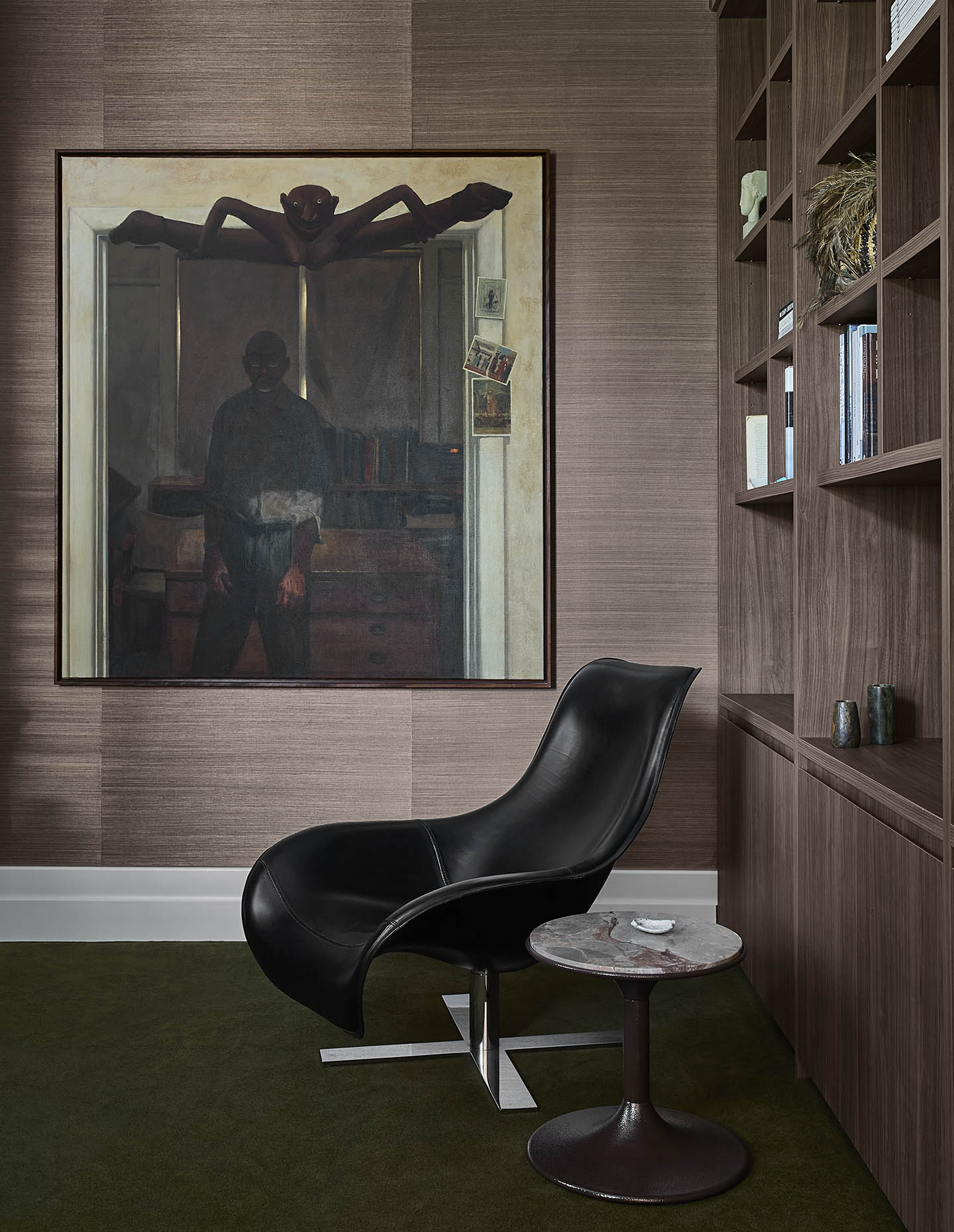
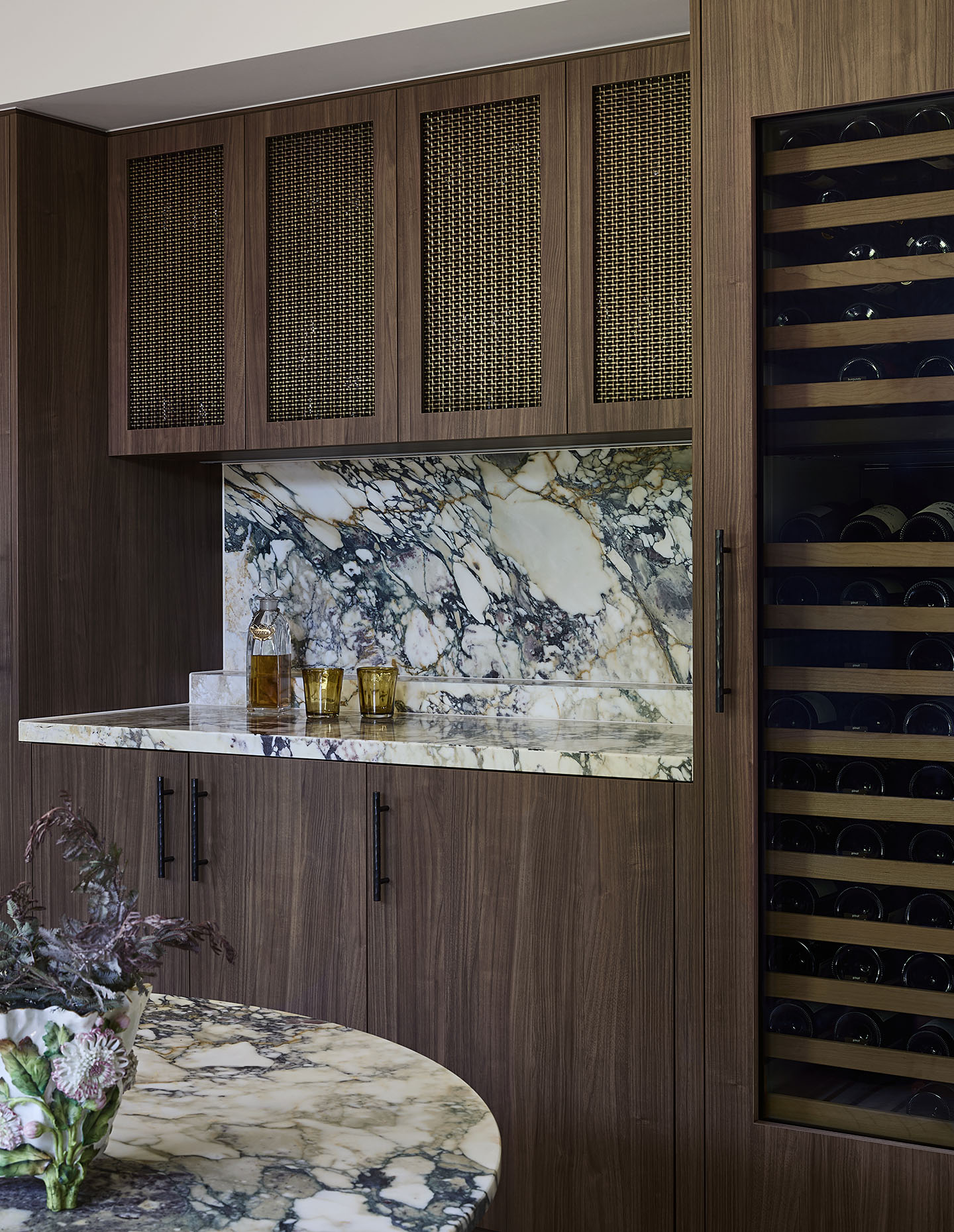
Across the home, the designers worked to embrace innovation through tactile materials. “Sprayed metal to overhead cabinetry, polished plaster and metal mesh inserts serve both decorative and functional roles,” says Mitri. Natural stone, timber walls, hand-crafted handles and leather textiles were deliberate additions to “invite touch and signal the care and craftsmanship throughout,” she adds.
“Australian-made pieces were specified alongside antiques, including sideboards and chandeliers, seamlessly blending heritage with contemporary styling,” shares Mitri. She also explains how “retaining and recontextualising these elements reduced waste while strengthening the home’s narrative.” Existing parquetry floors and fireplaces were retained to respect existing structural constraints and avoid unnecessary demolition.
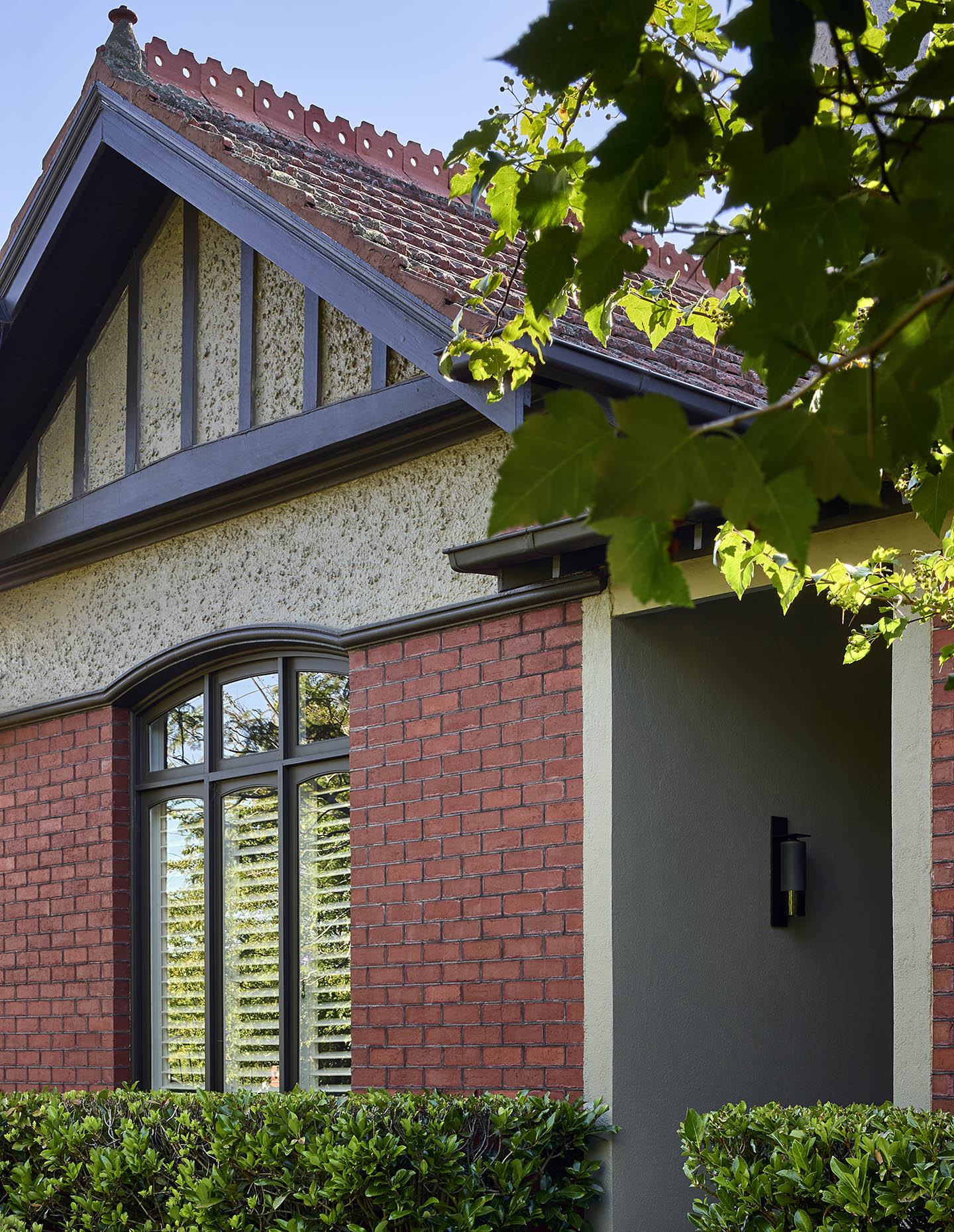
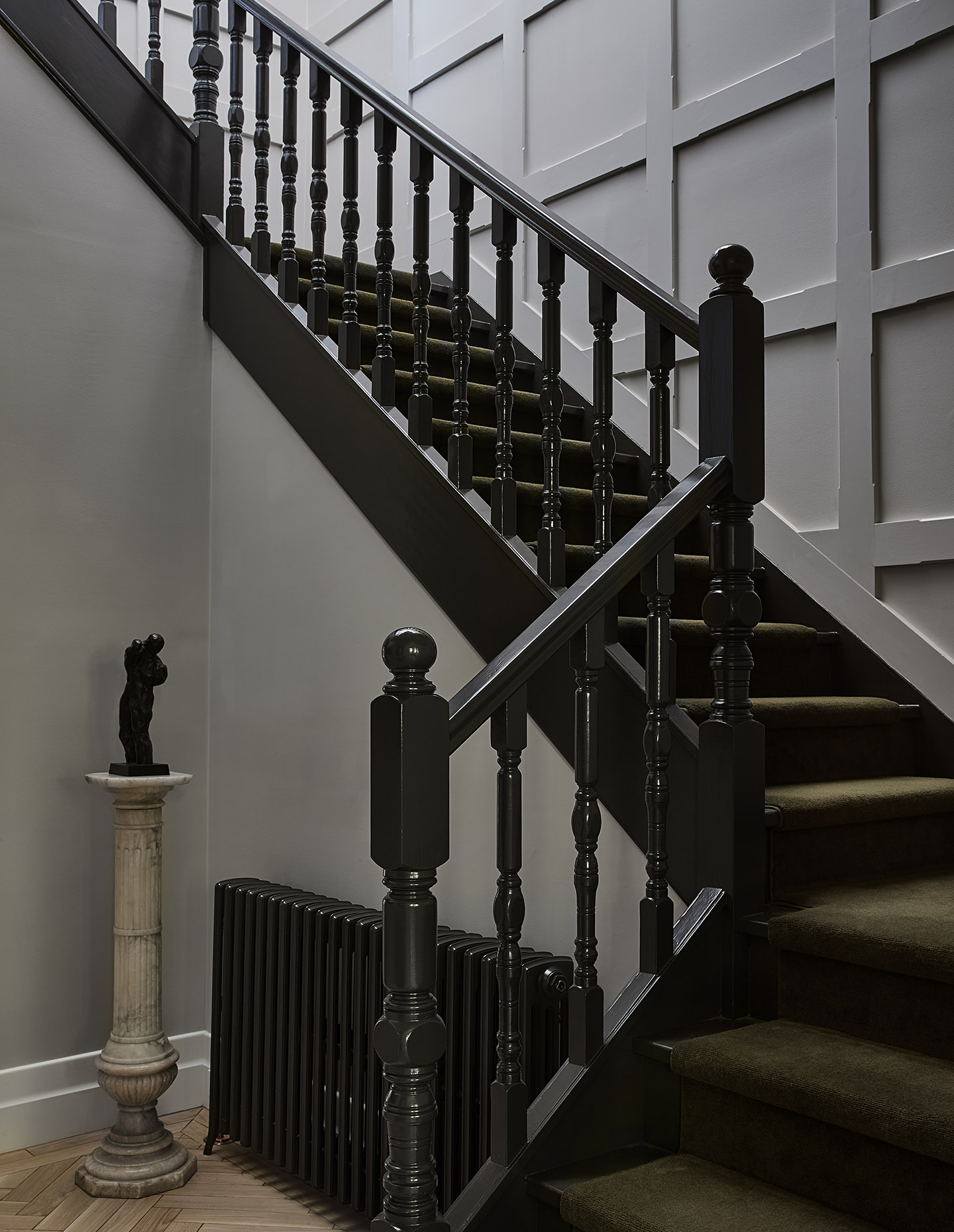
While the heritage character of the home manages to shine through, the designers leaned into “curated furnishings and artworks [that] celebrate craftsmanship and provenance, demonstrating how decoration can advance contemporary interior practice through responsibility, longevity and meaningful design decisions.”