
Set into the steep coastal terrain of Victoria’s Surf Coast, Fairhaven House is a study in restraint. Rather than asserting itself against an exposed and dramatic landscape, the house recedes into it, shaped by durability, calm and a deliberate resistance to visual dominance.
The project began when the client contacted LTD Architectural Design Studio director David Maurice after seeing an article on Backcountry House. “They were interested in attaining similar attributes of simplicity and materiality,” Maurice explains. Having owned and holidayed at the original house on the site for several years, the clients were familiar with both its strengths and its limitations. While the setting remained compelling, the building itself had deteriorated and no longer supported how they wanted to live.
“The aim was to maintain the simple, relaxed vibe of the existing house,” Maurice says, “but enhance the experience and make more room.” At the same time, the clients were entering retirement and intended to spend longer periods at the property, hosting family and friends while settling into a slower rhythm of use.
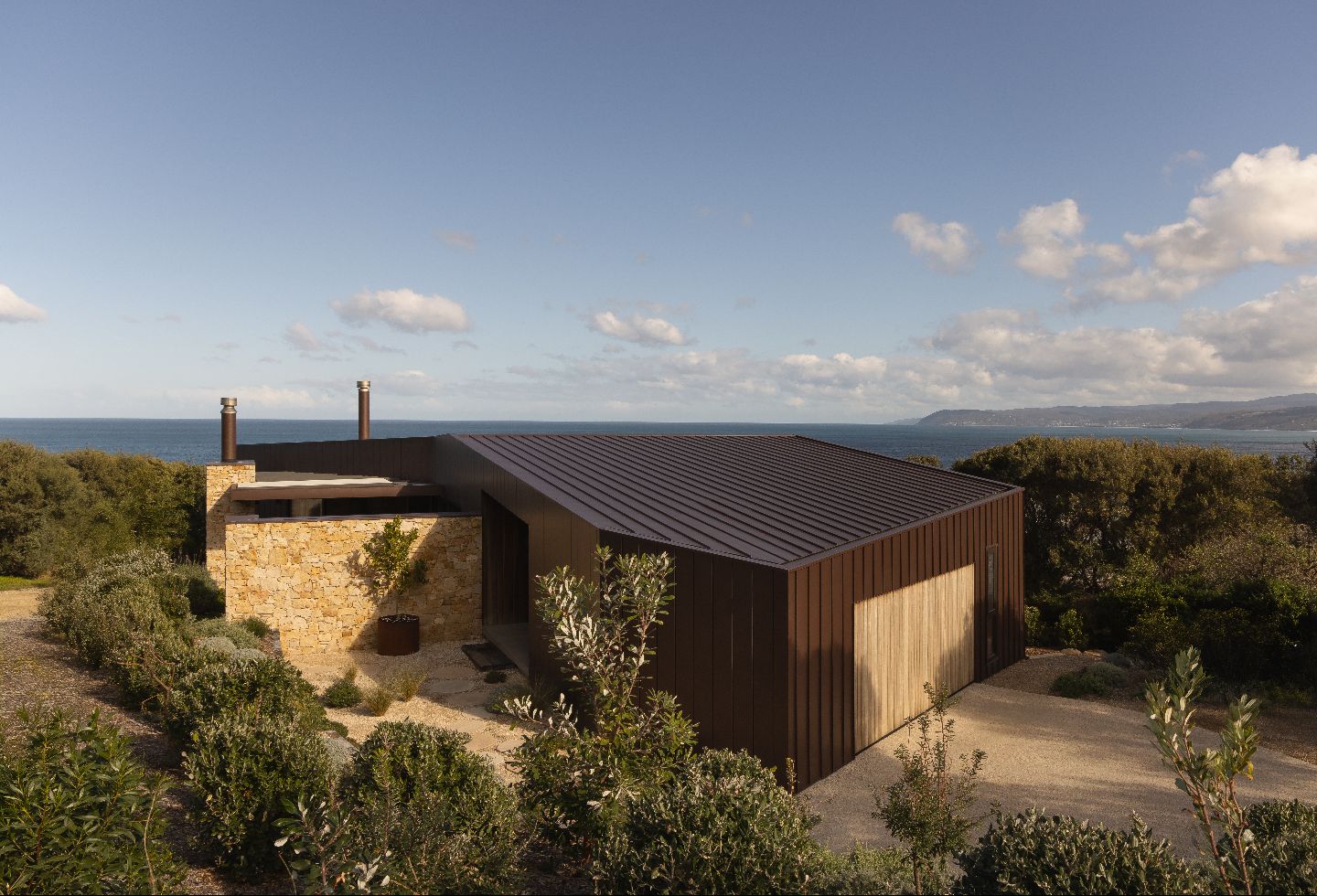
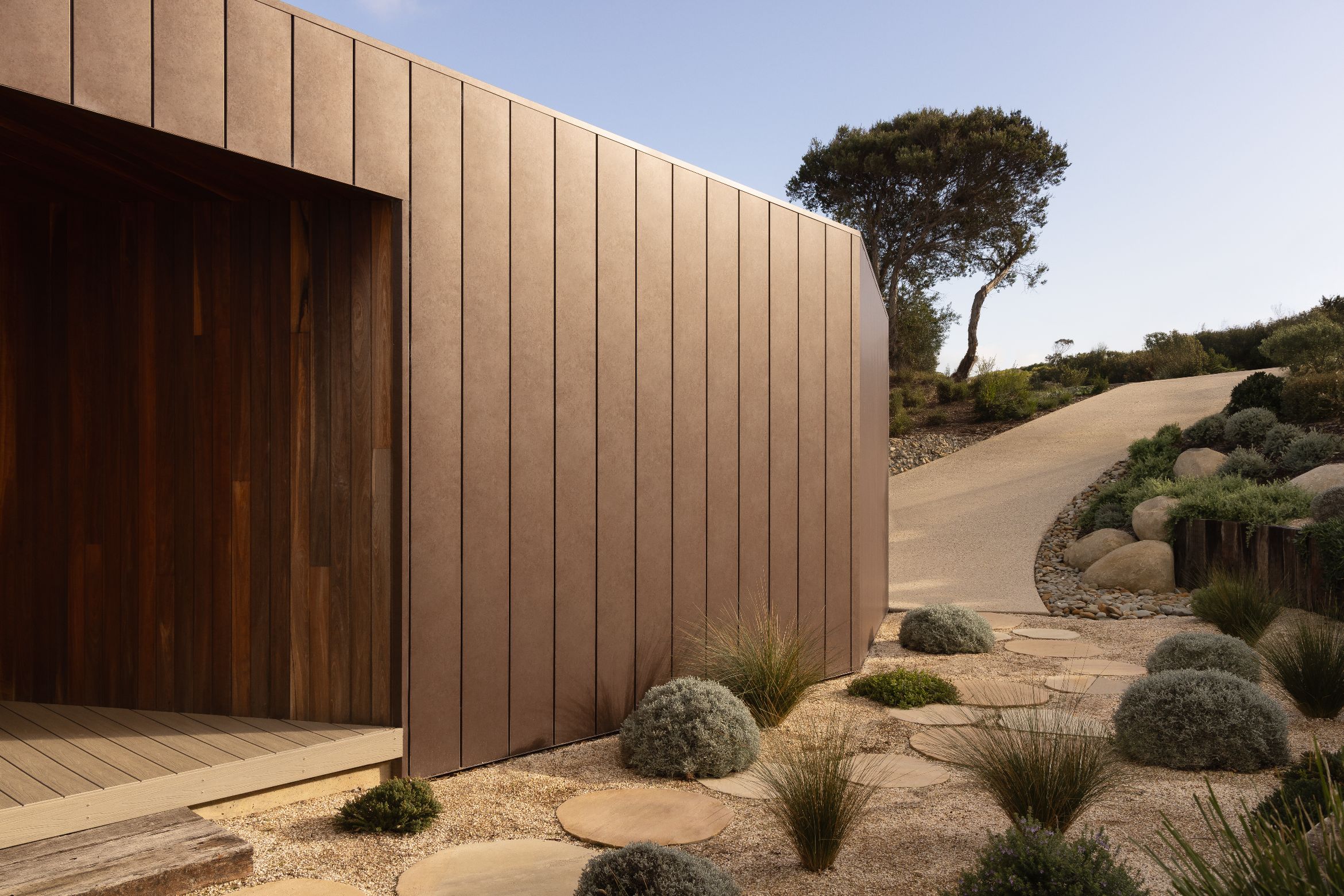
Located within a small and loosely developed coastal community, the site sits among an eclectic mix of architectural styles that have accumulated over more than a century. This context informed an approach that avoided overt gestures or stylistic declarations. Instead, the new house is conceived as a low, elongated form, carved and chamfered to shape a series of interior and exterior spaces.
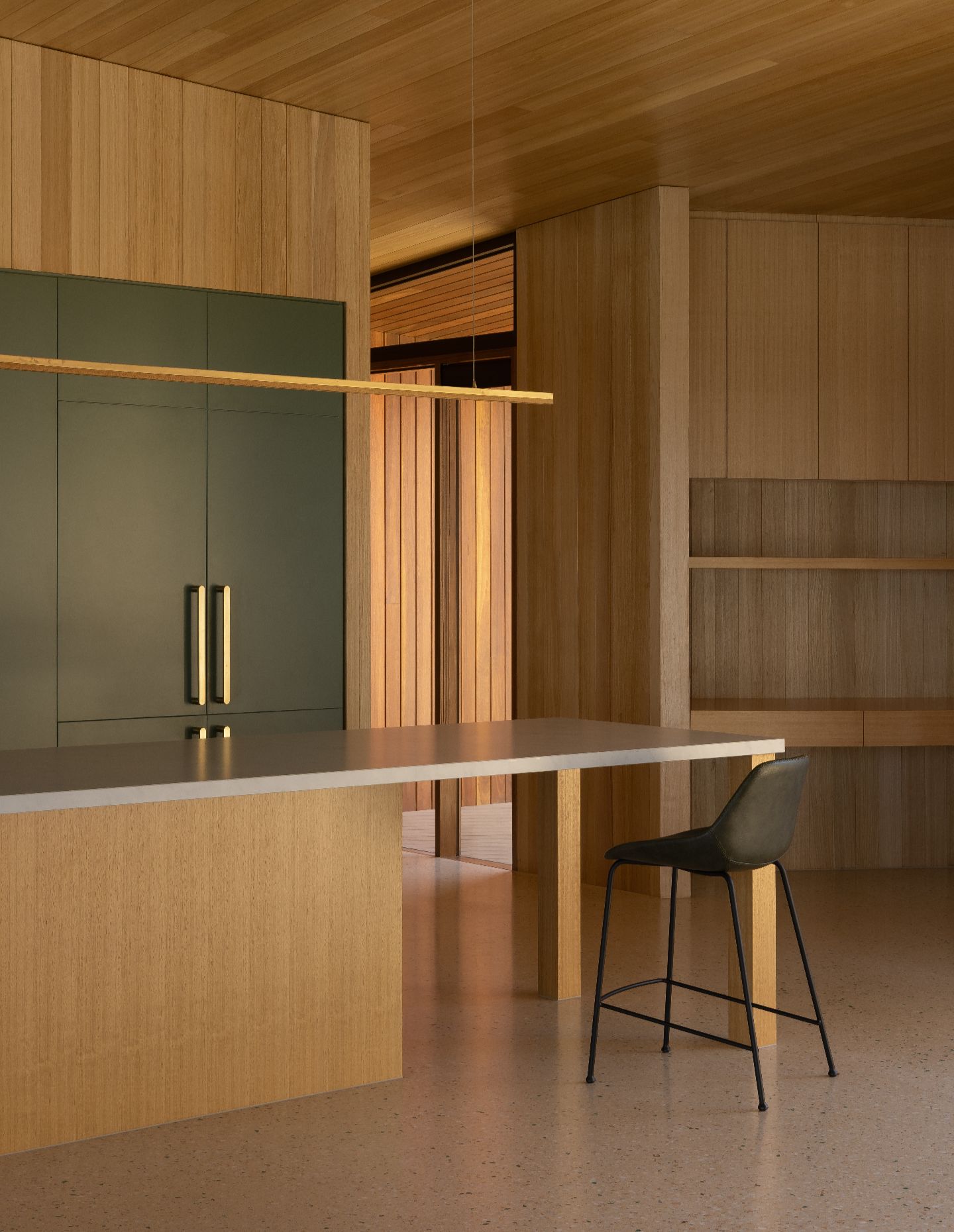
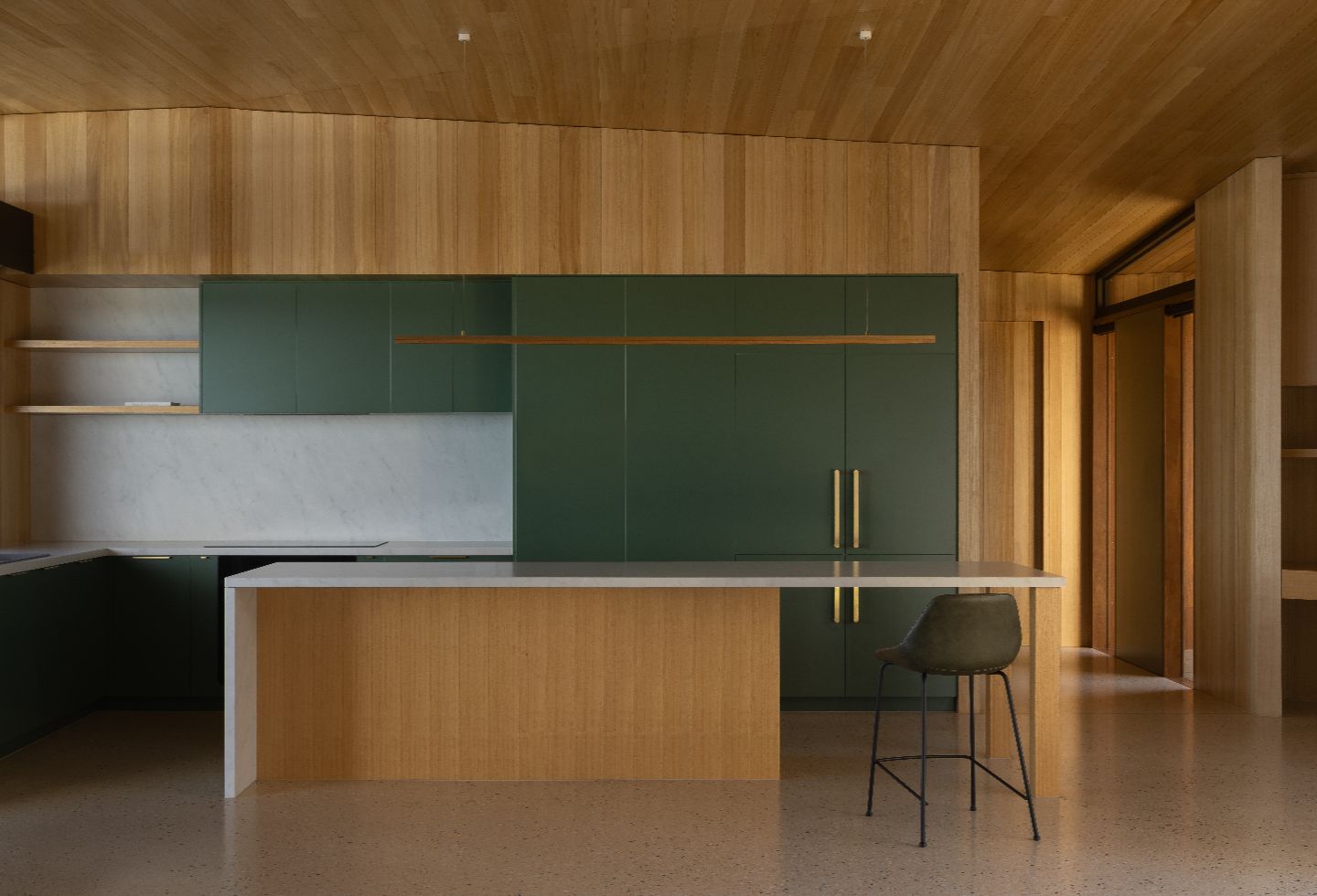
“The profile of the house is set low and long against the hillside when viewed from the beach and Great Ocean Road,” Maurice explains, “in an effort to remain unobtrusive and respectful of its surroundings.” The building is wrapped in a hard shell of pre-finished corten-coloured steel, selected in response to the site’s exposure to wind, salt and sun. Inside, the palette softens, prioritising warmth and longevity without sacrificing robustness.
For DOOD Studio director Andrew Stapleton, the idea of recession was central. “The clients were very conscious of the house being recessed and within the landscape,” he says. “Not being a dominant form from the street was a big consideration, and having the landscape fill in around the building over time.”
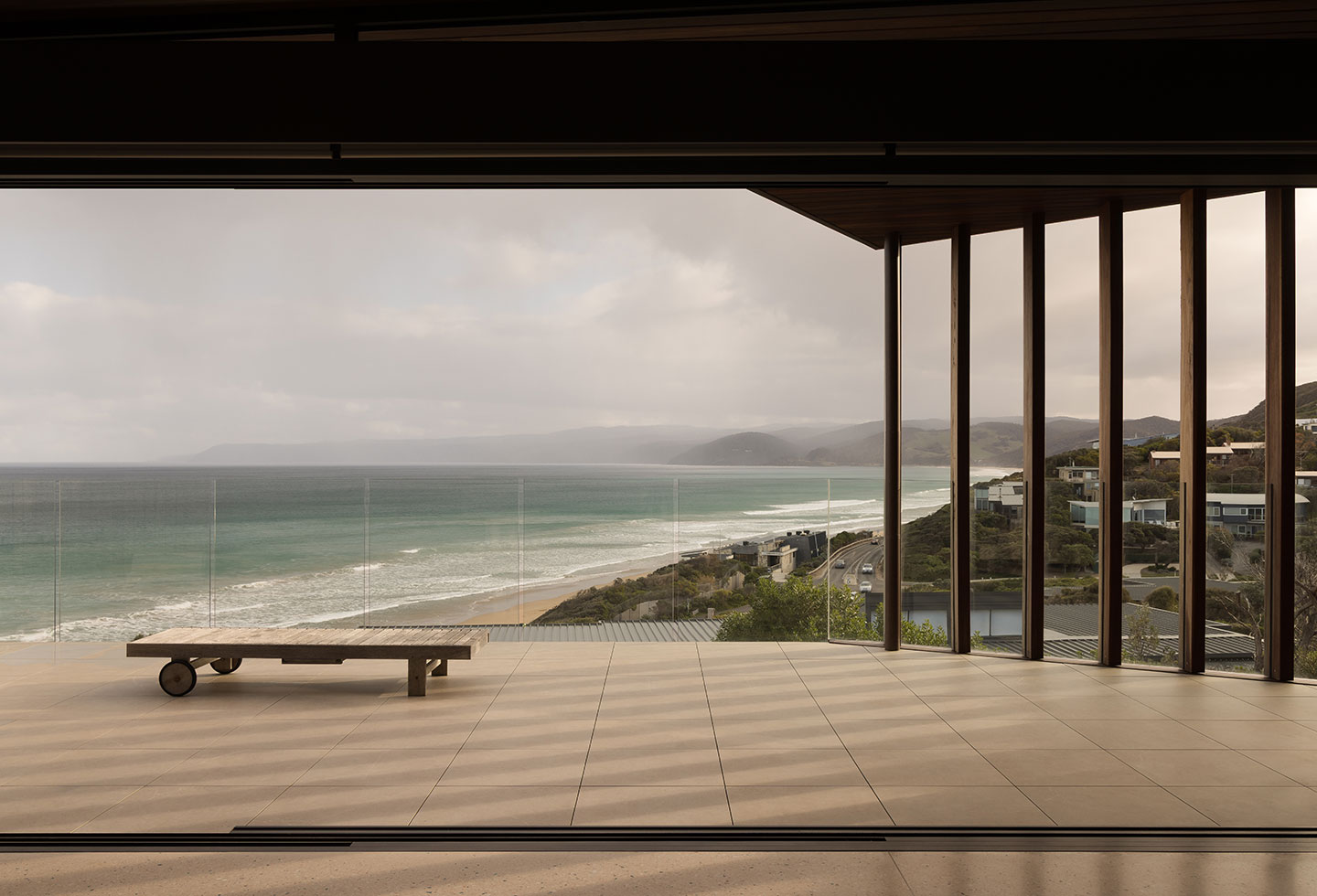
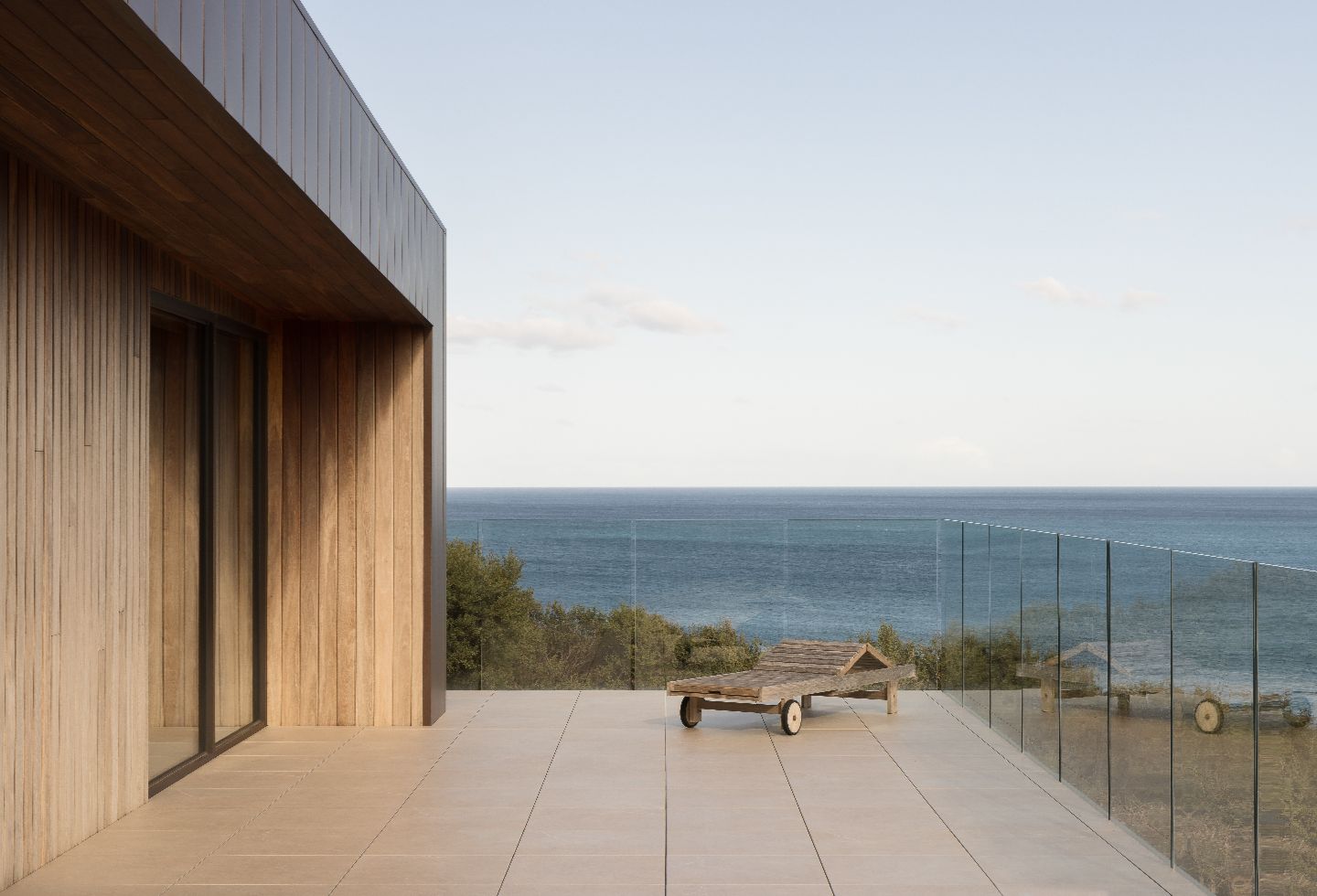
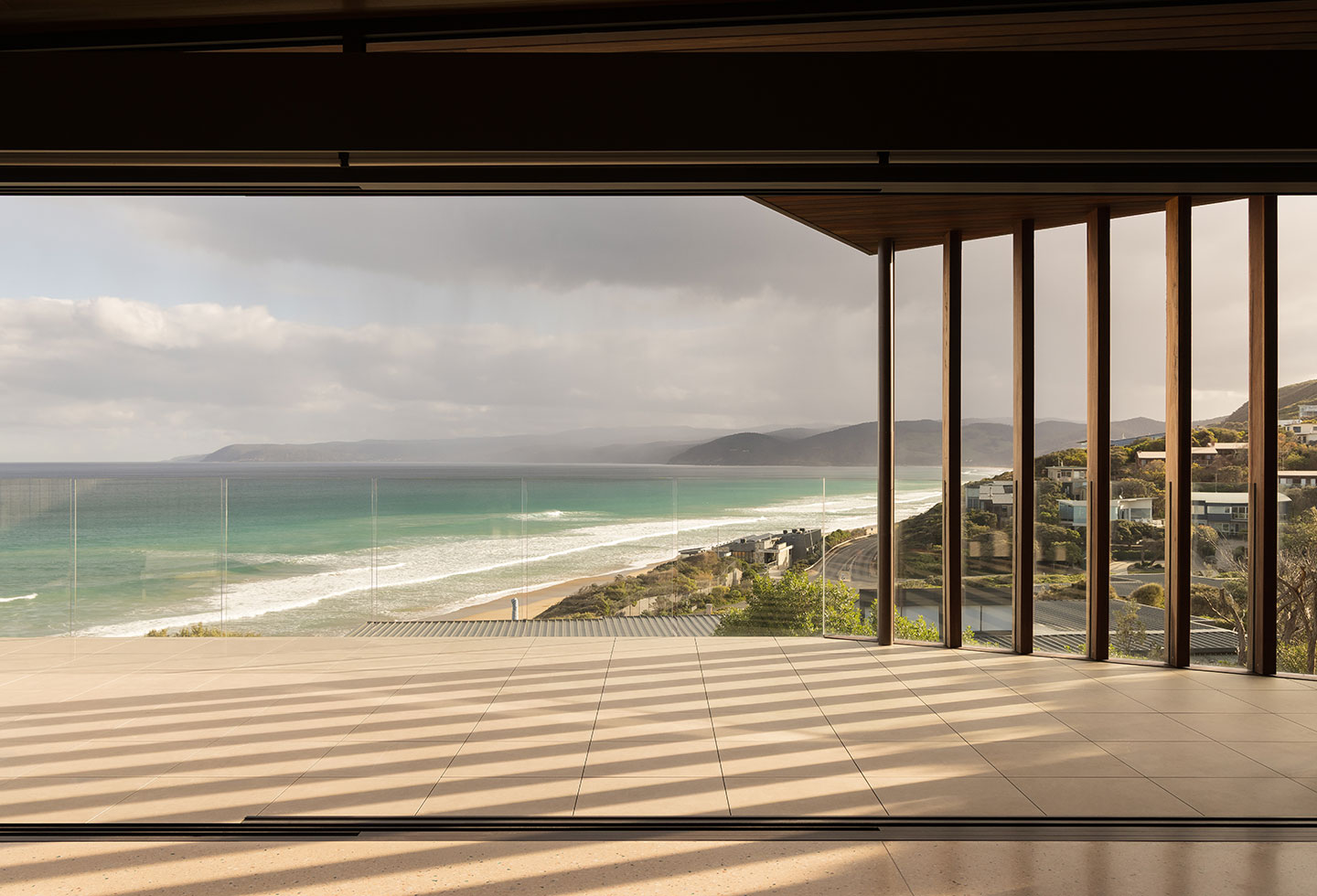
This thinking carries through the planning strategy. The house is organised vertically, with the owners’ spaces located upstairs and accommodation for friends and family below. Decks are treated as extensions of the living areas rather than secondary additions. To the rear, a protected outdoor space can be used in almost all weather conditions, while the seaward deck is oriented toward views and sun on calmer days.
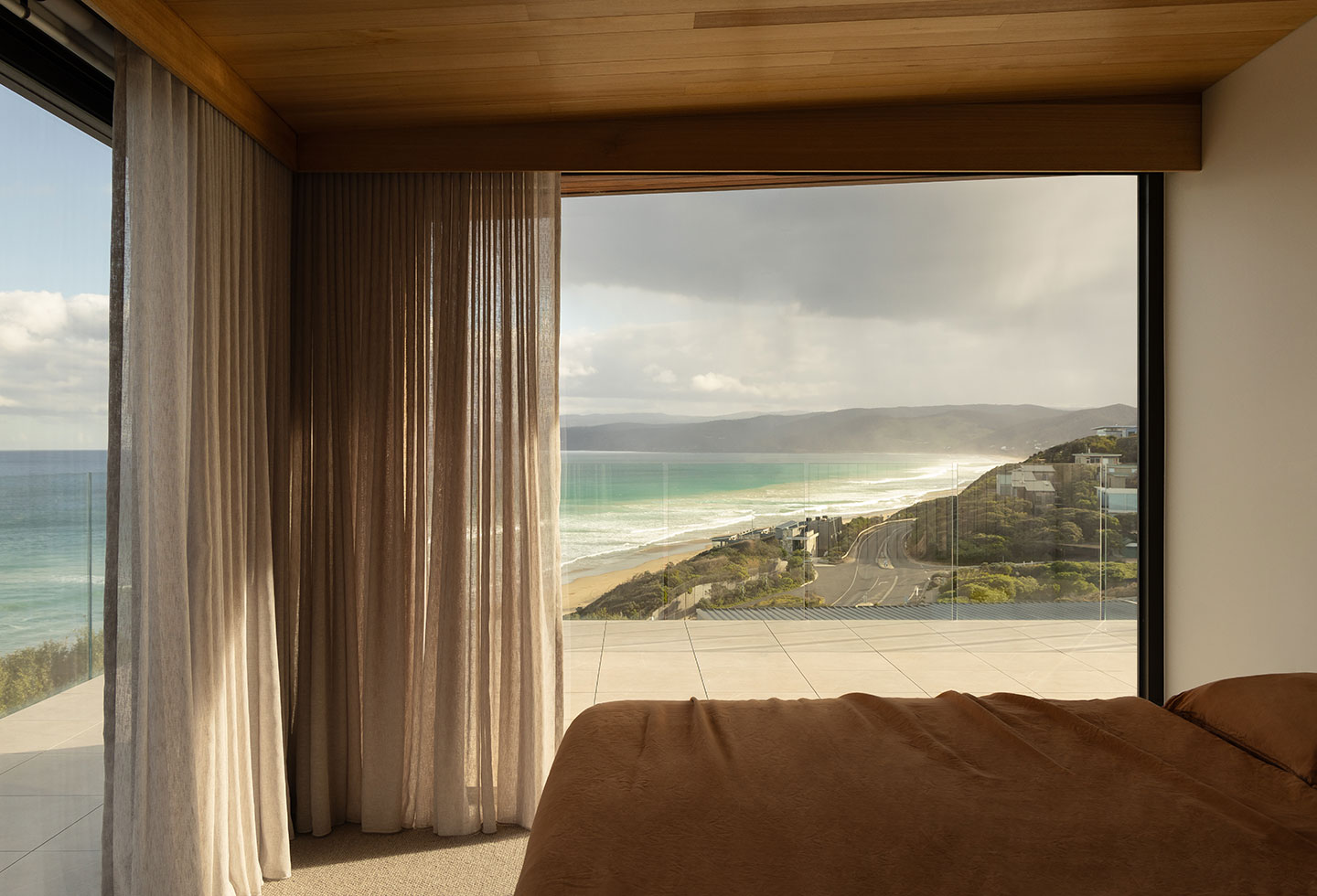
“The master bedroom suite takes a front-row seat,” Maurice notes, “and from within gives a sense of being suspended in the expansive coastal scene.” Northern-facing courtyards offer shelter and passive warmth during cooler months, balancing the site’s dramatic exposure with moments of enclosure and comfort.
Related: Native hardwoods shape this Mereweather home
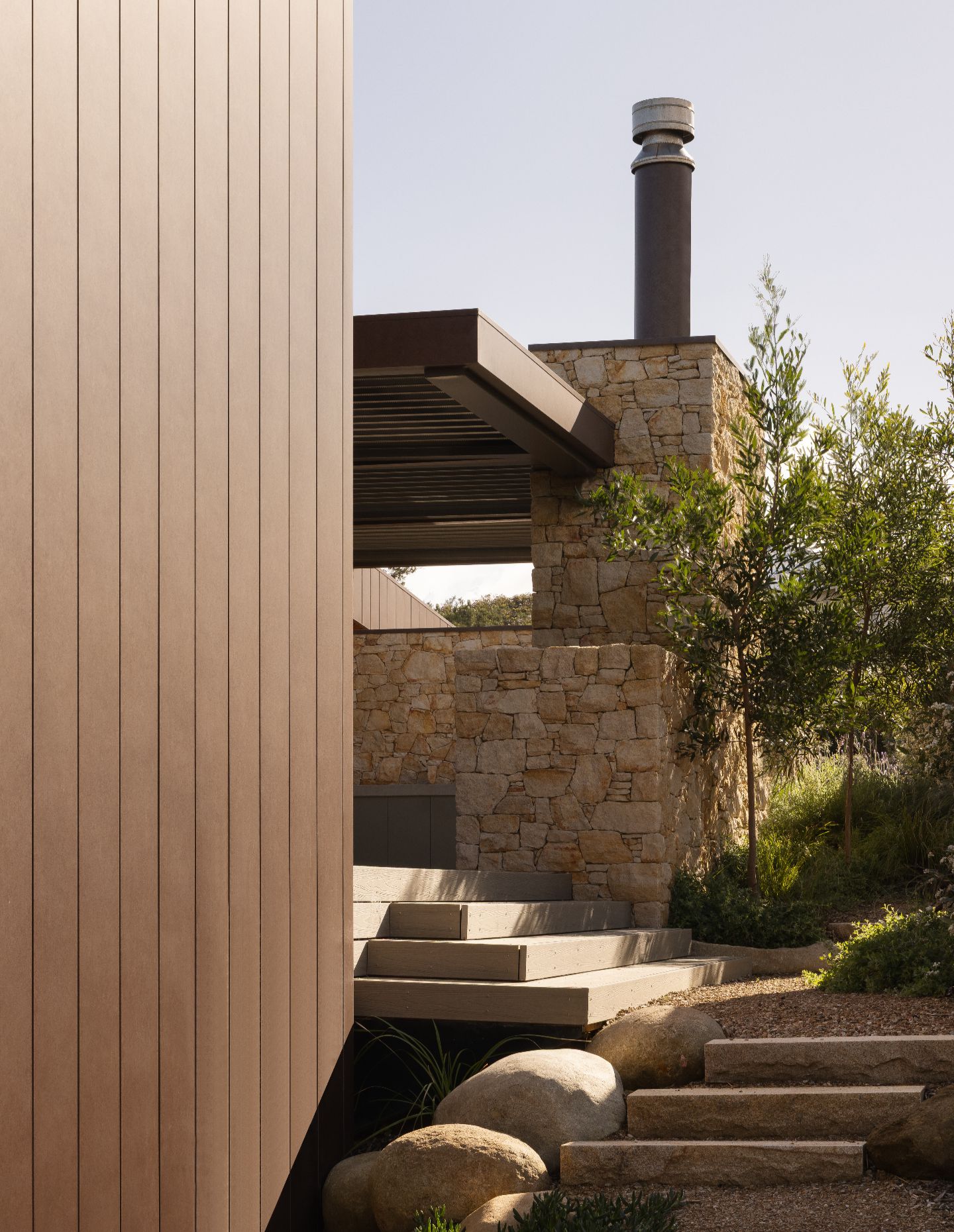
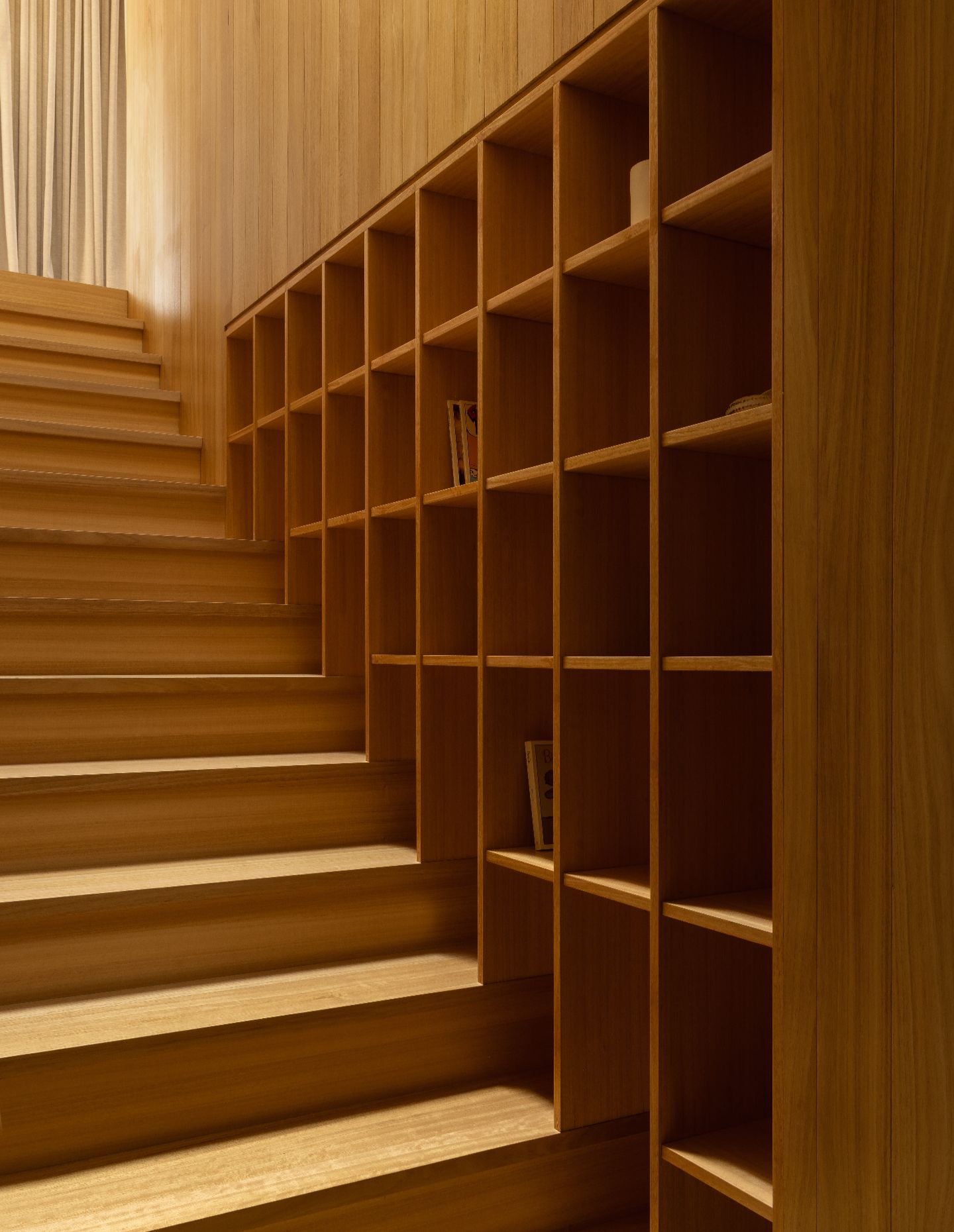
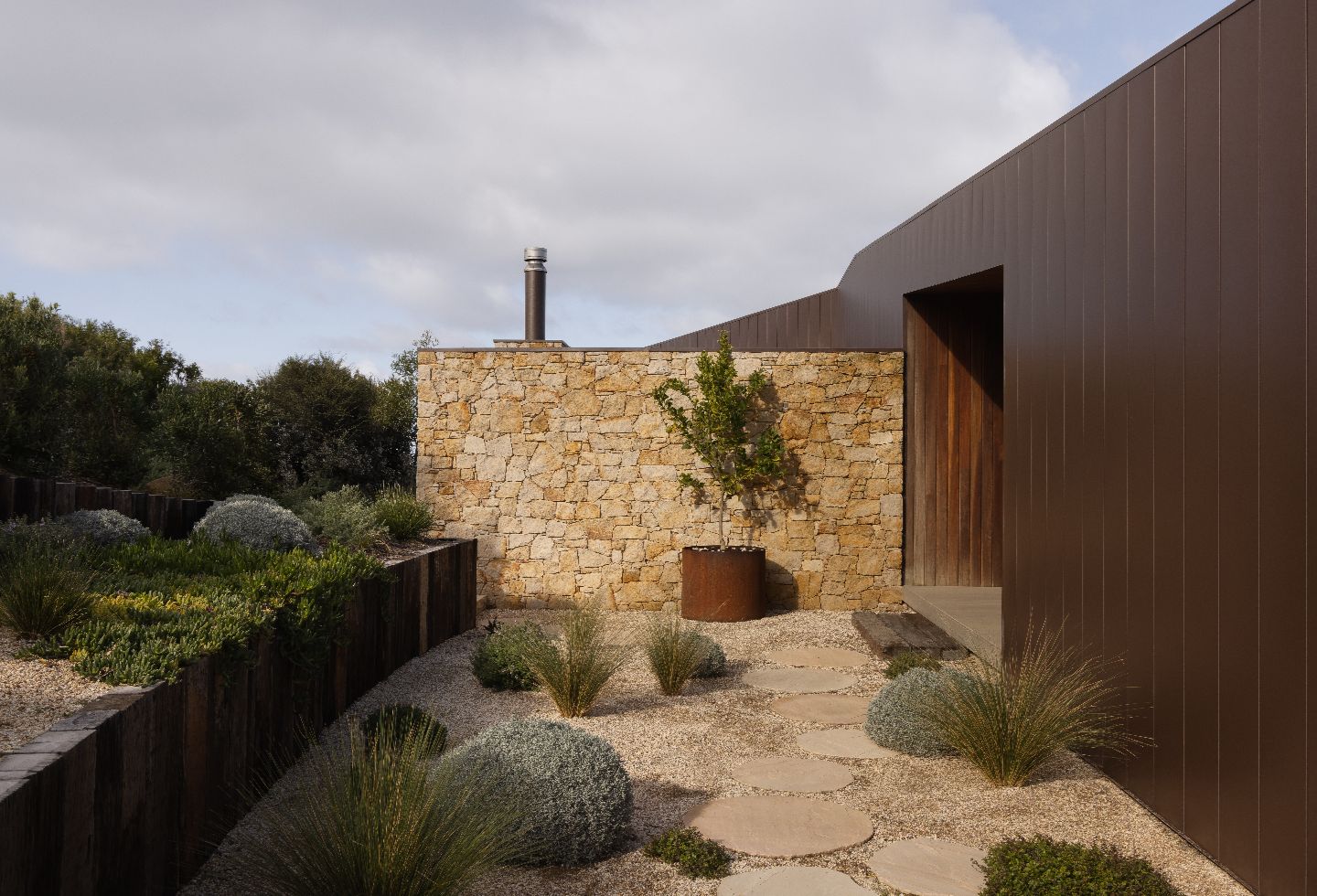
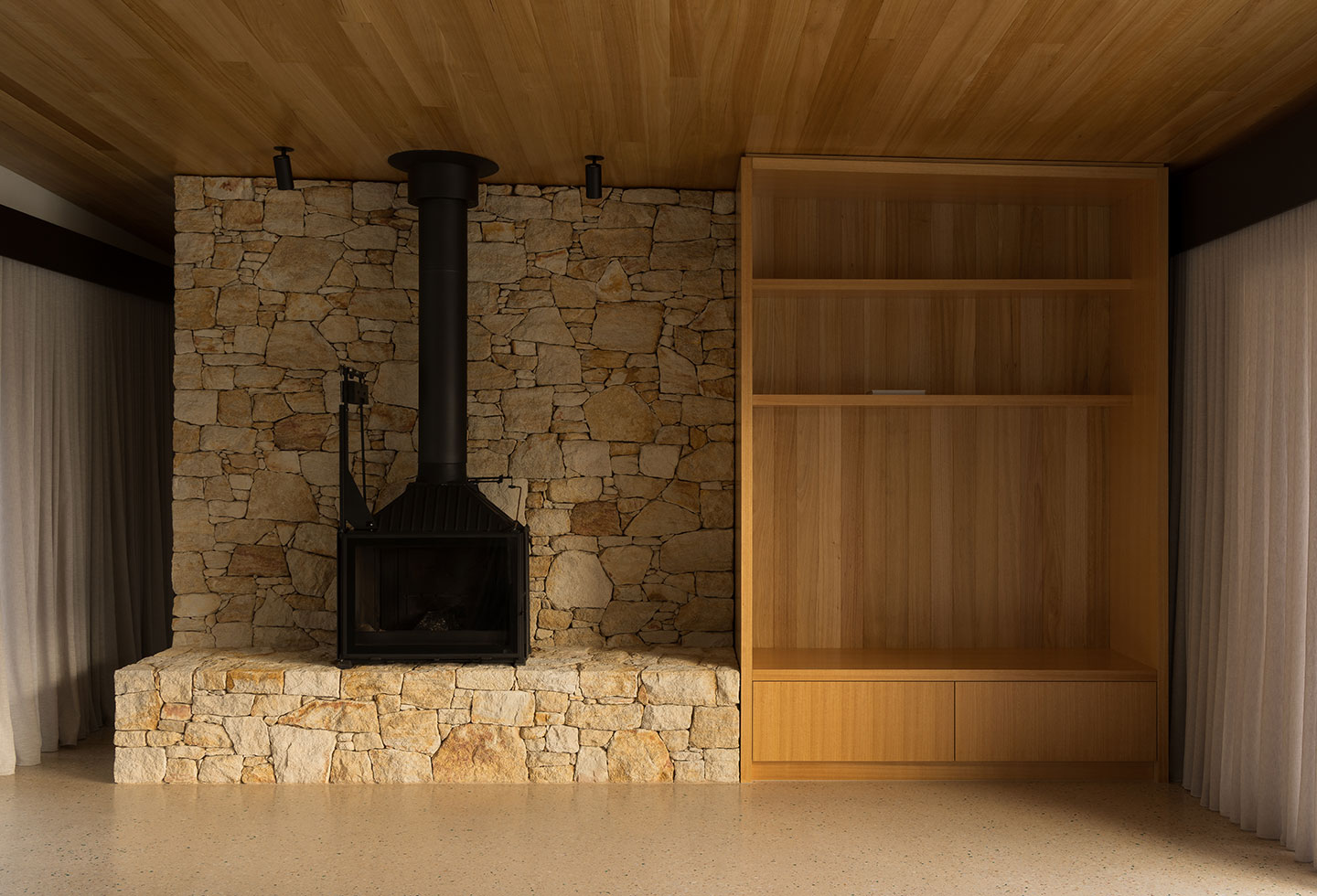
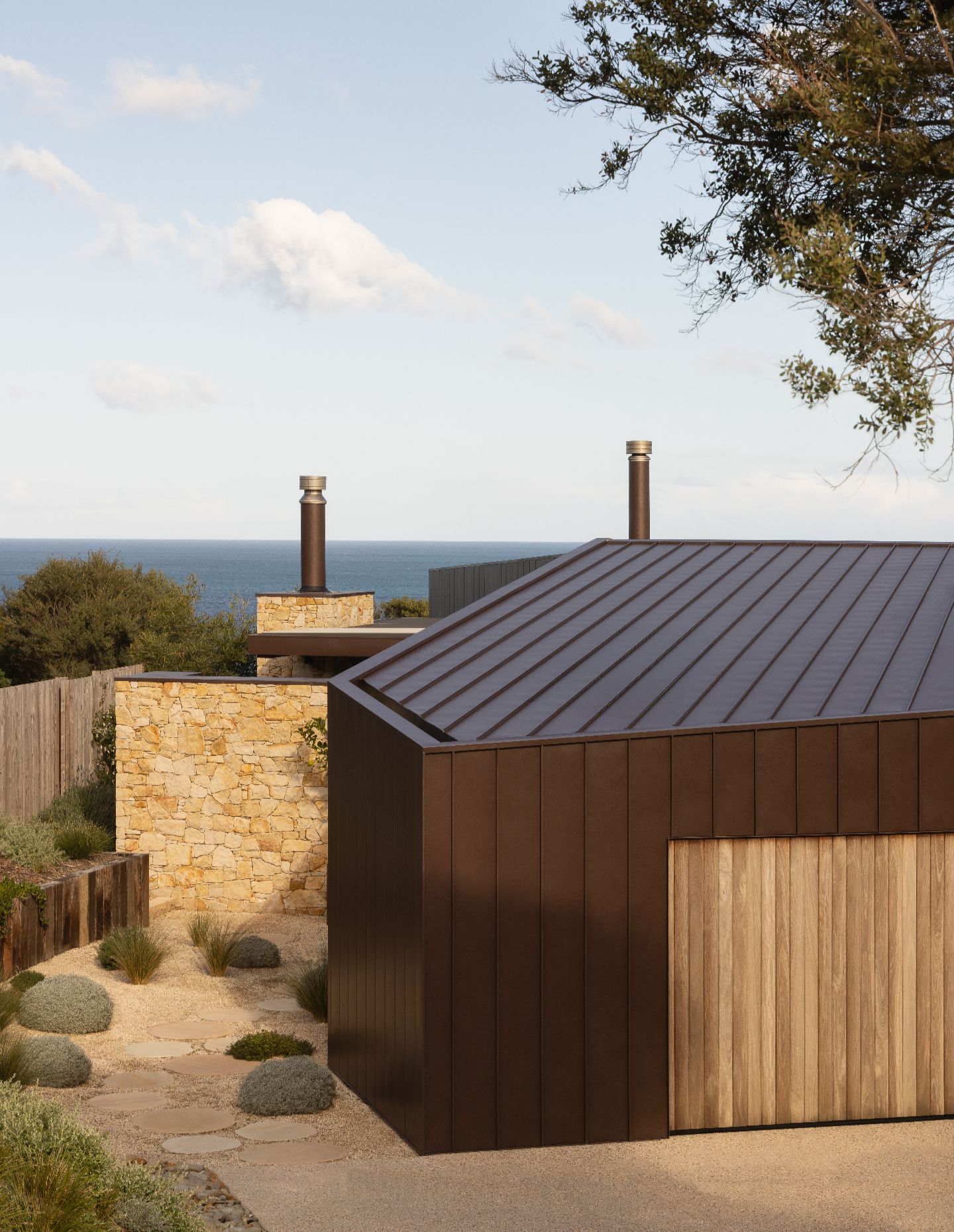
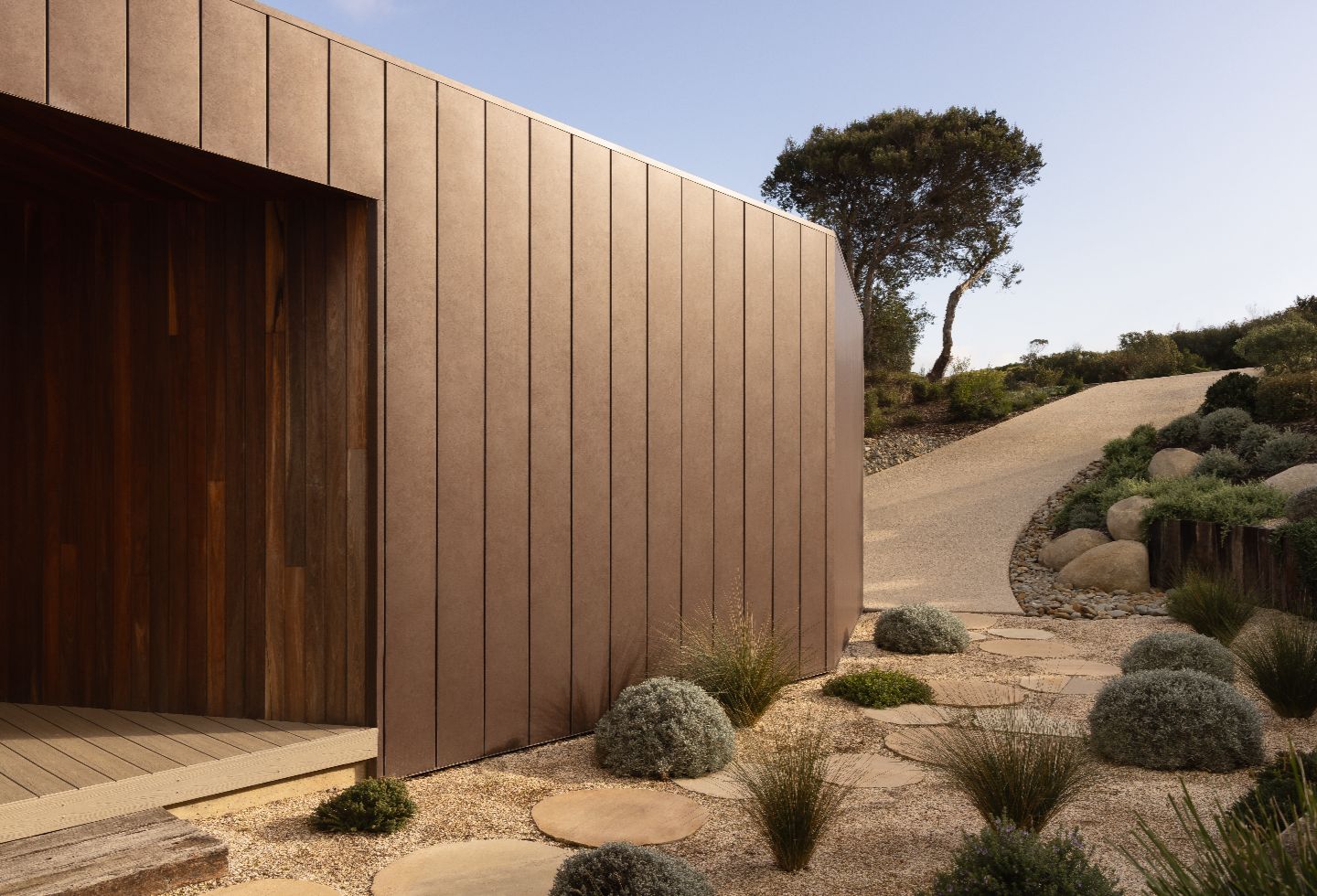
Material selection was driven by both context and ageing. Externally, local sandstone and spotted gum sit alongside the Unicote LUX pre-finished steel, whose corten tone echoes the oxidised mineral seams found along the nearby coastline. Internally, Tasmanian oak lining sourced from Britton Timbers introduces warmth, while concrete elements anchor the house physically and visually to its setting.
“Given the location, the materials had to be robust,” Stapleton explains, “but there was also consideration into elements that would age in place.” The intention was not to freeze the building at the moment of completion, but to allow it to weather and settle. “A mix of timbers, stones and pre-finished metal allows the project to remain clean, but also soften as the timber silvers into the landscape.”
Construction presented its own challenges. The house sits directly along the Great Ocean Road, exposed to extreme wind, salt spray and sound, and occupies a steep hillside. Structurally, the solution combines suspended concrete, blockwork and timber and steel framing, balancing stability with buildability.
“The views along the coast are incredible,” Stapleton says, “but extreme at times, so sheltered outdoor spaces were just as important as the viewing deck.” Internally, the result is unexpectedly calm. “The weather is often wild and blustery, but inside it feels quiet and settled. Being able to watch the weather roll in off the horizon from a place of calm is a major success of the project.”
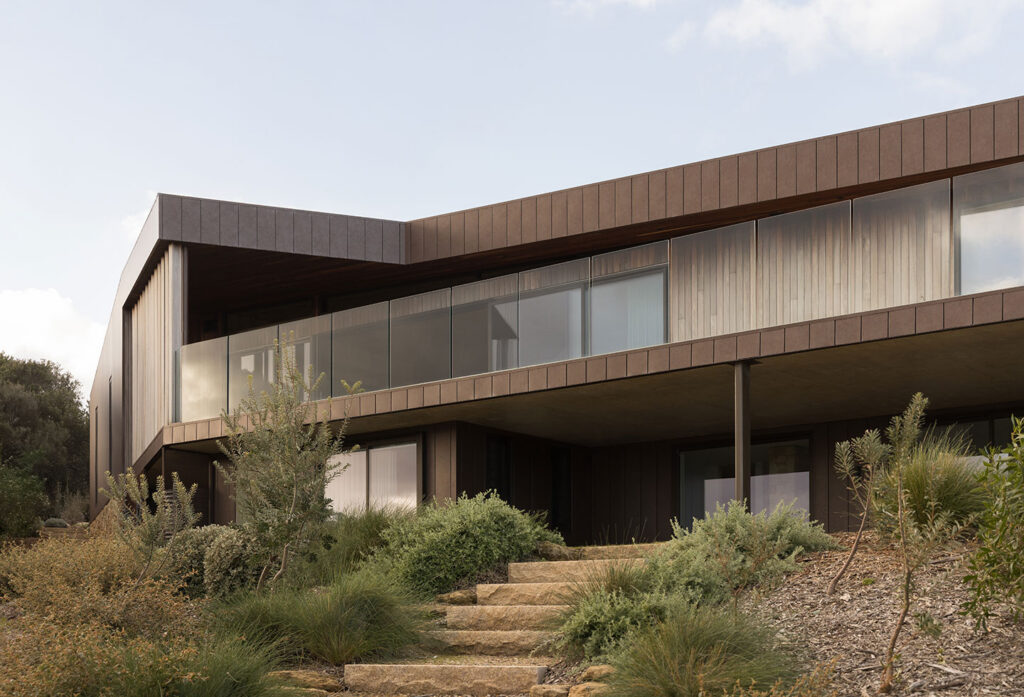
Landscape design plays a critical role in reinforcing this sense of retreat. Executed by Sea Echo, the planting strategy focuses on coastal native species selected to tolerate harsh conditions and gradually engulf the building over time. “The intent is for the house to recede further into the hillside,” Stapleton notes, “and appear low-lying from street level as the landscape matures.”
Passive solar principles underpin the environmental strategy, with north-facing courtyards supporting natural heating and a tightly sealed, well-insulated envelope reducing reliance on mechanical systems. High-performance glazing further improves comfort without compromising views.
What ultimately elevates Fairhaven House is its measured balance. “It’s hoped the project strikes a balance between simplicity and sophistication, durability and elegance, functionality and delight,” Maurice reflects. Stapleton agrees, noting that many homes in similar positions would seek prominence. “This project is rare because it’s attempting to be understated and part of the landscape. It was a refreshing approach from the clients, and something I resonated with deeply.”
For the owners, the outcome is a house that feels attuned not only to its environment but to the next stage of their lives. “I think they’ll feel they’ve succeeded in creating a building that responds to both the location and their future needs,” Maurice says. In a setting defined by extremes, Fairhaven offers something quieter: a place of calm, longevity and belonging.