
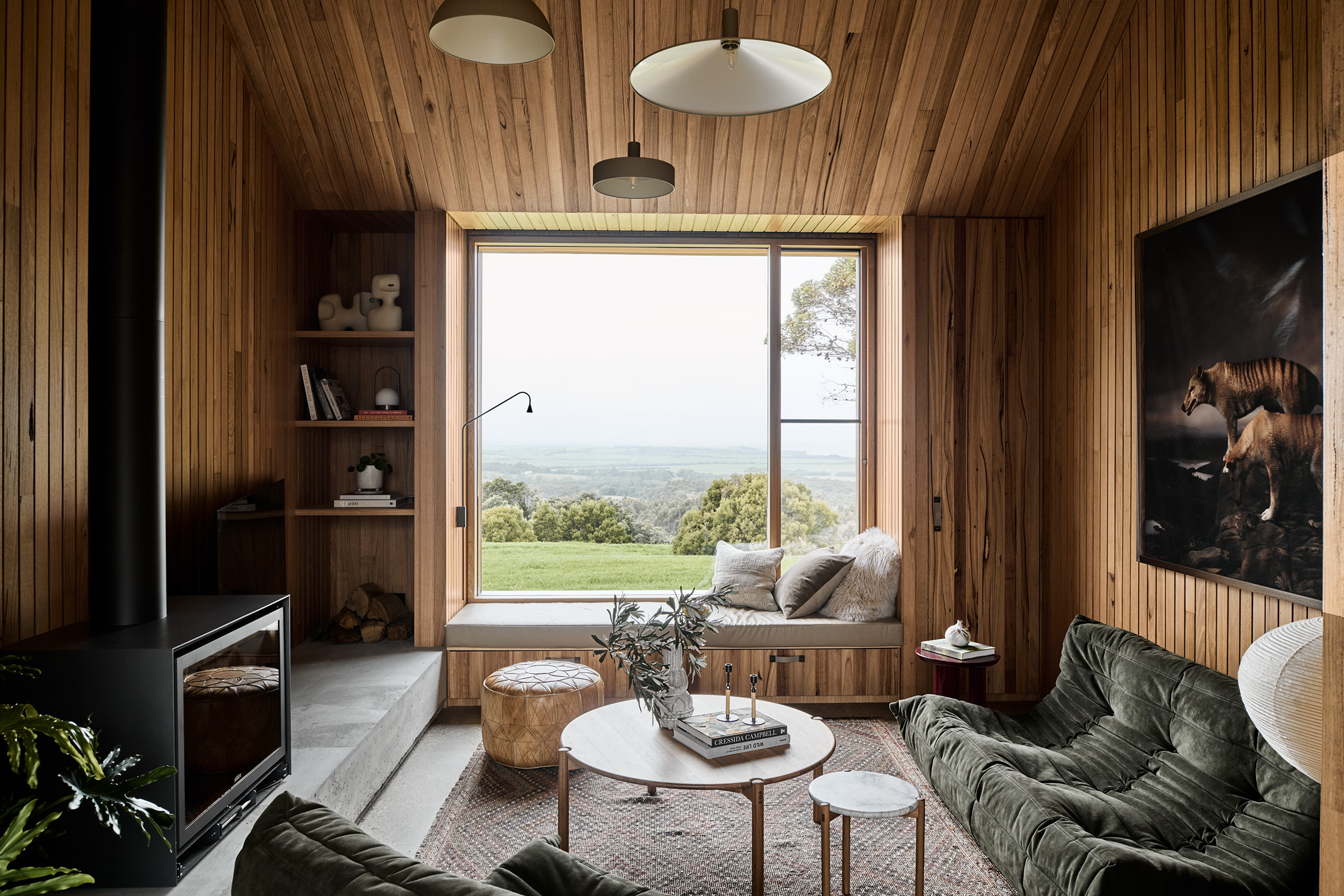
Fishharven is a rural retreat designed by Neil Architecture with furniture, art curation and styling by Nicole Bell. We spoke with Will Phung, Studio Director at Neil Architecture, about designing a house that balances openness with shelter, and rural durability with warmth and intimacy.
Tell us about the site context.
Fishharven is located on a hilltop site in Fish Creek, South Gippsland, within a landscape defined by rolling farmland and expansive views toward Wilsons Promontory and Corner Inlet. The site is exposed to prevailing coastal winds and shifting weather conditions, requiring a design that balances openness with protection.
Positioned within a prescribed building envelope on a gentle slope, the house is carefully oriented to capture long views while forming sheltered outdoor spaces. The surrounding context of scattered farm outbuildings informed a clustered architectural response that sits comfortably within the rural setting.
What can you tell us about the clients and their brief?
The project was designed for a long-standing client, with whom we have collaborated since 2012. Conceived as a weekend retreat that will transition into a semi-retirement home, the brief called for a house that felt both expansive and intimate — capable of hosting family and guests while also providing quiet, private spaces.
The clients sought a design that was grounded in its rural context, durable in its materiality and warm in its internal atmosphere, with a strong emphasis on connection to landscape, light and seasonal change.
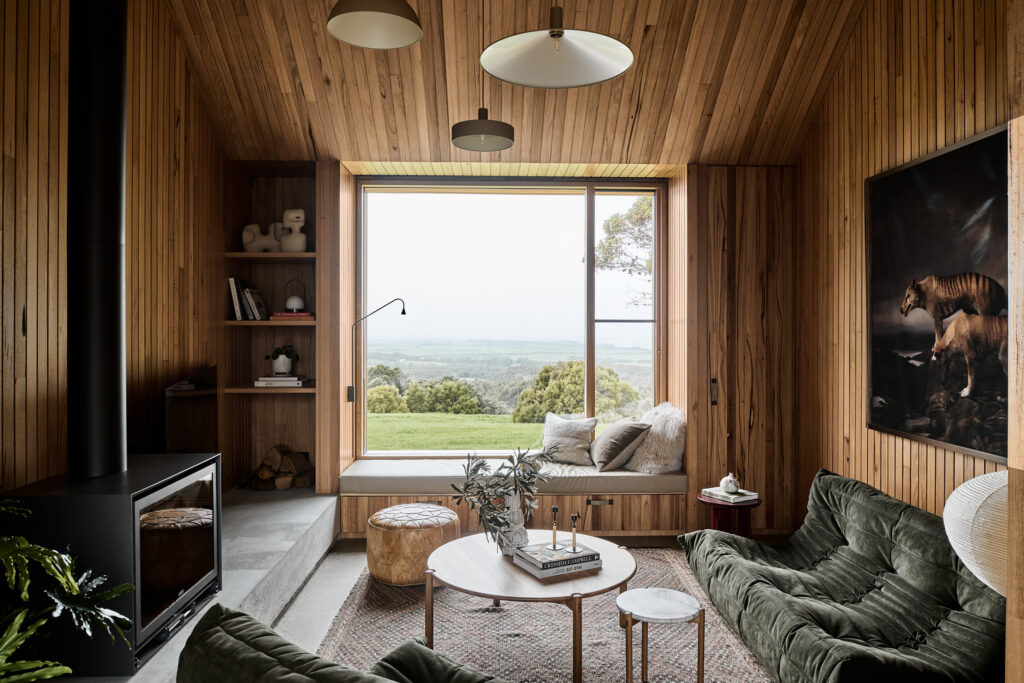
For the furnishings and art, the clients wanted to create a welcoming retreat that would weave together a personalised collection of art and mid-century furniture that would endure for many years to come.
What are the key material and structural choices?
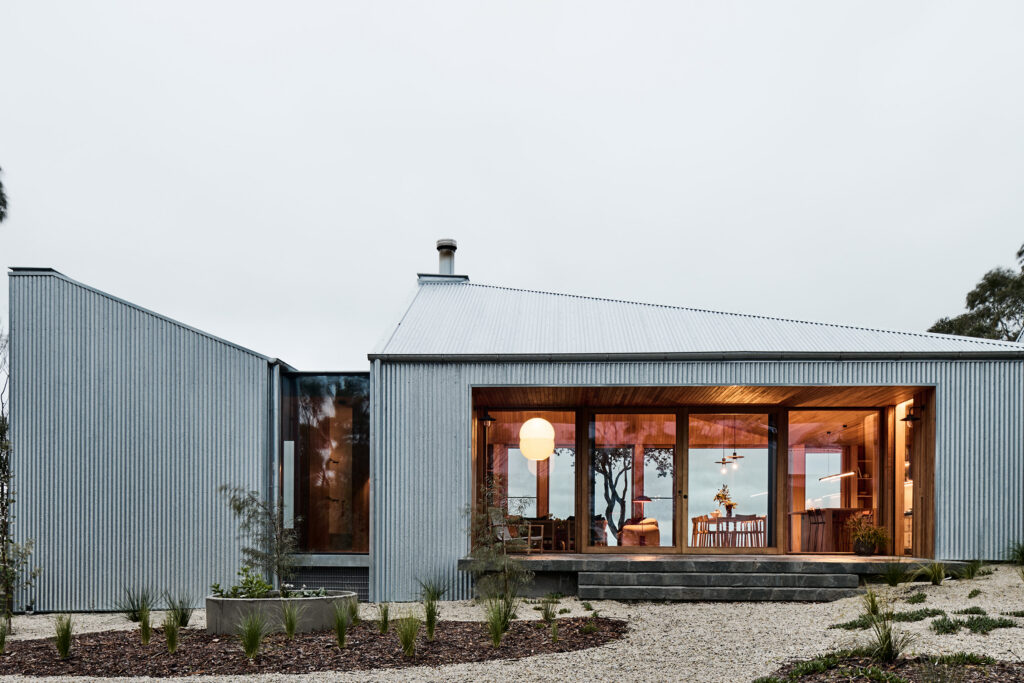
The project is composed of three pitched-roof pavilions connected by a glazed, flat-roofed link, forming a cluster of smaller volumes rather than a single large building. This approach references the language of rural farm structures while improving environmental performance and spatial clarity.
Externally, corrugated galvanised steel provides a robust, low-maintenance skin that responds to the coastal conditions and will weather naturally over time.
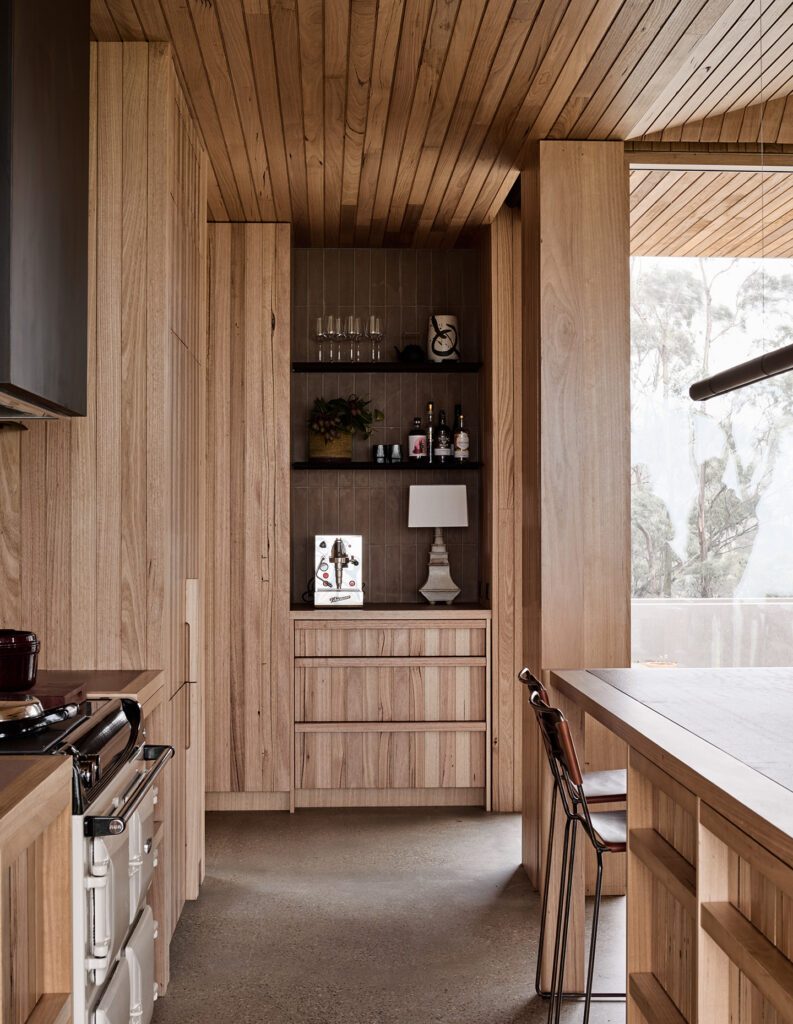
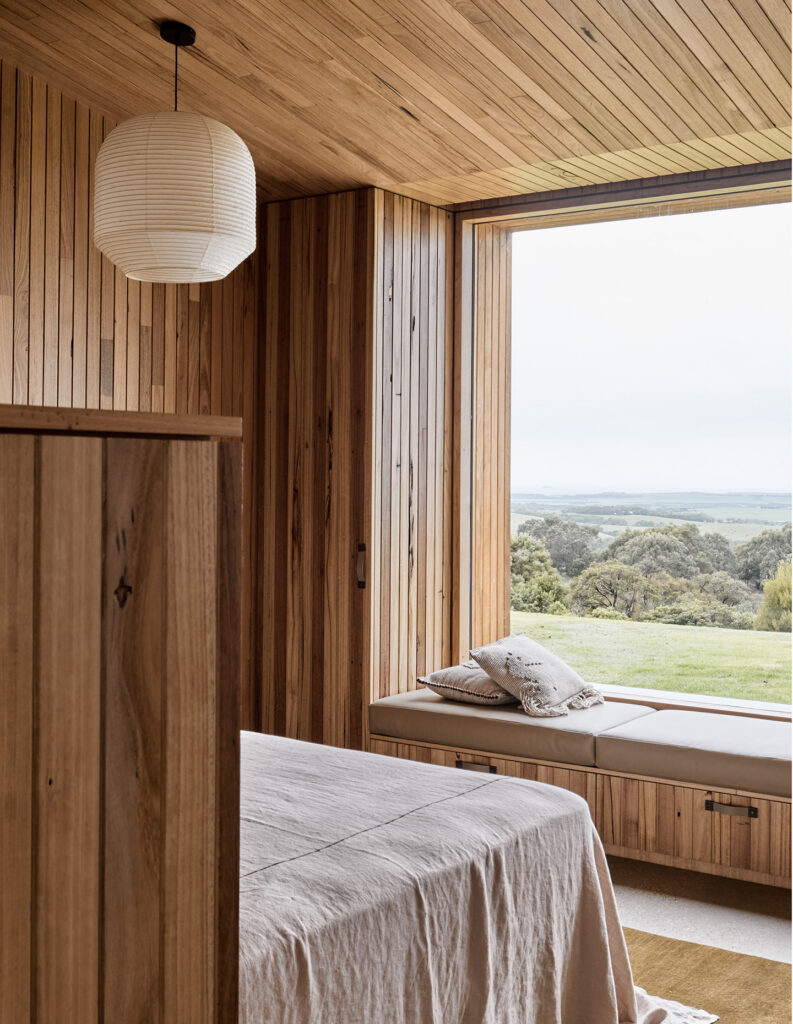
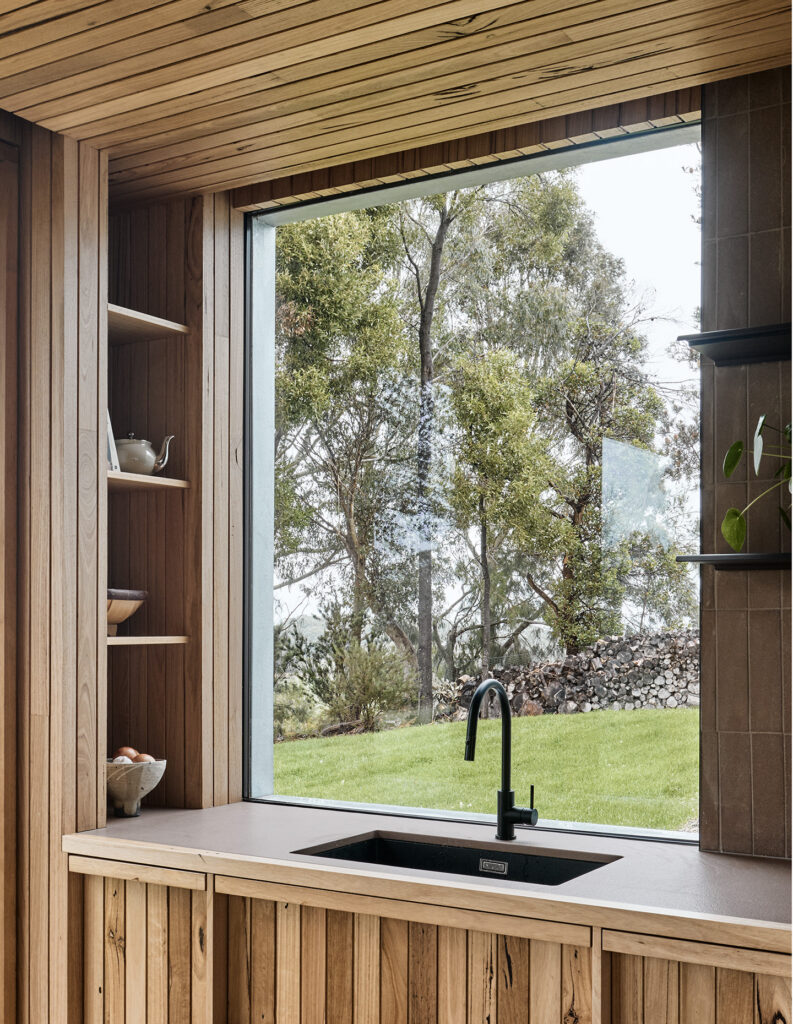
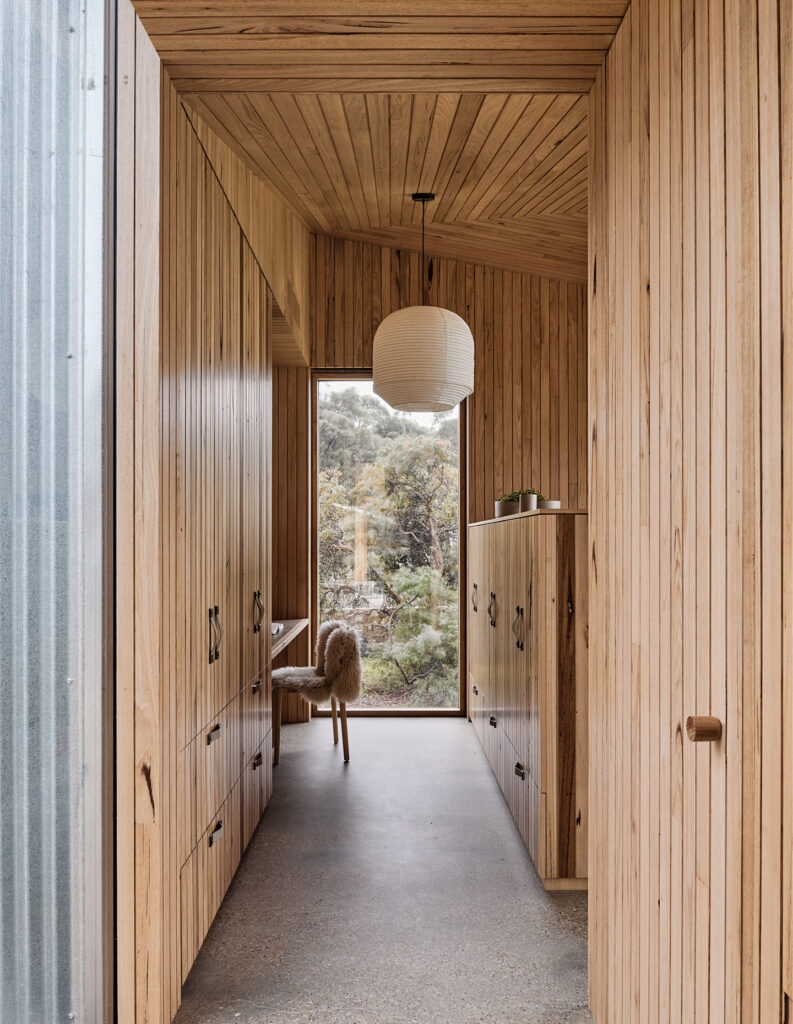
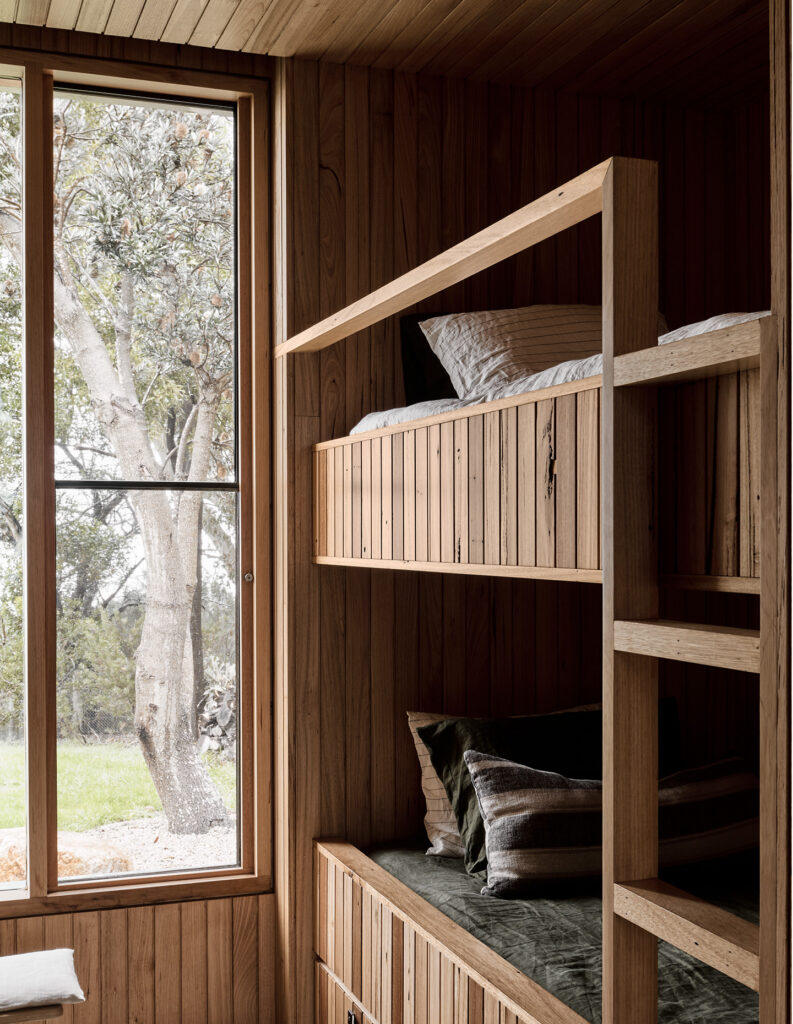
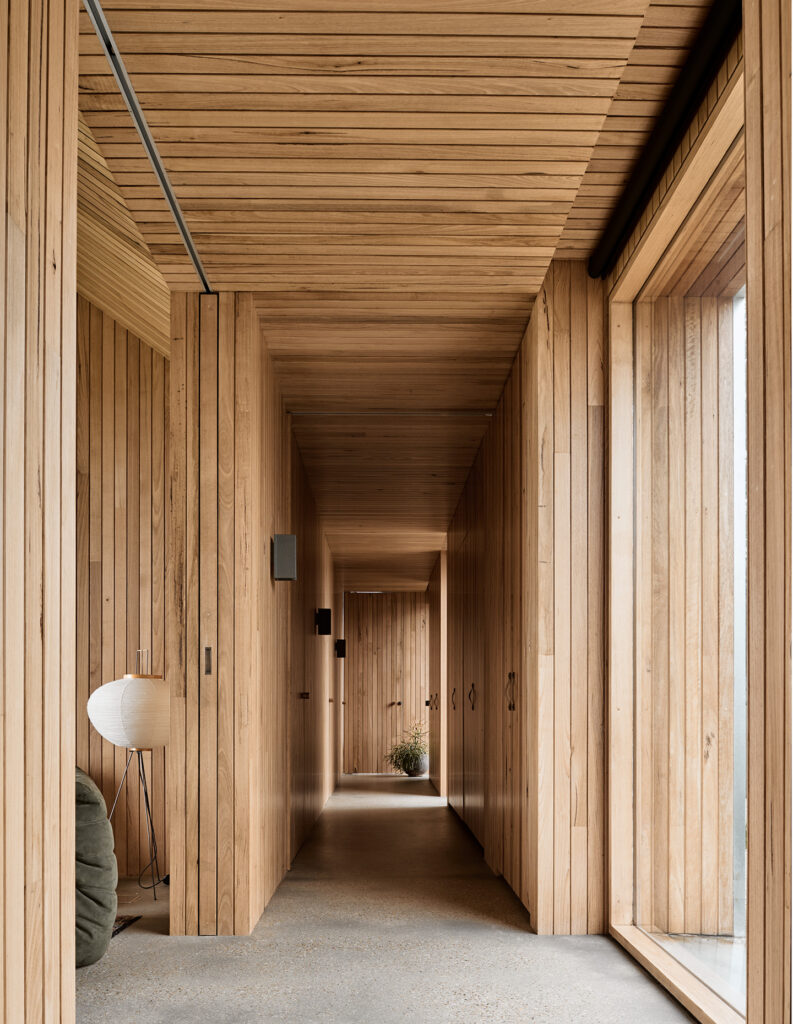
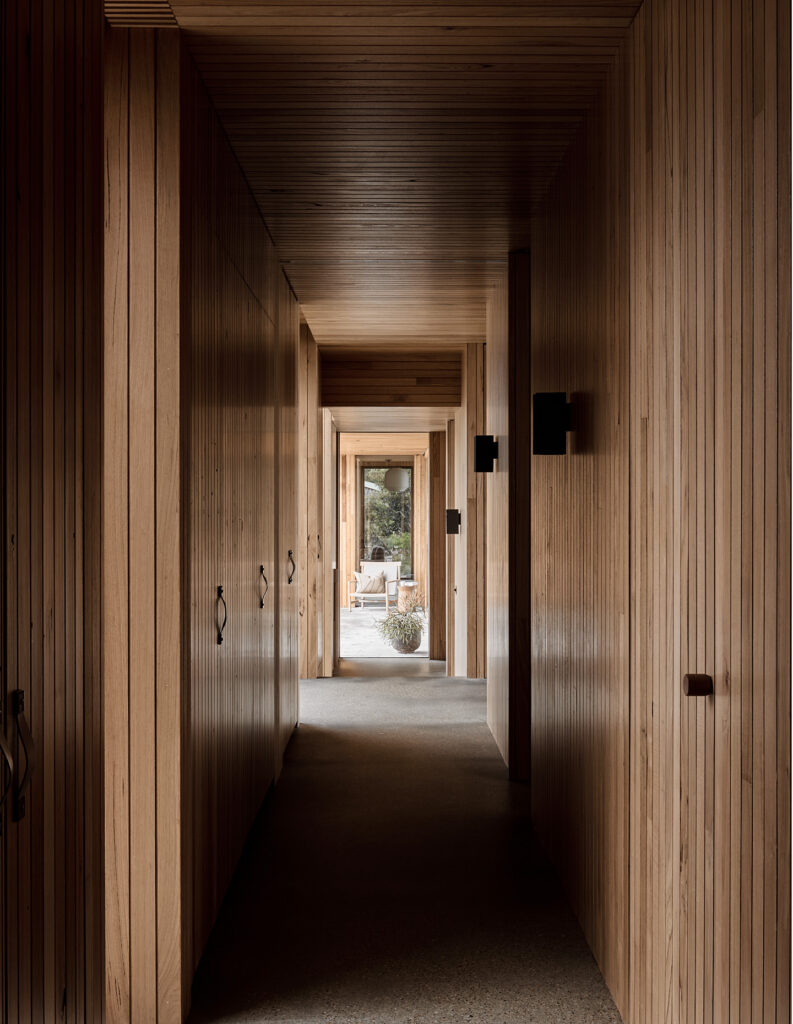
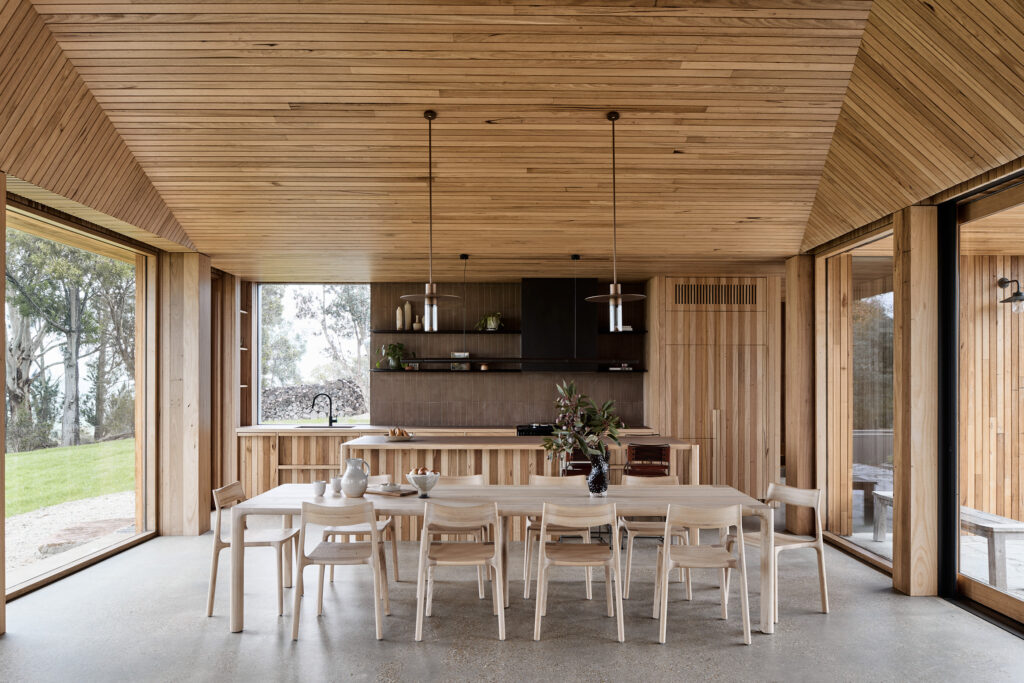
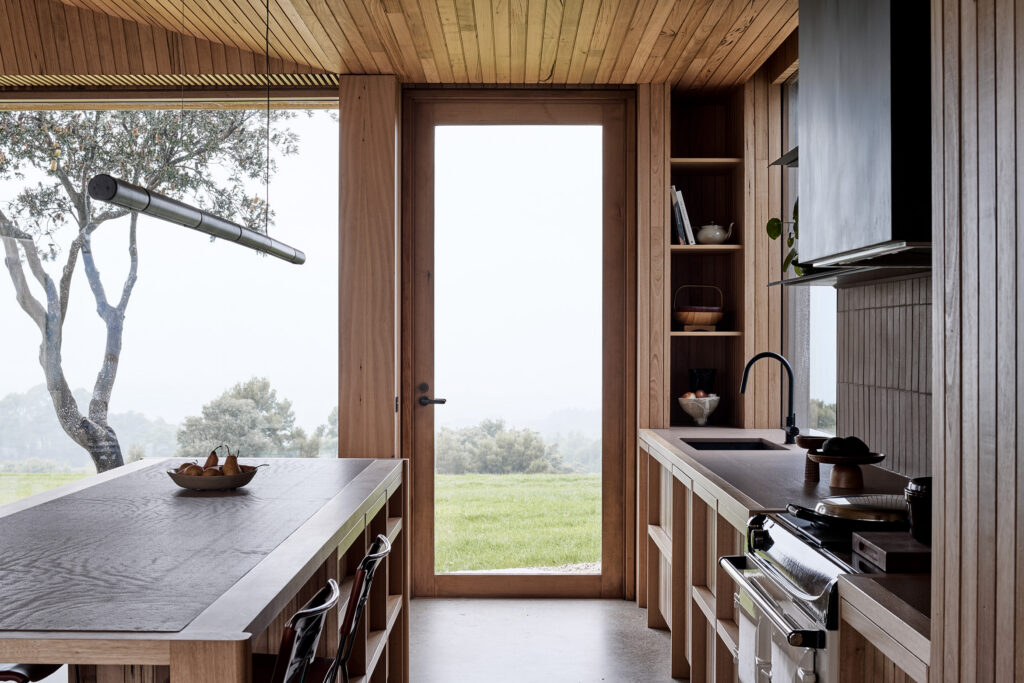
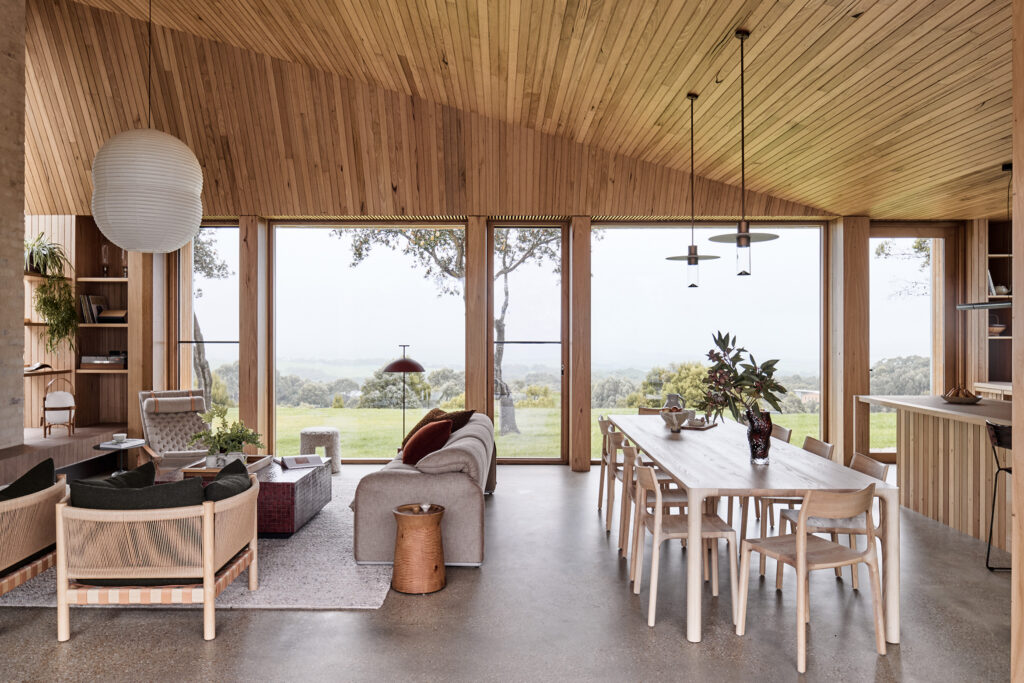
Internally, a warm and tactile material palette contrasts the exterior. Terracotta tiles, silvertop ash lining boards, exposed concrete with local aggregate, jute wall coverings and recycled brickwork create depth and continuity. Materials are often wrapped across walls and ceilings to reinforce a cohesive, cocoon-like interior, while smooth concrete-rendered bathrooms provide a minimal, monolithic contrast.
For the furnishings, Nicole Bell worked with materials that would age gracefully and deliver layers of warmth, tactility and visual rhythm. Robust, textural and low-impact materials — including wool, leather, glass, steel, cord, timber, fabric, ceramic and linen — both counter and complement the building’s materiality.
Related: A restaurant shaped by steam and night air
What key functional requirements does the design address?
The house accommodates four bedrooms, two bathrooms, a powder room and two living areas, allowing for flexibility between family living and guest accommodation. The planning balances open, communal spaces with more intimate zones, ensuring comfort across different modes of occupation.
The separation of pavilions improves thermal performance and enables cross ventilation, while also creating protected outdoor areas, including a north-facing walled garden.
Practical rural requirements are addressed through a freestanding garage that accommodates vehicles, equipment storage, firewood and gardening tools. Integrated water harvesting of 90,000 litres and on-site wastewater systems support off-grid resilience and long-term sustainability.
What are your favourite parts or moments in the design?
One of the most compelling aspects of the project is the way each pavilion frames a distinct view of the landscape, creating a constant dialogue between interior and exterior. The transition spaces, glazed links and thresholds heighten this experience, offering moments of pause between volumes.
Internally, the contrast between the robust exterior and the soft, enveloping material palette creates a strong sense of shelter, particularly during extreme weather conditions. The north-facing walled garden also stands out as a protected, intimate outdoor room within the broader landscape.
From a furnishing and art perspective, the curated selection of Australian art is central to the home. Joseph McGlennon’s memorialised thylacines look out to the views over Bass Strait, while Zetta Kanta’s handcrafted tapestry recalls the windswept grasses and rustling foliage of the surrounding hills.
Each piece was chosen to complement the home’s cohesive design and celebrate the clients’ deep connection with this part of the world.