
Tell us about the site context.
Set on more than fifteen acres in Victoria’s High Country, the house sits within an expansive alpine landscape defined by long mountain views, open land and shifting seasonal light.
Originally built in the 1960s, the modest mid-century home had remained largely untouched. While structurally sound, the interior had become dark and inward-looking over time, with a series of small, enclosed rooms limiting both light and connection to the surrounding landscape.
The project became an opportunity to reorient the house — opening the plan and introducing new windows and doors to bring in light, views and a stronger sense of immersion in the environment.
What was the client brief?
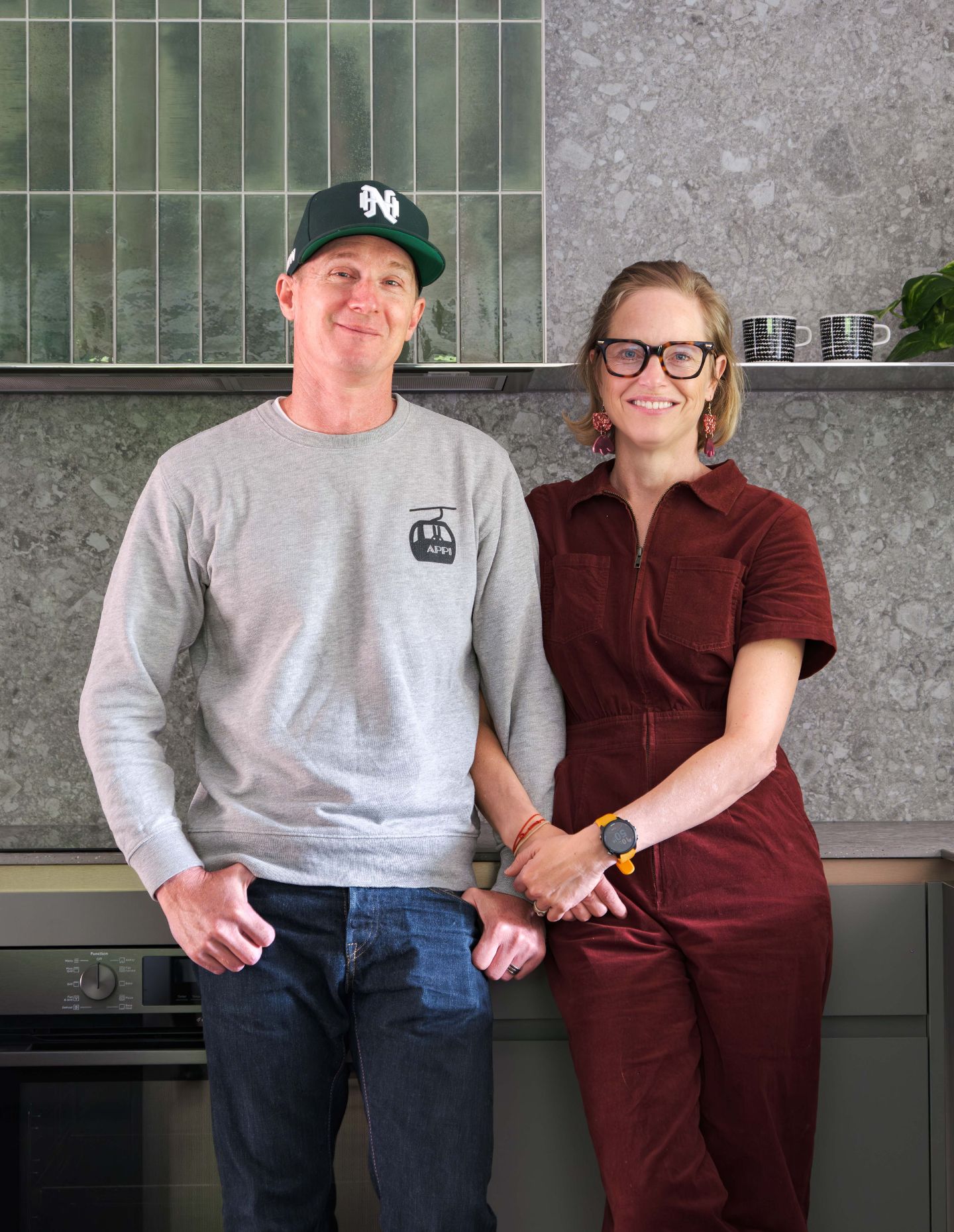
The clients — who were also the builders — approached the project with a clear respect for the home’s mid-century origins. Rather than reinventing the house, the brief focused on restoration and refinement.
They sought to preserve the clarity of the original structure while adapting it for contemporary living: a more open plan, generous shared spaces and a stronger connection to the landscape.
Equally important was a sense of warmth and ease. The material palette draws directly from the tones of the surrounding mountains and native vegetation, grounding the home in its setting while supporting a calm, comfortable way of living.
What are the key material and structural moves?
The original shell of the house was retained, with the primary intervention focused internally. By reworking the layout, the design improves flow, increases natural light and reconnects the interior with its surroundings.
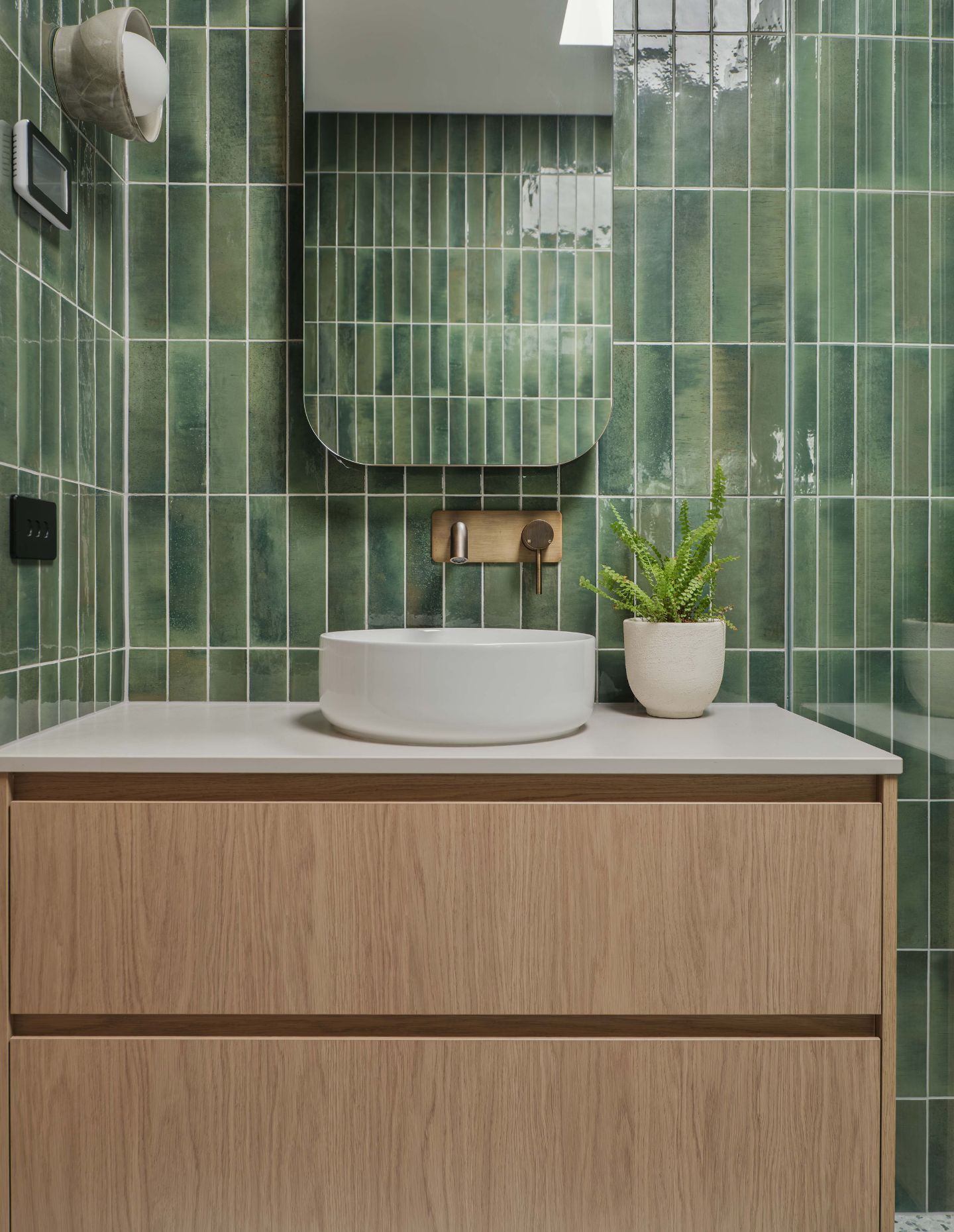
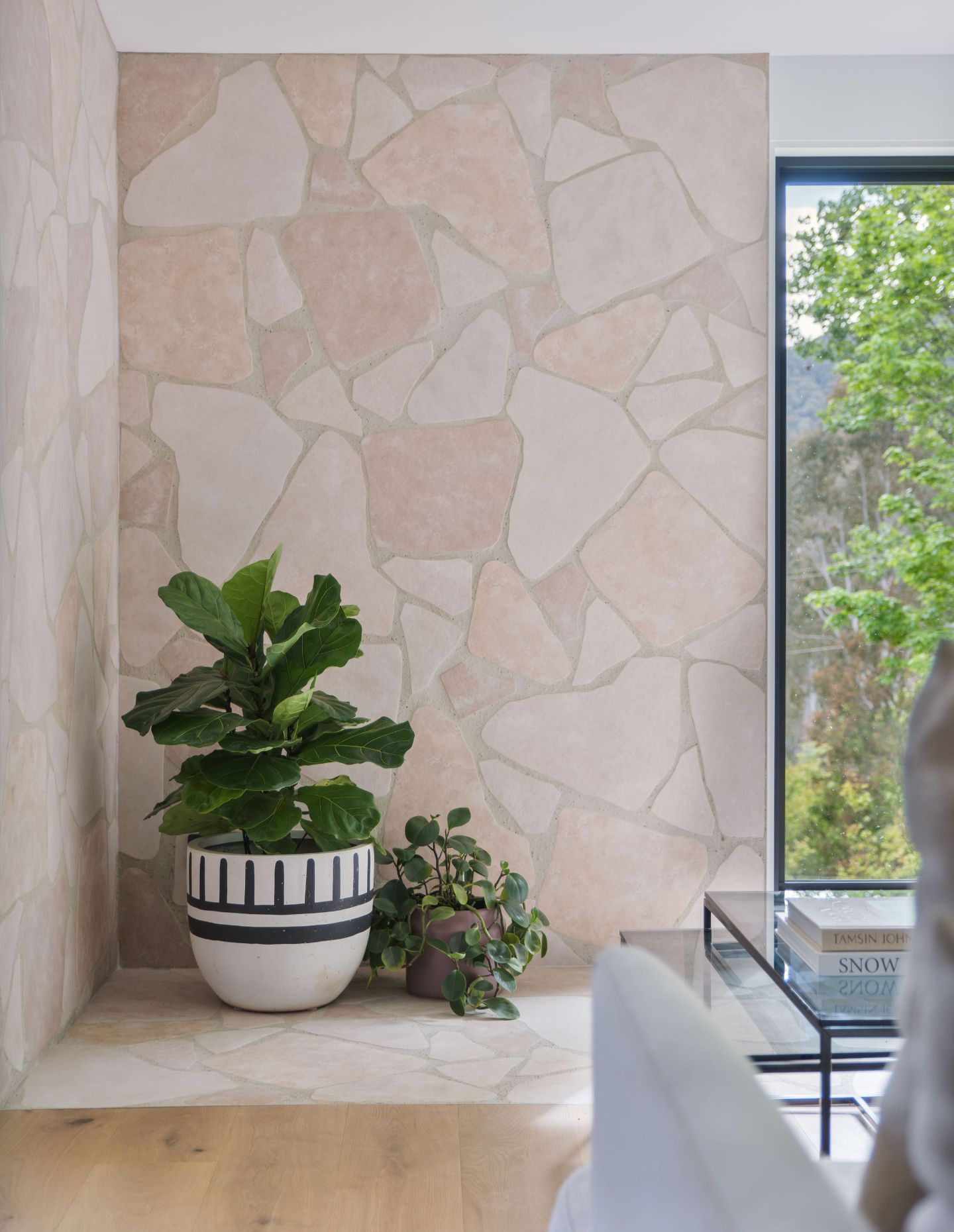
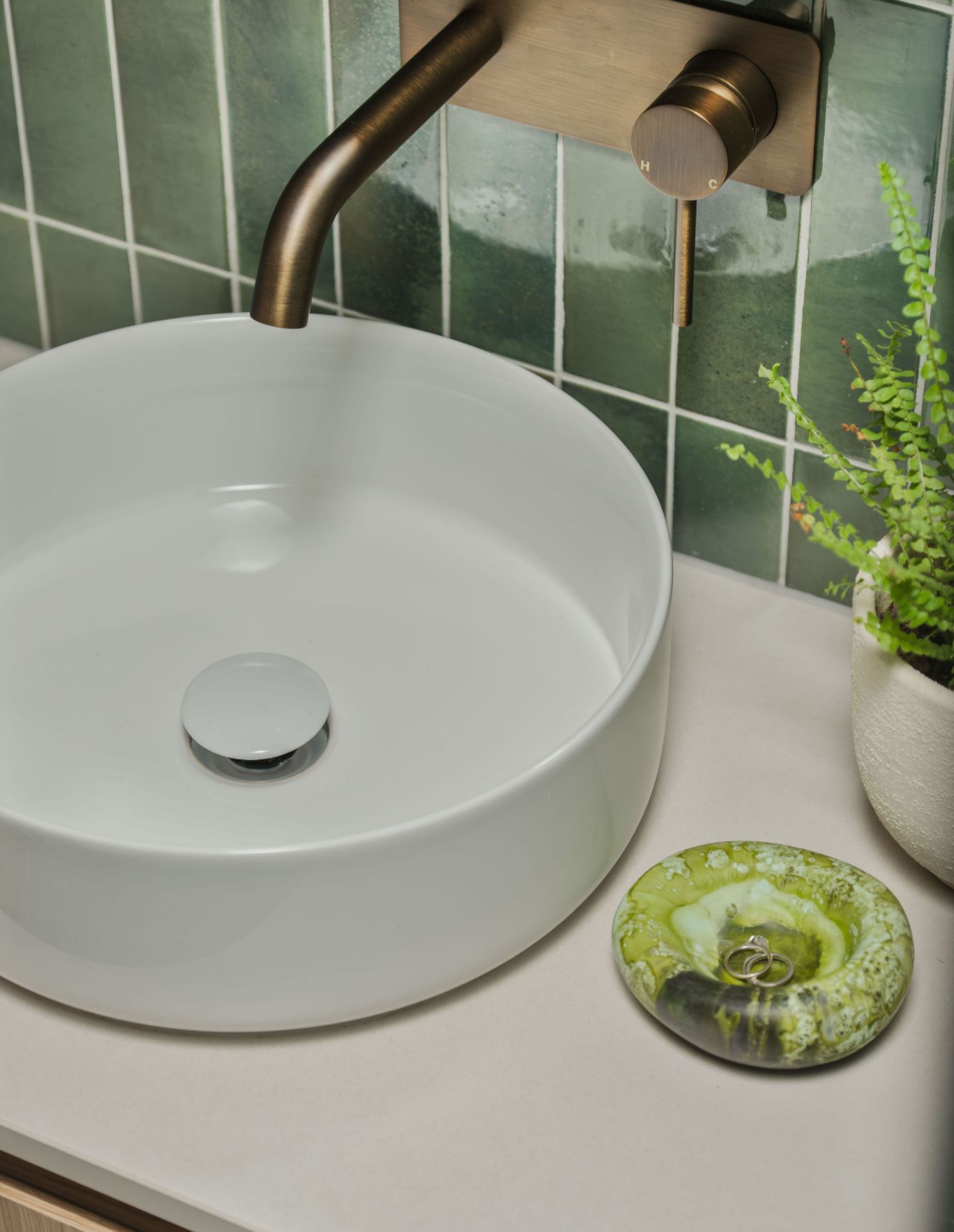
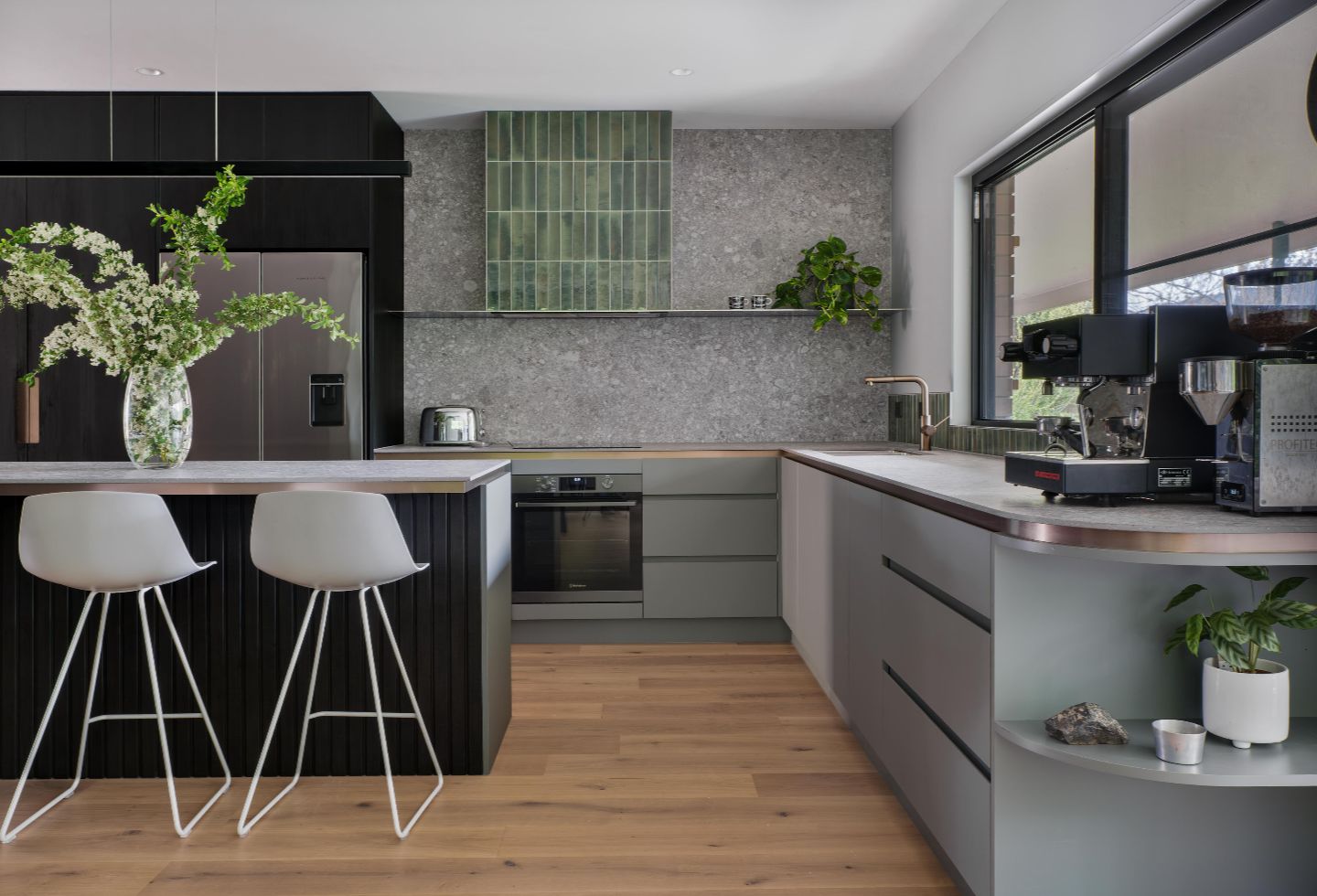
Materially, the approach is restrained and site-responsive. Greens, warm timbers, stone and darker accents create a grounded, cohesive palette.
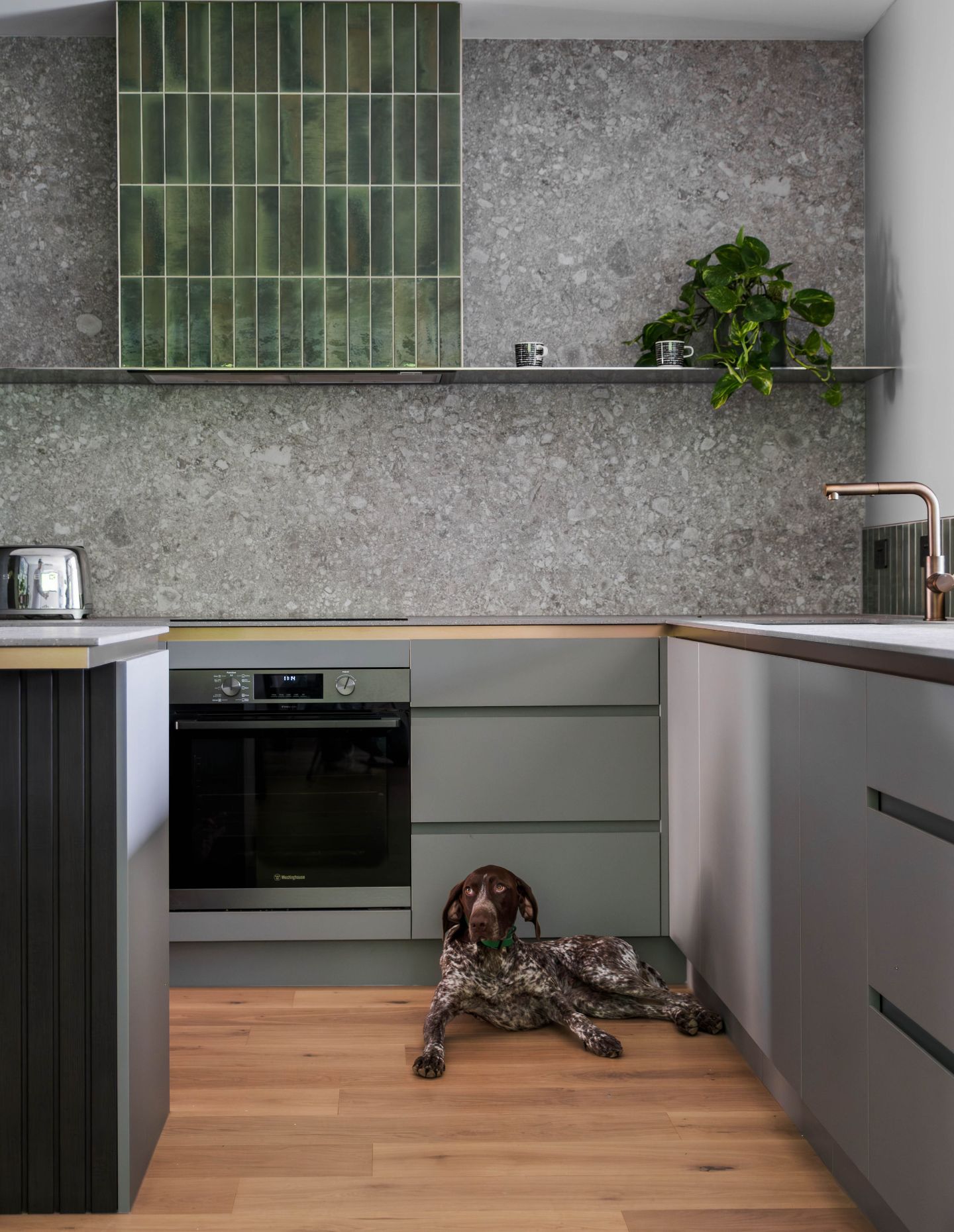
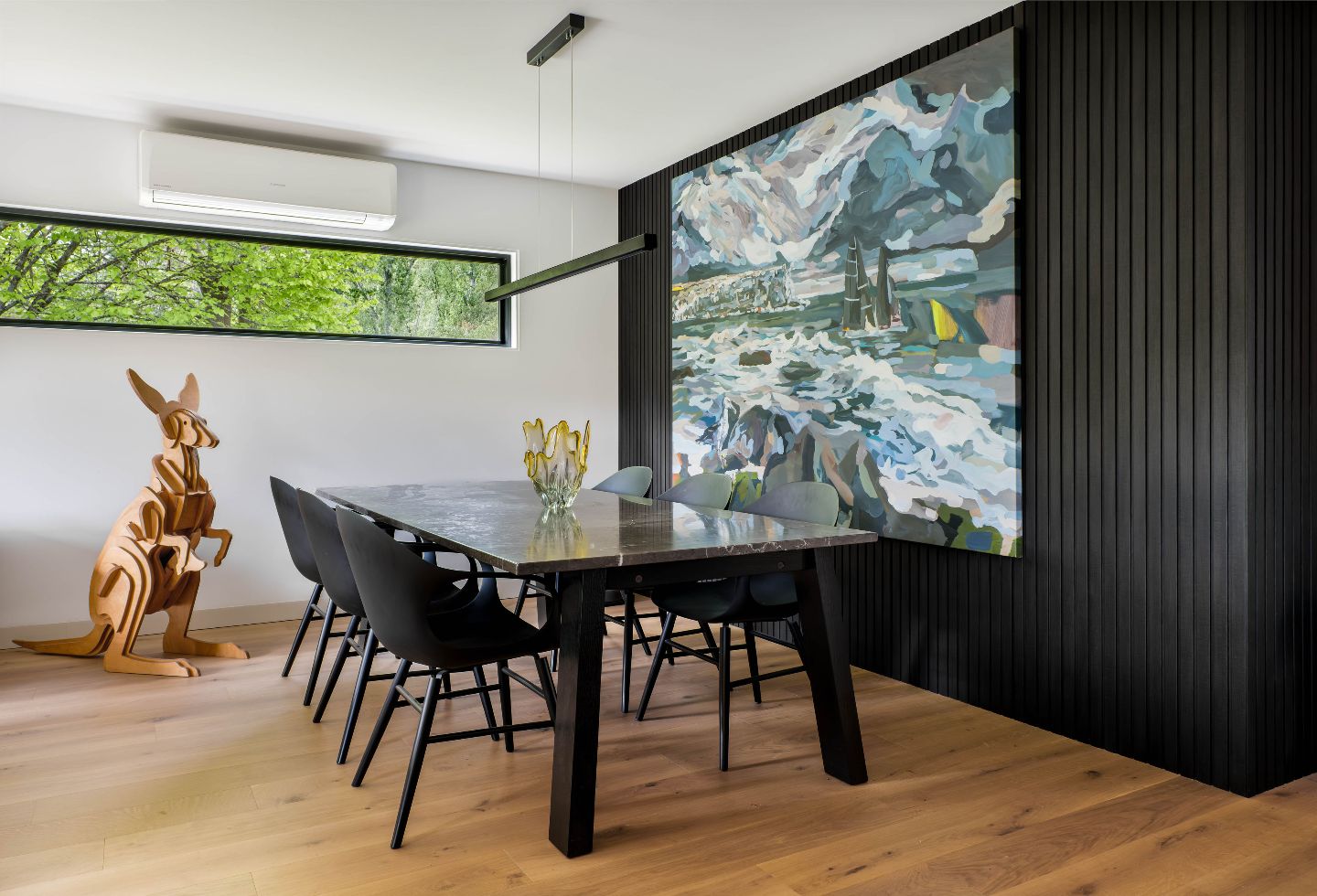
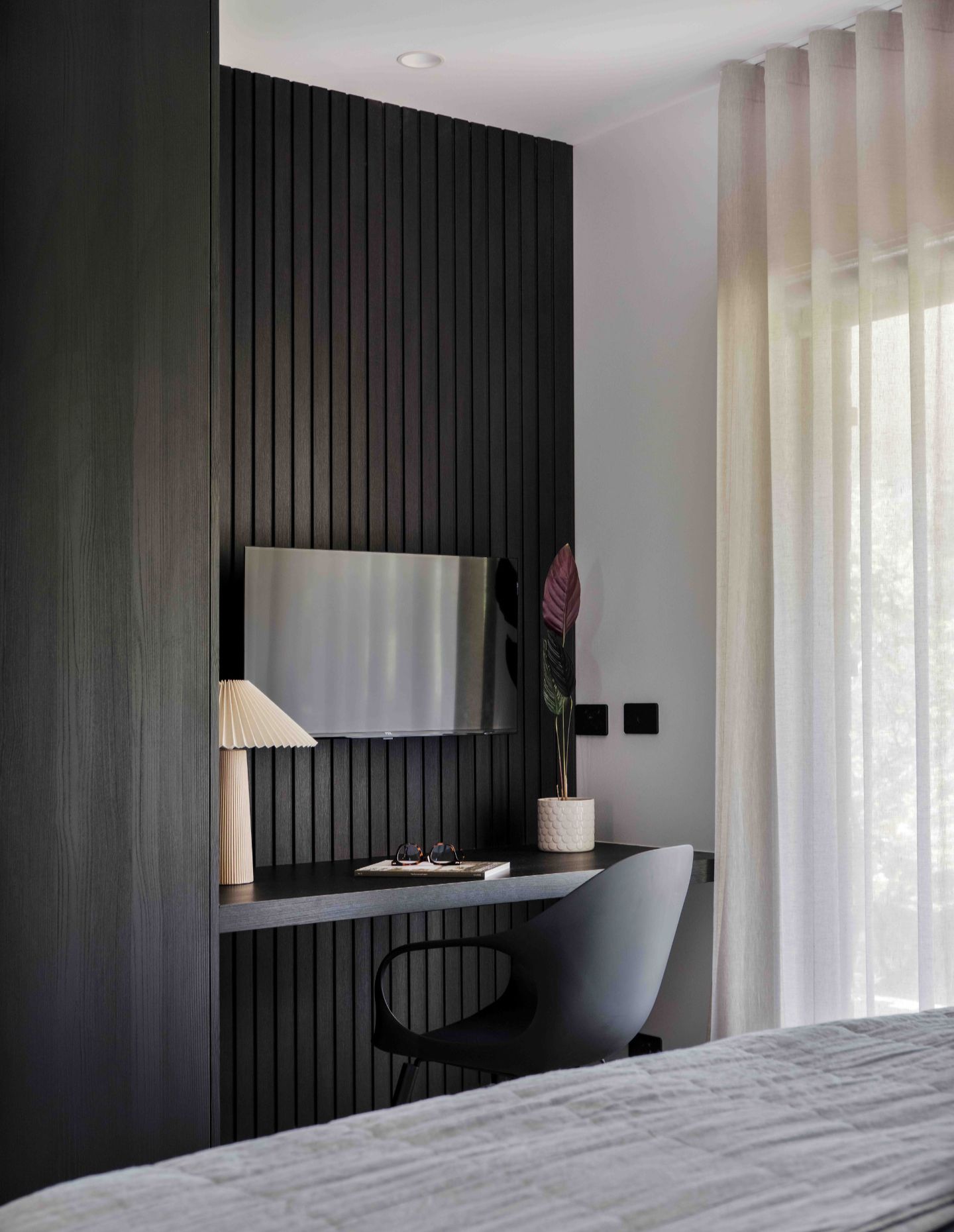
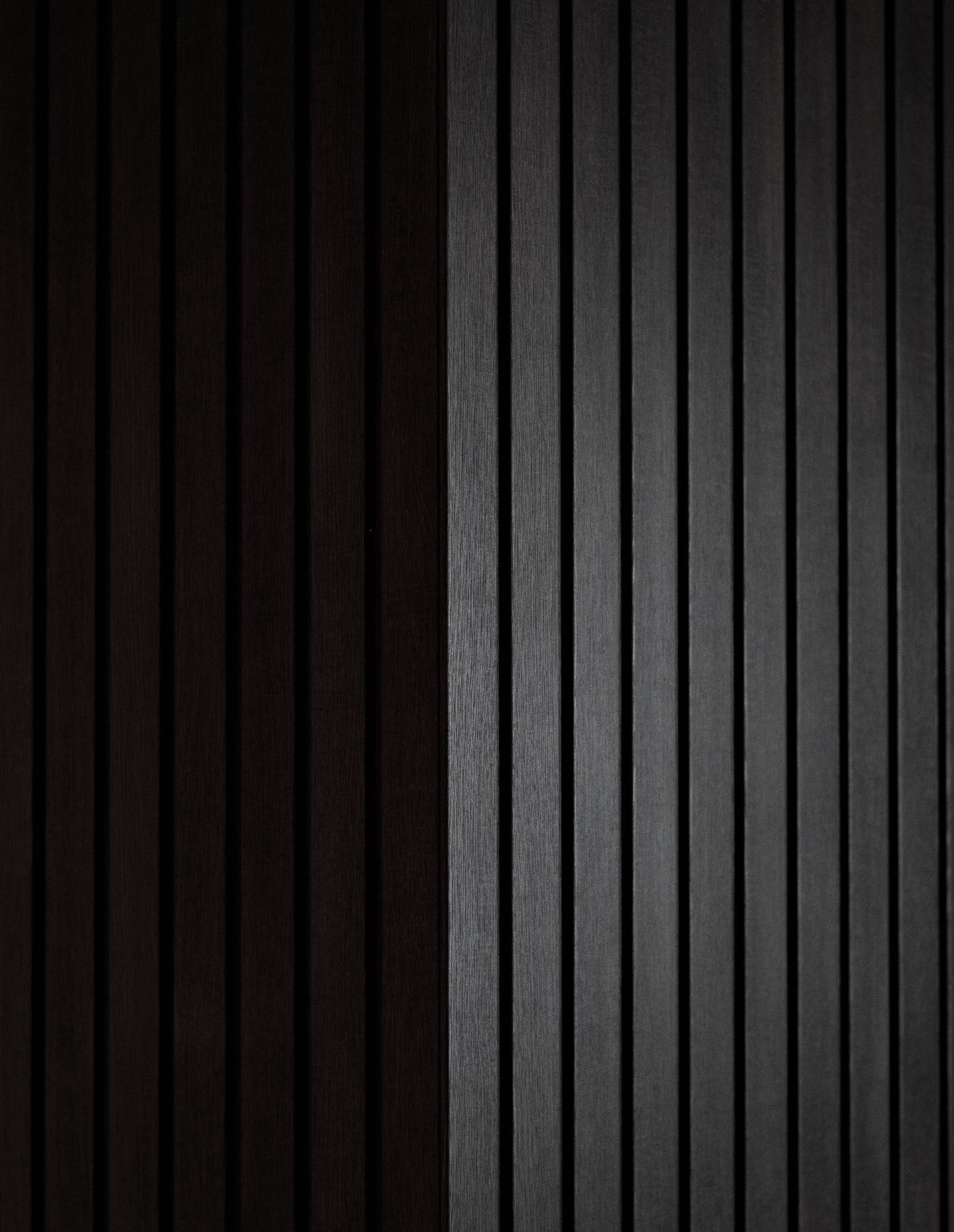
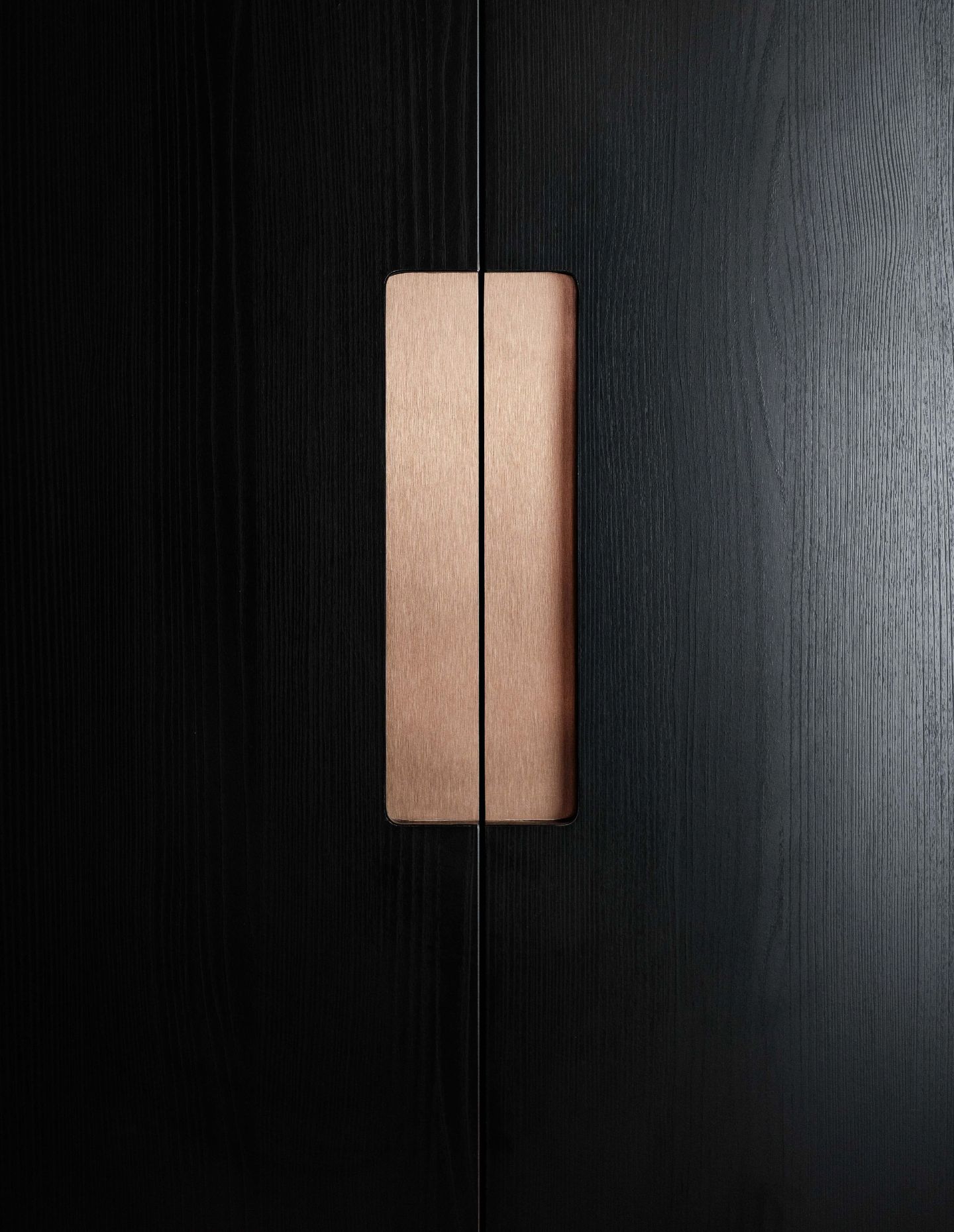
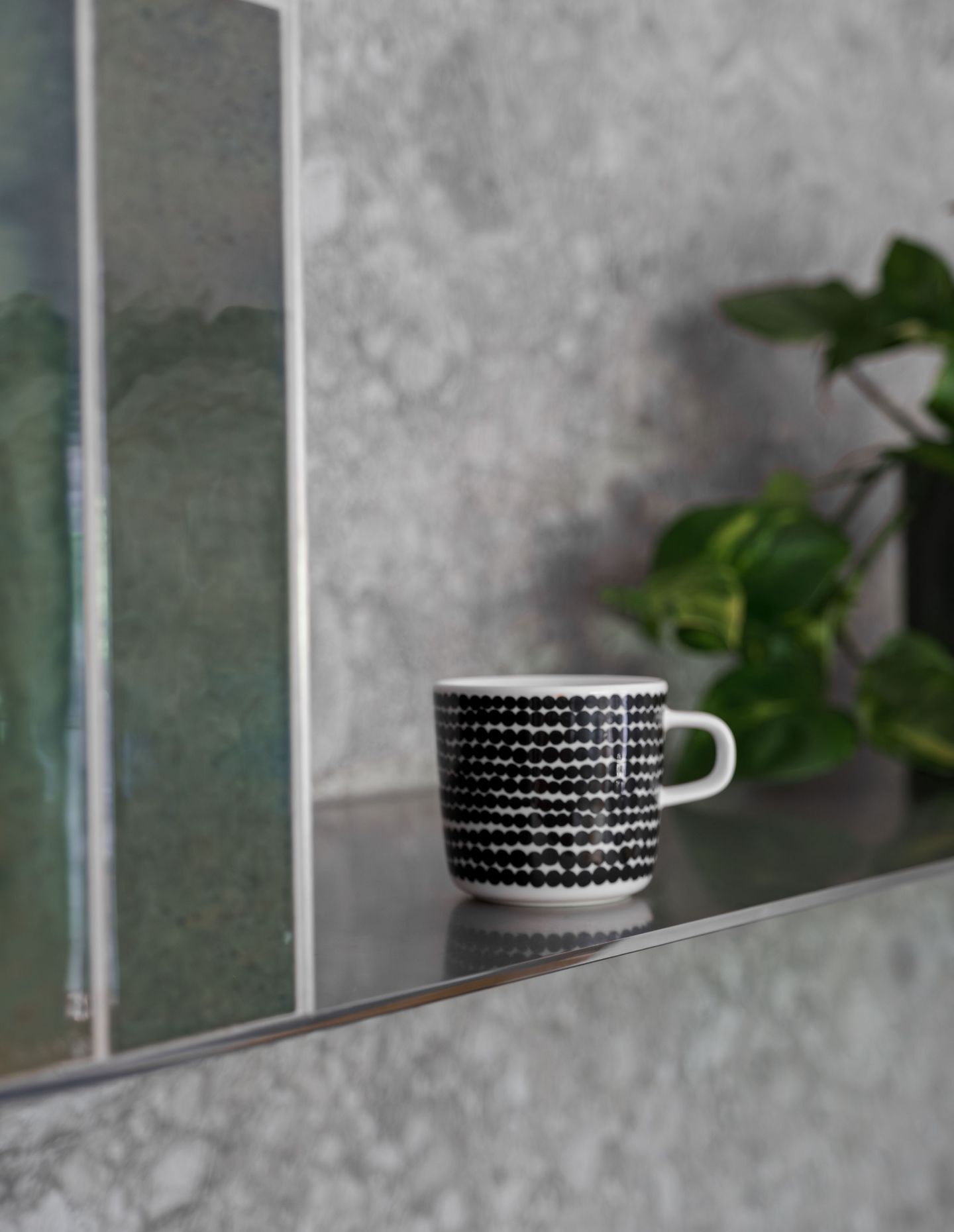
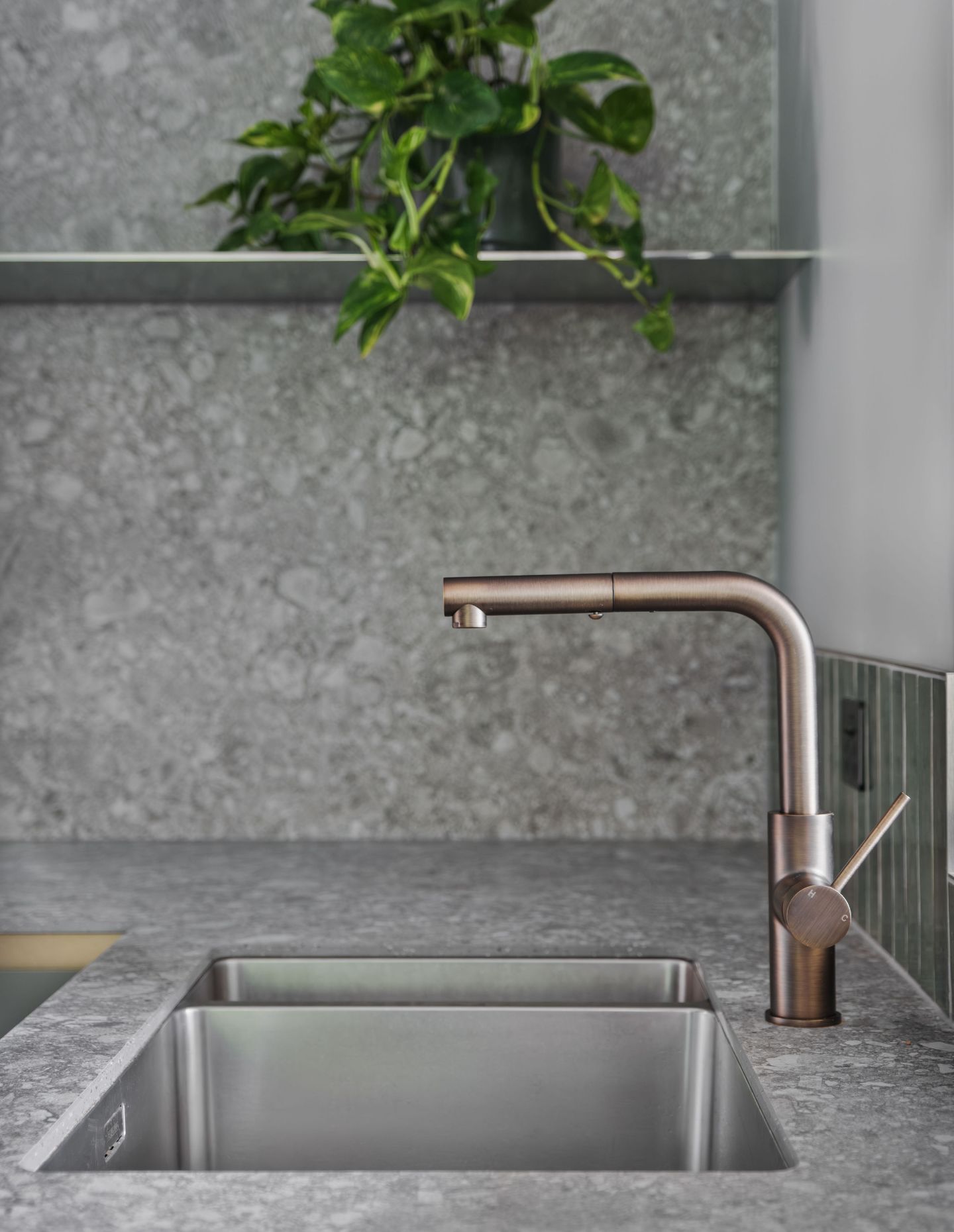
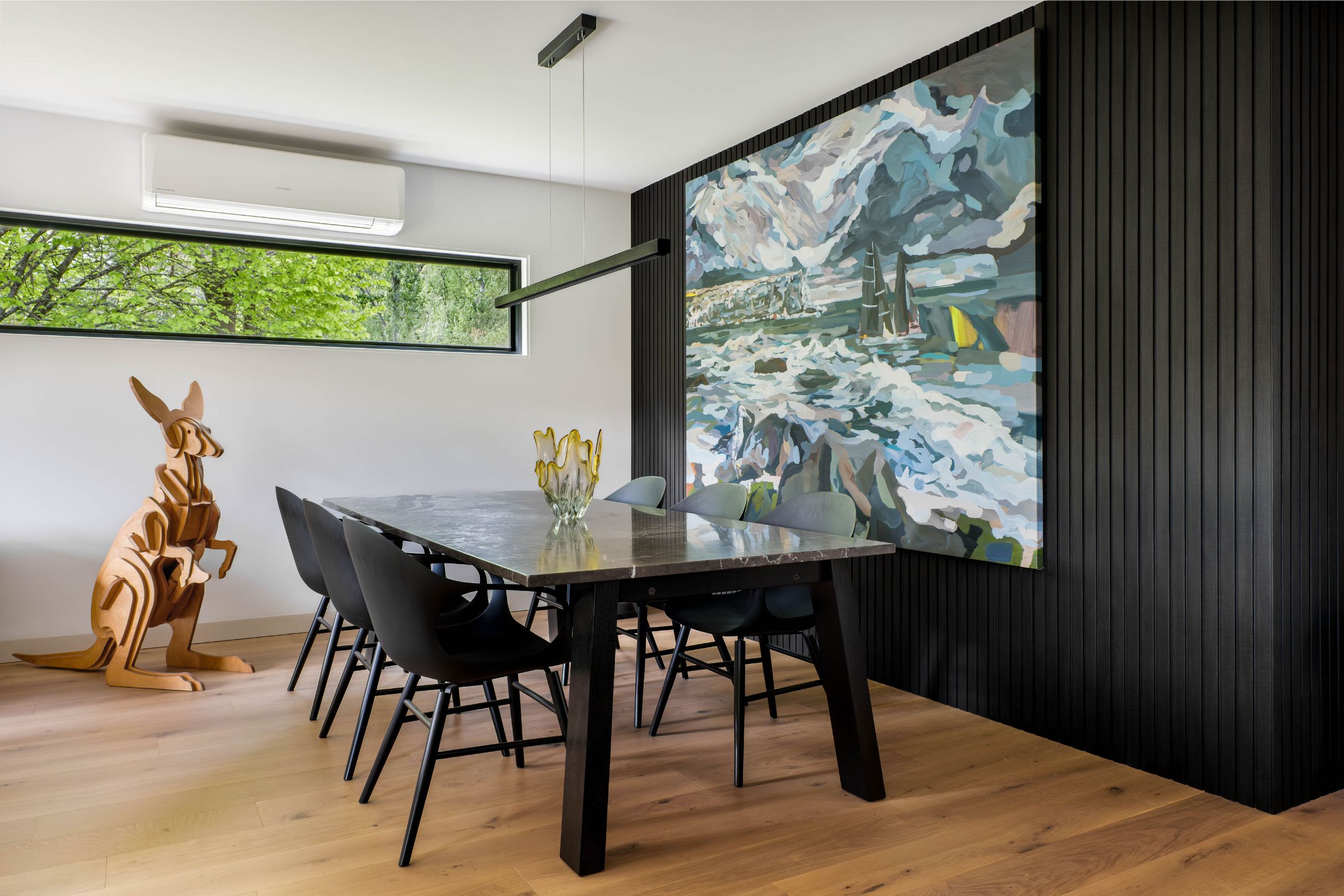
Custom joinery plays a central role in maintaining visual clarity. In the kitchen, green-toned cabinetry is paired with porcelain surfaces, while black wall panelling introduces depth through the living spaces. Engineered timber flooring runs throughout, providing both warmth and durability.
Related: Light and largesse
What key functional requirements does the design address?
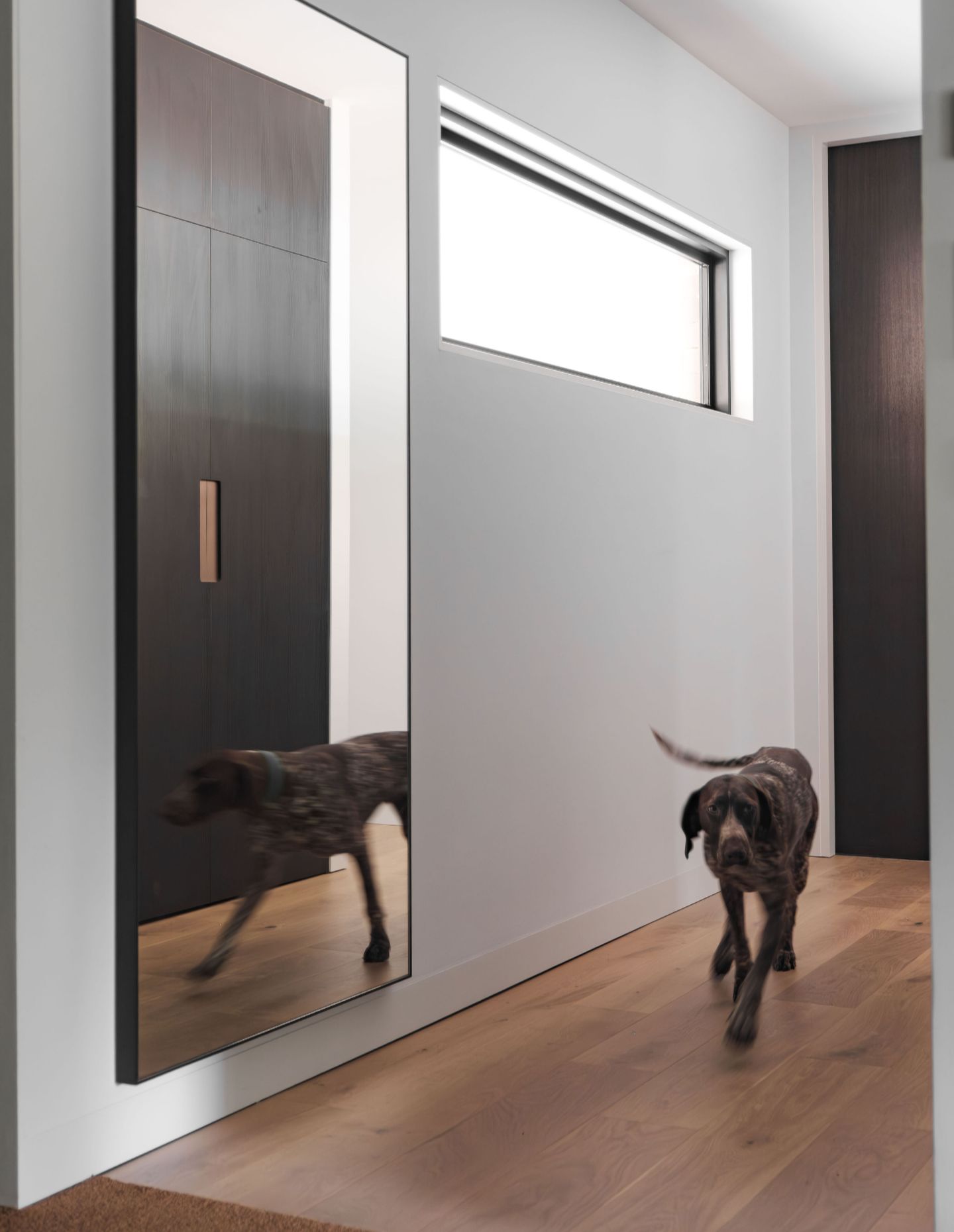
A key priority was resolving the fragmented plan of the original house. The central living spaces — kitchen, dining and lounge — have been opened into a single, connected zone, improving both flow and access to light and views.
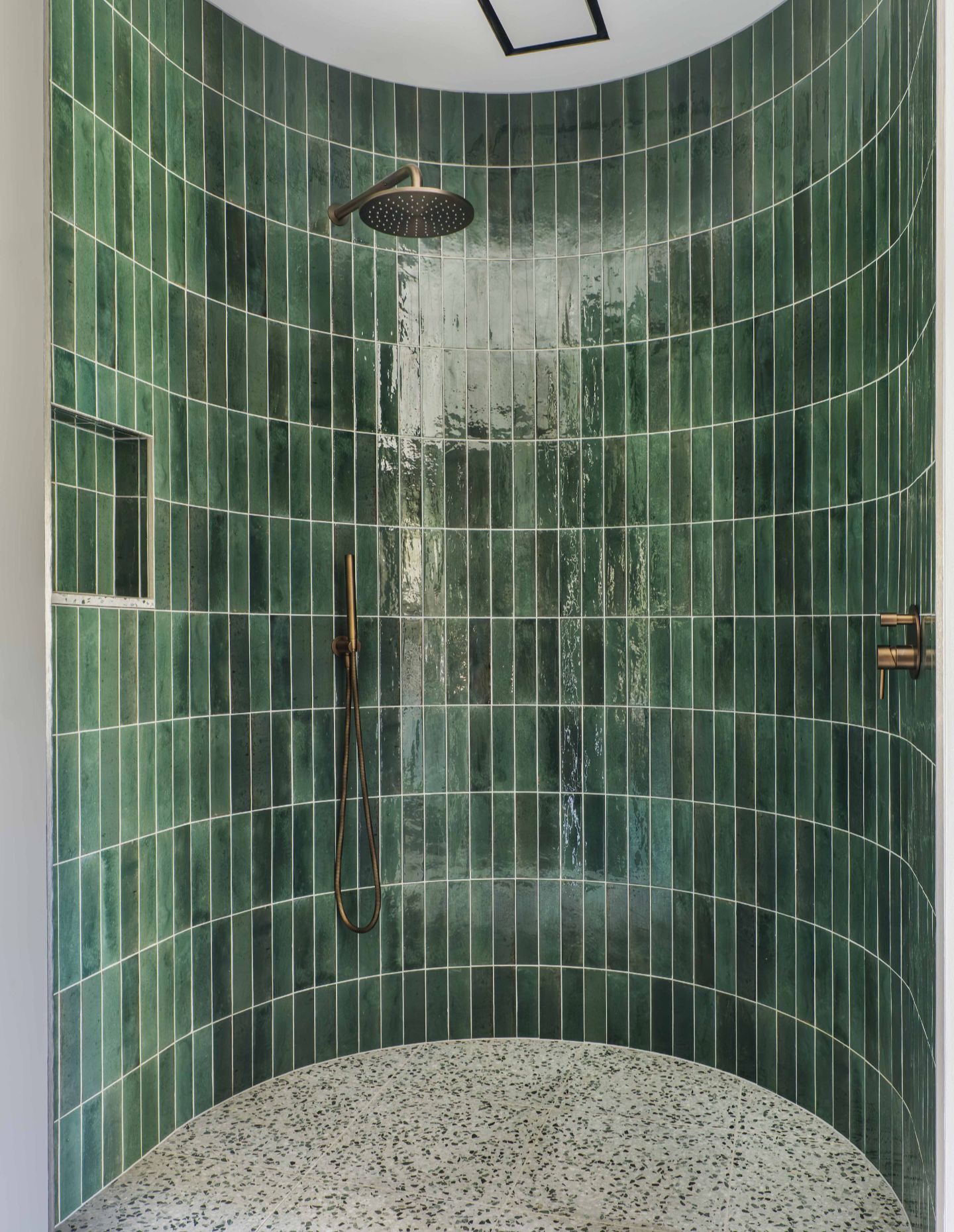
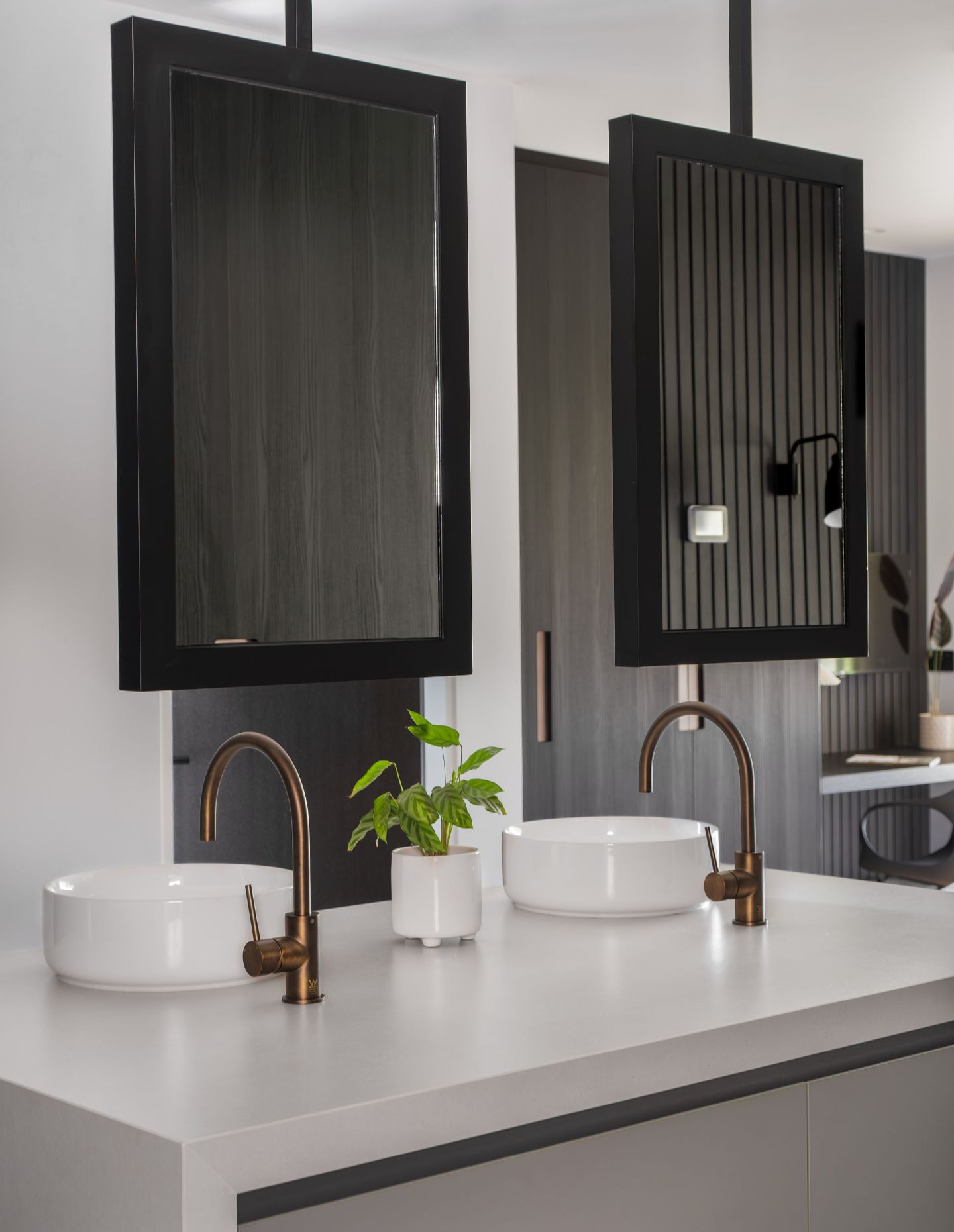
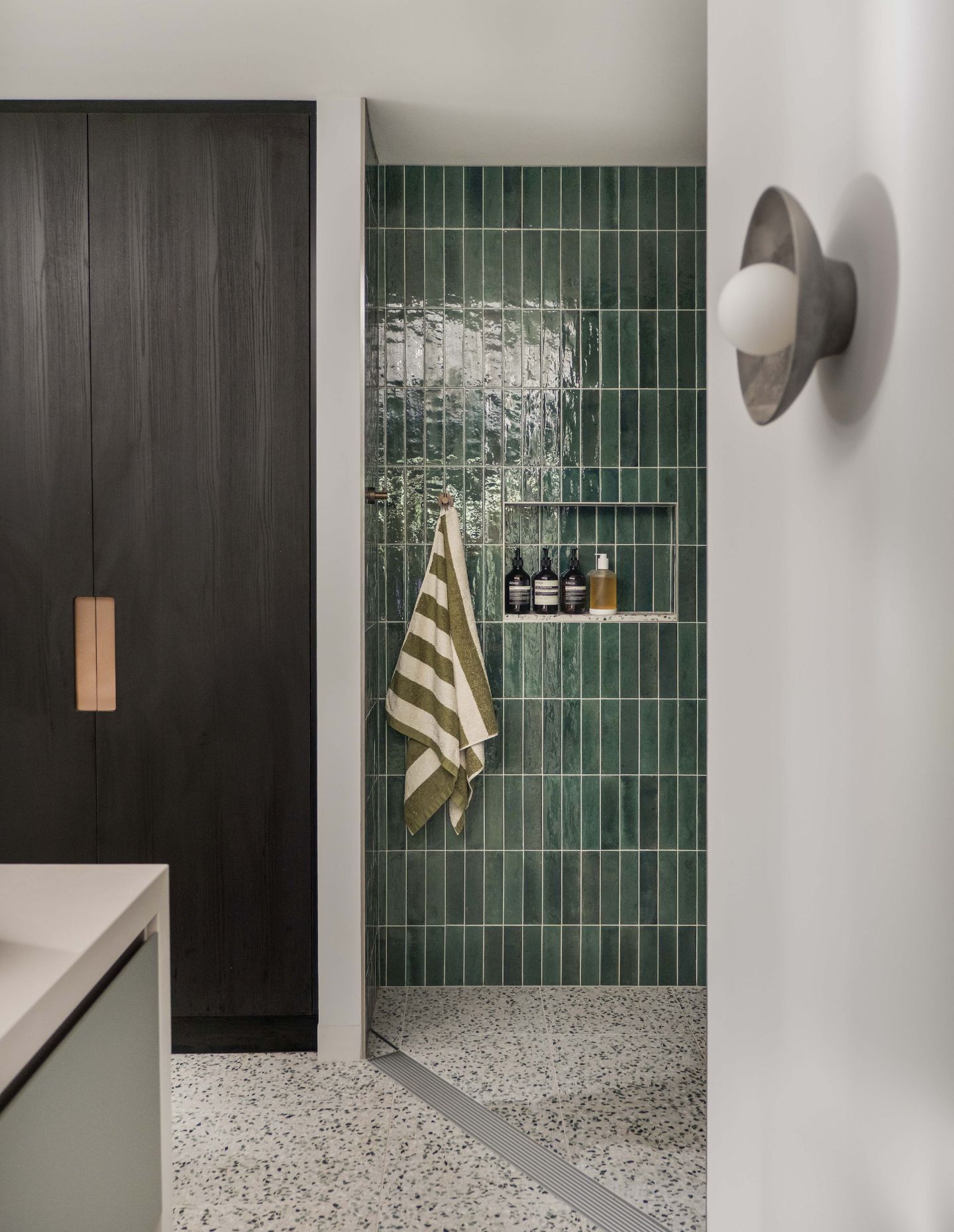
At the same time, the design introduces moments of retreat. The main suite is conceived as a private, hotel-like space, incorporating a sleeping area, study nook, generous storage and an ensuite anchored by a curved, tiled shower.
Throughout, practical considerations — storage, circulation and material durability — are carefully integrated to support everyday living while maintaining a calm and ordered atmosphere.
What are your favourite moments in the project?
The central living space is a defining moment. With the removal of internal walls, the house opens out to the landscape — allowing uninterrupted views to the trees and ridgeline beyond, with light shifting across the interior throughout the day.
The main suite is another highlight, conceived as a quiet retreat within the home. Its sculptural elements, including the curved tiled shower, create atmosphere without overwhelming the sense of calm.
More broadly, the project succeeds in balancing continuity and change — retaining the character of the original mid-century house while enabling it to function as a contemporary, light-filled home connected to its setting.