
This article was originally published in our print magazine, Habitus #65.
Yasmine Ghoniem
Welcome to YSG’s HQ, George. I think of you as a designer with a Duchampian touch who refines spaces down to their functional and elemental beauty, drawing the eye to undemanding material details. Can you share the philosophy behind your studio that makes it distinctively you?
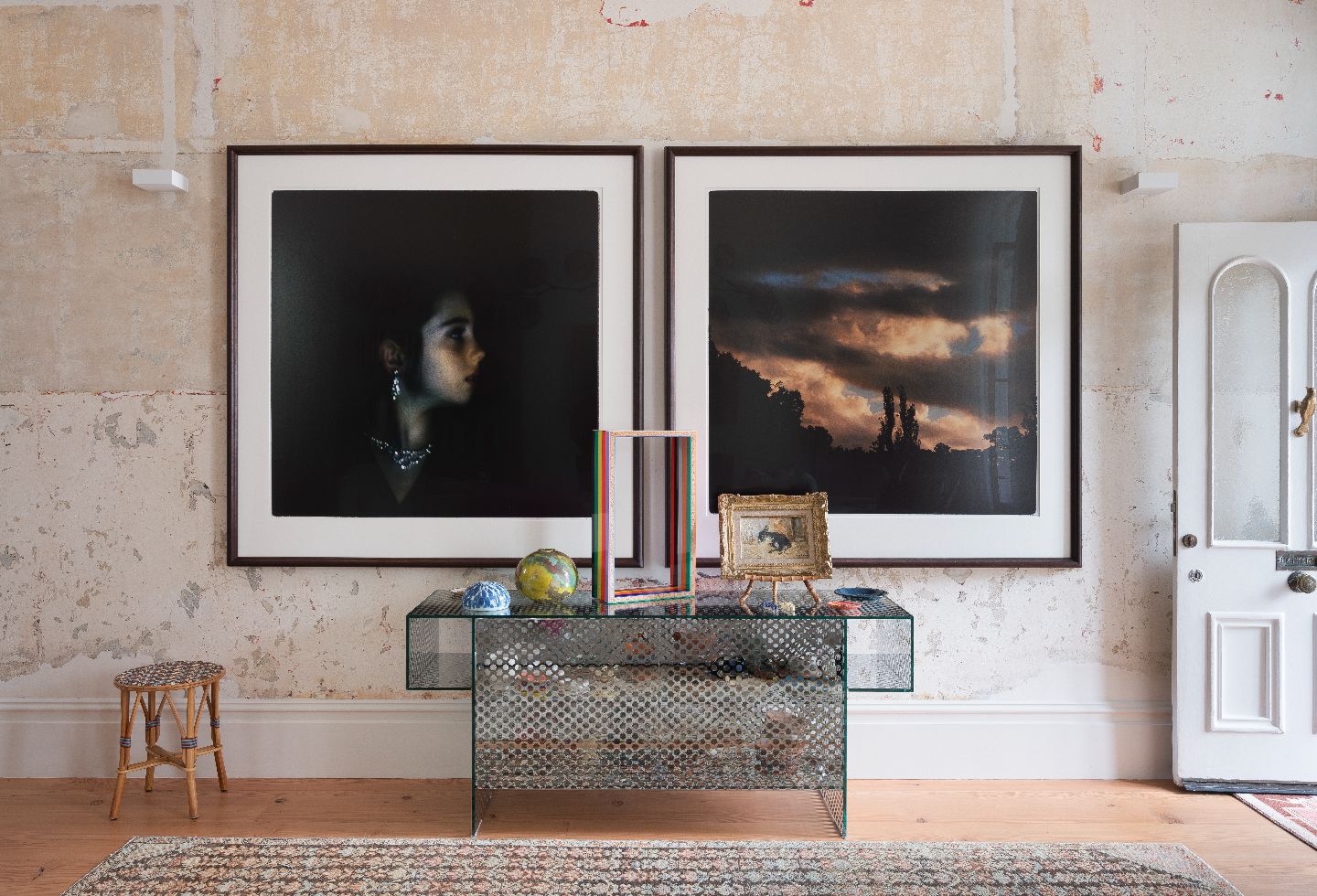
That’s always a tricky question. What I try and do is find something in the existing site (in most cases, a textural element or architectural detail), that we can hang on to because it has a weight to it, especially if it’s an old building. Then ultimately, it’s a balancing act between my natural approach – which is quite minimal and reductive – versus enhancing the tactility that exists in the site. I think in every project of mine there’s always a play between old texture and a sharp minimal intervention.
You could say across many of my projects that I don’t like covering things up. I think this approach is harder with residential projects, as not many clients are OK to see a chase line to a light fitting in a textured wall, for example! So, my approach has to be managed, as they tend to want to disguise and tidy these sorts of things up.
YS
It’s been nearly two decades since you founded your namesake studio here in Sydney after working for Burley Katon Halliday. Are there things that still inform your practice from your time there?
GL
I was at BKH between 2002-2007, and worked for other studios before them, including some in London for a couple of years. Everyone at BKH was committed to quite a singular approach to design. They were an amazing practice, especially the combination of David’s minimalist architecture and Ian’s approach to interiors, using lots of mid-century pieces, plus art, antiques and objects. Their strict planning principles helped shape my ‘rulebook’ on design. Looking back, there probably are similarities I still share with them because there was a real kind of modernist sharpness to their work. Their approach to planning and understanding it – the logic, the symmetry, the geometry was quite processed and inward looking. That was the best part of my education, but on leaving you need to find your own path and design language.
YS
So, what’s your favourite part of the design process?
GL
I love the quiet time of just feeling through a plan in a sketch. That’s my happy place. I can’t think without sketching. Sadly, I don’t get a four-hour block in the day to indulge in this process. I usually do it after hours as I need to be super focused. I try to step through space visually in my head and on paper to find the tension or the calmness of a space.
YS
Switching tack to your residential practice, in terms of your overall portfolio, how much of it is residential?
GL
I would say about 40 percent is. We’re working on about four or five houses at the moment.
Related: Soft power
YS
What do your clients typically come to you asking for?
GL
They’ve usually seen our hospitality projects in the press or have experienced them. It’s interesting as we don’t feature any projects on our website, so they have no idea how my approach to hospitality is translated into residential projects.
It’s more about the feeling they have entering our hospitality spaces. Ultimately, when you walk into them, you respond to them emotionally, I hope. So, if someone walks into a space and it affects them in a positive way and they’ve connected to it, then that’s where it starts.
When we work on hospitality, we talk about understanding not only the existing space, but the approach to the food, the ethnicity, the dynamic, the feeling, the atmosphere. In a similar way, I want to create that type of ‘brand’ or experience for a couple or family. We still have a strong interiors vision, but it’s derived from an awareness that it has to suit the homeowners, as what we design is also a response to their existing collection of furniture and items. It’s those personal things that create a home. How do we use those things?
YS
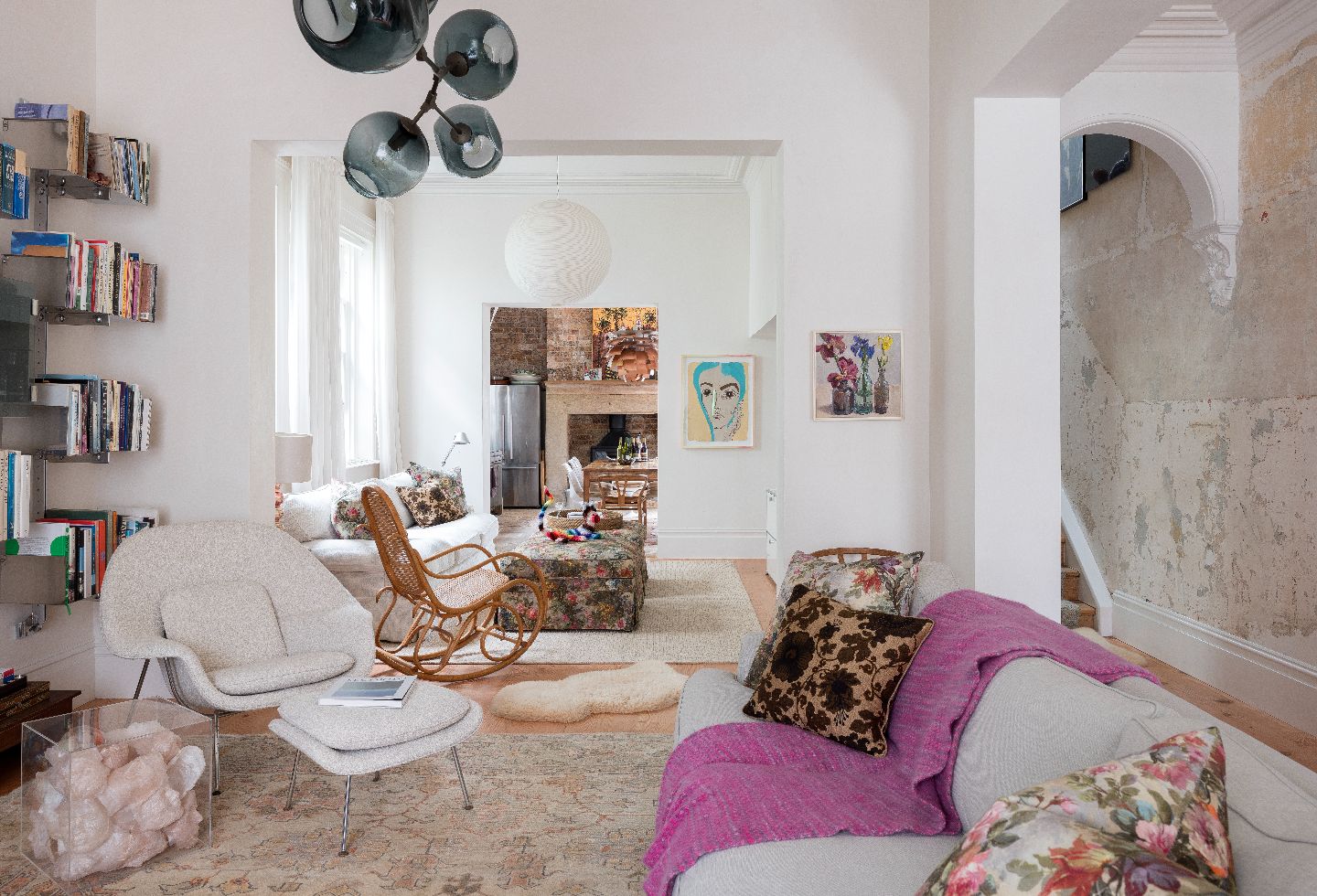
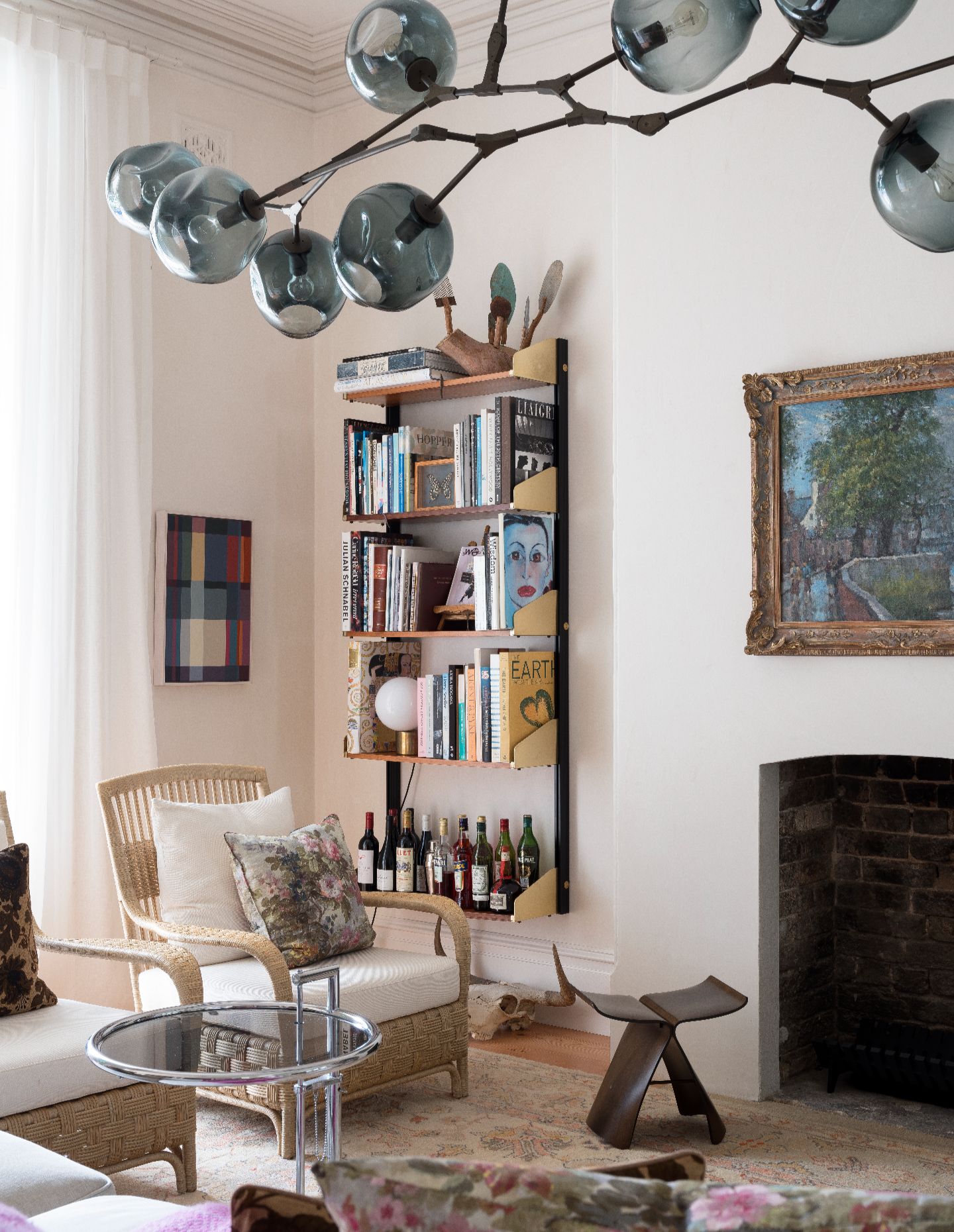
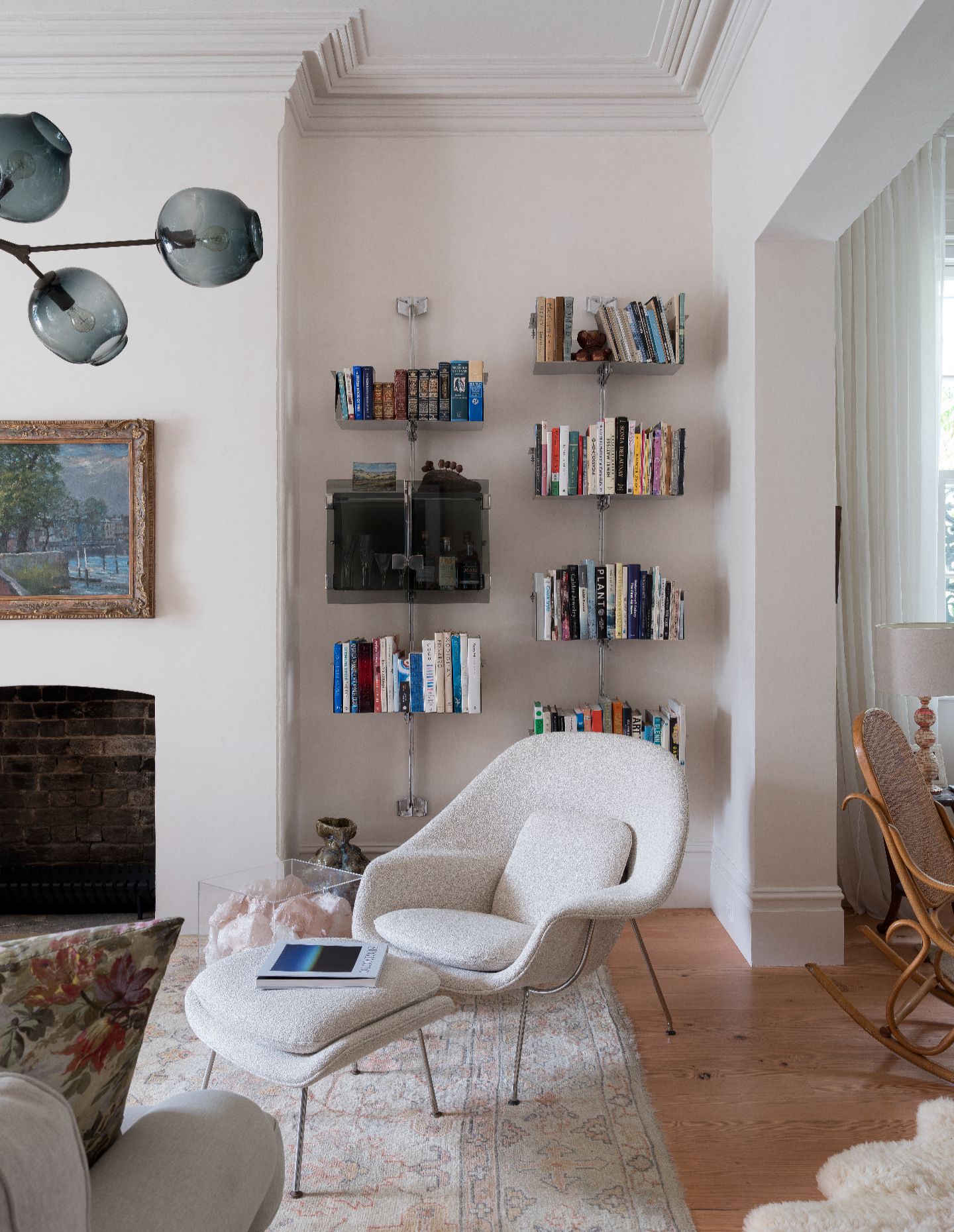
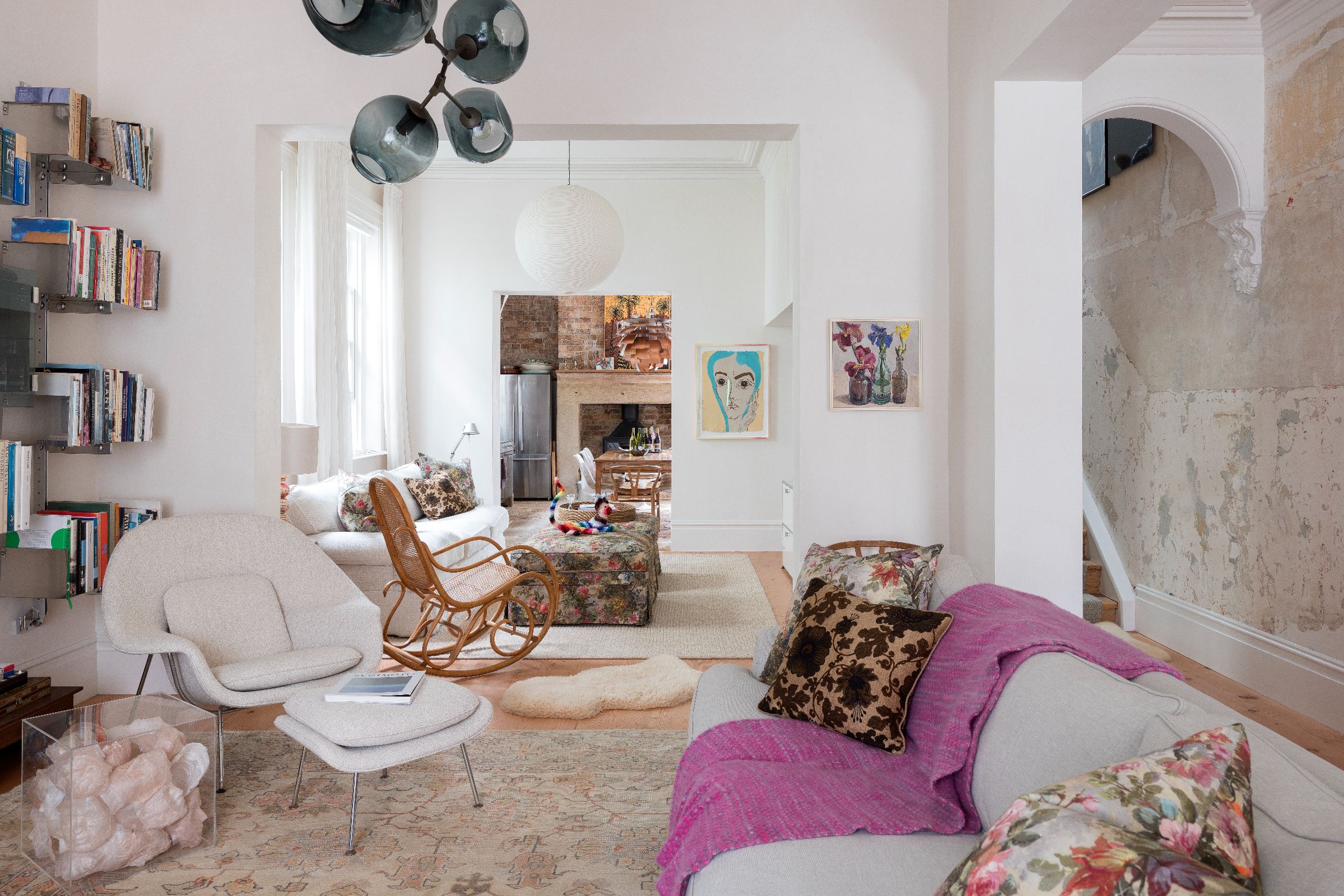
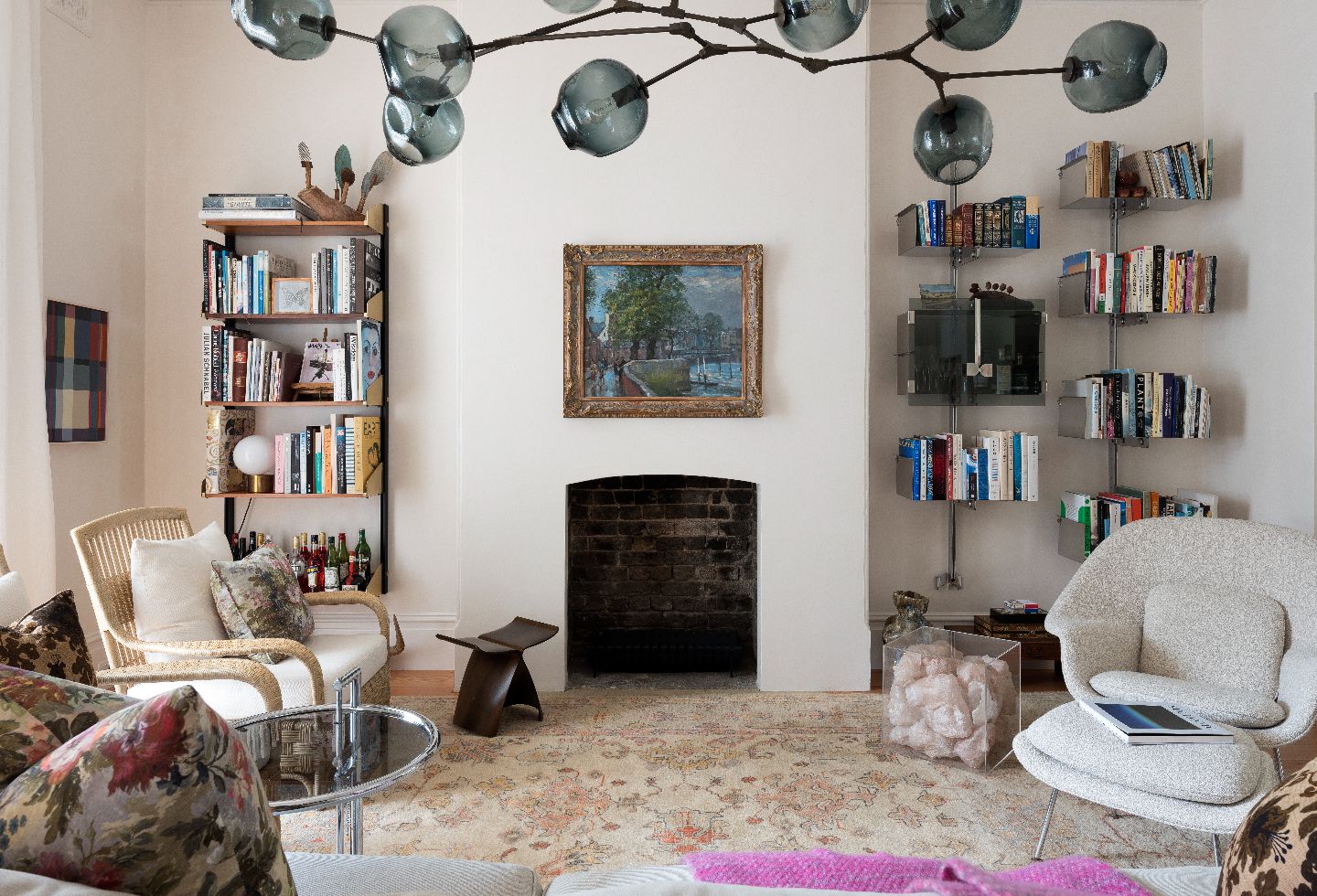
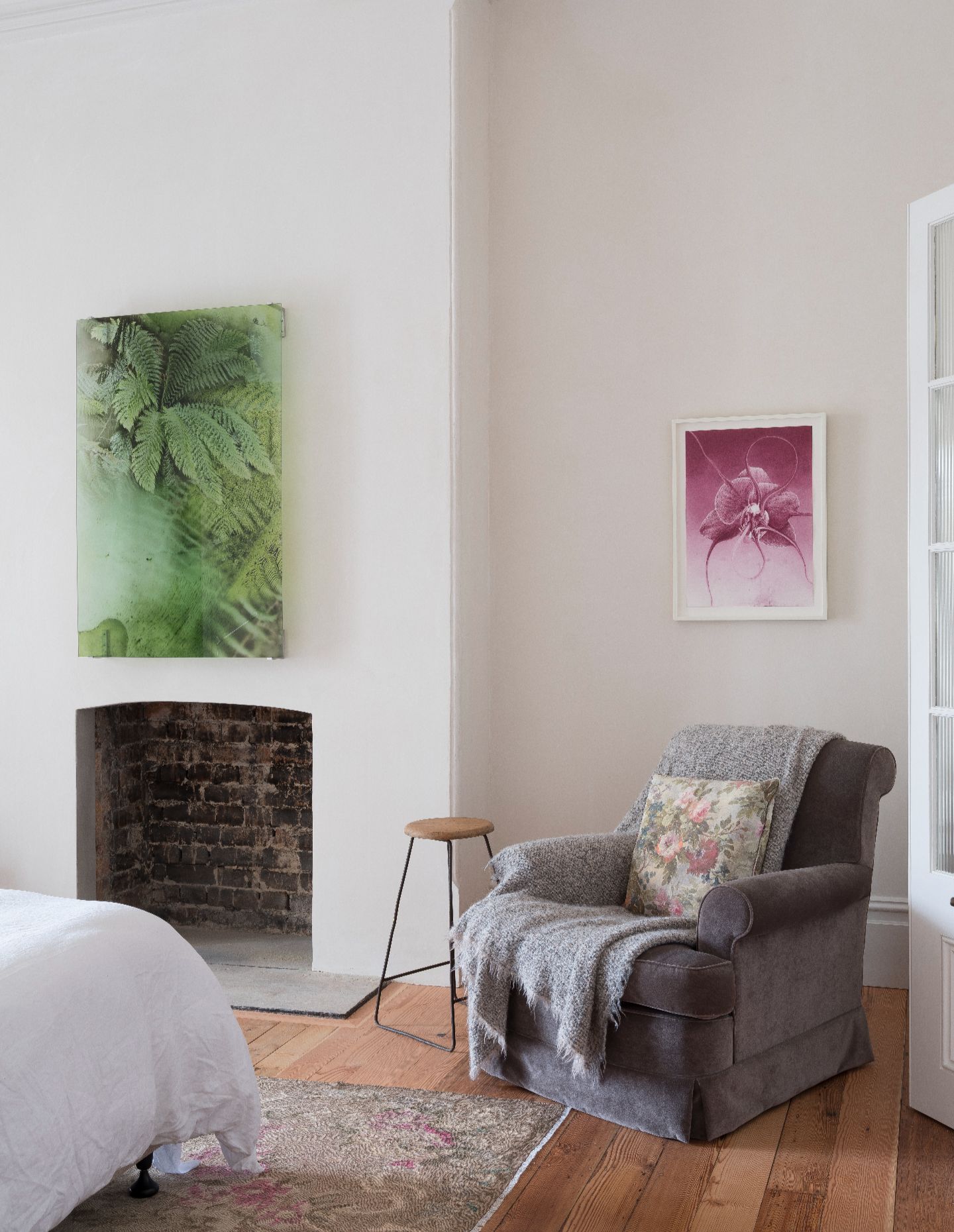
Let’s talk about your recent residential project called Jackie’s House. Beyond the more obvious features, including a minimal stainless-steel kitchen and distressed walls, I see a mix of antique and contemporary furnishings. Talk me through the design process and what excited you about this project.
GL
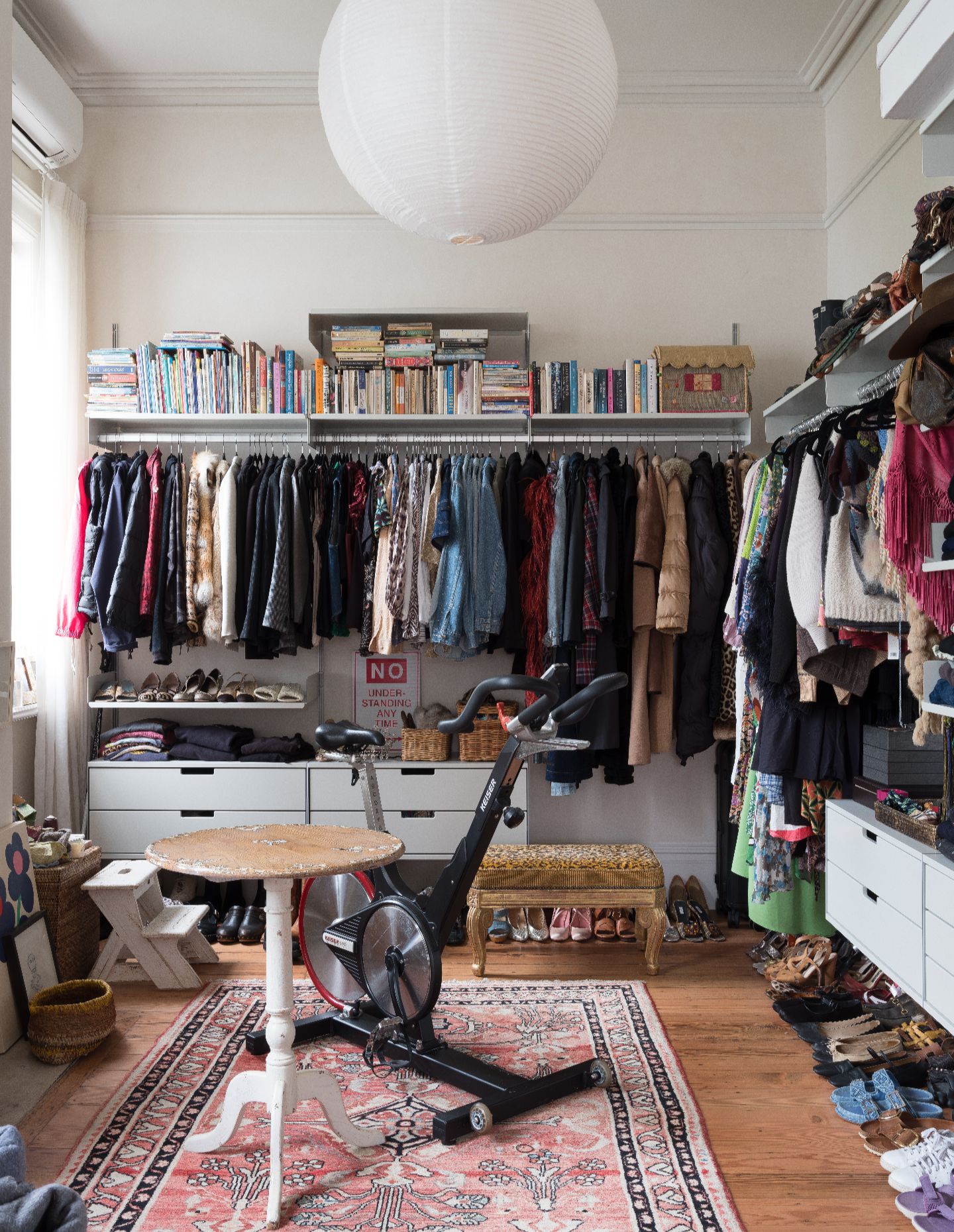
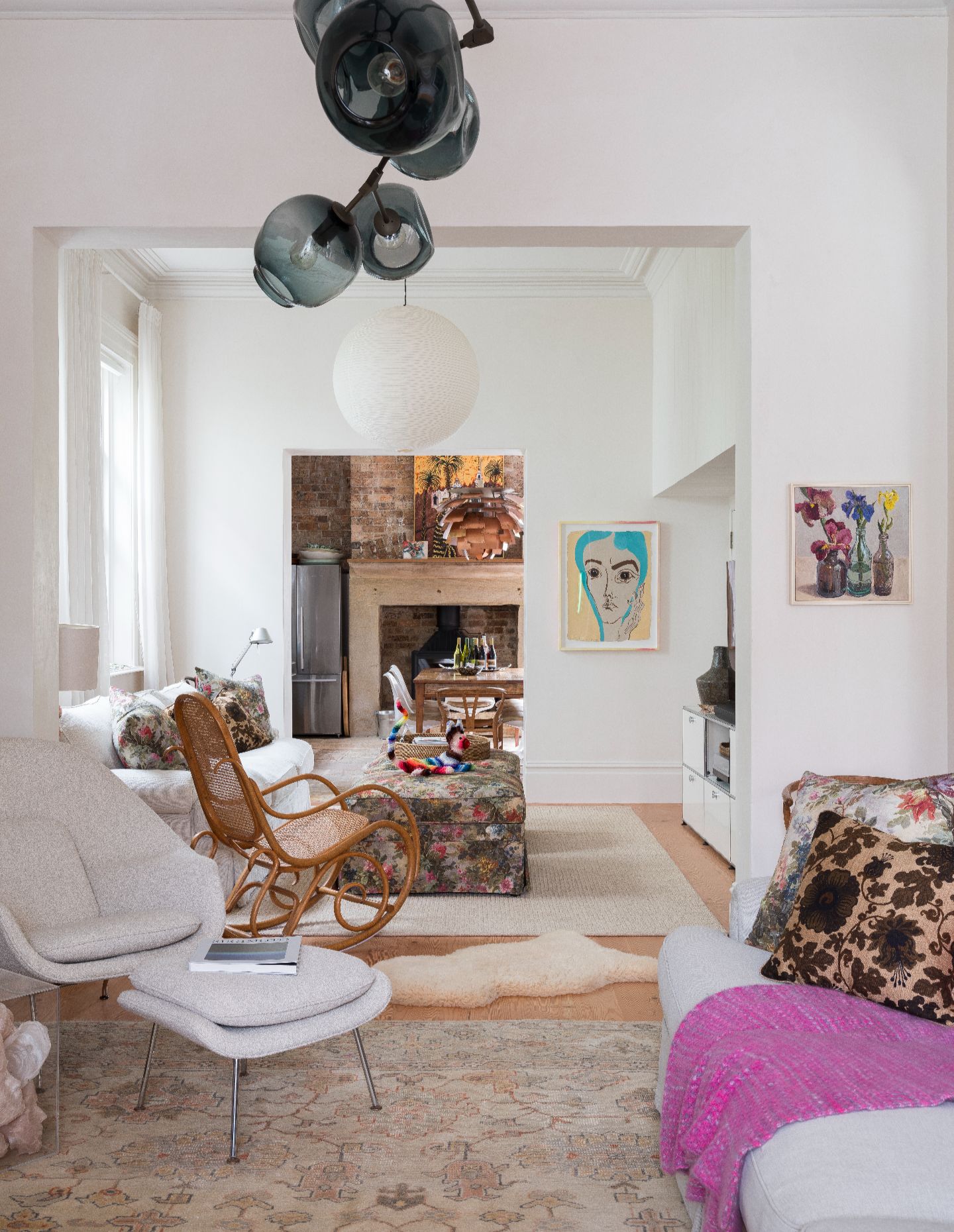
Jackie’s house is a Paddington terrace built in the late 1800s. I’d worked with her before, so it features some artwork, objects and furniture that we had previously specified, plus pieces she had collected over the years that were precious to her. She’s naturally creative and artistic, so the home had to reflect that eclectic mix. Funnily enough, my favourite image taken of the project is of her dressing room with her exercise bike in the centre of her open closet.
YS
I love that image too.
GL
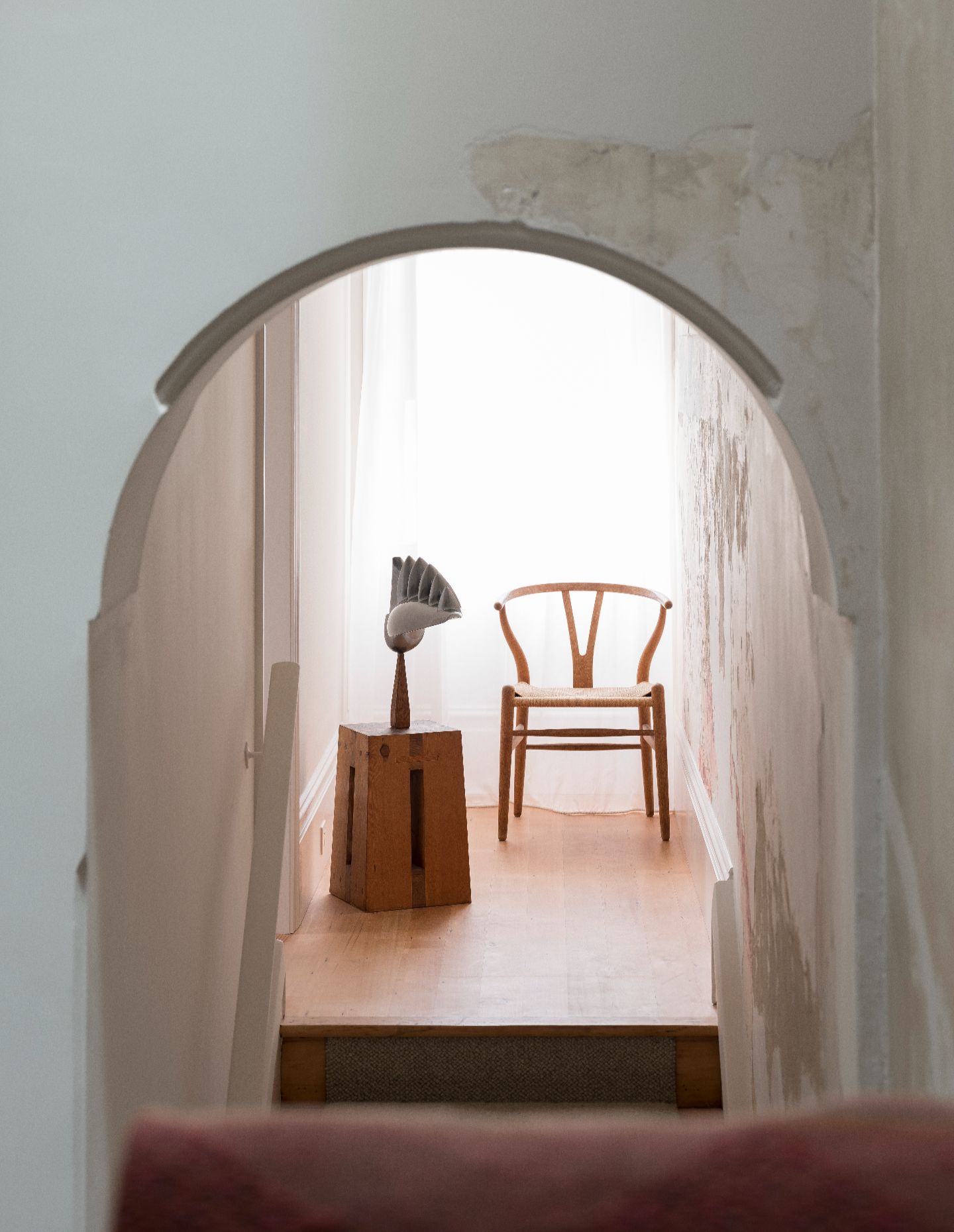
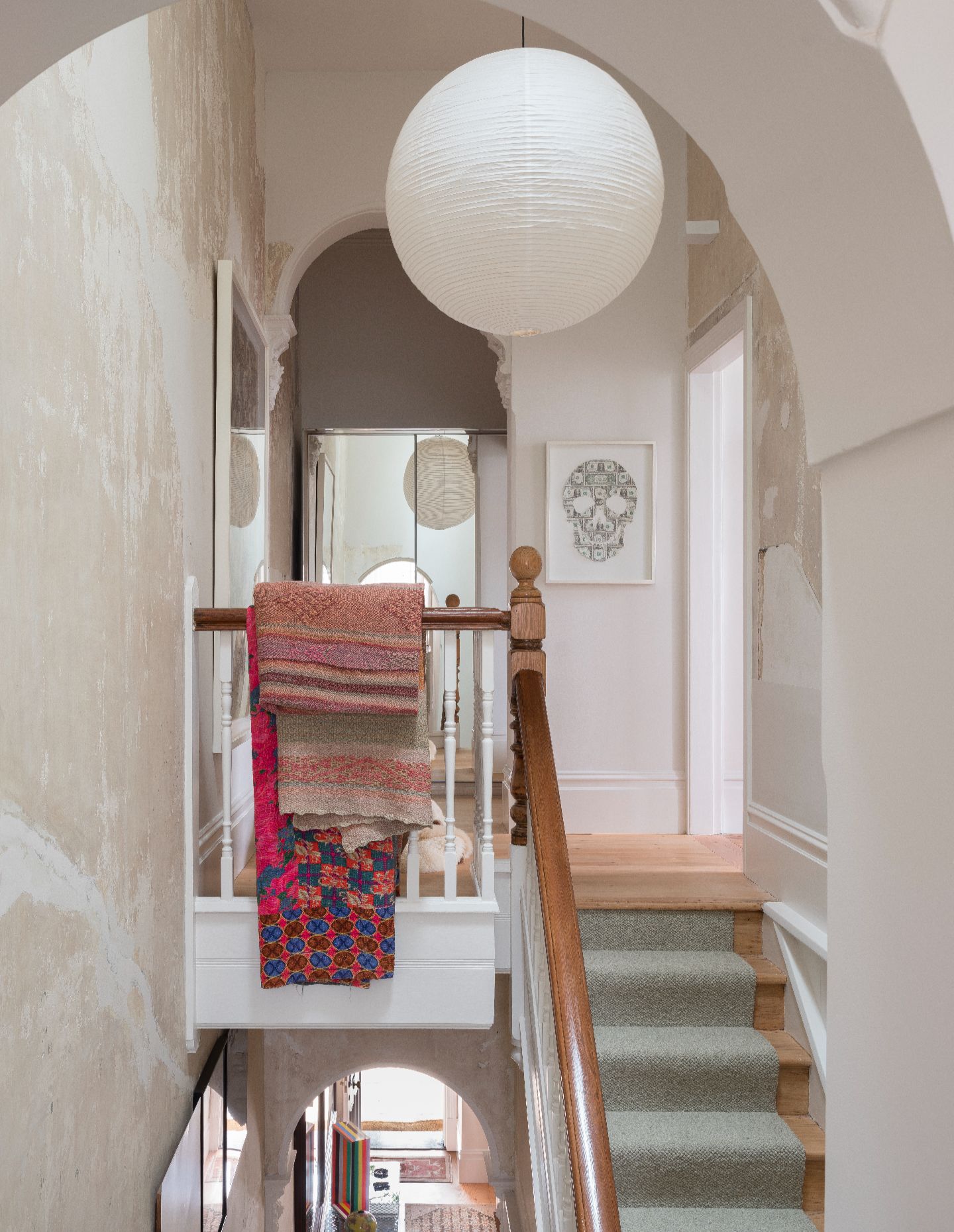
I think there’s a danger that interiors can become synthetic and over-stylised. It’s like they’ve lost that connection to what they should have been. For this home, I stripped it back as there were a lot of excess trimmings that weren’t original, like the cornice mouldings and skirting boards. I was interested in the original details and capturing the textures in the walls as well. We tried matching paint colours to plaster surfaces using a dirty-warm white.
YS
How did you offset things like the exposed brick?
GL
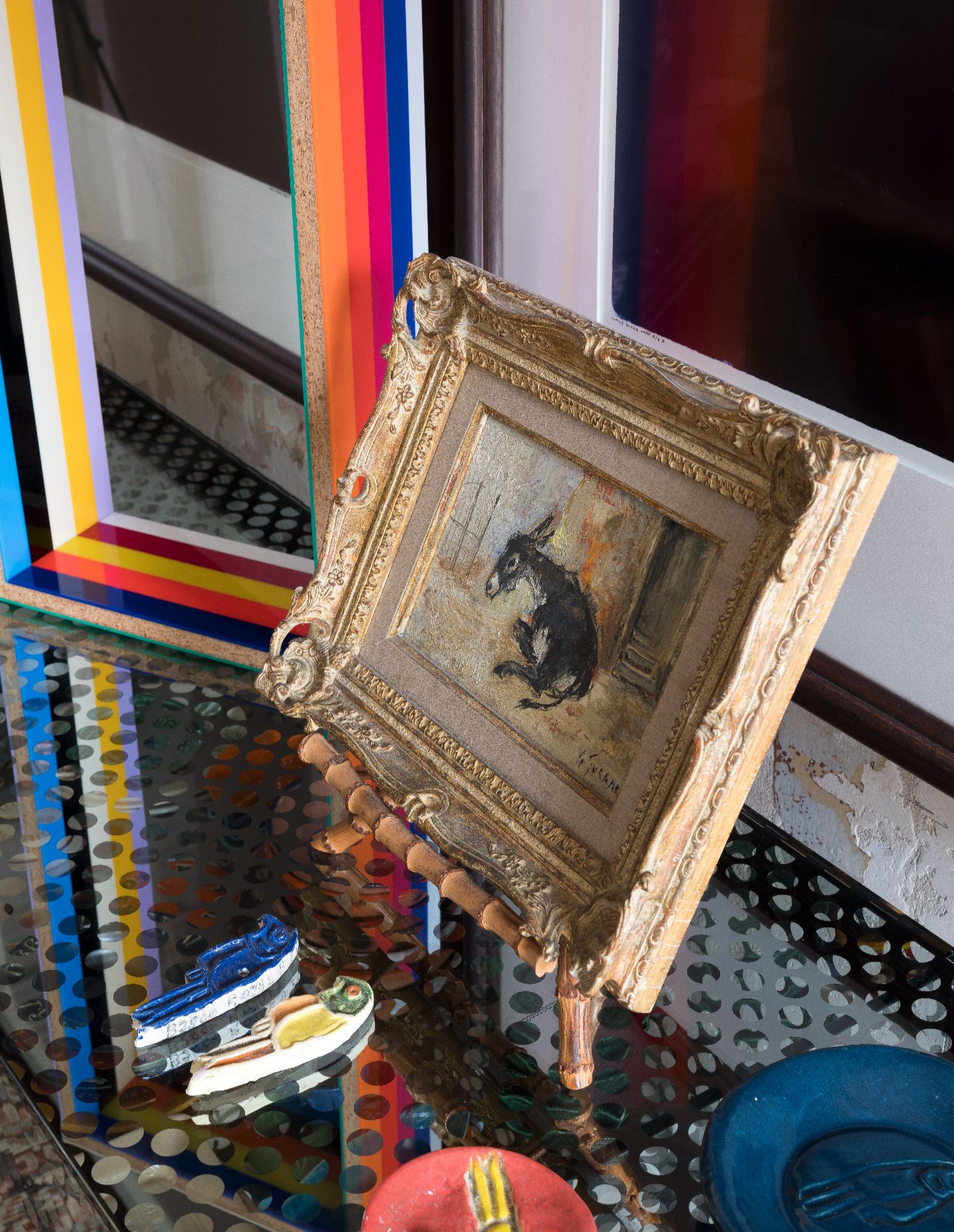
With sharp and crisp mirrored elements for contrast.
YS
I love the high plastered datums on the exposed brick, especially in the kitchen and the fireplace with no ornamentation around the firebox. Not even a mantel.
GL
We thought that if you covered the distressed brick with tiles above the kitchen counter, they’d look out of place. The floor has the same approach. We patched three types of boards and three different sizes, exposing them in this state.
YS
We do a lot of work overseas and it’s interesting how Australians view the purpose of a kitchen in comparison. They tend to be a large, open hub of the home here, with an equally big budget splashed on them. It’s refreshing to see an unfussy, practical kitchen.
GL
When you break it down, it’s a working room with cabinetry that you prepare food in with a cooker and sink. I like the old table in the middle of this one – something Jackie already had, plus the ‘artichoke’ pendant above it, in all its rusted glory. That came from her old house. A true sense of ‘home’ comes from mixing your possessions. It brings in a level of instant comfort and connection.
YS
Last question. For someone with an aversion to self-promotion, given you don’t have an Instagram handle and your website doesn’t feature any projects, I think you’re probably the only Australian designer who has such a successful portfolio, yet stays off the airways.
GL
I always get questioned and criticised for not having this presence. I’m just not interested. I don’t like the idea of styling a home for editorial images or my website just to promote it. I just don’t see the point as the space has then lost its authentic nature.
I want to be involved in every project the studio works on, and to do that, it’s got to stay pretty compact. We need to cap how much work we can take on to maintain this. If I can sustain the right number of clients to keep us all busy, then that’s enough. And I’m super grateful to be in that position.
YS
You have a very pure aura about you in every sense of the word. It’s been a pleasure talking to you.
GL
Thanks Yasmine. Ultimately, what I love about what we do is our very quiet, almost meditative design time.