
If you have had a chance to spend some time in a space designed by Keiji Asihizawa Design (KAD), you would understand why you never want to leave. Led by the eponymous architect, these spaces eschew instant drama for timeworn and sensitive details, with materials applied in ways that bring out their best.
One of his recently completed projects continues this language. It transforms a 120-year-old machiya in Kyoto into Tourne — a private rental accommodation for up to eight guests, which preserves and reuses as much as possible the original structure and ambience without falling into pastiche.
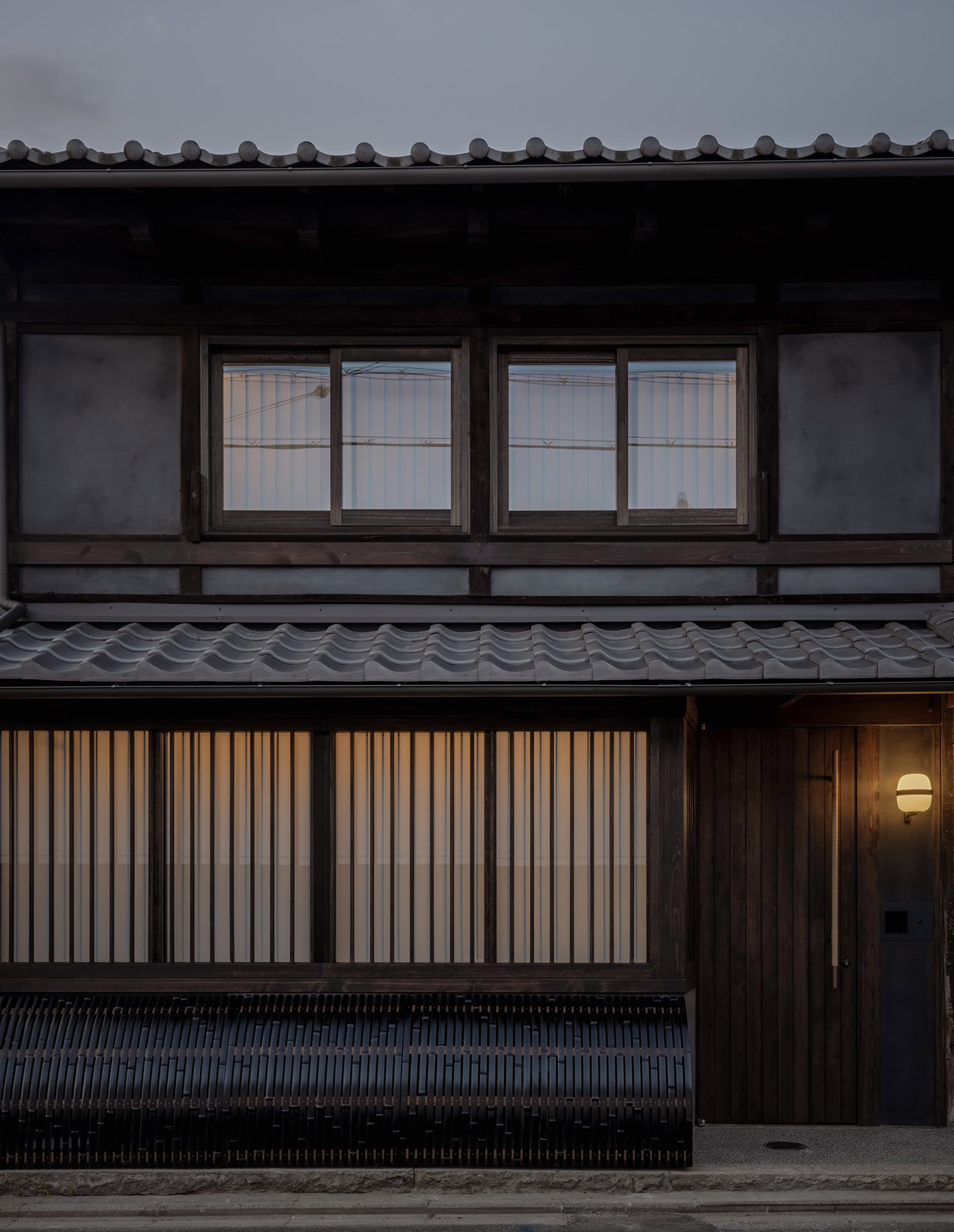
Its owner is Kyoto-based SQ Property Co., Ltd., which renovates machiyas into restaurants and residences. “The building sits in the heart of Kyoto – close to Kyoto Station and at the intersection of historic and commercial areas near the Kamo River and Kiyomizudera,” says Ashizawa. Bukkoji Temple’s roof tiles and walls can also be seen from the house – a view that embodies “a quietly Kyoto kind of everyday life.”
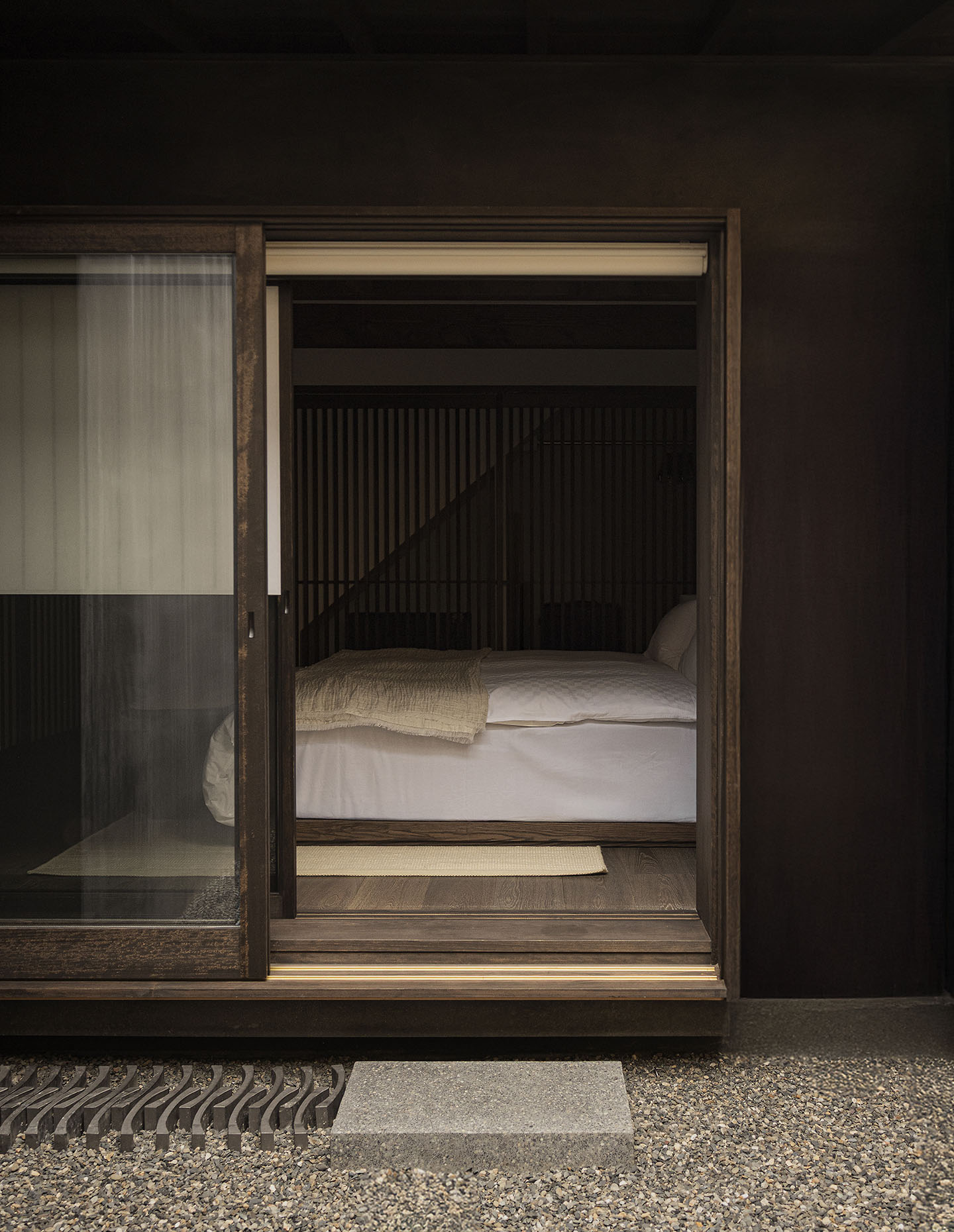
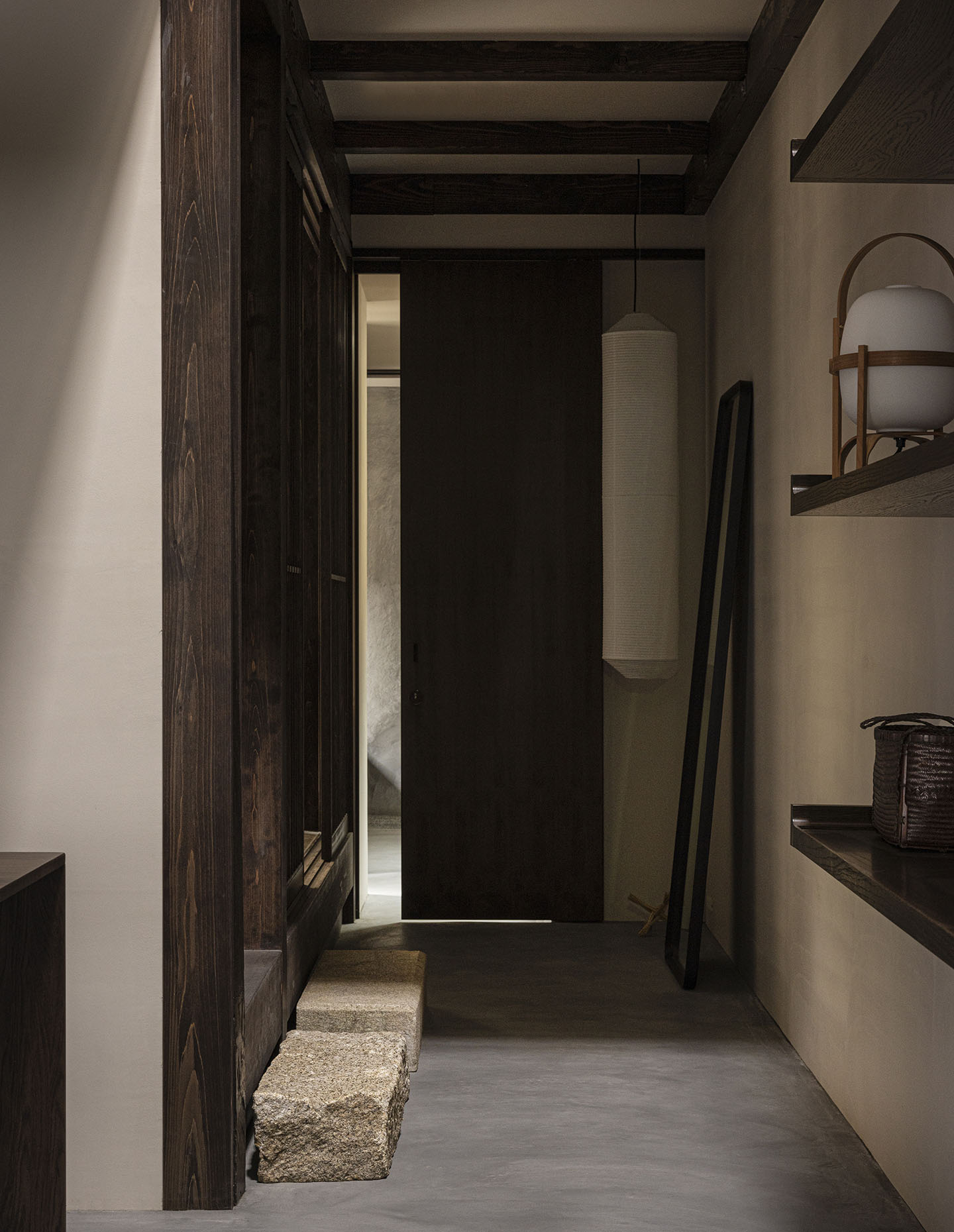
Tourne, too, embodies this. Years of wear and tear had already deteriorated it badly: “Parts of the structure required specialist assessment,” explains Ashizawa. “It had previously been used as a residence, though it was unclear how long it had been vacant.” Ashizawa set out to preserve the machiya’s traditional spatial qualities, such as the tori-niwa (earthern-floor passage), the lattice doors, the open roof structure, the timber framing and the inner courtyard.
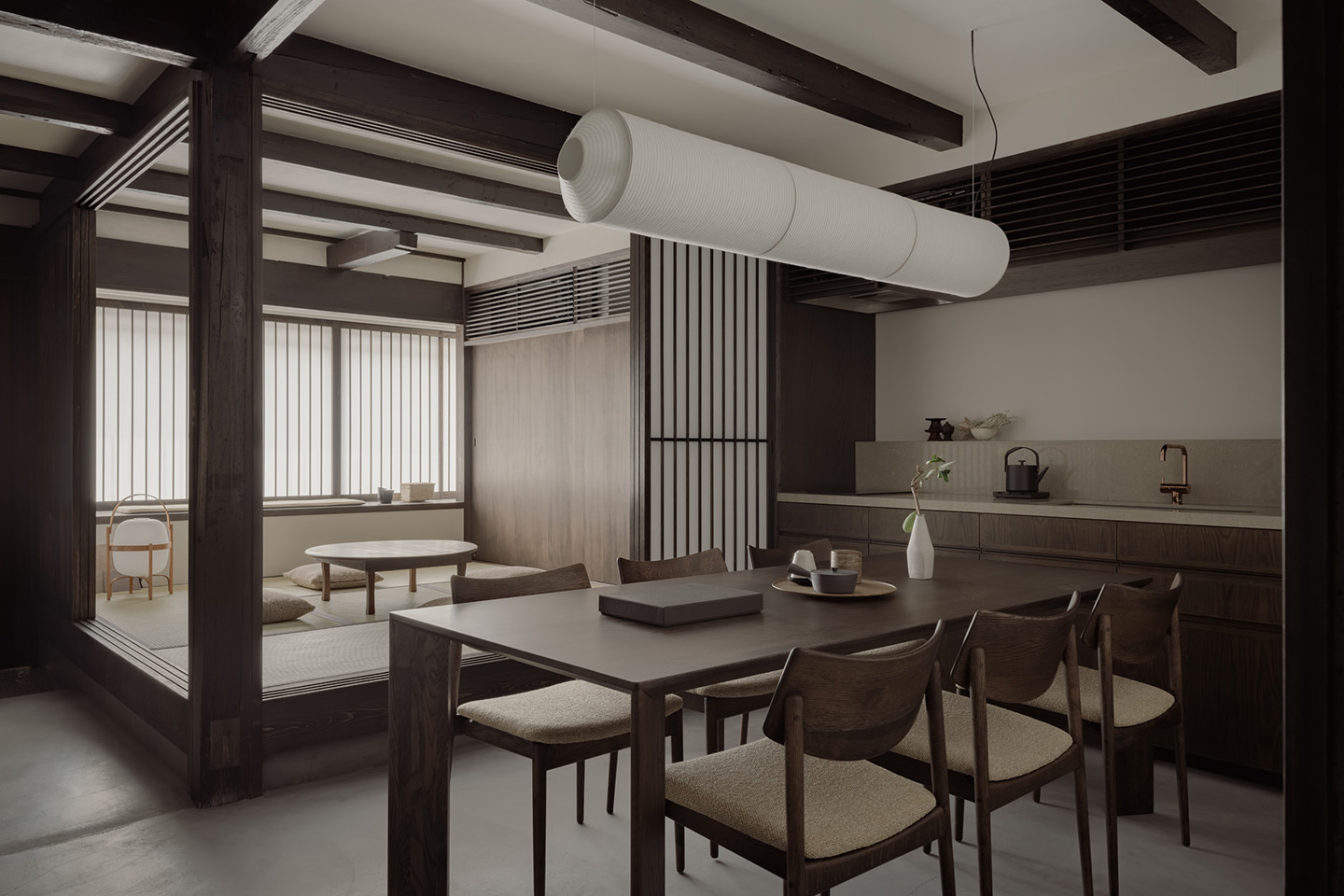
At the same time, these had to be updated for contemporary life: “What mattered most was not interrupting the sense of time that runs through the building,” says Ashizawa. On the first storey, he kept the traditional layout of three rooms lining the tori-niwa passage that opens to a rear garden. “The approach placed minimal structural load on the building and allowed the living spaces to be organised efficiently,” says Ashizawa.
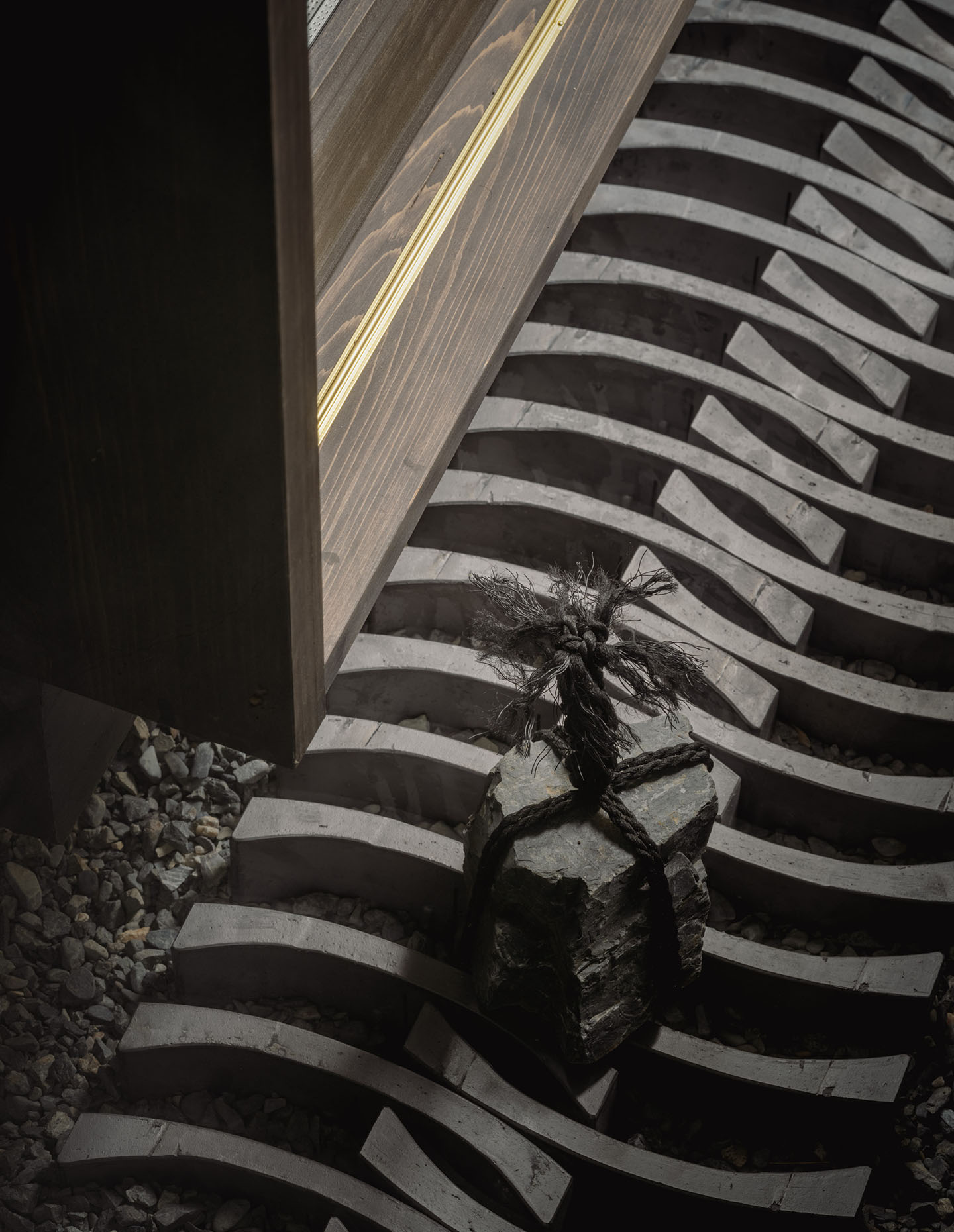
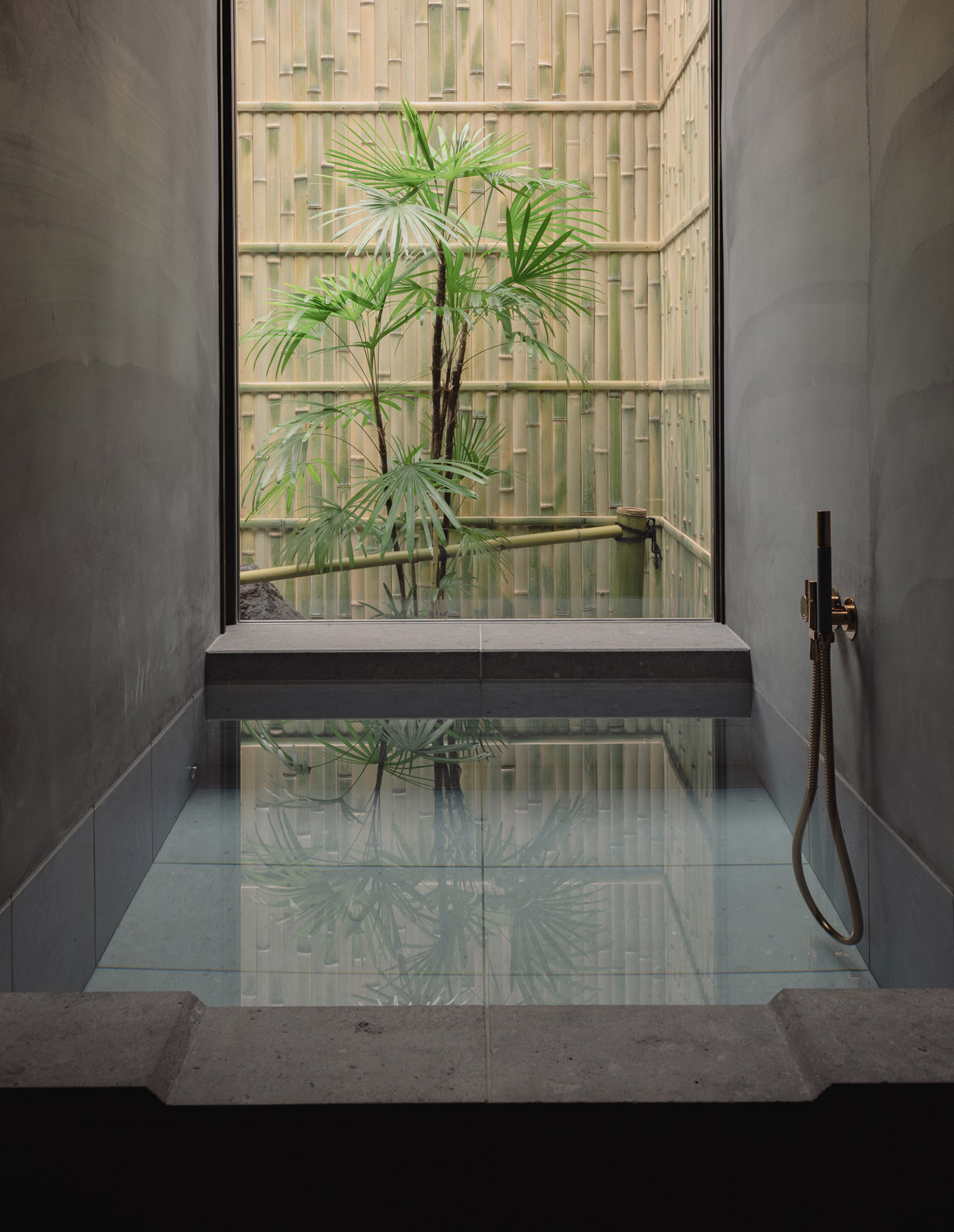
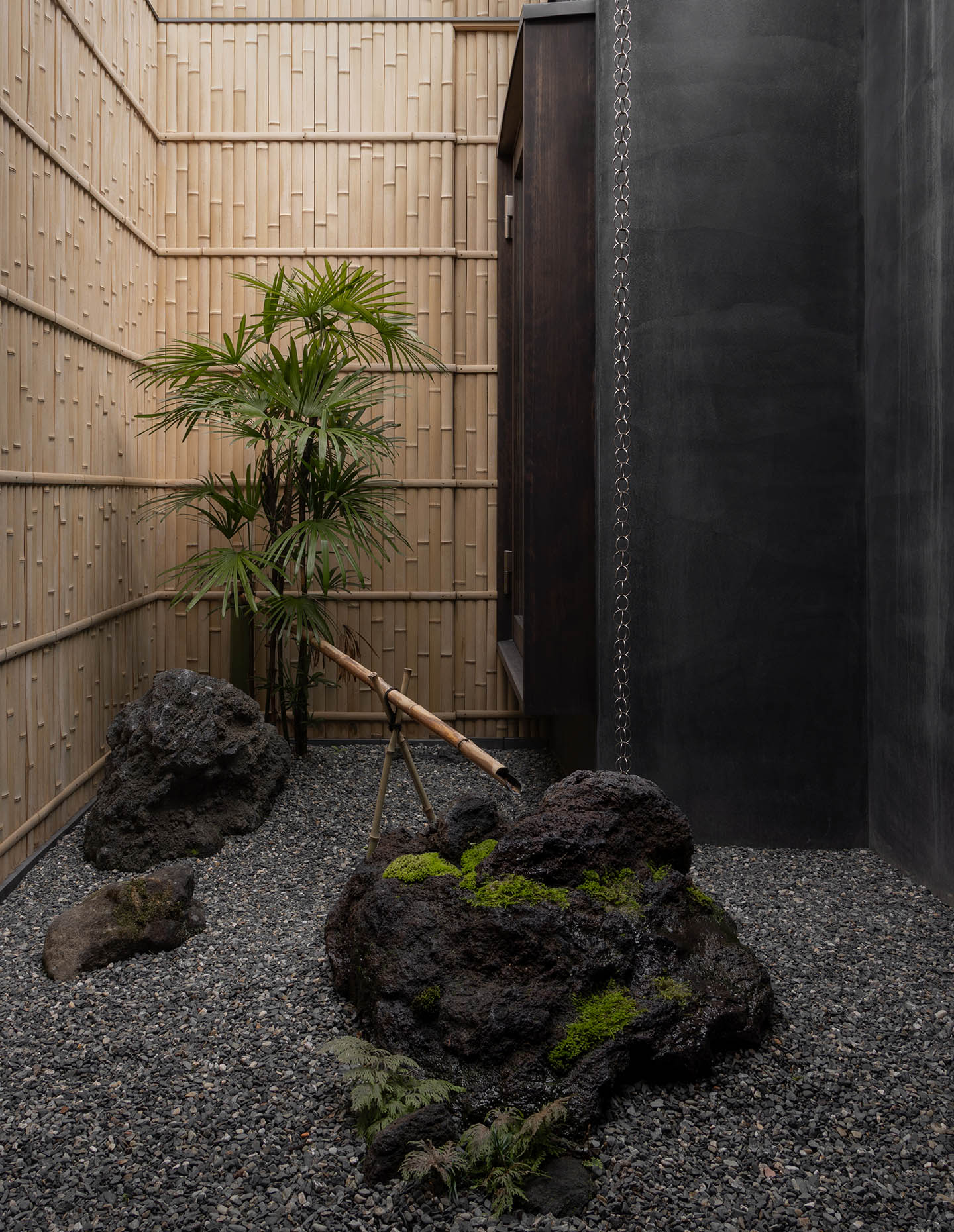
The bathroom was originally located in a detached building at the rear. He kept this as a separate space but extended the tori-niwa to it and connected the roofline for shelter. The second storey is more private, containing a bedroom and living space. Here, the tonality modulates.
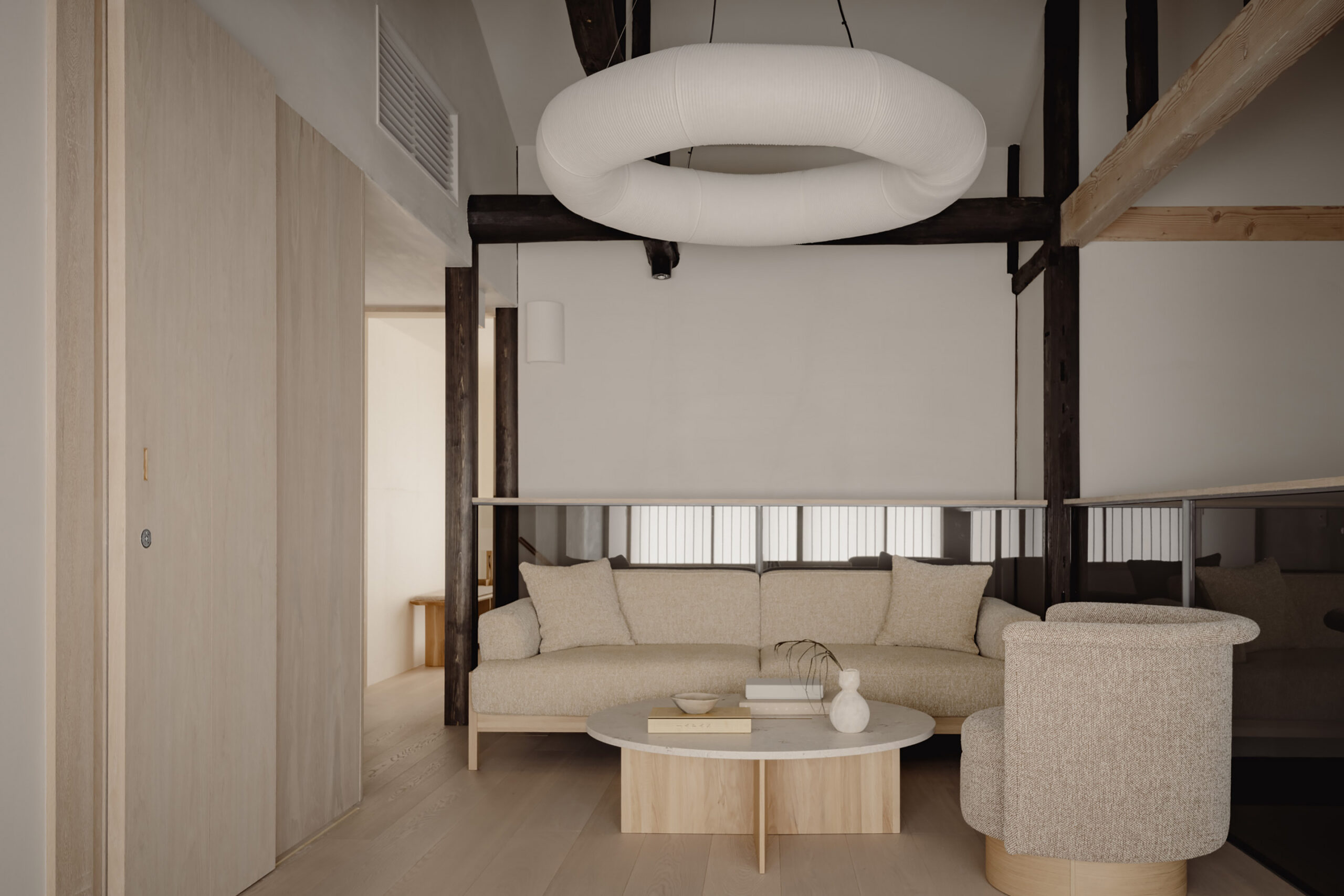
“Where the ground floor carries a darker, more shadowed quality; upstairs shifts toward lighter tones of pale wood, washi paper and tatami. We retained the hibukuro (fire shaft – a void above the kitchen and wooden beams for smoke ventilation) so that from the second-floor living area, you remain visually visible and spatially connected to the movement and light of the tori-niwa below,” Ashizawa explains.
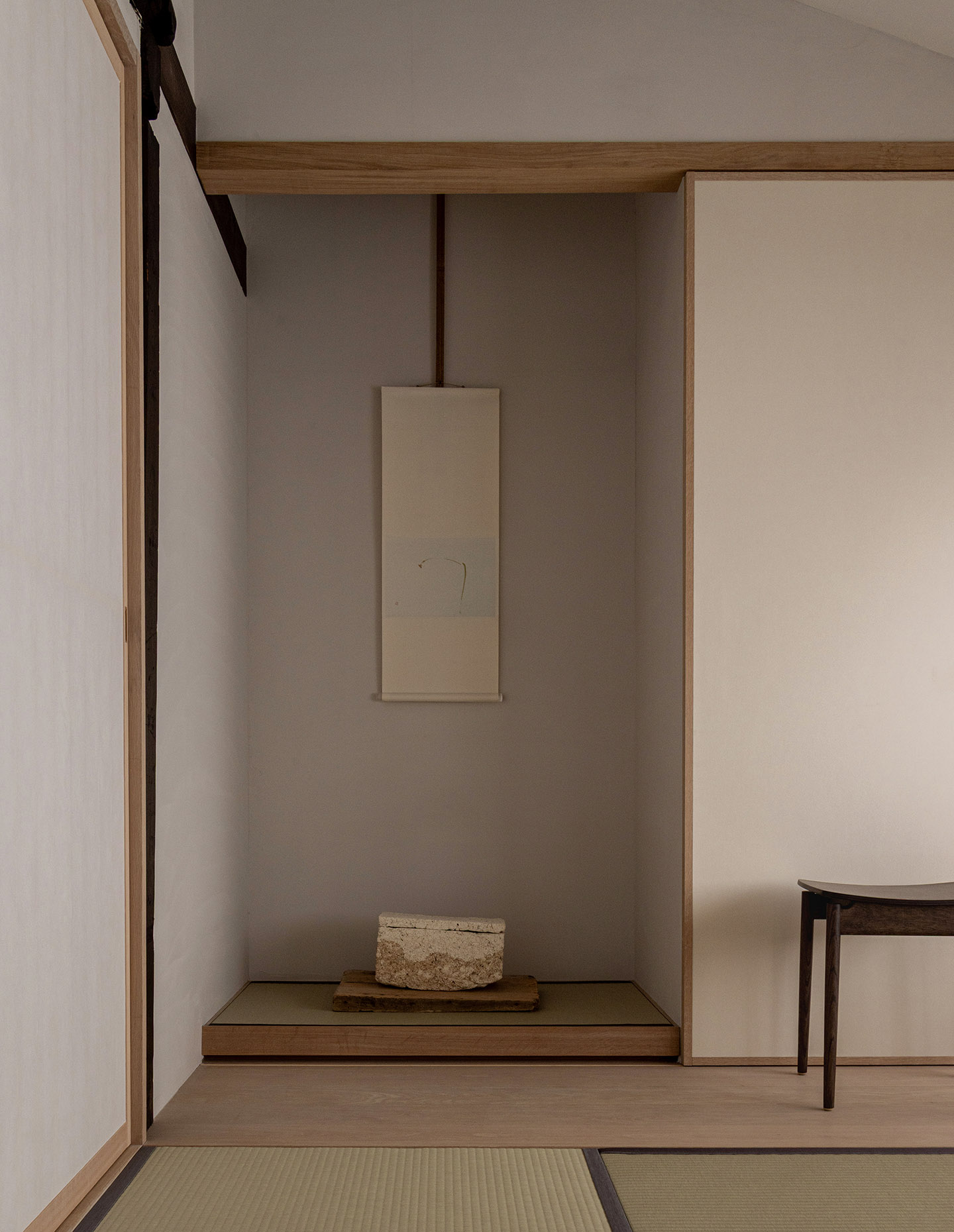
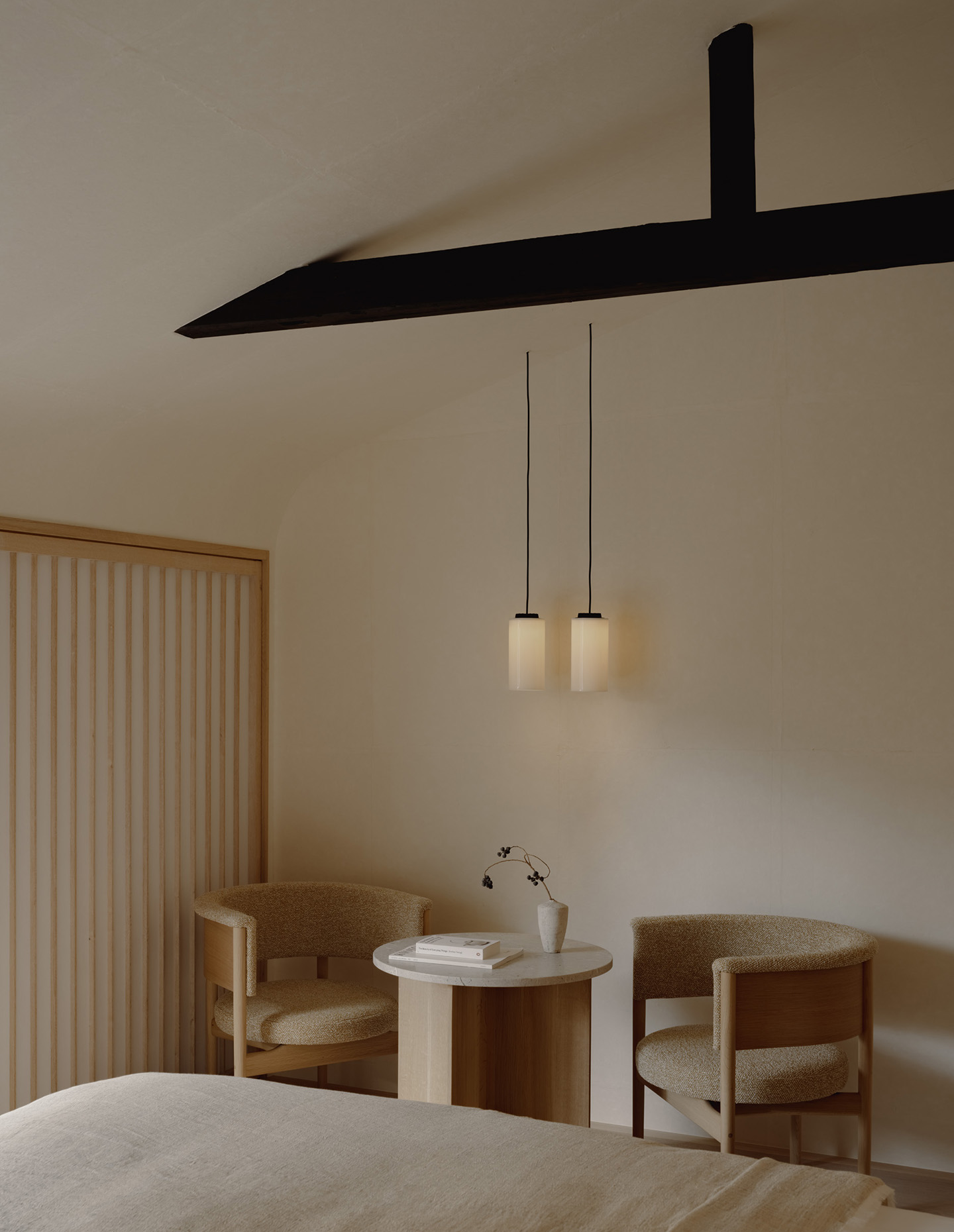
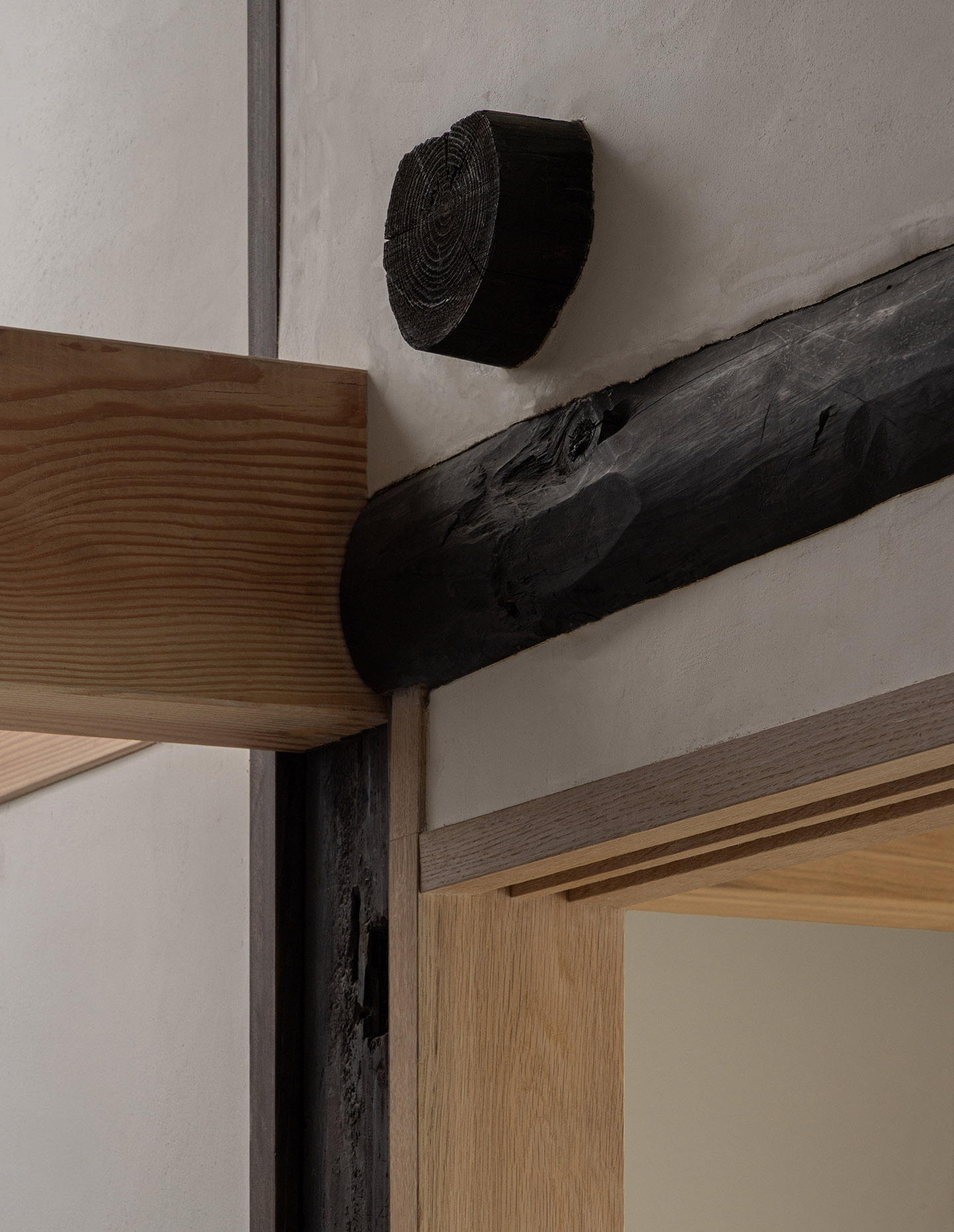
The existing beams and logs were kept, and expressed at part. Columns that showed no base decay were reused. But the degree of warping and lean were noticeable so the team introduced packing elements where necessary — “small, intervening pieces that allowed new walls, columns and fittings to be set plumb and true against the existing structure,” Ashizawa points out.
As always in his projects, the furniture and furnishings are important touches to providing comfort and a sense of relaxed domesticity. Karimoku Case furniture was used on both levels. Ashizawa is the Japanese brand’s co-founder together with Norm Architects, and its lead designer and architect.
“Rather than creating a strong contrast between old and new, we wanted the different layers of time to settle together quietly into a unified whole,” he says. “Bringing in Karimoku Case — contemporary in design and careful in its use of materials — felt like the right way to draw out what the existing space already held, and allow it to be experienced through a contemporary lens.”
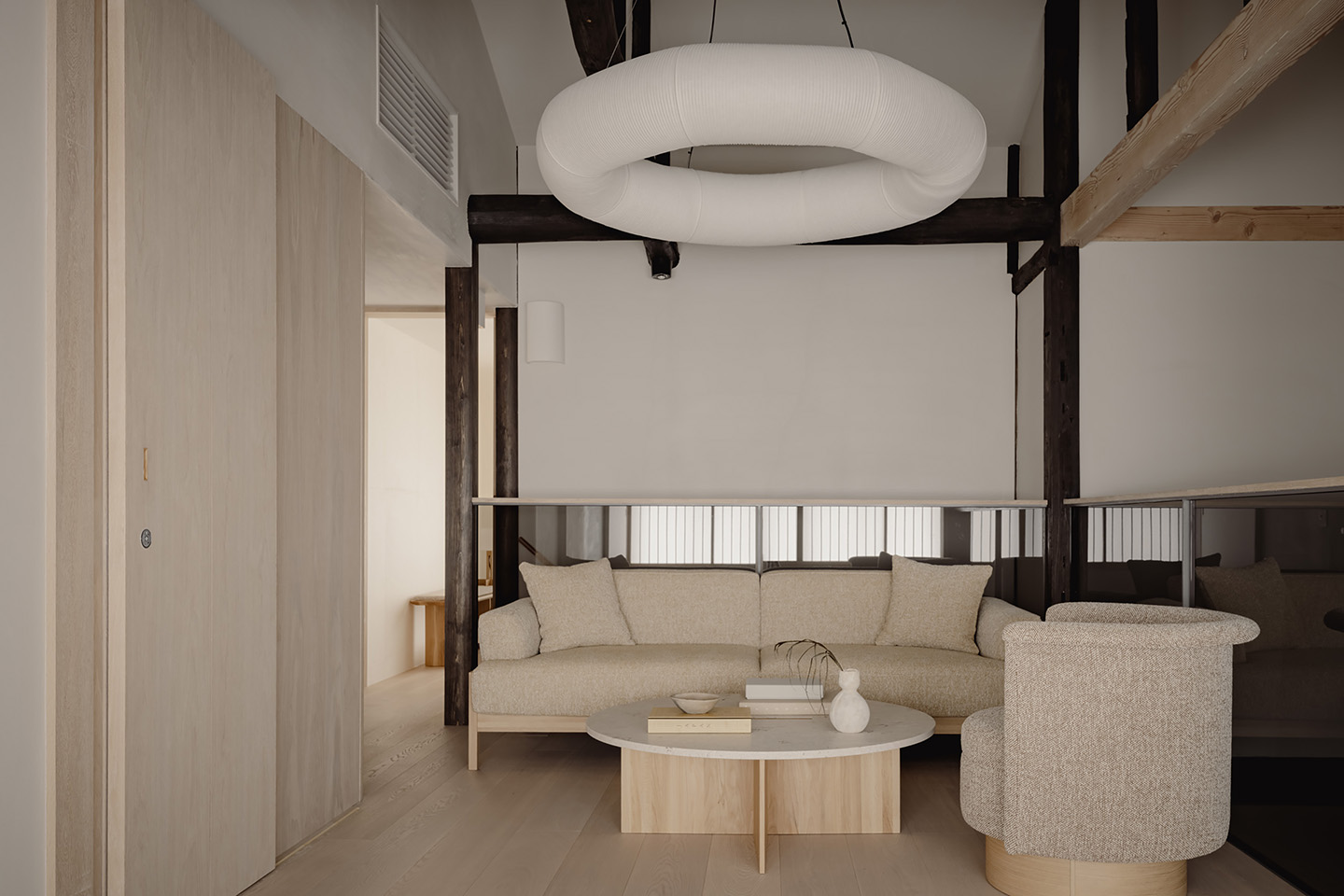
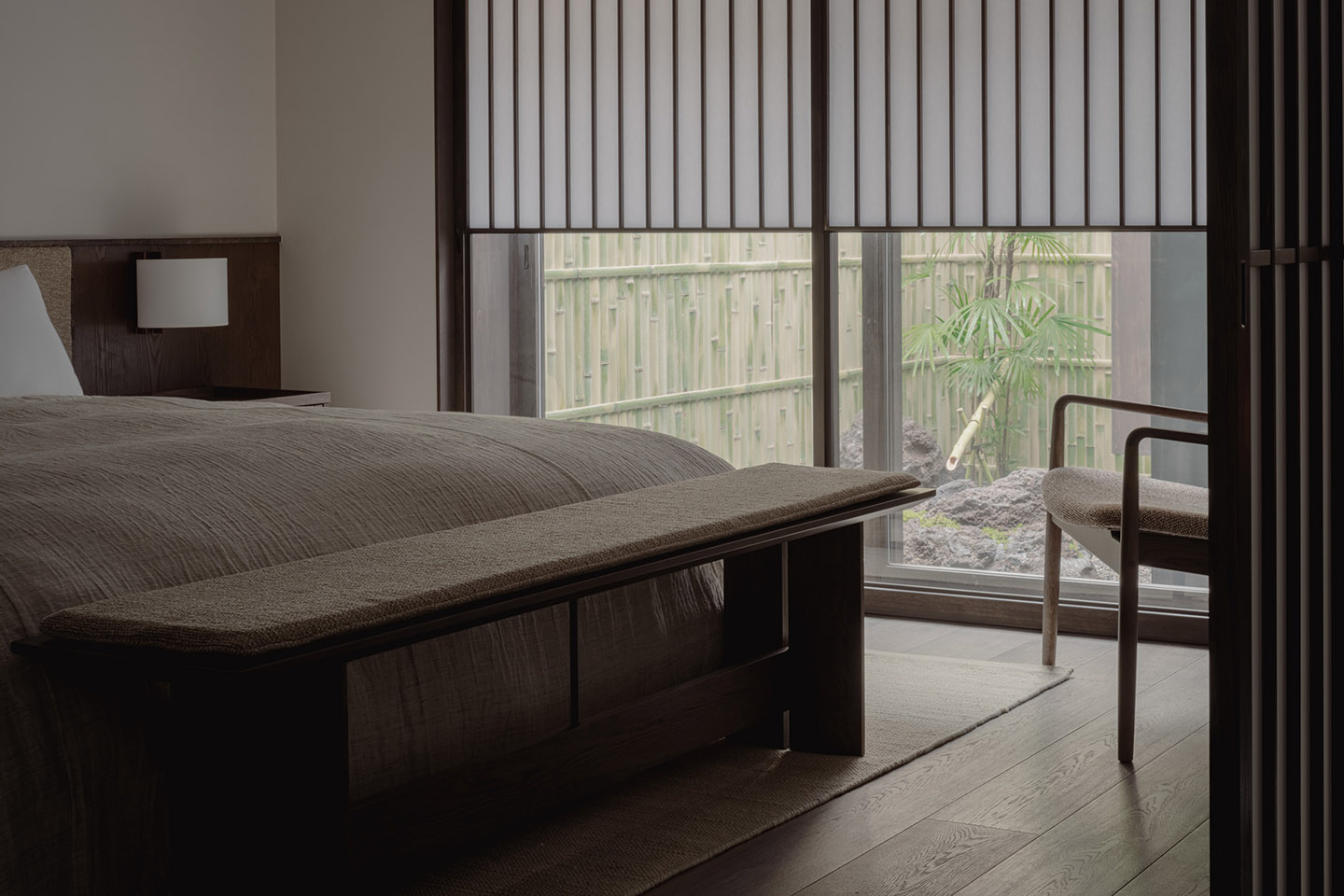
The architectural details of the project dovetailed in sensibility and approach with that of Karimoku Case. Ashizawa continues: “Layering on Karimoku Case furniture on top of that — pieces whose design details we know deeply — allowed a natural affinity to emerge across the whole. We placed each piece with a full understanding of both the furniture’s details and the space’s details, and how the two could meet.”
Related: Kengo Kuma joins the podcast
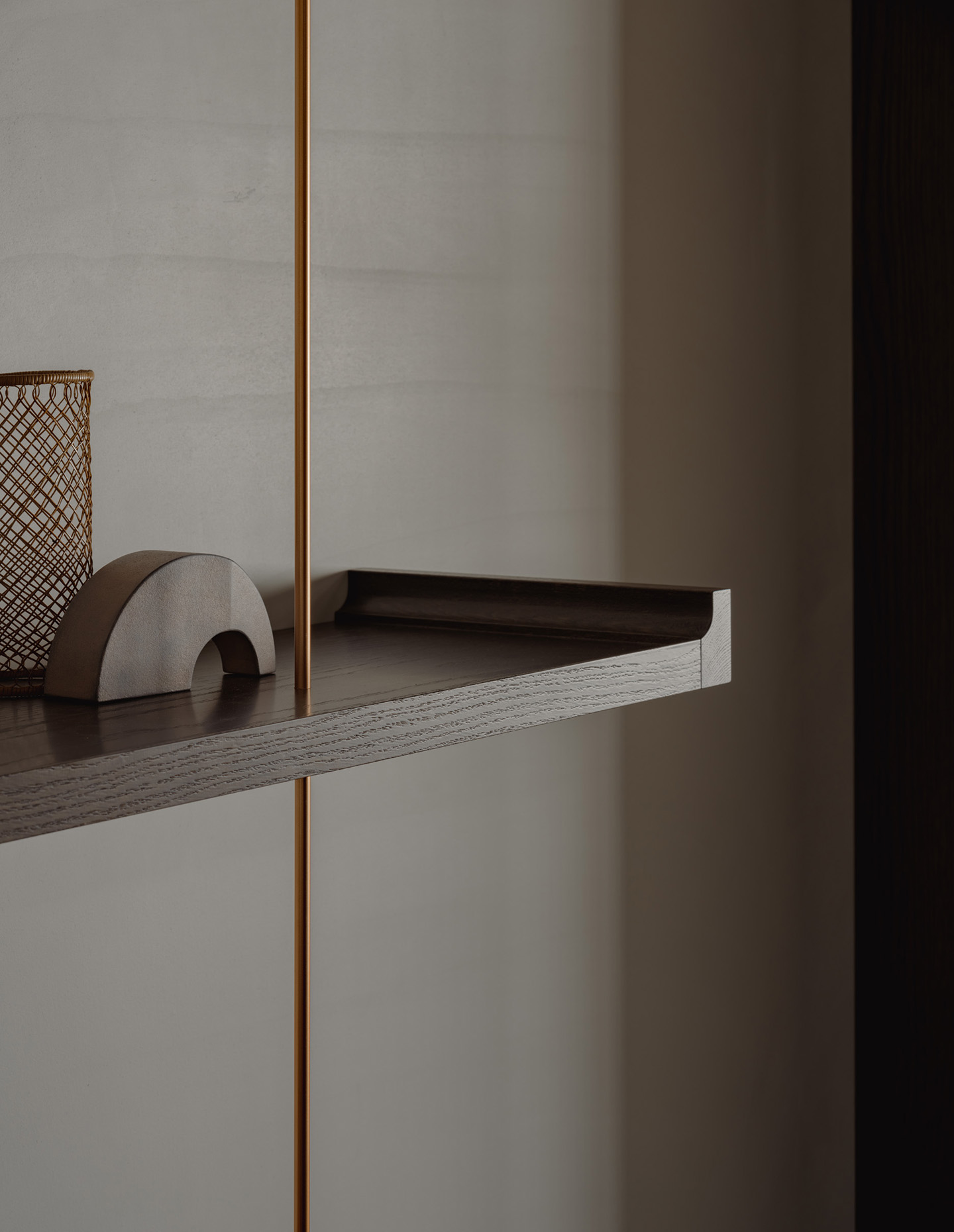
Like the machiyas of the past where soft light and contrast played a big part in creating atmosphere, the lighting design made the guesthouse feel different during the day and night. “The space is compact and dense. Rather than assembling lights from different concepts, we thought about quietly introducing the aesthetic of Santa & Cole — a brand we trust, and one with a consistent approach to the quality of light — into the atmosphere of Toune,” explains Ashizawa.
Downlights were minimised for accent illumination. Above the dining table, the Tekiò that uses Japanese Mino washi paper and LED technology is ideal. It is where “Japanese and western design sensibilities genuinely meet.” A circular version in the second storey living room continues the dialogue upstairs. Cesta, like a little lantern, embellishes the tatami room. In the second storey bedroom, the timber materiality of the TTM table lamp mirrors the shoji screen’s frame.
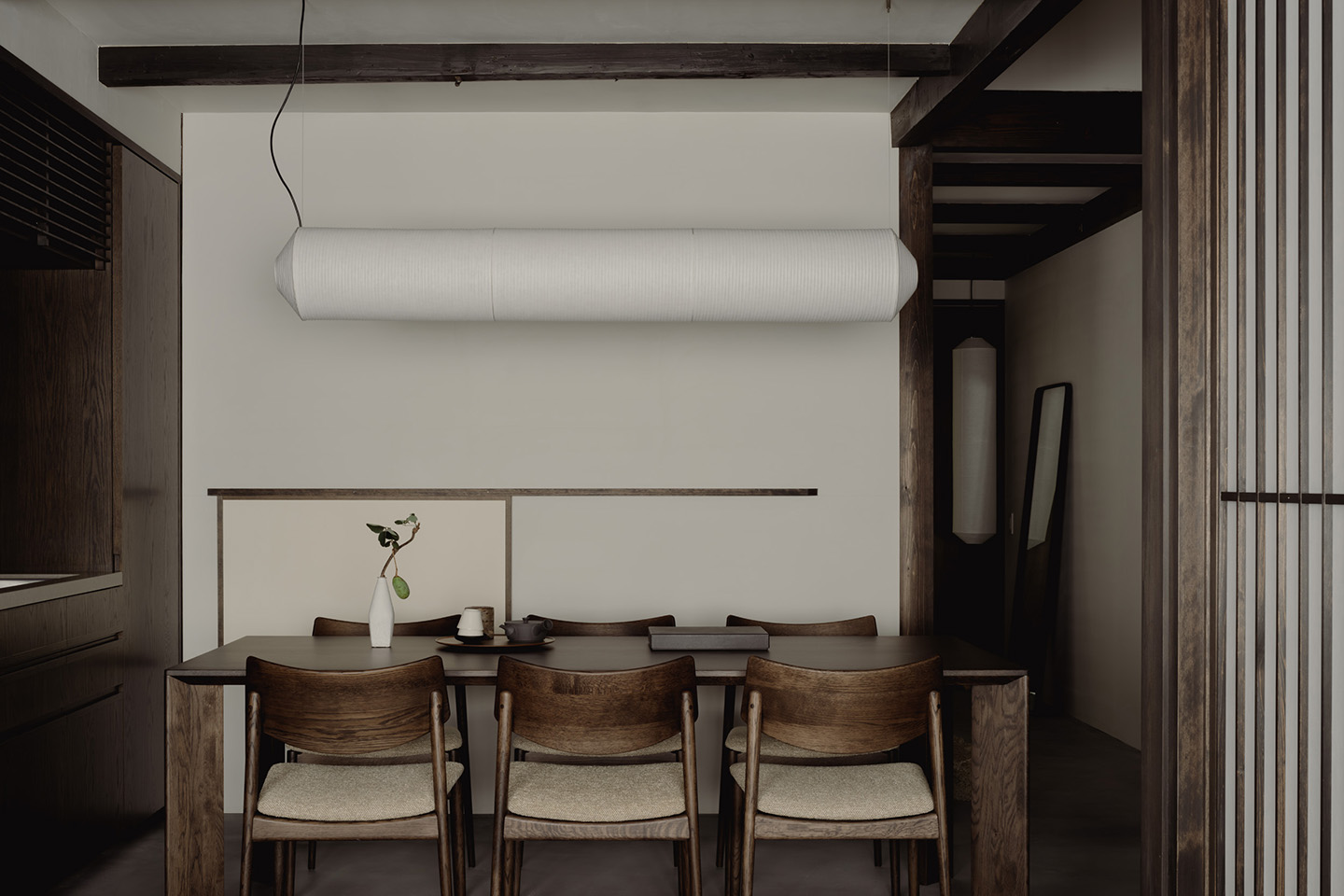
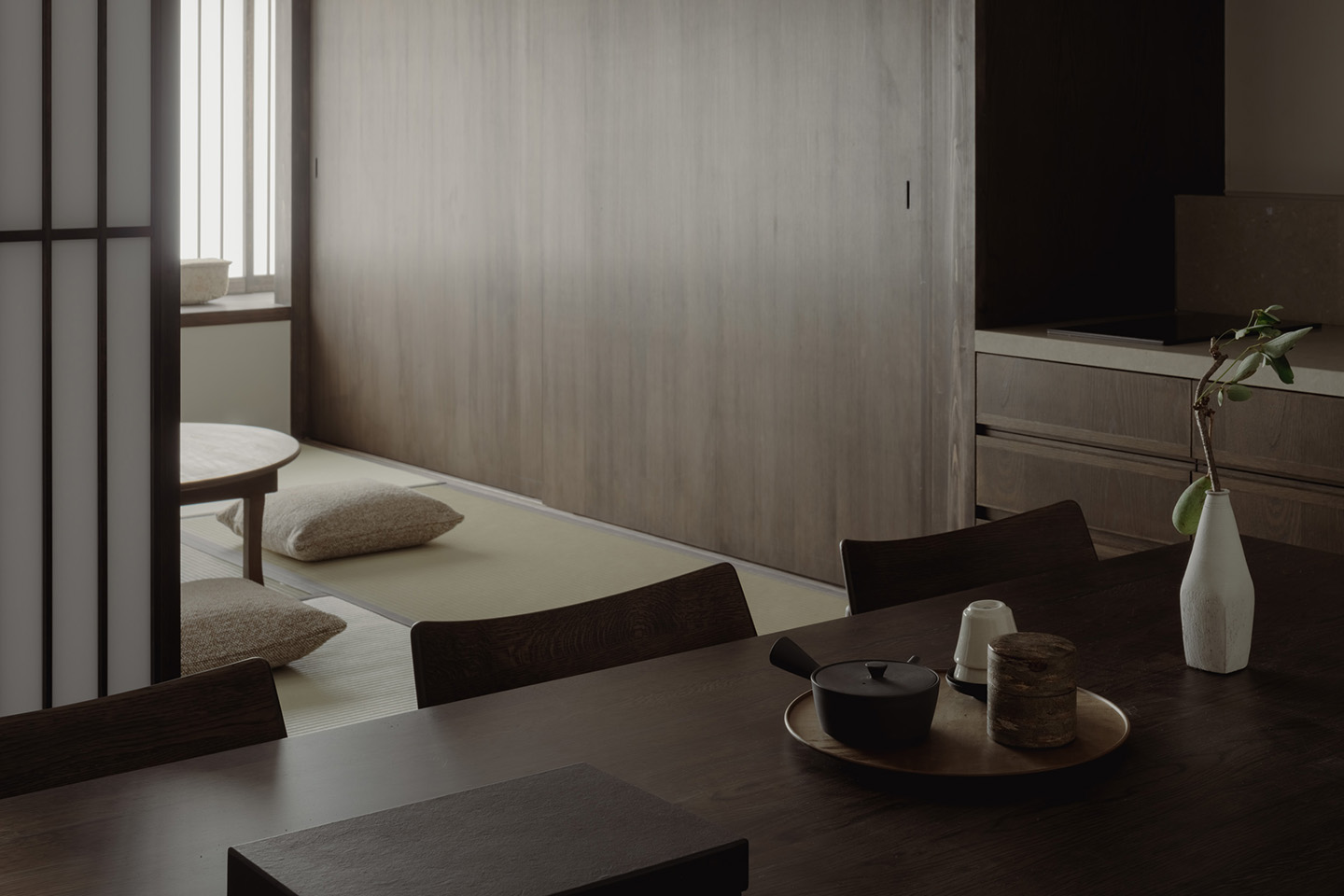
“Throughout, we tried to read the relationships between materials and the layering of time carefully, so that each element could coexist naturally and allow the space to be reinterpreted for contemporary living without strain,” concludes Ashizawa. This project clearly realises his ambitions that, while simple, are rich with rigour and tactility.