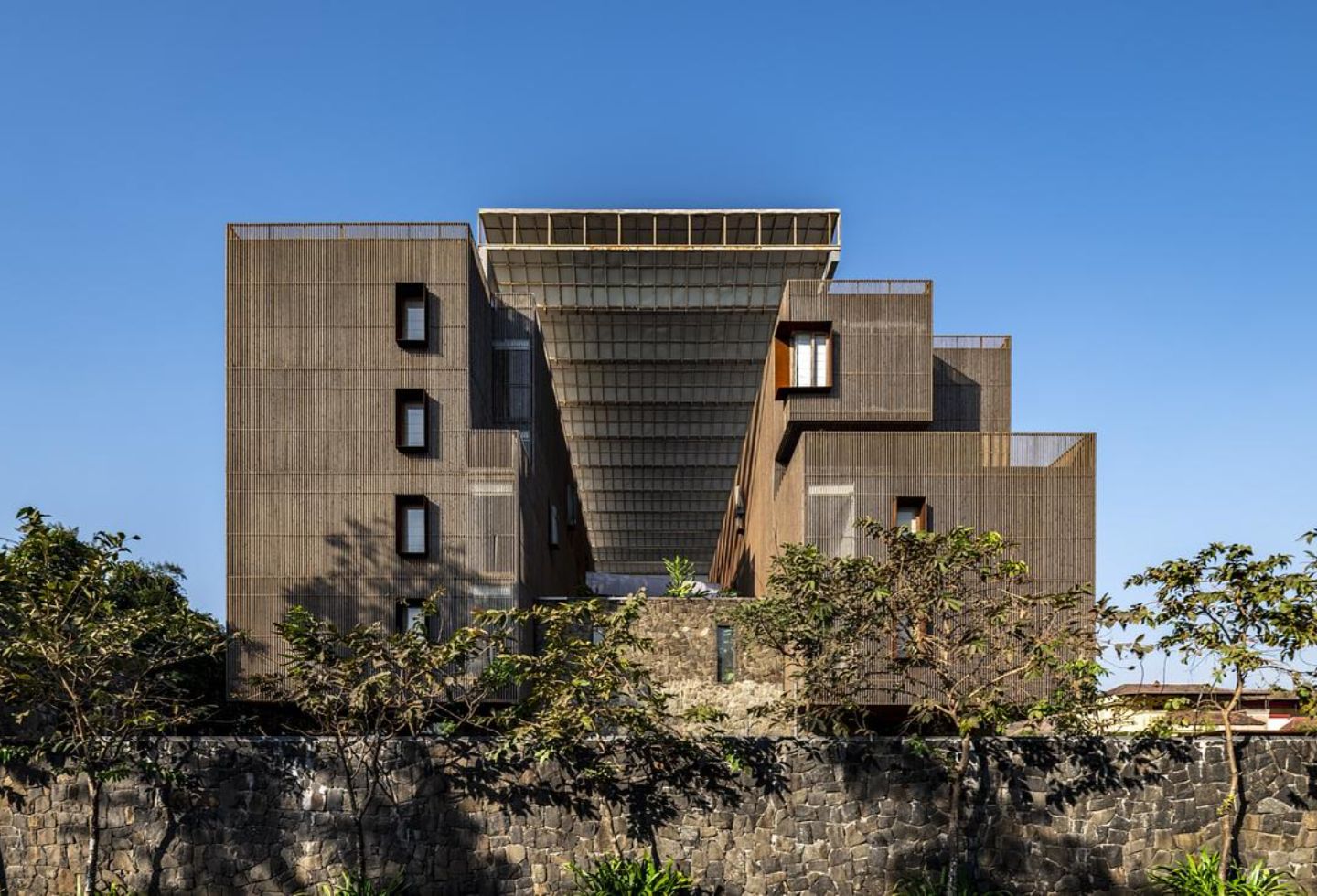

The Radisson Resort in Lonavala, designed by Malik Architecture, sits within the rugged topography of the Sahyadri hills — a landscape long associated with ancient forts, Buddhist cave temples and seasonal retreats from the intensity of nearby Mumbai. For principal architect Arjun Malik, the project became an opportunity to reconsider what a contemporary resort might be when its architecture emerges directly from place rather than from imported hospitality typologies.
Completed in 2023, the project negotiates the tensions between rapid urbanisation and the region’s natural and cultural history, using material, landscape and spatial planning to restore a sense of connection to site. Malik speaks with us about the project’s context, its material logic and the challenges of designing hospitality architecture that prioritises landscape over spectacle.
Tell us about the site context.
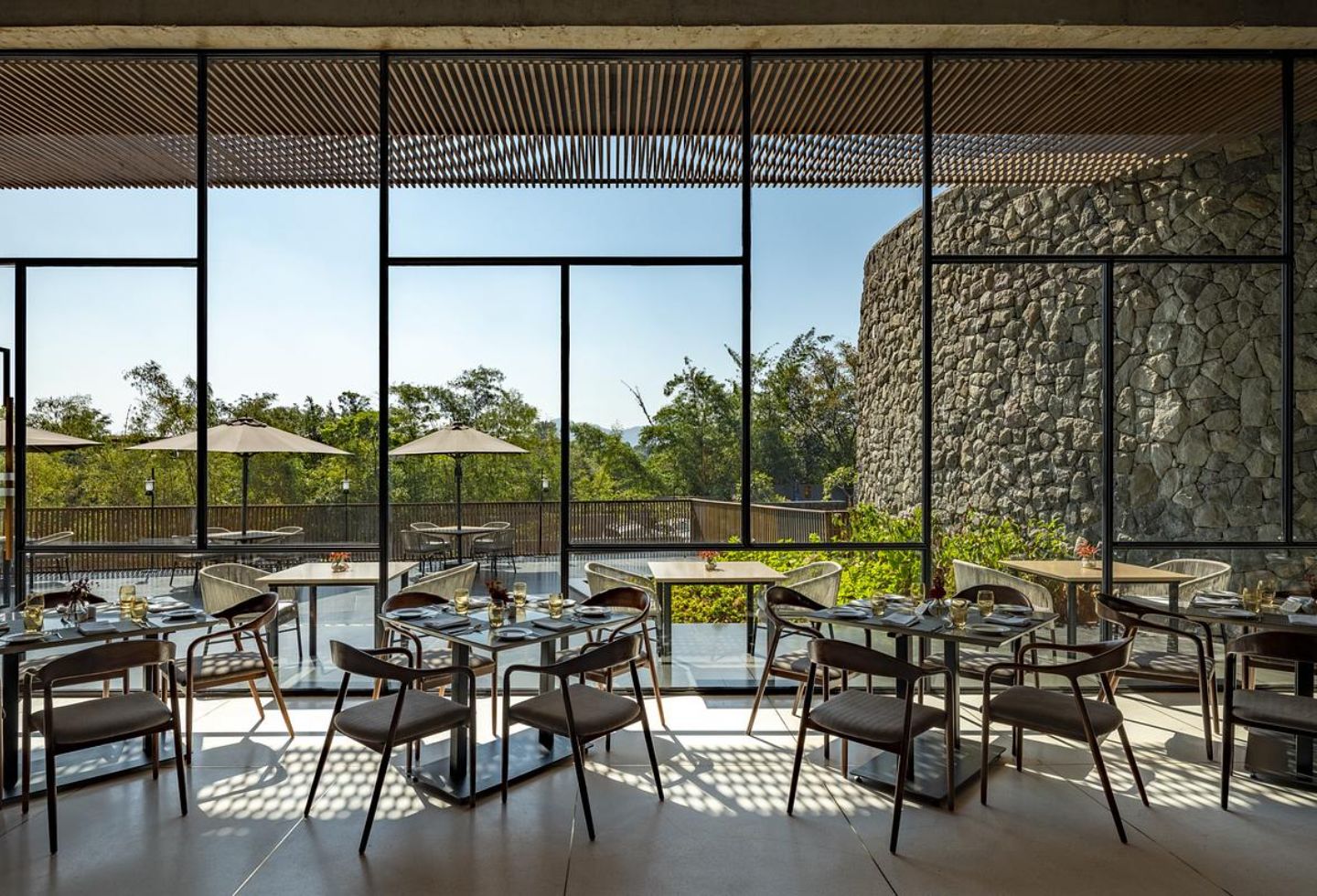
Lonavala is a hill station in the Sahyadris and one of the most popular weekend retreats for residents of Mumbai. Its cooler climate, verdant landscapes and long history — from ancient forts to Buddhist cave temples — have attracted an enormous amount of development in recent decades. Much of that development has gradually eroded the character that originally defined the region.
The site itself is located within a predominantly residential neighbourhood and is composed of two plots divided by a planned accessway that cannot be built upon. Rather than treating this as a constraint, we adopted it as part of the project’s spatial framework.
What can you tell us about the client and their brief?
The project grapples with a fundamental contradiction that is common in rapidly urbanising rural areas. A resort promises openness and a connection to nature, yet the building forms that emerge are often shaped by building codes and densities that prioritise quantity over spatial quality.
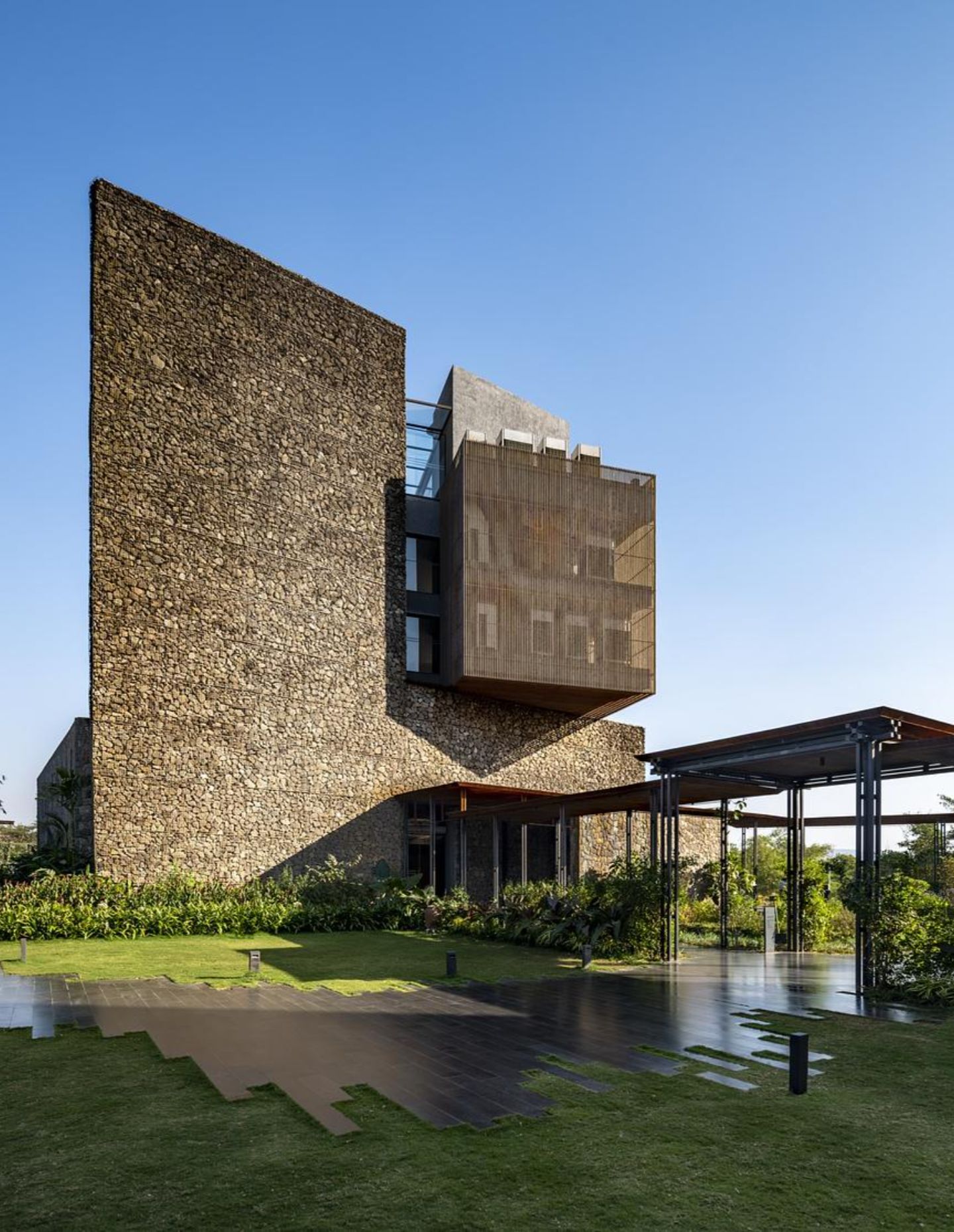
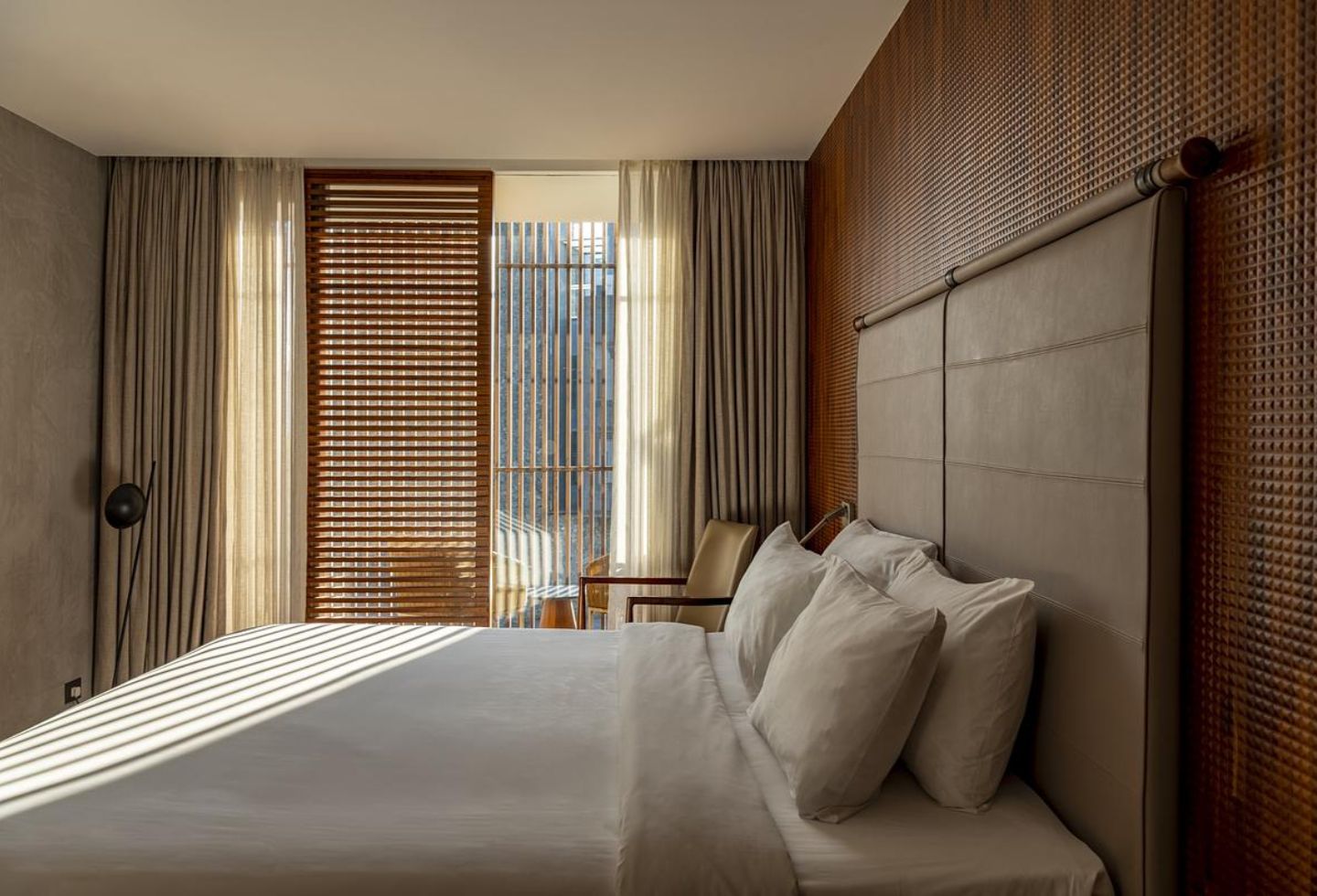
Our response was to allow the architecture to emerge from the site itself — from its topography, its material history and the balance between public and private programs. In the Sahyadri region, black basalt and timber have long shaped local construction, so these materials became an important reference point.
The client approached the project with a strong awareness of cost — this was their first hotel — but they were also open to experimentation. Interestingly, the return on investment that had been estimated at six to seven years was achieved in under two and a half years. Within the hotel itself there is also a sense of pride around the project; from the general manager to housekeeping staff, people speak about the concept and the architecture with remarkable familiarity.
In that sense, architecture has become the protagonist — not only economically but also socially and culturally.
Related: A jeweller’s theatre inside Melbourne’s Block Arcade
What were the key material and structural strategies?
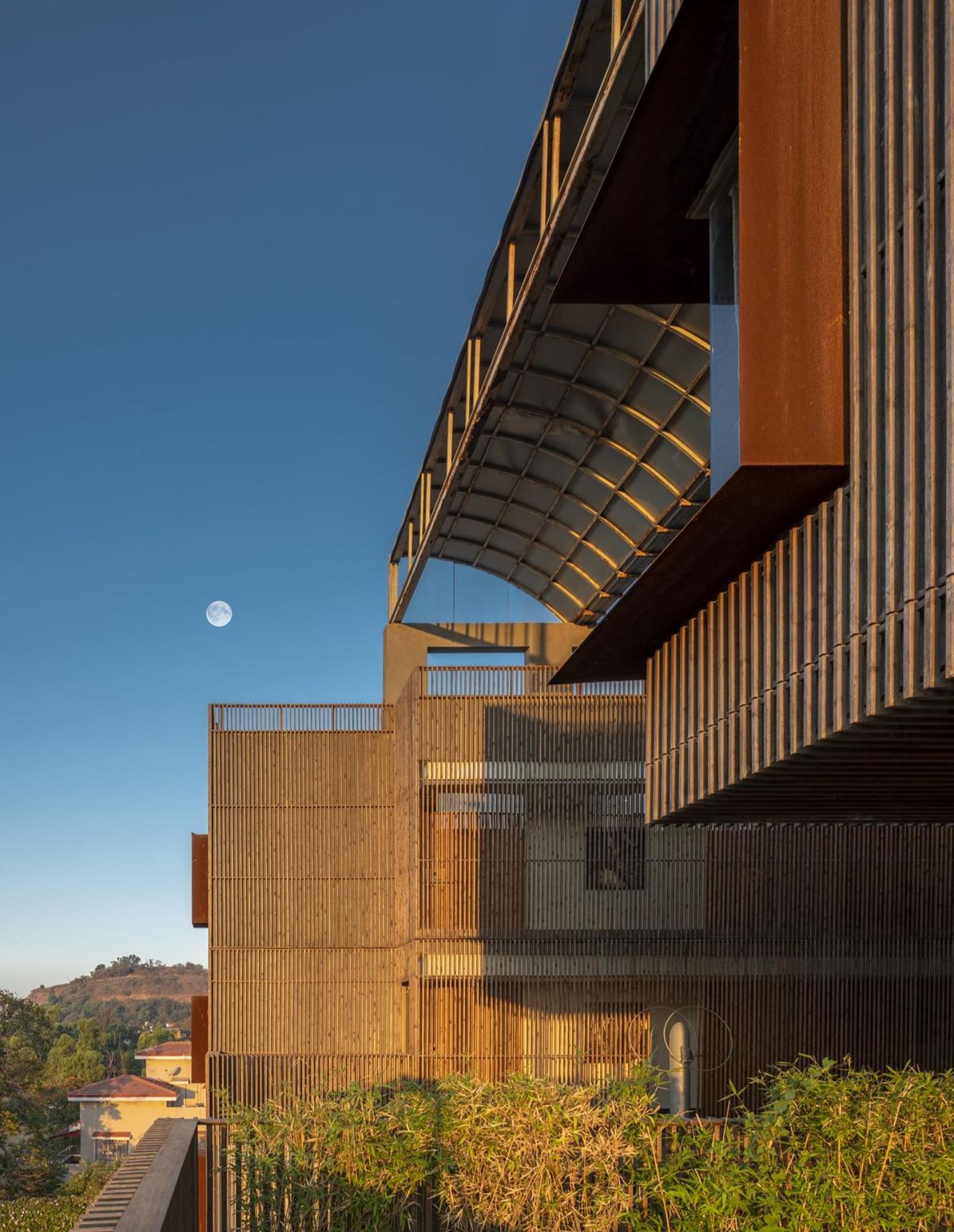
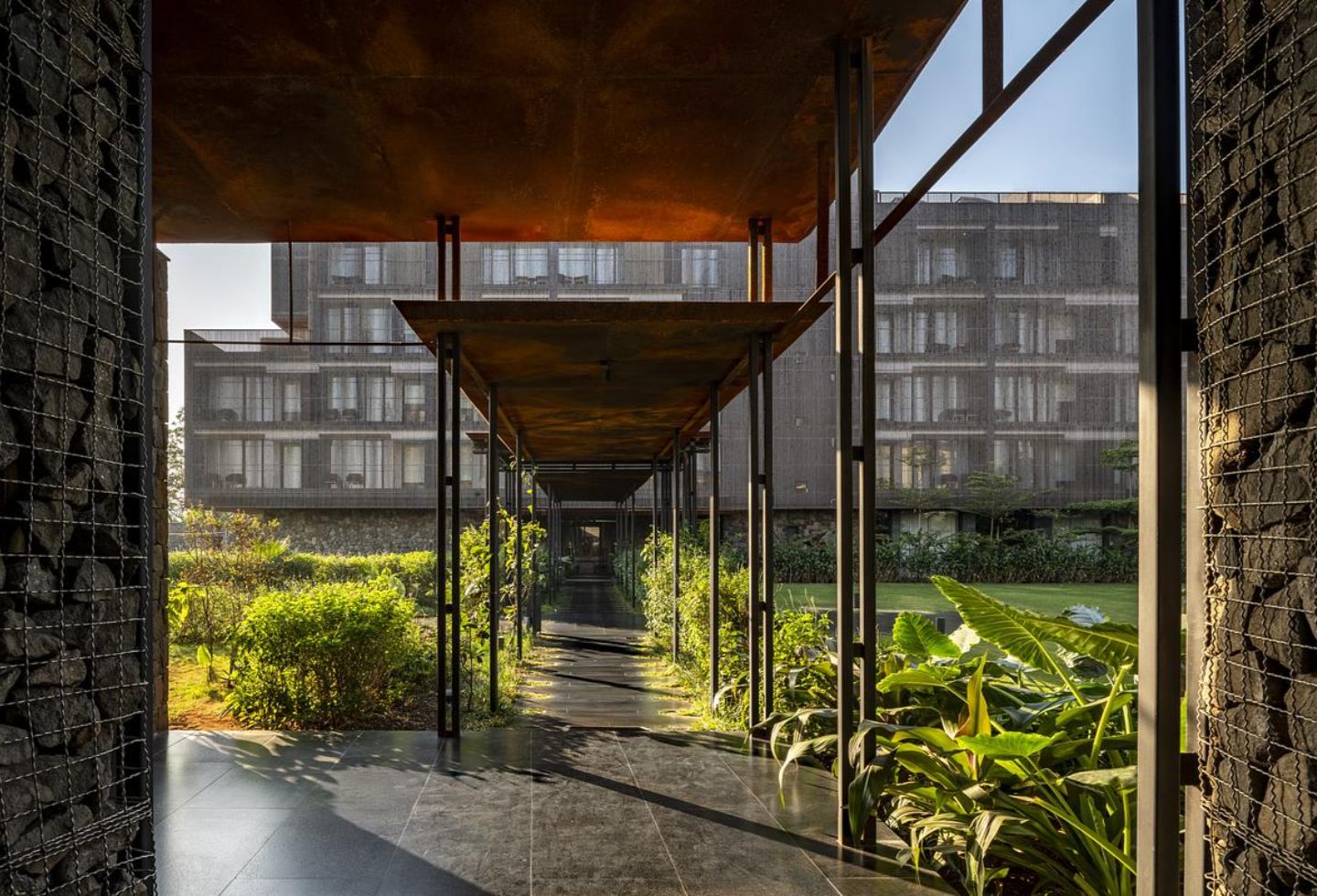
The project draws on spatial devices found in vernacular architecture and adapts them to a contemporary hospitality typology. Courtyards, verandahs, deep shading, thick masonry walls and cross-ventilation all respond directly to the region’s subtropical climate, which includes intense sun and heavy monsoon rainfall.
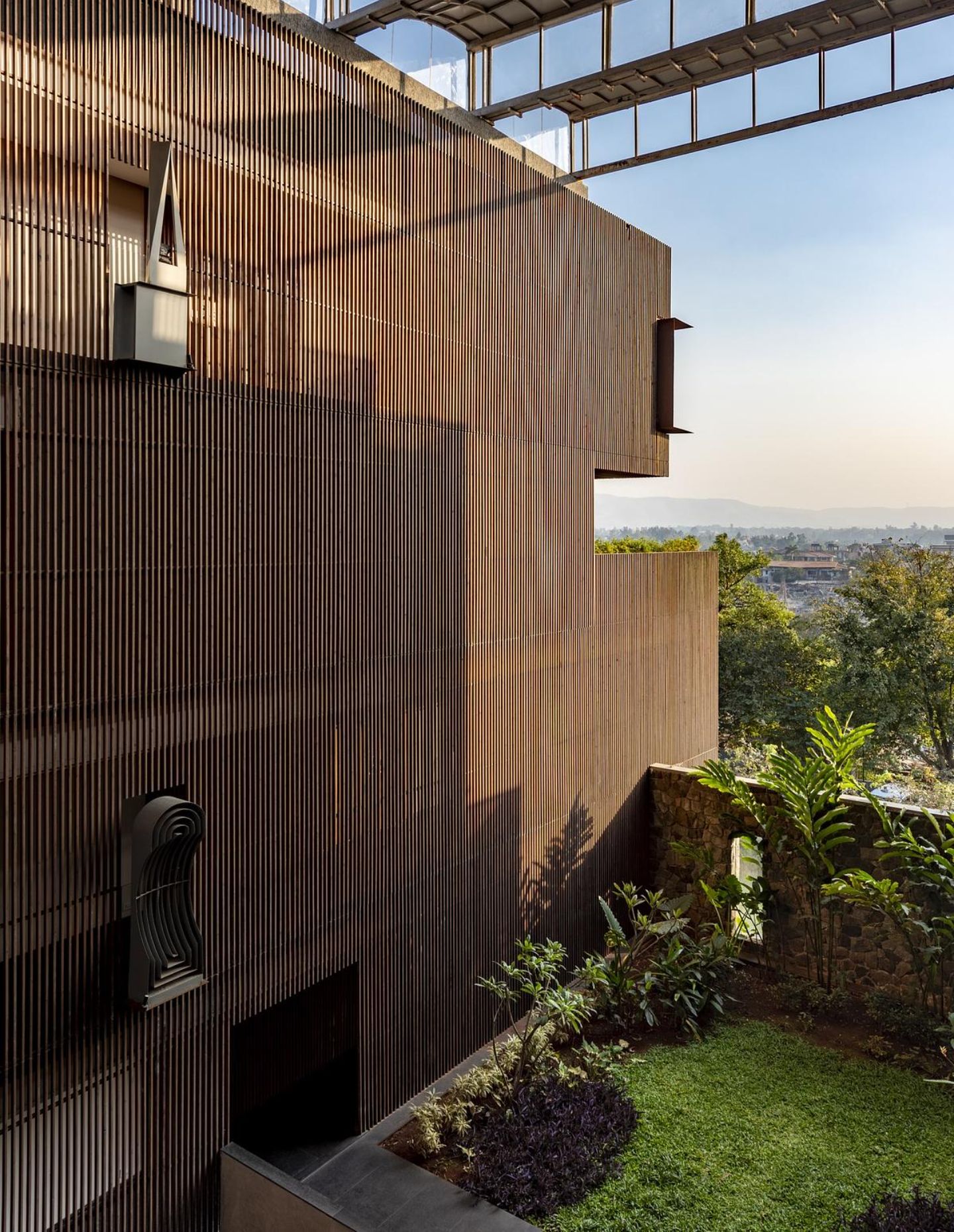
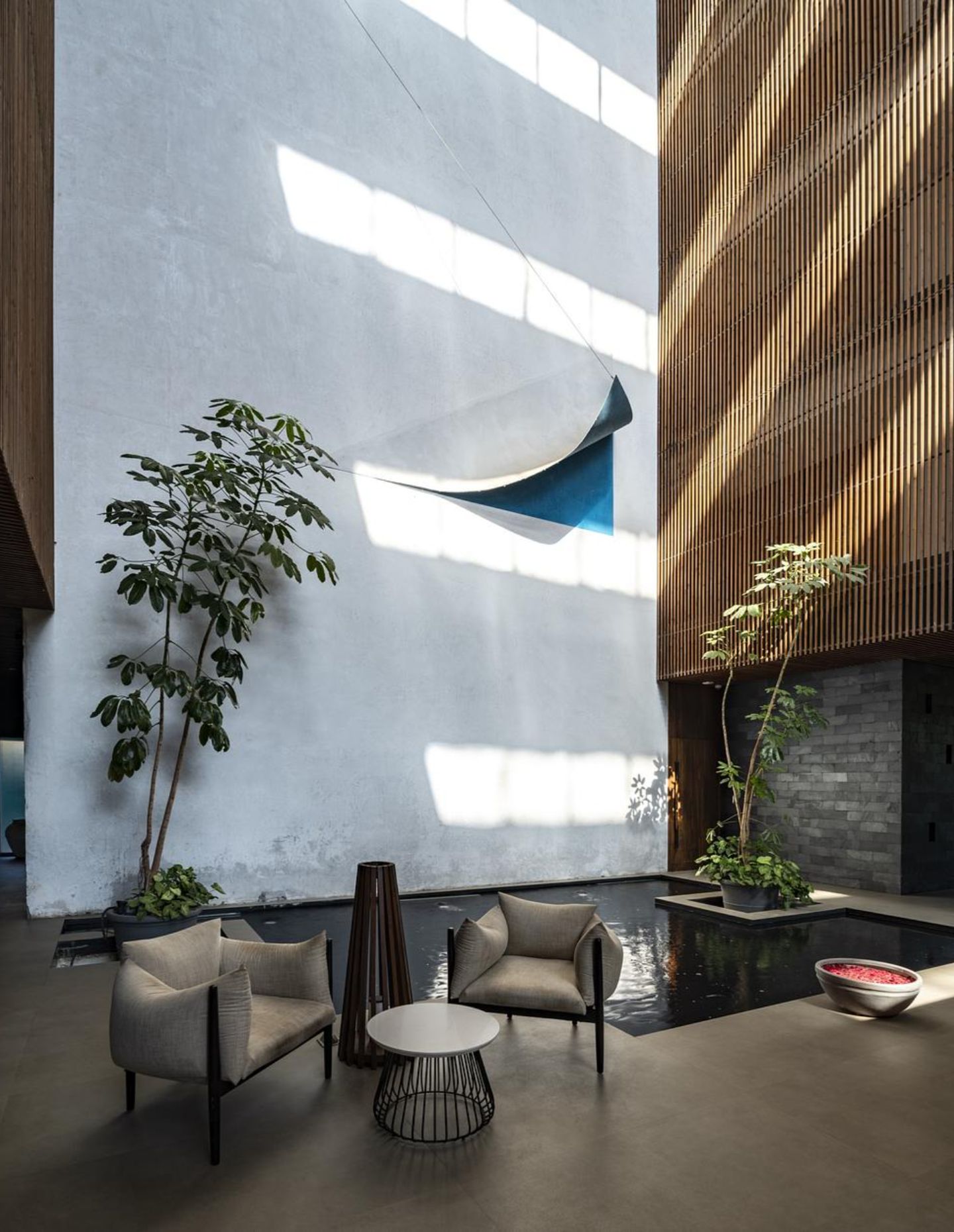
A naturally ventilated atrium courtyard forms the heart of the building, while porous ground conditions and thick basalt walls help regulate internal temperatures. Individual patios and operable screens allow rooms to open or close themselves to the landscape depending on climate and privacy.
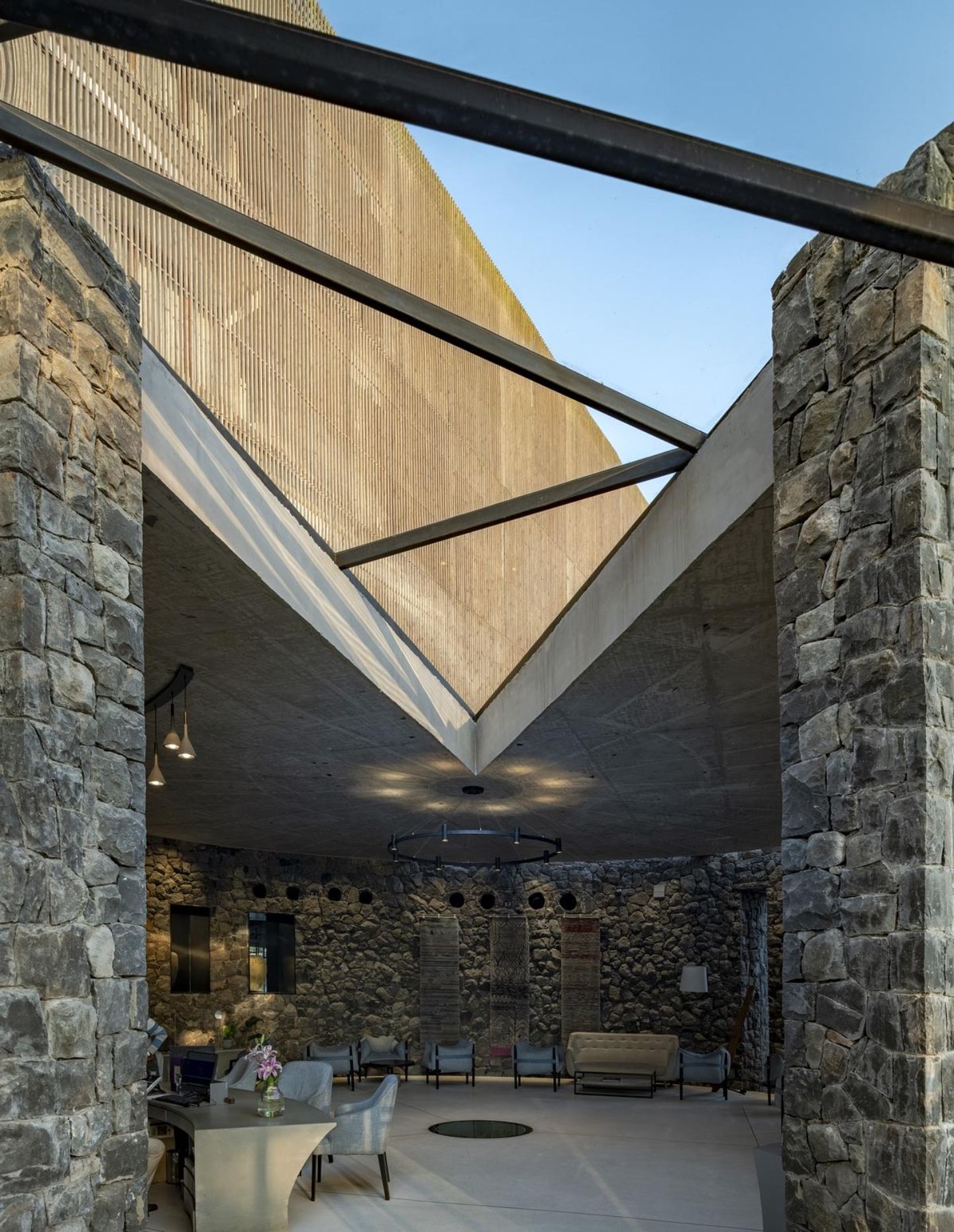
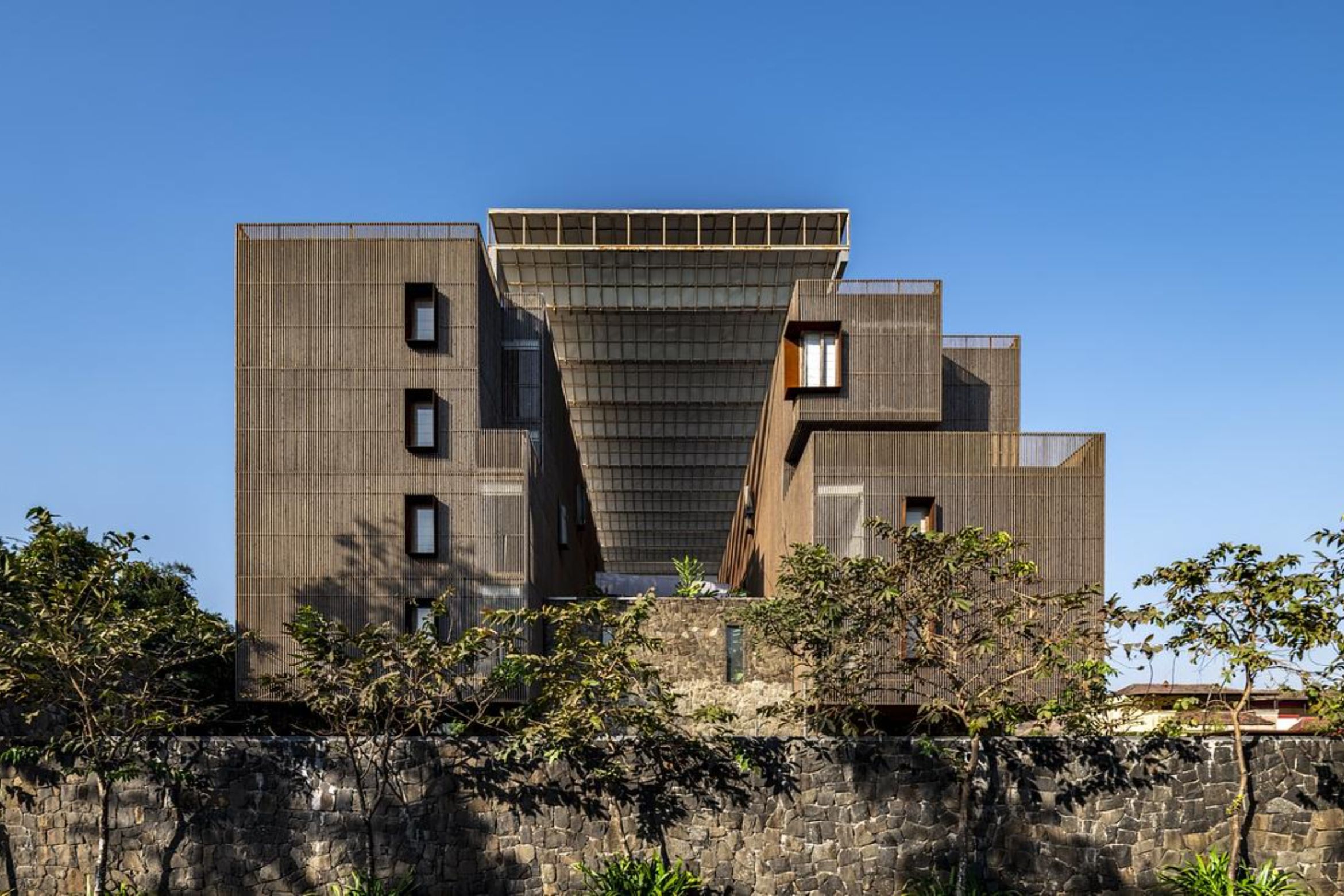
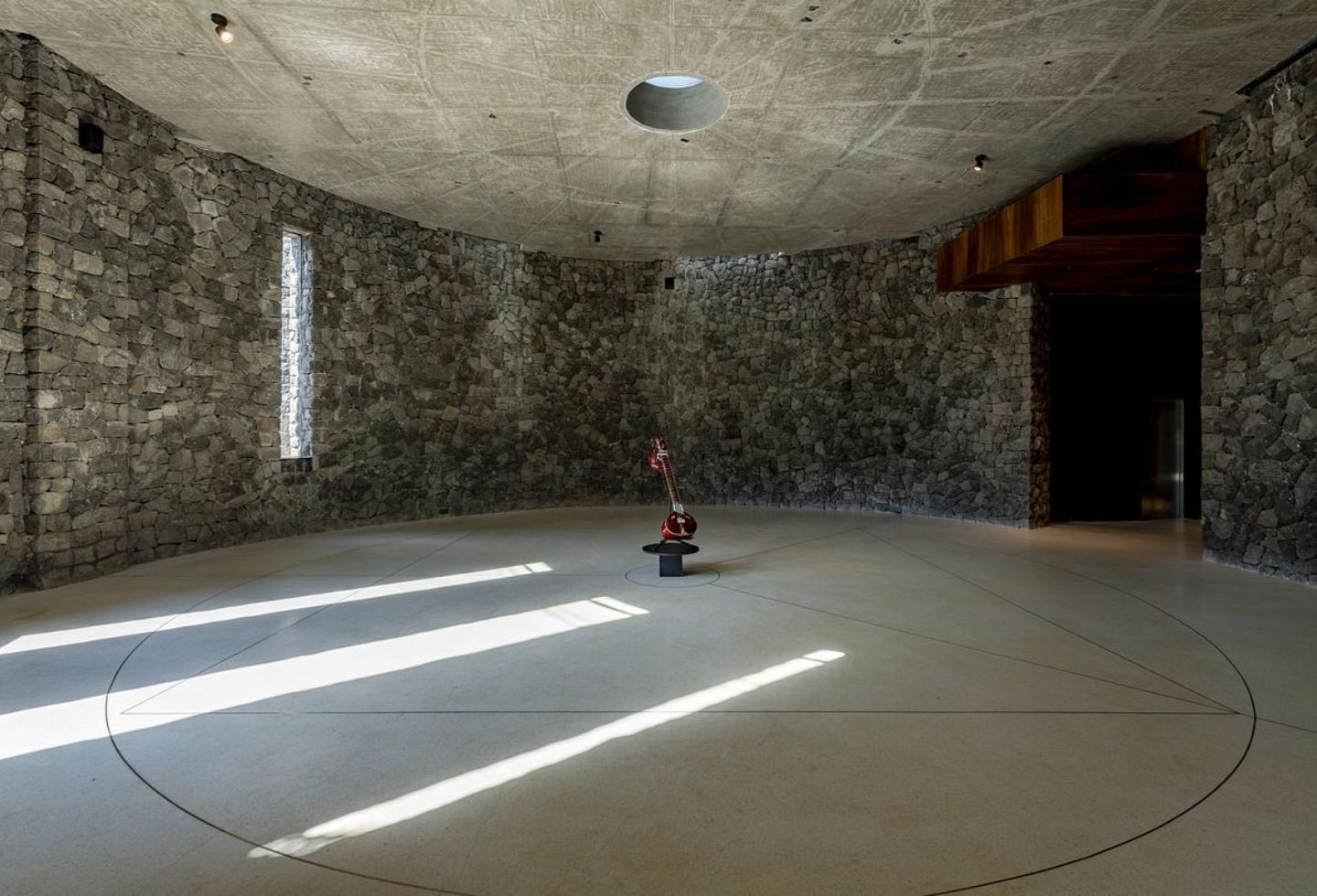
All of the volcanic stone used in the project was excavated directly from the site, which allowed the architecture to emerge materially from its own ground. The slope of the site was also used strategically, accommodating services within a ventilated basement while allowing the building to sit lightly on the terrain.
Importantly, much of the masonry work was carried out by local craftspeople living nearby, reinforcing the project’s connection to regional building traditions.
What key functional requirements did the design address?
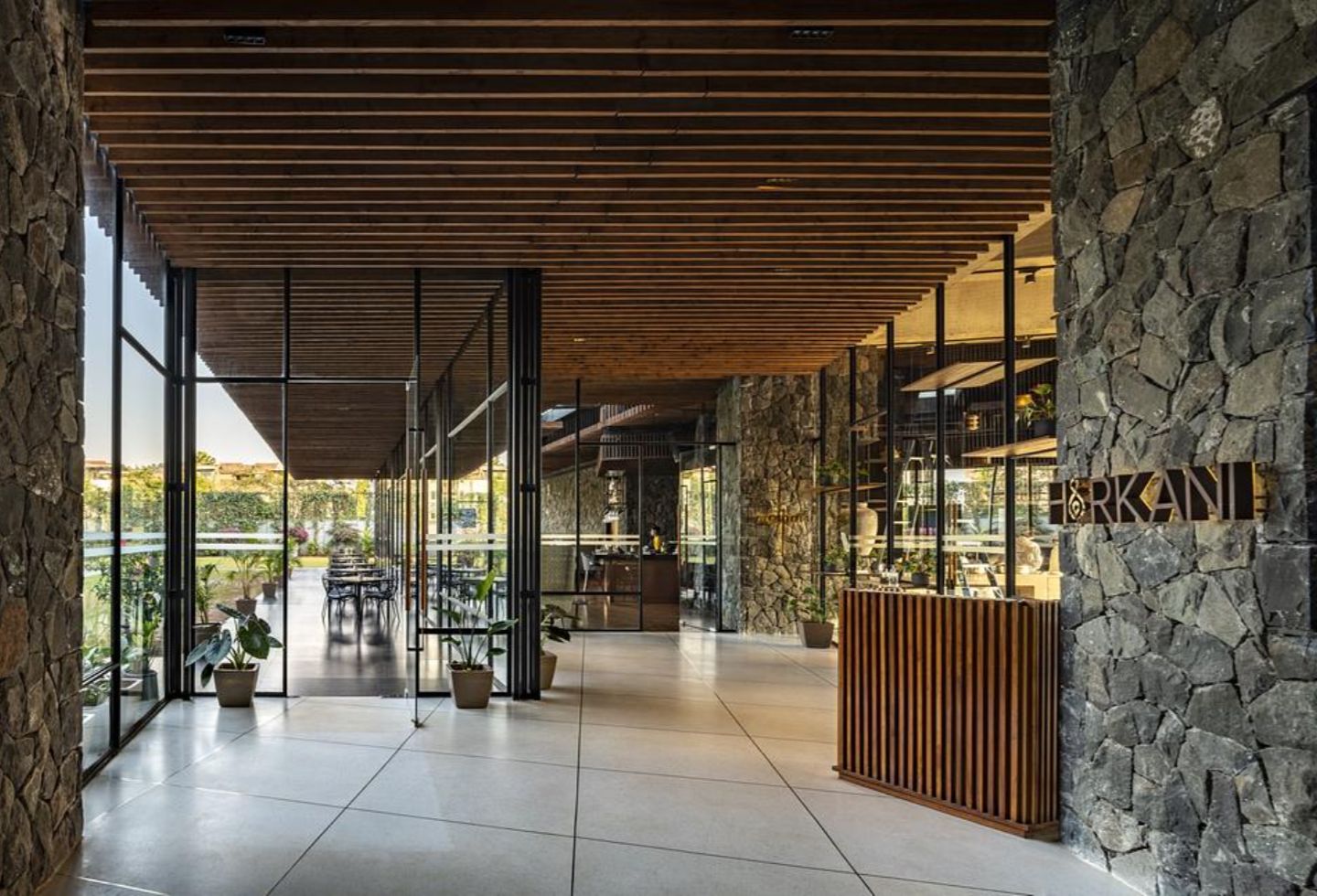
One of the primary objectives was to avoid the feeling of a conventional multi-storey hotel building. Instead, the ground plane is developed as a landscape of organic public spaces, with split-level topographical connections guiding movement across the site.
Elements reminiscent of regional forms — bastion-like walls and stepped courts similar to traditional kunds — animate this built landscape. Above this ground layer, the guest room blocks appear as bold, abstract volumes hovering lightly over the terrain, wrapped in louvred secondary walls that provide permeability and shade.
At the centre, the ground plane rises vertically into a shaded atrium courtyard. This organisational structure makes nature the protagonist. Rather than moving through a single building, visitors experience a sequence of built and unbuilt spaces — light, material and landscape unfolding gradually.
It is also important to understand the project in relation to other hotels in the region. Many adopt urban models, often with thematic overlays that feel disconnected from the landscape. Our aim was to eliminate decorative gestures and allow natural materials and spatial logic to shape the identity of the place.
What are your favourite moments within the design?
The most meaningful aspect of the project is the way it challenges conventional hospitality models. Instead of adopting a generic hotel typology, the architecture attempts to reconnect the experience of the resort with the landscape and cultural memory of the region.
Innovation here comes through restraint and adaptation — working with the terrain, with local materials and with climatic intelligence. The ambition was to create a place that feels inseparable from its environment rather than imposed upon it.