
Ocean Street, Woollahra, is frequently a loud place. As a transit zone for Sydney’s Eastern Suburbs, it’s often full of urgency and exhaust. But behind the door of this 1970s townhouse, the noise stops. Provided a rare opportunity to reimagine a “dark and dated” dwelling, Mather Beere Architecture soon realised the house “demanded a response that held both energy and retreat.” To engineer this sophisticated sanctuary, they first had to get down in the dirt first.
The original structure suffered from 1970s architectural amnesia – a jumble of fragmented rooms. However, firm directors George Mather and Richard Beere saw not a muddle, but a mandate for reconfiguration. Rather than erase the quirks, they reimagined them to enrich the design.
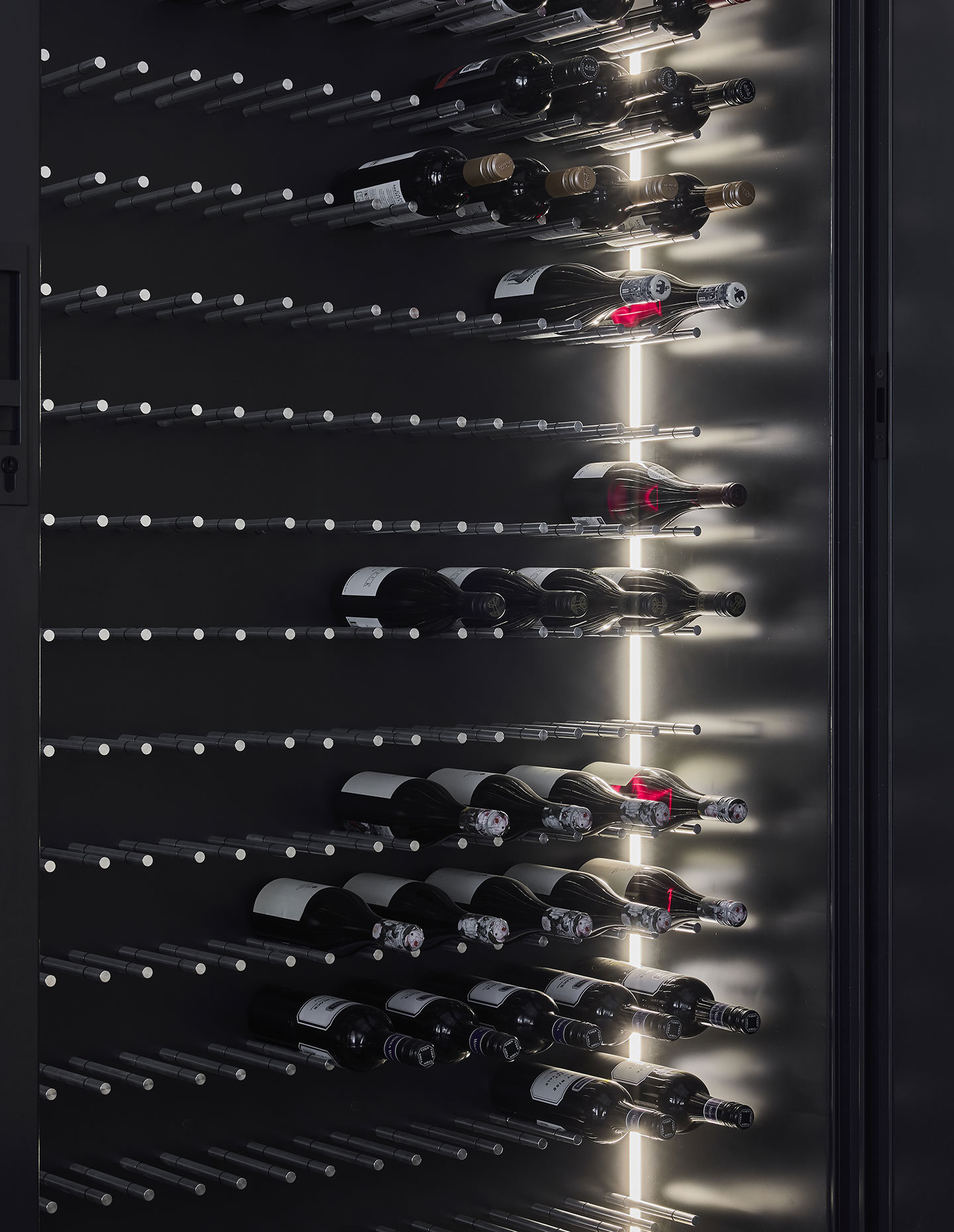
The boldest move was to look down. By excavating the basement, the architects conjured a subterranean sanctum housing a gym, wine cellar and secondary living space. What was once a discreet cupboard door is now a Narnian portal to an entirely new floor.
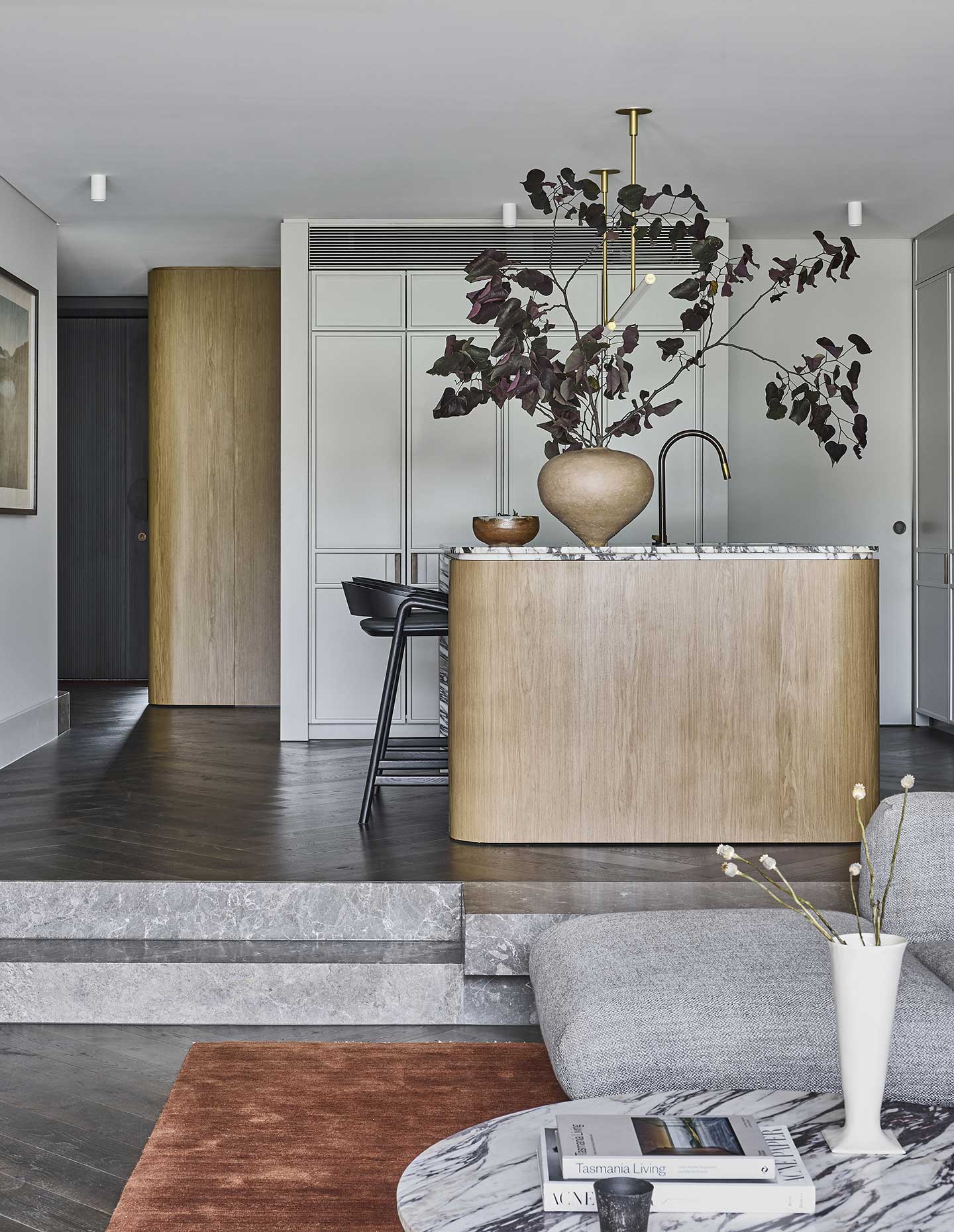
George notes that the true excitement began with the demolition. The moment the basement was excavated, the spatial potential was unmasked and the project shifted from a renovation to a revelation.
“Opening the house revealed just how good the spaces could feel,” he says. By freeing the floor plan, light was naturally drawn deeper into the home. Enlarged window openings, higher doors and stacked door frames wash the terrace rooms in natural light.
After assessing the roof’s structural layout, the team retransferred loads and introduced full-width skylights, injecting light into previously dark areas.
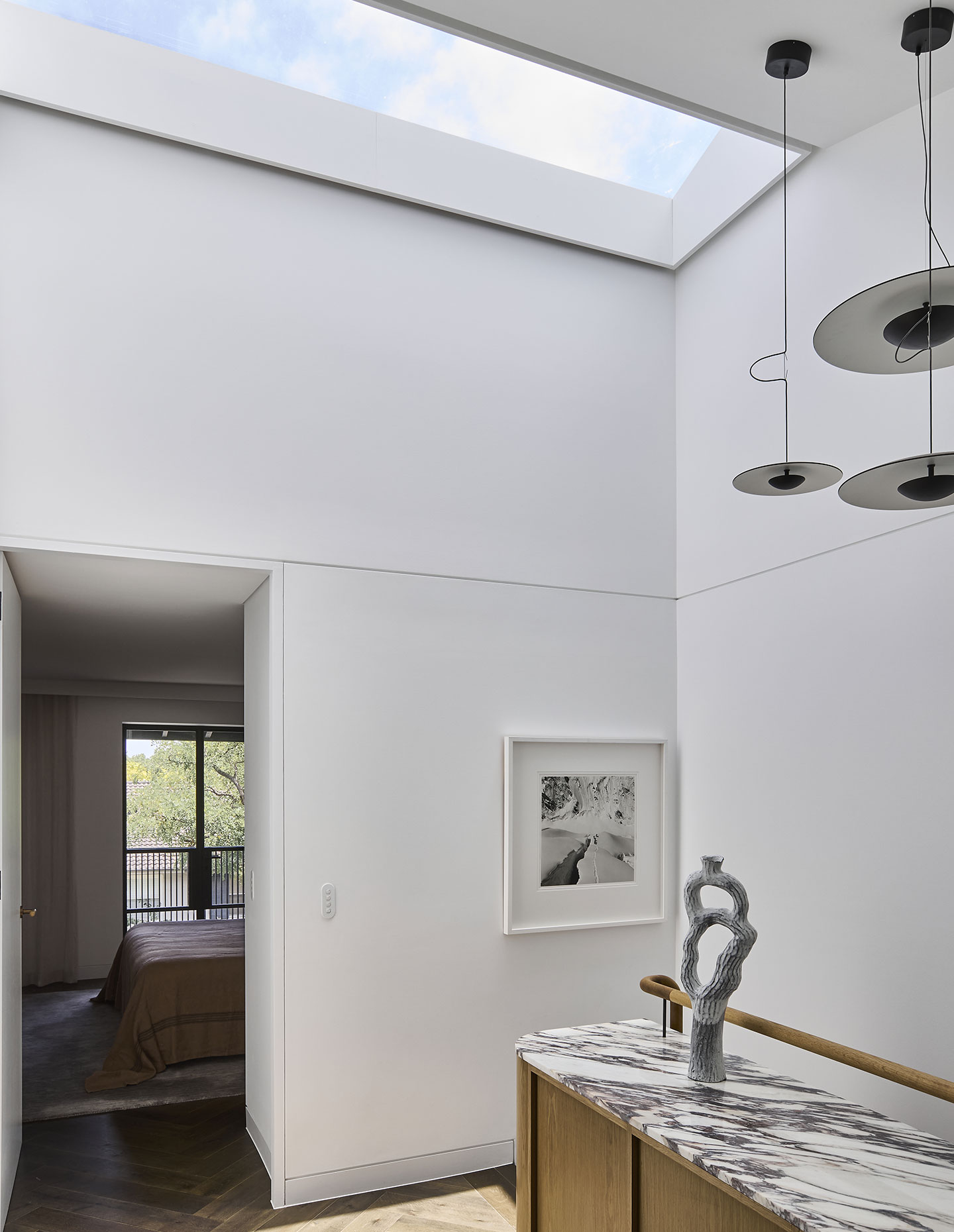
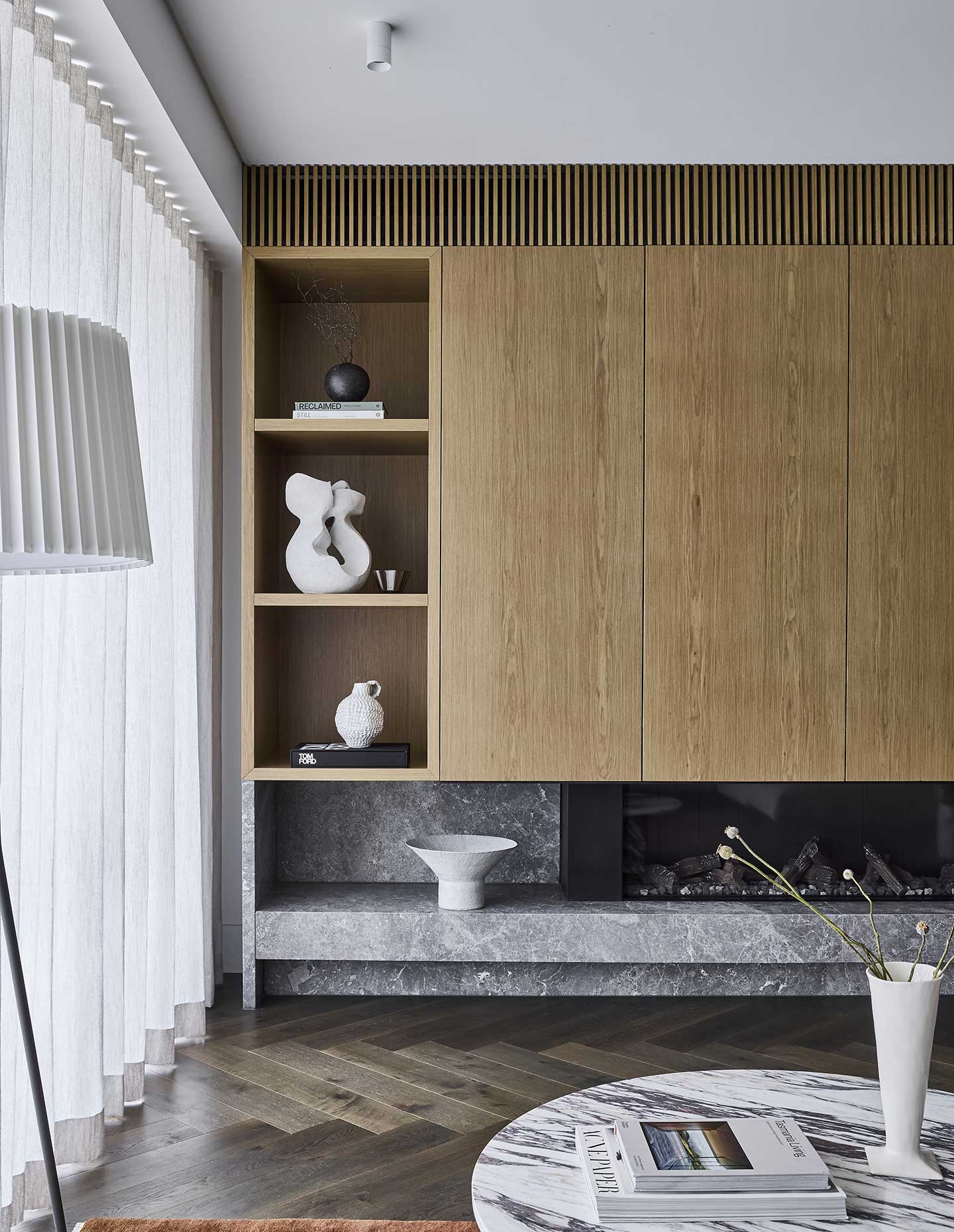
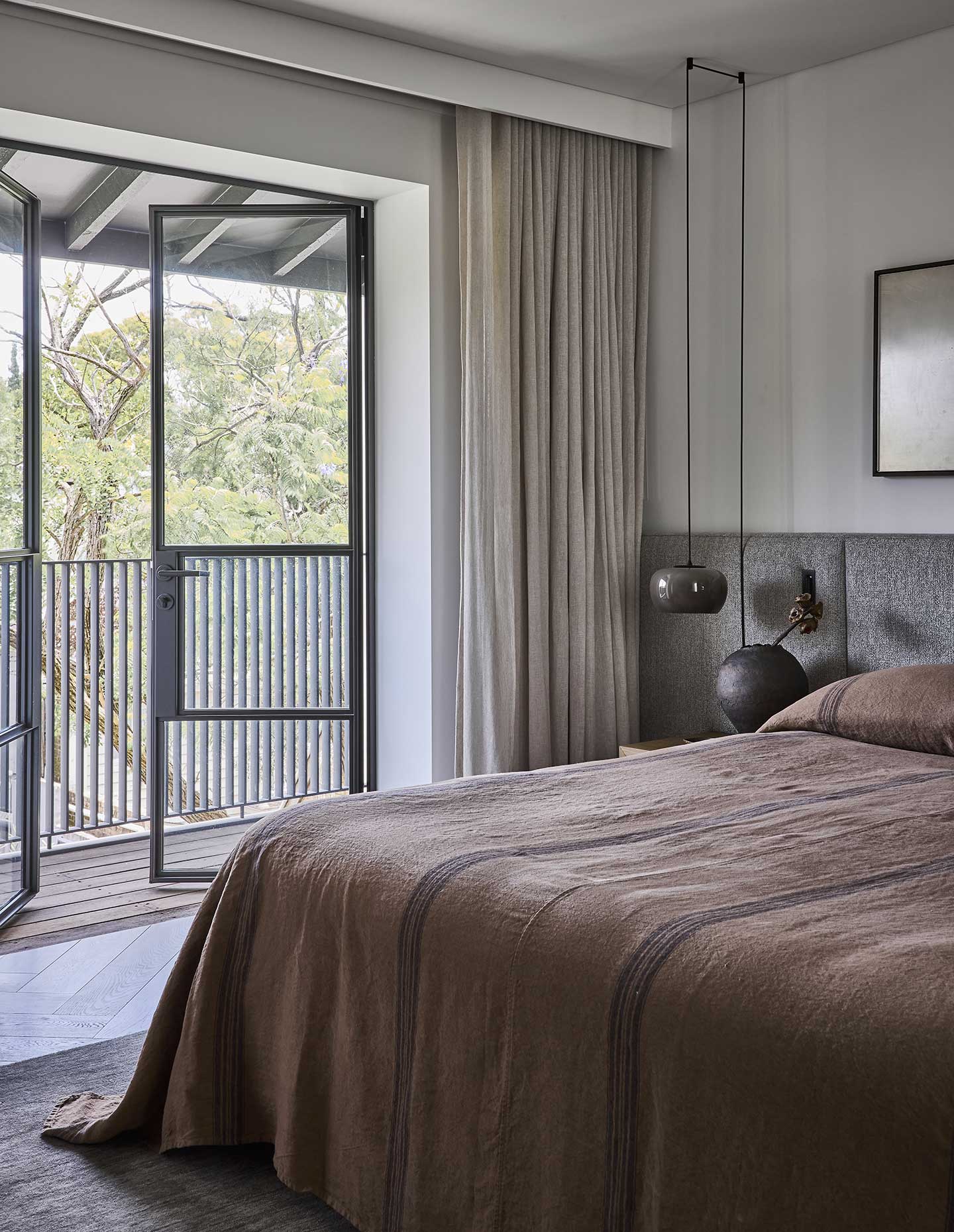
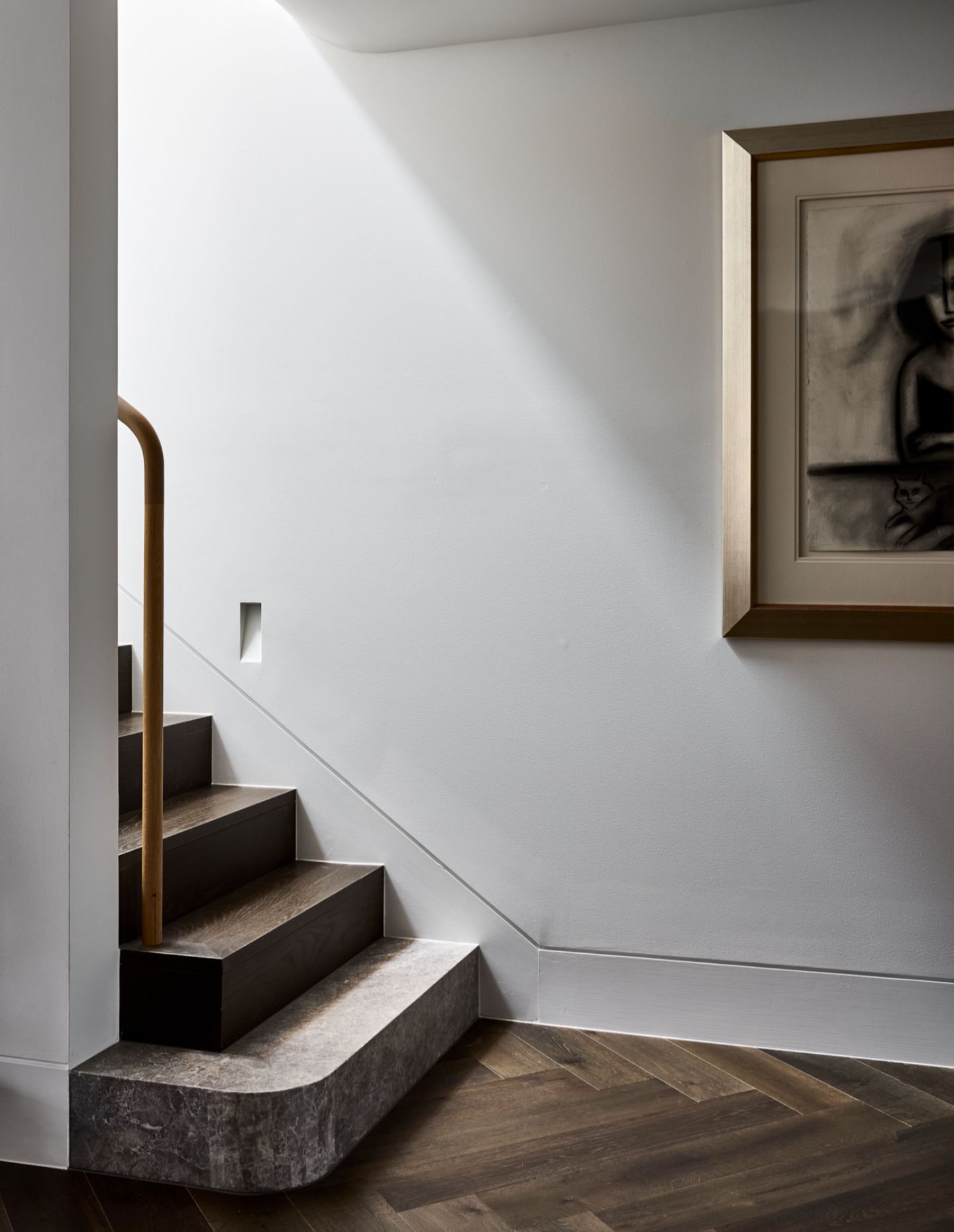
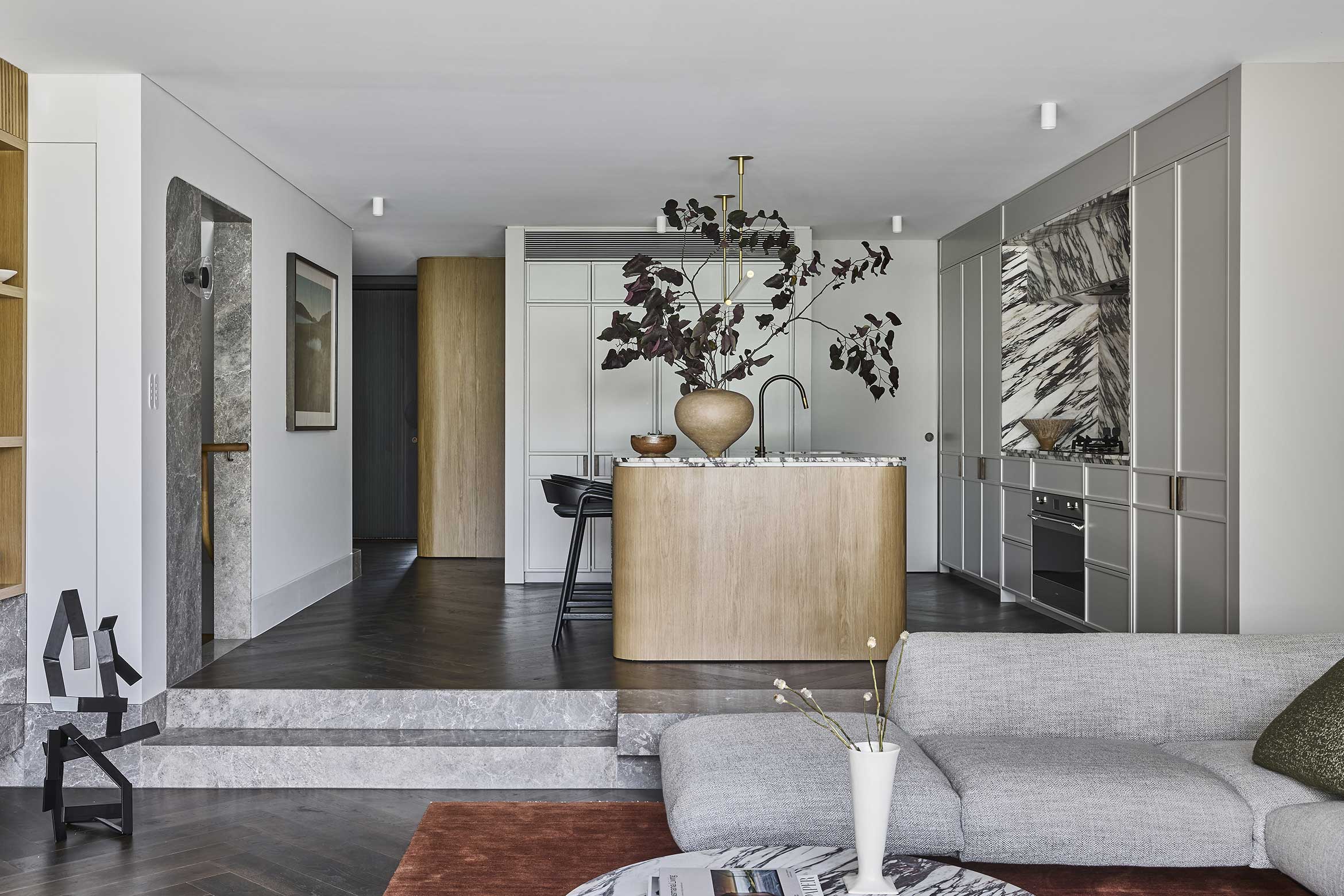
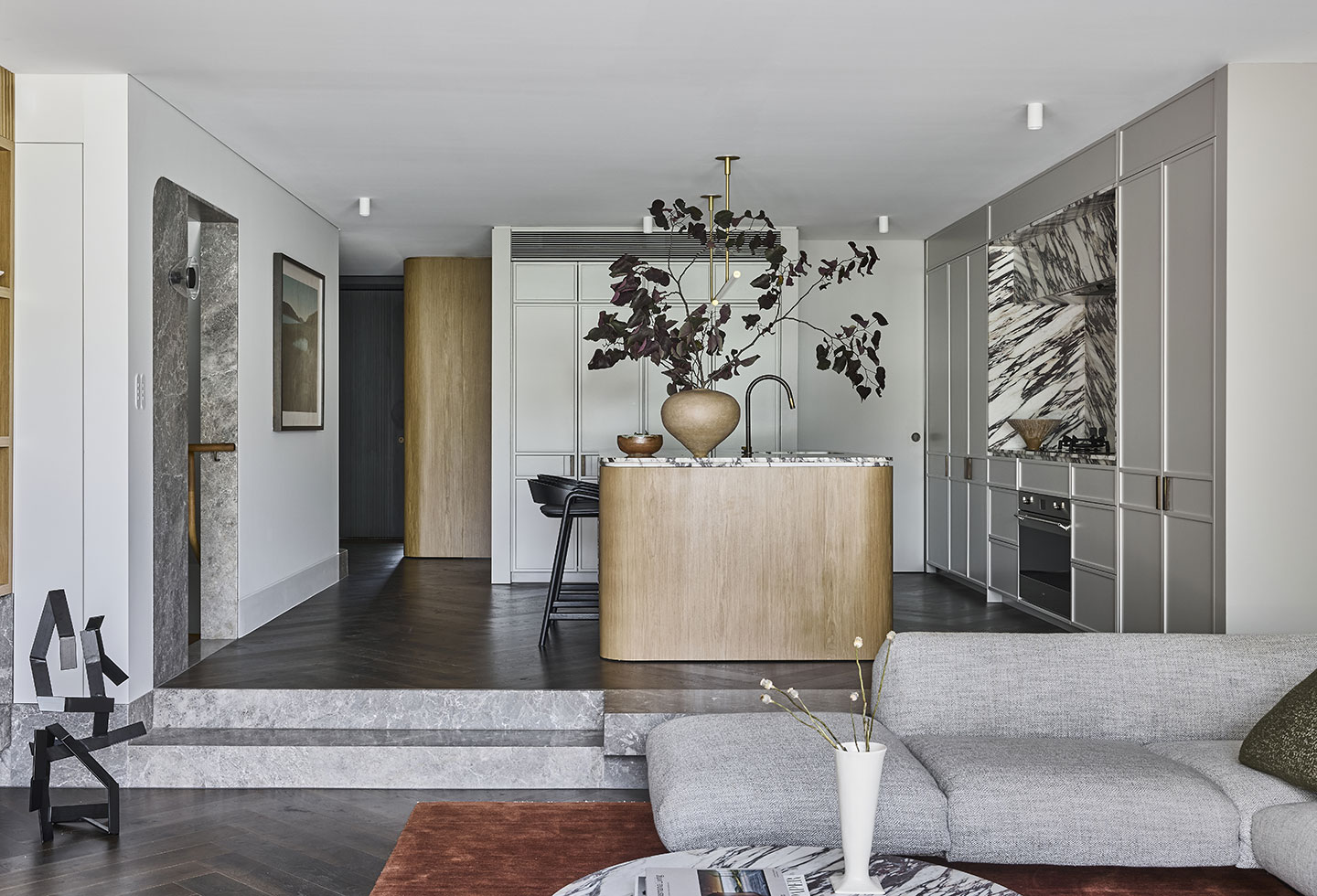
Materials matter here. The client sought ‘sophistication, timelessness and warmth.’ The dark oak parquet flooring pairs beautifully with the almond-toned cabinetry created by Summit Joinery. The crafted rhythm of the herringbone pattern “strikes a balance between classic and contemporary… grounding the interiors with a sense of warmth and permanence,” explains George.
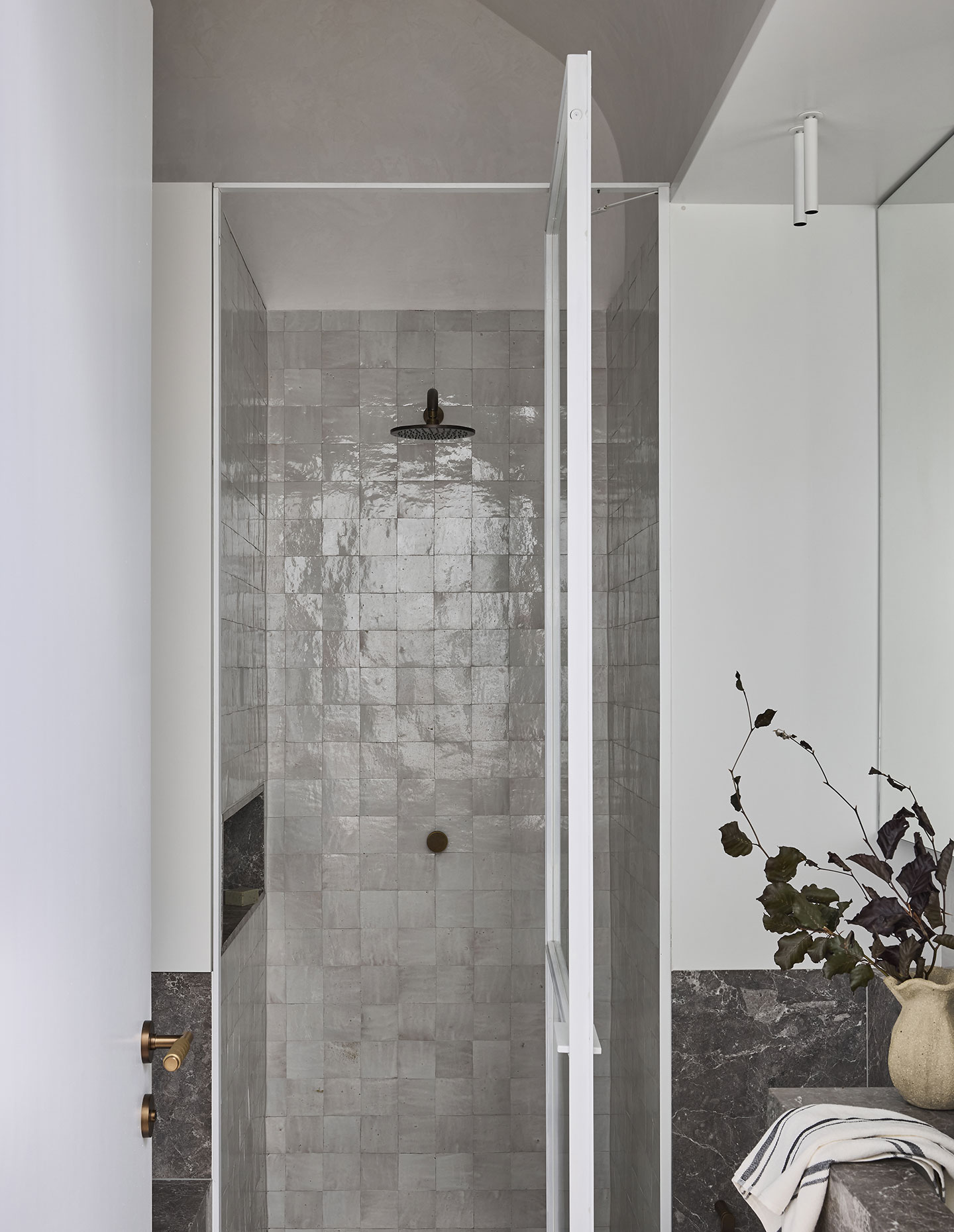
Then there is the stone. Grigio, a dark grey marble, defines the thresholds, steps, fireplace and bathrooms. It sits comfortably yet robustly alongside the timbers, demarcating zones without walls – a sophisticated solution for an open plan.
Related: The tennis pavilion commute
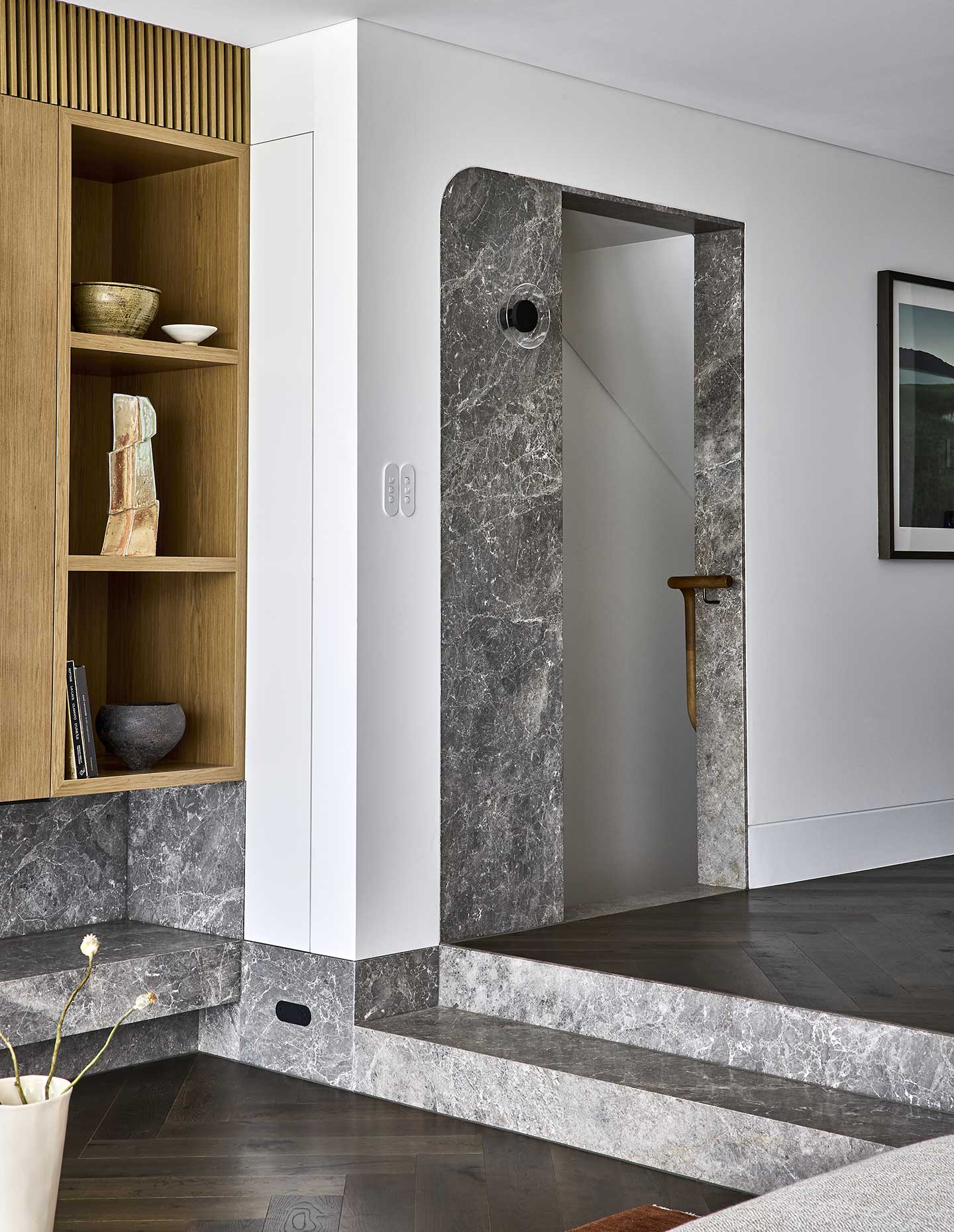
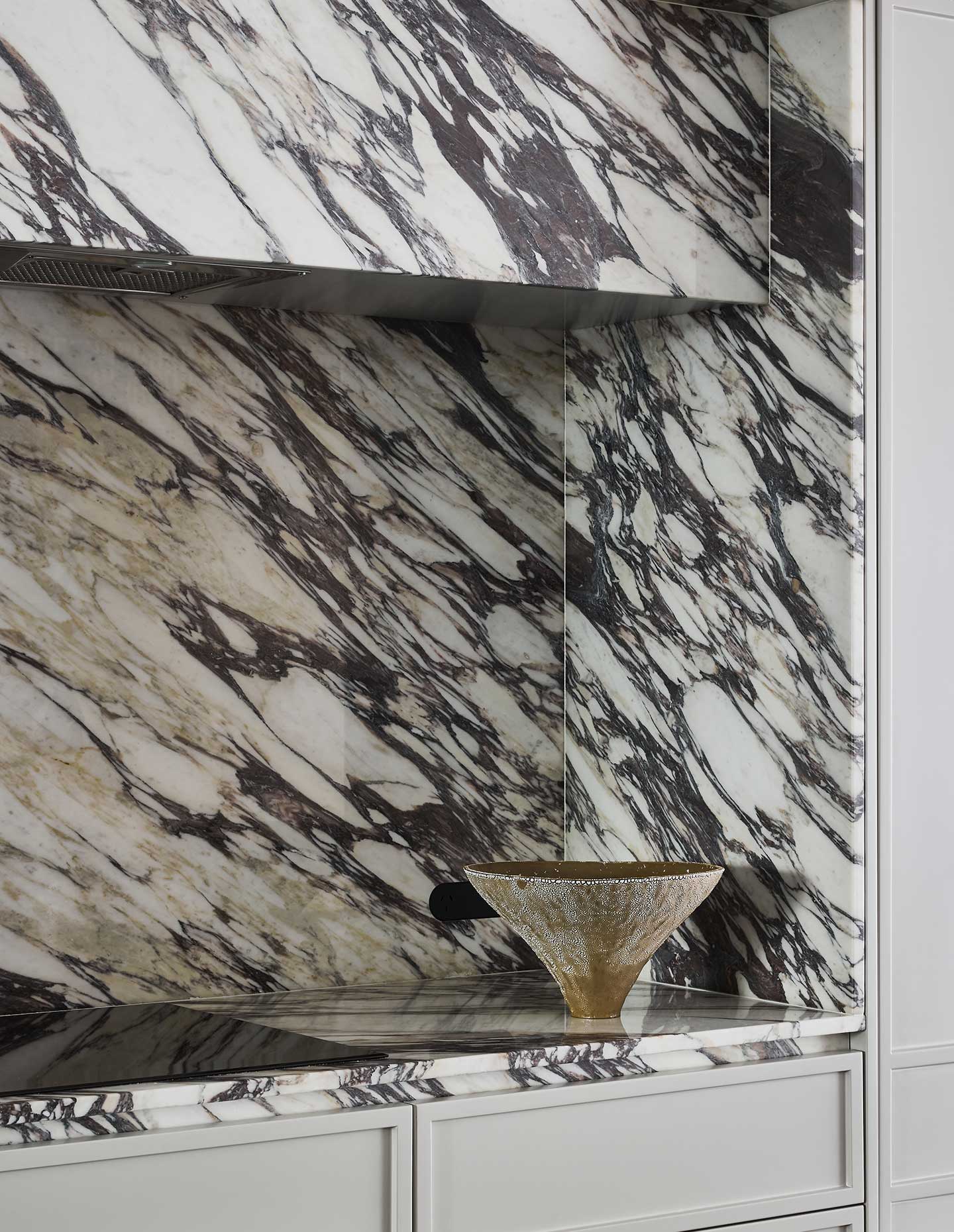
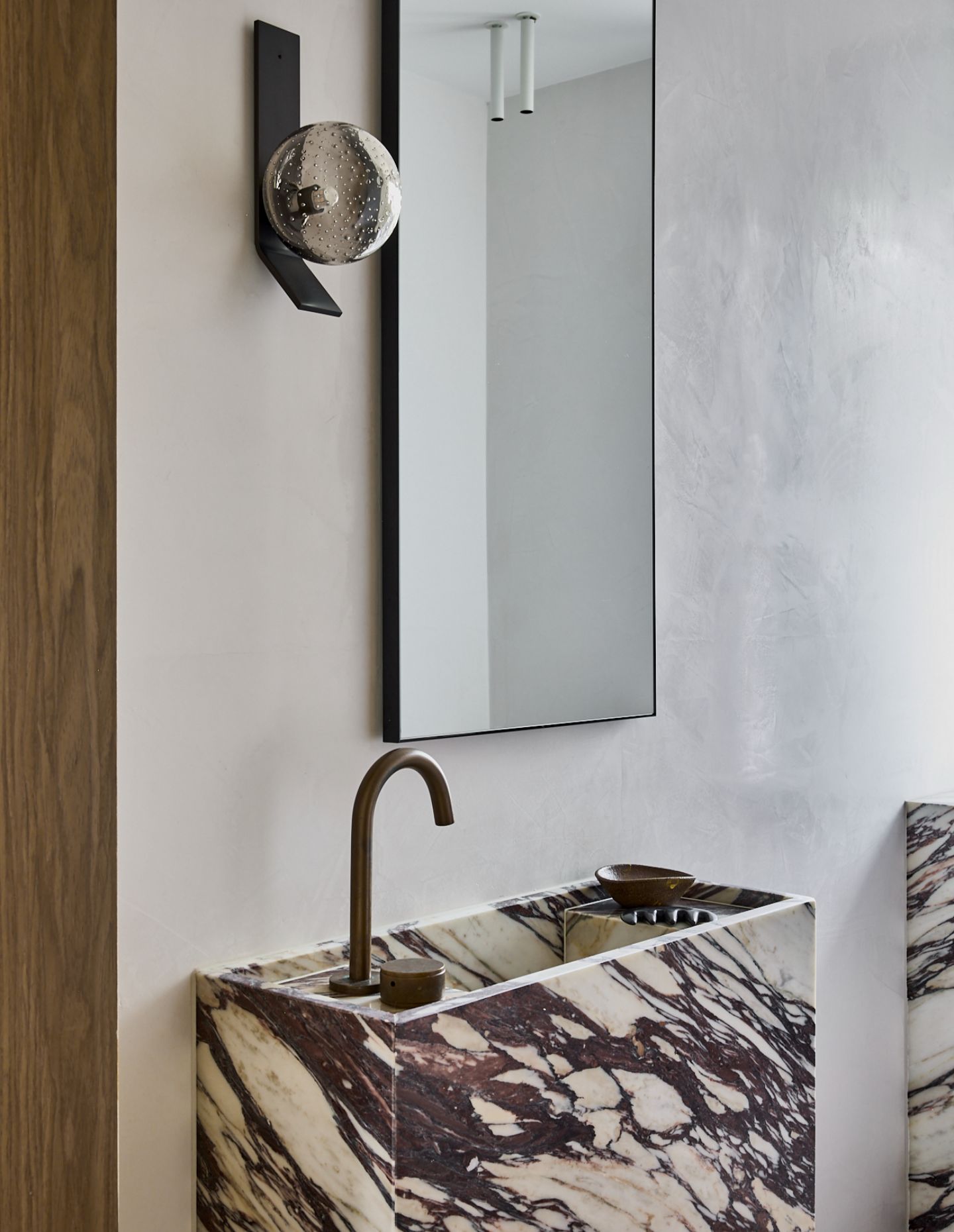
For the kitchen, Calacatta Viola makes a ‘stronger statement.’ Kudos to the slab-selection, as the deeper red and purple veining accentuates and complements both the warmer and cooler tones of the adjacent Grigio and timber. There is cohesion across the different stones. Precise detailing at key junctions celebrates the stones’ versatility.
As George puts it, “We drew inspiration from Central European architecture, where stone is used boldly and honestly.”
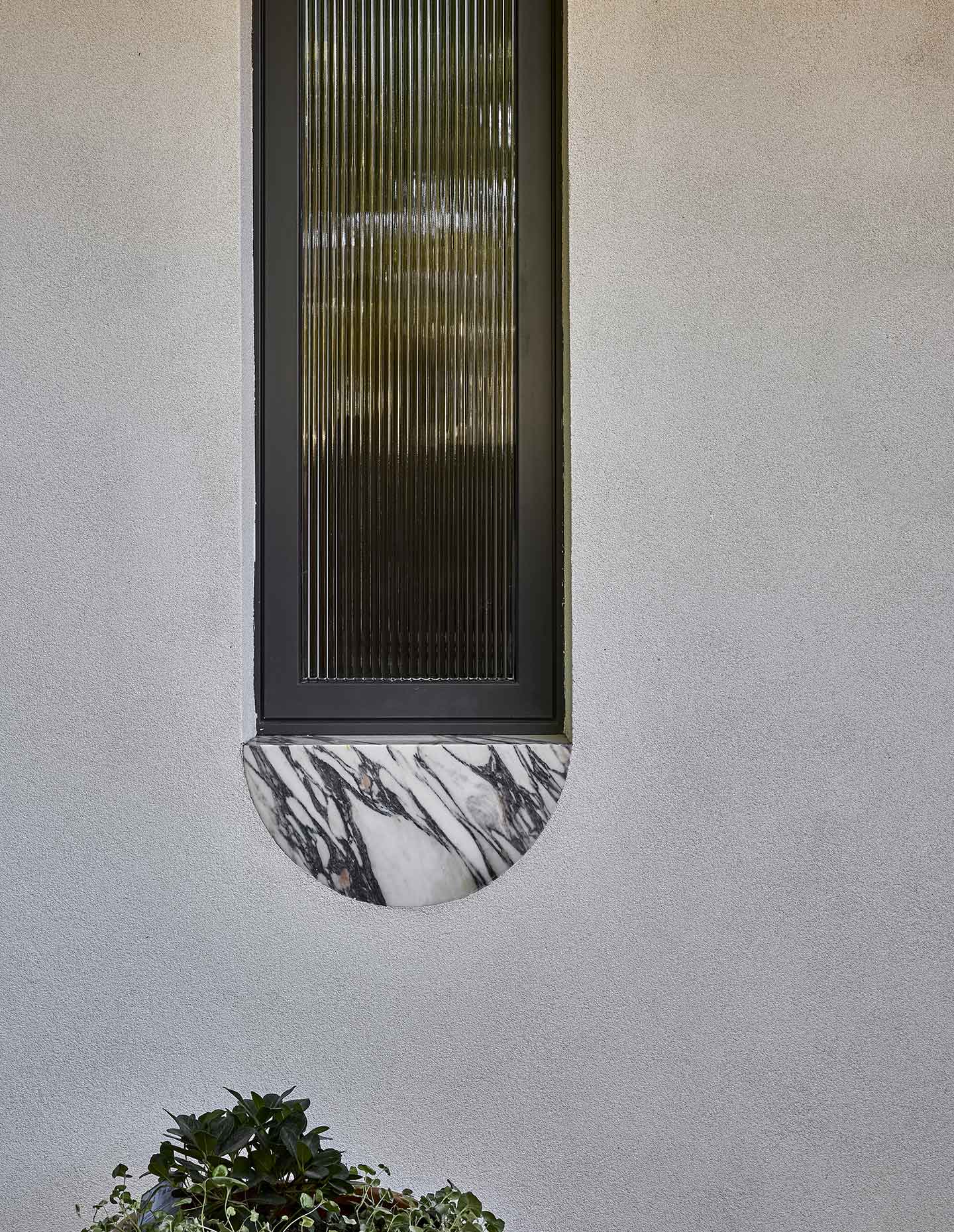
A particular slab beneath a window earned its own credit. George admits to a moment of “initial uncertainty” regarding its placement, particularly as the clients were overseas and unable to view it in situ. But, the clients didn’t flinch. They trusted the vision. Their commitment transformed a simple window into a lithic focal point.
The client relationship powered this Woollahra residence. Distance usually breeds doubt, but here it bred trust. The owners let the the Mather Beere team and builder, Central Projects, sweat the details, embracing the idea of creating something different.
The final walk-through was a celebration, as George, the photographer Pablo Veiga and stylist Holly Irvine relished in the result of this trusted collaboration. The house now reads as a series of quiet, weighted moments.
Design is often about what you add. Here, it was about what they found. Mather Beere found light, and found space in the ground. They found a way to make the city disappear. You step inside, close the door and Ocean Street becomes a rumour.