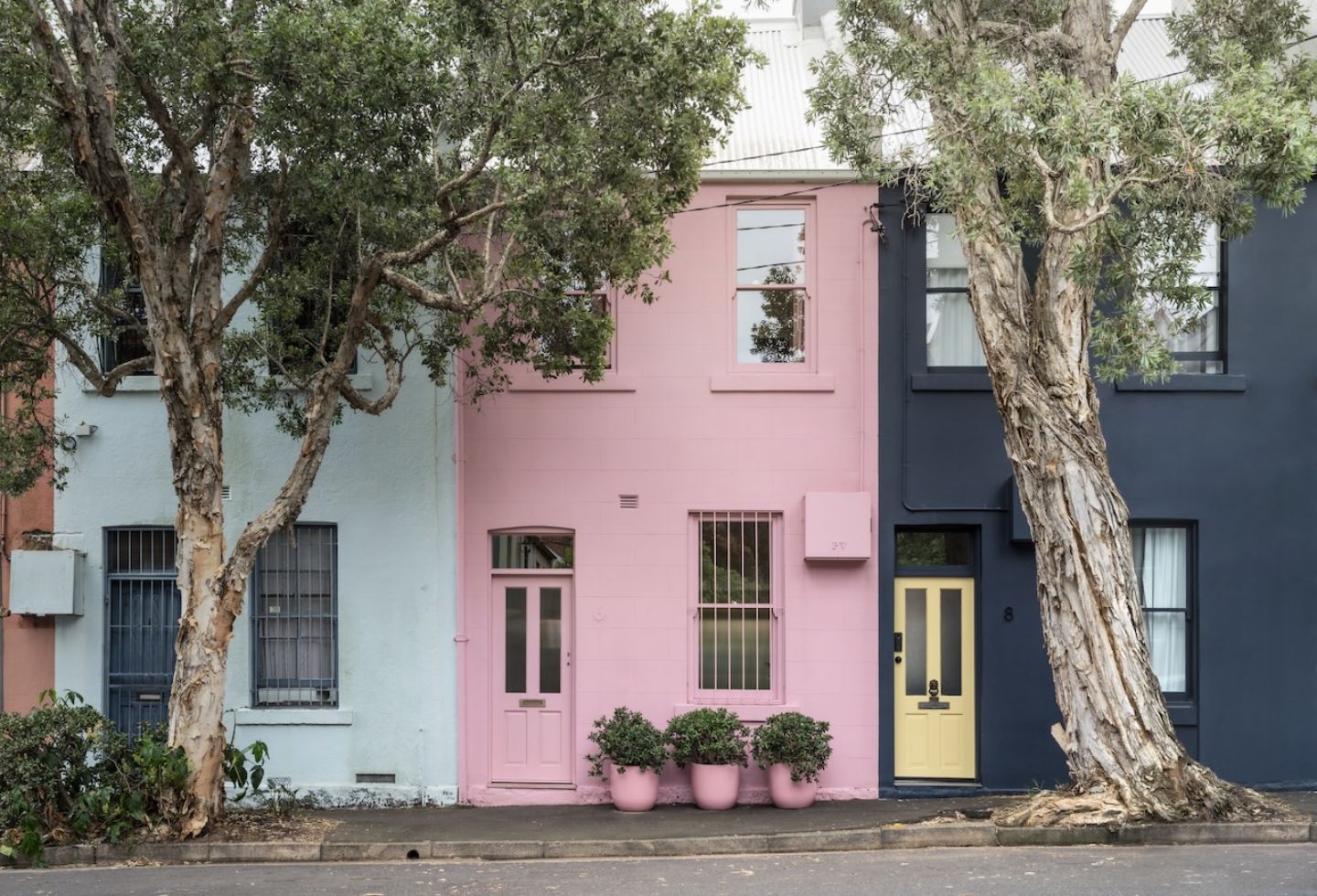

Pink House | Green House doesn’t read as a project about limitation, even if the site suggests otherwise. Set within a narrow Surry Hills terrace, the house works with what’s already there — tight dimensions, party walls, a compromised interior — but the result feels neither constrained nor overworked. Instead, it settles into a kind of precision, where everything has been reduced to what it needs to be.
For Nick Bell, designing his own home allowed for a level of directness that’s harder to sustain in client work. “You’re not negotiating every decision,” he reflects. “You can be quite clear about what stays and what goes — and usually, it’s about taking things away.”
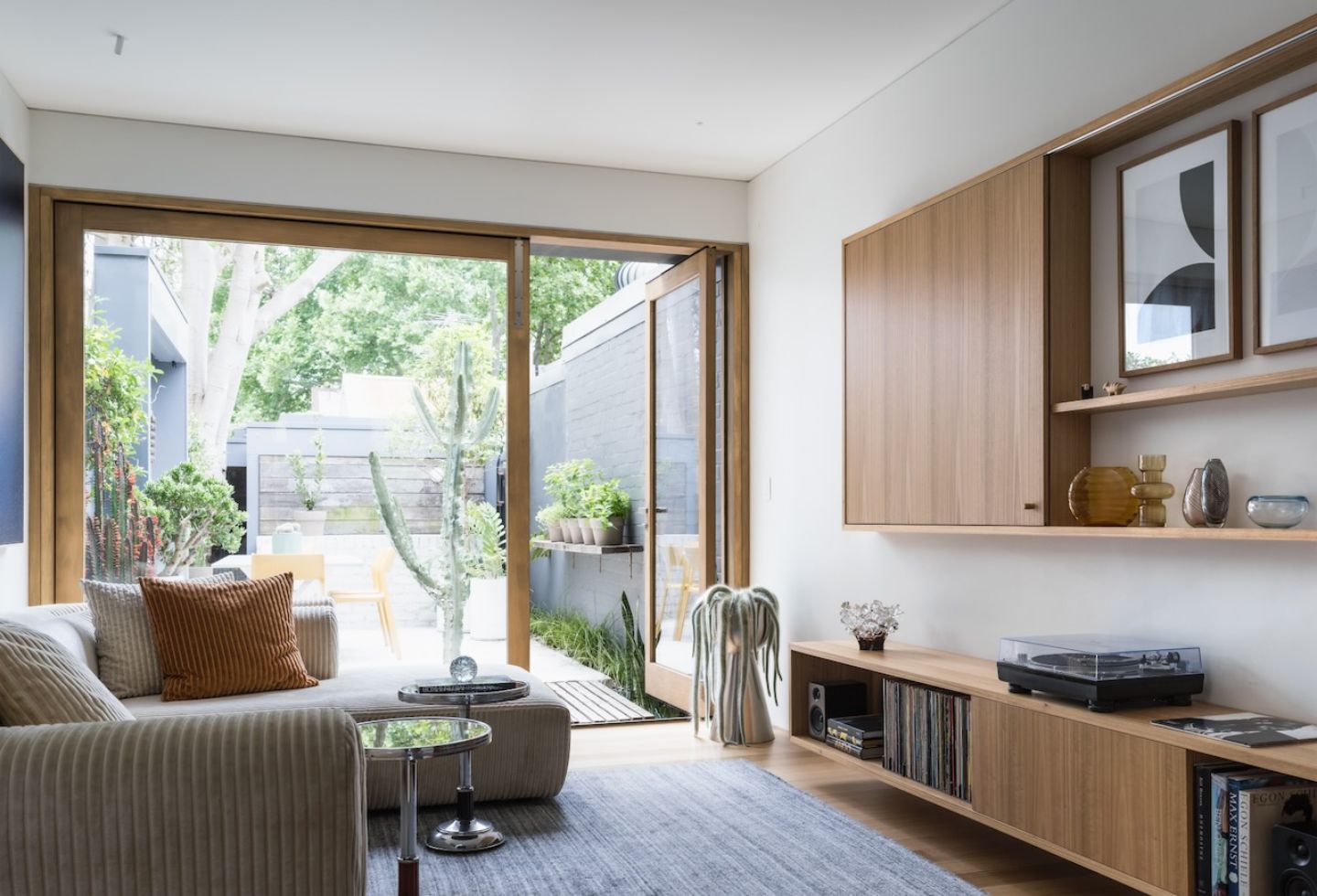
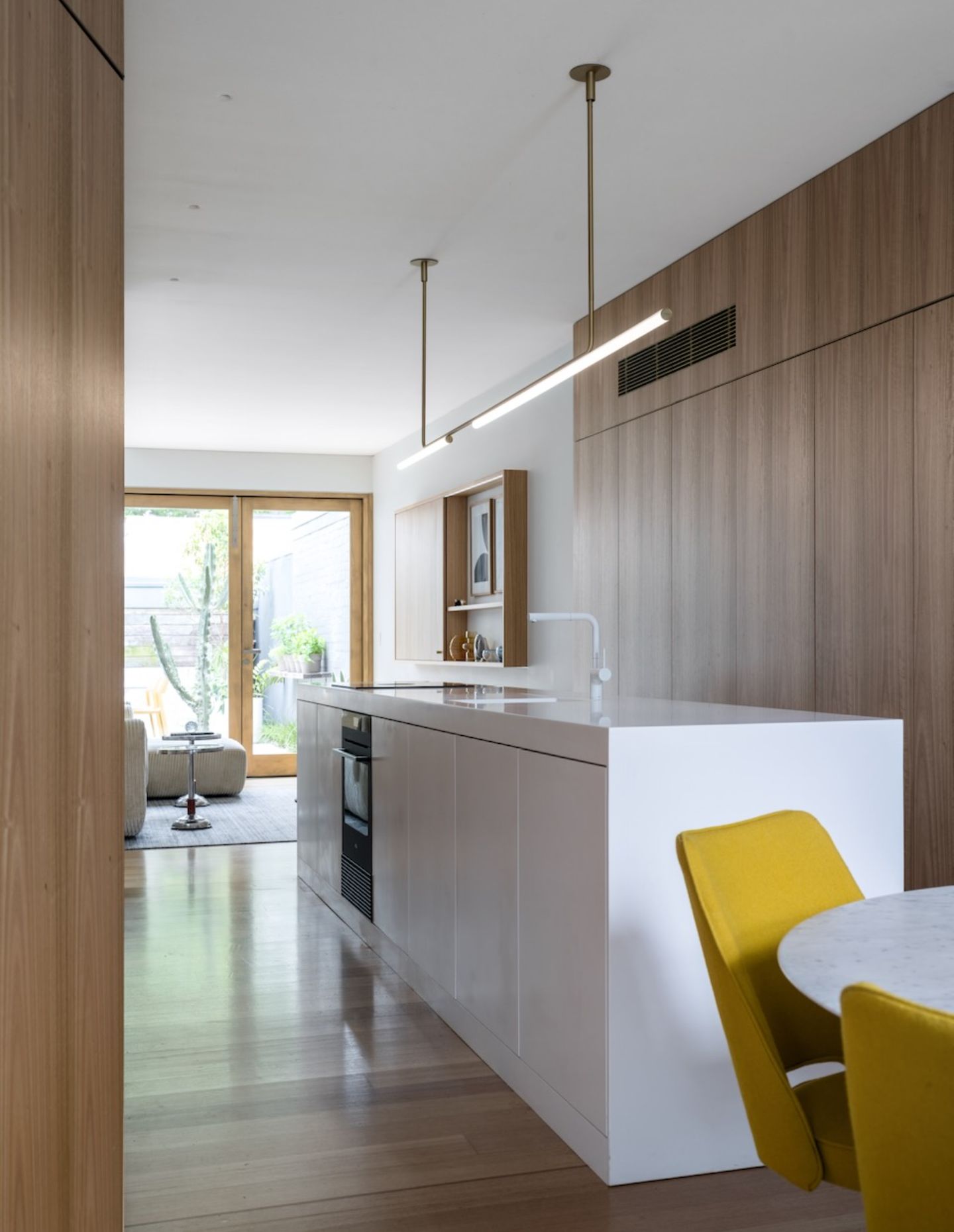
That instinct towards reduction runs through the project. Joinery absorbs almost everything — storage, services, structure — allowing the spaces themselves to remain legible and calm. There’s no excess to soften the edges; instead, the house relies on proportion, alignment and material restraint to do the work. In a footprint this small, clarity becomes spatial.
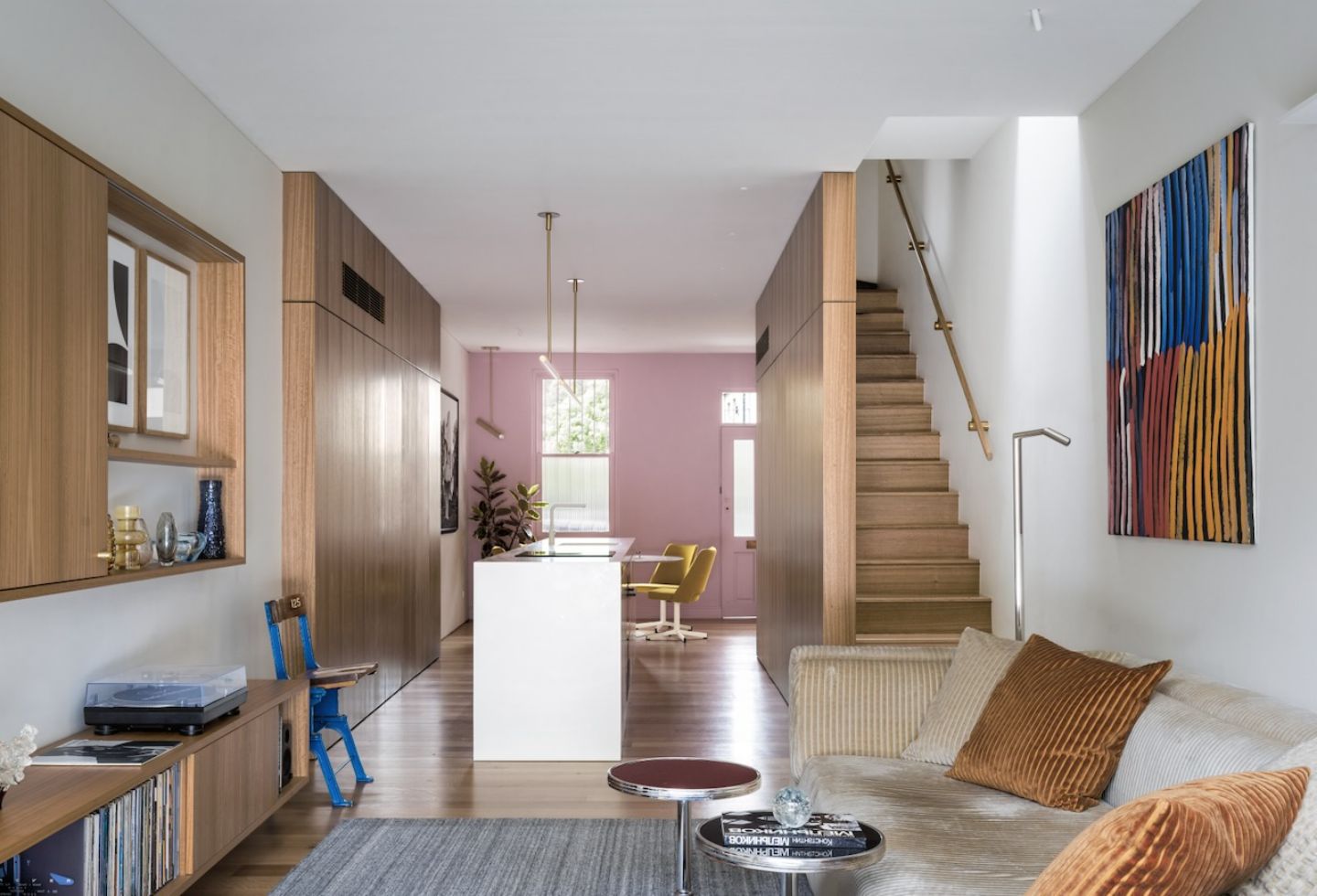
The house is designed to hold two very different modes of living. At times, it operates as a quiet, almost solitary space. At others, it becomes something far more social — a house that fills quickly and unexpectedly. “It needed to work when it’s just me,” Bell says, “but also when it’s suddenly full of people. That shift happens quite easily.”
Rather than separating those conditions, the plan allows them to overlap. Bedrooms are set apart enough to offer privacy, while shared spaces remain open and continuous. Circulation is almost entirely absorbed into living areas, so movement becomes part of occupation rather than something separate from it.
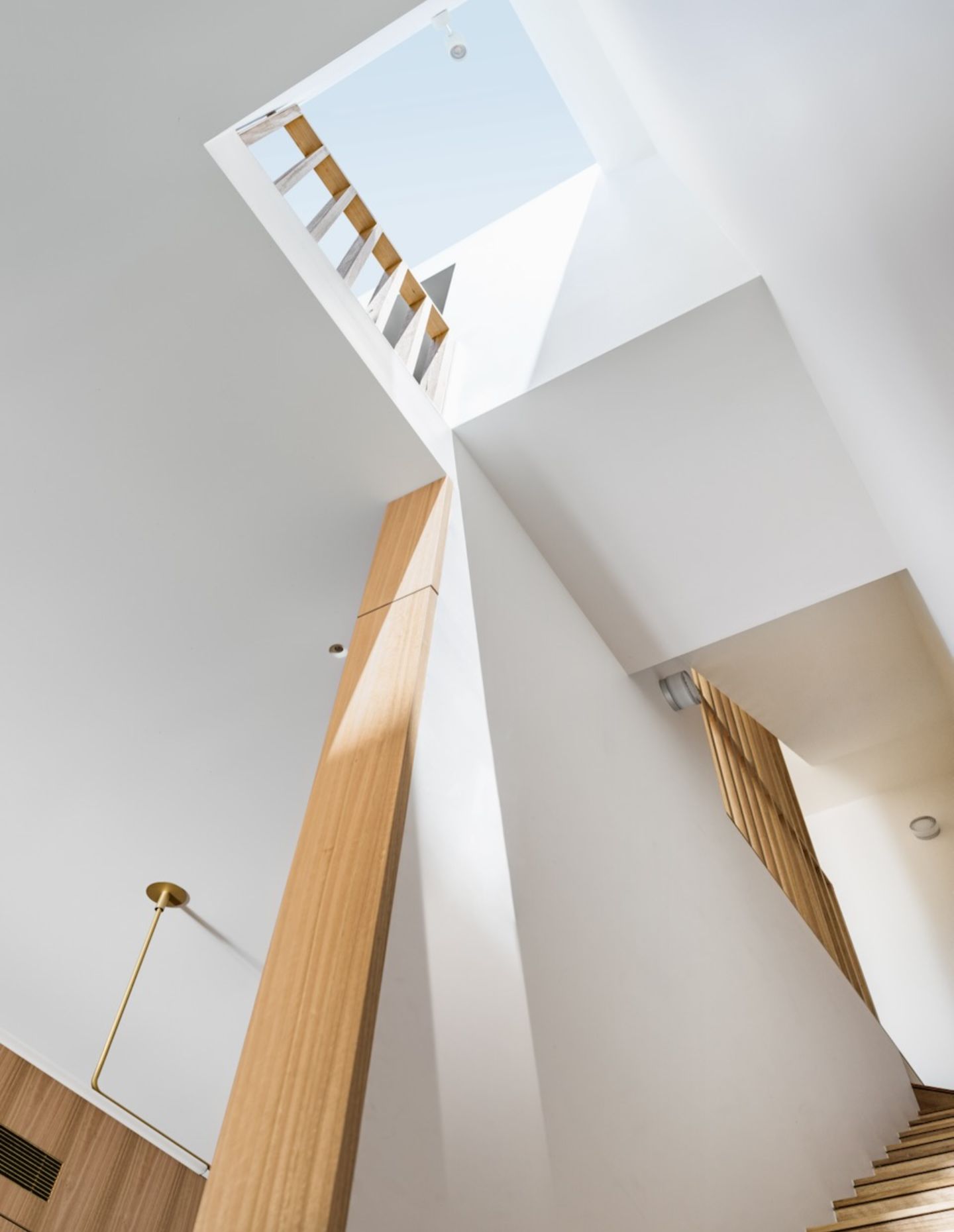
Light is what gives the house its sense of generosity. With no side windows, it becomes something to be carefully drawn through the plan — from the north-facing rear, from above and, more subtly, from the street. Bell treats light less as an outcome and more as a material. “You’re always working with light in a terrace,” he says. “It’s not something you add later — it’s what shapes the whole thing.”
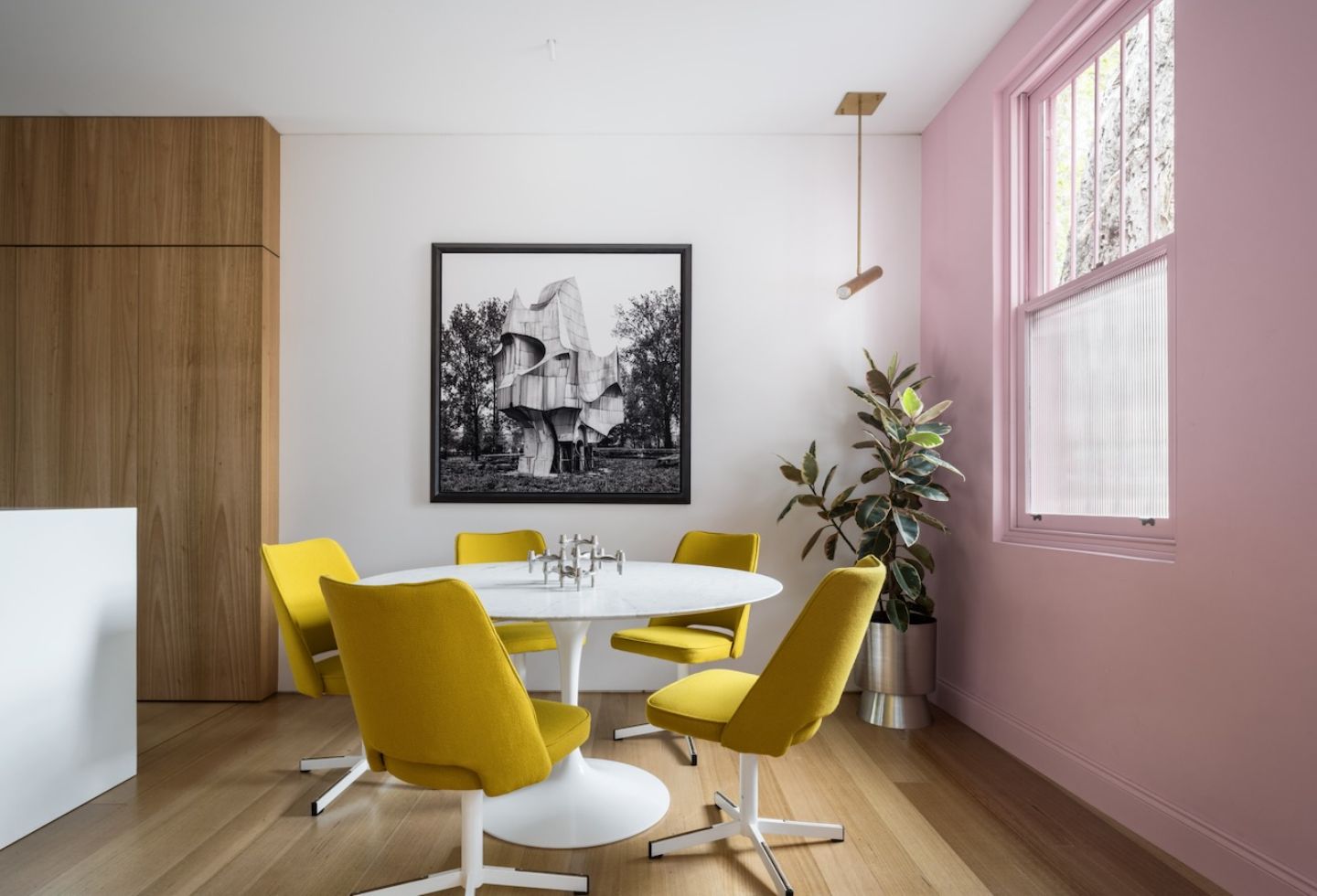
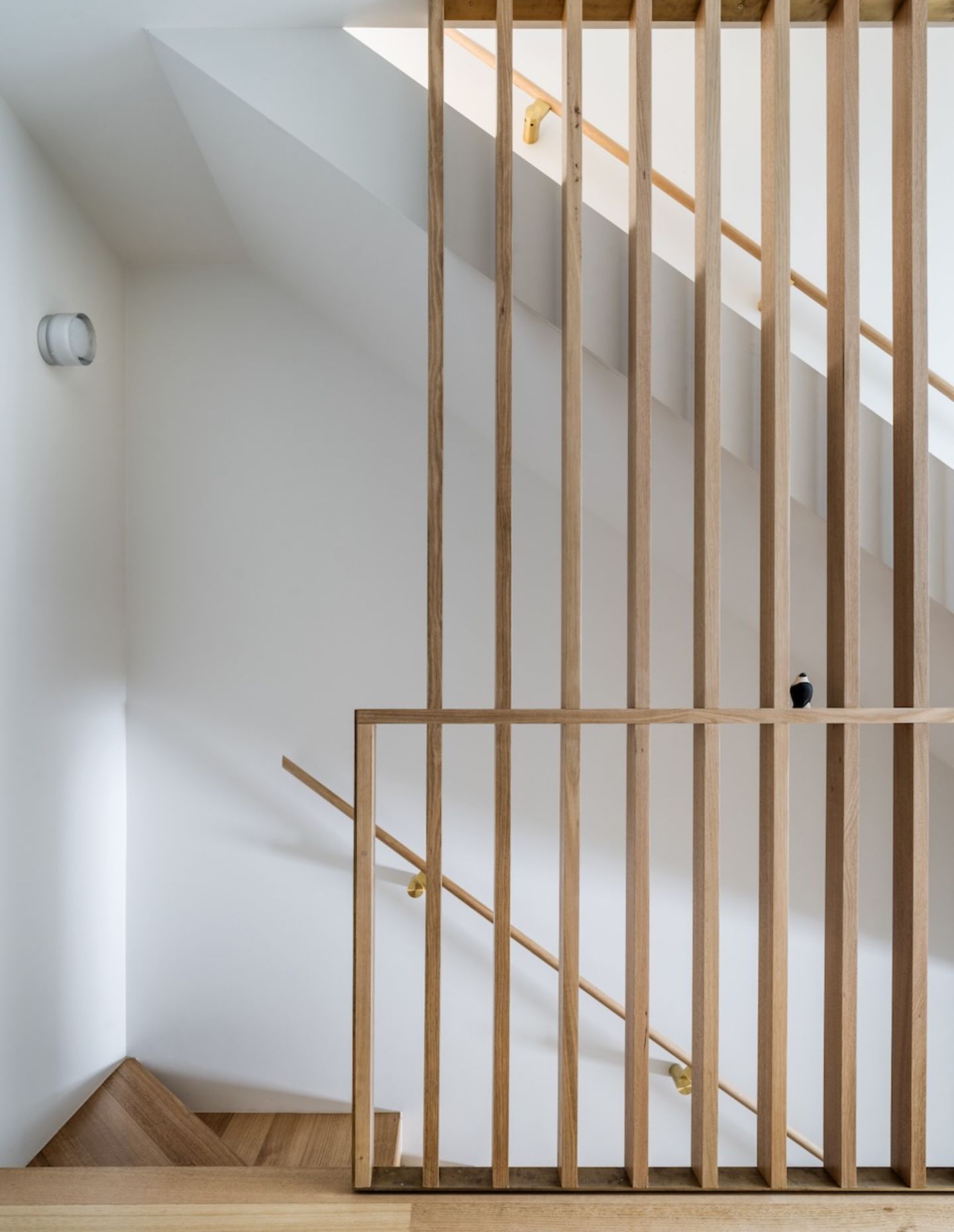
Skylights, voids and open balustrades allow light to move vertically, connecting levels and softening the depth of the plan. What might otherwise feel compressed instead opens gradually, as light filters through the house at different intensities throughout the day.
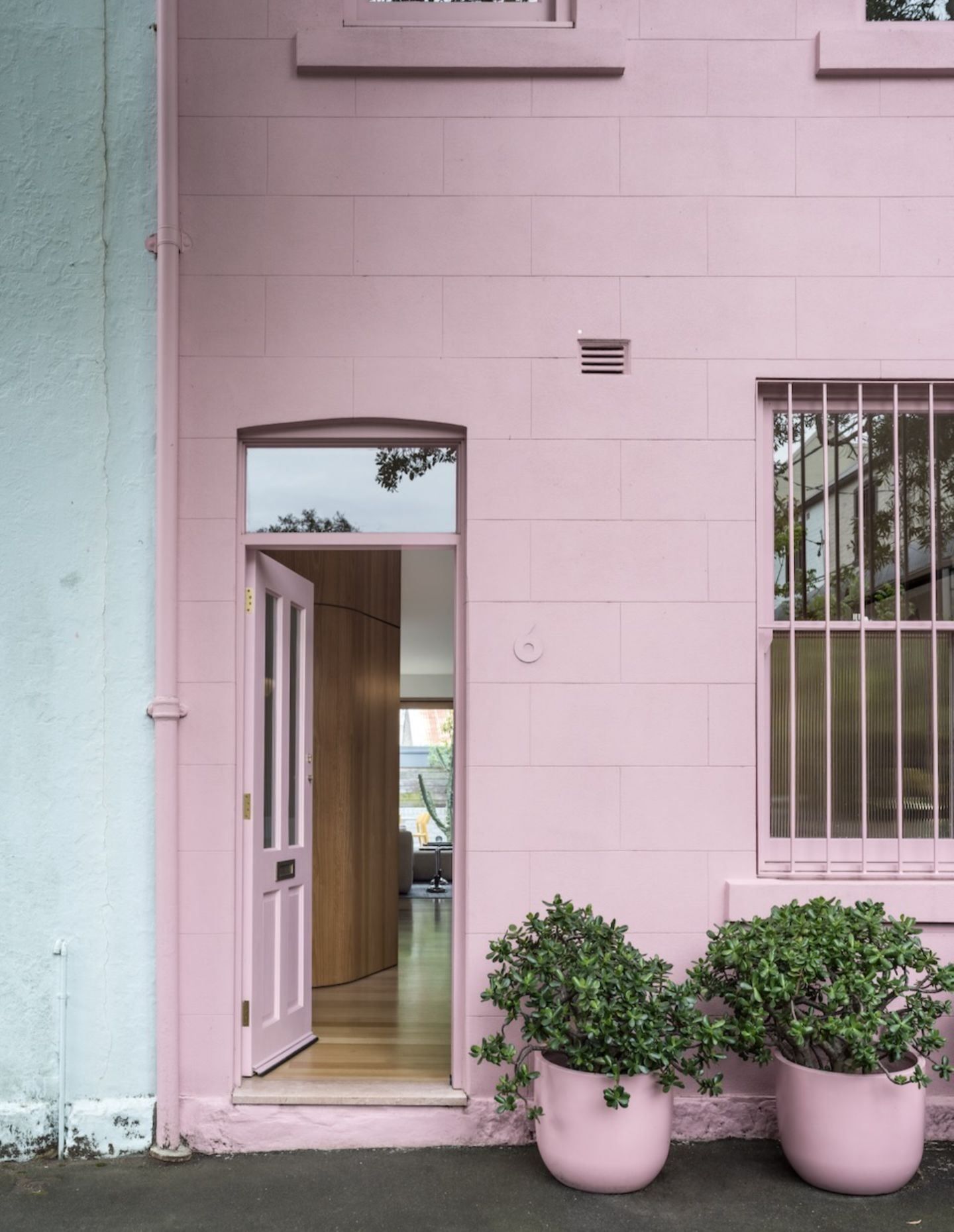
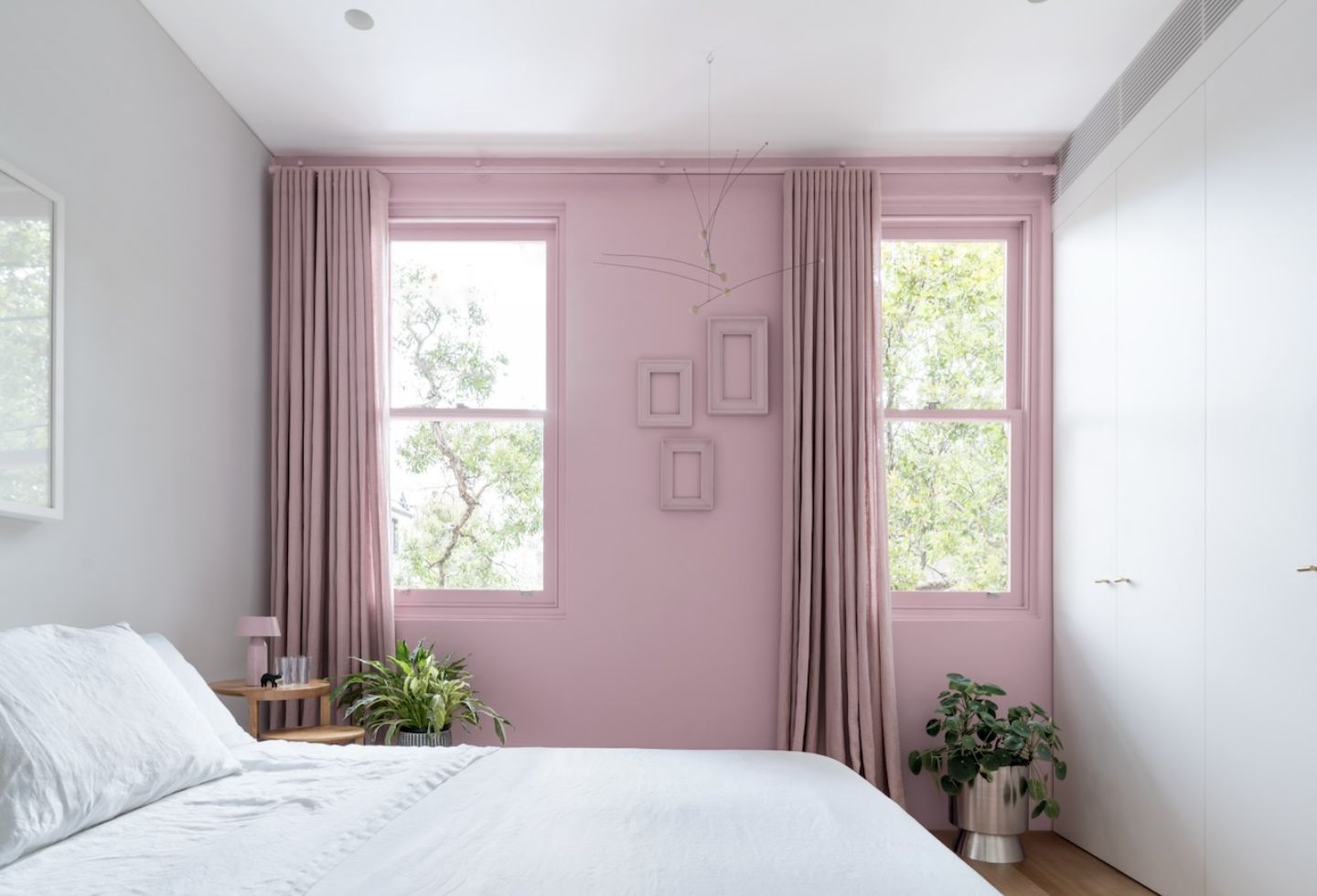
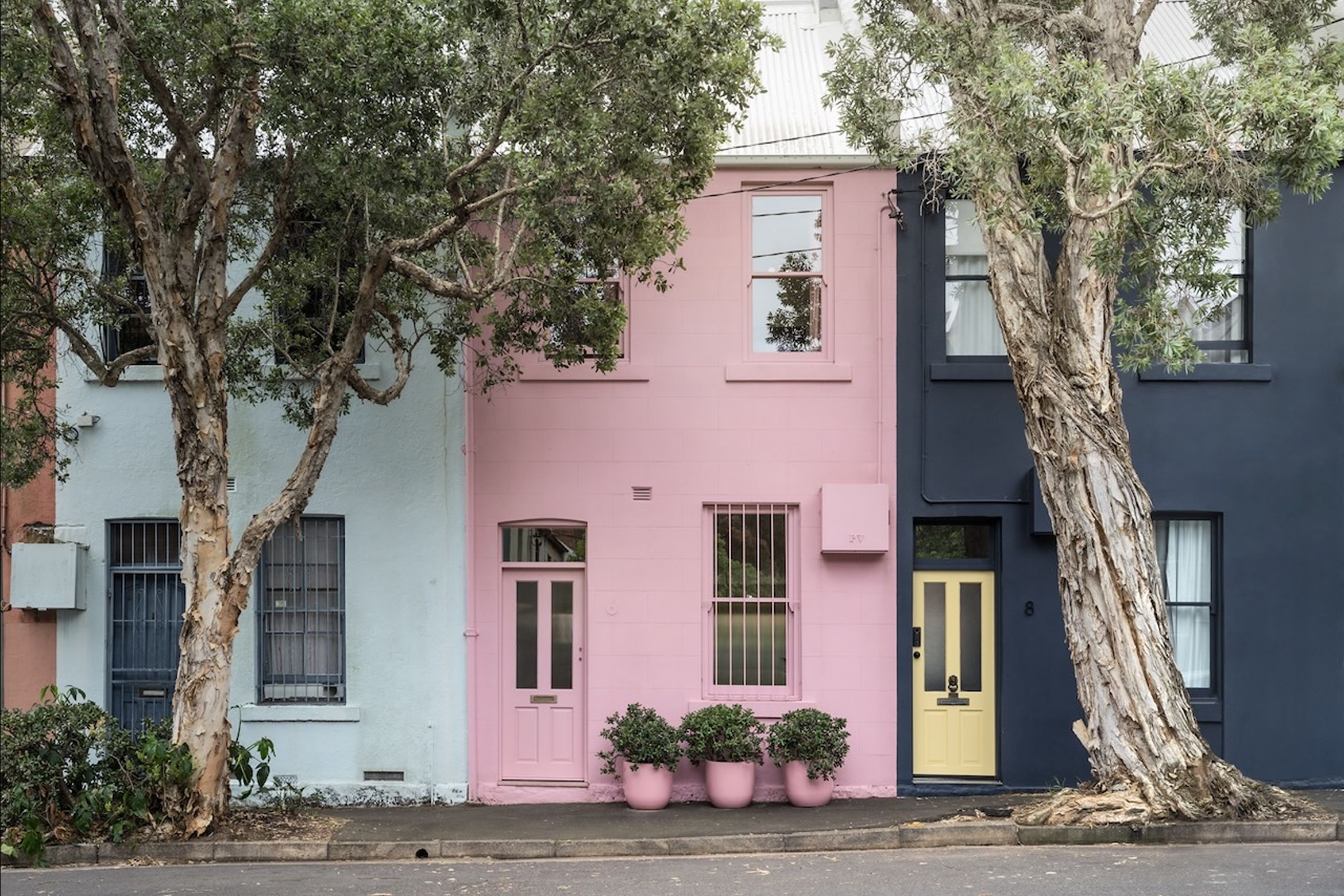
At the front, the restored façade anchors the project in its context. Painted pink — a reference to both historical precedent and the character of the street — it becomes a point of continuity. Inside, that colour carries through the front portion of the house before giving way to a more restrained palette, marking a subtle transition between what is retained and what has been reworked.
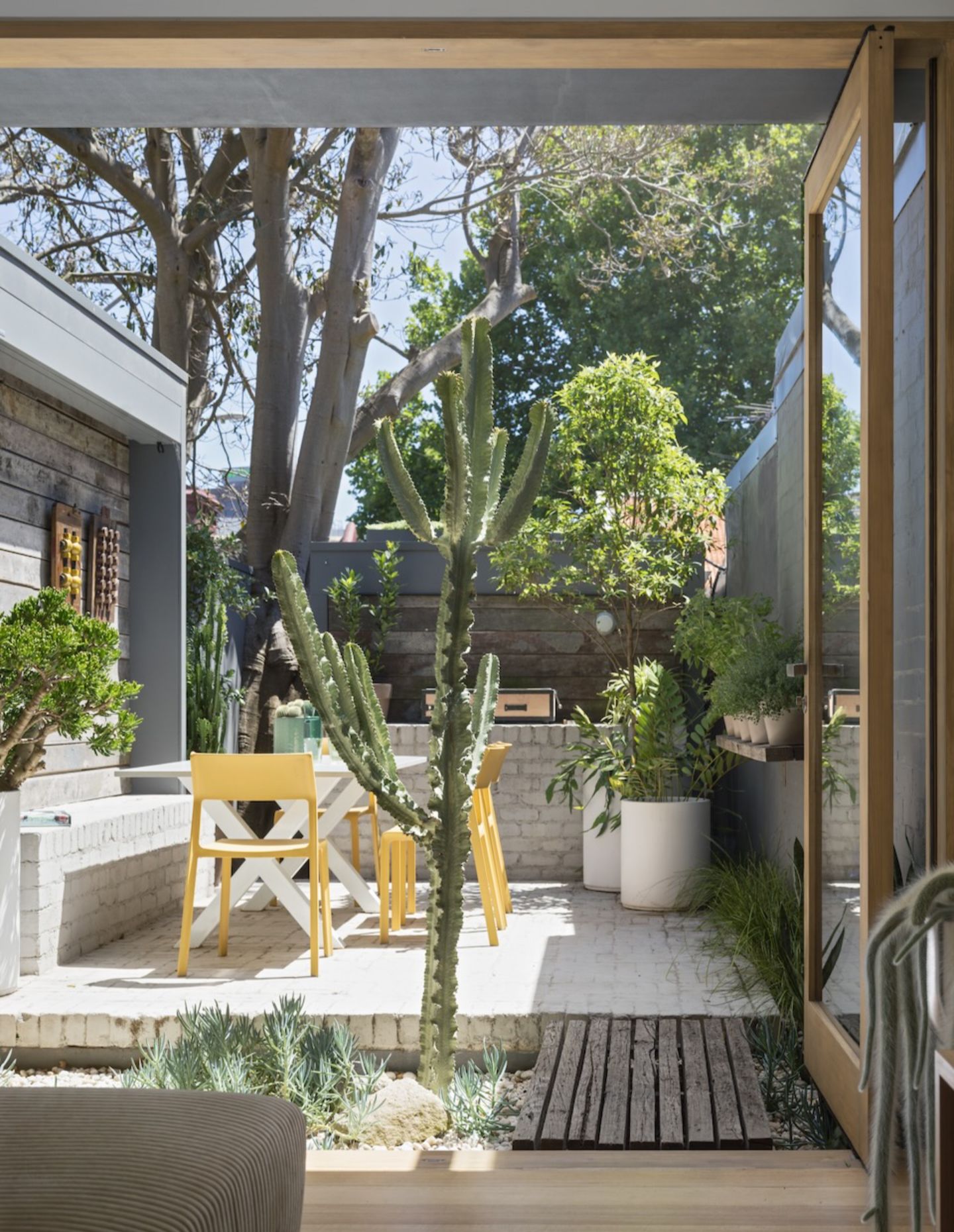
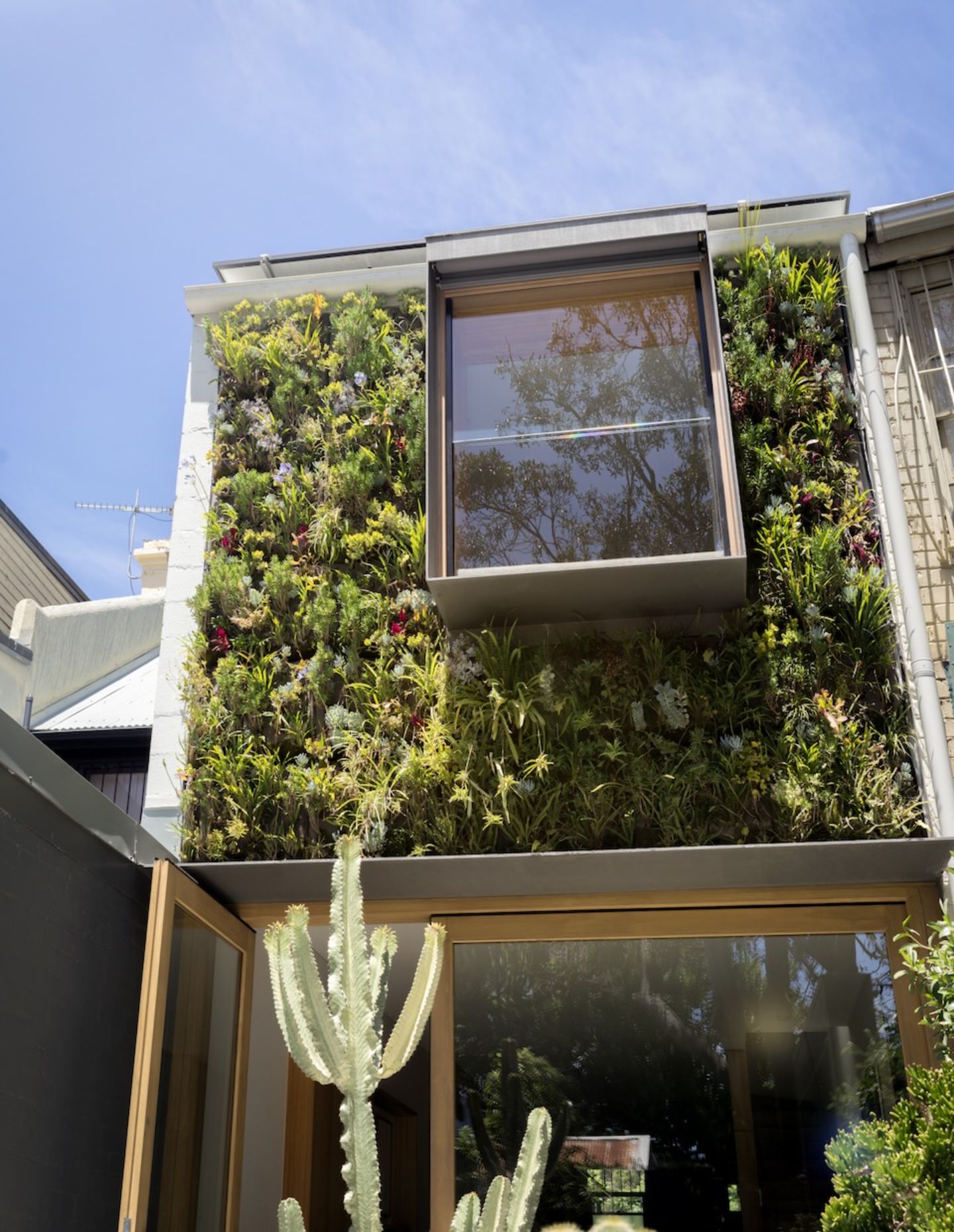
The rear shifts the tone again. Here, the “green house” emerges — a planted façade, rooftop garden and dense layering of vegetation that extend the architecture into the landscape. In a courtyard that measures just five by three metres, planting moves vertically, allowing the space to remain usable while still feeling immersed.
Related: Letting the garden lead
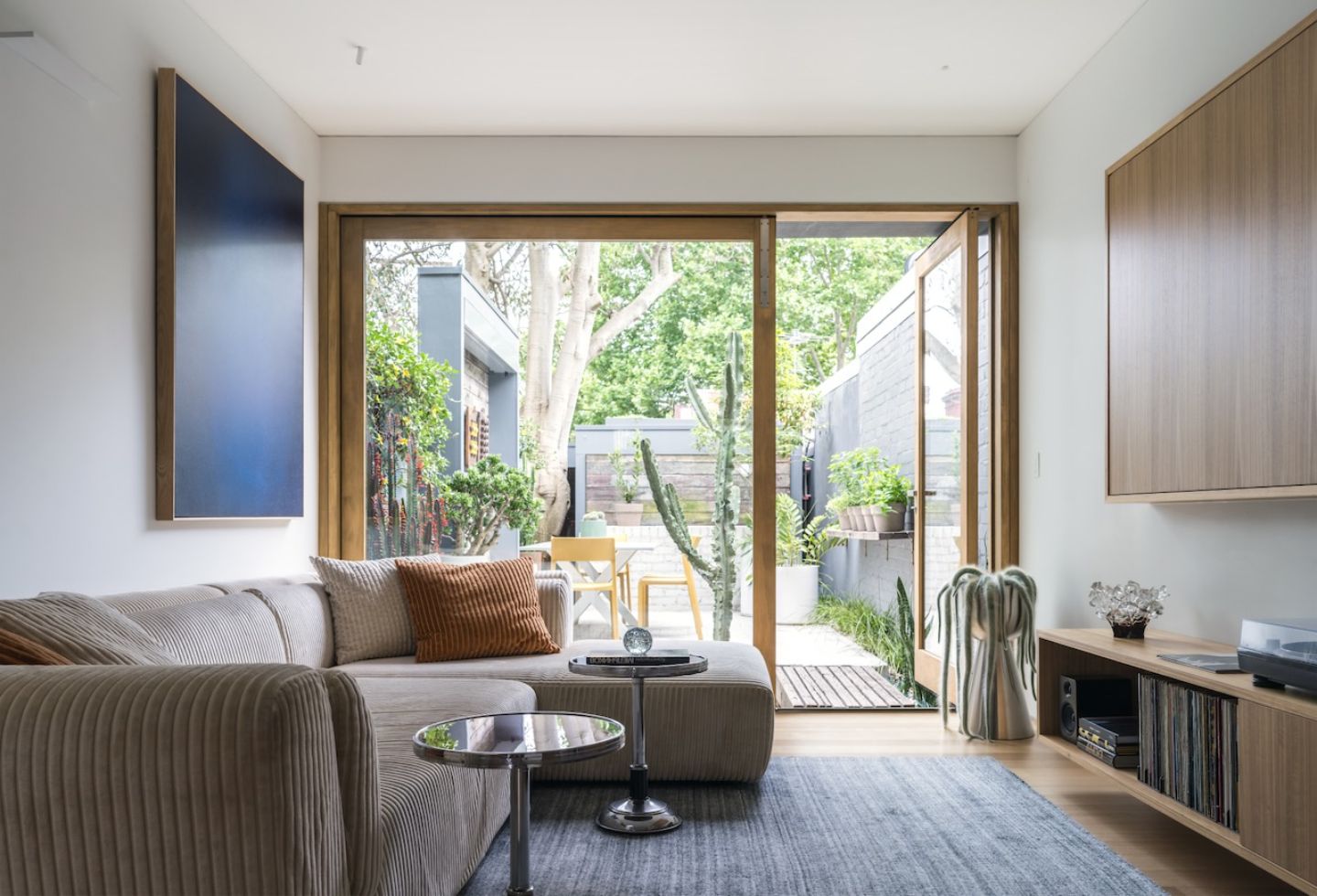
Some of these moves are deliberately exploratory. “There are things here I’d probably struggle to convince a client to do,” Bell admits, “but that’s part of the point — you test it, you live with it and you see what works.”
Sustainability is embedded in the same way — not as an added layer, but as a baseline. The house is fully electric, solar-powered and highly insulated, with a heat recovery ventilation system addressing the realities of a mid-terrace condition. These decisions are treated as fundamental, part of a broader shift in how houses like this need to perform.
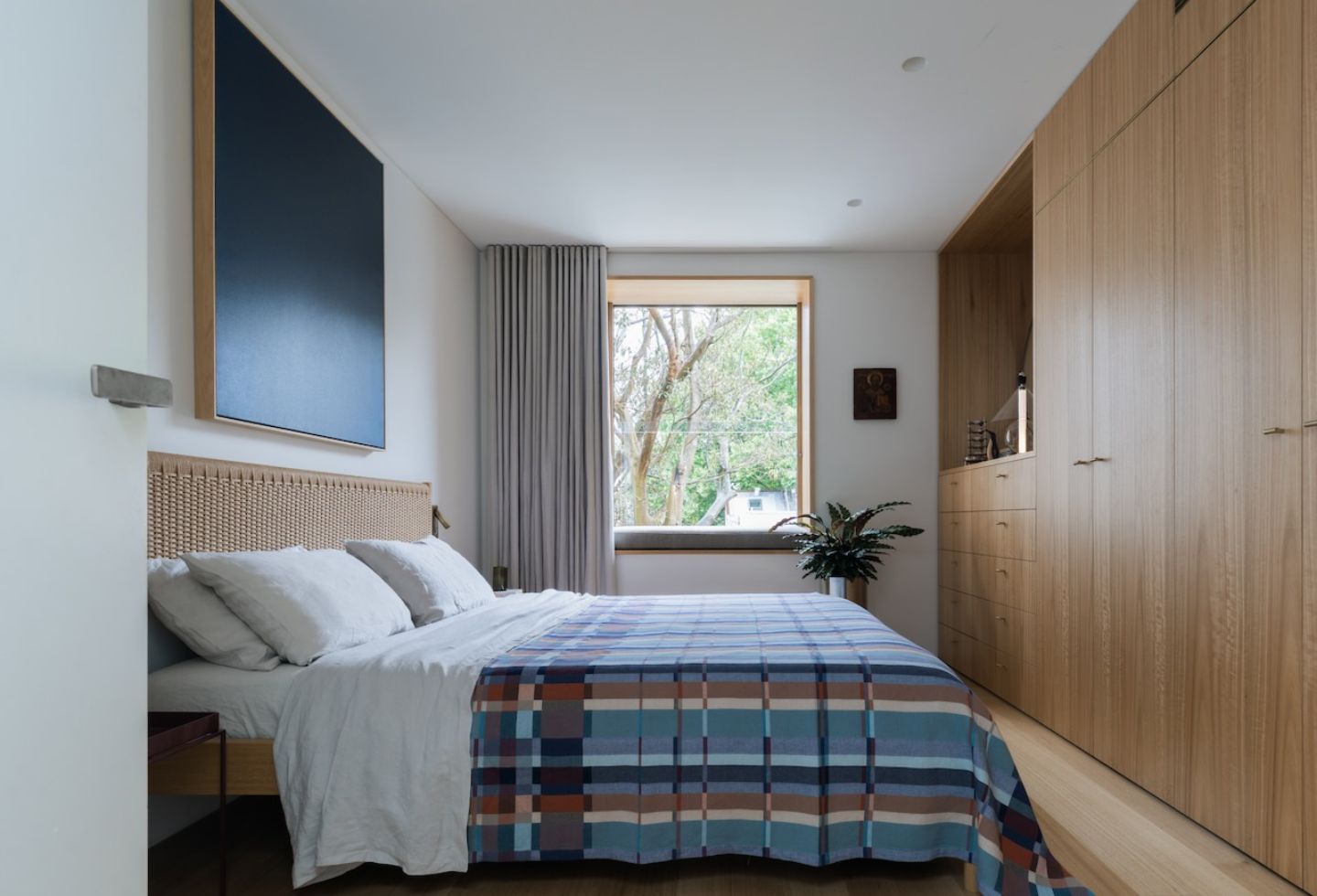
What becomes most apparent over time is how much each element is asked to do. Spaces overlap, objects serve multiple purposes and nothing is left idle. It’s not about efficiency for its own sake, but about making the most of what’s available — spatially, materially and environmentally.
Pink House | Green House doesn’t try to reframe the conversation around density in any overt way, but it does offer a clear alternative to it. Space, here, is less about how much there is, and more about how carefully it’s been considered — how far it can be stretched and how little it actually needs.