
How did the site shape the idea of retreat?
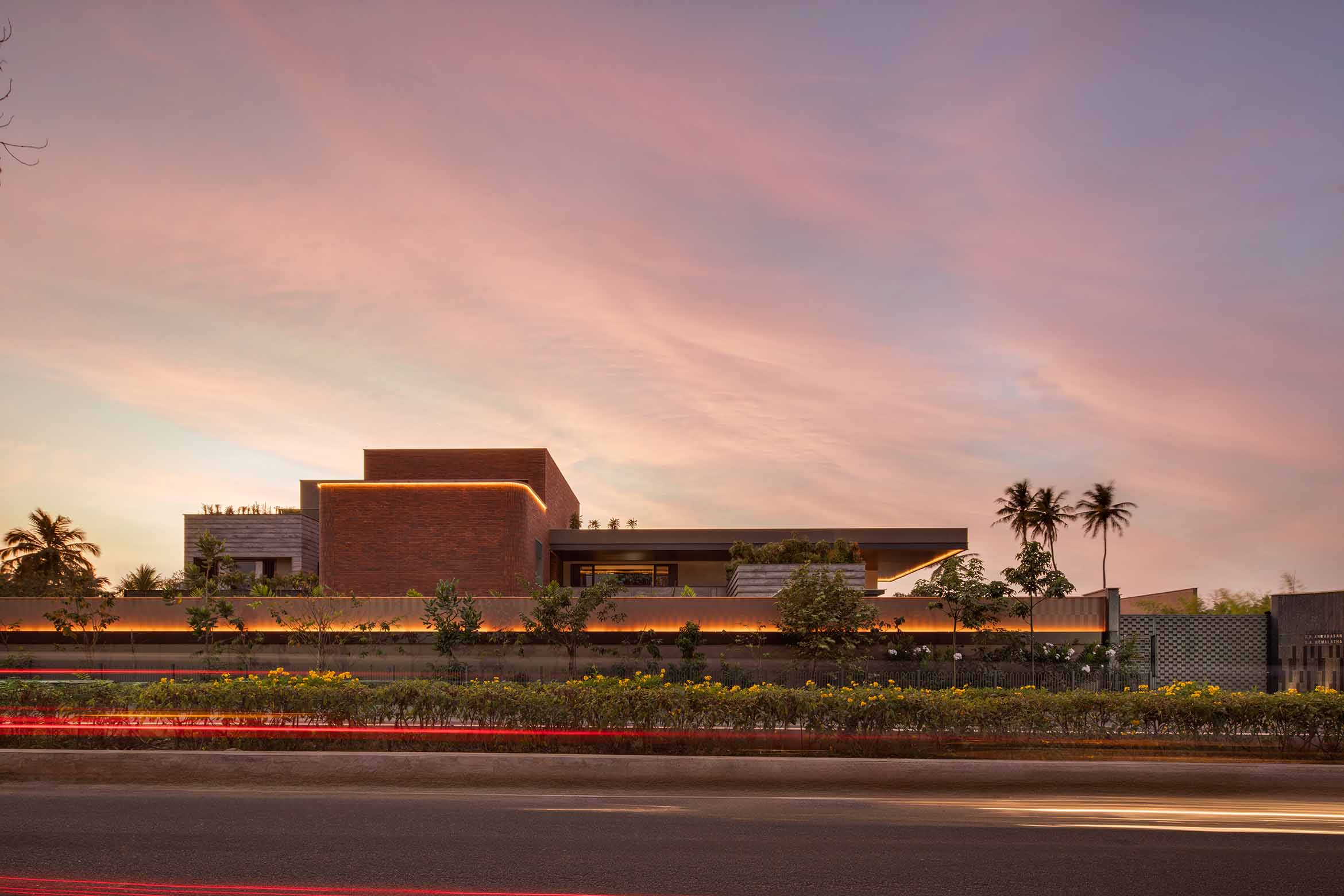
Located in Coimbatore, a rapidly developing tier-2 city in Tamil Nadu, India, the site lies along the foothills of the Western Ghats, framed by a quiet, hilly landscape.
At first encounter, the site revealed a distinct sense of calm — marked by birdsong, a gentle breeze and an overall stillness. This sensory experience became central to the design approach.
The project responds by preserving and extending these qualities, ensuring that the existing landscape and its quiet character remain integral to the built environment.
What was the brief, and how did you balance privacy with creating a home for a large multigenerational family?
The client is a high-profile political figure with a demanding public life. From the outset, the brief was clear: to create a home that offers a sense of peace and retreat, away from the constant pressures and visibility of their daily routine.
The house is envisioned as a private sanctuary for a multi-generational family of seven — comprising the parents, their two sons and the sons’ families. At the same time, it is designed to accommodate visitors, carefully balancing accessibility with the need for privacy.
A key aspect of the brief was to ensure that the home remains inward-looking and secure, while still being warm and welcoming. Additionally, the design adheres to Vaastu principles, aligning spatial planning with traditional beliefs.
How did you approach the architectural and interior palette?
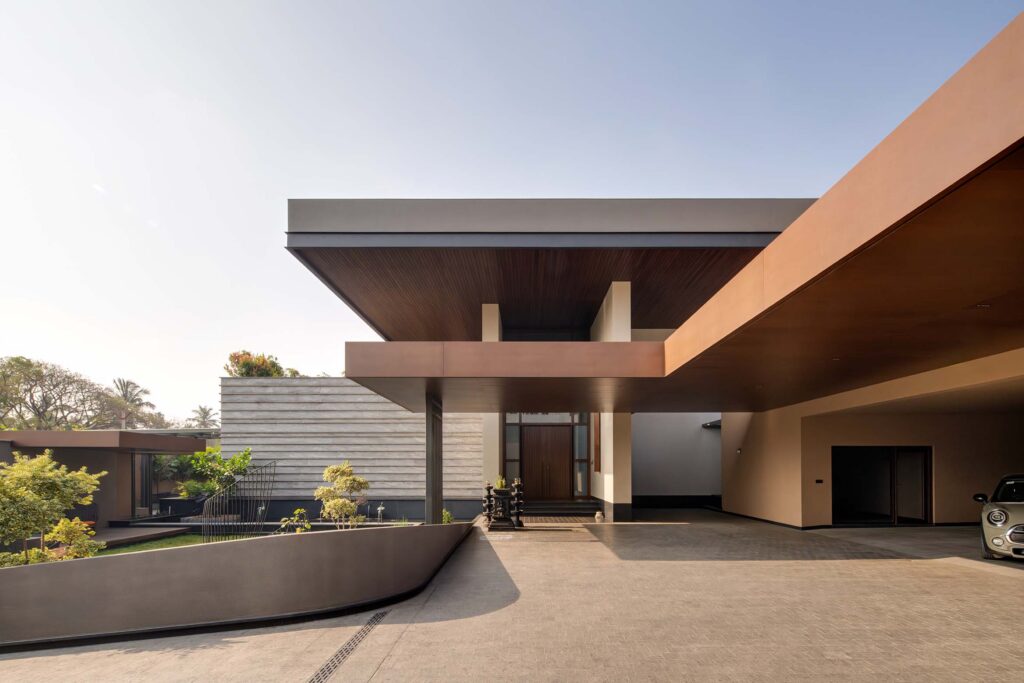
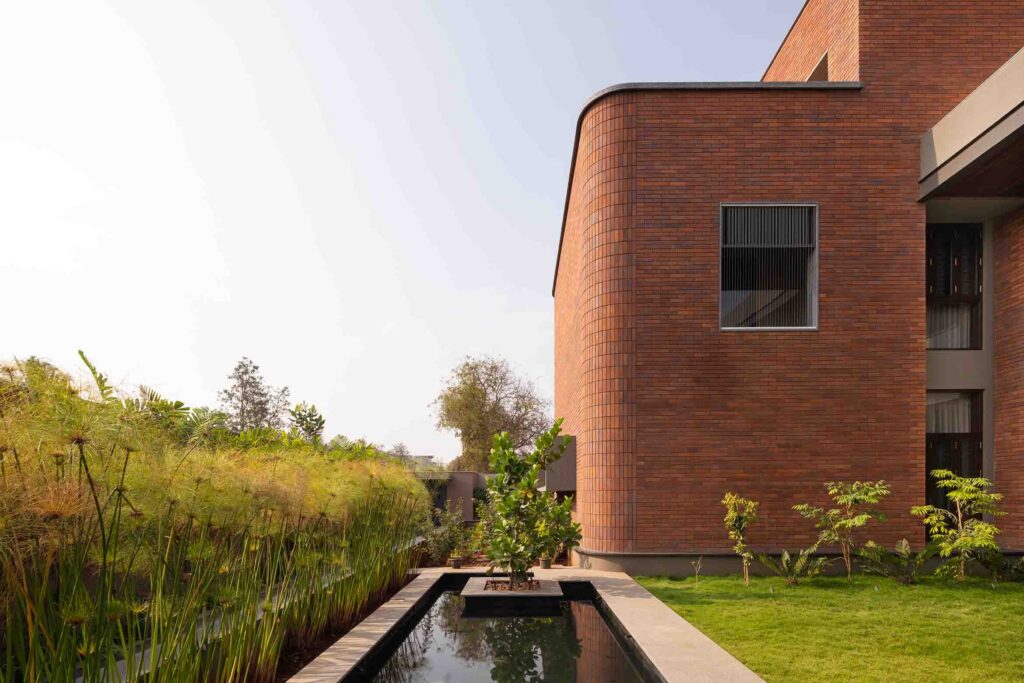
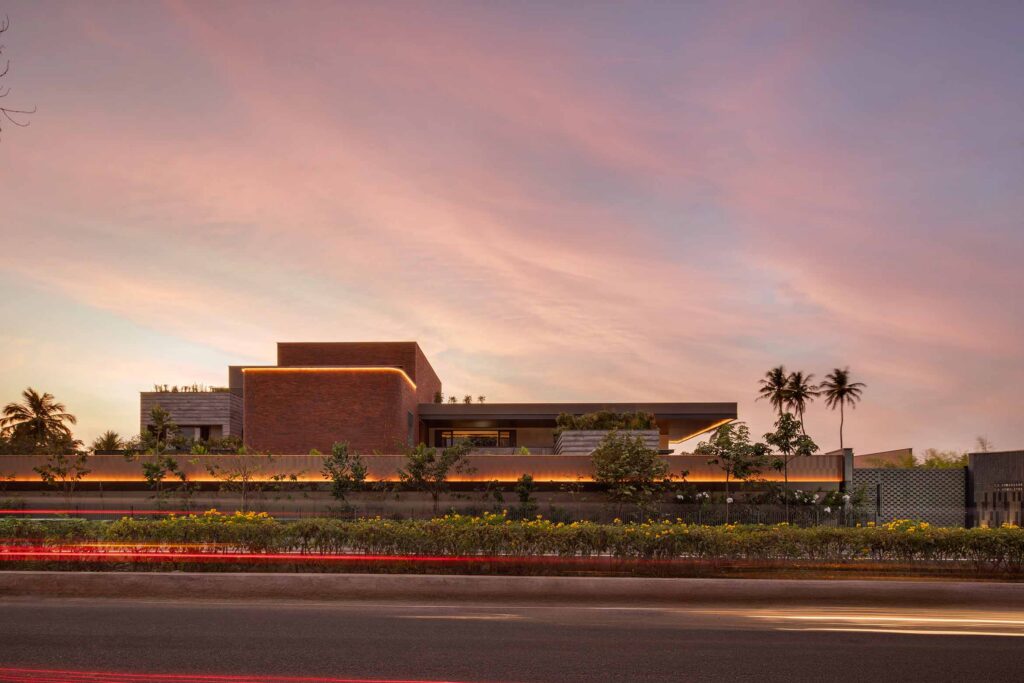
Architecturally, the house is conceived through its massing: a composition of juxtaposed volumes finished in brick, stone, paint and lime plaster, articulated through clean lines. Volumes vary in scale and proportion, lending the built form a bold yet measured presence, while expansive roofs and overlapping canopies give the home its form, best experienced as one approaches the site along the driveway.
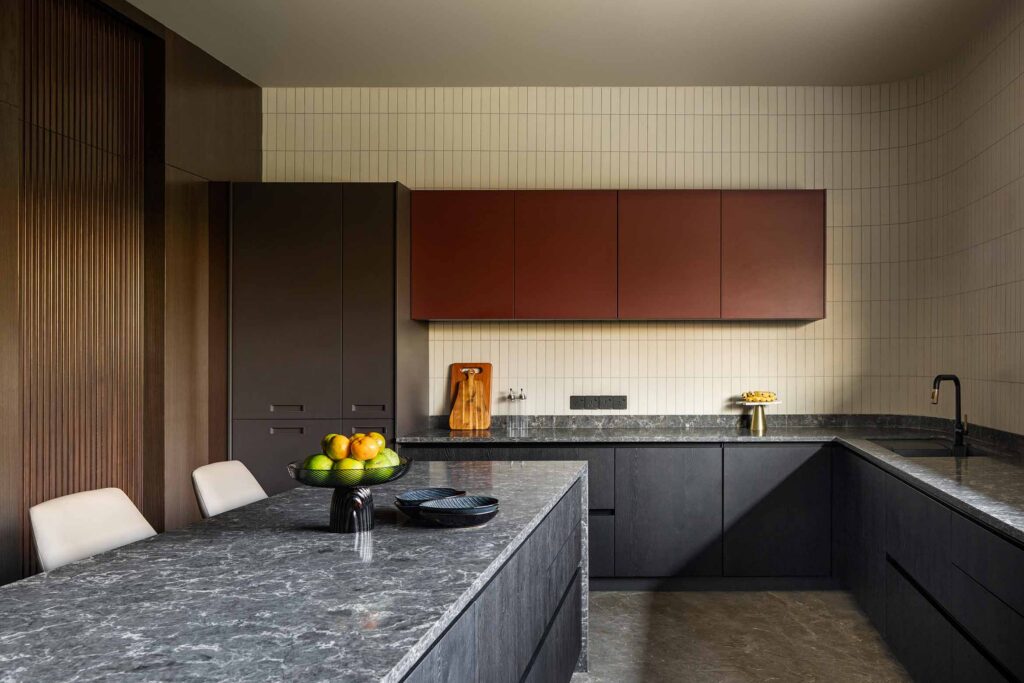
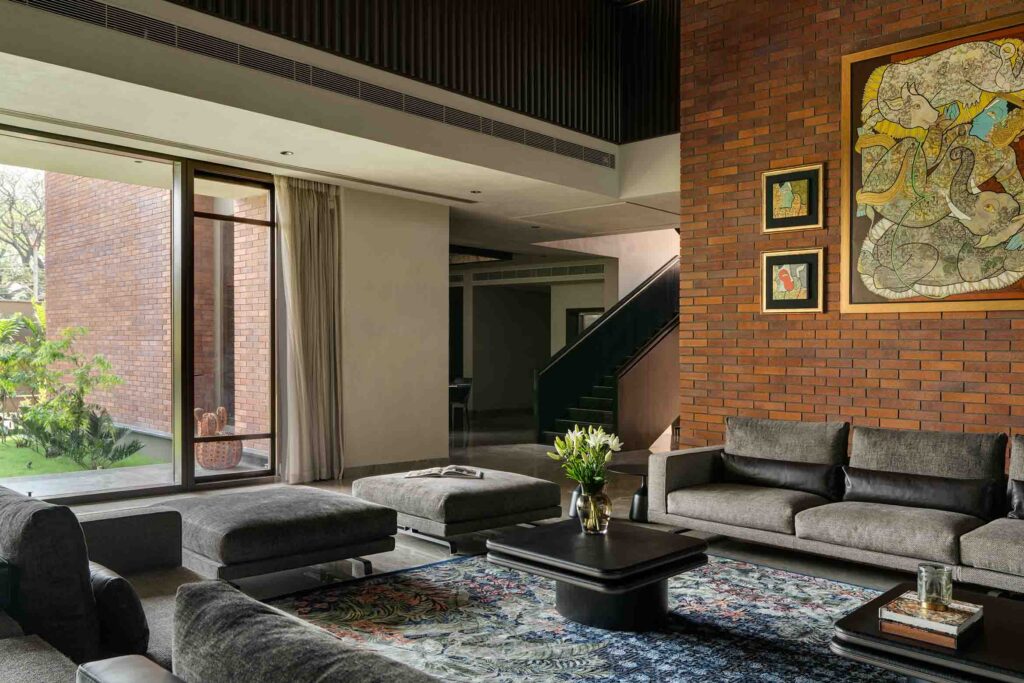
Across the interiors, conceived by Shweta Vijay of SV Design Studio, materials from the building’s exterior slip gently indoors to create a quiet harmony between structure and space. This continuity is most clearly experienced in the double-height living room, where a brick surface folds from outside to inside. In the foreground, furniture appears in composed arrangements, defined by elegant silhouettes and a muted palette.
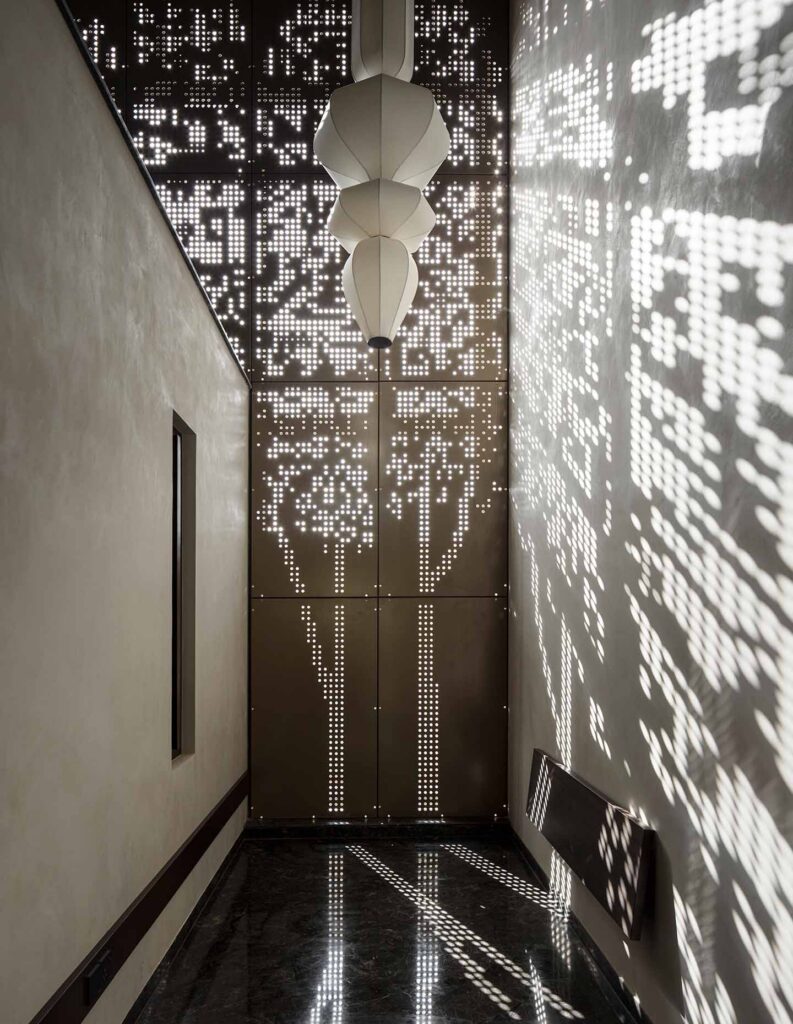
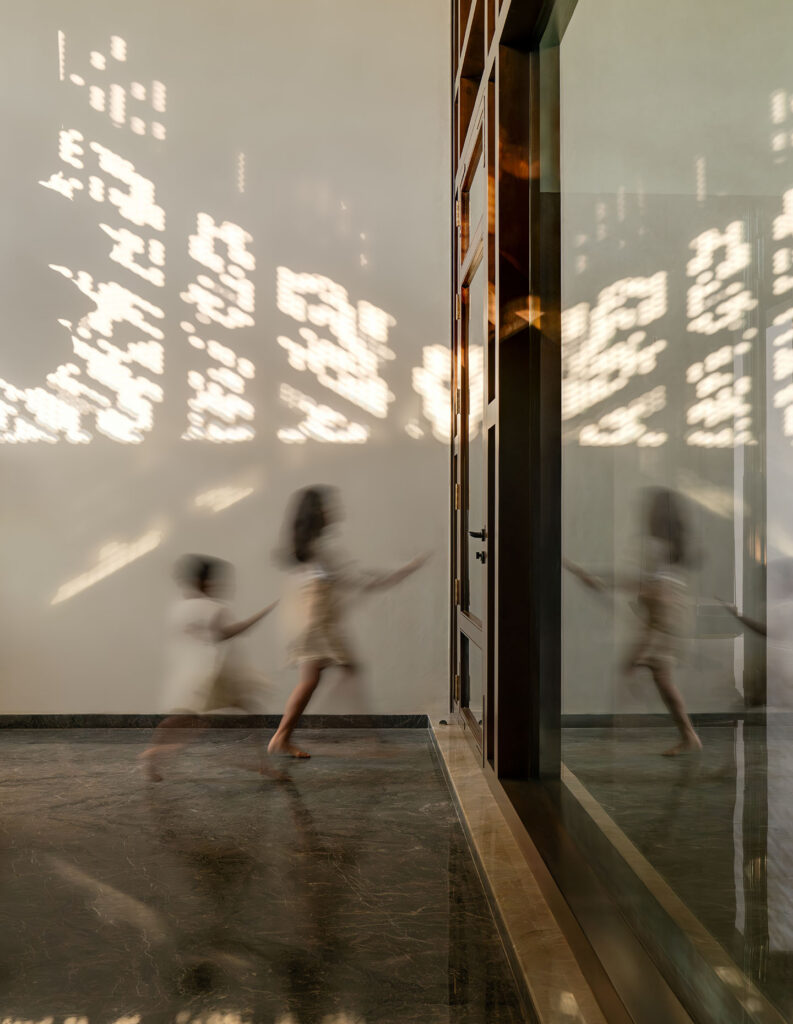
In the prayer room, a sciographic aluminium screen modulates the afternoon light. Its tree-shaped perforations cast shifting shadows across the space, recalling temple settings nestled among trees.
Related: Primed to stand the test of time
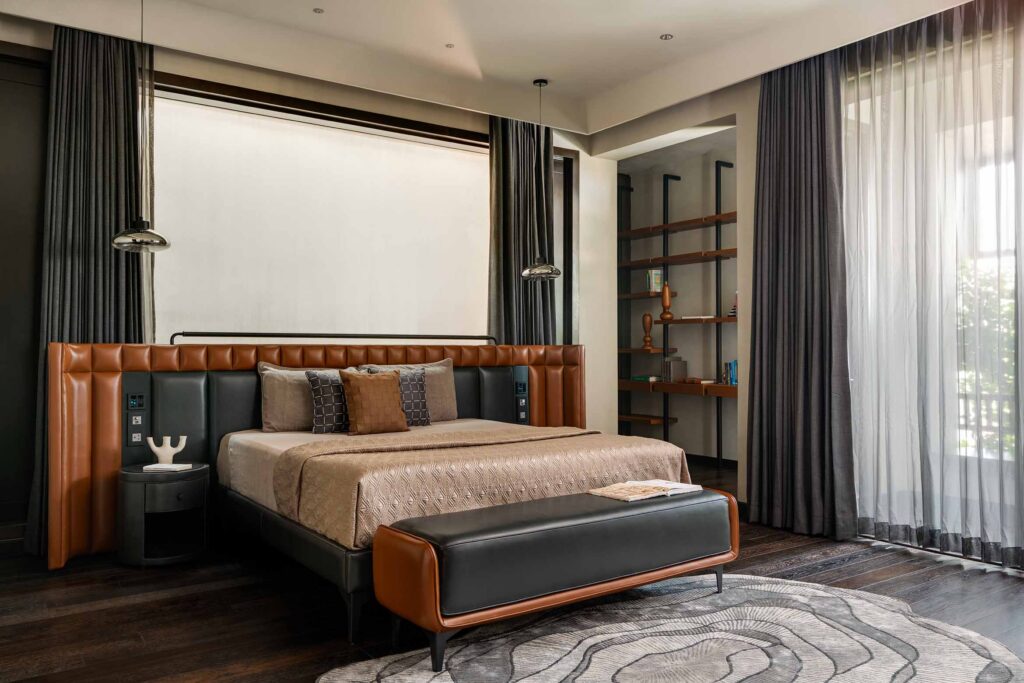
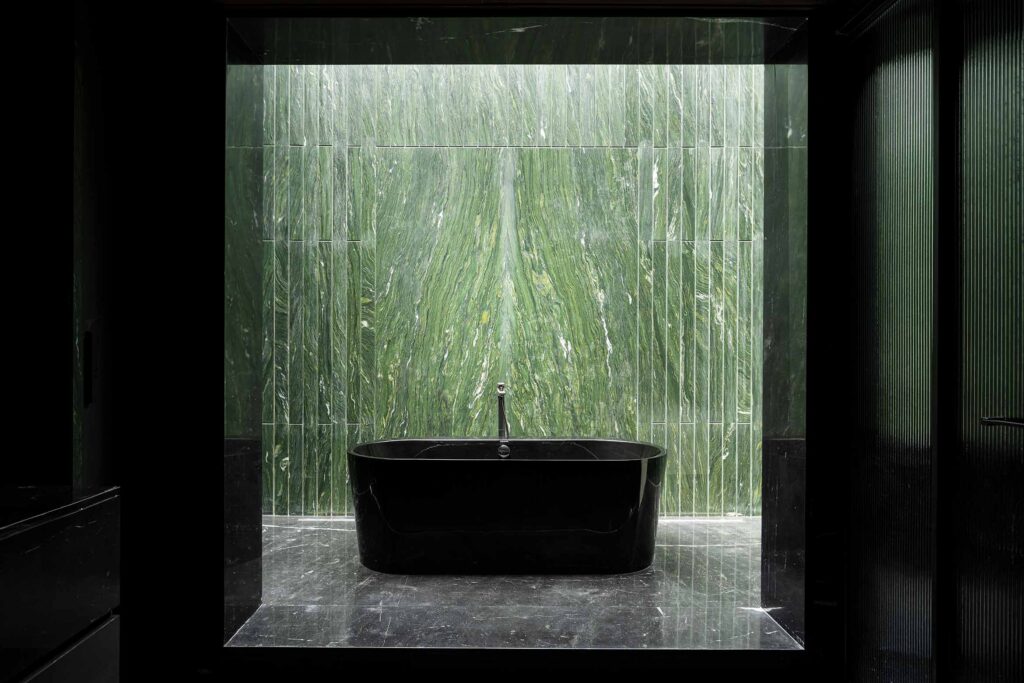
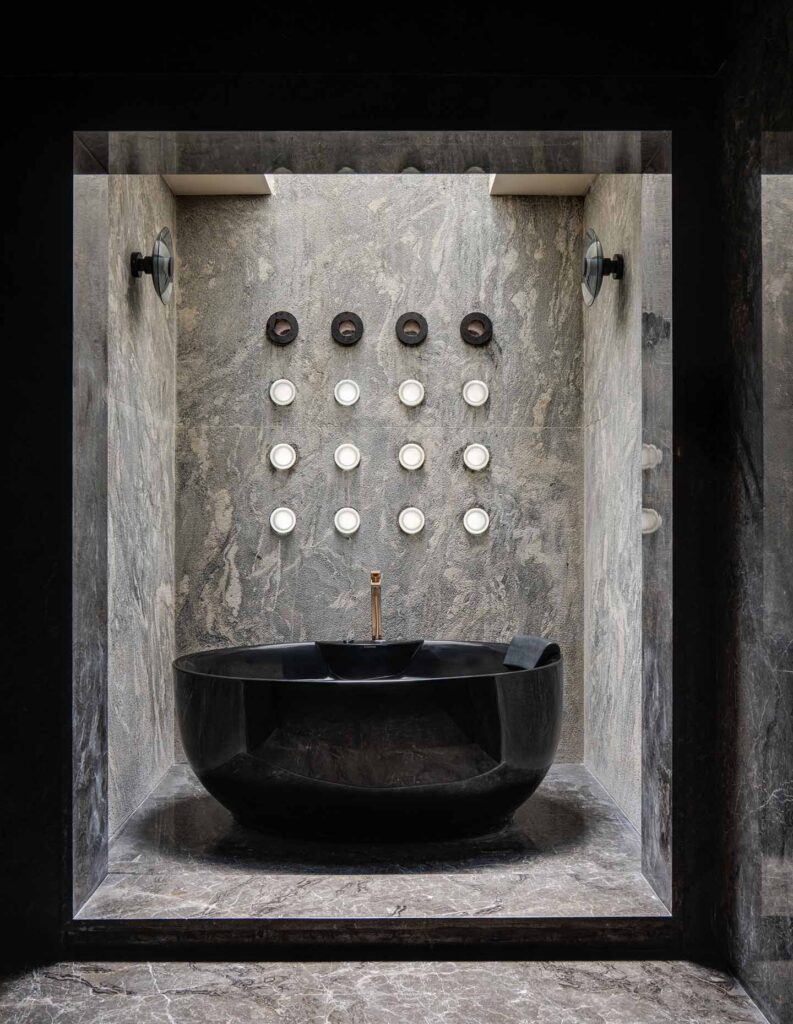
The bedrooms are designed around their inhabitants’ sensibilities. For instance, the parents’ ensuite on the ground floor carries subtle traditional references such as a four-poster bed and printed textiles. The sons’ master suites adopt a more contemporary language with stone, wood, metal and bespoke furnishings. In the bathrooms, graphic marbles and sculpted stone basins are animated by daylight from skylights.
How does the planning allow the house to feel both protected and open?
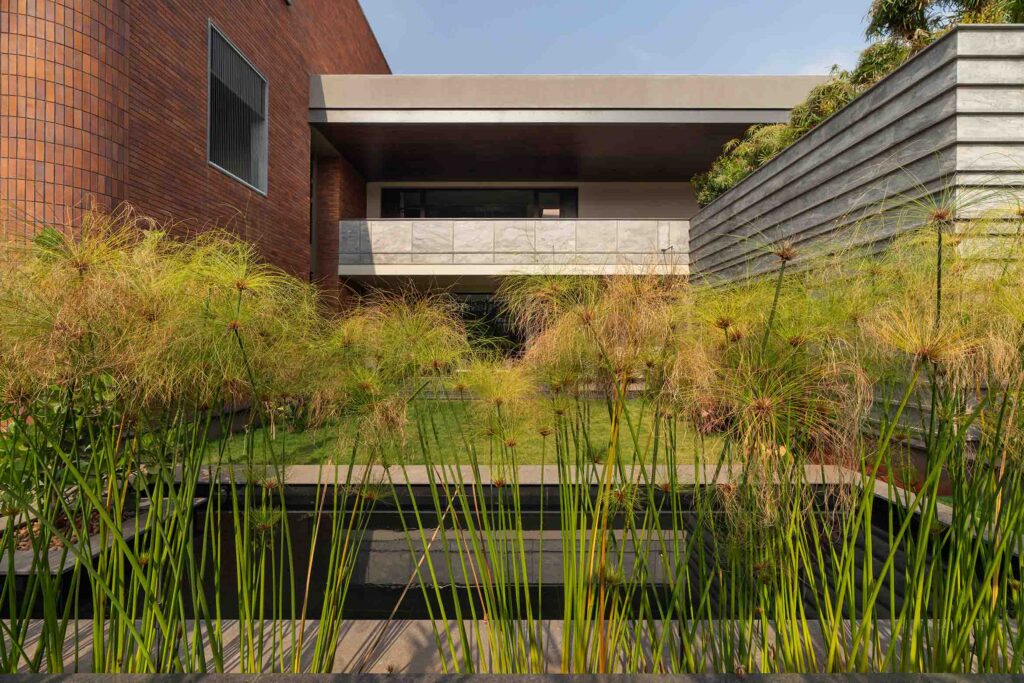
This vision, combined with the client’s need for absolute privacy, led us to design a home where the gaze turns inward. Approaches are carefully controlled and sightlines meticulously filtered to limit exposure to the outside. Fenestrations along the street-facing edge are sparse and, where present, oriented away from view or shielded beneath deep overhangs. Landscape elements such as gardens, terraces and courts are woven into the plan, allowing daily life to unfold into these spaces while moderating the microclimate.
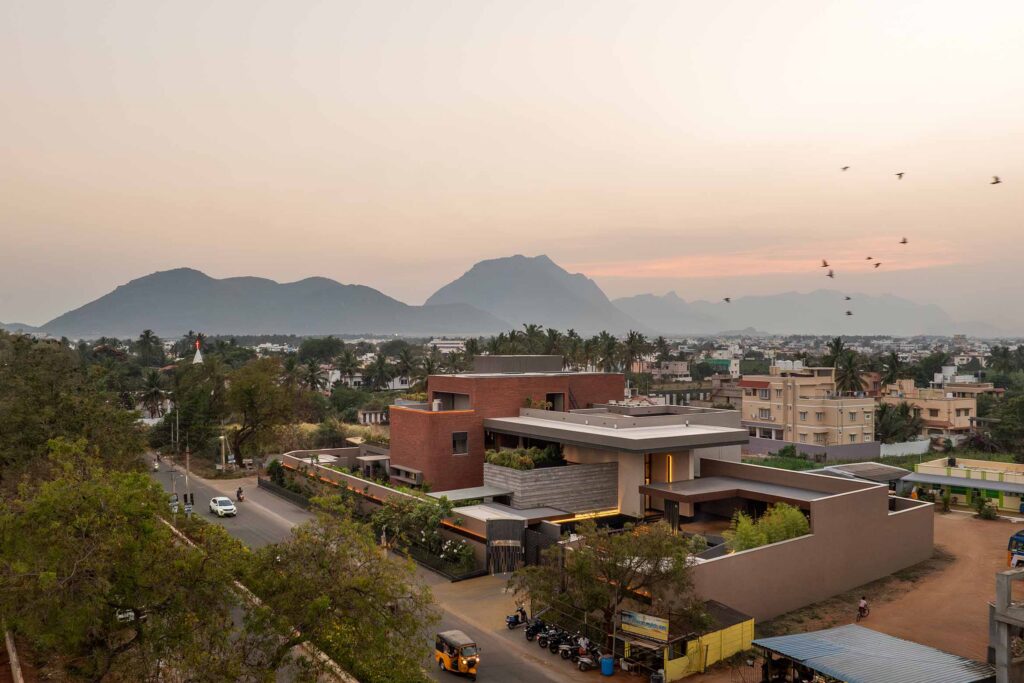
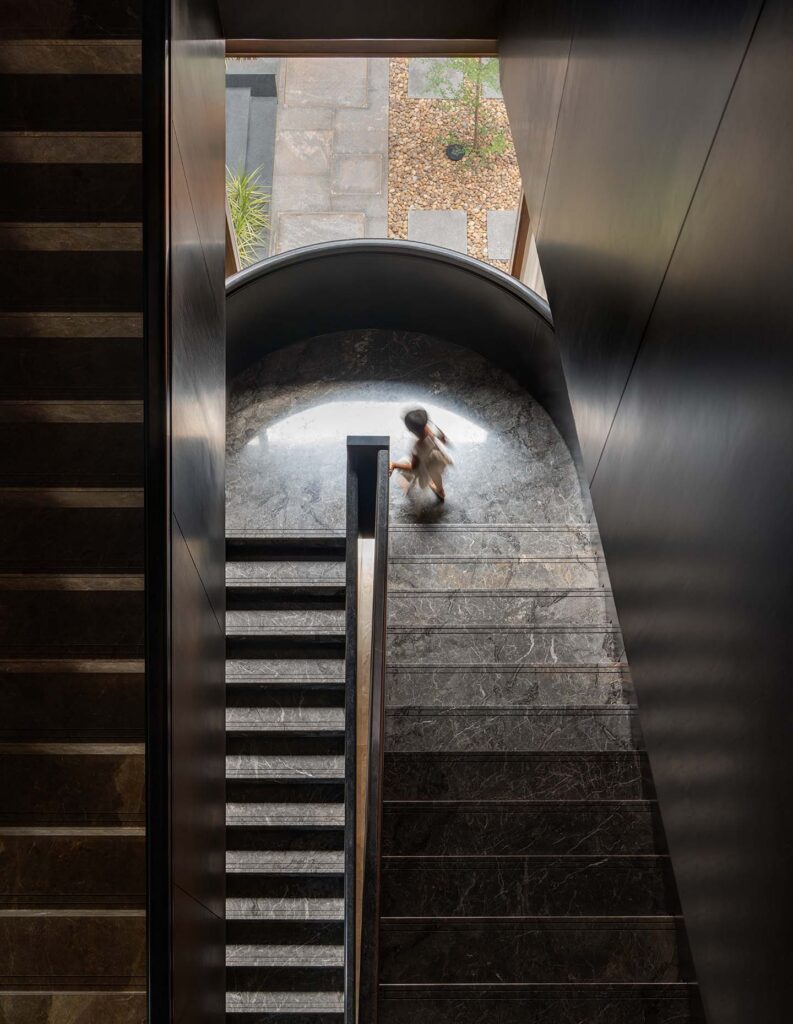
Movement and levels of access are organised across three floors. On the ground level, a separate entry regulates access to the office for visitors attending brief meetings. Beyond it, the family’s social spaces are clustered around a living room that opens to the garden. A second courtyard separates the family living areas from the staff quarters. The first floor accommodates a gym and spa alongside two master suites and a guest bedroom, while the second floor is dedicated to recreation.
Pudhur House proves that inward-looking architecture need not be insular. Shaped by layered massing, calibrated openings and a careful choreography of courts and gardens, the house turns away from the street to open itself fully to light, air and landscape. Control is embedded in plan, section and envelope, yet what is experienced is openness. It is a sequence of spaces where privacy and porosity, retreat and connection can coexist without tension.
Looking back on the project, what moments stand out to you most?
As designers, it is difficult to single out one favourite part, as the project is the result of an evolving and engaging process. From the early stages — navigating uncertainties during the pandemic — to developing strategies that shaped the final outcome, each phase brought its own challenges and learning.
One of the most defining elements of the house is the main canopy. Designed as a cantilevered structure, it required careful detailing and precision during execution. Its successful realisation, along with the way the surrounding architectural elements complement it, stands out as a particularly rewarding moment.
Secondly, justice was done to the interior spaces by ensuring the design language remained consistent with the overall architectural theme. Each room has been thoughtfully crafted to reflect the identity, needs and personality of its inhabitant, allowing for individual expression and creative freedom within a cohesive framework.
Overall, the project celebrates interconnected spaces, creating a home that is open, light-filled and well ventilated. The design carefully balances openness with privacy, ensuring that while spaces remain visually and functionally connected, the personal comfort and seclusion of the occupants are maintained.