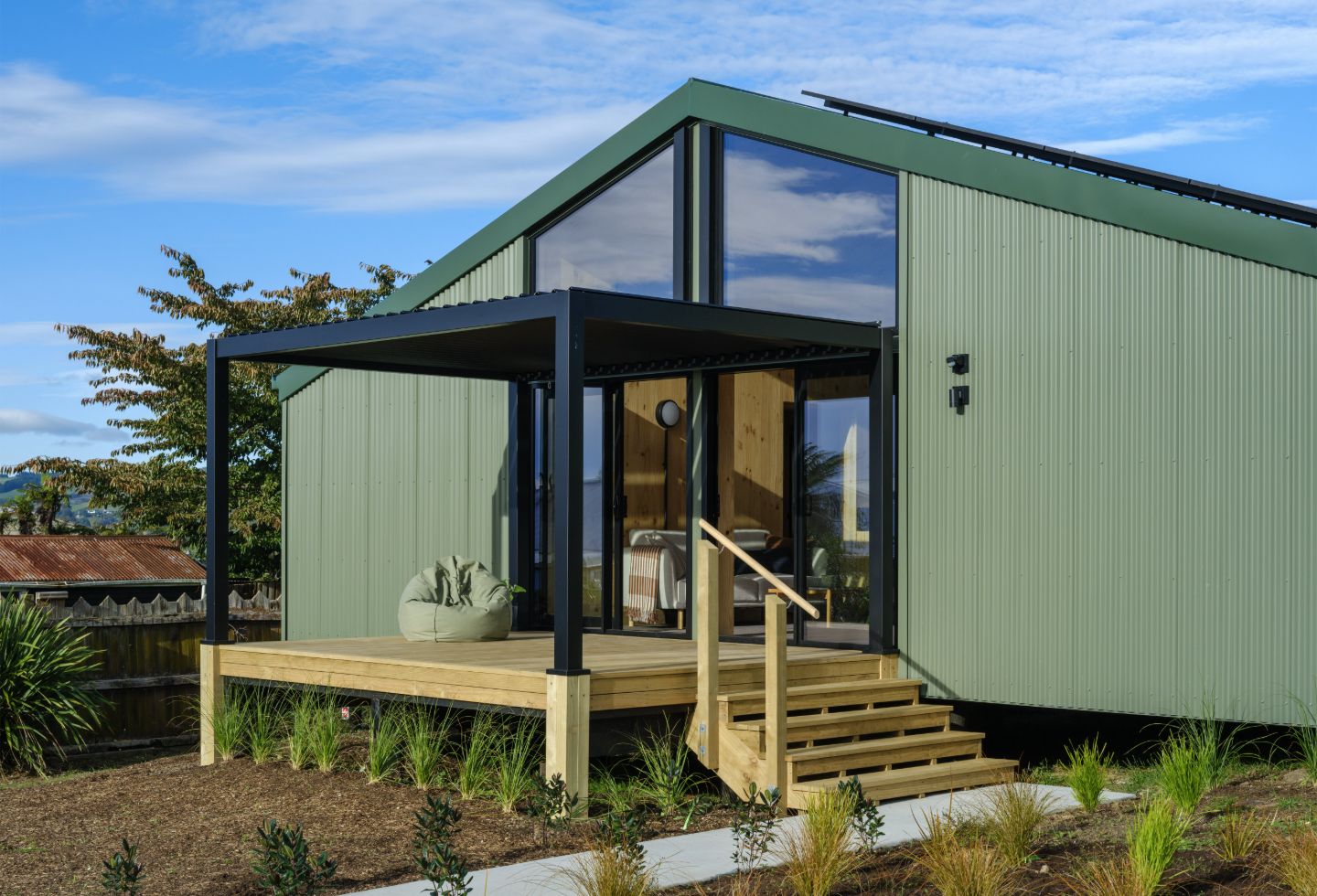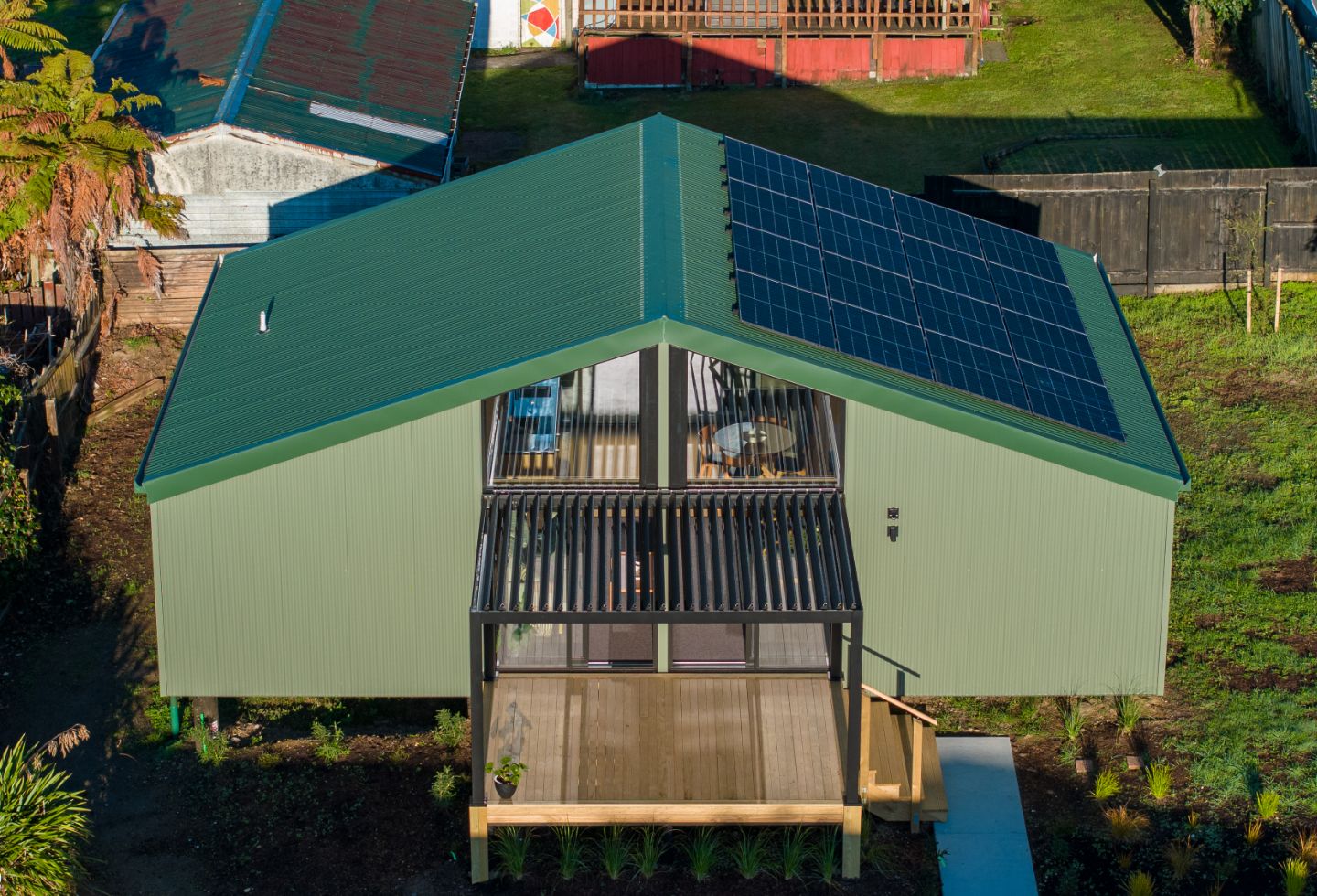

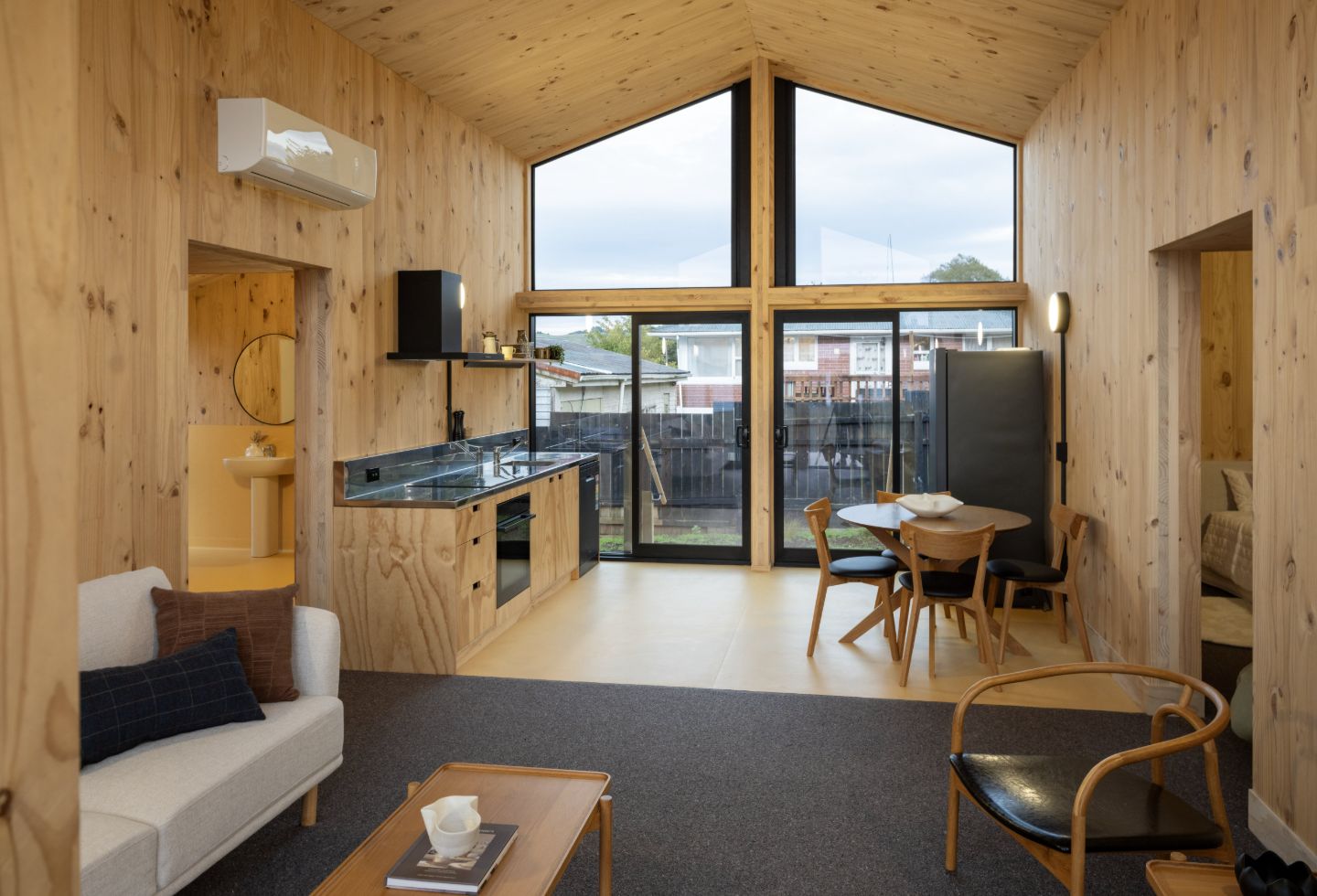
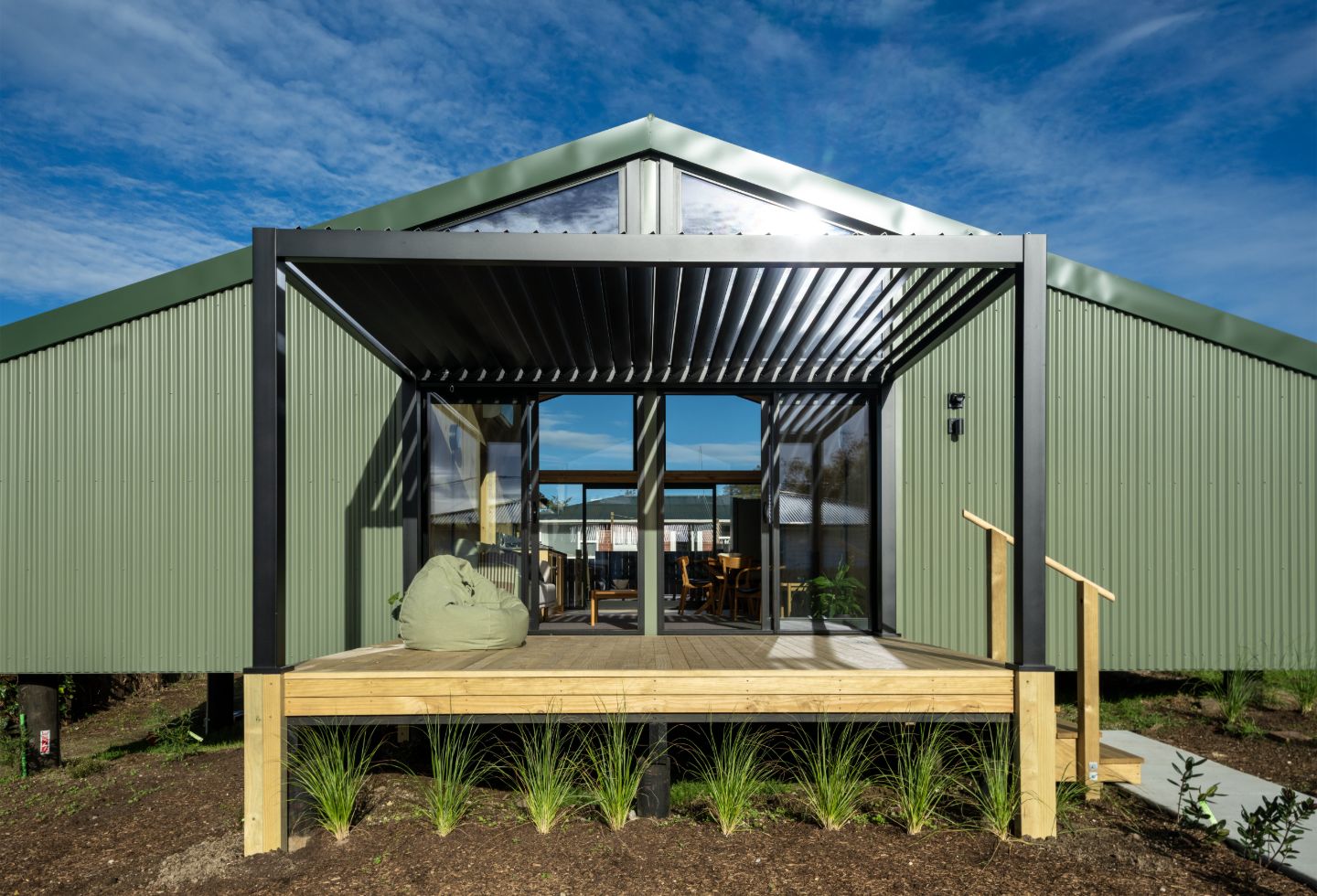
New Zealand architecture practice RTA Studio has created the Living House, an innovative system for a three-bedroom, 85-square-metre house combining home-grown architectural IP with advanced timber technology. It’s designed to transform traditional construction into a streamlined assembly process.
“This isn’t just about affordability; it’s about rethinking construction to create high-quality, carbon-zero homes that are faster, simpler and more sustainable to build,” says RTA Studio founder Richard Naish. “With the Living House system, you can build a house in six weeks and a neighbourhood in months, not years.”
In 2024, Naish presented the concept in Singapore at the World Architecture Festival after it was shortlisted in the future housing category. This year, demonstrating RTA Studio’s commitment through direct investment, Living House purchased a subdivided section in suburban Rotorua to build the first Living House. In doing so, it proved the viability of the concept, confirmed the project costs and validated the real-world performance of the design.
Naish says the Living House project started as a studio research challenge during Covid. “We worked on it for around three years to get to this stage,” he notes. “We’ve done detailed fabrication plans, completed detailed line-by-line cost estimates of all the things required to build it, and we want to prove that high-quality, carbon-zero housing can be produced quickly and affordably.”
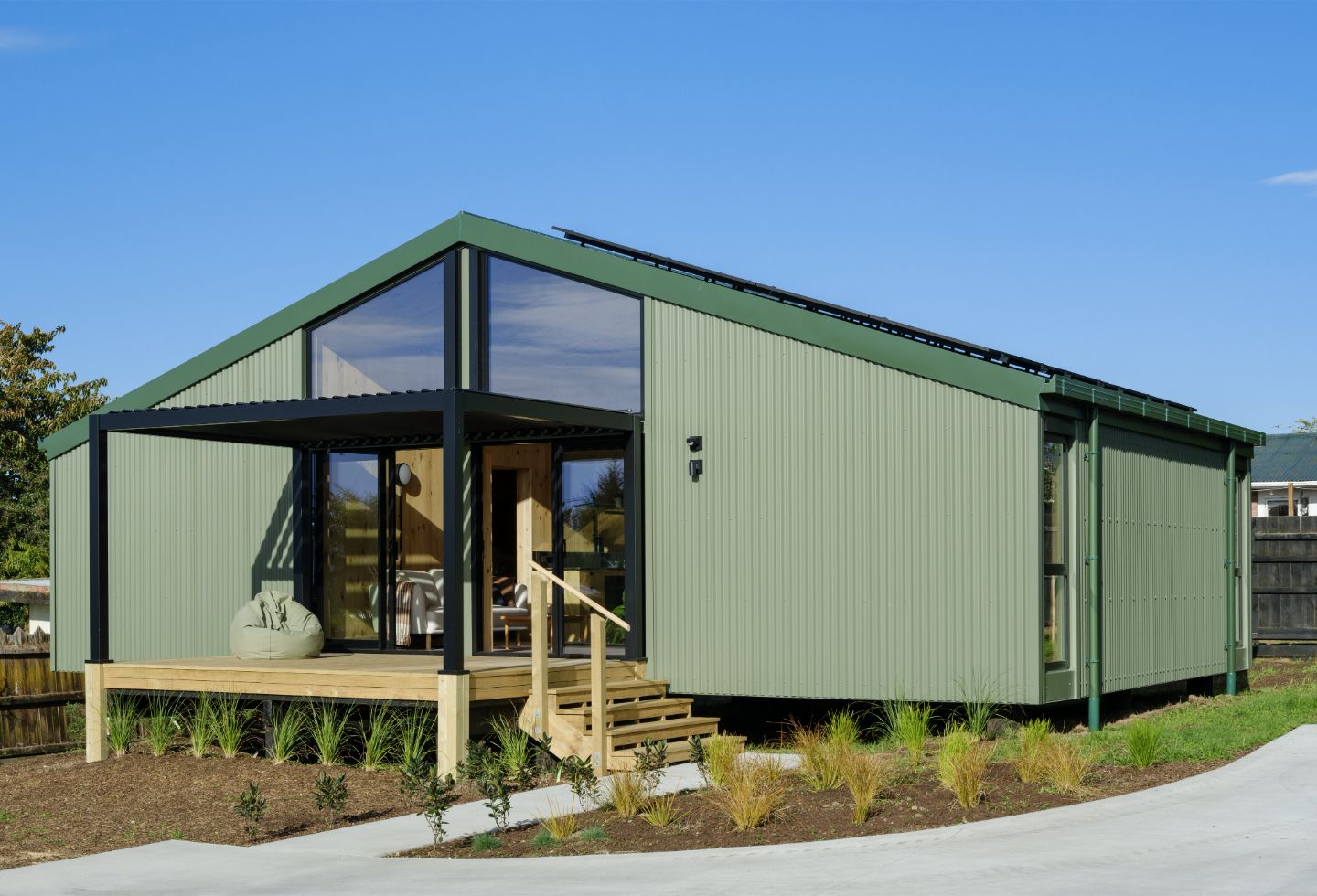
“Around the world, there are many examples of architect-designed housing systems that never get past the conceptual stage because of the investment required. We’re architects, not developers, but we’re personally invested in the Living House because we have exactly the skill set required to design better, faster and healthier affordable housing.”
The Living House system is designed for quick assembly – taking as little as six weeks once the foundation is ready. While the average cost of a New Zealand Government funded house is $586,000 to build (excluding land costs), the Living House is just $335,000, excluding the cost of land but including GST.
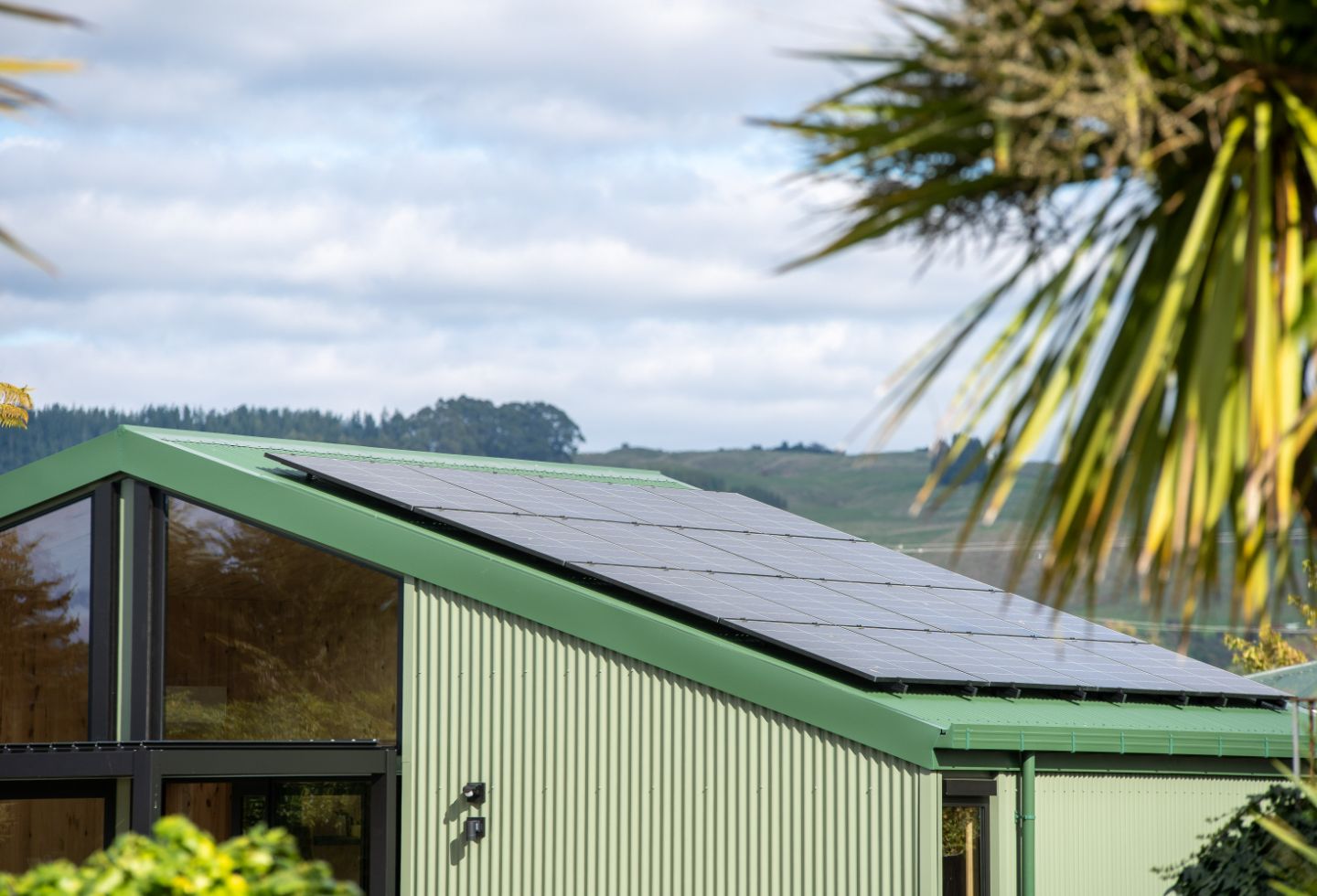
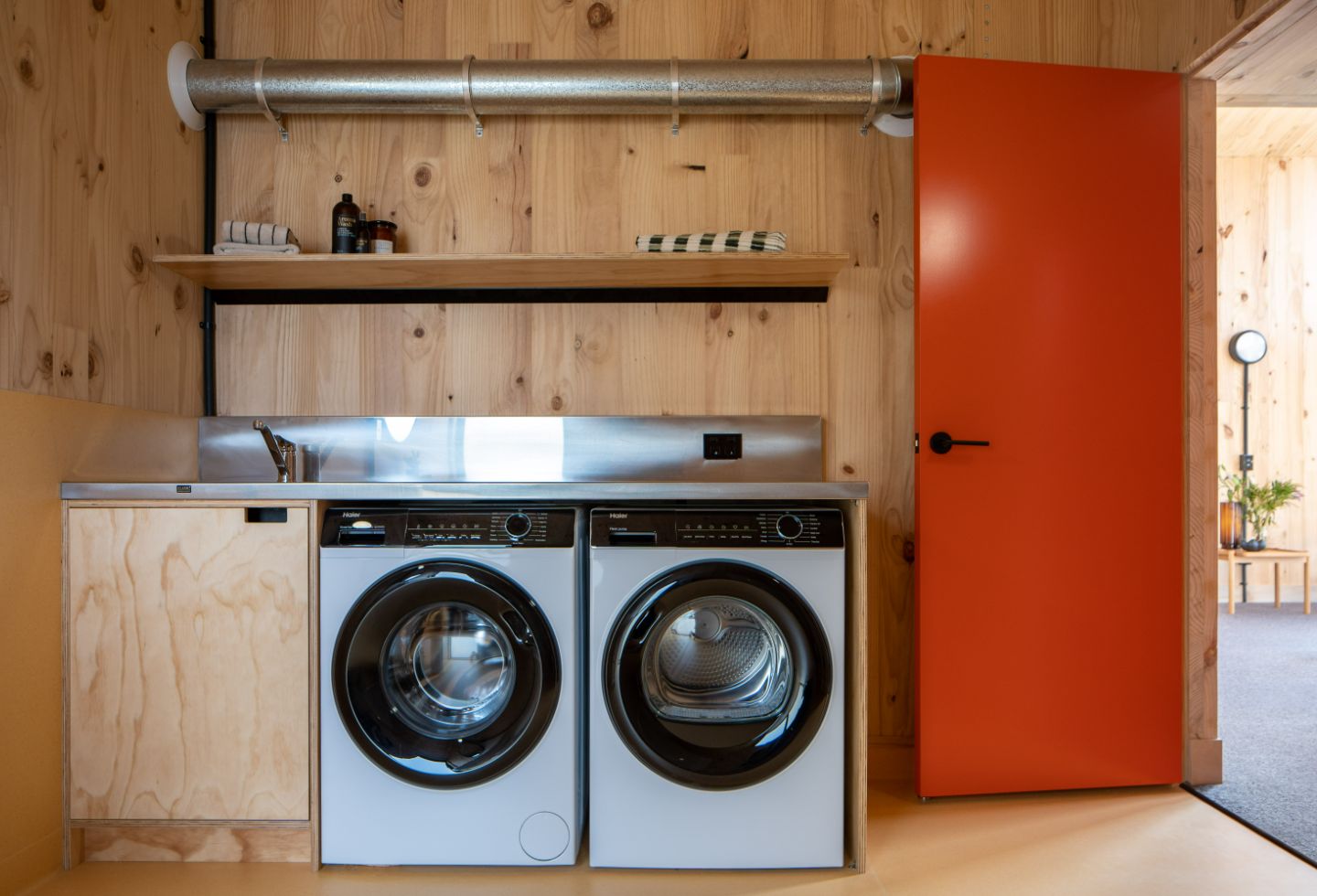
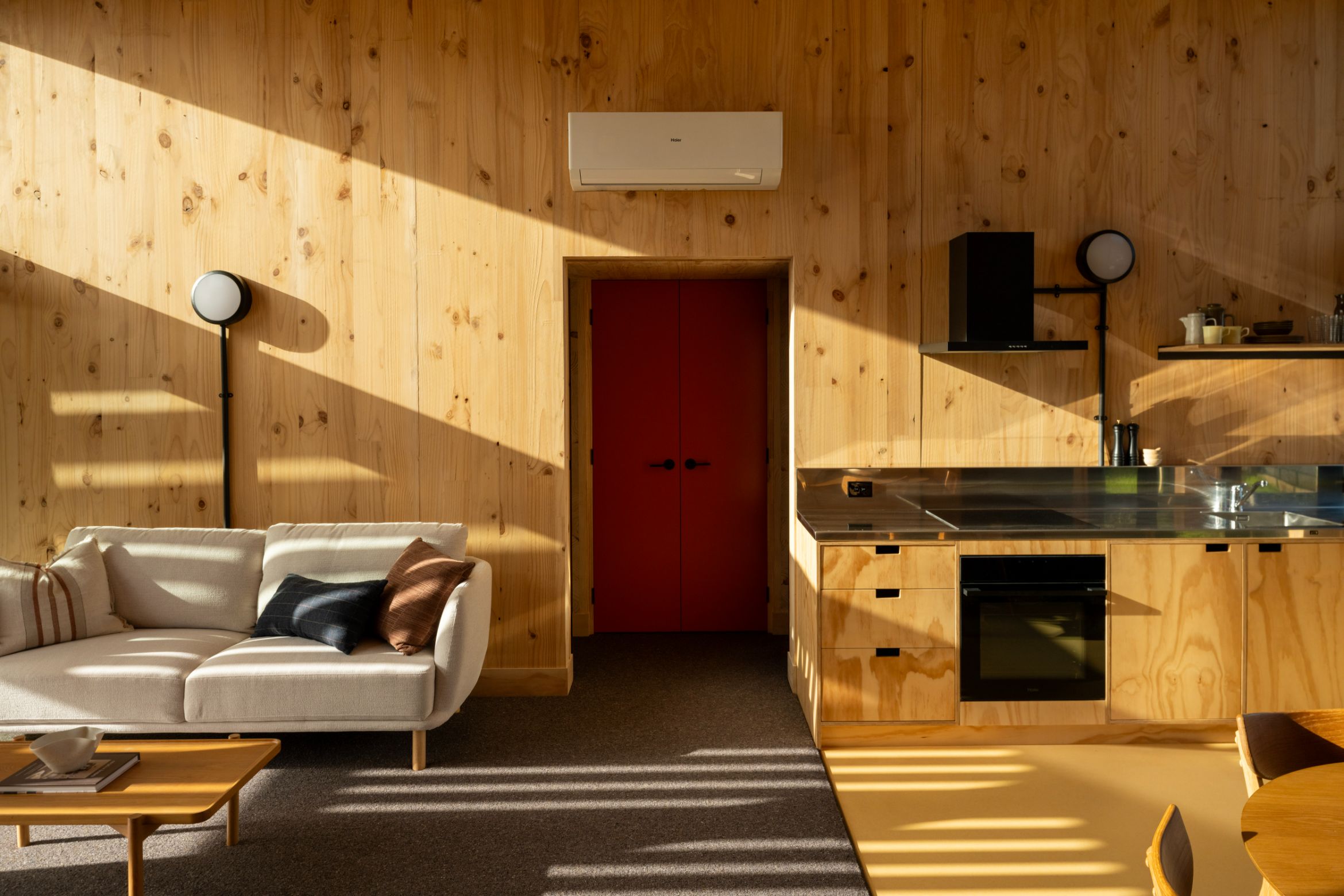
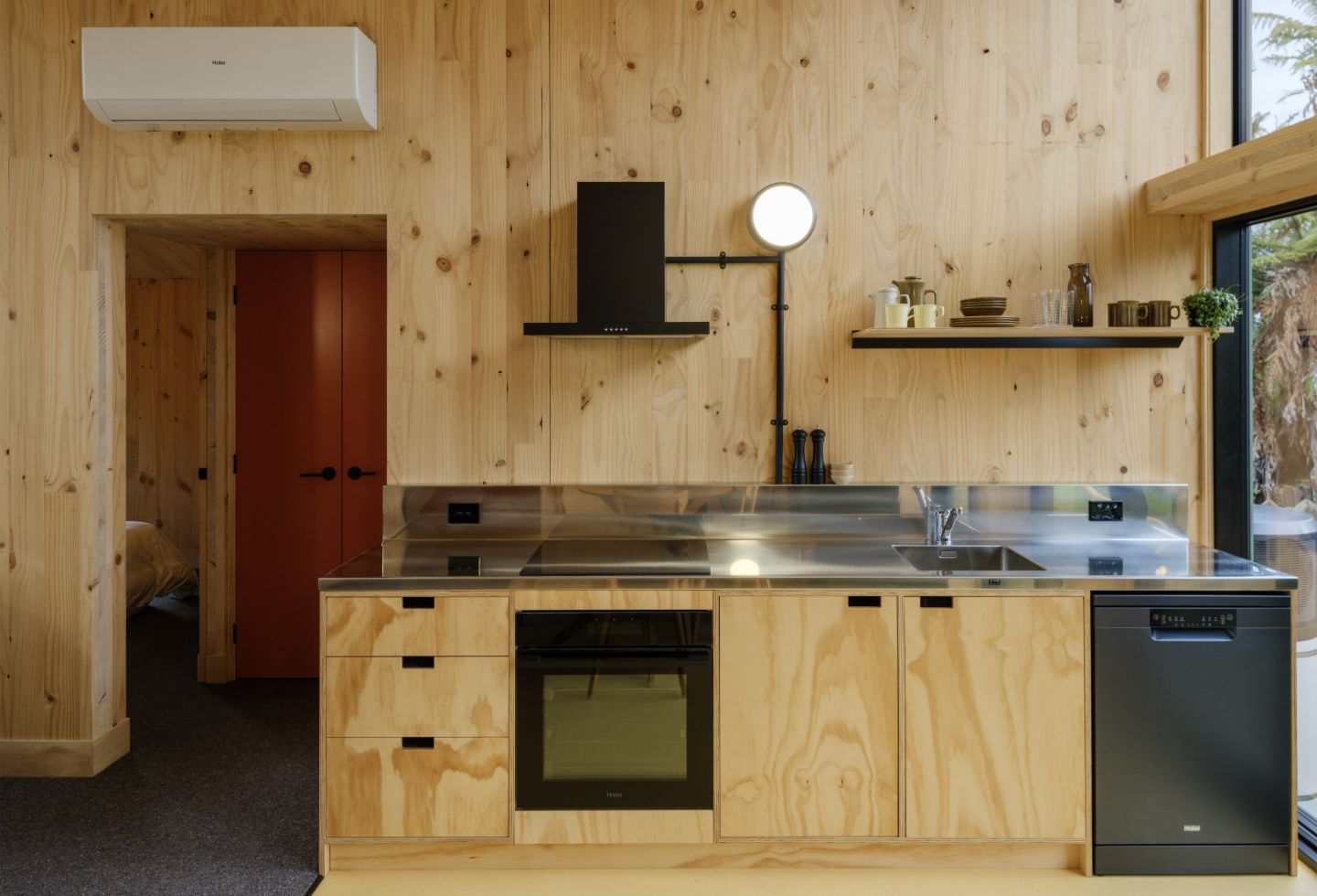
That cost includes a functionally designed kitchen with a green energy and appliance package put together by Fisher & Paykel Home Solutions (which includes a Haier cooktop, oven, rangehood and dishwasher, as well as solar panels, inverter, solar hot water and heat pump). Flooring, lighting and carpets are also included in the cost.
Now the first Living House is complete, the company will sell detailed plans with a MultiProof Consent and access to pre-negotiated supplier packages for materials to anyone who wishes to build their own Living House – whether that’s a first home, a dwelling on a sub-divided section, a beach house, country house, or new neighbourhood.
Related: NSW Pattern Book housing designs
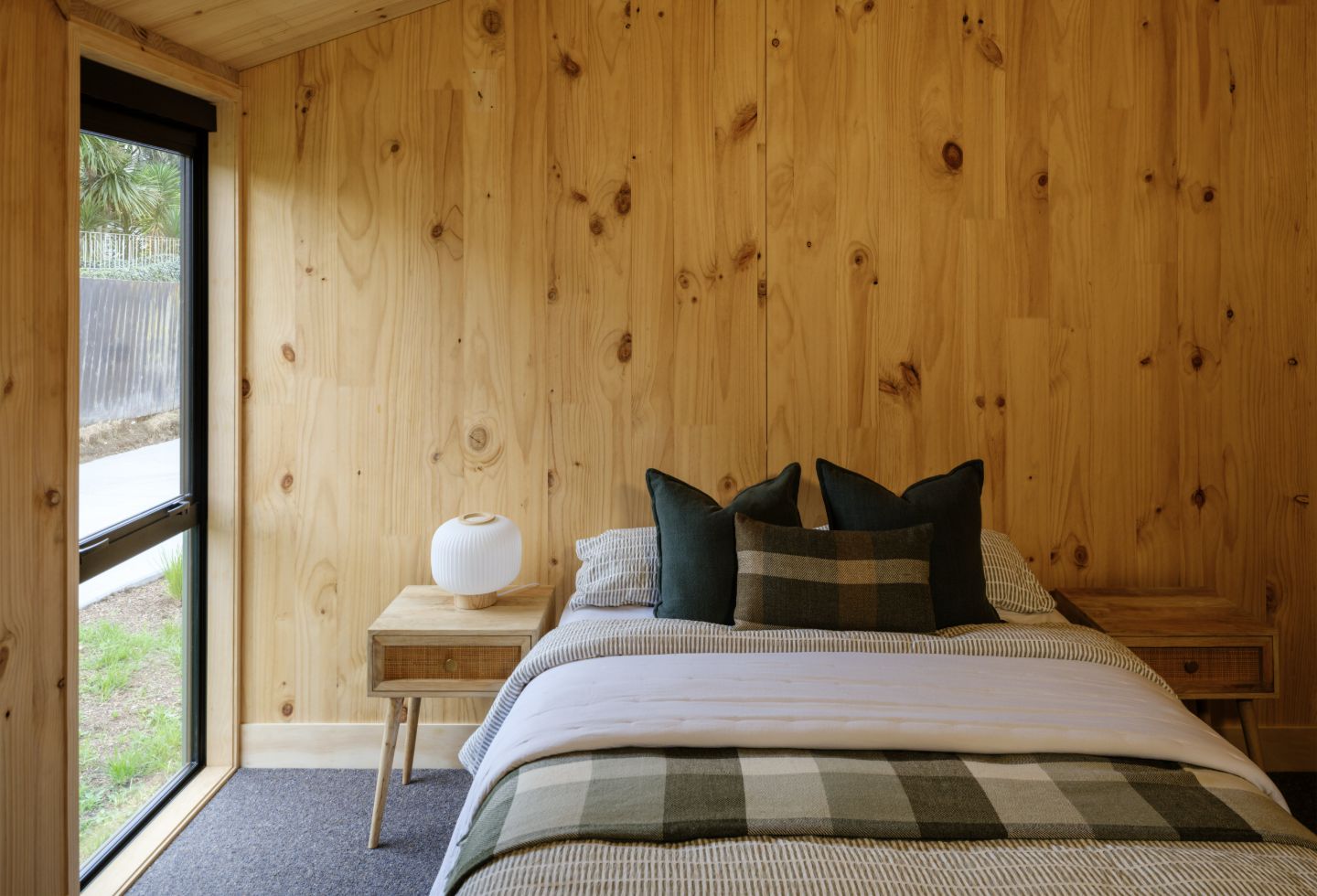
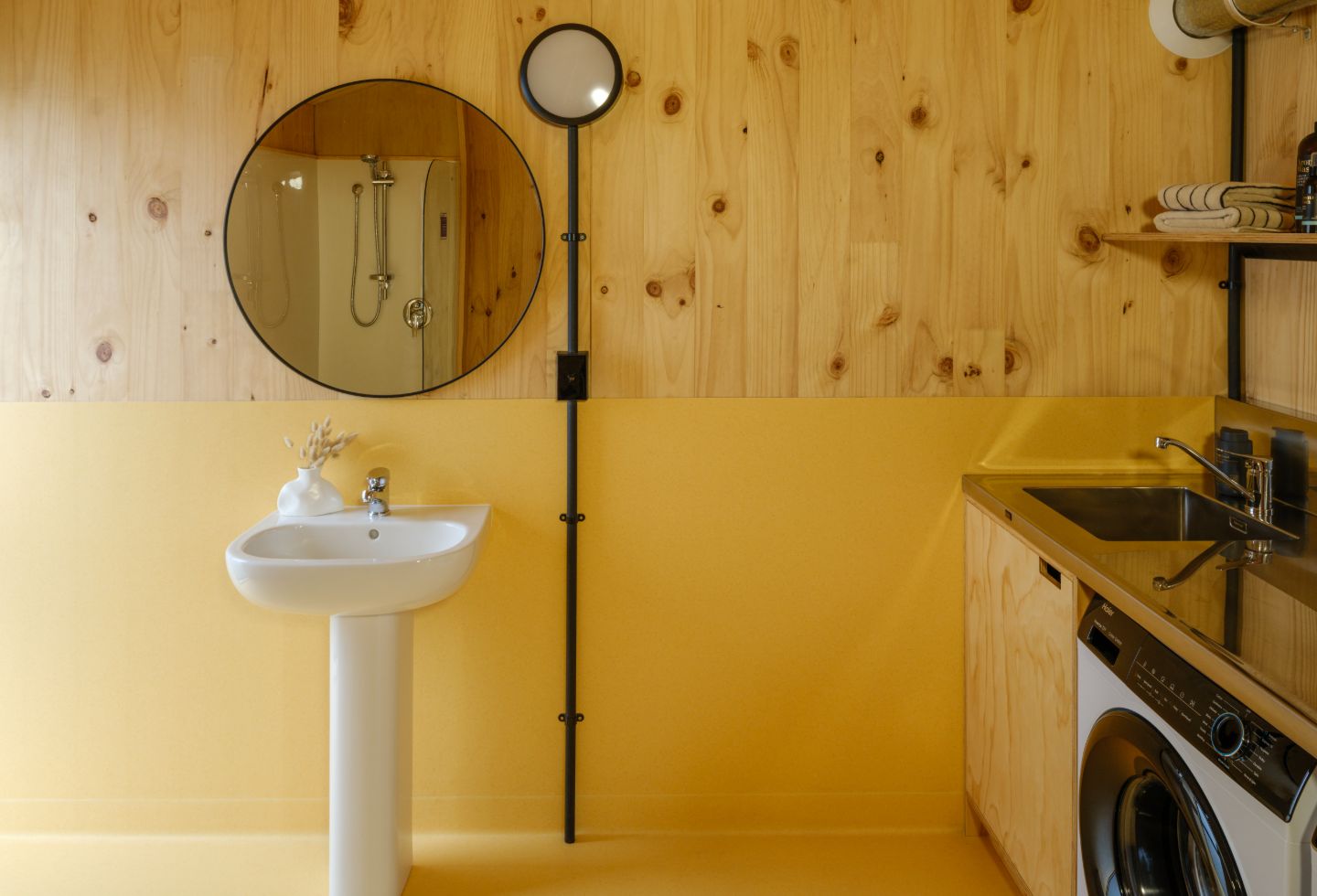
“The Living House isn’t a silver bullet for the New Zealand housing crisis,” says Naish. “The cost of land is a major issue, and a three-bedroom home isn’t fit for all scenarios – I think the most in-demand social housing typology in most areas is actually a single-unit dwelling. For us however, hearing daily news stories about kids living in cars and motels was a strong motivation to design a family home.”
The Living House combines intellectual property developed by RTA Studio with the mass timber fabrication expertise of Rotorua’s RedStag TimberLab.
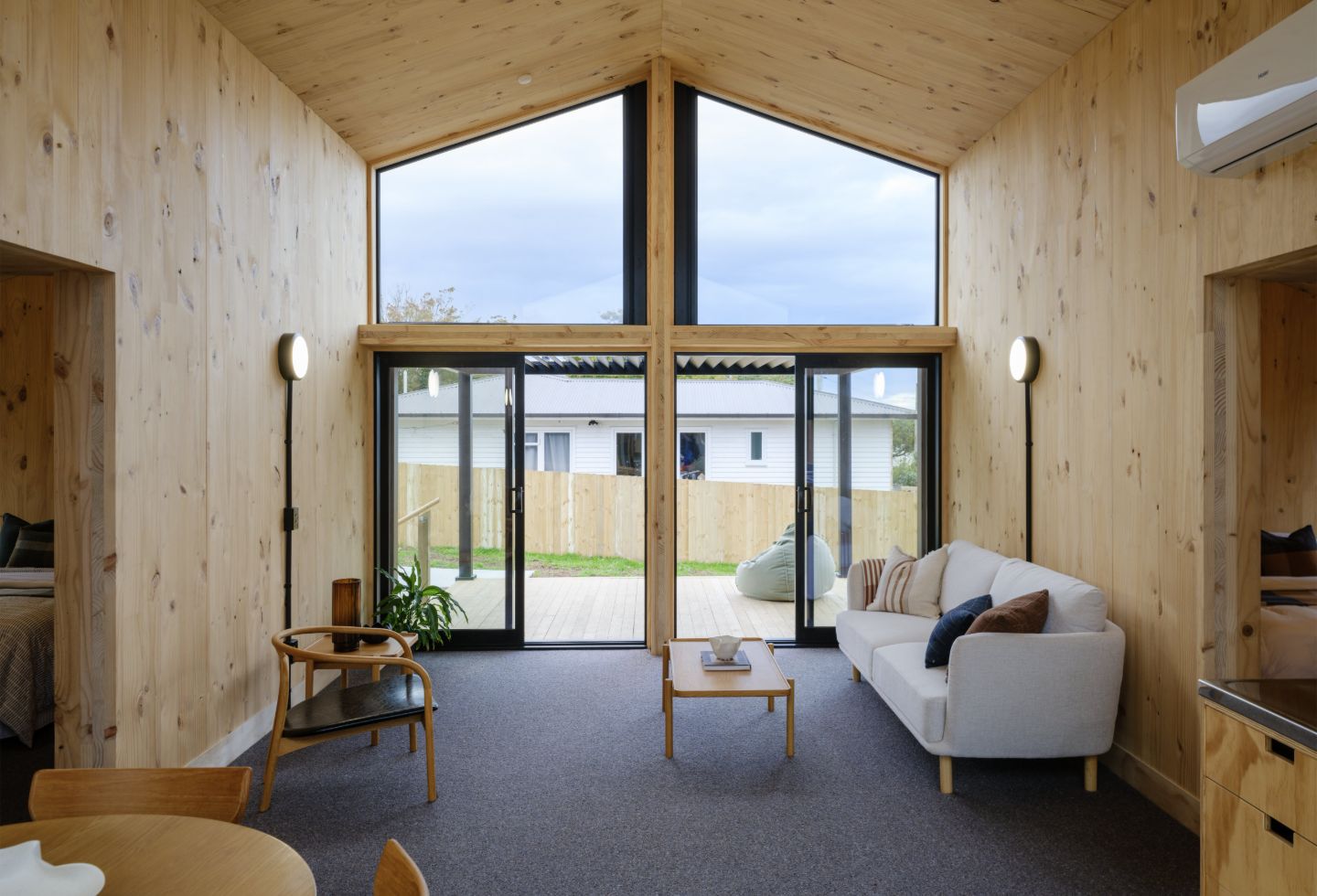
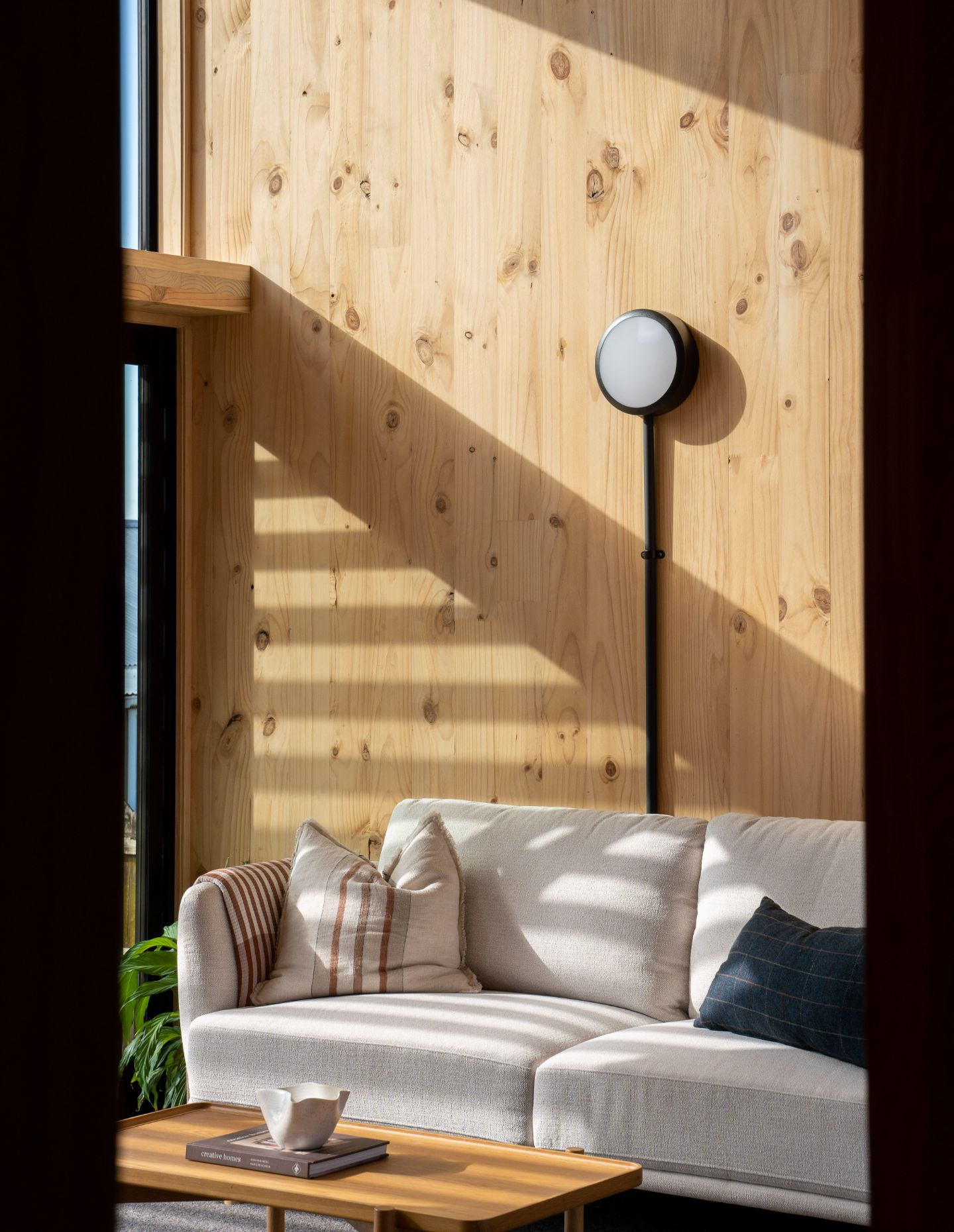
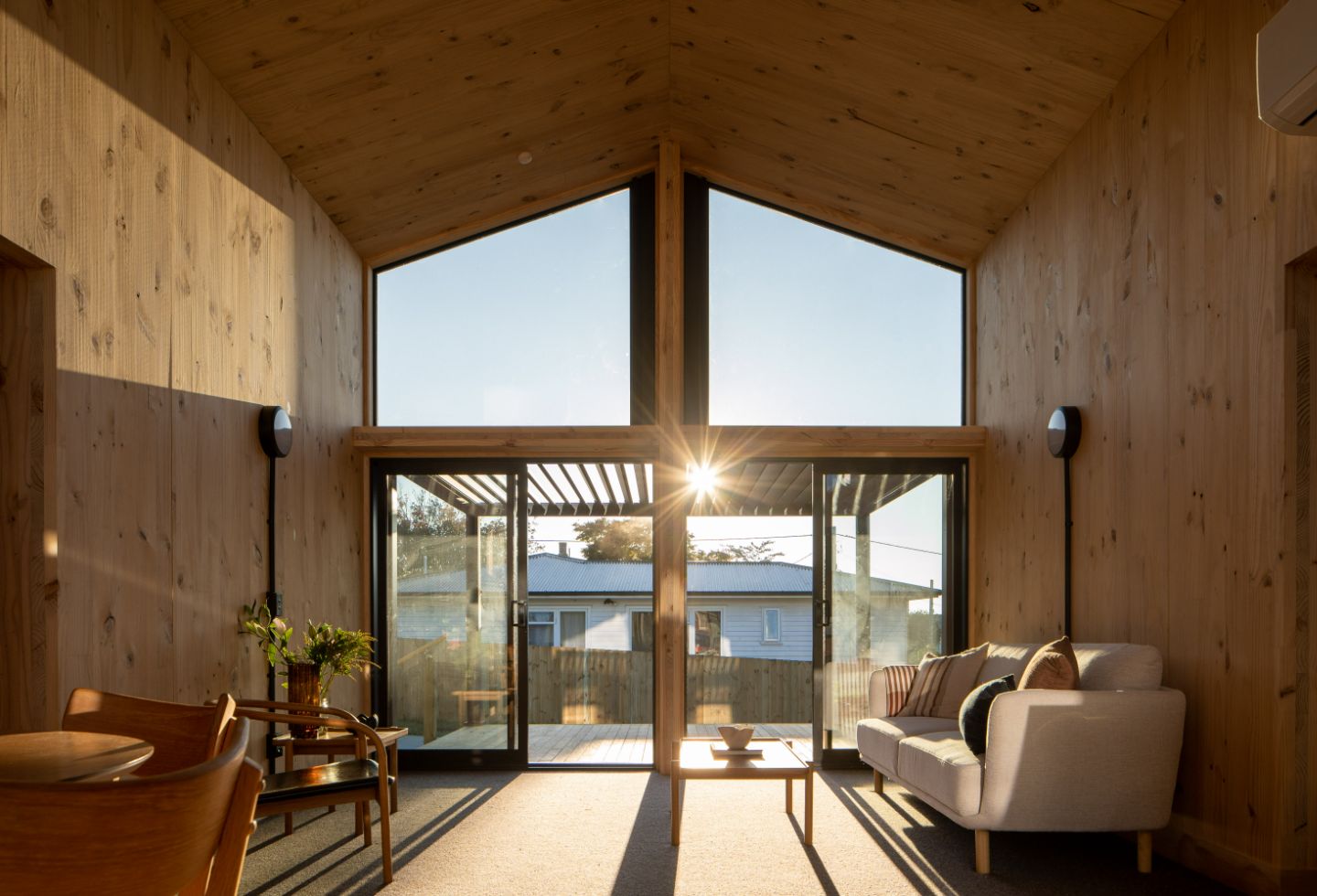
Construction is from natural, low-maintenance, low-carbon footprint building materials for a healthy indoor environment. Thermally efficient materials and technologies provide warmth in winter and cooling in summer and the design optimises natural light and ventilation, indoor air quality and comfort. All building modules arrive on a single truck and the system eliminates most on-site building waste.
Carbon modelling by sustainability consultancy The Lever Room shows the building stores and saves more carbon (-12,056 kgCO₂e) than it emits over its lifecycle, due to renewable materials and exported clean energy. The Living House sequests 140 kgCO₂e per m2.
Description provided by designers.