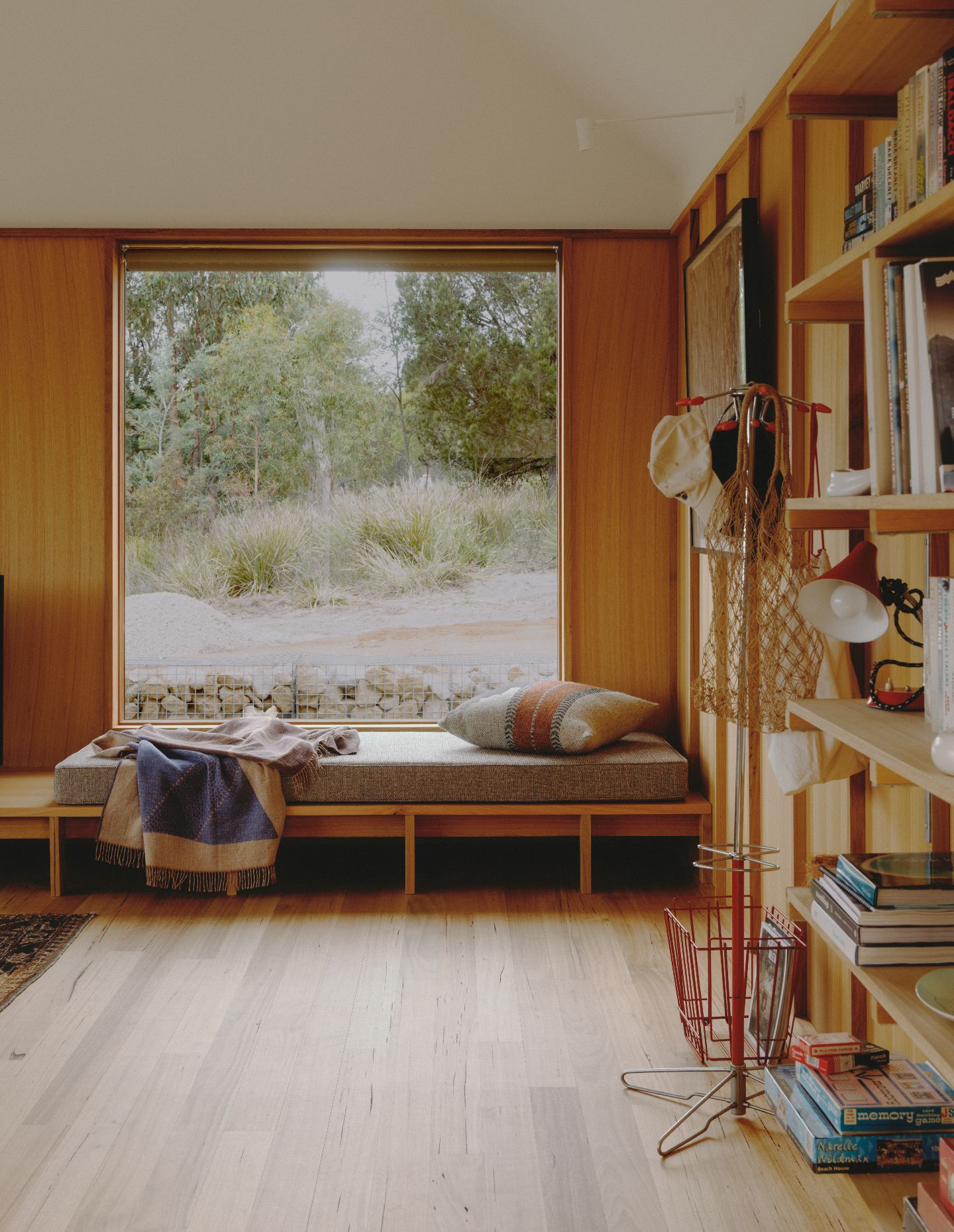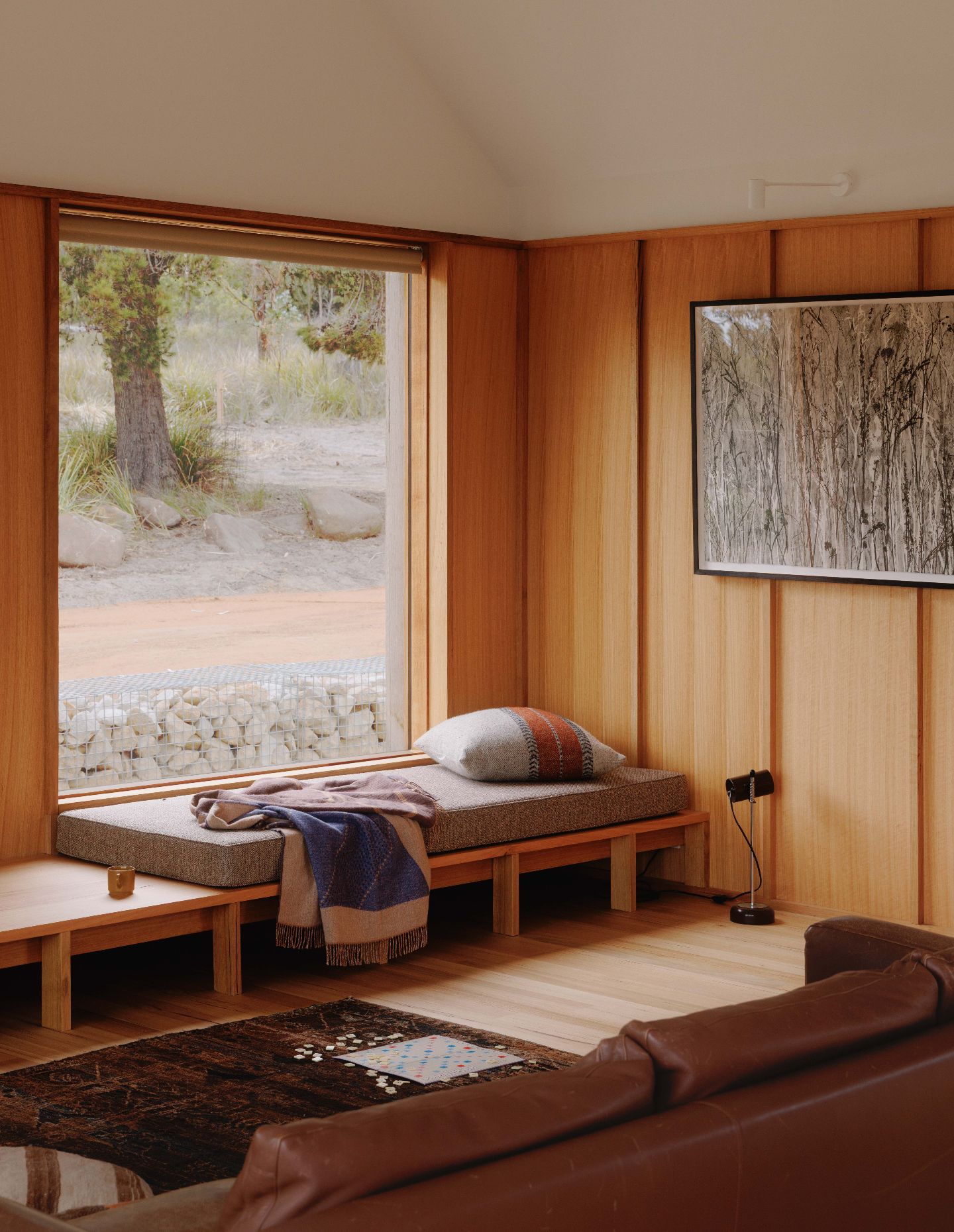

‘How thoughtful design can do more with less, while still being generous and considered’: that’s the Scale ethos, and one that found good company in the clients’ vision for their compact beach retreat on the East Coast of Lutruwita / Tasmania. Spring Beach House is contained within 100-square-metre footprint for a two-bedroom holiday home that offers flexible spaces. The family wanted to soak in the landscape with a semi-private outdoor bathing area and a deck extending the living spaces for an effortless flow between in and out.
“Having recently completed a series of compact, elegantly simple buildings in remote and complex contexts, this project felt like a natural fit – bringing an admirable level of ambition to a modest budget,” shares architect lead, Georgie Forbes-Smith.
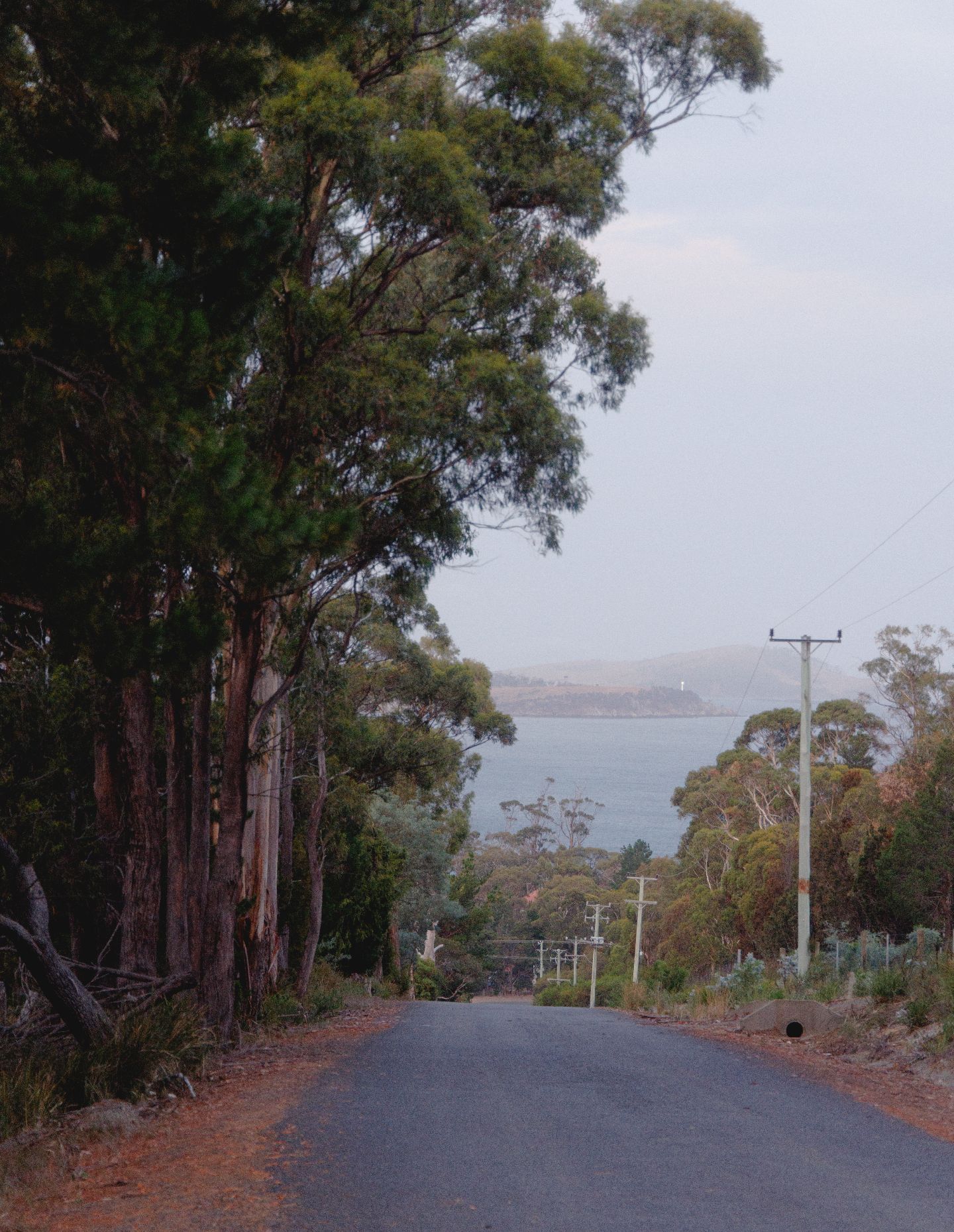
The house was designed in place – ‘site first’ – which Forbes-Smith notes was intended to feel as if it had always been there. Deeply embedded in the rugged landscape (slowly being regenerated after a past agricultural life and a period of invasive weeds), the timber cladding is set to patina, becoming an extension of the bush setting.
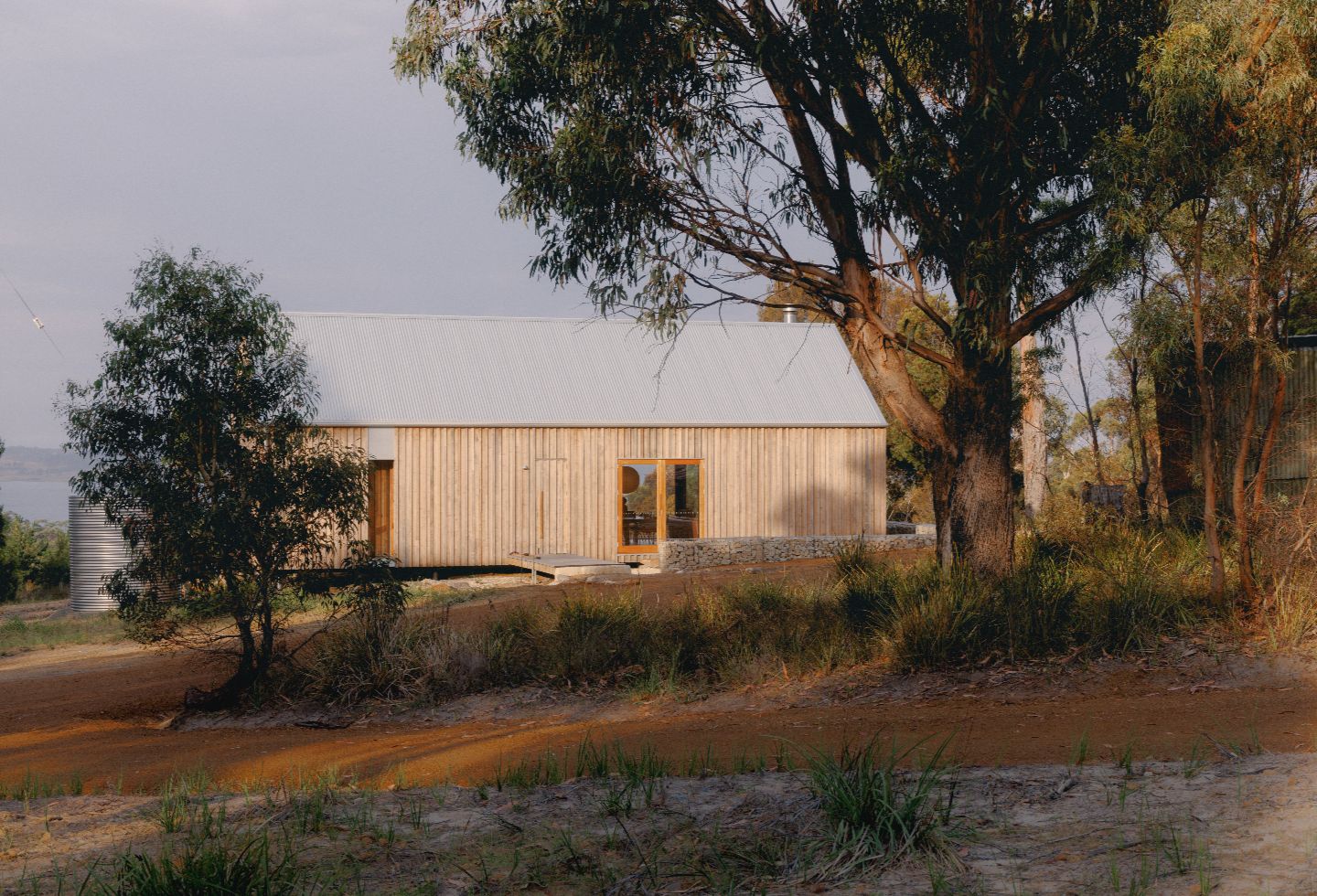
“Rather than competing with the landscape, the design focuses on drawing it deeply into each space,” Forbes-Smith adds.
Equally as important, the cabin in the woods had to be built to withstand the local area’s multi-seasonal days. Located next to the Tasman Sea, Spring Beach House experiences polar winds and bitterly cold winters. And yet, it requires minimal mechanical heating and cooling thanks to careful orientation and strategic window placement. Likewise, Scale Architecture ensured the building is well insulated to capture the low winter sun while welcoming the idyllic summer climate.
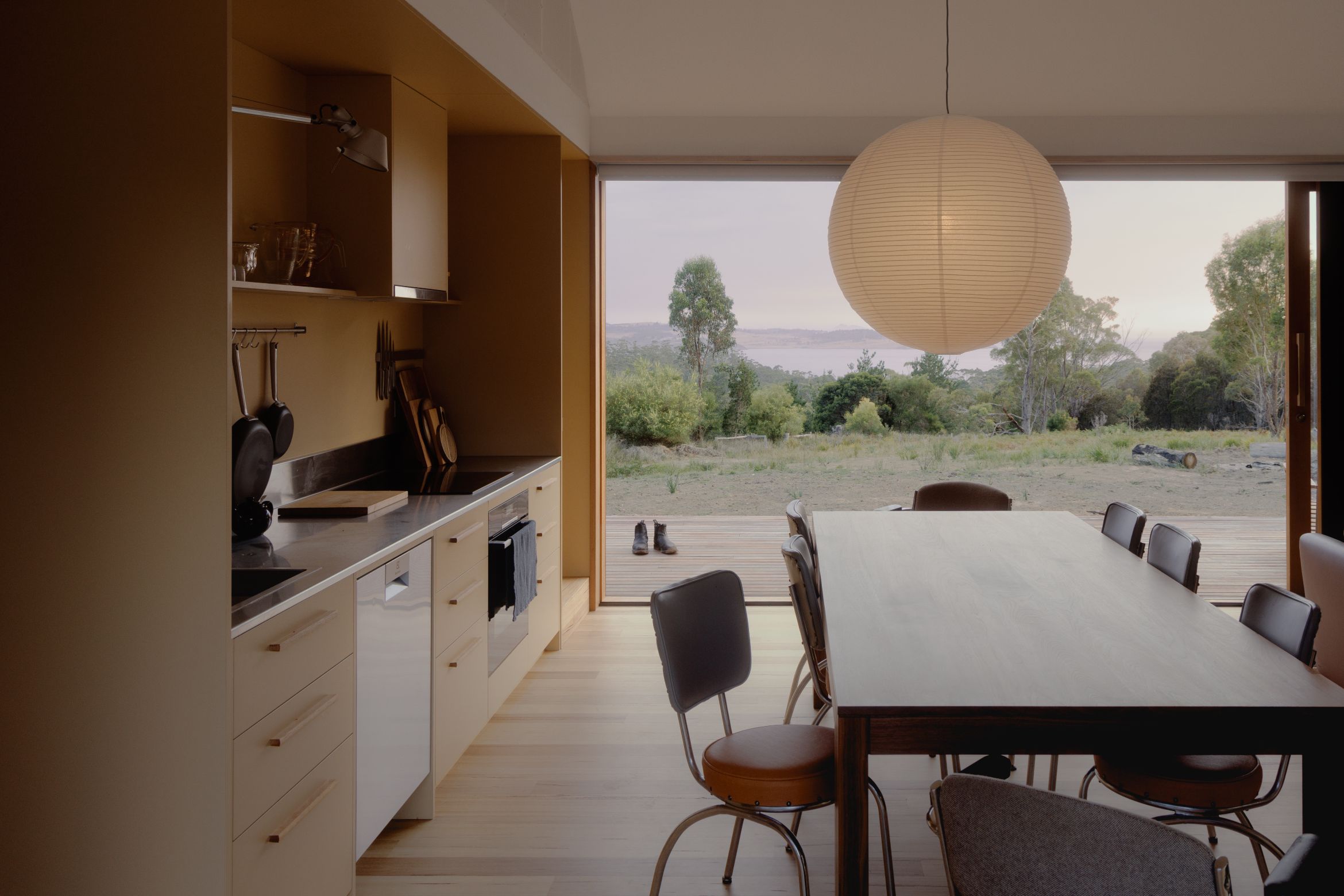
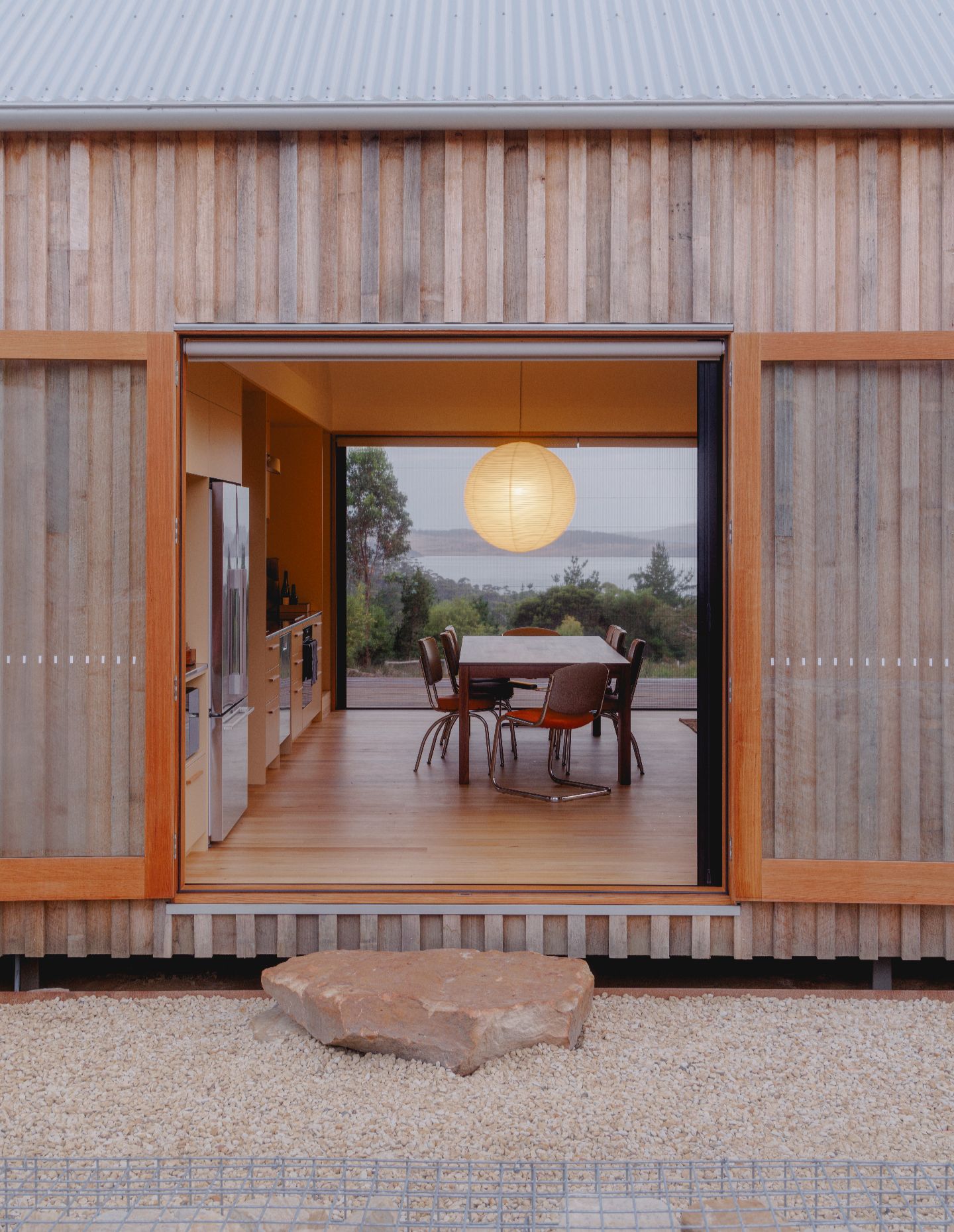
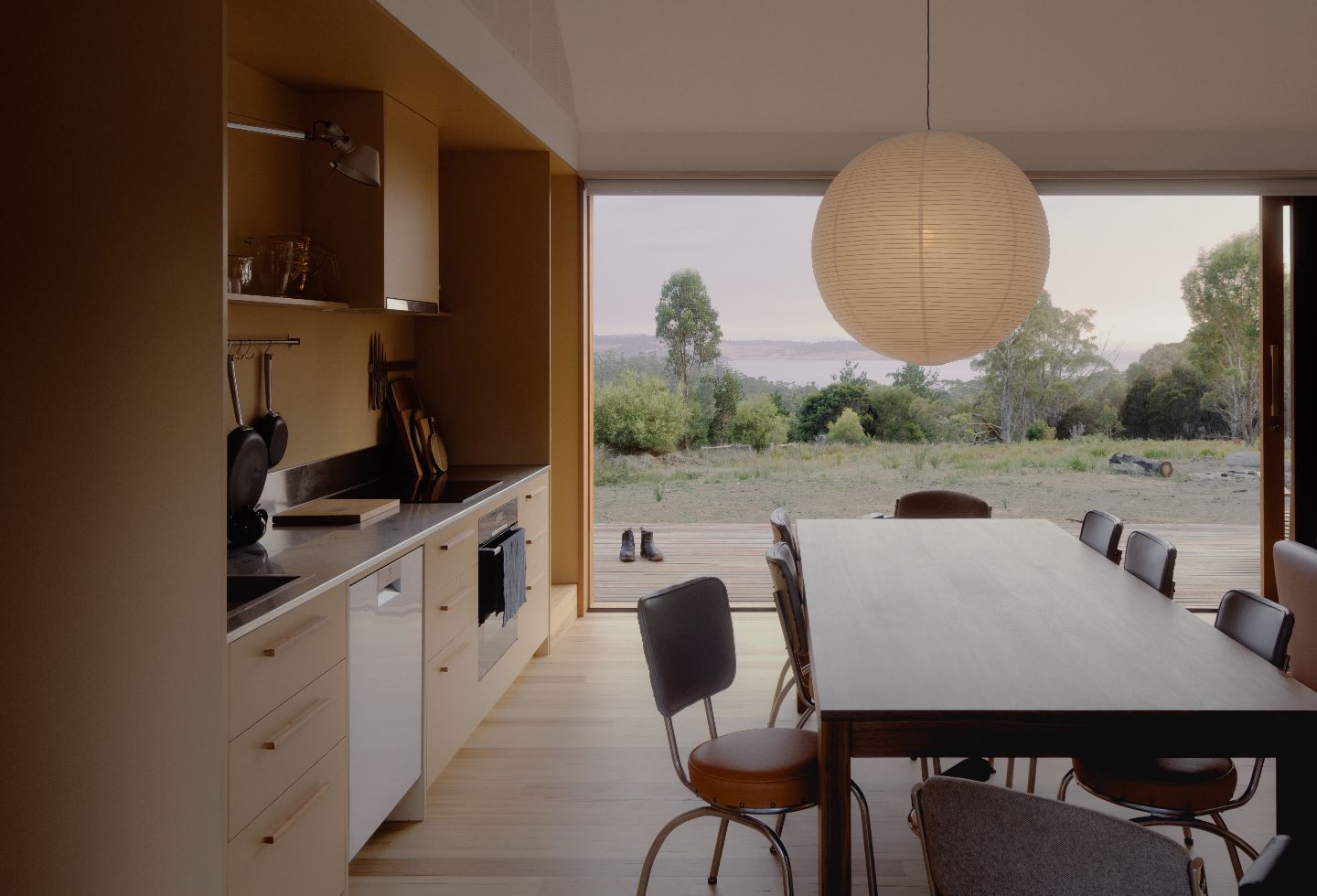
“On warmer days, the main living area can be fully opened and screened, creating a seamless extension of the outdoor deck,” says Forbes-Smith. “The greatest surprise for me was discovering how the design revealed three distinct outdoor rooms, and how instinctively I moved between them in response to the weather, the light and the rhythms of the bush.”
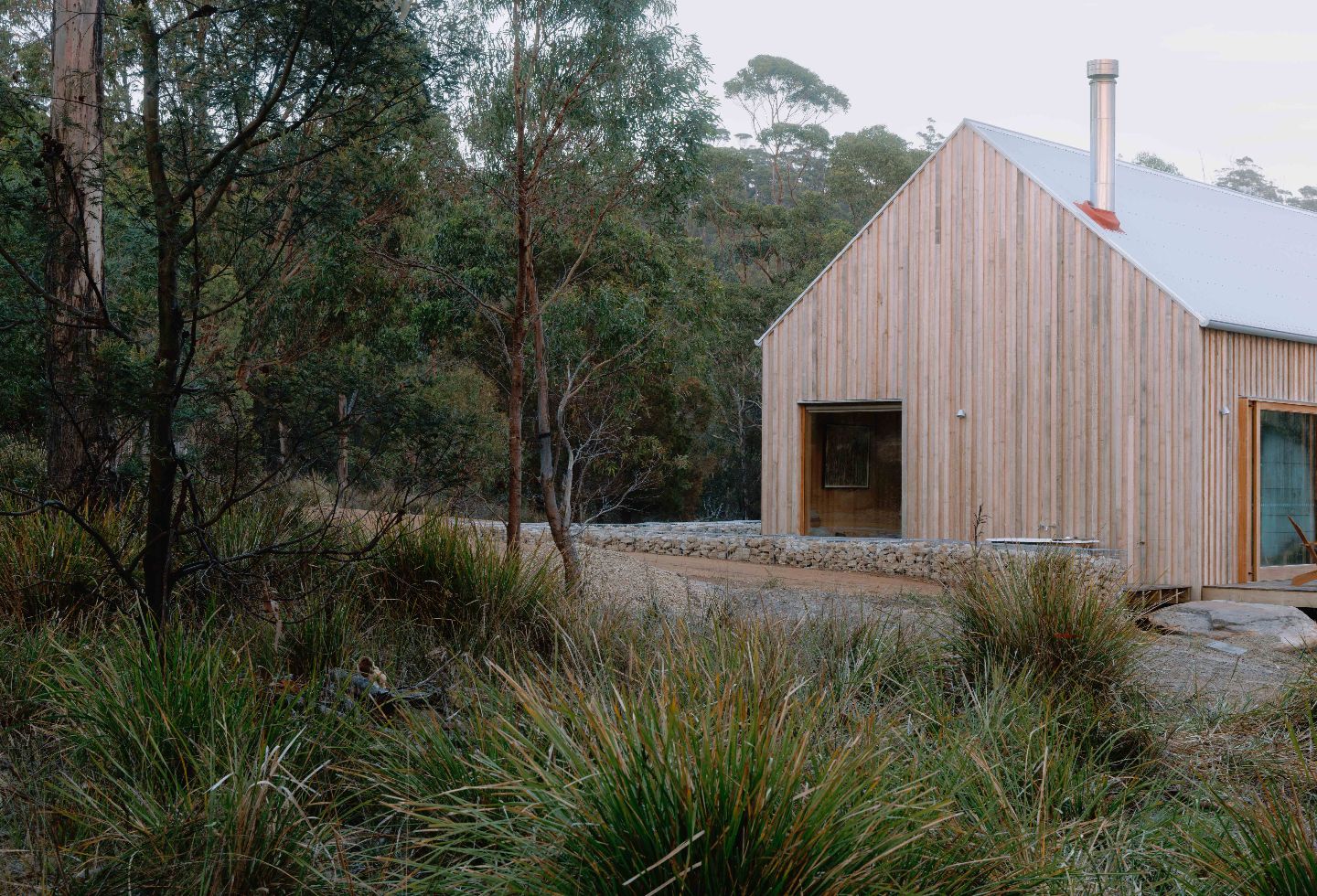
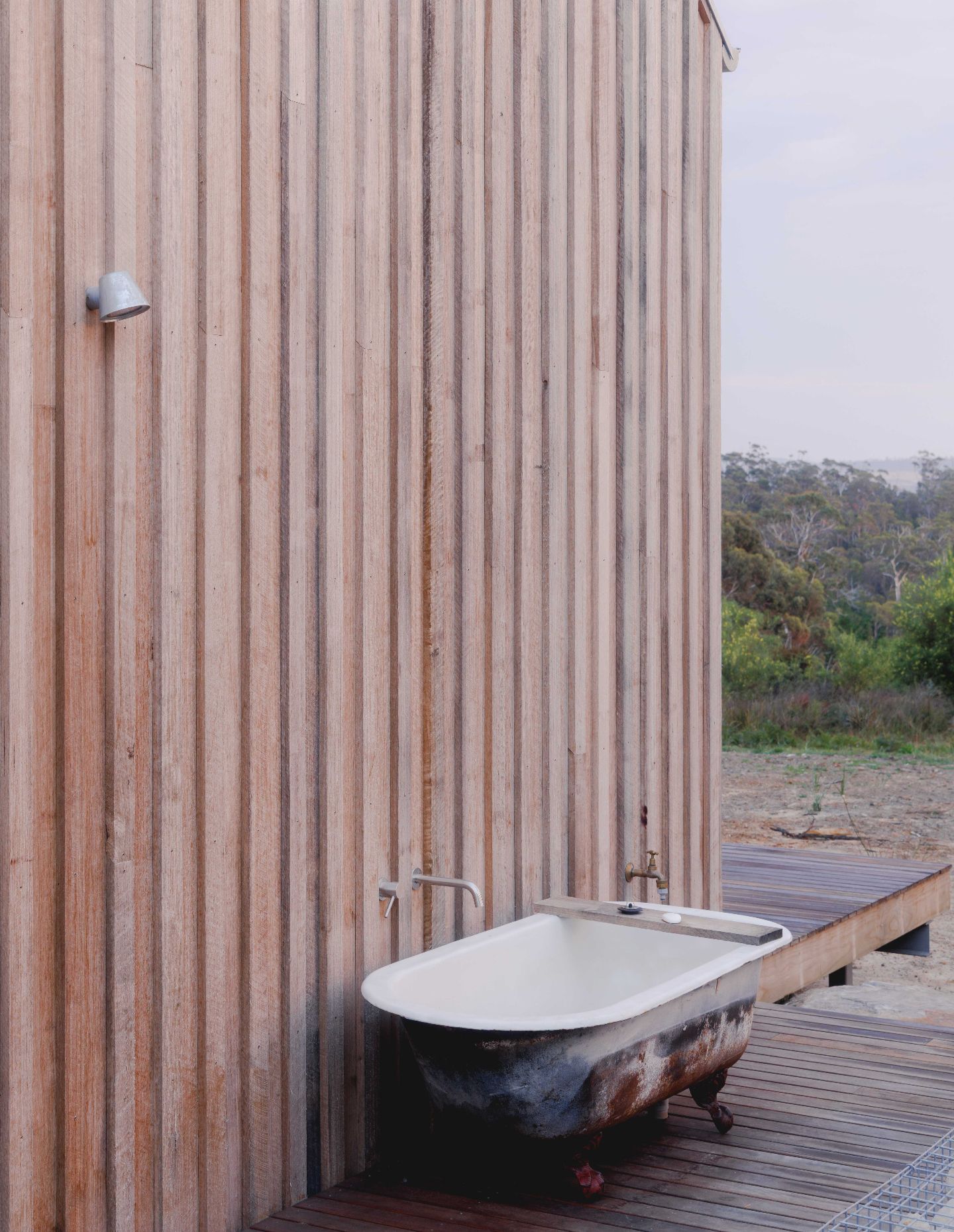
On north-east, the elevated deck looks out to the long ocean view, floating above the landscape. Meanwhile, on the eastern edge, the unexpectedly private outdoor bathing deck becomes a ‘still and protective’ space at dusk, enveloped by the vistas and surrounding trees.
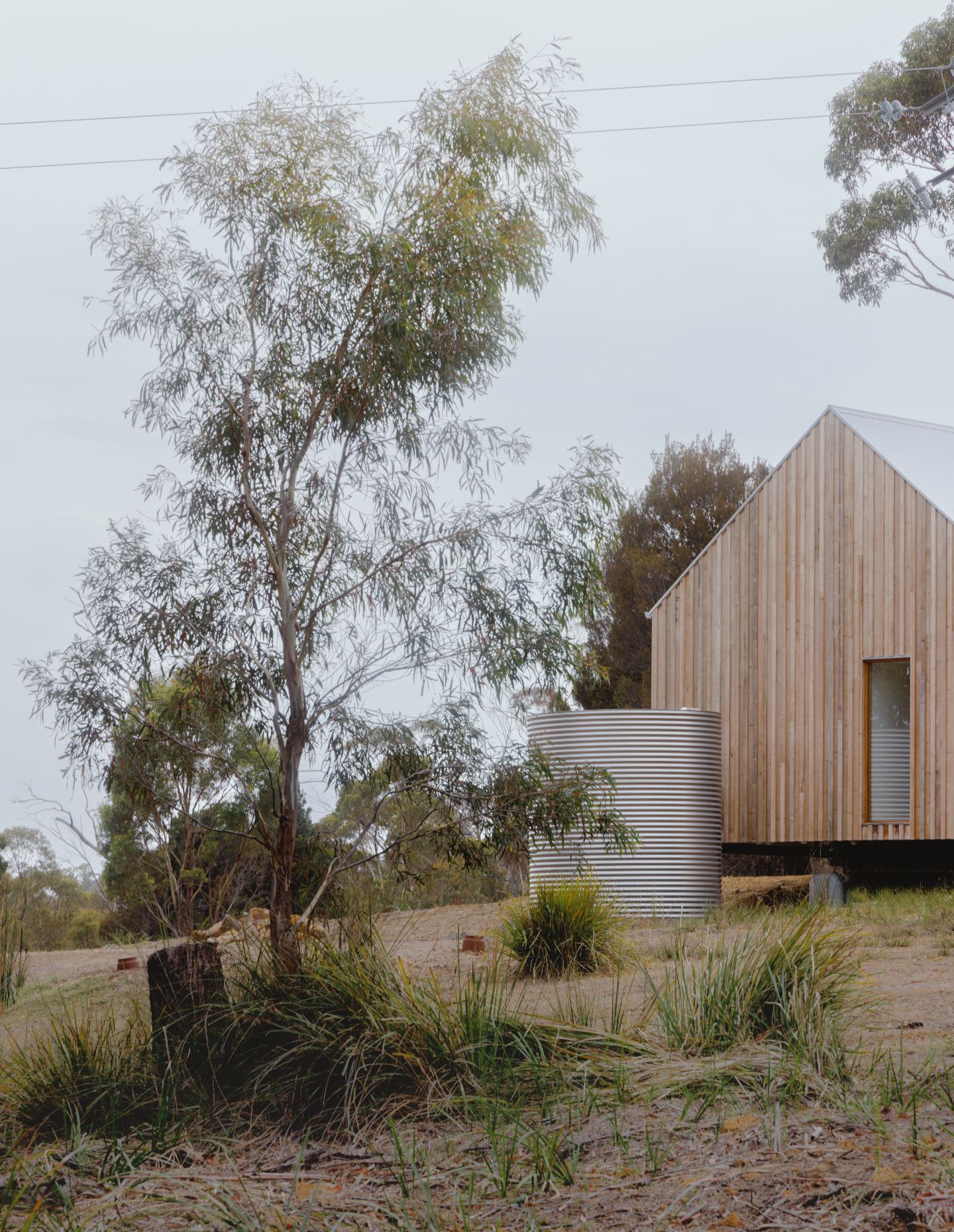
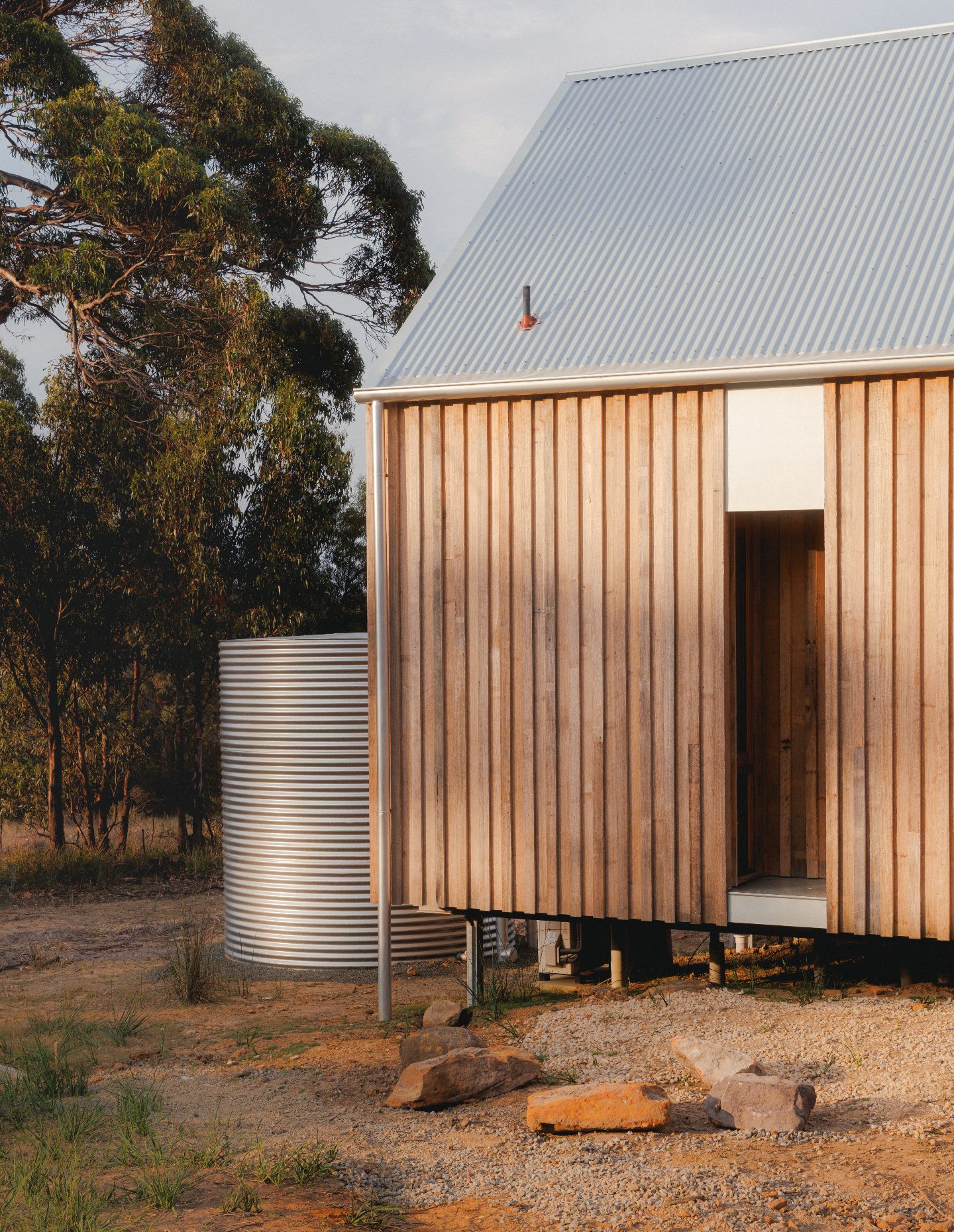
With their modest budget and remote location, Scale, in close collaboration with builder Axis Homes, designed within standard timber structural spans. This move significantly reduced the use of concrete, steel and masonry, minimising material costs and trades. Still, Scale proves that a compact, budget-conscious design can still be inherently sustainable: employing locally grown timber, avoiding high embodied carbon materials, installing a 3.2kW solar panel system and collecting roof water for onsite reuse.
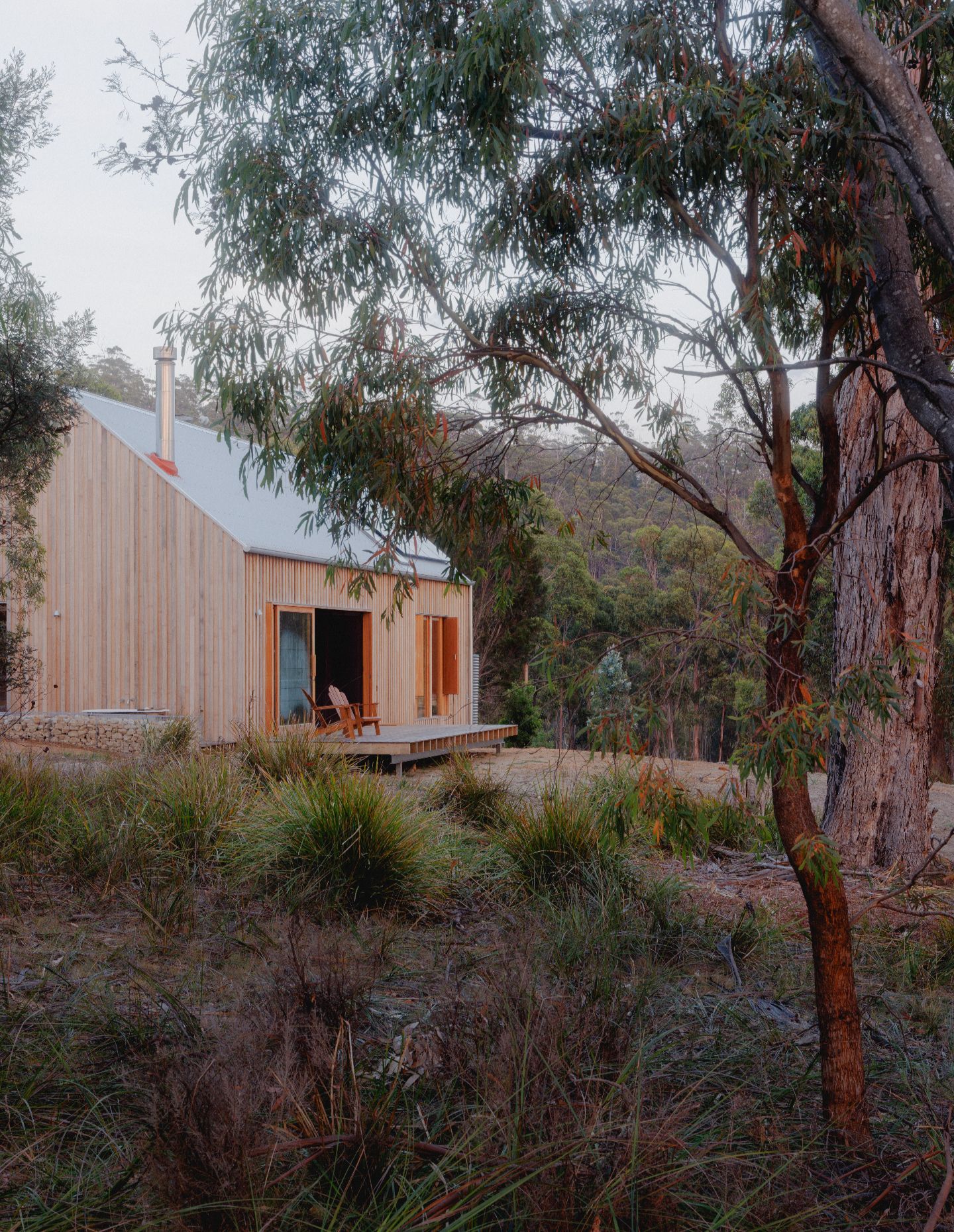
The exterior’s locally sourced blue gum board-and-batten cladding was chosen for its natural durability and soft tones as well as the reuse of offcuts to minimise construction waste. “After rain, the blue gum deepens in colour, and over time it will weather gracefully, further blending the house into its surrounding landscape,” shares Forbes-Smith.
Related: Another timber standout, this time in NSW
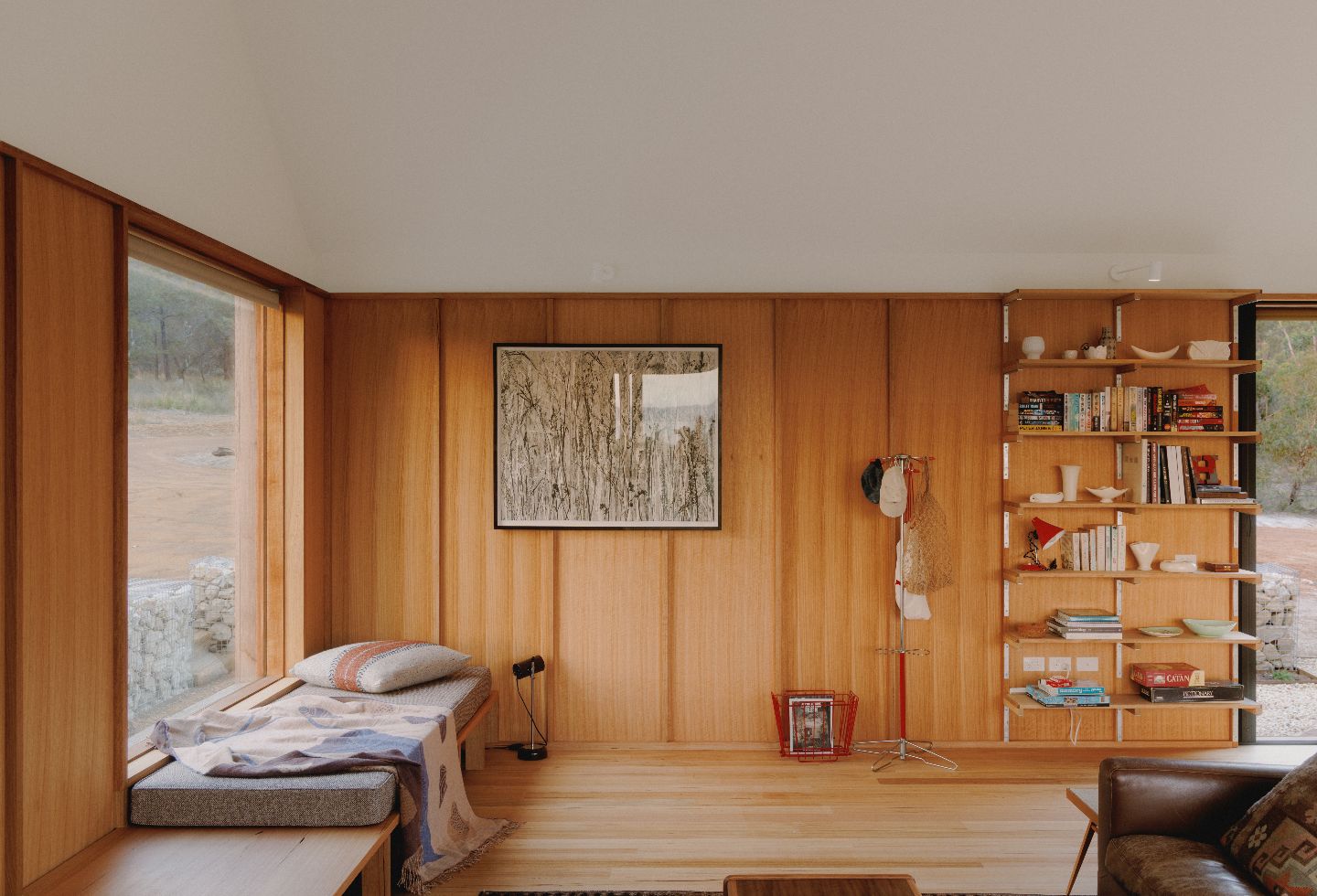
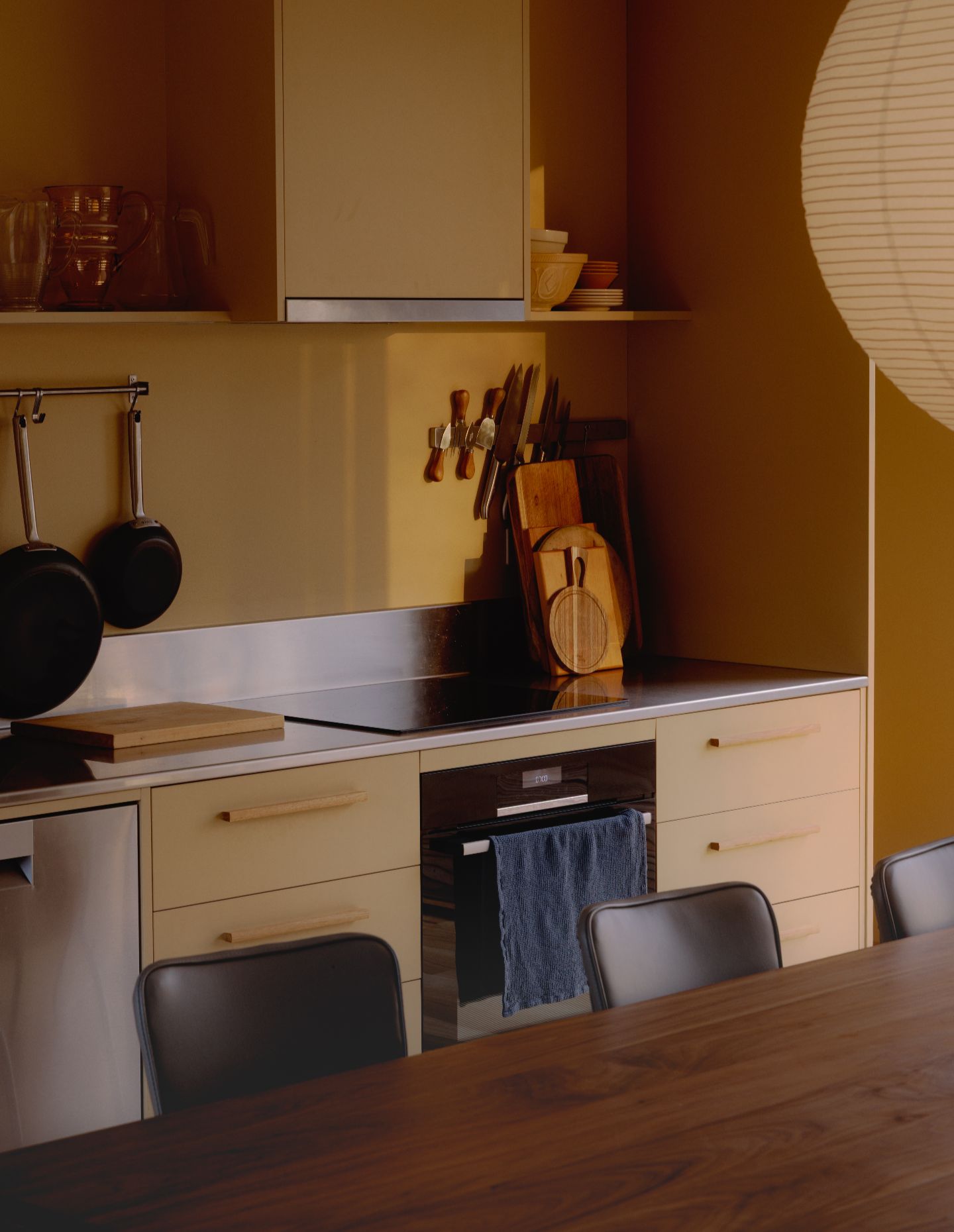
Internally, the architects looked to locally sourced Tasmanian Oak for wall linings, flooring, window frames and joinery, while the Castella joinery handles are crafted from submerged, recovered logs in Lake Pieman on the West Coast. The soft palette continues into the earthy tones, echoing the vistas with Laminex Pale Honey cabinetry in the kitchen and deep khaki-green porcelain tiles in the bathroom.
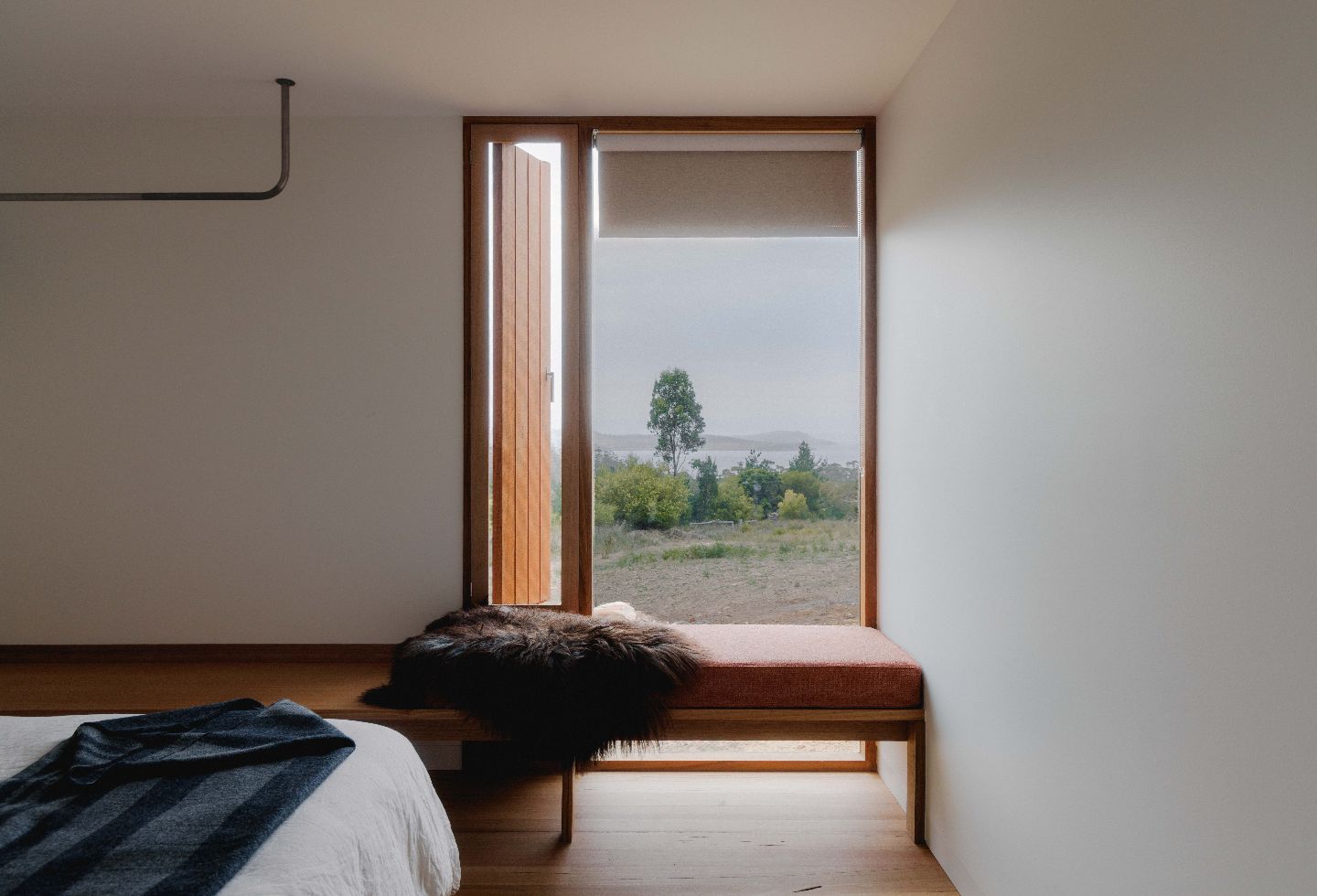
Outside, native trees and groundcover are being planted to restore ecological systems, with a marsupial lawn seeded around the house. An ongoing process of unfencing reconnects the site to the creek and reserve behind.
“When the rear French doors are opened, the space spills out onto a large rock that has quietly become a seat,” says Forbes-Smith. “From here, I often notice wallabies moving through the long grasses behind the old shed – small, unplanned moments that anchor the house to its setting.”
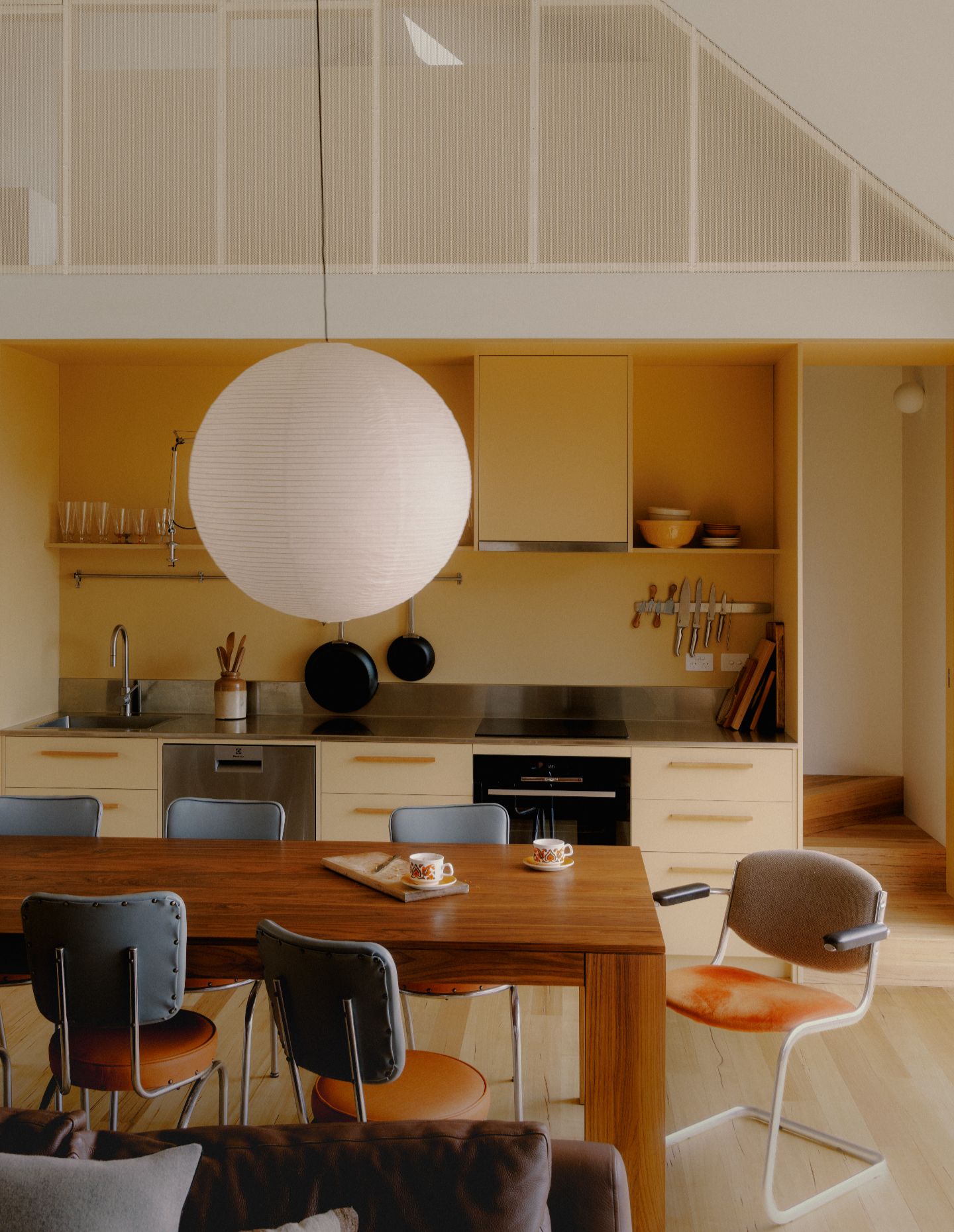
With the client and architect aligned on ‘enoughness,’ Spring Beach House encourages a simple modesty that strips away excessive layers while inviting well-considered details and touches of luxury. As Forbes-Smith concludes, it’s about “finding beauty through a series of landscape frames that are brought deep into the space.”