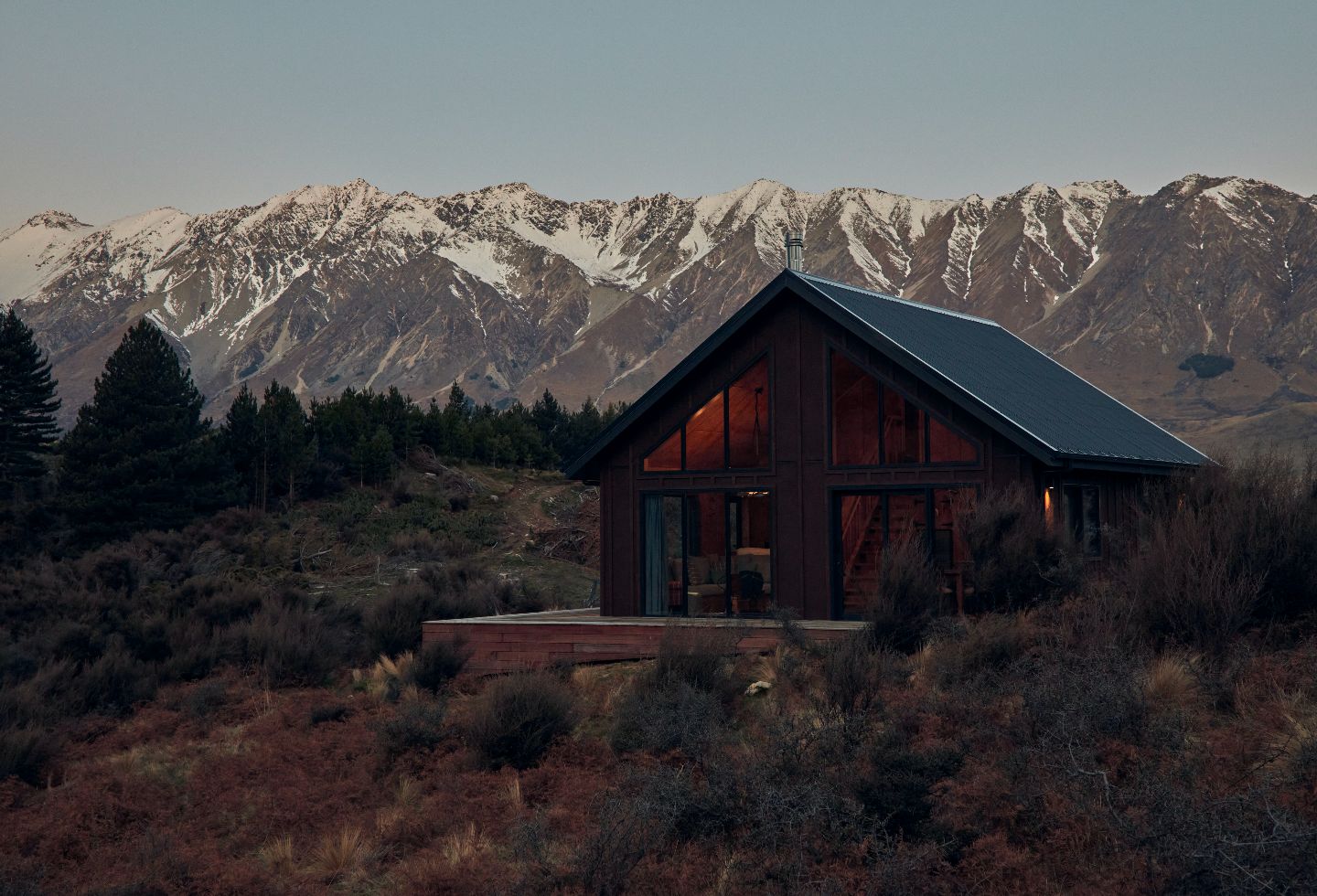

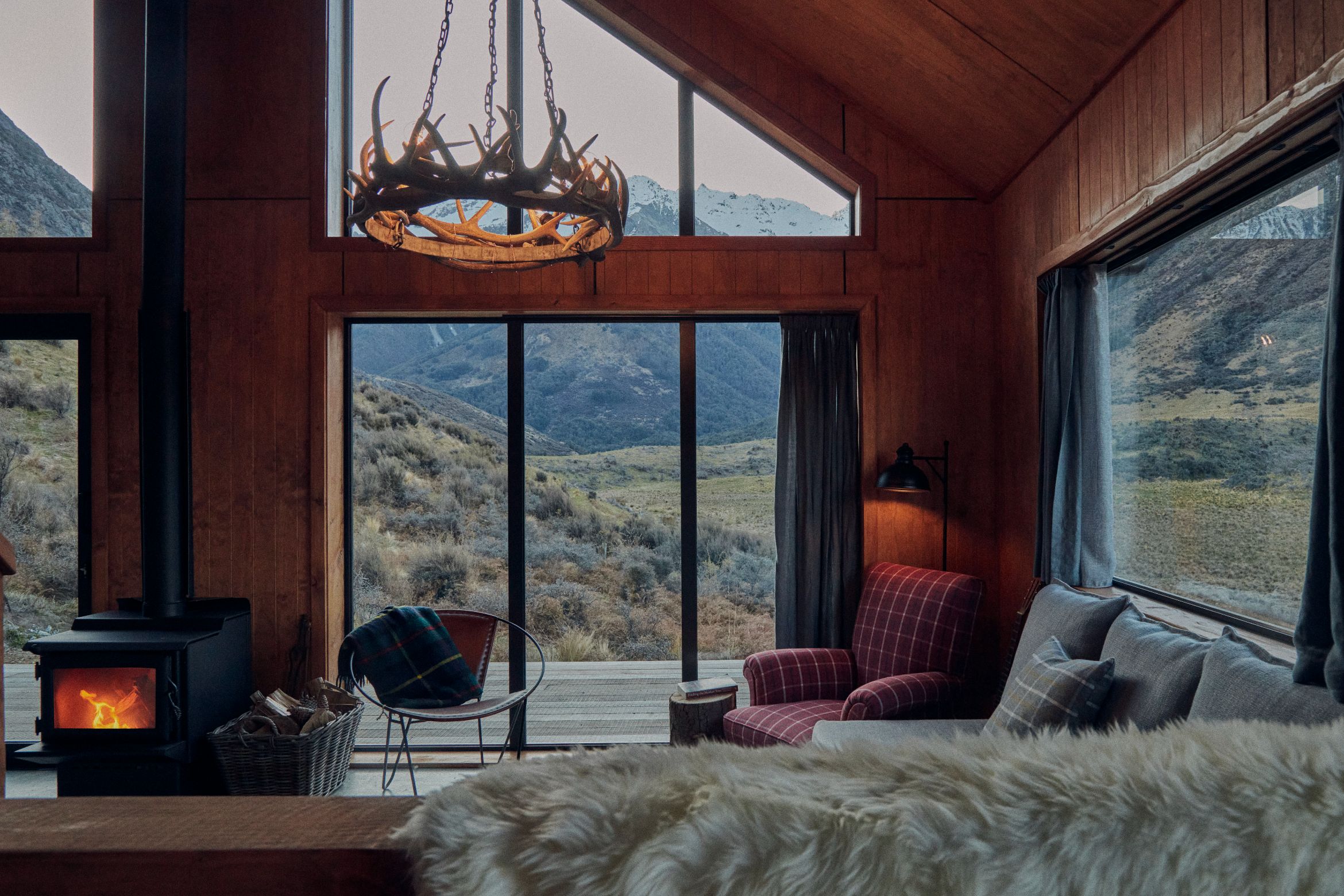
Set deep within the Hopkins Valley in New Zealand’s South Island, North Point Cabin occupies a remote site in the Mackenzie Basin of Canterbury. One of two ‘Temple Cabins’ – the other, Steeple Peak Cabin, is located approximately 400 metres away and out of sight – North Point is positioned at the heart of a high-country landscape defined by alpine scale, pastoral heritage and glacial geology. Here, architecture operates as a mediator between human refuge and the vastness of its surroundings, offering calibrated shelter within an environment that cannot fail to make an impression on the visitor.
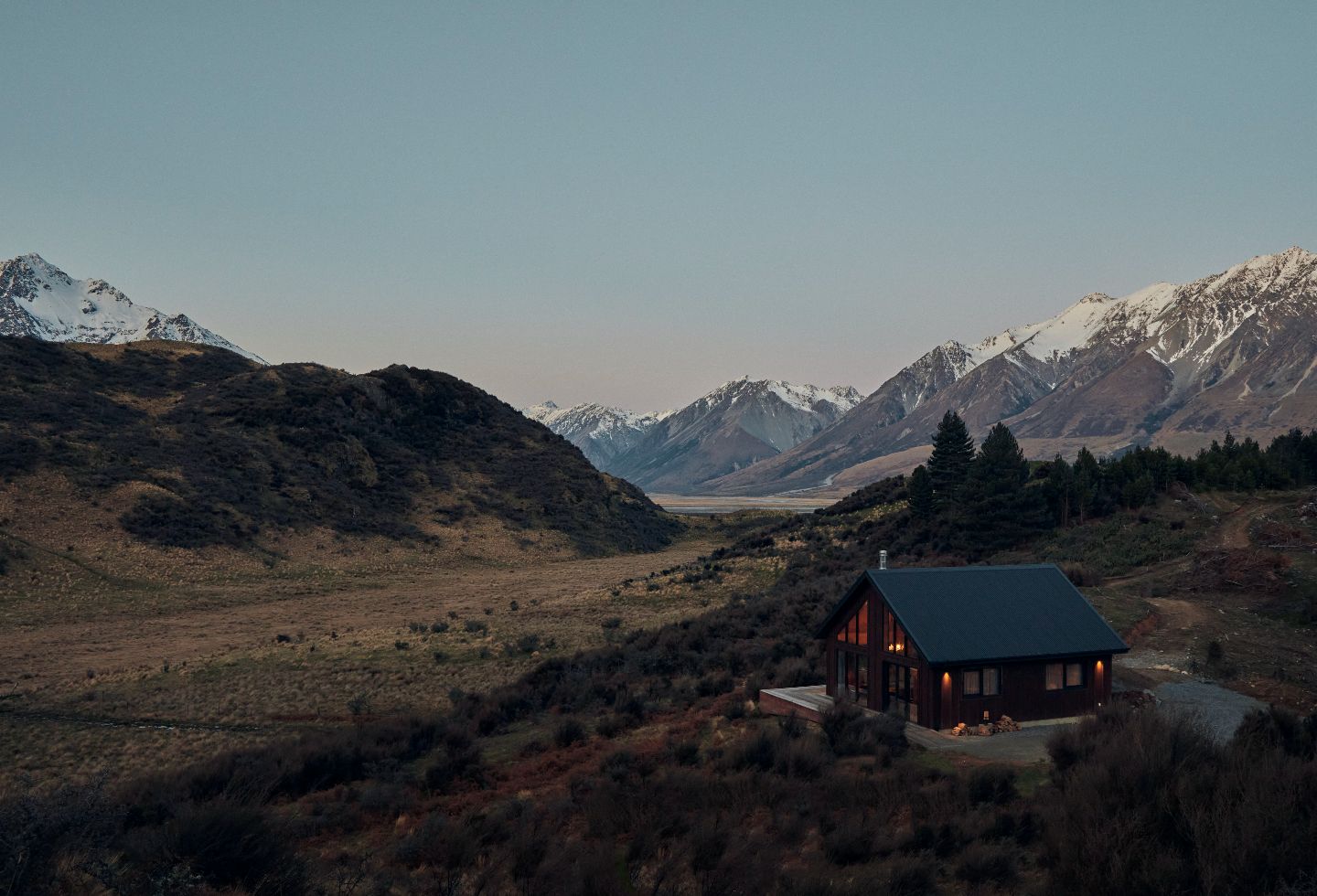
The approach to the valley establishes the magnitude of the setting. Driving toward Lake Ōhau, the road traces pale turquoise water coloured by glacial flour, set against the Naumann Range with Mount Glen Lyon rising prominently beyond. Passing through Lake Ōhau Alpine Village and into working station country, Merino sheep dot expansive paddocks shaped by wind and weather. Canterbury is known for its braided rivers, open plains and proximity to Aoraki/Mount Cook, but the Hopkins Valley introduces a more enclosed drama: mountain ranges converge, rivers meet and the sense of remoteness intensifies.
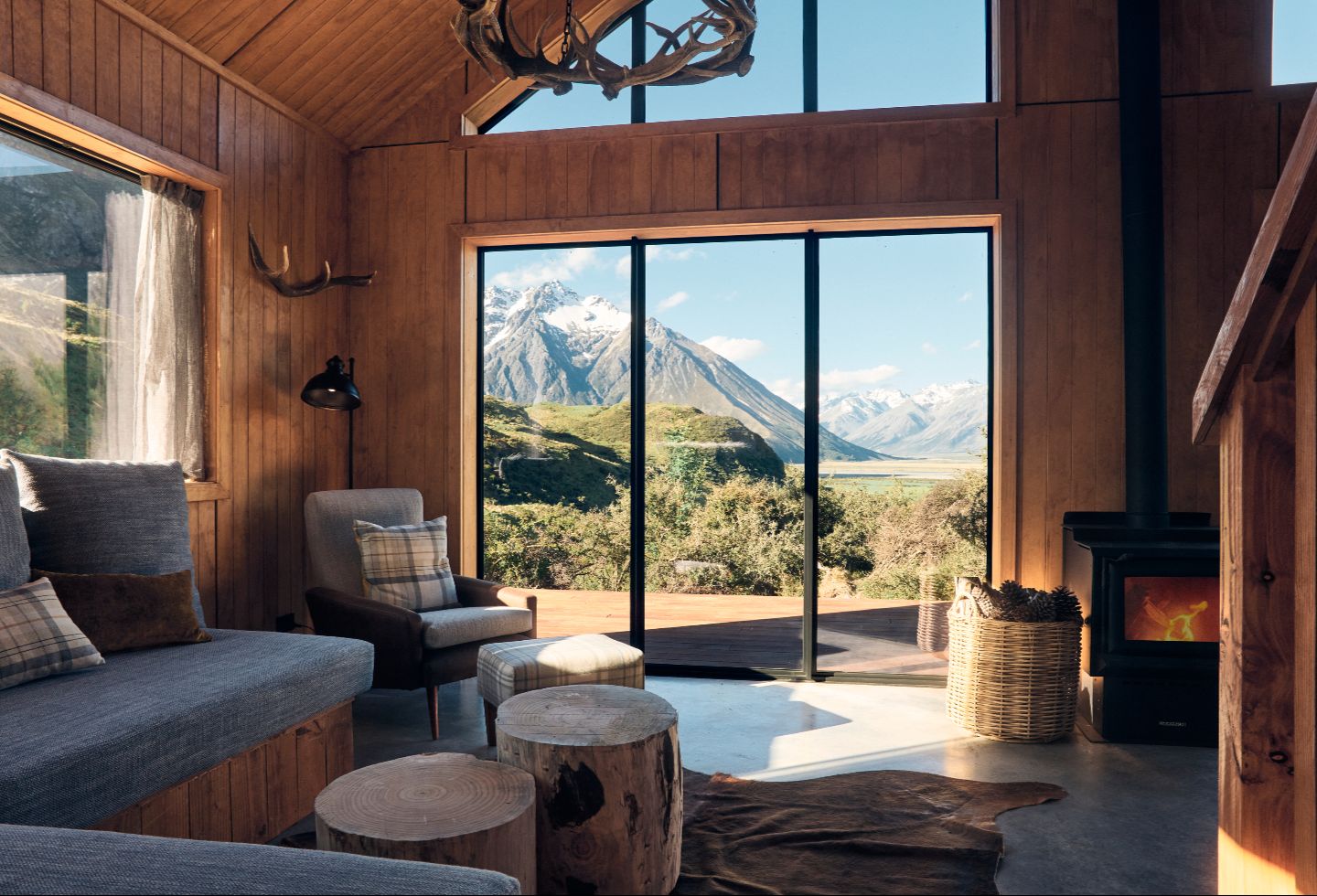
North Point Cabin sits around 300 metres from the station homestead. Its surroundings – the Hopkins River and its confluence with the Dobson River, as well as mountain peaks and the surrounding Barrier, Ben Ōhau and Naumann ranges – are obviously striking enough on their own terms but the cabin design seeks to maximise their presence by way of precise framing. Each window aperture is positioned for views, capturing mountain faces and river corridors in unbroken compositions. The cabin does not attempt to rival this landscape; its architectural language is restrained, allowing the terrain’s scale to remain visually and psychologically dominant.
Related: Spring Beach House in Tasmania
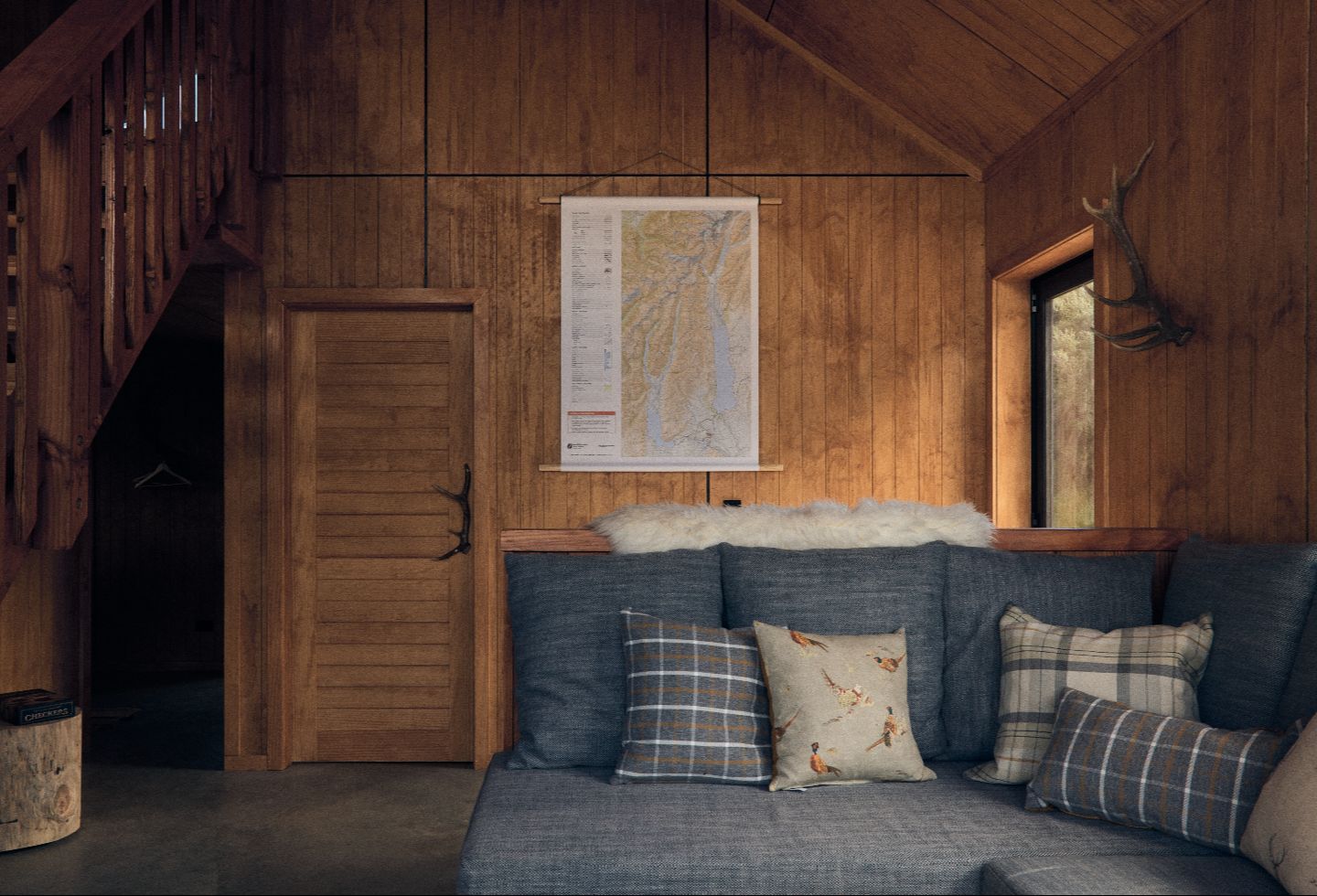
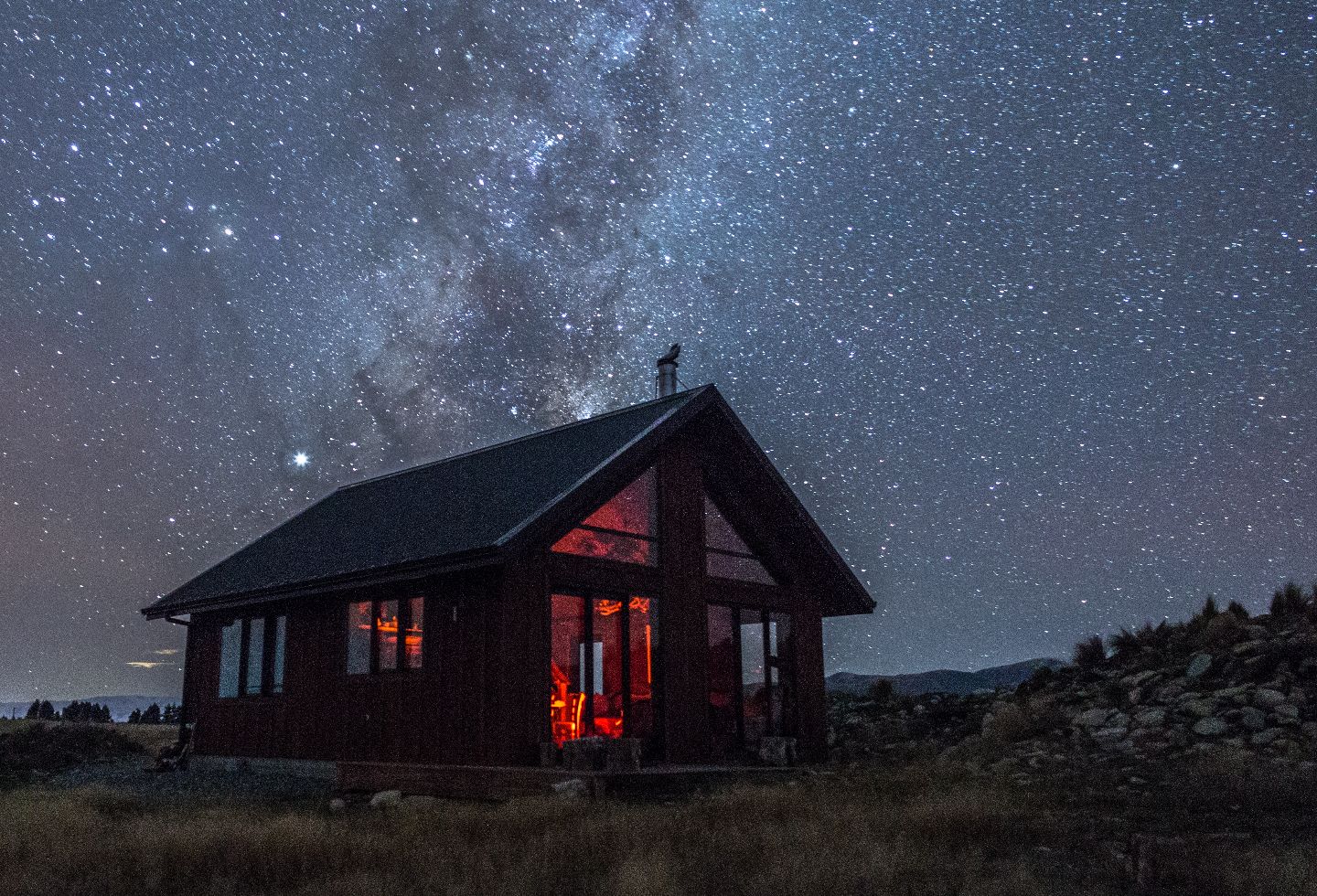
Isolation here reads as intentional, and it’s a quality that really comes out overnight with the expansive night sky. Situated within a World Heritage-listed Dark Sky Reserve, the Hopkins Valley reveals a dense field of stars. A loft space and skylight enable stargazing from within the envelope of the cabin, extending the dialogue between enclosure and exposure to the celestial scale. This is shelter within, not from, the landscape – you’ll want to get lost and end up in this cabin to spend the night. You might even pray for it to rain and storm while you shelter here.
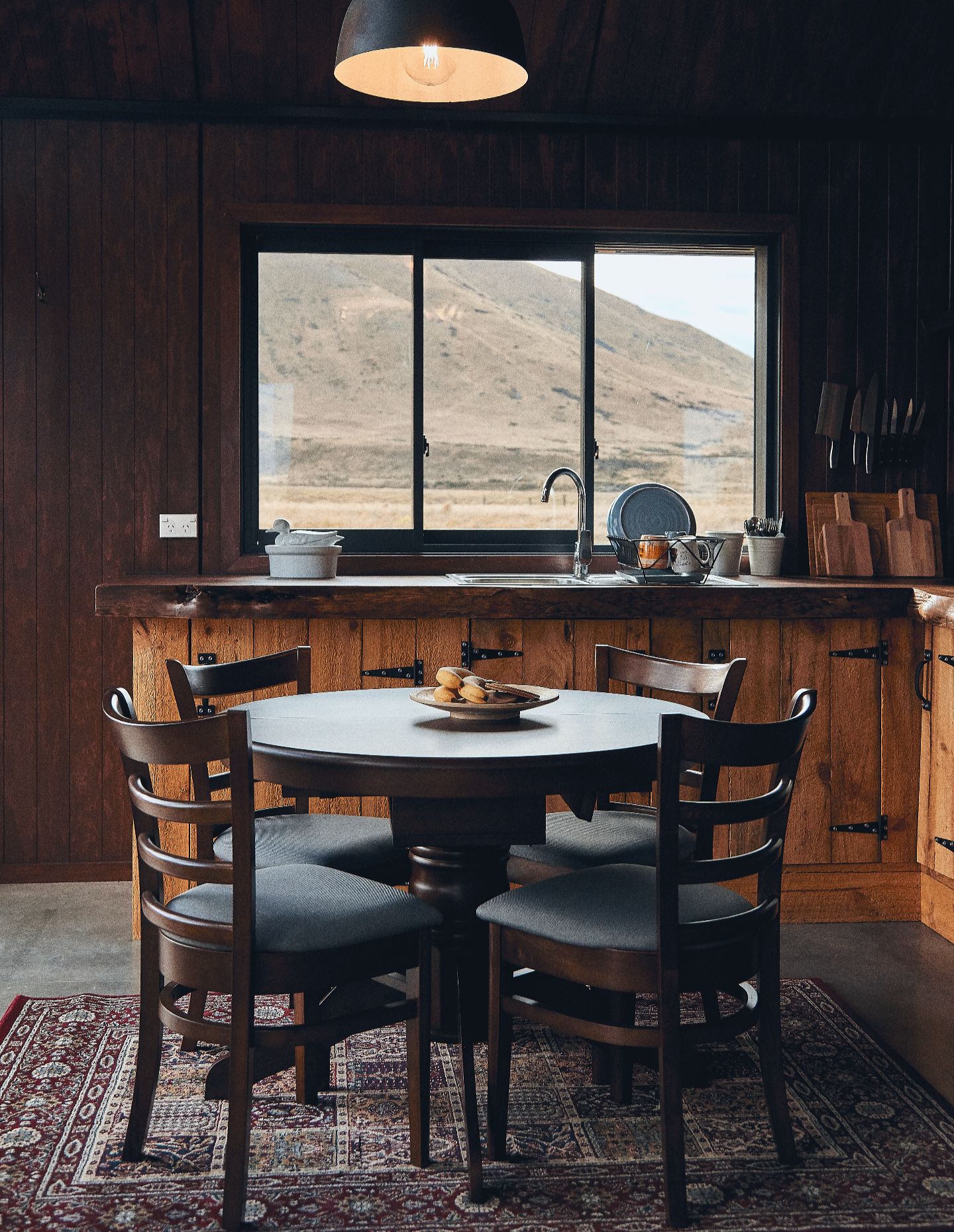
The structure is experienced as comfortable in a region known for forceful winds, its robust frame and dark exterior anchoring it against open sky and tussock. Inside, an open-plan layout centres on a hearth, reinforcing the notion of refuge. The spatial logic is simple and legible, with living, cooking and sleeping zones arranged to maintain continuous visual connection to the outdoors. A bathtub then introduces a note of quiet indulgence, positioned not as spectacle but as an extension of the cabin’s sheltering role.
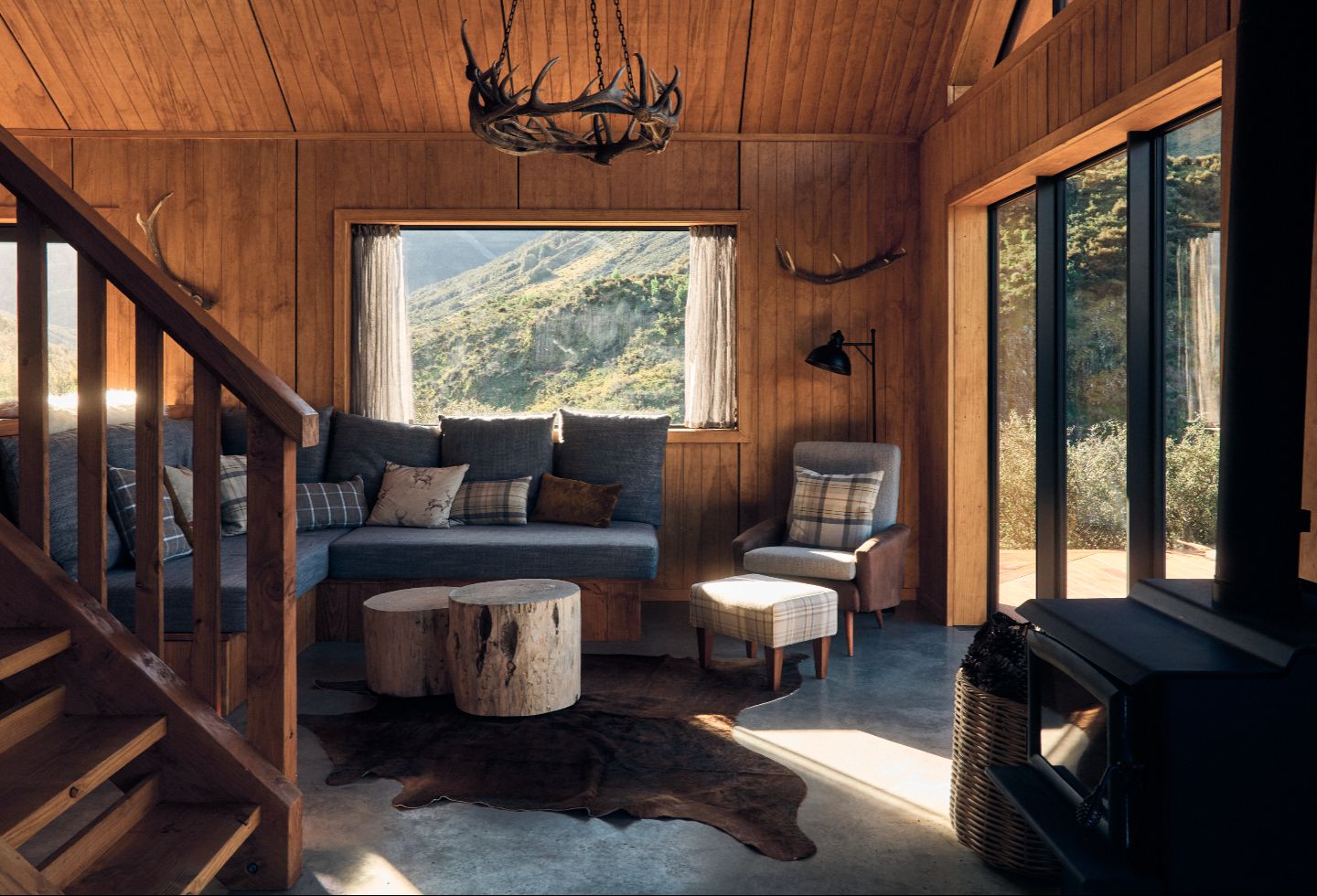
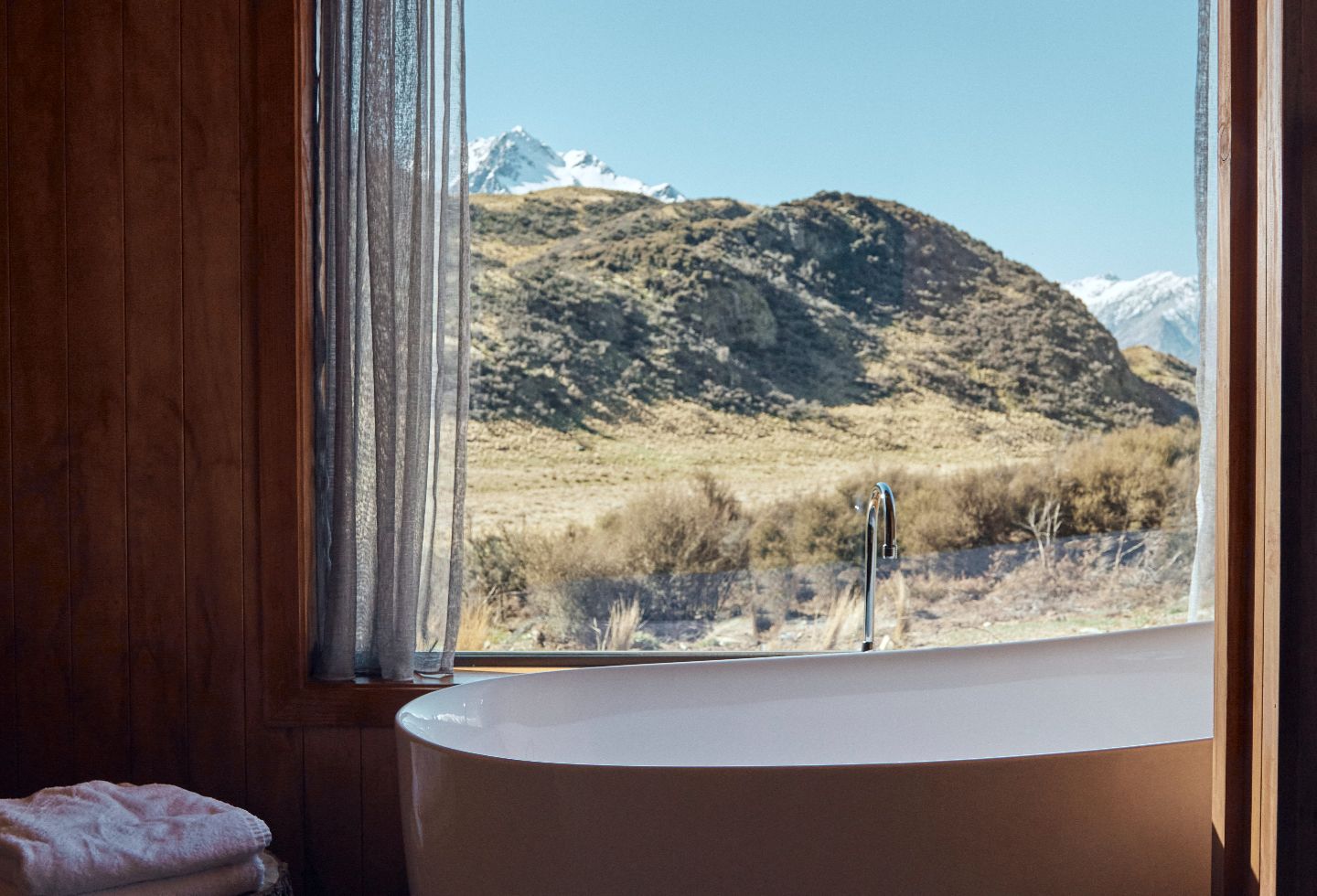
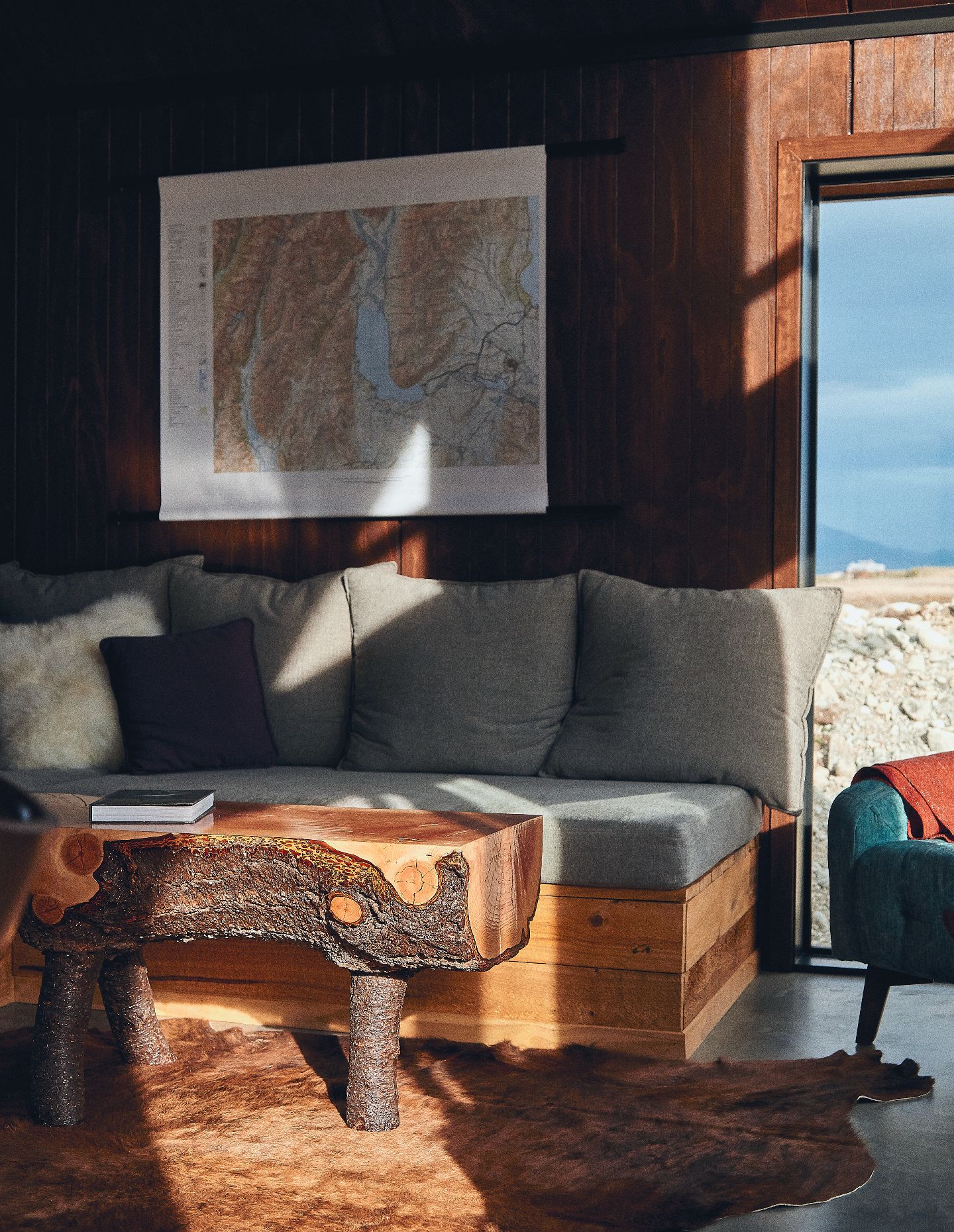
Material selections further articulate the relationship between dwelling and working land. Warm-toned timber lines the interior, offset by black steel elements and charcoal-coloured textiles that temper glare and draw attention outward. Cowhide is used as a rug, antlers form handles, hooks and a chandelier, and sheep wool throws soften seating areas. These gestures reference the realities of high-country station life – animal husbandry, deer farming, Merino wool production – without slipping into overt nostalgia. Instead, they serve as tactile reminders that this is a lived and worked landscape rather than an abstract wilderness.
The overall experience of inhabitation is defined by contrast. Outside, wind moves across paddocks, sheep traverse open ground, and water shifts at the river confluence. The mountains, meanwhile, hold steady – and, inside, the atmosphere is calm. Glazing ensures that weather remains visible and audible.
Practical considerations underscore the balance between remoteness and access. Guests are offered horse treks and proximity to skiing, hiking, mountain biking and fishing. Phone reception is patchy, though high-speed Wi-Fi is available; pets are not permitted due to livestock, and outdoor fires are banned under strict fire regulations. These constraints reflect both the working nature of the station and the environmental sensitivities of the region.
North Point Cabin positions itself as a measured response to the surrounding high country – an architecture that frames pastoral and alpine heritage while acknowledging the enduring scale of the Hopkins Valley.
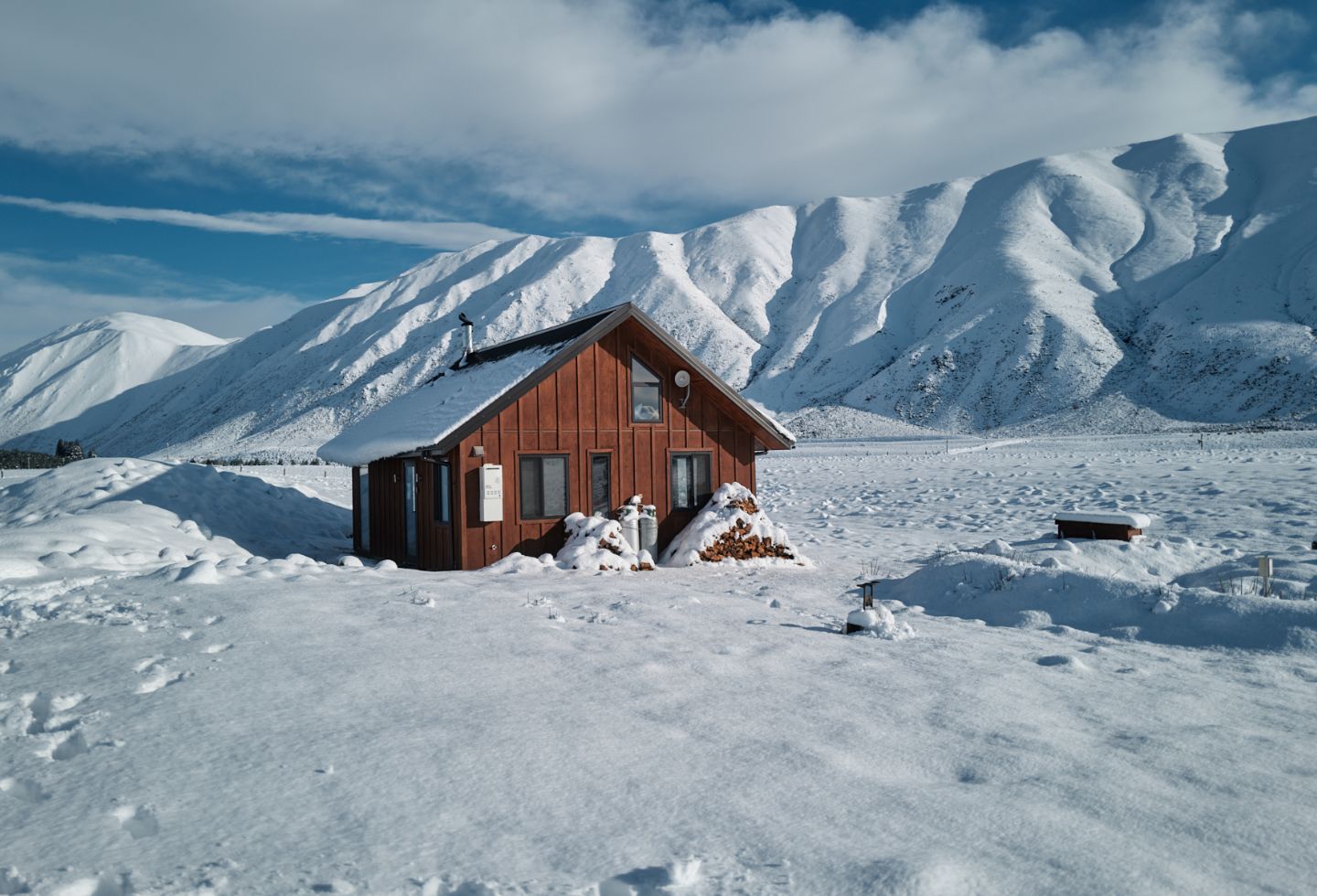
The contrast becomes clearer when set against a sister cabin located in a more accessible area near Twizel, at the foot of the Ben Ōhau Range. At High Country Cabin, the terrain is flatter and less remote, characterised by wide plains and scattered rabbits rather than enclosing peaks and river confluences. If that earlier stay introduced the rhythms of working farmland, High Country Cabin intensifies the encounter. In the Hopkins Valley, the mediation between nature and shelter becomes more pronounced, and the architecture correspondingly more attuned to the majesty and solitude of New Zealand’s alpine country.