
How did the idea of “the poetry in everyday rituals” shape specific design decisions throughout Latimer Residence?
Celebrating poetry in the everyday was driven by a desire to elevate the ordinary, transforming regimen into ritual.
A key point in our clients’ brief was to create a home that offered respite from the pace and sterility of the medical environments they worked in.
We spent time understanding how the family moved through the spaces – where objects accumulated, how they entered and what areas felt unused or unresolved.
From this, we knew our approach needed to be deeply personal, focused on warmth and removing friction in everyday routines to allow for moments of pause, rest and their rediscovery of the home.
The interior quietly organises daily life through re-planning and joinery, creating intuitive spaces for daily tasks while drawing focus to moments – some as simple as a view to an established flowering tree in the garden – which had previously gone unnoticed.
How did you balance moments of whimsy with a more grounded, durable material palette?
We played with proportional pairings throughout the home to insert unexpected moments of play.
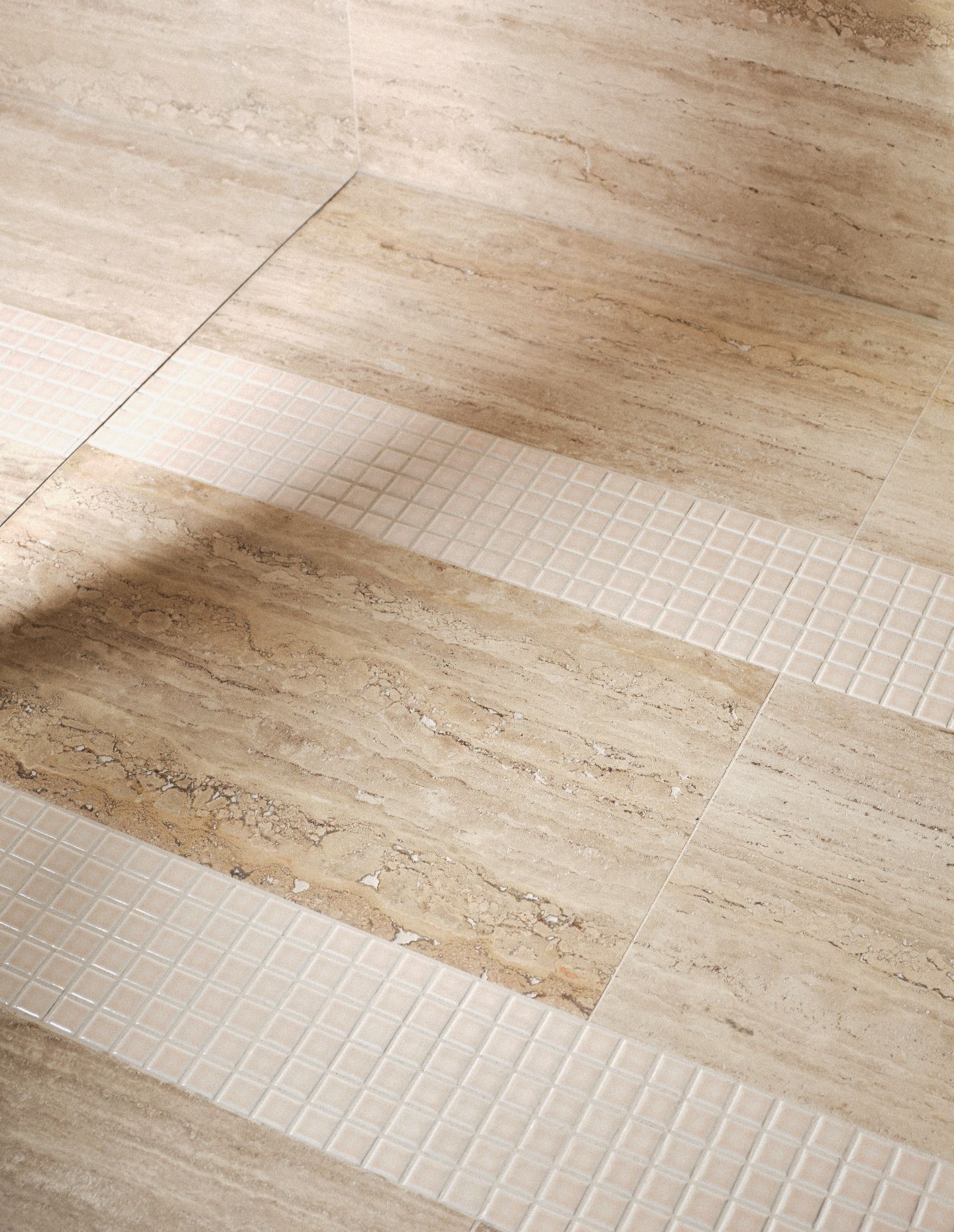
Stripes of pink mosaic set into the travertine floor of the secondary ensuite add delicacy to an otherwise robust palette of white tile, steel and thick slumped glass.
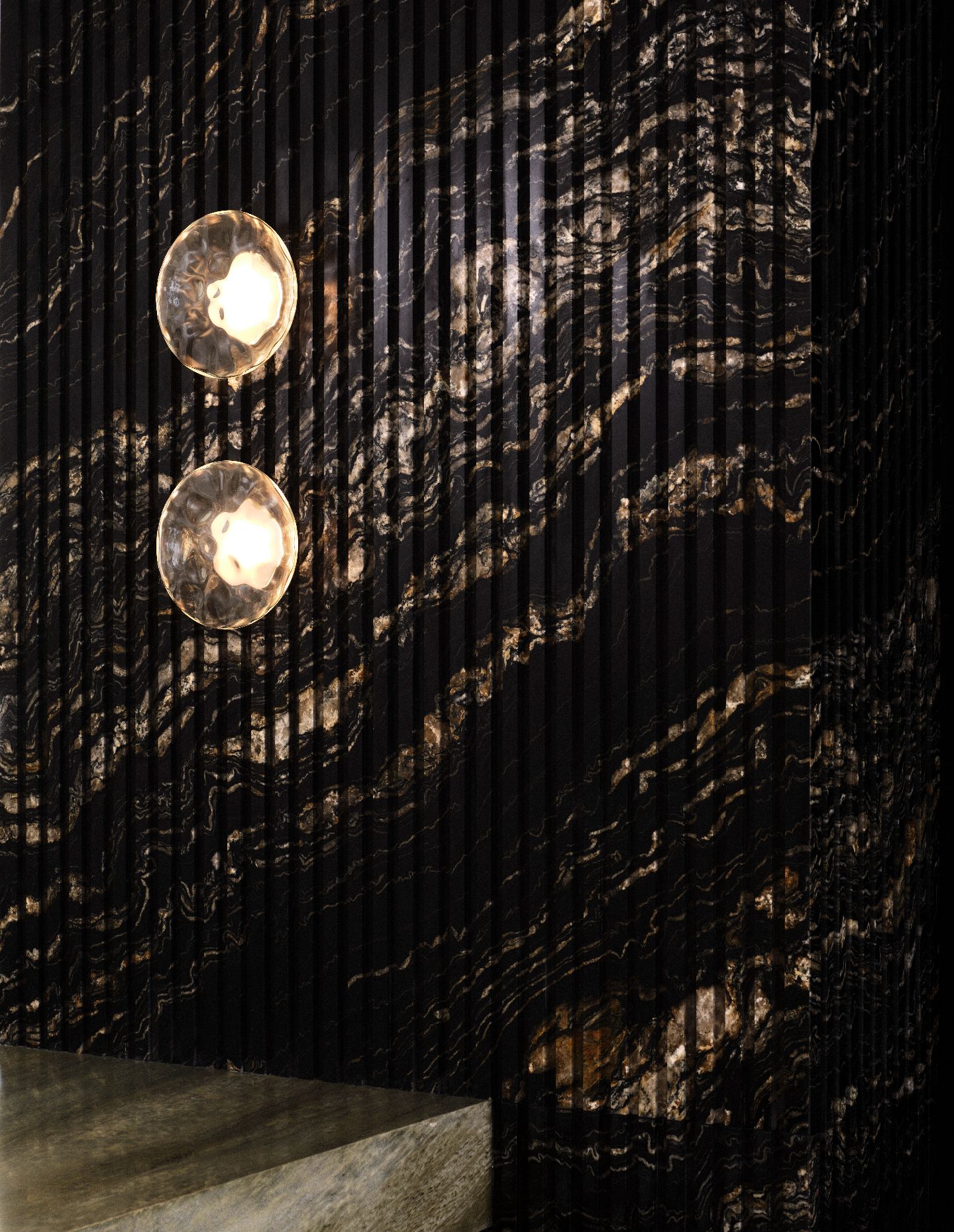
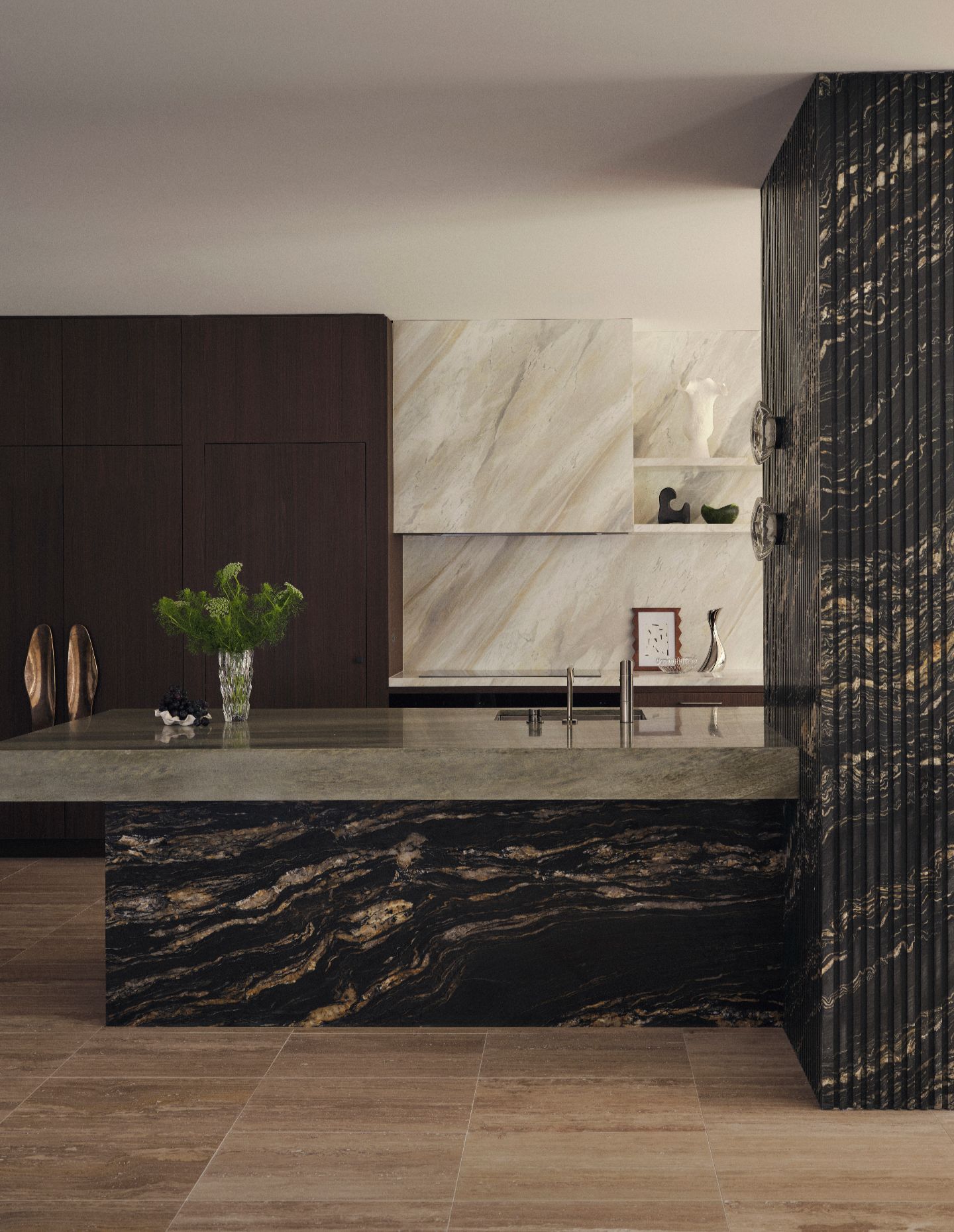
In the kitchen, the weight of the dark, ribbed stone column is lightened by rippled, hand-blown glass wall lights by Ross Gardam.
As a near turnkey project, we were also able to extend this approach through to the furniture, art and objects, layering in moments of rich colour, personality and softness.
What drew you to using travertine so extensively, and how does that continuity influence the way the home is experienced?
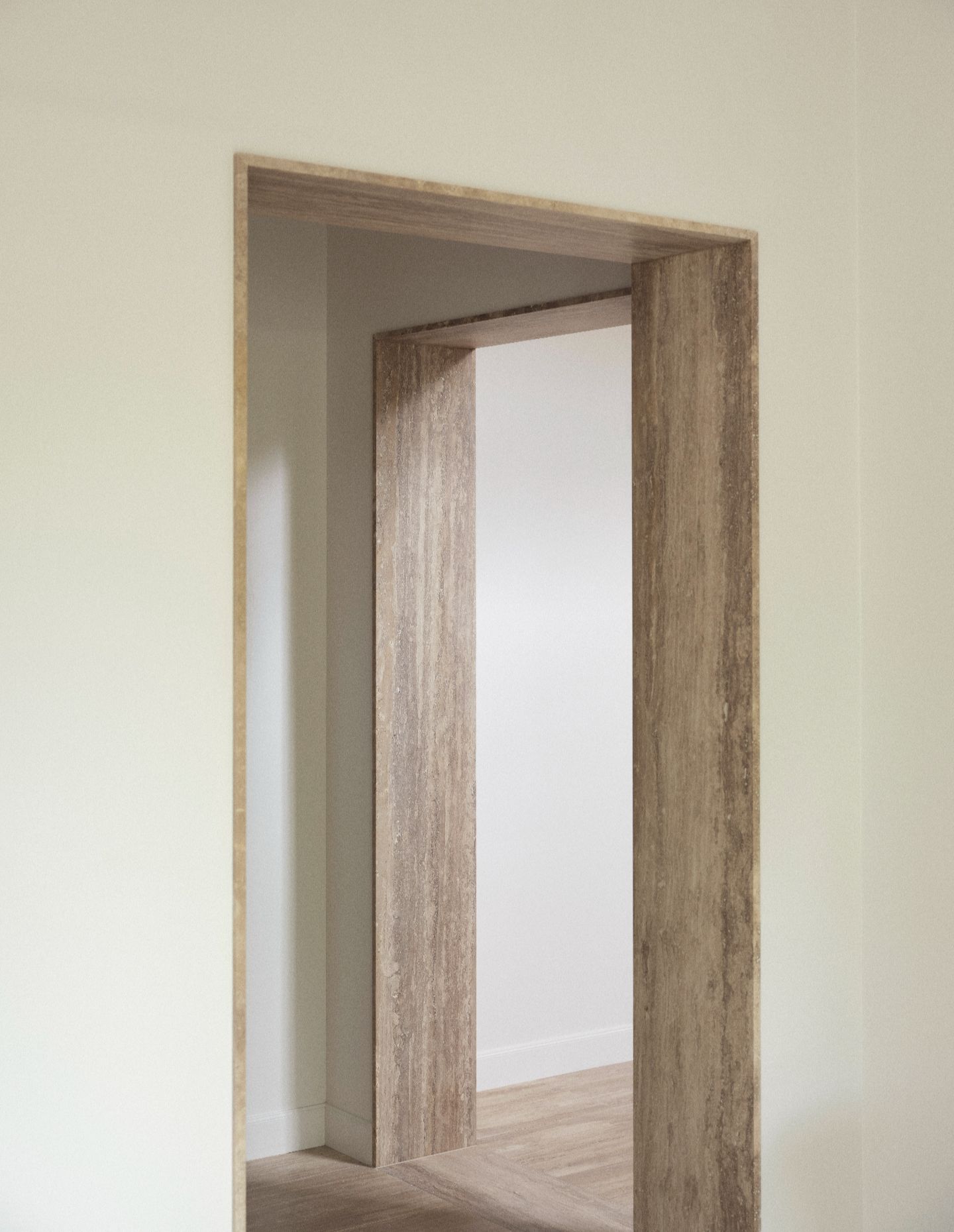
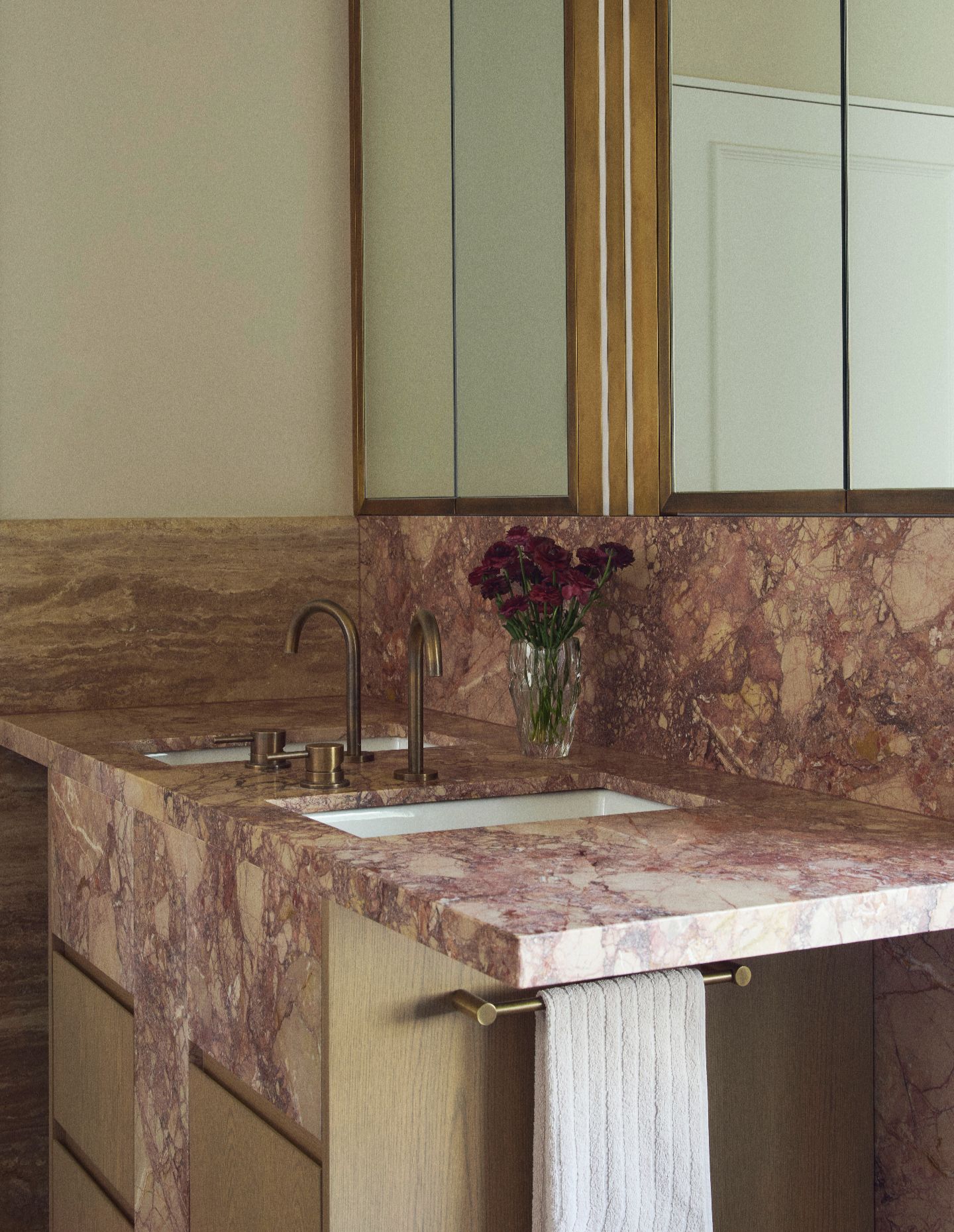
The warmth, soft striation and timelessness of vein cut travertine is what drew us to it.
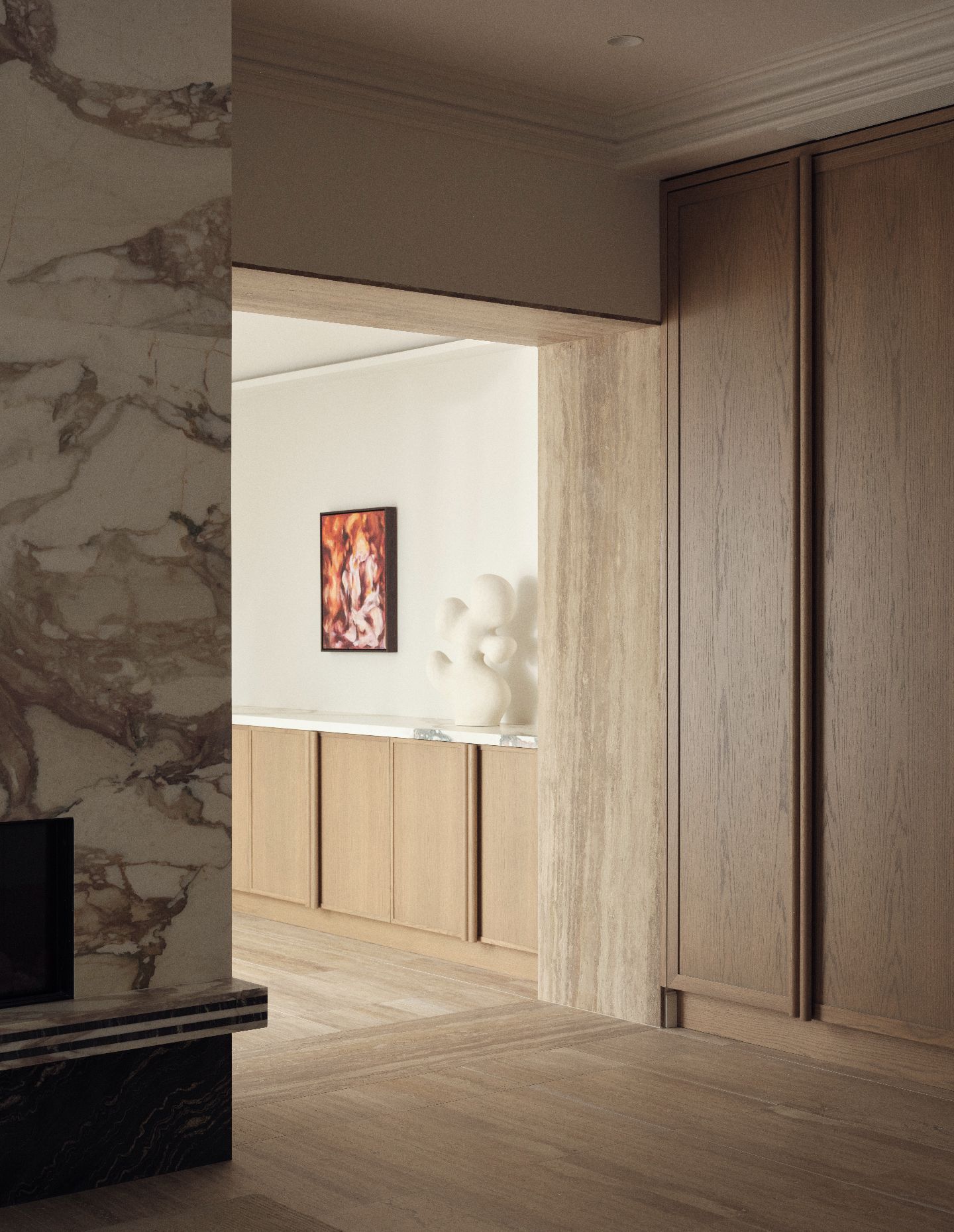
Used internally and externally on the ground floor, it becomes a ribbon that visually connects the rooms on this level. Travertine also lines deep portals from the front door and the mudroom – the family’s main entry – creating a sense of arrival.
In the primary ensuite, the material wraps the floors and walls enveloping a freestanding bath, creating a calming window side bathing experience.
Related: The colours of joy
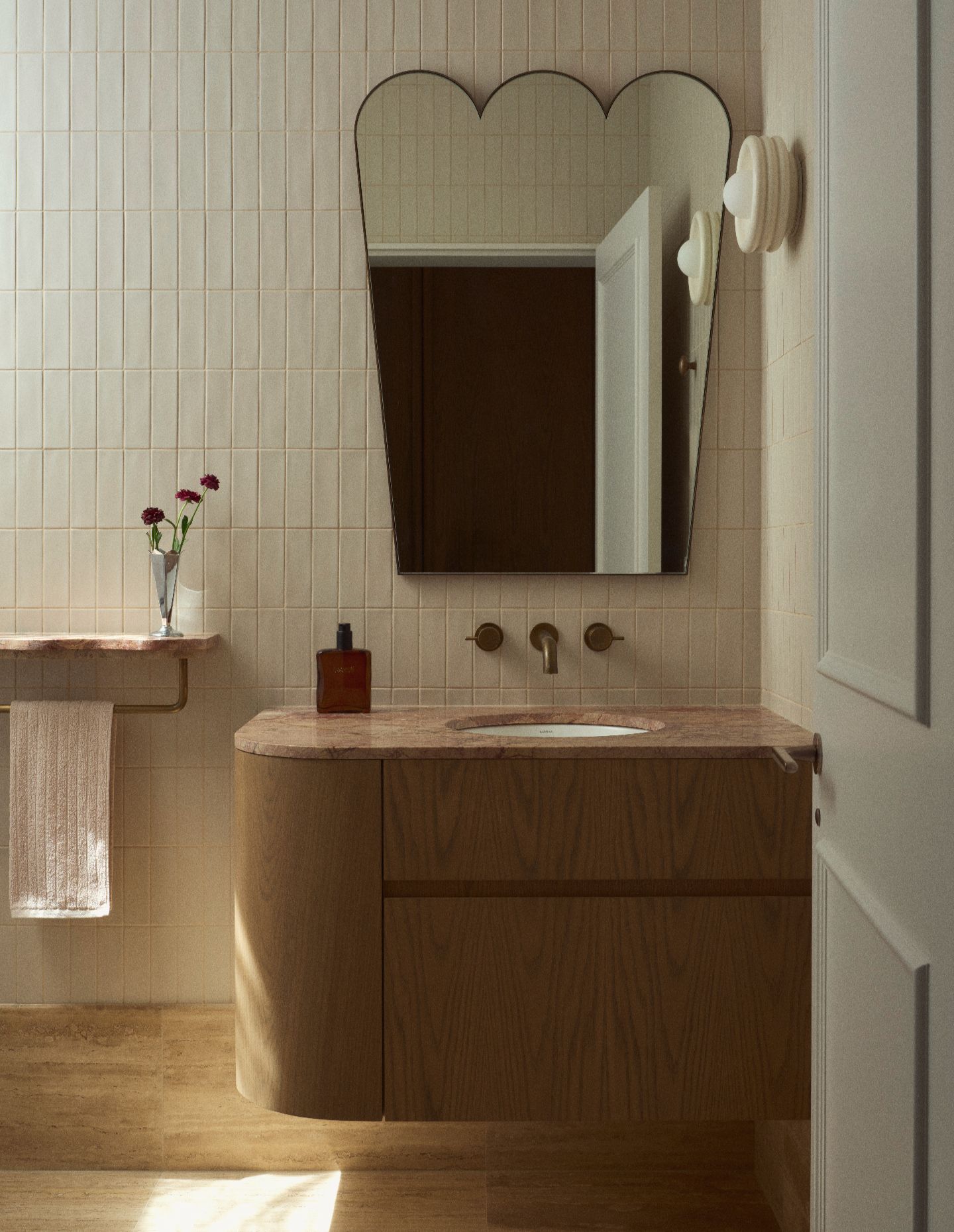
How did you approach contrast between spaces like the kitchen and dining room while maintaining a cohesive overall language?
Working with a neutral base palette of travertine, timber and warm whites, contrast became important in adding depth and expressing the character of the home.
Previously underappreciated stained glass windows in the dining room are brought to life by deep burgundy walls. This was inherently a darker corner of the home, even after opening it up. Rather than fighting that, we leaned into this in the artwork and geometric wall lights.
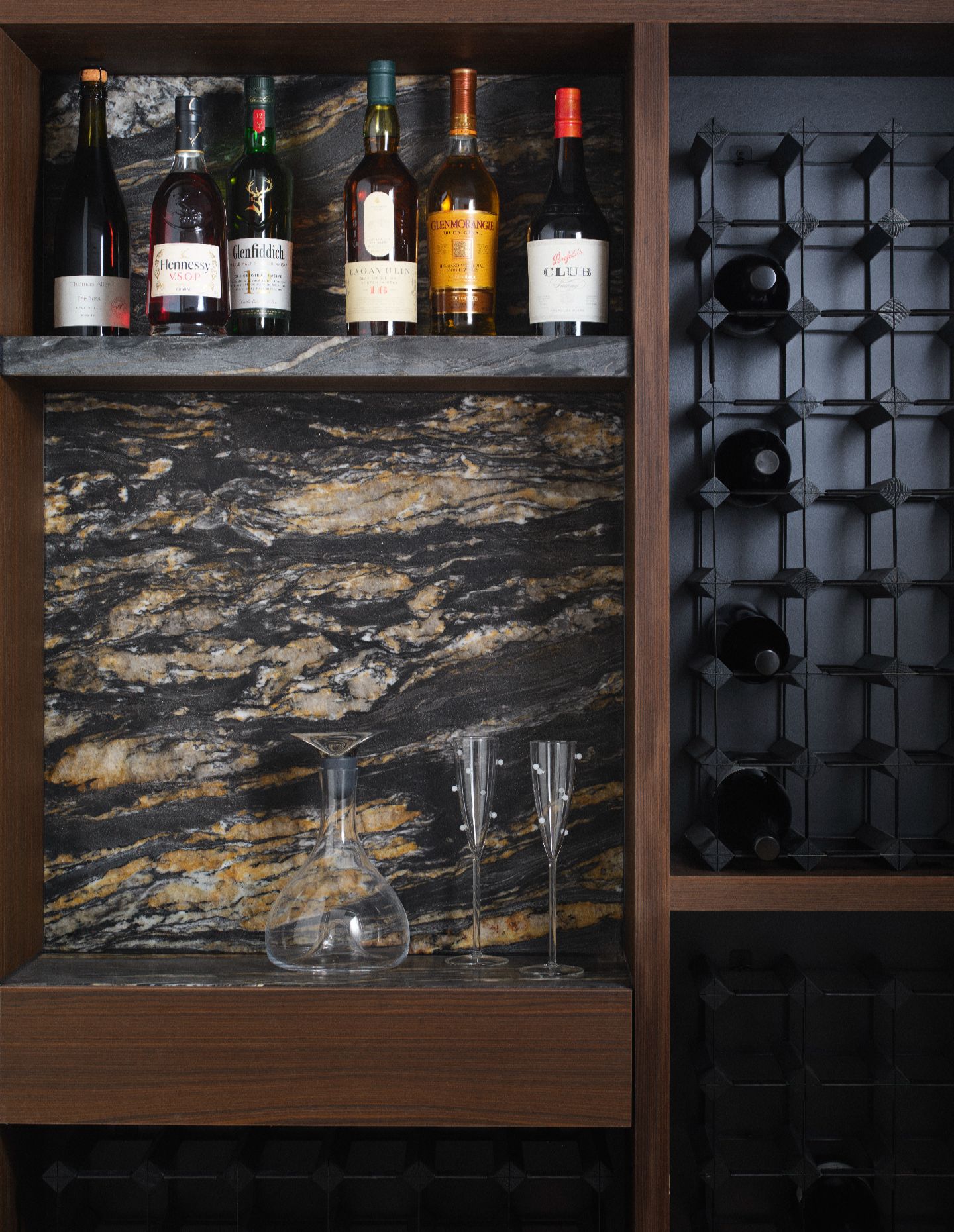
In the kitchen, a wide structural column became the anchor for the design. By introducing dark timber, a mix of strongly veined stones and using more monolithic proportions, the column is integrated and softened.
Throughout the home, elements like the steel stair balustrade, bedhead piping details, bronze spotlights and cast iron side tables subtly carry this contrast through so it feels intentional and connected rather than isolated.
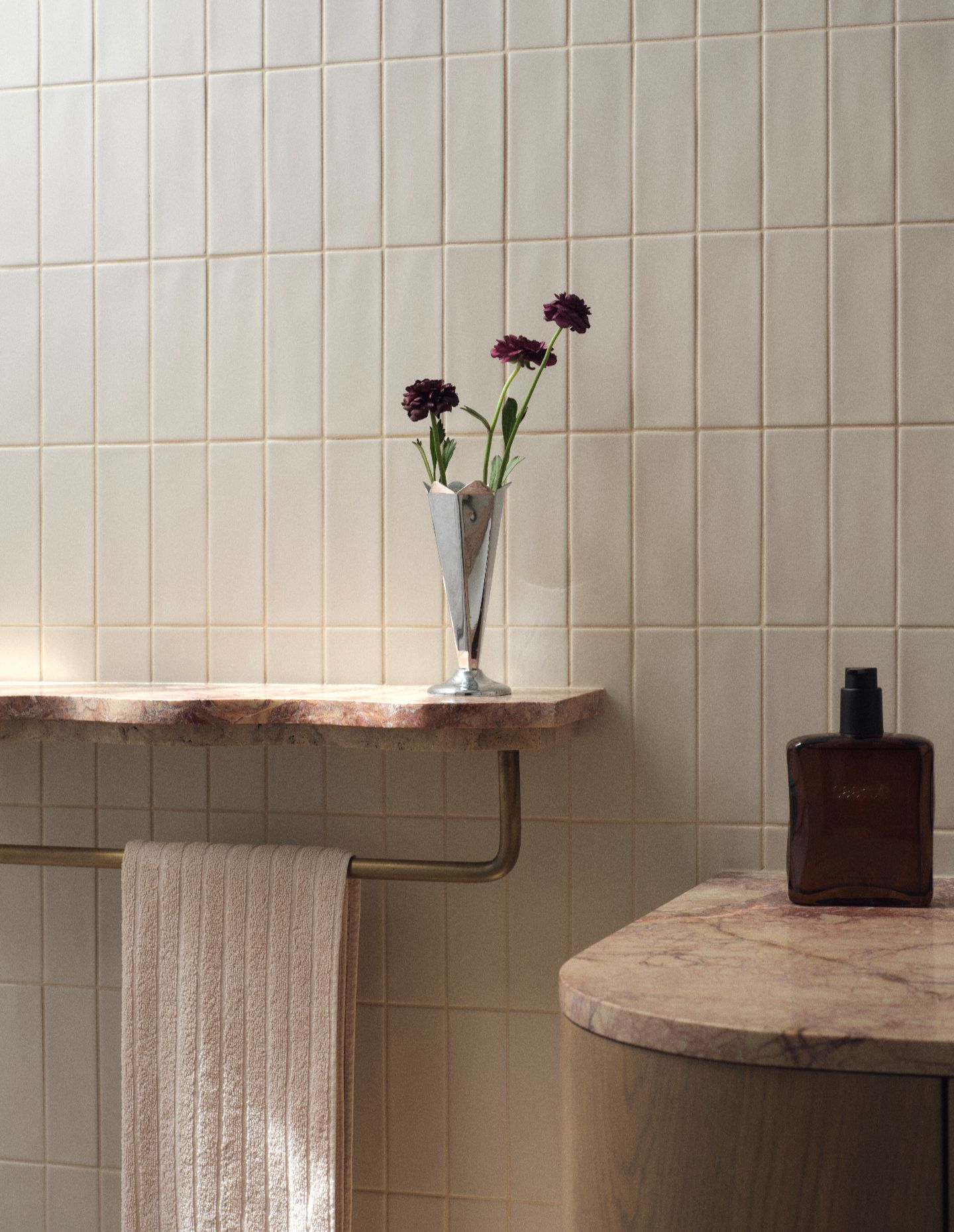
How important is tactility and sensory experience in your approach to residential interiors?
Very! There’s a running joke that you can spot an interior designer in the wild by looking out for people touching walls and edge details. That certainly rings true for us – we can’t help but design with tactility in mind.
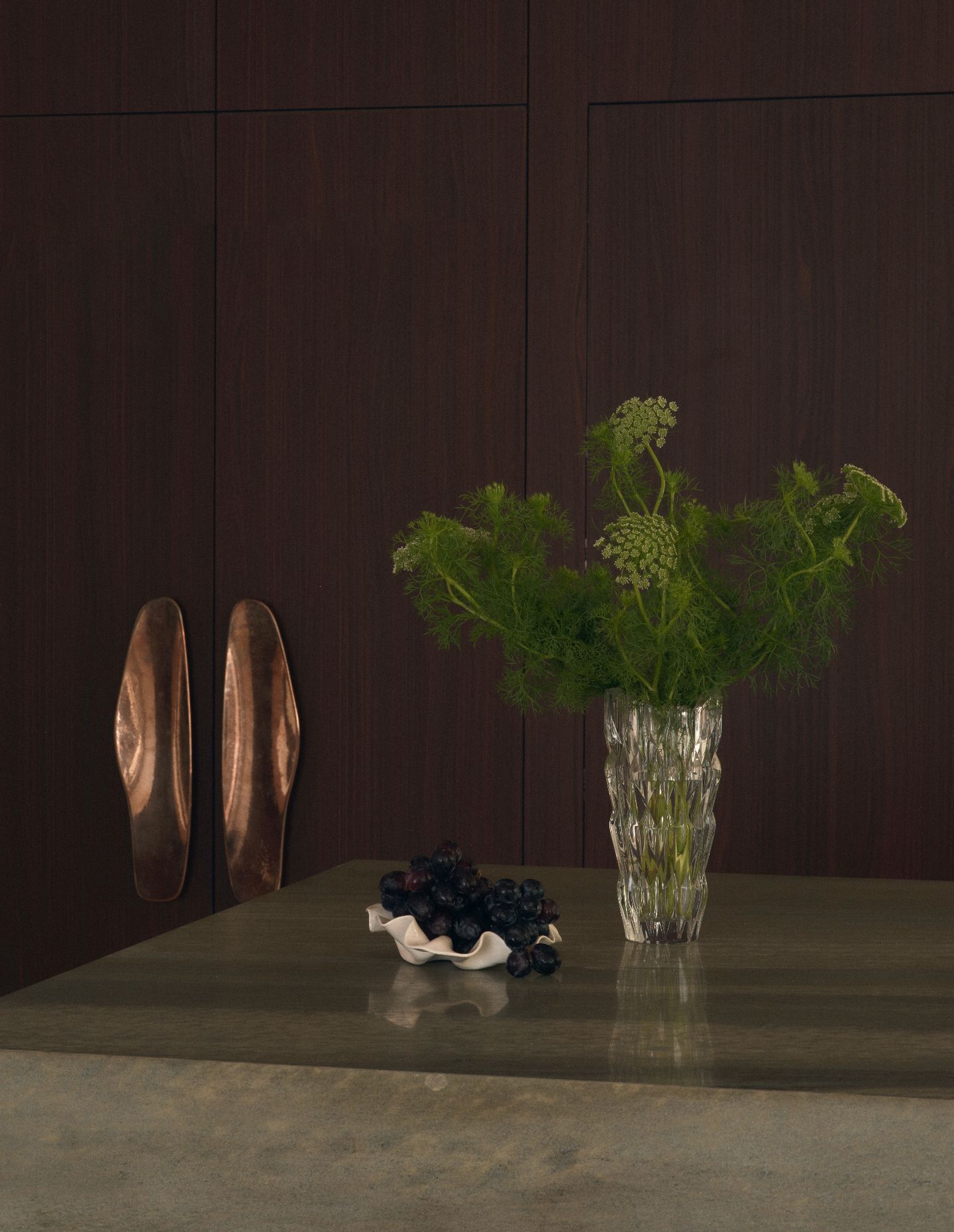
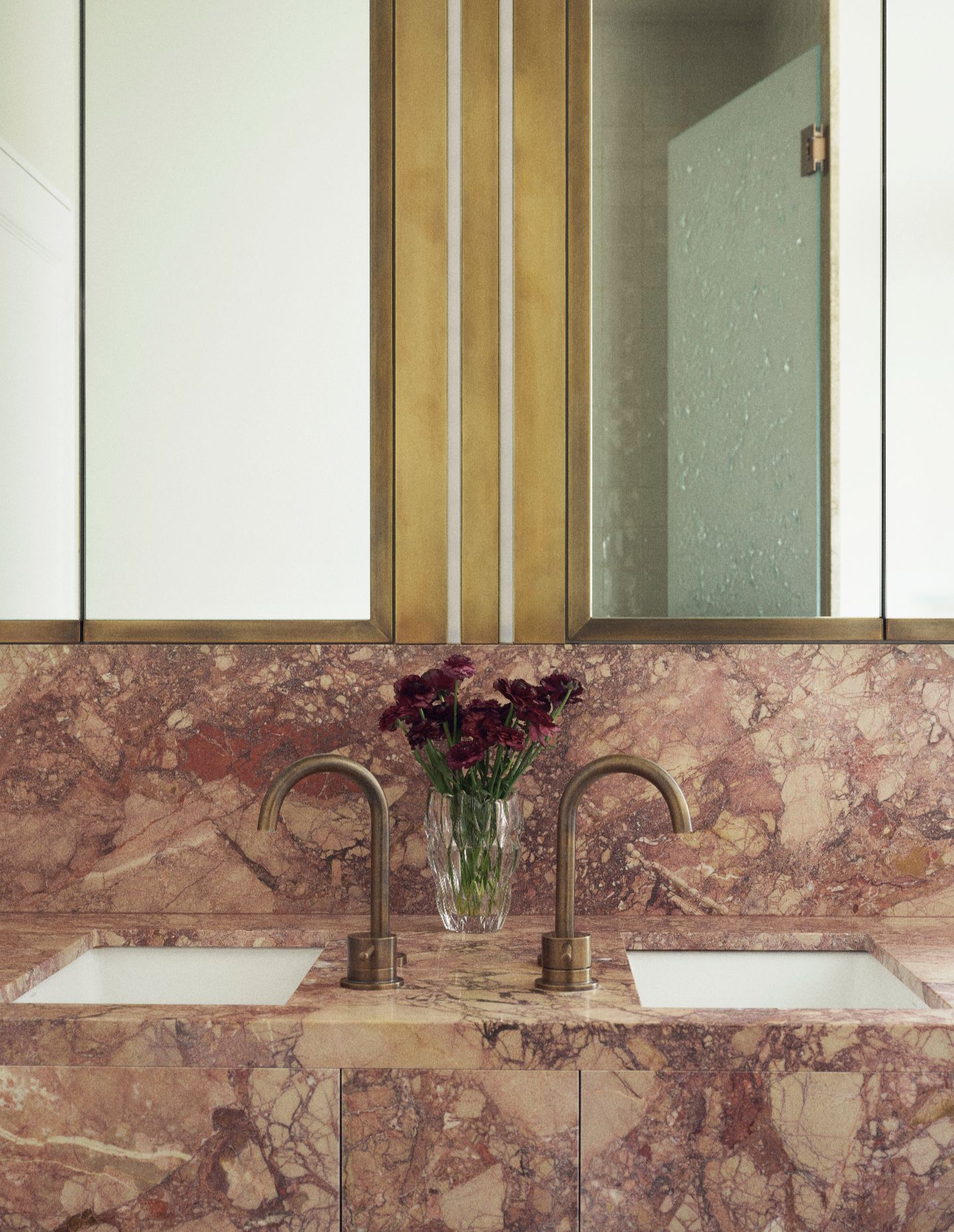
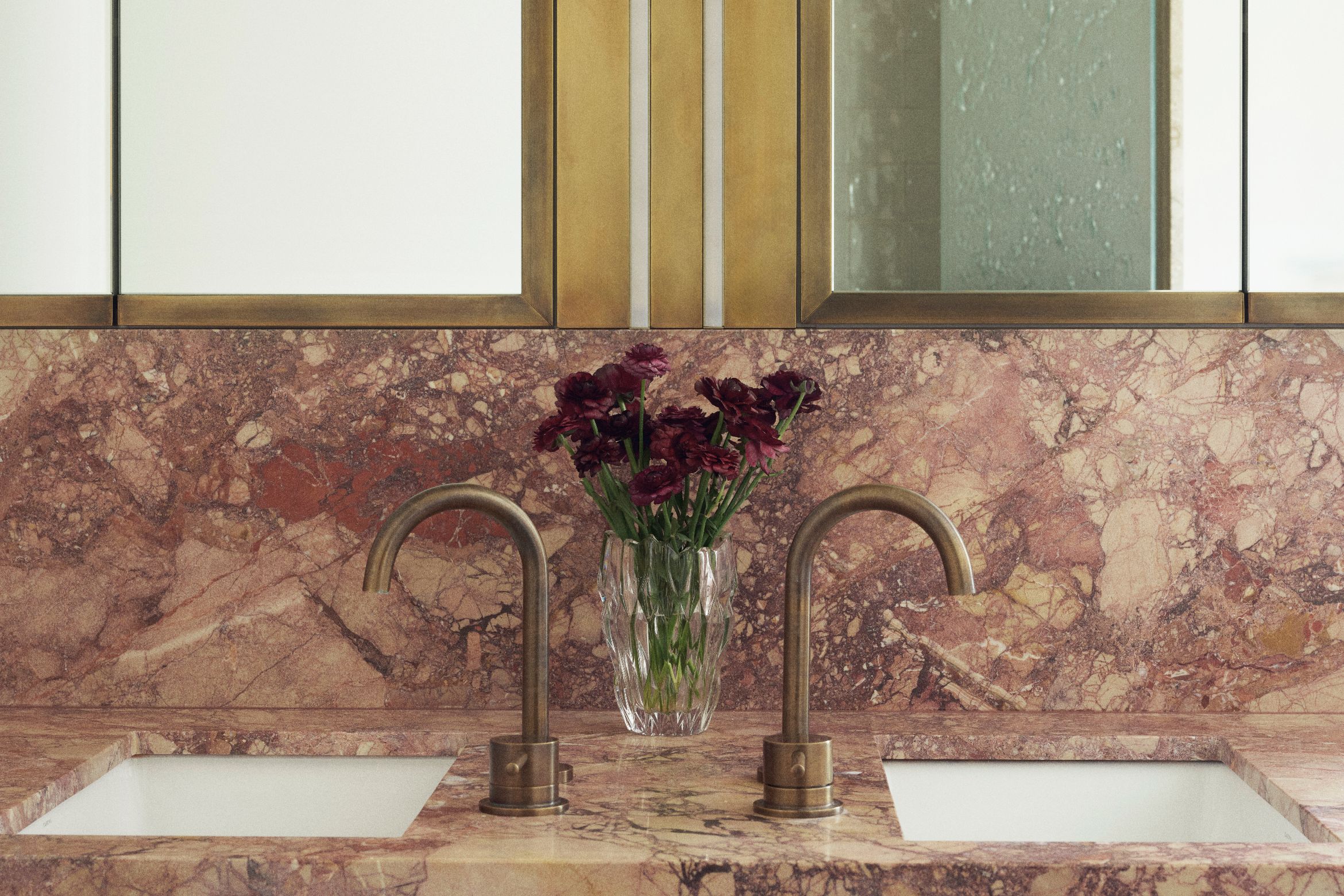
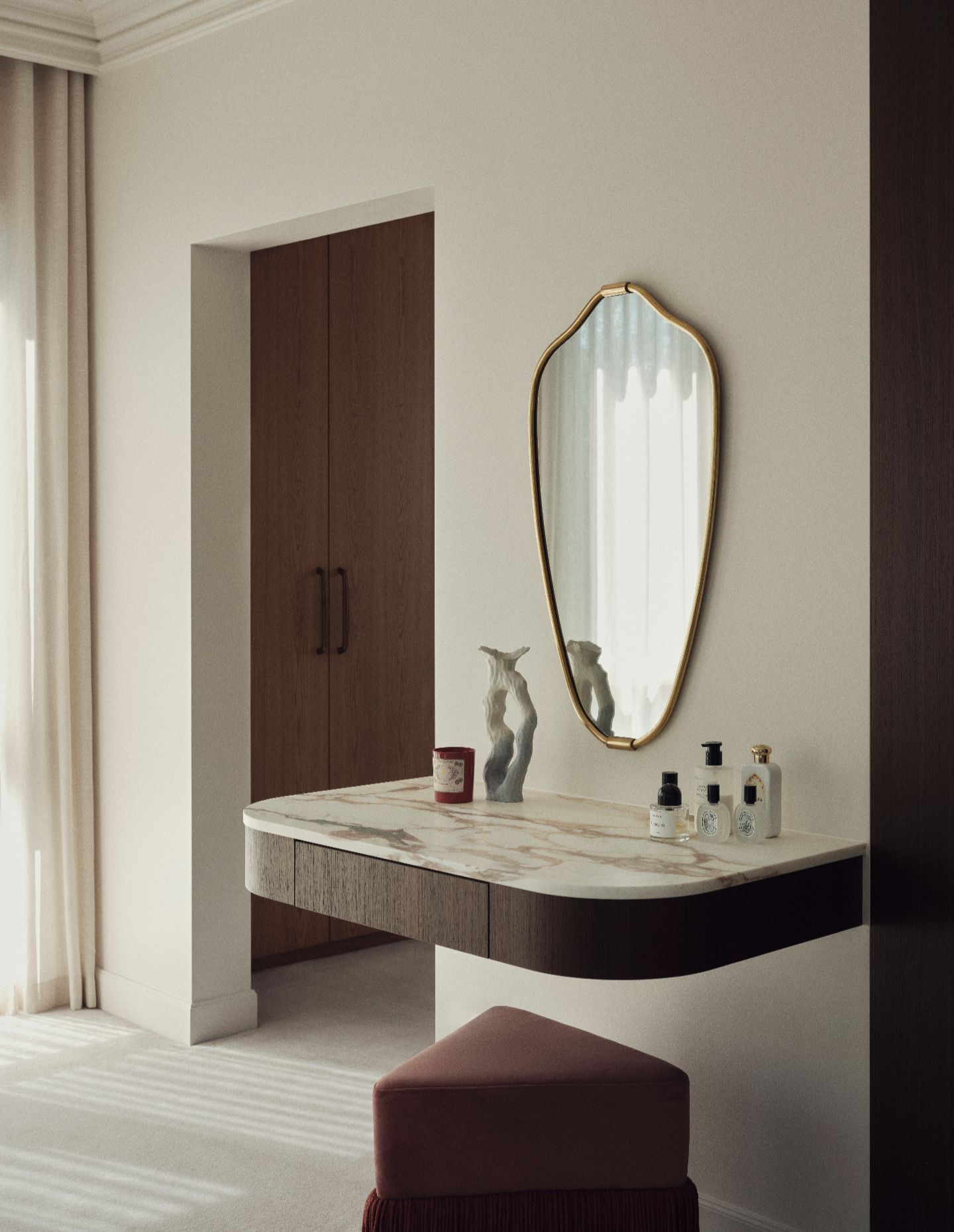
High touch elements like hardware is always a great starting point to shaping the experience of a home. In this project, we selected unfinished brass where possible to celebrate the patina of living finishes. The weight of this hardware – particularly the organic pulls in the kitchen – add a quality to the space which can’t quite be described but is immediately felt.
Beyond hardware, we also consider quieter sensory moments like the softness of carpet underfoot and the dappling of light through linen sheers and textured glass.
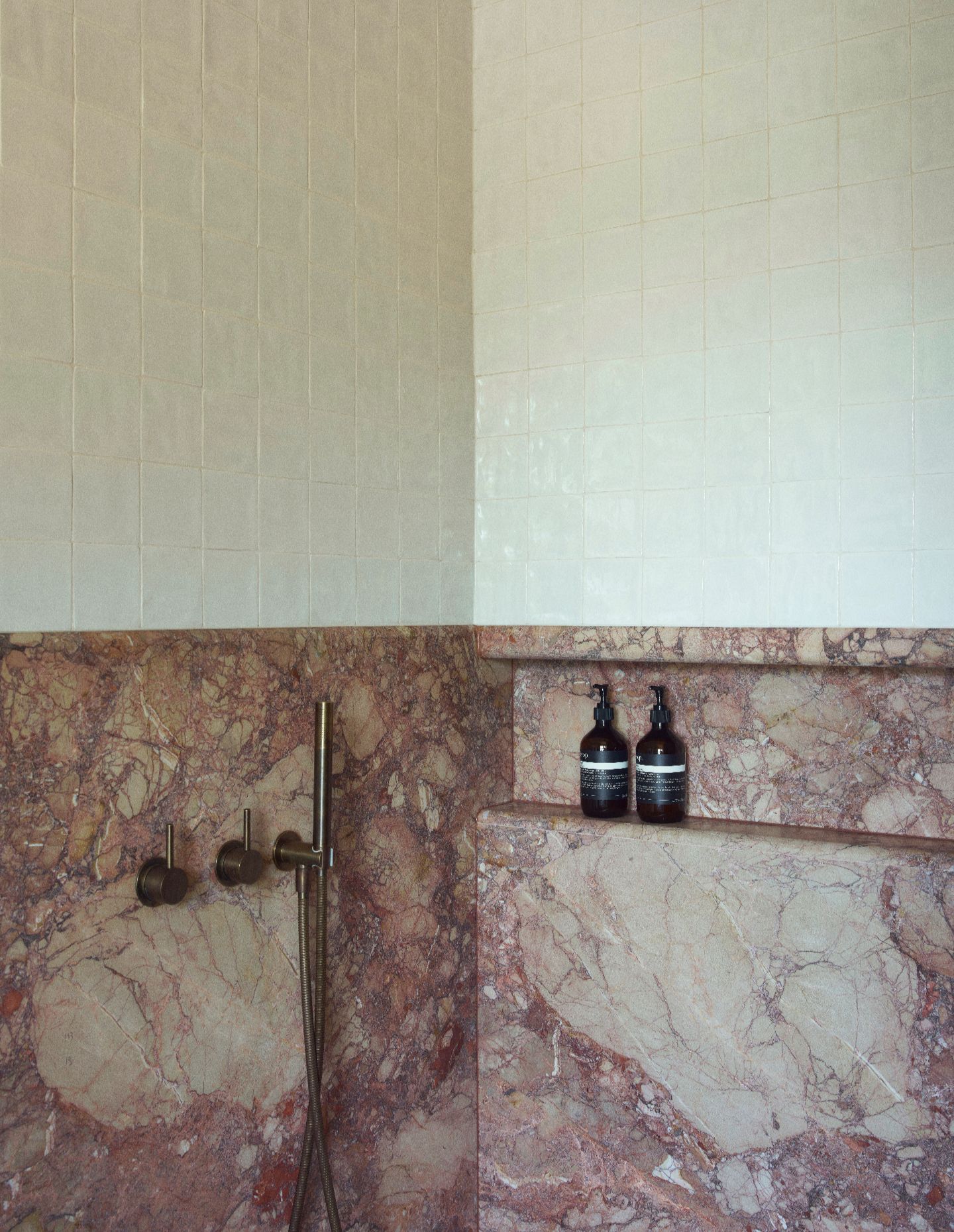
How do you design spaces that can evolve with a family over time without losing a sense of character?
It may seem counterintuitive but designing for longevity isn’t always about making everything flexible – it’s also about knowing when to be specific.
When a space has a clear identity, it gives people something to respond to over time so, even as routines shift, the home still feels consistent and grounded.
Rather than trying to design for any and all possible scenarios, we focused on choreographing deliberate moments guided by the site and how the family lives both now and aspirationally.
Light-filled window side spots in the primary suite were reserved for slower, more timeless moments: an armchair for morning coffee with a book, a banquette seat in the walk-in robe for dressing and the bath nestled against stone walls.
In the secondary suite, we were more deliberate in designing for change. Playful pattern in the upholstery and furniture speaks to its occupant’s current age while the underlying forms and material palette remain more restrained, allowing the rooms to transition naturally through to adolescence and beyond.