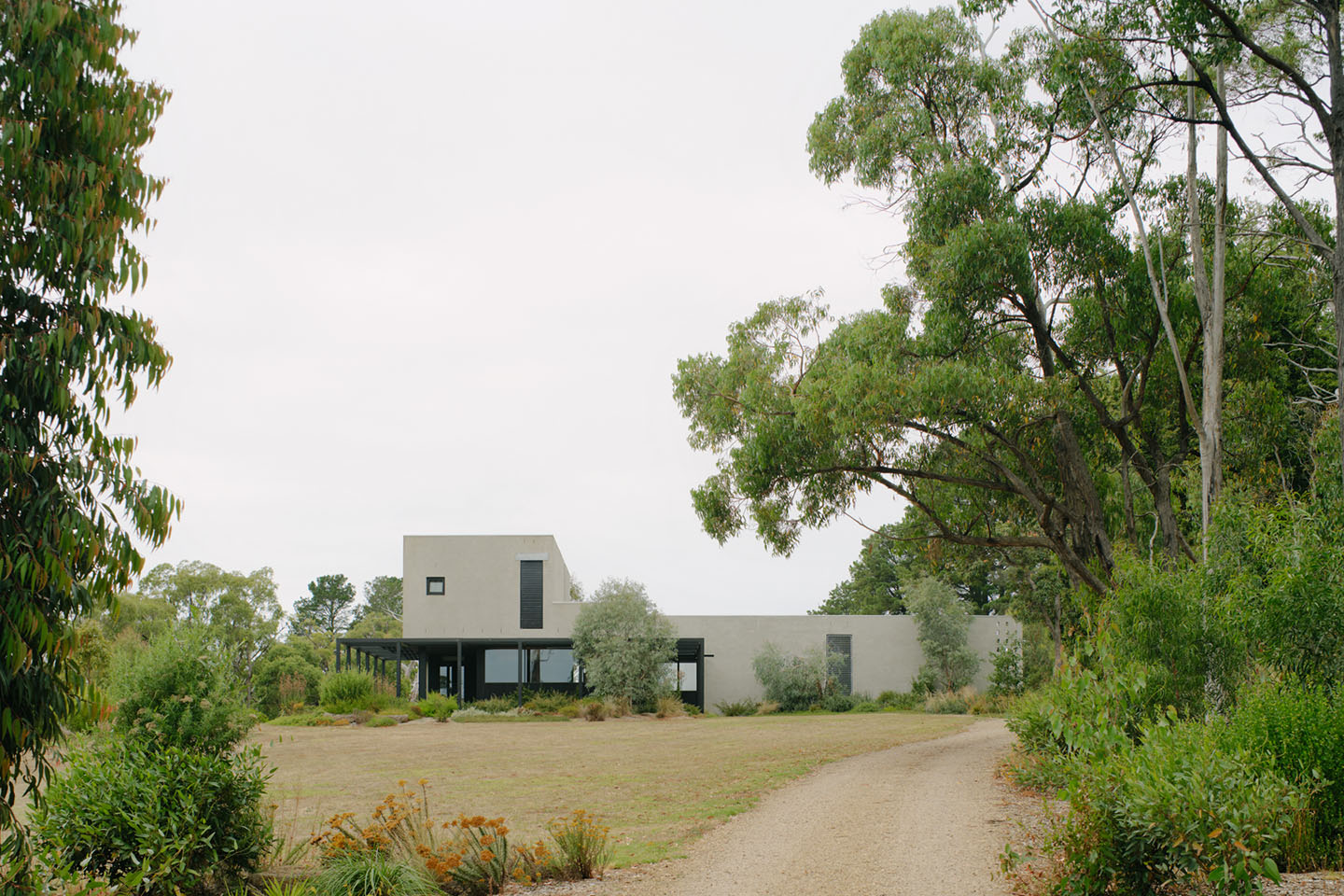

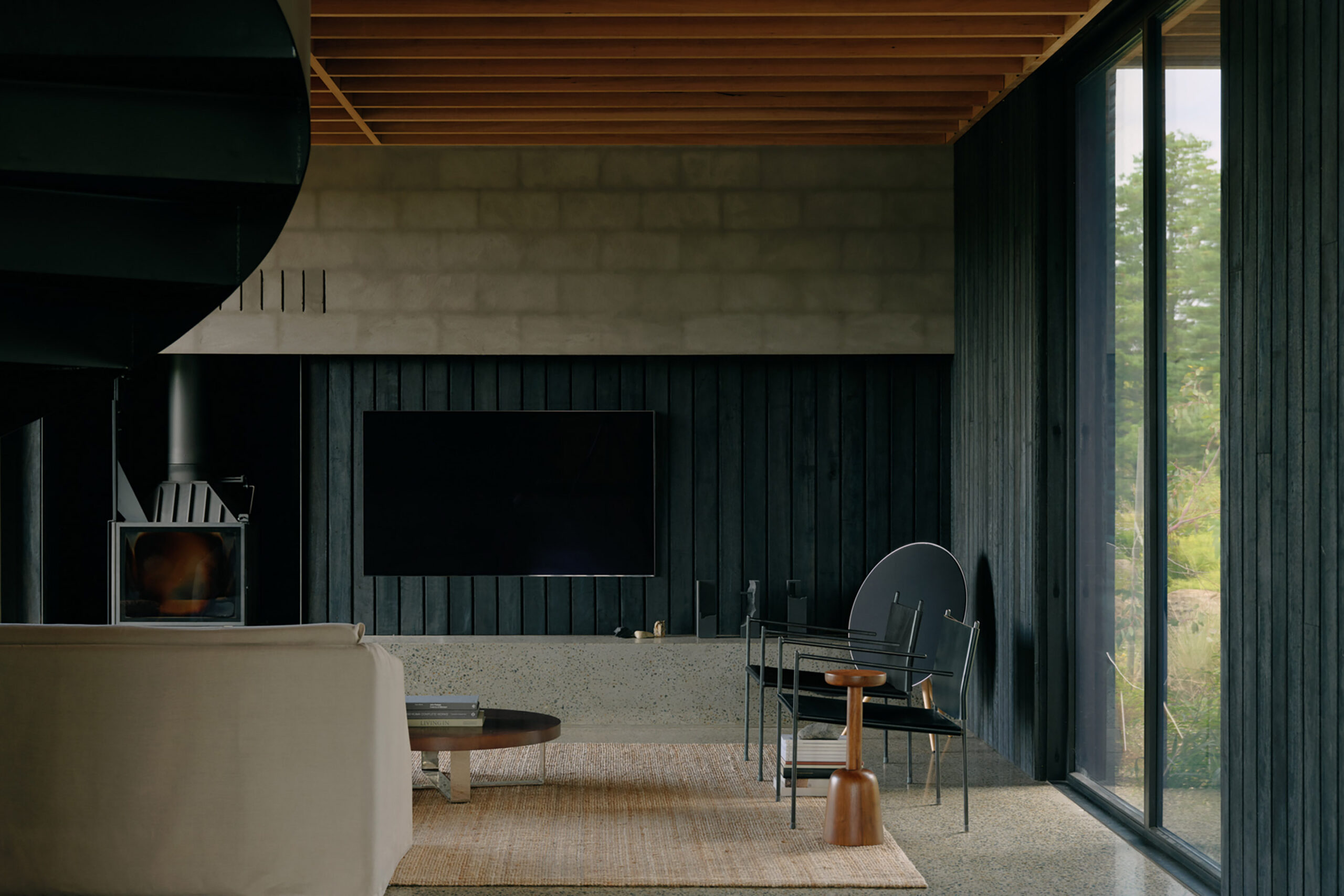
Time, undoubtedly, governs every architectural project. Nevertheless, the dual temporalities and tempo of No.41 by Melbourne-based architect Tristan Burfield feel unique.
The clients are ‘do-ers’ — active people, both professionally and socially, and the design and construction of their new home was just one pursuit amongst many occurring in their lives. The simultaneous regeneration of the surrounding 2.5-hectare Red Hill South site was another undertaking they embarked on.
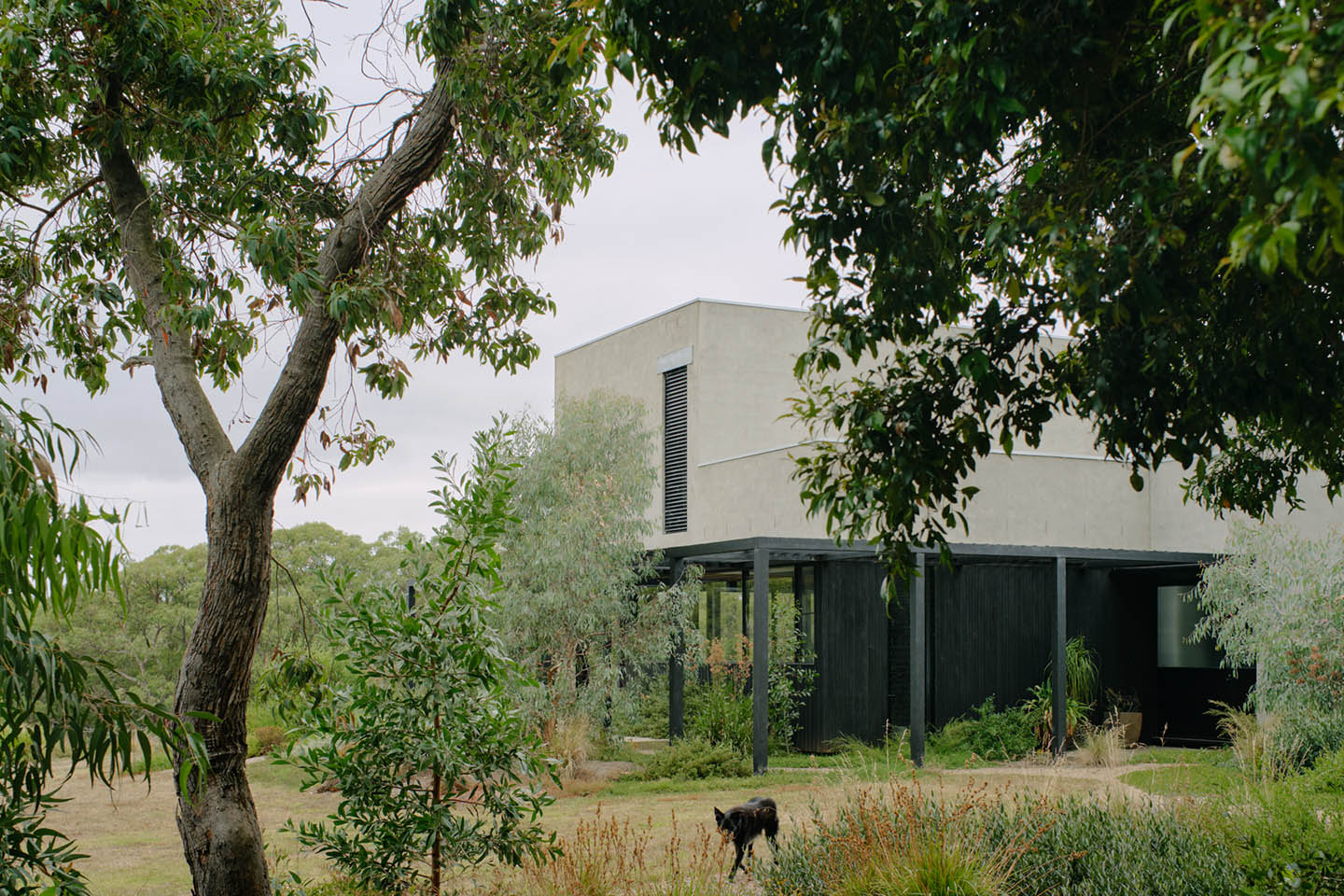
In the first instance, the project required the removal of established Monterey Pines — a tree introduced to the landscape when it was turned to agriculture — as well as the creation of a substantial natural pond surrounded by a revitalised garden of indigenous species. The renewal, or regeneration, of the land is the clients’ “contribution back to the native landscape.” Hearteningly, the rewards were swift: native birds and small marsupials returned almost immediately.
This ecological revival permeated the project, says Tristan: “In many ways, the design and construction of this home took a backseat to its landscape… The home pushes its occupants outside, literally and figuratively.”
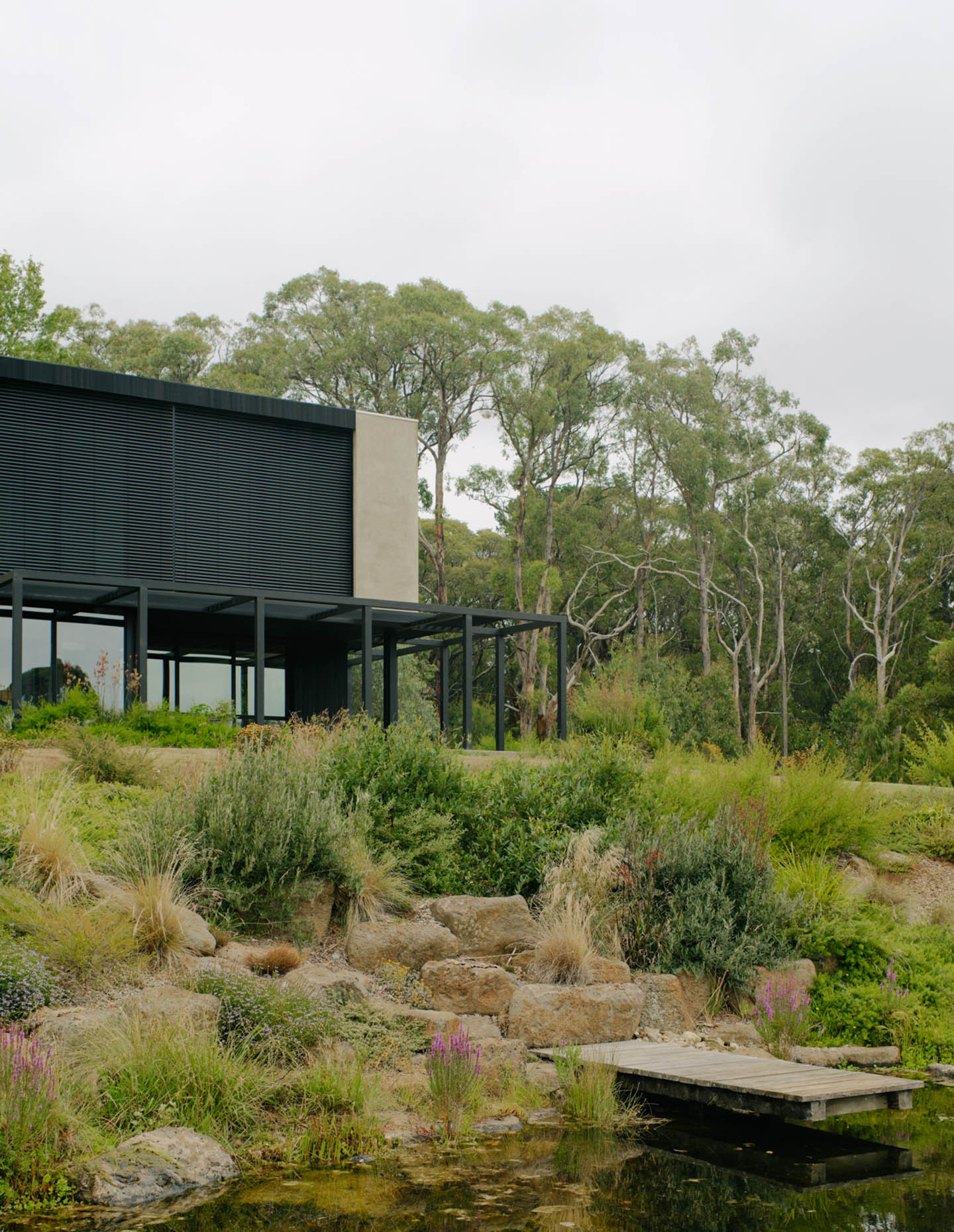
This ‘push’ is presented through leveraging the spatial arrangement of this 420-square-metre home, while resisting “knee-jerk moves.” Tristan explains further: “There’s nothing groundbreaking, but the lack of a formal dining room, and the proximity of the main bedroom to the study, kitchen and living room, feels unique for a house this size.”
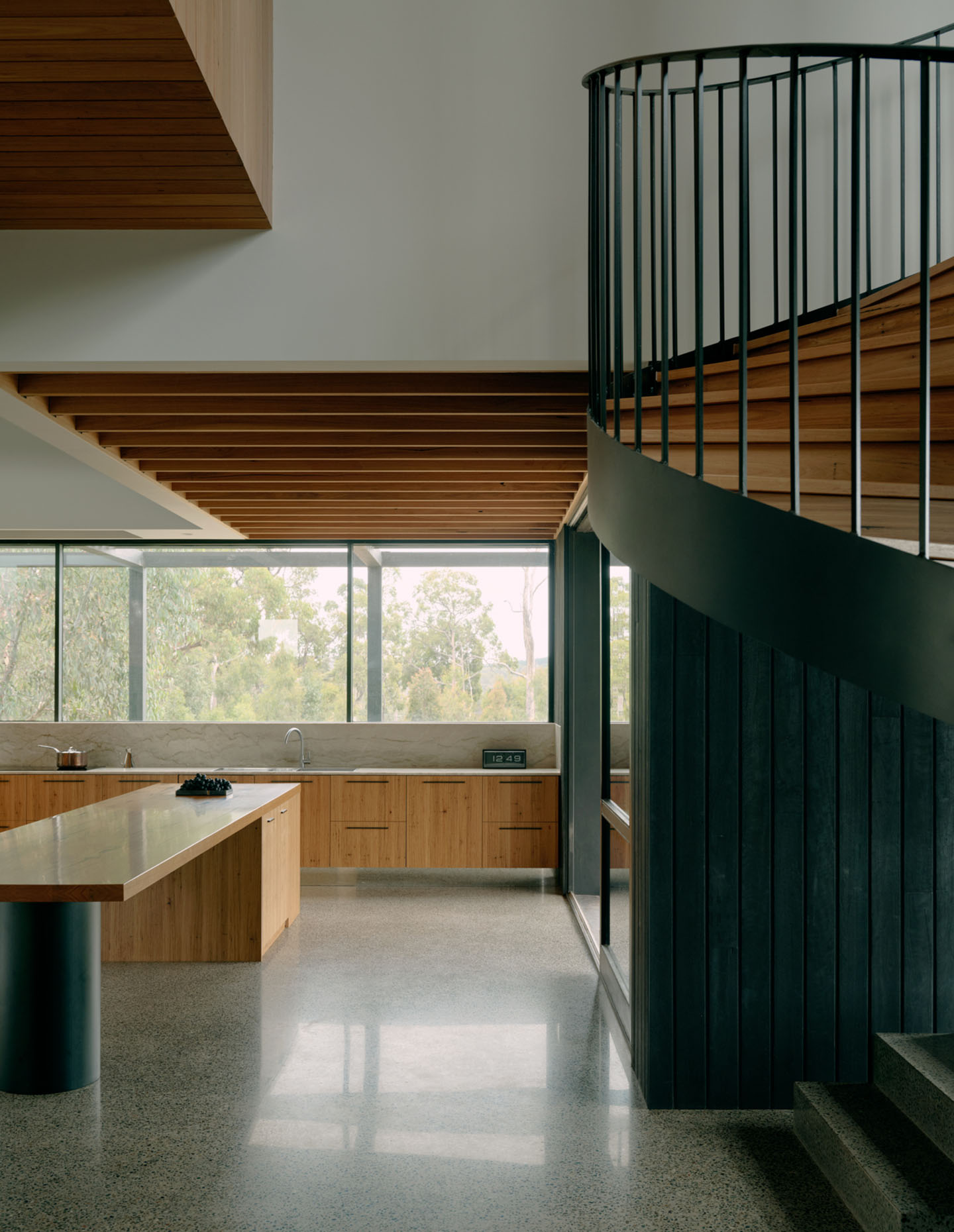
Flanking the tall circulation core, the kitchen and living spaces sit on either side of a hefty, concrete core-filled steel spiral staircase and a timber bridge that leads to the bedroom. Ascending this timber-lined spiral returns the occupant to a glass wall, framing cinematic views across the idyllic natural pond.
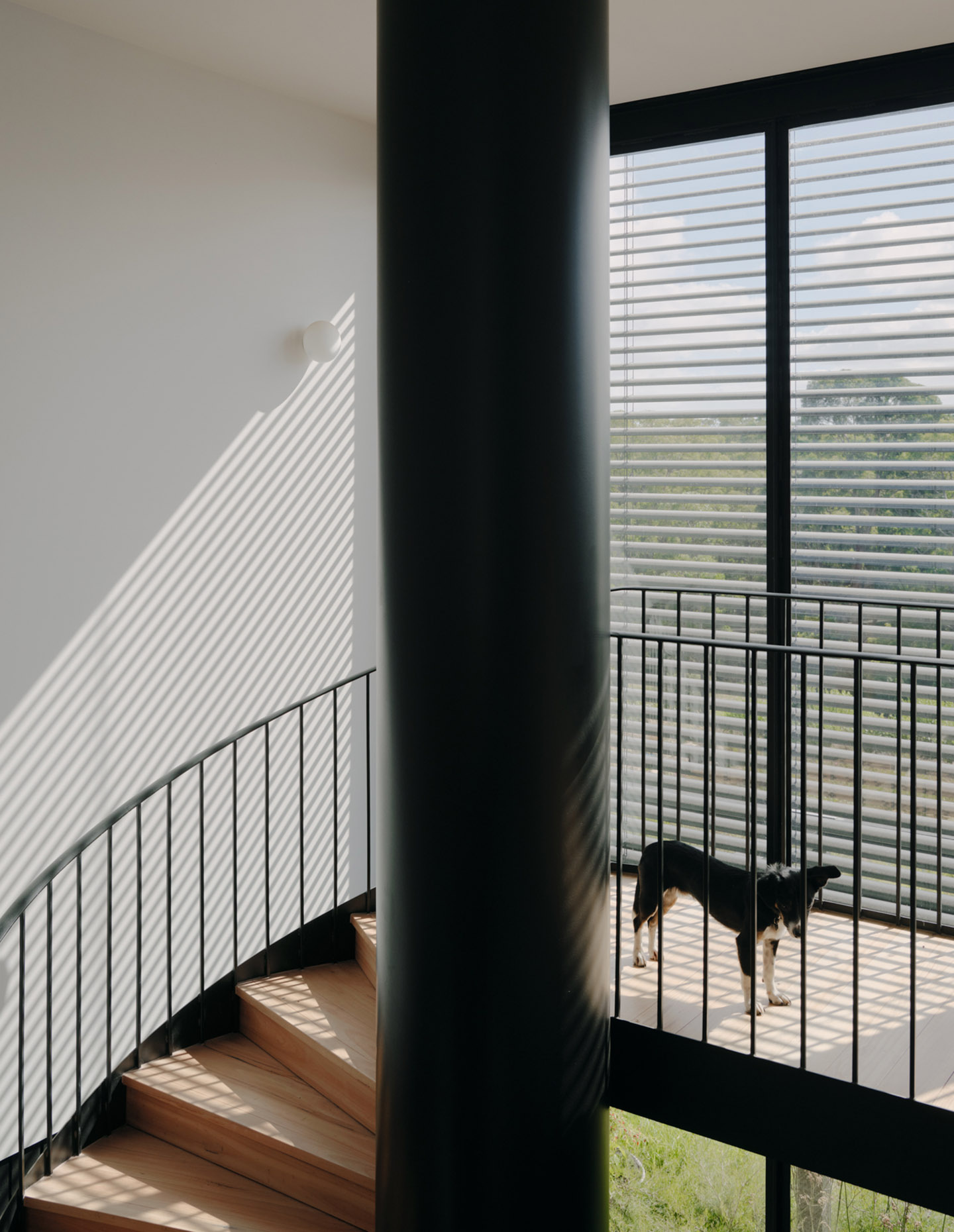
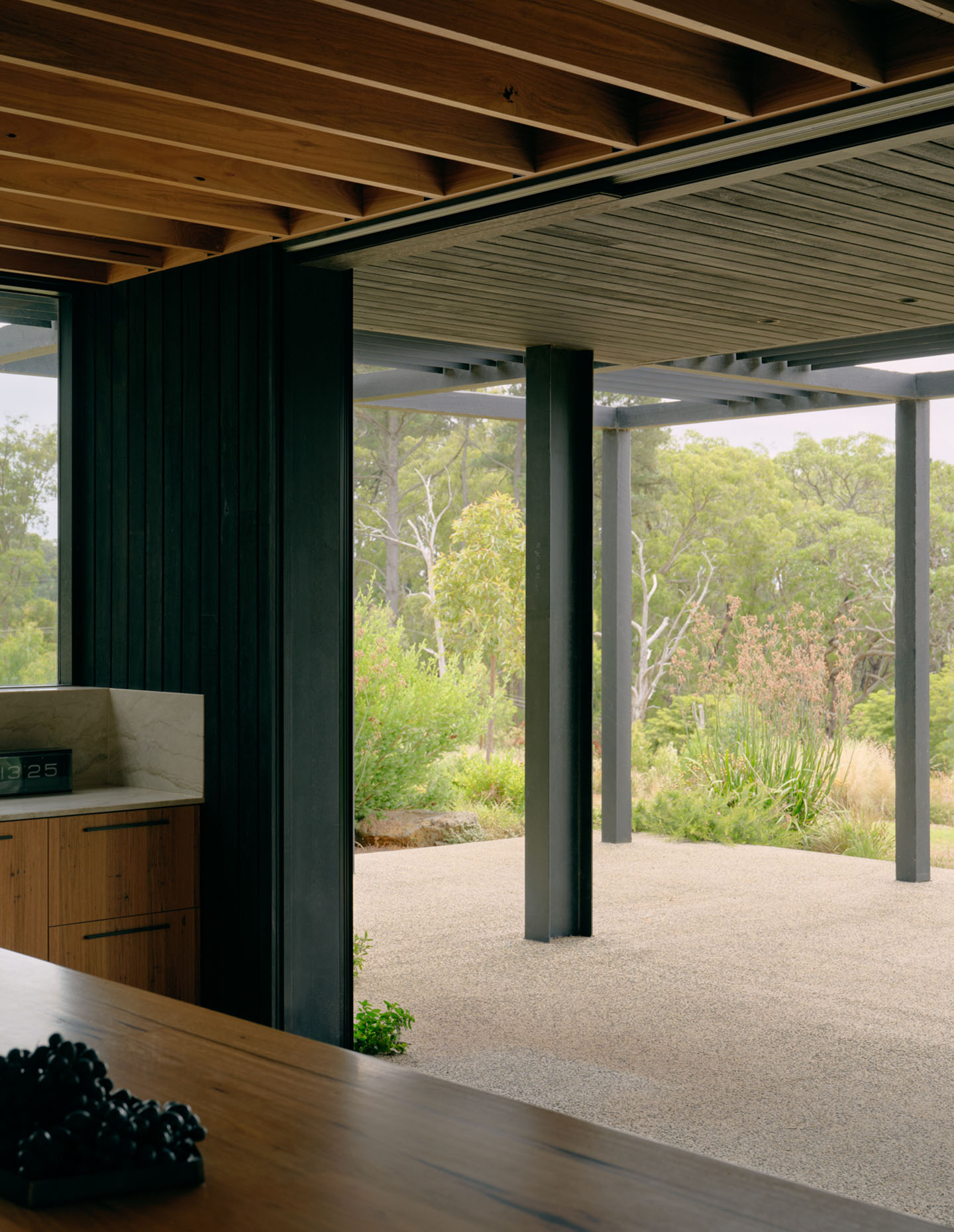
The resulting home achieves a remarkable generosity of scale and layout, while effortlessly maintaining a sense of intimacy and connectivity. Because the clients’ adult children study locally or abroad, the floor plan utilises adjacent wings — housing a formal entrance, breakaway breakout zones, secondary bedrooms and a games room — ready when the family reunites for holidays. For the vast majority of the year, however, all daily circulation is tightly contained within the central, two-storey rectangular volume, allowing the home to function with the efficiency of a single-bedroom residence most of the time.
“I live in an apartment, and there’s a distinct closeness to how I live with my family,” Tristan observes. “That same closeness is palpable in this home, even given its grander scale.”
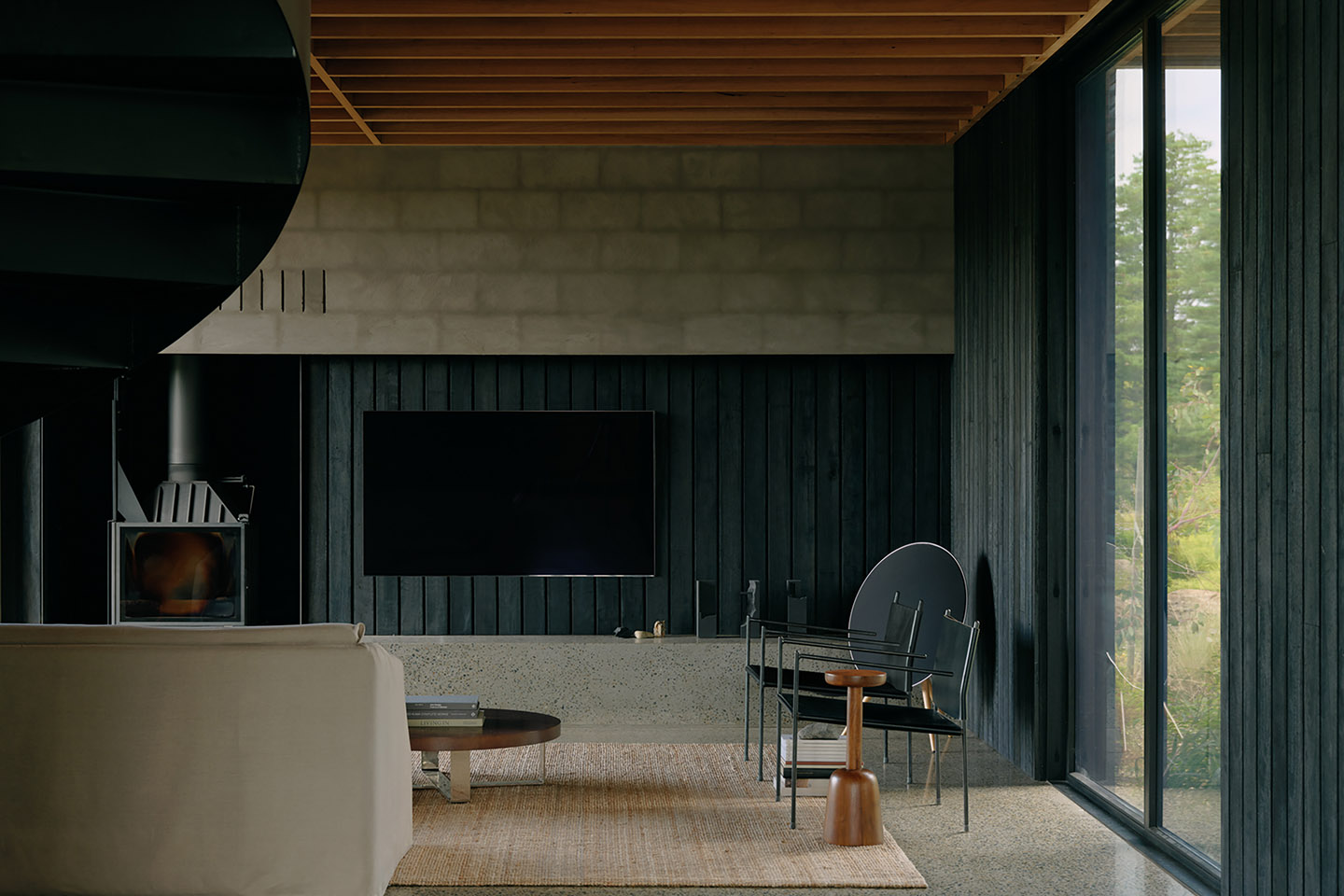
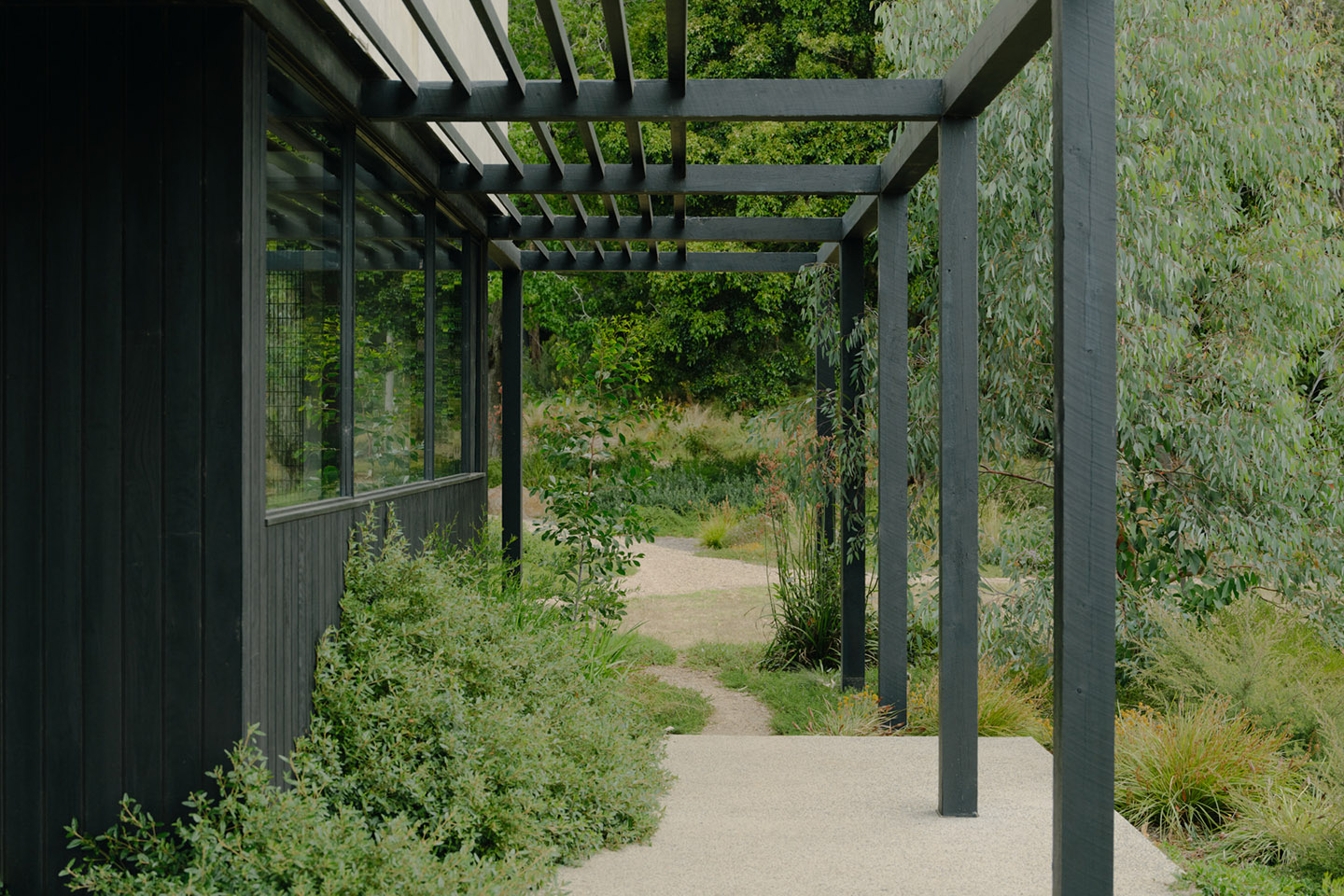
In an era driven by ephemeral digital aesthetics, Tristan, a sole-practising architect, maintains focus on tactile longevity. He airs his concern of the danger of falling in love with “stylistic overlays and the seductiveness seen in architectural photography, and trying to re-create that.”
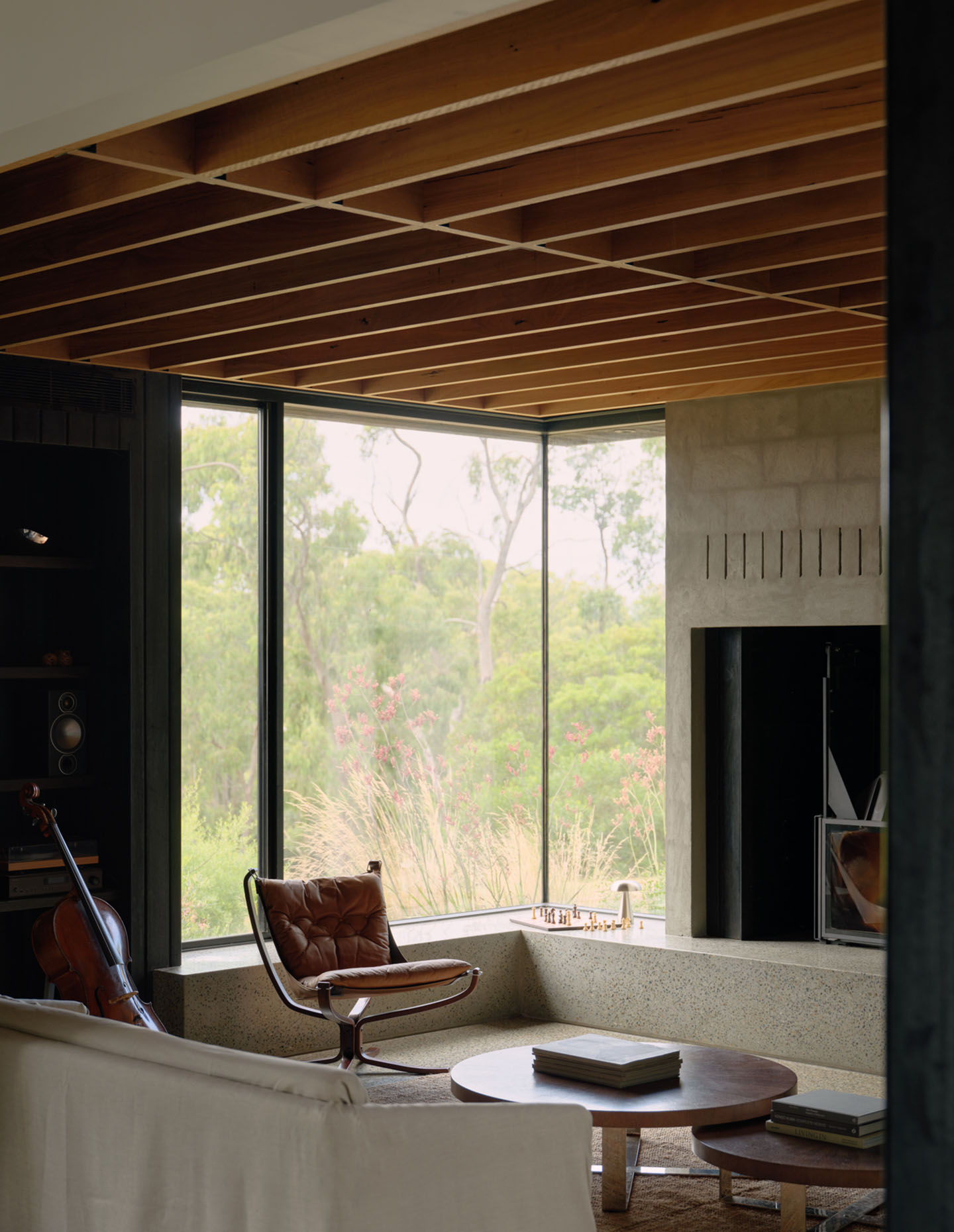
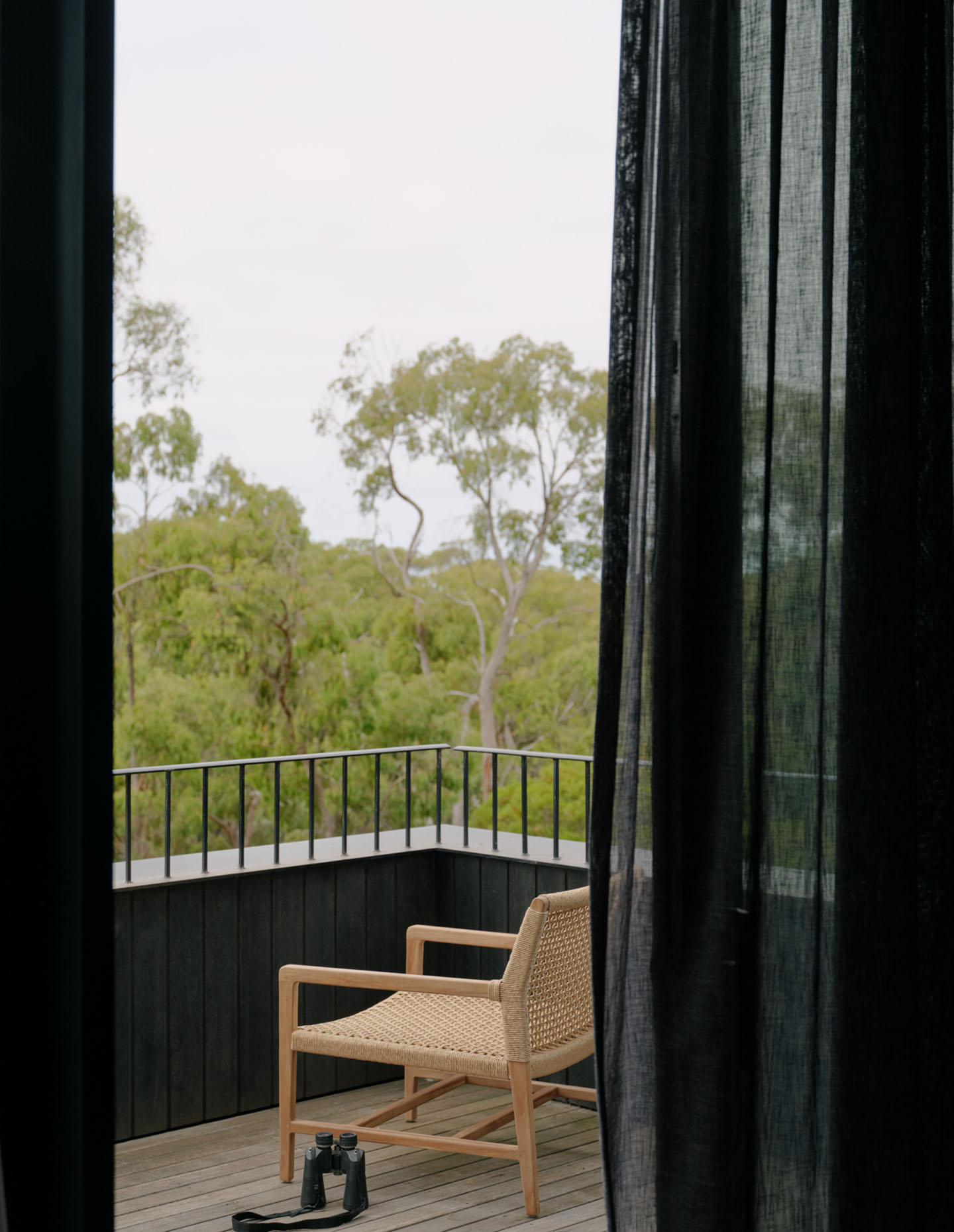
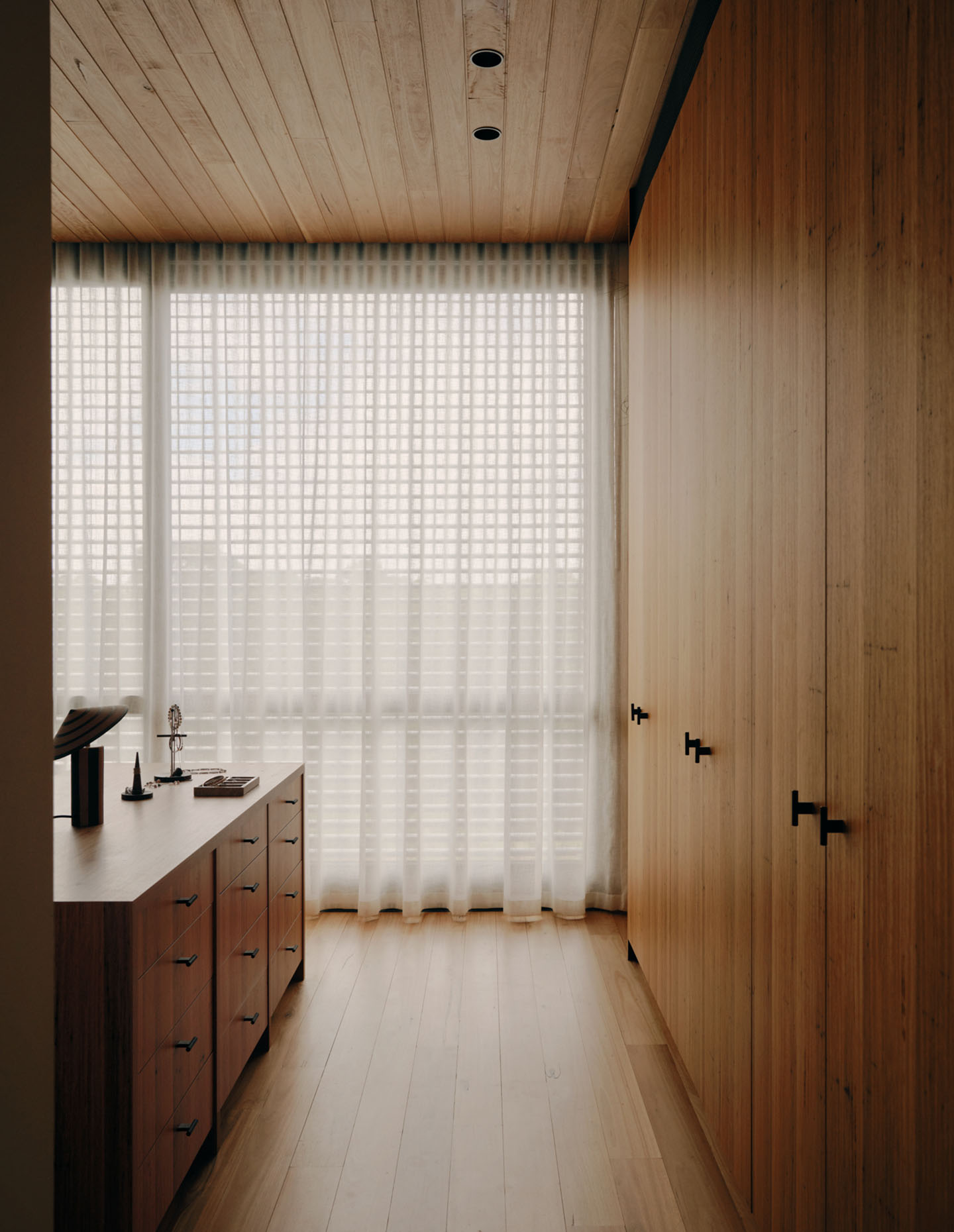
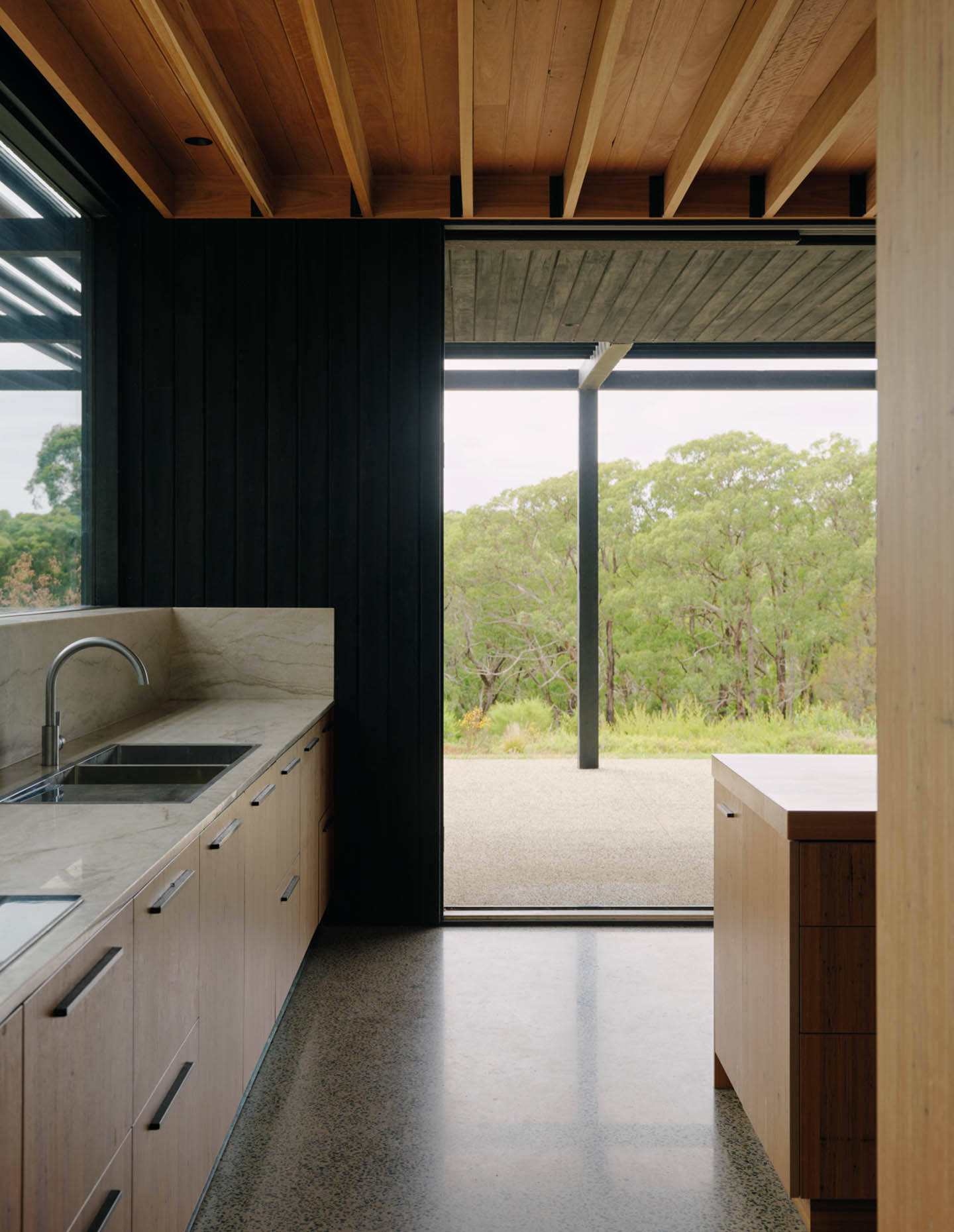
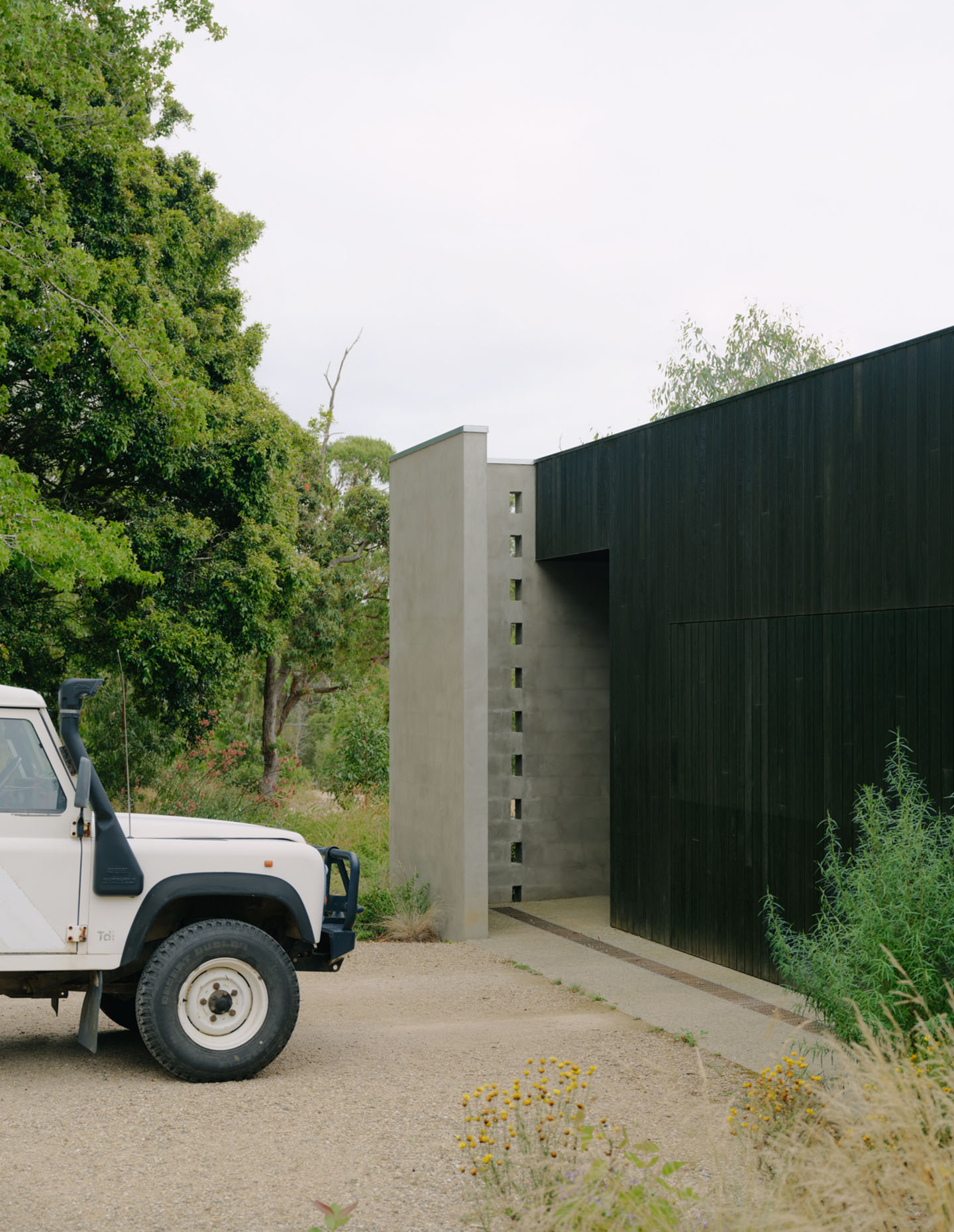
No.41 has a robustness to its finishes. Exterior shou sugi ban (charred timber) bleeds seamlessly indoors, adjoining the black oiled window frames bordering the views. Similarly, heavy masonry walls impart a grounding sense of permanence. This home is primed to stand the tests of time.
Related: A home at home in the bush
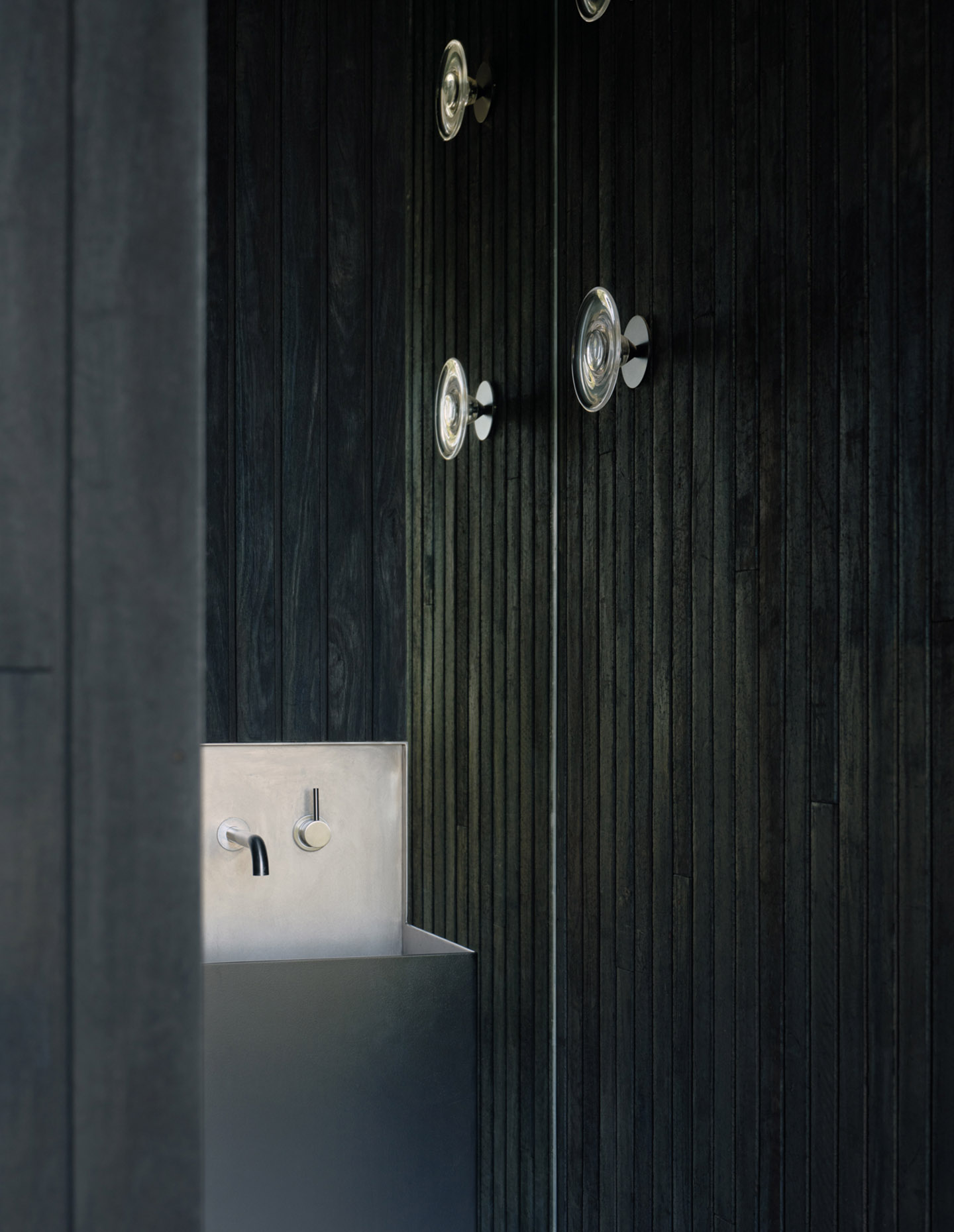
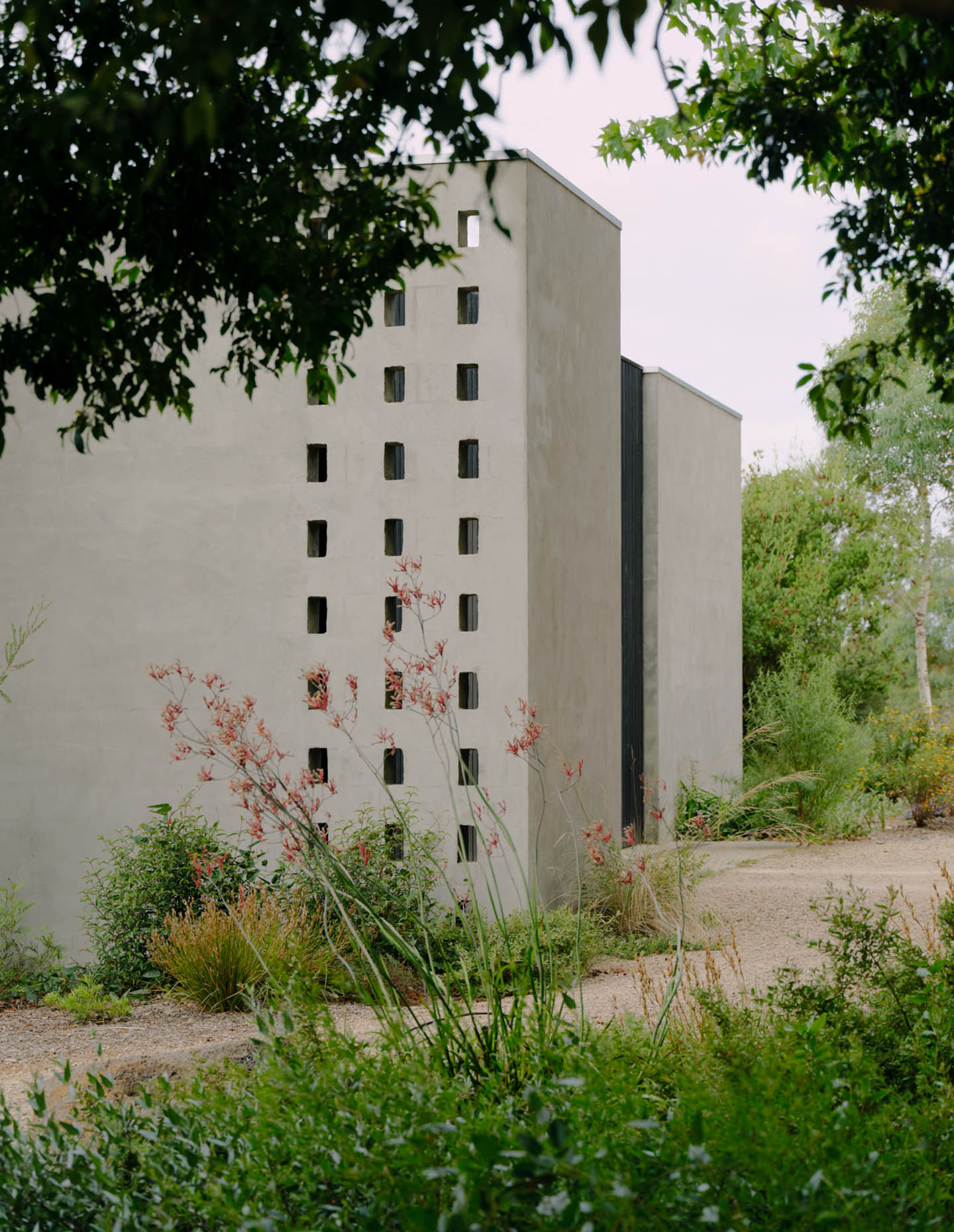
Fronting a slot mirror recessed amongst the carbonised timber is a stainless steel vanity with a powder coasted exterior. It’s rugged, refined and unique. “I try to carve out moments to have ‘fun’. To invent little projects of custom fabrication, for myself. Those moments help contribute to a language of a house, linking the marco to the micro.”
By pressing ‘reset’ on the land’s history, Tristan and his clients have built a residence engineered for the long game: a home designed to patina beautifully, retreat into the rescued terrain and outlast the trends.