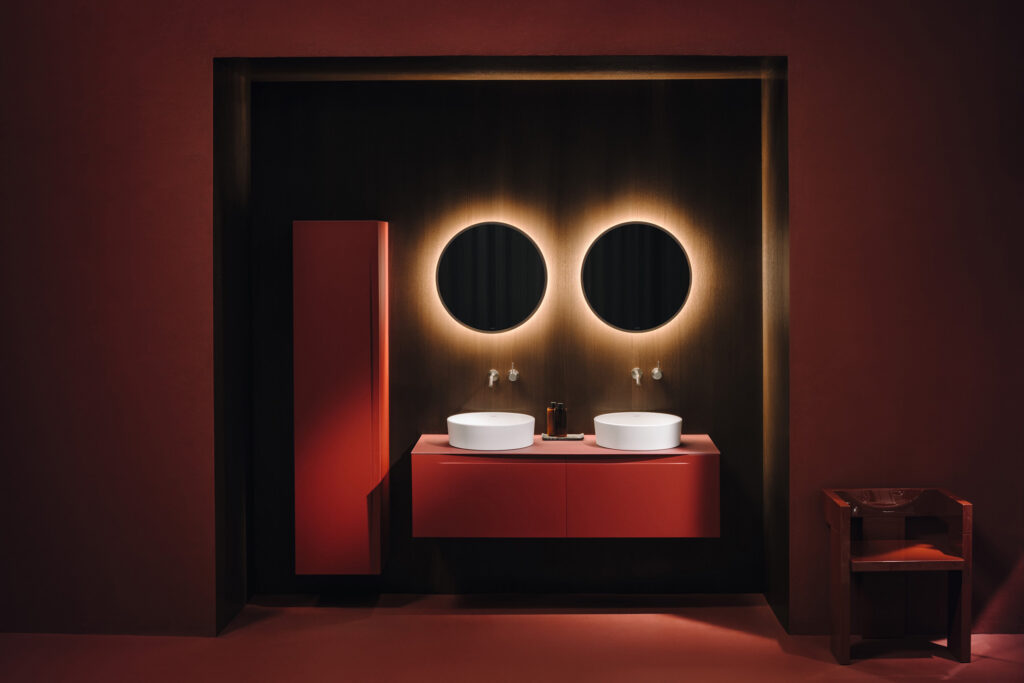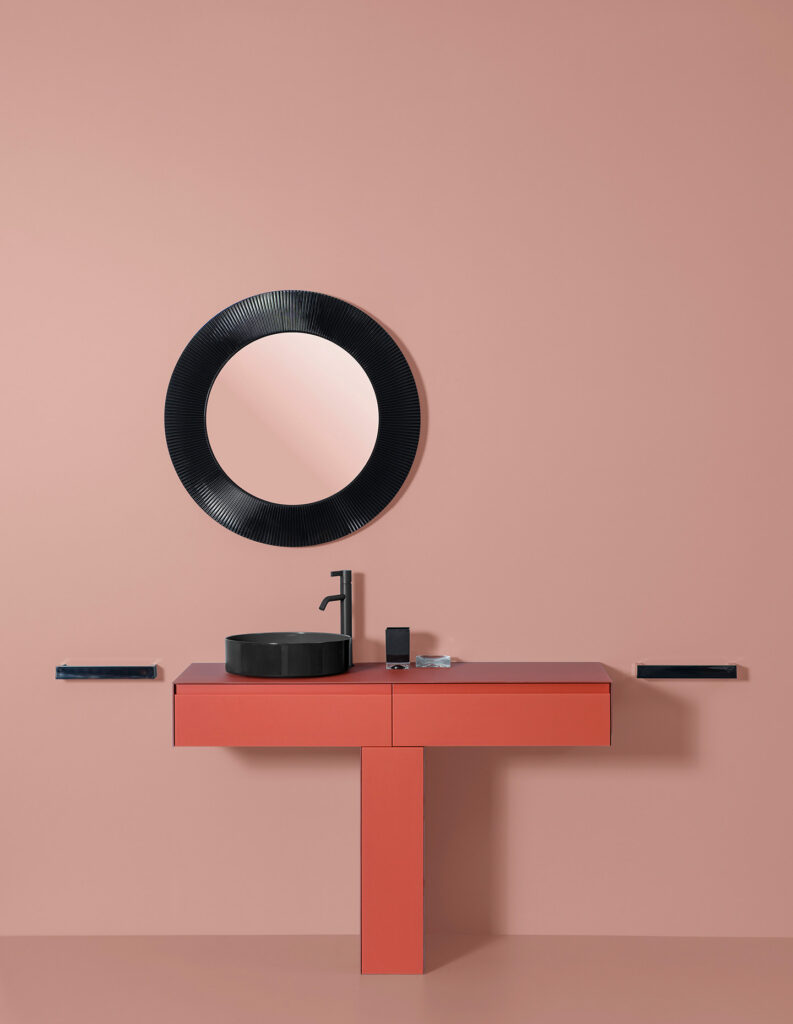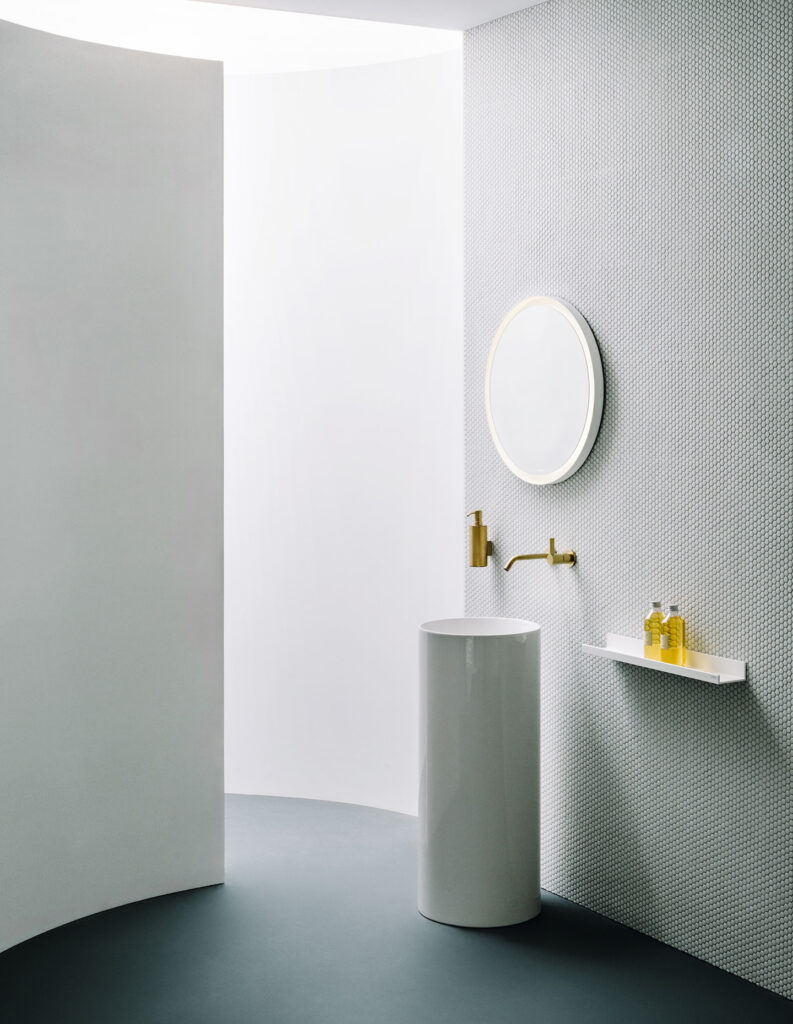

Nearly six decades after its debut, the Componibili storage tower by Italian architect and designer Anna Castelli Ferrieri remains one of Kartell’s most enduring icons. Designed in 1967, its cylindrical, stackable form has long been a quiet fixture in domestic life, sliding open to conceal everyday clutter. In 2026, Kartell’s creative director Ferruccio Laviani has reinterpreted this familiar volume as a wash basin, not to change its image, but to extend its function.
“Every time you touch an icon like this, you have to do it almost religiously,” says Laviani. “You don’t want to disturb what is already perfect — you want to give it a new life.”
That responsibility is compounded by Componibili’s authorship. “This piece was created by Anna Castelli Ferrieri, who founded Kartell with Giulio Castelli. When you work on something designed by the owner, by the person who built the company, it becomes even more delicate. You’re not just touching a product, you’re touching a piece of the brand’s DNA.”
Laviani’s strategy is therefore additive rather than corrective. The cylindrical stacked modules and the essential reading of Componibili remain; what’s new is a carefully integrated system of basin, tapware and plumbing. The technical apparatus is organised through a discreet opening at the back, leaving the front’s smooth, uninterrupted surface intact. “The original concept was already about radical design,” he says. “It was something practical that you could move wherever you wanted. My goal was to give this object a new function without betraying that idea.”
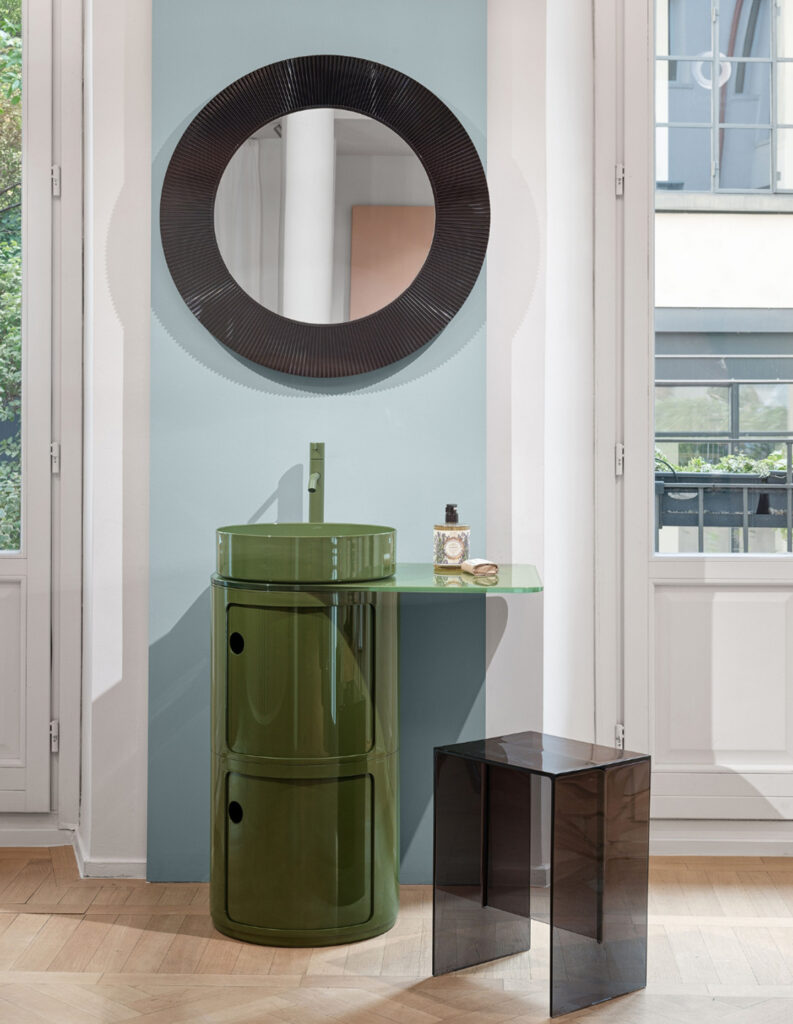
For Laviani, Componibili is as much biography as brand history. “I first knew Componibili at my aunt’s house,” he recalls. “For me it was part of my family story, not only my professional story with Kartell. It was probably the first Kartell object I had a real relationship with.” That memory of a mobile, hardworking container underpins its new role in the bathroom: still vertical, still compact, still concealing what need not be seen — but now anchoring a daily ritual. “The idea was to add function — to almost treat it like a wash basket that has become a wash basin,” he explains. “The object was already perfect as storage. My work was to layer another function onto it, not to redesign it.”
The transformation is subtle but palpable. The new pieces feel more structural, almost architectural, shifting Componibili’s presence from the corner to the centre of the room. “They feel stronger,” says Laviani. “You sense that they’re not just containers anymore; they’re furniture.”
Related: A home for a life lived well
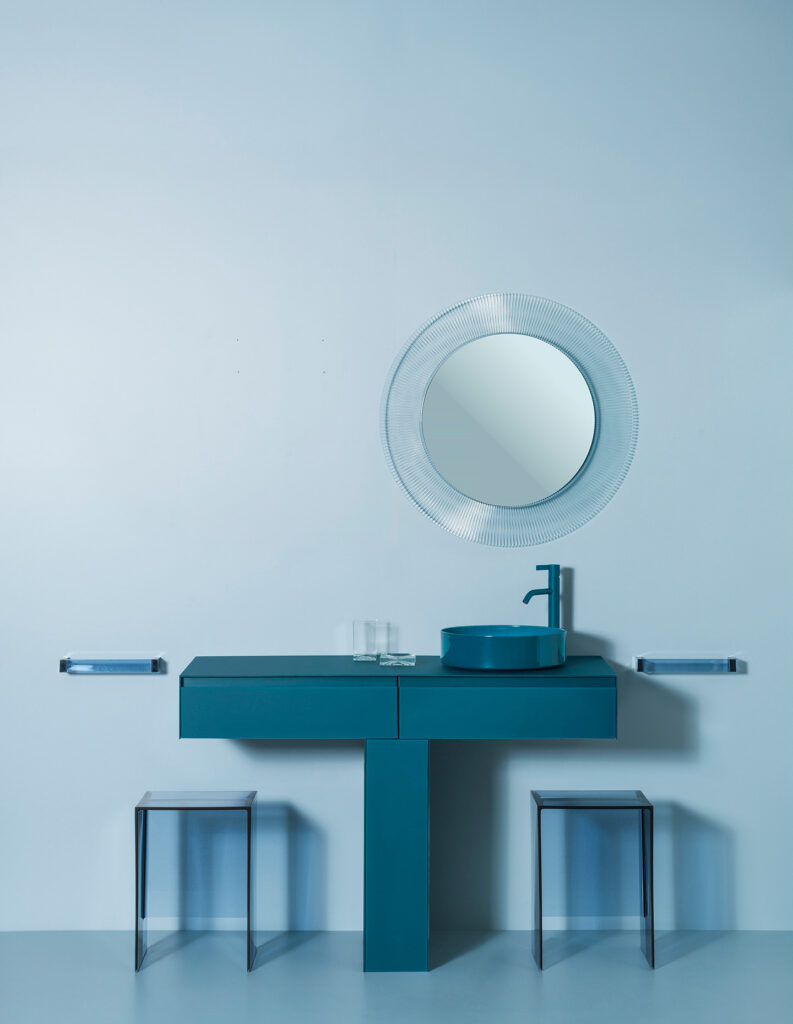
Colour, long central to Kartell’s identity, becomes a key tool in this shift — but one tightly constrained by material behaviour. In the current formulation, certain hues, especially reds and oranges, are unstable during the metallisation process of the deeply coloured basins.
“With this material, red is very unstable,” Laviani notes. “When the pieces go into the oven for the metallisation process, the surface becomes more crystalline, and certain colours become very difficult to control.”
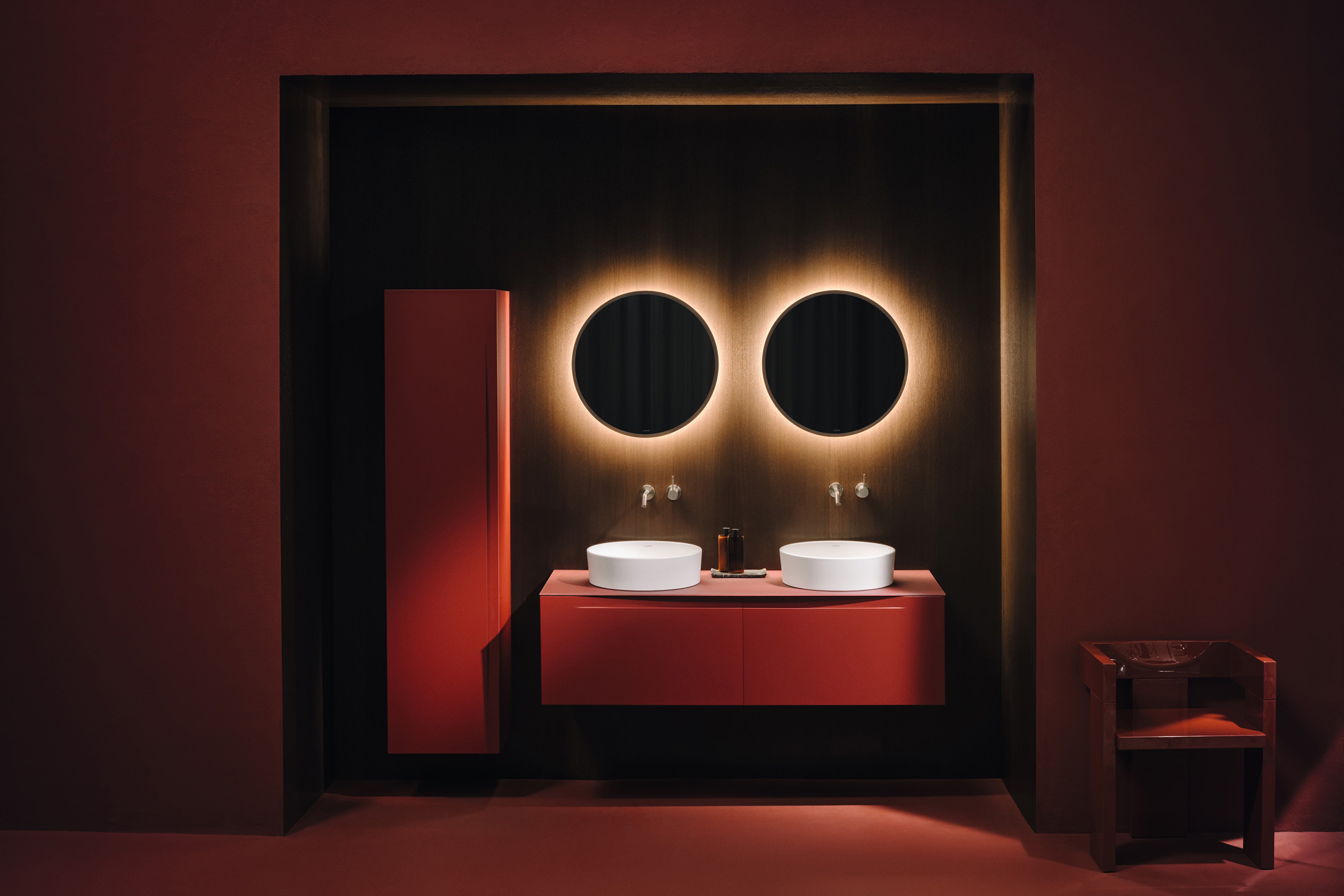
Rather than default to safe, single-colour solutions, Laviani uses these constraints to argue for calibrated contrasts. “At first, the company asked me for colour-on-colour solutions — very bourgeois, very safe,” he says. “But I wanted to push the combinations. When you mix different colours, the object becomes more vibrant.”
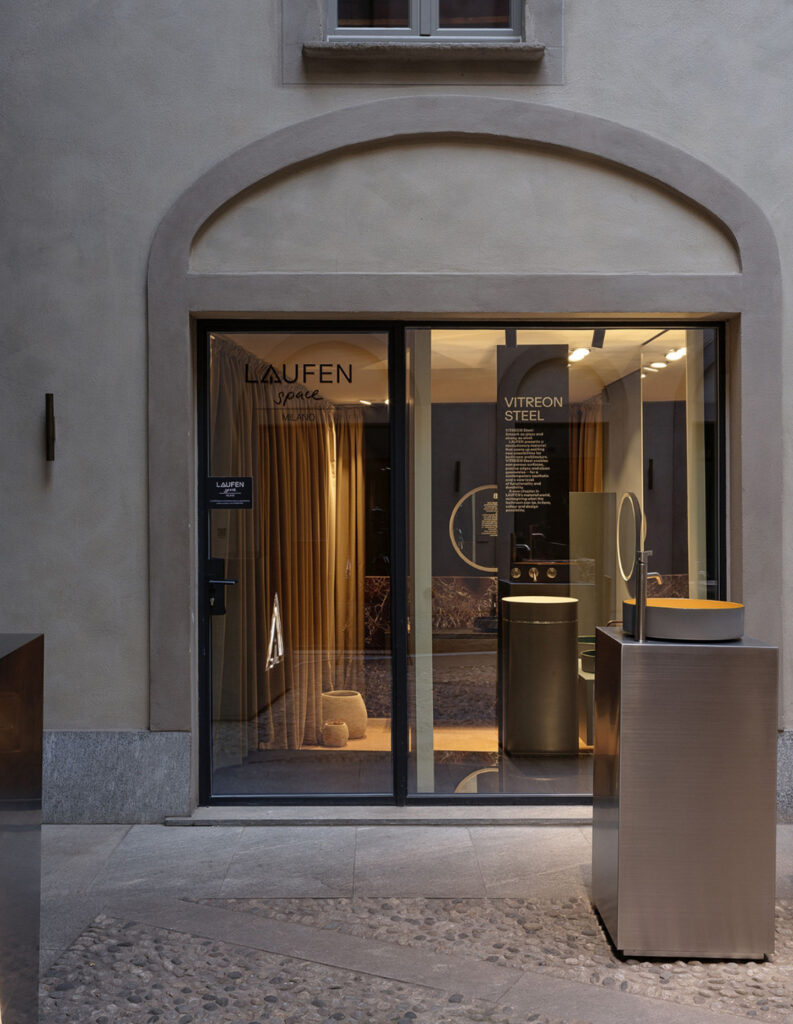
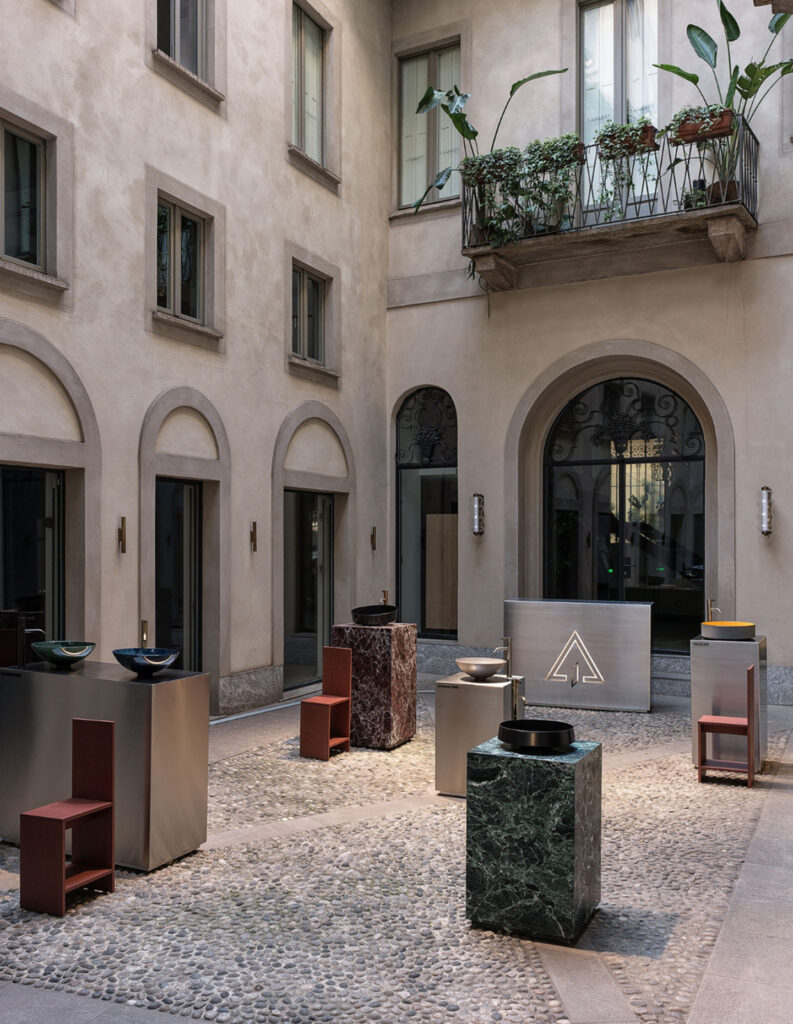
True to Laviani’s aesthetics, the combinations are luxurious and dynamic. “It was interesting to show them something glamorous, where the combination itself creates the luxury… you can work with the colours already in the collection, but by pairing them in two or three specific ways, you give Componibili a new attitude.”
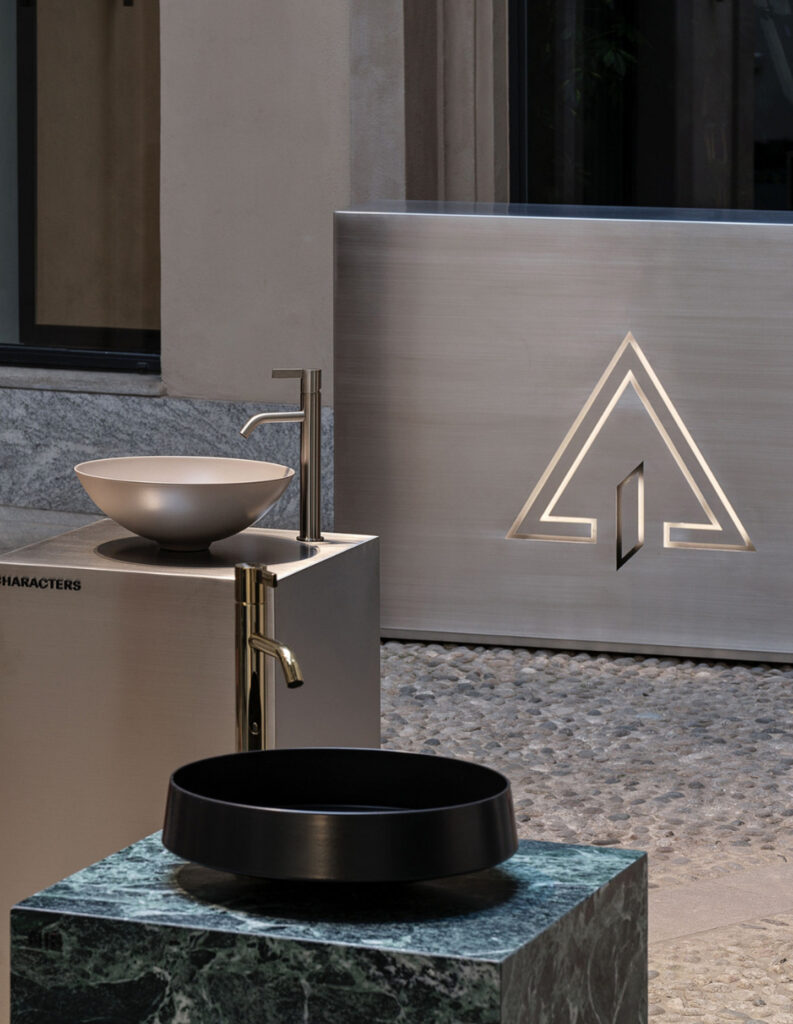
As such, the basin, column and tap can be rendered as a calm, monolithic block or broken into bolder pairings, where structure and hardware are deliberately articulated. “Of course, when everything is the same colour, it’s easier commercially,” Laviani concedes. “But the mixed combinations tell a stronger story.”
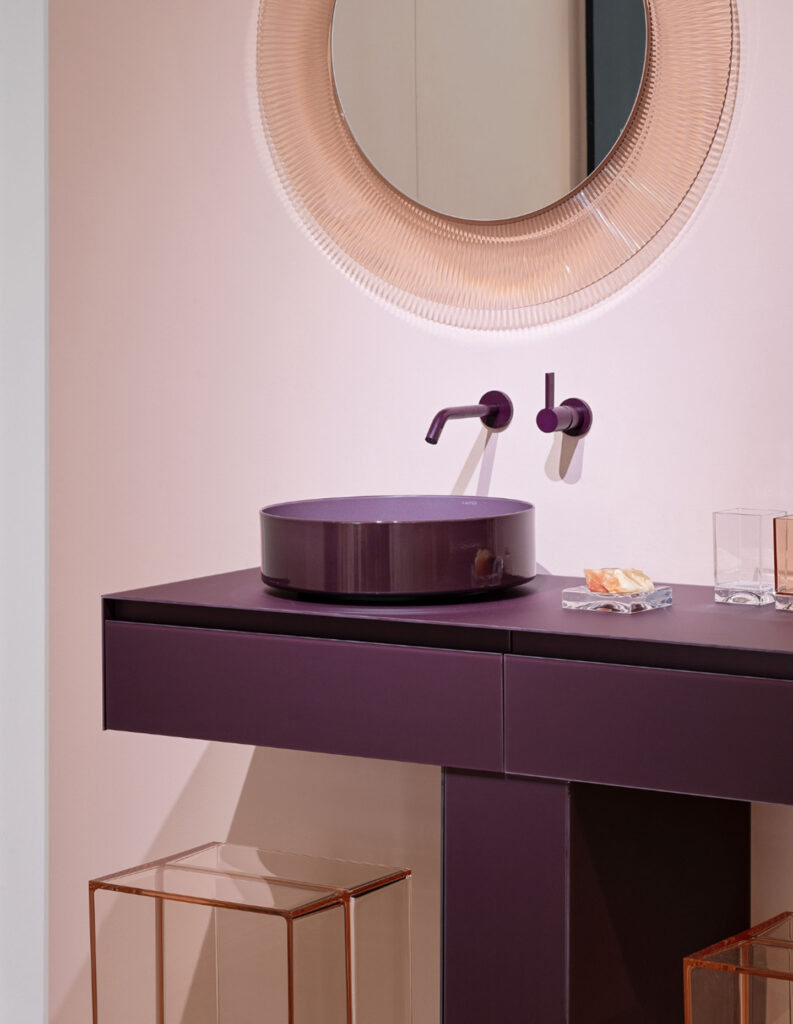
Crucially, the 2026 iteration resists nostalgia. Laviani neither freezes Componibili as a museum artefact nor overwrites it with gratuitous gestures. Instead, he treats it as a living system, capable of absorbing new roles while maintaining its character. “The function remains the same at its core: it’s practical, it hides what you don’t want to see around the house,” he says. “Now it also supports a ritual — washing — without losing that discretion.”
In this, the project reaffirms the strength of Ferrieri’s original idea: a radical yet domestic object that can move, both physically and conceptually, as needs change. The new Componibili wash basins suggest not a closed chapter in Italian design history, but an ongoing conversation — proof that a true classic is one that can be intelligently reactivated, again and again, without losing its iconic nature.