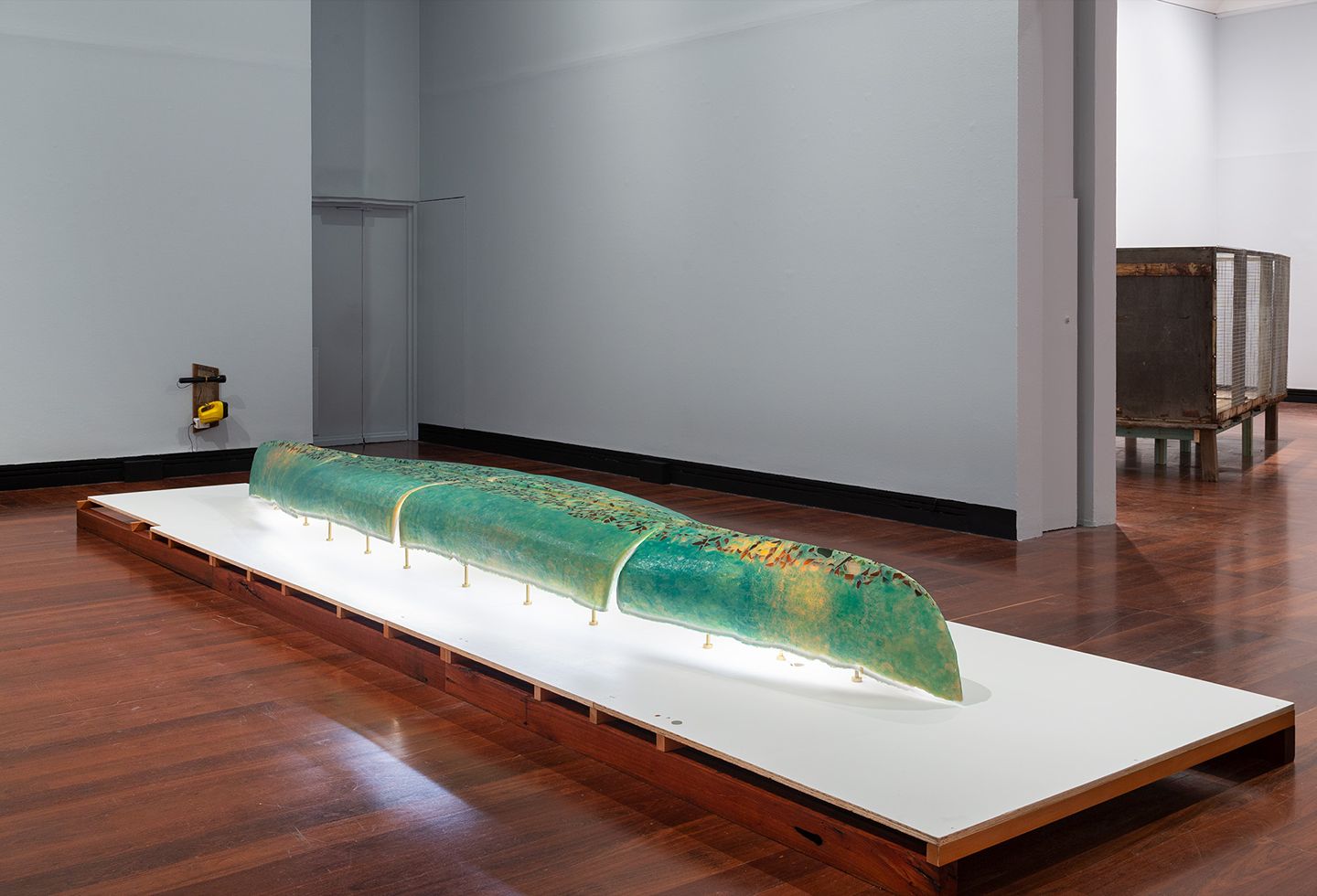

The 19th Adelaide Biennial of Australian Art is upon us. Titled Yield Strength and curated by Ellie Buttrose – curator of Contemporary Australian Art at QAGOMA and the curator behind Archie Moore’s Golden Lion-winning Australia Pavilion at the 2024 Venice Biennale – the exhibition unfolds across three distinct venues: the Art Gallery of South Australia, the Samstag Museum of Art and the Adelaide Botanic Garden. Twenty-four Indigenous and non-Indigenous artists from around the nation have been assembled for Australia’s longest-running survey of contemporary practice.
The title is drawn from an engineering term: yield strength denotes the point at which a material subjected to force begins to distort irreversibly. As a curatorial premise it is productively open, asking how materials, selfhood and society respond when pressed to their limits. Buttrose has considered the tactile, the physical and the experiential – visiting many studios before arriving at her selection – and the result is an exhibition that feels grounded and expansive in equal measure.
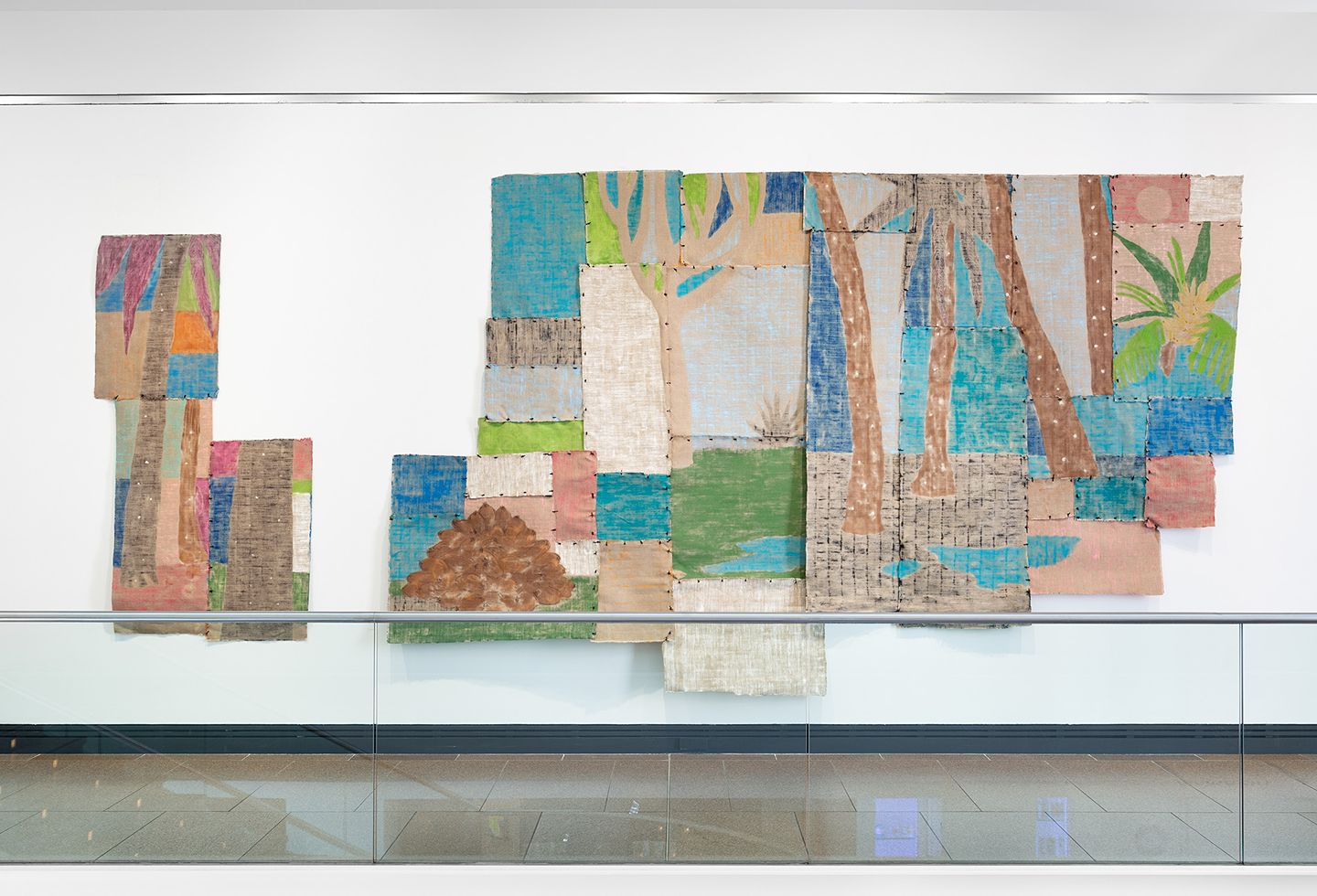
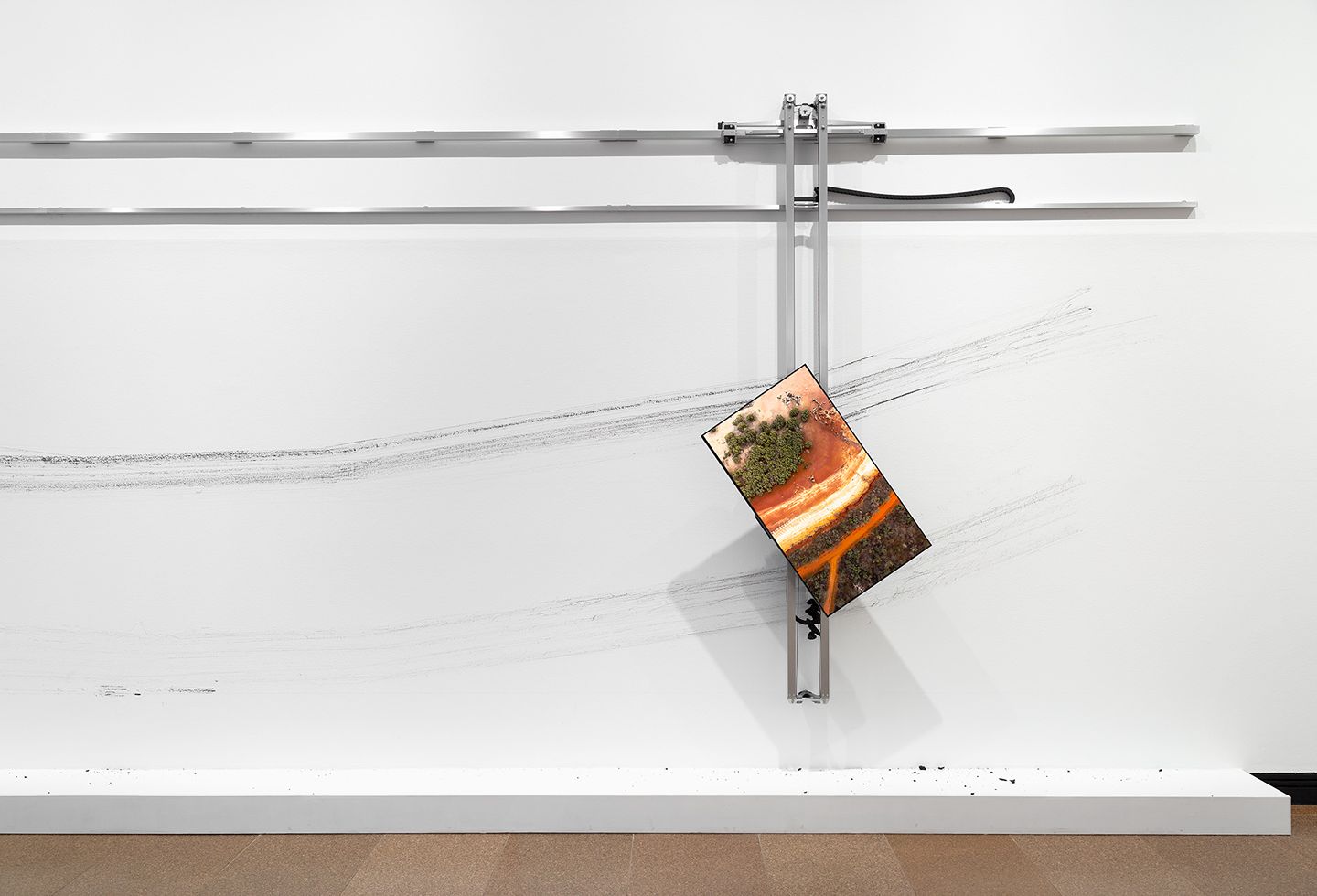
At the Art Gallery, Buttrose decidedly stripped back built walls and returned the galleries to their original, open architecture. Moving through the spaces, the walls shift through gradations of grey – deepening towards the centre before returning to white – a subtle intervention that draws attention to the gallery environment itself. Robert Andrew’s kinetic drawing machine makes this explicit: mounted to an armature, a screen displaying drone footage of Yawuru Country moves charcoal slowly across the wall’s length, reinscribing Country into the gallery space with quiet insistence.
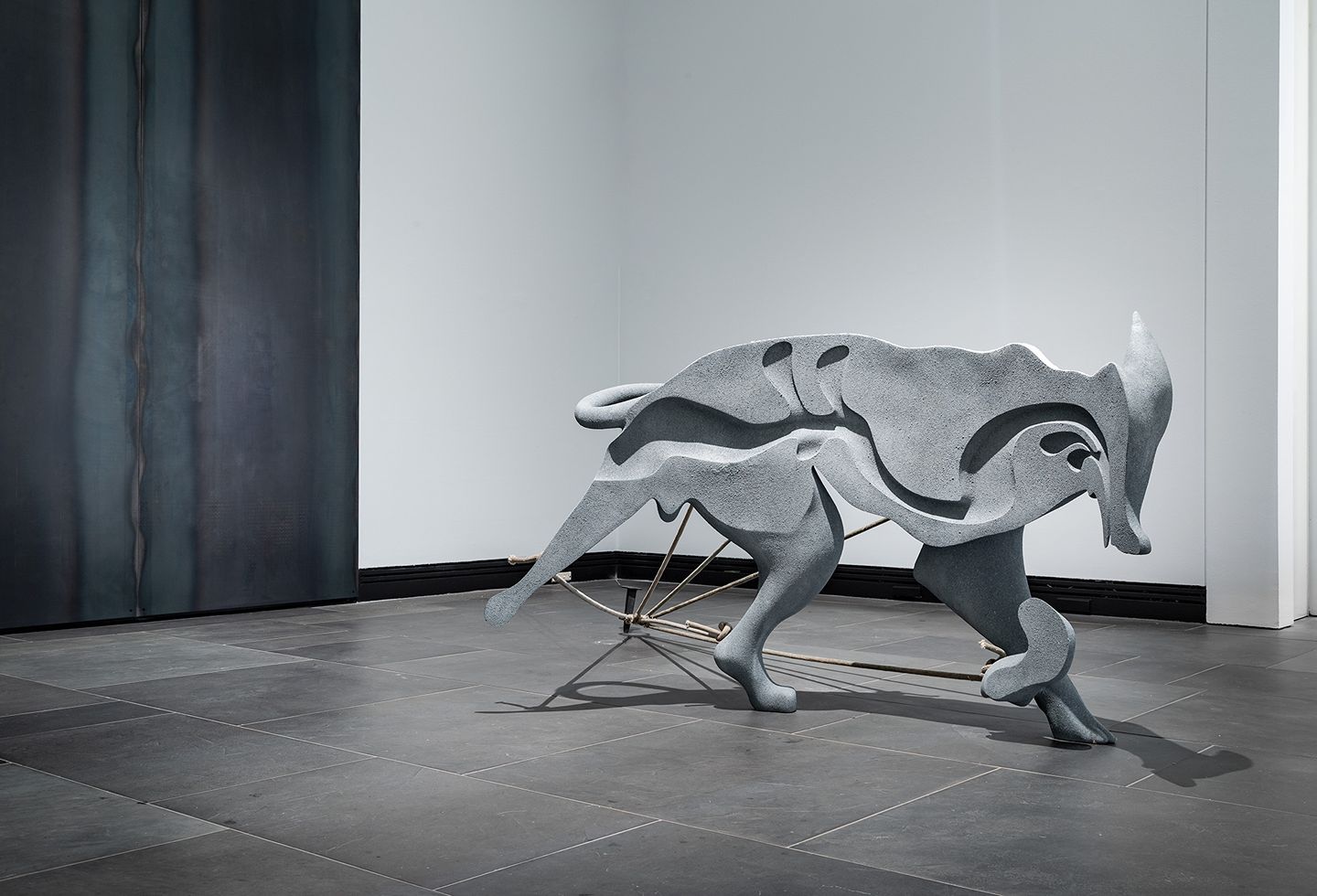
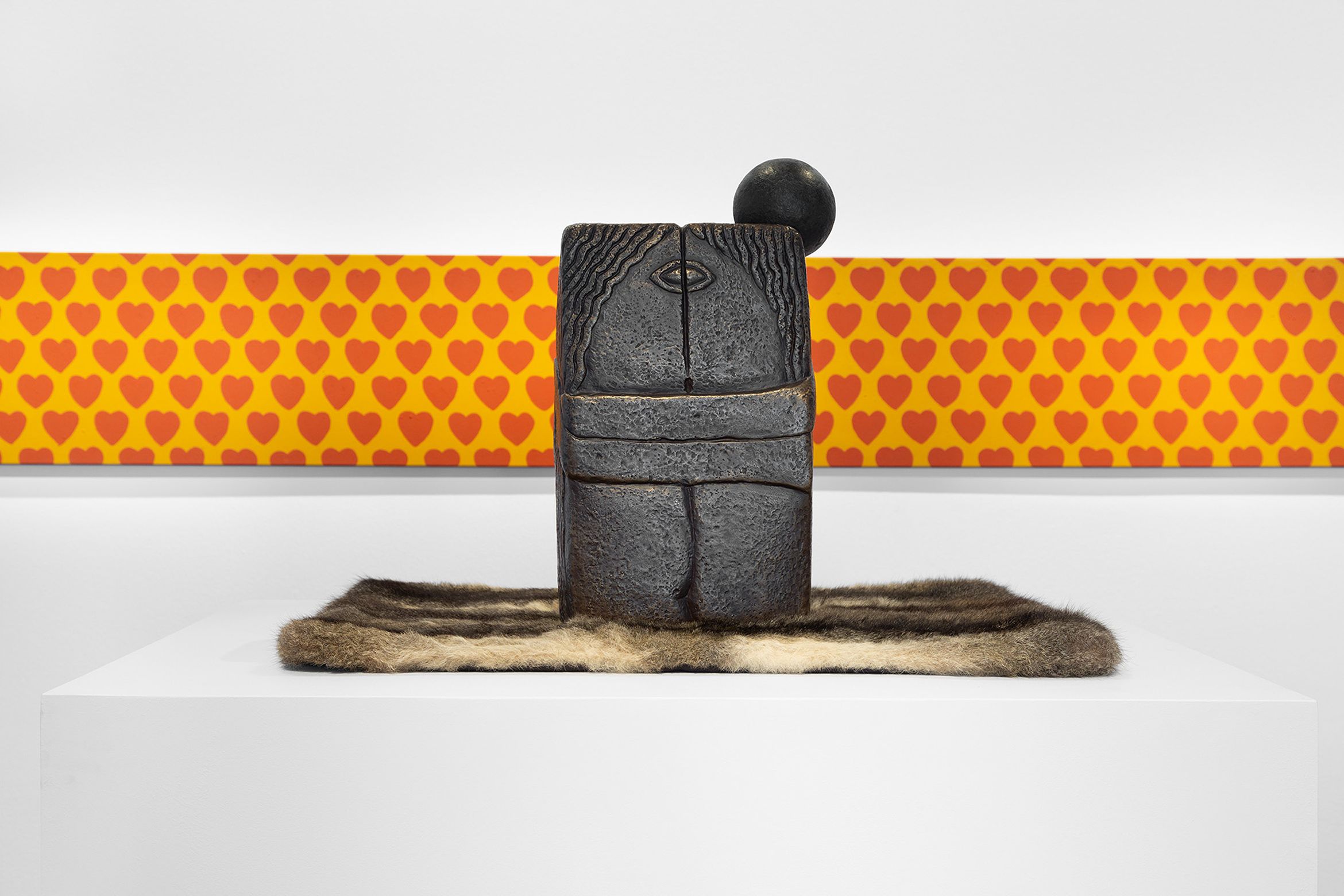
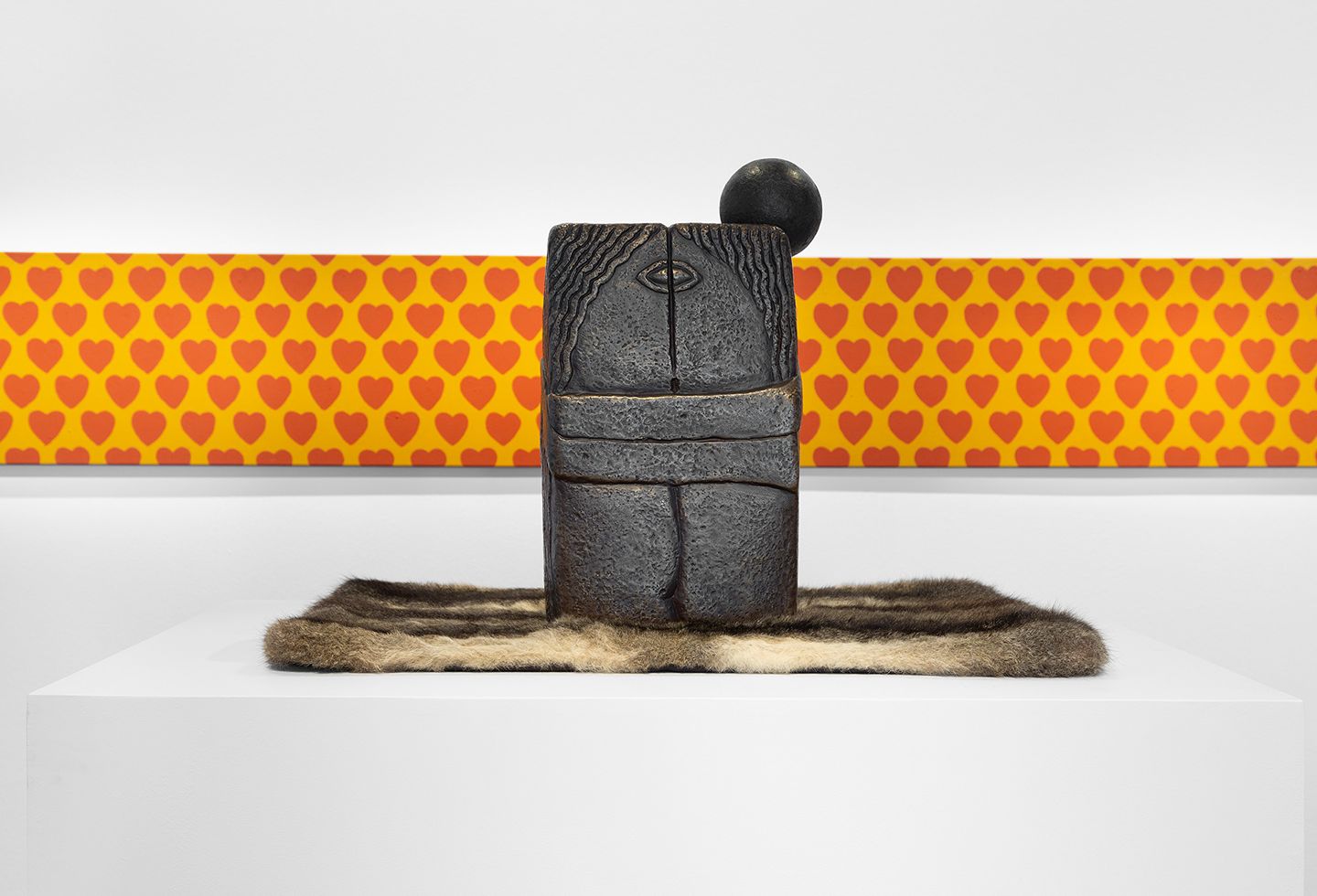
Jennifer Mathews’ installation Yard, 2025 – welded gates and barriers of stainless and galvanised steel designed to funnel livestock – greets visitors and immediately sets up a system of control and threshold. Within this architectural intervention, d Harding’s breaking boundaries (embrace), 2026, comprising black pigmented industrial silicone rubber, wood and paint, occupies its own charged register, where layers of the artist’s practice and embedded histories speak to the violence and resilience of Aboriginal communities and tradition. Moreover, George Egerton-Warburton’s resin-coated emu is a wry and pointed apparition, exploring the symptoms of late capitalist conditioning through works that question conformity, self-surveillance and self-discipline.
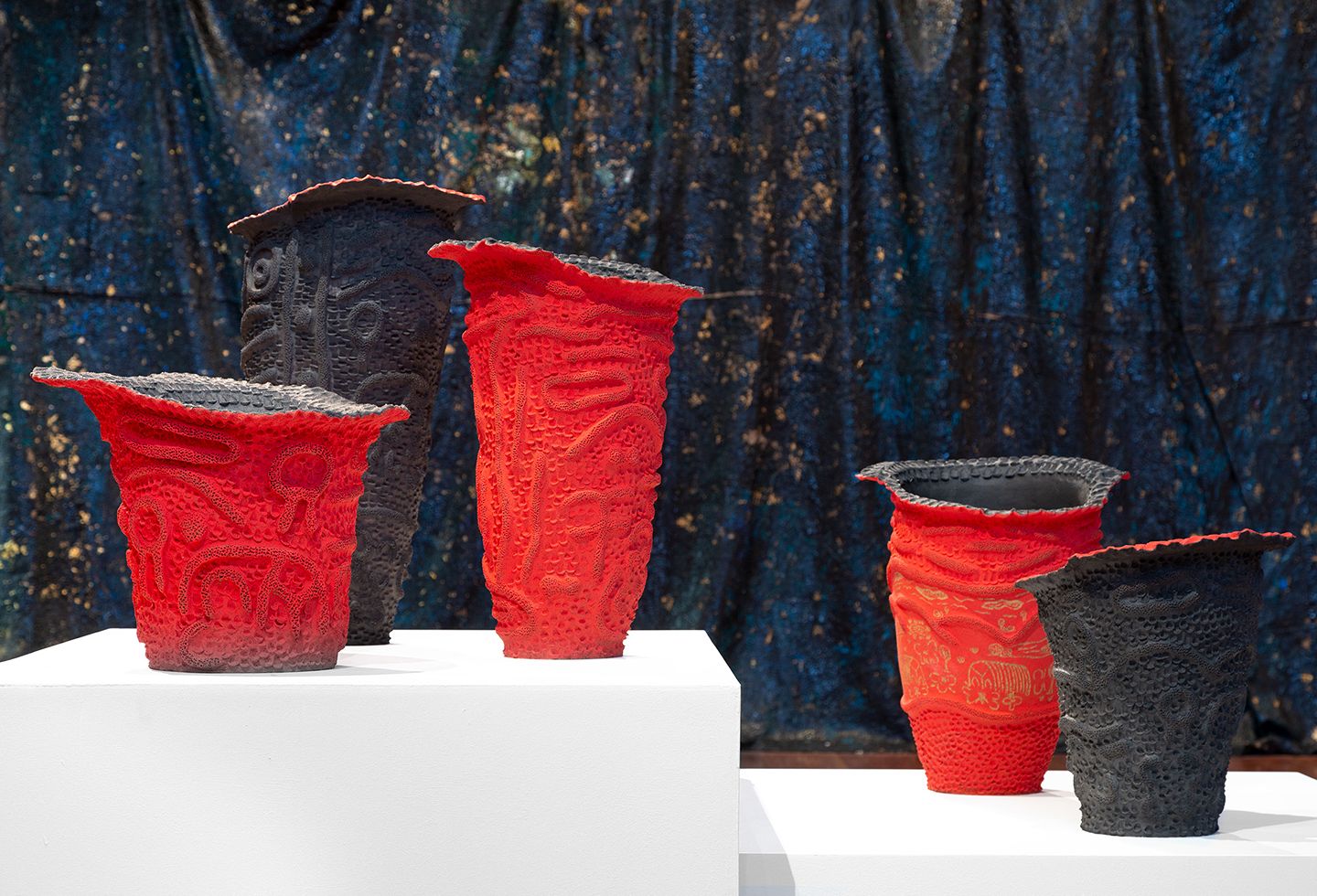
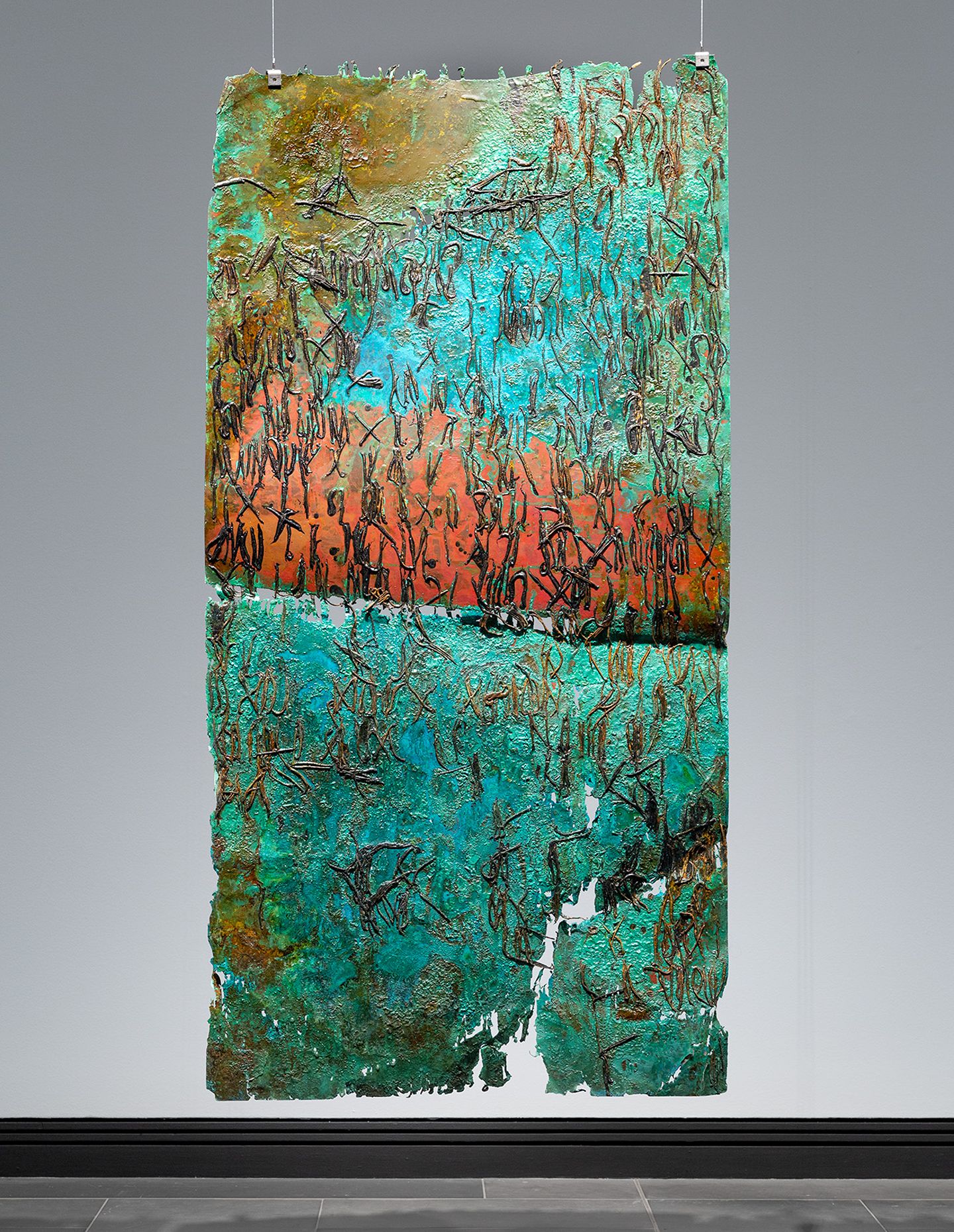
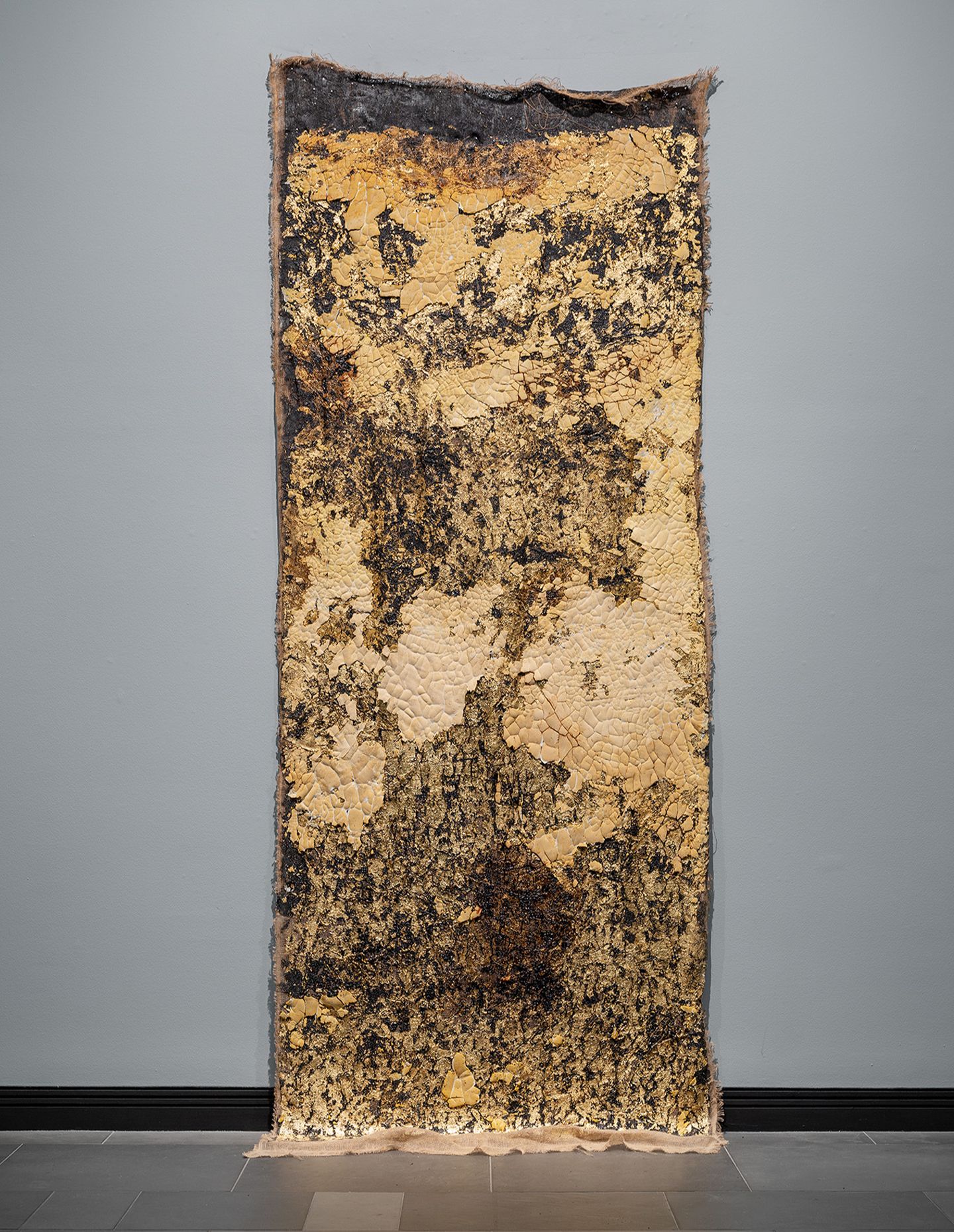
Kirtika Kain’s works span multiple venues – a structural decision Buttrose made deliberately for several artists throughout the exhibition. Buttrose states, “I didn’t want this idea of singularity. It’s about how context driven things are – you see a work in one place and it has one sense, but then you see it elsewhere and it brings out different textures or contexts.” Kain’s green-hued copper sheets, submerged in acid baths and partially preserved by wax, are both materially extreme and visually restrained; gold and tar carry cultural weight for the Dalit community and here those charged substances are transmuted into colour field painting of quiet authority.
Related: The primordial force of nature
At the Samstag Museum of Art – a building with a strong architectural presence – John Spiteri’s three paintings – Modesty Curtain, 2019, Atelier Spiteri, 2022 and Naked Ambition, 2025 – are exquisite. Materially rich and tonally subtle, Spiteri builds layers through gradual accretion; washes of colour, hazed marks scraped across the surface and figurative elements emerge only on closer looking, the works reveal an artist of rare sensitivity.
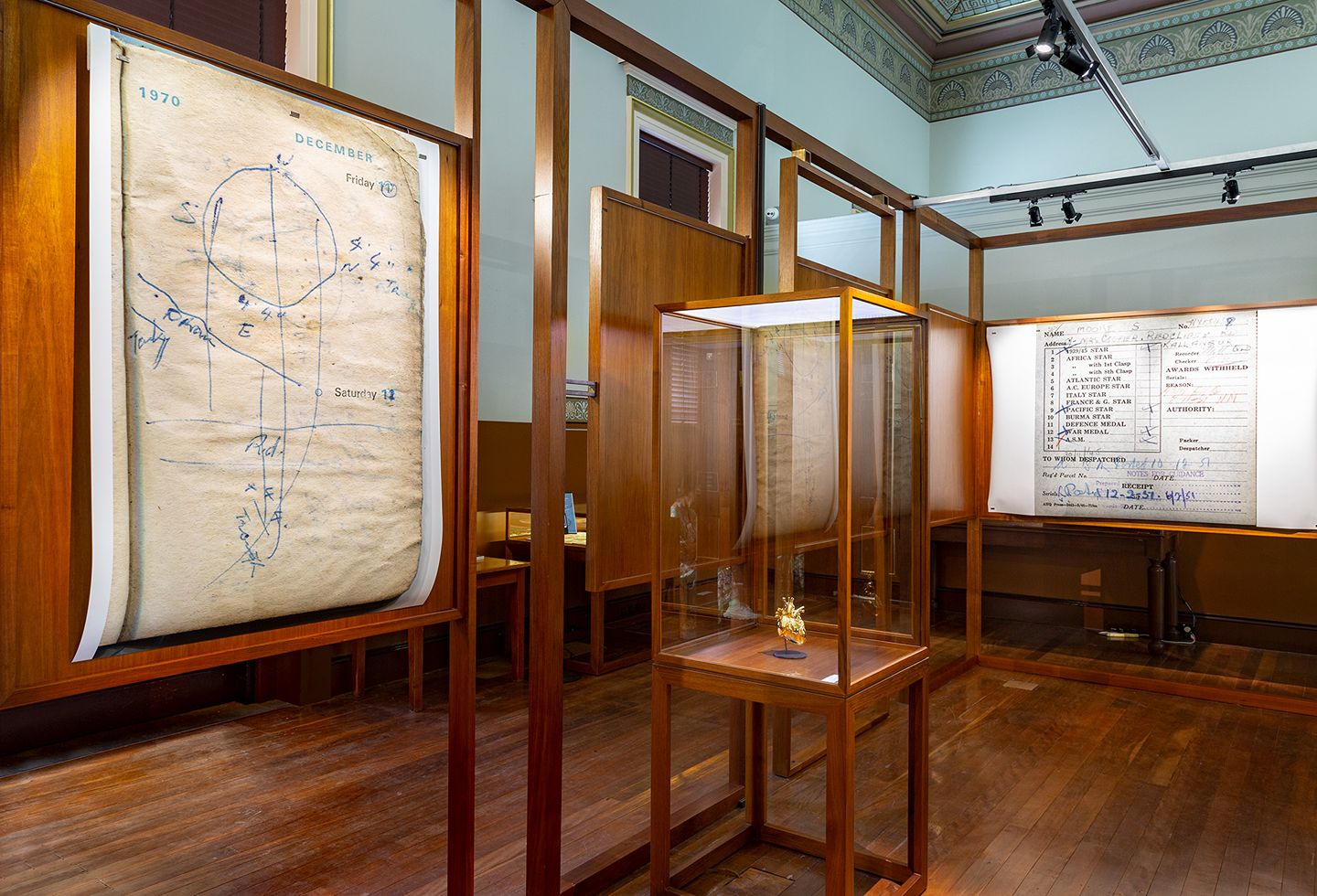
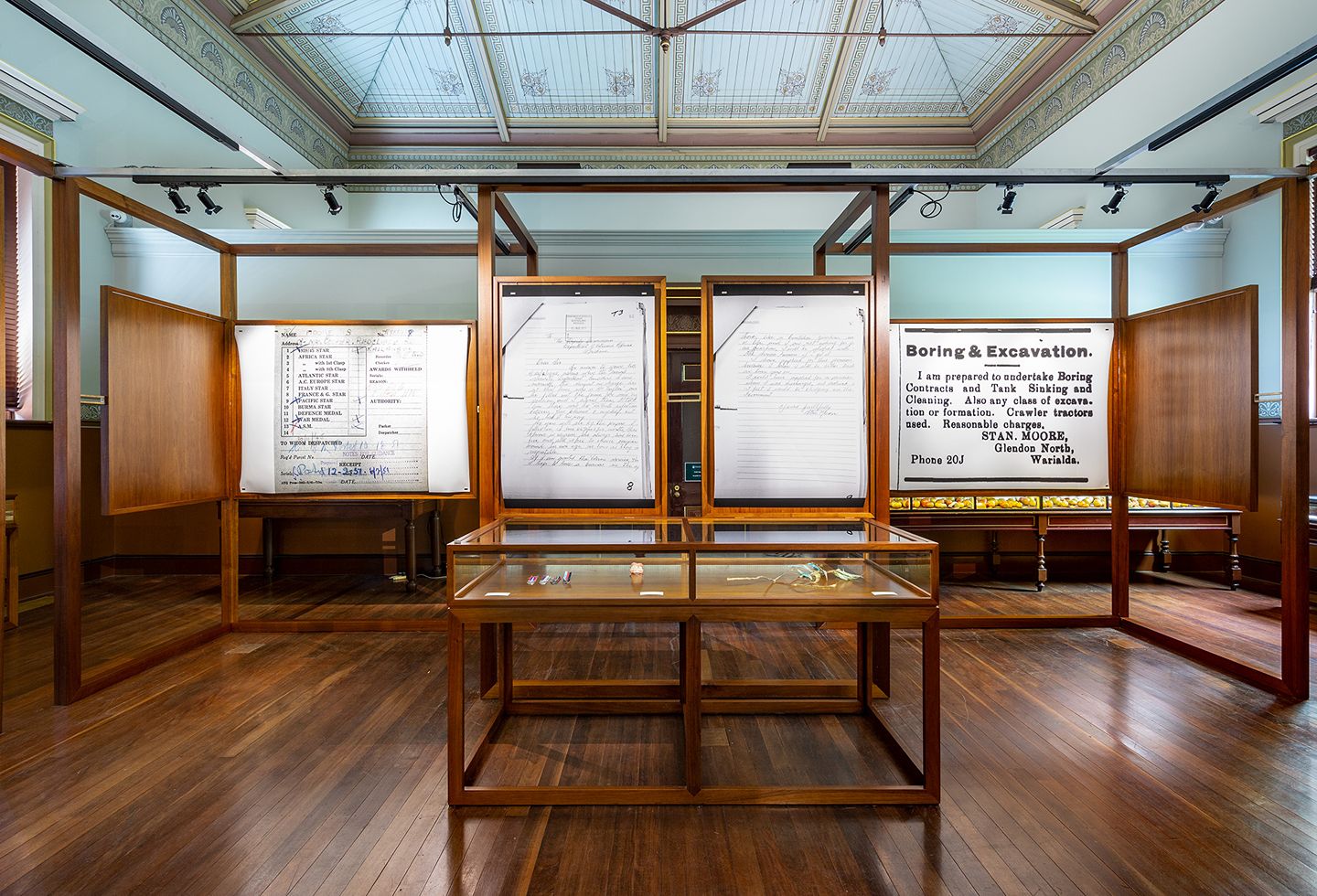
In the Adelaide Botanic Garden at the Museum of Economic Botany, Kamilaroi and Bigambul artist Archie Moore has created Remnants of My Father, 2025, a portrait of his father Stanley Moore (1908-1944) in absentia. Through objects such as a set of dentures, a possession notice for gold mining, World War II medals and paperwork, as well as a hand drawn map, Moore explores his father’s late-stage health issues and unsuccessful quest to find gold on the family property, located on his mother Jennifer Cleven’s Country.
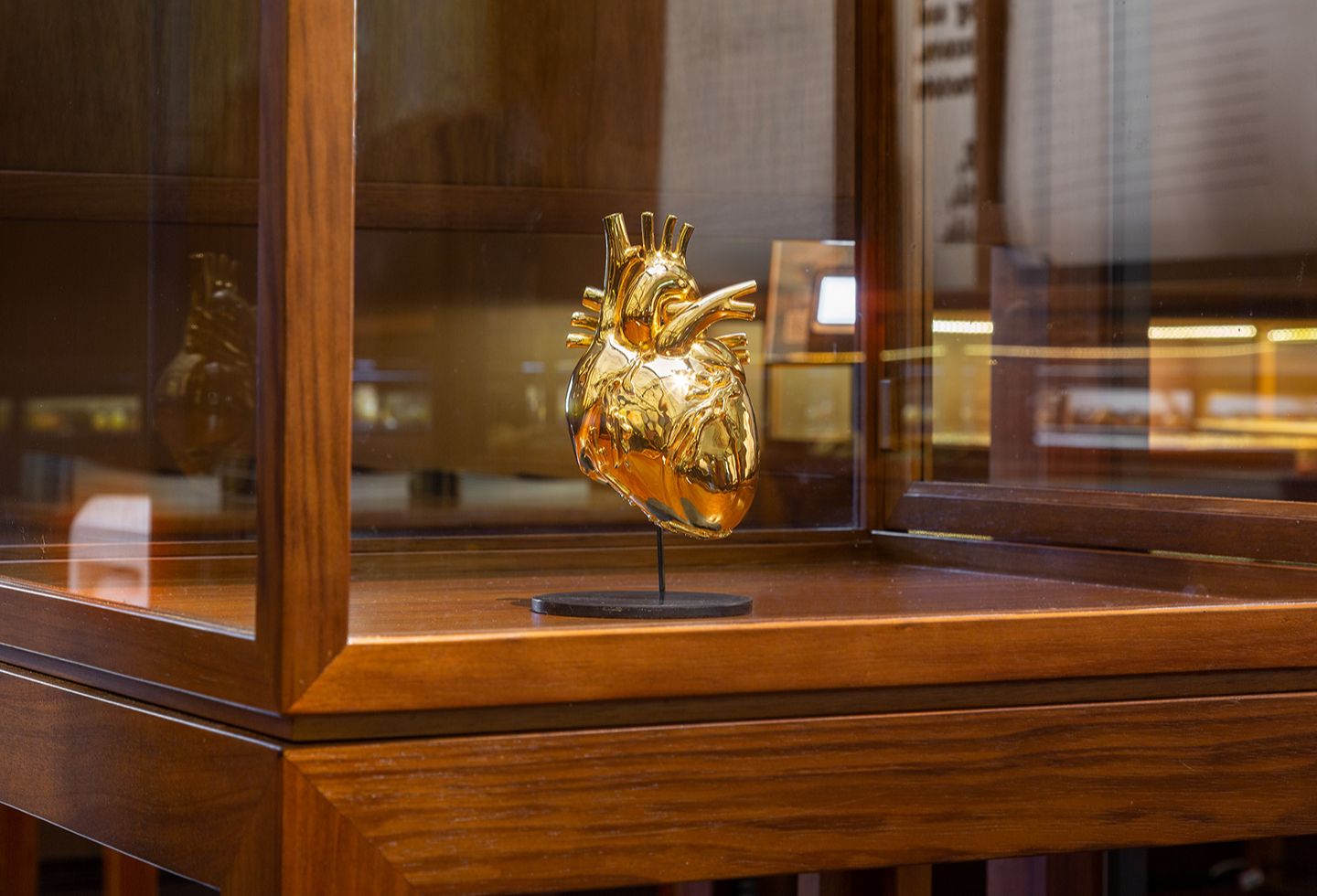
Moore has also created a “Heart of Gold” and a version in pyrite, “Fools’ Gold”, echoing endearing qualities his father possessed. The museum’s cabinet-style architecture, built around ideas of land use and economic exchange, becomes the perfect vessel for Moore’s meditation.
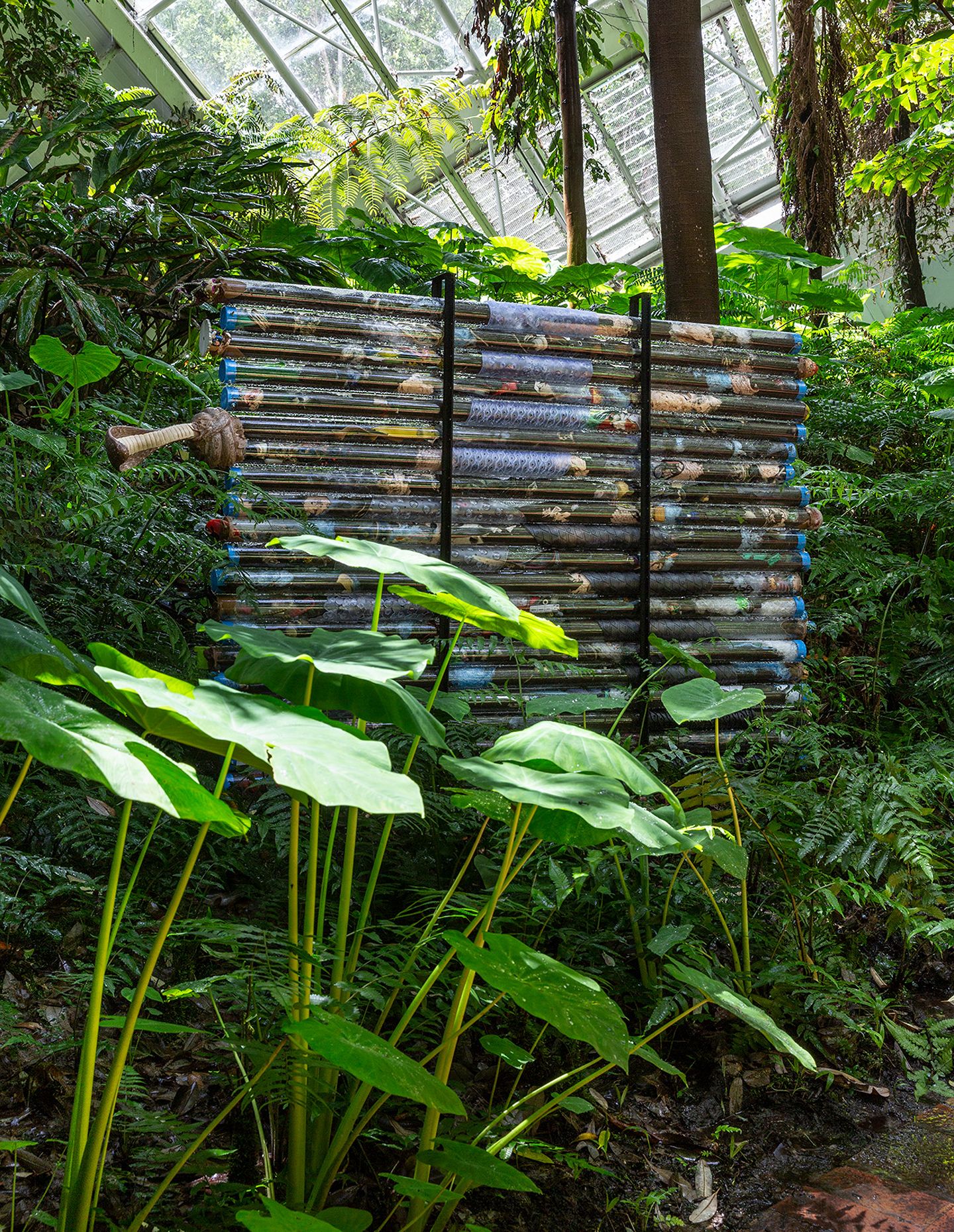
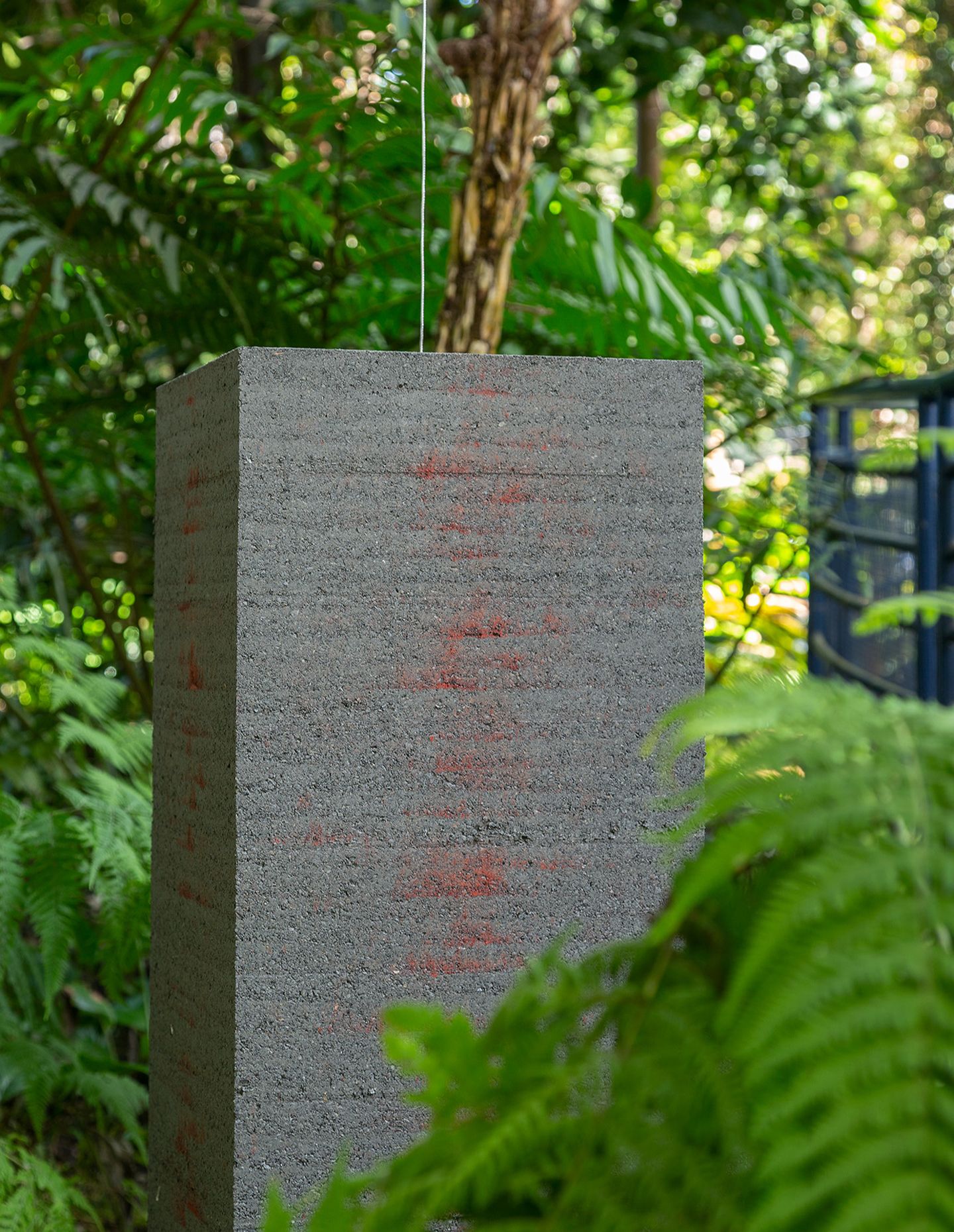
One of the quiet, yet ultimately incredibly powerful highlights of the exhibition is the work of Milminyina Dhamarrandji, a Yolŋu artist from Yirrkala in Arnhem Land, Northern Territory. Dhamarrandji presents a series of barks, larrakitj and an animation across the Art Gallery and Samstag that carry the story of her totem, ancestral serpents – Darrpa (king brown), Wuwarku (taipan) and Dhambaḏiny (death adder) – and the ceremonial custodianship of the land at Ruwak. These snakes gather on the coast where they wash their teeth in the water. Through meticulous rarrking (cross-hatching) and use of ochres, Dhamarrandji paints the diamond-like patterns of the black adder, often using the bark or larrakitj’s existing gnarled surface to echo the snack’s sculptural form. The results are mesmerising and evocative, strangely meditative.
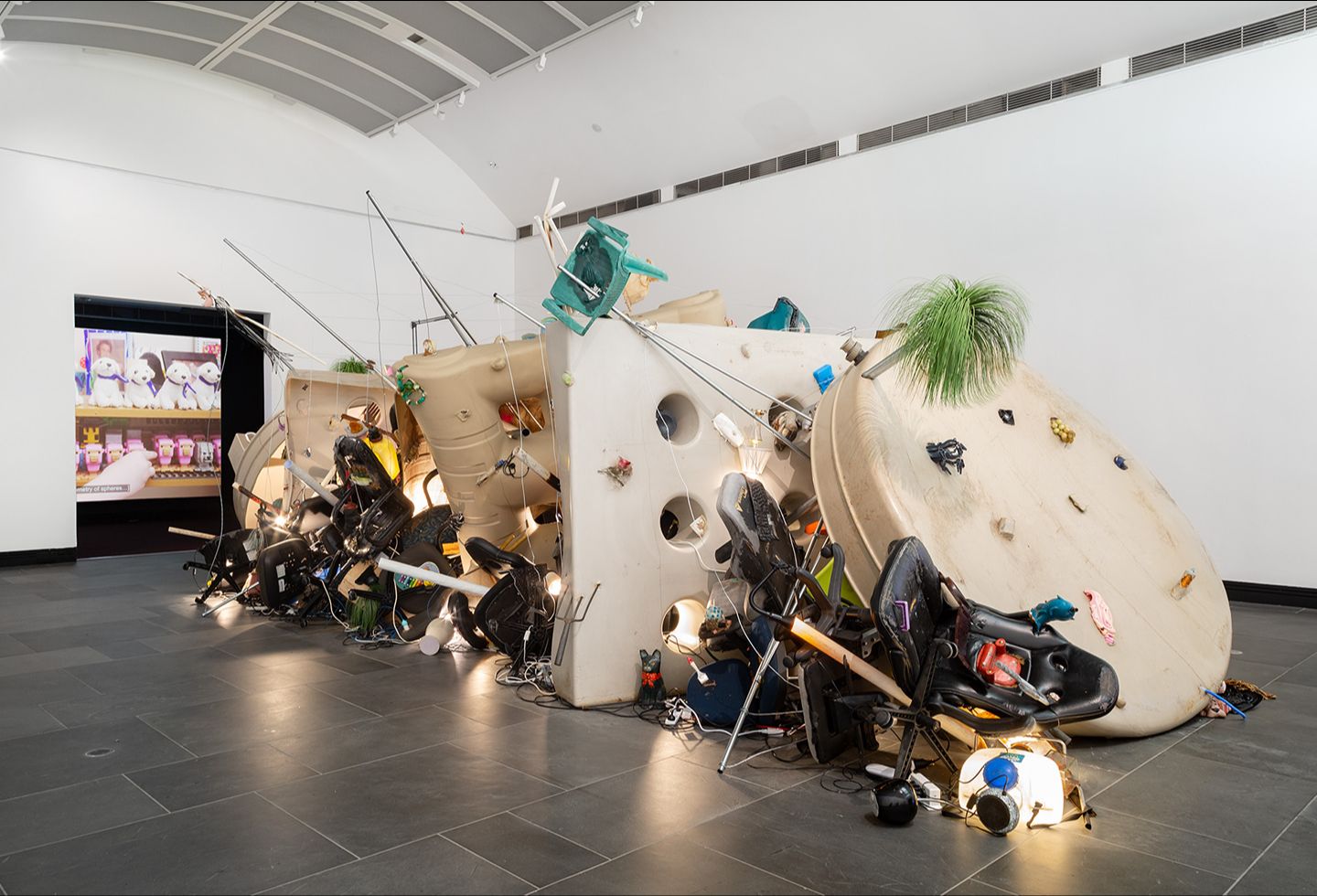
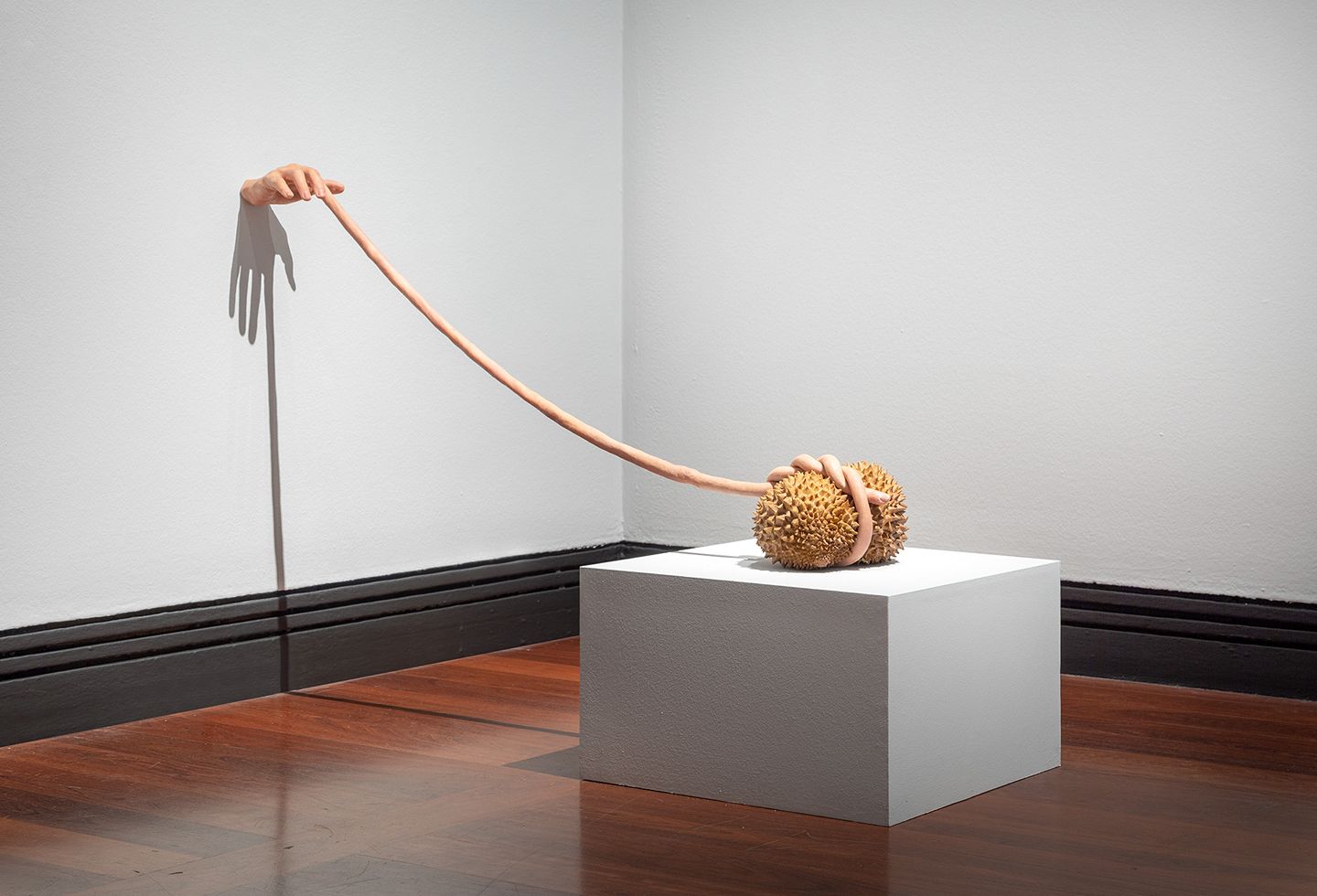
Yield Strength is materially alive. From Nathan Beard’s hyper-realistic silicone casts of hands clasping durian fruits, pink orchids and 3D-printed Buddhas, to Erika Scott’s 10-metre installation that oozes and melts plastic from household kitsch objects across the floor, transforming the gallery into environmental chaos, the exhibition holds its tensions well. Buttrose has mirrored in her exhibition-making the very impulse the artists bring to their practice. The making process and material legibility, allowing context to generate meaning. It is, ultimately, an exhibition designed for conversation.
“I hope people have different opinions and I hope they take that and speak about it,” Buttrose reflects. “The joy of not having the same opinion, the joy of changing someone’s mind about a work of art – that’s why we go to galleries. That’s why we want to be together in the world.” The result is a survey that rewards considered attention – and one that, in pressing art and audiences alike to their respective yield points, yields something genuinely rich in return.